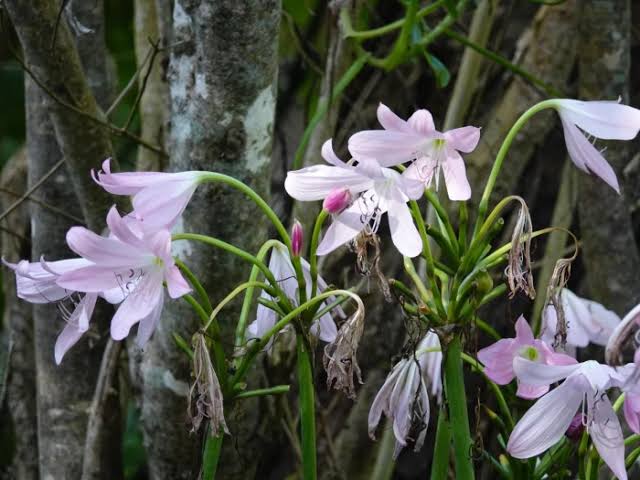
South Africa is rich in plant diversity. That diversity is strongly shaped by the country’s varied topography, soils, & climate. Nine biomes & 465 vegetation types are recognized in a country of just 1.2 million km2 (471,445 square miles).
There is a long history of botanizing in southern Africa – with impressive results that include a Flora of the Southern Africa region (it covers Botswana, Eswatini, Lesotho, Namibia, as well as South Africa) and the African Plant Checklist & Database Project, which is the first continental checklist for Africa. This publication – which is being maintained continuously – contributes to goals of the Convention on Biological Diversity’s Global Strategy for Plant Conservation.
South Africans have also produced a national plant checklist that is updated every year. The most recent Checklist dates from 2025. The checklist includes bryophytes (mosses, hornworts, & liverworts), lycophytes & pteridophytes, gymnosperms, & angiosperms. Compilers plan to include marine macro-algae in future.
The 2025 checklist names 21,539 species in South Africa – 20,204 indigenous species, 1,329 naturalised species. Based on the, South Africa’s national flora comprises 5.3 % of the estimated ~ 380,000 plant species on Earth.
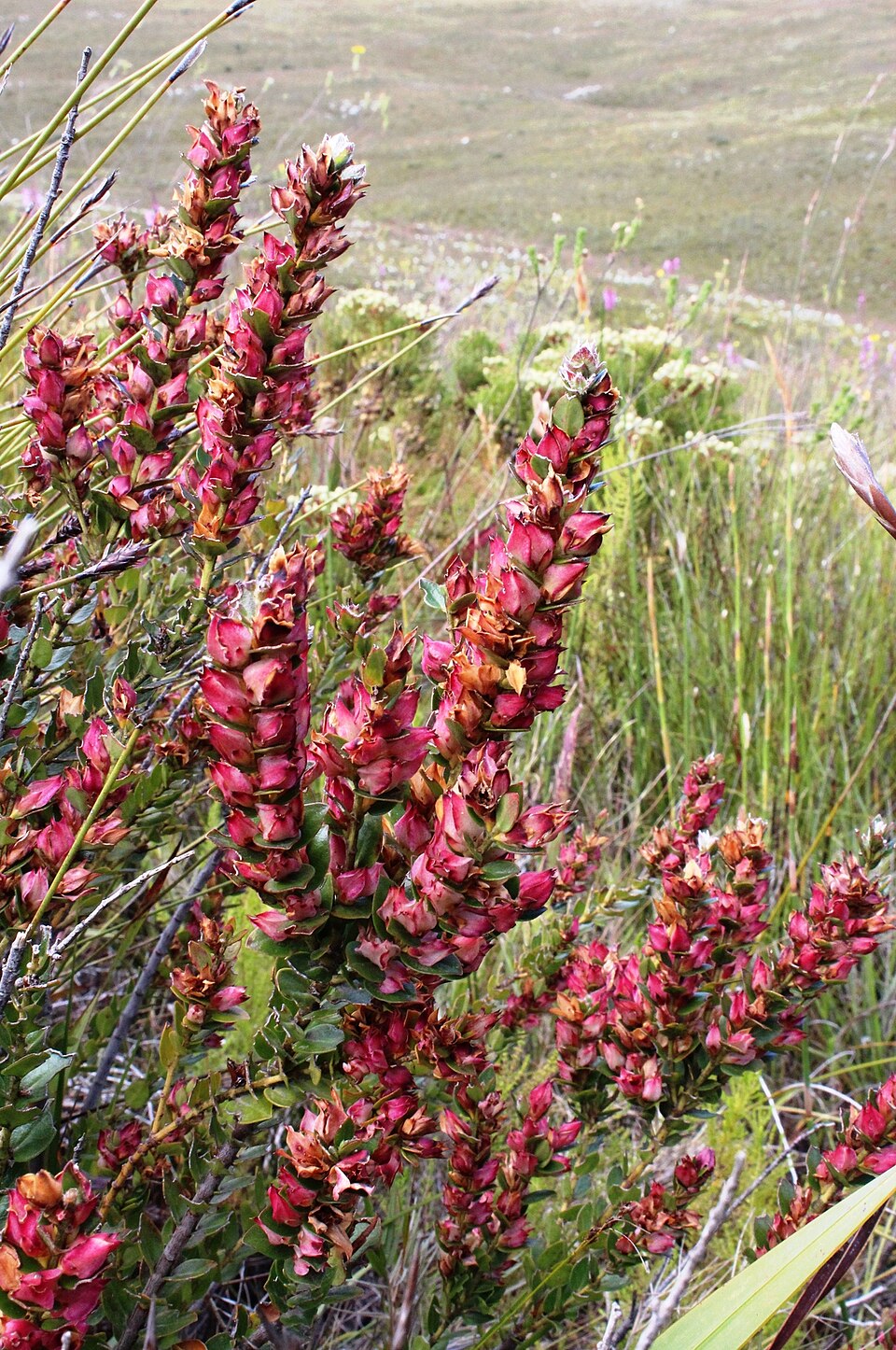
South Africa is home to 384 plant families, of which all but 34 contain only indigenous species. All the species in seven families are endemic to South Africa. These families are Bruniaceae, Geissolomataceae, Grubbiaceae, Lanariaceae, Penaeaceae (excl. Oliniaceae), Rhynchocalycaceae, & Roridulaceae. Of the 2,654 genera, 2,189 are indigenous. Three hundred (12%) of these genera are endemic. Sixty percent of the 20,204 indigenous species are endemic. All the endemic families other than Bruniaceae are composed of a single genus – demonstrating the phylogenetic uniqueness of this flora.
The 2025 Checklist contains 1,048 species that did not appear in the previous checklist (published in 2006). This is an increase of 4.9%. Numbers of indigenous taxa increased by less than 5%: additional 623 indigenous species (3.1%); 520 endemic species (4.3%). Numbers of non-indigenous species increased by considerably higher proportions: naturalized species increased by 414 species (31.1%), & invasive species by 451 (69.5%). These 865 species constitute 82.5% of all 1,048 newly recorded species. (I report the findings on non-indigenous species in a separate blog.)
The detection of previously unidentified species and infraspecific taxa – both native and non-indigenous – is the result of systemic botanizing campaigns focused on particular families. Thus, a study of the family Iridaceae in southern Africa led to description of 169 species in 20 genera. More than two decades of work on the Pelargonium (Geraniaceae) resulted in recognition of 34 new taxa. Thirty-three new species have been described in the genus Indigofera (Fabaceae).
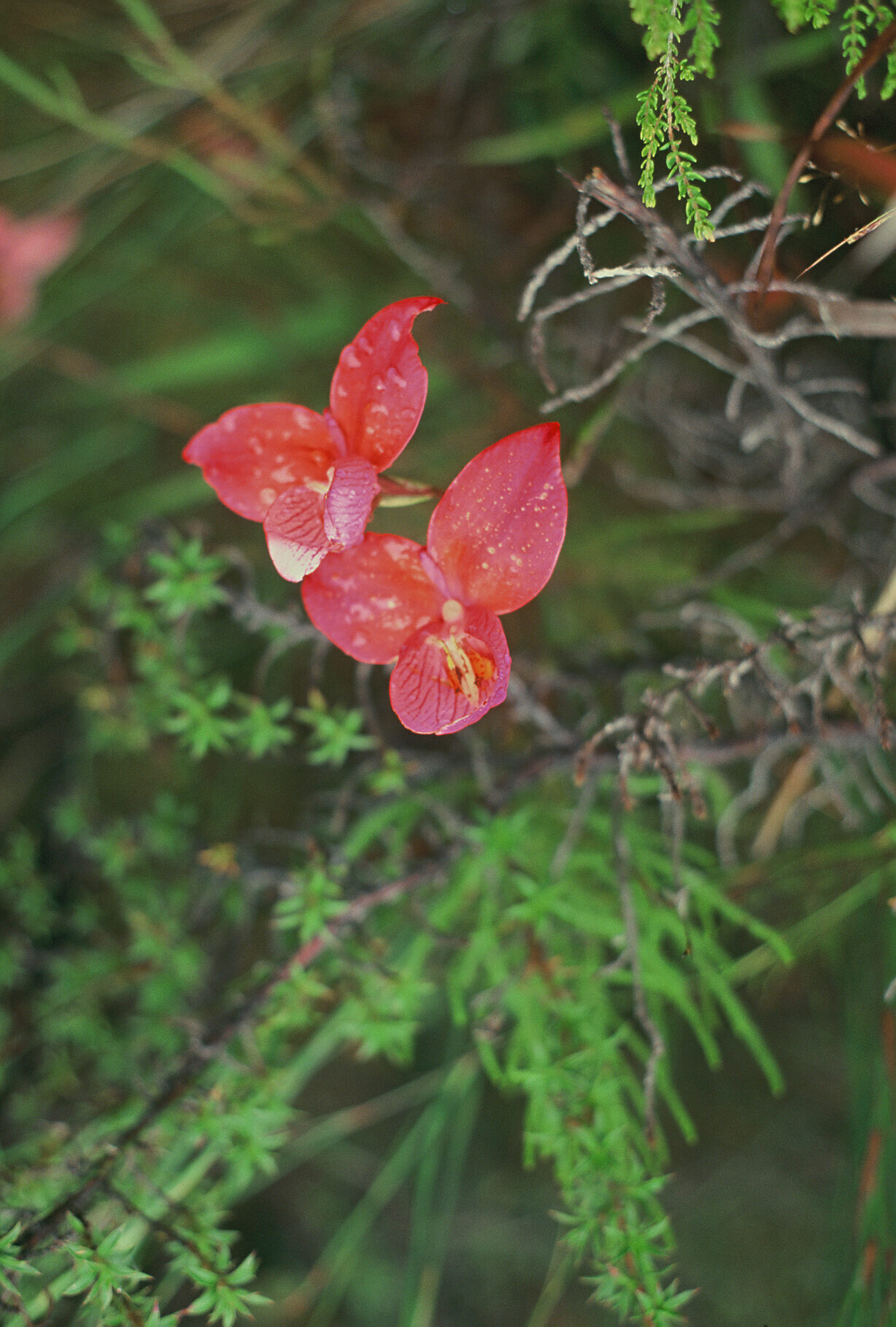
The most specious plant family indigenous to South Africa is Asteraceae, with 2,124 species. Aizoaceae & Fabaceae follow with 1,603 & 1,566 species, respectively. The newly expanded Iridaceae is fourth; it encompasses 1,189 species. The world-famous Proteaceae rank 13th, with only 355 species. Considering genera, the largest by far is Erica (heath) at 734 species; no other genus houses more than 300 species. [The famous orchid genus Disa ranks 18th. There are ~182 species on the continent, primarily in East & Southern Africa.]
When considering phylogenies with high levels of endemism, the leading families are – again — Aizoaceae (1,426) and Asteraceae (1,352). Ranked third is Iridaceae (983). Fabaceae is ranked 4th (961). Nearly half (49%) of species in 1,071 genera are endemic. Again Erica ranks highest: 581 species – 78% of the species in the genus – are endemic. This is double the number in the genus ranked second — Aspalanthus (261species; all but 34 species are endemic). Pelargonium is 3rd : 204 of 261 species are endemic.
Flora of the provinces
Of South Africa’s nine provinces, KwaZulu-Natal (94,361 km2) is home to the greatest diversity in terms of plant families (331 families) and genera (1,718 genera). Neighboring Eastern Cape Province (168,966 km2) ranks second with 305 families and 1,576 genera. Western Cape has somewhat fewer plant families (294) and genera (1,475), but by far the most species (11,379). Western Cape also leads in the proportion of its plant taxa that are endemic to the province: 58%. (This reflects the presence of a globally recognized distinct flora, the Cape Floral Kingdom.) KwaZulu-Natal and Eastern Cape (16% endemic) share most of their plant taxa with neighboring provinces or countries – Mozambique. Therefore, their levels of endemism are only 8% and 16%, respectively.
The clustering plant diversity and endemism in the south & east reflects the topographic variation provided by the Escarpment of South Africa.
The largest province is Northern Cape Province at 372,889 km2. It is home to 5,058 species but its fairly uniform terrain means there is not very high species diversity (25 % – half the proportion in Western Cape). However, the flora is unique because adapted to the harsh environment (I concede these statements seem contradictory).
SOURCE
Le Roux, M.M., R.R. Klopper. 2025. Taking stock of South Africa’s flora. South African Journal of Botany 184 (2025) 571-579
Posted by Faith Campbell
We welcome comments that supplement or correct factual information, suggest new approaches, or promote thoughtful consideration. We post comments that disagree with us — but not those we judge to be not civil or inflammatory.
For a detailed discussion of the policies and practices that have allowed these pests to enter and spread – and that do not promote effective restoration strategies – review the Fading Forests report at http://treeimprovement.utk.edu/FadingForests.htm
Or
The topic highlights how digital systems can change the way organizations approach everyday operations and decision-making. What matters most is not simply adopting new technology, but understanding where it genuinely improves the process and where human judgment remains essential.