The House Appropriations Committee, Subcommittee on Interior, adopted its version of appropriations for the USDA Forest Service (USFS) for Fiscal Year 2026, which begins October 1st. The bill restores the basic funding levels for the Research and Development and State, Private, and Tribal Forestry accounts. (The Trump Administration had called for cutting nearly all funding for these accounts.)
The Subcommittee provides $301,706,000 for the research account. I am having difficulty determining the funding level for the current year (FY25) since the Administration and Congress have taken several contradictory actions. I am disappointed that $34 million of the research total is allocated to the Forest Inventory and Analysis (FIA) program. FIA data inform us about changes in the forest, including damage caused by introduced insects and pathogens. But FIA data do not identify or disseminate information about how such threats might best be countered. I had asked Congress to begin increasing the proportion of research funds allocated to studying the invasive forest pests.
Furthermore, the only other topic of research mentioned in the bill is fire research. I fear that might led to decreased attention to non-fire aspects of introduced tree-killing insects and pathogens – the opposite of what I think is appropriate.
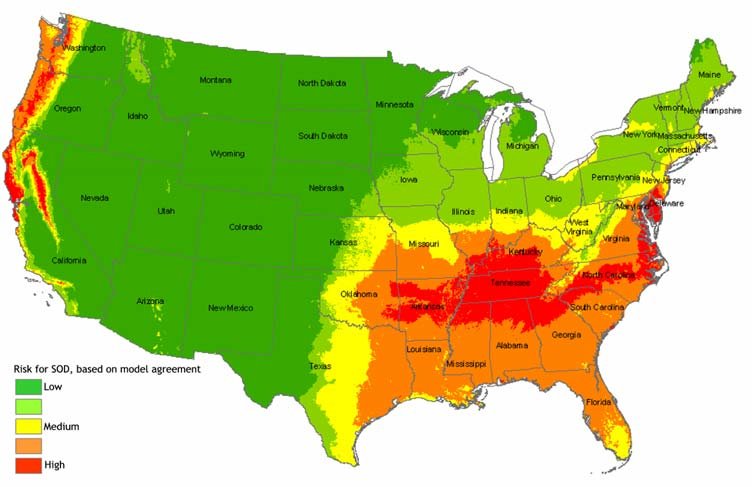
The Subcommittee provides $280,960,000 for the State, Private, and Tribal forestry program. This is apparently a $23 million cut for the overall SPT program. The bill specifies that this funding “includes forest health management, invasive plants, and conducting international programs and trade activities.” This would seem to restore funding for the Forest Health Management program – both the “cooperative lands” and “federal lands” subprograms. I doubt that the funding will reach the level I suggested: $32 million for the cooperative lands subprogram and $16 million for the federal lands subprogram.
Still, it is a great relief that the Congress has – so far – chosen to maintain these programs, which are so critical to countering invasions by non-native organisms. I hope the full House and the Senate will agree. Please contact your senators and remind them how important these programs are.
(Some other important programs have been sacrificed in the appropriations bill – A 23% cut in the budget for the Environmental Protection Agency; reversing some regulations intended to protect various endangered species …)
Posted by Faith Campbell
We welcome comments that supplement or correct factual information, suggest new approaches, or promote thoughtful consideration. We post comments that disagree with us — but not those we judge to be not civil or inflammatory.
For a detailed discussion of the policies and practices that have allowed these pests to enter and spread – and that do not promote effective restoration strategies – review the Fading Forests report at http://treeimprovement.utk.edu/FadingForests.htm
Or