As I will describe in another blog, participants in the annual meeting of the National Plant Board link in Honolulu learned the basics about the uniqueness of agriculture and native species on remote Pacific islands. I want to complement this information by reminding you about other Hawaiian and Guamaian species at risk – although did not learn anything new.
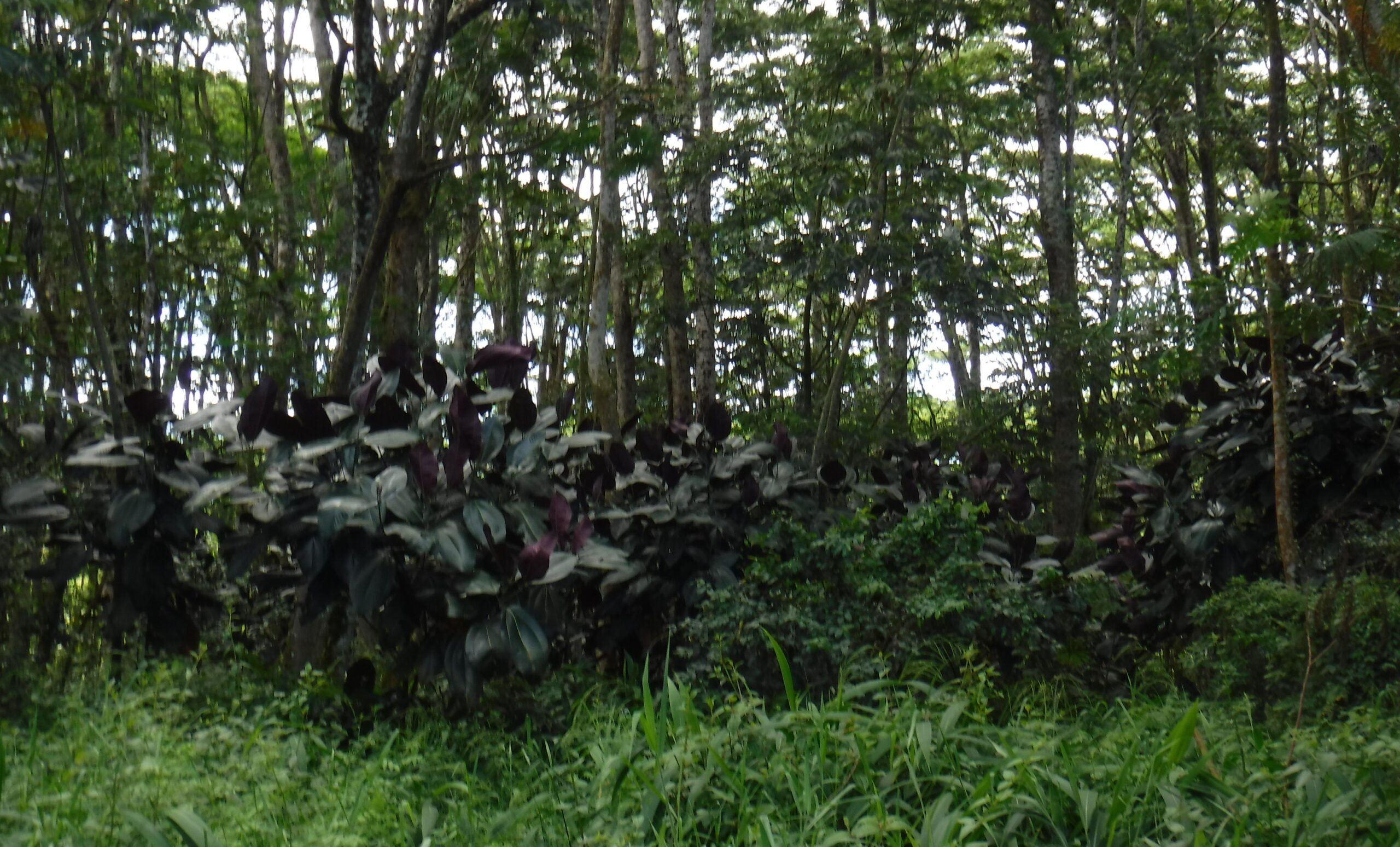
As Martin and Andreozzi pointed out, the Pacific islands import nearly all their food and other consumables. Considerable interest in some quarters in Hawai`i to increase agricultural production. However, large swaths of land in the low-elevation area surrounding Pahoa on the Big Island is completely dominated by the albizia (Falcataria Molucca) [see photo above]. J.B. Friday says it is cost-prohibitive to remove these trees in order to restore agriculture in the area. Local people are concerned because in storms the trees fall onto houses and roads, causing considerable damage.
I saw numerous clumps of the notorious invasive plant Miconia calvescens. Dr. Friday told me that conservationists now focus on keeping this plant out of key areas, not trying to eradicate it completely.
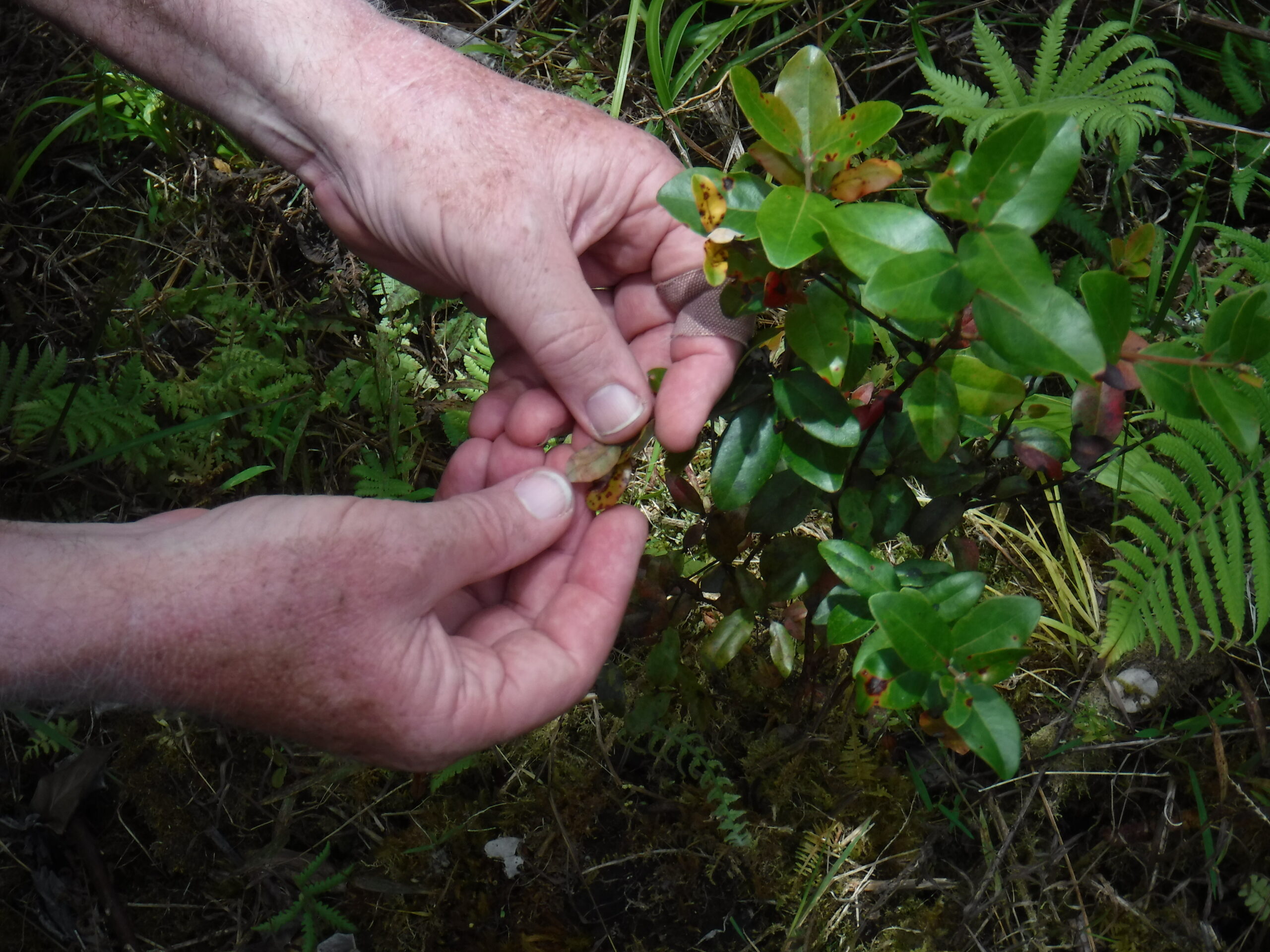
Local people trying to restore disease-damaged forests by planting other native plants and hand-clearing invasive plants. Some of the ohia seedlings infected by Austropuccinia psidii.
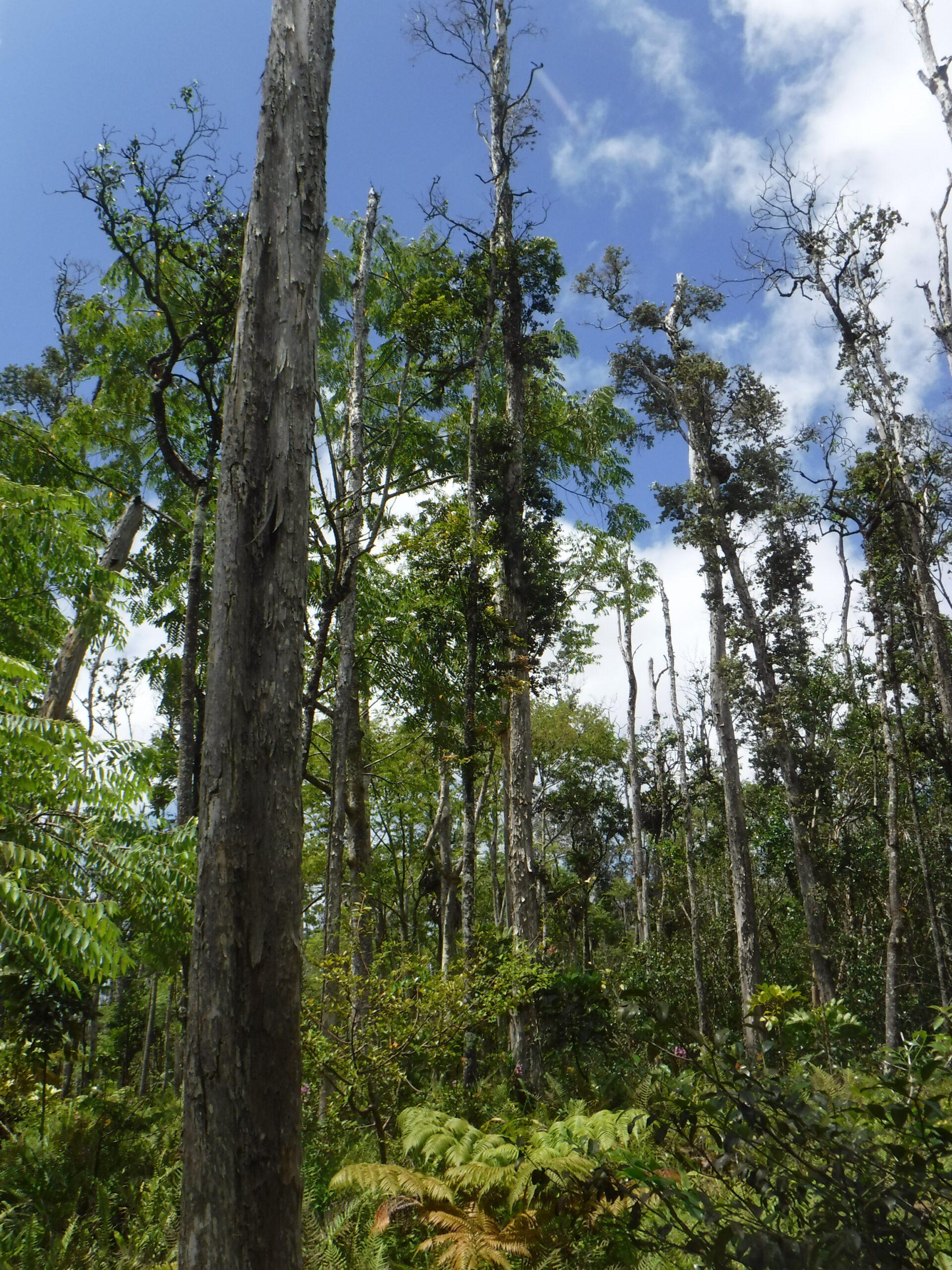
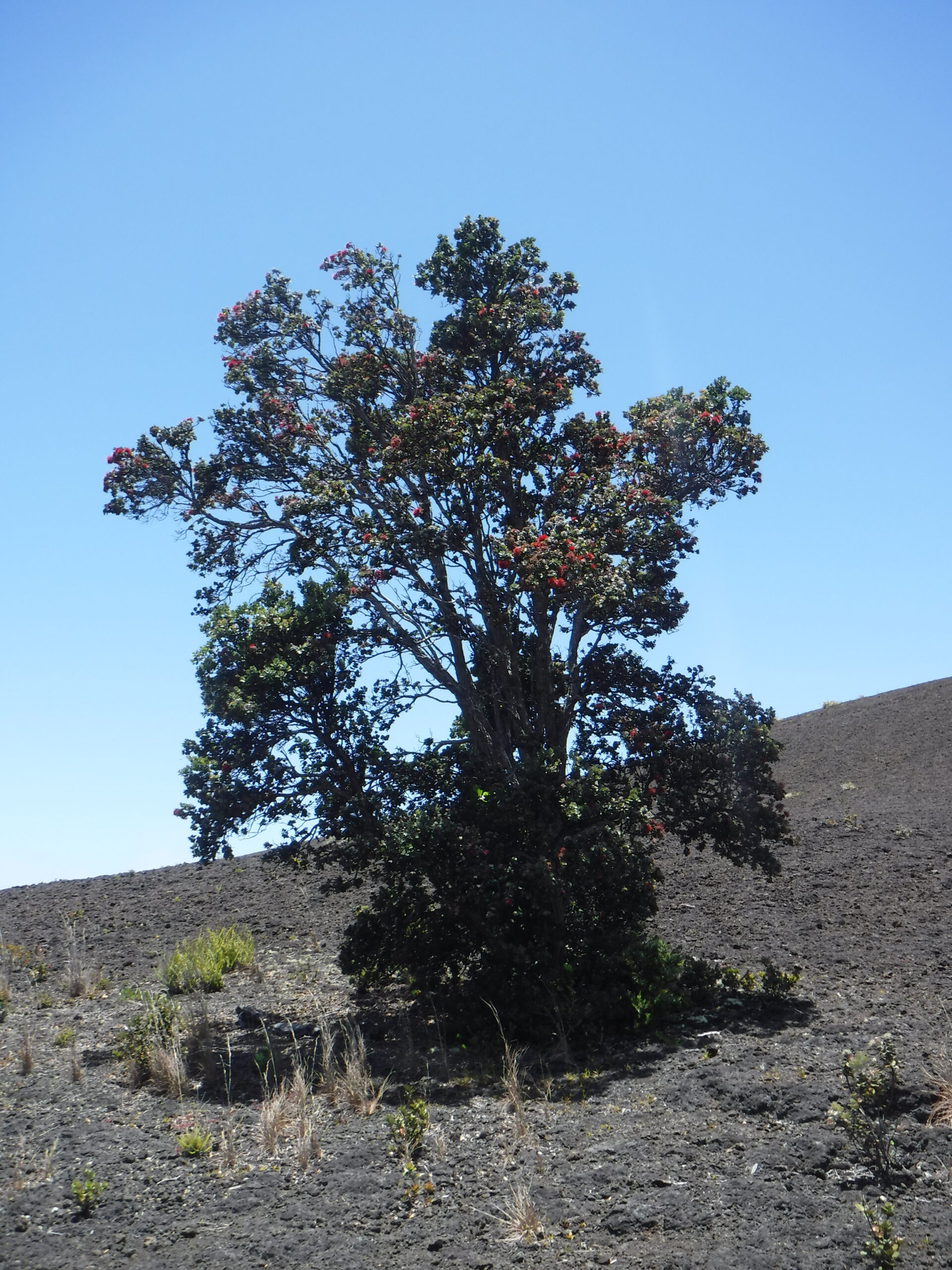
Dr. Friday showed me many areas where ʻōhiʻa trees have been killed by rapid ʻōhiʻa death. Since this mortality occurred a decade or more ago, other plants have grown up. Pic In many if not most cases, this jungle includes dense growths of guava Latin the most widespread invasive tree on the islands (Potter). ‘Ōhi‘a trees continue to thrive in Hawai`i Volcanoes National Park – also on the Big Island – because the NPS makes considerable efforts to protect them from wounding by feral pigs. Demonstrates importance of fencing and mammal eradication in efforts to protect this tree species.
I also saw healthy koa (Acacia koa) in the park, especially at sites along the road to the trail climbing Mauna Loa.
Regarding the wiliwili tree, I was told that it remains extremely scarce on Oahu.
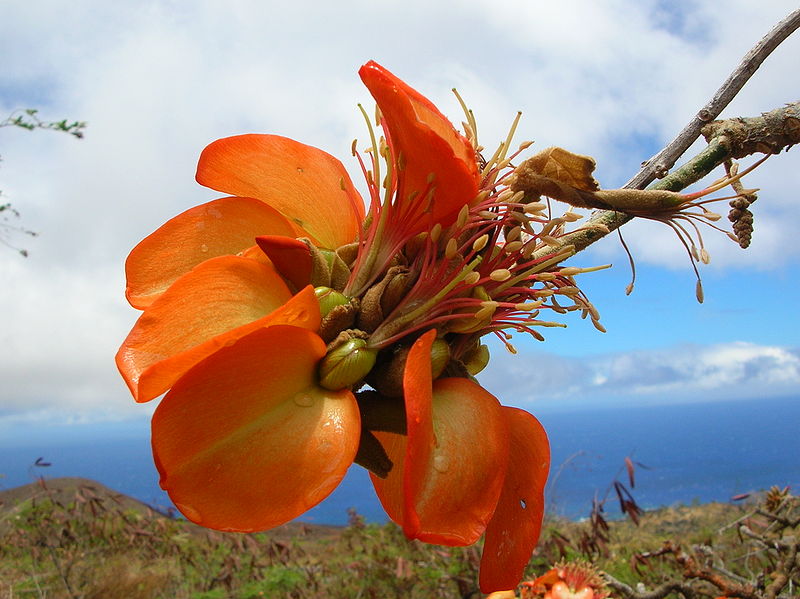
I heard nothing about the status of naio – another shrub native to the Big Island – but on the dry western side of the island.
I rejoice that scientists are making progress in protecting and restoring Hawaii’s endemic bird species. Specifically, they are at the early stages of controlling mosquitoes that transmit fatal diseases. All 17 species of endemic honeycreepers that have persisted through the 250 years since Europeans first landed on the Islands are now listed as endangered or threatened under the federal Endangered Spp Act. The “Birds, not Mosquitoes” project has developed lab-reared male mosquitoes that, when they mate with wild female, the resulting eggs are sterile. (Male mosquitoes don’t bite, so increasing their number does not affect either animals or people.) Over time, the invasive mosquito population will be reduced, giving vulnerable native bird populations the chance to recover. Scientists began releasing these modified mosquitoes in remote forests on Maui and Kaua‘i in November 2023. In spring 2025, they began testing releases using drones. Use of drones instead of helicopters reduces the danger associated with flying close to complicated mountain rides in regions with variable weather. This project should be able to continue; the Senate Appropriations Committee report for FY26 allocates $5,250,000 for this project.
American Bird Conservancy is sponsoring a webinar about this program. It will be Wednesday, August 27, 2025 4:00 PM – 5:00 PM ET. Sign up for the webinar here
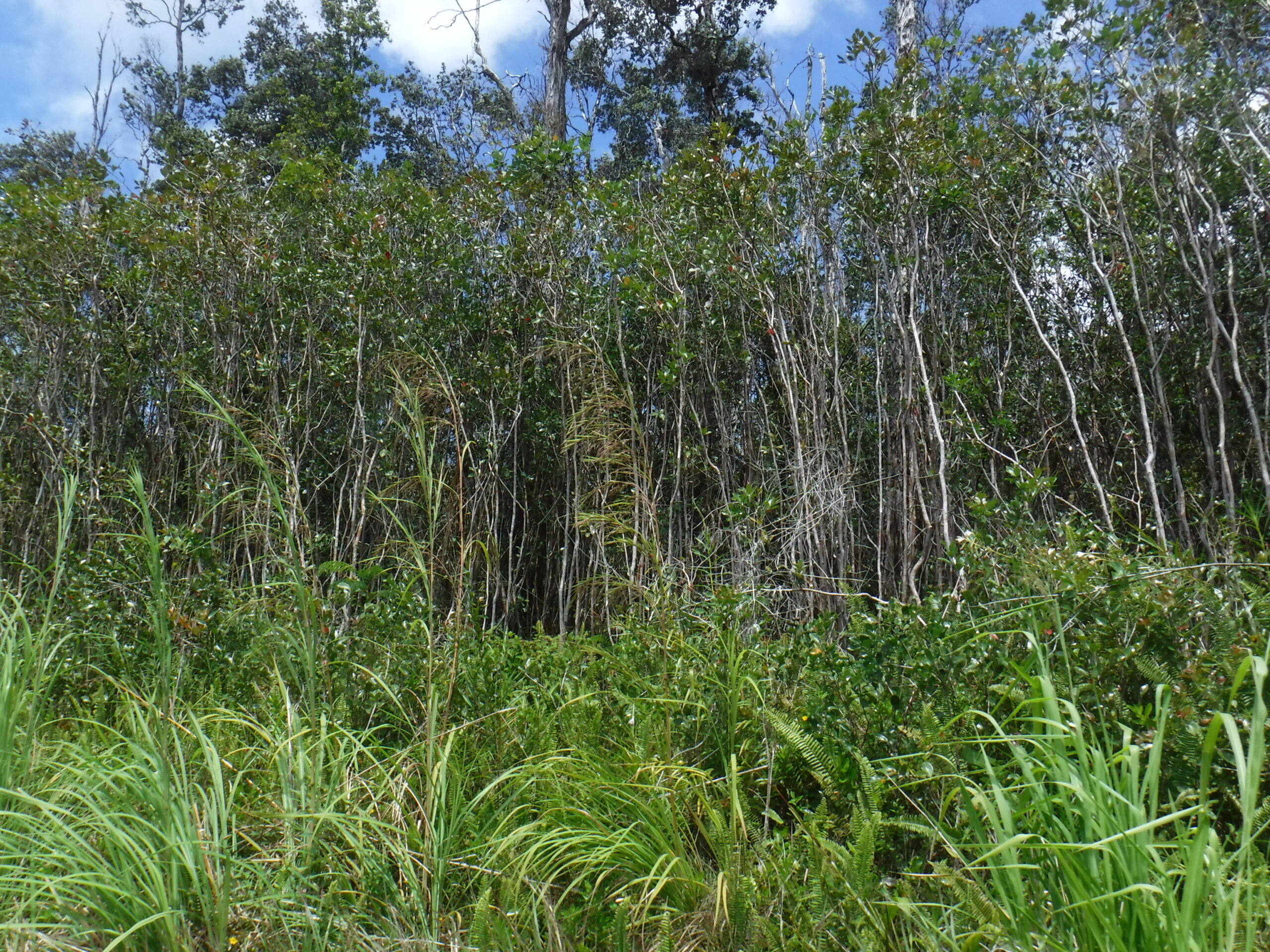
Finally, scientists are releasing a biocontrol agent targetting strawberry guava, Psidium cattleyanum, the most widespread invasive tree on the Islands (Potter et al. 2023). Distribution involves an interesting process. A stand of guava is cut down to stimulate rapid growth. The leaf-galling insect Tectococcus ovatus reproduces prolifically on the new foliage. Twigs bearing the eggs of these insects are collected and tied into small bundles. The bundles are then dropped from helicopters into the canopies of dense guava stands, where they establish and feed – damaging the unwanted host.
Guam
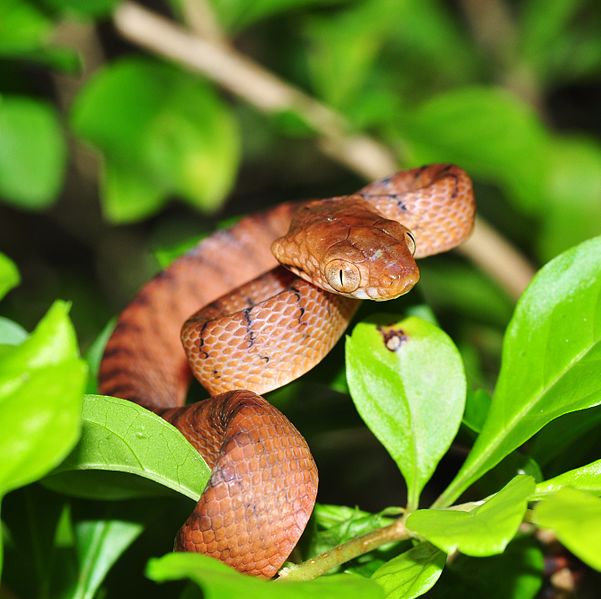
Guam’s endemic birds have famously been extinguished by the non-native brown tree snake. Dr. Aaron Collins, State Director, Guam and Western Pacific, USDA APHIS Wildlife Services, informed participants at the National Plant Board meeting about the extensive efforts to suppress snake populations in military housing on the island, reduce damage to the electric grid, and prevent snakes from hitchhiking to other environments, especially Hawai`i and the U.S. mainland.
The program began more than 30 years ago, in 1993. The program now employs 80 FTEs and has a budget of $4 million per year. It was initiated because live and dead snakes had been found in shipments and planes that landed in Hawai`i and the U.S. mainland. Avoiding the snake’s establishment on Hawai`i is estimated to save $500 million per year. The program is a coordinated effort by USDA, U.S. Fish and Wildlife Service, and the Department of Defense. Probably this estimate helped advocates reverse a decision by the “Department of Government Efficiency” to defund the program.
The program enjoys some advantages over vertebrate eradication programs on the mainland. For example, since Guam has no native snakes, it can use poison, e.g., in mouse-baited traps that can be dropped from planes. A recent innovation is auto-resetting traps baited with mammals; they can electrocute numerous snakes per night.
SOURCE
Potter, K.M., C. Giardina, R.F. Hughes, S. Cordell, O. Kuegler, A. Koch, E. Yuen. 2023. How invaded are Hawaiian forests? Non‑native understory tree dominance signals potential canopy replacement. Lands. Ecol. https://doi.org/10.1007/s10980-023-01662-6
Posted by Faith Campbell
We welcome comments that supplement or correct factual information, suggest new approaches, or promote thoughtful consideration. We post comments that disagree with us — but not those we judge to be not civil or inflammatory.
For a detailed discussion of the policies and practices that have allowed these pests to enter and spread – and that do not promote effective restoration strategies – review the Fading Forests report at http://treeimprovement.utk.edu/FadingForests.htm
Or