The National Plant Board (NPB) represents the state officials responsible for preventing the introduction, establishment, and spread of invasive species called “plant pests” – including insects and pathogens that attack our native flora and invasive plants. The NPB has just held its 2025 meeting, on which I report here.
Coming to the Mid-Atlantic: NPB 2026 Annual Meeting
The next annual meeting will be in Alexandria, Virginia at the end of July 2026.I have attended these annual meetings since 2006 and always find them worth my time. They provide a wonderful opportunity to interact with the state and federal officials responsible for managing invasive plants and plant pests, and to assess regulatory issues. Contact me for more information.
The agendas focus on practical topics, such as science and technology tools, changes in APHIS policies or practices, and progress in cooperation among relevant federal agencies (i.e., the U.S. Department of Agriculture and the Department of Homeland Security’s Bureau of Border Protection) and with the states. While agricultural pest issues are stressed, tree-killing pests also get attention. Sometimes invasive plants are also discussed. The Board’s state representatives seek ways to coordinate their efforts both at these meetings and throughout the year.
Issues in the host location are part of the focus. Next year, that will be the Mid-Atlantic. The meeting is being co-hosted by the departments of Agriculture of Virginia, Maryland, Washington, D.C., and Delaware.
I expect that there will be opportunities for presenting concerns of non-governmental organizations – at least through staffed display tables and possibly other activities. I hope the many conservation organizations that have a Washington, D.C., presence will consider participating.
In Honolulu: NPB 2025 Annual Meeting
NPB’s 2025 Annual Meeting in Honolulu focused to some extent on the unique aspects of agriculture and introduced pests on remote Pacific islands. (Guam was co-host.) This blog reports on current efforts by federal and state authorities to counter bioinvasions there and around the country.
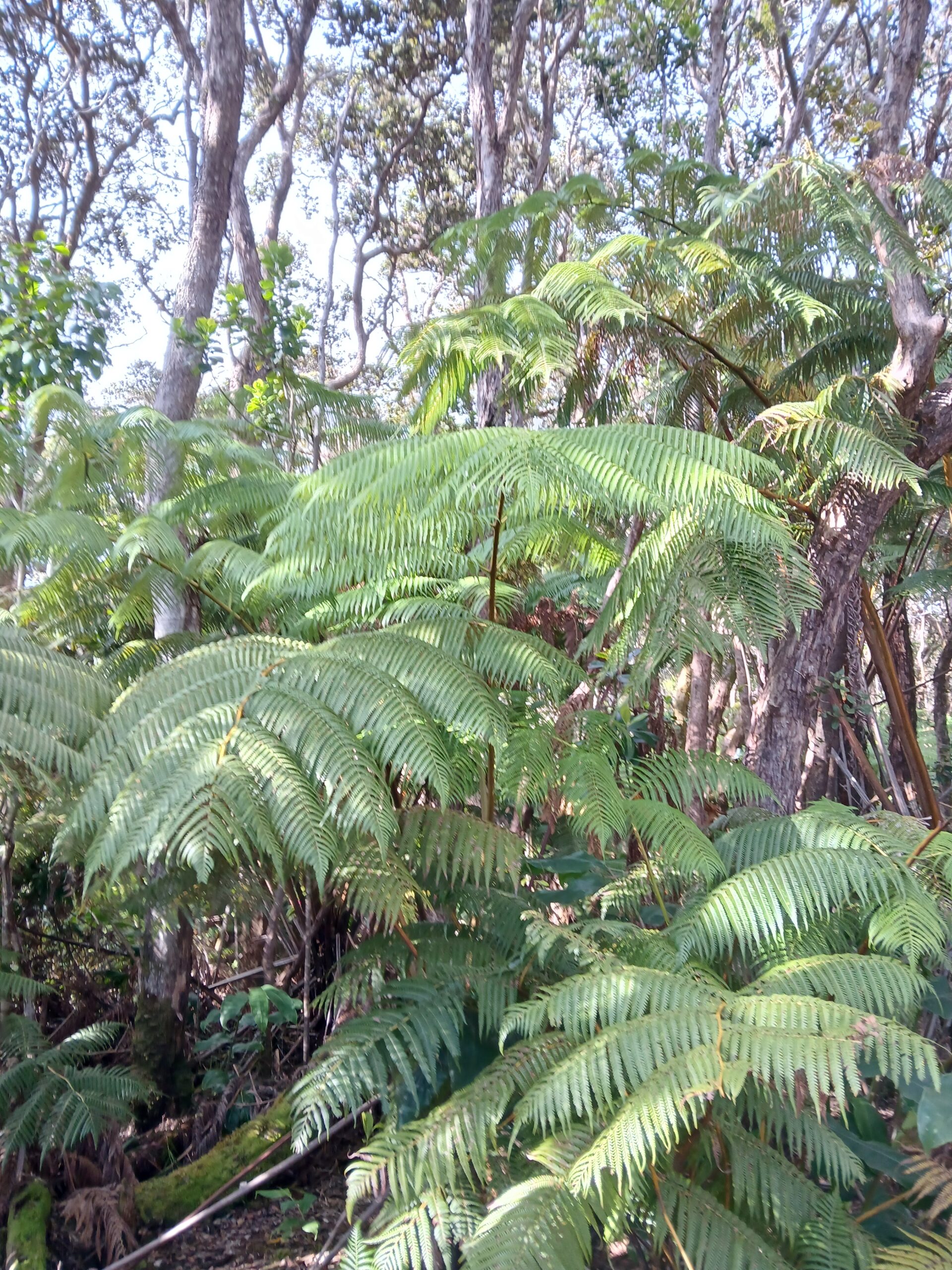
I took advantage of the meeting to visit the “Big Island” of Hawai`i to see for myself the impact of rapid ‘ōhi‘a death and enjoy the native flora (for example, the hapu tree fern – below). I posted another blog reporting what I learned there.
Federal
In an earlier blog, I outlined the Administration’s proposed cuts to staff of the U.S. Department of Agriculture (USDA) and contradictory actions by Congress in the annual appropriations bills.
As that blog makes clear, the work of USDA’s Animal and Plant Health Inspection Service (APHIS) is viewed much more positively by the Trump Administration than is the USDA Forest Service. While APHIS’ funding is much more secure, staff cuts and reorganization of the USDA still have caused setbacks. APHIS is expected to lose 15% of employees – 1,180 people. Four hundred APHIS employees accepted the Administration’s deferred resignation offer. These included the leadership of many programs – including the previous Deputy Administrator, Mark Davidson. Higher up, no one has been appointed to the position of Deputy Secretary for Marketing and Regulatory Affairs.
In his report to the meeting, APHIS Acting Deputy Administrator for Plant Protection and Quarantine Matthew Rhoads noted that the Administration’s Farm Security Plan, which emphasizes efforts to combat bioterrorism, includes APHIS’ safeguarding role. However, abrupt and incomplete leadership changes hamper efforts to replace those who have left and set agency priorities. While I am cheered by the reported priority for preventing pest introductions, I fear that the focus might be quite narrow, leaving out threats to natural resources such as native forest trees.
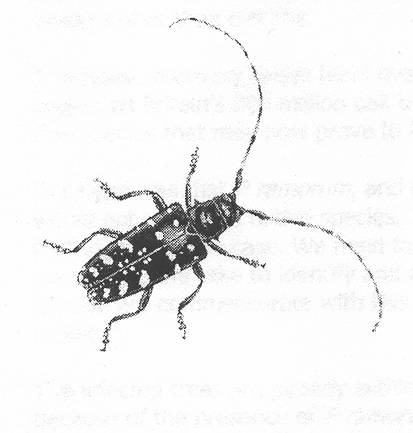
Rhoads announced that after years of effort, the Asian longhorned beetle has been declared eradicated on 12.3 square miles of the Massachusetts quarantine zone.
Much of the presentation by Matthew Rhoads and later ones by other APHIS staff updated attendees on progress on technologies important in pest detection and control, and specific projects being carried out jointly by APHIS and NPB members (that is, state regulatory officials chosen to represent the state phytosanitary agencies). I consider the collaborative projects — begun in February 2023 – to be very important. Twenty years ago, relations between APHIS and its state counterparts were characterized by an “us vs. them” attitude.
I will summarize progress on the projects of greatest interest to those of us focused on non-native insects and disease pathogens threatening tree species. Rhodes mentioned improvements in the plant pathogen diagnostic certification program and development of improved molecular diagnostics for 45 insects and plant pathogens, including several Phytophthora species.
Joint APHIS-NPB teams have completed many risk analyses: 18 datasheets, 20 assessments, and four pathway analyses. As usual, insects – especially beetles – are the most numerous taxa detected. Many were surprised that the majority of new detections occurred in the south. When he was asked about this, Rhoads speculated that this reflected the region’s more hospitable climate and Florida’s surveillance efforts. I noted that ports in the southeast – e.g., Savannah and Charleston – are receiving higher import volumes; and that there have been problems with dunnage in the port of Houston.

Rhoads praised the federal-state strategic alliance’s project targetting illegal importation of plants purchased on-line. His example should concern us: importation of as many as 10,000 black pine seedlings to Georgia. The state stopped sale of these plants and APHIS’ investigatory unit began an investigation. This example illustrates the volume of plants that might be moving in this trade. Several states asked APHIS to offer more help in countering trafficking involving smaller numbers. All agree that no one has yet figured out an effective way to control this pathway.
A second example of successful coordination between APHIS and the states was said to be the decision to not regulate Phytophthora austrocedri, a pathogen detected in several nurseries in Oregon in 2024. Possible hosts in the Pacific Northwest include the already-depleted Port Orford cedar, and here; Juniperus californica, J. grandis, J. occidentalis, and J. maritima. Federal and state plant health officials, in coordination with the nursery industry trade association (AmericanHort), reached this decision after determining that the pathogen has probably been present in Oregon for many years and been spread to other states on the large volumes of host plants shipped. Now it will be up to states and non-governmental conservation organizations to try to detect whether this pathogen has established and devise management strategies.
New Information (as of December 2025): someone has posted on the web a written explanation of this decision by APHIS to the National Plant Board. [Visit cdn.ymaws.com, search for “Phytopthora austro”]. APHIS estimated that delimitation surveys in just one nursery would cost more than $9 million. Because the pathogen cannot be detected by visual symptoms, even tracking spread requires expensive destructive sampling of large numbers of plants. Meanwhile, thousands of possibly infected plants have been shipped from at least two Oregon nurseries in recent years. APHIS concluded that a Federal survey program for P. austrocedri would not contribute to ultimately controlling the spread or eradication of this pathogen. The agency recommended instead that natural resource agencies adopt a “protective-style approach”, focused on actively managing highest-value natural sites.
Are federal, state, and non-governmental managers of the many types of ecosystems inhabited by junipers and cypresses equipped to do this?
Ordinarily, the USFS Forest Health Protection program would be in a position to assist states which want to manage this pest (assuming its establishment). But considering the current uncertainty regarding USFS’ future, blog states cannot count on that help.
Sky Stevens (entomologist on the staff of USFS Forest Health Protection program) reported on the situation at the USFS. She noted that the Congressional appropriations bills continue funding for the agency’s research program and collaboration with non-federal entities managing forests. Still, the USFS lost 5,200 people through “voluntary” resignations and firings.
The program of greatest importance to us, Forest Health, was cut from 18 people to 8. Stevens replaced the long-time national entomologist. The comparable pathologist has retired. Stevens is struggling to make decisions regarding the pathology program, especially since diseases are inherently more difficult. While the USFS is doing lateral exchanges to fill high-need vacancies, FHP has not yet been asked what the program needs.
According to Stevens, in 2024 about 9 million acres were impacted by forest pests. The FHP program treated 1 million acres. As usual, the (European) spongy moth was the largest target based on acreage. Other non-native species targetted were emerald ash borer, goldspotted oak borer, sudden oak death, Asian longhorned beetle, hemlock woolly adelgid, and rapid ‘ōhi‘a death. See summaries of these pests’ impacts and status here.
Continuation of these projects in 2025 often became trapped in the new Administration’s funding freezes; opportune times for effective actions were often missed. On-going projects include several targetting emerald ash borer and its hosts in Oregon and black ash swamps of the Midwest and Northeast; managing sudden oak death in Oregon and California; and delimitation surveys for rapid ‘ōhi‘a death. The SOD program benefits from approximately $3 million earmarked by Congress (out of the total funding for the forest health program of $48 million).
Stevens noted that it is difficult to discuss the program’s future given the uncertainty. Program staff hope to continue issuing products that help people understand forest health in their region – not limited to federal lands.
I learned from the review of the following programs and technical tools that many were funded by the grant program under APHIS’ Plant Pest and Disease Management and Disaster Prevention program (Plant Protection Act Section 7721). Clearly, America’s efforts to prevent and respond to invasions by plant pests (including invasive plants) would be far less robust without this grant program.
Wendy Jin, APHIS PPQ Associate Deputy Administrator, urged states to use pest forecast models developed under the SAFARIS program. These models incorporate information on weather; pest biology, environmental needs and impact; hosts; land cover; and relevant human activities. Fifty pests have been evaluated so far, apparently including Asian longhorned beetle, spongy moth, spotted lanternfly, and boxtree moth. (All but the last are described briefly under the “invasive species” tab here.) The goal is to provide managers information about the insect’s life stage at specific times in specific localities so that they can time their surveillance and management actions. However, I am somewhat worried because the models use current and historical weather data – which might not be pertinent as the climate warms. Worse, the modelers lack sufficiently detailed data to develop models for Alaska, Hawai`i, Puerto Rico, or Guam.
Dr. Carrie Harmon (Deputy Director, National Plant Diagnostic Network) described the resources available for states use from two diagnostics tools. Both were developed under grants which are now expiring. Therefore updates and further development will depend on renewal of the grants. The National Plant Diagnostic Network (NPDN) provides accurate data and alerts about appearances of plant diseases. APHIS is said to be collaborating closely to ensure as much data as possible is shared. A separate body, the Diagnostic Assay Validation Network, is validating diagnostic assays.
A few years ago the NPB and APHIS formalized their new level of collaboration as the “Strategic Alliance, Strategic Initiative”. The Plant Board surveyed its members to gauge their feelings about several issues: 1) data-sharing issues that impede decision-making; 2) ways to strengthen coordination when dealing with on-line sales of plants or other vectors of plant pests (see the pine-Georgia example above); and 3) what structures and practices could make resolving these problems easier.
One of the resulting initiatives is an analysis of implementation of the Federal Noxious Weed program in the absence of a line-item appropriation. However, the President’s “Department of Government Efficiency” (DOGE) prompted resignations and firings, including this project’s APHIS liaison. Without a replacement, it is unclear how the analysis can proceed.
Another speaker, representing Bob Baca, Assistant Director of APHIS Plant Protection and Quarantine, warned state officials about new pressure to phase out use of methyl bromide (MB) as a phytosanitary tool. Use of ozone-depleting chemicals – including MB – has been regulated since 1988 under the Montreal Protocol. Americans use more MB for this purpose than any other country. Already manufacturers are ending its production. After mentioning substitutes under development, the speaker urged state departments of Agriculture to meet with growers and develop a nation-wide plan to weather this impending change. She noted that APHIS has no authority to require companies to produce substitutes.
The NPB leadership discussed turnover in the organization (several states are represented by officials new to their jobs); advocacy to APHIS for even better coordination and recognition of states’ need to act quickly; and efforts to expand its collaboration with other entities. A series of presentations tallied lessons learned during specific plant pest crises. These included the role of the public in pest detection; mobilizing initial responses to a new pest; and building higher-ups’ and legislators’ support for funding a “rapid response” capability before arrival of a new damaging pest.
In a separate blog I reviewed topics discussed that pertain particularly to Pacific island plant health issues.
Posted by Faith Campbell
We welcome comments that supplement or correct factual information, suggest new approaches, or promote thoughtful consideration. We post comments that disagree with us — but not those we judge to be not civil or inflammatory.
For a detailed discussion of the policies and practices that have allowed these pests to enter and spread – and that do not promote effective restoration strategies – review the Fading Forests report at http://treeimprovement.utk.edu/FadingForests.htm
Or