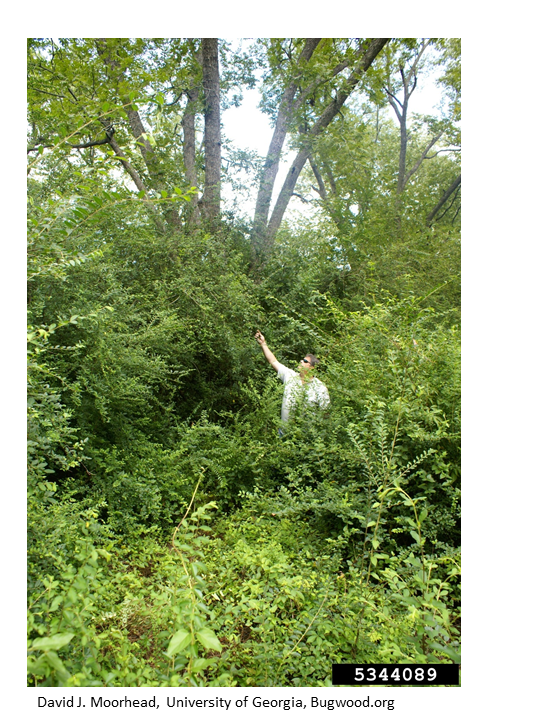
It used to be thought that closed-canopy forests are resistant to bioinvasion because of the low light availability and relatively infrequent disturbance. Yet many are badly invaded! (On this site, scroll down past the Archives, choose “invasive plants” category.)
Nor is it just temperate forests in North America. Subtropical and tropical forests have also been invaded, as have the temperate forests of South America and, to a lesser extent, Europe. Temperate forests in Asia are less invaded; boreal forests very little (Fridley et al. 2025; see full citation at the end of this blog).
Fridley et al. (2025) have proposed a conceptual model to explain how this happens: “superinvaders” – a special class of woody plants – that achieve competitive dominance across a wide range of forest conditions. The “superinvaders” pose especially grave threats to native biodiversity because they use life-history strategies unlike those of early successional native species.
The result is that existing invasion and succession theories poorly predict which forests are most invasible and by which species. This failure undermines pest risk analyses and early detection.
Fridley et al. have raised lots of interesting ideas – some of which cannot yet be demonstrated by observations.
Temperate forests of North and South America are increasingly dominated by non-native deciduous and semi-evergreen shrubs and trees that combine fast growth rate in high light and high survivorship in forest interiors. These traits enable them to outcompete the native species. Many invaders also produce many more seeds than co-occurring native species. Similar traits are found in the successful non-native plants in subtropical and tropical forests.
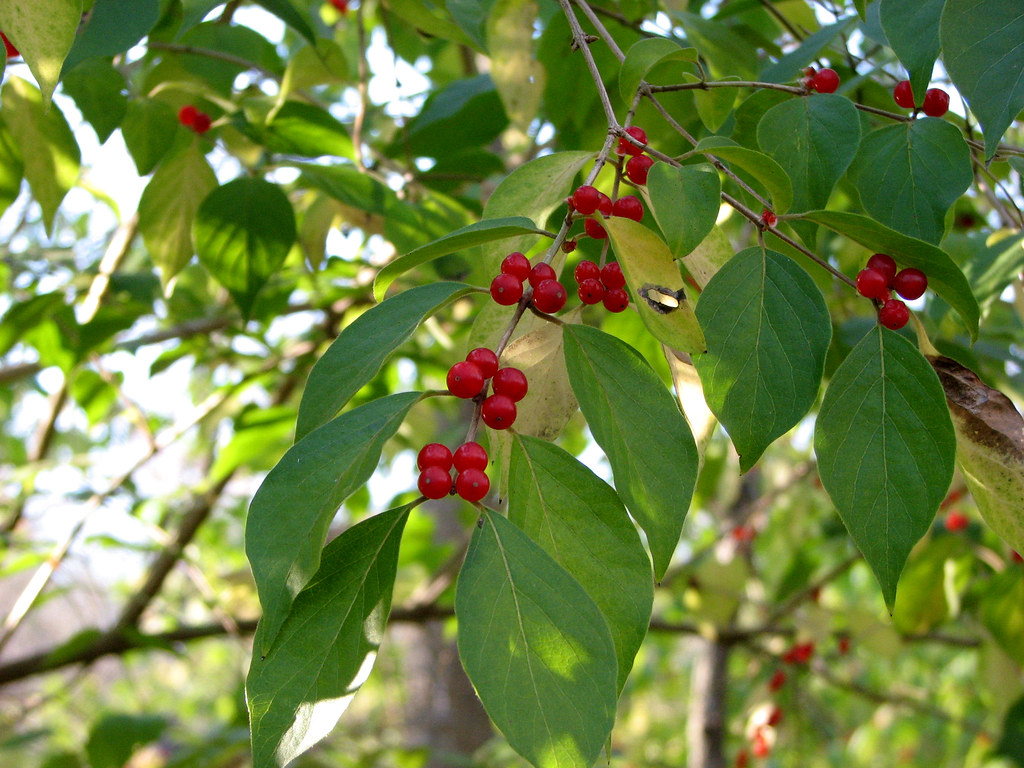
Fridley et al. stress that shade tolerance alone does not endow the invasive plants with sufficiently large advantages in their competition with native species. The forest “superinvader” phenotype must combine this ability to persist in shade with high maximum growth rate and high fecundity when conditions become favorable for reproduction.
They explain the invader’s competitive advantage as the result of their experiencing relatively fewer carbon costs because of enemy release in the novel environment, recent environmental changes that alleviate some stress formerly present in the novel environment, or phylogenetic constraints on the local flora that limit natives’ resource-use efficiency. The non-native plant species enjoy this advantage regardless of whether they also possess other competitive mechanisms, e.g., production of allelopathic compounds, denser growth or shading, greater apparent quantum yield. However, Fridley et al. concede that they lack sufficient evidence to incorporate these other competitive mechanisms into their model.
Since any reduction in carbon costs will enhance both shade tolerance and growth rate when light levels are high, these “superinvaders” can outcompete native species in either situation.
To support these concepts, Fridley et al. note that increased abundance of invaders following disturbance is more pronounced in forests than other habitats. They suggest this is because of the much greater magnitude of change in light levels in forests than in open habitats such as grasslands.
They propose that an analogous situation applies to the presence or absence of mutualist microbial associations, although existing studies are insufficient to reach conclusions about the role of carbon allocation to mycorrhizae in the “superinvader” phenotype. The extent to which these forest invasions alter ecosystem-level carbon dynamics, especially soil processes and litter decomposition is also largely unknown.
Fridley et al. emphasize the role of carbon costs in driving both growth rate and whole-plant light compensation point. This point is defined as the light level at which carbon gain through photosynthesis balances carbon losses from tissue respiration (maintenance and growth) and turnover (shedding and loss from disturbance and herbivory).
To survive in low-light conditions, plants must minimize tissue respiration and turnover. The traits that enable those behaviors have been thought to prevent rapid growth and competitive dominance in high-light conditions. However, the “superinvaders” defy this trade-off by growing faster than most co-occurring native species when light is abundant. Fridley et al. say this is because the plants’ reduced carbon costs enhance competitive advantage in both shade and adequate light conditions.
Fridley et al. name several reasons why a native plant’s carbon costs might exceed those of an introduced species. First on the list is either herbivory or investment in defensive traits. Native plants might be challenged by rising abundance or consumption rates of native or introduced herbivores, such as deer or seed predators, that avoid the introduced species.
A second factor is that the non-native species expends fewer resources to sustain adaptations that confer resistance to other stresses, such as drought or freezing. If a long-standing stress is weakened by global change processes (e.g., atmospheric CO2 levels, growing season duration, precipitation levels and seasonality, suppression of fire, atmospheric nitrogen deposition), a non-native plant that lacks defenses against that now-weakened stress will have a lower carbon cost and therefore an advantage. In some cases, the non-native species might benefit directly from these changes, e.g., droughts.
In some regions phylogenetic constraints have limited evolution of adaptive solutions to various biotic and abiotic stresses. This is most obvious on tropical oceanic islands. Fridley et al. report that native trees in Hawaiian montane rain forests are less energy-efficient conducting photosynthesis than are the invaders. However, this phenomenon also occurs on continents. Two continents’ floras might experience different climatic histories even when at they are at similar latitudes. For example, Eurasian woody species leaf out earlier and senesce later than North American trees and shrubs – possibly as a result of more predictable spring and autumnal climate across Eurasia. They name as one example Norwegian maple (Acer platanoides) in North America.
The future is uncertain
Fridley et al. consider enemy release to be a key factor in these shrub invasions of closed-canopy forests. Therefore, if enemy release decays over time because the introduced plant species accumulate pests, or the forest environment shifts to favor more stress-tolerant phenotypes of some native species, then the dominance of superinvaders will decline. If, on the other hand, resource enrichment continues, e.g., nitrogen deposition and elevated CO2, the impacts of woody invaders – present or newly introduced – might continue to rise. The likelihood that additional introductions of more resource-efficient species will continue to damage floras of oceanic islands.
Implications for risk assessments and management
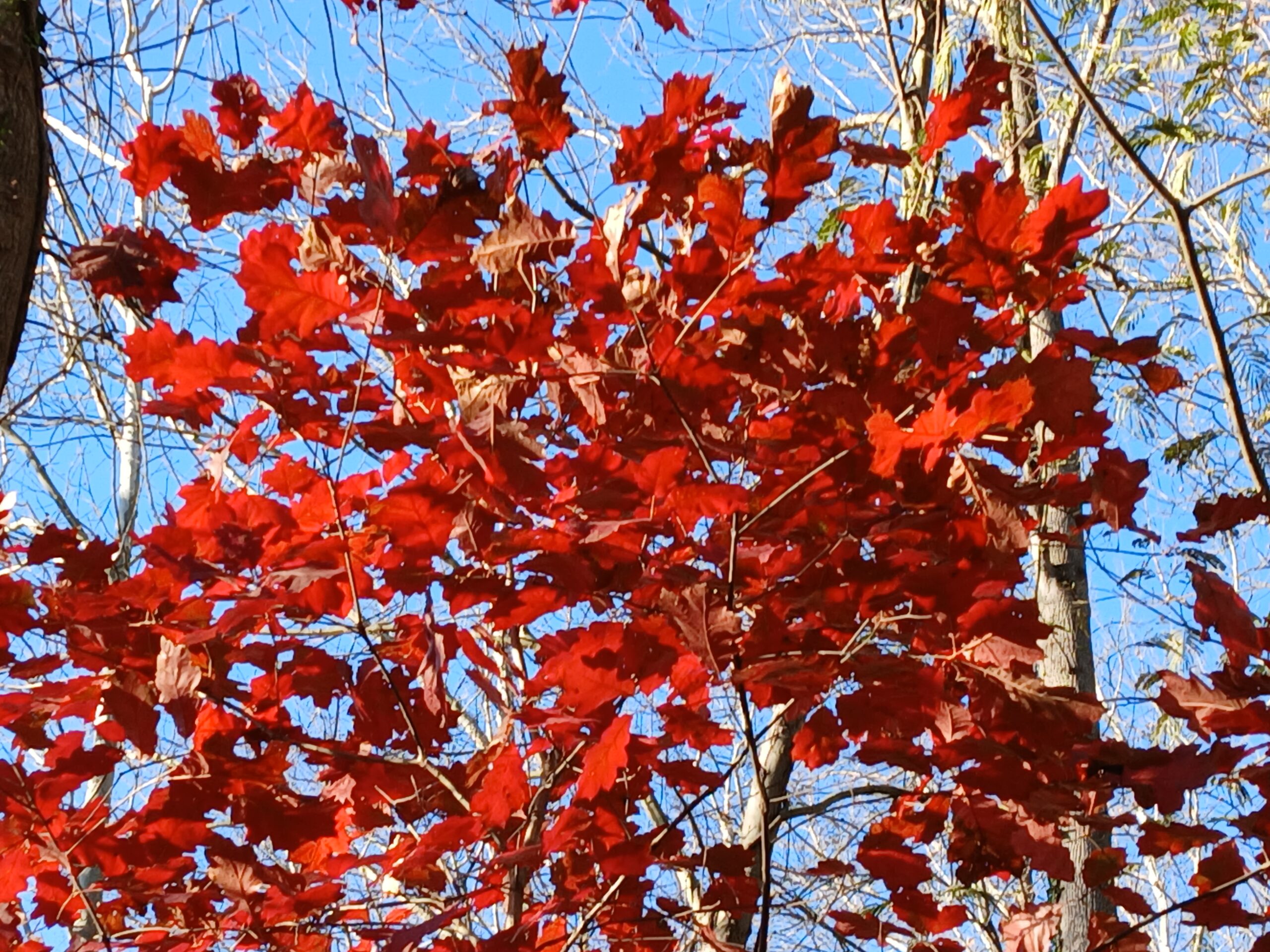
Fridley et al. warn that habitat-matching criteria might be unreliable predictors of forest invasiveness. Among several examples of species that are invasive in interior forest systems in a novel region that do not exhibit this trait in their native range is red oak (Quercus rubra). It is locally dominant in both natural and managed forests in central Europe while in North America, red oak struggles to regenerate in closed-canopy forests. They suggest that Q. rubra in Europe has escaped seedling pathogens present in its native range in North America.
Fridley et al. call for research on traits they have identified as important but that are rarely measured in invasion studies. These include rates of tissue loss and respiratory processes above- and below- ground, plant carbon allocation to tissues and processes, and the whole-plant light compensation points of native and invasive plant species.
The Fridley et al. hypothesis has been supported explicitly by Kinlock et al. (2025). This article says that consistent findings have been reported by earlier small-scale studies in U.S. forests.
I ask for your input on how well the Fridley et al. hypothesis explains shrub and tree invasions in American forests – including those on tropical islands! Is it helpful? Is APHIS incorporating these ideas into plant risk assessments? –
Fridley et al. take pains to reiterate the long-accepted importance of ornamental horticulture in explaining invasive plants’ entry and establishment. They do so in the context of concurring that ruderal traits are not universally advantageous; traits’ benefits depend on the landscape into which the species was being introduced.
SOURCES
Fridley, J.D., P.J. Bellingham, D. Closset-Kopp, C.C. Daehler, M.S. Dechoum, P.H. Martin, H.T. Murphy, J. Rojas- Sandoval, D. Tng. 2025. A general hypothesis of forest invasions by woody plants based on whole-plant carbon economics.
Kinlock, N.L., D.W. Adams, W. Dawson, F. Essl, J. Kartesz, H. Kreft, M. Nishino, Jan Pergl, P. Pyšek, P. Weigelt and M. van Kleunen. 2025. Naturalization of ornamental plants in the United States depends on cultivation and historical land cover context. Ecography 2025: e07748 doi: 10.1002/ecog.07748
Posted by Faith Campbell
We welcome comments that supplement or correct factual information, suggest new approaches, or promote thoughtful consideration. We post comments that disagree with us — but not those we judge to be not civil or inflammatory.
For a detailed discussion of the policies and practices that have allowed these pests to enter and spread – and that do not promote effective restoration strategies – review the Fading Forests report at http://treeimprovement.utk.edu/FadingForests.htm
Or