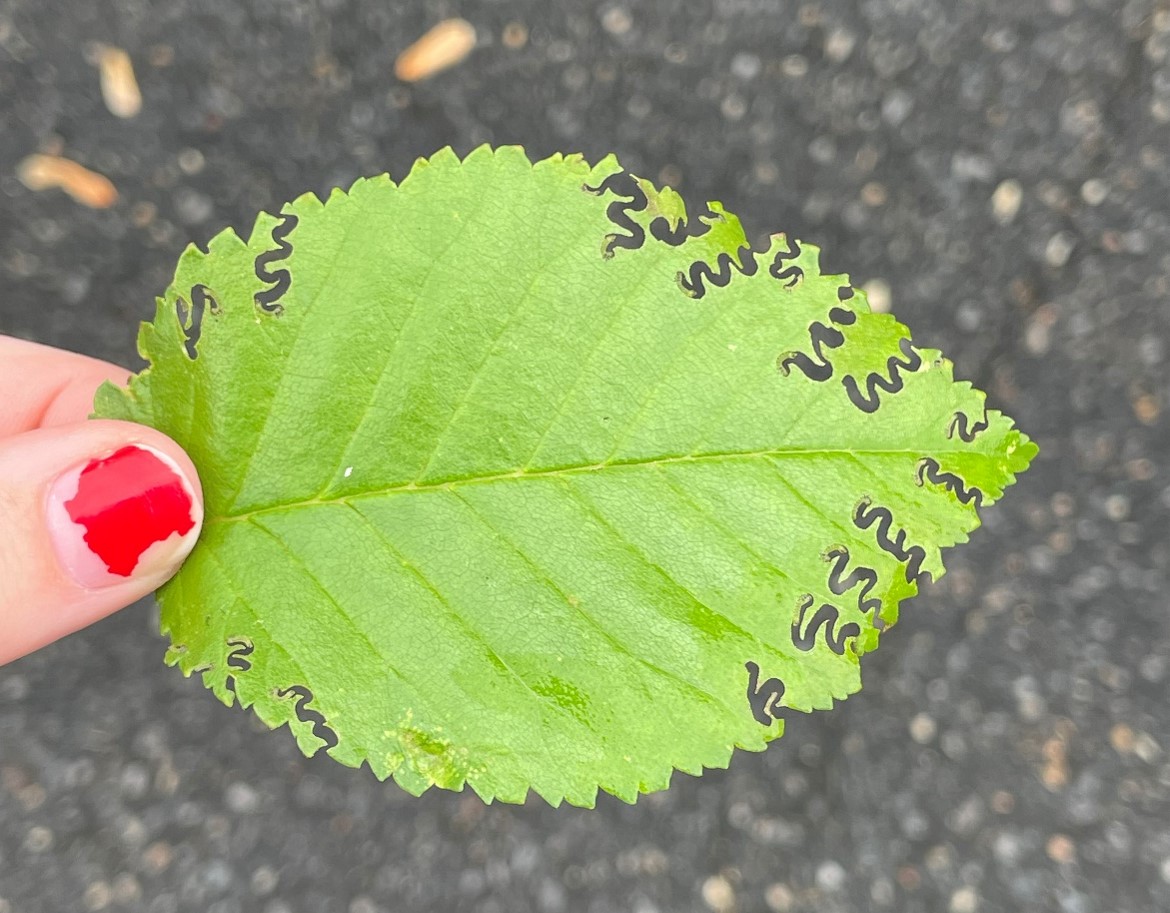
As one of the newest – and most unique – invasive insects, elm zigzag sawfly (EZS; Aproceros leucopoda) has been making headlines across the eastern U.S. and Canada since 2020. The defoliating pest was first confirmed in North America in Québec, Canada and has since spread rapidly across many states and provinces. As its name suggests, EZS larvae feed primarily on elm in a distinctive zigzag pattern. Moving inwards from the leaf edge, the larvae can eventually consume nearly the entire leaf, leaving nothing but the midrib and a few lateral veins behind. Defoliation from EZS can range from nearly undetectable to 100% canopy defoliation of a mature tree.
(See earlier blog here.)
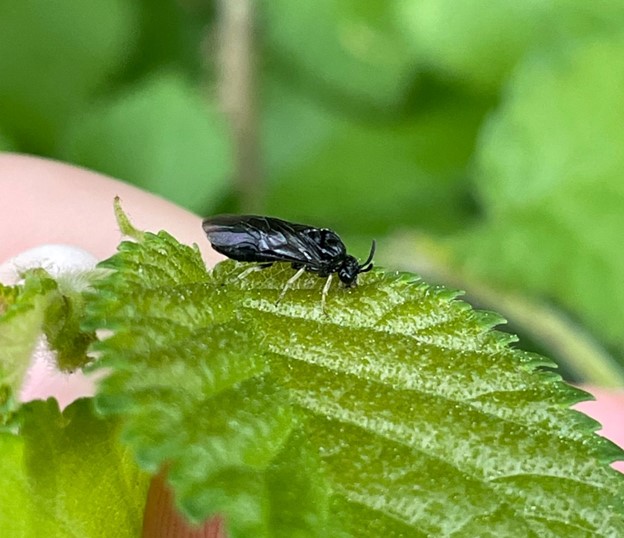
Elm zigzag sawfly biology
EZS is a multivoltine insect, meaning it can have multiple generations in a single growing season. In Europe, where EZS has been invasive since 2003, 1 to 4 generations are common though up to 6 generations have been recorded. In the U.S., many regions document up to 5 generations per year.
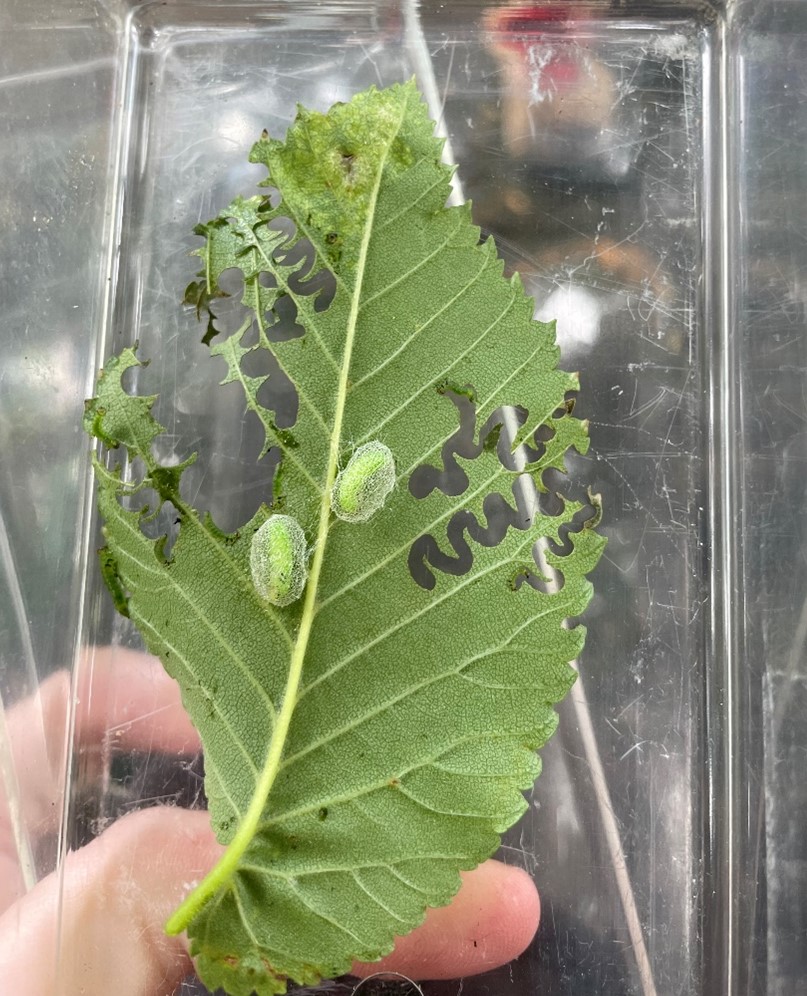
In the early spring, EZS emerges from the soil where it has overwintered. They reproduce parthenogenetically- a form of asexual reproduction- allowing them to lay eggs immediately following adult emergence. Each individual is able to lay up to 49 eggs, drastically increasing EZS reproductive potential. Once the eggs hatch, the larvae begin feeding on the foliage until they are ready to pupate. At that point, the larva may build a summer cocoon, attached to a nearby object such as a branch or fence post. Four to 7 days later, an adult will emerge. The entire life cycle only takes 3 to 6 weeks. Alternatively, the larva could drop to the soil beneath the tree’s canopy where it will build its winter cocoon and overwinter, waiting to repeat the cycle the following spring. A small portion of each generation create overwintering cocoons.
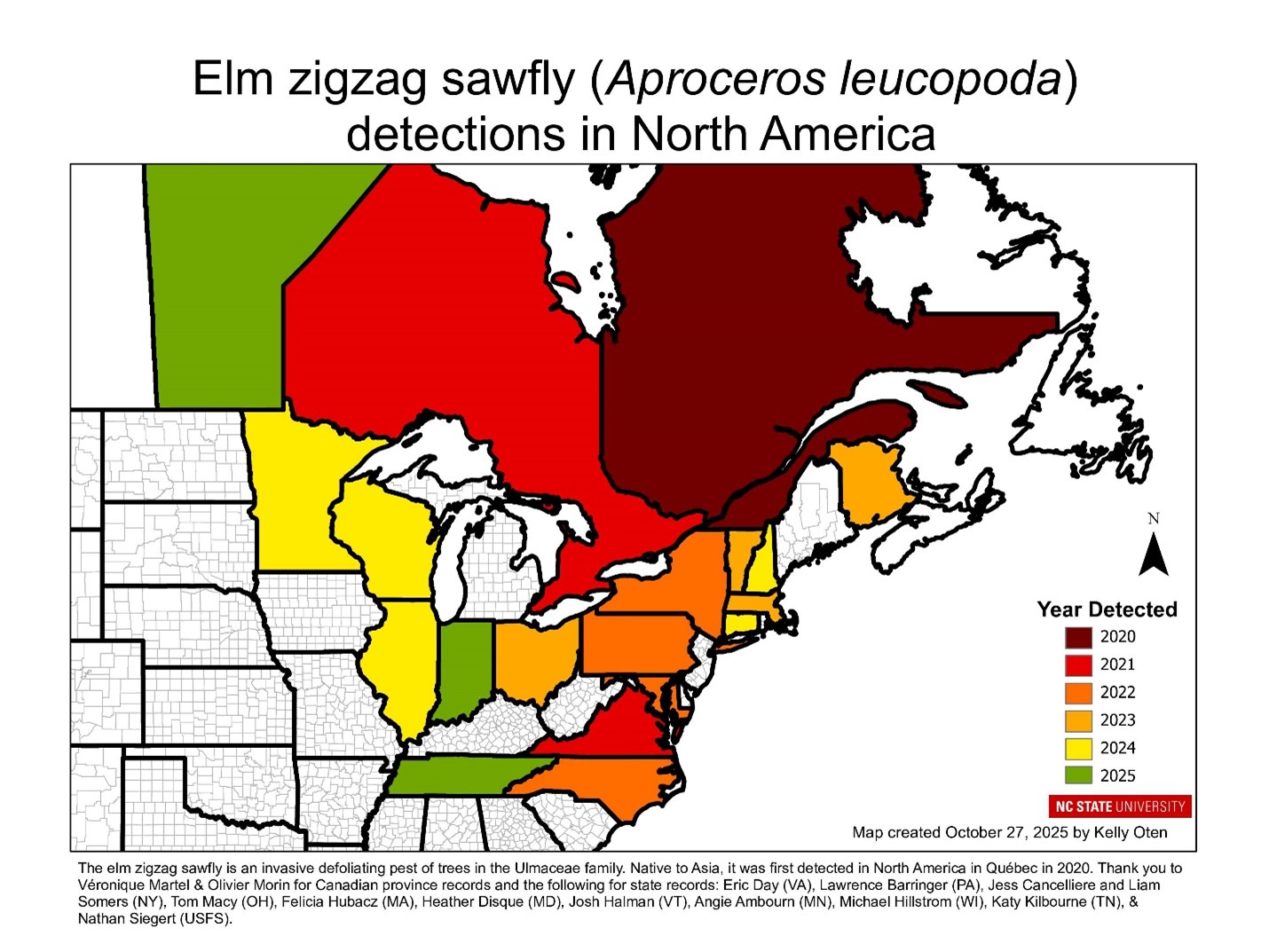
Where is EZS now?
As of the end of 2025, EZS can be found in 15 states and 4 provinces as far west as Minnesota and Manitoba and as far south as North Carolina and Tennessee.
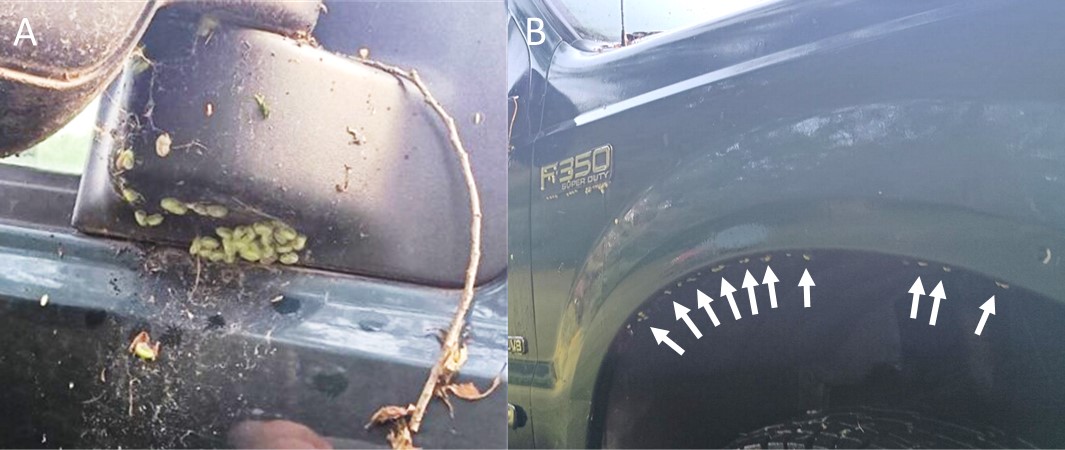
Invasion pathways in North America are currently unknown; however, EZS has been documented attaching its summer cocoons to truck wheel wells and other objects which may be moved. The subsequent movement of these objects can potentially contribute to EZS spread. It has also been suggested that infested elm nursery stock or potted soil of any plants could be a potential pathway for EZS, but more research is needed to fully understand this.
How does EZS affect the trees?
Defoliating pests typically decrease the aesthetic value of trees but leave the host largely unharmed. Across Europe and its native range of eastern Asia, EZS defoliation is relatively minimal, with the occasional severe outbreak resulting in total defoliation of a tree. Resulting branch dieback is even more uncommon.
When EZS was first found in North America, particularly North Carolina and Virginia, there were initial concerns about the implications of a warmer climate accelerating development. Like most insects, EZS development is related to temperature; a warmer climate allows for faster insect development. It was hypothesized that a longer growing season could allow for faster population growth and potentially more damage to host trees. At this point, it is still unclear if this will consistently occur in the southern extent of the range. In North Carolina, reported damage has varied widely since it was found there in 2023. Some trees have been 75% defoliated or more multiple years in a row and are exhibiting upwards of 20% branch dieback after just 3 years. However, trees with less than 10% defoliation and no branch dieback have also been recorded.
Since its first detection in North America, researchers have been working to better understand how this pest will affect stakeholders. They’ve been conducting research on the phenology and voltinism of EZS, exploring novel host associations, and evaluating management techniques. Here’s what they’ve learned so far.
First, the bad news.
Elm zigzag sawfly has recently been found to feed on Japanese zelkova (Zelkova serrata), another common ornamental planting within the Ulmaceae family. However, it is important to note that Japanese zelkova is likely not a preferred host. It is suggested that while EZS can complete its life cycle on Japanese zelkova, it will do so only when no other suitable host is present. Researchers are continuing to explore this novel host association.
But help is on the way! There are management recommendations to control elm zigzag sawfly.
Research conducted at North Carolina State University has determined that soil injections of imidacloprid or dinotefuran at label rate are effective methods to significantly reduce larval populations on infested trees. Both active ingredients are easily accessible to landowners and can provide at least one year of protection against EZS. There is ongoing research to explore more treatment options, including augmentative biocontrol.
What can you do about elm zigzag sawfly?
If you are in an EZS-infested region, check vehicles or outdoor items before moving them.
And if you find EZS, report it! To best manage and prevent the spread of EZS, forest health professionals need to know where it is. Elm zigzag sawfly is the only insect that feeds in the unique zigzag pattern on elm trees. If you see the diagnostic feeding pattern, take a picture of it and contact your county’s local Extension agent or state forestry agency to report it.
Invited blog posted by Delaney Serpan
Delaney Serpan is a second-year Ph.D. student in the Forest Health Lab at NC State University, where she studies elm zigzag sawfly biology and management. She first began working with elm zigzag sawfly as an undergraduate researcher shortly after it was detected in North Carolina for the first time. Working with a novel invasive species on the leading edge of its invasion has been incredibly rewarding. Her work aims to provide accessible management techniques to stakeholders while also protecting elms, an already imperiled species, from further damage.
CISP welcomes comments that supplement or correct factual information, suggest new approaches, or promote thoughtful consideration. We post comments that disagree with us — but not those we judge to be not civil or inflammatory.
For a detailed discussion of the policies and practices that have allowed these pests to enter and spread – and that do not promote effective restoration strategies – review the Fading Forests report at http://treeimprovement.utk.edu/FadingForests.htm
Or