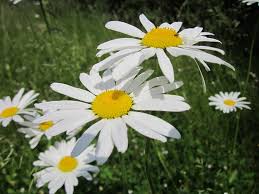
Because urban centers are “hotspots” of species introductions and reservoirs supporting their spread into areas less altered by human activity, a global group of scientists (Richardson et al. 2025) sought to determine whether the same plant species naturalize in urban areas around the world and – if so – where most of those plant species originate.
They chose to pursue this question because urban areas share many interacting environmental and biotic features that they thought might partially overcome the distinct biomes of the continents. These shared features include the prominence of impervious surfaces; increased habitat heterogeneity; eutrophication; fragmentation of any remaining semi-natural habitats; complex human-influenced disturbance regimes; diverse opportunities for dispersal; novel biotic assemblages and interactions; and human facilitation of non-native species’ colonization and local species’ extinction. In addition to the similarities of the receiving ecosystems, these commonalities are facilitated by shared introduction pathways – although Richardson et al. to not pursue this aspect.
The scientists consulted global invasive plant databases to compile a list of 7,792 plant species recorded as naturalized in one or more of 553 urban centers on all six continents (all except Antarctica). Just over 300 species (4%) were reported on all six continents. They call them the “omnipresent” taxa. Further refinement resulted in a list of 96 species that are particularly widespread, defined as being present in more than half of the urban centers of Oceania, North and South America, and Europe. These 96 species are present in a lower proportion of cities in Asia and Africa. Richardson et al. proposed that these species be folded into a new ecological category, the “urban florome”.
I wonder whether this set of species tells us more about biases in the data than the actual “urban florome”. First, 87% of the 96 “most widespread” species (n= 84) are annual or perennial herbs. Only seven tree, six vine, and six shrub or subshrub species were included among the 96 species. In other words, global lists of invasive species are heavily slanted toward species that thrive in disturbance. Is this surprising? As another study (Kinlock et al. 2025) notes, disturbance is ubiquitous!
Second, only a third of the “urban florome” species have been formally evaluated using the Environmental Impact Classification for Alien Taxa (EICAT) system. Of these 32 species, only six were categorized as having a “major” or “massive” impact. Richardson et al. (2025) conclude that many of the species on the most widespread list are human commensals that have few or negligible known impacts.
Still, this finding might underestimate their impacts. First, as noted, two-thirds have not been evaluated. Second, impacts important in urban systems might not be those that increase a species’ rank based on impacts to natural systems (Richardson et al.). Those with substantial nuisance value in the urban setting still require management. Of course, some of the species have severe impacts in both natural and urban ecosystems. For example, Ailanthus altissima causes major infrastructural damage and pollen allergies, while Robinia pseudoacacia alters soil fertility. Both reduce species richness.
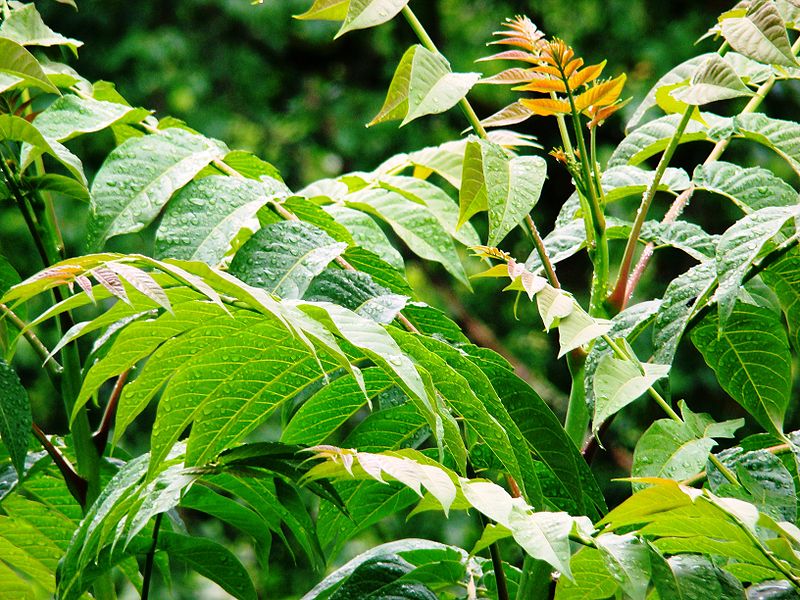
I note that these examples are both trees – which constitute only 7 of the 96 species. Fridley et al. report that trees and shrubs have severe impacts in closed forest systems. I suggest that since many of the urban areas in temperate, subtropical, and tropical regions are probably located in formerly forested areas, remnant (semi-)natural stands and even recreational parks have probably been invaded by these high-impact species. Surely that is more important – at least as regards the level/intensity of the non-native plant species’ impact on biodiversity – than the annual weeds growing along highway verges.
Richardson et al. fear that many cities also have substantial invasion debt. The note specifically that due to the heat island effect, species that can now survive only in cities are likely to spread into surrounding rural and natural areas as temps increase. Thus, these species amplify the urban source effect of plant invasions.
Generalities
Richardson et al. call attention to certain parts of the world acting as ‘factories’ for the evolution of plant species that are well equipped to become invasive when intro to new regions. They name Australian woody flora — although only one species, Melia azedarach, is included among the 96 most widespread species. They also name African grasses and Europe (no taxa specified).
Richardson et al. say that while non-native species in urban areas have usually been described as “passengers” taking advantage of anthropomorphic environmental change, bioinvasions are increasingly recognized as drivers of secondary changes that alter the capacity of these ecosystems to deliver key ecosystem services, or even create disservices. These modifications occur in urban as well as more natural environments.
Regional Differences
Richardson et al. developed lists of the most widespread naturalized urban species for each continent (‘continental lists’). Eighty-seven percent of the 96 “most widespread” species are present in cities of North America, 80% in cities of Oceania, and 34% in European cities. Only 17% of the “widespread” species are present in cities of South America, 13% in cities of Africa or Asia.
While there is considerable overlap regarding species found on several continents, Europe’s urban florome differed significantly from those of the other continents.
The principal source region for these naturalizing species was temperate Asia (145 records); followed by Europe (128 records) and Africa (121 records). Lower numbers came from tropical Asia (95 records); South America (54) records; North America (53 records); and Oceania (8 records). Europe has received 50% of its widespread urban invasive species equally from temperate Asia and North America. Africa has received 75% of its widespread urban species from the two Americas equally.
According to these data, Oceania has been a significant contributor only to South America. I am surprised given the publicized problems caused by Australian Acacia and Hakea in South Africa. I guess these trees are more invasive in the vicinity of urban areas rather than in the cities themselves.
Richardson et al. note a highly skewed relationship between North and South America: while 15.4% of species naturalized in South American cities come from North America, only 2.7% of naturalized species in North American cities are from South America.
Richardson et al. found a distinct division between the “Old” and “New” Worlds (defined by whether the soil was historically cultivated by plough vs. hoe). The latter has more naturalized species (9,905 taxa vs 7,923 taxa), although the “Old World” covers a larger area. Citing di Castri (1989), they suggest that the much longer history of intense human-mediated disturbances in Europe might have allowed its flora to adapt to coexist w/ humans. I wonder, however, whether it is just too difficult to distinguish introductions that occurred millennia ago.
Richardson et al. also found an “echo” from European colonization — strengthened by activities of acclimatization societies. The result is that the continents with longer histories of European colonization, i.e., South and North America and Oceania, have more widespread naturalized plant species than do Africa and Asia.
SOURCES
Fridley, J.D., P.J. Bellingham, D. Closset-Kopp, C.C. Daehler, M.S. Dechoum, P.H. Martin, H.T. Murphy, J. Rojas- Sandoval, D. Tng. 2025. A general hypothesis of forest invasions by woody plants based on whole-plant carbon economics.
Kinlock, N.L., D.W. Adams, W. Dawson, F. Essl, J. Kartesz, H. Kreft, M. Nishino, Jan Pergl, P. Pyšek, P. Weigelt and M. van Kleunen. Naturalization of ornamental plants in the United States depends on cultivation and historical land cover context. Ecography 2025: e07748 doi: 10.1002/ecog.077
Richardson, D.M., L.B. Trotta, M.F.J. Aronson, B. Baiser, M.W. Cadotte, M. Carboni, L. Celesti-Grapow, S. Knapp, I. Kühn, A.C. Lacerda de Matos, Z. Lososová, D. Li, F.A. Montaño-Centellas, L.J. Potgieter, R.D. Zenni, P. Pyšek. 2025. Here, There and Everywhere: Widespread Alien Plants in the World’s Urban Ecosystems. Global Ecology and Biogeography, 2025; 34:e70159 https://doi.org/10.1111/geb.70159
Posted by Faith Campbell
We welcome comments that supplement or correct factual information, suggest new approaches, or promote thoughtful consideration. We post comments that disagree with us — but not those we judge to be not civil or inflammatory.
For a detailed discussion of the policies and practices that have allowed these pests to enter and spread – and that do not promote effective restoration strategies – review the Fading Forests report at http://treeimprovement.utk.edu/FadingForests.htm
Or