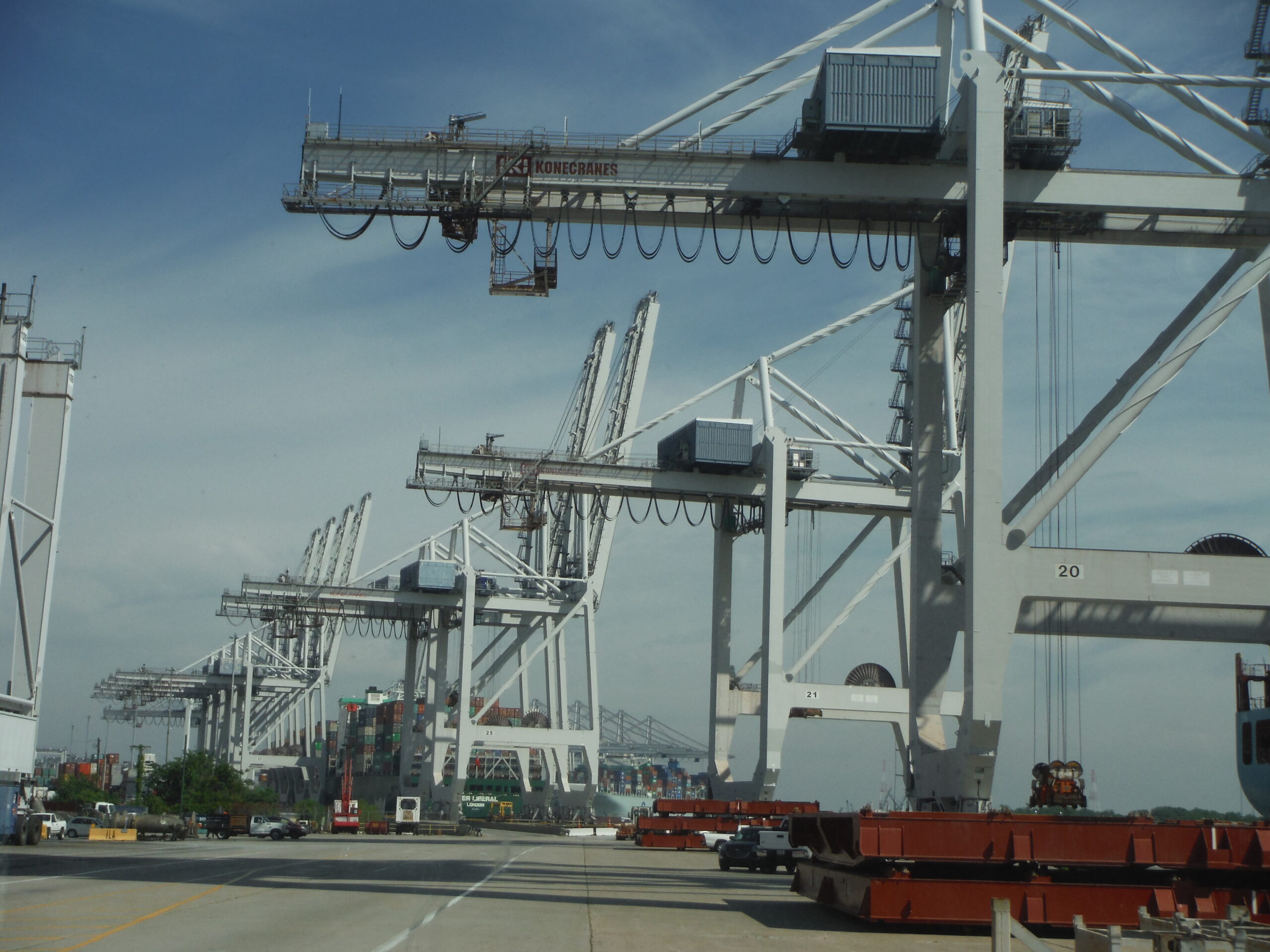
Kevin Saville reports for the Journal of Commerce that containerized imports in 2025 are expected to be only 25.2 million TEUs, a decrease of 1.4% from 2024.
Declines are particularly large in the final months of 2025 since importers frontloaded their purchases to try to get ahead of the Trump Administration’s new tariffs. Imports for the first half of the year were up 3.6% compared with 2024 at 12.53 million TEUs. Thus, Saville’s sources expect November import levels to be 11.6% lower than in November 2024; December’s to be almost 13% lower.
Analysts expect the steeper decline to continue into the new year. Ben Hackett, of Hackett Associates, expects import volumes in the first four months of 2026 to be 10.3%, 8.5%, 16.8% , and 11% lower than the corresponding months a year earlier. The data source covers the ports of Los Angeles/Long Beach, Oakland, & Seattle & Tacoma on the West Coast; New York/New Jersey, the Port of Virginia, Charleston, Savannah, Port Everglades, Miami & Jacksonville on the East Coast; & Houston on the Gulf Coast. These are not all the maritime ports, but they are the major ones.
Another JOC reporter, Michael Angell, quoted several sources as saying they expect import volumes for all of 2026 to be flat or down 2% from 2025. Illustrating the reversal from past trends, The Port Authority of New York and New Jersey expects total container volumes in 2026 to be 8.5 million TEUs, a decline of about 2% from 2024. Since 2016, NY-NJ port container volumes have grown at an annual average of 4.2%.

As I have blogged before — see here and here — these swings in import volumes threaten to undermine programs intended to prevent introductions of wood-boring insects hitching rides in wood packaging material. While the higher volumes arriving from Asia in the first half of 2025 pose the most obvious risk, falling volumes reduce fee-based funding that support port inspectors. Another factor is the shift to suppliers other than China – primarily countries in Southeast Asia. Two beneficiaries of this shift are Vietnam and – at least initially – India. They have much better records of compliance with ISPM#15-mandated treatments for wood packaging link than does China.
A third JOC source reports that while US and European imports are down, trade volumes in Asia, Africa, the Middle East and Latin America are rising. I expect this growing trade to facilitate new pest introductions, although we will have to wait several years to see any data.
Posted by Faith Campbell
We welcome comments that supplement or correct factual information, suggest new approaches, or promote thoughtful consideration. We post comments that disagree with us — but not those we judge to be not civil or inflammatory.
For a detailed discussion of the policies and practices that have allowed these pests to enter and spread – and that do not promote effective restoration strategies – review the Fading Forests report at http://treeimprovement.utk.edu/FadingForests.htm
Or