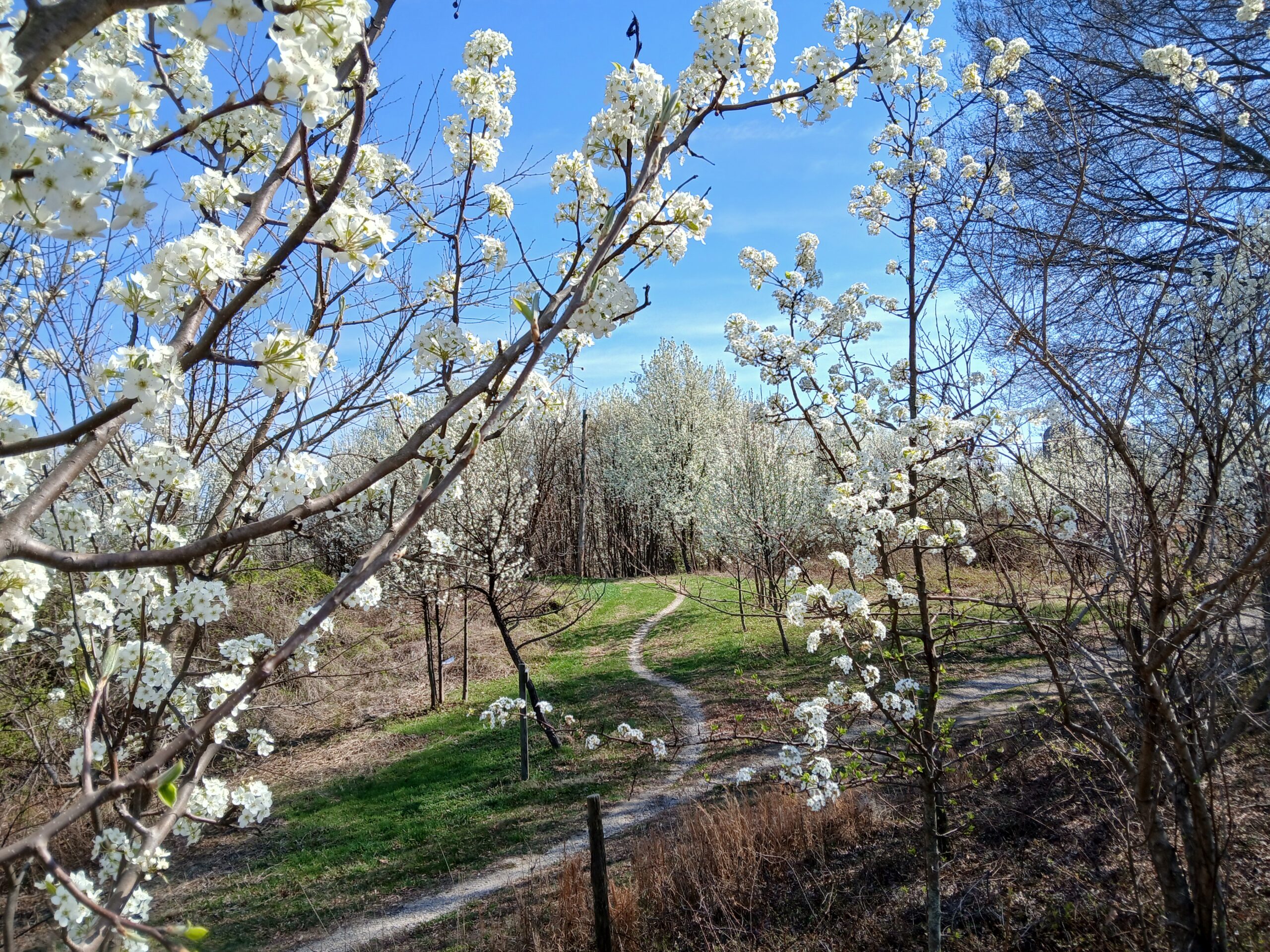
The US Department of Agriculture (USDA) and the North American Invasive Species Management Association (NAISMA) held the 34th annual forum on invasive species research at the end of February 2026. The agenda is available here In this blog I summarize the presentations about invasive alien plants (IAS); a separate blog discusses findings on tree-killing pests. Formal proceedings will be available in some months.
The most important information from the meeting:
- If NAISMA had not taken on the task of hosting the conference it would not have happened.
- Government leaders allowed only 1 staffer per USDA Forest Service region to participate. Not allowed to come were people who had organized the whole meeting or individual sessions, and presenters discussing several topics, including preventing IAS plant spread, and progress on controlling cogongrass (major impediment to pine plantations, affecting harvests).
What do these decisions say about the genuineness of the USDA Secretary’s recent memorandum listing invasive species as one of four priority areas for the department’s research efforts?
A reminder to us all: Rebekah Wallace of the Center for Invasive Species & Ecosystem Health at the University of Georgia urged us all to provide citations for images used in informal materials – posters, presentations, outreach efforts, blogs, videos. Images grab attention, provide context for communication, and support data cited. Providing the citation increases our credibility and ensures that we avoid perpetuating misinformation!
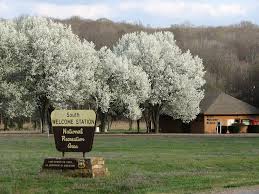
Two presentations focused on Callery / Bradford pear
Jess Hartshorn of ecoLogic described efforts to develop a remote sensing tool that will be as accurate as human surveyers — but faster. What scientists learned from this exercise will help build tools for other invasive plants. Hartshorn noted that while there are many no-cost sources of satellite imagery, no single source is sufficient. But integrating data from several programs, plus adding new criteria proved challenging. One setback was a surprise: the spectrum emitted from the tree’s most conspicuous feature, its early-season white blooms, is similar to that reflected from concrete! – with which the species is associated … The authors had to use data from several satellite systems to identify unique wavelengths from the leaves. Accuracy was lost when an individual pixil contain mixed “vegetation”.
Marcin Nowicki, of the University of Tennessee, explored the genetic changes that allowed a species that is rare in Asia to become a prolific continent-wide invader in North America. “Evolutionary overdrive” resulted from planting plants from several origins close together, thus promoting cross pollination. This led to exceptionally rapid diversification in nuclear and mitochondrial DNA. A bonus: once Sequencing the genomes of several cultivars have been sequenced, bans on sales of those hybrids that are most invasive can be enforced.
Becky K. Kerns, USFS Pacific Northwest Research Station reported on disturbing increases in invasive plants in forests of the Pacific Northwest. In the past, higher elevations, low light levels, and cooler temperatures appeared to protect the region’s forests from invasion. However, annual grasses, especially cheat grass (Bromus tectrorum), are now being found at unprecedented levels in forest plots that have been burned, grazed, or logged, burned, and grazed. This includes plots subjected to prescribed burns. Kern thinks the plant invasions are due to increased light, ground disturbance, changed competitive interactions, and potentially higher propagule pressure. Pyrophytic shrubs also of increasing concern; Kerns mentioned Scotch broom (Cytisus scoparius) in Douglas-fir forests. [I am uncertain how novel this threat is because academic scientists issued warnings about Scotch and other brooms in the mid-1990s.] [run together w/ following] She is working with the staff of the National Invasive Species Council’s task force on fire and invasives to increase attention to emerging threats and to encourage managers to prioritize managing known pyrophytic species along with fire.
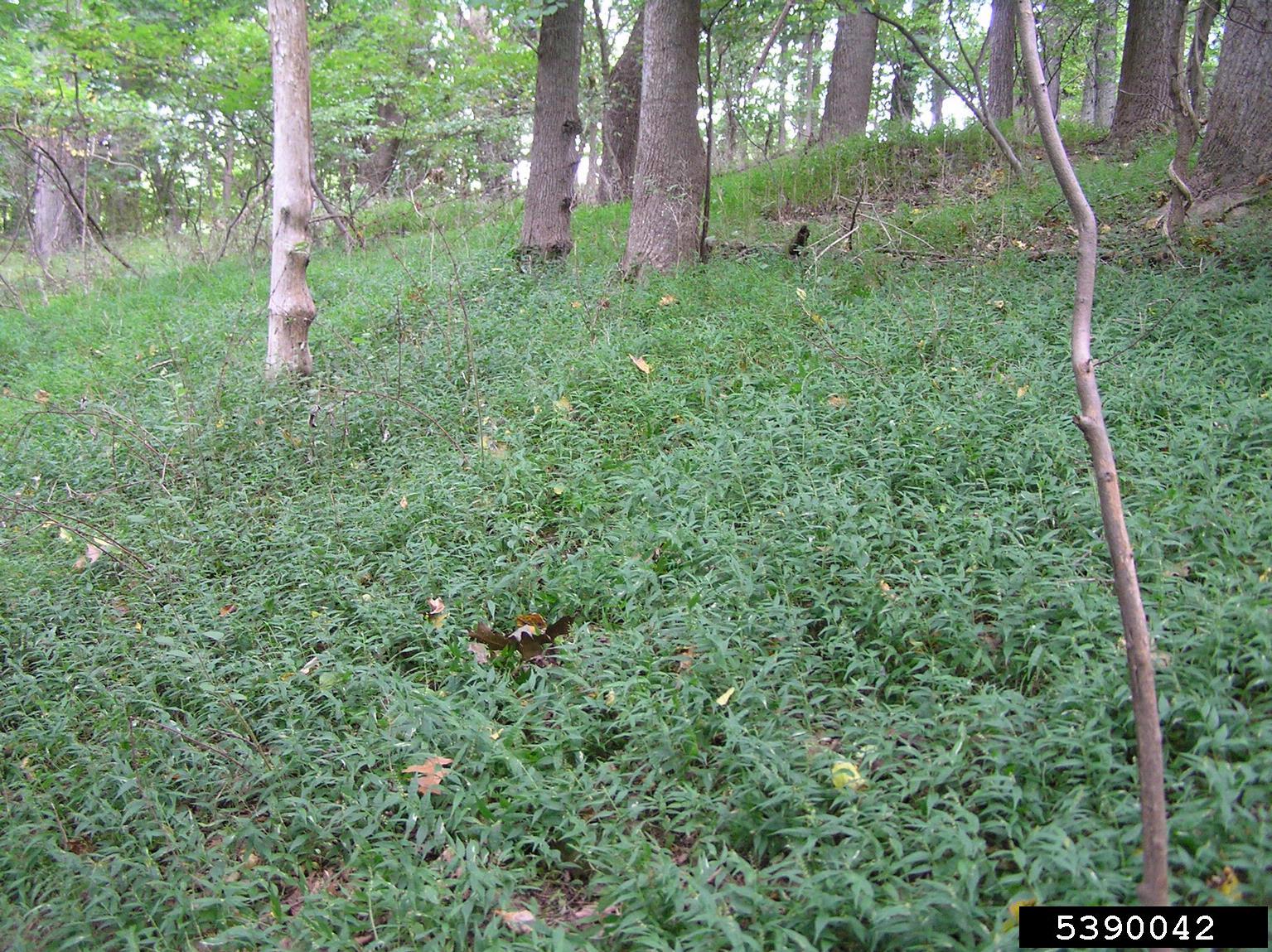
Two speakers addressed aspects of the invasion by wavyleaf basket grass (Oplismenus hirtellus subsp. undulatifolius).
Wavyleaf basket grass was first detected in 1996 in Maryland. It is now widespread in the Mid-Atlantic and expected to spread along the Appalachian Trail and to other recreation sites. Thirty percent of public land in the East is considered vulnerable.
Carrie Wu of the University of Richmond is exploring the grass’ association with changes in the soil microbial community. She tested associated soil microbial communities in 12 locations with three types of soil. She found decreased fungal diversity but not homogenization of the fungal community. She is now constructing an invasion history to see how fast the changes occur, confirm the invaded range, and predict high-risk sites.
Michael Fulcher, of the USDA Agriculture Research Service’s Foreign Disease-Weed Science Lab, is concerned about the microbes associated with invasive plant species. We don’t know whether some of these microbes might be beneficial, perhaps as biocontrol agents? Or might they cause disease in desired plant species. He phenotyped 319 isolates from healthy leaves. This study detected two known crop pathogens on healthy wavy leaf basket grass plus an unknown species in a genus that includes some known pathogens. In lab tests, this organism stunted growth of wheat and tall fescue embryos
Fulcher emphasizes that even asymptomatic non-native plants can transport possible pathogens. Scientists should try to detect and analyze these as quickly as possible. I note that Eliana Torres Bedoya reported last year that healthy woody plants can also transport disease-causing fungi.
Fulcher is looking for collaborators to help collect plant samples
Other invading plants
Craig Barrett of West Virginia University seeks to answer questions related to “invasiveness” traits and whether selective pressures enhance those traits in the invasive range. To explore these topics, Barrett is mapping the invasion history of the widespread invasive species Japanese stiltgrass (Microstegium vimineum). He has found evidence of the grass’ rapid adaptation after introduction, including greater diversity in invasive populations in the Northeast than those in the Southeast. Barrett thinks it most likely that a genetic bottleneck at introduction was followed by mixing that created novel genotypes that might bridge gene transfer between larger populations. There is evidence of phenological adaptation to local climates and a genetic basis for whether a plant supports awns – which react to changes in moisture by “walking” across soil and burying themselves.
Elizabeth Ward, at the Connecticut Agriculture Experiment Station, documented how invasive plant species utilize forest gaps created by the death of ash caused by emerald ash borer (EAB). The progress of the EAB infestation across Connecticut is well-documented, so scientists can track plant responses to stages of canopy mortality. She found:
- Larger canopy gaps contained more invasive plants and fewer native tree seedlings / reduced regeneration.
- Higher soil nitrogen availability is also linked to higher non-native plant cover (all species) – including non-native tree seedlings.
- Higher carbon availability led to lower non-native plant cover, including that of non-native tree seedlings.
Ward advises active management of EAB-invaded forests to reduce plant invasions and promote tree regeneration.
Ward is now comparing sites with passive management vs. salvage harvests. Early results find no difference in invasive plant cover. However, harvested sites had higher abundance of ash regeneration and and diversity of native plant species.
Jeremy Anderson, at the University of Massachusetts, discussed difficulties that have slowed the search for a biocontrol agent to control invasive knotweeds. North American scientists are collaborating with counterparts in Europe. Because knotweeds are related to rhubarb, scientists must ensure that any agent is host specific.
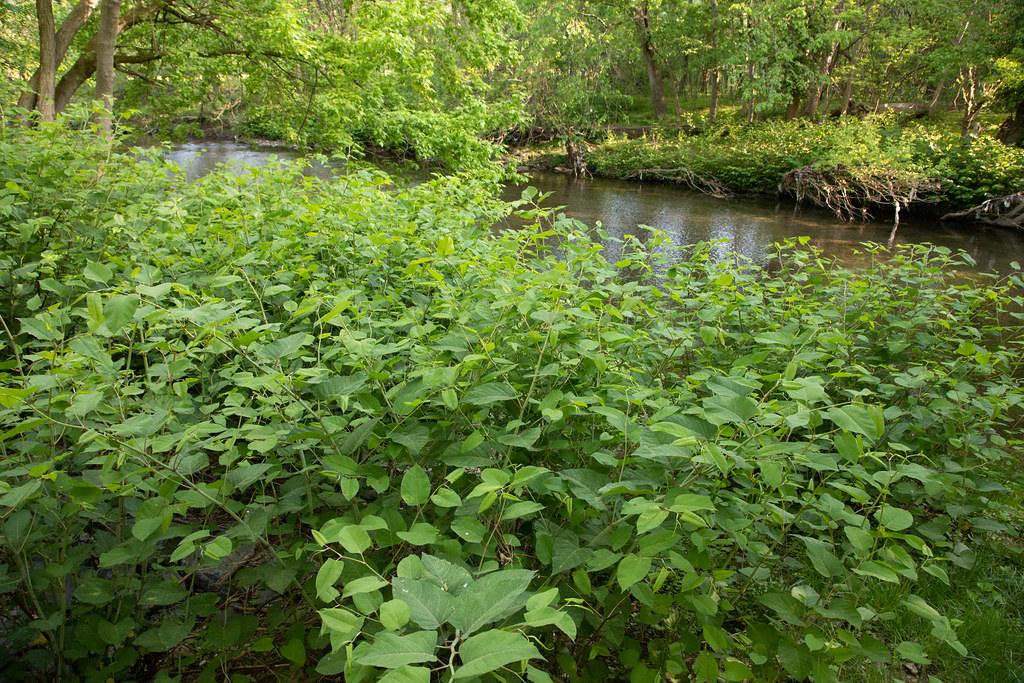
Initial surveys 20 years ago identified 180 candidate insects. However, the only speciesfound suitable for in- depth evaluation failed to establish. Why? First, there was apparently a climate mismatch: the insect is from southern Japan but the plant is from the North. Then a second difficulty was discovered: the target weeds are hybrids, not a pure species. Scientists are now testing a microbe that might overwinter on pine needles, so they are comparing needle chemistries of Japanese red pine with those of North American pines to determine whether there is a risk. In answer to a question, Anderson said scientists do not know how the microbe will respond to the warmer, wetter climate expected in New England in the future.
Ashley Schulz, of Mississippi State University, is continuing her efforts to identify clues to which newly introduced species might be most damaging. In this case she is analyzing efficacy of biocontrol agents to understand which establish and have significant impacts. Species with traits similar to successful biocontrol agents might be more successful invaders.
Schulz analyzed information from 394 insects introduced to North America to control 153 plant species and 87 agents targeting 325 insect pests. The data recorded on each species: whether it established, level of impact, insect’s feeding guild, climate matching, host specialization, and evolutionary history. For the 87 entomophagous insects, she also recorded host feeding guild and host specialization. See other blog.
Phytophagous insect biocontrol agents were more likely to establish if the insect is a generalist newly associated with the target plant species. The biocontrol agent is more likely to have a greater impact when released in environments similar to the agent’s native range. The introduced biocontrol agent will have less impact if it feeds on plant parts that the plant can easily restore (foliage, fruit/seeds).
What does this indicate re: invasive species? Schulz concluded that among phytophagous insects, generalists might be more likely to find a suitable host and survive. The “Goldilocks” premise applies: the host is sufficiently similar to the invader’s native host that it is recognizable but sufficiently distantly related to lack defenses effective against the invader. Bioinvasive phytophagous insects will have a greater impact when introduced to a similar climate and feeds on plant structures that are not easily restored – i.e., stem, root.
For traits of entomophagous insect biocontrol agents see my other blog here.
Schulz recommends more analysis of what can be learned from experience with biocontrol agents. However, such studies are challenged by poor records, lack of empirical evidence and quantitative data, the lower number of biocontrol agents introduced recently, and funding shortages that preclude post-release monitoring.
Schulz also mentioned that she worries that a proposal to drop the word “harm” from definition of invasiveness could result in biocontrol agents being lumped with invasive species. This would further hamper implementation of biocontrol. She considered this loss to have particularly bad affects at a time when there are growing restrictions on pesticide use.
Posted by Faith Campbell
We welcome comments that supplement or correct factual information, suggest new approaches, or promote thoughtful consideration. We post comments that disagree with us — but not those we judge to be not civil or inflammatory.
For a detailed discussion of the policies and practices that have allowed these pests to enter and spread – and that do not promote effective restoration strategies – review the Fading Forests report at http://treeimprovement.utk.edu/FadingForests.htm
Or