What the new President & Congress Can Do re: Invasive Species

 White House


A new President and Congress take office in January.  And outgoing President Obama recently amended the Executive Order on invasive species.

What might the new leaders do to improve America’s invasive species programs?

Here are a group of actions that I think would improve programs significantly:

  • amend the Lacey Act to strengthen controls over introduction and spread of invasive animals and animal diseases;
  • raise the political profile of invasive species issues by holding more frequent oversight hearings;
  • increase funding for invasive species prevention, containment, and control programs;
  • support proposals to amend the 2019 Farm Bill to strengthen on-the-ground programs, policies, and research aimed at minimizing invasive species introduction, spread, and damage;
  • during the confirmation process, Senators should ask President Trump’s nominees to leadership positions in the Departments of Agriculture and Interior about how they will address invasive species challenges.

Do we need new legislation mandating that federal land-managing agencies do X or Y with regard to invasive species? This was the focus of a hearing in May at which I testified.

Federal land-managing agencies are already authorized and – in some cases required – to act to control invasive species on lands and waters under their jurisdiction.  Some of the existing statutes even authorize the agencies to apply fees paid by people who use the public lands for some purpose (e.g., livestock grazing, recreation) to management of invasive species.

Most of the statutes authorizing invasive species management incorporate that activity into the agency’s broader management goals for protection of wildlife, habitat, natural resources, historic or cultural sites, etc.  For example, the USFS Manual §2900 lists 21 laws and 6 regulations or policies that govern the USFS’ management of invasive species.  Some of these laws apply to all federal land-managing agencies, including:

  • Endangered Species Act (ESA) of 1973 (16 U.S.C. §§1531 et seq.)
  • Surface Mining Control and Reclamation Act of 1977 (30 U.S.C. 1201, 1201 (note), 1236, 1272, 1305). §515
  • North American Wetland Conservation Act 1989 (16 U.S.C. 4401 (note), 4401-4413, 16 U.S.C. 669b (note)). §9 [U.S.C. 4408]
  • Sikes Act (Fish and Wildlife Conservation) of September 15, 1960 (16 U.S.C. 670g-670l, 670o, P.L. 86-797), as amended. §201
  • National Historic Preservation Act of 1966 [16 U.S.C. §§470 et seq.]
  • Wilderness Act of 1964 (16 U.S.C. §§1131 et seq.

Other statutes apply only to resource management authorities of the USDA Forest Service; these include:

  • Organic Administration Act of 1897 (16 U.S.C. §§ 473 et seq.).
  • Fish and Wildlife Coordination Act (16 U.S.C. § 661 et seq.).
  • Knutson-Vandenberg Act of June 9, 1930 (16 U.S.C. 576, 576a-576b). §3 [16 U.S.C. 576b]
  • Bankhead-Jones Farm Tenant Act of 1937 (7 U.S.C. §§1010 et seq.)
  • Anderson-Mansfield Reforestation and Revegetation Act of October 11, 1949 (16 U.S.C. 581j (note), 581j, 581k)
  • Multiple-Use Sustained-Yield Act of 1960 (16 U.S.C. §§528 et seq.)
  • Forest and Rangeland Renewable Resources Planning Act (RPA) of 1974 as amended by the National Forest Management Act (NFMA) of 1976. §6
  • International Forestry Cooperation Act of 1990 (16 U.S.C. § 4501)
  • Healthy Forests Restoration Act of 2003 (H.R. 1904), [16 U.S.C. 6501-6502, 6511-18, 6541-42, 6571-78]
  • Wyden Amendment (P.L. 109-54, Section 434).
For brief descriptions of all these statutes, see the references and links at the end of this blog posting.

Advocates have tried before to legislate a specific requirement that federal agencies combat invasive species.  The Federal Noxious Weed Act of 1974 (7 U.S.C. § 2801 note; 7 U.S.C. § 2814) was amended in 1990 to add §15, “Management of Undesirable Plants on Federal Lands”.  This section requires each federal agency to

1) designate an office or person adequately trained to develop and coordinate an undesirable plants management program for control of undesirable plants on federal lands under the agency’s jurisdiction, and

2) establish and adequately fund an undesirable plants management program through the agency’s budgetary process,

3) complete and implement cooperative agreements with state agencies regarding the management of undesirable plant species on federal lands, and

4) establish integrated management systems to control or contain undesirable plant species targeted under cooperative agreements.

This approach hasn’t worked – no one is satisfied by the federal agencies’ “weed” management efforts.


Capitol

What is missing is a political demand for action – and support for necessary staff and funding. Agencies under the secretaries of Agriculture and Interior bear most of the responsibility for managing invasive species.  As long as these officials are not being pressed by key Congressional committees, the media, and key stakeholders to take more aggressive and effective action to curtail species introductions and suppress established populations of bioinvaders, they will continue to focus their attention on issues that do generate these kinds of political pressure.

I am not saying that the principal statutes governing invasive species management could not be improved.  As noted above, several proposals have been put forward to strengthen laws which are the foundation for preventing introduction of invasive species.  I will blog about specific proposals in the new year.


Sources

USFS Invasive Species Manual

ANSTF/NISC report “Federal Policy Options Addressing the Movement of Aquatic Invasive Species Onto and Off of Federal Lands and Waters. 2015.  Committee on the Movement of Aquatic Invasive Species both onto and off of Federal Lands and Waters.

Posted by Faith Campbell
We welcome comments that supplement or correct factual information, suggest new approaches, or promote thoughtful consideration. We post comments that disagree with us — but not those we judge to be not civil or inflammatory.

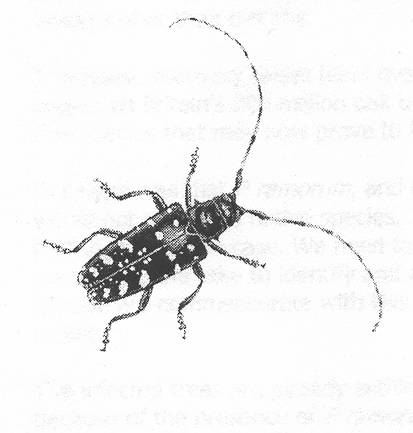
Asian Longhorned Beetle (ALB) – Newly Detected Infestation Shows Spread within Ohio

ALB profile jpg

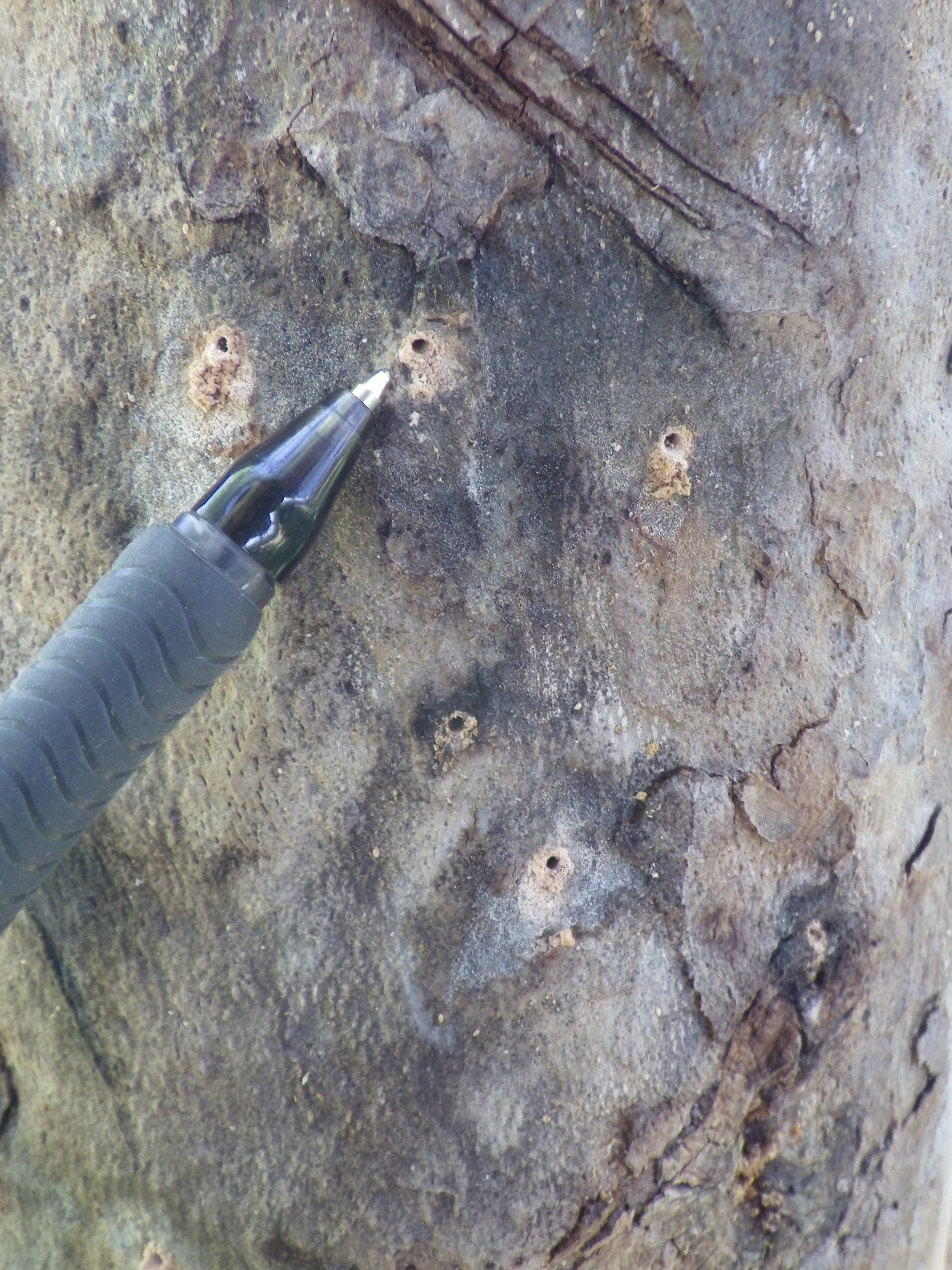
On November 18, Ohio authorities and APHIS announced the discovery of Asian longhorned beetle- infested trees in a section of Clermont County previously thought to be free of the insect. (The press release is not yet posted to the web; go here to see the most recent information).

The center of the newly discovered infestation is within the Williamsburg Township portion of the East Fork Wildlife Area, south of Clover Road. Tree inspection crews will continue to survey the area to determine the extent of the infestation. Any trees found to be infested will be removed as part of the eradication effort. Also, authorities will expand the ALB quarantine to include areas near the new infestation. When available, a map of the regulated areas will be posted at agri.ohio.gov.

This setback reminds us how difficult it is to contain or eradicate this insect.

ALB was first discovered in Tate Township in Clermont County, Ohio, in June 2011. That quarantine currently covers a 61-square miles area.  According to the October 28 APHIS electronic newsletter, more than 2 million trees in the quarantine zone have been surveyed. The survey has detected 18,614 infested trees since 2011. 87,151 trees have been removed;  Of these, 17,995 were infested and 69,156 were deemed at high-risk of either already being infested or likely to become infested in the immediate future.

Status of ALB in Other States

Massachusetts   ALB was first detected in Worcester in 2008. The quarantine covers 110 square miles. At least 35,870 trees have been removed in the Commonwealth.

New York  ALB was first detected in Queens in August 1996. APHIS and the state continue efforts to eradicate ALB from three separate infestations in Queens, Brooklyn, and Amityville.  The quarantine covers a total of 137 square miles.  The number of infested Trees for the entire New York program is 7,082.  The number of trees removed is 23,731. Outbreaks in several sites have been declared eradicated:

  • Islip (Suffolk County) in 2011;
  • Manhattan  and Staten Island in 2013.

In 2013, the Amityville area infestation was found to be larger than previously known.

The total number of trees removed in the Massachusetts, New York, and Ohio programs was 146,000. However, this is not the total for all the damage caused by the Asian longhorned beetle.

ALB outbreaks in Illinois (Chicago) and New Jersey were eradicated earlier, and their removals are not included in the total given above.

In Illinois, according to Haack et al. 2012, 1,771 trees were removed and  286,227 were treated with systemic pesticides (imidacloprid).

In New Jersey (again, according to Haack et al. 2009,  21,981 infested and high-risk trees were removed.  Another  480,574 trees were treated. This total is not complete since the program had not yet succeeded in eradicating the ALB in New Jersey at the time of writing.

The total from all programs is 169,752.

The risk of new introductions remains.

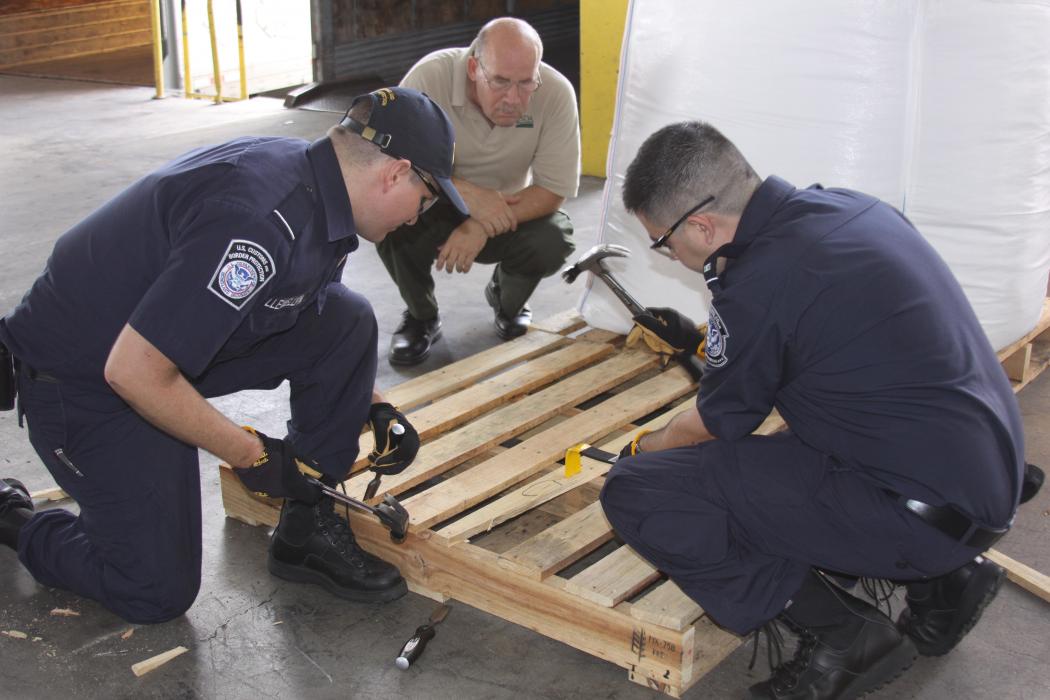
  • During fiscal years 2010 – 2016, Customs (CBP) detected tree-killing pests in 4,984 shipments – an average of 807 shipments each year. (For the 2015 report, go here)
  • An analysis by Haack et al. (2014) concluded that one tenth of one percent of the wood packaging entering the U.S. after adoption of ISPM#15 still contained a tree-killing pest. Since the U.S. imports approximately 25 million shipping containers each year, and about half of these contain wood packaging, an “approach rate” of 0.1% equals 13,000 containers harboring pests that probably enter the country each year. That is 35 potential pest arrivals per day.
  • Customs send samples of intercepted wood packaging to an APHIS laboratory where the insect larvae are grown to adulthood and identified. The APHIS lab has received 1,068 insects from April 2012 through August 2016, taken from 786 separate interceptions of non-compliant wood packaging. Six of the insects were Asian longhorned beetles.

APHIS also detected 69 other pests in wood packaging sent from China.

The United States and Canada began requiring wood packaging from China to be treated in December 1998. (See my discussion of this regulation in Fading Forests II here.  Since the Customs data begin in 2010, we can see that 11 to 16 years after the rule governing Chinese wood packaging went into effect, we are still receiving wood packaging with pests from that country.

Also, 700 pests arrived from 36 other countries, led by Mexico, Turkey, and Ukraine (see presentation here; search for “Nadel”)

What are APHIS & CBP doing about these flagrant violations of existing rules? Each violation exposes our forests to additional pest attack and our citizens to higher costs – either in local or federal taxes or personal costs to remove trees — as well as to mental anguish and health impacts.

The evidence is in. APHIS and Customs should tighten enforcement of ISPM#15 by:

  • Prohibiting imports in solid wood packaging (boards) from foreign suppliers which have a record of repeated violations over the 10 years ISPM#15 has been in effect. (It’s been 16 years for exporters from Hong Kong and mainland China).  A reasonable number of violations should trigger this prohibition – perhaps eight over the entire period.

The U.S. should allow imports from those suppliers that are contained in other types of packaging materials, including plastic, metals, fiberboards …

  • Fining an importer for each new shipment found to be out of compliance with ISPM#15 if the foreign supplier of that shipment has a record of repeated violations (but fewer than the number that would trigger a ban) over the 10 years ISPM#15 has been in effect (16 years for exporters from Hong Kong & mainland China).  The number of violations needed to trigger the fine might be five over the entire period – not just in one year.
  • Ensuring that exporting countries understand that foreign suppliers that change their names or take other steps to obscure their past import records will be prosecuted for fraud. This penalty should be severe so as to deter deliberate attempts to avoid the consequences of past actions.


References

Haack, R.A., F. Herard, J. Sun, J.J. Turgeon. 2009. Managing Invasive Populations of Asian Longhorned Beetle and Citrus Longhorned Beetle: A Worldwide Perspective.  Annu. Rev. Entomol. 2010. 55:521-46.

Haack, R. A., K. O. Britton, E. G. Brockerhoff, J. F. Cavey, L. J. Garrett, M. Kimberley, F. Lowenstein, A. Nuding, L. J. Olson, J. Turner, and K. N. Vasilaky. 2014. Effectiveness of the international phytosanitary standard ISPM no. 15 on reducing wood borer infestation rates in wood packaging material entering the United States. Plos One 9:e96611.


Posted by Faith Campbell
Firewood: Important Progress — and a Troubling Stalemate

49862752

After years of work, the combined efforts of many staff at federal agencies and non-profits have succeeded in placing a firewood alert message on the Reservation.gov website for all of the 3,163 federal  campgrounds managed by the National Park Service, USDA Forest Service, and Corps of Engineers for which visitors can reserve a spot in advance. Only 43 federal reserveable campgrounds remain without messaging. These are managed by the Bureau of Land Management, Bureau of Reclamation, and the US Fish and Wildlife Service.

As of October 2016, visitors reserving campgrounds through the services of Reserve America or Recreation.gov for any National parks, National forests, or Army Corps reservoirs will find new information in the “Know before you go” section – a message about not moving firewood.

The messages vary somewhat  by agency, but basically say:  “Don’t move firewood!”  They often add “buy firewood at or near your destination and burn it on-site.”  Some messages include a brief explanation about the aim — to prevent or limit spread of invasive tree-killing pests. Some include a message that some states regulate firewood movement. There is a link to either the national program — dontmovefirewood.org – or to the pertinent state program, e.g., the California Firewood Task Force for National Forest campgrounds in Region 5.

Some federal campgrounds do not use the Reservation.gov system and therefore require separate efforts to improve firewood messaging. This includes several popular water-based recreation sites in the central southern states, such as the Arkansas River National Recreation Area and Oachita National Forest. Many states in this region also do not regulate firewood. [See my earlier blog contrasting management of firewood with management of boats and attached  mussels or aquatic plants here and the article by Frank Koch and colleagues, referenced below.]

Those who succeeded in achieving the widespread adoption of this outreach program deserve our thanks and praise! They worked long and hard for this.


On a Less Positive Note…

Unfortunately, efforts to put a firewood certification program into place appear to have stalled.

In March 2010, in response to increasing concern across the country, APHIS issued a first-ever firewood strategy, with a number of important elements.  It proposed the following:

Outreach Strategies:

  1. State and Federal agencies should convene a communications steering committee.
  2. Develop an online hub of firewood outreach materials.
  3. Prioritize the outreach activities.
  4. Use diverse methods to get consistent messages out about the risk of moving firewood.
  5. Support the voluntary and regulatory efforts.

Voluntary Strategies:

  1. Large-scale producers and retailers adopt best management practices.
  2. National producers and retailers adopt an industry-run national certification program with labeling and recordkeeping requirements based on best management practices.
  3. Public and private campgrounds make local or treated firewood available.
  4. Firewood consumers and small-scale local producers adopt best management practices.

Regulatory Strategies:

  1. APHIS should promulgate regulations for the interstate movement of firewood as soon as possible with requirements for labeling, recordkeeping and treatment based on best management practices.
  2. States should publish intrastate movement regulations with requirements similar to the Federal regulations for labeling, recordkeeping and treatment as needed. Moving firewood 50 miles or less would be exempt from intrastate regulations provided this does not violate any quarantine that may be in place.
  3. State, Federal, and private parks, forests and campgrounds should institute policies that encourage campers to use local firewood and to not move firewood out of the local area.

What has been done over the six and one-half years since the Strategy was released?

There has been tremendous progress on the outreach and voluntary strategies, with the Nature Conservancy’s Don’t Move Firewood program providing support and advice.  However, these voluntary programs are inadequate without regulatory backup.

There has been less progress on the more formal certification and regulatory strategies proposed in 2010.

Geoff Friedman – a firewood producer based in northern California – reports that he has developed the software for a certification program and worked with producers to get their acceptance. However, implementing the required wood treatments and – especially – staffing a third-party certification program – would raise the cost of firewood by 50%, according to Friedman. The major retailers which sell packaged firewood – the “big box stores” – are not willing to adopt the program because of this increased cost. In the absence or regulations requiring treatment of firewood, the program has stalled. (In the East, many states already regulate firewood. However, those states’ treatment requirements vary. Friedman seems to believe that this challenge can be worked out.)

APHIS has not adopted national regulations and does not appear to be on the verge of doing so. I believe APHIS wanted to tie its regulations to the certification program that has now stalled. Eleven of the 50 states currently have their own state-specific regulations limiting the movement of firewood from other states into their state. Only two more states are known to be potentially considering legislation in 2017. Many — but not all — federal agencies have now engaged on discouraging visitors from bringing their own firewood (see above). Some National parks actually restrict visitors bringing firewood to wood that is certified by USDA – including the park with the highest number of visitors, Great Smoky Mountains National Park. However, Yosemite and other National parks in California are not among them. And these are vulnerable to goldspotted oak borer and  the polyphagous or Kuroshio shot hole borers (see species write-ups here).

Worse, APHIS is actively moving toward dropping regulations trying to prevent spread of the emerald ash borer (see species write-up here). APHIS argues that with EAB now present in 30 states (although in many cases, in only one or a few counties), it is too late to try to prevent the insect’s further spread. The regulatory effort is using resources that would be better put to other strategies, such as expanding the biocontrol program. I concede that funding is tight, and likely to be cut further; and that other approaches – and other pests! – need attention.

However, the legal and logical foundation for nearly all state regulations governing firewood is the emerald ash borer. The promised federal regulation and certification program also rest primarily on the EAB risk. Many states – as well as APHIS – must base their regulation on one or more specific pests. Will these state regulations and promised federal programs survive the loss of the federal EAB regulatory program?

In any case, we are a long way from what is needed to get control of the firewood pathway. Each of the “lower 48” states should have an external quarantine. Hawai`i might need one too, if it imports firewood. (Hawai`i does import other types of risky wood products, including Christmas trees.)  Also, all 50 states need internal restrictions on the distance firewood is moved. So far, only a fraction have them.

The incoming Trump Administration strongly objects to regulations, so it is highly unlikely that we will see progress on these matters in the near future.


Reference:

Koch, F.H., D. Yemshanov, R.D. Magarey, and W.D. Smith. 2012. Dispersal of Invasive Forest Insects via Recreational Firewood: A Quantitative Analysis J. Econ. Entomol. 105(2): 438-450 (2012);


Posted by Faith Campbell
Leigh Greenwood helped check the facts and dates mentioned in this blog


The Latest on Phytophthoras

014_14

Phytopthora ramorum on tanoak in California; F.T. Campbell

Nine eastern states are participating in the 2016 USDA National Phytophthora ramorum Early Detection Survey of Forests. Those states are AL, FL, GA, MS, NC, PA, SC, TN, and TX. As of late August, streams in four locations were P. ramorum-positive. Three are in AL, one in MS. All had tested positive in previous years. Also, all have been associated with previously positive nurseries.  (Reported in the California Oak Mortality Task Force newsletter for September.) It is reassuring that no new positive locations have been detected. However, on what substrate is the pathogen persisting? Scientists agree that the pathogen does not survive in water (although it is reliably detected by testing in water) but must survive on some plant material – perhaps roots.

 P. ramorum also persists in nurseries. Seven California nurseries are participating in the APHIS federal P. ramorum program under which they are allowed to ship host plants interstate. Positive plants have been detected in two of them. One of these nurseries is undergoing the Confirmed Nursery Protocol clean-up. The other has completed the cleanup and has been allowed to resume shipping plants interstate. In both cases, the infected plants were not from the five “high-risk” genera which are the focus of monitoring for the regulatory system — Camellia, Kalmia, Pieris, Rhododendron, and Viburnum. (Reported in the California Oak Mortality Task Force newsletter for September.) I expressed concern about this too-narrow focus in a blog posted in July 2015 – http://nivemnic.us/2015/07/.


I have written about the widespread presence of various Phytophthoras in nurseries in blogs in April (for Europe http://nivemnic.us/2016/04/ ) and July (for California http://nivemnic.us/2016/07/ ). New publications add to this picture.


Junker and colleagues (see references below) report the detection of 15 Phytophthora species in two commercial woody ornamental nurseries (presumably in Europe, since the authors are Europeans). Twelve of the species are previously described but the DNA of three isolates did not match any of the known species.  Detections were highest in puddles on nursery pathways; followed by plant residues;, wind-carried leaves; and water and sediment from  runoff. The plant samples showed very low infection rates – a disturbing finding given the reliance until recently on inspection of plants to detect the pathogen. (Reported in the California Oak Mortality Task Force newsletter for September.)


New Phytophthora confirmed in U.S.

The United States has the first official confirmed detection of the pathogen Phytophthora quercina. It was found associated with oak trees planted on restoration sites in central coastal California. Although the California detection is the first officially confirmed detection of the pathogen in the U.S., a P. quercina ‘like’ organism has been reported to be associated with oak decline in forests in the Midwest. P. quercina is a pathogen associated with oak decline across Europe. It was rated as the species of highest concern in a USDA Plant Epidemiology and Risk Analysis Laboratory (PERAL) report. Another pathogen, P. tentaculata, was rated fifth on the same list. It was recently found in association with multiple native plant species in California’s native plant nurseries (see my July blog, linked above). See also California Oak Mortality Task Force newsletter at http://www.suddenoakdeath.org/news-and-events/current-newsletter/


Rapid Response Might Have Contained SOD – When will authorities learn this lesson?


Earlier this year, experts on modeling  the epidemiology of plant disease concluded that the sudden oak death epidemic in California could have been slowed considerably if aggressive management actions – backed by “a very high level of investment” – had started in 2002. By then, there was sufficient knowledge about the disease to guide actions. Management actions should have focused on the leading edge of the epidemic (admittedly, that edge has proven difficult to detect). The study is by American and British scientists (Cunniffe, Cobb, Meentemeyer, Rizzo, and Gilligan). See reference and news report below.


The authors’ estimate documents the high costs of inaction.  This is an important lesson – which has been repeated many times. If only officials from California and APHIS would take this to heart regarding several other forest pests. These include the polyphagous and Kuroshio shot hole borers and even the goldspotted oak borer (all described here).


 References


https://www.sciencedaily.com/releases/2016/05/160502161111.htm?utm_source=feedburner&utm_medium=email&utm_campaign=Feed%3A+sciencedaily%2Fplants_animals%2Finvasive_species+%28Invasive+Species+News+–+ScienceDaily%29


Cunniffe, N.J., R.C. Cobb, R.K. Meentemeyer, D.M. Rizzo, and C.A. Gilligan. Modeling when, where, and how to manage a forest epidemic, motivated by SOD in CalifPNAS, May 2016 DOI: 10.1073/pnas.1602153113


Junker, C., Goff, P., Wagner, S., and Werres, S. 2016. Occurrence of Phytophthora in commercial nursery production. Plant Health Progress. 17:64-75.


Posted by Faith Campbell
On the Road to Extinction, Invasive Plants Do Have Significant Impacts

KONICA MINOLTA DIGITAL CAMERA
Lantana camarata

No studies have documented extinction of a native plant species caused by invasive ones. This has led to questions about whether invasive plants have truly significant impacts. (Of course, species extinction is not the only important impact).

These questions have been answered in a recent article by Paul Downey (of the Institute for Applied Ecology, University of Canberra) and David Richardson (of the Centre for Invasion Biology at Stellenbosch University, South Africa). A link to the article is provided at the end of this blog.

Downey and Richardson argue that studies have documented instances of invasive plant species putting native plants on the path – or trajectory – to extinction. Furthermore, plants go extinct more slowly than animals, often over centuries. As result, current approaches to analyzing impacts of invasive plants underestimate the damage that non-native species cause because they assume extinction will not result.

The authors name six “thresholds” along the trajectory to plant extinction. Each is affected by invasive plants:

  1. Plants die more quickly than they can be replaced by their offspring in some locations.
  2. Plants disappear from some locations entirely, but seeds or spores remain that could regenerate a new cohort of individuals.
  3. Some locations lose both individual plants and their propagules. This is a local extinction.
  4. The last locations hosting a species lose their individual plants, but in some places seeds or spores remain in the soil.
  5. The species is entirely lost in the wild with no individuals or propagules. The only survivors are held in botanic collections.
  6. Extinction. The remaining plants are lost, and the remaining seeds or spores are no longer capable of becoming new plants.

By focusing purely on full extinction — step six — plant conservationists lose sight of the threats to species as they occur and accumulate at each stage of the process. Without such attention we fail to act on opportunities to protect the species and counter the wider impacts of its disappearance.

Downey and Richardson note that plant invasions affect each component of a plant species’ population dynamics:  fecundity (seed production); death; immigration; and emigration (dispersal). Yet they could find no studies that have explored the effects of alien plants for all four components collectively.

A second explanation for scientists’ not documenting any extinctions caused by invasive plants is that it is extremely difficult to prove that every last individual or propagle of a plant species is dead . Many plant species have long-lived seed banks in the soil, or can regenerate from underground structures – so it is hard to know when that species is truly gone. This is especially true since seed banks are rarely monitored.

Furthermore, many of the conditions needed to demonstrate that alien plants have caused the extinction of native plant species have either not been measured, or have been examined for too short a time. The IUCN definition of extinction requires that data be collected over “a period that is appropriate for the life cycle of the species” (IUCN. 2014. Guidelines for using the IUCN Red List categories and criteria. Version 11. Prepared by the Standards and Petitions Subcommittee. Switzerland). Given the long persistence of plant species, the “appropriate period” exceeds the timeline almost all of even the few long-term studies in invasion ecology.


Downey and Richardson say that relying on changes in species richness to assess the impacts of alien plants will not adequately predict or describe the effects of invasion. Such analysis especially will not provide evidence for a species crossing from Threshold 1 to 2 or 3 . Indeed, they assert, collective species richness measures could mask losses of some species in instances where additional species are also recorded (i.e. the losses are off-set by additions).


The authors have found abundant evidence of invasive plants driving native plants along this extinction trajectory. They cite several examples of an invasive plant causing a “threshold effect” – that is, increases in alien plant cover or density result in decreased native plant species diversity or richness. They define this as the native species crossing from Threshold 1 to 2. Among the examples provided are several species in Australia and New Zealand and Lonicera maackii in the United States.


The authors also provide examples of species causing “extinction debts” – that is, a significant time lag between the introduction of an alien species initiating a native species’ movement along the trajectory and its actual extinction. One mechanism is by reducing native plants’ seed production. Again, Lonicera maackii is cited.

Downey and Richardson also note the potential downsides of invasive plant control measures.

In the end, the authors urge that scientists “… shift attention away from the end point of the extinction trajectory … to give due consideration of the full series of processes that drive declines of populations of native species.”

As Richardson has said in an interview with Oxford University Press, “… There is absolutely no doubt that alien plant invasions are eating away at native plant biodiversity. Many native plant species — probably HUNDREDS of species — are precariously close to being functionally extinct and survive as the ‘living dead’.’”


Source: Downey, P.O., D.M. Richardson. 2016. Alien plant invasions and native plant extinctions: a six-threshold framework. AoB Plants, 2016; 8: plw047 DOI: 10.1093/aobpla/plw047 ; open access, available at http://aobpla.oxfordjournals.org/


Posted by Faith Campbell
Invaders Put Another Bird at Risk

iwi2_jamespetruzzi_u

i`iwi; photo by James Petruzzi; courtesy of American Bird Conservancy

As noted in an earlier blog (“When Will Invasive Species Get the Respect They Deserve?” May 2016),  invasive species can cause extinctions – especially on islands.  I have posted other blogs about the invasional meltdown in Hawai`i (“Hawaii’s unique forests now threatened by insects and pathogens” October 2015).

A further demonstration of the meltdown is the decision by the US Fish and Wildlife Service (USFWS) to propose listing  another Hawaiian honeycreeper (bird) – the i`iwi (Drepanis (Vestiaria) coccinea) as a threatened species.  Already, some 20 Hawaiian forest birds are protected under the Endangered Species Act.  Many, although not all, are threatened by the same factors as the i`iwi.

The proposal, which summarizes an extensive supporting report, is available here.  USFWS is accepting comments on the proposal that are submitted to the USFWS’  website before November 21.

The proposal documents the tragedy of Hawai`i. The i`iwi was once almost ubiquitous on the islands, from sea level to the tree line. Today the bird is missing from Lanai; and reduced to a few individuals on Oahu, Molokai, and west Maui. Remaining populations of i`iwi are largely restricted to forests above ~ 3,937 ft (1,200 m) on Hawaii Island (Big Island), east Maui, and Kauai.

In the past, hunting for the bird’s striking red feathers and agricultural conversion doubtless affected the i`iwi’s populations. Since the early 20th Century, though, the threats have all been invasive species.

The USFWS has concluded that the principal threat is disease: introduced avian malaria  — caused by the protozoan Plasmodium relictum and vectored by introduced mosquitoes (Culex quinquefasciatus). A second disease, Avian pox (Avipoxvirus sp.), is also present but scientists have not been able to separate its effects from those of malaria. Both vectored by the southern house mosquito.

I`iwi are very susceptible to avian malaria; in lab tests, 95% of birds died.

iiwi_hakalaunwr5_danieljlebbinabc_u

I’iwi on `ohi`a blossom at Hakalau NWR; photo by Daniel J. Lebbin; courtesy of American Bird Conservancy

I`iwi alive now have survived because they live in forests at sufficiently high elevations; there, cooler temperatures reduce the numbers of mosquitoes, and thus transmission of the disease.  However, the birds must fly to lower elevations in certain seasons to find flowering plants (the i`iwi feeds on nectar) – and then becomes exposed to mosquitoes.

Worse, climate change has already caused warming at higher elevations, and is projected to have a greater impact in the future.  The rising temperatures predicted to occur – even if countries meet their commitments from the December 2015 meeting of the UN Framework Convention on Climate Change – will result in upslope movement of mosquitoes. As a result, according to three studies reviewed by the USFWS, the i`iwi will lose 60 – 90% of its current (already limited) disease-free range by the end of this century, with significant effects occurring by 2050.

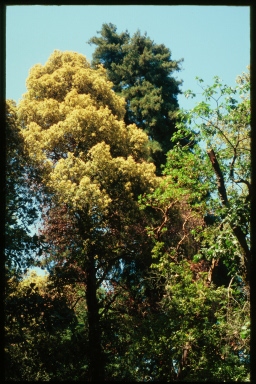
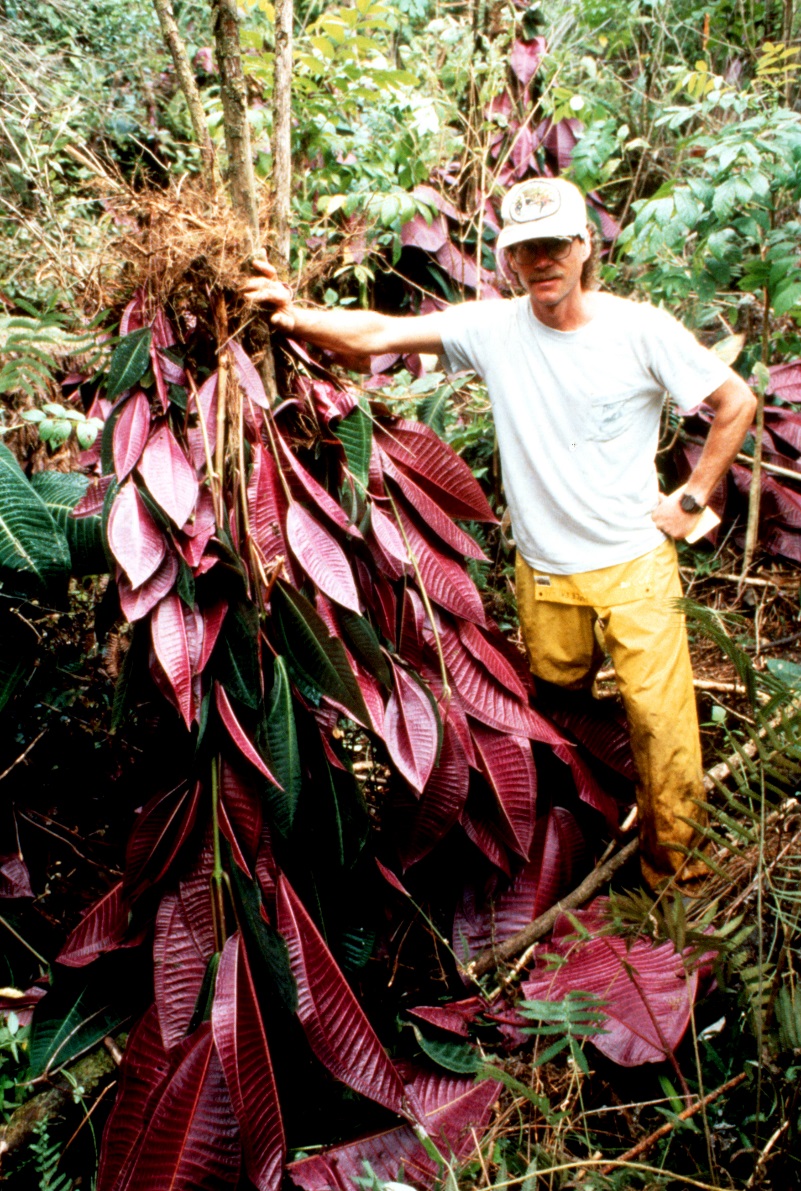
I`iwi occur primarily in closed canopy, montane wet or montane mesic forests composed of tall-stature `ohi`a (Metrosideros polymorpha) trees or in mixed forests of `ohi`a and koa (Acacia koa) trees. The i`iwi’s diet consists primarily of nectar from the flowers of `ohi`a  and several other plants, with occasional insects and spiders.

hakalau-forest01a

Hakalau National Wildlife Refuge; USFWS photo

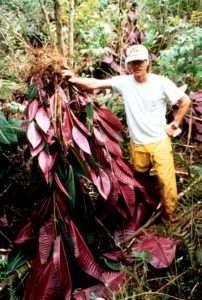
The i`iwi’s dependence on `ohi`a creates another peril, because `ohi`a trees are vulnerable to alien diseases – both ohia rust and, especially, rapid ohia death or Ceratocystis ohia wilt. (Read descriptions of both diseases here.  As of September 2016, rapid ohia death has been found only on Hawai`i – the “Big Island”. However, 90% of all i`iwi currently reside on the Big Island! Worse, in future the relatively large area of high-elevation `ohi`a dominated forest on the Big Island was expected to be the principal refuge of the i`iwi from the anticipated climate-driven up-slope movement of malaria. However, as just noted, the Big Island’s trees are now being killed by disease. If rapid ohia death continues to spread across the native `ohi`a forests – on Hawai`i and potentially on the other islands – it  will directly threaten i`iwi by eliminating the limited, malaria-free native forest areas that remain for the species.

Rapid `ohi`a death (ROD) is caused by two distinct strains of the widely introduced pathogen Ceratocystis fimbriata.  It was first detected in the Puna District of Hawai`i in 2012. The disease has since been detected across a widening area of the Big Island, including on the dry side of island in Kona District (See map here.  The total area infested has increased rapidly, from ~6,000 acres in 2012 to 38,000 acres in June 2016.  Since symptoms do not emerge for more than a year after infection, the infested area is probably larger.  ROD kills `ohi`a in all size and age classes. There is no apparent limit based on soil types, climate, or elevation. O`hi`a growing throughout the islands appears to be vulnerable, from cracks in new volcanic areas to weathered soils; in dry as well as mesic and wet climates. The pathogen is probably spread by spores sticking to wood-boring insects and – over short distances – wind transport of insect frass.

Federal and state agencies are spending $850,000 on research on the disease, possible vectors, and potential containment measures.  Additional funds would be needed to implement any strategies, and to expand outreach  to try to limit human movement of infected plants or soil.

The Hawaii Department of Agriculture adopted an interim rule in August, 2015  which restricts the movement of `ohi`a plants, plant parts, wood, and frass and sawdust from Hawai`i Island to neighboring islands. Soil was included in the interim rule with an effective date of January 1, 2016. In March 2016, HDOA approved permit conditions for movement of soil to other islands. The interim rule is expected to be made permanent at a meeting of the Board of Agriculture on 18 October.

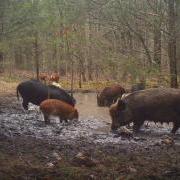
Other invasive species threatening the i`iwi are feral ungulates, including pigs (Sus scrofa), goats (Capra hircus), and axis deer (Axis axis).  All degrade `ohi`a forest habitat by spreading nonnative plant seeds and grazing on and trampling native vegetation. Their impact is exacerbated by the large number of invasive nonnative plants, which prevent or retard regeneration of `ohi`a forest. Drought combined with invasion by nonnative grasses have promoted increased fire frequency and the conversion of mesic `ohi`a woodland to exotic grassland in many areas of Hawaii.

The feral pigs pose a particular threat because by wallowing and overturning tree ferns (Cibotium spp.)  they create pools of standing water in which the mosquitoes breed.  The US FWS has concluded that management of feral pigs – across large landscapes – might be a strategic component of programs aimed at managing avian malaria and pox.

One possible source of hope: research into genetic manipulation of the mosquito disease vector by using tools from synthetic biology and genomics (see draft species status report . Considerable research is probably necessary before such a tool might be implemented.

Plant Pest Threat to Endangered Animals is Not Limited to Hawai`i

The USFWS is struggling to deal with the threat posed by plant pests to listed species. In San Diego, California, FWS personnel are trying to decide how to address the threat posed by the Kuroshio shot hole borer (read description here  to willows which constitute essential riparian habitat for the least Bell’s vireo.

Numerous cactus species that have been listed as endangered or threatened might be attacked by two insects from Argentina, the cactus moth and Harissia cactus mealybug (see my blog from October 2015; or read descriptions here .

Endangered Species Agencies Need to Coordinate with Phytosanitary Agencies

A growing number of species listed under the Endangered Species Act are being threatened by damage to plants from non-native plant insects and pathogens. This growing damage affects not just listed plants – such as the cacti mentioned in this and the October blogs; but also plants that are vitally important habitat components on which listed animals depend. The USFWS needs to engage with other federal and state agencies and academic institutions which are working to prevent introduction of additional plant pests, slow the spread of those already in the United States, and develop and implement strategies intended to restore plant species that have been seriously depleted by such pests. The USFWS should, therefore, work more closely with USDA Animal and Plant Health Inspection Service and Forest Service. USFWS must, of course, continue to work with experts in wildlife and wildlife disease.

Similarly, state wildlife agencies also need to coordinate their efforts with their counterparts in state departments of Agriculture and divisions of Forestry.

Many agencies in Hawai`i play crucial roles in protecting the Islands’ unique plant and animal communities:

  • U.S. Department of the Interior: Fish and Wildlife Service, National Park Service, United States Geological Service Biological Resources Division
  • US. Department of Agriculture: APHIS, Forest Service, Agriculture Research Service, National Institute of Food and Agriculture
  • US. Department of Homeland Security Bureau of Customs and Border Protection.
  • Hawai`i State Department of Agriculture and Department of Land and Natural Resources

Hawaiians of all types – federal and state employees and agencies, academics, and conservationists – deserve our thanks for promptly taking action of rapid ohia death.  All parties should make every effort to obtain the remainder of the funds needed to carry forward crucial research on ROD and avian malaria.  Those of us from the mainland need to support and help their efforts.

Posted by Faith Campbell

CISP files multi-species listing petition with US Fish & Wildlife Service – per Lacey Act


alburnus_alburnus_01_by-dpc

Alburnus alburnus photo by David Perez

Update as of December 7, 2016: the Petition was amended to delete one species red swamp crayfish (Procambarus clarkia), for which we decided it needed more analysis.  We will consider whether to re-propose it for an “injurious species” listing and/or other measures later

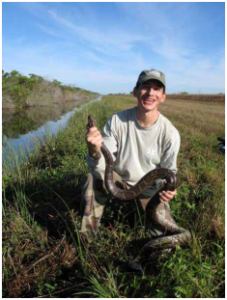
Last Friday morning, I delivered a Petition to the Secretary of the Interior’s office the roots of which go back 15 years to 2001. The title: Petition: To Amend 50 CFR §16.13 to List 43 High Risk Fish, Crayfish, and Mollusk Species as Injurious Species under the Lacey Act. (For a copy of the petition, use the “contact us” button on the CISP webpage.) I was really excited to file this on CISP’s behalf because it is the logical expansion of a more proactive approach to preventing introductions of invasive, disease-carrying, or otherwise “injurious” non-native animals that we don’t want running around in the United States. We already have scores of invaders (starlings, red lionfish, Burmese pythons, feral hogs, Asian carps, zebra and quagga mussels, tegus and on and on). We need to start doing multi-species listing proposals in order to change what has been an extremely slow process into one that works at a pace that can actually protect our nation’s resources – and people – from the risks of this age of vast globalized trade in live fish and wildlife.


Back in 2001, the National Invasive Species Council adopted its first Management Plan. One element in it was to adopt a science-based screening method aimed at identifying the highest risk non-native animals that we should keep out of the country.  This was to have been completed by about 2006.  I was appointed long ago (so far back I can’t remember the year) to the committee tasked with this responsibility.  The Committee went through fits and starts and sometime in the mid-2000s just crashed into nothingness and stopped meeting.  But, a dedicated U.S. Fish and Wildlife Service (FWS) biologist in the Midwest Region — Mike Hoff — kept at it for years on a shoestring budget and around 2011 he got some real funding and was able to get his animal screening project staffed. Lo and behold, they started developing lists of high-risk species based on robust scientific predictions. I won’t go into the models he used and the peer-review he had to go through. Suffice it to say that process took about 3 more years before Mike Hoff and his colleagues could convince the FWS to actually start publicly posting the results of their screening work. But, starting in 2014 they posted several and in late 2015 they posted them in earnest. Now there are 150 Ecological Risk Screening Summaries (ERSSs) on the bureau’s website.


Out of the 150 species, 63 pose a “high” overall risk of invasiveness/injuriousness.  For funding and historical reasons most are aquatic species that could invade in the Great Lakes region, but even so it is a great beginning. The 63 species include 46 fishes, 8 crustaceans, and 9 mollusks. One fish on the website (mrigal, Cirrhinus cirrhosus) appears to be labeled “high risk” in error and one of the mollusks (zebra mussels, genus Dreissena) is already listed under the Lacey Act. Also, Interior already has formally proposed that 11 of the 63 species on the website should be listed as “injurious”. That is, almost exactly one year ago the agency proposed to add 10 of the non-native fish and one crustacean. Thus, those 11 are not included in this new Petition. The FWS needs to take action on them soon.


UPDATE: On Sept. 29th the FWS finalized its rule listing all 11 of those species. The regulation and the detailed FWS explanation for it published in the Federal Register set a strong precedent and a useful template for listing the 43 species in the Petition as well.


Now this Petition, which I co-wrote with my CISP colleague Phyllis Windle, PhD., should be the USFWS’ next multi-species listing. The 43 “high risk” species proposed in it are listed at the end of this blog. The Petition excludes 7 species with posted ERSSs that were “high: overall,” but were below a high rating for either their history of invasiveness or climate match. As a result, the 43 below represent the highest range of the FWS’s identified high risks. Species like the Devil firefish, virile crayfish and the bleak – just their names makes me not want them here – pose unacceptable risks.


While the voluntary program promoted by the FWS on its webpages along with the ERSSs is a commendable hope, a “please do not import” approach cannot be relied upon. Administrations and websites change and some industry outliers won’t follow voluntary measures anyway – some even see them as creating a business opportunity. As I have watched (and supported), Mike Hoff and the FWS invested a significant amount of funds and staff time over the last 10 years to develop this screening process and research and write the scores of posted ERSSs. Other experts were involved in designing the process and providing peer reviews at different stages. It would be a significant waste of taxpayer resources were the FWS not to follow through and take regulatory action for species posing a clearly high risk. None offers an essential benefit that outweighs its harm to the United States. Minimal to zero stakeholder opposition is expected to prohibiting them. So what are we waiting for? The listing Petition needs to get posted in the Federal Register for public comment and action started as soon as possible. This one is virtually a “no brainer”.


The proposed list additions are below. For a copy of the full Petition, use the “contact us” button the the CISP webpage.


Mollusks

(A) Bithynia tentaculata (faucet snail).

(B) Corbicula fluminea (Asian clam).

(C) Dreissena rostriformis bugensis (Quagga mussel).

(D) Limnoperna fortune (golden mussel).

(E) Potamopyrgus antipodarum (New Zealand mudsnail).

(F) Sinanodonta woodiana (Chinese pond mussel).


Fish

(A) Acanthogobius flavimanus (yellowfin goby).

(B) Alburnus alburnus (bleak).

(C) Alosa pseudoharengus (alewife).

(D) Cichlasoma bimaculatum (black acara).

(E) Coregonus lavaretus (powan).

(F) Ctenopharyngodon idella (grass carp).

(G) Cyprinella lutrensis (red shiner).

(H) Cyprinus carpio (common carp).

(I)  Gymnocephalus cernua (ruffe).

(J)  Hypomesus nipponensis (wakasagi).

(K) Ictalurus furcatus (blue catfish).

(L)  Misgurnus anguillicaudatus (Oriental weatherfish).

(M) Morone americana (white perch).

(N) Neogobius melanostomus (round goby).

(O) Odontesthes bonariensis (Argentinian silverside).

(P) Oreochromis aureus (blue tilapia).

(Q) Oreochromis mossambicus (Mozambique tilapia).

(R) Oreochromis niloticus (Nile tilapia).

(S) Parachromis managuensis (Jaguar guapote).

(T) Poecilia reticulate (guppy).

(U) Pterois miles (Devil firefish).

(V) Pterois volitans (red lionfish).

(W) Pterygoplichthys pardalis (Amazon sailfin catfish).

(X) Pterygoplichthys multiradiatus (Orinoco sailfin catfish).

(Y) Pterygoplichthys disjunctivus (vermiculated sailfin catfish).

(Z) Pylodictis olivaris (flathead catfish).

(AA) Rhodeus ocellatus (rose bitterling).

(BB) Sarotherodon melanotheron (blackchin tilapia).

(CC) Scardinius erythrophthalmus (rudd).

(DD) Tilapia mariae (spotted tilapia).

(EE) Tilapia zillii (redbelly tilapia).


Crayfish

(A) Oronectes limosus (spiny-cheek crayfish).

(B) Oronectes propinquus (northern clearwater crayfish).

(C) Oronectes rusticus (rusty crayfish).

(D) Oronectes virilis (virile crayfish).

(E) Pacifastacus leniusculus (signal crayfish).

(F) Procambarus clarkia (red swamp crayfish).


Posted by Peter Jenkins

Invasive Earthworms Need Action!

 worm_medAmynthes agrestis; National Park Service photo


Earthworms have been largely ignored as a class of invaders. But evidence is accumulating that their numbers and impacts are too significant to ignore.


Non-indigenous earthworms began arriving in the Americas with the first European colonists and they are now widespread. One study (see summary of Reynolds and Wetzel 2008 here) found 67 introduced species among the 253 earthworm species in North America (including Mexico, Puerto Rico, Hawaii, and Bermuda).  In Illinois, 20 of the 38 species are introduced. Nuzzo et al. 2009 recorded a total of 11 earthworm species – all nonnative – at 15 forest sites in central New York and northeastern Pennsylvania.


Earthworms are good invaders – they reproduce quickly and are easily transported to new places – both carelessly and deliberately for bait, composting, or other uses.


As ecosystem engineers, invasive earthworms cause significant impacts to the soil and leaf litter, as well as to plants and animals dependent on those strata.  However, they are little studied and few efforts been made to address their threat.  Wisconsin is the pioneer (see below).


Ecosystem Engineers: Impacts on Soil, Plants, and Animals


Invasive alien earthworms cause enormous damage in forest environments. (I have seen no information about the damage they might cause in other natural systems.)  Earthworms can change soil chemistry, soil structure, and the quantity and quality of the litter layer on the soil surface. Changes include rapid incorporation of leaf litter into the soil, alteration of soil chemistry, changes in soil pH, mixing among soil layers, and increased soil disturbance. Such changes have been shown to harm native plant species – both herbaceous ones on the forest floor as well as the regeneration of woody vegetation, including trees.  See the review just published by Craven et al. 2016 and Hale and Nuzzo references below).


Craven et al. (2016) conducted a meta-analysis of 645 observations in earlier publications. They sought to measure the effects of introduced earthworms on plant diversity, cover of plant functional groups, and cover of native and non-native plants. Sites with a higher the diversity of invading earthworms – with associated variety in behaviors (see below) – had greater declines in plant diversity.  Higher earthworm biomass or density did not reduce plant diversity but did change plant community composition:  cover of sedges and grasses and non-native plant species significantly increased, and cover of native plant species (of all functional groups) tended to decrease. The increase in non-native plant cover in areas with higher earthworm biomass is thus an example of ‘invasional meltdown’ as propounded by Simberloff and Von Holle in 1999.


Craven et al. 2016 propose several direct and indirect mechanisms by which introduced worms might affect plant species. These include ingestion of seeds or seedlings, burying seeds, and alteration of water or nutrient availability, mycorrhizal associations, and soil structure. European and Asian plant species that co-evolved in the presence of earthworms could better tolerate earthworms’ presence.


Important Questions


Craven et al. 2016 note that the interaction of the invader-related factors with other site-related conditions such as deer browsing, fire history, forest management, and land-use history require further study to disentangle. Many other questions need to be answered, too.


Although Craven et al. (2016) do not specify the geographic range of the studies analyzed, I believe most were conducted in the northern and northeastern regions of the United States and some parts of Canada. It would be interesting to see if these studies’ findings differed from those carried out in Great Smoky Mountains National Park on the Tennessee-North Carolina border. The latter is an area where – unlike the northern states – earthworms were not wiped out by the most recent glaciation.  (See references by Bruce Snyder and Jeremy Craft, below.)


The finding that worm species diversity is associated with decreased plant species diversity seems to indicate that worms’ impacts might vary depending on the behavior of the worm in question – especially whether the worms remain on or near the soil surface and — if not — how deeply they burrow.  Are studies under way to clarify these differences?


Furthermore, do the impacts of European worms – the subjects of most of the studies carried out in Minnesota, New York, and Pennsylvania – differ substantially from the impacts of Asian earthworms? Or are any differences explained better by the species’ activity in the soil (e.g., depth of burrows) than their origins?


Impacts of earthworms on wildlife are less studied and perhaps less clear.  Several studies have focused on salamanders because of their known dependence on leaf litter. In a study of 10 sites in central New York and northeastern Pennsylvania, Maertz et al. 2009 found that salamander abundance declined exponentially with decreasing volume of leaf litter. They suggested that the salamander declines were a response to declines in the abundance of small arthropods, a stable resource.

A study by Ziemba et al. (2016) in Ohio involved Asian worms (genera Amynthas and Metaphire) rather than the European worms most often included in studies carried out in Minnesota, New York, and Pennsylvania.  These authors found a complex picture: earthworm abundance was negatively associated with juvenile and male salamander abundance, but had no relationship with female abundance.

Craft (2009) found that reduced leaf litter mass in invaded areas of Great Smoky Mountains National Park diminished habitat for both salamanders and salamander prey.

Others have studied millipedes – a largely unappreciated example of biological diversity in the Southern Appalachian Mountains – in Great Smoky Mountains National Park. Snyder and colleagues (2013) found that earthworms in the genus Amynthas altered soils by decreasing the depth of partially decomposed organic horizons and increasing soil aggregation. The result was a significant decrease in millipede abundance and species richness – probably as a result of competition for food.

Results from a study of earthworms’ effects on the Park’s food web by Anita Juen and Daniela Straube, begun in 2010, have not yet been published (pers. comm. from GRSM staff).

Even birds might be affected by worm invasions. One study in Wisconsin found that hermit thrush and ovenbird populations are lower in areas infested by worms. Possible reasons for the decline are that nests (on the ground) are more vulnerable to predation when located in the grasses promoted by worms, and a reduction in invertebrates fed to nestlings.


Expanding Risks

Several non-native earthworm species have been collected (so far) only from greenhouses or other places of indoor cultivation.  But can we be sure that they are not being spread to yards, parks, and other places halfway to natural systems through movement of plants and mulch?


Earthworms are extremely difficult to manage once established.

Are these challenges the reasons why few official efforts to control earthworm spread have been adopted? Or is it the animals’ public image – they are widely regarded as “good” critters that enrich the soil and facilitate composting. Or is it that trying to control worms will require enhanced regulation of the nursery and green waste industries?

worms1Amynthes photo; from Wisconsin DNR website

Wisconsin Is the Policy Pioneer

Wisconsin stands out for trying to address the issue! The state’s conservation and phytosanitary officials became alarmed when they detected Amynthas species in the University of Wisconsin Arboretum in 2013.  This is the site of regular plant sales,a likely pathway for spread.  Wisconsin now knows this genus of worms to be present in 21 counties, mainly along urban corridors.  They have not yet been found in the state’s forests.

Wisconsin is acting to protect its forests despite Amynthas worms having been present in the United States for over a century: Snyder, Callaham and Hendrix 2010 say several species of Amynthas were documented in Illinois and Mississippi by the 1890’s.  Some 15 species are recorded as established and widespread across the eastern United States (Reynolds and Wetzel 2004).


Wisconsin has classified the Amynthas genus as “restricted” – so their movement is now regulated. The risk of spread appears to be greatest through mulch produced from leaves collected in residential communities. The state held a workshop during which the regulated industry developed best management practices to address that risk. The Wisconsin Department of Natural Resources has posted a web page with information about identifying the worms and the BMPs. (Wisconsin DNR has also been a leader in tackling the firewood pathway.) The Wisconsin Department of Agriculture put the worm issue on the agenda of the National Plant Board in August 2016 and urged other states to take action.

The Wisconsin DNR webpage has

  • ID cards and other information to aid identification, g., photos of worms and the “coffee ground” soil they create;
  • a brochure with the state’s new “best management practices”
  • educate yourself and others to recognize jumping worms;
  • watch for jumping worms and signs of their presence;
  • ARRIVE CLEAN, LEAVE CLEAN – Clean soil and debris from vehicles, equipment and personal gear before moving to and from a work or recreational area;
  • only use, sell, plant, purchase or trade landscape and gardening materials and plants that appear to be free of jumping worms; and
  • only sell, purchase or trade compost that was heated to appropriate temperatures and duration following protocols that reduce pathogens.

What’s Up Where You Are?

What is your state doing to slow the spread of invasive earthworms?

  • Do nursery inspectors look for earthworms when approving plant shipments? Craven et al. 2016 findings re: higher impacts on plants as number of worm species rises demonstrate the importance of slowing spread of new species even into areas that already have some non-native earthworms.
  • Are professional associations of nurserymen and green waste recyclers educating their members about the damage caused by invasive earthworms and steps they can take to minimize worms’ spread to new areas?
  • Are organizations of anglers and gardeners in your state educating their members about the damage caused by invasive earthworms and steps they can take to minimize worms’ spread to new areas?
  • Are ecologists studying earthworm invasion impacts in other parts of the country? In non-forested ecosystems?
  • Are conservation organizations initiating or joining outreach efforts?
  • Can worm-education efforts be joined with h more robust public and private outreach focused on aquatic invaders, invasive plants, or firewood?


SOURCES

Bohlen, P.J., S. Scheu, C.M. Hale, M.A. McLean, S. Migge, P.M. Groffman, and D. Parkinson. 2004.  Non-native invasive earthworms as agents of change in northern temperate forests. Front Ecol Environ 2004; 2(8): 427–435

Craft, J.J. 2009. Effects of an invasive earthworm on plethodontid salamanders in Great Smoky Mountans National Park. Thesis prepared at Western Carolina University.

Craven, D., M.P. Thakur, E.K. Cameron, L.E. Frelich, R.B. Ejour, R.B. Blair, B. Blossey, J. Burtis, A. Choi, A. Davalos, T.J. Fahey, N.A. Fisichelli, K. Gibson, I.T. Handa, K. Hopfensperger, S.R. Loss, V. Nuzzo, J.C. Maerz, T. Sackett, B.C. Scharenbroch, S.M. Smith, M. Vellend, L.G. Umek, and N. Eisenhauer. 2016.The unseen invaders: intro earthworms as drivers of change in plant communities in No Am forests (a meta-analysis). Global Change Biology (2016), doi: 10.1111/gcb.13446 available here.

Hendrix, P.F. 2010. Spatial variability of an invasive earthworm (Amynthas agrestis) population and potential impacts on soil characteristics and millipedes in the Great Smoky Mountains National Park, USA. Biological Invasions DOI 10.1007/s10530-010-9826-4

Maertz, J.C., V. Nuzzo, B. Blossey.  2009. Declines in Woodland Salamander Abundance Associated with Non-Native Earthworm and Plant Invasions. Conservation Biology Volume 23, Issue 4 August 2009  Pages 975–981

Nuzzo, V.A., J.C. Maerz, B. Blossey. 2009. Earthworm Invasion as the Driving Force Behind Plant Invasion and Community Change in Northeastern North American Forests. Conservation Biology Volume 23, Number 4, 966-974.

Simberloff, D.  and Von Holle, B. 1999. Positive interactions of nonindigenous species: invasional meltdown? Biological invasions 1, 21-32

Snyder, B.A., M.A. Callaham, C.N. Lowe, P.F. Hendrix. 2013. Earthworm invasion in North America: food resource competition affects native millipede survival and invasive earthworm reproduction. Soil Biology and Biochemistry 57, 212-216

Ziemba JL, Hickerson C-AM, Anthony CD. 2016. Invasive Asian Earthworms Negatively Impact Keystone Terrestrial Salamanders. PLoS ONE 11(5): e0151591. doi:10.1371/journal.pone.0151591


See also:

Global picture: https://www.newscientist.com/article/mg19325931-600-war-of-the-worms/

Great Lakes Wormwatch website: http://www.nrri.umn.edu/worms/research/publications.html  

Illinois Natural History Survey webpage: http://wwn.inhs.illinois.edu/~mjwetzel/IllinoisEarthworms.html

Wisconsin  DNR http://dnr.wi.gov/topic/invasives/fact/jumpingWorm/index.html

Information on western Canada:

http://bcinvasives.ca/news-events/recent-highlights/earthworm-invasion-calling-all-citizen-scientists/

http://ibis.geog.ubc.ca/biodiversity/efauna/EarthwormsofBritishColumbia.html

Native Earthworms of British Columbia Forests: http://www.cfs.nrcan.gc.ca/pubwarehouse/pdfs/5102.pdf


Posted by Faith Campbell

Dr. Sarah Reichard 1957-2016

We  mourn the sudden and unexpected death of Sarah Reichard, Professor in the School of Forest Resources at the University of Washington and Director of the UW Botanical Garden. For more than 25 years, Sarah was a leading researcher on invasive plants. She studied their traits; sought to predict  their invasive ability; searched for ways to detect new invaders early; and examined the effects of plant invaders on native ecosystems. She also engaged the nursery industry, botanical gardens, and other horticultural groups in addressing invasive plant threats. She brought an open style, compassion, deep thoughtfulness — and yet a burning desire for righteous change — to all this work.

Sarah established her expertise early and was long a recognized expert.She published widely — in academic journals, gardening magazines, and policy papers.  Most recently, she authored the well-received book, The Conscientious Gardener: Cultivating a Garden Ethic. Also, Sarah was a key organizer and participant in meetings — both international and national — that addressed invasive species. Many of us in the conservation community relied upon her work and advice to guide invasive plant policy.

We join her husband, her colleagues at the University of Washington, and invasive plant experts around the world in mourning Sarah’s untimely death. Our world is a poorer place without her bright and generous spirit.


Faith Campbell

Phyllis Windle

Peter Jenkins


A Red List for Trees!

16 dead sweet bay + grpF.T. Campbell  dead sweetbay, Florida Everglades

At the global level, the World Conservation Union (IUCN) is the recognized leader in conservation.  Information from the IUCN’s Red List has been widely used to inform conservation policies and legislation, as a tool for environmental monitoring and reporting, and to prioritize areas for conservation action.


The IUCN is holding its World Conservation Congress in Honolulu during the first half of September.  The several sessions focused on both invasive species and forests have been grouped into “Journeys”.  The invasive species Journey schedule is available here.  The schedule for the forest Journey is available here   I don’t think either puts much emphasis on the year-old Tree Specialist Group.


Over the decades, the Union has increasingly engaged on plant conservation issues. The plants under consideration now include trees! There are multiple ways that you can be part of this important effort. Details are below. One of the efforts’ leaders assures me that the IUCN process will address tree species not yet “endangered” but under severe pressure – currently or virtually certainly in the near future – from established non-native insects and pathogens.


The IUCN has noted that trees have high ecological, economic, and cultural value. Forests are being converted or degraded by many human-related activities, including overharvesting, fire and grazing – to say nothing of climate change and non-native pests. Yet – the impacts of forest conversion and degradation on tree species per se are largely unknown. How many tree species qualify for a “Red List” category: extinct, critically endangered, endangered, or vulnerable? (For a discussion of the criteria applied in assigning categories, go here.

(Of course, full-scale extinction or endangerment of a species is the extreme; ecological damage begins earlier and more locally, as the species declines as the result of a suite of pressures …)


The IUCN has formed a Global Tree Specialist Group to conduct a comprehensive conservation assessment of the world’s tree species, linked to IUCN’s Red List. The effort is being led by the Tree Specialist Group  and the Botanic Gardens Conservation International (BGCI). The group’s mission, underlying considerations and process are described in an article published in the Oryx article cited below.


IUCN has recently completed analyses of extinction risk in selected animal groups. They concluded that 14% of bird, 33% of amphibian, and 22% of mammal species are either threatened or extinct.


Preparing the same type of analysis for tree species will be more complicated. First there are many more plant species than ones in the selected groups of animals. Scientists don’t know the total number of extant tree species. One estimate is 60,000.  If that estimate is in the ballpark, the status of approximately 84% of tree species has not yet been assessed. Assessments of tree species begun in the 1990s have resulted in approximately 9,500 species being included in one of the Red List categories.  They represent slightly less than half of all plant species listed.


To achieve the goal of assessing the status of all tree species by 2020, organizers plan to adopt the approach used successfully in the recent assessments of vertebrate groups – mobilizing global data sets (which have become more numerous and easier to use) and hundreds of volunteer experts.


To start, the Group is focused on specific plant families with high numbers of trees, e.g., Aquifoliaceae, Fabaceae, Fagaceae, Lauraceae, Meliaceae and Myrtaceae. Combined, these families include more than 20,000 species. Assessments of Betulaceae and Ebenaceae have already started, led by BGCI and the Missouri Botanical Garden, respectively.


Project leaders hope to complete 5,000 more tree assessments – new or updates – during 2016.


What is Under Way


Other IUCN specialist groups are assisting in assessing the status of trees in various geographic regions or with particular human uses. The IUCN Plants for People initiative is already assessing timber, medicinal and crop wild relatives. The Crop Wild Relative Specialist Group has prepared draft assessments for over 90 woody species of Malus, Prunus, Pistacia and Mangifera. Specialist Groups and Red List authorities in South Africa, Brazil, and East Africa and several island groups are contributing.


A third focus will be tree species presumed to be most at risk from climate change, e.g., montane and island trees. IUCN Specialist Groups in Hawai`i, New Caledonia, Galapagos, Mascarene Islands, Fiji, and Madagascar are working.


The BGCI is making progress on assessing Europe’s non-coniferous trees. If you wish to help, contact Malin Rivers at malin.rivers@bgci.org.


In North America, the U.S. Forest Service hosted a meeting on “Gene Conservation of Tree Species” at the Morton Arboretum in Chicago in May 2016. Murphy Westwood facilitated a special session during which “listing” experts from IUCN, NatureServe, USFS CAPTURE Program, and the U.S. Fish and Wildlife Service compared their assessment processes and discussed how data might be shared more efficiently. A goal of completing the IUCN Red List of North American Trees was agreed on. The Morton Arboretum will help coordinate the effort. To contribute please contact Murphy Westwood at mwestwood@morton.org.  


One suggestion was to conduct an IUCN Red List assessment for the genus Fraxinus. Two ash species – one Asian, one Central American – are included in the IUCN Red List (although one needs to be updated). Jeanne Romero-Severson of Notre Dame University has offered to undertake assessments for green ash, Fraxinus pennsylvanica, and black ash, Fraxinus nigra. If you wish to help, contact Sara Oldfield at sara@saraoldfield.net.


(I think several other species also warrant IUCN assessment, including redbay Persea borbonia, tanoak Notholithocarpus densiflorus, and whitebark pine Pinus albicaulis)


This IUCN effort represents yet a fourth set of people examining tree-pest interactions – people integrated into traditional, internationally-focused conservation organizations. There are at least three other groups already involved: (1) forest pest experts in academia and government agencies, (2) people who focus on invasive species, and (3) phytosanitary officials. I think that these latter three groups already interact less smoothly than would be ideal. How can we all combine our efforts to enhance protection programs?


Might more of the scientists who work on insects and pathogens attacking tree species join the IUCN Tree Specialist group? Might organizers of meetings make a greater effort to engage people from all four silos in discussions of strategies? Might some virtual for a be established that could facilitate communication across the gaps – perhaps emphasizing the gap between invasive species experts and phytosanitary officials?


Finally, how can we use the new focus on tree species’ degree of endangerment to enhance efforts to prevent and respond to invasions by non-native insects and pathogens? How do we link these concerns to existing attention to the ecological and economic impacts – which begin to manifest long before a species qualifies as “endangered”.  How can the various approaches reinforce each other?


SOURCES


Newton, A., S. Oldfield, M. Rivers, J. Mark, G. Schatz, N. Tejedor Garavito, E. Cantarello, D. Golicher, L. Cayuela, and L. Miles. 2015. Towards a Global Tree Assessment. Oryx, Volume 49, Issue 3, July 2015, pp. 410-415.


Explanatory information available at

https://www.bgci.org/plant-conservation/globaltreeassessment/

Click to access GTALeaflet%20FINAL.pdf


The GTSG Newsletter is apparently available only to those who are part of the IUCN network.


For more information, contact Sara Oldfield, Co-Chair GTSG, at sara@saraoldfield.net


Posted by Faith Campbell