Interior’s Invasive Species Plan: Let’s Implement It!

Posted by Scott J. Cameron, former Acting Assistant Secretary for Policy Management and Budget , US Department of the Interior

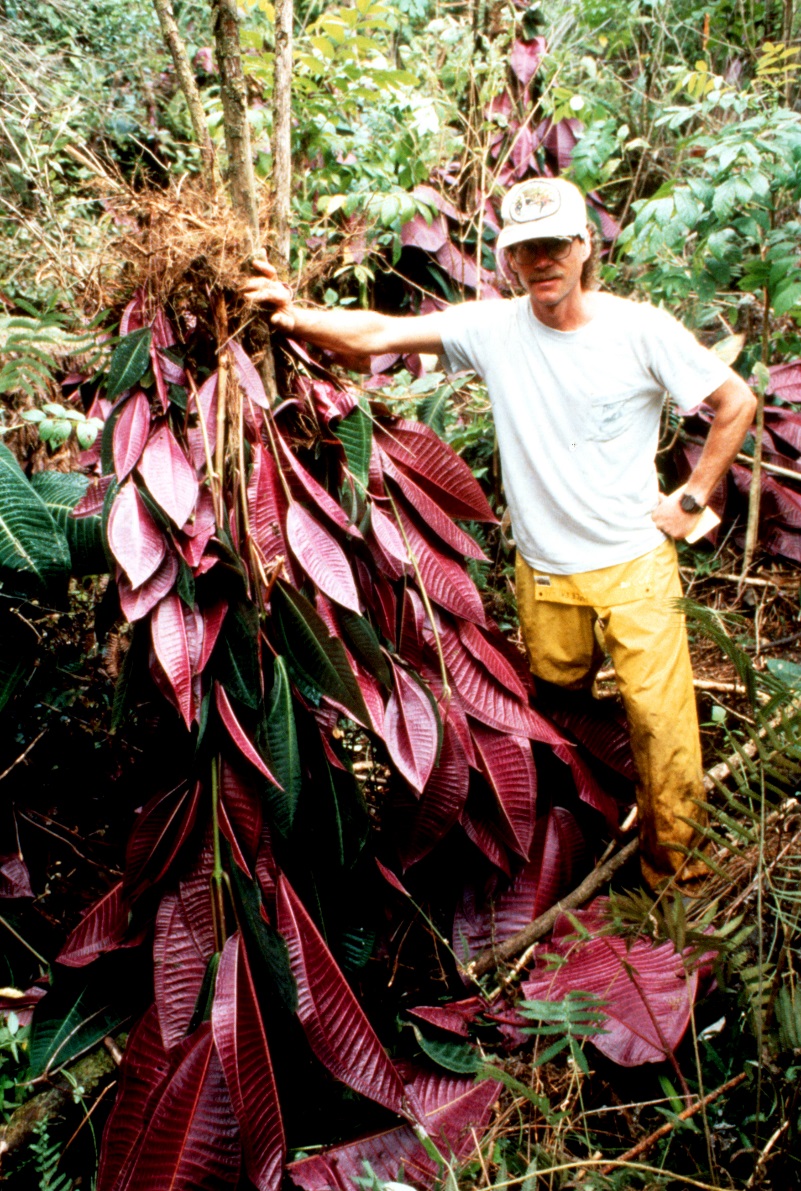
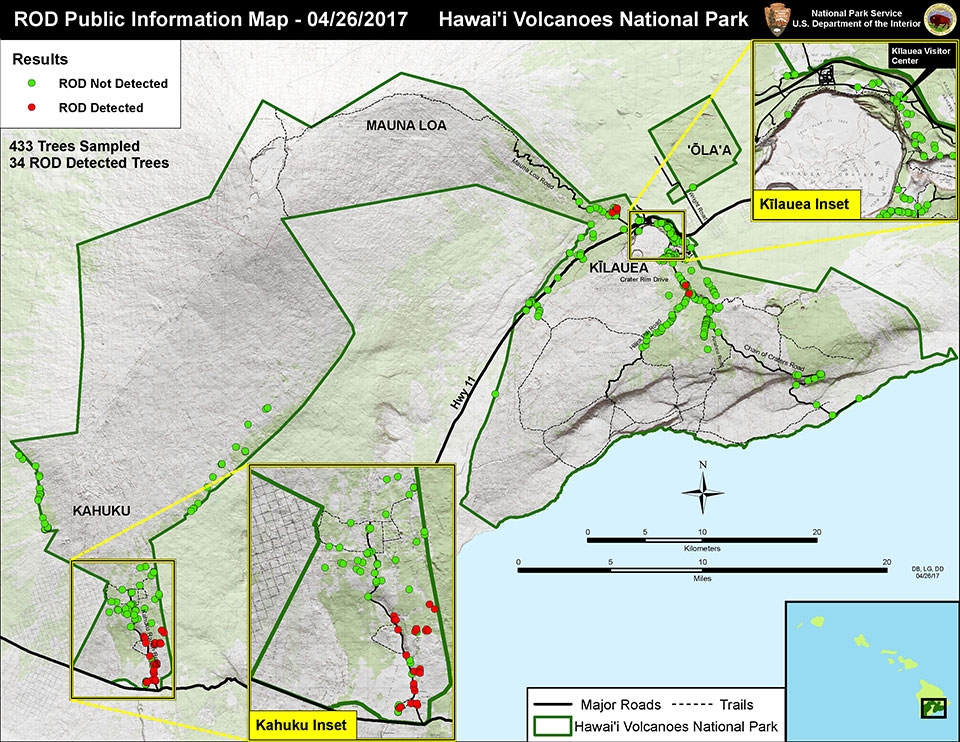
locations in Hawaii Volcanoes National Park where ohia trees were infected by rapid ohia death pathogen in 2017

In 2019 Congress passed the John D. Dingell, Jr. Conservation, Management, and Recreation Act. Among other things, it directed the Department of the Interior to “develop a strategic plan that will achieve, to the maximum extent practicable, a substantive annual net reduction of invasive species population or infested acreage on land or water managed by the Secretary.”  This provision triggered a year-long process of public involvement and inter-bureau coordination. The result was a plan published in January 2021.  It represents the first attempt by Interior at a Department-wide multi-taxa, multi-year approach to invasive species.  It has the potential to spur integration of invasive species work across the Department’s many bureaus and to focus each bureau’s efforts on a set of common goals, strategies, and performance metrics.

While Congress’ language is open-ended, any planning exercise is constrained by the most recent President’s budget and existing law.  It is up to those of us who are not, or at least no longer, executive branch employees to advocate for plans unbound by those constraints. 

In that spirit, I offer eight recommendations to improve invasive species management. Four are within existing authorities; four more are outside the current budgetary and statutory framework.  Many more ideas are without a doubt worth pursuing.

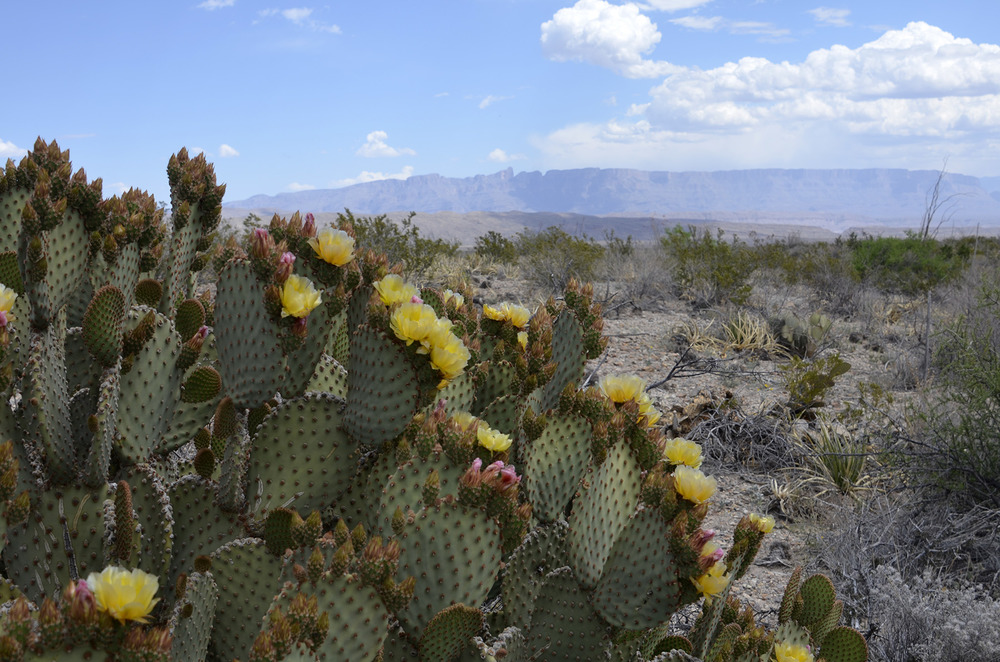
Opuntia (prickly pear) cactus – common plant in western National parks and on Bureau of Land Management lands; under threat by cactus moth

First, within existing funding and legal authorities, the Department has unfinished business that it can act on now.

  1. Secure approval of the package of categorical exclusions under the National Environmental Policy Act (NEPA) — now awaiting approval by the President’s Council on Environmental Quality (CEQ). Over many years agencies have documented how invasive species control improves, rather than harms, the environment.  Absent an applicable NEPA categorical exclusion approved by CEQ, though, each such action needs to run the time- and money-consuming gauntlet of NEPA compliance. In the meantime, the invasive plants germinate, the invasive animals reproduce, and what might have been a localized and inexpensive problem has expanded geographically and in terms of cost and complexity.  In the Fall of 2020 Interior submitted hundreds of pages of documentation on numerous practices proven to control invasive species without harming the environment.  Due to time and staffing constraints at CEQ, these categorical exclusions still await action.  Interior and CEQ should take prompt steps to finish them.
  • Allocate to the US Geological Survey at least $10 million of the roughly $90 million remaining available to the Secretary in CARES Act appropriations for research on invasive zoonotic diseases. These are diseases like COVID-19 and West Nile virus that can move from one species to another.  Many zoonotic diseases fit the definition of invasive species, since they are not native to the United States and endanger human health.  In the case of COVID-19 funding is available to the Secretary of the Interior, without need for further Congressional action, from funds appropriated by the CARES Act. The availability of these funds will expire at the end of September 2021, so Interior should provide this research funding to USGS as soon as possible. 
  • Join the existing Memorandum of Understanding between the Western Governors Association (WGA) and the US Department of Agriculture’s Forest Service. These groups have established “a framework to allow the U.S. Forest Service (USFS) and WGA to work collaboratively to accomplish mutual goals, further common interests, and effectively respond to the increasing suite of challenges facing western landscapes.”  This provides a forum to improve coordination between the States and the federal government on the management of invasive species, and Interior needs to be part of that team.
  • Interior should work with USDA to accelerate and intensify efforts to systematically improve coordination between the interagency Wildland Fire Leadership Council and the interagency National Invasive Species Council.  Both Councils have member agencies that practice vegetation management using similar tools and techniques, although for different purposes. The two Councils should identify a select number of initiatives in FY21 where their efforts would benefit both wildland fire management and invasive plant management .
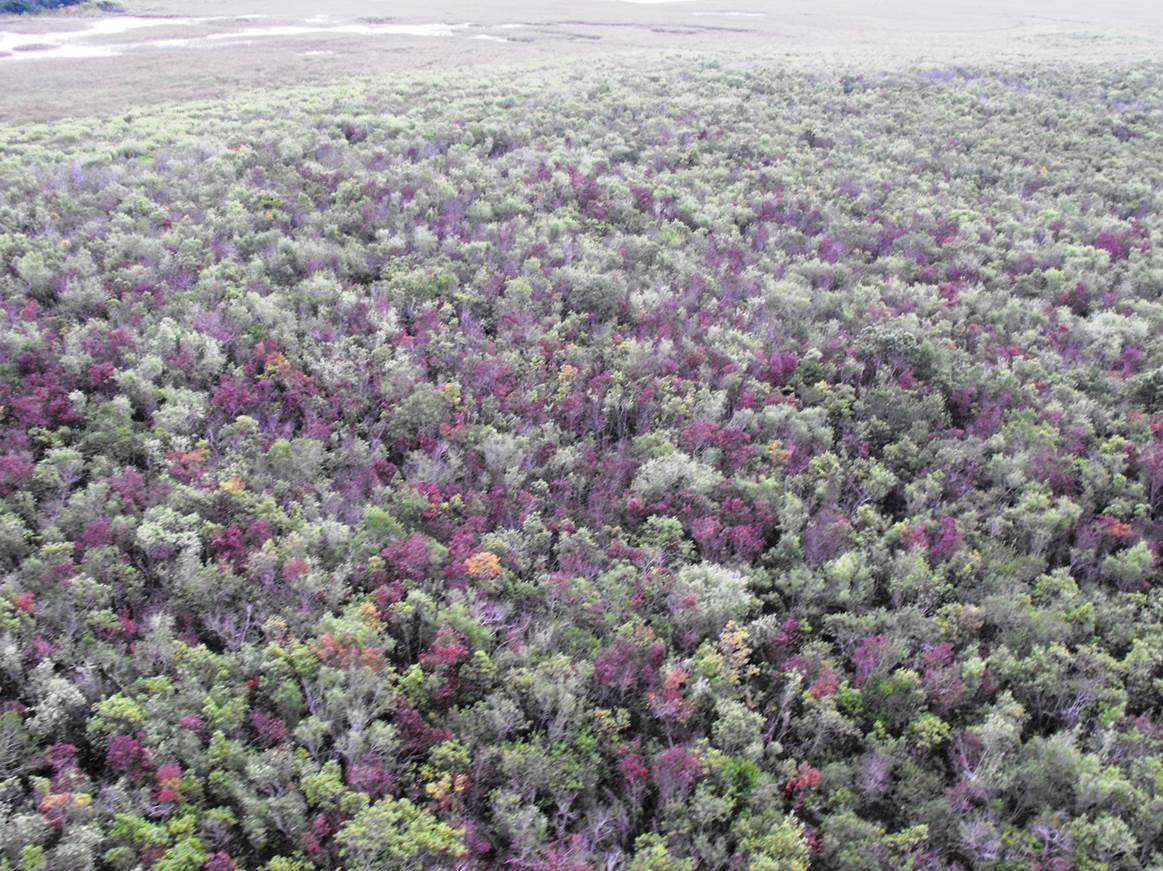
swamp bay trees in Everglades National Park killed by laurel wilt; photo by Tony Pernas

Four steps to implement the strategic plan outside the scope of current law and the President’s Fiscal Year 2021 budget. I offer the following:

  1. Improve implementation of the Lacey Act program to list injurious species.  There are both legislative and administrative elements to this proposal.  

In a federal District Court decision on May 19, 2015, on a lawsuit filed by the Association of Reptile Keepers, the Court undid the longstanding Fish and Wildlife Service policy that the Lacey Act allowed FWS to ban interstate transport of injurious species. On April 7, 2017, the D.C. Circuit Court of Appeals upheld the District Court’s view. These rulings mean that FWS authority only applies to international commerce.  Unfortunately, the court’s interpretation of the law and legislative history are reasonable, so Congress needs to amend the law to make it clear that FWS is explicitly authorized to regulate interstate commerce in injurious species. The Department of the Interior should work with the Department of Justice and the Office of Management and Budget to develop the necessary bill language and submit it to Congress.

At the same time, the FWS injurious species listing process is notoriously slow, even causing Congress to occasionally list species legislatively.  The fact that these legislative initiatives have sometimes been promoted by Members of Congress who normally  are opposed to more federal regulation signals just how awkward the current FWS process is. Thus there might well be strong bipartisan support to amend the Lacey Act on the interstate commerce matter. Acting on its own authority, FWS should procure an independent third party review of the injurious species listing process and ask the contractor to make suggestions for “business process reengineering” to improve and streamline current practices, along with evaluating whether higher funding or new technology is needed.

  • The Bureau of Reclamation, Department of the Interior, and the Office of Management and Budget should develop legislative language to submit to Congress for the 2022 Water Resources Development Act, that explicitly authorizes an aquatic nuisance species program in the Bureau of Reclamation.  It could parallel the relatively new authority enjoyed by the Army Corps of Engineers and mandate increased coordination between the two water agencies.
  • Any climate change legislation pursued by Congress and the Administration should include provisions for addressing invasive species.  Climate change will make some North American habitats more suitable for foreign organisms, as cold-intolerant species might be able to survive in more northern latitudes in the U.S. than previously was the case. Second, the disruptive effect of climate change on North American ecosystem structure and trophic relationships at any latitude will make those ecosystems more vulnerable to invasion. Finally, the spread of invasive species may in and of itself exacerbate climate change, such as through the increased carbon dioxide emissions from rangeland wildfires aggravated by the dominance of invasive cheatgrass.
  • The Senate Committee on Environment and Public Works and the House Natural Resources Committee should each hold oversight hearings on how best to help state and local governments detect and respond to new invasive species that are not within the statutory purview of USDA/APHIS.  This is a complex topic, important for both ecological and financial reasons. Over the years several attempts to address it have failed.  A thoughtful review by Congress and the Administration, which perhaps would lead to passage of new statutory authority and funding, is worth exploring.

The Author:

Scott Cameron recently left the federal government, where he had served as Acting Assistant Secretary for Policy, Management and Budget at the U.S. Department of the Interior. In that capacity he oversaw Department-wide budget, invasive species, natural resource damage assessment and restoration, environmental compliance and numerous administrative functions of this $14 billion agency with 65,000 employees. Previously, Scott held other civil service job (e.g., at the White House Office of Management and Budget) & political appointments in the federal government, on the staff of the Governor of California, and on Congressional staffs. While not in government, Scott led formation of the Reduce Risk from Invasive Species Coalition.

CISP welcomes comments that supplement or correct factual information, suggest new approaches, or promote thoughtful consideration. We post comments that disagree with us — but not those we judge to be not civil or inflammatory.

Further information on the plant pests mentioned in the photo captions can be obtained at www.dontmovefirewood.org; click the “invasive species” button.

Invasive Plants in National parks – Progress?

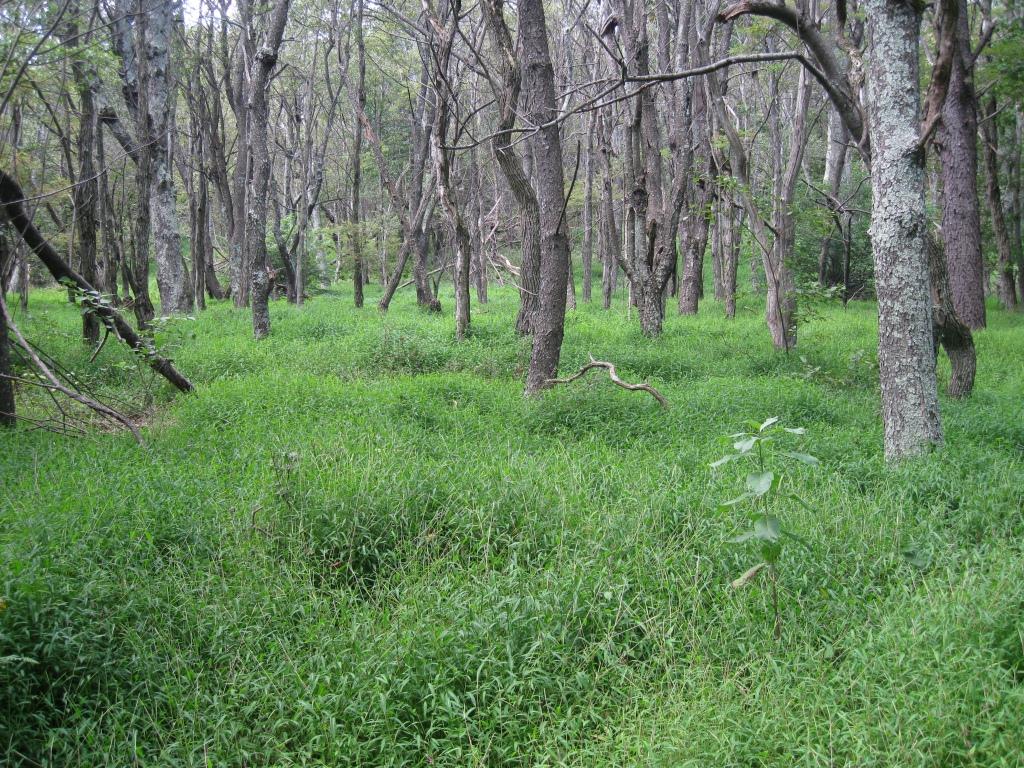
Japanese stiltgrass in Shenandoah National Park; photo by Jake Hughes, NPS

The recent appearance of a study by National Park Service (NPS) scientists quantifying the threat posed by invasive plants prompted me to seek updates on this issue. In May 2018, I blogged about NPS’ Invasive Plant Program Strategic Plan, which was issued in 2016. At the time, I got the impression that the program was struggling to gain support from NPS leadership in Washington, as well as leaders of individual parks. Has the situation improved since then?

The recent study, by Kathryn Miller and colleagues, focuses on National parks in the East, from Virginia to Maine. (I provide a full reference at the end of this blog.) I look forward to a planned follow-up article that will try to clarify drivers of invasion. 

The Miller study appears to have been undertaken to partially fulfill one of the goals of the NPS’ 2016  Invasive Plant Program Strategic Plan. One of the actions under Goal 1 in the Plan was to quantify the invasive plant threat, the effort needed to manage it, and then to communicate the gap between needs and available resources. Miller et al. have quantified the threat to National parks in one region (not the entire country). However, they have communicated the gap between effort and need in only the most general way.

Protecting the forests in eastern National parks is valuable from many perspectives. The forests in these parks are older and have higher stand-level tree diversity than surrounding unprotected forests. Protecting their long-term condition also corresponds to the National Park Service’s (NPS) stated mission, as established in its Organic Act.

The study relied on National Park Service Inventory and Monitoring Program data from 1,479 permanent forest plots covering 39 eastern NP units located from Virginia to Maine. The data were collected over 12 years, in three survey cycles (2007–2010, 2011–2014, and 2015–2018).

The authors note that in forest ecosystems, invasive plants can reduce native diversity, alter forest structure, suppress tree regeneration, alter nutrient cycling, and modify disturbance regimes.  Some – the shrubs and vines – also threaten human health by promoting increases in tick populations and associated Lyme disease risks.

Unsurprisingly, the data showed invasive plants to be widespread, and increasing. In 80% of the park units, there was a significant increase in at least one trend measuring abundance. Any decrease in plant invaders tended to be in herbaceous or graminoid species; that decrease was often counterbalanced by an approximately equivalent increase in invasive shrubs or vines. In 35 of the park units, more than half of the plots had at least one invasive plant species when the 2015-2018 survey began. In 10 parks (a quarter of those surveyed), every plot had at least one.

The most widespread species is Japanese stiltgrass (Microstegium vimineum). It is present in more than 75% of all park units and 30% of all 1,400 plots. This dominance is true despite the fact that stiltgrass does not extend north of Roosevelt-Vanderbilt National Historic Site in New York state (41o N latitude). Stiltgrass is also the most aggressive invader. 

The second most widespread invaders are a group of shrubs and vines, including most notably Japanese barberry (Berberis thunbergii), Japanese honeysuckle (Lonicera japonica), multiflora rose (Rosa multiflora), and wineberry (Rubus phoenicolasius). I note – although the articles does not – that several of these have been deliberately planted – either to “enhance” ecosystems (multiflora rose) or as ornamentals (barberry). [Lehan et al. 2013 (full reference at end of blog) found that 95% of 125 shrub species  introduced to the U.S. were introduced deliberately.] I know of no examples of deliberate planting of Japanese stiltgrass.

The most frequently detected non-grass herbaceous species is garlic mustard (Alliaria petiolata), which was detected in 20% of plots. Garlic mustard is found throughout the study area (Virginia to Maine). Tree-of-heaven (Ailanthus altissima) is the most common invasive tree. It is found in only 9% of plots and does not grow north of Roosevelt-Vanderbilt NHS. Again, both were intentionally introduced – and not noted as such in the article.

Because they could not identify the source populations for each plot, the study could not directly measure rates of establishment and expansion. The data did allow tracking rough trends in each park.

Parks with the highest abundance tended to be near densely populated areas. However, this pattern was not universal. For example, Prince William Forest Park in the outer Virginia suburbs of the District of Columbia metro area was one of two of the least invaded park units. 

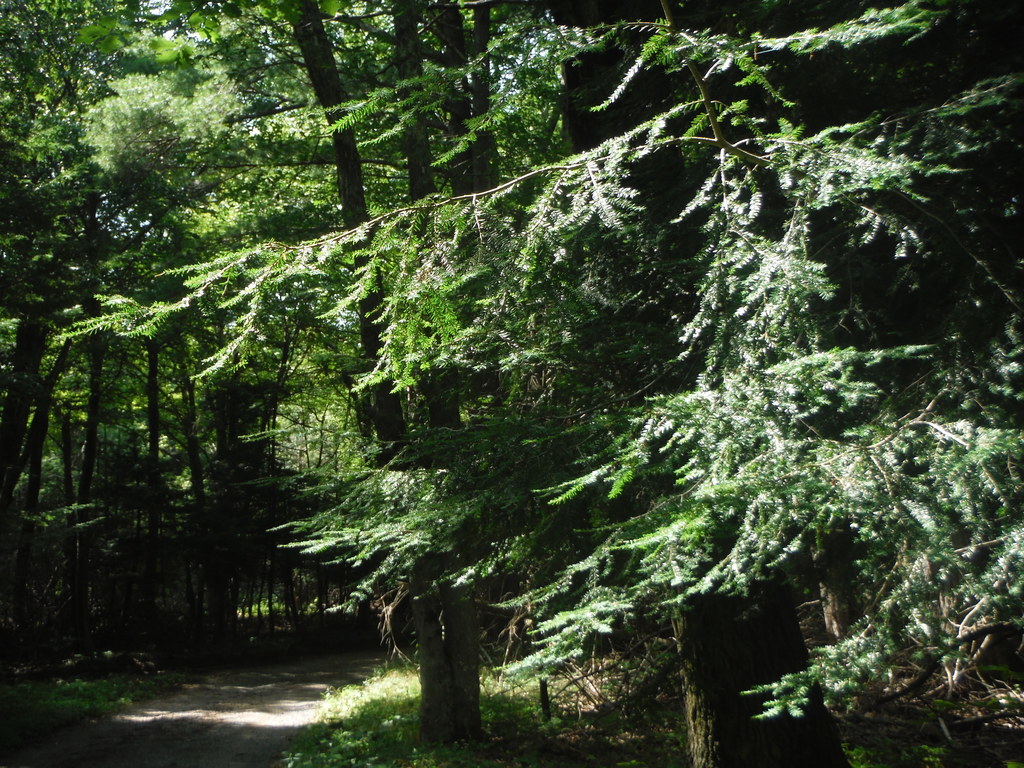
Prince William Forest Park

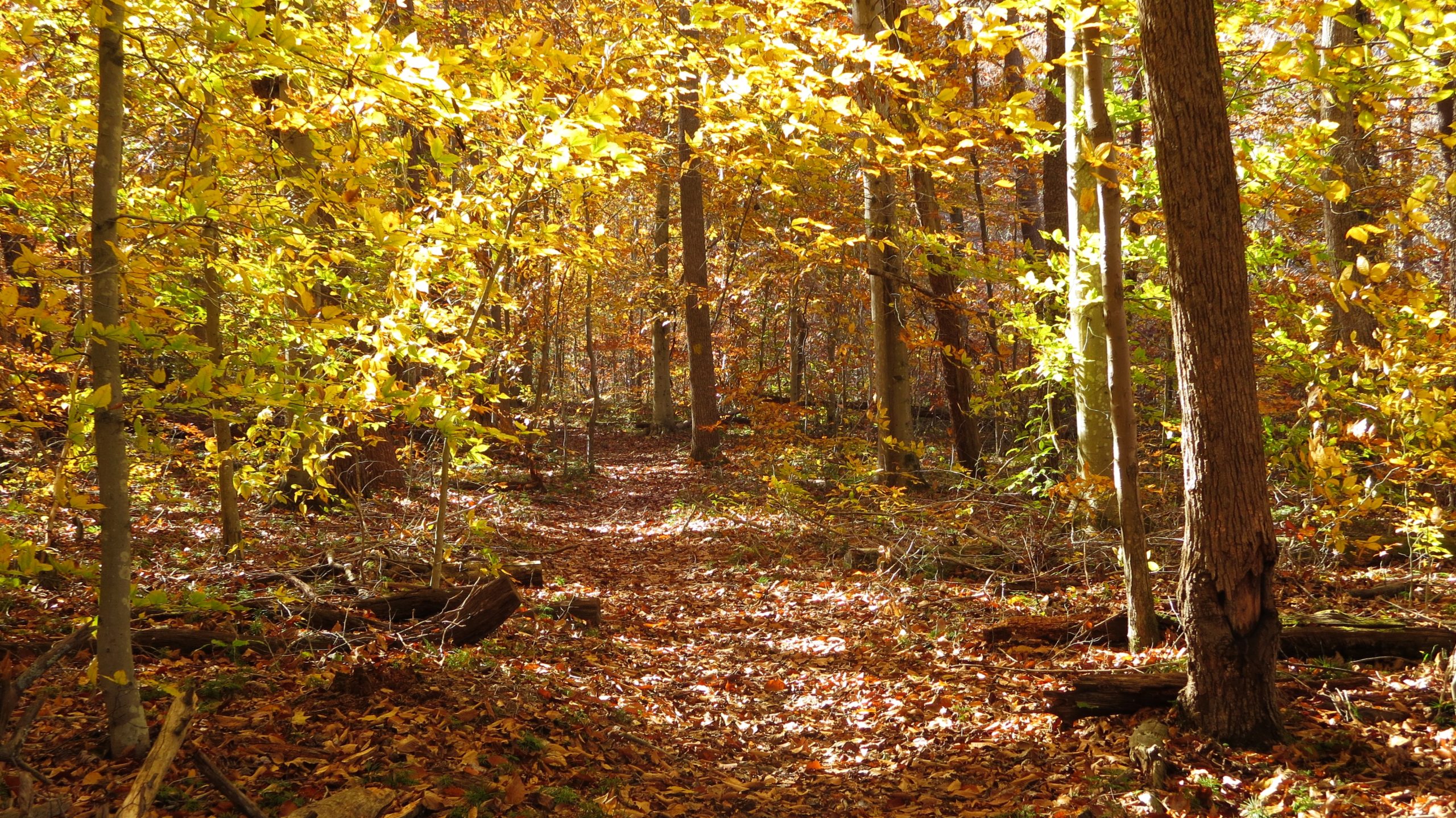
(note the prevalence of beech – I fear for the arrival of beech leaf disease!)

Total invasives increased significantly in 21 of the 39 parks for at least one metric. In 10 parks (a quarter of all parks), total invasives increased significantly in two of the three metrics. Antietam National Battlefield experienced the steepest increases.

The authors note that invasive plants continue to establish and expand, even in already heavily invaded forests. Thus they found little evidence of saturation. This finding conflicts with invasion theory. They also found antagonistic interactions between invasive species to be common.

The authors said managers should prioritize efforts to control Japanese stiltgrass and the shrubs and vinesdue to their widespread occurrence, rapid expansion, ability to suppress tree regeneration and understory diversity, and – in the case of the shrubs and vines, link to ticks.

The authors noted the need to better understand the drivers and impacts of invasive plants in eastern forests. They mentioned the overabundance of white-tailed deer (Odocoileus virginianus), latitude, climate change, fragmentation and urbanization. I have urged them to include analysis of deliberate planting of various species on lands within the park units or nearby. They have said that they will do so in the planned follow-up article.

The authors propose that deferred management of natural resources receive attention and sustained commitment on par with the attention to deferred maintenance of the park units’ infrastructure. The maintenance backlog has been addressed through recent legislation: the Great America Outdoors Act which provided $6.5 billion over five years to address deferred maintenance projects in all 419 national park units. I believe that these projects will not address invasive species, which are managed under the “Natural Resources” budget account, not “Maintenance”. Some “Maintenance” projects probably will include control of invasive plants. A former Interior Department official has suggested that resource management activities might be funded under another section of the legislation, which provides $900 million under the Land and Water Conservation program. I hope this is true.

National Park Service’ Overall Invasive Plant Program Now

In response to the mandate in the John D. Dingell, Jr. Conservation, Management, and Recreation Act (Public Law 116-9), the Department of Interior has issued a department-wide invasive species strategy. Will issuance of the new strategy provide impetus to the NPS to seek funding to implement its 2016 invasive plant strategic plan? Will Congress provide funds for this purpose?

Finding out the current status of National Park Service took a little effort. The NPS’ website has “popular” information about the efforts of individual regional Invasive Plant Management Teams (see links at the end of this blog). These posts provide only the briefest overview of program achievements and do not compare those accomplishments to the goals in the 2016 plan.

However, Terri Hogan, Invasive Plant Program Manager in the Biological Resources Division, provided following information:

NPS leadership now supports the agency’s invasive plant effort. The national Invasive Plant Program (IPP) contributes to the annual Natural Resource Stewardship and Science Directorate (NRSS)’ Biological Resource Division (BRD) work plan. All is guided by the “Four Pillars to Guide Natural Resource Activities and Investments”, adopted in 2016. 

It is not clear that invasive species have the highest priority under this regime. The four “pillars” are

  • Holding the line – includes conserving biodiversity by removing invasive plants
  • Managing amid Continuous Change – includes conducting risk assessment and taking other actions to contain future exotic species
  • Leveraging for Conservation at Scale
  • Enhancing Stewardship and Science Access and Engagement

Cooperation with owners of neighboring private lands has been enhanced by engagement of the Western Governors Association and state and local political leaders. Many parks participate in Partnerships for Invasive Species Management (PRISMs), CISMS, and Cooperative Weed Management areas (CWMAs). This collaboration has been strengthened by adoption of the John D. Dingell, Jr. Act (see above).

In practice, the focus appears to still be on the Invasive Plant Management Teams (IPMTs). There are now 17 teams. Fifteen are funded through the national office. One is funded by an individual park; one funded through a regional office. Annual reports have been published for FYs 2017 and 2018. The FY19 report has been held up but should be posted soon.

The reports provide brief description of the overall program and vignettes of particular activities. There are more detailed – but still anecdotal – reports for each of the teams. It is difficult to determine whether there has been overall progress. For example, the reported total infested acreage increased from 133,658 acres in FY17 to 301,195 acres in FY18. This presumably reflects more intense monitoring as well as a probable increase in real infections. (The infested acreage figures do not address intensity of invasion on these acres.) The teams cumulatively treated 8,937 acres in FY 2017; 8,331 acres in FY 2018. They carried out inventory and monitoring projects on 169,057 acres in FY17, 210,000 acres in FY18.

Since the Miller article concerns the region from Virginia to Maine, I checked the FY17 and FY 18 reports from the Invasive Plant Management Teams from the Mid-Atlantic, National Capital Area, and Northeastern regions. The Mid-Atlantic team emphasized work on wavyleaf basketgrass and meadows in parks established to protect cultural or historic sites. The National Capital Area team emphasized partnerships and success eradicating Giant Hogweed (Heracleum mantegazzianum) on private land neighboring Rock Creek Park. The Northeastern Team serves 25 parks; the report emphasized leveraging resources and testing efficacy of pre-emergent herbicide for control of Japanese stiltgrass. With this exception, the teams do not appear to be prioritizing the species recommended for action by the Miller study.

Brief, “popular” articles about the NPS’ invasive plant effort are available here

Invasive Plant Management Teams – Biological Resources Division (U.S. National Park Service) (nps.gov)

NPS 20 Years of Invasive Plant Management 

20 Years of Action in 2020: Invasive Plant Management Teams 

20th Years of Action – The NPS IPMT Program 

SOURCES

Lehan, N.E., J.R. Murphy, L.P. Thornburn, and B.A. Bradley. 2013. Accidental Introductions are an Important Source of Invasive Plants in the Continental United States. American Journal of Botany 100(7): 1287–1293. 2013.

Miller, K. M., B. J. McGill, A. S. Weed, C. E. Seirup, J. A. Comiskey, E. R. Matthews, S. Perles, & J. Paul Schmit. 2020. Long-term trends indicate that invasive plants are pervasive and increasing in eastern national parks. Ecology. 00(00):e02239. 10.1002/eap.2239

Posted by Faith Campbell

We welcome comments that supplement or correct factual information, suggest new approaches, or promote thoughtful consideration. We post comments that disagree with us — but not those we judge to be not civil or inflammatory.

For a detailed discussion of the policies and practices that have allowed these pests to enter and spread – and that do not promote effective restoration strategies – review the Fading Forests report at http://treeimprovement.utk.edu/FadingForests.htm
Decision!! California Department of Food & Agriculture Upgrades Ranking of Phytophthora occultans

Ceanothus ferrisiae; photo by John Rusk

In January 2021, the California Department of Food and Agriculture announced the pest rating for Phytophthora occultans, one of two species of Phytophthora it was reviewing. (Once at the website, click on “comment” – next to name Heather Sheck.)

I blogged about this action in December.

Five people or organizations submitted comments. The most comprehensive comments were submitted by Elizabeth Bernhardt, Ph. D. and Tedmund Swiecki Ph.D. of Phytosphere Research. Another scientist was Tyler Bourret, who had been the first to detect P. occultans in California when working as a student in 2015-16. The third scientist was Jennifer Parke, a plant pathologist at Oregon State University who has worked with Phytophthora species in agriculture and wildland settings for 36 years. Additional comments were submitted by the Phytophthoras in Native Habitats Work Group and me.

All commenters raised some issues. First was the lack of information on the true distribution of P. occultans in California. CDFA restated that it that relies on official records and survey information, and that those records support a “low” rating.

Several issues relate to the definitions that CDFA applies in assigning ranks. They are so restrictive that – in my view – they result in underestimates of pathogens’ potential impacts.

One example is how CDFA recognizes first detections of a pathogen. As Bernhardt and Swiecki point out, CDFA’s consideration of only “official” samples prevents timely action to protect California’s agriculture and native vegetation. In the case of P. occultans, CDFA took no action for two years after the pathogen was first reported in the state. This detection had been confirmed by a CDFA laboratory.

A second example is host range. CDFA says it assigns a host range rating of “wide” (rating of “3”) only to pathogens that have host ranges of hundreds of species. This means that pathogens with dozens of known hosts across several plant families are given a ranking of “moderate” (2). Furthermore, the agency considers only “official” samples in defining hosts. This approach precludes consideration of the high probability that additional hosts would be found in future, including federally listed species in the genera Ceanothus and Arctostaphylos. Bernhardt and Swiecki named two additional hosts based on field work. CDFA responded to the second point by adding a reference to the likely expansion of the host range in the “Uncertainty” section of the document.

Similarly, CDFA gives a reproductive potential rating of “3” only to pathogens spread by a vector or that infect seeds.

CDFA staffers who manage specific pests lack authority to change these too stringent ranking criteria. The agency leadership need to adopt more realistic criteria.

CDFA responded by accepting many of the additional factors raised primarily by Bernhardt and Swiecki. This resulted in raising the overall score from 11 to 14, and changing the ranking from “C” to “B”.


Posted by Faith Campbell

We welcome comments that supplement or correct factual information, suggest new approaches, or promote thoughtful consideration. We post comments that disagree with us — but not those we judge to be not civil or inflammatory.

For a detailed discussion of the policies and practices that have allowed these pests to enter and spread – and that do not promote effective restoration strategies – review the Fading Forests report at http://treeimprovement.utk.edu/FadingForests.htm
APHIS Deregulates Emerald Ash Borer – Now it is up to the States

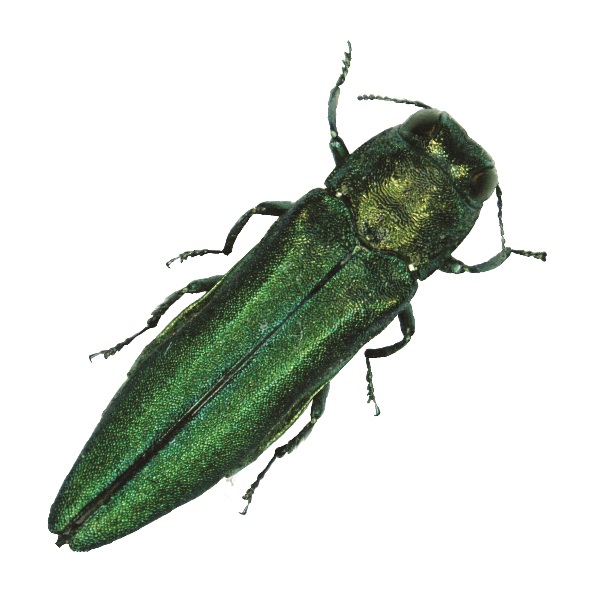
APHIS formally proposed to stop regulating movement of firewood, nursery stock, and other articles that can transport the emerald ash borer (EAB) in 2018; I blogged in opposition to this proposal at the time.  Now APHIS has evaluated the 2018 comments on its proposal and has decided to proceed with its plans.

I recently blogged about the current and probable future status of ash. A study confirmed that robust regeneration of ash seedlings and saplings seen in various invaded areas will not result in recovery of mature ashes that can perform their ecological role. 

APHIS received 146 comments on the proposal. Twenty-five supported the proposal as written; 121 raised concerns. Many of the latter were a few sentences without supporting information. These comments and the final rulemaking can be read here.

How has APHIS responded to the serious questions raised? Dismissively.

I certainly concede that EAB has been difficult to manage and has spread rapidly. However, I continue tobelieve that maintaining the quarantine serves important purposes and the analysis APHIS provides does not justify terminating of the regulatory program. I remain concerned.

Neither the proposal nor the final regulation tells us how much money and staff resources have been dedicated to detection or enforcement of the regulations in recent years. Therefore we don’t know how many resources are now available for supporting other activities that the agency thinks are more effective. APHIS also refuses to provide specific information on how it will allocate the freed-up resources among its (minimal) continuing efforts. For example, APHIS has supported resistance-breeding programs. Will it help them expand to additional species, e.g., black and Oregon ash?

How Does APHIS Propose to Curtail EAB Spread?

APHIS states in the final rule that it is ending the domestic quarantine regulation so that it can allocate resources to more effective strategies for managing and containing EAB. The agency wants to reallocate funds “to activities of greater long-term benefit to slowing the spread of EAB … These activities include further development and deployment of EAB biocontrol organisms; further research into integrated pest management of EAB that can be used at the local level to protect an ash population of significant importance to a community; and further research, in tandem with other Federal agencies, into the phenomenon of “lingering ash … ”

However, APHIS has not funded detection efforts since 2019. (Detection methods were only partially effective, but they gave us some information on where EAB had established.) APHIS is now ending regulation of the movement of vectors. APHIS concedes that biocontrol agents cannot be effective in preventing pest spread. So – what efforts – other than continued support for the “Don’t Move Firewood” campaign – will APHIS make to slow the spread of EAB?

Environmental and Economic Impacts: Not Adequately Assessed

Second, APHIS still has not analyzed the economic or environmental impact of the more rapid spread of EAB to the large areas of the country that are not yet infested – especially the West Coast – that are likely to result from deregulation. As even APHIS concedes, the EAB is currently known to occupy only 27% of the range of native Fraxinus species within conterminous US. There are additional large ash populations in Canada and Mexico – although neither country commented on the proposal — unfortunately!

Instead, APHIS largely restates its position from the proposal that it is too difficult to calculate such impacts. Furthermore, that it is APHIS’ “experience that widely prevalent plant pests tend, over time, to spread throughout the geographical range of their hosts …” In other words, APHIS denies the value of delaying invasions – yet that has always been a premise underlying any quarantine program.

The final regulation refers to an updated economic analysis, but no such document is posted on the official website. The rule does not mention costs to homeowners, property owners, municipal governments, etc. I believe it would not be so difficult to estimate costs to these entities by applying costs of tree removal in the Midwest to tree census data from major West Coast cities. Also, it might have been possible to provide some estimate of the ecological values in riparian forests by analogy to data from the Midwest developed by Deborah McCullough and others.

Biological Control: Effective – or Not

In the final regulation, APHIS concedes that the biocontrol agents currently being released have geographic and other limitations. However, APHIS does not address concerns raised by me and others about their efficacy. APHIS does say explicitly that it has not [yet?] begun efforts to find biocontrol agents that might be more effective in warmer parts of the ash range, especially the Pacific Northwest and  riparian areas of the desert Southwest. However, APHIS has conceded that these areas are almost certain to be invaded – so should it not take precautionary action?  

APHIS states several times that it cannot promise specific funding allocations among program components or strategies – such as resistance breeding – that might be pursued in the future. The agency stresses the value of flexibility.

U.S. Forest Service biologists have higher expectations; see their podcast here.

I wish to clarify that I do not oppose use of biocontrol; I strongly supported then APHIS Deputy Administrator Ric Dunkle’s decision to initiate biocontrol efforts for EAB early in the infestation. My objections are to overly optimistic descriptions of the program’s efficacy.

Firewood: Outreach Only, No National Regulation

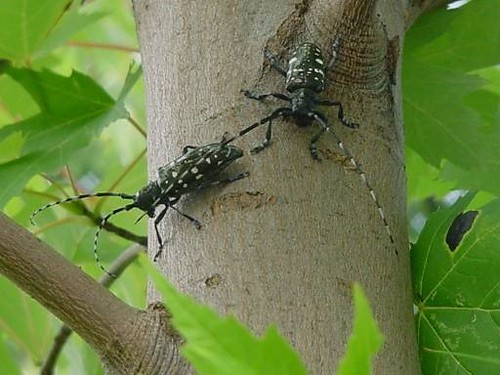
As noted, APHIS has promised to continue support for public outreach activities, especially the “Don ‘t Move Firewood” campaign. The program’s message will continue to encourage the public to buy firewood where they burn it and to refrain from moving firewood from areas that are under Federal quarantine for other pests of firewood (e.g., Asian longhorned beetle). This campaign and the new National Plant Board guidelines link stress that firewood is a high-risk pathway for many pests of national or regional concern; they do not focus on any particular species. Leigh Greenwood, director of Don’t Move Firewood, thinks this is a good approach.

In 2010, the National Firewood Task Force recommended that APHIS regulate firewood at the national level. APHIS does explain why the agency did not do so. The agency says national regulations would be overly restrictive for some states and that requiring heat treatment would not be feasible in the winter for producers in Northern states. Finally, a Federal regulation would not address a significant non-commercial pathway – campers. [I have serious questions about APHIS’ assertion that it can regulate only commercial movement of vectors across state lines. Contact me directly for details on this.]

Perhaps APHIS is not required to analyze the probable overarching efficacy of the several efforts of 50 states. Given the states’ many perspectives and obvious difficulty in coordinating their actions on phytosanitary and other policies, I fear a scattered approach that will result in faster spread of EAB. I hope the National Plant Board guidelines on firewood regulation and outreach can overcome the history.

Most federally-managed recreation areas adopted an education campaign on firewood in autumn 2016; I blogged about it then.

Imported Wood Will be Minimally Regulated

APHIS clarifies that it will take enforcement actions against imports of ash wood only if inspectors detect larvae but can identify them just to family level and not below. APHIS will allow the importation if the larvae can be identified as EAB specifically. This policy reflects international standards, which do not allow a country to erect restrictions targetting a pest from abroad if that pest is also present inside the country and is not under an official control program. (See my discussion of the WTO Agreement on Sanitary and Phytosanitary Standards in Chapter 3 and Appendix 3 of Fading Forests II, available here.) 

APHIS does not discuss how it will react to pests identified to the genus – several other Agrilus also pose pest risks. (See here and here.)

APHIS recommends that states leery of accepting yet more EAB-infested wood from abroad petition the agency under the Federally Recognized State Managed Phytosanitary Program (FRSMP) program, under which APHIS would take action to prevent movement of infested material to that particular state.

Lessons Learned

Finally, one commenter asked whether APHIS would analyze the program to learn what could have improved results. APHIS replies that the agency “tend[s] to reserve such evaluations for particular procedures or policies in order to limit their scope …” I hope APHIS is serious about “considering” doing a “lessons learned” evaluation. It is important to understand what could have been done better to protect America’s plant resources.

My take: the EAB experience proves, once again, that quarantine zones must extent to probable locations – beyond the known locations. The pest is almost always more widely distributed than documented. This has been true for EAB, sudden oak death, ALB, citrus canker … Failure to regulate “ahead” of the pest guarantees failure. I recognize that adopting this stance probably requires a change in the law (or at least understanding of it) and of current international standards adopted by the International Plant Protection Convention (IPPC). However, absent a more aggressive approach, programs are doomed to be constantly chasing the pest’s posterior.

Finally, let us mourn the loss of ash so far, the future losses … and opportunities missed.

Posted by Faith Campbell

We welcome comments that supplement or correct factual information, suggest new approaches, or promote thoughtful consideration. We post comments that disagree with us — but not those we judge to be not civil or inflammatory.

For a detailed discussion of the policies and practices that have allowed these pests to enter and spread – and that do not promote effective restoration strategies – review the Fading Forests report at http://treeimprovement.utk.edu/FadingForests.htm
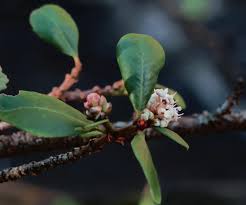
Beech leaf disease found in four new states, 31 new counties

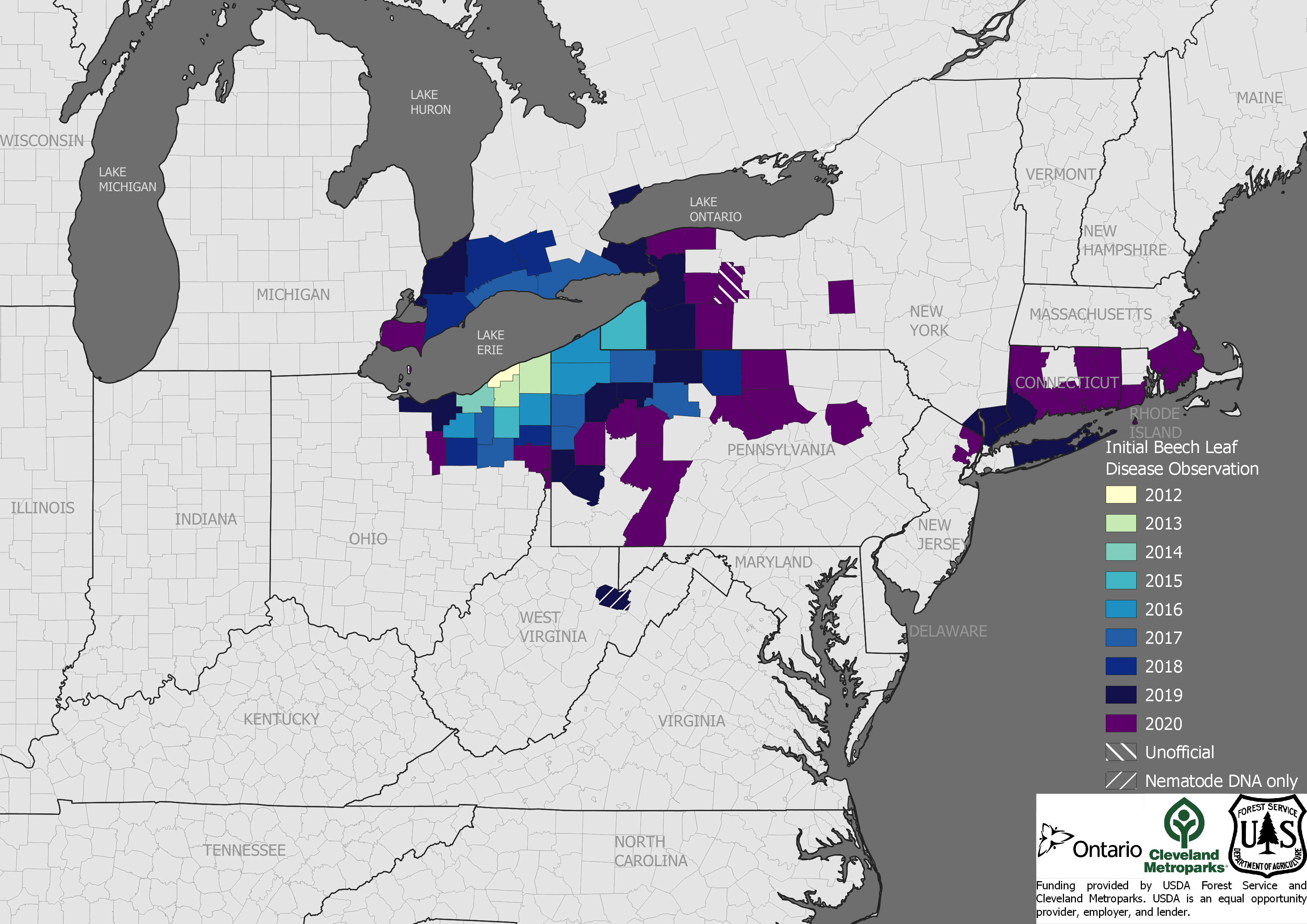
2020 detections of beech leaf disease

On the first day of winter, Daniel Volk, Forest Health Project Coordinator for Cleveland (OH) Metroparks reported that a coordinated survey has confirmed the presence of beech leaf disease link to DMF in four new states — Massachusetts, New Jersey, Rhode Island, and West Virginia. In all, the disease is now known to be established in 71 counties in the US and Canada. Funding was provided by the USFS Forest Health Management “emerging pest” program.

2021 survey efforts will focus on high risk counties adjacent to affected counties.  

Cleveland Metroparks has several resources available on its  website and will continue to post updated information there as it becomes available.

I posted a blog urging recipients to participate in these searches last June link  I hope you will do so again in 2021.

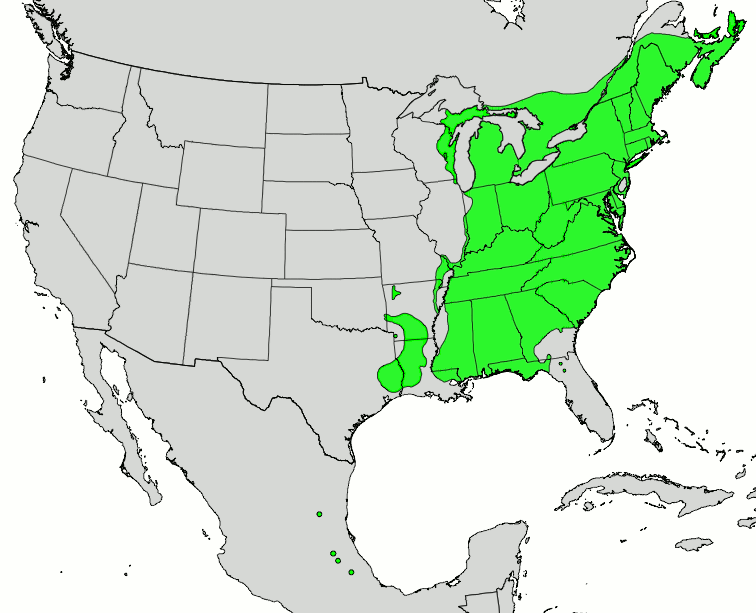
range of American beech

Posted by Faith Campbell

We welcome comments that supplement or correct factual information, suggest new approaches, or promote thoughtful consideration. We post comments that disagree with us — but not those we judge to be not civil or inflammatory.

For a detailed discussion of the policies and practices that have allowed these pests to enter and spread – and that do not promote effective restoration strategies – review the Fading Forests report at http://treeimprovement.utk.edu/FadingForests.htm
Urgent!! Send Comments to California on risk from new Phytophthoras

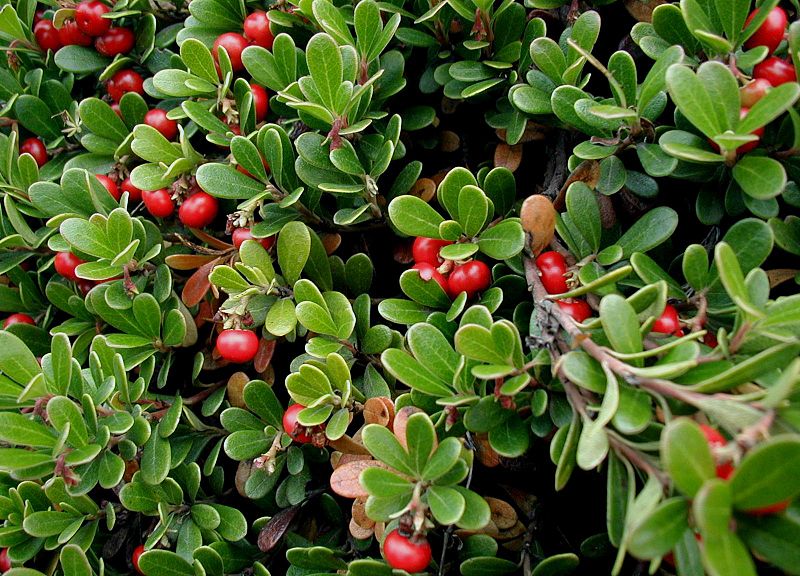
Arctostaphylos uva-ursi (bear berry); photo by Sten Porse, Commons.Wikipedia

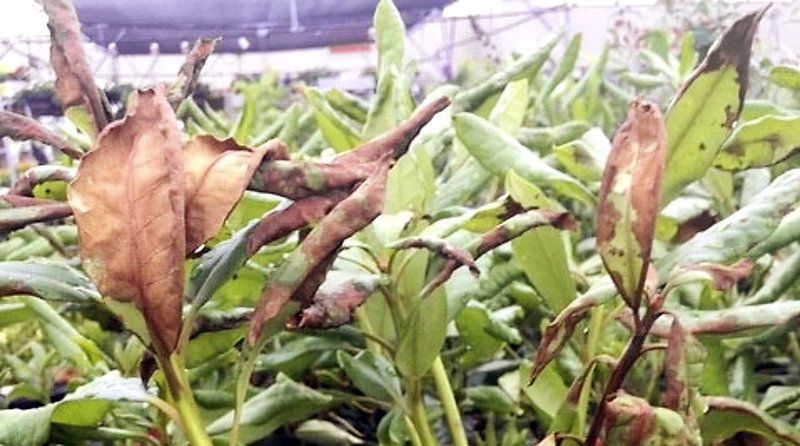
The California Department of Food and Agriculture (CDFA) is seeking input on proposed pest ratings for two species of Phytophthora: Phytophthora occultans and Phytophthora quercetorum. Each has the potential for being a serious pest in California and being spread throughout the United States. Therefore it is important to weigh in on this process. The first deadlines for comments is December 18.

These risk rating proposals can be found at https://blogs.cdfa.ca.gov/Section3162/ The website also has instructions for sending comments. This process can be clumsy so, if it doesn’t work, send your comments directly to the webmaster.

In general, the State assigns each potential pest a rating of A, B, or C. Those rated “A” are most likely to cause harm and also most subject to State regulation. Under “B”, the County Agricultural Commissioners have discretion to take regulatory actions. Pests ranked at “C “are not subject to any State enforced regulatory actions. The “C” rating is supposed to be assigned to pests that are widely distributed in the state and are expected to have a “medium” to “low” impact on vegetation (cultivated or wild) in the state.

Phytophthora occultans

Proposed for risk rank “C “. Comments are due December 18th.

Phytophthora occultans is a recently described species found in nurseries in Europe and in some U.S. states (including Oregon). It was recently detected in the San Francisco area of California.

The State proposes to rate  Phytophthora occultans as a level  “C” pest. This is insufficient. A rank of “B” is more appropriate, for the following reasons.

1) The data presented in the CDFA proposal are too limited to judge the species’ distribution in California. The proposal refers to only “two detections, two years apart, in San Francisco County.” By ranking it “C”, CDFA seems to assume the pathogen is widespread, based on detections in Europe and other states, without U.S. evidence

The available record does not indicate that CDFA made any attempt to determine the extent of the P.occultans infestations — no survey of other plants at the contractor’s nursery or at other nurseries and no consultation with a larger group of stakeholders. 

2) CDFA limits discussion of possible impacts to hosts listed in the literature –which belong to multiple plant families. It makes no mention that additional hosts are likely to be discovered (as has often happened with regard to the host ranges of other pathogens in the Phytophthora genus).  If the host range expands, as I expect it will, the impact to restoration activities, rare plants, wildlands and nurseries is more likely to be significant, not medium to low. 

Furthermore, several of the known host species are congeners of species that are federally listed as endangered or threatened, i.e., species in the genera Ceanothus and Arctostaphylos. I think it is highly unwise to disregard in risk assessments the probability that listed species will prove to be hosts.

In conclusion, please submit comments to California Department of Food and Agriculture urging it to assign a risk rating of “B” to Phytophthora occultans.

Phytophthora quercetorum

Proposed for risk rank “C “. Comments are due January 9th. See https://blogs.cdfa.ca.gov/Section3162/

Instructions are contained in the proposal. If this process doesn’t work (sometimes it is clumsy), send your comments directly to the webmaster.

Over the past 5 years, P. quercetorum has been detected in association with oak trees, primarily coast live oak (Quercus agrifolia), in four counties in California, two in the Central Valley (Fresno, Sacramento), two on either side of the San Francisco Bay (Alameda, San Francisco). There have been no interceptions of the species by CDFA border inspectors. The species had earlier been associated with oak roots and rhizosphere soil of oak forests in the eastern and north central US. Its pathogenicity is said to be unknown – and difficult to separate from impacts of other, often co-occuring Phytophthoras. CDFA assigns a rank of “high” with regard to economic impact, although it says there are no reports quantifying economic losses in plant production facilities.

CDFA believes that the species is likely to be able to establish wherever its hosts can grow (a rank of “high”). Hosts include red maple (Acer rubrum), English ivy (Hedera helix), several eastern oaks, and a second California oak, interior live oak (Q. wislizeni). CDFA assigns this a rank of “moderate” host range.

The environmental impact is ranked as “high” since the pest could lower biodiversity, disrupt natural communities, or change ecosystem processes; and the pest significantly impacts cultural practices, home/urban gardening or ornamental plantings.

The overall ranking for the “Consequences of Introduction” is “high”.

However, the recommended ranking is “C”, which – again – means the pest is not subject to any State enforced regulatory actions. “C” rated pests are widely distributed in the state and are expected to have a “medium” to “low” impact on vegetation (cultivated or wild) in the state.

Why would CDFA recommend “no action” for yet another Phytophthora species that is known to attack two of the state’s most ecologically important oaks and possibly many more species? Even when the exact impacts are unclear … Especially when the principal means of spread is planting trees in restoration areas – a deliberate human action.

According to the USDA Forest Service, coast live oak (Quercus agrifolia) is a conspicuous tree in lower-elevation oak woodlands of California, which collectively occupy about 10 million. It is co-dominant in the southern oak woodlands. CLO trees generally occur on mesic sites such as north slopes, alluvial terraces, canyon bottoms, or upper streambanks. Coast live oak woodlands are some of the most important habitats to wildlife in California; they provide habitat for black bear, black-tailed deer, rodents and lagomorphs, and various upland game and nongame birds – including those that feed on acorns and cavity nesters. The birds including the federally endangered least Bell’s vireo and least tern.  

Coast live oak is more fire resistant than other California oak species. 

Coast live oak is favored for use in rehabilitation projects throughout its range. It is used in watershed improvement, restoration, and wildlife habitat rehabilitation projects.

CLO is already under pressure by predation by deer and cattle; sudden oak death (SOD; causal agent Phytophthora ramorum); goldspotted oak borer (GSOB – Agrilus auroguttatus); and sometimes the polyphagous shot hole borer (PSHB; Euwallacea whitfordiodendrus) and its associated Fusarium fungus. [These three non-native organisms are described here.]

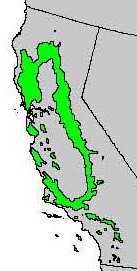
range of Q. wislizeni; USDA Forest Service map

According to the USDA Forest Service, interior live oak (Quercus wislizeni) occurs over about 16% of California’s landscape, especially in the Inner Coast Ranges, the foothills of the southern Cascade Range, and the Sierra Nevada. Among California’s red oaks, interior live oak has the highest tolerance for xeric conditions. It usually dominates the “scrub” or “live oak” chaparral vegetation types in the Inner Coast Ranges and the Sierra Nevada.

CNPS Calscape lists several insects associated with the species.

Posted by Faith Campbell

We welcome comments that supplement or correct factual information, suggest new approaches, or promote thoughtful consideration. We post comments that disagree with us — but not those we judge to be not civil or inflammatory.

For a detailed discussion of the policies and practices that have allowed these pests to enter and spread – and that do not promote effective restoration strategies – review the Fading Forests report at http://treeimprovement.utk.edu/FadingForests.htm
Unique Black Ash Wetlands – Threatened by Emerald Ash Borer

Another unique ecosystem being severely damaged by non-native tree-killing pests are the wetlands dominated by black ash (Fraxinus nigra). Black ash typically grows in fens, along streams, or in poorly drained areas that often are seasonally flooded. Such swamps stretch from Minnesota to Newfoundland; in the three states of Michigan, Wisconsin, and Minnesota, they cover a total of over 2 million hectares (Kolka et al. 2018).

locations of black ash swamps; source

Recent research allows us to understand the impending loss to these unique ecosystems that will be caused by the emerald ash borer (EAB).

Hydrology is the dominant factor that influences a host of ecosystem functions in black ash wetlands. Water levels are largely determined by a combination of precipitation and evapotranspiration rates. Black ash can thrive in wetter areas than most other tree species (Slesak et al. 2014). Water tables in these swamps are typically above the surface throughout early spring, followed by drawdown below the surface during the growing season with periodic rises following rain events. Water table drawdown coincides with peak evapotranspiration following black ash leaf out, demonstrating the fundamental control that this species has on animal and other plant communities (Kolka et al. 2018; Slesak et al. 2014).

Ecological Importance

Black ash generally dominate the canopy of these wetlands. Ash density can range from about 40% to almost 100%. Several other tree species are present, including northern white cedar (Thuja occidentalis), red maple (Acer rubrum), American elm (Ulmus americana) (Kolka et al. 2018), quaking aspen (Populus tremuloides), American basswood (Tilia americana), and bur oak (Quercus macrocarpa) (Slesak et al. 2014), balsam fir (Abies balsamea), balsam poplar (Populus balsamifera), and speckled alder (Alnus incana) (Youngquist et al. 2020). Black ash, by maintaining low water levels during the growing season, creates conditions under which these other trees can live but not thrive (summary of study by B.J. Palik, USDA Forest Service, here. Most other species lack  the  physiological adaptations of black ash or face pathogenic constraints (e.g., Dutch elm disease on American elm Ulmus americana) (Kolka et al. 2018).

Ash trees in these swamps are uneven-aged with canopy tree ages ranging from 130–232 years (Slesak et al. 2014). This complexity provides important habitat for many wildlife species, including ground beetle community assemblages (Kolka et al. 2018) and an abundance of aquatic macroinvertebrates. These are characterized and dominated by mollusks (Sphaeriidae, Lymnaeidae, Physidae), annelids (Lumbriculidae, Hirudinea), caddisflies (Limnephilidae, Leptoceridae), and dipterans (Chironomidae, Culicidae) (Youngquist et al. 2020).

a black ash swamp; source: Flickr

A major concern is that loss of trees – especially ash – might result in open marshes dominated by grasses, especially lake sedge (Carex lacustris). Conversion to sedge-dominated marshes has been observed in areas where trees have been removed as part of experiments to test various ecosystem responses to loss of the ash component (Slesak et al. 2014). Even if other trees took the place of ash, the substitutes might not support the same animal communities (see below).

Impact of Emerald ash borer and loss of black ash

Black ash is highly susceptibility to the EAB (Engelken and McCullough, 2020), so scientists expect severe impacts of the invasion in ash-dominated wetlands and – to a somewhat lesser extent — in forested stream systems’ riparian areas (Engelken and McCullough, 2020). They expect cascading impacts on 1) hydrology; 2) plant communities; 3) wildlife; 4) Native American cultures; and possibly even storage of carbon in vegetation and soils (Kolka et al. 2018).

            1) Hydrology

Experiments suggest that loss of ash will cause higher water tables, especially during late summer and fall (Kolka et al 2018). This will result from reductions in evapotranspiration as large trees are replaced by shrubs and grasses (see below) (Kolka et al. 2018; Slesak et al. 2014). The higher water table might be exacerbated if higher annual precipitation levels predicted by climate change models occur. On the other hand, these models also predict a simultaneous increase in longer droughts, which might partially counteract higher precipitation and reduced evapotranspiration (Kolka et al. 2018). If they occur, these possible increases in drought length and frequency might enhance the establishment of less water-tolerant non-ash tree species in former black ash wetlands.

            2) Plant Communities

Higher water tables are expected to reduce tree densities and promote conversion to open or shrub-dominated marshes. Several of the possible alternative tree species do not thrive as well as black ash under current conditions (Kolka et al. 2018). However, new hydrologic conditions might make forest restoration even more difficult because herbaceous plants transpire less water than trees, thus exacerbating the rising water tables (Slesak et al. 2014).

In upper Michigan, experiments which killed ash by cutting or girdling did not lead to an increase in growth rates of the remaining canopy species despite the increase in available resources (e.g., sunlight and nutrients) – presumably because of the raised water table (Kolka et al. 2081).

While some studies have found that black ash seedlings and saplings dominated the woody component of the swamp understory up to three years after ash were experimentally removed (Kolka et al. 2018), Engelken and McCullough (2020) found only eight saplings and a single seedling.

Scientists have planted several tree species in experiments to see which might be used to maintain the forested wetlands in the absence of black ash. The results are a confusing mix. Some species grew well once established – but had low levels of seedling establishment. Some trees planted on elevated microsites (hummocks) had the greatest survival and growth rates. (For specific data, see Kolka et al. 2018). A further consideration is tree species’ ability to adapt to warming temperatures already evident and expected to increase in coming decades (Slesak et al. 2014).

Consequently, Slesak et al. (2014) think it is likely that the EAB invasion will alter vegetation dynamics and cause a shift to an altered ecosystem state (e.g., open marsh condition) with higher water tables. They caution that the degree of ecosystem alteration will vary depending on site hydrology, annual precipitation, and period of time necessary for establishment of deeper rooted vegetation.

            3) Wildlife

Moreover, any changes in vegetation will also affect the biota in more subtle ways through altered nutrient cycles. Black ash leaf litter is highly nutritious, having some of the highest nitrogen, phosphorus, and cation contents of any hardwood forest species (Kolka et al. 2018). Black ash leaves also decompose faster than most alternative tree species’ leaves (summary of Palik USDA Forest Service, here;  Youngquist et al. 2018).

Youngquist et al. (2018) studied litter breakdown, litter nutritional quality, and growth of a representative invertebrate litter feeder – larvae of a shredding caddisfly (Limnephilus indivisus). They found that the larvae’s risk of death increased by a factor of three times or more when caddisflies were fed American elm, balsam poplar, or lake sedge leaves compared to black ash leaf litter. Even when the larvae lived – but matured more slowly because of the lower nutrition value of the leaves – they would still be vulnerable because they must reach metamorphosis before pond dry-down. In any planting done to maintain forested quality of wetlands, need to consider the nutritional quality of the leaf litter provided by replacements. Speckled alder was only apparently acceptable substitute; it was second to black ash in acceptability to caddisflies (Youngquist et al. 2020)

In fact, Youngquist et al. (2020) concluded that plant and detritivore biodiversity loss due to EAB invasion could alter productivity and decomposition at rates comparable to other anthropogenic stressors (e.g., climate change, nutrient pollution, acidification). The result will be altered biogeochemical cycles, resource availability, and plant and animal communities.

Scientists are also concerned about the impact of ash tree mortality on forest connectivity. Conversion of wooded swamps to shrub-and sedge-dominated wetlands will result in the loss of important micro-habitats that are already limited across the forested landscape and may also reduce availability of critical habitat for migrating birds. These changes will exacerbate on-going changes in land use in the Great Lakes region that are causing loss of forest habitat and forest homogenization. As yet, the magnitude of the impact on wildlife is unclear (Kolka et al. 2018).

black ash baskets – displayed at 2006 conference
photo by Faith Campbell

            4) Cultural importance – baskets

Native Americans living in the range of black ash have utilized the wood to make baskets and other tools for thousands of years. Baskets had numerous uses, such as packs for carrying items, fish traps, and for preparing food and storing household items. Ash items also had ceremonial uses and they are highly sought as gifts and in trade. The skill needed to select a good tree and work the wood is handed down through the generations and is an important part of tribes’ culture (Benedict 2010).

Discussion of these cultural traditions can be found as Powerpoints here and here.

A video is posted here.

USFS Research Efforts

Concerned by the spread of EAB and probable impact on black ash swamps, the USDA Forest Service has initiated major research studies with the goal of filling in the numerous knowledge gaps and developing management recommendations. A large-scale study using various manipulations to simulate the EAB invasion was initiated in the Chippewa National Forest in northern Minnesota in 2009. A companion study began in the Ottawa National Forest in Michigan in 2010 (Kolka et al. 2018). The Slesak, Youngquist, and Kolka publications cited in this blog report results of some of the studies in this project. Other studies of black ash conditions, including regeneration, at various stages of the EAB invasion wave are being carried out by Deb McCullough, Nate Siegert, and others. They are working at sites from Michigan to New England (D.G. McCullough, pers. comm.).

Posted by Faith Campbell

We welcome comments that supplement or correct factual information, suggest new approaches, or promote thoughtful consideration. We post comments that disagree with us — but not those we judge to be not civil or inflammatory.

For a detailed discussion of the policies and practices that have allowed these pests to enter and spread – and that do not promote effective restoration strategies – review the Fading Forests report here.

For a great discussion of black ash basketweavers,  see Anne Bolen, A Silent Killer: Black Ash Basket Makers are Battling a Voracious Beetle to Keep their Heritage Alive, American Indian Magazine,  Spring  2020, available here. 

SOURCES

Benedict, M. 2010. Ecology and the Cultural and Economic Importance of Black ash (Fraxinus nigra Marsh) for Native Americans May 2010 https://www.fs.usda.gov/Internet/FSE_DOCUMENTS/stelprdb5191796.pdf

Engelken, P.J. and D.G McCullough. 2020. Riparian Forest Conditions Along Three Northern Michigan Rivers Following Emerald Ash Borer Invasion. Canadian Journal of Forest Research. Submitted

Kolka, R.K., A.W. D’Amato, J.W. Wagenbrenner, R.A. Slesak, T.G. Pypker, M.B. Youngquist, A.R. Grinde and B.J. Palik. 2018. Review of Ecosystem Level Impacts of Emerald Ash Borer on Black Ash Wetlands: What Does the Future Hold? Forests 2018, 9, 179; doi:10.3390/f9040179 www.mdpi.com/journal/forests

Slesak, R.A., C.F. Lenhart, K.N. Brooks, A.W. D’Amato, and B.J. Palik. 2014. Water table response to harvesting and simulated emerald ash borer mortality in black ash wetlands in MN, USA. Can. J. Forestry. Res. 44:961-968.

Youngquist, M.B., C. Wiley, S.L. Eggert, A.W. D’Amato, B.J. Palik, & R.A. Slesak. 2020. Foundation Species Loss Affects Leaf Breakdown and Aquatic Invertebrate Resource Use in Black Ash Wetlands. Wetlands. Society of Wetland Scientists

Posted by Faith Campbell

We welcome comments that supplement or correct factual information, suggest new approaches, or promote thoughtful consideration. We post comments that disagree with us — but not those we judge to be not civil or inflammatory.

For a detailed discussion of the policies and practices that have allowed these pests to enter and spread – and that do not promote effective restoration strategies – review the Fading Forests report at http://treeimprovement.utk.edu/FadingForests.htm
Calamity in Pacific Island Forests

Cycas micronesica
photo by A. Gawel

We know the dire threats to Hawaiian forests from pathogens. Some threaten the most widespread tree – ohia. Others are insects threatening trees and shrubs in the remnant dryland forests.

The forests of smaller islands of the Pacific also appear to be facing severe threats – although I have been unable to find information on the current situation.

Guam and its Neighbors

The forests of Guam, Palau, and others in the Western Pacific are among those threatened.

They are geographically isolated and hard to reach, but that distance has not protected them from biological invaders. Their predicament illustrates the dominant role of global movement and trade in spreading pests. In this case, it’s mostly trade in ornamental plants.

These islands have unique flora and fauna. And true to invasive species experts’ expectations, they are vulnerable to bioinvaders. Guam’s most famous invasive species is the brown tree snake (Boiga irregularis), which over a few decades eradicated many bird species and the only native terrestrial mammal, the fruit bat.  

Less known, but equally damaging, have been a group of insects that are decimating Guam’s native forest flora.

The most widespread arboreal species in the forests of Guam and neighboring islands is the Micronesian cycad, Cycas micronesica. Its range is Micronesia, the Marianas Group including Guam and Rota Islands; and several of the western Caroline Islands, e.g., Palau and Yap (Marler, Haynes, and Lindstrom 2010).

These forests have already absorbed severe habitat destruction as the sites of fierce fighting in World War II and – in some cases – construction of large military bases. Still, cycads were the most common species in the forest as late as 2002 (Moore, A., T. Marler, R. Miller, and L. Yudin. Date uncertain).

The Worst Pest: Asian Cycad Scale

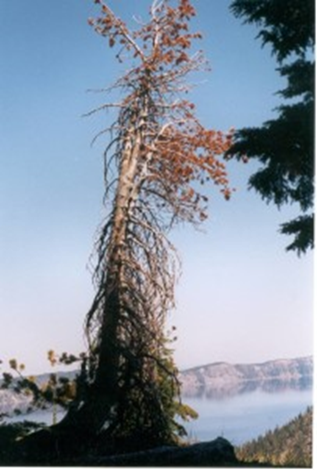
The most severe current threat to the cycads are introduced insects, especially the Asian cycad scale Aulacaspis ysumatsui.

The cycad scale is native to Southeast Asia. It was first detected on Guam in 2003, when officials noticed that cycads planted near hotels had begun to die. However, this scale had already been spreading thanks to the trade in ornamental cycads. It was detected in Florida in 1996, on Hawai`i in 1998. It continued to spread rapidly in the western Pacific: to Rota in 2007, Palau in 2008 (University of Guam 2012). By late 2019, the scale had spread globally – numerous islands and neighboring mainland areas in the Caribbean (including Puerto Rico and US Virgin Islands), several US states in the Southeast,  California, and Taiwan (Moore, Marler, Miller, and Yudin. Date uncertain.) and South Africa.  (van­Wilgen, et. al. 2020) Also, see the map prepared by CABI.

In every case, the scale has apparently been spread on nursery stock. It is difficult to contain by standard phytosanitary measures – visual inspection – because the scale is tiny and hides deep in the base of the plant’s stiff leaves and other crevices. (Marler and Moore 2010)

By 2005 the scale was killing the native cycad on Guam. Within four years, the millions of C. micronesica on Guam were reduced by more than 90% (Marler, T.E. and K.J. Niklas. 2011). The last time cycads on Guam reproduced in any significant number was in 2004 (Marler and Niklas 2018).

The severe impact of the scale was so rapid that the International Union for Conservation of Nature and Natural Resources (IUCN) changed its listing of C. micronesica from “near threatened” in 2003 to “endangered” in 2006. (IUCN Red List of Threatened Species Online 2008).

Scientists have made several attempts to introduce a biocontrol agent. However, the most promising – the lady beetle Rhyzobius lophanthae – has failed to control the scale, despite having become virtually ubiquitous on Guam. The beetle is too big to reach the significant proportion of scale insects living in small cracks and voids within the plant structures. Evidence from another cycad species indicates that the beetles also don’t prey on scale insects living beneath trichomes (fine hairlike structures on the leaves) or on parts of the plant close to the ground. (Moore, Marler, Miller, and Yudin. Date uncertain.).

Attempts to introduce a second biocontrol organism – the parasitoid wasp Aphytis lignanensis – were stymied by the presence of R. lophanthae (Moore, Marler, Miller, and Yudin. Date uncertain).

Micronesian cycad
photo by Lauren Gutierrez

Other Invasive Species Attacking Cycads

The cycad blue butterfly (Chilades pandava) was detected in 2005 and spread throughout Guam within months (IUCN 2009). Also, it’s been found on Saipan (1996) and Rota (2006). The butterfly is native to southern Asia from Sri Lanka to Thailand and Indonesia. High populations can cause complete defoliation of new foliage. Repeated defoliations can kill the plant. Cycads on Guam are particularly vulnerable because the scale has already caused loss of most of their leaves. Butterfly larvae are often protected by ants (Anonymous).

On cultivated plants the butterfly can be controlled by microbial insecticides containing Bacillus thuringiensis kurstaki (Moore). Scientists at the University of Guam are exploring use of injected insecticides (Moore). They have found an egg parasite, but parasitism levels are low. Any biocontrol agent targetting larvae would have to contend with the ants (Anonymous).

A longhorned beetle (Dihammus (Acalolepta) marianarum) and a snail (Satsuma mercatorius) are also feeding on the cycads (Marler 2010).

The Indo-Malayan termite Schedorhinotermes longirostris was detected in 2011. The termites weaken the cycad stems, which are then toppled by feeding by introduced deer. The termites are also damaging the cycad’s reproductive structures (megastrobili). Termite attacks on cycads surprised scientists since cycads do not form true wood. The termite had probably been introduced recently because, as of 2011, it had been detected only near the Andersen Air Force Base airport (Marler, Yudin, and Moore 2011).

More Isolated – but Still Overrun

Scattered across the Pacific are groups of atolls, including Palmyra and Rose.

Despite their distance from other islands, they have all been visited by mariners for centuries. As a result, they have non-native species, including insects that attack trees.

Pisonia tree forest – Wikimedia

The tree most affected is pisonia – Pisonia grandis. 

The principal insect is another scale, Pulvinaria urbicola. There are some reports that the scale is farmed by ants; species mentioned include several introduced species such as the yellow crazy ant, Paratrechina longicornis.

The scale is probably from the West Indies. Once it reached the Pacific, it might have been distributed to additional islands on seabirds, which travel long distances between the atolls.

The scale’s impact is unclear.

At first, in the mid-2000s, impacts seemed dire. It was reported to be causing widespread tree death on Palmyra and Rose atolls, islands around northeastern Australia, in the Seychelles, and possibly in Tonga.

However, in 2018, scientists reported that eradication of rats on Palmyra Atoll had resulted in an immediate spurt of reproduction of a tree. Numbers of “native, locally rare tree” seedlings (possibly but not explicitly said to be Pisonia grandis) jumped from 140 pre-eradication to 7,756 post-eradication (in 2016). The study made no mention of the scale.

Rose Atoll has only one small island (6.6 ha) with vegetation. Before 1970, it was dominated by Pisonia grandis, but by 2012, there were only seven trees on the island. Several possible causes of this decline have been suggested. Other than the scale, suggested causes include storms, drought, rising sea level / saltwater incursion, and imbalance of bird guano-derived nutrients in the soil. [All information about Rose Atoll is from Peck et al., 2014)

A survey carried out in April 2012 and November 2013 detected 73 species of arthropods from 20 orders on Rose Island, including nine ant species (all but one non-native). Two of these ants – Tetramorium bicarinatum and T. simillimum – were detected tending the scales on Pisonia.

The survey found no evidence of natural enemies of the Pulvinaria scales.

The scientists tested treatment of Pisonia with the systemic insecticide imidacloprid. This treatment apparently reduced scale populations considerably for several months, but then they began to build up again.

In contrast to Palmyra, Polynesian rats (Rattus exulans) were eliminated from Rose Atoll in 1990–1991 – so their role in destroying the trees had ended 20 years before the study. What does the continued decline of the Pisonia trees in subsequent decades suggest for the future of Pisonia trees on Palmyra?

I have sought updates on the tree-pest situations on Guam and the other Pacific islands, but my queries have not received a reply.

SOURCES

Anonymous. 2015. Cycad blue butterfly fact sheet.

Brooke, USFWS, pers. comm. June 3, 2005

CABI November 2019. Aulacaspis yasumatsui (cycad aulacaspis scale (CAS)) or the Asian cycad scale. https://www.cabi.org/isc/datasheet/18756   (was formerly Commonwealth Agricultural Bureaux (CAB) International; now apparently just uses acronym)

Marler, T.E. pers. comm. August 15, 2012

Marler, T.E. 2010. Cycad mutualist offers more than pollen transport. American Journal of Botany, 2010; 97 (5): 841. Viewed as materials provided by University of Guam, via EurekAlert; accessed 6 August, 2012.

Marler, T., Haynes, J. & Lindstrom, A. 2010. Cycas micronesica. The IUCN Red List of Threatened Species 2010: e.T61316A12462113. http://dx.doi.org/10.2305/IUCN.UK.2010-3.RLTS.T61316A12462113.en Accessed 22 April, 2020.

Marler, T.E., and A. Moore. 2010. Cryptic Scale Infestations on Cycas revoluta Facilitate Scale Invasions. HortScience. 2010; 45 837-839. Retrieved August 6, 2012 from www.eurekalert.org

Marler, T.E., L.S. Yudin, A. Moore. 1 September 2011. Schedorhinotermes longirostris (Isoptera: Rhinotermitidae) on Guam Adds to Assault on the Endemic Cycas micronesica.   https://bioone.org/journals/florida-entomologist/volume-94/issue-3/024.094.0339/Schedorhinotermes-longirostris-Isoptera–Rhinotermitidae-on-Guam-Adds-to-Assault/10.1653/024.094.0339.full

Marler, T.E. and K.J. Niklas. 2011. Reproductive Effort and Success of Cycas micronesica K.D. Hill Are Affected by Habitat. International Journal of Plant Sciences, 2011; 172 (5): 700. Viewed as materials provided by University of Guam, via EurekAlert; accessed 6 August, 2012.

Moore, A. Cycad blue butterfly fact sheet. http://www.guaminsects.net/gisac2015/index.php?title=Cycad_blue_butterfly_fact_sheet accessed 20-4/24

Moore, A., T. Marler, R. Miller, and L. Yudin. Date? Biological Control of Cycad Scale, Aulacaspis yasumatsui, Attacking Guam’s Endemic Cycad, Cycas micronesica. Western Pacific Tropical Research Center University of Guam. Powerpoint  http://guaminsects.myspecies.info/sites/guaminsects.myspecies.info/files/CycadScaleBiocontrolAustin.pdf

Peck, R., P. Banko, F. Pendleton, M. Schmaedick, and K. Ernsberger. 2014. Arthropods of Rose Atoll with Special Reference to Ants and Pulvinaria urbicola scales (Hemiptera: Coccidae) on Pisonia grandis trees. Hawaii Cooperative Studies Unit. University of Hawaii. Technical Report HCSU-057 December 2014

University of Guam (2012, August 2). Invasive insects cause staggering impact on native tree. ScienceDaily. Retrieved August 6, 2012, from www.sciencedaily.com-/releases/2012/08/120803094527.htm).

 van­Wilgen, B.W.,J. ­Measey, D.­M. ­Richardson, J.R. ­Wilson,  T.A. Zengeya­. Editors. 2020. Bioinvasions in South Africa. Invading Nature. Springer Series in Invasion Ecology 14.

Posted by Faith Campbell

We welcome comments that supplement or correct factual information, suggest new approaches, or promote thoughtful consideration. We post comments that disagree with us — but not those we judge to be not civil or inflammatory.

For a detailed discussion of the policies and practices that have allowed these pests to enter and spread – and that do not promote effective restoration strategies – review the Fading Forests report at http://treeimprovement.utk.edu/FadingForests.htm These reports do not include details on the pest situation on the Pacific islands (including Hawai`i).
Pest Threats to Eastern Forests – Focus on the Mid-Atlantic

EAB-kiled ash tree in Shenandoah National Park in 2016
photo by F.T. Campbell

 As we have known for years, forests of the eastern United States are under severe pressure from non-native forest insects and diseases. Several recent studies have put this fact into perspective.

Fei et al. (2019) found that the 15 most damaging introduced species threaten 41.1% of the total live forest biomass in the 48 conterminous states. Nine of the 15 species included in this calculation are pests of the eastern forest. Indeed, the greatest increase in biomass loss, as measured by USDA Forest Service Forest Inventory and Analysis (FIA) plot data occurred here. Compensatory growth in unaffected trees and the recruitment of new regeneration occurs only later – as much as two or more decades after the pest invasions began. Fei et al. (2019) expect these losses will be exacerbated in the future due in part to the likelihood that additional pests will be introduced.

Randall Morin found that non-native pests had caused approximately 5% increase in total mortality, by tree volume, nation-wide.

Most widespread pest threats in the East

Scientists have used several methods of measuring introduced pests’ impacts. One measure is the number of counties where the pest is present. A second measure is the proportion of the volume of the host that has been affected. Both metrics are used by Morin. A third method, used by the CAPTURE Project (Potter et al. 2019a), is the number of hosts affected by the pest.

Morin and colleagues found that the European gypsy moth has invaded 630 counties – or 29% of the volume of its principal host, oaks. (In both cases, the gypsy moth trailed white pine blister rust in extent of infestation. The latter is nationwide but having its greatest impacts in the West). The CAPTURE Project found that the gypsy moth affected the largest number of hosts – 65.

Using the “counties invaded” metric, Morin and colleagues found that dogwood anthracnose had invaded 609 counties in the East (and additional areas in the West); the emerald ash borer had invaded 479 counties at the time of analysis; the hemlock woolly adelged had invaded 432 counties. Using the number of hosts impacted measure, oak wilt (Bretziella fagacearum) affected the second largest number of hosts – 61 (Potter et al. 2019a). [All these pests are described briefly here.]

Project CAPTURE (Potter and colleagues 2019a) evaluated 339 serious pests threatening one or more of 419 native tree species in the continental US. They included both native and introduced pests. They analyzed 1,378 pest-host combinations. They found that:

  • 54% of the host tree species (228) are infested by an exotic pest – although only 28% of the 1,378 host/agent combinations involved pests are known to be non-native in origin.
  • Exotic agents have, on average, considerably more severe impacts than native pests.
  • Non-native pests had greater average severity on angiosperms than on conifers. (As an earlier blog documented, Mech and colleagues have reached a similar – although tentative – conclusion.)
  • Their estimate of the threat posed by non-native pests to forests – especially for the East – is an underestimate because established pests could spread to additional vulnerable areas and there is a high likelihood that new pests will be introduced. The Southeast was consistently a “coldspot” – despite the near extirpation of one understory tree – redbay.

Potter et al. (2019a) ranked forest threats in two ways. Four host families were at highest risk to alien pests, as measured by both the numbers of tree species affected and by the most host/agent combinations: Fagaceae (oaks, tanoaks, chestnuts, beech); Pinaceae (pines); Sapindaceae (soapberry family; includes maples and buckeye); Salicaceae (willows, poplars, aspens). When host families were ranked by the severity of the host/pest threat, Fagaceae was still at greatest risk, and Sapindaceae was still in the top four; however, Ulmaceae (elms) and Oleaceae (includes Fraxinus) replaced pines and willows.

A very interesting study was published by scientists based in the Blue Ridge Mountains of Virginia (Anderson-Teixeira et al. 2020). They contend that their area is a good example of what is happening more broadly in the Mid-Atlantic region.

Anderson-Teixeira et al. (2020) found that non-native pests have substantially impacted at least 24% of the 33 tree genera (eight genera) recorded as present in their study plots. They estimated that over the century beginning with the appearance of chestnut blight in the region and ending with the expected extirpation of ash trees, net live aboveground biomass (AGB) loss among affected species totaled roughly 6.6–10 kg m -2. Forty to sixty percent of this loss started before the Park initiated quantitative surveys of permanent plots in 1987. The authors estimated that chestnut contributed up to 50% of estimated AGB losses over the century. Consequently, the estimate has very high uncertainty.

Despite these losses, Anderson-Teixeira et al. (2020) found that both total aboveground biomass and diversity within individual study plots had largely recovered through increases in non-vulnerable genera.

Average above ground biomass across the plots established in Shenandoah National Park increased as the forest recovers from logging, farming, and other disturbances before formation of the Park. These increases were due primarily to reproduction and growth of tulip poplar (Liriodendron tulipifera) and growth (but not reproduction) of oaks. Net AGB biomass was lost in oak- and hemlock-dominated plots. At plots established in the neighboring Smithsonian Conservation Biology Institute, pests had caused relatively minor impacts on AGB.

Diversity of tree species also did not change much. In the Park, the average number of genera per plot declined only 3% between 1991 and 2013. Diversity at the landscape scale increased by two genera – from 26 to 28. Many individual plots, though, lost three genera due to non-native pests – chestnut, redbud, and hemlock. A fourth genus was lost due to stochastic change. At the same time, the plots gained six native genera). This finding might be skewed by the short duration of the study period, which missed initial declines in several taxa and captured only the initial stages of decline in ash.

Several taxa were lost from the monitoring plots but were not completely extirpated from the region. Even those species not “lost” suffered elevated mortality rates and steep declines in abundance and above-ground biomass. These declines have not been reversed. The exception was some oaks, which regained above ground biomass, but not abundance, following the gypsy moth outbreak in the 1980s and early 1990s.  

Taxa-specific findings

(Most of these pests are described briefly here.)

Fei et al. (2019) found that losses in biomass due to non-native pests – as measured by FIA plot data – was greatest for ashes, elms, beech trees, and hemlocks..

Morin and colleagues found annual mortality rates had increased three-fold above background levels for ash, beech, and hemlock. They also calculated the present mortality rates for several species for which the majority of loss occurred before their study (consequently, they could not calculate a pre-invasion “background” rate to which present rates could be compared). These included American chestnut (mortality rate of 7%), butternut (mortality rate of 5.6%), and elm trees (mortality rate of 3.5%).

The CAPTURE Project (Potter et al. 2019a) identified fifteen host-agent combinations with the highest severity. Ten of these species are found in the Mid-Atlantic region:  

  • American chestnut (Castanea dentata)
  • Allegheny chinquapin (C. pumila)
  • Carolina ash (Fraxinus caroliniana) ,
  • pumpkin ash (F. profunda)
  • Carolina hemlock (Tsuga caroliniana
  • butternut (Juglans cinerea)
  • eastern hemlock (Tsuga canadensis)
  • white ash (Fraxinus americana)
  • black ash (F. nigra)
  • green ash (F. pennsylvanica)

Four of these species are in genera included among the eight genera evaluated in the study conducted in the Blue Ridge (Anderson-Teixeira et al. 2020): American chestnut, butternut, eastern hemlock, green and white ash. The four other genera in the Blue Ridge study were elm (Ulmus), oak (Quercus), redbud Cercis, and dogwood (Cornus). All except redbud are recognized by other sources as heavily affected by non-native pests – confirming Anderson-Teixeira et al. (2020)’s conclusion that findings on the Blue Ridge reflect the wider situation.

Anderson-Teixeira et al. (2020) note that several of these tree species have been declared imperiled by the International Conservation Union (IUCN): American chestnut, butternut, American elm, eastern hemlock, and ash species.

Anderson-Teixeira et al. (2020) report data on three taxa previously important in the canopy of Blue Ridge forests – chestnut, elms, and butternut. Chestnuts larger than 10 cm DBH had disappeared from the future site of Shenandoah National Park by 1910. Short-lived sprouts continue to be present in plots in the low-elevation Smithsonian Conservation Biology Institute. Two elm species were described as ‘‘sparse’’ in the 1939 qualitative survey. Elms have persisted at low densities, low biomass, and increasingly small sizes. Butternut was ‘‘common’’ in 1939, but had disappeared from Shenandoah NP by 1987. On the Smithsonian’s property, butternut declined from four living individuals in 2008 to two in 2018. The near disappearance of butternut reflects the national picture: FIA data show the species has decreased about 58% across its U.S. range since the 1980s – which is decades after butternut canker started having a detectable impact in the Midwest.

In the Park, oak-dominated plots lost on average 24.9% of individuals and 15% of aboveground biomass.  After 1995, when the gypsy moth was better controlled by spraying of Bacillus thuringiensis var. curstaki, oak aboveground biomass increased gradually, driven by individual tree growth rather than new recruitment. Continued declines in oak abundance are attributable to oak decline and management actions (or inactions) that do not promote regeneration.

In a separate study, a group of oak experts went through a process of queries to identify the greatest threat to oaks now and in the future (Conrad et al. 2020). They initially identified the following threats as most important currently (descending order): gypsy moth, oak wilt, oak decline, climate change, and drought. The top five future threats were initially identified as climate change, oak wilt, sudden oak death, oak decline, and some unknown new or emerging (non-native) pest or pathogen. By the third round, after the experts thought about their colleagues’ responses, oak decline had replaced gypsy moth as the most critical threat currently. Attack by an unknown new or emerging (non-native) pest or pathogen replaced climate change as the most critical future threat. While there was not a complete consensus, the consensus was stronger on the threat from a new pest.

remnant eastern hemlock at Linderlost, Shenandoah National Park
photo by F.T. Campbell

Anderson-Teixeira et al. (2020) reported that eastern hemlock was initially present in ten of Shenandoah plots, but was no longer recorded in the survey plots after 2007. (More than 20,000 insecticide-treated trees remain alive throughout Shenandoah NP).

Before arrival of the emerald ash borer, ash aboveground biomass was increasing in Shenandoah NP and stable on the Smithsonian Institute. EAB-caused mortality was first detected at the Smithsonian site in 2016 and accelerated steeply thereafter, exceeding 12.5% year by 2018. As of 2019, ash had lost 28% of individuals and 30% of aboveground biomass relative to 2016. Ninety-five percent of remaining live trees were considered “unhealthy’’ (Anderson-Teixeira et al. 2020).

eastern (flowering) dogwood; photo by F.T. Campbell

Unlike many studies, the Shenandoah study included understory species. Flowering dogwood declined by up to 90% from plots on the Smithsonian property; 2008–2019 mortality rates averaged 7.1%. Redbud declined by up to 76% from 1995 to 2018. The 2008–2019 mortality rates averaged 6.2% year.

Anderson-Teixeira et al. (2020) concede difficulty in estimating mortality due to less virulent or lethal pathogens, including Neofusicoccum spp. on redbud and Dutch elm disease on slippery elm.

Nevertheless, they believe their analysis probably underestimates the overall pest impacts because they did not analyze several other pest/host combinations known to be present in the Park: balsam woolly adelgid (Adelges piceae) on high-elevation populations of Abies balsamea; white pine blister rust (Cronartium ribicola) on eastern white pine (Pinus strobus); beech bark disease (Neonectria spp.) on American beech (Fagus grandifolia); thousand canker disease on walnut and butternut; and emerald ash borer on the novel host fringetree Chionanthus virginicus.

Another possible threat to oaks, winter moth (Operophtera brumata), is apparently now being controlled by the biocontrol agent Cyzenis albicans.  

I am uncertain about the current status of two Diplodia fungi – Diplodia corticola and D. quercivora – link to blog which have been detected in both Florida and California. In Florida, almost all the symptomatic trees grow in cultivated settings where they are exposed to various stresses (Mullerin and Smith 2015).

However, host range studies indicate that 33 species of oaks and one species of chestnut that grow in the Southeast are vulnerable, to varying degrees, to D. corticola. Oaks in the red oak group (Section Lobatae) are more vulnerable than are white oaks (Section Quercus) (Mullerin and Smith 2015). In the test, the most vulnerable appear to be the following species native to the Southeast: Q. laurifolia, Q. virginiana, Q. geminata, Q. chapmanni, Q. laevis (turkey oak), Q. phellos, Q. pumila, and Q. incana (Dreaden et al. 2016).

What should we do?

Fei et al. (2019) noted that the losses to biomass would be exacerbated by the likely introduction of additional pests. They did not recommend any prevention actions.

Conrad et al. (2020) said their findings “lend support to national regulatory and awareness efforts to prevent the introduction and establishment of novel exotic insects and pathogens.”

Anderson-Teixeira et al. (2020) join others in declaring that future survival of the IUCN-listed species probably depends on conservation and restoration actions. They cite several sources, but not the CAPTURE Project – although the two studies reinforce each other. They specifically mention limiting invasive species’ spread through strengthened regulations and “enhanced plant biosecurity cyberinfrastructure”.

This last recommendation reinforces the message of Bonello et al. (2019) link to publication. We called for creation of a federal Center for Forest Pest Control and Prevention to implement end-to-end responses to forest pest invasions. One focus would be correcting the currently-inadequate focus on detection, development and deployment of genetic resistance while using modern techniques that allow for much faster breeding cycles.

Posted by Faith Campbell

We welcome comments that supplement or correct factual information, suggest new approaches, or promote thoughtful consideration. We post comments that disagree with us — but not those we judge to be not civil or inflammatory.

For a detailed discussion of the policies and practices that have allowed these pests to enter and spread – and that do not promote effective restoration strategies – review the Fading Forests report at http://treeimprovement.utk.edu/FadingForests.htm

SOURCES

Anderson-Teixeira, K.J., V. Herrmann, W.B. Cass, A.B. Williams, S.J. Paull, E.B. Gonzalez-Akre, R. Helcoski, A.J. Tepley, N.A. Bourg, C.T. Cosma, A.E. Ferson, C. Kittle, V. Meakem, I.R. McGregor, M. N. Prestipino, M.K. Scott, A.R. Terrell, A. Alonso, F. Dallmeier, and W.J. McShea.  Date?  Long-Term Impacts of Invasive Insects and Pathogens on Composition, Biomass, and Diversity of Forests in Virginia’s Blue Ridge Mountains. Ecosystems

Bonello, P. , F.T. Campbell, D. Cipollini, A.O. Conrad, C. Farinas, K.J.K. Gandhi, F.P. Hain, D. Parry, D.N. Showalter, C. Villari, and K.F. Wallin. 2019.  Invasive tree pests devastate ecosystems – A proposed new response framework. Frontiers 

Conrad, A.O., E.V. Crocker, X. Li, W.R. Thomas, T.O. Ochuodho, T.P. Holmes, and C. D. Nelson. 2020. Threats to Oaks in the Eastern US: Perceptions and Expectations of Experts.  Journal of Forestry, 2020, 14–27

Dreaden, Black, Mullerin, and Smith. Poster presented at the 2016 USDA Invasive Species Research Forum

Fei, S., R.S. Morin, C.M. Oswalt, and A.M. Liebhold. 2019. Biomass losses resulting from insect and disease invasions in United States forests. Proceedings of the National academy of Sciences.

Guo, Q., S. Feib, K.M. Potter, A.M. Liebhold, and J. Wenf. 2019. Tree diversity regulates forest pest invasion. PNAS.  www.pnas.org/cgi/doi/10.1073/pnas.1821039116

Morin, R.S., K.W. Gottschalk, M.E. Ostry, A.M. Liebhold. 2018. Regional patterns of declining butternut (Juglans cinerea L.) suggest site characteristics for restoration. Ecology and Evolution.2018;8:546-559

Morin, R. A. Liebhold, S. Pugh, and S. Fie. 2019. Current Status of Hosts and Future Risk of EAB Across the Range of Ash: Online Tools for Broad-Scale Impact Assessment. Presentation at the 81st Northeastern Forest Pest Council, West Chester, PA, March 14, 2019

Mullerin, S. & J.A. Smith. 2015. Bot Canker of Oak in FL Caused by Diplodia corticola & D. quercivora. Emergent Pathogens on Oak and Grapevine in North America. FOR318

Potter, K.M., M.E. Escanferla, R.M. Jetton, and G. Man. 2019a. Important Insect and Disease Threats to United States Tree Species and Geographic Patterns of Their Potential Impacts. Forests. 2019 10 304.

Potter, K.M., M.E. Escanferla, R.M. Jetton, G. Man, and B.S. Crane. 2019b. Prioritizing the conservation needs of United States tree species: Evaluating vulnerability to forest insect and disease threats. Global Ecology and Conservation. (2019)

Serious Invasive Species Damage to High-Elevation Sites in the West

Dream Lake, Rocky Mountain National Park, with limber pine
photo by F.T. Campbell

In this blog, I summarize two pest threats to the unique ecosystems on high-elevation mountain ridges in the West. At risk are several keystone tree species: the five-needle pines growing at high elevations (“high-five” pines) and subalpine fir. The invasive species causing this damage – white pine blister rust (WPBR; Cronartium ribicola) and balsam woolly adelgid (BWA; Adelges piceae) – are two of the most widespread non-native species threatening North American trees and affecting the highest proportion of host volumes (Morin).

The pines being killed by white pine blister rust are whitebark pine (Pinus albicaulis), limber pine (P. flexilis), Rocky Mountain bristlecone pine (P. aristata), foxtail pine (P. balfouriana), and southwestern white pine (P. flexilis var. reflexa). As of 2010, infestations had not been reported on Great Basin bristlecone pine (P. longaeva) and the Mexican white pine species. [Unless otherwise indicated, information on white pine blister rust is from a comprehensive review and synthesis published in the August 2010 issue of Forest Pathology (Vol. 40:3-4).]

As noted above, sub-alpine fir (Abies lasiocarpa) is also being affected – although less uniformly than the pines – by the balsam woolly adelgid.

Both of these pests arrived approximately a century ago, but they are still spreading and causing additional damage. White pine blister rust had spread widely throughout the West within 40 years of its introduction. Meanwhile, BWA spread among lowland and subalpine firs along the Pacific coast from California to British Columbia within 30 years of its first detection. Its spread eastward was slower, but relentless. It reached Idaho, Montana, Utah and interior British Columbia within 50 years.  Also, BWA reached Alaska within 90 years of its introduction in California. These pests are perfect examples of how invasive species introduced long ago are dreaded “gifts that keep on giving”.

For a detailed discussion of these pests’ impacts, see the descriptions posted here. To summarize, though, WPBR is present in the ranges of eight of the nine vulnerable western white pines and has caused severe mortality to some species (Sniezko et. al. 2011). For example, 88% of the limber pine range in Alberta is affected (Dawe et al. 2020). WPBR is generally causing more damage to its hosts’ northern populations. Impact of the BWA are more subtle than WPBR. Also, impacts’ severity is linked to climatic conditions. For example, measurable decline on the Olympic Peninsula was greater on south-facing slopes. However, the study did not determine whether this reflected heat-loading and tree stress or more abundant subalpine fir on these slopes. An estimated 19-53% (average 37%) of subalpine fir trees had died on sample plots on one ridge over the 19 years since BWA was first detected there. Overall forest growth after 2007 could indicate partial recovery, a momentary pause in BWA invasion, or tree growth after severe weather events (Hutton 2015).

Ranges of Trees at Risk

Many of the host trees of these two pests are widespread; others are more narrowly endemic.

Limber pine reaches from Alberta and British Columbia south to mountain peaks in Arizona and New Mexico. Whitebark pine is found from Alberta and British Columbia to California and Nevada (USDA Plants database. Subalpine fir stretches from southeast Alaska along the Canadian Rockies coast into Washington, Oregon, east into Idaho, Montana, Wyoming, Colorado, Utah, even into scattered mountain ranges of Nevada and New Mexico (Hutton 2015).

Limber pine and subalpine fir are also found in a wide range of ecosystems within these ranges. Limber pine is found at both upper and lower tree lines in grassy, open forests; on exposed rocky slopes; and in dense, mixed-conifer stands. Subalpine fir is a pioneer species on ridges, alpine meadows, avalanche chutes, and lava beds (Ragenovich and Mitchell, 2006).

Before arrival of non-native pests or pathogens, these tree species have persisted for thousands of years under harsh conditions (Hutton 2015). Many of the individual trees were long-lived; some five-needle pines, e.g., bristlecone pines, have famously live for thousands of years. Core studies demonstrated that subalpine firs trees could live 272 years in the forests of Olympic National Park and 240 years in Glacier National Park (Hutton 2015). Surely loss of these trees – or even their conversion from large and old to small and short-lived – will result in significant destruction of these unique biomes.

All these trees play important roles in high altitude, unique ecosystems (Pederson et al. no date; Dawe 2020; Hutton 2015):

  • They retain ground water, slow the rate of snow melt, and maintain stream flow characteristics and water quality;
  • They curtail soil erosion and maintain slope stability; and
  • They provide high-value food and shelter to wildlife.

Whitebark and limber pines are famous for providing critical food for many wildlife species at high elevations —notably bears and nutcrackers (Compendium and Dawe 2020).   

More Pest Threats

Other diseases, insects, and disturbances also pose serious threats to these tree species. The threats vary by region and age of the stand. They include – for the pines — mountain pine beetle (Dendroctonus ponderosae), dwarf mistletoe (Arceuthobium spp.), and various shoot, cone or foliage insects and pathogens. For subalpine fir, threats include western balsam bark beetle (Dryocoetes confusus), fir engraver (Scolytus ventralis), and the fir root bark beetle (Pseudohylesinus granulatus) (Hutton 2015). Trees are also damaged by bear and deer, seed predation by squirrels, wildfire, and biotic succession.

On Washington’s Olympic Peninsula, BWA initiates or predisposes subalpine fir for a novel disturbance complex. BWA-caused stress makes the trees more susceptible to moisture stress and endemic bark beetle attack. Surviving trees are subsequently subject to toppling by wind. A tree can die in a few years, survive with insects for up to 20 years, or recover, depending on duration, severity, and location of infestation, and local environmental conditions (Hutton 2015).

BWA study plots in the Cascade Range experienced subalpine fir mortality ranging from 7 to 79% (measured as stem counts, not basal area) over a 19 to 38 years study period. Higher mortality occurred at low-elevation, mesic sites. One stand experienced 40% mortality in 19 years, but lost the remaining 60% during a subsequent spruce budworm infestation. Most plots continued to show sporadic signs of adelgid presence and continued tree mortality. However, 41-69% of trees survived stem infestations (Hutton 2015).

How to Protect These Ecosystems

The seeds of both whitebark and limber pines are dispersed to newly disturbed, open areas by Clark’s nutcracker (Nucifraga columbiana). Furthermore, whitebark cones open to release seeds only after fire. This had led to expectations that prescribed fire could promote regeneration of these species. However, studies by Dawe (2020) and other have found that nutcracker seed caching behavior and seedling establishment are complex. Fire management might have to vary among regions, demanding consideration of stand characteristics,like openness and the presence of other tree species. For example, in the Colorado Front Range, limber pine can be replaced by subalpine fir when fire-free intervals are long. On the other hand, in Alberta, fire appeared to boost regeneration of the dominant tree species in the stands pre-fire. In the study areas, these were white spruce (Picea glauca) and lodgepole pine (Pinus contorta) (Dawe 2020).  Dawe recommends protecting existing stands of limber pine through fire mitigation efforts, e.g., thinning and other fuel treatments, and supplementary planting of seedlings.

Efforts to find biocontrol agents to target the balsam woolly adelgid began in 1957; the original focus was on the insects’ damage to Fraser fir (Abies fraseri) in the southern Appalachians.  More than 25 predatory species have been introduced from Europe and Asia. There was simultaneous research on native predators. None has had an impact on BWA populations in either the East or the West.

Neither white pine blister rust nor balsam woolly adelgid is considered a quarantine pest by federal officials, so there is no attempt to prevent their movement via interstate trade in Christmas trees, timber, or nursery stock. Hutton (2015) hypothesizes that the absence of regulatory measures targetting BWA arises from the pest’s gradual effect and the hosts’ not being commercially important as timber species (although several firs are important in horticulture and as Christmas trees). I think another factor is that the pests were introduced so long ago and are now widespread.

Efforts are under way to detect resistant genotypes to be used in breeding programs. Several of the lower-elevation five-needle pines vulnerable to WPBR have benefitted from extensive breeding efforts Whitebark pine has more recently been added to programs.

The eastern Fraser fir is the target of breeding – primarily for Christmas trees (APS). However, at least small-scale volunteer efforts have been carried forward by the Alliance for Saving Threatened Forests.

Hutton (2015) expresses hope that evolutionary pressure by BWA might enhance survival of more resistant forms of subalpine fir and lead to their gradual takeover. However, I ask, why leave it to chance?

In this context, I remind you of my involvement with a group (see Bonello et al. 2019) proposing creation of a federal Center for Forest Pest Control and Prevention to implement end-to-end responses to forest pest invasions – including overcoming the currently inadequate focus on detection, development and deployment of genetic resistance using modern techniques that allow for much faster breeding cycles.

I am puzzled that the Project CAPTURE places whitebark pine and subalpine fir only in Class A4.2, not among the highest priority species (Potter et al. 2019). As I blogged last spring, Project CAPTURE is part of a multi-partner effort to categorize and prioritize US tree species for conservation actions based on the threats and the trees’ ability to adapt to those threats. I find it puzzling because I am not sure I agree that these two species have a moderately high mean pest severity score – as required by the category. I am less puzzled by the assignment of a low adaptive capacity score.

Limber pine apparently ranks even lower in the Project CAPTURE priority process.

Posted by Faith Campbell

We welcome comments that supplement or correct factual information, suggest new approaches, or promote thoughtful consideration. We post comments that disagree with us — but not those we judge to be not civil or inflammatory.

For a detailed discussion of the policies and practices that have allowed these pests to enter and spread – and that do not promote effective restoration strategies – review the Fading Forests report at http://treeimprovement.utk.edu/FadingForests.htm
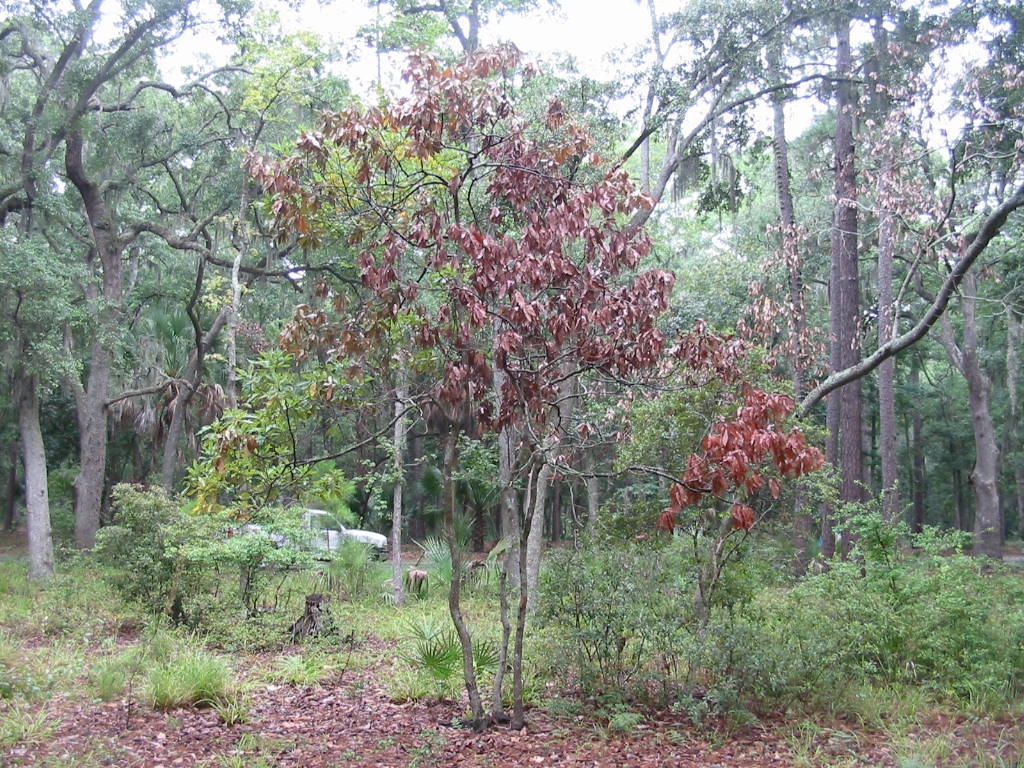
SOURCES

A comprehensive review and synthesis of the history, ecology, and management of white pines threatened by white pine blister rust see the August 2010 issue of Forest Pathology (Vol. 40:3-4).

American Phytopathological Society. Science Daily. December 9, 2019 https://www.sciencedaily.com/releases/2019/12/191209161314.htm?utm_source=feedburner&utm_medium=email&utm_campaign=Feed%3A+sciencedaily%2Fplants_animals%2Finvasive_species+%28Invasive+Species+News+–+ScienceDaily%29

Bonello, P. , F.T. Campbell, D. Cipollini, A.O. Conrad, C. Farinas, K.J.K. Gandhi, F.P. Hain, D. Parry, D.N. Showalter, C. Villari, and K.F. Wallin. 2019.  Invasive tree pests devastate ecosystems – A proposed new response framework. Frontiers 

Dawe, D.A., V.S. Peters, M.D. Flannigan. 2020. Post-fire regeneration of endangered limber pine (Pinus flexilis) at the Northern extent of its range. Forest Ecology and Management 457 (2020) 117725

Hutton, K.M. 2015. A dissertation submitted in partial fulfillment of the requirements for the degree of Doctor of Philosophy. University of Washington. Available here

Morin, R. Presentation to the 81st Northeastern Forest Pest Council Northeastern states forst agencies, Philadelphia, Pennsylvania, March 2019.

Potter, K.M., Escanferla, M.E., Jetton, R.M., Man, G., Crane, B.S. 2019. Prioritizing the conservation needs of US tree spp: Evaluating vulnerability to forest P&P threats, Global Ecology and Conservation (2019), doi: https://doi.org/10.1016/

Ragenovich, I.R. and R.G. Mitchell. 2006. Forest Insect and Disease Leaflet (FIDL) #118. http://www.na.fs.fed.us/pubs/fidls/bwa.pdf

Sniezko, R.A., M.F. Mahalovich, A.W. Schoettle, D.R. Vogler. 2011. Past and Current Investigations of the Genetic Resistance to Cronartium ribicola in High-elevation Five-needle Pines. In Keane, R.F., D.F. Tomback, M.P. Murray, and C.M Smith, eds. 2011. The future of high-elevation, five-needle white pines in Western North America. Proceedings of the High Five Symposium. 28-30 June, 2010. Missoula, MT.