Two new Phytophthora arrivals (plus another looming) in U.S. forests & nurseries

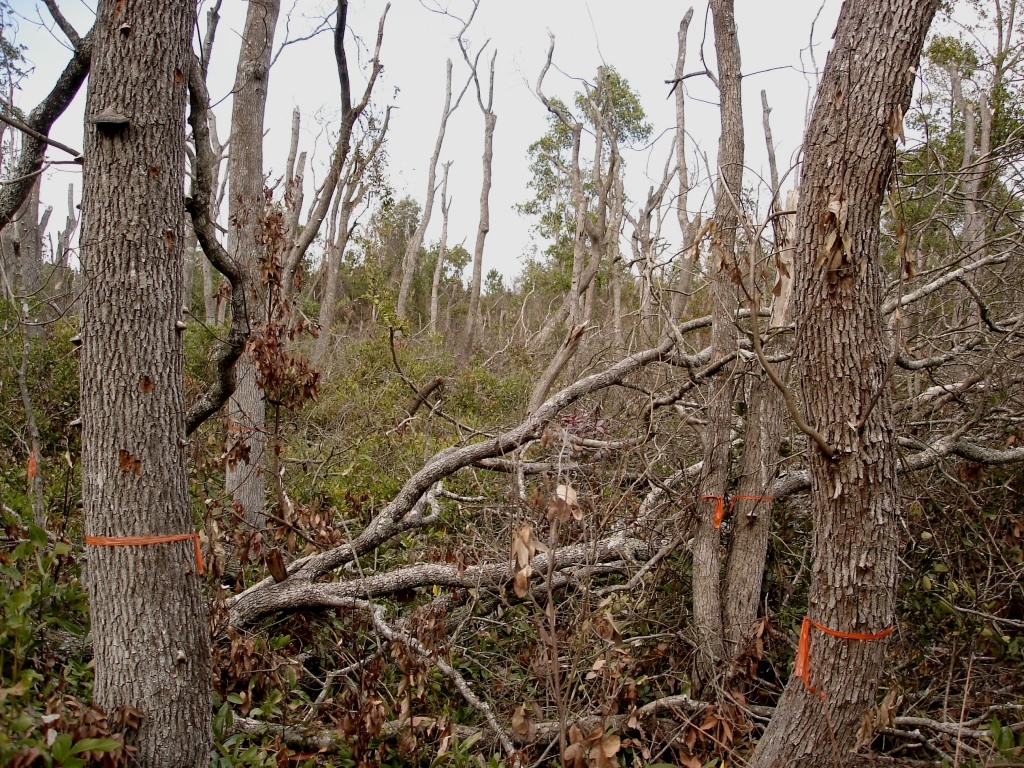
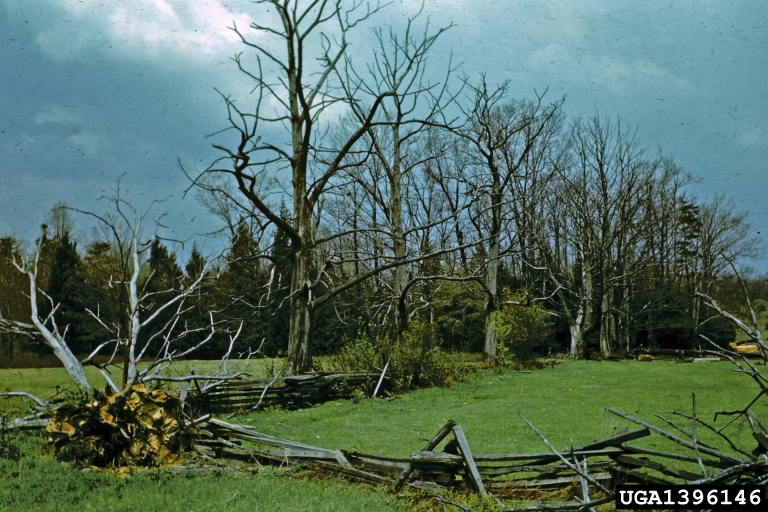
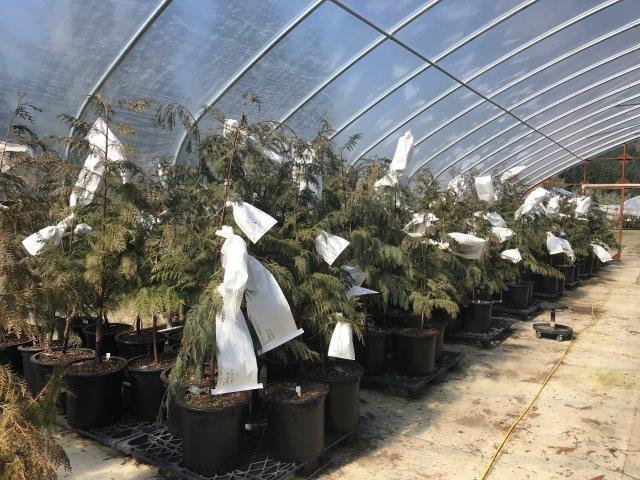
Breeding Port-Orford cedar for resistance to Phytophthora lateralis; photo by Richard Sniezko, USDA Forest Service

At the annual meeting of the National Plant Board in July, I learned that two new Phytophthora species have been detected in the United States. Questions remain about how each arrived.

  1. Phytophthora austrocedrii

This species was detected in a nursery in Oregon, then traced back to a supplier in Ohio. Officials are trying to determine how it entered the country – and then spread.

junipers in Great Britain killed by P. austrocedri; Forestry Research

In the United Kingdom, P. austrocedri has killed trees in the Juniperus and Cupressus genera. Damage is particularly significant at two sites in northern Scotland and in England’s Lake District. The principal host, Juniperus communis, is an important native species. It is already considered vulnerable. P. austrocedri has also been detected in Argentina, where it is killing the native Chilean or Patagonian cedar (Austrocedrus chilendris). The cedar species is the only one in the genus. Evidence indicates the pathogen was introduced to both Britain and Argentina; but its origin is unknown. Indeed, the species was first isolated by scientists as an unknown Phytopthora taxon on a juniper in an import/export nursery in Germany. All reported hosts are members of the Cupressaceae family (UK forest research website).

Of greater concern to Americans, P. austrocedri has also infected individual trees of Port-Orford cedar (Chamaecyparis lawsoniana). (UK forest research website).  

Port-Orford cedar is a species endemic to a small range in southwestern Oregon and Northwestern California.

POC populations have been severely reduced over the past century by a different non-native Phytophthora, P. lawsonii. US Forest Service scientists recently announced that they have bred trees resistant to this pathogen – and offered seedlings for widespread planting.

Possible hosts in the Pacific Northwest – other than Port Orford cedar – include Juniperus californica, Juniperus grandis, Juniperus occidentalis, and Juniperus maritima – although the junipers might be limited to arid environments, where they would presumably be less vulnerable. https://plants.usda.gov/home/classification/15147

Research in Great Britain shows that P. austrocedri spreads in water and by movement of infected plants and contaminated soil. Footwear, camping equipment, and vehicle tires can all carry the pathogen. This makes the pathogen particularly difficult to control (this is another similarity with P. lawsonii).

  • Phytophthora abietivora  

P. abietivora was originally found on a diseased Christmas tree (Fraser fir, Abies fraseri) in Connecticut in 2019. It has since been reported in Pennsylvania and Virginia; and in forest nurseries and Christmas tree plantations in Quebec and Ontario. The Canadians report that it has not caused disease (Canadian website). However, the Canadian representative at the National Plant Board meeting expressed concern and asked USDA APHIS to clarify what actions it is taking regarding this species.

(Natural populations of Fraser fir have been severely reduced over the past century by the balsam woolly adelgid.)   

Fraser fir killed by balsam woolly adelgid; Clingman’s Dome, Great Smoky Mountains National Park

Several additional hosts have been identified, including balsam fir (Abies balsamea) and eastern hemlock (Tsuga canadensis); and deciduous or hardwood species: hickory (Carya sp.), flowering dogwood (Cornus florida), American witch hazel (Hamamelis virginiana), mountain holly (Ilex montana), red maple (Acer rubrum), silver birch (Betula lenta), American beech (Fagus grandifolia); and several oaks: white (Quercus alba), chestnut (Q. montana) and northern red oak (Q. rubra) (Canadian fact sheet).

According to the Canadian website, P. abietivora causes root rot and subsequent foliar chlorosis, discoloration, stem cankers, and sometimes tree decline and death. Determining which Phytophthora species is the causal agent of a tree’s symptoms requires laboratory testing. The Canadian fact sheet reports that wet, cool conditions provide ideal environments for P. abietivora. Like other Phytophthora species, P. abietivora can be spread through soil and water, as well as via infected plant material or pots or trays (particularly if soil remains on the equipment). The Canadian fact sheet has several photographs illustrating symptoms and additional sources.

Liriodendron tulipifera; photo by Evelyn Simak via Geograph

  • Phytophthora kernoviae 

P. kernoviae was first detected in southwestern England in 2003. link In England, this pathogen has caused significant diseases in native Fagus sylvatica (European beech) and lesions on trunks of a European oak, Quercus robur. More worrying are the trunk lesions on the North American native yellow or tulip poplar (Liriodendron tulipifera) and lesions on foliage of Monterey pine (Pinus radiate), giant sequoia(Sequoiadendron giganteum), and several North American native shrubs, Rhododendron macrophyllum (Pacific rhododendron), R. occidentale (western rhododendron), R. catawbiense (Catawba rosebay) and Umbellularia californica (California bay laurel).

Phytophthora kernoviae on R. ponticum in Cornwall

The infestation in Cornwall is sustained by heavy sporulation on the non-native shrub Rhododendron ponticum, which is invasive in woodlands. Worrying for Americans is the fact that P. kernoviae sporulates on three plant species native to West coast forests — Rhododendron macrophyllum, R. occidentale, and Umbellularia californica – as well as on R. catawbiense, which is native to the southern Appalachians.

USDA APHIS requested adoption of a “response plan” targetting P. kernoviae under the National Plant Disease Recovery System (NPDRS). This plan was adopted in 2008 and updated in 2015.

The recovery plans found the areas at highest risk are eastern slopes of the Appalachian Mountains because this area combines a native sporulating host and residential landscaping choices that are likely to include hosts that could transport the pathogen. A lower risk was identified for West Coast forests.

Because of this status, P. kernoviae is also a “priority” pest for surveys under the Cooperative Agricultural Pest Survey (CAPS) program. According to Purdue University’s “pest tracker” website four states have reported carrying out surveys for P. kernoviae in one or more years since 2016: Oregon, Tennessee, Pennsylvania, and Virginia. Surveys in Oregon were carried out in 2018 – 2020. In 2020 the counties surveyed included Curry County, where three strains of P. ramorum link have become established. The Purdue list is not certified as accurate or complete. To date, no surveys have detected P. kernoviae in the United States or – I believe – in Canada.

SOURCES

Canadian fact sheet at https://inspection.canada.ca/en/plant-health/invasive-species/plant-diseases/p-abietivora/fact-sheet; accessed July 2024

Canadian website at https://inspection.canada.ca/en/plant-health/invasive-species/plant-diseases/p-abietivora  accessed July 2024

Purdue University’s “pest tracker” website at pesttracker.org. Survey Status of Phytophthora leaf blight – Phytophthora kernoviae . (2023)  accessed July 2024

UK research website at https://www.forestresearch.gov.uk/tools-and-resources/fthr/pest-and-disease-resources/phytophthora-austrocedri-disease-of-juniper-and-cypress/  accessed July 2024

For details on existence of two clonal lineages of Phytophthora austrocedrii, see Henricot, B. A. Perez-Sierra, A.C. Armstrong, P.M. Sharp, and S. Green. Phytopathology 2017. 107:12, 1532-1540.

Posted by Faith Campbell

We welcome comments that supplement or correct factual information, suggest new approaches, or promote thoughtful consideration. We post comments that disagree with us — but not those we judge to be not civil or inflammatory.

For a detailed discussion of the policies and practices that have allowed these pests to enter and spread – and that do not promote effective restoration strategies – review the Fading Forests report at  https://treeimprovement.tennessee.edu/

or
www.fadingforests.org

Congress is considering the Farm Bill – help improve it!!!

Senator Peter Welch of Vermont

The House and Senate Agriculture committees are edging toward adopting the next Farm Bill, which   is a year past due. Farm bills set policy, funding levels, and more, for 5 years. Each covers a wide range of subjects, including crop subsidies and insurance; food stamps; rural development (including wifi access); forestry policy; and research.

As you might remember, CISP aims to improve USDA’s programs — not only to prevent introductions of non-native tree killing pests and pathogens but also to better respond to those that enter the US and become established. I summarize here what the Senate and House bills have in common and how they differ on these issues.

I understand that the minorities, that is, House Democrats and Senate Republicans, have not accepted all aspects of the majorities’ drafts. So let’s take the opportunity to ask for better bills.

Both the House and Senate bills would “simplify” the USDA Forest Service’s obligations to prepare environmental assessments under the National Environmental Policy Act (NEPA). I have not analyzed which bill weakens NEPA more.

The Senate Bill: The Rural Prosperity and Food Security Act of 2024

The Senate bill addresses forest pest species in several places: Title II — Conservation, Title VII — Research, and Title VIII — Forestry. Here, I describe relevant sections, beginning with the section that partially addresses CISP’s proposal.  

Title VIII — Forestry. Section 8214 requires the USDA Secretary to establish a national policy to counter threats posed by invasive species to tree species and forest ecosystems and identify areas for interagency cooperation.

This mandate falls far short of what we sought in a previous bill (S. 1238). However, depending on the exact wording of the bill and accompanying report, perhaps we can succeed in building a stronger program.

It is most important to obtain funding for applied, directed research into resistance breeding strategies, “bulking up,” and planting seedlings that show promise. Please contact your senators and ask them to work with the sponsors – Peter Welch [D-VT], Maggie Hassan [D-NH], and Mike Braun [R-IN] – to try to incorporate more of S. 1238 in the final bill.

The Senate bill contains other provisions that might be helpful for invasive species management – although not part of what CISP and our partners asked for.

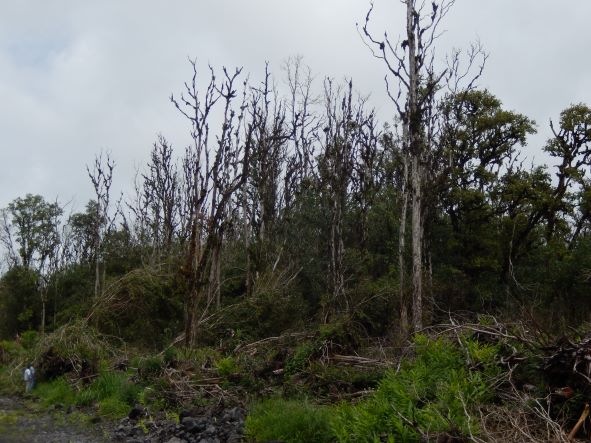
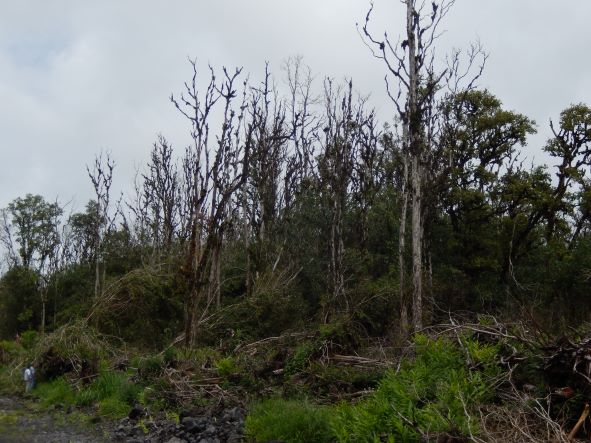
‘ōhi‘a trees killed by rapid ‘ōhi‘a death; photo by Richard sniezko, USFS

Title VIII — Forestry. In Section 8506, the Senate bill would require that the US Departments of Agriculture and Interior continue working with Hawai`i to address the pathogen that causes rapid ‘ōhi‘a death. The section authorizes $5 million for each of the coming five fiscal years to do this work. Unfortunately, authorization does not equal funding. Only the Senate and House Appropriations Committees can make this funding available. Hawai`i’s endemic ‘ōhi‘a trees certainly face a dire threat. CISP is already advocating for funding to support resistance breeding and other necessary work.

Title VIII — Forestry. Sections 8247 and 8248 support USDA Forest Service’s nursery and tree establishment programs. My hesitation in fully supporting these provisions is that I fear the urge to plant lots of trees in a hurry will divert attention for the need to learn how to propagate many of the hardwood tree species that have been decimated by non-native pests. However, I agree that the U.S. lacks sufficient nursery capacity to provide anything close to the number of seedlings sought. Perhaps this program can be adjusted to assist the “planting out” component of our request.

Title VII — Research. Section 7208 designates several high-priority research initiatives. On this list are spotted lanternfly, and “invasive species”.  A number of forest corporations have been urging Members of Congress to upgrade research on this broad category, which I believe might focus more on invasive plants than the insects and pathogens on which CISP focuses. How the two ideas are integrated will be very important.

Another high-priority initiative concerns the perceived crisis in failed white oak regeneration.

Title VII — Research.  Section 7213 mandates creation of four new Centers of Excellence at 1890 Institutions. These are historically Black universities that are also land-grant institutions]. These centers will focus on: 1) climate change, 2) forestry resilience and conservation; 3) food safety, bioprocessing, and value-added agriculture; and, 3) food and agricultural sciences and the social sciences.

Title II — Conservation. Section 2407 provides mandatory funding (which is not subject to annual appropriations) of $75 million per year to the national feral swine eradication/control program (run by USDA APHIS’ Wildlife Service Division). I discuss this program in a separate blog.

The Senate bill also mandates use of several conservation and other programs to address the causes and impacts of climate change. This requirement is directly countered by the House Agriculture Committee’s bill (see below).

The House Bill

Title VIII — Forestry. This section contains none of the provisions CISP’ sought to  USDA’s management of tree-killing non-native insects and diseases.

Instead, the House bill calls on the USFS to establish a comprehensive approach to addressing the demise of the giant sequoia trees.

Title VII — Research The House bill, like the Senate’s, lists the invasive species and white oak research initiatives as high priority. The House, unlike the Senate, does not include spotted lanternfly.

Title II — Conservation. As I noted above, the House bill explicitly rescinds all unobligated conservation funding from the Inflation Reduction Act. It reallocates these funds to the traditional conservation programs, e.g., the Environmental Quality Incentive Program and Watershed Protection and Flood Prevention. The bill would use these funds to support “orphan” programs – naming specifically the national feral swine eradication/control program. The House bill provides $150 million – apparently across the five years covered by the Farm Bill, so $30 million per year.  Finally, the House allocates 60% of the hog management funds to APHIS, 40% to the Natural Resources Conservation Service.

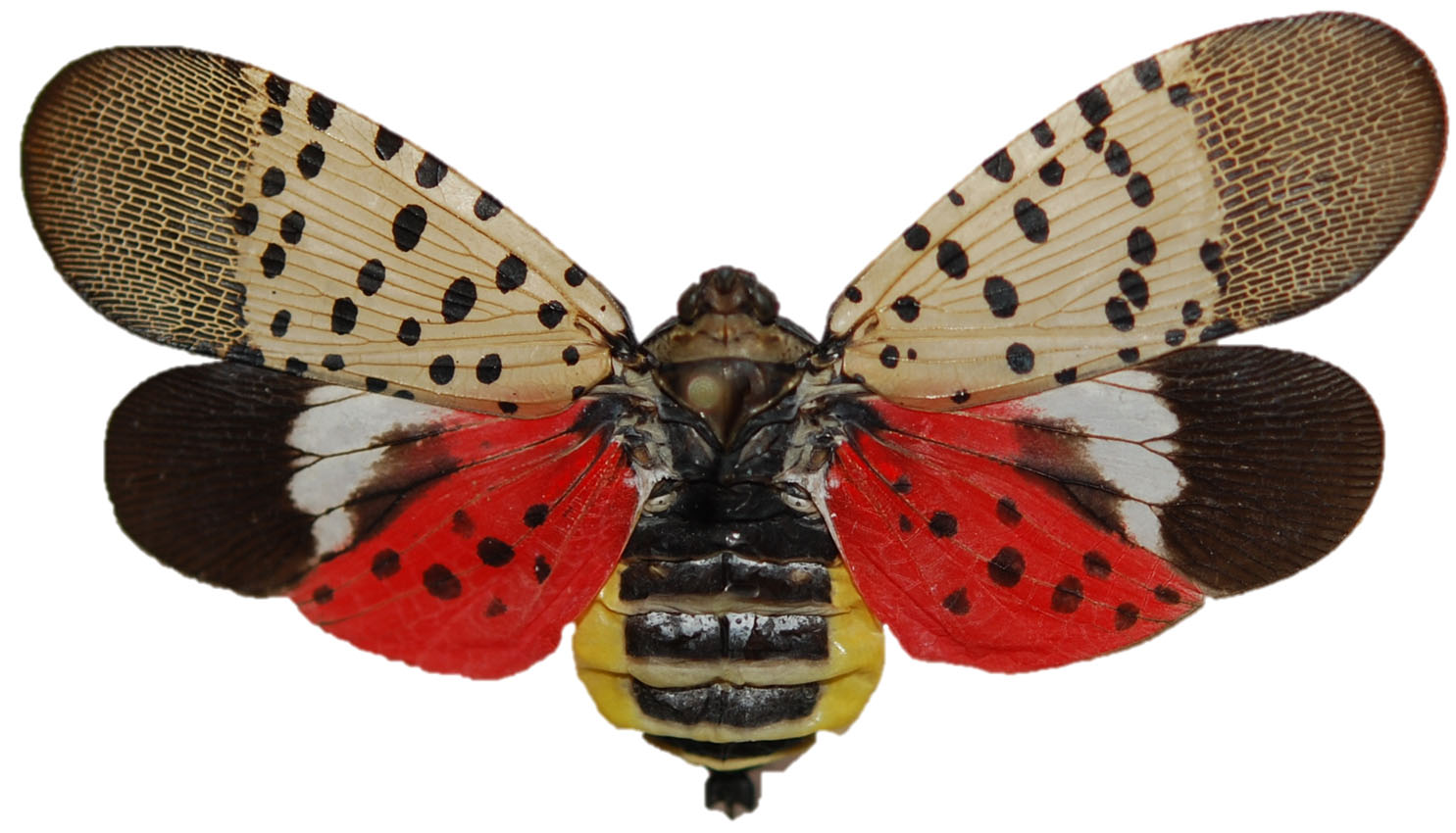
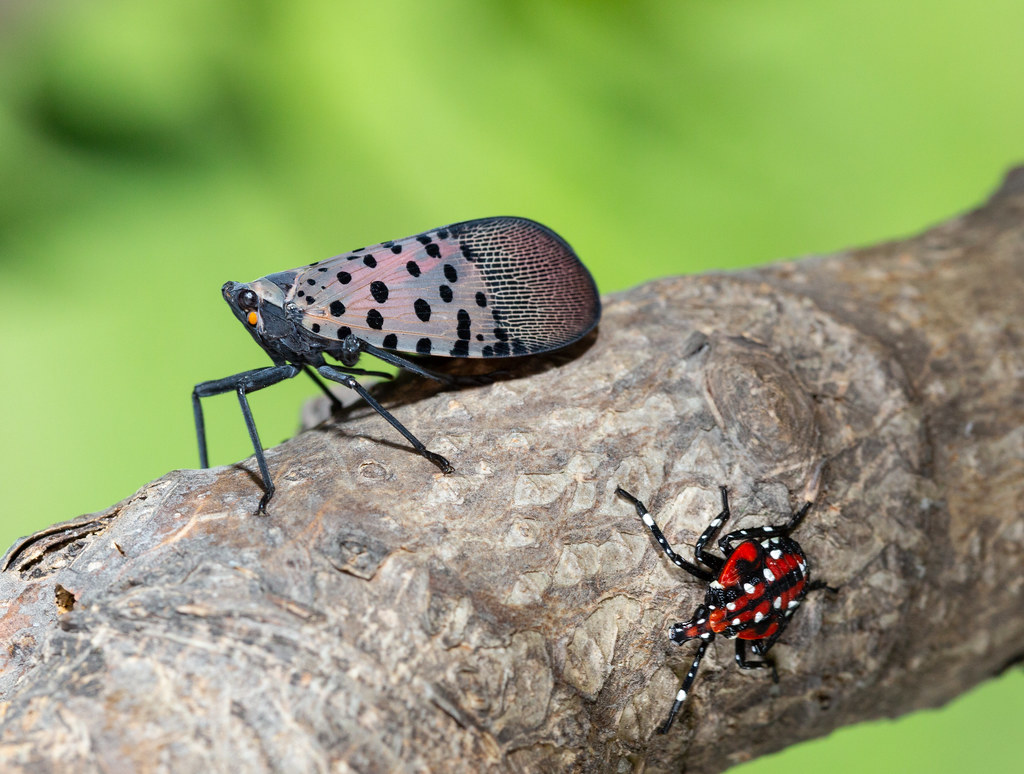
spotted lanternfly – target of at least 11 projects funded through APHIS’ the Plant Pest and Disease Management and Disaster Prevention Program in FY24. Photo by Holly Raguza, Pennsylvania Department of Agriuculture

Title X —Horticulture, Marketing, and Regulatory Reform. The House’s summary says it is taking steps to protect plant health. It does this by increasing funding for the grant program under the Plant Pest and Disease Management and Disaster Prevention Program – §7721 of the last (2018) Farm Bill. The increase would raise the amount of money available each year from the current level of $70 million to $90 million. These funds are mandatory; they are not subject to annual appropriations. Research, development, and outreach projects funded by this program have certainly added to our understanding of plant pests, hence to their effective management. However, they are usually short-term projects. Therefore they are not suitable for the long-term commitment required for resistance breeding programs. See here  and here.  

Title III — Trade. Here, the House bill exacerbates the current imbalance between trade promotion and phytosanitary protection. The bill doubles the authorized funding for USDA’s Market Access and Foreign Market Development programs. I concede that this measure probably does reflect a bipartisan consensus in the Congress to support robust programs for promoting agricultural exports.

Also under this Title, the House bill requires the USDA Secretary to conduct regular assessments to identify risks to critical infrastructure that supports food and agriculture sector. This might be helpful – although it is not clear that this assessment would include to threats to forest or urban trees not used commercially (e.g., for timber).
At a recent forum on biological control sponsored by the National Association of State Foresters (NASF), it was reported that participants noted several problems: insufficient funding, significant delays in refilling positions, inadequate research capacity, lack of brick-and-mortar infrastructure, and declining college enrollments in biocontrol-related studies. The NASF Forest Science Health Committee is developing a “Statement of Needs” document that NASF and others can use to lobby for funding to fill these gaps. I hope you will join them in doing so!
salt cedar (Tamarix sp.) attacked by biocontrol agent; photo by J.N. Stuart via Flickr

However, as I note above, empowering resistance breeding programs requires a long-term commitment, that is, a comprehensive alteration of policies and infrastructure – beyond annual appropriations.

Posted by Faith Campbell

We welcome comments that supplement or correct factual information, suggest new approaches, or promote thoughtful consideration. We post comments that disagree with us — but not those we judge to be not civil or inflammatory.

For a detailed discussion of the policies and practices that have allowed these pests to enter and spread – and that do not promote effective restoration strategies – review the Fading Forests report at http://treeimprovement.utk.edu/FadingForests.htm

or

www.fadingforests.org

Predicting Impacts – Can We Do It?

Clive Braser and others study Phytophthora species in their native habitats of Vietnam; which will become aggressive invaders in North America?

For years, one focus of this blog has been on scientists’ efforts to improve prevention of new introductions of forest pests. In earlier blogs, I summarized and commented on efforts by Mech et al. (2019) and Schultz et al. (2021), who extrapolate from insect-host relationships of pests already established in North America. [Full citations are presented at the end of this blog.] Both limited their analysis to insects; Mech et al. focused on those that attack conifers, Schultz et al. on those that attack single genera of angiosperms (hardwoods).

However, many of the most damaging agents are pathogens; for an indication, review the list under “invasive species” here. Indeed, Beckman et al. (2021) reported that only three non-native organisms pose serious threats to one or more of the 37 species of Pinus native to the U.S. All are pathogens: white pine blister rust (WPBR), pitch canker, and Phytophthora root rot (Phytophthora cinnamomi).

For this reason I welcome a study by Li et al. (2023), who used laboratory tests to evaluate the threat posed by more than 100 fungi associated with bark beetles. Since there are more than 6,000 species of bark and ambrosia beetles and they are commonly intercepted at the U.S. border, determining which should be priorities is important. Li et al. point out that the vast majority of such introductions have had minimal impacts. Two, however, have caused disastrous levels of damage: Dutch elm disease and laurel wilt disease.

Li et al. tested 111 fungi associated with 55 scolytine beetles from areas of Eurasia with latitudes and ecosystems analagous to those in the southeastern U.S. The beetles assessed included beetle species responsible for recent major tree mortality events in Eurasia: Dendroctonus species, Platypus koryoensis (Korean oak wilt), Platypus quercivorus (Japanese oak wilt) and Tomicus species.

The authors tested the fungi’s virulence on four species of trees native to the Southeast – two pines (Pinus taeda and P. elliottii var. elliottii), and two oaks(Quercus shumardii and Q. virginiana).

Li et al. found that none of 111 fungal associates caused a level of damage on these four hosts equal to Dutch elm disease on elms or laurel wilt disease on trees in the Lauraceae. Twenty-two of the fungi were minor pathogens – meaning they might cause damage under certain conditions or when loads of inoculum are large enough.

redbay trees killed in coastal Georgia by laurel wilt; photo by Scott Cameron

I think Li et al. set an extremely high bar for “serious” damage. Surely we wish to prevent introduction of pathogens that cause damage at a lower level than the catastrophes to which these two diseases have exposed a genus (elms) and a family (Lauraceae)! Still, the scientific approach used here is a step toward addressing pathogens. These agents of tree mortality are addressed much less frequently than insects. I hope that scientists will continue to test the virulence of these fungi on some of the thousands of other species that make up the forests of the United States, or at least the dominant species in each ecosystem.

It is discouraging that Raffa et al. (2023) found none of four approaches to predicting a new pest’s impact to be adequate by itself. Instead, they outlined the relative strengths and weaknesses of each approach and the circumstances in which they might offer useful information. I am particularly glad that they have included pathogens, not just insects. The four approaches they review are:

(1) pest status of the organism in its native or previously invaded regions;

(2) statistical patterns of traits and gene sequences associated with high-impact pests;

(3) sentinel plantings to expose trees to novel pests; and

(4) laboratory tests of detached plant parts or seedlings under controlled conditions.

They emphasize that too little information exists regarding pathogens to predict which microbes will become damaging pathogens when introduced to naïve hosts in new ecosystems. See the article, especially Figure 4, for their assessment of the strengths each of the several approaches.

Raffa et al. raise important questions about both the science and equity issues surrounding invasive species. As regards scientific issues, they ask, first, whether it will ever be possible to predict how each unique biotic system will respond to introduction of a new species. Second, they ask how assessors should interpret negative data? In the context of equity and political power, they ask who should make decisions about whether to act?

In my blog I expressed concern about finding that most introduced forest insects are first detected in urban areas whereas introduced pathogens are more commonly detected in forests. I hope scientists will redouble efforts to improve methods for earlier detection of pathogens. Enrico Bonello at Ohio State and others report that spectral-based tools can detect pathogen-infected plants, including trees.

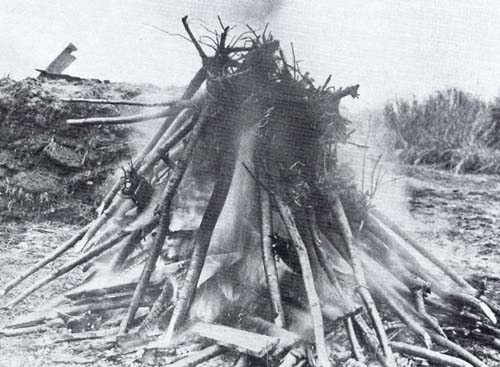
Japanese cherry trees burned on the Washington D.C. mall because infested by scale; on order of Charles Marlatt

Identifying Key Pathways  

International trade is considered the single most important pathway for unintentional introductions of insects. Updated figures remind us about the stupendous amounts of goods being moved internationally. According to Weber et al., international shipping moves ~133 million TEU containers per year between countries, the majority between continents. Four times this number move within regions via coastal shipping. On top of that, four billion passenger trips take place by air every year. Air freight carries another ~220 million tons of goods; while this is a tiny fraction of the weight shipped by boat, the  packages are delivered in less than a day – greatly increasing the likelihood that any unwanted living organisms will survive the trip. The U.S. also imports large numbers of live plants – although getting accurate numbers is a challenge. MacLachlan et al. (2022) report 5 billion plants imported in 2021, but the USDA APHIS annual report for FY22 puts the number at less than half that figure:  2.2 billion plant units.

Given the high volume of incoming goods, Weber et al. advocate improved surveillance (including analysis of corresponding interceptions) of those pathways that are particularly likely to result in non-native species’ invasions, e.g. live plants, raw lumber(including wood packaging), and bulk commodities e.g. quarried rock. Isitt et al. and Fenn-Moltu et al. concur that investigators should focus on the trade volumes of goods that are likely to transport plant pests – in their cases, plant imports.

The importance of the plant trade as a pathway of introduction for has been understood for at least a century – as witnessed by the introductions of chestnut blight DMF and white pine blister rust, DMF and articles by Charles Marlatt. A decade ago, Liebhold et al. (2012) calculated that the approach rate of pests on imported plants was 12% — more than 100 times higher than the 0.1% approach rate found by Haack et al. (2014) for wood packaging.

Since plant-insect interactions are the foundation of food webs, changes to a region’s flora will have repercussions throughout ecosystems, including insect fauna. See findings by teams led by Doug Tallamy and Sara Lalk; and a chapter in the new forest entomology text written by Bohlmann, and Krokene (citation at end of blog under Allison, Paine, Slippers, and Wingfield). Sandy Liebhold and Aymeric Bonnamour also addressed explicitly links between introductions of non-native plant and insect species. Weber et al. call this phenomenon the “receptive bridgehead effect”: a non-native plant growing prolifically in a new ecosystem provides a suitable host for an organism that feeds on that host, raising the chance for its establishment.

Recent studies confirm the importance of the “receptive bridgehead effect”. Isitt and colleagues found that the large numbers of introduced European insect species – all taxa, not just phytophagous insects – established in North America and Australia/New Zealand were best explained by the numbers of European plants introduced to these regions – in other words, the most important driver appears to be the diversity of non-native plants.  

The presence of European plants in North America and Australia/New Zealand promoted establishment of European insects in two ways. First, these high-volume imports increased the propagule pressure of insects associated with this trade. Live plant imports might have facilitated the establishment of ~70% of damaging non-native forest insects in North America. Second, naturalization of introduced European plants provided a landscape replete with suitable hosts. This is especially obvious in Australia/New Zealand, which have unique floras. In Australia, nearly 90% of non-native pest insects are associated with non-native plants. Those non-native insects that do feed on native plants are more likely to be polyphagous.

Amur honeysuckle – one of the hundreds of Asian plants invading North American ecosystems; via Flickr

I hope U.S. phytosanitary officials apply these lessons. Temperate Asia is the source of more non-native plants established in both North America and Australia/New Zealand than is Europe. Already, many insects from Asia have invaded the U.S. The logicof the “receptive bridgehead effect” points to prioritizing efforts to prevent even more Asian insects from reaching our shores!

Fenn-Moltu et al. sought to elucidate which mechanisms facilitate species’ success during the transport and introduction/establishment stages of bioinvasion. They studied the transport stage by analyzing border interceptions of insects from 227 countries by Canada, mainland U.S., Hawai`i, Japan, New Zealand, Great Britain, and South Africa over the 60 year period 1960 – 2019. They studied establishment by analyzing attributes of 2,076 insect species recorded as established after 1960 in the above areas plus Australia (North America was treated as a single unit comprised of the continental U.S. and Canada).

The number of species transported increased with higher Gross National Income in the source country. The number of species transported decreased with geographic distance. They suggest that fewer insects survive longer journeys, but say additional information is needed to verify this as the cause. The number of species transported was not affected by species richness in the native region.

More species established when introduced to a country in the same biogeographic region. They were not surprised that environmental similarity between source and destination apparently strongly affected establishment success. The number of species established was not affected by species richness in the native region. For example, the greatest number of established species originated from the Western and Eastern Palearctic regions, which together comprise only the fifth-largest pool of native insect species.

Gaps Despite Above Studies

As I noted at the beginning, most of the studies examining current levels of pests transported on imported plants have been limited to insects. This is unfortunate given the impact of introduced pathogens (again, review the list damaging organisms under “invasive species” here).

In addition, most studies analyzing the pest risk associated with plant imports use port inspection data – which are not reliable indicators of the pest approach rate. The unsuitability of port inspection data was explained by Liebhold et al. in 2012 and Fenn-Moltu et al. a decade later – as well as Haack et al. 2014 (as the data pertain to wood packaging). Fenn-Moltu et al. note that inspection agencies often (and rightly!) target high-risk sources/commodities, so the records are biased. Other problems might arise from differences in import volume, production practices, and differences in records that identify organism only to genus level rather than species. Fenn-Moltu et al. call for relying on randomized, statistically sound inspection systems; one such example is USDA’s Agriculture Quarantine Inspection System (AQIM). Under AQIM, incoming shipments are randomly selected and put through more thorough inspections to produce statistically based estimates of approach rates, defined as the percent of inspected shipments found to be infested with potential pests (Liebhold et al. 2012). I ask why scientists who are aware of this issue have not obtained AQIM data for pests associated with plant imports. Plant imports have been included in the AQIM system since 2008. Have they not been able to persuade APHIS to provide these data? Or are these data available for only limited types of imported plants? Too narrow a focus would create a different source of potential bias.

Both Isitt et al. and Fenn-Moltu et al. list factors not addressed and other caveats of which we should be aware when extrapolating from their findings.

SOURCES

Allison, J. T.D. Paine, B. Slippers, and M.J. Wingfield, Editors. 2023. Forest Entomology and Pathology Volume 1: Entomology. Springer          available gratis at https://link.springer.com/book/10.1007/978-3-031-11553-0

Beckman, E., Meyer, A., Pivorunas, D., Hoban, S., & Westwood, M. (2021). Conservation Gap Analysis of Native U.S. Pines. Lisle, IL: The Morton Arboretum.

Fenn-Moltu, G., S. Ollier, O.K. Bates, A.M. Liebhold, H.F. Nahrung, D.S. Pureswaran, T. Yamanaka, C. Bertelsmeier. 2023. Global flows of insect transport and establishment: The role of biogeography, trade and regulations. Diversity and Distributions DOI: 10.1111/ddi.13772

Hoddle. M.S. 2023. A new paradigm: proactive biological control of invasive insect pests. BioControl https://doi.org/10.1007/s10526-023-10206-5

Isitt, R., A.M. Liebhold, R.M. Turner, A. Battisti, C. Bertelsmeier, R. Blake, E.G. Brockerhoff, S.B. Heard, P. Krokene, B. Økland, H. Nahrung, D. Rassati, A. Roques, T. Yamanaka, D.S. Pureswaran.  2023. Drivers of asymmetrical insect invasions between three world regions. bioRxiv preprint doi: https://doi.org/q0.1101/2023.01.13.523858

Li, Y., C. Bateman, J. Skelton, B. Wang, A. Black, Y-T Huang, A. Gonzalez, M.A. Jusino, Z.J. Nolen, S. Freemen, Z. Mendel, C-Y Chen, H-F Li, M. Kolarik, M. Knizek, J-H. Park, W. Sittichaya, T-H Pham, S. Ito, M. Torii, L. Gao, A.J. Johnson, M. Lu, J. Sun, Z. Zhang, D.C. Adams, J. Hulcr.  2022. Pre-invasion assessment of exotic bark beetle-vectored fungi to detect tree-killing pathogens. Phytopathology Vol 112 No. 2 February 2022

Liebhold, A.M., E.G. Brockerhoff, L.J. Garrett, J.L. Parke, and K.O. Britton. 2012. Live Plant Imports: the Major Pathway for Forest Insect and Pathogen Invasions of the US. www.frontiersinecology.org

Liebhold, A.M., T. Yamanaka, A. Roques, S. August, S.L. Chown, E.G. Brockerhoff and P. Pyšek. 2018. Plant diversity drives global patterns of insect invasions. Sci Rep 8, 12095 (2018). https://doi.org/10.1038/s41598-018-30605-4

MacLachlan, M.J., A. M. Liebhold, T. Yamanaka, M. R. Springborn. 2022. Hidden patterns of insect establishment risk revealed from two centuries of alien species discoveries. Sci. Adv. 7, eabj1012 (2021).

Mech,  A.M., K.A. Thomas, T.D. Marsico, D.A. Herms, C.R. Allen, M.P. Ayres, K.J. K. Gandhi, J. Gurevitch, N.P. Havill, R.A. Hufbauer, A.M. Liebhold, K.F. Raffa, A.N. Schulz, D.R. Uden, and P.C. Tobin. 2019. Evolutionary history predicts high-impact invasions by herbivorous insects. Ecol Evol. 2019 Nov; 9(21): 12216–12230.

Raffa, K.F., E.G. Brockerhoff, J-C. Gregoirem R.C. Hamelin, A.M. Liebhold, A. Santini, R.C. Venette, and M.J. Wingfield. 2023. Approaches to Forecasting Damage by Invasive Forest Insects and Pathogens: A Cross-Assessment. Bioscience Vol. 73, No. 2. February 2023.

Schulz, A.N.,  A.M. Mech, M.P. Ayres, K. J. K. Gandhi, N.P. Havill, D.A. Herms, A.M. Hoover, R.A. Hufbauer, A.M. Liebhold, T.D. Marsico, K.F. Raffa, P.C. Tobin, D.R. Uden, K.A. Thomas. 2021. Predicting non-native insect impact: focusing on the trees to see the forest. Biological Invasions.

Weber, D.C., A.E. Hajek, K.A. Hoelmer, U. Schaffner, P.G. Mason, R. Stouthamer, E.J. Talamas, M. Buffington, M.S. Hoddle and T. Haye. 2020. Unintentional Biological Control. Chapter for USDA Agriculture ResearchService. Invasive Insect biocontrol and Behavior Laboratory. https://www.ars.usda.gov/research/publications/?seqNo115=362852

Posted by Faith Campbell

We welcome comments that supplement or correct factual information, suggest new approaches, or promote thoughtful consideration. We post comments that disagree with us — but not those we judge to be not civil or inflammatory.

For a detailed discussion of the policies and practices that have allowed these pests to enter and spread – and that do not promote effective restoration strategies – review the Fading Forests report at http://treeimprovement.utk.edu/FadingForests.htm

or

www.fadingforests.org

Introduced pests linked (again) to introduced plants; Prevention needs to recognize this nexus

lawns!

I have blogged many times about the risk of pest introductions on imports of live plants [= “plants for planting” in USDA’s terms]. Last October I reviewed 14-year old data indicating that nearly 70% of 455 damaging tree pests introduced to the continental U.S. had probably been introduced via plant imports. These included 95% of sap feeding and 89% of foliage feeding insects and about half of the pathogens. The approach rate of pests on imported plants was apparently 12% (Liebhold et al. 2012) — more than 100 times higher than the 0.1% approach rate found by Haack et al. (2014) for wood packaging.

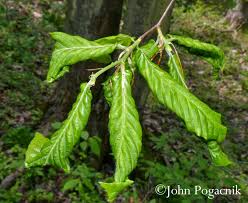
First, those analyses focus almost exclusively on insects (MacLachlan et al. 2022 focused on a single insect order, the Hemiptera!), despite the many pathogens probably introduced by the plant trade in recent decades. Examples I cited included several Phytophthoras, rapid ohia death, beech leaf disease, and boxwood blight. There have been repeated detections of the Ralstonia solanacearum Race 3 biovar 2.

SOD- infected rhododendrons; photo by Jennifer Parke, Oregon State University

Second, most studies analyzing the pest risk associated with plant imports use port inspection data – which are not reliable indicators of the pest approach rate – as explained by Liebhold et al. 2012 and Haack et al. 2014 (as it pertains to wood packaging).

Third, many of the studies are based on data from a decade or longer in the past. This means the studies do not address whether APHIS’ recent changes in its approach – including adoption of NAPPRA – have resulted in reduced introductions.

A complication is that, since insects are difficult to detect, those associated with the high volumes of plants imported in recent years might not be detected for years or decades after their introduction.

I have called for APHIS to update the Liebhold et al. 2012 study to determine the approach rate for all types of organisms that threaten North American tree species. Any such study should include trees on Hawai`i, Guam, Puerto Rico, and other U.S possessions and territories. These islands are nearly always excluded from analyses of imported pests. I concede that there are probably scientific and data-management challenges but these islands are immensely important from a biodiversity point of view, and they are parts of the United States!

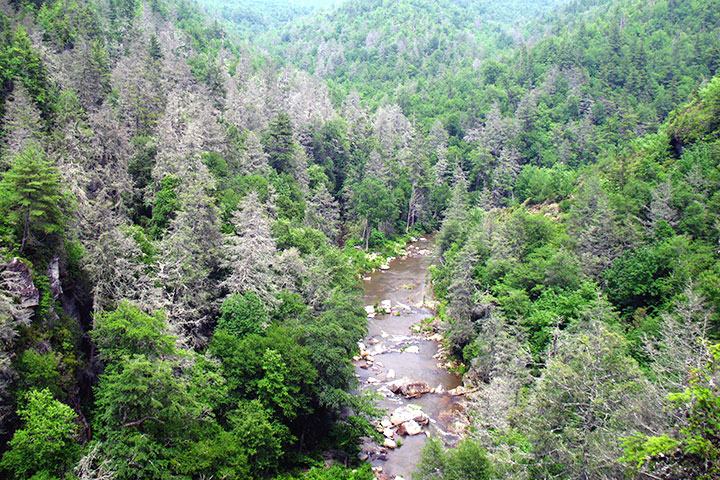
eastern hemlocks killed by hemlock woolly adelgid; Linville Gorge; photo by Steven Norman, USFS

MacLachlan et al. (2022) estimated that new establishments – of insects in the order Hemiptera – per unit of additional plant imports have shrunk substantially. They attribute this decline to a combination of increased imports and the presence of a growing number of insect species introduced in the past. They found that introductions to the Asian Palearctic and Neotropic regions have been reduced by depletion of species pools. Other factors are thought to explain the substantial decline in establishment likelihood for the other regions. However, lag times in detecting insect introductions complicate this assessment.

However, despite that significant decrease in risk per unit of imports, MacLachlan et al. (2022) found that the number of establishments has remained relatively constant over the past century because of substantial increases in overall import levels and diversification of the origins of imports across regions, which exposed the U.S. to new source species pools.

MacLachlan et al. (2022) suggested that APHIS should target biosecurity resources to the specific commodity-country pairs associated with a higher relative risk of introducing additional insect species.

Recent studies are taking a welcome new stance: looking at links between introductions of non-native plant and insect species. I first raised this approach a year ago. Studies by teams led by Doug Tallany and Sara Lalk [Lalk et al.; articles by Tallamy] agree that:

  • Non-native plants – some of which are invasive – are altering ecosystems across broad swaths of North America and the impacts are insufficiently understood.
  • The invasive plant problem will get worse because non-native species continue to be imported, planted … and to invade.
  • Plant-insect interactions are the foundation of food webs – they transfer energy captured by plants through photosynthesis to other trophic levels, plus play a major role as pollinators. Consequently, changes to a region’s flora will have repercussions throughout ecosystems.

Dr. Tallamy studies the response of herbivorous insects to non-native woody plants – not just invasive plants, but also non-native plants deliberately planted as crops or ornamentals, or in forestry. Introduced plants have completely transformed the composition of plant communities in both natural and human-dominated ecosystems world-wide. The impacts can be significant: Burghardt et al. found that 75% of North American lepidopteran species and 93% of specialist species were found exclusively on native plant species.

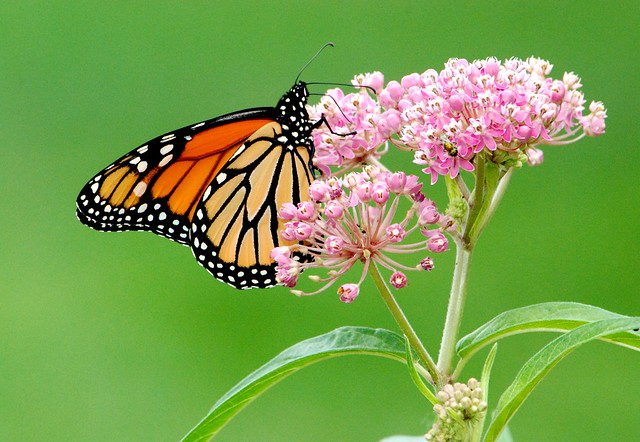
monarch butterfly on milkweed; photograph by Jim Hudgins, USFWS

Lalk and colleagues studied the relationships between individual species of invasive woody plants and the full range of arthropod feeding guilds – pollinators, herbivores, twig and stem borers, leaf litter and soil organisms. They decry the absence of data on the complex interactions between invasive woody plants and arthropod communities at a time when invasive shrubs and trees are so widespread and causing considerable ecological damage. (See the blog for their specific research recommendations.)

Nor is the impact of non-native plants on insect fauna limited to North America. Outhwaite et al. found that the combination of climate warming and intensive agriculture is associated with reductions of almost 50% in the abundance and 27% in the number of species within insect assemblages relative to levels in less-disturbed habitats with lower rates of historical climate warming. These patterns were particularly clear in the tropics (perhaps partially because of the longer history of intensive agriculture in temperate zones). They found that high availability of nearby natural habitat (that is, native plants) can mitigate these reductions — but only in low-intensity agricultural systems.

Recognizing that plant diversity drives global patterns of insect invasion, Liebhold et al. (2023) compared various factors associated with numbers of invasive insect species in 44 land areas.They determined that the numbers of established non-native insect species are primarily driven by diversity of plants – both native and non-indigenous. Other factors, e.g., land area, latitude, climate, and insularity, strongly affect plant diversity; thus they influence insect diversity as a secondary impact. When I blogged about this study, I noted that the article appeared more than four years earlier, but has apparently had little influence on either policy formulation governing plant introductions or pest risk analysis applied to insects or pathogens that might be introduced. I suggested that we need a separate analysis of whether fungi, oomycetes, nematodes, and other pathogens show the same association with plant diversity in the receiving environment.

Studies of plant-insect relationships continue to be published.  I welcome this!

Bonnamour et al. (2023) builds on the earlier studies. They also found that the presence of non-native plant species was a better predictor of insect invasions than such more widely discussed socioeconomic variables as trade volumes generally or even trade in plant products. However, detection of the associated insect invasions occurs years after detection of the plant invasions. Indeed, numbers of established non-native insect species corresponded more closely to plant introduction volumes in 1900 than current or recent import volumes.

Bonnamour et al. note that while the insect taxa that respond most directly to the non-native plant diversity are those that rely on those plants as hosts, pollinators, and plant visitors, over time those non-native herbaceous insects support introduced predators and parasites also.

Because of the “invasion debt” associated with that lag, Bonnamour et al. estimate that newly detected insect invasions will increase by 35% worldwide as a result of only recent plant introductions. They differentiate this “invasion debt” from “future invasions”, meaning the actual introduction of additional species resulting from future trade activities.

The model developed by Bonnamour et al. points to the highest numbers of newly introduced insect species occurring in areas with less capacity to deal with bioinvasions. Thus, the Afrotropics are anticipated to receive 869 new insect species, or a 10-fold increase over the number currently known to be established in the region. The Neotropics are projected to be invaded by 809 insect species, also a 10-fold increase. The Indomalayan region will probably detect 776 new insect species, a startling 20-fold increase. In reality, the “invasion debt” might not be quite this severe, since – as Bonnamour et al. note several times – the low numbers of introduced insects currently reported for these tropical regions probably partially reflect limited sampling. They note that already a high proportion of insect species intercepted by biosecurity services on imports arriving from Africa and South America are not yet recorded as established in the exporting regions.

Although both the European Palearctic and Australasia have already received many non-native insect species, their “invasion debt” is relatively high: 417 species for Europe, 317 species for Australasia.

The Neotropics are expected to be the greatest source of insect invasions in the future (904 exported species), followed by the European Palearctic (732 species).

Bonnamour et al. did not include non-native plant species used in agriculture, forestry, or ornamental horticulture. As noted above, these widespread deliberate plantings also affect insect fauna and higher trophic layers.

The greatest number of recorded insect introductions so far are in the Nearctic, Oceania (primarily Hawaii), Europe, and Australasia. While this imbalance is probably caused in part by the significantly limited sampling of non-native insect species in the Asian Palearctic and tropics, it is also true that these regions have received the majority of plant introductions through 1900. This factor has changed in the century since then; many non-native plant species have been recorded in the Afrotropics, Oceania, and Asia.

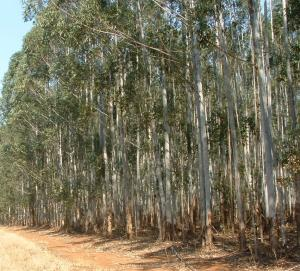
Eucalyptus plantation in Kwa-Zulu-Natal, South Africa; Kwa-Zulu-Natal Dept. of Transportation

Bonnamour et al. offer several potential explanations for the lag in detecting introduced insects compared to detecting introduced plants. First, it might be necessary for non-native host plants to reach a threshold of abundance before the associated insects are able to establish and spread. Second, reaching that threshold might require repeated introductions of the insect’s host plant species. Third, since only some of the imported plants are transporting insects, repeated imports of host plants might be necessary for the insect to achieve sufficient numbers to establish. Fourth, while their analysis included all non-native insect species, only some insect feeding guilds – herbivores and pollinators – are probably directly facilitated by introduced host plants. Fifth, plant species’ presence tends to be more quickly recorded than insects’ presence. Indeed, MacLaughlin et al. reported a median delay of 80 years between establishment and discovery of plant-feeding Hemiptera. This suggests that the actual time lag between plant and insect establishments might be shorter than the period discussed in Bonnamour et al.

Many insects from the European Palearctic have been introduced to the Nearctic; fewer insects have been introduced in the opposite direction. There is no consensus on the explanation. Thirty years ago Mattson et al. argued that there might be fewer niches for non-native insects in Europe due to the lower host plant diversity in this region caused by the Pleistocene/Holocene glaciations. On the other hand, more plant species from the European Palearctic to the Nearctic than the opposite.

Bonnamour et al. call for further research on:

1) time lags at the scale of individual insect species with their host plants.

2) effects of non-native plants used in agriculture, forestry, or ornamental horticulture.  

3) whether time lags between plant and insect invasions vary among taxonomic groups, feeding guilds, or among regions.

4) effect of non-native plant abundance, rather than just species richness, on non-native insect establishment.

Recommendations

Writers about interactions of non-native plant species and insect introductions make a common plea: limit the introduction and spread of non-native plants in order to prevent future invasions of both plants and insects. Bonnamour et al. suggest including the risk of insect introductions in plant invasion risk screening tools. Earlier, the Tallamy and Lalk teams called for ending widespread planting of non-native plants.

USDA Secretary Tom Vilsack

Will policy-makers accept this advice?

I believe that these same interaction of plant host and “pest” introductions presumably applies to pathogens, too. I reiterate my frequent complaint that regulators have not responded to two or more decades of criticism of the failures of the international phytosanitary system re: insect and pathogen introductions via the international nursery trade. Examples include Brasier 2008; Liebhold el. al. 2012; Santini et al. 2013; Roy et al. 2014; Eschen et al. 2015; Jung et al. 2015; Meurisse et al. 2019; O’Hanlon et al. 2021.

As I have said earlier, I appreciate that some scientists are trying to reduce scientific uncertainty about the invasive potential of pathogens native to regions other than North America; I refer here to Jiri Hulcr (see Li et al.), Mech, and Schultz. Many more such studies are needed, addressing potential impacts on a wider variety of North American host trees and shrubs.

The late (& very much lamented!) Gary Lovett of the Cary Institute had advocated halting imports of plants that are congenerics of important North American tree species, in order to minimize the risk that pests that damage those genera will be introduced.

In January I suggested that at the global level we need:

  1. National agricultural agencies, stakeholders, FAO & International Plant Protection Convention (IPPC) should consider amending the IPPC requirement that scientists identify a disease’s causal agents before regulating it. Experience shows that this policy virtually guarantees that pathogens will continue to enter, establish, & damage natural and agricultural environments.
  2. National governments & FAO / IPPC should fund greatly expanded research to identify microbes resident in regions that are important sources of origin for traded plants, vulnerability of hosts in importing countries, and new technologies for detecting pathogens (e.g., molecular tools, volatile organic compounds [VOCs]).
  3. Researchers & agencies should expand international “sentinel plants” networks; incorporate data from forestry plantations, urban plantings, etc. of non-native trees.
  4. NPPOs should adopt regulations that apply the “systems approach” or HACCP programs outlined in ISPM#36. I had discussed these approaches in my Fading Forests III report – link at end of this blog.)

I suggested further that Americans need to

  1. Evaluate the efficacy of current regulations – that is, implementing NAPPRA & Q-37 revision. This evaluation should be based on AQIM data, not port interception data. It should include arthropods, fungal pathogens, oomycetes, bacteria, viruses, nematodes. It should include threats to U.S. tropical islands (Hawai`i, Puerto Rico, Guam, etc.) which are centers of plant endemism.
  2. Apply existing programs (e.g., NAPPRA, Clean Stock Network, post-entry quarantine) to strictly regulate trade in plant taxa most likely to transport pests that threaten our native plants; e.g., plants belonging to genera shared between North American trees & plants on other continents.
  3. Recognize that plant nurseries are incubators for microbial growth, hybridization, and evolution; require nurseries to adopt sanitary operation procedures regardless of whether they sell in inter-state or intra-state commerce

SOURCES

Bonnamour, A., R.E. Blake, A.M. Liebhold, H.F. Nahrung, A. Roques, R.M. Turner, T. Yamanaka, and C. Bertelsmeier. 2023. Historical plant intros predict current insect invasions. PNAS 2023 Vol. 120 No. 24 e2221826120 https://doi.org/10.1073/pnas.2221826120 

Burghardt, K. T., D. W. Tallamy, C. Philips, and K. J. Shropshire. 2010. Non-native plants reduce abundance, richness, and host specialization in lepidopteran communities. Ecosphere 1(5):art11. doi:10.1890/ES10-00032.

Lalk, S. J. Hartshorn, and D.R. Coyle. 2021. IAS Woody Plants and Their Effects on Arthropods in the US: Challenges and Opportunities. Annals of the Entomological Society of America, 114(2), 2021, 192–205 doi: 10.1093/aesa/saaa054

Li, Y., C. Bateman, J. Skelton, B. Wang, A. Black, Y-T. Huang, A. Gonzalez, M.A. Jusino, Z.J. Nolen, S. Freeman, Z. Mendel, C-Y. Chen, H-F. Li, M. Kolařík, M. Knížek, J-H. Park, W. Sittichaya, T-H.

Pham, S. Itoo, M. Torii, L. Gao, A.J. Johnson, M. Lur, J. Sun, Z. Zhang, D.C. Adams, J. Hulcr. 2022. Pre-invasion assessment of exotic bark beetle-vectored fungi to detect tree-killing pathogens. https://apsjournals.apsnet.org/doi/full/10.1094/PHYTO-01-21-0041-R

Liebhold, A.M., E.G. Brockerhoff, L.J. Garrett, J.L. Parke, and K.O. Britton. 2012. Live Plant Imports: the Major Pathway for Forest Insect and Pathogen Invasions of the US. www.frontiersinecology.org

Liebhold, A.M., T. Yamanaka, A. Roques, S. August, S.L. Chown, E.G. Brockerhoff & P. Pyšek. 2018. Plant diversity drives global patterns of insect invasions. Sci Rep 8, 12095 (2018). https://doi.org/10.1038/s41598-018-30605-4

MacLachlan, M.J., A. M. Liebhold, T. Yamanaka, M. R. Springborn. 2022. Hidden patterns of insect establishment risk revealed from two centuries of alien species discoveries. Sci. Adv. 7, eabj1012 (2021).

Mattson, W. J., P. Niemela, I. Millers, and Y. Ingauazo.  1994. Immigrant phytophagous insects on woody plants in the United States and Canada: an annotated list.  USDA For. Ser. Gen. Tech. Rep. NC-169, 27 pp.

Mech, A.M., K.A. Thomas, T.D. Marisco, D.A. Herms, C.R. Allen, M.P. Ayres, K.J.K. Gandhi, J. Gurevitch, N.P. Havill, R.A. Hufbauer, A.M. Liebhold, K.F. Raffa, A.N. Schulz, D.R. Uden, and P.C. Tobin. 2019. Evolutionary history predicts high-impact invasions by herbivorous insects. Ecol Evol. 2019 Nov; 9(21): 12216-12230.,

Outhwaite, C.L., P. McCann, and T. Newbold. 2022.  Agriculture and climate change are shaping insect biodiversity worldwide. Nature 605 97-192 (2022)  https://www.nature.com/articles/s41586-022-04644-x

Richard, M., D.W. Tallamy and A.B. Mitchell. 2019. Intro plants reduce species interactions. Biol Invasions https://doi.org/10.1007/s10530-018-1876-z

Schulz, A.N.,  A.M. Mech, M.P. Ayres, K. J. K. Gandhi, N.P. Havill, D.A. Herms, A.M. Hoover, R.A. Hufbauer, A.M. Liebhold, T.D. Marsico, K.F. Raffa, P.C. Tobin, D.R. Uden, K.A. Thomas. 2021. Predicting non-native insect impact: focusing on the trees to see the forest. Biological Invasions.

Tallamy, D.W., D.L. Narango and A.B. Mitchell. 2020. Ecological Entomology (2020), DOI: 10.1111/een.12973 Do NIS plants contribute to insect declines? Conservation Biology DOI: 10.1111/j.1523-1739.2009.01202.x

Uden, D.R, A.M. Mech, N.P. Havill, A.N. Schulz, M.P. Ayres, D.A. Herms, A.M. Hoover, K.J. K. Gandhi, R.A. Hufbauer, A.M. Liebhold, T.D. M., K.F. Raffa, K.A. Thomas, P.C. Tobin, C.R. Allen. 2023. Phylogenetic risk assessment is robust for forecasting the impact of European insects on North American conifers. Ecological Applications. 2023; 33:e2761.

Posted by Faith Campbell

We welcome comments that supplement or correct factual information, suggest new approaches, or promote thoughtful consideration. We post comments that disagree with us — but not those we judge to be not civil or inflammatory.

For a detailed discussion of the policies and practices that have allowed these pests to enter and spread – and that do not promote effective restoration strategies – review the Fading Forests report at http://treeimprovement.utk.edu/FadingForests.htm

or

www.fadingforests.org

Global Overview of Bioinvasion in Forests

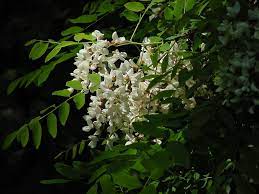
black locust – one of the most widespread invasive tree species on Earth; photo via Flickr

In recent years there has been an encouraging effort to examine bioinvasions writ large see earlier blogs re: costs of invasive species – here and here. One of these products is the Routledge Handbook of Biosecurity and Invasive Species (full citation at end of this blog). I have seen only the chapter on bioinvasion in forest ecosystems written by Sitzia et al. While they describe this situation around the globe, their examples are mostly from Europe.

Similar to other overviews, this article re-states the widely-accepted attribution of rising numbers of species introductions to globalization, especially trade. In so doing, Sitzia et al. assert that the solution is not to curtail trade and movement of people, but to improve scientific knowledge with the goal of strengthening biosecurity and control programs. As readers of this blog know, I have long advocated more aggressive application of stronger restrictions on the most high-risk pathways. Still, I applaud efforts to apply science to risk assessment.

Sitzia et al. attempt to provide a global perspective. They remind readers that all major forest ecosystems of Earth are undergoing significant change as a result of conversion to different land-uses; invasion by a wide range of non-native introduced species—including plants, insects, and mammals; and climate change. These change agents act individually and synergistically. Sitzia et al. give greater emphasis than other writers to managing the tree component of forests. They explain this focus by asserting that forest management could be either the major disturbance favoring spread of non-native species or, conversely, the only way to prevent further invasions. They explore these relationships with the goal of improving conservation of forest habitats.

Japanese stiltgrass invasion; photo by mightyjoepye via Flickr

Sitzia et al. focus first on plant invasions. They contend that – contrary to some expectations – plants can invade even dense forests despite competition for resources. They cite a recent assessment by Rejmánek & Richardson that identified 434 tree species that are invasive around Earth. Many of these species are from Asia, South America, Europe, and Australia. These non-native trees can drive not only changes in composition but also in conservation trajectories in natural forests. However, the example they cite, Japanese stilt grass (Microstegium vimineum) in the United States, is not a tree! Sitzia et al. note that in other cases it is difficult to separate the impacts of management decisions, native competitive species, and non-native species.

Sitzia et al. note that plant invasions might have a wide array of ecological impacts on forests. They attempt to distinguish between

  • “drivers” of environmental change – including those with such powerful effects that they call them “transformers”;  
  • “passengers” whose invasions are facilitated by other changes in ecosystem properties; and
  • “backseat drivers” that benefit from changes to ecosystem processes or properties and cause additional changes to native plant communities.

An example of the last is black locust (Robinia pseudoacacia). This North American tree has naturalized on all continents. It is a good example of the management complexities raised by conflicting views of an invasive species’ value, since it is used for timber, firewood, and honey production.

Sitzia et al. then consider invasions by plant pathogens. They say that these invasions are one of the main causes of decline or extirpations in tree populations. I applaud their explicit recognition that even when a host is not driven to extinction, the strong and sudden reduction in tree numbers produces significant changes in the impacted ecosystems.

American chestnut – not extinct but ecological role gone; photo by F.T. Campbell

Sitzia et al. contend that social and economic factors determine the likelihood of a species’ transportation and introduction. Specifically, global trade in plants for planting is widely recognized as being responsible for the majority of introductions. Introductions via this pathway are difficult to regulate because of the economic importance (and political clout) of the ornamental plants industry, large volumes of plants traded, rapid changes in varieties available, and multiple origins of trade. As noted above, the authors seek to resolve these challenges by improving the scientific knowledge guiding biosecurity and control programs. In the case of plant pathogens, they suggest adopting innovative molecular techniques to improve interception efficiency, esp. in the case of latent fungi in asymptomatic plants.

The likelihood that a pathogen transported to a new region will establish is determined by biogeographic and ecological factors. Like other recent studies, Sitzia et al. attempt to identify important factors. They name a large and confusing combination of pathogen- and host-specific traits and ecosystem conditions. These include the fungus’ virulence, host specificity, and modes of action, reproduction, and dispersal, as well as the host’s abundance, demography, and phytosociology. A key attribute is the non-native fungus’ ability to exploit micro-organism-insect interactions in the introduced range. (A separate study by Raffa et al. listed Dutch elm disease as an example of this phenomenon.)  I find it interesting that they also say that pathogens that attack both ornamental and forest trees spread faster. They do not discuss why this might be so. I suggest a possible explanation: the ornamental hosts are probably shipped over wide areas by the plant trade.

surviving elms in an urban environment; photo by F.T. Campbell

Sitzia et al. devote considerable attention to bioinvasions that involve symbiotic relationships between bark and ambrosia beetles and their associated fungi. These beetles are highly invasive and present high ecological risk in forest ecosystems. Since ambrosia beetle larvae feed on symbiotic fungi carried on and farmed by the adults inside the host trees, they are often polyphagous. Bark beetles feed on the tree host’s tissues directly, so they tend to develop in a more restricted number of hosts. Both can be transported in almost all kinds of wood products, where they are protected from environmental extremes and detection by inspectors. Sitzia et al. specify the usual suspects: wood packaging and plants for planting, as ideal pathways. These invasions threaten indigenous species by shifting the distribution and abundance of certain plants, altering habitats, and changing food supplies. The resulting damage to native forests induces severe alterations of the landscape and causes economic losses in tree plantations and managed forests. The latter losses are primarily in the high costs of eradication efforts – and their frequent failure.

Eucalyptus plantation in Kwa-Zulu-Natal, South Africa; photo by Kwa-Zulu-Natal Department of Transportation

Perhaps their greatest contribution is their warning about probable damage caused by invasive forest pests in tropical forests. (See an earlier blog about invasive pests in Africa.) Sitzia et al. believe that bark and ambrosia beetles introduced to tropical forests threaten to cause damage of the same magnitude as climate change and clear cutting, but there is little information about such introductions. Tropical forests are exposed to invading beetles in several ways:  

1) A long history of plant movement has occurred between tropical regions. Sitzia et al. contend that the same traits sought for commercial production contribute to risk of invasion.

2) Logging and conversion of tropical forests into plantation forestry and agriculture entails movement of potentially invasive plants to new areas. Canopies, understory plant communities, and soils are all disturbed. Seeds, insects, and pathogens can be introduced via contaminated equipment.

3) Less developed nations are often at a disadvantage in managing potential invasion. Resources may be fewer, competing priorities more compelling, or potential threats less obvious.

Sitzia et al. call for development of invasive species management strategies that are relevant to and realistic for less developed countries. These strategies must account for interactions between non-native species and other aspects of global environmental change. Professional foresters have a role here. One clear need is to set out practices for dealing with conflicts between actors driven by contrasting forestry and conservation interests. These approaches should incorporate the goals of shielding protected areas, habitat types and species from bioinvasion risk. Sitzia et al. also discuss how to address the fact that many widely used forestry trees are invasive. (See my earlier blog about pines planted in New Zealand.)

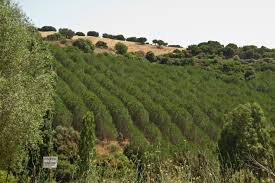
planted forest in Sardinia, Italy; photo by Torvlag via Flickr

In Europe, bark beetle invasions have damaged an estimated ~124 M m2 between 1958 and 2001. Sitzia et al. report that the introduction rate of non-native scolytins has increased sharply. As in the US, many are from Asia. They expect this trend to increase in the future, following rising global trade and climate change. Southern – Mediterranean – Europe is especially vulnerable. The region has great habitat diversity; a large number of potential host trees; and the climate is dry and warm with mild winters. The region has a legacy of widespread planting of non-native trees which are now important components of the region’s economy, history and culture. These include a significant number of tree species that are controversial because they are – or appear to be – invasive. Thus, new problems related to invasive plants are likely to emerge.

Noting that different species and invasion stages require different action, Sitzia et al. point to forest planning as an important tool. Again the discussion centers on Europe. Individual states set forest policies. Two complications are the facts that nearly half of European forests are privately owned; and stakeholders differ in their understanding of the concept of “sustainability”. Does it mean ‘sustainable yield’ of timber? Or providing multiple goods and services? Or sustaining evolution of forest ecosystems with restrictions on the use of non-native species? Resolving these issues requires engagement of all the stakeholders.

Sitzia et al. say there has recently been progress. The Council of Europe issued a voluntary Code of Conduct on Invasive Alien Trees in 2017 that provides guidelines on key pathways. A workshop in 2019 elaborated global guidelines for the sustainable use of non-native tree species, based on the Bern Convention Code of Conduct on Invasive Alien Trees. The workshop issued eight recommendations:

  • Use native trees, or non-invasive non-native trees;
  • Comply with international, national, and regional regulations concerning non-native trees;
  • Be aware of the risk of bioinvasion and consider global change trends;
  • Design and adopt tailored practices for plantation site selection and silvicultural management;
  • Promote and implement early detection and rapid response programs;
  • Design and adopt practices for invasive non-native tree control, habitat restoration, and for dealing with highly modified ecosystems;
  • Engage with stakeholders on the risks posed by invasive NIS trees, the impacts caused, and the options for management; and
  • Develop and support global networks, collaborative research, and information sharing on native and non-native trees.

SOURCE

Sitzia, T., T. Campagnaro, G. Brundu, M. Faccoli, A. Santini and B.L. Webber. 2021 Forest Ecosystems. in Barker, K. and R.A. Francis. Routledge Handbook of Biosecurity and Invasive Species. ISBN 9780367763213

Posted by Faith Campbell

We welcome comments that supplement or correct factual information, suggest new approaches, or promote thoughtful consideration. We post comments that disagree with us — but not those we judge to be not civil or inflammatory.

For a detailed discussion of the policies and practices that have allowed these pests to enter and spread – and that do not promote effective restoration strategies – review the Fading Forests report at http://treeimprovement.utk.edu/FadingForests.htm

or

www.fadingforests.org

Analysis of Methods to Predict a New Pest’s Invasiveness: Which Work Best Under What Conditions?

spotted lanternfly – could we have predicted its arrival? Its Impacts? Photo by Holly Ragusa, Pennsylvania Department of Agriculture

As readers of my blogs know, I wish to prevent introduction and spread of tree-killing insects and pathogens and advocate tighter and more pro-active regulation as the most promising approach. I cannot claim to have had great success.

Of course, international trade agreements have powerful defenders and the benefit of inertia. And in any case, prevention will be enhanced by improving the accuracy of predictions as to which specific pests are likely to cause significant damage, which are likely to have little impact in a naïve ecosystem. This knowledge would allow countries to can then focus their prevention, containment, and eradication efforts on this smaller number of organisms.

I applaud a group of eminent forest entomologists and pathologists’ recent analysis of widely-used predictive methods’ efficacy [see Raffa et al.; full citation at the end of this blog]. I am particularly glad that they have included pathogens, not just insects. See earlier blogs here, here, here, and here.

I review their findings in some detail in order to demonstrate their importance. National and international phytosanitary agencies need to incorporate this information and adopt new strategies to carry out their duty to protect Earth’s forests from devastation by introduced pests.

Raffa et al. note the usual challenges to plant health officials:

  • the high volumes of international trade that can transport tree-killing pests;
  • the high diversity of possible pest taxa, exacerbated by the lack of knowledge about many of them, especially pathogens;
  • the restrictions on precautionary approaches imposed by the World Trade Organization’s Sanitary and Phytosanitary Agreement (the international phytosanitary system) – here, here, and here.   
  • the high cost and frequent failure of  control efforts.
ash trees killed by emerald ash borer; Mattawoman Creek, Maryland; photo by Leslie A. Brice

The Four Approaches to Predicting Damaging Invaders

At present, four approaches are widely used to predict behavior of a species introduced to a naïve environment:

(1) pest status of the organism in its native or previously invaded regions;

(2) statistical patterns of traits and gene sequences associated with high-impact pests;

(3) sentinel plantings to expose trees to novel pests; and

(4) laboratory tests of detached plant parts or seedlings under controlled conditions.

Raffa et al. first identify each method’s underlying assumptions, then discuss the strengths and weaknesses of each approach for addressing three categories of biological factors that they believe explain why some organisms that are relatively benign, sparse, or unknown in their native region become highly damaging in naïve regions:

(1) the lack of effective natural enemies in the new region compared with the community of predators, parasites, pathogens, and competitors in the historical region (i.e., the loss of top-down control);

(2) the lack of evolutionary adaptation by naïve trees in the new region compared with long-term native interactions that select for effective defenses or tolerance (i.e., the loss of bottom-up control); and

(3) novel insect–microbe associations formed in invaded regions in which one or both members of the complex are non-native, resulting in increased vectoring of or infection courts for disease-causing pathogens (i.e., novel symbioses). I summarize these findings in some detail later in this blog.

Most important, Raffa et al. say none of these four predictive approaches can, by itself, provide a sufficiently high level of combined precision and generality to be useful in predictions. Therefore, Raffa et al. outline a framework for applying the strengths of the several approaches (see Figure 4). The framework can also be updated to address the challenges posed by global climate change.

Raffa et al. repeatedly note that lack of information about pests undercuts evaluation efforts. This is especially true for pathogens and the processes determine which microbes that are innocuous symbionts in co-evolved hosts become damaging pathogens when introduced to naïve hosts in new ecosystems.

Findings in Brief

Raffa et al. found that:

  1. Previous pest history in invaded environments provides greater predictive power than population dynamics in the organism’s native regions.
  2. Models comparing pest–host interactions across taxa are more predictive when they incorporate phylogenies of both pest and host. Traits better predict a pest’s likelihood of transport and establishment than its impact.
  3. Sentinel plantings are most applicable for pests that are not primarily limited to older trees. Ex patria sentinel plantations are more likely to detect pest species liberated by loss of bottom-up controls than top-down controls, i.e., most fungi and woodborers but not insect defoliators.
  4. Laboratory tests are most promising for pest species whose performance on seedlings and detached parts (e.g., leaves) accurately reflects their performance on live mature trees. They are thus better at predicting impacts of insect folivores and sap feeders than woodborers or vascular wilt pathogens.

Raffa et al. also ask some fundamental questions:

  • How realistic is it to expect reliable predictions, given the uniqueness of each biotic system?
  • When should negative data – lack of data showing a species is invasive – justify decisions not to act? Especially when there are so many data gaps?  
  • Who should make decisions about whether to act? How should the varying values of different social sectors be incorporated into decisions?

Raffa et al. identify critical areas for improved understanding:

1) Statistical tools and estimates of sample size needed for reliable forecasts by the various approaches.

2) Reliability, breadth, and efficiency of bioassays.

3) Processes by which some microorganisms transition from saprophytic to pathogenic lifestyles.

4) Procedures for scaling up results from bioassays and plantings to ecosystem- and landscape-level dynamics.

5) Targetting and synergizing predictive approaches and methods for more rapid and complete information transfer across jurisdictional boundaries.

I am struck by two generalizations:

  1. While most introduced forest insects are first detected in urban areas, introduced pathogens are more commonly detected in forests. I suggest that more intensive surveys of urban trees and “sentinel gardens” might result in detection of pathogens before they reach the forest.
  2. Enemy release is rarely documented as the primary basis for pathogens that cause little or no impact in their native region but become damaging in an introduced region. Enemy release appears generally more important with folivores and sap feeders than with woodborers.

Detailed Evaluation of Predictive Methodologies

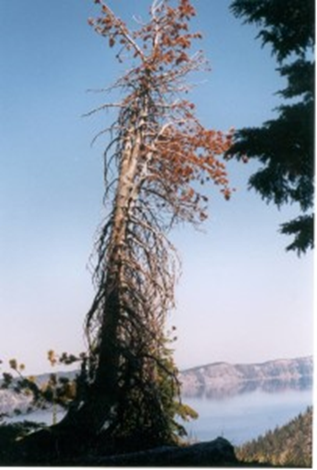
white pine blister rust-killed whitebark pine at Crater Lake National Park; photo by F.T. Campbell
  1. Empirical assessment of pest status in previously occupied habitats

This is the most commonly applied method now, partly because it seems to follow logically from the World Trade Organization’s requirement that national governments provide scientific evidence of risk to justify adopting phytosanitary measures. The underlying assumption is that species that have caused damage in either their native or previously invaded ranges are those most likely to cause damage if introduced elsewhere. The corollary is that species that have not previously caused damage are unlikely to cause significant harm in a new ecosystem.

As noted above, Raffa et al. found that a species’ damaging activity in a previously invaded area can help indicate likely pest status in other regions. However, its status — pest or not — in its native range is not predictive. See Table 1 for numerous examples of both pests and non-pests. For example, Lymantria dispar has proved damaging in both native and introduced ranges. Ips typographus has not invaded new territories despite being damaging in its nature range and frequently being transported in wood. White pine blister rust is not an important mortality source on native species in its native range but is extremely damaging in North America.

Raffa et al. also note the importance of whether effective detection and management strategies exist in determining a pest’s impact ranking. Insects are more easily detected than pathogens; some respond to long distance attractants such as pheromones or plant volatiles. These methods can include insect vectors of damaging pathogens.

Re: the difficulty of assessing insect–microbe associations, they name several examples of symbionts which have caused widespread damage to naïve hosts: laurel wilt in North America; Sirex noctilio and Amylosterum areolatum around the Southern Hemisphere; Monochamus spp. and Bursaphelenchus xylophilus in Asian and European pines. Dutch elm disease illustrates a widespread epidemic caused by replacement of a nonaggressive native microorganism in an existing association with a non-native pathogen. Beech bark disease resulted from independent co-occurrence of an otherwise harmless fungus and harmless insect.

In sum, “watch” lists are disappointingly poor at identifying species that are largely benign in their native region but become pests when transported to naive ecosystems. Many of our most damaging pests are in this group. Raffa et al. note that this is not surprising because naïve systems lack the very powerful top-down, bottom-up, and lateral forces that suppress pests’ populations in co-adapted system. Countries often try to overcome this uncertainty by shifting to pathway mitigation and other “horizontal measures” – as I have often advocated. Raffa et al. emphasize that such approaches are costly to implement and constrain free trade.

  • Predictive models based on traits of pests and hosts

Predictive models provide the most all-encompassing and logistically adaptable of the forecasting approaches. Typically, models consider various components of risk, e.g. probability of transport, probability of establishment, anticipated level of damage.

The overriding assumption is that patterns emerging from either previous invasions or basic biological relationships can provide reliable predictions of impacts that might result from future invasions. However, Raffa et al. note that the models’ reliability and specificity are hampered by small sample sizes and data gaps.

They found that specific life history traits have proved to be more predictive of insect — and to a lesser extent fungal – establishment than of impact. Earlier studies [Mech et al. (2019) and Schulz et al. (2021)] found no association between life history traits and impacts for either conifer-feeding or angiosperm-feeding insects.   

Some traits of pathogens have been linked to invasion success, e.g., dispersal distance, type of reproduction, spore characteristics, and some temperature characteristics for growth and parasitic specialization. Raffa et al. say that root-infecting oomycete pathogens have a broader host range and invasive range than those that attack aboveground parts. Oomycetes that grow faster and produce thick-walled resting structures have broader host ranges. Phenotypic plasticity is also important. Raffa et al. say that those organisms that require alternate hosts can be limited in their ability to establish. However, they don’t mention that – once introduced — they can have huge impacts, as the example of white pine blister rust illustrates.

Raffa et al. say that phylogenetic distance of native and introduced hosts is more predictive for foliar ascomycetes than for basidiomycete and oomycete pathogens with broad host ranges. They suggest predictive ability can be improved by incorporating other factors, e.g., feeding guild. They note that the findings of Mech et al. and Schulz et al. (see links above) show the importance of both host associations with pests and phylogenetic relationships between native and naïve hosts for predicting impacts.

Geography is important: while there is a greater chance of Northern Hemisphere pests invading in the same hemisphere, this is not universal, as shown by Sirex (of course, the woodwasp is attacking hosts native to the Northern Hemisphere – pines).

Genomic analyses have been used more often with pathogens. There are two general approaches:

trees killed by chestnut blight; USDA Forest Service photo

1) Comparing the genomes of different species to identify the determinants associated with certain traits or lifestyles. For example, a post hoc analysis of the genus Cryphonectria could distinguish nonpathogenic species from the chestnut blight fungus C. parasitica.

2) Using genomic variation within a single species to identify markers associated with traits. Genome sequencing of a worldwide collection of the pathogens that cause Dutch elm disease revealed that some genome regions that originated from hybridization between fungal species contained genes involved in host–pathogen interactions and reproduction, such as enhanced pathogenicity and growth rate.

Raffa et al. point out that the growth of databases will facilitate genomic approaches to identify important invasiveness and impact traits, such as sporulation, sexual reproduction, and host specificity.

At present, Raffa et al. believe that models based on traits, phylogeny, and genomics offer potential for a rapid first pass to predicting levels of pest damage. However, assessors must first have a list of candidate pest species and detailed information about each. Plus there is still too much uncertainty to rely exclusively on the models.

  • Sentinel trees

Raffa et al. say that sentinel trees can potentially provide the most direct tests of tree susceptibility and the putative impact of introduced pests. Three types of plantations offer different types of information:

  1. In patria sentinels [= sentinel nurseries] = native trees strategically located in an exporting country and exposed to native pests. The intention is to detect problematic hitchhikers before they are transported to a new region. These plantings are useful for commodity risk assessment.  However, all the taxa associated with the sentinel trees must be identified to ascertain whether they can become a threat to plants in the new ecosystem.
  • Ex patria plantings [= sentinel plantations] = trees from an importing country are planted in an exporting country with the aim of assessing new pest–host associations. These plantings are most useful for identifying threats that arise primarily from lack of coevolved host tree resistance (i.e., loss of bottom-up control). They cannot predict the effects of lack of co-adapted natural enemies in the importing region (i.e., loss of top-down control). Plantings are thus more helpful in predicting impacts by pathogens and woodborers than folivores and sap feeders. However, ex patria plantings cannot predict pest problems that arise from novel microbial associations, or increased susceptibility to native pests.
  • Trees in botanic gardens, arboreta, large-scale plantations, and urban parks and yards can provide information on both existing native-to-native associations and new pest–host associations. Analyzing these plantings can be useful for studying host-shift events and novel pest–host associations. Again, all the taxa associated with the sentinel trees must be identified to ascertain whether they can become a threat to plants in the new ecosystem. Monitoring these planting have detected previously unknown plant–host associations (such as polyphagous shot hole borer and tree species in California and South Africa), and entirely unknown taxa. Pest surveillance in urban areas can also facilitate early detection, thereby strengthening the possibility of eradication.
PSHB attack on Erythrina caffri; photo by Paap

Sentinel tree programs are limited by 1) small sample sizes; 2) immature trees; and 3) the fact that trees planted outside their native range might not be accurate surrogates for the same species in native conditions. Some of these issues can be reduced by establishing reciprocal international agreements among trading partners; the International Plant Sentinel Network helps to coordinate these collaborations.

Botanic gardens and arboreta have the advantage of containing adult trees; this is important because pest impacts can vary between sapling to mature trees. However, they probably contain only a few individuals per plant species, usually composed of narrow genetic base.

Large-scale plantations of exotic tree species, e.g., exotic commercial plantations, comprise large numbers of trees planted over large areas with varied environmental conditions, and they stand for longer times. Still, they commonly have a narrow genetic base that might not be representative of wild native plants. Also, only a few species are represented in commercial plantations.

Raffa et al. report that experience in commercial Eucalyptus plantations in Brazil alerted Australia to the threat from myrtle rust (Austropuccinia psidii). However, in an earlier blog I showed that Australia did not act quickly based on this knowledge.

  • Laboratory assays using plant parts or seedlings

Laboratory tests artificially challenge seedlings, plant parts (e.g., leaves, branches, logs), or other forms of germplasm of potential hosts to determine their vulnerability. These tests are potentially powerful because they are amenable to experimental control, standardized challenge, and replication. They also avoid many of the logistical constraints of sentinel plantings. Finally, they can be performed relatively rapidly.

The key underlying assumption is that results can be extrapolated to predict injury to live, mature trees under natural conditions. The validity of this assumption depends on the degree to which exogenous biotic and abiotic stressors affect the outcomes. Raffa et al. report that environmental stressors tend to more strongly influence tree interactions with woodborers than folivores.

These assumption are more likely to be met by pathogens that infect shoots or young tissues, such as the myrtle rust pathogen Austropuccinia psidii, ash dieback pathogen Hymenoscyphus fraxineus, and the sudden oak death pathogen Phytophthora ramorum

The host range of and relative susceptibilities to insects is usually tested on twigs bearing foliage for defoliators and sap suckers; bark disks, logs, or branches for bark beetles, ambrosia beetles, and wood borers. These methods do not work as well for bark beetle species that attack mature trees in which active induced responses and transport of resins through established ducts are critically important.

The major advantages of laboratory tests is that they readily incorporate both positive (known hosts) and negative (known nonhosts) controls, can provide a range of environmental conditions, can be performed relatively rapidly, are statistically replicable at relatively low costs, and can test multiple host species and genotypes simultaneously. The ability to statistically replicate a multiplicity of environmental combinations and species is particularly valuable for evaluating relationships under anticipated future climatic conditions.

However, there are several important limitations. In testing pathogens, environmental conditions required for infection are often unknown. Choice of non-conducive conditions might result in false negatives; choice of too-conducive conditions might result in exaggerating the likelihood of infection. Results of tests of insect pests can vary depending on whether the insects are allowed to choose among potential host plants. Other complications arise when the pest being evaluated requires alternate hosts. In addition, seedlings are not always good surrogates for mature trees – especially as regards pathogens and bark, wood-boring and root collar insects. Folivores are less affected by conditions. Plus, the costs can be significant since they involve maintaining a relatively large number of viable and virulent pathogen cultures, insects, and candidate trees in quarantine.

Finally, although lab assays are well suited for identifying new host associations, results might not be amenable to scaling up to predict a pest’s population-level performance in a new ecosystem. Scaling up is especially problematic for those insect species whose dynamics are strongly affected by trophic interactions.

SOURCE

Raffa, K.F., E.G. Brockerhoff, J-C Gregoire, R.C. Hamelin, A.M. Liebhold, A. Santini, R.C. Venette, and M.J. Wingfield. 2023. Approaches to Forecasting Damage by Invasive Forest P&P: A Cross-Assessment.  BioScience Vol. 73 No. 2: 85–111    https://doi.org/10.1093/biosci/biac108  

Posted by Faith Campbell

We welcome comments that supplement or correct factual information, suggest new approaches, or promote thoughtful consideration. We post comments that disagree with us — but not those we judge to be not civil or inflammatory.

For a detailed discussion of the policies and practices that have allowed these pests to enter and spread – and that do not promote effective restoration strategies – review the Fading Forests report at http://treeimprovement.utk.edu/FadingForests.htm

or

www.fadingforests.org

Plant Diversity & Invading Insects: Key Relationship has Policy Applications

spotted lanternfly; photo by Stephen Ausmus, USDA; establishment facilitated by extent of invasion by its preferred host, Ailanthus

Seven coauthors (full citation at end of blog) compared various factors associated with numbers of invasive insect species in 44 land areas.These ranged from small oceanic islands to entire continents in different world regions, Liebhold et al. determined that the numbers of established non-native insect species are primarily driven by diversity of plants, including both native and non-indigenous. Other factors, e.g., land area, latitude, climate, and insularity, strongly affect plant diversity. Through this mechanism these factors affect insect diversity as a secondary impact.

Seven coauthors (full citation at end of blog) compared various factors associated with numbers of invasive insect species in 44 land areas.These ranged from small oceanic islands to entire continents in different world regions, Liebhold et al. determined that the numbers of established non-native insect species are primarily driven by diversity of plants, including both native and non-indigenous. Other factors, e.g., land area, latitude, climate, and insularity, strongly affect plant diversity. Through this mechanism these factors affect insect diversity as a secondary impact.

At large spatial scales [greater than 10 km2], regions supporting more diverse plant communities offer greater opportunities for herbivore colonization. Thus, plant diversity promotes invasion through the “facilitation effect”. Since most insects – including most of those introduced to naïve ecosystems – are herbivores, a greater number of possible foods is a clear advantage. Those insects that prey on herbivores benefit by plant diversity indirectly.

Non-native coral tree, Erythrina, in Hawai`i; photo by Forrest and Kim Starr; did wide planting of exotic Erythrina facilitate invasion by Erythrina gall wasp?

At smaller spatial scales, plant diversity might impair the ability of insects to locate hosts because of the “dilution effect”. I have been asking for decades why so few of the Eurasian insects established in eastern North America have not also established along the Pacific coast from Oregon into British Columbia. The region has a plant-friendly climate and almost every plant species from temperate climates is grown there in cultivation. Perhaps the non-native plants – while numerous enough to become invaders themselves – are still sufficiently scarce or dispersed to impair introduced insects’ locating an familiar host?

According to the Smithsonian Institution, Hawai`i has approximately 2,499 taxa of flowering plants and 222 taxa of ferns and related groups. The native flora of the United States includes about 17,000 species of vascular plants; at least 3,800 non-native species of vascular plants are recorded as established outside cultivation. I don’t know how many non-native plant species are in cultivation.

horticultural viburnum invading riparian forest in Fairfax County, VA. photo by F.T. Campbell; did the widespread presence of many non-native viburnum species facilitate establishment of the viburnum leaf beetle?

I note that this article appeared more than four years ago. However, its important findings do not appear to have been integrated into either policy formulation governing plant introductions or pest risk analysis applied to insects or pathogens that might be introduced. (Indeed, we probably need a separate analysis of whether fungi, oomycetes, nematodes, and other pathogens show the same association with plant diversity in the receiving environment.)

How do we – government agencies, academics, conservation organizations, plant industry representatives — use this information to help curtail introductions of plant pests? Can it be integrated into APHIS’ NAPPRA process?

SOURCE

Liebhold, A.M., T. Yamanaka, A. Roques, S. August, S.L. Chown, E.G. Brockerhoff & P. Pyšek. 2018. Plant diversity drives global patterns of insect invasion. www.nature.com/scientificreports/

Posted by Faith Campbell

We welcome comments that supplement or correct factual information, suggest new approaches, or promote thoughtful consideration. We post comments that disagree with us — but not those we judge to be not civil or inflammatory.

For a detailed discussion of the policies and practices that have allowed these pests to enter and spread – and that do not promote effective restoration strategies – review the Fading Forests report at http://treeimprovement.utk.edu/FadingForests.htm

or

www.fadingforests.org

FY 23 Funding of Tree Pest Projects

Phytophthora ramorum-infected rhododendron plant; photo by Jennifer Parke, Oregon State University

APHIS has released the list of projects funded under §7721 of the Plant Protection Act in Fiscal Year 2023.  Projects funded under the Plant Pest and Disease Management and Disaster Prevention Program (PPDMDPP) are intend to strengthen the nation’s infrastructure for pest detection and surveillance, identification, threat mitigation, and safeguard the nursery production system.

APHIS has allocated $62.975 M to fund 322 projects in 48 states, Guam, & Puerto Rico. ~ $13.5 M has been reserved for responding to pest and plant health emergencies throughout the year. USDA is funding ~70% of the more than 460 PPDMDPP proposals submitted.

Funding by Goal Area

  • 1A – Enhance Plant Pest/Disease Analysis                               $2,057,174
  • 1S – Enhance Plant Pest/Disease Survey                                 $14,375,000
  • 2 – Target Domestic Inspection Activities at Vulnerable Points              $6,356,964
  • 3 – Pest Identification and Detection Technology Enhancement            $5,295,125
  • 4 – Safeguard Nursery Production                                                                 $2,079,119
  • 5 – Outreach and Education                                                                            $4,131,333
  • 6 – Enhance Mitigation Capabilities                                                             $13,875,775

By my calculation (subject to error!), the total for projects on forest pests is ~$6.5 M – or a little over 10% of the total. The top recipient was survey and management of sudden oak death: ~$700,000 for research at NORS-DUC and NCSU plus detection efforts in nurseries of 14 states. Other well-funded efforts were surveys for bark beetles and forest pests (projects in 14 states); surveys for Asian defoliators (projects in 14 states); and outreach programs targetting the spotted lanternfly (10 states, plus surveys in California).

Three states (Iowa, Kentucky and Maryland) received funding for surveys targetting thousand cankers disease of walnut; two states (Kentucky and Maine) obtained funding for outreach about the risk associated with firewood. Funding for the Nature Conservancy’s “Don’t Move Firewood” campaign appears under the home state of its leader, Montana.

Massachusetts obtained funding for outreach re: Asian longhorned beetle. Ohio State received funding for developing a risk map for beech leaf disease.

Ten states received funding for no forest pest projects; I don’t know whether they sought funding for this purpose. These states are Arizona, Colorado, Florida, Hawai`i, Idaho, Minnesota, Nebraska, New Mexico, North Dakota, and Puerto Rico. The “National” funding category also contained no forest pest projects.

Looking at the overall funding level might give a somewhat skewed impression because several of the projects with total funding of ~ $500,000 are actually carried out by USDA agencies. These awards are listed under the state in which the USDA facility happens to be located. Nearly half this money ($213,000) goes to a project by an Agriculture Research Service unit in Delaware to study the efficacy of the biocontrol targetting emerald ash borer.  Another $105,588 is allocated to detection of the SOD pathogen (Phytophthora ramorum) in irrigation water, undertaken – I think – at the ARS quarantine facility in Frederick, Maryland. A smaller project at a USFS research facility in Connecticut is studying egg diapause in the spotted lanternfly. The Delaware ARS unit is also pursuing biological control of the red-necked longhorn beetle (RNB) Aromia bungi, which attacks primarily stone fruits. Native to China and other countries in Asia, RNB has been intercepted in wood packaging by the U.S. and Europe; it has become established in Italy and Japan [Kim Alan Hoelmer, ARS, pers. comm.] The APHIS lab in Massachusetts is developing a light trap for detection of the Asian spongy moths Lymantria dispar.

I am intrigued that two states (Mississippi and Nevada) are conducting “palm commodity” surveys. Palms are important components of the environment in some states – although I am not certain these are the two most important!

As you might remember, I am also interested in some invaders other than forest pests. Washington has obtained $998,000 to support two projects integral to its efforts to find and eradicate the Asian (or Northern) Giant hornet. Oregon has obtained funding to carry out a survey for these hornets.  

Cactus moth larvae feeding on prickly pear cactus; photo by Doug Beckers, via Flickr

I rejoice to see that the Florida Department of Agriculture continues efforts to deploy biocontrol agents targetting the cactus moth. The Agriculture Research Service is evaluating the establishment of biocontrol agents released to counter two highly invasive plants. Re: Brazilian peppertree, I don’t question the damage it has caused in southern Florida but I have grave concerns should the psyllid and thrips reach Hawai`i. I am most distressed to see that Hawaiian Division of Forestry and Wildlife and Department of Agriculture are actively pursuing deliberate introduction of the thrips. ARS is also searching for potential biocontrol agents targetting the invasive cogongrass (Imperata cylindrica). Penn State is working on registering a soil fungus native to North America, Verticillium nonalfalfae, as a biocontrol targetting the highly invasive tree of heaven (Ailanthus).  

Phragmites invading Merkle Wildlife Sanctuary, Upper Marlboro, Maryland; photo by Alicia Pimental, (c) Chesapeake Bay Foundation

APHIS is pursuing biocontrol for “Roseau” cane scale. This situation presents a conflict of geographic regions because the plant to be controlled is Phragmites australis. Phragmites is highly invasive in the Mid-Atlantic, Northeast, and Great Lakes states . On the Mississippi delta it is considered important in maintaining wetlands crucial to protecting the Louisiana coast from rising seas.

Finally, USDA is pursuing management tools to contain the Box Tree Moth – a threat to the most widely planted ornamental shrub.  

Posted by Faith Campbell

We welcome comments that supplement or correct factual information, suggest new approaches, or promote thoughtful consideration. We post comments that disagree with us — but not those we judge to be not civil or inflammatory.

For a detailed discussion of the policies and practices that have allowed these pests to enter and spread – and that do not promote effective restoration strategies – review the Fading Forests report at http://treeimprovement.utk.edu/FadingForests.htm

or

www.fadingforests.org

Can we work together to curtail introductions of new diseases?

Phytopthora ramorum-infected potted plants; photo by Washington State University

At this year’s USDA Invasive Species Forum I will be seeking to promote a discussion of what American and other stakeholders can do to suppress spread of forest pathogens. I have raised this issue many times before.  To see my blogs about the P4P pathway, scroll down below the archives to the “categories”.  See especially here  and here

I note that:

  • Non-native invasive pathogens and pests are decimating forests worldwide, threatening biodiversity & limiting efforts to rely on forests to alleviate impacts of climate change.
  • Many of the most damaging non-native organisms are pathogens that are especially difficult to detect at borders or to contain or eradicate once introduced.
  • A principal pathway by which pathogens are introduced is the international trade in living plants, or “plants for planting” (P4P).
  • Forest pathologists have long advocated a more pro-active approach – but national and international plant health officials have not taken up the challenge. [think Clive Brasier, Bitty Roy, Thomas Jung, Michael Winfield …]
Austropuccinia psidii on Melalecua in Australia; John Tann via Flickr

At the global level I suggest that we need:

  1. National agricultural agencies, stakeholders, FAO & International Plant Protection Convention (IPPC) to consider amending IPPC requirement that scientists identify a disease’s causal agents before regulating it. I think experience shows that this policy virtually guarantees that pathogens will continue to enter, establish, & damage natural and agricultural environments.
  2. National governments & FAO / IPPC to fund greatly expanded research to identify microbes resident in regions that are important sources of origin for traded plants, vulnerability of hosts in importing countries, and new technologies for detecting pathogens (e.g., molecular tools, volatile organic compounds [VOCs]).
  3. Researchers & agencies to expand international “sentinel plants” networks; incorporate data from forestry plantations, urban plantings, etc. of non-native trees.
  4. Application of ISPM#36 to promote use of HACCP programs for plants in trade. (See also my discussion in Fading Forests III – link at end of this blog.)
‘ohi‘a trees killed by rapid ‘ohi‘a death; photo by Richard Sniezko, USFS

We Americans need to

  1. Evaluate efficacy of current regulations – incorporating NAPPRA & Q-37 revision.  Rely on AQIM data. Include arthropods, fungal pathogens, oomycetes, bacteria, viruses, nematodes. Include threats to U.S. tropical islands (Hawai`i,  Puerto Rico, Guam, etc.) which are centers of plant endemism.
  2. Apply existing programs (e.g., NAPPRA, Clean Stock Network, post-entry quarantine) to strictly regulate trade in plant taxa most likely to transport pests that threaten our native plants; e.g., plants belonging to genera shared between North American trees & plants on other continents.
  3. Recognize that plant nurseries are incubators for microbial growth, hybridization, and evolution; require nurseries to adopt sanitary operation procedures regardless of whether they sell in inter-state or intra-state commerce

I will explain my sense of urgency by noting the many recent introductions of pathogens – most probably via P4P or cut vegetation:

  • 13 outbreaks of Phytophthora-caused disease in forests and natural ecosystems of Europe, Australia and the Americas. Three of four known strains of P. ramorum are established in U.S. forests.
  • Myrtle rust (Austropuccinia psidii) has been introduced to 27 countries, including the U.S., Australia, and South Africa.
  • Two new species of Ceratocystis (C. lukohia & C. huliohia)—causal agents of rapid ‘ohi‘a death (ROD) – spreading on the Hawaiian Islands. The former species appears to have originated in the Caribbean; the latter in Asia.
  • Since 2012, beech leaf disease has spread from northeastern Ohio to Maine.   
  • Boxwood blight (caused by 2 ascomycete fungi, Calonectria pseudonaviculata & C. henricotiae) introduced to at least 24 countries in 3 geographic areas: Europe / western Asia; New Zealand, North America.
  • ash dieback fungus (Hymenoscyphus fraxineus) has spread across Europe after introduction from Asia.

What do you think? Can we find more effective methods to curtail introductions?

beech leaf disease

Posted by Faith Campbell

We welcome comments that supplement or correct factual information, suggest new approaches, or promote thoughtful consideration. We post comments that disagree with us — but not those we judge to be not civil or inflammatory.

For a detailed discussion of the policies and practices that have allowed these pests to enter and spread – and that do not promote effective restoration strategies – review the Fading Forests report at http://treeimprovement.utk.edu/FadingForests.htm

or

www.fadingforests.org

America & Russia – Sharing the Pests

Platanus orientalis in Turkey; photo by Zeynek Zebeci

A current issue of the journal Forests (2022 Vol. 13) is a special issue focused on forest pests. This topic was chosen because of increased pest incursions. Choi and Park (full citations at the end of the blog) link this to climate change and increased international trade, as well as difficulties of predicting which pests will cause damage where.

The journal issue contains 15 papers. Several patterns appear throughout. First is the important role of international trade in living plants – “plants for planting” – in introductions. This is hardly news! A second pattern is that at least two North American species were introduced to Europe during the 1940s, probably in wood packaging used to transport military supplies during World War II.

This compilation provides the opportunity to review which organisms of North American origin have become damaging invaders in Eurasia — and sometimes other continents. For example, the journal carries four articles discussing pine wilt disease (PWD). It is caused by the North American nematode Bursaphelenchus xylophilus, and is vectored by wood-boring insects in the genus Monochamus. Beetles introduced from North America and those native to the invaded area are both involved. This disease is considered a severe threat to forest health globally. No apparent association with WWII exists for PWD.

Two fungal pathogens from North America cause serious damage in urban and natural forests of Europe and central Asia. Neither is discussed in the special issue:

  • Ceratocystis platani has devastated urban trees in the Platanus genus, especially the “London plane” hybrid, and the native European tree, Platanus orientalis. This fungus was accidentally introduced to southern Europe during WWII – as were the two insects described by Musolin et al. It was first reported in northern Italy and Mediterranean France in the early 1970s, but disease symptoms had been observed years earlier. C. platani is established across the northern rim of the Mediterranean and to the east in Armenia and Iran. The worst damage has been in Greece, especially in natural forest stands in riparian areas. Spread of the pathogen there is facilitated by root grafts and by tree wounds caused by floating wooden debris during floods (Tsopelas et al. 2017.)
Platanus orientalis along Voidomatis River in Greece; photo by Onno Zweers, via Wikimedia
  • Heterobasidion irregulare infects conifers. It has spread and killed large numbers of Italian stone pine (Pinus pinea). The disease was inadvertently introduced to central Italy in the 1940s. H. irregulare has greater sporulation potential and decays wood more quickly than the native congener H. annosum. H. irregulare appears to be replacing the European species; scientists fear it will exacerbate tree infection and mortality rates (Garbelotto, Leone, and Martiniuc. date?)

A third North American pathogen, sooty bark disease (Cryptostroma corticale) has been introduced to Europe. This disease, found on sugar maple in eastern North America, was detected in Great Britain in 1945; it is now throughout Europe (Tanney 2022). EPPO reports that it is widespread in western Europe and in some Balkan countries. The website provides no information on its impact in Europe.

Pests in Russia

A paper authored by Musolin, et al. discusses 14 species of invasive or emerging tree pests found in Russian forest and urban ecosystems. Of these, two are native to North America. Another eight pose a threat to North America if they are introduced here.

As Musolin et al. point out, Russia covers a huge territory across Europe and Asia – stretching 10,500 km, or 6,500 miles. These encompass a great variety of ecological zones. Russia is also actively involved in international trade. It is not surprising, then, numerous non-native organisms have been introduced.

As of 2011, 192 species of phytophagous non-native insects from 48 families and eight orders were documented in the European part of Russia. This number does not include the vast areas in Asian Russia. Additional introductions have probably occurred in the most recent decade. Some of these introduced species have cause significant economic losses. Still, Russia appears to rarely mount a serious control effort.

Of course, the opposite is also true: pests native to some part of Russia can be transported to new regions of Russia or beyond its borders. We North Americans have focused on various species of tussock moths (Lymantria spp., etc.). There are many others. Musolin et al. describe eight in detail. All the information in this blog are from that article unless otherwise indicated.

Two North American Species’ Damage in Eurasia

Both these introductions were detected around the year 2000. Was there some event – other than simply expanding trade – that might explain these introductions?

Leptoglossus occidentalis; photo by nutmeg66 via Flickr
  • Western Coniferous Seed Bug, Leptoglossus occidentalis

This insect from western North America has invaded Eurasia, North Africa, and Central America. The first detection in Europe was in 1999 in Italy. It spread quickly and is present now from Morocco to Japan, as well as in South Africa and South America. The seed bug is spreading northward in European Russia, including into the forest-steppe zone. Its ability to spread to the East is uncertain.

L. occidentalis attacks a wide range of Pinaceae and Cupressaceae. In the Mediterranean region it has had serious impacts on the pine nut supply (Ana Farinha, IUFRO, Prague, September 2021). In southern parts of Russia it has caused “significant damage”. L. occidentalis also vectors a pathogenic fungus Sphaeropsis sapinea (=Diplodia pinea), which causes diplodia tip blight. The cumulative damage of insect and pathogen to pines can be significant.

The introduction pathway to Russia is unknown. It might have flown from established populations in Europe, or it might have been transported on plants for planting or Christmas decorations.

  • Oak Lace Bug, Corythucha arcuata  

This insect is widespread in the United States and southern Canada. It was first detected in Europe – again, Italy – in 2000. Twenty years later it has spread to almost 20 countries.

Russia was invaded relatively recently; the first outbreak was detected in 2015 in the subtropical zone along the Black Sea coast and Caucasus. Musolin et al. expect the lace bug to spread to natural forests of Central Asia and other countries of the Caucasus. Its spread will be assisted by air currents and movement of plants for planting. The insect is causing considerable aesthetic damage, but other impacts have not been estimated.

Hosts include many species of oak (Quercus spp.), European and American chestnuts (Castanea spp.) plus trees from other botanical families: willows and maples (Salicaceae), redbay (Fagaceae), and alder (Betulaceae).  

Pests in Russia that Could Damage North America if Introduced Here

Malus sierversii; photo by Lukacz Szczurowski via Wikimedia

Threat to Apples — Apple Buprestid, Agrilus mali

This Asian beetle has caused extensive mortality of wild apple (Malus sieversii) forests in Xinjiang, China. Wild apple trees are important components of deciduous forests in the Central Asian mountains. The species is also an ancestor of the domestic apple tree. Consequently, the borer is considered a potential threat to cultivated apple trees – presumably everywhere. A. mali might also attack other fruit trees in the Rose family, i.e., Prunus (plums, cherries, peaches, apricots, almonds) and Pyrus (pears).

Unlike most of the other species described here, A. mali is a quarantine pest in Russia and across Europe and the Mediterranean regions – the region where phytosanitary policies are coordinated by the European and Mediterranean Plant Protection Organization (EPPO). Russia bans imports of apple seedlings from infested areas.

China is reported to be experimenting with a possible biocontrol agent, Sclerodermus pupariae (a parasitoid of emerald ash borer).

Threat to Pines and Firs, Already Under Invasive Species Threats

  • Small Spruce Bark Beetle, Ips amitinus

This European beetle has been considered a secondary pest of dying conifers. Over the last 100 years, it has moved farther North. The first Russian record was 100 years ago, in the region where Russia, Belarus, and Ukraine meet. (Did military action during World War I play a role? This is not discussed by the authors.) By 2022, the beetle occupies 31 million ha. It is probably spread through transport of logs by rail.

In Western Siberia, the spruce beetle has attacked a new host, Siberian pine (Pinus sibirica).

The danger to North America arises from this beetle’s preference for five-needle pines (genus Pinus section Quinquefoliae). North America’s five-needle pines are already under severe pressure from the introduced pathogen white pine blister rust (Cornartium ribicola) and the native mountain pine beetle (Dendroctonus ponderosae). 

  • Four-Eyed Fir Bark Beetle, Polygraphus proximus

This East Asian beetle feeds on firs (Abies spp.). Less commonly, it feeds on other genera in the Pinaceae: spruce (Picea ), pines (Pinus), larch (Larix), hemlock (Tsuga).

This beetle has been spreading west; the first substantiated record in European Russia was 2006 in Moscow. The beetle was probably present in western Siberia in the 1960s, although it was not detected until 2008. Again, the probable pathway of spread is movement of lumber by railroad.

P. proximus vectors an obligate symbiotic fungus, which can rapidly weaken the host. Musolin et al. comment on the beetle’s impacts – which they rarely do in this article. (Does this signify more damaging impacts, or availability of past studies?) They note significant changes in the forests’ ecosystem structure and microclimate, vegetation cover, and local insect fauna.

The danger to North America arises from this beetle’s preference for firs from the sections Balsamea and Grandis. Many North American firs are in these sections, including Fraser fir (Abies fraseri), balsam fir (A. balsamea), subalpine fir (A. lasiocarpa), grand fir (A. grandis), white fir (A. concolor), and others. Several of these firs already are challenged by the introduced balsam woolly adelgid. Firs in central and western Europe are less vulnerable since they are in the section Abies, which the beetle prefers less.

Threats to Poplars

  • Spotted Poplar Borer, Agrilus fleischeri

This boring beetle is native to northern Asia. It has caused significant mortality in native and exotic Populus plantations in China. Although there have been no reports of this beetle moving beyond its native range, many other Agrilus species have. Canada has twice intercepted adult spotted poplar borers on wood packaging. Musolin et al. fear that the adoption of non-native hosts might trigger an outbreak that would facilitate spread.

  • Poplar Leafminer, Phyllonorycter populifoliella
balsam poplar; photo by Matt Lavin via Flickr

This micromoth is widely distributed across the Palearctic. It was recently detected on introduced poplars growing in India.  

The danger to North America arises from the beetle’s preference for black and balsam poplars. Several species in these taxonomic groups are common in North America, including Populus balsamifera, P. trichocarpa, P. deltoides, and Populus × Canadensis.

Threat to Oaks — Leaf Blotch Miner Moth, Acrocercops brongniardella

This micromoth is widely distributed in Europe and expanding to the north. The pest mines the leaves of several oak species (Quercus spp.), especially English oak, Q. robur; and sometimes European chestnut (Castanea sativa). Leaf blotch miner is considered one of the most important folivore insect pests of oaks in Russia. Damage has been greater in Omsk Oblast (Siberia), where both English oak and the micromoth are introduced species, than in St. Petersburg, which is on the northern limit of their natural range. Musolin et al. fear that the warming climate will lead to the pest causing greater damage in the northern portions of its range.

Threat to Basswood — Lime Leaf Miner, Phyllonorycter issikii

This Asian moth has been moving west since the mid-1980s. It now occupies most of European Russia with some outbreaks in Siberia. In Europe, it is a conspicuous pest of Tilia species.

In these invaded regions, the leaf miner has shifted to novel hosts, including American basswood (T. americana). Basswood is a common plant in the eastern deciduous forest of North America.

Threat to Horse Chestnuts & Urban Trees — Horse-Chestnut Leaf Miner, Cameraria ohridella

This tiny moth was unknown to science before the first recorded outbreak in the late 1980s. Over the next three decades it spread to most of Europe, where horse chestnut (Aesculus hippocastanum)has been widely planted for three centuries. It has caused significant damage.

The first Russian detection was in Kaliningrad, on the shores of the Baltic Sea, in 2003. The leaf miner now occupies 69% of administrative units of European Russia. It is considered one of the Top 100 most dangerous invasive species in Russia.

In North America, the moth might attack native horse chestnuts, Ae. octandra (=flava) and Ae. glabra. Urban plantings are at particular risk because the leaf miner might attack both European horse chestnuts and two non-native maples that have been planted widely, sycamore maple (Acer pseudoplatanus) and Norway maple (A. platanoides). Data cited by Musolin et al. are contradictory regarding larval development on the maples. Once introduced, the leaf miner is difficult to contain because it spreads through natural flight of adults, wind-blown leaves, hitchhiking on vehicles, and movement of infected plants. 

Shared Pests

Russia has been invaded by two species that have been introduced in many countries (beyond pine wilt nematode). These two entered the country on plants for planting being imported to landscape venues for the XXII Winter Olympic Games – held in Sochi in 2014.

First to arrive was the Box Tree Moth, Cydalima perspectalis. This East Asian species was first detected outside its native range in Germany in 2006. By 2011 it was widespread in European and Mediterranean countries. In 2021, the boxwood moth was found in North America (first Canada, then the United States).  [I discuss the boxwood moth briefly here.]

boxtree moth; photographer unknown

In Russia, box tree moth larvae were first recorded in 2012 on the planting stock of its principal host, Buxus sempervirens. The moth quickly spread around the Black Sea region and to the North Caucasus. It spread farther, too: it reached the Kaliningrad Oblast (southeast coast of the Baltic Sea) in 2020. The main pathway of C. perspectalis invasion was the introduction of infested box-wood planting material.

Further spread of C. perspectalis is likely from Russia into the natural forests across the Caucasus (Transcaucasia) and to countries located further south. This is most distressing because the region has extensive natural forests of Buxus sempervirens. In 2015–2017, C. perspectalis almost completely destroyed the natural boxwood populationsin these regions of Russia and further eastwards in Abkhazia. Boxwood stands in Georgia and northern Iran are already suffering intensive defoliation as the result of infection by two non-native pathogens, Calonectria pseudonaviculata [synonym Cylindrocladium buxicola] and Calonectria henricotiae. Damage to these forests could lead to reductions in soil stability and subsequent declines in water quality and flood protection, changes in forest structure and composition, and declines in Buxus-associated biodiversity (at least 63 species of lichens, fungi, chromista and invertebrates might be obligate). (In December 2022, Iryna Matsiakh presented a compelling overview of threats to these forests in a webinar sponsored by the Horticulture Research Initiative; apparently no recording is available.)

The second global invader to appear was the Brown Marmorated Stink Bug, Halyomorpha halys.

This insect from southeast and east Asia invaded the United States in 1996. The first detection in Europe was in Liechtenstein in 2004. In both cases, it spread quickly across these continents.

Russia’s first detection of stinkbug was in 2014 in parks in Sochi and elsewhere along the Black Sea coast. The spread in Russia appears to have been limited to the Black Sea – Caucasus area.

The brown marmorated stinkbug is highly polyphagous, feeding on more than 300 species of plants.  In southern Russia, 107 species have been documented as hosts. At times, stinkbug feeding has caused severe losses in yields of fruit and vegetable crops.

Patterns

Musolin et al. stress the importance of the pest shifting to new hosts–usually from the same or a closely related genus. They cite several examples of these shifts occurring in the pest’s native range, including Agrilus planipennis (from local Asian ash species to introduced North American ash species); Phyllonorycter populifoliella and Agrilus fleischeri (from local poplars to widely cultivated introduced North American poplars and hybrids); Agrilus mali (from cultivated to wild apples).

As I noted above, the introduction and spread pathways are the usual ones: plants for planting (three species) and shipments of logs. There is one indication of wood packaging – Spotted Poplar Borer, Agrilus fleischeri at the Canadian border.

SOURCES

Choi, W.I.; Park, Y.-S. Management of Forest Pests and Diseases. Forests 2022, 13, 1765. https://doi.org/10.3390/f13111765

Garbelotto, M., G. Lione, and A.V. Martiniuc. date?  The alien invasive forest pathogen Heterobasidion irregulare is replacing the native Heterobasidion annosum. Biological Invasions https://doi.org/10.1007/s10530-022-02775-w

Musolin, D.L.; Kirichenko, N.I.; Karpun, N.N.; Aksenenko, E.V.; Golub, V.B.; Kerchev, I.A.; Mandelshtam, M.Y.; Vasaitis, R.; Volkovitsh, M.G.; Zhuravleva, E.N.; et al. Invasive insect pests of forests and urban trees in Russia: Origin, pathways, damage, and management. Forests 2022, 13, 521.

Tanney, J. Forest Health Challenges Exacerbated by a Changing Climate: Swiss Needle Cast and Sooty Bark Disease in B.C. 65th ANNUAL FOREST PEST MANAGEMENT FORUM (Canada). December 7, 2022.

Tsopelas, P., A. Santini, M.J. Wingfield, and Z.W. de Beer. Canker Stain: A Lethal Disease Destroying Iconic Plane Trees. Plant Disease 2017. 101-645-658 American Phytopathological Society