More pests in Europe & Mideast – hazard to North American trees

giant sequoia; photo by Matthew Dillon via Flickr

The pest alert system “PestLens” has again alerted us to plant pests in Europe or Asia that feed on species closely related to tree species native to North American forests.  Two of the insects named in the alert apparently pose a hazard to icons of the forests of America’s Pacific coast forests, giant sequoia and redwood.

I hope APHIS is using this information to alert port and on-the-ground staff and perhaps initiating more in-depth risk assessments.

The posting on February 27, 2025 reported that cotton jassid, Jacobiasca lybica (Hemiptera: Cicadellidae), affects not just cotton and citrus but also Cupressus sempervirens (Mediterranean cypress) [Cupressaceae]. More than a dozen North American trees species are in this family, including

  • Sequoiadendron giganteum or giant sequoia. Giant sequoia is listed as an endangered species by the IUCN with fewer than 80,000 remaining in its native California.
  • Chamaecyparis thyoides and C. lawsoniana (Port-Orford cedar). Port-Orford cedar has been decimated in its native range by an introduced pathogen, Phytopthora lateralis. A major breeding effort has developed trees that are resistant to the pathogen; they are now available for people to plant.
  • Thuja occidentalis, also known as northern white-cedar, eastern white-cedar, or arborvitae,
  • Taxodium ascendens, also known as pond cypress
  • several Juniperus
  • Hesperocyparis macrocarpa also known as Cupressus macrocarpa, or the Monterey cypress. NatureServe ranks the cypress as GI – critically imperiled.

Cotton jassid been reported from several countries in Europe, Africa, and the Middle East.

China has reported the existence of a previously unknown bark beetle species, Phloeosinus metasequoiae (Coleoptera: Curculionidae). It was found infesting Metasequoia glyptostroboides (dawn redwood) trees in China. Affected trees exhibited reddened leaves and holes and tunnels in branches.

China has also discovered a several new hosts utilized by the fungus Pestalotiopsis lushanensis (Sordariomycetes: Amphisphaeriales). Formerly known to infect tea (Camellia sinensis) and several other plant species, P. lushanensis has now been found shoot causing blight and leaf drop on a conifer, deodar cedar (Cedrus deodara) and leaf spots on an angiosperm with congeners in North America — the rare Chinese species, Magnolia decidua. There are eight species of Magnolia native to North America.

Magnolia grandiflora; photo by DavetheMage via Wikimedia

APHIS’ ability to respond to alerts remains uncertain.

The agency’s probationary employees have been fired – just as at other agencies. APHIS staff were prohibited from participating in last week’s annual USDA Invasive Species Research Forum – the 33rd such meeting. The bird flu emergency is demanding all the attention and funds.

So – how can the rest of us fill in?

At the USDA Research Forum I again presented a poster urging greater attention to tree-killing pathogens. Scientists have made considerable progress in identifying factors that indicate whether a non-native insect might pose a significant threat (see blogs on conifer and deciduous species; more to come!). However, USDA had not funded a similar effort to improve understanding of pathogens. The most promising strategy so far are sentinel plantings. However, these systems have weaknesses; I will blog in the near future about another analysis.

I propose that APHIS start by working with independent scientists to determine the actual, current level of pathogens associated with various types of incoming goods. Contact me directly if you wish to read the text of my poster.

Posted by Faith Campbell

We welcome comments that supplement or correct factual information, suggest new approaches, or promote thoughtful consideration. We post comments that disagree with us — but not those we judge to be not civil or inflammatory.

For a detailed discussion of the policies and practices that have allowed these pests to enter and spread – and that do not promote effective restoration strategies – review the Fading Forests report at  https://treeimprovement.tennessee.edu/

or

www.fadingforests.org

Pest Alerts – is USDA (able to) pay attention?

redbay (Persea borbonia killed by laurel wilt

The pest alert system “PestLens” provides information about new reports of plant pests around the world. Notices are published weekly. These provide North American stakeholders advance notice of pests to be on the lookout for. While I have followed these postings for several years, I have been alarmed by recent notices report documenting the presence of insects or pathogens that feed on species in the same genera as tree species native to North American forests. The alerts cover pests of all types of crops, not just trees.

I note that several of these not-yet-introduced pests attack the genus Persea, which contains several native tree and shrub species that are already severely affected by laurel wilt disease.

The report for 19 December, 2024, provided information about two pathogens.

flowering dogwood Cornus florida; photo by F.T. Campbell
  1. The bacterium Pectobacterium aroidearum (Gammaproteobacteria: Enterobacteriales) was detected in China. The bacterium infests several crops and Persea americana (avocado). Although the detection in China is new, the bacterium is apparently already widespread, since it has been earlier been reported from parts of Africa, the Middle East, Asia, Brazil, and Jamaica.
  2. The dagger nematodes Xiphinema simile and X. zagrosense (Longidoridae) were reported in Syria.  Xsimile is associated with economically important plants, including Cornus spp. (dogwood; North American species already decimated by the introduced pathogen dogwood anthracnose), Malus spp.(apple), Prunus spp. (stone fruit), Quercus spp. (oaks – already under attack by many non-native organisms), and Vitis vinifera (grape). X. zagrosense is also associated with Poaceae. X. simile has earlier been reported from parts of Europe, Kenya, Iran, and Russia. X. zagrosense has also been reported from Iran.

The report for 9 January, 2025, conveyed information about 1 pathogen and 1 insect.

  1. It noted the presence in Thailand of the fungus Pseudoplagiostoma perseae (Sordariomycetes: Diaporthales) on Persea americana.
  2. The South American palm borer, Paysandisia archon (Lepidoptera: Castniidae), is infesting several palms at multiple locations in Switzerland. It attacks several economically important palm species and the native genus Washingtonia spp. (fan palm).
native California fan palm, Washingtonia filifera; photo by F.T. Campbell

The report for 13 February, 2025, gave information about 1 pathogen and 1 insect.

  1. An anthracnose fungus Colletotrichum aenigma (Sordariomycetes: Glomerellales) infecting Carya illinoinensis (pecan) and Ilex cornuta (Chinese holly) in China. Colletotrichum aenigma infects other economically important plants. These include the following genera with native species in North America: Vaccinium (blueberry), Malus (apple), Persea americana (avocado), and Vitis vinifera (grape). Colletotrichum aenigma is also widespread; it has been reported from parts of Europe, the Middle East, Asia, New Zealand, and South America.
  2. South African citrus thrips, Scirtothrips aurantii (Thysanoptera: Thripidae) in a greenhouse in the Netherlands. The thrips infests several woody plants, including Ilex crenata (Japanese holly), Rosa spp., Malus (apple), Persea americana (avocado), Prunus spp. (stone fruit), and Vitis vinifera (grape). S. aurantii  it is under eradication in Portugal and Spain. It has also been reported from parts of Africa, Yemen, and Australia.
Scirtothrips aurantii; photo by Pablo Alvarado Aldea, Spain

A few weeks ago I wanted to conclude this blog by stating my hope that APHIS is using this information to alert port and on-the-ground staff and perhaps initiating more in-depth risk assessments. Now – as we learn about mindless firings of USDA staff, I fear I must limit my hopes to a future for APHIS’ programs and skilled staff in more general terms.

Do we face shut-down of pest prevention/response efforts across the board?

Posted by Faith Campbell

We welcome comments that supplement or correct factual information, suggest new approaches, or promote thoughtful consideration. We post comments that disagree with us — but not those we judge to be not civil or inflammatory.

For a detailed discussion of the policies and practices that have allowed these pests to enter and spread – and that do not promote effective restoration strategies – review the Fading Forests report here or here.

Coming to an Ecosystem Near You??

Europe has been invaded by two insect species that North Americans should be watching out for. First, a Cerambycid, the wasp-mimicking tiger longicorn beetle, Xylotrechus chinensis. And second,the Buprestid cypress jewel beetle, Lamprodila festiva. We should also ensure that none of the other 500+ beetles introduced to Europe poses a threat to our trees. These are summarized in a 2024 paper by Bunescu et al.

Tiger Longicorn Beetle

This beetle is native to eastern Asia. It feeds on and kills mulberry trees (Moraceae: Morus spp.). It might also attack apple and pear trees and grapevines – Asian sources report these as hosts. The status of grapevines has been questioned by a Spanish experiment, in which artificial inoculations failed. I have seen no further information about the vulnerability of apple (Malus spp.) and pear (Pyrus spp.) (Saarto i Monteyu, Costa Ribeu, and Savin 2021)

In Europe, the pest threatens mulberry trees which are commonly planted for shade and ornamentation, especially in southern France, Spain and Greece (Saarto i Monteyu, Costa Ribeu, and Savin 2021). For example, there are more than 20,000 mulberry trees in Athens (EFSA 2021). The trees’ abundance contributes to spread of any associated pests, the level of damage caused by falling branches, and the expense of tree removal. Economic damages are those typically associated with wood-borer invasions of urban areas. That is, the cost of tree removals, loss of shade and amenity values, and increased risk of injury from falling branches.

We Americans should be concerned, too. Wild red mulberry (Morus rubra) occupies much of the eastern United States, from southern New England west to southeastern Minnesota, then south along the eastern edge of the Great Plains to central Texas, and east to southern Florida. It is also found in Bermuda. It grows primarily in flood plains and low moist hillsides. . Presumably it would also be attacked by Xylotrechus chinensis, although I don’t know whether anyone has tested this. As a native tree, red mulberry plays a role in natural ecosystems, including wildlife food supplies. Thus, America would see even more significant losses if Xylotrechus chinensis were to establish.

Morus rubra in Fairfax County, Virginia; photo by Fmartin via Wikipedia

Red mulberry is already declining in parts of its central range, possibly due to a bacterial disease. The effects and extent of this disease have not been investigated thoroughly.

Apples and pears are important crops across North America; the farm-gate value is estimated at $3.2 billon.

Introductions of the beetle to Spain, France, and Greece might have resulted from inadequately-treated wood packaging or other wood products. Detections of the species in wood imports were reported in Germany in 2007 and 2017 (Saarto i Monteyu, Costa Ribeu, and Savin 2021). The U.S. has also intercepted X. chinensis at least once, at the port of Philadelphia, in 2011 (EFSA 2021).

These detections have raised questions to which no-one yet has answers. First, can X. chinensis develop in cut logs? The European Food Safety Agency concluded that it can (EFSA 2021). Second, one detection involved a shipment of wooden items made from birch (Betula spp.) and willow (Salix spp). It is not yet clear whether these taxa are also hosts (EFSA 2021). (The wood species were not specified in the case of the other interceptions.) I have blogged often about how “leaky” the wood packaging pathway has been; to see these blogs, scroll below the “archives” section of the webpage, then click on the category “wood packaging”.

European scientists believe X. chinensis might also be transported in shipments of plants for planting. However, the beetle prefers to oviposit on large trees. This pathway is less viable for the United States since USDA APHIS allows imports of mulberries (Morus) and pears (Pyrus) only from Canada. Apple trees (Malus spp.), however, may be imported from France – which hosts an introduced population of X. chinensis – and other European countries.  

Detection of any invasion by X. chinensis will pose the usual difficulties associated with woodborers. In some European cities, hundreds or even a thousand trees were infested before the outbreak was detected (EFSA 2021).

I am concerned that the Europeans appear to have been slow to respond to the threat from Xylotrechus chinensis. After several outbreaks were discovered in Greece, France, and Spain in 2017 and 2018, the European and Mediterranean Plant Protection Organization (EPPO) added X. chinensis to its Alert List. This action requires member states (which are not limited to European Union members) to report new outbreaks and inform about efforts to either stop or eradicate them (Saarto i Monteyu, Costa Ribeu, and Savin 2021).

Shortly afterwards the European Union Commission requested the European Food Safety Agency (EFSA) to conduct a risk assessment. This analysis was completed in 2021. (It contains lots of photos of the insect and its damage.) The analysis concluded that Xylotrechus chinensis could probably infest most areas in the Union and cause significant damage. The species meets the criteria for designation as a quarantine pest in the Union. However, as of December 2024, this action had not been taken. As a result, control measures for this species are not mandatory.

Introductions continue; an outbreak in Lombardy, Italy, was found in June 2023 (Sarto i Monteys, Savin, Torras i Tutusaus & Bedós i Balsach 2024).  European regulations – following IPPC standards – also are linked to named pests and known outbreak locations. Such restrictions almost guarantee that the pest will continue to spread from not-yet-detected outbreaks. (Decades ago, after the emerald ash borer invasion, Michigan’s State Plant Regulatory Official, Ken Rasher, noted that, to be effective, “slow the spread” efforts must apply to areas beyond the known limits of the pest’s range.) The EFSA risk assessment did suggest delimitation of buffer zones around known European outbreaks. I don’t know whether such zones have been set up.

The risk assessment also recommended [true?] improving detection of this insect by developing male pheromones as lures. These have not been acted on. Guidance on best timing for treatment [trunk injections of systemic insecticides] also appears to have been taken up by Greece but not by Spain (Sarto i Monteys, Savin, Torras i Tutusaus & Bedós i Balsach 2024).

These authors include more information about the Xylotrechus chinensis life cycle and trajectory of the invasion,. They note that climate change appears to be altering the insect’s phenology. Especially, the adult flight period is beginning earlier in the spring.

Cypress jewel beetle

This second pest of concern is a buprestid that attacks trees in the Cupressaceae. Infested trees generally die within a few years.

In its native Mediterranean range, the beetle feeds on native Juniperus, Cupressus and Tetraclinis. In invaded urban landscapes of Europe it attacks primarily introduced Cupressaceae , particularly Thuja, Chamaecyparis, Platycladus, Callitris, and some hybrids (Cupressocyparis). It has also been recorded as damaging Sequoia sempervirens (Brunescu, et al., 2024). (Genera in bold are native to North America.)

White cedar, Thuja occidentalis is the focus of Brunescu, et al.’s article. It is native to eastern Canada and much of the north-central and northeastern United States. The European and Mediterranean Plant Protection Organization (EPPO) has identified eight species in the Lamprodila genus as important pests, (Brunescu et al. 2024) so the danger might be more widespread. The invasion of Europe is probably the result of adult flight or other short-range transport. The article does not suggest pathways that the species might exploit to cross oceans.

SOURCES

Bunescu, H., T. Florian, D. Dragan, A. Mara, I-B. Hulujan, X-D. Rau. 2024  The Cypress Jewel Beetle Lamprodila Festiva Linné, 1767 (Coleoptera: Buprestidae), an Invasive Major Pest of Thuja Occidentalis Linné in Romania Hop and Medicinal Plants, 2024 XXXII, No. 1-2, 2024.

Saarto i Monteyu V., A. Costa Ribeu. I. Savin. 2021a. The invasive longhorn beetle Xylotrechus chinensis, pest of mulberries, in Euro: Study on its local spread & efficacy of abamectin control Plos One January 29, 2021. https://doi.org/10.1371/journal.pone.0245527

Sarto i Monteys, V., I. Savin, G. Torras i Tutusaus & M. Bedós i Balsach. 2024b. New evidence on the spread in Catalonia of the invasive longhorn beetle, Xylotrechus chinensis, & the efficacy of abamectin control. Scientific Reports | (2024) 14:26754 | https://doi.org/10.1038/s41598-024-78265-x  www.nature.com/scientificreports/

Posted by Faith Campbell

We welcome comments that supplement or correct factual information, suggest new approaches, or promote thoughtful consideration. We post comments that disagree with us — but not those we judge to be not civil or inflammatory.

For a detailed discussion of the policies and practices that have allowed these pests to enter and spread – and that do not promote effective restoration strategies – review the Fading Forests report at  https://treeimprovement.tennessee.edu/

or

www.fadingforests.org

Impacts of introduced rust on unique flora — New Zealand’s expectations

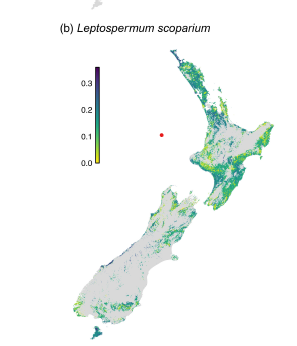
predicted community vulnerability from A. psidii mediated mortality of Kunzea ericoides & Leptospermum scoparium; from McCarthy et al.

Scientists in New Zealand have recently completed a study of the probable impact of myrtle rust – caused by Austropuccinia psidii – on plants in the plant family Myrtaceae. McCarthy et al. say their results should guide management actions to protect not only the unique flora of those islands but also on Australia and Hawai`i – other places where key dominant tree species are susceptible to myrtle rust. The disease attacks young tissue; susceptible Myrtaceae become unable to recruit new individuals or to recover from disturbance. Severe cases can result in tree death & localized extinctions

[I note that myrtle rust is not the only threat to the native trees of these biologically unique island systems. New Zealand’s largest tree, kauri (Agathis australis), is threatened by kauri dieback (caused by Phytophthora agathidicida). On Hawai`i, while the most widespread tree, ‘ōhi‘a (Metrosideros polymorpha) is somewhat vulnerable to the strain of rust introduced to the Islands, the greater threat is from a different group of fungi, Ceratocystis lukuohia and C. huliohia, collectively known as rapid ‘ōhi‘a death. On Australia, hundreds of endemic species on the western side of the continent are being killed by Phytophthora dieback, caused by Phytophthora cinnamomi. [I note the proliferation of tree-kiling pathogens; I will blog more about this in the near future.]

Myrtle rust arrived in New Zealand in 2017, probably blown on the wind from Australia (where it was detected in 2010). In New Zealand, myrtle rust infects at least 12 of 18 native tree, shrub, and vine species in the Myrtaceae plant family. Several of these species are important in the structure and succession of native ecosystems. They also have enormous cultural significance.

McCarthy et al. note that species differ in their contribution to forest structure and function. They sought to determine where loss of vulnerable species might have the greatest impact on community functionality. They also explored whether compensatory infilling by co-occurring, non-vulnerable species in the Myrtaceae would reduce the community’s vulnerability. Even when co-occurring Myrtaceae are relatively immune to the pathogen, only some of them – the fast-growing species – are likely to fill the gaps. They might lack the functional attributes of the decimated species.

To identify areas at greatest risk, McCarthy et al. took advantage of a nationwide vegetation plot dataset that covers all the country’s native forests and shrublands. The plot data enabled McCarthy et al. to determine which plant species not vulnerable to the rust are present and so are likely to replace the rust host species as they are killed.

Leptospermum scoparium; photo by Alyenaa Buckles via Flickr

McCarthy et al. concluded that forests and shrublands containing Kunzea ericoides and Leptospermum scoparium are highly vulnerable to their loss. Ecosystems with these species are found predominantly in central and southeastern North Island, northeastern South Island, and Stewart Island. While compensatory infilling by other species in the Myrtaceae would moderate the impact of the loss of vulnerable species, if these co-occurring species were unable to respond for various reasons, such as also being infected by the rust pathogen, community vulnerability almost always increased. In these cases the infilling species would probably have different functional attributes. In many areas the species most likely to replace the rust-killed native species would be non-native shrubs. Consequently, early successional woody plant communities, where K. ericoides and L. scoparium dominate, are at most risk.

Because the risk of A. psidii infection is lower in cooler montane and southern coastal areas, parts of inland Fiordland, the northwestern South Island and the west coast of the North Island might be less vulnerable.

Austropuccinia psidii has been spreading in Myrtaceae-dominated forests of the Southern Hemisphere since the beginning of the 21st Century. It was detected in Hawai`i in 2005; in Australia in 2010; in New Caledonia in 2013, and finally in New Zealand in 2017. Within 12 months of its first detection in the northern part of the North Island it had spread to the northern regions of the South Island.

Specific types of Threat

Succession

The ecosystem process most at risk to loss of Myrtaceae species to A. psidii is succession. About 10% of once-forested areas of New Zealand are in successional shrublands, mostly dominated by Kunzea ericoides and Leptospermum scoparium. Both species are wind dispersed, grow quickly, are resistant to browsing by introduced deer, and are favored by disturbance, especially fire. Both are tolerant of exposure and have a wide edaphic range (including geothermal soils). Still, K. ericoides prefers drier, warmer sites while L. scoparium tolerates saturated soils, frost hollows and subalpine settings.

Kunzea ericoides; photo by Tony Foster via Flickr

Loss of these two species would result in a considerable change in stand-level functional composition across a wide variety of locations. Their extensive ranges mean that it would be difficult for other species – even if functionally equivalent – to expand sufficiently quickly. Second, non-native species are common in these communities. All of these invaders – Ulex europaeus, Cytisus scoparius and species of Acacia, Hakea and Erica – promote fire. Some are nitrogen fixers. While they can facilitate succession, the resulting native forest will differ from that formed via Leptospermeae succession. Furthermore, compensatory infilling by the invasive species might also reduce carbon sequestration. Successional forests dominated by K. ericoides are significant carbon sinks owing to the tree’s size (up to 25 m under favorable conditions), high wood density, and long lifespan (up to ~150 years). In contrast, shrublands dominated by at least one of the non-native species, U. europaeus, are significant carbon sources.

Northern and central regions of the North Island and the northeastern and interior parts of the South Island are most vulnerable to the loss of these species since these successional shrub communities are widespread and the area’s climate is highly suitable for A. psidii infection. The southern regions of the South Island, including Stewart Island, are somewhat protected by the cooler climate.

Fortunately, neither Kunzea ericoides nor Leptospermum scoparium has yet been infected in nature. Laboratory trials indicate that some families of K. ericoides are resistant. Vulnerability also varies among types of tissue – i.e., leaf, stem, seed capsule.  

Metrosideros umbellata; photo by Stan Shebs via Wikimedia

Forest biomass

Although from the overall community perspective loss of species in the Metrosidereae would have a lower impact than loss of those in the Leptospermeae, there would be significant changes associated with loss of Metrosideros umbellata. This species can grow quite large (dbh often > 2 m; heights up to 20 m). That size and its exceptionally dense wood means that M. umbellata stores high amounts of carbon. Also, its slow decomposition provides habitat for decomposers. Lessening the potential impact of loss of this species are two facts: its litter nutrient concentrations and decomposition rates do not differ from dominant co-occurring trees; and, most important, it grows primarily in the south, where weather conditions are less suitable for A. psidii infection. One note of caution: if A. psidii proves able to spread into these regions, not only M. umbellata but also susceptible co-occurring Myrtaceae species are likely to be damaged by the pathogen.

Highly specific habitats

McCarthy et al. note that their study might underestimate the impact of loss of species with unique traits that occupy specialized habitats. They focus on the climber Metrosideros excelsa. This is an important successional species that helps restore ecosystems following fire, landslides, or volcanic eruptions. The species’ tough and nutrient poor leaves promote later successional species by forming a humus layer and altering the microenvironment beneath the plant. Its litter has high concentrations of phenolics and decomposes more slowly than any co-occurring tree species.  [They say its role is analogous to that of M. polymorpha in primary successions on lava flows in Hawai`i.] M. excelsa dominates succession on many small offshore volcanic islands, rocky coastal headlands and cliffs.

Another example is Lophomyrtus bullata, a small tree that is patchily distributed primarily in forest margins and streamside vegetation. This is the native species most affected by A. psidii; the pathogen is likely to cause its localized extinction. McCarthy et al. call for assessment of ex situ conservation strategies for this species.

Each of these species is represented in only seven of the plots used in the analysis, so community vulnerability to their loss might be underestimated.

Another habitat specialist, Syzygium maire, is found mostly in lowland forests, usually on saturated soils. It currently occupies only a fraction of its natural range due to deforestation and land drainage. Evaluating the impact of loss of S. maire is complicated by its poor representation in the database (only six plots), and the fact that many of the co-occurring species are also Myrtaceae.

Lack of data similarly prevents detailed assessment of the impacts from possible loss of other species, including M. parkinsonii, M. perforata and L. obcordata. McCarthy et al. say only that their disappearance will “take the community even further from its original state”.

McCarthy et al. warn that the risk could increase if more virulent strains of A. psidii were introduced or evolved through sexual recombination of the current pandemic strain. Other scientists have discovered strong evidence that the many strains of A. psidii attack different host species (see Costa da Silva et al. 2014).

New Zealand bell bird (Anthornis melanura); photo from https://animalia.bio/new-zealand-bellbird

McCarthy et al. note that other factors are also important in determining the impact of loss of a plant species. Especially significant is the host plant species’ association with other species. They say these relationships are poorly understood. One example is that only four Myrtaceae species produce fleshy fruits. Loss or decline of these four species might severely affect populations of native birds, many of which are endemic. Many invertebrates – also highly endemic — are dependent on nectar from other plants in the family.

In their conclusion, McCarthy et al. note that A. psidii has been introduced relatively recently so there is still time to reduce the disease’s potential consequences. They suggest such management interventions as identifying and planting resistant genotypes and applying chemical controls to protect important individual specimens. They hope their work will guide prioritization of both species and spatial locations. They believe such efforts have substantial potential to reduce myrtle rust’s overall functional impact to New Zealand’s unique ecosystems.

SOURCES

Costa da Silva, A; P.M. Teixeira de Andrade, A. Couto Alfenas, R. Neves Graca, P. Cannon, R. Hauff, D. Cristiano Ferreira, and S. Mori. 2014. Virulence and Impact of Brazilian Strains of Puccinia psidii on Hawaiian Ohia (Metrosideros polymorpha). Pacific Science 68(1):47-56.  doi: https://dx.doi.org/10.2984/68.1.4

McCarthy, J.K., S.J. Richardson, I. Jo, S.K. Wiser, T.A. Easdale, J.D. Shepherd, P.J. Bellingham. 2024. A Functional Assessment of Community Vulnerability to the Loss of Myrtaceae From Myrtle Rust. Diversity & Distributions, 2024; https://doi.org/10.1111/ddi.13928

Posted by Faith Campbell

We welcome comments that supplement or correct factual information, suggest new approaches, or promote thoughtful consideration. We post comments that disagree with us — but not those we judge to be not civil or inflammatory.

For a detailed discussion of the policies and practices that have allowed these pests to enter and spread – and that do not promote effective restoration strategies – review the Fading Forests report at  https://treeimprovement.tennessee.edu/

or

www.fadingforests.org

Non-Native Moths in England: Ever Upward

Platyperigea kadenii — one of the moth species that feeds on native plant species introduced recently to Great Britain. Photo by Tony Morris via Flickr

Will phytosanitary agencies and the international system respond to continuing introductions of non-native species?

A new study confirms that introductions of insects continue apace, links this pattern to the horticultural trade, and examines the role of climate change in facilitating introductions. This study focuses on moths introduced to the United Kingdom (Hordley et al.; full citation at the end of the blog). The study sought to detect any trends in numbers of species establishing and the relative importance of natural dispersal vs. those assisted – intentionally or inadvertently – by human activities.

The authors determined that moths continue to be introduced by both processes; there is no sign of “saturation”. This finding agrees with that of Seebens and 44 others (2017; citation below), which analyzed establishments of all types of non-native species globally. The British scientists found that rapidly increasing global trade is the probable driver of the recent acceleration of human-assisted introductions. They emphasize the horticultural trade’s role specifically. Climate change might play a role in facilitating establishment of species entering the UK via human activities.

Hordley et al. found that long-term changes in climate, not recent rapid anthropogenic warming, was important in facilitating introductions of even those moth species that arrived without human assistance. As they note, temperatures in Great Britain have been rising since the 17th Century. These changes in temperature have probably made the British climate more suitable for a large number of Lepidoptera. The data show that the rate of natural establishments began rising in the 1930s, 60 years before anthropogenic changes in temperatures became evident. Hordley et al. point out that an earlier study that posited a more significant role for climate change did not distinguish between insect species which have colonized naturally and those benefitting from human assistance.

The authors expect introductions to continue, spurred by ongoing environmental and economic changes. Fortunately, very few of the introduced moths had any direct or indirect negative impacts. (The box-tree moth (Cydalima perspectalis) is the exception. [Box-tree moth is also killing plants in North America.]

boxtree moth; photo by Tony Morris via Flickr

Still, they consider that introductions pose an ongoing potential risk to native biodiversity and related human interests. Therefore, they advocate enhanced biosecurity. Specifically, they urge improved monitoring of natural colonizations and regulation of the horticultural trade.

Hordley et al. estimated the rate of establishment during the period 1900 – 2019 for (i) all moth species; (ii) immigrants (i.e., those introduced without any human assistance); (iii) immigrants which feed on native hosts; (iv) immigrants which feed on non-native hosts; (v) adventives (i.e., species introduced with human assistance); (vi) adventives which feed on native hosts; and (vii) adventives which feed on NIS hosts.

Their analysis used data on 116 moth species that have become established in Great Britain since 1900. Nearly two-thirds of these species – 63% – feed on plant species native to Great Britain; 34% on plant species that have been imported – intentionally or not. Data were lacking on the hosts of 3 species.

Considering the mode of introduction, the authors found that 67% arrived through natural colonization; 33% via human assistance. Sixty-nine percent of the 78 species that were introduced through natural processes (54 species) feed on plant species native to Great Britain; 31% (24 species) feed on non-native plants. Among the 38 species whose introduction was assisted by human activities, one-half (19 species) feed on native plant species; 42% (16 species) feed on introduced hosts.

Regarding trends, they found that when considering all moth species over the full period, 21.5% more species established in each decade than in the previous decade. This average somewhat obscured the startling acceleration of introductions over time: one species was reported as established in the first decade (1900–1909) compared to 18 species in the final decade (2010–2019).   

The rate of introduction for all immigrant (naturally introduced) species was 22% increase per decade. Considering immigrant species that feed on native plants, the rate of establishment was nearly the same – 23% increase per decade – when averaged over the 120-year period. However, a more detailed analysis demonstrated that these introductions proceeded at a steady rate until 1935, then accelerated by 11% per decade thereafter. In contrast, immigrants that feed on non-native plants have maintained a steady rate of increasing establishments – 13% per decade since 1900.

Adventive species (those introduced via human assistance) increased by 26% per decade. The data showed no signs of saturation. The rates of introduction were similar for adventives that feed on both native plants (22%) and non-native hosts (26%). Again, additional analysis demonstrated a break in rates for adventives that feed on native hosts. The rate was steady until the 1970s, then significantly increased during the years up to 2010. (The scientists dropped data from the final decade since lags in detection might artificially suppress that number.)

In summary, Hordley et al. found no significant differences in trends between

  • the number of species that established naturally (20%) vs. adventives (26%).
  • immigrant or adventive species that feed on native vs. non-native hosts.

The authors discuss the role of climate change facilitating bioinvasion by spurring natural dispersal, changing propagule pressure in source habitats, changing the suitability of receiving habitat, and changing in pathways for natural spread, e.g., altered wind and ocean currents. They recognize that the two modes of colonization – adventives and immigrants – can interact. They stress, however, that the two colonization modes require different interventions.

Although their findings don’t support the premise that a surge of natural colonizers has been prompted by anthropogenic warming, Hordley et al. assert that climate clearly links to increased moth immigration to Britain and increased probability of establishment. They note that even so assisted, colonists still must overcome both the natural barrier of the English Channel and find habitats that are so configured as to   facilitate breeding success. They report that source pools do not appear to be depleted — moth species richness of neighboring European countries greatly exceeds that in Great Britain.

I would have liked to learn what factors they think might explain the acceleration in both natural and human-assisted introductions of species that feed on plant species native to Great Britain. In 2023 I noted that scientists have found that numbers of established non-native insect species are driven primarily by diversity of plantsboth native and non-indigenous.

Hordley et al. assert that Great Britain has advantages as a study location because as a large island separated from continental Europe by the sea – a natural barrier – colonization events are relatively easy to detect. However the English Channel is only 32 km across at its narrowest point. I wonder, whether this relatively narrow natural barrier might lead to a misleadingly large proportion of introduced species being natural immigrants. I do agree with the authors that moths are an appropriate focal taxon because they are sensitive to climate and can be introduced by international trade. Furthermore, Britain has a long tradition of citizen scientists recording moth sightings, so trends can be assessed over a long period.

Hordley et al. stress that they measured only the temporal rate of new species’ establishments, not colonization pressure or establishment success rate. They had no access to systematic data regarding species that arrived but failed to establish. Therefore, they could not deduce whether the observed increase in establishment rates are due to:

(1) more species arrivingdue either to climate-driven changes in dispersal or to accessibility of source pools; or

(2) higher establishment success due to improved habitat and resource availability; or

(3) both.

Hordley et al. noted two limitations to their study. First, they concede that there is unavoidably some subjectivity in classifying each species as colonizing naturally or with human assistance. They tried to minimize this factor by consulting two experts independently and including in the analysis only those species on which there was consensus.

Second, increases in detection effort and effectiveness might explain the recent increases in establishment rates. They agree that more people have become “citizen scientists” since 1970. Also, sampling techniques and resources for species identification have improved considerably. They note, however, that Seebens et al. (2018) tested these factors in their global assessment and found little effect on trends.

Hordley et al. believe that they have addressed a third possible limitation – the lag between introduction and detection – by running their analyses both with and without data from final decade (2010-2019). The results were very similar qualitatively.

SOURCE

Hordley, L.A., E.B. Dennis, R. Fox, M.S. Parsons, T.M. Davis, N.A.D. Bourn. 2024. Increasing rate of moth species establishment over 120 years shows no deceleration. Insect Conserv. Divers. 2024;1–10. DOI: 10.1111/icad.12783

Seebens, H. et al. 2017. No saturation in the accumulation of alien species worldwide. Nature Communications. January 2017. DOI: 10.1038/ncomms14435

Seebens, H. et al. 2018. Global rise in emerging IAS results from increased accessibility of new source pools. Proceedings of the National Academy of Sciences. www.pnas.org/cgi/doi/10.1073/pnas.1719429115

Posted by Faith Campbell

We welcome comments that supplement or correct factual information, suggest new approaches, or promote thoughtful consideration. We post comments that disagree with us — but not those we judge to be not civil or inflammatory.

For a detailed discussion of the policies and practices that have allowed these pests to enter and spread – and that do not promote effective restoration strategies – review the Fading Forests report at  https://treeimprovement.tennessee.edu/

or

www.fadingforests.org

Phytophthora here, Phytopthora there … level of threat is unclear

Mt. Triglav – highest peak in the Slovenian (Julian) Alps; photo by Gunter Nuyts via Pexel

Scientists have discovered sizable diversity of pathogenic Phytophthora species in Europe, specifically in the Alps of northeastern Italy and western Slovenija.  They have also named a new species, and noted the need to change the definition of species previously named. See Bregant et al. – full citation at the end of this blog – open access!

Two of its findings are especially important for the US

First, the authors document the vulnerability of alpine areas to 18 Phythophthora species. Most of the plant hosts they studied have congenerics in mountainous areas of North America: Acer, Alnus, Betula, Fagus, Fragaria, Fraxinus, Ilex, Juniperus, Larix, Lonicera, Lycopodium, Pinus, Populus, Quercus, Rhododendron, Rubus, Salix, Sorbus, Taxus, and Vaccinium.

Second, the paper discusses how junipers are at particular risk. I remind you that P. austrocedrii has recently been detected in nurseries in Ohio and Oregon. This is another non-native Phythophthora that attacks junipers. I hope authorities are actively seeking to determine whether P. austrocedrii is present in nurseries or natural systems in other parts of the country.

The genus Phytophthora includes many serious plant pathogens, from the one that caused the disastrous potato blight of Ireland (Phytophthora infestans) to globally important forest-destroying invasive species, e.g., P. cinnamomi and “sudden oak death” P. ramorum.

Bregant et al. surveyed 33 small tree, shrub, and herbaceous plant species in 54 sites on the Italian island of Sardinia and the Alps of both northeastern Italy and western Slovenija. Altitudes varied from the valley bottom (700 m) to above tree line (2100 m). Sites included typical forests, riparian ecosystems, and heathlands.

The 360 isolates taken from 397 samples belonged to 17 known Phytophthora species. Some species are widespread and well-known, e.g., P. pseudosyringae. Three isolates belonged to a putative new species described by Bregant et al. – Phytophthora pseudogregata sp. nov. This total of 18 taxa was unexpectedly high. Many of the species are able to cause aerial infections via production of caducous sporangia. These can infect various organs of the plant host: fruits, leaves, shoots, twigs and branches; and cause necrosis and rots. They detected 56 new host–pathogen associations. All are listed, by type of host, in Tables 4 – 6 of the paper.

The surprising diversity and detection of taxa previously described in Australia (see below) illustrate   scientists’ still poor understanding of this genus. They also confirm fears that the global phytosanitary system is unable control intercontinental movement of Phytophthora.

The authors express concern because Alpine and subalpine regions are important hotspots for floral biodiversity. The great variation in altitude, aspect, moisture regimes, etc. – including extreme conditions – results in many different habitats on small spatial scales, with large numbers of both plant species and endemics in very confined spaces. The pathogens they discovered are spreading and compromising the biodiversity of these ecologically fragile habitats.

The authors say their study emphasizes the need to assess the full diversity of Phytophthora species and the factors driving the emergence and local spread of these invasive pathogens. They specify studying the Phytophthora communities on fallen leaves to evaluate host specificity, geographic distribution and survival strategies of the main Phytophthora species detected in this study. They report that scientists are currently mapping the distribution of the new species, P. pseudogregata, in the Alpine habitats and trying to establish its natural host range.

another view of the Julian Alps; photo via Rawpixl

Bregant et al. point out that increased scientific interest over the last 30 years has led to discovery of several previously unknown Phytophthora species and pathogen-host associations. They note that all but two of the taxa in one taxonomic grouping, Sub-clade 6b, have been described in the last 12 years. The majority of taxa have been described from forest ecosystems. This trend is depicted in Figure 8 of the article. This figure also displays which species were isolated from nurseries, agricultural systems, and forest ecosystems.

Results by Plant Type – Disease incidence was highest in shrub vegetation, alpine heathlands and along the mountain riparian systems. The most impacted ecosystems were heathlands dominated by common juniper & blueberry, and riparian systems dominated by alders. In these ecosystems, the Phytophthora-caused outbreaks had reached epidemic levels trend with a high mortality rate. On shrubs and heath formations, disease was initially observed in small areas and progressively spread in a concentric manner affecting more plant species.

Hosts and Diseases – Table 3 in the article lists the 33 host plant species, briefly describes the symptoms, and in some cases provides incidence and mortality rates. Those hosts described as suffering “sudden death” included Alnus viridis, Calluna vulgaris, Genista corsica, Juniperus communis, Lycopodium clavatum, Pinus mugo,Rhododendron ferrugineum, Salix alpine, Vaccinium myrtillus and Vaccinium vitis-idaea

Role of P. pseudosyringae The most common and widespread species detected was P. pseudosyringae. It constituted more than half of the isolates (201 of the 360). Also, it infected the highest number of hosts (25 out of 33, including all three plant types). It was isolated at 36 of the 54 sites distributed throughout all geographic regions. Seventeen of the host–pathogen associations were new to science. (See Tables 4-6, in the paper.)

Vaccinium myrtillis – a vulnerable host; photo by Tatyana Prozovora via Wikimedia

P. pseudosyringae dominated disease agents in the shrub community, especially among high-altitude shrubs and heaths, e.g., blueberry, dwarf pine, juniper, rhododendron, and alpine willows. Bregant et al. note that these shrubs are extremely low-growing (an adaptation to high elevation conditions). This form might favor attack by Phytophthora sporangia and zoospores present in fallen leaves. Vaccinium myrtillus suffers particularly severe disease – as previously reported in Ireland. In their laboratory studies, Bregant et al. found P. pseudosyringae to be highly aggresse on common juniper (Juniperus communis), producing wood necrosis and shoot blight only four weeks after inoculation.

The importance of P. pseudosyringae in mountainous regions has been found in previous studies in Asia, Europe, and North and South America. However, the authors call for further study of certain aspects of the species. These regard infectivity and survival of the species’ sporangia in infected tissues fallen to the ground; and the ability of oospores to persist for years in environments subject to extreme low temperatures. The former could increase the risk of outbreaks and promote faster disease progression.

The authors suggest P. pseudosyringae’s survival stems from its production of very large and thick-walled chlamydospores. This reported feature is in contradiction with the original species description, which prompts Bregant et al. to call for a correction.

Other Species, Old and New – P. cactorum was the only Phytophthora species other than P. pseudosyringae detected on all three types of hosts (small trees, shrubs, and herbaceous plants). Phytophthora plurivora was the second-most isolated species. It was detected on 12 hosts in 24 sites.

The new putative species — Phytophthora pseudogregata sp. nov. – was detected on Alnus viridis, Juniperus communis, and Rhododendron ferrugineum. As noted above, scientists are now testing whether other plant species are also hosts. It was detected at two sites in Italy — Borso del Grappa and San Nicolò di Comelico; and one site in Slovenija.

Juniperus communis; photo by Joan Simon via Flickr

Diseases of Juniper – Koch’s postulates have been fulfilled, demonstrating that eight Phytophthora species – the new P. pseudogregata sp. nov. as well as P. acerina, P. bilorang, P. gonapodyides, P. plurivora, P. pseudocryptogea, P. pseudosyringae, P. rosacearum are pathogenic on common juniper (Juniperus communis). The lesions caused by P. pseudosyringae were significantly larger than those caused by other species. Lesions caused by P. pseudosyringae, P. plurivora and acerina progressively girdled the twigs causing shoot blight, browned foliage & wilting symptoms.

Most Threatening Phytophthora clades – The most-frequently isolated Phytophthora species belong mainly to clades 1 and 3 – including P. pseudosyringae. Bregant et al. say these species have several advantages for surviving in mountainous ecosystems: they produce caducous sporangia useful for aerial infections and they tolerate relatively low temperatures. Twoother species in clade 3 were isolated only from the mountains of Sardinia. One, P. psychrophila, was isolated from bleeding cankers on an oak species, Quercus pubescens. Its geographic distribution and impact are still unknown. A second species, P. ilicis, is a well-known pathogen on various hollies in Europe and North America.

Four species belonging to subclade 1a were isolated in the Alps of northeastern Italy and Slovenija. P. cactorum is a widespread polyphagous pathogen found from tropical to temperate climates. It has been responsible for severe diseases on agricultural crops and forest trees. Its occurrence in cold areas has recently been reported in Europe and Australia. The recently described P. alpina has the highest ability to survive in extremely cold conditions. It was detected on four hosts – Alnus viridis, Lonicera alpigena, Vaccinium myrtillus, and V. vitis-idaea.

Some species, e.g., P. hedraiandra and P. idaei, were reported for the first time in natural ecosystems in Europe. They have previously been linked to root and foliar disease in agricultural and ornamental nurseries.

The second-most common species in the Bregant et al. study, P. plurivora, was isolated from 54 symptomatic samples from 12 plant species; eight of the hosts are new. It is common in forest ecosystems of Central Europe – which is now considered to be its region of origin. Little is known about the closely related P. acerina. To date, the latter has been detected widely in agricultural systems, nurseries, forests, and ornamental trees in northern Italy and Sardinia. It is much more rarely found elsewhere. Both P. acerina and P. plurivora are already known to be primary pathogens involved in decline of common and grey alder in Italy.

Five of the Phytophthora species in this study, including the new species P. pseudogregata, are in Clade 6. These include pathogens very common in European forests, e.g., P. bilorbang and P. gonapodyides. Others have more limited or still unknown distributions, e.g., P. amnicola and P. rosacearum. These five species’ ability to cause aerial infections on mountain vegetation might warrant re-evaluation of the reputation of species in this clade being saprophytes or only occasional weak opportunistic pathogens.

P. pseudogregata – in sub-clade 6a – was originally described in 2011 in wet native forests in Australia and on dying alpine heathland vegetation in Tasmania. It has recently been reported in the Czech Republic and Finland. The related P. gibbosa is known to occur only in Australia, where it is associated with dying native vegetation on seasonally wet sites.

Two species of clade 8 — P. kelmanii & P. syringae — have a very limited distribution. A third – P. pseudocryptogea — is widespread in Italian ecosystems from Mediterranean areas to the tree line in the Dolomites. One species from clade 7 (P. cambivora) isolated, mainly from stem bleeding cankers of small trees and shrubs. It has two mating types; bothoccurr in the Alps of northeastern Italy and neighboring Slovenija — on Alnus incana, Laburnum alpinum and Sorbus aucuparia.

SOURCE

Bregant, C., G. Rossetto, L. Meli, N. Sasso, L. Montecchio, A. Brglez, B. Piškur, N. Ogris, L. Maddau, B.T. Linaldeddu. 2024. Diversity of Phytophthora Species Involved in New Diseases of Mountain Vegetation in Europe with the Description of Phytophthora pseudogregata sp. nov. Forests 2023, 14, 1515. https://doi.org/10.3390/f14081515 https://www.mdpi.com/journal/forests

Posted by Faith Campbell

We welcome comments that supplement or correct factual information, suggest new approaches, or promote thoughtful consideration. We post comments that disagree with us — but not those we judge to be not civil or inflammatory.

For a detailed discussion of the policies and practices that have allowed these pests to enter and spread – and that do not promote effective restoration strategies – review the Fading Forests report at  https://treeimprovement.tennessee.edu/

or

www.fadingforests.org

Europe outlaws “ecocide”

American bullfrog (Lithobates catesbeianus); photo by Will Brown via Wikimedia; one of invasive animals deliberately introduced to Europe in the past

In February 2024 the European Parliament approved legislation outlawing “ecocide” and providing sanctions for environmental crimes. Member states now have two years to enshrine its provisions in national law.

The new rules update the list of environmental crimes adopted in 2008 and enhance the sanctions. The goal is to ensure more effective enforcement. Listed among the offenses are:

  • the import and use of mercury and fluorinated greenhouse gases,
  • the import of invasive species,
  • the illegal depletion of water resources, and
  • pollution caused by ships.

This action followed an in-depth analysis of the failures of the previous EU environmental directive, first adopted in 2008 (Directive 2008/99/EC). The review found that:

  • The Directive had little effect on the ground.
  • Over the 10 years since its adoption few environmental crime cases were successfully investigated and sentenced.
  • Sanction levels were too low to dissuade violations.
  • There had been little systematic cross-border cooperation.

EU Member states were not enforcing the Directive’s provisions. They had provided insufficient resources to the task. They had not developed the needed specialized knowledge and public awareness. They were not sharing information or coordinating either among individual governments’ several agencies or with neighboring countries.

The review found that poor data hampered attempts by both the EU body and national policy-makers to evaluate the Directive’s efficacy.

The new Directive attempts to address these weaknesses. To me, the most important change is that complying with a permit no longer frees a company or its leadership from criminal liability. These individuals now have a “duty of care”. According to Antonius Manders, Dutch MEP from the Group of the European People’s Party (Christian Democrats), if new information shows that actions conducted under the permit are “causing irreversible damage to health and nature – you will have to stop.” This action reverses the previous EU environmental crime directive – and most member state laws. Until now, environmental crime could be punished only if it is unlawful; as long as an enterprise was complying with a permit, its actions would not be considered unlawful. Michael Faure, a professor of comparative and international environmental law at Maastricht University, calls this change revolutionary.

Lorton Prison; via Flickr

Another step was to make corporate leadership personally liable to penalties, including imprisonment. If a company’s actions cause substantial environmental harm, the CEOs and board members can face prison sentences of up to eight years. If the environmental harm results in the death of any person, the penalty can be increased to ten years.  

Financial penalties were also raised. Each Member state sets the fines within certain parameters. Fines may be based on either a proportion of annual worldwide turnover (3 to 5%) or set at a fixed fine (up to 40 million euros). Companies might also be obliged to reinstate the damaged environment or compensate for the damage caused. Companies might also lose their licenses or access to public funding, or even be forced to close.

Proponents of making ecocide the fifth international crime at the International Criminal Court argue that the updated directive effectively criminalizes ecocide” — defined as “unlawful or wanton acts committed with knowledge that there is a substantial likelihood of severe and either widespread or long-term damage to the environment being caused by those acts.”

Individual member states also decide whether the directive will apply to offences committed outside EU borders by EU companies.

Some members of the European Parliament advocate for an even stronger stance: creation of a public prosecutor at the European Union level. They hope that the Council of Europe will incorporate this idea during its ongoing revision of the Convention on the Protection of the Environment through Criminal Law. To me, this seems unlikely since the current text of the Convention, adopted by the Council in 1998, has never been ratified so it has not come into force.

The Council of Europe covers a wider geographic area than the European Union – 46 member states compared to 27. Members of the Council of Europe which are not in the EU include the United Kingdom, Norway, Switzerland, Bosnia-Hercegovina, Serbia, Kosovo, Albania; several mini-states, e.g., Monaco and San Remo; and countries in arguably neighboring regions, e.g., Armenia, Azerbaijan, Georgia, and Turkey.

While I rejoice that invasive species are included in the new Directive, I confess that I am uncertain about the extent to which this inclusion will advance efforts to prevent spread. The species under consideration would apparently have to be identified by some European body as “invasive” and its importation restricted. As we know, many of the most damaging species are not recognized as invasive before their introduction to a naïve environment. On the other side, the requirement that companies recognize new information and halt damaging actions – even when complying with a permit! – provides for needed flexibility.

Posted by Faith Campbell

We welcome comments that supplement or correct factual information, suggest new approaches, or promote thoughtful consideration. We post comments that disagree with us — but not those we judge to be not civil or inflammatory.

For a detailed discussion of the policies and practices that have allowed these pests to enter and spread – and that do not promote effective restoration strategies – review the Fading Forests report at http://treeimprovement.utk.edu/FadingForests.htm

or

www.fadingforests.org

Invasives in Italy & Croatia – what I saw

plane trees in Parco della Montagnola, Bologna, Italy

The CISP blog has had a pause while I travelled in Italy, Slovenia, and Croatia. My purpose was tourism … but I could not forget my interest in invasive species! Most prominent was that global traveller, Ailanthus altissima. I saw lots of the trees in both urban and rural settings. I am unclear about whether some other plant taxa are native v. non-native, e.g., ivy and several species of pines widespread along the Dinaric mountains. Scotch broom Cytisus scoparius was widespread along the Dalmatian coast – but it is native there so not a concern. (Should have been a warning that it would invade other areas with Mediterranean climates!) We were told that the city of Split is even named for the shrub – a shortened/corrupted version of the Greek name for the plant.

Regarding tree-killing pests, I was pleased to see lots of young olive trees along the Dalmatian coast – apparently the Xylella fastidiosa bacterial pathogen that is killing trees in Italy, France, Spain and Portugal is not yet a problem there.

I also saw many of the columnar cedars that I understand are under attack by fungi in the genus Seiridium in Italy. I also saw apparently healthy boxwoods at our hotel near Dubrovnik.

Some of the boxwoods growing in monastery cloisters in Dubrovnik looked as if they have been hit by box tree moth (Cydalima perspectalis) — which is no surprising since the pest was detected in northern Croatia a decade ago.

Dominican monastry in Dubrovnik

Finally, I saw apparently healthy plane trees growing in parks in Bologna; apparently this region has not yet been invaded by the canker stain disease caused by North American fungus Ceratocystis platani. – reported to have caused high levels of mortality in Italy, France, and especially in Greece.  (See photo at top of blog) [See Tsopelas, Santini, Wingfield and de Beer. 2017. Canker stain: a Lethal Disease Destroying Iconic Plane Trees. Plant Disease. 2017. 101:645-658. American Phytopathological Society]

I am concerned that the forests at Plitvice National Park are composed of European beech, which is vulnerable to beech leaf disease if it arrives there.

Posted by Faith Campbell

We welcome comments that supplement or correct factual information, suggest new approaches, or promote thoughtful consideration. We post comments that disagree with us — but not those we judge to be not civil or inflammatory.

For a detailed discussion of the policies and practices that have allowed these pests to enter and spread – and that do not promote effective restoration strategies – review the Fading Forests report at http://treeimprovement.utk.edu/FadingForests.htm

or

www.fadingforests.org

Global Overview of Bioinvasion in Forests

black locust – one of the most widespread invasive tree species on Earth; photo via Flickr

In recent years there has been an encouraging effort to examine bioinvasions writ large see earlier blogs re: costs of invasive species – here and here. One of these products is the Routledge Handbook of Biosecurity and Invasive Species (full citation at end of this blog). I have seen only the chapter on bioinvasion in forest ecosystems written by Sitzia et al. While they describe this situation around the globe, their examples are mostly from Europe.

Similar to other overviews, this article re-states the widely-accepted attribution of rising numbers of species introductions to globalization, especially trade. In so doing, Sitzia et al. assert that the solution is not to curtail trade and movement of people, but to improve scientific knowledge with the goal of strengthening biosecurity and control programs. As readers of this blog know, I have long advocated more aggressive application of stronger restrictions on the most high-risk pathways. Still, I applaud efforts to apply science to risk assessment.

Sitzia et al. attempt to provide a global perspective. They remind readers that all major forest ecosystems of Earth are undergoing significant change as a result of conversion to different land-uses; invasion by a wide range of non-native introduced species—including plants, insects, and mammals; and climate change. These change agents act individually and synergistically. Sitzia et al. give greater emphasis than other writers to managing the tree component of forests. They explain this focus by asserting that forest management could be either the major disturbance favoring spread of non-native species or, conversely, the only way to prevent further invasions. They explore these relationships with the goal of improving conservation of forest habitats.

Japanese stiltgrass invasion; photo by mightyjoepye via Flickr

Sitzia et al. focus first on plant invasions. They contend that – contrary to some expectations – plants can invade even dense forests despite competition for resources. They cite a recent assessment by Rejmánek & Richardson that identified 434 tree species that are invasive around Earth. Many of these species are from Asia, South America, Europe, and Australia. These non-native trees can drive not only changes in composition but also in conservation trajectories in natural forests. However, the example they cite, Japanese stilt grass (Microstegium vimineum) in the United States, is not a tree! Sitzia et al. note that in other cases it is difficult to separate the impacts of management decisions, native competitive species, and non-native species.

Sitzia et al. note that plant invasions might have a wide array of ecological impacts on forests. They attempt to distinguish between

  • “drivers” of environmental change – including those with such powerful effects that they call them “transformers”;  
  • “passengers” whose invasions are facilitated by other changes in ecosystem properties; and
  • “backseat drivers” that benefit from changes to ecosystem processes or properties and cause additional changes to native plant communities.

An example of the last is black locust (Robinia pseudoacacia). This North American tree has naturalized on all continents. It is a good example of the management complexities raised by conflicting views of an invasive species’ value, since it is used for timber, firewood, and honey production.

Sitzia et al. then consider invasions by plant pathogens. They say that these invasions are one of the main causes of decline or extirpations in tree populations. I applaud their explicit recognition that even when a host is not driven to extinction, the strong and sudden reduction in tree numbers produces significant changes in the impacted ecosystems.

American chestnut – not extinct but ecological role gone; photo by F.T. Campbell

Sitzia et al. contend that social and economic factors determine the likelihood of a species’ transportation and introduction. Specifically, global trade in plants for planting is widely recognized as being responsible for the majority of introductions. Introductions via this pathway are difficult to regulate because of the economic importance (and political clout) of the ornamental plants industry, large volumes of plants traded, rapid changes in varieties available, and multiple origins of trade. As noted above, the authors seek to resolve these challenges by improving the scientific knowledge guiding biosecurity and control programs. In the case of plant pathogens, they suggest adopting innovative molecular techniques to improve interception efficiency, esp. in the case of latent fungi in asymptomatic plants.

The likelihood that a pathogen transported to a new region will establish is determined by biogeographic and ecological factors. Like other recent studies, Sitzia et al. attempt to identify important factors. They name a large and confusing combination of pathogen- and host-specific traits and ecosystem conditions. These include the fungus’ virulence, host specificity, and modes of action, reproduction, and dispersal, as well as the host’s abundance, demography, and phytosociology. A key attribute is the non-native fungus’ ability to exploit micro-organism-insect interactions in the introduced range. (A separate study by Raffa et al. listed Dutch elm disease as an example of this phenomenon.)  I find it interesting that they also say that pathogens that attack both ornamental and forest trees spread faster. They do not discuss why this might be so. I suggest a possible explanation: the ornamental hosts are probably shipped over wide areas by the plant trade.

surviving elms in an urban environment; photo by F.T. Campbell

Sitzia et al. devote considerable attention to bioinvasions that involve symbiotic relationships between bark and ambrosia beetles and their associated fungi. These beetles are highly invasive and present high ecological risk in forest ecosystems. Since ambrosia beetle larvae feed on symbiotic fungi carried on and farmed by the adults inside the host trees, they are often polyphagous. Bark beetles feed on the tree host’s tissues directly, so they tend to develop in a more restricted number of hosts. Both can be transported in almost all kinds of wood products, where they are protected from environmental extremes and detection by inspectors. Sitzia et al. specify the usual suspects: wood packaging and plants for planting, as ideal pathways. These invasions threaten indigenous species by shifting the distribution and abundance of certain plants, altering habitats, and changing food supplies. The resulting damage to native forests induces severe alterations of the landscape and causes economic losses in tree plantations and managed forests. The latter losses are primarily in the high costs of eradication efforts – and their frequent failure.

Eucalyptus plantation in Kwa-Zulu-Natal, South Africa; photo by Kwa-Zulu-Natal Department of Transportation

Perhaps their greatest contribution is their warning about probable damage caused by invasive forest pests in tropical forests. (See an earlier blog about invasive pests in Africa.) Sitzia et al. believe that bark and ambrosia beetles introduced to tropical forests threaten to cause damage of the same magnitude as climate change and clear cutting, but there is little information about such introductions. Tropical forests are exposed to invading beetles in several ways:  

1) A long history of plant movement has occurred between tropical regions. Sitzia et al. contend that the same traits sought for commercial production contribute to risk of invasion.

2) Logging and conversion of tropical forests into plantation forestry and agriculture entails movement of potentially invasive plants to new areas. Canopies, understory plant communities, and soils are all disturbed. Seeds, insects, and pathogens can be introduced via contaminated equipment.

3) Less developed nations are often at a disadvantage in managing potential invasion. Resources may be fewer, competing priorities more compelling, or potential threats less obvious.

Sitzia et al. call for development of invasive species management strategies that are relevant to and realistic for less developed countries. These strategies must account for interactions between non-native species and other aspects of global environmental change. Professional foresters have a role here. One clear need is to set out practices for dealing with conflicts between actors driven by contrasting forestry and conservation interests. These approaches should incorporate the goals of shielding protected areas, habitat types and species from bioinvasion risk. Sitzia et al. also discuss how to address the fact that many widely used forestry trees are invasive. (See my earlier blog about pines planted in New Zealand.)

planted forest in Sardinia, Italy; photo by Torvlag via Flickr

In Europe, bark beetle invasions have damaged an estimated ~124 M m2 between 1958 and 2001. Sitzia et al. report that the introduction rate of non-native scolytins has increased sharply. As in the US, many are from Asia. They expect this trend to increase in the future, following rising global trade and climate change. Southern – Mediterranean – Europe is especially vulnerable. The region has great habitat diversity; a large number of potential host trees; and the climate is dry and warm with mild winters. The region has a legacy of widespread planting of non-native trees which are now important components of the region’s economy, history and culture. These include a significant number of tree species that are controversial because they are – or appear to be – invasive. Thus, new problems related to invasive plants are likely to emerge.

Noting that different species and invasion stages require different action, Sitzia et al. point to forest planning as an important tool. Again the discussion centers on Europe. Individual states set forest policies. Two complications are the facts that nearly half of European forests are privately owned; and stakeholders differ in their understanding of the concept of “sustainability”. Does it mean ‘sustainable yield’ of timber? Or providing multiple goods and services? Or sustaining evolution of forest ecosystems with restrictions on the use of non-native species? Resolving these issues requires engagement of all the stakeholders.

Sitzia et al. say there has recently been progress. The Council of Europe issued a voluntary Code of Conduct on Invasive Alien Trees in 2017 that provides guidelines on key pathways. A workshop in 2019 elaborated global guidelines for the sustainable use of non-native tree species, based on the Bern Convention Code of Conduct on Invasive Alien Trees. The workshop issued eight recommendations:

  • Use native trees, or non-invasive non-native trees;
  • Comply with international, national, and regional regulations concerning non-native trees;
  • Be aware of the risk of bioinvasion and consider global change trends;
  • Design and adopt tailored practices for plantation site selection and silvicultural management;
  • Promote and implement early detection and rapid response programs;
  • Design and adopt practices for invasive non-native tree control, habitat restoration, and for dealing with highly modified ecosystems;
  • Engage with stakeholders on the risks posed by invasive NIS trees, the impacts caused, and the options for management; and
  • Develop and support global networks, collaborative research, and information sharing on native and non-native trees.

SOURCE

Sitzia, T., T. Campagnaro, G. Brundu, M. Faccoli, A. Santini and B.L. Webber. 2021 Forest Ecosystems. in Barker, K. and R.A. Francis. Routledge Handbook of Biosecurity and Invasive Species. ISBN 9780367763213

Posted by Faith Campbell

We welcome comments that supplement or correct factual information, suggest new approaches, or promote thoughtful consideration. We post comments that disagree with us — but not those we judge to be not civil or inflammatory.

For a detailed discussion of the policies and practices that have allowed these pests to enter and spread – and that do not promote effective restoration strategies – review the Fading Forests report at http://treeimprovement.utk.edu/FadingForests.htm

or

www.fadingforests.org

America & Russia – Sharing the Pests

Platanus orientalis in Turkey; photo by Zeynek Zebeci

A current issue of the journal Forests (2022 Vol. 13) is a special issue focused on forest pests. This topic was chosen because of increased pest incursions. Choi and Park (full citations at the end of the blog) link this to climate change and increased international trade, as well as difficulties of predicting which pests will cause damage where.

The journal issue contains 15 papers. Several patterns appear throughout. First is the important role of international trade in living plants – “plants for planting” – in introductions. This is hardly news! A second pattern is that at least two North American species were introduced to Europe during the 1940s, probably in wood packaging used to transport military supplies during World War II.

This compilation provides the opportunity to review which organisms of North American origin have become damaging invaders in Eurasia — and sometimes other continents. For example, the journal carries four articles discussing pine wilt disease (PWD). It is caused by the North American nematode Bursaphelenchus xylophilus, and is vectored by wood-boring insects in the genus Monochamus. Beetles introduced from North America and those native to the invaded area are both involved. This disease is considered a severe threat to forest health globally. No apparent association with WWII exists for PWD.

Two fungal pathogens from North America cause serious damage in urban and natural forests of Europe and central Asia. Neither is discussed in the special issue:

  • Ceratocystis platani has devastated urban trees in the Platanus genus, especially the “London plane” hybrid, and the native European tree, Platanus orientalis. This fungus was accidentally introduced to southern Europe during WWII – as were the two insects described by Musolin et al. It was first reported in northern Italy and Mediterranean France in the early 1970s, but disease symptoms had been observed years earlier. C. platani is established across the northern rim of the Mediterranean and to the east in Armenia and Iran. The worst damage has been in Greece, especially in natural forest stands in riparian areas. Spread of the pathogen there is facilitated by root grafts and by tree wounds caused by floating wooden debris during floods (Tsopelas et al. 2017.)
Platanus orientalis along Voidomatis River in Greece; photo by Onno Zweers, via Wikimedia
  • Heterobasidion irregulare infects conifers. It has spread and killed large numbers of Italian stone pine (Pinus pinea). The disease was inadvertently introduced to central Italy in the 1940s. H. irregulare has greater sporulation potential and decays wood more quickly than the native congener H. annosum. H. irregulare appears to be replacing the European species; scientists fear it will exacerbate tree infection and mortality rates (Garbelotto, Leone, and Martiniuc. date?)

A third North American pathogen, sooty bark disease (Cryptostroma corticale) has been introduced to Europe. This disease, found on sugar maple in eastern North America, was detected in Great Britain in 1945; it is now throughout Europe (Tanney 2022). EPPO reports that it is widespread in western Europe and in some Balkan countries. The website provides no information on its impact in Europe.

Pests in Russia

A paper authored by Musolin, et al. discusses 14 species of invasive or emerging tree pests found in Russian forest and urban ecosystems. Of these, two are native to North America. Another eight pose a threat to North America if they are introduced here.

As Musolin et al. point out, Russia covers a huge territory across Europe and Asia – stretching 10,500 km, or 6,500 miles. These encompass a great variety of ecological zones. Russia is also actively involved in international trade. It is not surprising, then, numerous non-native organisms have been introduced.

As of 2011, 192 species of phytophagous non-native insects from 48 families and eight orders were documented in the European part of Russia. This number does not include the vast areas in Asian Russia. Additional introductions have probably occurred in the most recent decade. Some of these introduced species have cause significant economic losses. Still, Russia appears to rarely mount a serious control effort.

Of course, the opposite is also true: pests native to some part of Russia can be transported to new regions of Russia or beyond its borders. We North Americans have focused on various species of tussock moths (Lymantria spp., etc.). There are many others. Musolin et al. describe eight in detail. All the information in this blog are from that article unless otherwise indicated.

Two North American Species’ Damage in Eurasia

Both these introductions were detected around the year 2000. Was there some event – other than simply expanding trade – that might explain these introductions?

Leptoglossus occidentalis; photo by nutmeg66 via Flickr
  • Western Coniferous Seed Bug, Leptoglossus occidentalis

This insect from western North America has invaded Eurasia, North Africa, and Central America. The first detection in Europe was in 1999 in Italy. It spread quickly and is present now from Morocco to Japan, as well as in South Africa and South America. The seed bug is spreading northward in European Russia, including into the forest-steppe zone. Its ability to spread to the East is uncertain.

L. occidentalis attacks a wide range of Pinaceae and Cupressaceae. In the Mediterranean region it has had serious impacts on the pine nut supply (Ana Farinha, IUFRO, Prague, September 2021). In southern parts of Russia it has caused “significant damage”. L. occidentalis also vectors a pathogenic fungus Sphaeropsis sapinea (=Diplodia pinea), which causes diplodia tip blight. The cumulative damage of insect and pathogen to pines can be significant.

The introduction pathway to Russia is unknown. It might have flown from established populations in Europe, or it might have been transported on plants for planting or Christmas decorations.

  • Oak Lace Bug, Corythucha arcuata  

This insect is widespread in the United States and southern Canada. It was first detected in Europe – again, Italy – in 2000. Twenty years later it has spread to almost 20 countries.

Russia was invaded relatively recently; the first outbreak was detected in 2015 in the subtropical zone along the Black Sea coast and Caucasus. Musolin et al. expect the lace bug to spread to natural forests of Central Asia and other countries of the Caucasus. Its spread will be assisted by air currents and movement of plants for planting. The insect is causing considerable aesthetic damage, but other impacts have not been estimated.

Hosts include many species of oak (Quercus spp.), European and American chestnuts (Castanea spp.) plus trees from other botanical families: willows and maples (Salicaceae), redbay (Fagaceae), and alder (Betulaceae).  

Pests in Russia that Could Damage North America if Introduced Here

Malus sierversii; photo by Lukacz Szczurowski via Wikimedia

Threat to Apples — Apple Buprestid, Agrilus mali

This Asian beetle has caused extensive mortality of wild apple (Malus sieversii) forests in Xinjiang, China. Wild apple trees are important components of deciduous forests in the Central Asian mountains. The species is also an ancestor of the domestic apple tree. Consequently, the borer is considered a potential threat to cultivated apple trees – presumably everywhere. A. mali might also attack other fruit trees in the Rose family, i.e., Prunus (plums, cherries, peaches, apricots, almonds) and Pyrus (pears).

Unlike most of the other species described here, A. mali is a quarantine pest in Russia and across Europe and the Mediterranean regions – the region where phytosanitary policies are coordinated by the European and Mediterranean Plant Protection Organization (EPPO). Russia bans imports of apple seedlings from infested areas.

China is reported to be experimenting with a possible biocontrol agent, Sclerodermus pupariae (a parasitoid of emerald ash borer).

Threat to Pines and Firs, Already Under Invasive Species Threats

  • Small Spruce Bark Beetle, Ips amitinus

This European beetle has been considered a secondary pest of dying conifers. Over the last 100 years, it has moved farther North. The first Russian record was 100 years ago, in the region where Russia, Belarus, and Ukraine meet. (Did military action during World War I play a role? This is not discussed by the authors.) By 2022, the beetle occupies 31 million ha. It is probably spread through transport of logs by rail.

In Western Siberia, the spruce beetle has attacked a new host, Siberian pine (Pinus sibirica).

The danger to North America arises from this beetle’s preference for five-needle pines (genus Pinus section Quinquefoliae). North America’s five-needle pines are already under severe pressure from the introduced pathogen white pine blister rust (Cornartium ribicola) and the native mountain pine beetle (Dendroctonus ponderosae). 

  • Four-Eyed Fir Bark Beetle, Polygraphus proximus

This East Asian beetle feeds on firs (Abies spp.). Less commonly, it feeds on other genera in the Pinaceae: spruce (Picea ), pines (Pinus), larch (Larix), hemlock (Tsuga).

This beetle has been spreading west; the first substantiated record in European Russia was 2006 in Moscow. The beetle was probably present in western Siberia in the 1960s, although it was not detected until 2008. Again, the probable pathway of spread is movement of lumber by railroad.

P. proximus vectors an obligate symbiotic fungus, which can rapidly weaken the host. Musolin et al. comment on the beetle’s impacts – which they rarely do in this article. (Does this signify more damaging impacts, or availability of past studies?) They note significant changes in the forests’ ecosystem structure and microclimate, vegetation cover, and local insect fauna.

The danger to North America arises from this beetle’s preference for firs from the sections Balsamea and Grandis. Many North American firs are in these sections, including Fraser fir (Abies fraseri), balsam fir (A. balsamea), subalpine fir (A. lasiocarpa), grand fir (A. grandis), white fir (A. concolor), and others. Several of these firs already are challenged by the introduced balsam woolly adelgid. Firs in central and western Europe are less vulnerable since they are in the section Abies, which the beetle prefers less.

Threats to Poplars

  • Spotted Poplar Borer, Agrilus fleischeri

This boring beetle is native to northern Asia. It has caused significant mortality in native and exotic Populus plantations in China. Although there have been no reports of this beetle moving beyond its native range, many other Agrilus species have. Canada has twice intercepted adult spotted poplar borers on wood packaging. Musolin et al. fear that the adoption of non-native hosts might trigger an outbreak that would facilitate spread.

  • Poplar Leafminer, Phyllonorycter populifoliella
balsam poplar; photo by Matt Lavin via Flickr

This micromoth is widely distributed across the Palearctic. It was recently detected on introduced poplars growing in India.  

The danger to North America arises from the beetle’s preference for black and balsam poplars. Several species in these taxonomic groups are common in North America, including Populus balsamifera, P. trichocarpa, P. deltoides, and Populus × Canadensis.

Threat to Oaks — Leaf Blotch Miner Moth, Acrocercops brongniardella

This micromoth is widely distributed in Europe and expanding to the north. The pest mines the leaves of several oak species (Quercus spp.), especially English oak, Q. robur; and sometimes European chestnut (Castanea sativa). Leaf blotch miner is considered one of the most important folivore insect pests of oaks in Russia. Damage has been greater in Omsk Oblast (Siberia), where both English oak and the micromoth are introduced species, than in St. Petersburg, which is on the northern limit of their natural range. Musolin et al. fear that the warming climate will lead to the pest causing greater damage in the northern portions of its range.

Threat to Basswood — Lime Leaf Miner, Phyllonorycter issikii

This Asian moth has been moving west since the mid-1980s. It now occupies most of European Russia with some outbreaks in Siberia. In Europe, it is a conspicuous pest of Tilia species.

In these invaded regions, the leaf miner has shifted to novel hosts, including American basswood (T. americana). Basswood is a common plant in the eastern deciduous forest of North America.

Threat to Horse Chestnuts & Urban Trees — Horse-Chestnut Leaf Miner, Cameraria ohridella

This tiny moth was unknown to science before the first recorded outbreak in the late 1980s. Over the next three decades it spread to most of Europe, where horse chestnut (Aesculus hippocastanum)has been widely planted for three centuries. It has caused significant damage.

The first Russian detection was in Kaliningrad, on the shores of the Baltic Sea, in 2003. The leaf miner now occupies 69% of administrative units of European Russia. It is considered one of the Top 100 most dangerous invasive species in Russia.

In North America, the moth might attack native horse chestnuts, Ae. octandra (=flava) and Ae. glabra. Urban plantings are at particular risk because the leaf miner might attack both European horse chestnuts and two non-native maples that have been planted widely, sycamore maple (Acer pseudoplatanus) and Norway maple (A. platanoides). Data cited by Musolin et al. are contradictory regarding larval development on the maples. Once introduced, the leaf miner is difficult to contain because it spreads through natural flight of adults, wind-blown leaves, hitchhiking on vehicles, and movement of infected plants. 

Shared Pests

Russia has been invaded by two species that have been introduced in many countries (beyond pine wilt nematode). These two entered the country on plants for planting being imported to landscape venues for the XXII Winter Olympic Games – held in Sochi in 2014.

First to arrive was the Box Tree Moth, Cydalima perspectalis. This East Asian species was first detected outside its native range in Germany in 2006. By 2011 it was widespread in European and Mediterranean countries. In 2021, the boxwood moth was found in North America (first Canada, then the United States).  [I discuss the boxwood moth briefly here.]

boxtree moth; photographer unknown

In Russia, box tree moth larvae were first recorded in 2012 on the planting stock of its principal host, Buxus sempervirens. The moth quickly spread around the Black Sea region and to the North Caucasus. It spread farther, too: it reached the Kaliningrad Oblast (southeast coast of the Baltic Sea) in 2020. The main pathway of C. perspectalis invasion was the introduction of infested box-wood planting material.

Further spread of C. perspectalis is likely from Russia into the natural forests across the Caucasus (Transcaucasia) and to countries located further south. This is most distressing because the region has extensive natural forests of Buxus sempervirens. In 2015–2017, C. perspectalis almost completely destroyed the natural boxwood populationsin these regions of Russia and further eastwards in Abkhazia. Boxwood stands in Georgia and northern Iran are already suffering intensive defoliation as the result of infection by two non-native pathogens, Calonectria pseudonaviculata [synonym Cylindrocladium buxicola] and Calonectria henricotiae. Damage to these forests could lead to reductions in soil stability and subsequent declines in water quality and flood protection, changes in forest structure and composition, and declines in Buxus-associated biodiversity (at least 63 species of lichens, fungi, chromista and invertebrates might be obligate). (In December 2022, Iryna Matsiakh presented a compelling overview of threats to these forests in a webinar sponsored by the Horticulture Research Initiative; apparently no recording is available.)

The second global invader to appear was the Brown Marmorated Stink Bug, Halyomorpha halys.

This insect from southeast and east Asia invaded the United States in 1996. The first detection in Europe was in Liechtenstein in 2004. In both cases, it spread quickly across these continents.

Russia’s first detection of stinkbug was in 2014 in parks in Sochi and elsewhere along the Black Sea coast. The spread in Russia appears to have been limited to the Black Sea – Caucasus area.

The brown marmorated stinkbug is highly polyphagous, feeding on more than 300 species of plants.  In southern Russia, 107 species have been documented as hosts. At times, stinkbug feeding has caused severe losses in yields of fruit and vegetable crops.

Patterns

Musolin et al. stress the importance of the pest shifting to new hosts–usually from the same or a closely related genus. They cite several examples of these shifts occurring in the pest’s native range, including Agrilus planipennis (from local Asian ash species to introduced North American ash species); Phyllonorycter populifoliella and Agrilus fleischeri (from local poplars to widely cultivated introduced North American poplars and hybrids); Agrilus mali (from cultivated to wild apples).

As I noted above, the introduction and spread pathways are the usual ones: plants for planting (three species) and shipments of logs. There is one indication of wood packaging – Spotted Poplar Borer, Agrilus fleischeri at the Canadian border.

SOURCES

Choi, W.I.; Park, Y.-S. Management of Forest Pests and Diseases. Forests 2022, 13, 1765. https://doi.org/10.3390/f13111765

Garbelotto, M., G. Lione, and A.V. Martiniuc. date?  The alien invasive forest pathogen Heterobasidion irregulare is replacing the native Heterobasidion annosum. Biological Invasions https://doi.org/10.1007/s10530-022-02775-w

Musolin, D.L.; Kirichenko, N.I.; Karpun, N.N.; Aksenenko, E.V.; Golub, V.B.; Kerchev, I.A.; Mandelshtam, M.Y.; Vasaitis, R.; Volkovitsh, M.G.; Zhuravleva, E.N.; et al. Invasive insect pests of forests and urban trees in Russia: Origin, pathways, damage, and management. Forests 2022, 13, 521.

Tanney, J. Forest Health Challenges Exacerbated by a Changing Climate: Swiss Needle Cast and Sooty Bark Disease in B.C. 65th ANNUAL FOREST PEST MANAGEMENT FORUM (Canada). December 7, 2022.

Tsopelas, P., A. Santini, M.J. Wingfield, and Z.W. de Beer. Canker Stain: A Lethal Disease Destroying Iconic Plane Trees. Plant Disease 2017. 101-645-658 American Phytopathological Society