What Do Invasive Species Cost?

brown tree snake Boiga irregularis; via Wikimedia; one of the species on which the most money is spent on preventive efforts

In recent years a group of scientists have attempted to determine how much invasive species are costing worldwide. See Daigne et al. 2020 here.

Some of these scientists have now gone further in evaluating these data. Cuthbert et al. (2022) [full citation at end of blog] see management of steadily increasing numbers of invasive, alien species as a major societal challenge for the 21st Century. They undertook their study of invasive species-related costs and expenditures because rising numbers and impacts of bioinvasions are placing growing pressure on the management of ecological and economic systems and they expect this burden to continue to rise (citing Seebens et al., 2021; full citation at end of blog).

They relied on a database of economic costs (InvaCost; see “methods” section of Cuthbert et al.) It is the best there is but Cuthbert et al. note several gaps:

  • Only 83 countries reported management costs; of those, only 24 reported costs specifically associated with pre-invasion (prevention) efforts.
  • Data comparing regional costs do not incorporate consideration of varying purchasing power of the reporting countries’ currencies.  
  • Data available are patchy so global management costs are probably substantially underestimated. For example, forest insects and pathogens account for less than 1% of the records in the InvaCost database, but constitute 25% of total annual costs ($43.4 billion) (Williams et al., in prep.) .

Still, their findings fit widespread expectations.  

These data point to a total cost associated with invasive species – including both realized damage and management costs – of about $1.5 trillion since 1960.  North America and Oceania spent by far the greatest amount of all global money countering bioinvasions. North America spent 54% of the total expenditure of $95.3 billion; Oceania spent 30%. The remaining regions each spent less than $5 billion.

Cuthbert et al. set out to compare management expenditures to losses/damage; to compare management expenditures pre-invasion (prevention) to post-invasion (control); and to determine potential savings if management had been more timely.

Economic Data Show Global Efforts Could Be – But Aren’t — Cost-Effective

The authors conclude that countries are making insufficient investments in invasive species management — particularly preventive management. This failure is demonstrated by the fact thatreported management expenditures ($95.3 billion) are only 8% of total damage costs from invasions ($1.13 trillion). While both cost or losses and management expenditures have risen over time, even in recent decades, losses were more than ten times larger than reported management expenditures. This discrepancy was true across all regions except the Antarctic-Subantarctic. The discrepancy was especially noteworthy in Asia, where damages were 77-times higher than management expenditures.

Furthermore, only a tiny fraction of overall management spending goes to prevention. Of the $95.3 billion in total spending on management, only $2.8 billion – less than 3%  – has been spent on pre-invasion management. Again, this pattern is true for all geographic regions except the Antarctic-Subantarctic. The divergence is greatest in Africa, where post-introduction control is funded at more than 1400 times preventive efforts. It is also significant for Asia and South America.

Even in North America – where preventative actions were most generously funded – post-introduction management is funded at 16 times that of prevention.

Cuthbert et al. worry particularly about the low level of funding for prevention in the Global South. They note that these conservation managers operate under severe budgetary constraints. At least some of the bioinvasion-caused losses suffered by resources under their stewardship could have been avoided if the invaders’ introduction and establishment had been successfully prevented.

While in the body of the article Cuthbert et al. seem uncertain about why funding for preventive actions is so low, in their conclusions they offer a convincing (to me) explanation. They note that people are intrinsically inclined to react when impact becomes apparent. It is therefore difficult to motivate proactive investment when impacts are seemingly absent in the short-term, incurred by other sectors, or in different regions, and when other demands on limited funds may seem more pressing. Plus efficient proactive management will prevent any impact, paradoxically undermining evidence of the value of this action!

Aedes aegypti mosquito; one of the species on which the most money is spent for post-introduction control; photo by James Gathany; via Flickr

Delay Costs Money

The reports contained in the InvaCost database indicate that management is delayed an average of 11 years after damage was first been reported. Cuthbert et al. estimate that these delays have caused an additional cost of about $1.2 trillion worldwide. Each $1 of management was estimated to reduce damage by $53.5 in this study. This finding, they argue, supports the value of timely invasive species management.

They point out that the Supplementary Materials contain many examples of bioinvasions that entail large and sustained late-stage expenditures that would have been avoided had management interventions begun earlier.

Although Cuthbert et al. are not as clear as I would wish, they seem to recognize also that stakeholders’ varying perceptions of whether an introduced species is causing a detrimental “impact” might also complicate reporting – not just whether any management action is taken

Cuthbert et al. are encouraged by two recent trends: growing investments in preventative actions and research, and shrinking delays in initiating management. However, these hopeful trends are unequal among the geographic regions.

Which Taxonomic Groups Get the Most Money?

About 42% of management costs ($39.9 billion) were spent on diverse or unspecified taxonomic groups. Of the costs that were taxonomically defined, 58% ($32.1 billion) was spent on invertebrates [see above re: forest pests]; 27% ($14.8 billion) on plants; 12% ($6.7 billion) on vertebrates; and 3% ($1.8 billion) on “other” taxa, i.e. fungi, chromists, and pathogens. For all of these defined taxonomic groups, post-invasion management dominated over pre-invasion management.  

When considering the invaded habitats, 69% of overall management spending was on terrestrial species ($66.1 billion); 7% on semi-aquatic species ($6.7 billion); 2% on aquatic species ($2.0 billion); the remainder was “diverse/unspecified”. For pre-invasion management (prevention programs), terrestrial species were still highest ($840.4 million). However, a relatively large share of investments was allocated to aquatic invaders ($624.2 million).

Considering costs attributed to individual species, the top 10 targetted for preventive efforts were four insects, three mammals, two reptiles, and one alga. Top expenditures for post-invasion investments went to eight insects [including Asian longhorned beetle], one mammal, and one bird.

Asian longhorned beetle

Just two of the costliest species were in both categories: insects red imported fire ant(Solenopsis invicta) and Mediterranean fruitfly (Ceratitis capitate). None of the species with the highest pre-invasion investment was among the top 10 costliest invaders in terms of damages. However, note the lack of data on fungi, chromists, and pathogens. (I wrote about this problem in an earlier blog.)

Discussion and Recommendations

Cuthbert et al. conclude that damage costs and post-invasion spending are probably growing substantially faster than pre-invasion investment. Therefore, they call for a stronger commitment to enhancing biosecurity and for more reliance on regional efforts rather than ones by individual countries. Their examples of opportunities come from Europe.

Drawing parallels to climate action, the authors also call for greater emphasis on during decision-making to act collectively and proactively to solve a growing global and inter-generational problem.

Cuthbert et al. focus many of their recommendations on improving reporting. One point I found particularly interesting: given the uneven and rapidly changing nature of invasive species data, they think it likely that future invasions could involve a new suite of geographic origins, pathways or vectors, taxonomic groups, and habitats. These could require different management approaches than those in use today.

As regards data and reporting, Cuthbert et al. recommend:

1) reducing bias in cost data by increasing funding for reporting of underreported taxa and regions;

2) addressing ambiguities in data by adopting a harmonized framework for reporting expenditures. For example, agriculture and public health officials refer to “pest species” without differentiating introduced from native species. (An earlier blog also discussed the challenge arising from  these fields’ different purposes and cultures.)

3) urging colleagues to try harder to collect and integrate cost information, especially across sectors;

4) urging countries to report separately costs and expenditures associated with different categories, i.e., prevention separately from post-invasion management; damage separately from management efforts; and.

5) creating a formal repository for information about the efficacy of management expenditures.

While the InvaCost database is incomplete (a result of poor accounting by the countries, not lack of effort by the compilers!), analysis of these data points to some obvious ways to improve global efforts to contain bioinvasion. I hope countries will adjust their efforts based on these findings.

SOURCE

Cuthbert, R.N., C. Diagne, E.J. Hudgins, A. Turbelin, D.A. Ahmed, C. Albert, T.W. Bodey, E. Briski, F. Essl, P. J. Haubrock, R.E. Gozlan, N. Kirichenko, M. Kourantidou, A.M. Kramer, F. Courchamp. 2022. Bioinvasion costs reveal insufficient proactive management worldwide. Science of The Total Environment Volume 819, 1 May 2022, 153404

Seebens, H. S. Bacher, T.M. Blackburn, C. Capinha, W. Dawson, S. Dullinger, P. Genovesi, P.E. Hulme, M.van Kleunen, I. Kühn, J.M. Jeschke, B. Lenzner, A.M. Liebhold, Z. Pattison, J. Perg, P. Pyšek, M. Winter, F. Essl. 2021. Projecting the continental accumulation of alien species through to 2050. Glob Change Biol. 2021;27:970-982.

Williams, G.M., M.D. Ginzel, Z. Ma, D.C. Adams, F.T. Campbell, G.M. Lovett, M. Belén Pildain, K.F. Raffa, K.J.K. Gandhi, A. Santini, R.A. Sniezko, M.J. Wingfield, and P. Bonello 2022. The Global Forest Health Crisis: A Public Good Social Dilemma in Need of International Collective Action. submitted

Posted by Faith Campbell

We welcome comments that supplement or correct factual information, suggest new approaches, or promote thoughtful consideration. We post comments that disagree with us — but not those we judge to be not civil or inflammatory.

For a detailed discussion of the policies and practices that have allowed these pests to enter and spread – and that do not promote effective restoration strategies – review the Fading Forests report at http://treeimprovement.utk.edu/FadingForests.htm
Global Loss of Floristic Uniqueness

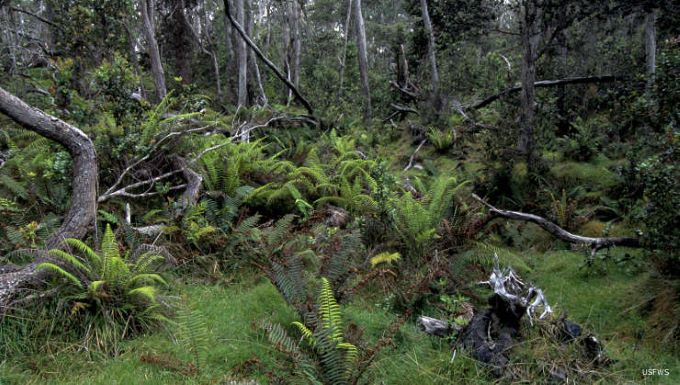
Hakalau Forest, Hawai“i; nearly 90% of Hawaiian flora is unique to the Islands

A recent article by Yang et al. 2021 (full citation at the end of this blog) seeks to determine the extent to which introduced plants reduce the uniqueness of regional floras. They analyzed data from 658 regions covering about 65.7% of the Earth’s ice-free land surface and about 62.3% of the planet’s known plant species.

They found strong homogenization of plant species’ taxonomic and phylogenetic diversity results from introductions of plant species to ecosystems beyond their native range. Homogenization caused by regional extinctions of native floral species occurs much less frequently.

There are two aspects of a region’s floral uniqueness. One is the number of species that it shares with other regions. This is taxonomic uniqueness. The other is the distinctiveness of the evolutionary history of the region. When several species are endemic to a region’s flora, and lack close relatives in other regions, that equals phylogenetic uniqueness.

The effect of a species introduction differs depending on which of these aspects one focuses on. Thus, naturalization of a species closely related to native species (e.g., a congeneric species) will have less impact on the phylogenetic floristic uniqueness of the region than naturalization by a distantly related species. Taxonomic uniqueness, however, will be affected to the same degree, irrespective of the phylogenetic distance between the naturalized and native species.

Yang et al. found strong homogenization of plant diversity. They found that species introductions increased the taxonomic similarity in 90.7% of all regional pairs and phylogenetic similarity in 77.2% of all region pairs. Most homogenization results from introductions of plant species to ecosystems beyond their native range. Homogenization caused by regional extinctions of native floral species occurs much less frequently.

This loss of regional biotic uniqueness or distinctiveness changes biotic interactions and species assemblages. These, in turn, have ecological and evolutionary consequences at larger scales and higher levels.

The degree of homogenization between regions’ floras depends on three factors:

1) The distance between the donor and recipient regions. Since nearby regions share more species, an introduction from a more distant origin is more likely to be a novel species and so contribute to homogenization of “donor” and “receiving” floras.

2) Climatic similarity, especially temperature. A plant species introduced from a climatically similar but geographically distant place is more likely to establish than a species from a different climatic zone. As a result, the recipient area’s flora is changed to more closely resemble the flora of the donor region with which it shares climatic conditions – regardless of the distance between them.

3) The level of exchange of goods and people between two regions. The higher the rate of exchange between two regions, the greater the chance that a species will be introduced and become established. Yang et al. used the existence of current or past administrative relationships (e.g., colonial relationship) between two regions as a proxy for intensity of trade and transport between donor and recipient regions. They found that floras of regions with current or past administrative links have taxonomically become more similar to each other than the floras of regions with no such links.

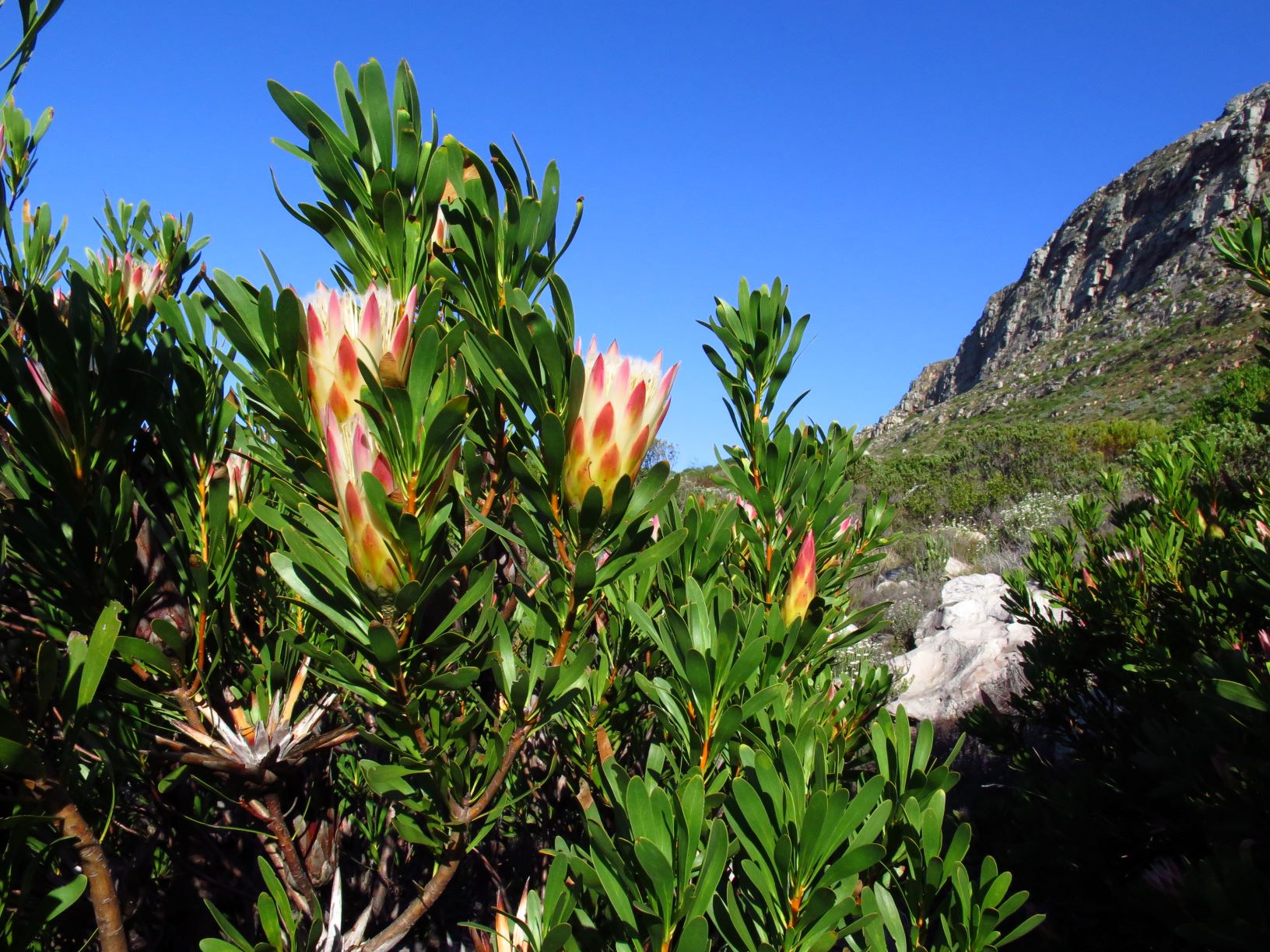
flora of the Cape Floral Kingdom – South Africa; photo from Michael Wingfield

Establishment of introduced species can increase floristic similarity of the donor and recipient regions (= floristic homogenization) when the species is native to one of the two regions and naturalizes in the other, or when it is not native to both regions and naturalizes in both. On the other hand, a species introduction can decrease the floristic similarity of the two regions (i.e., enhance floristic differentiation) when the species is not native to both regions but naturalized in only one.  

Homogenization hotspots differed slightly depending on whether one focused on taxonomic or phylogenetic aspects.

The regions with the greatest average increase in taxonomic similarity with other regions due to naturalized alien species were New Zealand, portions of Australia, and many oceanic islands. The Australasian situation probably reflects its long biogeographic isolation from other parts of the globe and its highly unique native flora. As a result, nearly all non-native plants introduced to Australasia strongly increase levels of its floristic similarity to the rest of the world. Oceanic islands have species-poor floras with large proportions of unique endemics. They have also received high numbers of naturalized alien plants.

Hotspots of phylogenetic homogenization on continents are the same as those for taxonomic homogenization, but this is not true for islands. Yang et al. think this is because islands’ native floras were established by natural colonization from nearby continental floras so – despite subsequent speciation – they retain their phylogenetic relationship to the donor areas’ floras.  

Yang et al. concede that they lacked high-quality data on native and naturalized alien species lists for a third of Earth’s ice-free terrestrial surface, especially Africa, Eastern Europe, and tropical Asia. They believe, however, that data from these regions are unlikely to change the overall finding.  (Scientists are beginning to compile lists of forest pests in Africa). link to blog

Yang et al. note that introduction and naturalization of alien species are likely to increase in the future, thusaccelerating floristic homogenization. The ecological, evolutionary and socioeconomic consequences are largely unknown.They call for stronger biosecurity regulations of trade and transport and other measures to protect native vegetation.

SOURCE

Yang, Q., P. Weigelt, T.S. Fristoe, Z. Zhang, H. Kreft, A. Stein, H. Seebens, W. Dawson, F. Essl, C. König, B. Lenzner, J. Pergl, R. Pouteau, P. Pyšek, M. Winter, A.L. Ebel, N. Fuentes, E.L.H. Giehl, J. Kartesz, P. Krestov, T. Kukk, M. Nishino, A. Kupriyanov, J.L. Villaseñor, J.J. Wieringa, A. Zeddam, E. Zykova  and M. van Kleunen. 2021. The global loss of floristic uniqueness. NATURE COMMUNICATIONS (2021) 12:7290. https://doi.org/10.1038/s41467-021-27603-y

Posted by Faith Campbell

We welcome comments that supplement or correct factual information, suggest new approaches, or promote thoughtful consideration. We post comments that disagree with us — but not those we judge to be not civil or inflammatory.

For a detailed discussion of the policies and practices that have allowed these pests to enter and spread – and that do not promote effective restoration strategies – review the Fading Forests report at http://treeimprovement.utk.edu/FadingForests.htm
Forest Pest Threat to Africa

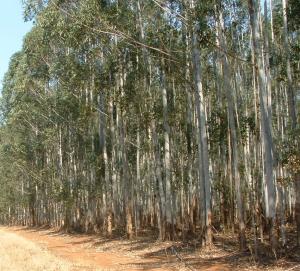
Eucalyptus plantation in Kwa-Zulu-Natal, South Africa; Kwa-Zulu-Natal Dept. of Transportation

Graziosi et al. (full citation at the end of the blog) point out that trees are crucial for Africa’s future. Eight hundred of the 4,500–6,000 indigenous tree species provide significant food. As elsewhere, trees provide wood and other extractive resources essential for economic growth. They also support biodiversity and mitigate current and impending climatic variations. Africa– especially the Sub-Saharan countries – is already considered highly vulnerable to climate change.

According to Graziosi et al., the cumulative economic impact of all invasive species in Africa is expected to exceed $1.2 billion per year. The total invasion cost as a proportion of GDP for many African countries is among the highest in the world. This raises the stakes for developing locally appropriate management strategies across the continent.

Responding effectively to this threat is hampered by gaps in data as well as some countries’ limited capacity for biosecurity. Graziosi et al. say that improved knowledge of taxonomy, distribution, and damage caused by these organisms is essential. Such knoledge will be crucial to develop continent-wide strategies to manage this emergency and to enhance capacity for country-level interventions.

Native and alien pests. Indigenous and plantation trees

Africa’s trees and their services are threatened by both native pests and accelerating introductions of pests and diseases from elsewhere. Long-established and new invaders increasingly affect planted forests of exotic eucalypts, pines, and Australian acacias, as well as important indigenous trees. Graziosi et al. note that the U.N. Food and Agriculture Organization (FAO) in an annex to a report issued in 2009 recorded about100 species of forest pests affecting trees in planted and natural forests across Africa. Half are native insects and pathogens, a third are alien; about 15% are of unknown origin. Considering all pests, broadleaf trees (predominantly native) are most affected.

The result is damage from the local – e.g., to rural livelihoods – to the continental – e.g., to economic development and biological diversity across Africa. Moreover, pests exacerbate widespread loss of forest cover. Overall, African forests are shrinking at the rate of almost 0.5% annually. This deforestation is affecting particularly natural forests; planted forests are actually growing 1.3% annually.  

Exotic plantation trees face severe threats. More than 47 native and 19 non-indigenous defoliators, sap-feeders, wood- and shoot-borers attack plantations of Acacia spp., Eucalyptus spp., Pinus spp., and teak (Tectona grandis). About 90% of pathogens of plantation forestry are either non-indigenous or of uncertain origin. Eucalyptus alone are severely damaged by 15 species of pathogens. These organisms are listed in Tables 1 and 2.

Numerous native insect species, known as pests of indigenous trees, have reportedly widened their host range and now damage exotic trees too. Some introduced insects appear to pose significant threats to native tree species. One example is the Cypress aphid Cinara cupressi, which is attacking both exotic cypress plantations and the native African cedar Juniperus procera. Some fungi in the family Botryosphaeriaceae are latent pathogens infecting a wide range of hosts including indigenous Acacia. Dieback of large baobab trees was recently reported from southern Africa. While various microorganisms are associated with these symptoms, the specific cause is still uncertain.

A baobab tree in Limpopo region of South Africa; Wikimedia

The risk currently appears to be particularly high in South Africa. The country’s flora is highly diverse and has a high level of endemism. In fact, South Africa is home to the Earth’s smallest floral kingdom, the Cape Floral Kingdom. It is also the apparent hot spot for pest introductions from overseas (see below). Phytophthora cinnamomi is attacking native Proteaceae in South Africa. According to Graziosi et al., an “incredible diversity” of Phytophthora taxa is present, portending threats to additional plant species. Other pathogens are attacking native conifers in the Podocarpus genus, Ekebergia capensis (Meliaceae), and Syzygium trees.

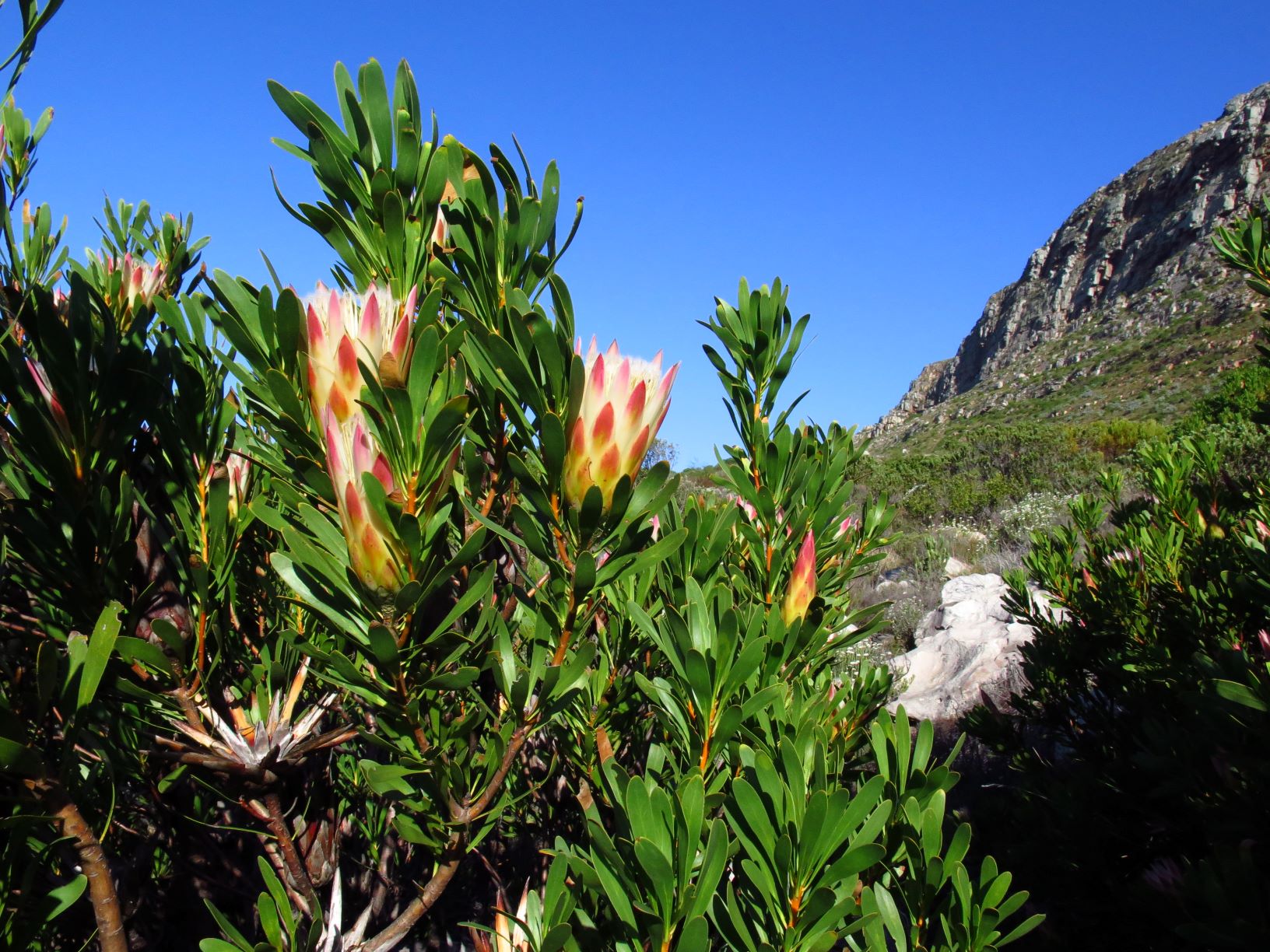
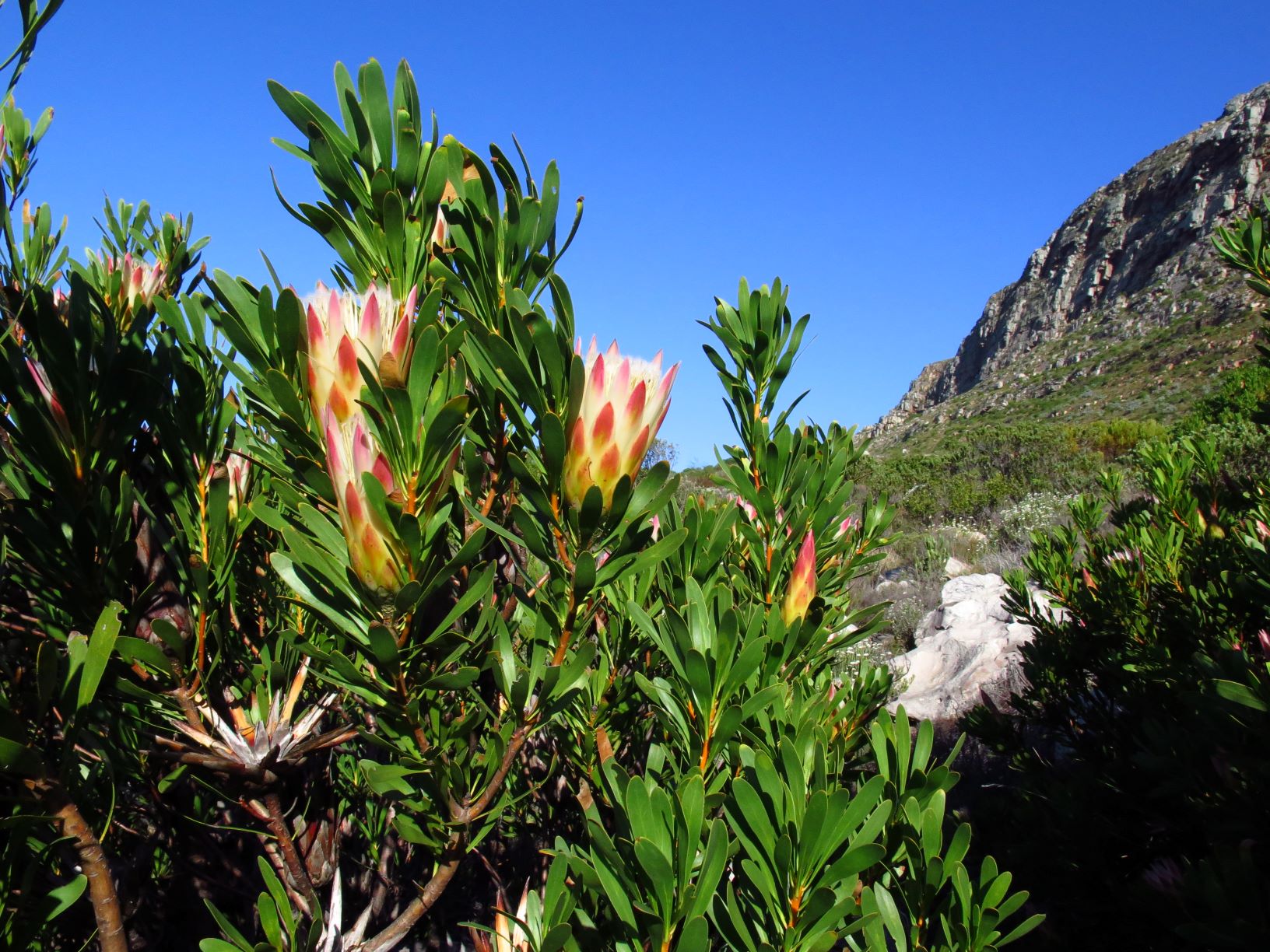
Protea repens and fynbos vegetation near Table Mountain; photo by Mike Wingfield

There is a clear pattern to further spread: pests first introduced to South Africa often spread. Examples include several insects and pathogens on Eucalyptus and the wood-boring pest of pine Sirex noctilio. This pattern is explained by two main factors. South Africa has a high capacity to detect introduced species. Also, there is an active plantation forestry sector that imports propagules. This offers opportunities for contaminating organisms to be introduced simultaneously.

Furthermore, as Graziosi et al. note, determining the geographic origin of significant proportion of pathogens is extremely difficult – an issue I will discuss in a separate blog based on a publication by primarily South African scientists. Some non-indigenous pathogens have been on the African continent for a long time. The Armillaria root rot pathogen apparently was introduced to South Africa with potted plants from Europe in the 1600s! They note also that many non-indigenous pathogens are probably already established on the continent but not yet detected due to the organisms’ cryptic nature and lagging detection abilities.

The future of African forests

African countries expect economic growth with associated increased trade with countries off-continent. The probable result will be to accelerate the rate of species introductions and spread. However, as climate change worsens, managers will find it increasingly difficult both to predict introduced species’ impact and to implement management programs.

This led Graziosi et al. to call for urgent improvements in plant biosecurity across the continent. They advocate improved coordination at regional and international levels. The list of needed actions is a familiar one: development and application of improved diagnostic tools, updated plant exchange regulations, and revised trade policies.

Graziosi et al. also call for development of effective control and management options. They suggest biocontrol, innovative silviculture practices, and selection of resistant trees. The good news is that African countries have already initiated programs to conserve tree germplasm and domesticate indigenous species, including establishment of field gene banks of high-priority indigenous trees. I have previously praised South African efforts, specifically reports here and here.

Mudada, Mapope, and Ngezimana (2022) describe the risk from introduced species to agriculture and human well-being in southern Africa beyond forestry. The region is already ravaged by food insecurities and hidden hunger. It would be devastated if the global average of crop loss due to plant diseases (10-16%) occurs there. They say these losses can be avoided with improved biosecurity mechanisms focused primarily on pest exclusion and plant quarantine regulations.

SOURCES

Graziosi, I. M. Tembo, J. Kuate, A. Muchugi. 2020 Pests and diseases of trees in Africa: A growing continental emergency. Plants People Planet DOI: 10.1002/ppp3.31 

Mudada, N. Mapope, N., and Ngezimana, W. 2022 – The threat of transboundary plant pathogens to agricultural trade in Southern Africa: a perspective on Zimbabwe’s plant biosecurity – A review. Plant Pathology & Quarantine 12(1), 1–33, Doi 10.5943/ppq/12/1/1

Posted by Faith Campbell

We welcome comments that supplement or correct factual information, suggest new approaches, or promote thoughtful consideration. We post comments that disagree with us — but not those we judge to be not civil or inflammatory.

For a detailed discussion of the policies and practices that have allowed these pests to enter the United States and spread – and that do not promote effective restoration strategies – review the Fading Forests report at http://treeimprovement.utk.edu/FadingForests.htm

British & Irish Efforts to Prevent or Combat Pathogens

I often blog about the forest pest situation in the UK because its scientists provide lots of easily accessible information. This blog has new information on Britain and – I am pleased to add – on Ireland!

European ash trees alongside the Malham Cove path in Yorkshire; KA via geograph

UK Overview

British woodlands cover just 13% of total land area (just over one-third of the European average of 37%). Their value is increasingly recognized—especially their role in combating climate change through carbon sequestration, flood mitigation and urban cooling. Realization of these benefits is driving new policy to increase woodland cover. In 2019–2020, 13,700 ha of new woodland was created in the United Kingdom (Green et al. 2021). The U.K. government has pledged to plant 30,000 ha of broadleaf and coniferous woodland every year as part of its climate change mitigation strategy (Donald et al. 2021). One example, the ‘northern forest’ scheme, involves planting 50 million native trees over 25 years (Green et al. 2021).

Risks Associated with Conservation Plantings or Translocations

On-going conservation planting efforts plus these ambitious new plans prompted Donald et al. (2021) to assess risk that pathogens might be introduced into the environment as a result of putting native plants in natural habitats. The focus of their study is the planting of common juniper (Juniperus communis)in habitats throughout England, Scotland, and Wales.

Juniper killed by Phytophthora austrocedri; photo from British Forest Research

Juniper is one of three native conifers in the UK. It has been in decline for decades, which conservationists hope to reverse. Now, though, juniper populations are experiencing significant mortality from disease. In 2012, the causal agent was determined to be the non-native pathogen Phytophthora austrocedri. The presence of a single genotype in ~60 geographically separate locations across Scotland and England lends support to idea that the pathogen is being introduced to these sites through some human mechanism. Phytophthora austrocedri has not [yet] been detected in Northern Ireland.

British and European nurseries have contained many Phytophthora pathogens. Hence Donald et al. (2021) sought to determine whether the pathogen is being introduced through use of nursery stock in these well-intentioned plantings. (I have blogged about a similar problem in California restoration plantings.)

 The authors found that 19% of P. austrocedri detections are within 2 km of a known planting. The more frequently junipers were planted at a site, and the more cuttings planted during each planting effort, the higher the likelihood that nearby junipers would be infested by P. austrocedri. They conclude that transplanting material is a significant risk pathway for the introduction of disease. The key factor appeared to be the origin of the material. A higher percentage of stock at sites with P. austrocedri outbreaks for which data were available had been raised in a central location by the organization doing the planting or obtained from commercial nurseries. No P. austrocedri was detected in Wales. There, unlike in Scotland or England, the majority of plants were sourced from a commercial nursery that only grew juniper collected from Welsh populations and did not trade with other retailers.

Planting juniper has risen rapidly since the mid-1990s. The highest percentage of planting events co-occurring with disease outbreaks were conducted in 2000–2009. It is likely that there is a time lag between planting and disease detectability. If so, the even larger planting effort since 2010 probably will produce many more P. austrocedri outbreaks that will become visible in the future. And that might not be the end. Planting guidelines have been revised based on pathogen detection. However, the entities doing the planting have not changed their approach, especially regarding site selection.

Donald et al. (2021) also found serious data gaps in these programs beyond the health of propagules. They found:

1) very incomplete knowledge of which organizations are doing the planting;

2) poor attention to traceability of source material; and

3) very little follow-up  to check the success of planting projects.

The authors concluded that planting projects have had mixed success in restoring juniper populations. They called for changes in planting strategy to reduce the risks of pathogen introduction.

They also note that efforts to slow the spread of P. austrocedri – for which there is no treatment – are more expensive and less likely to succeed than measures aimed at ensuring that nurseries are free of Phytophthoras. California native plant nurseries have shown that nurseries can maintain Phytophthora-free stock.

Risk of Nursery-spread Pathogens & Willingness of UK Nurseries to Adopt BMPs

Great Britain has experienced an accelerating series of Phytophthora outbreaks and disease epidemics affecting British trees. Introductions detected just since early 2000s include P. ramorum, P. kernoviae, P. lateralis, P. austrocedri and P. pseudosyringae. In all the above cases, imported planting material either is confirmed or strongly implicated as the likely route of intro (Green et al. 2021).

To address this threat – and with massive planting projects proposed – in 2016 the British forest research entity initiated the multidisciplinary ”Phyto-threats” project. Its goal was to understand the drivers of rising Phytophthora infestations and opportunities for mitigating them. The project:

(i) examined Phytophthora distribution and diversity in different nursery management systems;

(ii) assessed the social and economic feasibility of a nursery accreditation programs to curb the risk; and

(iii) identified Phytophthora risks by modelling introduction, establishment and spread of species in relation to biological characteristics, environmental factors and trade flows.

The assessment of Phytophthora presence in nurseries involved collecting 3,624 water and root samples from 163 host genera growing in plant nurseries across the U.K. over a three-year period. Sampling was not random but targetted to facilities thought to harbor Phytophthora. About half of the samples tested positive. They identified 63 species of Phytophthora. Among the most commonly detected species are several that are considered pathogenic — P. cinnamomi, P. cryptogea/pseudocryptogea, P. syringae, P. cactorum, P. cambivora, P. plurivora and P. nicotianae. P. ramorum was found in 12 samples; P. lateralis and P. austrocedri were each found in 10 samples. Several Phytophthora species are potential new records for the U.K. (i.e., P. castanetorum, P. palmivora, P. pseudotsugae,P. tentaculata,P. terminalis, P. uliginosa).

They also saw evidence for Phytophthora root infections in newly arrived plants imported from the European Union.

Their finding raised question about whether Phytophthora can be transported in peat-free potting media, that is, coconut fiber or coir.

The widespread presence and the diversity of Phytophthora found in nurseries was linked to high-risk management practices. These included: careless disposal of culled plants, the near presence of trees along nursery boundaries, and, especially, open water sources. [These factors are essentially identical to infection-facilitating factors found by researchers in California, Oregon, and Washington State. See advisory issued by Oregon State University Extension.]

The project also assessed the feasibility of nursery accreditation programs. The authors consulted widely with nursery owners and customers and conducted a cost-benefit analysis. Regarding nursery practices, owners claimed they were already addressing issues related to water storage in enclosed tanks, clean/covered storage of growing media, installation of drains or free-draining gravel beds, raised benches, and tool disinfestation stations. Therefore the new analysis focused on seven other topics: water testing for pathogens; water treatment s; quarantine holding areas for imported plants; composting or incineration of culled plants; boot and vehicle washing stations; and purchase from only trusted or accredited UK suppliers.

The study found that nurseries would support an accreditation program. However, their support required that costs not be “prohibitive”, actions required not be “unreasonable”, the scheme provide a safety net; and that measures exist to deter non-compliance. Nursery staff wanted to see evidence of consumer demand – a willingness to drive farther to buy “clean” plants, or to pay higher prices for them. The cost-benefit analysis reached a worrying conclusion: nurseries would benefit financially from introducing best practices only when the program would prevent introduction of a wider range of pests and pathogens, not only Phytophthoras. Green et al. (2021) note that the overall net benefit to society from nurseries adopting best practices would be much more substantial. That is, healthy trees are important in meeting carbon sequestration goals. They did not explore whether society should subsidize nurseries’ participation in BMP accreditation programs.

Ireland and Northern Ireland

The island of Ireland (Ireland and Northern Ireland) is thought to have fewer plant pests than other European countries due to its island status and because of its national and international phytosanitary regulations. O’Hanlon et al. (2022) do not mention another possible factor: the likelihood that import volumes to Ireland were probably much lower until the recent vitalization of the Republic’s economy.

O’Hanlon et al. (2022) sought to establish baseline information so scientists can track changes as trade increases and the climate changes. Their search of the literature and unpublished sources identified 396 forest pests on the island, including 11 bacteria, 20 oomycetes, 150 fungi and 215 arthropods. They believe these figures are all probably underestimates. At least 44 of the pests or pathogens are probably non-native to Ireland. (Determining original ranges is difficult, especially for pathogens.)

The Republic of Ireland is one of the least forested countries in Europe. Forests cover ~ 11% of the land area. In Northern Ireland, it is even less: ~ 8%. These forests are predominantly plantations of exotic species. In the Republic, Picea sitchensis makes up 51% of the forest area, Pinus contorta another 10%. Other exotic species planted are Picea abies (4%) and Larix kaempferi. In Northern Ireland, ~ 62% of the forest area is composed of conifer mixtures. Planting of P. sitchensis has accelerated recently, probably as a result of removal of ash and larch because of their vulnerability to pests already established on the island.

Sitka spruce plantation in U.K. Adam Ward, Geograph.org.uk

O’Hanlon et al. (2022) note the great vulnerability of these monocultures to pests. They found 51 pests native to Ireland that are associated with non-indigenous tree genera. They are also concerned about pests introduced from other parts of Europe. For example, green spruce aphid (Elatobium abietinum, native to Central and Eastern Europe) is already attacking Sitka spruce. A second pest of spruce, Ips typographus, which is native to much of Europe but not the British/Irish isles, is not yet established on the island. Northern Ireland imports bark and wood from Europe for processing. Ips typographus has been associated with at least one such shipment.

Non-native forest pests and pathogens also threaten tree species native to Ireland. These include:

Dutch elm disease caused by fungi from the genus Ophiostoma vectored by bark beetles of the genus Scolytus. The second outbreak, caused by the more aggressive pathogen 0. novo-ulmi, was detected in Britain in 1965 and in Ireland in 1977. It caused considerable mortality of elms in Northern Ireland throughout 1970s.

Phytophthora ramorum was recognized as a threat to forests in Europe only in 2010, when extensive mortality of Japanese larch was detected in Britain. The Republic of Ireland has only the EU1 lineage of the species. Northern Ireland has both the EU1 and EU2 lineages – the former only in nurseries.

Phytophthora disease of alder (caused by several Phytophthora species) was confirmed in Ireland in 2001. However, symptoms of the disease were noted as far back as 1995. It is likely that there are many other Phytophthora species present but not yet recorded.

Ash dieback disease (causal agent Hymenoscyphus fraxineus) on European ash (Fraxinus excelsior) has spread across Europe from Poland beginning in the 1990s. It was confirmed on the Irish island in 2012. Authorities made significant attempts to eradicate the disease, but were not successful. It is now recorded in every county in both Northern Ireland and Ireland. Damage to the economy, environment, and society are expected to be large. The Irish government had helped plant more than 13,000 ha of ash between 1992 and 2012. An estimated 2.9 million ash trees are in Northern Irish hedgerows. British scientists say more than 1,000 fauna species are associated with ash trees.

A second pest on ash — ash sawfly (Tomostethus nigritus) — was detected in Northern Ireland in 2016; it has defoliated hundreds of trees in Belfast.

In recent years, forest pest incursions have increased at a relatively steady rate, comparable to other countries, including Britain. In the 1970s, 26 species were reported; in the 1980s, 27; in the 1990s, 16; in the 2000s, 37; between 2010 and 2017, 28. See the graph in Fig. 2 

There is a strong link between pest and pathogen findings in Britain and Ireland. O’Hanlon et al. (2021) list 16 insects and pathogens detected in Britain after 1960 which were later detected in Ireland. The list includes H. fraxineus, 0. novo-ulmi, Phytophthora ramorum, and Phytophthora lateralis. The average delay was 10 years. The authors note that the two islands share similar ecological conditions and hosts, are nearby, plus there is substantial travel and exchange of goods between them. For example, in 2018 an estimated 30,000 metric tonnes of conifer roundwood was sent from Scotland to Northern Ireland for processing.

There are very limited physical checks on plants or plant products moving between Ireland and Northern Ireland. The exception is conifer wood that is not bark-free. European Union regulations require that such shipments be accompanied by a plant passport that certifies that the wood has been inspected by a professional operator authorized by the NPPO of the exporting country. What rules will apply now, after BREXIT, remains unclear. Because of concerns about re-igniting sectarian conflict, most political figures want the border on the island to be almost invisible.

The Europhyt database for the period February 2006 – November 2016 documented interception of numerous high-risk pests at the British and Irish borders, including Anoplophora chinensis and A. glabripennis; I. typographus; Monochamus alternatus; H. fraxineus; and P. ramorum O’Hanlon et al. (2021). believe many more go undetected. O’Hanlon et al. (2021) report specifically on detections on commodities from China, especially on wood packaging. One detection on imported plants of interest to me is that of Discula destructiva (dogwood anthracnose). The article does not mention the origin of the shipment. The native British dogwood, Cornus sanguinea, would presumably be vulnerable to this Asian fungus, which has already caused widespread mortality of woodland dogwoods in North America.

Cornus sanguinea; photo by Hans Hillewaert

In addition to reviewing the current situation, O’Hanlon et al. (2021) note pertinent facts about current policy and future science. First, while the two political units on the island have a history of plant pathology expertise, there has recently been a reduction in the number of practicing forest pathologists, mycologists and entomologists. (I and others have complained about the same deterioration in expertise in the United States.)

Second, they describe the years of delay before official recognition that the pathogen Gremmeniella abietina was present in Northern Ireland. This delay resulted from officials refused to accept data from molecular detection tools.

O’Hanlon et al. (2021) add their voice to others criticizing the international phytosanitary system (they cite six major publications: Brasier 2008; Liebhold el. al. 2012; Santini et al. 2012; Eschen et al. 2015; Jung et al. 2016; Meurisse et al. 2019). The failures are (i) visual inspections can miss asymptomatic infections, (ii) limited resources mean only a small proportion of commodities can be inspected, (iii) allowing the use of fungicides masks disease symptoms on plants, (iv) list-based regulations don’t address undescribed organisms and (v) countries vary in how aggressively they carry out the required phytosanitary procedures. O’Hanlon et al. (2021) conclude that “Until these issues are addressed it is likely further increases in the numbers of non-native pests and pathogens of trees will increase.”

The authors note that Eschen et al. (2018) suggested that risk analysis should focus on the commodity (commodity risk assessment) rather than on an individual pest. I have made a similar suggestion, although less clearly worded.  

Finally, O’Hanlon et al. (2021) note that climate change is expected to increase the island’s vulnerability to tree-killing pests and pathogens due to fewer frost days, more rain in winter, increased chance of drought in summer, increased average annual temperatures, and more frequent weather extremes. These changes are likely to affect the amount of damage caused by both native and introduced pests organisms.  Range shifts in both pests and pathogens and their natural enemies; physiological or behavioral responses in the pests; phenological changes in the hosts; and increased stress on the trees will combine to affect damage.

SOURCES

Donald, F.; Purse, B.V.; Green, S. 2021. Investigating the Role of Restoration Plantings in Introducing Disease—A Case Study Using Phytophthora [UK] Forests 2021, 12, 764

Green, S., D.E.L. Cooke, M. Dunn, L. Barwell, B. Purse, D.S. Chapman, G. Valatin, A. Schlenzig, J. Barbrook, T. Pettitt, C. Price, A. Pérez-Sierra, D. Frederickson-Matika, L. Pritchard, P. Thorpe, P.J.A. Cock, E. Randall, B. Keillor and M. Marzano. 2021. PHYTO-THREATS: Addressing Threats to UK Forests and Woodlands from Phytophthora; Identifying Risks of Spread in Trade and Methods for Mitigation. Forests 2021, 12, 1617 https://doi.org/10.3390/f12121617ý

O’Hanlon, R., Ryan, C., Choiseul, J., Murchie, A.K. and Williams, C. D. 2021 Catalogue of P&P of trees on the island of Ireland. Biology and Enviro

Proceedings of the Royal Irish Academy 2021. Vol. 121, No. 1.12-45 DOI: 10.3318/ BIOE.2021.02

Posted by Faith Campbell

We welcome comments that supplement or correct factual information, suggest new approaches, or promote thoughtful consideration. We post comments that disagree with us — but not those we judge to be not civil or inflammatory.

For a detailed discussion of the policies and practices that have allowed these pests to enter and spread – and that do not promote effective restoration strategies – review the Fading Forests report at http://treeimprovement.utk.edu/FadingForests.htm
“Global Tree Assessment”: #s at Risk, Threats, & Carbon Sequestration Planting

Kew Gardens U.K., home to Botanic Gardens Conservation International; Wikipedia

A massive international effort has completed a “Global Tree Assessment: State of Earth’s Trees”. This is the result of five years’ effort; it aims at a comprehensive assessment of the conservation status of all the Earth’s trees. As a result of their work, the authors issue a call to action and include specific recommendations. 

The leads were the Botanic Gardens Conservation International (BGCI) and International Union for Conservation of Nature’s (IUCN) Species Survival Commission (SSC) Global Tree Specialist Group. They were assisted by about 60 cooperating institutions and more than 500 individual experts. The Morton Arboretum was a major U.S. contributor. Here, my focus is on the global assessment. An accompanying blog contains my analysis of reports on the Morton Arboretum report for the U.S.

The Global Tree Assessment is the largest initiative in the history of the IUCN Red List process.  (This process is described in Box 3 of the report, on p. 12; and on p. 40.) As of the end of 2020, IUCN Red List assessments evaluated 28,463 tree species, representing half of all known tree species. Organizers hope to complete comprehensive conservation assessments of all tree species for inclusion on the IUCN Red List by 2023. Other sources utilized included draft Red List profiles and national-level assessments of those species that are found in only one country.

SUMMARY OF FINDINGS

Using these sources, the Global Tree Assessment evaluated 58,497 tree species worldwide. The study determined that 30% are threatened with extinction. This number could change significantly if a large proportion of the 7,700 species (13.2%) recorded as “Data Deficient” turn out to be at risk. At least 142 species are recorded as already extinct in the wild. Two-fifths (41.5%) are considered to be not at risk. Detailed species’ evaluations are provided at GlobalTreeSearch or GlobalTree Portal.

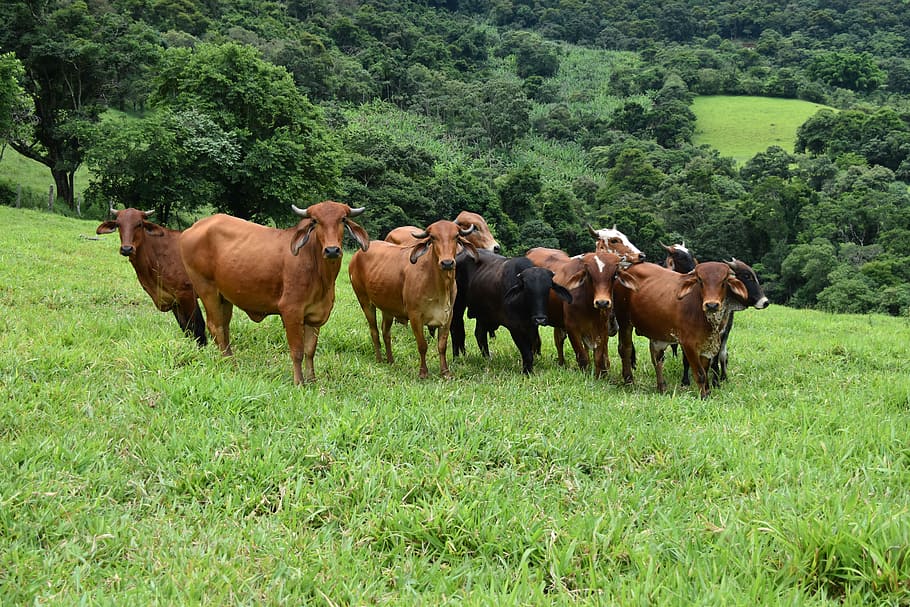
Brazilian forest converted to cattle pasture

The principal threats to trees globally are forest clearance and other forms of habitat loss (at least 65% of species) and direct exploitation for timber and other products (27% or more). The spread of non-native pests is said to affect 5% of the species. Climate change is having a measurable impact on 4% of the species and is expected to increase. (The situation in the United States differs significantly. Overexploitation plays almost no role and on-going habitat loss is important for only a few of the at-risk species.)

The authors decry the lack of attention, historically, to tree endangerment given trees’ ecological, cultural and economic importance. They hope that increased attention to the biodiversity crisis — an estimated 1 million animal and plant species threatened with extinction — and trees’ importance as carbon sinks will lead to increased conservation of trees and forests.  They warn, however, that tree-planting programs must put the right species in the right place, including utilizing species that are under threat. In other words, tree planting practices need to change. They note that a community of botanists and conservationists is ready to assist.

Centers of tree species diversity – and of species under threat – are in Central and South America, followed by the other tropical regions of Southeast Asia and Africa. Fifty-eight percent of tree species are single country endemics. The highest proportion of endemism is found in New Zealand, Madagascar and New Caledonia. The region with the highest proportion of native tree species under threat is tropical Africa, especially Madagascar. The highest numbers of species “Not Evaluated” or “Data Deficient” are in IndoMalaya (tropical Asia) and Oceania. In those regions, about a third of species fall in one of those categories.

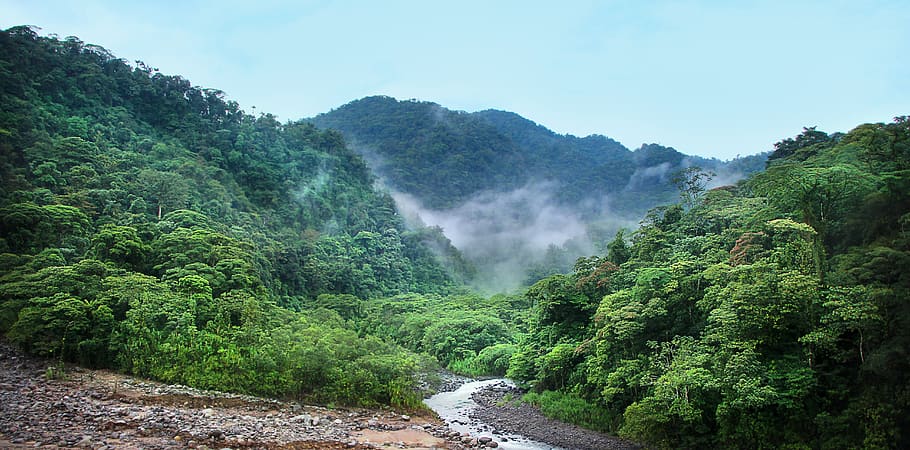
forest in Central America

The assessment authors fear ecosystem collapse caused by major, large-scale disturbance events. Examples are recent unprecedented fires in California, southern Australia, Indonesia, and the Amazon (although they don’t mention Siberia). They also note mass mortality events over large areas of forest caused by other factors, including drought and heat stress and the increased incidence of pests. These events have led to a worrying decline of dominant tree species currently evaluated as “Least Concern.” Citing a 2010 report, they list as examples spruce in Alaska, lodgepole pine in British Columbia, aspen in Saskatchewan and Alberta, and Colorado pinon pine (Pinus edulis) in the American southwest.

The authors emphasize the importance of preventing extinction of monotypic tree families. Such events would represent a disproportionate loss of unique evolutionary history, biological diversity, and potential for future evolution. Of the 257 plant families that include trees, 12 are monotypic. They are scattered around the tropics and former Gondwanaland; none is found in the Neo- or Paleoarctic regions. While extinctions to date have rarely affected plants above the rank of genus, the global assessment authors worry that the on-going sixth extinction wave might result in extinctions at the genus or family level.

In this context, the assessment made a particular effort to evaluate the status of species representing the survival of Gondwanian Rainforest lineages. They found that 29% of these tree species are threatened with extinction. Two case studies focus on Australia. They mention habitat conversion but not two non-native pathogens widespread in Australia, Phytophthora cinnamomi and Austropuccinia psidii.  

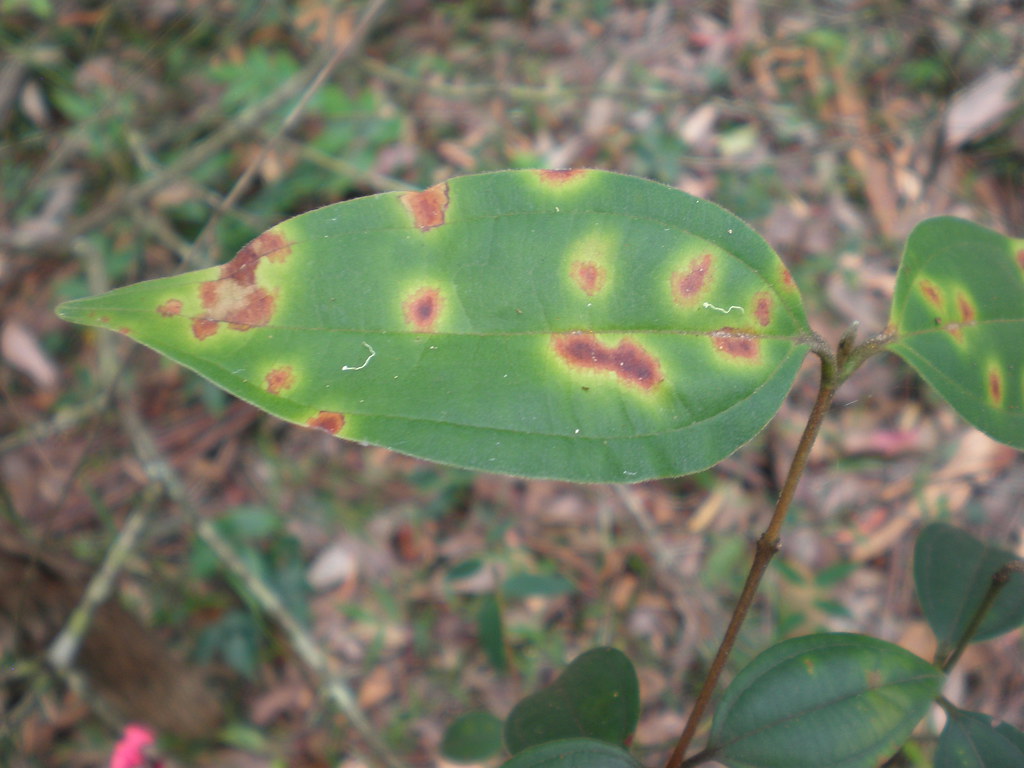
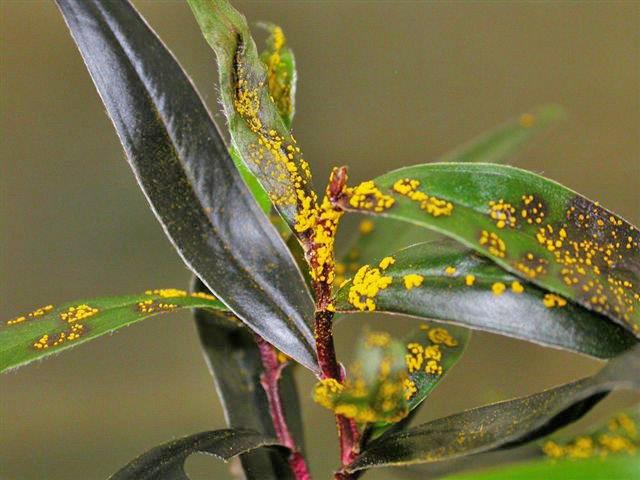
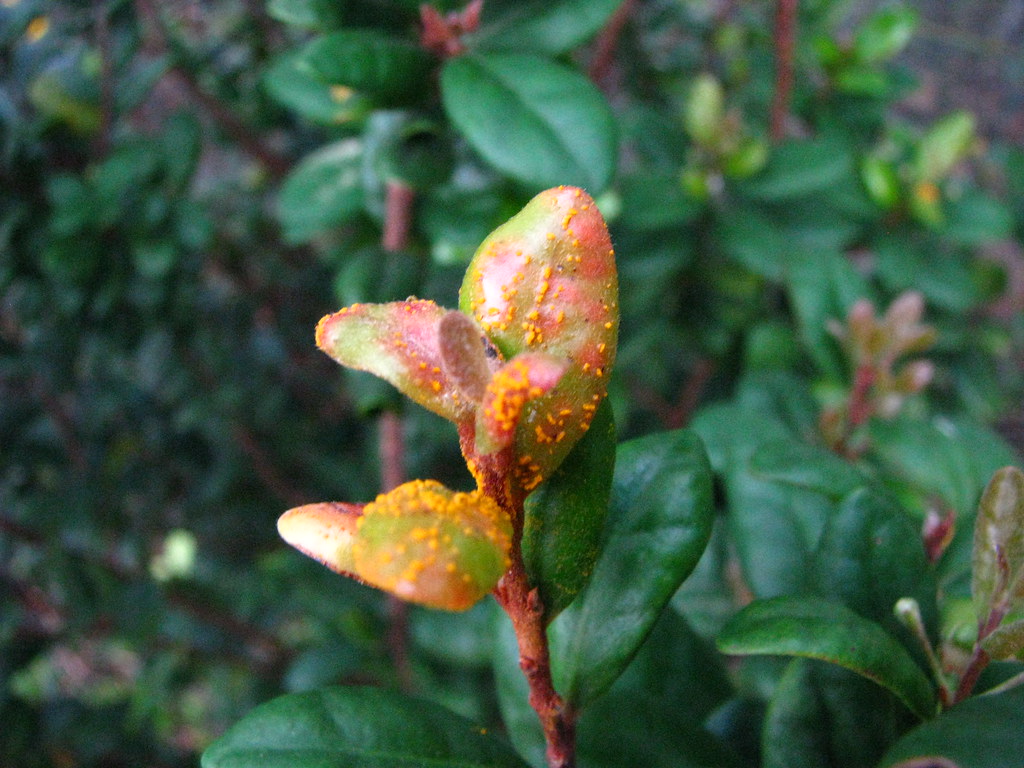
formerly common, now endangered, Australian tree Rhodamnia rubescens, infected by Austropuccinia psidii; photo courtesy of Flickr

The proportion of total tree diversity designated as threatened is highest on island nations, e.g., 69% of the trees on St. Helena, 59% of the trees on Madagascar, 57% of the trees on Mauritius. Hawai`i is not treated separately from the United States as a whole. According to Megan Barstow of BGCI (pers. comm.), the just updated IUCN Red List includes 214 threatened tree species in Hawai`i.

[For the U.S. overall, the IUCN reports 1,424 tree species, of which 342 (24%) are considered threatened. In the companion U.S. assessment, the Morton Arboretum and collaborators found that 11% of 841 continental U.S. tree species are threatened.]

MAIN THREATS TO TREES

Habitat loss

Over the past 300 years, global forest area has decreased by about 40%. Conversion of land for crops and pasture continues to threaten more tree species than any other known threat. Additional losses are caused by conversion for urban and industrial development and transport corridors, and by changes in fire regimes. In total, these factors cumulatively threaten 78% of all tree species, 84% if one includes conversion to wood plantations.

Caribbean mahogany (Swietenia mahogani); photo by Miguel Vieria

Forest Exploitation

Exploitation, especially for timber, is the second greatest threat globally, affecting 27% of tree species (more than 7,400 tree species). The report focuses on centuries of harvest of valuable tropical timbers and exploitation for fuelwood, with an emphasis on Madagascar, where nearly half of all tree species (117 out of 244 tree species) are threatened.

Pests and diseases

Tree species are impacted by a wide range of pests and diseases that are spread by natural and artificial causes. Invasive and other problematic species are recorded as threats for 1,356 tree species (5%) recorded on the IUCN Red List. This figure might be low because some of the information is outdated (see my discussion of American beech in the companion blog about the North American report, here.)  Also, climate change is altering the survival opportunities for many pests and diseases in new environments. The example given is the ash genus (Fraxinus), under attack by not only the emerald ash borer in North America and now Russia and Eastern Europe but also the disease Ash Dieback across Europe.  The report refers readers to the International Plant Sentinel Network for early warning system of new and emerging pest and pathogen risks, as well as help in coordinating responses.

black ash (Fraxinus nigra) swamp; Flickr

Climate Change

Climate change is impacting all forest ecosystems and is emerging as a significant recorded threat to individual tree species. In the IUCN Red List assessments, climate change and severe weather is recorded as a threat in 1,080 (4%) cases. Trees of coastal, boreal and montane ecosystems are disproportionately impacted. The authors note that the actual impact of climate change is probably more widespread, as it is also impacting fire regimes and the survival, spread, and virulence of pests.

CURRENT CONSERVATION EFFORTS

In Protected areas

Currently, 15.4% of the global terrestrial surface has formal protection status. The IUCN study authors recognize in situ conservation of trees through protection of existing natural habitats as the best method for conserving tree diversity. It is therefore encouraging that at least 64% of all tree species are included in at least one protected area. However, representation is higher for species that are not threatened – 85% are represented in a conservation area while only 56% of threatened trees species are. Nor does the report assess the effectiveness of protection afforded by the various in situ sites. The authors express hope that the parallel IUCN Red List of Ecosystems will contribute to understanding of the efficacy of conservation efforts targetting forests.

The Global Trees Campaign is a joint initiative of Fauna & Flora International (FFI) and BGCI. Since 1999 the campaign has worked to conserve more than 400 threatened tree species in more than 50 countries. The current focus is on six priority taxa = Acer, Dipterocarps, Magnolia, Nothofagus, Oak, and Rhododendron.

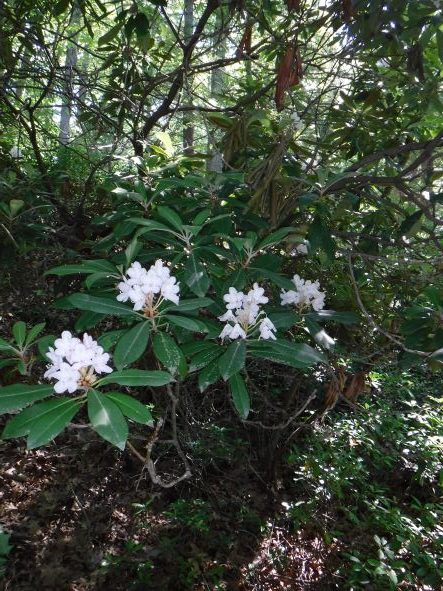
Rhododendron in Cook Forest State Park, PA; photo by F.T. Campbell

In Botanic gardens and seed banks

Especially for species under threat, conservation outside their native habitat – ex situ conservation – is an essential additional component. Currently 30% of tree species are recorded as present in at least one botanic garden or seed bank. Again, representation is higher for species that are not threatened – 45% are represented compared to only 21% of threatened tree species. For 41 species, ex situ conservation provides the only hope of survival, since they are extinct in the wild.

AN URGENT CALL FOR ACTION

The authors and collaborators who prepared the Global Tree Assessment hope that this report will help prompt action and better coordination of priorities and resources to better ensure that all tree species are supported by in situ conservation sites and by appropriate management plans. They state several times the importance of restoration plantings relying on native species. The purpose of plantings needs to include conservation of biological diversity, not just accumulation of carbon credits. The Ecological Restoration Alliance of Botanic Gardens (https://www.erabg.org/) is demonstrating that forest restoration can benefit biodiversity conservation. In many cases, propagation methods need to be developed. Also, projects must include aftercare and monitoring to ensure the survival of planted seedlings.

The IUCN assessment notes that ex situ conservation is an important backup. Education, capacity-building and awareness-raising are needed to equip, support, and empower local communities and other partners with the knowledge and skills to help conserve threatened trees.

Policy

The report say it does not address policy and legislation – a gap that fortunately is not quite true. The report both summarizes pertinent international agreements but also provides specific recommendations.

The international agreements that pertain to tree and forest conservation include:

  • Convention on Biological Diversity (CBD) and several specific programs: the Forestry Programme, Protected Area Programme and Sustainable Use Programme.
  • Global Strategy for Plant Conservation (GSPC), which is now developing post-2020 targets.
  • United Nations Framework Convention on Climate Change (UNFCCC) and countries’ implementing pledges to conserve carbon sinks, e.g., REDD+ (Reducing Emissions from Deforestation and Forest Degradation)
  • United Nations Strategic Plan for Forests 2017-2030
  • Global Plan of Action for the Conservation and Sustainable Use of Forest Genetic Resources
  • Convention on International Trade in Endangered Species, which currently protects 560 tree species, including 308 of the most threatened timbers

The report also mentions the voluntary New York Declaration on Forests, under which more than 200 entities – including governments, businesses, and Indigenous communities — have committed to eliminating deforestation from their supply chains. The supply chains touched on include those for major agricultural commodities, production of which is one of the greatest threat to trees.

SPECIFIC RECOMMENDATIONS

1. Strengthen tree conservation action globally through the formation of a new coalition that brings together existing resources and expertise, and applies lessons from the Global Trees Campaign to radically scale up tree conservation.

2. Use information in the GlobalTree Portal on the conservation status of individual tree species and current conservation action to plan additional action at local, national, and international levels, and for priority taxonomic groups. Build on the Portal by strengthening research on “Data Deficient” tree species, and collating additional information threatened species to avoid duplication of efforts and ensure conservation action is directed where it is needed most.

3. Ensure effective conservation of threatened trees within the protected area network by strengthening local knowledge, monitoring populations of threatened species and, where necessary, increasing enforcement of controls on illegal or non-sustainable harvesting of valuable species. Extend protected area coverage for threatened tree species and species assemblages that are currently not well-represented in protected areas.

4. Ensure that all globally threatened tree species are conserved in well-managed and genetically representative ex situ living and seed bank collections, with associated education and restoration programs.

5. Align work with the UN Decade on Ecosystem Restoration 2021–2030, engaging local communities, government forestry agencies, the business community, and other interested parties to ensure that the most appropriate tree species, including those that are threatened, are used in tree planting and restoration programs.

6. Improve data collection for national inventory and monitoring systems and use this information to reduce deforestation in areas of high tree diversity in association with REDD+ and Nationally Determined Contributions (NDCs).

7. Increase the availability of government, private and corporate funding for threatened tree species, and ensure that funding is directed to species and sites that are in greatest need of conservation.

SOURCE

Global Tree Assessment State of Earth’s Trees September 2021 Botanic Gardens Conservation International available here

Posted by Faith Campbell

We welcome comments that supplement or correct factual information, suggest new approaches, or promote thoughtful consideration. We post comments that disagree with us — but not those we judge to be not civil or inflammatory.

For a detailed discussion of the policies and practices that have allowed these pests to enter and spread – and that do not promote effective restoration strategies – review the Fading Forests report at http://treeimprovement.utk.edu/FadingForests.htm

The South African Report as a Model: U.S. Falls Short

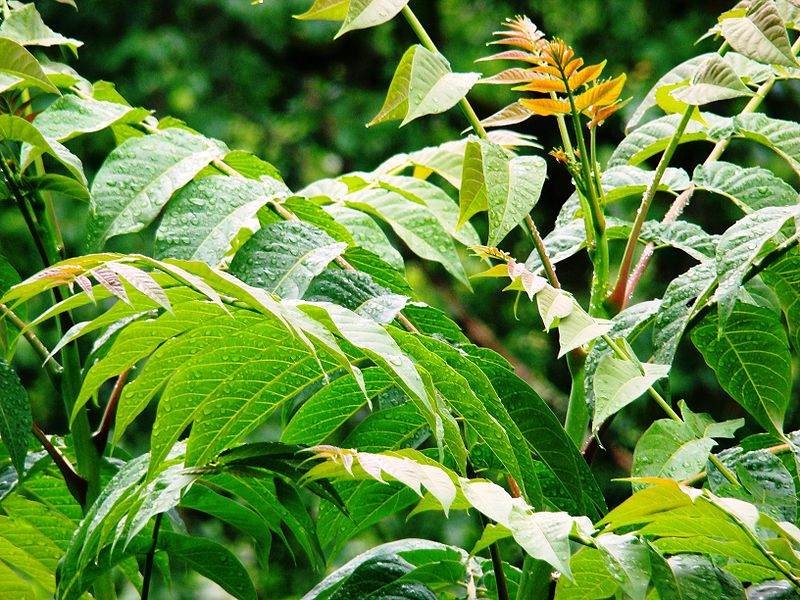
Ailanthus – one of the invasive species shared by South Africa and the U.S.

A few years ago, I posted a blog in which I pointed to a report on South Africa’s response to bioinvasion as a model for the U.S. and other countries. South Africa has published its second report. This report outlines the country’s status as of December 2019 and trends since the first report (i.e. since December 2016). (I describe the report’s findings on South Africa’s invasive species situation in a companion blog.) Again, I find it a good model of how a country should report its invasive species status, efforts, and challenges. In comparison, many U.S. efforts comes up short.

U.S. Reports Need to Be More Comprehensive

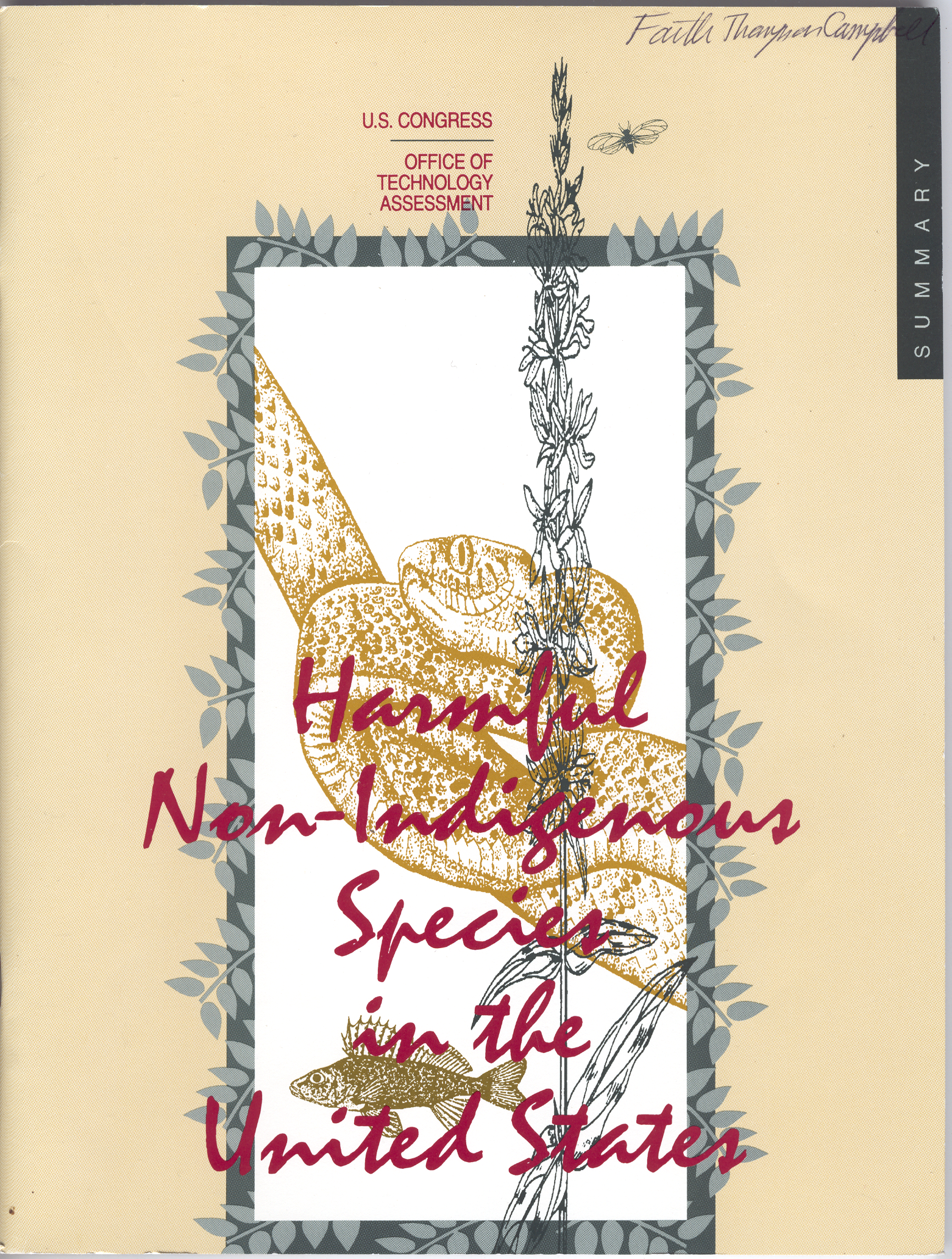
The South African report provides a national perspective on all taxa. Various United States agencies have attempted something similar a few times. The report issued by the Office of Technology Assessment in 1993  summarized knowledge of introduced species and evaluated then-current management programs.

The 2018 report by the U.S. Geological Service focused on data: the authors concluded that 11,344 species had been introduced and described the situation in three regions – the “lower 48” states, Alaska, and Hawai`i. However, the USGS did not evaluate programs and policies. The new USDA Forest Service report (Poland et al. 2021) describes taxa and impacts of invasive species in forest and grassland biomes, including associated aquatic systems. Again, it does not evaluate the efficacy of programs and policies.

The biennial national reports required by the Executive Order establishing the National Invasive Species Council (NISC) are most similar to the South African ones in intent. However, none has been comprehensive. For example, the most recent, issued in 2018, strives to raise concern by stating that invasive species effect a wide range of ecosystem services that underpin human well-being and economic growth. Some emphasis is given to damage to infrastructure. The report then sets out priority actions in six areas: leadership and prioritization, coordination, raising awareness, removing barriers, assessing federal capacities, and fostering innovation. NISC also issued a report in 2016 – this one focused on improving early detection and rapid response. NISC posted a useful innovation – a “report card” updating progress on priority actions — in October 2018.   It listed whether actions had been completed, were in progress, or were no longer applicable. However, the “report card” gave no explanation of the status of various actions; the most notable omissions concerned the actions dismissed as “not applicable”. Worse, no report cards have been posted since 2018. I doubt if those or any more comprehensive reports will be forthcoming. This reflects the increasing marginalization of NISC. The Council has never had sufficient power to coordinate agencies’ actions, and now barely survives.

U.S. Reports Need to Be More Candid

The authors of the South African report made an impressive commitment to honest evaluation of the country’s gaps, continuing problems, progress, and strengths. As in the first report, they are willing to note shortcomings, even of programs that enjoy broad political support (e.g., the Working for Water program).

It is not clear whether decision-makers have acted — or will act — on the report’s findings. That is true in many countries, including the United States. However, that is separate whether decision-makers have an honest appraisal on which to base action.

Assessment of South Africa’s Invasive Species Programs

Here is a summary of what the authors say about South Africa’s invasive species program. I want to state clearly that my intention is not to criticize South Africa’s efforts. No country has a perfect program, and South Africa faces many challenges. These have been exacerbated by COVD-19.  

The report identifies the areas listed below as needing change or improvement.

1) Absence of a comprehensive policy on bioinvasion. Such a policy would provide a vision for what South Africa aspires to achieve, clarify the government’s position, guide decision-makers, and provide a basis for coordinating programs by all affected parties (e.g., including conservation and phytosanitary agencies).

2) As in the first report, the authors call for monitoring program outcomes (results) rather than inputs (money, staffing, etc.) or outputs (e.g., acres treated). The authors also say data must be available for scrutiny. In those cases when data are adequate for assessing programs’ efficacy, they indicate that the control effort is largely ineffective.

3) Inadequate data in several areas. The report notes progress in developing and applying transparent and science-based criteria to species categorization as invasive (as distinct from relying on expert opinion). However, this change is taking time to implement, and sometimes results in species receiving a different rating. [I agree with the report that data gaps undermine understanding of the extent and impacts of bioinvasion, domestic pathways of spread, justification of expenditures, assessment of various programs’ efficacy (individually or overall), priority setting, and identifying changes needed to overcome programs’ weaknesses. However, I think filling these data gaps might demand time and resources that could better be utilized to respond to invasions – even when those invasions are not fully understood.]

4) Funding of bioinvasion programs by the National Department of Forestry, Fisheries, and the Environment has been fairly constant over 2012–2019, but this is a decline in real terms. The figure of 1 billion ZAR does not include spending by other government departments, national and provincial conservation bodies, municipalities, non-governmental organizations, and the private sector. Authors of the report expect funding to decrease in the future because of competing needs.

While at least 237 invasive species are under some management (see Table 5.1), funding is heavily skewed – 45% of funding goes to management of one invasive plant (black wattle); 72% to management of 10 species.

5) Need for policies to address the threat emerging from rising trade with other African countries, especially considering the probable adoption of the proposed African Continental Free Trade Area. Under this agreement, imported goods will only be inspected for alien species at the first port of entry, and most African countries have limited inspection capacity. [European pathologists Brasier, Jung, and others have noted the same issue arising in Europe, where imported plants move freely around the European Union once approved for entry by one member state.]

The authors of the South African report say programs’ efficacy would be considerably improved if species and sites were prioritized, and species-specific management plans developed. They warn that, in the absence of planning and prioritization, there is a risk that funding could be diluted by targeting too many species, leading to ineffective control and a concomitant increase in impacts.

In South Africa, regulations, permits, and other measures aimed at regulating legal imports of listed species are increasingly effective. However, there is still insufficient capacity to prevent accidental or intentional illegal introductions of alien species. There is also more enforcement of regulations requiring landowners to control invasive species. Six criminal cases have been filed and – as of December 2019, one conviction (guilty plea) obtained. However, the data do not allow an assessment of the overall level of compliance.

The report found little discernable progress on the proportion of pathways that have formally approved management plans. Management is either absent or ineffective for 61% of pathways. There has been no action to manage the ballast water pathway. On the other hand, in some cases, other laws focus explicitly on pathways, e.g., agricultural produce is regulated under the Agricultural Pests Act of 1983.

During the period December 2016 – December 2019, the Plant Inspection Services tested more than 12,000 plant import samples for quarantine pests and made 62 interceptions. The report calls for more detailed information from the various government departments responsible for managing particular pathways (e.g., the phytosanitary service), and for an assessments of the quality of their interventions.

The number of non-native taxa with some form of management has grown by 40% since December 2016 – although – as I have already noted — spending is highly skewed to a few plant species. The number and extent of site-specific management plans has also increased, apparently largely due to a few large-scale plans developed by private landowners. However, few of these plans have been formally approved by some unspecified overseer.

Citing the strengths and weaknesses described above, the current (second) report downgraded its assessment of governmental programs from “substantial” to “partial”.  

Comparison to U.S.

How does the United States measure up on the elements that need change or improvement?  I know of no U.S. government report that is as blunt in assessing the efficacy of our programs –individually or as a whole.

Nevertheless, each of the five weaknesses identified for South Africa also exist in the United States:

  1. Re: lack of a comprehensive policy, I think the U.S. also suffers this absence. This is regrettable since the National Invasive Species Council (NISC) was set up in 1999.
  2. Re: monitoring outcomes to assess programs’ efficacy, I think U.S. agencies do seem to be more focused on collecting data on programs’ results – see the Forest Service’ budget justification. However, I think too often the data collected focus on inputs and outputs.
  3. Re: data gaps, I think all countries – including the U.S. — lack data on important aspects of bioinvasion. I differ from the South African report, however, in arguing for funding research aimed at developing responses rather than monitoring to clarify the extent of a specific invasive species. Information that does not lead to action seems to me to be a luxury given the low level of funding.
  4. Re: funding, I find that, despite the existence of NISC, it remains difficult to get an overall picture of U.S federal funding of invasive species programs. Indeed, the cross-cut budget was dropped in 2018 at the Administration’s request. I expect all agencies are under-funded; I have often said so as regards key USDA programs. As in South Africa, funding is skewed to a few species that I think should be lower in priority (e.g., gypsy moth). 
  5. Re: upgrading invasive species programs to counter free-trade policies, I think U.S. trade policies place too high a priority on promoting agricultural exports to the detriment of efforts to prevent forest pest introductions. This imbalance might be present with regard to other taxa and pathways. See Fading Forests II here.

South African and U.S. agencies also face the same over-arching issues. For example, the U.S. priority-setting process seems to be a “black box.” Several USFS scientists (Potter et al. 2019) spent considerable effort to develop a set of criteria for ranking action on tree species that are hosts of damaging introduced pests. Yet there is no evidence that this laudable project influenced priorities for USFS funding.

SOURCES

Poland, T.M., P. Patel-Weynand, D.M Finch, C.F. Miniat, D.C. Hayes, V.M Lopez, editors. 2021. Invasive Species in Forests and Rangelands of the United States. A Comprehensive Science Synthesis for the US Forest Sector. Springer

Potter, K.M., Escanferla, M.E., Jetton, R.M., Man, G., Crane, B.S. 2019. Prioritizing the conservation needs of United States tree species: Evaluating vulnerability to forest P&P threats, Global Ecology and Conservation (2019), doi: https://doi.org/10.1016/j.gecco.2019.e00622.

SANBI and CIB 2020. The status of bioinvasions and their management in South Africa in 2019. pp.71. South African National BD Institute, Kirstenbosch and DSI-NRF Centre of Excellence for Invasion Biology, Stellenbosch. http://dx.doi.org/10.5281/zenodo.3947613

Posted by Faith Campbell  

We welcome comments that supplement or correct factual information, suggest new approaches, or promote thoughtful consideration. We post comments that disagree with us — but not those we judge to be not civil or inflammatory.

For a detailed discussion of the policies and practices that have allowed these pests to enter and spread – and that do not promote effective restoration strategies – review the Fading Forests report at http://treeimprovement.utk.edu/FadingForests.htm
South Africa & Invasive Species: Threats to High Value Biodiversity and Human Well-Being

Protea repens and fynbos vegetation near Table Mountain; photo by Mike Wingfield

South Africa is a country of immense biological diversity. It is also one that recognizes the threat invasive species pose to its natural wealth – and to the economy and livelihoods of ordinary people.

Also, South Africans are trying hard to improve the country’s invasive species program. It recently released the second national report assessing how well it is curtailing introductions and minimizing damage. As I describe in a companion blog, I find these reports to contain exceptionally thorough and honest appraisals of South Africa’s invasive species programs. I address that value in the companion blog, where I compare the South African report — and its findings — to U.S. government reports on our invasive species programs.

In South Africa, bioinvasion ranks third – after cultivation and land degradation – as a threat to the country’s impressive biodiversity. Invasive species are responsible for 25% of all biodiversity loss. Certain taxa are at particular risk: native amphibians and freshwater fishes, and some species of plants and butterflies.

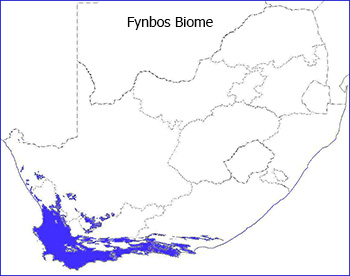
Particularly disturbing is the bioinvasion threat to the Fynbos biome. The report notes that 251 non-native species have been identified in this system. This finding causes concern because the Fynbos is a unique floral biome. In fact, it constitutes the principal component of one of only six floral kingdoms found on Earth: the Cape Floral Kingdom (or region). For more information, go here.

map of South Africa showing fynbos biome

Not surprisingly, invasive bird and plant species are most numerous around major urban centers. The report concludes that this is probably because most non-native birds are commensal with humans; most birds and plants were first introduced to urban centers; and there is greater sampling effort there. Indeed, the patterns of (detected) invasive plant richness are still highly sensitive to sampling effort.

South Africa is considered a leader on invasive species management. However, its record is spotty.

Successes

Biocontrol interventions are considered a success. South Africa has approved release of 157 biocontrol agents, including seven since 2016. All the recent agents (and probably most others) target invasive plants. The South African biocontrol community conducts a comprehensive review of their effectiveness at roughly 10-year intervals. The fourth assessment is currently under way. Also, the report considers eradication of non-native fish (primarily sport species) from several wetlands and river reaches to have been successful. (However, opposition by sport fishermen has delayed listing of some trout species as invasive.)

Failures

On the other hand, strategies to combat invasive plants, other than by biocontrol, appear to be having little success. Even the extent of plant invasions in national parks is poorly documented. Also, the report highlights ballast water as an inadequately managed pathway of invasion.

The report estimates that three new non-native species arrive in South Africa accidentally or illegally every year. Interestingly, reported species arrivals have declined in the current decade compared to the preceding one. The report’s authors consider this to probably be an underestimate caused by the well-known lag in detecting and reporting introductions. The apparent decline also is contrary to global findings. Table 1 in Seebens et al. 2020 (full citation at end of blog) projected that the African continent would receive approximately 767 new alien species between 2005 and 2050.

Even the introductory pathways are poorly known: the pathway for 54% of the taxa introduced to South Africa are unknown. Of the species for which the introductory pathway is known, horticultural or ornamental introductions of plants dominate – 15% of that total. A second important pathway – for accidental introductions – is shipping (5% of all introductions). Other pathways thought to be prominent during 2017–2019 are the timber trade, contaminants on imported animals, and natural dispersal from other African countries where they had previously been introduced.

PSHB symptoms on Vachellia sieberiana; photo by Trudy Paap

Polyphagous shothole borer

The report highlights as an example of a recent introduction that of the polyphagous shothole borer (PSHB, Euwallacea fornicatus). https://www.dontmovefirewood.org/pest_pathogen/polyphagous-shot-hole-borer-html/        http://nivemnic.us/south-africas-unique-flora-put-at-risk-by-polyphagous-shot-hole-borer/ See Box 3.1 in the report. This species is expected to have huge impacts, especially in urban areas. While most of the trees affected so far are non-native (e.g., maples, planes, oaks, avocadoes), several native trees are also reproductive hosts.  https://www.fabinet.up.ac.za/pshb  In response to the introduction, the government established an interdepartmental steering committee, which has developed a consolidated strategy and action plan. However, as of October 2020 the shot hole borer had not been listed under invasive species regulations, even on an emergency basis. It had been listed as a quarantine pest of agricultural plants (e.g., avocado) per the Agricultural Pests Act 1983.

As note in my blog assessing the report, the report bravely concludes that the government’s regulatory regime is only partially successful (whereas three years ago it graded it as “substantial”). The downgrade is the result of a more thorough evaluation of the regulatory regime’s effectiveness.

SOURCES

SANBI and CIB 2020. The status of bioinvasions and their management in South Africa in 2019. pp.71. South African National BD Institute, Kirstenbosch and DSI-NRF Centre of Excellence for Invasion Biology, Stellenbosch. http://dx.doi.org/10.5281/zenodo.3947613  

Seebens, H., S. Bacher, T.M. Blackburn, C. Capinha, W. Dawson, S. Dullinger, P. Genovesi, P.E. Hulme, M. van Kleunen, I. Kühn, J.M. Jeschke, B. Lenzner, A.M. Liebhold, Z. Pattison, J. Perg, P. Pyšek, M. Winter, F. Essl. 2020. Projecting the continental accumulation of alien species through to 2050. Global Change Biology. 2020;00:1 -13 https://onlinelibrary.wiley.com/doi/10.1111/gcb.15333

Posted by Faith Campbell

We welcome comments that supplement or correct factual information, suggest new approaches, or promote thoughtful consideration. We post comments that disagree with us — but not those we judge to be not civil or inflammatory.

For a detailed discussion of the policies and practices that have allowed these pests to enter and spread – and that do not promote effective restoration strategies – review the Fading Forests report at http://treeimprovement.utk.edu/FadingForests.htm

EAB Threat to Eastern Europe

The emerald ash borer (EAB) was first detected in European Russia in 2003, in Moscow. By 2020, EAB was recorded in 16 provinces [=‘oblast’] of European Russia, especially to the West of Moscow towards the borders with Belarus and Ukraine.  

Russian scientists have documented that the emerald ash borer is spreading faster in the southwest of the country and in neighboring Ukraine than in the northwest (near St. Petersburg and the Baltic countries).

Despite an abundance of ash [both green ash (Fraxinus pennsylvanica) – native to North America – and European ash F. excelsior], EAB population density in the northwest remains low and damage is in scattered clusters.

However, in September 2020 officials detected an isolated outbreak in a St. Petersburg suburb, 520 km away from the apparent edge of the principal Russian population. The authors believe this outbreak has been present since 2015. They think it is the result of transport of EAB either by “insect-hitchhiking” on vehicles or by movement of plants for planting or other commodities.

The Petersburg population is only 130 km from Estonia and Finland – the border with the European Union.

A thousand kilometers to the south, in southwest Russian eastern Ukraine, an outbreak was reported in June 2019. By the next summer, EAB were detected more than 100 km to the West. While this outbreak is still 800 km from Ukraine’s border with eastern Europe (Poland, Slovakia, Hungary, Romania), the authors note that rapid spread is likely since F. excelsior and F. pennsylvanica have been extensively planted along roads, railways, field shelter belts, and urban greenings.

The slower spread in the North is attributed to colder temperatures, the local abundance of food, and possibly pressure by the native parasitoid Spathius polonicus Niezabitowski (note that USDA APHIS has approved two Spathius species as biocontrol agents in the U.S.). On the other hand, the climate is milder in Saint Petersburg (along the coast) than it is inland; and ash woodlands are common along the Baltic coast.

Noting that ash dieback (Hymenoscyphus fraxineus)  has devastated more than 95% of European ash populations, the authors express concern about the future of ash.

SOURCE

Musolin, D.L.; Selikhovkin, A.V.; Peregudova, E.Y.; Popovichev, B.G.; Mandelshtam, M.Y.; Baranchikov, Y.N.; Vasaitis, R. North-Westward Expansion of the Invasive Range of Emerald Ash Borer, Agrilus planipennis Fairmaire (Coleoptera: Buprestidae) towards the EU: From Moscow to Saint Petersburg. Forests 2021, 12, 502. https://doi.org/10.3390/f12040502

Posted by Faith Campbell

We welcome comments that supplement or correct factual information, suggest new approaches, or promote thoughtful consideration. We post comments that disagree with us — but not those we judge to be not civil or inflammatory.

For a detailed discussion of the policies and practices that have allowed these pests to enter and spread – and that do not promote effective restoration strategies – review the Fading Forests report at http://treeimprovement.utk.edu/FadingForests.htm

Why such scattershot responses to myrtle rust?

myrtle rust infestation;
source: New Zealand Department of Agriculture alert May 2017

Pacific countries’ policy and management responses to the spread of the myrtle rust pathogen, Austropuccinia psidii (formerly Puccinia psidii), has had puzzling – even infuriating – gaps … which perhaps have contributed to its spread and damage.

Reminder: ‘ōhi‘a or myrtle rust attacks species in the Myrtaceae – a family now said to include 5,600 species (Stewart et al. 2018). Ten percent of Australia’s native flora is in the family – or about 1,300 species. New Zealand is home to 27 native plants in the Myrtaceae family (Bereford et al. 2019) and the Hawaiian Islands to eight (JB Friday pers. comm.).  See a writeup about the disease here.

Austropuccinia psidii is one of the global invaders: it has invaded 27 countries on several continents. It is apparently native to parts of the American tropics.

Levels of worry rose considerably with the pathogen’s spread across the Pacific beginning with the detection in Hawai‘i in spring 2005. Additional introductions in the region were Japan in 2009; China in 2011; Australia, New Caledonia, and South Africa in 2013; and New Zealand in 2017.

The known host range currently exceeds 500 species in 86 genera – all in the Myrtaceae family. The pathogen has several strains or biotypes; the impact of the various biotypes on the various host species differs. Environmental factors also apparently affect disease.

[For my earlier discussions of threats to the unique Hawaiian flora, go here for dryland flora, here and here for more general discussions. I discuss National Park Service efforts – including in Hawai`i – here.]

There are several factors that militate against a political entity choosing to act:

1) Inherent Difficulty in Controlling Wind-Borne pathogen

In both Hawai`i and Australia, the rust spread rapidly once it was established outside of nurseries. In Hawai`i, it had spread to all the islands within a few months of its detection in spring 2005 (Loope and La Rosa 2008). In Australia, the rust was established in natural ecosystems throughout coastal New South Wales and to far northern Queensland by mid-2012 – less than two years after detection (Carnegie et al. 2016). The number of host species also expanded rapidly – from 214 native plants in 2016 (Carnegie et al. 2016) to 393 species by 2019 (Winzer et al. 2019). Myrtle rust is believed to have been carried to Australia and New Caledonia on imported plants or cut vegetation; then to New Zealand by winds from Australia across the Tasman Sea (Toome-Heller et al. 2020).

2) Lack of Clarity About Probable Impacts

Austropuccinia psidii had been introduced fairly widely before 2000, and some biotypes had caused significant damage on introduced species within both the native and introduced ranges of the rust – e.g., Eucalyptus in Brazil, allspice (Pimento doica) in Jamaica, rose apple (Syzygium jambos) in Hawai`i.  However, the rust had had little impact on native floras in introduced ranges, especially not on widespread species (Carnegie et al. 2016).

However, concerns existed in the Pacific region because of:

  • Its wide host range (before the introduction to Australia, the known host range was “only” 129 species in 33 genera Carnegie et al. 2016).
  • The severe damage to Australian genera growing outside their native range, e.g., nurseries and plantations of Eucalyptus in South America and Melaleuca quinquenervia and Rhodomyrtus tomentosa in Florida (Carnegie et al. 2016)

In Hawai`i, ‘ōhi‘a rust caused little damage to the dominant tree species in Hawaiian forests, ‘ōhi‘a lehua for the first 10 years after its introduction. The rust did cause severe damage to the invasive alien shrub rose apple and several native plants, especially the endangered Eugenia koolauensis. A more damaging outbreak in ‘ōhi‘a lehua trees in 2017 has increased concern.

ohia rust on E. kooaulensis
photo by Edward Eickhoff via Flickr

So – while Austropuccinia psidii has an extremely wide host range, its impact in naïve ecosystems to which it might be introduced is unclear.

In most cases, lack of knowledge about a pest’s impacts on naïve hosts in new ranges is almost inevitable – unless scientists undertake host vulnerability tests. Such tests are rarely done in advance of an introduction. One exception is European scientists evaluating European trees’ vulnerability to a suite of newly discovered Phytophthora species in Vietnam and elsewhere.  (I am unaware that U.S. scientists are carrying out parallel studies.)

Still, environmental and other factors play important roles and might counter expectations raised by lab experiments or experience of hosts planted in non-native sites. In Australia, McRae (2013) noted that the “mycological firestorm” predicted by environmentalists to result from introduction of the rust had not occurred. This at least partly explained waning interest in combatting the pathogen (Carnegie et al. 2016).

In my view, the swings in perceptions of the risk reflected more flaws in understanding than actual risk. Impacts can take time to manifest – especially when, as with Austropuccinia psidii – the pathogen is known to affect primarily new growth and fruit and flowers (Carnegie et al. 2016). The impact might be greatest in the form of suppressing regeneration rather than by killing mature trees right away. [See beech leaf disease as another possible example of this phenomenon.]

Questions hampering predictions of impact were further confused by taxonomic questions (Carnegie et al. 2016). Austropuccinia psidii has at least nine genetically distinct clusters. So far, two have been introduced outside South/Central America. One strain – called the “pandemic biotype” – has been found at all introduction sites in Florida, Hawai‘i, Asia, and the Pacific – Australia, New Zealand, New Caledonia (Stewart et al. 2018). This biotype is not known to be present in Brazil (Toome-Heller et al. 2020). A second biotype has been introduced to South Africa; it has been shown to be able to infect some Myrtaceae in New Zealand (Toome-Heller et al. 2020). See especially Stewart et al. 2017, full citation below.

3) Policy Barriers Created by Phytosanitary Regulations

In the U.S., the pathogen has been established in one state – Florida – since 1977. There, it is not considered to be causing damage to important species. Under U.S. regulations – reflecting the international trade rules – an organism that is already in the country cannot be treated as a “quarantine pest” unless there is an “official control program” targeting the pest. (For a discussion of this issue, see the analysis of the SPS Agreement in Chapter 3 and Appendix 3 of Fading Forests II). For this reason, when ‘ōhi‘a rust was detected in Hawai`i in 2005, USDA’s Animal and Plant Health Inspection Service (APHIS) was unable to adopt regulations governing imports or interstate movement of vectors (i.e., cuttings or nursery stock of plant species in the Myrtaceae).  

The State responded to the initial detection by adopting an emergency order two years later, in August 2007. This prohibited importation of plants in the myrtle family from “infested areas”- specified as South America, Florida, and California. This state rule expired in August 2008.

It became apparent that USDA APHIS would not take action to assist Hawai`i unless APHIS accepted  scientific findings as proving that additional biotypes of the rust existed that could pose a more severe threat to plants on the Islands. Such studies were undertaken, some funded by the USDA Forest Service.  This process took years. During this period, Hawai`i developed a permanent rule which was adopted in May 2020. This regulation restricts the importation to Hawai`i of plants in the Myrtaceae, including live plants and foliage used in cut flower arrangements. Dried, non-living plant parts, seeds that are surface sterilized, and tissue cultured plants in sterile media and containers are exempted from the ban. Other importations may be done by permit.

Meanwhile, in 2019, APHIS proposed to include all taxa in the Myrtaceae destined for Hawai`i in an existing regulatory category of “plants for planting” not authorized for importation pending pest risk assessment (NAPPRA). The intent was to reduce the probability of introduction of additional strains of Austropuccinia psidii to the Islands. This proposal appeared 14 years after the rust was first detected in Hawai`i. And the proposal has not yet taken effect. Therefore, imports of most living plants and cut foliage are still subject only to inspection (7 Code of Federal Regulations 319.37). The tiny size of the rust spores makes detection during inspection unlikely unless the plant is displaying symptoms of the disease.

Imports of logs and lumber involving tropical hardwood species (including Eucalyptus) into Hawai`i are regulated under separate provisions which have been in effect since 1995. The wood must be debarked or fumigated [Code of Federal Regulations – 7 CFR 319.40-5(c)]. Incoming wood packaging is regulated under ISPM#15; I think it unlikely that the treatments prescribed therein would kill any rust spores present.

Policy Responses in Other Vulnerable Countries

Australia

Austropuccinia psidii had been recognized as a potentially serious biosecurity threat to Australia as early as 1985 (publications cited by Carnegie et al. (2016). The introduction of ‘ōhi‘a rust to Hawai`i so alarmed plant health and conservation officials in Australia and New Zealand that they sent representatives half way around the world to participate in the North American Plant Protection Organization’s annual meeting in Newfoundland, Canada, in October 2007! Yet interest in Australia waned when large scale tree mortality and major impacts on industries did not immediately occur (Carnegie et al. 2016).  The state of New South Wales listed the rust as a Key Threatening Process to the Natural Environment, but the federal agencies rejected a petition to do the same at a national level (Carnegie et al. 2016).

Groups of scientists are carrying out research with the goal of demonstrating that the rust is already having severe effects on key species in natural ecosystems, and probably significantly affecting a wider range of species (Carnegie et al. 2016; Winzer et al. 2019; Winzer et al. 2020)

In 2018 a scientist affiliated with the Australian Network for Plant Conservation published a draft conservation plan.  Its development had input from staff at the Plant Biosecurity Cooperative Research Centre and the Australian Government Department of the Environment and Energy. The goal was to help direct and stimulate further research on critical questions and build awareness of the potentially devastating effects myrtle rust might have if it remains unchecked. As of April 2020, no funding had yet become available to finalize and implement the report (Dr Michael Robinson, Managing Director, Plant Biosecurity Science Foundation).

New Zealand

New Zealand has been more aggressive in its policy approach. It adopted a strategy when Australia announced arrival of the rust in 2010. The islands had bad luck – myrtle rust is believed to have been carried to New Zealand by wind from Australia across the Tasman Sea.

As soon as the rust was first detected in 2017, two government agencies initiated broad surveys of Myrtaceae across natural and urban areas, with active outreach to citizens (Toome-Heller et al. 2020).  By April 2018, it was recognized that the pathogen was too widespread to be eradicated. Significant finds were made on the western side of the North Island and at the very northern tip of the South Island (see map in Beresford et al. 2019). At that point, the government changed its focus to long-term management of the disease.

A. psidii is still very much a focus for Maori (indigenous) groups, central and local government, community groups, Myrtaceae-based industries, and research institutions.

Several research programmes are currently looking for management options, including resistance breeding (Toome-Heller et al. 2020). See research plan and reports of results to date here. However, which plant species can become infected, and under what environmental conditions, remain unclear.

New Zealand researchers have made some findings that should be of concern to forest pathologists working with all Myrtaceae:

  • A. psidii can overwinter as a latent infection without reproducing.
  • A. psidii can reproduce sexually, although the importance of the sexual cycle in seasonal epidemic development is not yet understood and teliospores have only infrequently been found in New Zealand (Bereford et al. 2019).
  • the unique biotype found in South Africa has already been found to be pathogenic towards some New Zealand native Myrtaceae  (Toome-Heller et al. 2020).

We can expect these finding to have implications for elsewhere, including in Hawaii.

Pathways of Introduction

It is thought probable that the rust was introduced to Hawai`i on cut foliage imported from Florida. The first Australian detection was at a cut flower facility (Australian Invasive Species Council).

CABI considers plants and plant parts (including cuttings, flowers, and germplasm) to be the principal pathway. Other pathways appear to be contaminated plant waste, timber, wood packaging and dunnage; and – over short distances – contaminated equipment and tools and clothing, shoes and other personal effects.

Conclusions

The saga of myrtle rust demonstrates both the biological and technical difficulties of controlling an airborne pathogen and the inability of the existing phytosanitary system to respond to new situations. Regulatory officials are obligated to demand levels of knowledge and certainty that just are not realistic. The gap is especially great at the crucial time – before an invasion or at its earliest stage — when phytosanitary actions might be most effective.

This saga also demonstrates that efforts often wane at the management and restoration stages. At least in Hawai`i and New Zealand, government resources are still being allocated to research possible resistance breeding or other possible long-term approaches. I refer you to the article by Enrico Bonello, me, and others about the need to provide sufficient resources to such efforts in the U.S.

Sources

Australian Invasive Species Council.2011. www.invasives.org.au Environmental impacts of myrtle rust Fact Sheet February 2011

Beresford, R., G. Smith, B. Ganley and R. Campbell. 2019. Impacts of myrtle rust in NZ since its arrival in 2017. 2019. New Zealand Garden Journal 2019, Vo. 22 (2).  https://www.myrtlerust.org.nz/assets/news/NZ-Garden-Journal-Dec-2019-p5-10.pdf

Bonello, P. , F.T. Campbell, D. Cipollini, A.O. Conrad, C. Farinas, K.J.K. Gandhi, F.P. Hain, D. Parry, D.N. Showalter, C. Villari, and K.F. Wallin. 2019.  Invasive tree pests devastate ecosystems – A proposed new response framework. Frontiers  http://journal.frontiersin.org/article/10.3389/ffgc.2020.00002/full?&utm_source=Email_to_authors_&utm_medium=Email&utm_content=T1_11.5e1_author&utm_campaign=Email_publication&field=&journalName=Frontiers_in_Forests_and_Global_Change&id=510318

Carnegie, A.J., A. Kathuria, G.S. Pegg, P. Entwistle, M. Nagel, F.R. Giblin. 2016. Impact of the invasive rust Puccinia psidii (myrtle rust) on native Myrtaceae in natural ecosystems in Australia. Biological Invasions (2016) 18:127–144

Code of Federal Regulations. January 1, 2005 (Title 7, Volume 5). 7 CFR319.40-5: Logs, lumber, and other unmanufactured wood articles – importation and entry requirements for specified articles. (available by using search engines/retrieval services at http://www.gpoaccess.gov/fr/index.html).

Code of Federal Regulations. January 1, 2005 (Title 7, Volume 5). 7 CFR319.37: Nursery stock, plants, roots, bulbs, seeds, and other plant products – prohibitions and restrictions on importation: disposal of articles refused importation. (available by using search engines/retrieval services at http://www.gpoaccess.gov/fr/index.html).

Loope, L. and A.M. La Rosa. 2008. An Analysis of the Risk of Introduction of Additional Strains of the Rust Puccinia psidii Winter (`Ohi`a Rust) to Hawa`i.  Pacific Island Ecosystems Research Center

Stewart, J. E., A. L. Ross-Davis, R. N. Graça, A. C. Alfenas, T. L. Peever, J. W. Hanna, J. Y. Uchida, R. D. Hauff, C. Y. Kadooka, M.-S. Kim, P. G. Cannon, S. Namba, S. Simeto, C. A. Pérez, M. B. Rayamajhi, D. J. Lodge, M. Agruedas, R. Medel-Ortiz, M. A. López-Ramirez, P. Tennant, M. Glen, P. S. Machado, A. R. McTaggart, A. J. Carnegie, and N. B. Klopfenstein. 2018. Genetic diversity of the myrtle rust pathogen (Austropuccinia psidii) in the Americas and Hawaii: Global implications for invasive threat assessments. Forest Pathology 48(1): 1-13. https://doi.org/10.1111/efp.12378

Toome-Heller, M. W.W.H. Ho, R.J. Ganley, C.E.A. Elliott, B. Quinn,  H.G. Pearson, B.J.R. Alexander. 2020. Chasing myrtle rust in New Zealand: host range and distribution over the first year after invasion. Australasian Plant Pathology

Winzer, L.F., K.A. Berthon, A.J. Carnegie, G.S. Pegg, M.R. Leishman. 2019. Austropuccinia psidii on the move: survey based insights to its geographical distribution, host species, impacts and management in Australia. Biological Invasions April 2019, Volume 21, Issue 4, pp 1215–1225

Winzer, L.F., K.A. Berthon, P. Entwistle, A. Manea, N. Winzer, G.S. Pegg, A.J. Carnegie, M.R. Leishman. 2020. Direct and indirect community effects of the invasive plant pathogen Austropuccinia psidii (myrtle rust) in eastern Australian rainforests. Biological Invasions. Volume 22, pages2357–2369 (2020)

Calamity in Pacific Island Forests

Cycas micronesica
photo by A. Gawel

We know the dire threats to Hawaiian forests from pathogens. Some threaten the most widespread tree – ohia. Others are insects threatening trees and shrubs in the remnant dryland forests.

The forests of smaller islands of the Pacific also appear to be facing severe threats – although I have been unable to find information on the current situation.

Guam and its Neighbors

The forests of Guam, Palau, and others in the Western Pacific are among those threatened.

They are geographically isolated and hard to reach, but that distance has not protected them from biological invaders. Their predicament illustrates the dominant role of global movement and trade in spreading pests. In this case, it’s mostly trade in ornamental plants.

These islands have unique flora and fauna. And true to invasive species experts’ expectations, they are vulnerable to bioinvaders. Guam’s most famous invasive species is the brown tree snake (Boiga irregularis), which over a few decades eradicated many bird species and the only native terrestrial mammal, the fruit bat.  

Less known, but equally damaging, have been a group of insects that are decimating Guam’s native forest flora.

The most widespread arboreal species in the forests of Guam and neighboring islands is the Micronesian cycad, Cycas micronesica. Its range is Micronesia, the Marianas Group including Guam and Rota Islands; and several of the western Caroline Islands, e.g., Palau and Yap (Marler, Haynes, and Lindstrom 2010).

These forests have already absorbed severe habitat destruction as the sites of fierce fighting in World War II and – in some cases – construction of large military bases. Still, cycads were the most common species in the forest as late as 2002 (Moore, A., T. Marler, R. Miller, and L. Yudin. Date uncertain).

The Worst Pest: Asian Cycad Scale

The most severe current threat to the cycads are introduced insects, especially the Asian cycad scale Aulacaspis ysumatsui.

The cycad scale is native to Southeast Asia. It was first detected on Guam in 2003, when officials noticed that cycads planted near hotels had begun to die. However, this scale had already been spreading thanks to the trade in ornamental cycads. It was detected in Florida in 1996, on Hawai`i in 1998. It continued to spread rapidly in the western Pacific: to Rota in 2007, Palau in 2008 (University of Guam 2012). By late 2019, the scale had spread globally – numerous islands and neighboring mainland areas in the Caribbean (including Puerto Rico and US Virgin Islands), several US states in the Southeast,  California, and Taiwan (Moore, Marler, Miller, and Yudin. Date uncertain.) and South Africa.  (van­Wilgen, et. al. 2020) Also, see the map prepared by CABI.

In every case, the scale has apparently been spread on nursery stock. It is difficult to contain by standard phytosanitary measures – visual inspection – because the scale is tiny and hides deep in the base of the plant’s stiff leaves and other crevices. (Marler and Moore 2010)

By 2005 the scale was killing the native cycad on Guam. Within four years, the millions of C. micronesica on Guam were reduced by more than 90% (Marler, T.E. and K.J. Niklas. 2011). The last time cycads on Guam reproduced in any significant number was in 2004 (Marler and Niklas 2018).

The severe impact of the scale was so rapid that the International Union for Conservation of Nature and Natural Resources (IUCN) changed its listing of C. micronesica from “near threatened” in 2003 to “endangered” in 2006. (IUCN Red List of Threatened Species Online 2008).

Scientists have made several attempts to introduce a biocontrol agent. However, the most promising – the lady beetle Rhyzobius lophanthae – has failed to control the scale, despite having become virtually ubiquitous on Guam. The beetle is too big to reach the significant proportion of scale insects living in small cracks and voids within the plant structures. Evidence from another cycad species indicates that the beetles also don’t prey on scale insects living beneath trichomes (fine hairlike structures on the leaves) or on parts of the plant close to the ground. (Moore, Marler, Miller, and Yudin. Date uncertain.).

Attempts to introduce a second biocontrol organism – the parasitoid wasp Aphytis lignanensis – were stymied by the presence of R. lophanthae (Moore, Marler, Miller, and Yudin. Date uncertain).

Micronesian cycad
photo by Lauren Gutierrez

Other Invasive Species Attacking Cycads

The cycad blue butterfly (Chilades pandava) was detected in 2005 and spread throughout Guam within months (IUCN 2009). Also, it’s been found on Saipan (1996) and Rota (2006). The butterfly is native to southern Asia from Sri Lanka to Thailand and Indonesia. High populations can cause complete defoliation of new foliage. Repeated defoliations can kill the plant. Cycads on Guam are particularly vulnerable because the scale has already caused loss of most of their leaves. Butterfly larvae are often protected by ants (Anonymous).

On cultivated plants the butterfly can be controlled by microbial insecticides containing Bacillus thuringiensis kurstaki (Moore). Scientists at the University of Guam are exploring use of injected insecticides (Moore). They have found an egg parasite, but parasitism levels are low. Any biocontrol agent targetting larvae would have to contend with the ants (Anonymous).

A longhorned beetle (Dihammus (Acalolepta) marianarum) and a snail (Satsuma mercatorius) are also feeding on the cycads (Marler 2010).

The Indo-Malayan termite Schedorhinotermes longirostris was detected in 2011. The termites weaken the cycad stems, which are then toppled by feeding by introduced deer. The termites are also damaging the cycad’s reproductive structures (megastrobili). Termite attacks on cycads surprised scientists since cycads do not form true wood. The termite had probably been introduced recently because, as of 2011, it had been detected only near the Andersen Air Force Base airport (Marler, Yudin, and Moore 2011).

More Isolated – but Still Overrun

Scattered across the Pacific are groups of atolls, including Palmyra and Rose.

Despite their distance from other islands, they have all been visited by mariners for centuries. As a result, they have non-native species, including insects that attack trees.

Pisonia tree forest – Wikimedia

The tree most affected is pisonia – Pisonia grandis. 

The principal insect is another scale, Pulvinaria urbicola. There are some reports that the scale is farmed by ants; species mentioned include several introduced species such as the yellow crazy ant, Paratrechina longicornis.

The scale is probably from the West Indies. Once it reached the Pacific, it might have been distributed to additional islands on seabirds, which travel long distances between the atolls.

The scale’s impact is unclear.

At first, in the mid-2000s, impacts seemed dire. It was reported to be causing widespread tree death on Palmyra and Rose atolls, islands around northeastern Australia, in the Seychelles, and possibly in Tonga.

However, in 2018, scientists reported that eradication of rats on Palmyra Atoll had resulted in an immediate spurt of reproduction of a tree. Numbers of “native, locally rare tree” seedlings (possibly but not explicitly said to be Pisonia grandis) jumped from 140 pre-eradication to 7,756 post-eradication (in 2016). The study made no mention of the scale.

Rose Atoll has only one small island (6.6 ha) with vegetation. Before 1970, it was dominated by Pisonia grandis, but by 2012, there were only seven trees on the island. Several possible causes of this decline have been suggested. Other than the scale, suggested causes include storms, drought, rising sea level / saltwater incursion, and imbalance of bird guano-derived nutrients in the soil. [All information about Rose Atoll is from Peck et al., 2014)

A survey carried out in April 2012 and November 2013 detected 73 species of arthropods from 20 orders on Rose Island, including nine ant species (all but one non-native). Two of these ants – Tetramorium bicarinatum and T. simillimum – were detected tending the scales on Pisonia.

The survey found no evidence of natural enemies of the Pulvinaria scales.

The scientists tested treatment of Pisonia with the systemic insecticide imidacloprid. This treatment apparently reduced scale populations considerably for several months, but then they began to build up again.

In contrast to Palmyra, Polynesian rats (Rattus exulans) were eliminated from Rose Atoll in 1990–1991 – so their role in destroying the trees had ended 20 years before the study. What does the continued decline of the Pisonia trees in subsequent decades suggest for the future of Pisonia trees on Palmyra?

I have sought updates on the tree-pest situations on Guam and the other Pacific islands, but my queries have not received a reply.

SOURCES

Anonymous. 2015. Cycad blue butterfly fact sheet.

Brooke, USFWS, pers. comm. June 3, 2005

CABI November 2019. Aulacaspis yasumatsui (cycad aulacaspis scale (CAS)) or the Asian cycad scale. https://www.cabi.org/isc/datasheet/18756   (was formerly Commonwealth Agricultural Bureaux (CAB) International; now apparently just uses acronym)

Marler, T.E. pers. comm. August 15, 2012

Marler, T.E. 2010. Cycad mutualist offers more than pollen transport. American Journal of Botany, 2010; 97 (5): 841. Viewed as materials provided by University of Guam, via EurekAlert; accessed 6 August, 2012.

Marler, T., Haynes, J. & Lindstrom, A. 2010. Cycas micronesica. The IUCN Red List of Threatened Species 2010: e.T61316A12462113. http://dx.doi.org/10.2305/IUCN.UK.2010-3.RLTS.T61316A12462113.en Accessed 22 April, 2020.

Marler, T.E., and A. Moore. 2010. Cryptic Scale Infestations on Cycas revoluta Facilitate Scale Invasions. HortScience. 2010; 45 837-839. Retrieved August 6, 2012 from www.eurekalert.org

Marler, T.E., L.S. Yudin, A. Moore. 1 September 2011. Schedorhinotermes longirostris (Isoptera: Rhinotermitidae) on Guam Adds to Assault on the Endemic Cycas micronesica.   https://bioone.org/journals/florida-entomologist/volume-94/issue-3/024.094.0339/Schedorhinotermes-longirostris-Isoptera–Rhinotermitidae-on-Guam-Adds-to-Assault/10.1653/024.094.0339.full

Marler, T.E. and K.J. Niklas. 2011. Reproductive Effort and Success of Cycas micronesica K.D. Hill Are Affected by Habitat. International Journal of Plant Sciences, 2011; 172 (5): 700. Viewed as materials provided by University of Guam, via EurekAlert; accessed 6 August, 2012.

Moore, A. Cycad blue butterfly fact sheet. http://www.guaminsects.net/gisac2015/index.php?title=Cycad_blue_butterfly_fact_sheet accessed 20-4/24

Moore, A., T. Marler, R. Miller, and L. Yudin. Date? Biological Control of Cycad Scale, Aulacaspis yasumatsui, Attacking Guam’s Endemic Cycad, Cycas micronesica. Western Pacific Tropical Research Center University of Guam. Powerpoint  http://guaminsects.myspecies.info/sites/guaminsects.myspecies.info/files/CycadScaleBiocontrolAustin.pdf

Peck, R., P. Banko, F. Pendleton, M. Schmaedick, and K. Ernsberger. 2014. Arthropods of Rose Atoll with Special Reference to Ants and Pulvinaria urbicola scales (Hemiptera: Coccidae) on Pisonia grandis trees. Hawaii Cooperative Studies Unit. University of Hawaii. Technical Report HCSU-057 December 2014

University of Guam (2012, August 2). Invasive insects cause staggering impact on native tree. ScienceDaily. Retrieved August 6, 2012, from www.sciencedaily.com-/releases/2012/08/120803094527.htm).

 van­Wilgen, B.W.,J. ­Measey, D.­M. ­Richardson, J.R. ­Wilson,  T.A. Zengeya­. Editors. 2020. Bioinvasions in South Africa. Invading Nature. Springer Series in Invasion Ecology 14.

Posted by Faith Campbell

We welcome comments that supplement or correct factual information, suggest new approaches, or promote thoughtful consideration. We post comments that disagree with us — but not those we judge to be not civil or inflammatory.

For a detailed discussion of the policies and practices that have allowed these pests to enter and spread – and that do not promote effective restoration strategies – review the Fading Forests report at http://treeimprovement.utk.edu/FadingForests.htm These reports do not include details on the pest situation on the Pacific islands (including Hawai`i).