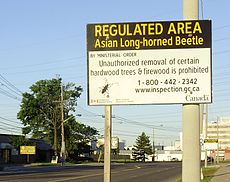
How we can strengthen programs to protect trees from invasive pests

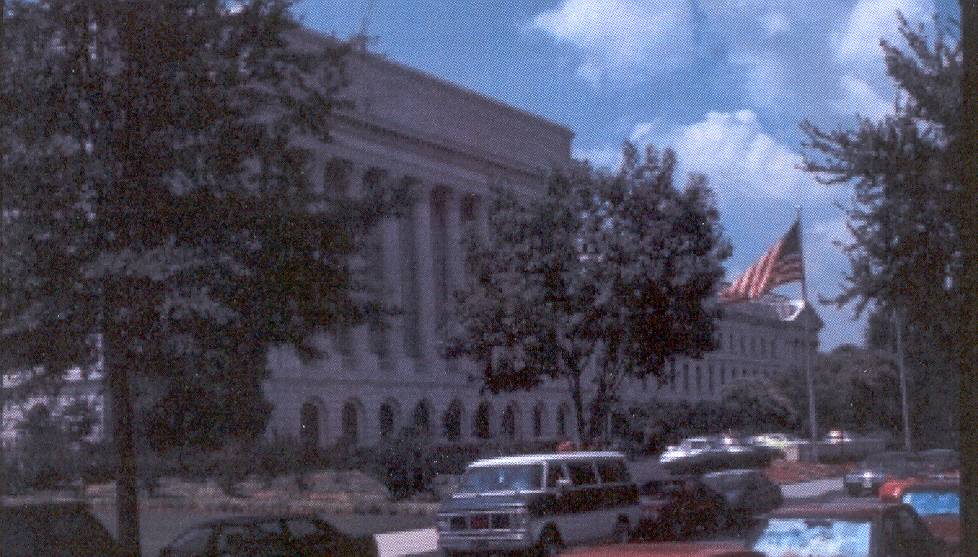
USDA; photo by F.T. Campbell

Every five years, Congress adopts a new Farm Bill. The House and Senate Agriculture committees are  holding hearings and considering proposals for the Farm Bill due to be adopted in 2019. Now is the time for people concerned about the continuing introductions of forest pests and weakness of our government’s response to pests that have become established to ask their Representative and Senators to adopt legislative language to strengthen relevant USDA programs. I suggest specific proposals below – which I hope you will urge your representatives to support.

The Farm Bill supports our Nation’s largest soil and water conservation programs. The Farm Bill can also be used to create new programs that address other issues – such as pest prevention and response.

The Farm Bill already has been used to strengthen APHIS’ phytosanitary programs. For example, Section 10007 of the 2014 Farm Bill provides more than $50 million annually for the Plant Pest and Disease Management and Disaster Prevention Program. These funds have supported numerous vitally important research and management programs targetting polyphagous shot hole borer, spotted lanternfly, velvet longhorned borer, thousand cankers disease, emerald ash borer, as well as more general goals such as improving traps for detecting wood-borers and outreach about emerald ash borer to Native American tribes. With APHIS’ annual appropriations falling far short of the resources needed to respond to invasions by numerous plant pests, Section 10007 has provided essential supplements to the agency’s programs.

The new Farm Bill to be adopted by the Congress offers opportunities to strengthen other components of USDA programs with the goal of protecting the tree species comprising our wildland, rural, and urban forests.

The Center for Invasive Species Prevention and Vermont Woodland Owners Association have developed several proposals that we hope will be incorporated into the 2019 Farm Bill. These proposals have been endorsed by the Reduce Risk from Invasive Species Coalition.  The amendments have also been endorsed by the Weed Science Society of America. CISP submitted testimony summarizing these proposals to the Senate Committee on Agriculture, Nutrition, and Forestry in early July, when the Committee held a hearing on the Farm Bill’s conservation and forestry programs. (For a copy of our testimony, contact us using the “contact us” button.)

You can help by contacting your Representative and Senators and asking them to support these proposed amendments to the 2019 Farm Bill.

These proposed amendments seek to address the following needs.
  • Do you wish to strengthen APHIS’ commitment to pest prevention in the face of a competing mandate to facilitate trade?

Then you might want to support a proposed amendment to Section 3 of the Plant Protection Act. The new language would read as follows:

“(3) It is the responsibility of the Secretary to facilitate exports, imports and interstate commerce in agricultural products and other commodities that pose a risk of harboring plant pests or noxious weeds in ways that will reduce prevent, to the greatest extent practicable feasible, as determined by the Secretary, the risk of dissemination of plant pests and noxious weeds.”

  • Do you wish to increase funding for APHIS’ programs responding to recently-detected plant pests?

Then you might want to support a proposed amendment that would expand APHIS’ access to emergency funds by enacting a broad definition of “emergency”. Under the new definition, “emergency” would mean “any outbreak of a plant pest or noxious weed which directly or indirectly threatens any segment of the agricultural production of the United States and for which the then available appropriated funds are determined by the Secretary to be insufficient to timely achieve the arrest, control, eradication, or prevention of the spread of such plant pest or noxious weed.”

This amendment would help APHIS evade the downward push of its declining annual appropriation and enable the agency to tackle more of the tree-killing pest that have entered the U.S.
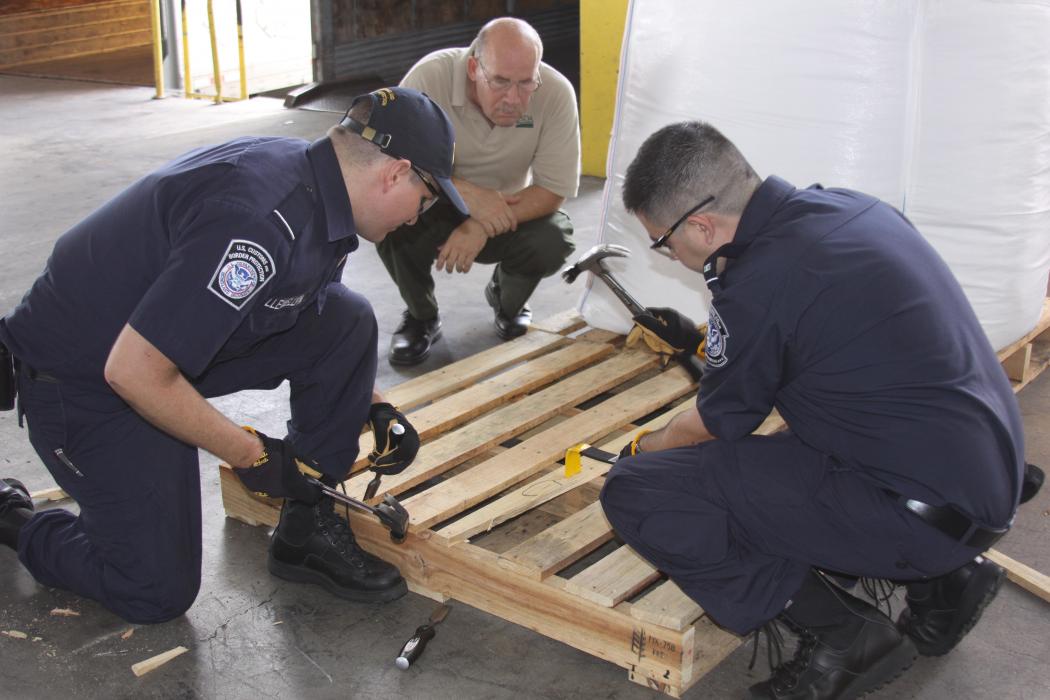
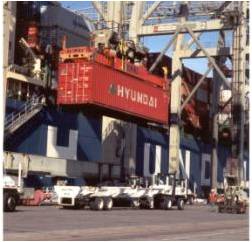
Customs inspecting wood packaging

  • Do you wish to promote stronger measures aimed at minimizing the presence of pests in wood packaging material? (I have blogged repeatedly about the continuing pest risk associated with the wood packaging pathway.)

Then you might want to support a proposed amendment that would establish a non-governmental Center for Agriculture-Trade Partnership Against Invasive Species. That Center would promote industry best practices, encourage information-sharing, and create an industry certification program under which importers would voluntarily implement pest-prevention actions that are more stringent than current regulations (ISPM#15) Link require.
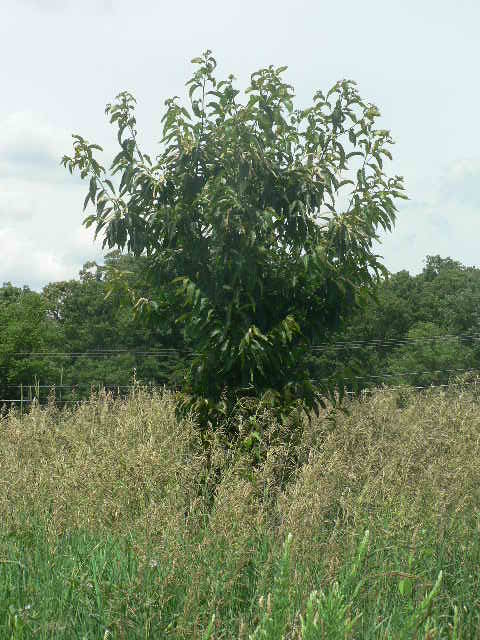
American Chestnut Foundation chestnut in experimental planting in Fairfax County, Virginia; photo F.T. Campbell

  • Do you wish to strengthen efforts to develop programs that would provide long-term funding to support 1) research and development of long-term pest-control strategies such as biological control and breeding of trees resistant to insects or pathogens and 2) testing, development, and implementation of strategies to restore to the forest native tree species that have been severely depleted by non-native pests?

Then you might want to support a pair of proposed amendments that would:

  1. Establish a fund, to be managed by the National Institute of Food and Agriculture, to provide grants under which eligible institutions would carry out research intended to test and develop strategies aimed at restoring such tree species. Such strategies might include finding, testing, and deploying biological control agents or breeding of trees resistant to pests.
  2. Amend the McIntyre-Stennis Act to establish a fund to provide grants to support programs to eligible institutions to conduct experimental plantings aimed at restoring such tree species to the forest.

You can obtain copies of the proposed amendments, in legislative language, by contacting us using the “contact us” button.

Your efforts will be valuable in any case … but if your Representative or Senator is on the agriculture committee, contacting that Member will be most important!

Members of the Senate Committee on Agriculture, Nutrition, and Forestry:

Republicans (majority):

  • Pat Roberts, KS, Chairman
  • Thad Cochran, MS
  • Mitch McConnell, KY
  • John Boozman, AR
  • John Hoeven, ND
  • Joni Ernst, IA.
  • Chuck Grassley, IA
  • John Thune, SD.
  • Steve Daines, MT
  • David Perdue, GA
  • Luther Strange, AL

Democrats (minority):

Members of the House Committee on Agriculture

Republicans (majority):

Democrats (minority):


We welcome comments that supplement or correct factual information, suggest new approaches, or promote thoughtful consideration. We post comments that disagree with us — but not those we judge to be not civil or inflammatory.

Posted by Faith Campbell
Insects & Pathogens Introduced Via Plant Imports – Let’s Collaborate to Understand Risk


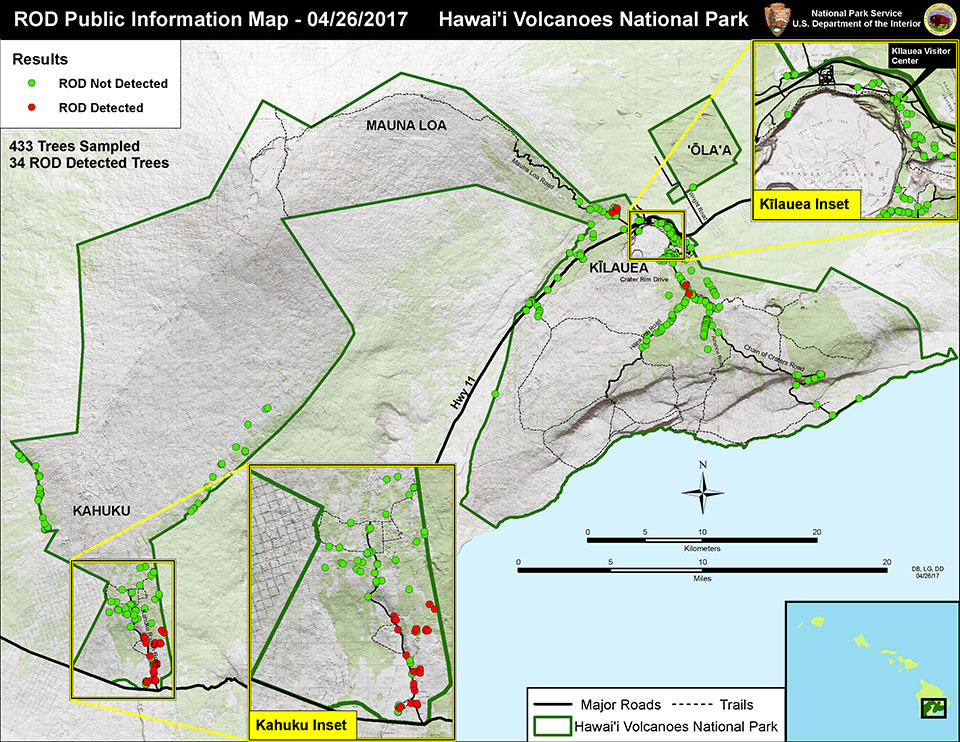
map showing locations in Hawaii Volcanoes National Park of ʻōhiʻa infested by rapid ʻōhiʻa death; NPS map available here

The U.S. Department of Agriculture’s adoption of a new list of plant species barred from importation pending pest risk assessment after a four-year wait (NAPPRA) [see my previous blog from June 21, here] prompts me to review what I know about pests associated with plant imports – and to appeal for collaboration among non-USDA scientists to improve our understanding of current  risks. Therefore I’m sharing some pest import and establishment data. I welcome the opportunity to work with experts to evaluate the level of risk and other matters that might be extracted from these data. Contact me to explore how we might work together.

As was pointed out by Eschen et al. 2015 (see list of sources at the end of this blog), most countries’ data on the “plants for planting” pathway are inadequate to allow an assessment of phytosanitary measures’ efficacy in preventing pest introductions. The authors stressed the need for data on:

  1. plant imports at the level of genus, including plant type and origin;
  2. pest arrival rates on each of these categories of plant imports; and
  3. pest establishments.

In the apparent absence of agencies’ efforts to close these data gaps, I propose that we work together, using available information, to improve our understanding of the current level of risk. Perhaps we can agree on which pest species are real red flags; decide which pathways most need new policy approaches; and reach conclusions about the implications of holes in the data.

  1. What Do We Know About Plant Imports?

The U.S. imports approximately 2.5 billion plants each year. The plants most likely to transport insects or pathogens that would attack North American trees and shrubs are woody plants. According to Rebecca Epanchin-Niell, during the period FY2010-FY2012, Americans imported each year more than 300 million woody plant units, belonging to about 175 genera.

Marcel Colunga-Garcia and colleagues analyzed plant import data for the period 2010-2012. They studied maritime (ship-borne) containerized plant imports, which represented 64.4 percent of the total value of all “plants for planting” imported into the U.S. in 2010, excluding imports from Mexico and Canada. The types of plants shipped in this way include rooted plants in pots; bare root plants; bulbs and tubers; root fragments, root cuttings, rootlets or rhizomes; rooted cuttings; unrooted cuttings; and budwood/graftwood.

Measuring by the plants’ import values, Colunga and colleagues determined that New York and Los Angeles metropolitan areas together import 60 percent of these plants; not all plant imports are routed through Miami – as is often assumed.

Second, these data show which states are the ultimate destination for relatively large volumes of certain types of plants. Thus, the top five states for receipt of rhododendrons and azaleas were Michigan, Oregon, California, New York, and New Jersey. Michigan received almost twice as many plants (measured by value) as New Jersey. The top three states for receipt of “fruit and nut trees and shrubs” were Florida, Louisiana, and Washington – all at nearly $1 billion or higher. California and North Carolina ranked fourth and fifth, but at values of only $200,000. It is clear from these data that contaminated plants could deliver pests virtually anywhere in the country.

Because my focus is on insects or pathogens that threaten native trees, I wish to separate those from pests that attack primarily herbaceous plants. (Of course, herbaceous plants are important components of ecosystems, as well as premier agricultural and horticultural crops! I do not mean to imply that pest threats to herbaceous plants are not important.)

About nine million of the 300 million woody plants imported to the U.S. each year belong to genera which also contain species of trees native to North America. A larger number of plants – 224 million – were in the same family as a North American native tree (Epanchin-Niell 2017). In other words, about 75% of the woody plants imported each year were in the same family as at least one species of tree native to North America.

Since plants in the same genus are more likely to transport damaging pests that would attack North American trees and shrubs, some have suggested that all such imports should be prohibited temporarily, using the NAPPRA process.

  1. What Do We Know About Pest Arrivals? (Including Detection Difficulties)

Liebhold et al. 2012, relying on 2009 data, found that about 12 percent of incoming plant shipments had symptoms of pests – a rate more than 100 times greater than that for wood packaging — a pathway that has received far more international and U.S. regulatory attention for years. This finding is similar to that of a study in New Zealand, which found that 14 percent of consignments of plants were infested – primarily with pathogens (Epanchin-Niell 2017). Worse, though, Liebhold et al. found that a high percentage of pests associated with a plant shipment is not detected by the inspectors, although APHIS has disputed this finding.


At my request, APHIS analysts compiled a list of imported woody plant genera on which pests were detected during fiscal years 2011-2016. Of the 360 quarantine pests listed, only 34 were designated as “disease” (nine percent of the total). I suspect this is significantly below the actual number entering the country.


Table 1. Overall number of pest detections recorded*

Fiscal Year # of records # of countries of origin for shipments found to be infested
2011 133 16
2012 110 14
2013 42 12
2014 27 9
2015 45 12
2016 14 5


* My totals do not include shipments from Puerto Rico; there were six pest detections on plants from the Commonwealth.

I cannot explain why the total number of detections shown in Table 1 nor – especially – the number of countries from which these infested shipments arrived fell so dramatically in FY2016. If APHIS was focused on inspecting the highest-risk shipments in FY15 and FY16, shouldn’t the number of interceptions have risen?


Pathogens are probably undercounted in Table 2 because inspectors experience great difficulty in detecting pathogens during port-of-entry inspections. For example, the genus Phytophthora does not appear in the database of port interceptions, yet we know that Phytophthora are being introduced. Also, the database does not contain the genus Rhododendron. It seems unlikely that no quarantine pests were detected on a shipment of Rhododendron over that six-year period.


Table 2. Types of Pests Intercepted

Disease                        34

Insect                           290

Mite                             20

Mollusk                       23

Nematode                    2


APHIS’s interception records are not designed as a statistically valid sample for determining the total number of pests on shipments because, for example, inspection priorities and resultant inspection criteria  change over time. Since 2015 APHIS has focused more on higher-risk shipments. Before, a specified percentage of all imports was inspected. For these reasons, interception records cannot be used to evaluate the overall risk of pests being imported along with “plants for planting” in any given year. Nor can APHIS’ interception records be compared over time.

Obviously, the numbers of pests detected on a specific type of import will reflect several factors, especially the volume of imports and the intensity of inspection. This bias in the data is reflected in the high number of pest interceptions from Central American countries – from which the U.S. imports very large volumes of plants. Two hundred twenty of the 385 pest detections recorded over the six-year period (57 percent) were on plants shipped from Costa Rica or Guatemala. Canada ranked third, with 35 pest detections (nine percent of the total).

That said, each record reflects a detection of a taxon of animal or pathogen that APHIS considers to be a “plant pest”. Each time a particular species is detected in a shipment, it is recorded. If more than one species is detected in a shipment, each species is reported separately. Therefore,

  • the number of detection records does not equal the number of shipments found to be infested;
  • the records do not reveal the number of specimens of each named taxon – either in an individual shipment or in total; and
  • the number of times a taxon appears in the database does indicate how many shipments were found to be infested by that taxon.


  1. Principal Threats to North America’s Native Trees and Shrubs

APHIS and I agree that our focus should be on those pests likely to have significant consequences if they are introduced. This risk of impact depends on climate, presence of probable hosts in the U.S., and other factors. Among the highest risk sources of imports for most the U.S. will be temperate countries, like those below. APHIS assigns a lower rating of risk to pests that are likely to be established in the U.S. already or to establish naturally – e.g., pests native to northern Mexico near the U.S. border.


Table 3. Main Temperate Countries of Origin for Infested Shipments by Year

FY2011:  Germany, Japan, Turkey, Netherlands, France, Pakistan, Canada, New Zealand

FY2012:  Israel, Canada, South Korea, China, Chile, Netherlands

FY2013:  France, Canada, Belgium, China

FY2014:  China, Canada, South Africa, Portugal

FY2015:  China, Germany, Netherlands, Canada, France, Australia

FY2016:  Canada


We can also look at the host plants on which pests are being intercepted to think about threats. Table 4 shows these. Presumably, the volume of trade in these genera, from the countries concerned, is sufficient to preclude any listing of these hosts under the NAPPRA regulatory process (see blog from June 21).


Table 4. Host Genera on which Pests Were Intercepted, Including only Genera Native

to North America or U.S. Islands or Important in Ornamental Plantings

 Plant genus                 # records — countries of origin — types of pests

Acer                             7 — primarily Canada; also Netherlands & Korea – 2 disease, 4 insect, 1 mite

Buxus                           3 – all Canada – 2 insect, 1 mollusk

Camellia                      2 – France – 1 disease, 1 mite

Chamaecyparis                        1 – Canada; mite

Cycas revoluta             8 – Honduras, Costa Rica, Dom. Rep. – insects

Fagus                          6 – Netherlands, Belgium; insects (aphids primarily)

Hibiscus                       4 – France, Tahiti, Canada – 1 disease, 1 insect, 1 mite, 1 mollusk

Ilex                              3 – Canada & NL – 2 insects, 1 disease

Liriodendron               2 – Canada – insects

Magnolia grandifolia  1 – South Africa – insect

Opuntia                       6 – Mexico – insects

Picea                           7 – Canada – insects (primarily aphids)

Thuja                           6 – Canada – insects

Tilia                             2 – Canada – mollusk


  1. What Else Do We Know?

If we look at pests introduced via all pathways, unlike those above, U.S. pest-establishment data show that plant pests continue to be introduced, but at a slower pace in recent years. In its Implementation Plan for Section 10201 of the Food, Conservation and Energy Act of 2008, USDA APHIS said that between 2001 and summer 2008, 212 pests were reported as new to the United States – an average of 30 new pest introductions each year. An APHIS database of plant pests “newly detected” during fiscal years 2009 – 2013 listed approximately 90 new taxa of plant pests as detected during this period – approximately 22 each year. In its annual report for 2016, the agency reported detecting 16 species of plant pests not previously detected in the U.S.

I think that approximately 37 of the 90 “new” pests detected over the 2009-2013 period were probably introduced via imports of plants, cuttings, or cut foliage or flowers. These include all the viruses, fungi, aphids and scales, whiteflies, and mites. I have asked APHIS to give me a database of newly detected plant pests for fiscal years 2014-2015, but the agency has not done so.

Among tree-killing pests introduced over the past 160 years, approximately 69% were introduced via the live plant trade. Liebhold et al. 2012 found that 95% of sap feeders, 89% of foliage-feeding insects, and 47% of pathogens were introduced via this pathway.

Pathogens are probably undercounted here, too, since those that do not cause massive damage are probably overlooked. Of the approximately 90 pests newly detected  2009-2013, ten were fungi, four were viruses, and two were rusts (18 percent of the total).

The genus Phytophthora does not appear in the database of “newly detected” pests. Yet we know that Phytophthora are being introduced. We know that, in 2012 a Phytophthora new to the United States — Phytophthora tentaculata — was detected on nursery-raised herbaceous plants in California. Follow-up studies have detected several additional Phytophthora taxa that might be new to the United States. One, P. quercina, had previously been reported only in Europe and Western Asia. The other putatively new taxa are still being evaluated as to whether they are previously unknown species or hybrids, and whether they are native to California or elsewhere in the United States, or are of alien origin.


The presence of the EU1 strain of Phytophthora ramorum in several nurseries in Washington, California, and most recently Oregon is also evidence that introductions of this species have continued since it was designated as a regulated pest in 2003.


Another pathogen that has apparently not been included in the official data is the fungus which causes rapid ʻōhiʻa death – a strain of Ceratocystis fimbriata. Scientists do not yet know whether this strain was introduced directly to Hawai`i on a recently-imported, asymptomatic plant; or whether the strain evolved from one or more different strains introduced to Hawaiʻi recently or longer ago.


Can you help evaluate the level of risk associated with various plant taxa, types, and origins? and other matters that might be extracted from these data. Perhaps we can agree on which pest species cause greatest concern; decide which pathways most need new policy approaches; and reach conclusions based on holes in the data. Can we use the data on pest taxa that underlie this summary – data which I have – to strengthen the case for USDA to promptly finalize revision of its “plants for planting”  (“Q-37”) regulations (see my blog from June 21 and Chapter 4 of the Fading Forests report?


Contact me to explore how we might work together.


Posted by Faith Campbell


We welcome comments that supplement or correct factual information, suggest new approaches, or promote thoughtful consideration. We post comments that disagree with us — but not those we judge to be not civil or inflammatory.


SOURCES


Colunga-Garcia M, Haack RA, Magarey RD, Borchert DM (2013) Understanding trade pathways to target biosecurity surveillance. In: Kriticos DJ, Venette RC (Eds) Advancing risk assessment models to address climate change, economics and uncertainty. NeoBiota 18: 103–118. doi: 10.3897/neobiota.18.4019


Epanchin-Niel, R.S. 2017. Presentation to 28th USDA Interagency Research Forum on Invasive Species. January 2017.


Eschen, R., K. Britton, E. Brockerhoff, T. Burgess, V. Dalley, R.S. Epanchin-Niell, K. Gupta, G. Hardy, Y. Huang, M. Kenis, E. Kimani, H.-M. Li, S. Olsen, R. Ormrod, W. Otieno, C. Sadof, E. Tadeau, M. Theyse. 2015. International variation in phytosanitary legislation and regulations governing importation of plants for planting. Environmental Science and Policy 51 (2015) 228-237

Liebhold, A.M., E.G. Brockerhoff, L.J. Garrett, J.L. Parke, and K.O. Britton. 2012. Live Plant Imports: the Major Pathway for Forest Insect and Pathogen Invasions of the US. www.frontiersinecology.org


Surprise! USDA Through APHIS moves on NAPPRA regulations


USDA headquarters; F.T. Campbell

To my complete surprise, USDA APHIS has finalized a four-year-old proposal to temporarily prohibit importation of 56 taxa of plants: 22 that are likely to be invasive and 34 that are hosts of eight insects, pathogens, or other types of plant pests.

On June 19, APHIS published a notice in the Federal Register announcing that APHIS had finally acted on a proposal initially published on May 6, 2013. To view the datasheets APHIS prepared and the comments APHIS received, go here.

Under APHIS’ regulations in ‘‘Subpart— P4P’’ (7 CFR 319.37 through 319.37–14 …), APHIS prohibits or restricts the importation of “plants for planting” – living plants, plant parts, seeds, and plant cuttings – to prevent the introduction of “quarantine pests” into the US. A “quarantine pest” is defined in § 319.37–1 as a plant pest or noxious weed that is of potential economic importance to the United States and not yet present in the country, or is present but is not widely distributed and is being officially controlled.

Section 319.37–2a authorizes APHIS to identify those plant taxa whose importation is not authorized pending pest risk analysis (NAPPRA) in order to prevent their introduction into the United States. As regards plant taxa that have been determined to be probable invasive species, such importation is restricted from all countries and regions. For taxa that have been determined to be hosts of a plant pest, the list includes (1) names of the taxa, (2) the foreign places from which the taxa’s importation is not authorized, and (3) the quarantine pests of concern.

The plant taxa now regulated because they host various types of plant pests are listed in two parts.

1) Species designated during the first round of action were proposed in 2011 and finalized in 2013 =

https://www.aphis.usda.gov/import_export/plants/plant_imports/Q37/nappra/downloads/HostsofQuarantinePests.pdf

2)  Species proposed in 2013 and finally designated on June 19, 2017 =

https://www.aphis.usda.gov/import_export/plants/plant_imports/Q37/nappra/downloads/hosts-quarantine-pests-round2.pdf


In summary, the second round of NAPPRA seeks to prevent introduction of the following specific pests by prohibiting imports of their associated plants from most countries. Imports from Canada are often excepted and those from the Netherlands less often.

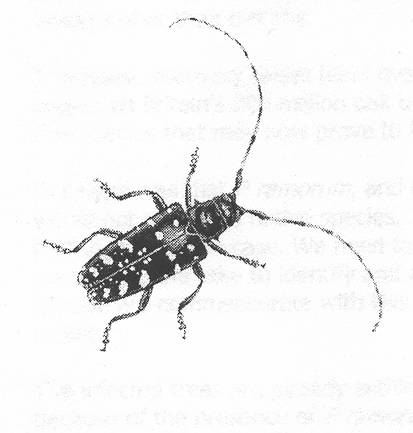
  • Asian longhorned beetle (ALB, Anoplophora glabripennis) – Celtis, Cercidiphyllum (katsura), Koelreuteria, Tilia
  • Great spruce bark beetle (Dendroctonus micans) – Pseudotsuga
  • Japanese pine sawyer (Monochamus alternatus) – Cedrus
  • Phytophthora kernoviae 17 genera, including Camellia, Fagus, Hedera, Ilex, Leucothoe, Liriodendron, Magnolia, Pieris, Quercus, Rhododendron, Sequoia, Vaccinium
  • Boxwood blight (Puccinia buxi) – Buxus (boxwood)


There are other restrictions on plant imports related to pests, which predate the most recent NAPPRA listing. These include =

  • Acer is already listed on the previous NAPPRA list for all countries except Canada, Netherlands, and New Zealand.
  • Longstanding regulations prohibit the importation of Abies species from all countries except Canada. The genera Larix, Picea, and Pinus were added to the NAPPRA list in the April 2013 NAPPRA notice.
  • Camellia was also listed in 2013 from all countries, except Canada, to prevent introduction of the citrus longhorned beetle (CLB, Anoplophora chinensis); the genus is also regulated for Phytophthora ramorum. The most recent action now adds restrictions because Camellia is also a host of Phytopththora kernoviae. Plants from Canada are exempt because of longstanding “significant trade” volumes.
  • While plants in the genus Cercidiphyllum (katsura) may be imported from the Netherlands – despite the presence in the country of both ALB and CLB – a 2013 Federal Order (DA–2013–18) specifies mitigation actions which exporting countries must take to prevent transport of these insects via trade in this or other genera.
  • Hedera was added to the NAPPRA list via the first round of proposals in April 2013 as a host of CLB. Under the 2013 proposal, the genus is also listed as host of Phytophthora kernoviae.
  • Vaccinium are consistently exported only from Canada and Australia. The genus is listed because it is a host of Phytophthora kernoviae.

As APHIS notes in its explanation in the Federal Register, P. kernoviae has been reported in England, Ireland, and New Zealand; APHIS considers this to be evidence of spread of the pathogen through the global movement of plants. APHIS notes further that the pathogen has a large number of confirmed hosts and there is currently no effective control measure. APHIS does not note that the native range of P. kernoviae is unknown.

APHIS received considerable pushback on its proposal to restrict importation of Callistephus, Chrysanthemum, and Eustoma spp. to prevent introduction of several pathogens, including chrysanthemum stem necrosis virus (CSNV) and chrysanthemum white rust.  In response, APHIS has withdrawn these three genera from the new NAPPRA listing while it conducts a commodity import evaluation document (CIED) for Chrysanthemum.


I have not discussed here NAPPRA as it applies to invasive plants. In April I blogged about the need for APHIS to act. Plants listed because of their invasive potential are posted here =

1) 2013 listing: https://www.aphis.usda.gov/import_export/plants/plant_imports/Q37/nappra/downloads/QuarantinePestPlants.pdf

2) 2017 listing: https://www.aphis.usda.gov/import_export/plants/plant_imports/Q37/nappra/downloads/quarantine-pest-plants-round2.pdf

Again, I welcome USDA’s finalization of this second round of regulations and look forward to new proposals.


History of NAPPRA

In December 2004 APHIS published in the Federal Register an Advance Notice of Proposed Rulemaking, or ANPR which outlined a strategy for reducing pest introductions via the “plants for planting” pathway. The strategy had two major steps.

First, the agency would create a temporary holding category for plants suspected of transporting insects or diseases. This would allow APHIS to suspend imports of particular plants, from certain countries, until a full risk assessment was completed.

Second, APHIS would issue regulations establishing a general framework to minimize the presence of pests. Using this, the agency would negotiate country-specific requirements for imported plants, working toward an approach that would rely on “integrated measures” (also called “integrated pest management”).

APHIS formally proposed to create the temporary holding category – the NAPPRA program – in 2009. The regulations were finalized in May 2011 – six and one half years after the intention to take this action was announced in the ANPR. In adopting the NAPPRA rule, APHIS reiterated the need to encourage, but not require, the plant import trade either to rely on low-risk plant materials or to adopt pest-reduction methods.

In July 2011, APHIS published the initial list of species proposed for inclusion in the NAPPRA category.  This list was finalized in April 2013. A second list of species proposed for NAPPRA listing was published in May 2013.

This history – with citations – can be found in chapter 4, “Invasion Pathways”, in my report Fading Forests III, available here.


Meanwhile, here are a few related FAQs about NAPPRA as it is being implemented.


Why does APHIS regulate by genus?

APHIS regulates pests’ hosts at the genus level because when a new species is identified as a host, additional scientific studies often identify other host species within that genus. Therefore, regulating all species within the genus is the preferred course of action until a formal Pest Risk Analysis (PRA) is conducted. Uncertainties are worked out then.


How do these new rules fit into international standards?

APHIS notes in the Federal Register notice that  the “plants for planting” pathway is recognized as posing a high risk  for the introduction of pests. For this reason, the International Plant Protection Convention recommends that countries require a pest risk analysis before allowing importation of a plant taxon from a new country or region.


How long is importation of plants prohibited?

NAPPRA listing does not prohibit the importation of taxa indefinitely. Imports are held up until a pest risk analysis can be conducted to identify appropriate mitigation measures. Furthermore, an importer may apply for a controlled import permit to import small quantities of a prohibited or restricted taxon for developmental purposes.


What is the meaning of “significant trade”?


If a taxon that is a host of a quarantine pest has been imported in ‘‘significant’’ quantities from a specific exporting country, it is not eligible for the NAPPRA prohibition. Currently APHIS defines “significant trade” as the importation of 10 or more plants of a taxon in each of the previous three fiscal years. At the urging of one commenter, APHIS is considering whether to alter that definition by looking at import volumes over three out of five years – although the agency said if it took that action, it would most likely also consider raising the base number of plants from 10 to a higher level.


In the case of “significant trade” in a taxon that is a host of a quarantine pest, APHIS specifies other measures to address the pest risk.


What other protections does APHIS use?


A “Federal order” is used to rapidly take action to prevent the introduction of a quarantine pest, and is generally followed by notice and an opportunity for public comment. This is a separate action from the NAPPRA process.


OTHER PENDING USDA RULES


The Overhaul of Regulations for “Plants for Planting (P4P) (the “Quarantine-37” or “Q-37” regulations) – Will It Also Be Finalized?


Another important APHIS action aimed at improving control over introductions of pests on imported plants has also been unresolved for four years. This is the revision to the agency’s overall plant import regulations, which was also proposed in May 2013. The revision would restructure the current regulations by moving specific restrictions on the importation of taxa from regulations to the Plants for Planting Manual. That transfer would allow specific restrictions to be changed without going through the full public notice and comment process required for amending formal federal regulations. The proposed revision would also add a framework for requiring foreign plant suppliers to implement integrated pest management measures to reduce pest risk. Experts believe that depending on integrated measures will better prevent pest introductions than the current reliance on a visual inspection at the time plants are shipped.


Again, for a history of and rationale for the proposed regulatory change, read chapter 4, “Invasion Pathways”, in my report Fading Forests III, available here.


Posted by Faith Campbell

We welcome comments that supplement or correct factual information, suggest new approaches, or promote thoughtful consideration. We post comments that disagree with us — but not those we judge to be not civil or inflammatory.


Status of Phytopthoras in the United States & Europe: an update

tanoak killed by sudden oak death; Marin County, Calif. photo F.T. Campbell

Here is some interesting information from recent issues of the the California Oak Mortality Task Force’s bimonthly newsletter. I am updating my earlier blogs on the status of Phytophthoras and sudden oak death (SOD) in the United States and Europe.


More than 600 samples were taken from streams or ponds in nine states (Alabama, Florida, Georgia, Mississippi, North Carolina, Pennsylvania, South Carolina, Tennessee, and Texas) during 2016. Ten of the samples were positive: seven from three streams in Alabama and three from one stream in Mississippi. Each of these had tested positive before; none was a new positive location. [March newsletter]


  • The disease continues to spread in Oregon and California:

During 2016 and early 2017, sudden oak death and tanoak mortality continued to intensify within the officially designated quarantine zone in southwest Oregon. So far, no new outbreaks have been detected outside the quarantine zone.

In Oregon, there is growing concern about the disease and the paucity of funds to address it. As a result, Oregon state Representative David Brock Smith and U.S. Senator Jeff Merkley have formed an Oregon Sudden Oak Death Task Force. The Task Force is developing a collaborative action plan to secure enough funding to contain the infestations of the NA1 genetic strain (the one widespread in Oregon and California) and to eradicate the EU1 lineage (this is the only known site where this strain is established in the forest in North America; see my blog from August 2015, which explains the significance of these strains.)  [March newsletter]


In California, scientists have been surprised by the intensity of the disease in several parks on the eastern side of San Francisco Bay – an area that is drier than most forests that are infested. The severe drought of recent years has not prevented spread of the disease. Even more surprising, one park has very little California bay laurel – which is considered to be the primary source of infection. [March newsletter]


  • Native plant nurseries may be spreading various Phytophthoras (see my blog from last year here) or the presentations on “Phytophthora Detections in Native Plant Nurseries and Restoration Sites” posted here)

The National Ornamentals Research Site at Dominican University (NORS-DUC) sampled several types of native plant nurseries in fall 2016 to determine the extent of movement of Phytophthora species on plants they sell. Unfortunately, the report in the newsletter did not include results of the sampling. [January 2017]

CFDA photo of herbaceous plants with Phytophthora infection

Oregon and Washington authorities acted in response to the initial reports from the San Francisco area, and sampled nurseries in their states. They found a similarly high infestation rate in native plant nurseries in their states. Washington State University and Oregon State University have held several 2 ½-day workshops on “Preventing Phytophthora Contamination in Native Plant Nurseries and Restoration Sites”. [May newsletter]

For more information about Phytophthoras in native herbaceous plants in California, visit http://ucanr.edu/sites/sod6/Proceedings/Presentations_and_Posters/  and  www.calphytos.org

  • Disease costs in England and Wales could top 1 billion dollars


Drake and Jones have estimated that damage by Phytophthora ramorum and P. kernoviae [link to Gallery] to non-extractive public use and non-use values at risk from uncontrolled spread of these diseases in England and Wales is £1.446 billion per year (approximately $US 1.82 billion). The greatest public value at risk (slightly more than one-third) is from an uncontrolled spread of these diseases to heritage gardens; lower risks are to the diseases’ spread to woodlands and heathlands. [March newsletter]


5) Ireland resembles Europe in numbers of Phytophthora species:


O’Hanlan and colleagues tested more than 11,000 samples from both “trade” environments (presumably, nurseries) and “non-trade” environments (presumably plantings or natural environments). They detected 19 species and 3 informally designated taxa of Phytophthora, including 8 new records for Ireland. Thus, Ireland’s situation is similar to that in Europe more broadly – a study last year by Junker and colleagues report the detection of 15 Phytophthora species in two commercial woody ornamental nurseries [link to blog about Phythophs in Europe] In Ireloand, P. ramorum was found on 30 hosts; P. syringae on 6 hosts; P. kernoviae on 3 hosts. Phytophthora species were most frequently detected on rhododendrons – (12 Phytophthora species). [January newsletter]


SOURCES


Drake, B. and Jones, G. 2017. Public Value at Risk from Phytophthora ramorum and Phytophthora kernoviae Spread in England and Wales. Journal of Environmental Management. 191: 136–144.


Junker, C., Goff, P., Wagner, S., and Werres, S. 2016. Occurrence of Phytophthora in commercial nursery production. Plant Health Progress. 17:64-75.


O’Hanlon, R.; Choiseul, J.; Corrigan, M.; Catarame, T.; and Destefanis, M. 2016. Diversity and Detections of Phytophthora Species from Trade and Non-Trade Environments in Ireland. EPPO Bull. 46: 594–602. DOI: 10.1111/epp.12331.


Posted by Faith Campbell


We welcome comments that supplement or correct factual information, suggest new approaches, or promote thoughtful consideration. We post comments that disagree with us — but not those we judge to be not civil or inflammatory.


Lobby House and Senate Agriculture Appropriations Subcommittees in support of increasing funding for two crucial APHIS programs


On May 19 I posted a blog asking you to lobby Congress in support of maintaining current funding levels for two programs aimed to eradicating or containing tree-killing pests.  These are the “tree and wood pest” and “specialty crop” programs operated by the USDA Animal and Plant Health Inspection Service (APHIS).

At the time, I had not seen the President’s budget proposal. Now I have seen the President’s budget – and, as anticipated, it calls for steep cuts in the “tree and wood pest” program. The President calls for cutting this program by 44% — from $54 million to $30 million. Specifically, the Asian longhorned beetle (ALB) eradication program would be cut by approximately 50% — $20.770. The emerald ash borer (EAB) containment program would also be cut by half — $3.127 million.

The President’s budget justifies these severe cuts by saying that states, localities, and industries benefit from eradication or containment of the ALB and EAB, so they should help pay for the containment program.  The Office of Management and Budget states that other beneficiaries should pay 50% of program costs.

For whatever reason, the budget does not propose to cut APHIS’ efforts to prevent spread of the European gypsy moth.

In reality, states, localities, and industries are very unlikely to make up the difference in funding. We should remind the Congress that already, local governments across the country are spending more than $3 billion each year to remove trees on city property killed by non-native pests. Homeowners are spending $1 billion to remove and replace trees on their properties and are absorbing an additional $1.5 billion in reduced property values and reducing the quality of their neighborhoods. (See Aukema et al. article listed below.)

ash tree killed by EAB; Ann Arbor, MI; courtesy of Major Hefje


Cuts of the size proposed by the President’s budget will undermine the programs completely. Such a result is particularly alarming given the record of success in eradicating ALB populations – when resources are sufficient; and the urgent need to complete eradication programs in Massachusetts, New York, and Ohio. As I said in May, the ALB program has succeeded in eradicating 85% of the infestation in New York. (APHIS has just announced that a section of the borough of Queens is free of ALB.) However, the infestation in Massachusetts has been only 34% eradicated; that in Ohio has been only 15% eradicated. Crippling the program now will expose urban and rural forests throughout the Northeast to severe damage by this insect, which attacks a wide range of species.

The importance of continuing the EAB containment program has been re-emphasized by scientists’ recent determination that EAB can attack commercial olive trees as well as all species of ash.

The budget also does not recognize the need for APHIS to expand its program to address other tree-killing pests, including the spotted lanternfly, and polyphagous and Kuroshio shot hole borers.The shot hole borers attack hundreds of tree species, including California sycamore, cottonwoods, and several oaks. Many known hosts are either found across the Southeast, or belong to genera that are found across the Southeast – so the threat is national. The spotted lanternfly – now established in Pennsylvania — threatens agriculture – especially grapes, apples, plums, cherries, peaches, nectarines, apricots, and almonds; as well as oak, walnut, poplar, and pine trees.

More than 30 tree-attacking pests have been introduced in recent years. Additional species from these introductions might also require APHIS-led programs; one example is the velvet longhorned beetle.

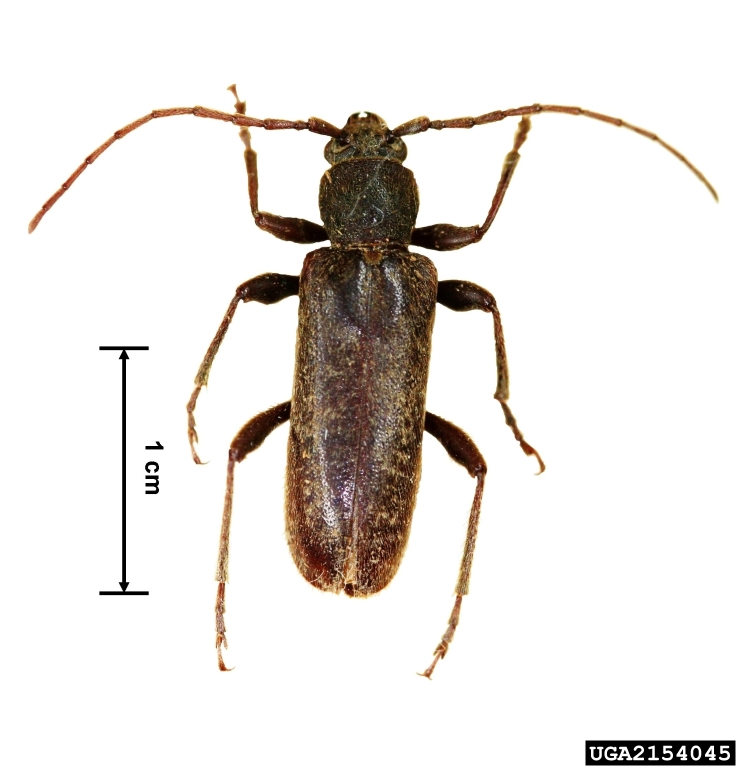
velvet longhorned beetle; bugwood.org

The budget calls also for a 6% cut on the “specialty crops” program – from $158 million to $148 million.  It is not clear how such a reduction would affect APHIS’ program to prevent spread of the sudden oak death (SOD) via movement of nursery stock [link to earlier blogs & Gallery]. The SOD program has been funded at approximately $5 million in recent years.

Finally, additional challenges lie ahead because it is likely that new tree-killing pests will be introduced with rising import volumes. Each year, border inspectors detect more than 800 import shipments with pests infesting the crates and pallets. These represent a small proportion of the actual risk; one analysis estimated that 13,000 shipments with infested packaging enter the country each year. APHIS must have sufficient resources to respond when the inevitable newly introduced pests are detected.

CBP agriculture specialists in Laredo, Texas, examine a wooden pallet for signs of insect infestation. [Note presence of an apparent ISPM stamp on the side of the pallet] Photo by Rick Pauza
SOURCE

Aukema, J.E., B. Leung, K. Kovacs, C. Chivers, K. O. Britton, J. Englin, S.J. Frankel, R. G. Haight, T. P. Holmes, A. Liebhold, D.G. McCullough, B. Von Holle.. 2011. Economic Impacts of Non-Native Forest Insects in the Continental United States PLoS One September 2011 (Volume 6 Issue 9)

Posted by Faith Campbell

We welcome comments that supplement or correct factual information, suggest new approaches, or promote thoughtful consideration. We post comments that disagree with us — but not those we judge to be not civil or inflammatory.

Plan to Join the Continental Dialogue in Savannah, Georgia, in November 2017!

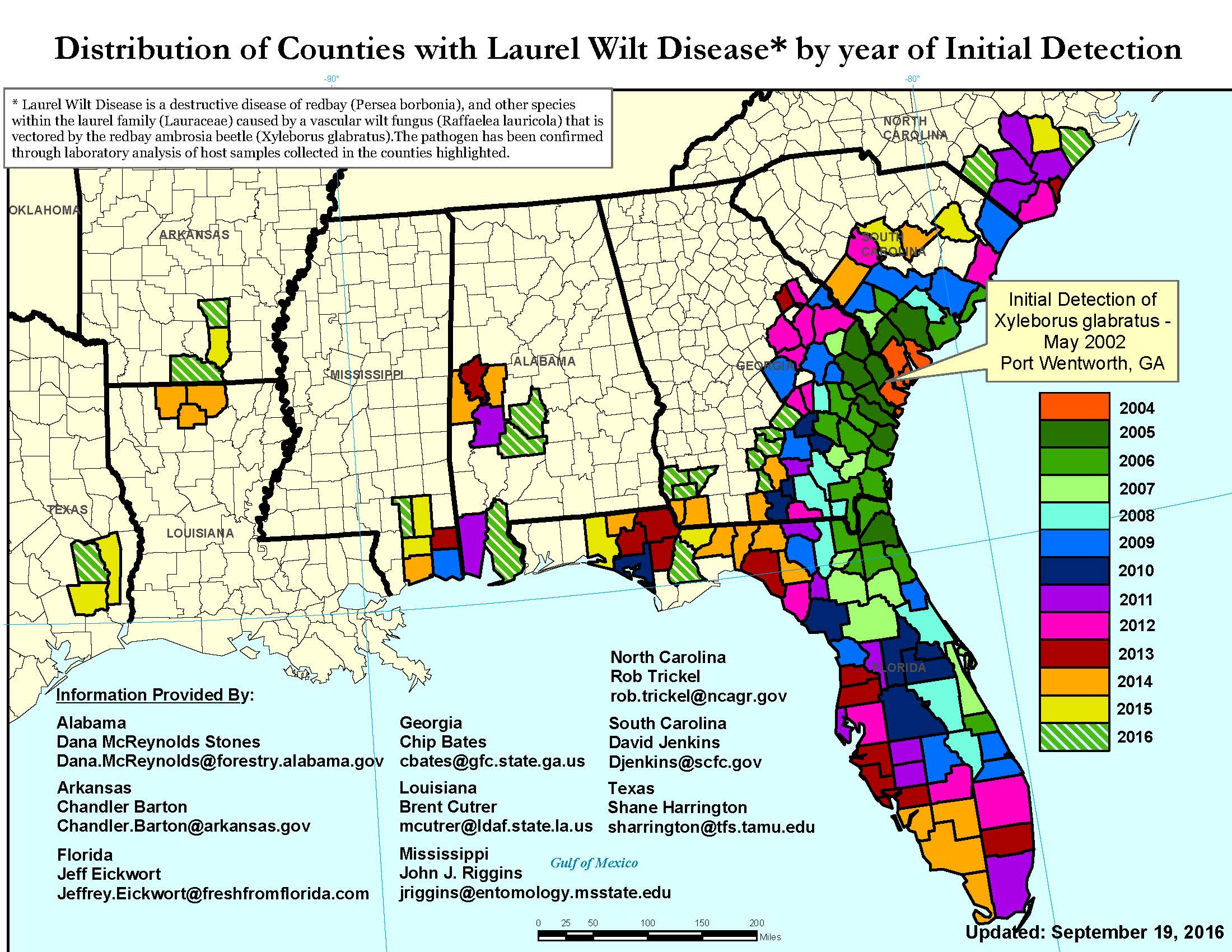
Spread of laurel wilt since 2003; source: USFS

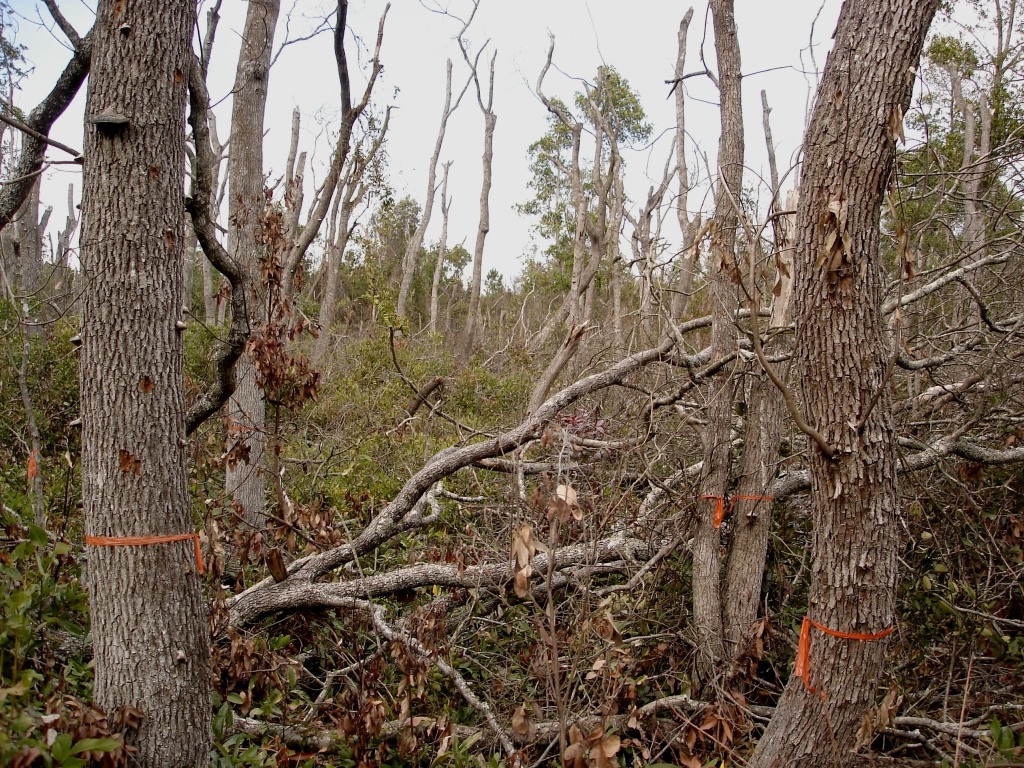
Redbay mortality, Claxton, GA 2009

photo by Scott Cameron

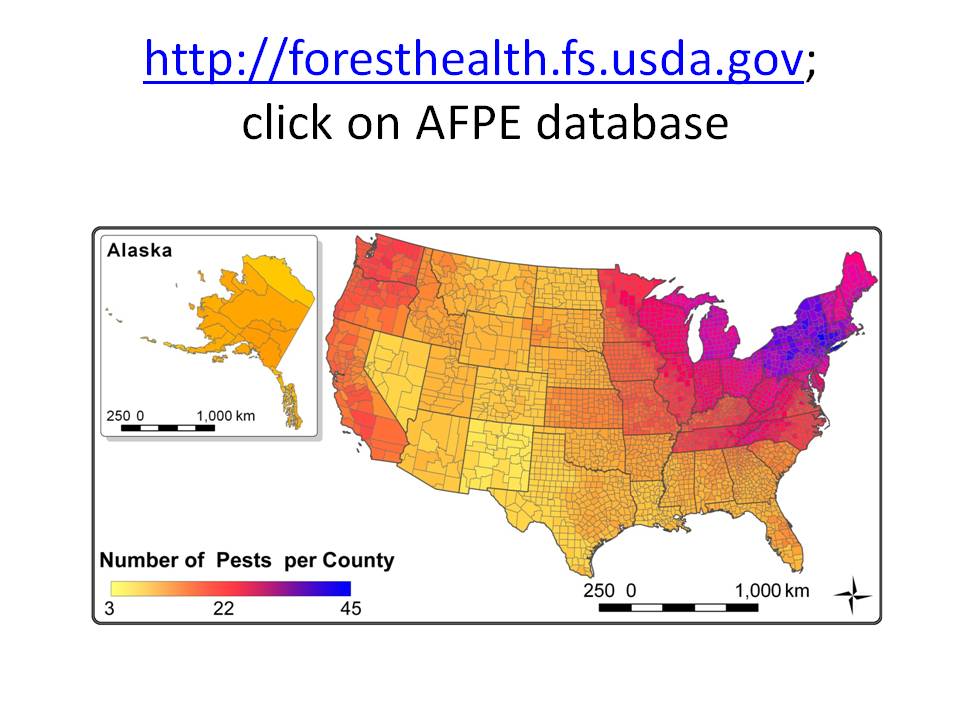
The southeastern states have been invaded by a smaller number of non-native, tree-killing insects and pathogens than some other regions (see map below). But among these are highly damaging pests that show just how vulnerable this area’s native species and forests are, e.g., chestnut blight, laurel wilt, hemlock woolly adelgid, balsam woolly adelgid, and now emerald ash borer (all described here).

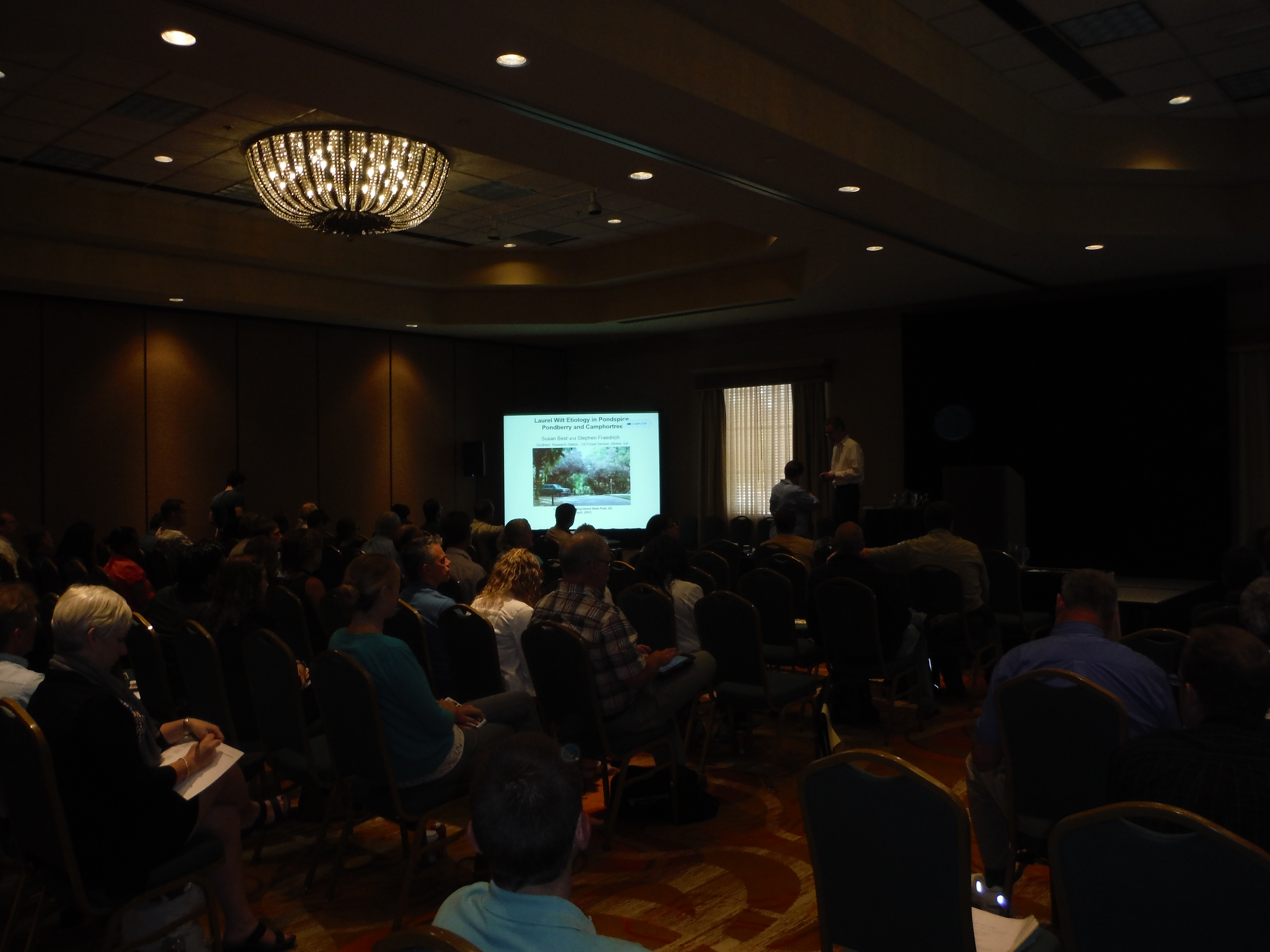
Join the Continental Dialogue on Non-Native Forest Insects and Diseases at its annual meeting in Savannah, GA, November 9 & 10, 2017 to learn about the issues outlined below and to build relationships to sustain action. The meeting will be in conjunction with the Annual Gypsy Moth Review, so we will also discuss the most recent developments pertaining to European and Asian gypsy moths. Visit www.continentalforestdialogue.org to see the agenda and registration information (both to be posted soon).

The Southeast is at high risk for greater damage because:

  • The Port of Savannah is already the largest container port on the East Coast. Now, it moves 20,000 shipping containers per day and it is adding infrastructure to increase this volume.

Most of these containers – and their accompanying wood packaging material (for more on the risk from wood packaging, see my blog from the end of January; and fact sheets here) quickly move to distribution centers or their ultimate destinations – throughout the Southeast but as far away as Chicago. However, the port has storage for millions of containers on paved container yards that total 1,200 acres.  The storage yards are close to mixed forests.

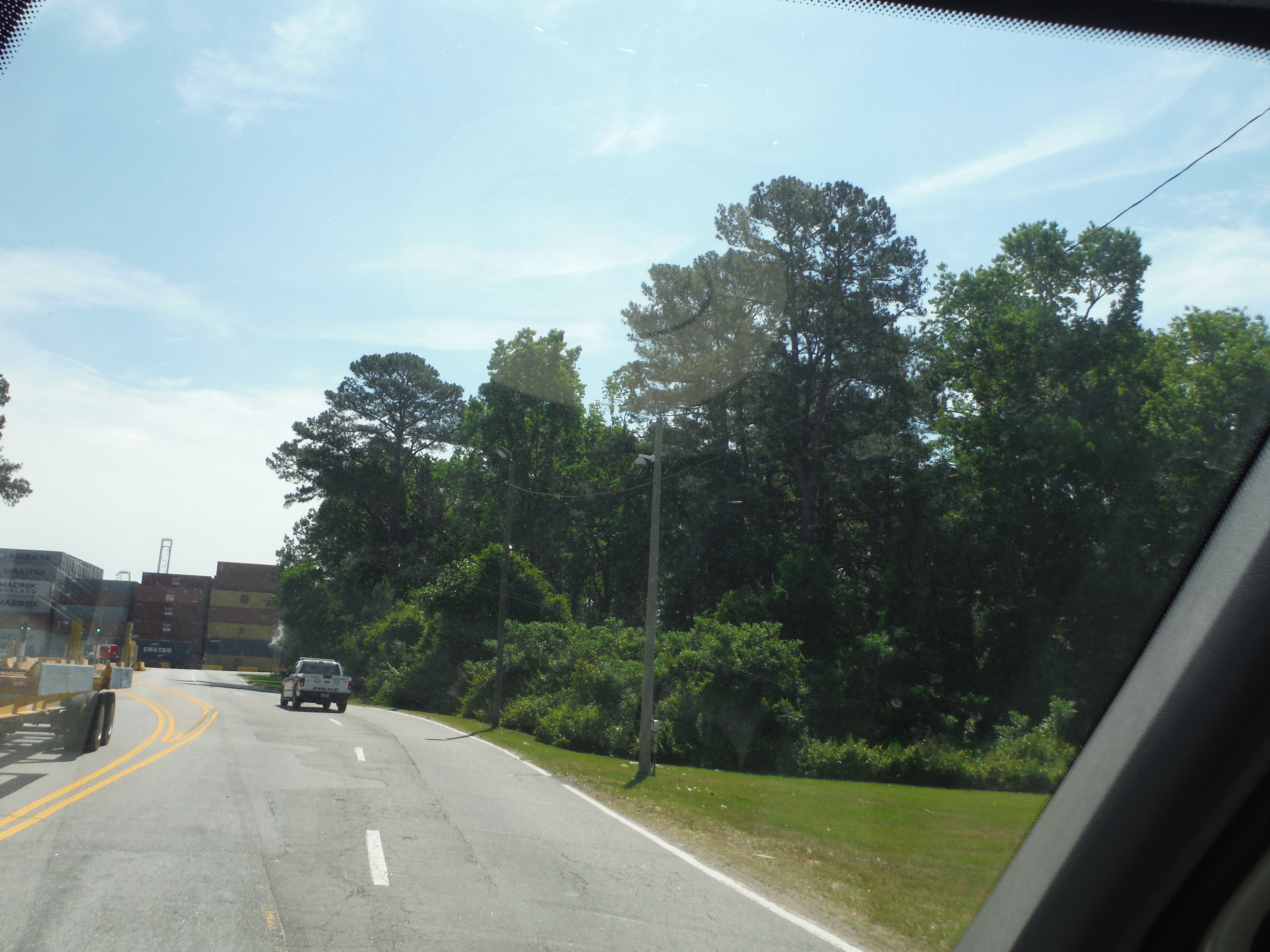
Trees across road from stored containers at Port of Savannah;  photo by F.T. Campbell

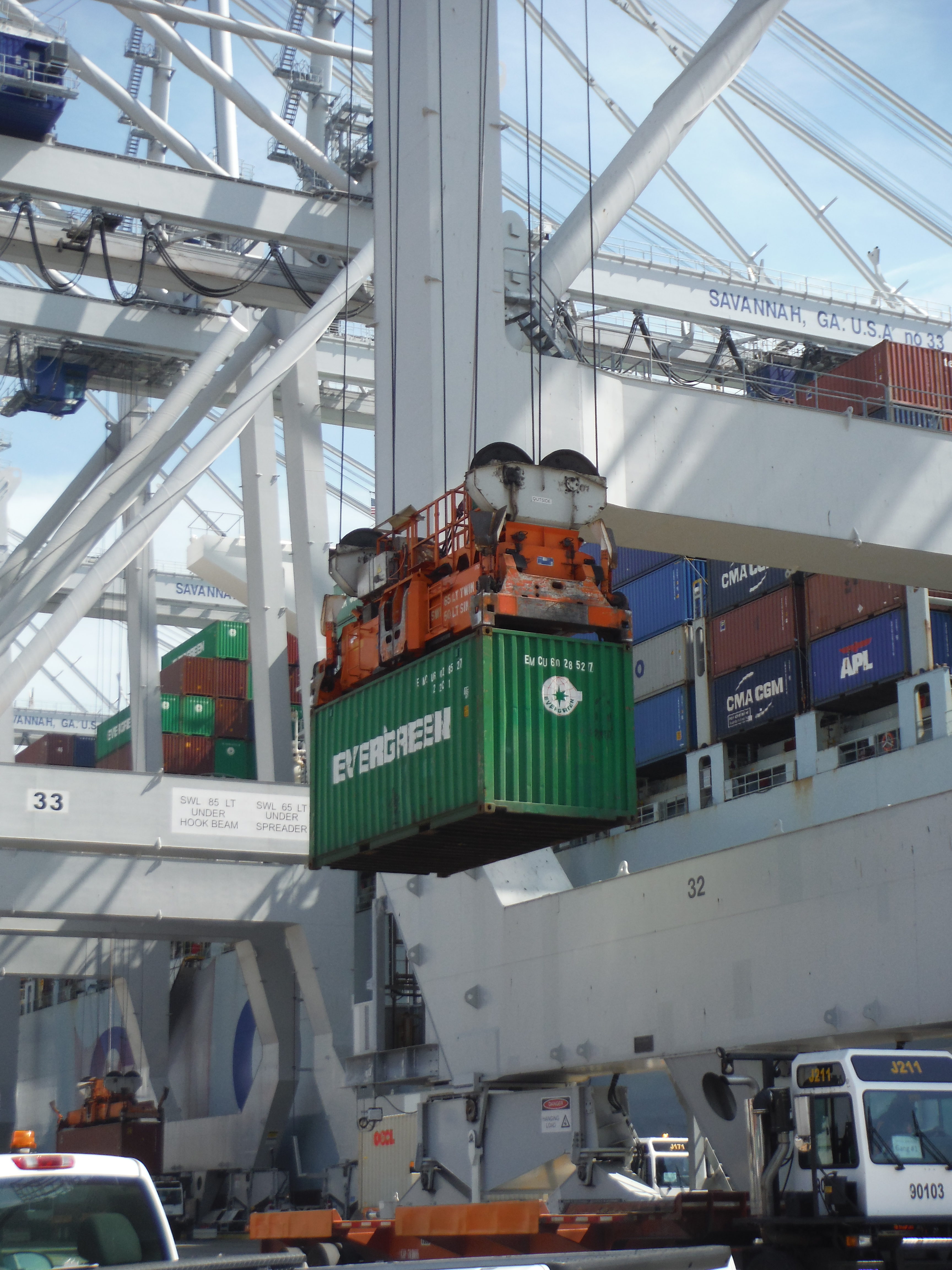
More of these ships and containers will come directly from Asia – the major source of our most damaging invaders — now that the Panama Canal has been widened. When I visited the port in mid-May, the largest container ship ever to visit the U.S. East Coast was being unloaded – and re-loaded simultaneously!  The “Cosco Development” carries 13,200 TEUs (twenty-foot equivalent containers).

Unloading “Cosco Development” at Port of Savannah; photo F.T. Campbell

  • The sudden oak death pathogen (Phytophthora ramorum) has been found in streams and ponds in several southeastern states – Alabama, Florida, Georgia, Mississippi, North Carolina, South Carolina, and Texas. Positive samples were drawn from three streams in Alabama and one stream in Mississippi in 2016. Most of these water bodies are near nurseries that had received infested plants from West Coast suppliers. In addition, infested plants have been detected recently in nurseries or landscape plantings in Louisiana, Texas, and Virginia, as well as in other states farther north [link to 2015 blog]. These infested plants have been removed. What is the current scientific thinking about the implications of these detections? Last I heard, scientists thought the pathogen cannot survive in water; it needs some plant material. Yet scientists have not found on-going infestations on plants along the streams and ponds. For more information on SOD, visit http://www.suddenoakdeath.org/


  • Over recent decades, a half dozen non-native insects that attack pine trees have become established in the continental United States. These include the Sirex woodwasp, common pine shoot beetle, golden (or red) haired pine bark beetle (Hylurgus ligniperda), Mediterranean pine shoot beetle (Orthotomicus erosus) — all described here. The mountain pine beetle (Dendroctonus ponderosae) has spread east of the Rocky Mountains and might eventually reach pine forests of the Midwest and East.


While none of these (other than the mountain pine beetle) has yet caused very much damage where they are established, should we continue to assume that they will not cause damage once they reach the “pine basket” of the Southeast? Even if plantations can be managed to minimize risk, what are the implications for natural pine forests so important to the ecosystems and protected areas of the region?


It is unclear whether the fact that the Secretary of Agriculture, Sonny Perdue, is a former governor of Georgia with a record of support for forestry will raise attention to some of these issues.  As you might remember (see my blog from March 28th), apparently no senators raised invasive pest issues during Secretary Perdue’s confirmation.

Posted by Faith Campbell

We welcome comments that supplement or correct factual information, suggest new approaches, or promote thoughtful consideration. We post comments that disagree with us — but not those we judge to be not civil or inflammatory.


Support Adequate Funding for APHIS Tree-Pest Programs


Congress is now considering funding for various agencies and programs for Fiscal Year 2018 – which begins on October 1. Please contact your Representative and Senators and urge them to support adequate funding for key programs managed by the USDA Animal and Plant Health Inspection Service (APHIS). These are essential for keeping the nation’s forests healthy by preventing introduction and spread of invasive pests. While I would much prefer to increase funding for these programs, that is impossible at this time. So I suggest that you support maintaining last year’s  funding levels for two  budget“lines” under the USDA APHIS Plant Health program: $54 million for the “Tree and Wood Pests” line and $156 million for the “Specialty Crops” line.


I have blogged often about the impacts of non-native insects and pathogens inthe United States — which are enormous. (See Lovett et al. 2016 for a summery.)  As new pests are introduced and established pests spread, these costs will only continue to rise.


Moreover, since 1975, U.S. imports (excluding petroleum products) have risen almost six times faster than APHIS and Customs and Border Protection’s staff capability to inspect  them. As a result of this and other prevention failures, such as insufficiently protective regulations, more than a dozen new plant pests are detected in the United States each year. Since the beginning of the 21st Century, at least 20 woodboring beetles have been detected here, including:

  • Redbay ambrosia beetle / laurel wilt disease;
  • Sirex woodwasp;
  • Goldspotted oak borer;
  • Walnut twig beetle and thousand cankers disease ;
  • Soapberry borer;
  • Polyphagous & Kuroshio shot hole borers; and
  • Velvet longhorned beetle.


Another dozen tree-killing pests that are not wood borers have also been detected, including Spotted lanternfly.


APHIS Programs Target only a Few of the Damaging Pests in the Country


At least in part because of inadequate funding, APHIS currently funds comprehensive programs targeting only four of the  dozens of already- or potentially-serious tree-killing pests already in the country: gyspy moth (both European and Asian); Asian longhorned beetle; emerald ash borer; and sudden oak death.


APHIS also provides limited assistance to programs on  other pests through grants  under the Section 10007 of the 2014 Farm Bill. One example is research to determine host ranges and possible control method for the polyphagous and Kuroshio shot hole borers. However, these funds have not been sufficient to support comprehensive suppression or eradication programs despite the threat posed by these two shot-hole borers. They threaten to kill 26 million trees – more than a third of the trees growing in urban areas in California’s Inland Empire, Coastal Southern California, and Southwest Desert. Absent an active APHIS program to develop effective control measures, the municipalities and homeowners of these regions will be forced to absorb an estimated $36.2 billion (the costs of removing and replacing dead and dying trees) if they want to maintain valuable urban forest canopy.

willow killed by Kuroshio shot hole borer

in Tijuana River estuary, California

photo by John Boland

The shot-hole borers might also threaten trees across the American South. Box elder, sweetgum, and tree of heaven are reproductive hosts for the polyphagous shot hole borer; all are widespread in southern forests. California species of sycamore, oak, and willow are also reproductive hosts; other trees in these genera, which grow widely across the U.S., might also be vulnerable to the shot hole borers.


APHIS also has devoted Section 10007 funds to the spotted lanternfly, which is found in southeastern Pennsylvania. This insect feeds on several crop trees as well as oak, walnut, poplar, and pine trees. Pennsylvania authorities cannot complete eradication of this pest without additional federal funding – which so far is uncertain.


APHIS has helped with trace-forwards to find furniture infested by the velvet longhorned beetle, but has not adopted a program targetting this species in the several states where it appears to be established.


As these examples illustrate, even maintaining current funding levels means that several damaging non-native insects and pathogens continue to spread without a meaningful federal response. Any cuts would only exacerbate the failure of APHIS’ program to protect our forests from non-native insects and pathogens.


Remember, too, that additional introductions are likely in coming years. According to one study, perhaps 35 shipping containers entering the country each day carry damaging pests.

Unloading largest container ship to visit a U.S. East Coast port – “Cosco Development”; Savannah, GA  May 12, 2017; F.T. Campbell

At the same time, we cannot afford for APHIS to reduce its ongoing programs in order to address the other invaders. The  Asian longhorned beetle eradication program, at a cost of $35 – $40 million per year, has succeeded in eradicating 85% of the infestation in New York. (APHIS has just announced that a section of the borough of Queens is free of ALB.) However, the infestations in Massachusetts and Ohio still threaten to spread further into the forests. The $5 – $6 million per year allocated to the gypsy moth appears to be adequate, but APHIS must be prepared to eradicate any newly detected outbreaks, especially of the Asian gypsy moth on the west coast.


APHIS’ emerald ash borer program has received $7 million per year. To reduce future costs, the agency has cut back its regulatory program, so that it enforces regulations only at the infestation’s leading edge. In affected states, APHIS will continue surveys in unregulated areas, outreach, and coordination. These changes, taken together, undermine efforts to prevent the beetle’s spread to the vulnerable rural and urban forests in North Dakota, Oregon, and other states. APHIS is emphasizing production and dispersal of biocontrol agentsrather than regulatory measures

The sudden oak death program – targeting the pathogen Phytophthora ramorum — is under the “Specialty Crops” funding line. This must also be maintained at current levels because SOD threatens such important eastern forest tree species as northern red, chestnut, white, and pin oaks; sugar maple; and black walnut. APHIS regulates movement of nursery stock which could transport this pathogen from the West coast to vulnerable areas in the East. It was learned recently that APHIS needs to add the genus Magnolia to the “filthy five” group which is subject to the most careful regulation.

Whom to Contact

Please ask your Senators and Representative to support maintaining – or even increasing – funding for these APHIS programs. Your contact is especially important if you are represented by one of the members of the House or Senate Appropriations Committee’s Subcommittees on

Agriculture:

House:

* Robert Aderholt, Alabama, Chairman

* Kevin Yoder, Kansas

* Tom Rooney, Florida

* David Valadao, California

* Andy Harris, Maryland

* David Young, Iowa

* Steven Palazzo, Mississippi

* Sanford Bishop, Georgia, Ranking Member

* Rosa DeLauro, Connecticut

* Chellie Pingree, Maine

* Mark Pocan, Wisconsin


Senate:

John Hoeven, North Dakota

Thad Cochran, Mississippi

Mitch McConnell, Kentucky

Susan Collins, Maine

Roy Blunt, Missouri

Jerry Moran, Kansas,

Marco Rubio, Florida

Jeff Merkley, Oregon

Diane Feinstein, California

Jon Tester, Montana

Tom Udall, New Mexico

Patrick Leahy, Vermont

Tammy Baldwin, Illinois


Sources


Lovett, G.M., M. Weiss, A.M. Liebhold, T.P. Holmes, B. Leung, K.F. Lambert, D.A. Orwig , F.T. Campbell, J. Rosenthal, D.G. McCullough, R. Wildova, M.P. Ayres, C.D. Canham, D.R. Foster, S.L. LaDeau, and T. Weldy. 2016. Nonnative forest insects and pathogens in the United States: Impacts and policy options. Ecological Applications, 0(0), 2016, pp. 1–19. DOI 10.1890/15-1176.1  available at

http://onlinelibrary.wiley.com/doi/10.1890/15-1176/full


Additional recent sources of information on tree-killing pests not being addressed by APHIS:

Article about the damage caused by the goldspotted oak borer:

http://westernipm.org/index.cfm/ipm-in-the-west/natural-areas/gold-spotted-oak-borer-threatens-oak-woodlands-and-ecosystems-across-southern-california/?keywords=GSOB

Videos:

GSOB at Irvine Regional Park in OC

https://www.youtube.com/watch?v=eCRVmP5KmW0&feature=youtu.be

Goldspotted Oak Borer video

https://www.youtube.com/watch?v=In2e5atd3ZY&feature=youtu.be#t=13.3989831

The Los Angeles Times has published two recent articles about the shot hole borers at

http://www.latimes.com/local/california/la-me-dying-urban-trees-20170403-story.html

and

http://www.latimes.com/local/california/la-me-trees-change-20170427-story.html


We welcome comments that supplement or correct factual information, suggest new approaches, or promote thoughtful consideration. We post comments that disagree with us — but not those we judge to be not civil or inflammatory.


Posted by Faith Campbell
 

Pest threat to West Coast confirmed – authorities should respond to this information by taking protective measures

 Numbers of non-native pests in counties of the 49 continental states; Map prepared by Andrew Liebhold, USFS in 2014. More recent introductions are not represented; nor are insects native to some part of North America

Currently, the Northeast and Midwest have the highest number of non-native, tree-killing insect and pathogen species (see map above). However, Pacific coast states have two-thirds the numbers of pest species of the Northeast – and are catching up. Two articles modeling the likelihood of new pest introductions point to the particular vulnerability of the Pacific Coast states – especially California – to pest introductions from Asia.


Koch et al. 2011 (see reference at the end of the blog) utilized various sources of information about volumes of imports likely to be associated with wood-boring pests — stone; raw wood and wood products (including crates & pallets); metals; non-metallic minerals; auto parts; etc. From this, the authors estimated both a nationwide establishment rate of wood-boring forest insect species and the likelihood that such insects might establish at more than 3,000 urban areas in the contiguous U.S. While their estimate was based on 2010 imports, they also projected rates for 2020.


See my blog from March 10  for various scientists’ estimates of  the overall, nationwide rate of introduction.  Koch et al. estimated the nation-wide introduction rate at between 0.6 and 1.89 forest insects and pathogen species per year for the period 2001–2010 and 0.36 and 1.7 species per year for 2011–2020.  In other words, we should expect a new alien forest insect species to become established somewhere in the United States every 2–3 years. If one-tenth of these new introductions turn out to cause significant damage, then we can expect a “significant” new forest pest every 5–6 years.


Pacific coast states – especially California – are at highest risk. 

Koch et al. evaluated the introduction risk for 3,126 urban areas across the country. The metropolitan area with the highest risk is Los Angeles–Long Beach–Santa Ana, California. For both 2010 and 2020, the predicted rates for a new pest establishing there is every 4–5 years.


Looking ahead to 2020, the situation worsens for three California metro areas – Los Angeles–Long Beach–Santa Ana; San Diego; and Riverside-San Bernardino. At San Francisco-Oakland, the predicted establishment rates remain steady. Most of the rest of the top 25 urban areas show decreases in establishment rate between 2010 and 2020.


This rising risk to California urban areas is driven by the growth of imports from Asia. For the four California urban areas, the establishment rate of Asian species is projected to increase 6–8% between 2010 and 2020. The Los Angeles–Long Beach–Santa Ana area could potentially expect the establishment of an alien forest insect species originating specifically from Asia alone (not the entire world) every 4–5 years.

[The polyphagous and Kuroshio shot hole borers are examples of recently introduced pests from Asia.  Both are described, inter alia, here; a distribution map for PSHB is available here.]

Koch et al. note that the Los Angeles metropolitan area has a dense human population with corresponding high demand for goods and materials, so a substantial proportion of imports clearing the port remains in the areas.  Furthermore, widespread planting of non-native plants provides a range of potential hosts that can support invaders that would not otherwise become successfully established.


A second source also indicates a heightened risk to Pacific Coast states. Yemshanof et al. used similar modeling techniques to evaluate the risk of tree pest introductions to Canada … and to the U.S. in the form of transshipped goods.  (See my earlier blog.)


The Yemshanof et al. model showed that 8% of all forest pests introduced to the U.S. on imported wood or wood packaging — as estimated by Koch et al. — would come through goods transshipped through Canada. The risk is highest to the Pacific Coast states since they are the most likely to receive Asian goods transiting through Canada.


Note that the phytosanitary agencies in both the U.S. and Canada proposed in 2010 that wood packaging originating in one of the countries and shipped to the other be required to meet the international regulations under ISPM#15. However, APHIS was unable to adopt this regulation under the Obama Administration, and such an action seems even less likely under the Trump Administration. Canada is unlikely to adopt the new rules without a coordinated U.S. action.


Southern California also imports lots of plants – another pathway for pest introductions.


Koch et al. suggest that authorities use these models to prioritize border control efforts (e.g., commodity inspections), post-border surveillance, and rapid-response measures.  I see some problems with these suggestions.  First, enhanced commodity inspections are not likely to measurably diminish the risk of introduction to the region. Second, rapid-response measures require both increased funds – which are expected to decrease; and political will. I have blogged several times about California’s decisions to not implement official, regulatory responses to recently detected pests.


Instead, people in the region should actively build alliances and press their regional political leaders – governors, mayors, senators, members of Congress – to demand that the U.S. Department of Agriculture and the Congress adopt policies that will strengthen protection for the region’s trees.


New pest detected in California!


California authorities have detected a new woodboring beetle – the olive wood borer (Phloeotribus scarabaeoides). It was detected in an olive tree in a grape vineyard in Riverside County. This is the first detection of the species in the Western Hemisphere. Known or suspected hosts include several trees in the olive family (Oleaceae), including olive trees, privet, ash, and common lilac; as well as oleander (Apocynaceae).


Since this new pest is native to the Mediterranean region, it does not appear to be an example of the risk to California from Asia …  The source (Diagnostic Network News; see below) does not speculate on the pathway by which the introduction occurred.


What Can We Do?


Ask your state’s Governor to

  • Communicate to the USDA Secretary the need to amend policies & regulations

(Coordinate this effort with governors of other states.)

  • Put forest pest issue on the agenda of National Governors’ Association
  • Ask your state’s Congressional delegation to pressure USDA Secretary to amend policies and regulations
  • Communicate concern about these pests to the media — and propose solutions.


Ask your state’s agricultural and forestry agency heads to

  • Ask their national associations to support proposals to USDA Secretary & Congress. These associations include
    • National Association of State Departments of Agriculture (NASDA)
    • National Association of State Foresters (NASF) or its Western regional group, the Council of Western State Foresters
  • Communicate to the media both the agency’s concern about tree pest threats and proposed solutions.


We can also act directly.

  • Ask mayors and officials of affected towns and counties to
  • Push proposals at regional or National Conference of Mayors or National Association of Counties
  • Instruct local forestry staff to seek support of local citizen tree care associations, regional and national associations of arborists, Arbor Day & “Tree City” organizations, Sustainable Urban Forest Coalition, etc.
  • Reach out to local media with a message that includes descriptions of policy actions intended to protect trees — not just damage caused by the pests
  • Ask stakeholder organizations of which you are a member to speak up on the issue and support proposed solutions; e.g.,
    • Professional/scientific associations
    • Wood products industry
    • Forest landowners
    • Environmental NGOs
    • Urban tree advocacy & support organizations


  • Encourage like-minded colleagues in other states to press the agenda with their state & federal political players, agencies, & media.
  • Communicate to the media both your concern about tree pest threats and proposed solutions.


What Specific Actions Should We Suggest be Taken?

I suggest a coordinated package.  However, you might feel more comfortable selecting a few to address each time you communicate with a policymaker. Choose those on which you have the most expertise; or that you think will have the greatest impact.

  • Make specific proposals, not vague ideas (see below for suggestions)
  • Always include information about how the pests arrive/spread (pathways such as imports of crates & pallets, or woody plants for ornamental horticulture) and what we can do to clean up those pathways  (Don’t just describe the “freak of the week”)
  • Always point out that the burden of pest-related losses and costs falls on ordinary people and their communities. (Aukema et al. 2011 provides backup for this at the national level; try to get information about your state or city.)
  • We need to restore a sense of crisis to prompt action – but not leave people feeling helpless! We need also to bolster understanding that we have been and can again be successful in combatting tree pests.


Specific actions that will reduce risk that pests pose to our trees:

  • Importers switch from packaging made from solid wood (e.g., boards and 4”x4”s) to packaging made from other materials, e.g., particle boards, plastic, metal …
  • Persuade APHIS to initiate a rulemaking to require importers to make the shift. This can be done – although international trade agreements require preparation of a risk assessment that justifies the action because it addresses an identified risk (see my earlier blogs about wood packaging).
  • Create voluntary certification programs and persuade major importers to join them. One option is to incorporate non-wood packaging into the Department of Homeland Security Bureau of Customs and Border Protection’s (CBP) existing Customs-Trade Partnership Against terrorism (C-TPAT) program.


  • Tighten enforcement by penalizing shipments in packaging that does not comply with the current regulations
  • Persuade CBP and/or USDA to end current policy under which no financial penalty is imposed until a specific importer has been caught five times in a single year with non-compliant wood packaging. APHIS has plenty of authority to penalize violators under the Plant Protection Act [U.S.C. §7734 (b) (1)].
  • Restrict imports of woody plants that are more likely to transport pests that threaten our trees
  • In 2011, APHIS adopted regulations giving it the power to temporarily prohibit importation of designated high-risk plants until the agency has carried out a risk assessment and implemented stronger phytosanitary measures to address those risks. Plants deserving such additional scrutiny can be declared “not authorized for importation pending pest risk assessment,” or “NAPPRA”. A list of plants posing a heightened risk was proposed nearly 4 years ago, but it has not been finalized – so imports continue. APHIS should revive the NAPPRA process and utilize prompt listing of plants under this authority to minimize the risk that new pests will be introduced.
  • APHIS should finalize amendments to the “Q-37” regulation (proposed nearly 4 years ago) that would establish APHIS’ authority to require foreign suppliers to implement integrated programs to minimize pest risk. Once this regulation is finalized, APHIS could begin negotiating agreements with individual countries to adopt systems intended to ensure pest-free status of those plant types, species, and origins currently considered to pose a medium to high risk.


  • Strengthen early detection/rapid response programs by
  • Providing adequate funds to federal & state detection and rapid response programs. The funds must be available for the length of the eradication program – often a decade or more.
  • Better coordinate APHIS, USFS, state, & tribal surveillance programs.
  • Engage tree professionals & citizen scientists more effectively in surveillance programs.


SOURCES


Koch, F.H., D. Yemshanov, M. Colunga-Garcia, R.D. Magarey, W.D. Smith. Potential establishment of alien-invasive forest insect species in the United States: where and how many? Biol Invasions (2011) 13:969–985


Western Plant Diagnostic Network First Detector News. Winter 2017. Volume 10, Number 1.


Yemshanov, D., F.H. Koch, M. Ducey, K. Koehler. 2012.  Trade-associated pathways of alien forest insect entries in Canada. Biol Invasions (2012) 14:797–812


We welcome comments that supplement or correct factual information, suggest new approaches, or promote thoughtful consideration. We post comments that disagree with us — but not those we judge to be not civil or inflammatory.

Posted by Faith Campbell
Using politics to protect our trees from non-native insects & pathogens


As we know, North America’s trees are under severe threat from a growing number of non-native insects, pathogens, nematodes, etc. (For lengthy descriptions of the threat, substantiated by source citations, read the Fading Forests reports here; or check out a recent policy brief here; or short descriptions; or from my earlier blogs.)

I hope we all agree on broad goals in our efforts to counter this threat. I suggest those goals – broadly speaking, can be summarized as

  • Preventing additional introductions to the greatest extent possible
  • Detecting new introductions quickly, initiating rapid & effective eradication or containment actions
  • Minimizing the risk of pest spreading from one state to others
  • Implementing programs aimed at restoring pest-depleted tree species to forests


America decides what issues government agencies will address through politics – the squeaky wheel gets the grease. We care about the pest threat to trees … so it is up to us to persuade political players to support programs structured to achieve these goals.

There are several approaches to engaging politicians. These should be pursued simultaneously and in a coordinated way. And we must persevere — asking politely but persistently for specific actions. Success is not achieved by one-time actions, but by continuing effort.


What Can We Do?


We can ask our state’s Governor to

Immediate actions

  • Communicate to the USDA Secretary the need to amend policies & regulations
  • Communicate with governors of other states with severe tree pest issues to ask them to support approaches to USDA & Congress
  • Put forest pest issue on the agenda of National Governors’ Association
  • Communicate with our state’s Congressional delegation and ask them to pressure USDA Secretary to amend policies and regulations
  • Communicate to the media both his/her concern about tree pest threats and proposed solutions.

Longer-term actions

  • Ask our state’s Congressional delegation to support proposed amendments to the 2019 Farm bill (see below)


We can ask our state’s agricultural and forestry agency heads to

  • Ask their national associations to support proposals to USDA Secretary & Congress. These associations include
    • National Association of State Departments of Agriculture (NASDA)
    • National Association of State Foresters (NASF) or its 3 regional groups – Northeastern Area Association of State Foresters, Southern Group of State Foresters, Council of Western State Foresters
  • Communicate to the media both the agency’s concern about tree pest threats and proposed solutions.

learning about forest pests (laurel wilt)

We can also act directly.

Ask mayors and officials of affected towns and counties to

  • Push proposals at regional or National Conference of Mayors or National Association of Counties
  • Instruct local forestry staff to seek support of local citizen tree care associations, regional and national associations of arborists, Arbor Day & “Tree City” organizations, Sustainable Urban Forest Coalition, etc.
  • Reach out to local media with a message that includes descriptions of policy actions intended to protect trees — not just damage caused by the pests
  • Ask stakeholder organizations of which we are a member or with whom we have contacts to speak up on the issue and support proposed solutions:
    • USDA Forest Service
    • State forestry divisions
    • Professional/scientific associations
    • Wood products industry
    • State departments of agriculture
    • State phytosanitary officials
    • Forest landowners
    • Environmental NGOs
    • Urban tree advocacy & support organizations


  • Encourage like-minded colleagues in other states to press the agenda with their state & federal political players, agencies, & media.
  • Communicate to the media both your concern about tree pest threats and proposed solutions.


Our goal is to create a “parade” – the impression of a groundswell demanding action that politicians will want to join. (Usually, they like to appear to “lead” the parade!). Note what was said by a real “Washington insider”, Arthur Brooks, President of the American Enterprise Institute. “If you want to influence leaders, sometimes you have to start a parade.” Quoted in the Washington Post 2/10/17


What Should We Tell All These People, Specifically?

What should be the content of our message to these potential allies? I suggest a coordinated package.  However, you might feel more comfortable selecting a few to address each time you communicate with a policymaker. Just choose those you think are most urgent, those you feel most passionate about, or those on which you have the most expertise. There is something for everyone below!

  • Make specific proposals, not vague ideas (see below for suggestions)
  • Always include information about how the pests arrive/spread (pathways such as imports of crates & pallets, or woody plants for ornamental horticulture) and what we can do to clean up those pathways (Don’t just describe the “freak of the week”)
  • Always point out that the burden of pest-related losses and costs falls on ordinary people and their communities. (Aukema et al. 2011 provides backup for this at the national level; try to get information about your state or city.)
  • We need to restore a sense of crisis to prompt action – but not leave people feeling helpless! We need also to bolster understanding that we have been and can again be successful in combatting tree pests.


Specific actions that will reduce risk that pests pose to our trees:

  • Importers switch from packaging made from solid wood (e.g., boards and 4”x4”s) to packaging made from other materials, e.g., particle boards, plastic, metal …
    This can be done by

— Persuading APHIS to initiate a rulemaking to require importers to make the shift. This can be done – although international trade agreements require preparation of a risk assessment that justifies the action because it addresses an identified risk (see my earlier blogs about wood packaging).

— Creating voluntary certification programs and persuade major importers to join them. One option is to incorporate non-wood packaging into the Department of Homeland Security Bureau of Customs and Border Protection’s (CBP) existing Customs-Trade Partnership Against terrorism (C-TPAT) program.


  • Tighten enforcement by penalizing shipments in packaging that does not comply with the current regulations

— Persuade CBP and/or USDA to end current policy under which no financial penalty is imposed until a specific importer has been caught five times in a single year with non-compliant wood packaging. APHIS has plenty of authority to penalize violators.

The Plant Protection Act [U.S.C. §7734 (b) (1)] provides for fines ranging from $50,000 for an individual up to $1 million for multiple, willful violations. These penalties can be imposed by the Secretary of Agriculture after a hearing – but without going through a trial. So far, the Secretary has not used this power to deter violations.


  • Restrict imports of woody plants that are more likely to transport pests that threaten our trees

— In 2011, APHIS adopted regulations giving it the power to temporarily prohibit importation of designated high-risk plants until the agency has carried out a risk assessment and implemented stronger phytosanitary measures to address those risks. Plants deserving such additional scrutiny can be declared “not authorized for importation pending pest risk assessment,” or “NAPPRA”. APHIS has proposed two lists of plant species under this authority. The second list was proposed nearly 4 years ago, but it has not been finalized so imports continue. APHIS should revive the NAPPRA process and utilize prompt listing of plants under this authority to minimize the risk that new pests will be introduced.

— APHIS should finalize amendments to the “Q-37” regulation (proposed nearly 4 years ago) that would establish APHIS’ authority to require foreign suppliers to implement integrated programs to minimize pest risk. Once this regulation is finalized, APHIS could begin negotiating agreements with individual countries to adopt systems intended to ensure pest-free status of those plant types, species, and origins currently considered to pose a medium to high risk.

— APHIS & USDA Foreign Agricultural Service should strengthen surveillance in foreign source countries for pests likely to attack North American trees, using such strategies as “sentinel trees” planted in botanical gardens.


  • Strengthen early detection/rapid response programs by

— Providing adequate funds to federal & state detection and rapid response programs. The funds must be available for the length of the eradication program – which often requires a decade or more. The current “emergency” funds available as transfers from the Commodity Credit Corporation usually are cut off after only 1 – 2 years.

— Better coordinate APHIS, USFS, state, & tribal surveillance programs.

— Engage tree professionals & citizen scientists more effectively in surveillance programs.


  • Enact Amendments to the 2019 Farm Bill to strengthen programs aimed at protecting North American trees from non-native insects and pathogens

— Stakeholders meeting under the auspices of several coalitions are considering what amendments to the Farm Bill could be advocated for the purpose of protecting our trees from non-native pests. Proposals under consideration would address such issues as

>> Strengthening APHIS’ pest-prevention mandate (which currently is conflated with a competing mandate to facilitate trade)

>> Providing increased and more reliable funding for detection, rapid response, and long-term restoration efforts

>> Providing incentives to importers to adopt pest-prevention programs beyond current legal requirements governing wood packaging materials

I will provide additional information about these proposals in coming weeks.


SOURCES

Aukema, J.E., B. Leung, K. Kovacs, C. Chivers, K. O. Britton, J. Englin, S.J. Frankel, R. G. Haight, T. P. Holmes, A. Liebhold, D.G. McCullough, B. Von Holle.. 2011. Economic Impacts of Non-Native Forest Insects in the Continental United States PLoS One September 2011 (Volume 6 Issue 9)

Posted by Faith Campbell
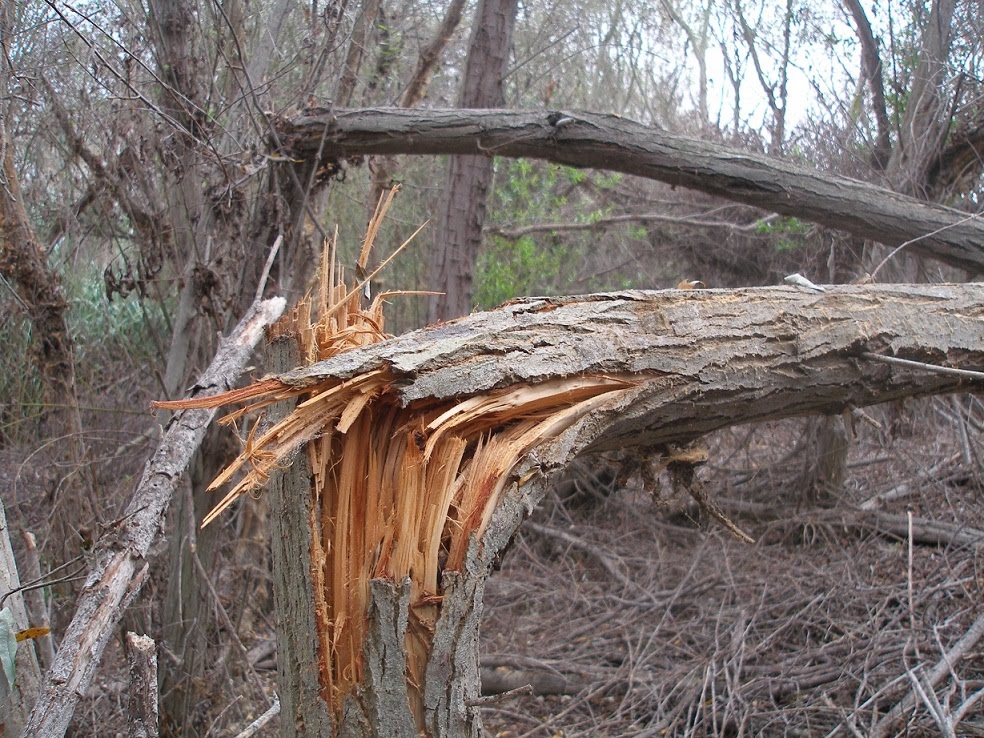
 

We welcome comments that supplement or correct factual information, suggest new approaches, or promote thoughtful consideration. We post comments that disagree with us — but not those we judge to be not civil or inflammatory.


How many new tree-killing pests can we expect?


Several analyses seek to quantify the risk that new tree-killing pests will be introduced to North America. They use different data sources and assumptions, and reach somewhat different conclusions. But all agree that the risk remains high, and the consequences of such introductions are dire.


I have relied on the Aukema et al. 2010 (see references at the end of the blog) and Haack et al. 2014 studies in past blogs. Aukema et al. 2010 looked at the probable dates of introduction for established insects and pathogens to determine that over 150 years, from 1860 to 2006, damaging forest insect and pathogen species were detected at an average rate of between 0.47 and 0.51 species per year. This translates to one damaging insect or pathogen every 2.1 to 2.4 years. The frequency of detection of high-impact forest pests rose sharply after 1990; beginning that year, detections of high-impact forest pests averaged 1.2 per year, nearly three times the rate of detections in the previous 130 years.

In 2013, 25 million shipping containers entered the U.S. An estimate from more than a decade ago is that wood packaging is used in about half of these containers. Haack et al. (2014) has estimated that 0.1% (1/10th of 1%) of the wood packaging in more than 12 million shipping containers entering the country each year is infested with quarantine pests. That works out to nearly 13,000 containers harboring pests that probably enter the country each year. That is 35 potential pest arrivals per day.

Leung et al. 2014 concluded that continuing to implement the international standard — ISPM#15 — at the efficacy level described by Haack et al. would result in a tripling of the number of non-native wood-boring insects introduced into the U.S. by 2050.

Koch et al. 2011 have also attempted to determine the current rate of introduction of wood-boring insects. They also sought to evaluate the introduction risk for specific metropolitan areas.

Koch et al. utilized various sources of information about volumes of imports of goods likely to be associated with wood-boring pests (e.g., raw wood and wood products; and stone, metals, non-metalic minerals, auto parts, etc., contained in wooden crates and pallets) to estimate both a nationwide establishment rate of wood-boring forest insect species and the likelihood that such insects might establish at more than 3,000 urban areas in the contiguous US.

They estimated the nationwide rate of introduction of wood-boring pests at between 0.6 and 1.89 forest pest species per year for the period 2001–2010.  Even the more conservative estimates points to establishment of a new alien forest insect species somewhere in the US every 2–3 years. If one accepts the ‘‘tens rule’’ – that one out of ten new introductions proves to have substantial effects, then one expects establishment of a significant new pest on average every 5 – 6 years. The authors note that the establishment of at least four ecologically and/or economically significant alien forest insects during the past 20–25 years – emerald ash borer, Asian longhorned beetle, Sirex woodwasp, and redbay ambrosia beetle – fits the model’s conclusion. [All of these pests are described in the Gallery of Pests posted here.]

The Aukema et al. estimate for introductions of “high impact” pests during the period after 1990 – 1.2 per year – is in the middle of the Koch et al. estimate for wood-borers, but higher than the Koch et al. estimate for “significant” pests.

Koch et al. estimated a lower rate of introductions between 2010 and 2020 – between 0.36 and 1.7 species per year. The Haack et al. and Leung et al. analyses would seem to contradict this expectation. Also, the findings of Seebens et al. (see my blog from earlier this week) contradicts any expectation that introductions will soon decline as a result of depletion of the pool of possible pests in origin countries.

Koch et al. analyzed data on imports of relevant commodities from all source regions to determine the introduction risk for 3,126 urban areas in the country. The urban area at greatest risk was Los Angeles–Long Beach–Santa Ana, California. The predicted introduction rate for both 2010 and 2020 for this metropolis was establishment of a new alien forest insect species every 4–5 years. The port of New York-Newark came in second, with a predicted establishment rate of one every 8–9 years. Houston ranked third; its predicted establishment rate was one every 13–15 years. All other urban areas were at substantially lower risk – a new introduction every 24 years.

Looking ahead to the decade 2010 to 2020, Koch et al. found that three California metro areas – Los Angeles–Long Beach–Santa Ana; San Diego; and Riverside-San Bernardino – would be exposed to increased establishment rates driven by the growth of imports from Asia.

Risk To Canada

Yemshanof et al. 2011 applied the Koch et al. methodology to evaluate the risk to Canada. Reflecting the lower volume of imports entering Canada compared to the U.S., they found a lower nationwide entry rate for Canada – 0.338 new forest insect species per year vs. the Koch et al. estimate of 1.89 for the U.S. Evaluating individual urban areas, they found the greatest risks to the Greater Toronto and Greater Vancouver areas. Moderate-sized cities near ports, major markets, or U.S.-Canada border crossings – transportation hubs – were also at heightened risks.

Canada as Pest Pathway to U.S.

Yemshanof et al.’s model indicates that 8% of all tree pests entering the U.S. as estimated by Koch et al., come through goods transshipped through Canada. The risk is highest to the Pacific Coast states since they are the most likely to receive Asian goods transiting through Canada. Note that the U.S. and Canada have proposed requiring that wood packaging originating in one of the countries and shipped to the other should be included under the ISPM#15 regulation. However, APHIS was unable to adopt this regulation under the Obama Administration, and such an action seems even less likely under the Trump Administration.


Neither study included plant imports, which are another very important pathway for introduction of tree-killing pests, especially pathogens.


SOURCES

Haack RA, Britton KO, Brockerhoff EG, Cavey JF, Garrett LJ, et al. (2014) Effectiveness of the International Phytosanitary Standard ISPM No. 15 on Reducing Wood Borer Infestation Rates in Wood Packaging Material Entering the United States. PLoS ONE 9(5): e96611. doi:10.1371/journal.pone.0096611

Koch, F.H., D. Yemshanov, M. Colunga-Garcia, R.D. Magarey, W.D. Smith. 2011. Potential establishment of alien-invasive forest insect species in the United States: where and how many? Biol Invasions (2011) 13:969–985

Leung, B., M.R. Springborn, J.A. Turner, E.G. Brockerhoff. 2014. Pathway-level risk analysis: the net present value of an invasive species policy in the US. The Ecological Society of America. Frontiers of Ecology.org

Yemshanov, D., F.H. Koch, M. Ducey, K. Koehler. 2012. Trade-associated pathways of alien forest insect entries in Canada. Biol Invasions (2012) 14:797–812


Posted by Faith Campbell


We welcome comments that supplement or correct factual information, suggest new approaches, or promote thoughtful consideration. We post comments that disagree with us — but not those we judge to be not civil or inflammatory.