APHIS is seeking stakeholder input to its new strategic plan to guide the agency’s work over the next 5 years.
The strategic plan framework is a summary of the draft plan; it provides highlights including the mission and vision statements, core values, strategic goals and objectives, and trends or signals of change we expect to influence the agency’s work in the future. APHIS is seeking input on the following questions:
Are your interests represented in the plan?
Are there opportunities for APHIS to partner with others to achieve the goals and objectives?
Are there other trends for which the agency should be preparing?
Are there additional items APHIS should consider for the plan?
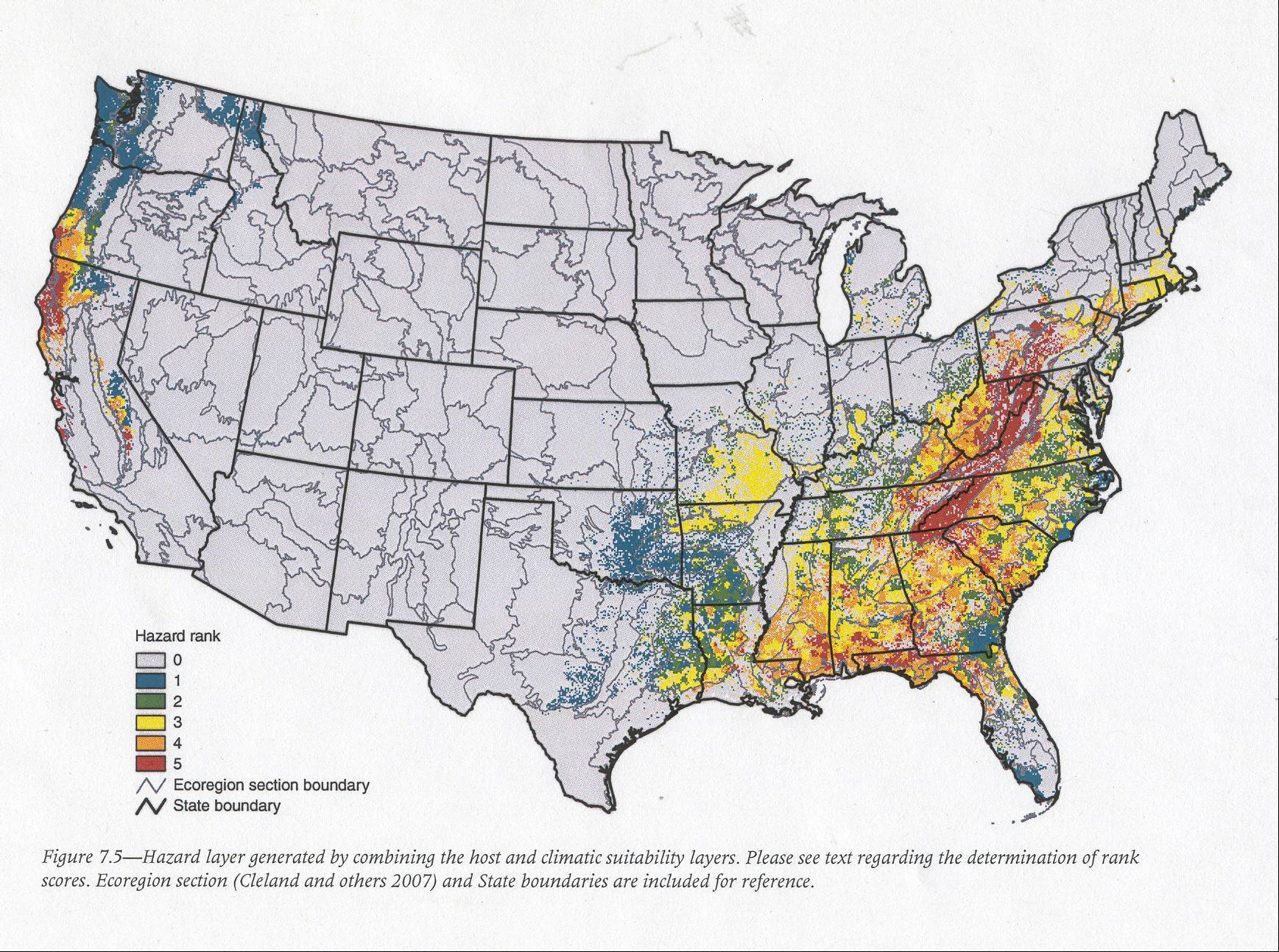
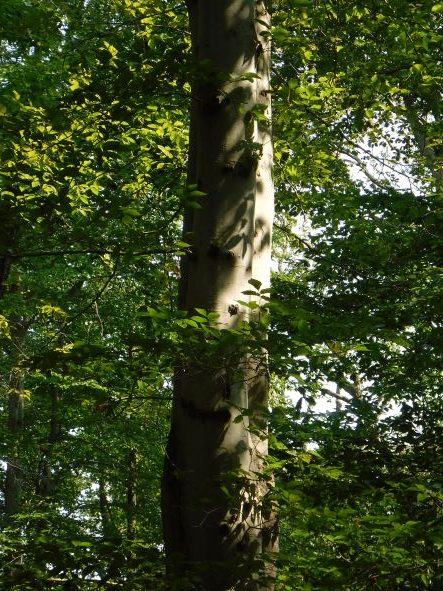
range of American beech – should APHIS be doing more to protect it from 3 non-native pests?
Comments must be received by July 1, 2022, 11:59pm (EST).
Posted by Faith Campbell
We welcome comments that supplement or correct factual information, suggest new approaches, or promote thoughtful consideration. We post comments that disagree with us — but not those we judge to be not civil or inflammatory.
For a detailed discussion of the policies and practices that have allowed these pests to enter and spread – and that do not promote effective restoration strategies – review the Fading Forests report at http://treeimprovement.utk.edu/FadingForests.htm
This blog asks YOU!!! to support funding for key USDA programs. Each is essential for protecting the resilience of the Nation’s forests in the face of invasive pests. Please help by contacting your members of the House and Senate Appropriations Committees. I provide a list of members – by state – at the end of this blog.
While the two key federal programs overlap, they are separately managed: USDA’s Animal and Plant Health Inspection Service (APHIS) and USDA’s Forest Service (USFS). These two agencies are funded by different subcommittees of the House and Senate’s Appropriations committees. APHIS is funded by the Subcommittees on Agriculture and Related Agencies. USFS is funded by the Subcommittees on Interior.
Your letter or email need be no more than a couple paragraphs. To make the case for greater funding, feel free to pick-and-choose from the information that follows. Your greatest impact comes from speaking specifically about what you know and where you live.
These are the specific dollar things we’d like you to ask for. The rationale for each is below.
Appropriations for APHIS programs (in $millions)
Program
FY 2021
FY 2022 CR
FY 2023 Pres’ request
Please ask
Tree & Wood Pest
$60.456
$61.217
$63
$70
Specialty Crops
$196.553
$209.553
$219
$219
Pest Detection
$27.733
$28.218
$29
$30
Methods Development
$20.844
$21.217
$22
$23
Appropriations for USFS programs (in $millions)
Program
FY 2021
FY 2022 CR
FY 2023 Pres’ request
Please ask
Forest Health Protection Coop Lands
$30.747
$30.747
$36,747
$51
FHP Federal Lands
$15.485
$15.485
$22.485
$32
Research & Development
$258.760
$258.760
$317.773
$317.733
% for forest invaders
~1%?
?
0
$16 M
Background on the Threat
I’m sure you are familiar with the many ecosystem services provided by America’s forests and woodlands – wildland, rural, and urban. (Besides – maybe you just love trees!) I assume you also know that these forests are under threat from a growing number of non-native insects and pathogens.
For a quick review, see earlier blogs re: 1) an estimate that 41% of forest biomass in the “lower 48” states is at risk to mortality caused by the most damaging 15 species; black ash swamps of the upper Midwest; unique forest ecosystems of Hawai`i; riparian forests in the far West; stream canyons of the Appalachian range and; high-elevation forests of the West; and unique forests of Southwest Oregon. Also, see the thorough discussion of these pests’ impacts in Invasive Species in Forests and Grasslands of the United States: A Comprehensive Science Synthesis for the United States Forest Sector – blog; link available here]
Meanwhile, newly-discovered pests continue to appear and require research and management. The most troubling current example is beech leaf disease. It’s killing beech trees from Ohio to Maine and south to Virginia.
These introduced pests usually first appear in cities or suburbs because they arrive on imported goods shipped to population centers. The immediate result is enormous damage to urban forests. A recently published article (“Hotspots of pest-induced US urban tree death, 2020–2050”), projects that, by 2050, 1.4 million street trees in urban areas and communities will be killed by introduced insect pests. Removing and replacing these trees is projected to cost cities $30 million per year. Additional urban trees – in parks, other plantings, on homeowners’ properties, and in urban woodlands – are also expected to die.
As we know, newly-arrived pests don’t stay in those cities. Some spread on their own. Others are carried far and wide on firewood, plants, patio furniture, even storage pods. And so they proliferate in rural and wildland forests, including US National Forests.
As we know too well, many pests—especially the highly damaging wood-borers—arrive in inadequately treated crates, pallets, and other forms of packaging made of wood. Other pests—e.g., spotted lanternfly —take shelter, or lay their eggs, in or on virtually any exposed hard surface, such as steel or decorative stone.
Imports from Asia have historically transported the most damaging pests. Unfortunately, imports from Asia have reached unprecedented volume – currently they’re running at a rate of 20 million shipping containers per year. Research findings lead to an estimate that at least 7,500 of these containers are carrying a tree-killing pest. The “Hotspots” authors found that if a new woodborer that attacks maples or oaks is introduced, it could kill 6.1 million trees and cost American cities $4.9 billion over 30 years. The risk would be highest if this pest were introduced to the South – and southern ports are receiving more direct shipments from Asia!
Some types of pests—especially plant diseases and sap sucking insects —come on imported plants. A principle example is sudden oak death (SOD; and which attacks more than 100 species of trees and shrubs). Other examples are the rapid ʻōhiʻa death pathogen that threatens Hawai`i’s most widespread tree, ʻōhiʻa lehua; and beech leaf disease, a newly discovered threat that is killing beech trees in a band stretching from Ohio to Maine.
Background on Specific USDA Funding Requests
APHIS
To reduce the risk of new pest introductions and strengthen response to many important pests, please ask your member of Congress and Senators to support appropriations that support key APHIS programs in the table above. (I assume you know that APHIS is responsible for preventing introduction and spread of invasive pests. While most port inspections are carried out by the Department of Homeland Security’s Bureau of Customs and Border Protection, APHIS sets the policy guidance. APHIS also inspects imports of living plants.)
Thank your member for the incremental increases in funding for these programs in FY22 but suggest that a more substantial investment is warranted.
The Tree and Wood Pests account supports eradication and control efforts targeting principally the Asian longhorned beetle (ALB) and spongy (formerly gypsy) moth. Eradicating the ALB normally receives about two-thirds of the funds. The programs in Massachusetts, New York, Ohio, and South Carolina must continue until eradication succeeds.
The Tree and Wood Pests account formerly also funded APHIS’ emerald ash borer (EAB) regulatory program. APHIS terminated this program in January 2021. The probable result is that EAB will spread more rapidly to the mountain and Pacific Coast states. Indeed, the “Hotspots” article identified Seattle and Takoma as likely to lose thousands of ash trees in coming decades. This result shows what happens when APHIS programs are inadequately funded.
Re: the plant diseases and sap sucking insects that enter the country on imported plants, APHIS’ management is through its Specialty Crops program. Repeatedly, SOD-infected plantsand have been shipped from nurseries in the Pacific Coast states to vulnerable states across the East and South. Clearly this program needs re-assessment and – perhaps – additional funding.
The Specialty Crops program also is home to APHIS’ efforts to counter the spotted lanternfly, which has spread from Pennsylvania to Maryland, Delaware, New Jersey, Virginia, West Virginia, Ohio, even Indiana. This pest threatens both native trees and agricultural crops – including hops, grapes, apples, and more. California has adopted a state quarantine in hopes of preventing its introduction to that state. Still, APHIS has not established a quarantine.
Please ask the Congress to support the Administration’s request for $219 million for the Specialty Crops program. However, urge them to adopt report language to ensure that APHIS allots adequate funding under this budget line to management of both sudden oak death and spotted lanternfly.
Two additional APHIS programs are the foundation for effective pest prevention. First, the Pest Detection program is key to the prompt detection of newly introduced pests that is critical to successful pest eradication or containment. Please ask the Congress to fund Pest Detection at $30 million. Second, the “Methods Development” program enables APHIS to improve development of essential detection and eradication tools. Please ask the Congress to fund Methods Development at $23 million.
Please ask your member of Congress to support the Administration’s request for a $50.794 million fund for management of emergencies threatening America’s agricultural and natural resources. This program includes a $6 million increase for work with the Climate Conservation Corps specifically targetting invasive species. Although the details are not yet clear, the program’s focus will be to improve surveillance and mitigation methods.
US Forest Service
The USFS has two programs critical to managing non-native tree-killing pests – Forest Health Management (or Protection; FHP) and Research and Development (R&D). FHP provides technical and financial assistance to USFS units (e.g., National forests and regions), other federal agencies, states, municipalities, and other partners to detect and manage introduced pests – including several that APHIS regulates and dozens that it does not. R&D funds efforts to understand non-native insects, diseases, and plants – which are usually scientific mysteries when they first are detected. Of course, this knowledge is crucial to effective programs to prevent, suppress, and eradicate the bioinvader. See the table at the beginning of the blog for specific funding requests for each program.
The Forest Health Management Program (FHP) has two funding streams: Federal Lands and Cooperative Lands (all forests under non-federal management, e.g., state and private forests, urban forests). Both subprograms must be funded in order to ensure continuity of protection efforts – which is the only way they can be effective. Some members of Congress prefer to focus federal funding on National forests. However, allowing pests to proliferate until they reach a federal forest border will only expose those forests to exacerbated threats. Examples of tree-killing pests that have spread from urban areas to National forests include the hemlock woolly adelgid, emerald ash borer, polyphagous and Kuroshio shot hole borers, sudden oak death, and laurel wilt disease. [All profiled here]
Adequate funding for FHP is vital to realizing the Administration’s goals of ensuring healthy forests and functional landscapes; supporting rural economies and underserved communities; enhancing climate change adaptation and resilience; and protecting biological diversity.
Please ask your Member of Congress and Senators to provide $51 million for work on non-federal cooperative lands. This level would partially restore capacity lost over the last decade. Since Fiscal Year (FY) 2010, spending to combat 11 specified non-native insects and pathogens fell by about 50%. Meanwhile, the pests have spread. Also, please ask your Member and Senators to support a $32 million appropriation for the Federal Lands subprogram for FY23 which is allocated to pests threatening our National forests directly.
A vital component of the FHP program is its leadership on breeding pest-resistant trees to restore forests decimated by pests. FHP’s Dorena Genetic Resource Center, in Oregon, has developed Port-Orford cedar seedlings resistant to the fatal root-rot disease. and blog. These seedlings are now being planted by National forests, the Bureau of Land Management, and others. In addition, pines with some resistance to white pine blister rust are also under development. The Dorena Center offers expert advice to various partners engaged in resistance-breeding for Oregon’s ash trees and two tree species in Hawai`i, koa and ʻōhiʻa. and blog.
The USFS research program is well funded at $317 million. Unfortunately, only a tiny percentage of this research budget has been allocated to improving managers’ understanding of specific invasive species and, more generally, of the factors contributing to bioinvasions. Funding for research conducted by USFS Research stations on ten non-native pests decreased from $10 million in Fiscal Year 2010 to just $2.5 million in Fiscal Year 2020 – less than 1% of the total research budget. This cut of more than 70% has crippled the USFS’ ability to develop effective tools to manage the growing number of pests.
To ensure the future health of America’s forests, please ask your Member of Congress and Senators to request the Subcommittee to include in its report instructions that USFS increase the funding for this vital research area to 5% of the total research budget. The $16 million would fund research necessary to improving managers’ understanding of invasive forest insects’ and pathogens’ invasion pathways and impacts, as well as to developing effective management strategies. Addressing these threats is vital to supporting the Administration’s priorities of increasing adaptation and resilience to climate change and implementing nature-based solutions.
The USFS Research and Development program should expand its contribution to efforts to breed trees resistant to non-native pests; programs deserving additional funding include hemlocks resistant to hemlock woolly adelgid; ashes resistant to emerald ash borer; beech resistant to both beech bark disease and beech leaf disease; link to DMF and elms resistant to Dutch elm disease. The Research program also continues studies to understand the epidemiology of laurel wilt disease, which has spread to sassafras trees in Kentucky and Virginia.
Members of House Appropriations Committee
STATE
MEMBER
APHIS APPROP
USFS APPROP
AL
Robert Aderholt
X
Calif
Barbara Lee David Valadao Josh Harder
X X
X
FL
Debbie Wasserman Scultz
X
GA
Sanford Bishop
X
ID
Mike Simpson
X
IL
Lauren Underwood
X
MD
Andy Harris
X
ME
Chellie Pingree
X
X
MI
John Moolenaar
X
MN
Betty McCollum
X
X
NV
Susie Lee Mark Amodei
X X
NY
Grace Meng
X
OH
Marcy Kaptur David Joyce
X X
PA
Matt Cartwright
X
TX
Henry Cuellar
X
UT
Chris Stewart
X
WA
Dan Newhouse Derek Kilmer
X
X
WI
Mark Pocan
X
Members of Senate Appropriations Committee
STATE
MEMBER
APHIS APPROP
USFS APPROP
AK
Lisa Murkowski
X
Calif
Diane Feinstein
X
X
FL
Marco Rubio
X
HI
Brian Schatz
X
IN
Mike Braun
X
KS
Jerry Moran
X
KY
Mitch McConnell
X
X
MD
Chris Van Hollen
X
ME
Susan Collins
X
MS
Cindy Hyde-Smith
X
X
MO
Roy Blunt
X
X
MT
Jon Tester
X
X
ND
John Hoeven
X
NM
Martin Heinrich
X
X
OR
Jeff Merkley
X
X
RI
Jack Reed
X
TN
Bill Hagerty
X
VT
Patrick Leahy
X
X
WV
Shelly Moore Capito
X
WI
Tammy Baldwin
X
Posted by Faith Campbell
We welcome comments that supplement or correct factual information, suggest new approaches, or promote thoughtful consideration. We post comments that disagree with us — but not those we judge to be not civil or inflammatory.
For a detailed discussion of the policies and practices that have allowed these pests to enter and spread – and that do not promote effective restoration strategies – review the Fading Forests report at http://treeimprovement.utk.edu/FadingForests.htm
monarch butterfly on swamp milkweed; photo by Jim Hudgins, USFWS
I have been impressed recently by two groups of scientists who are trying to broaden understanding of the impacts of invasive plants by examining the interactions of those plants with insects. As they note, herbivorous insects are key players in terrestrial food webs; they transfer energy captured by plants through photosynthesis to other trophic levels. This importance has been recognized since Elton first established the basic premises of food webs (1927) [Burghardt et al.; full citation at end of blog] Arthropods comprise significant members of nearly every trophic level and are especially important as pollinators. If introduced plants cause changes to herbivore communities, there will probably be effects on predators, parasites, and other wildlife through multitrophic interactions [Lalk et al.; Tallamy, Narango and Mitchell].
[I briefly summarize the findings of a third group of scientists at the end of this blog. The third group looks at the interaction between agriculture – that is, planting of non-native plants! – and climate change.]
One approach to studying this issue, taken by Douglas Tallamy of the University of Delaware and colleagues, is to look at the response of herbivorous insects to NIS woody plants fairly generally. They integrate their studies with growing concern about the global decline in insect populations and diversity. They note that scientists have focused on light pollution, development, industrial agriculture, and pesticides as causes of these declines. They decry the lack of attention to disruption of specialized evolutionary relationships between insect herbivores and their native host plants due to widespread domination by non-indigenous plants [Richard, Tallamy and Mitchell].
In their studies, Tallamy and colleagues consider not just invasive plants, but also non-native plants deliberately planted as crops or ornamentals, or in forestry. They point out that such introduced plants have completely transformed the composition of plant communities in both natural and human-dominated ecosystems around the globe. At least 25% of the world’s planted forests are composed of tree species not native to their locale. At least one-sixth of the globe is highly vulnerable to plant invasions, including biodiversity hotspots [Richard, Tallamy and Mitchell].
A different approach, taken by Lalk and colleagues, is more closely linked to concern about impacts of the plants themselves. They have chosen to pursue knowledge about relationships between individual species of invasive woody plants and the full range of arthropod feeding guilds – pollinators, herbivores, twig and stem borers, leaf litter and soil organisms. In so doing, they decry the general absence of data.
Both teams agree that:
Invasive plants are altering ecosystems across broad swaths of North America and the impacts are insufficiently understood.
The invasive plant problem will get worse because non-native species continue to be imported and planted. (Reminder: the Tallamy team considers impacts of deliberate planting as well as bioinvasion.)
Plant-insect interactions are the foundation of food webs, so changes to them will have repercussions throughout ecosystems.
Tallamy team
Non-native plants have replaced native plant communities to a greater or lesser extent in every North American biome – including anthropogenic landscapes [Burghardt]. The first trophic level in suburban and urban ecosystems throughout the U.S. is dominated by plant species that evolved in Southeast Asia, Europe, and South America [Tallamy and Shropshire]. Abundant non-native plants not only dominate plant biomass; they also reduce native plant taxonomic, functional and phylogenetic diversity and heterogeneity. Thus, they indirectly alter the abundance of native insects [Burghardt; Richard, Tallamy and Mitchell].
I think these articles might actually underestimate the extent of these impacts. While Richard, Tallamy and Mitchell report that more than 3,300 species of non-native plants are established in continental U.S., years ago Rod Randall said that more than 9,700 non-native plant species were naturalized in the U.S. (probably includes Hawai` i. The Tallamy team cites USDA Forest Service data showing 9% of forests in the southeast are invaded by just 33 common invasive plant species [Richard, Tallamy and Mitchell], I have cited that and other sources showing even greater extents of plant invasion in the east and here; other regions and here.
The Tallamy team has conducted several field experiments that demonstrate that the presence of non-native plants suppress numbers and diversity of native lepidopteran caterpillars. These non-native woody plants have not replaced the ecological functions of the native plants that used to support insect populations. This is true whether or not the non-native plants are deliberately planted or are invading various ecosystems on their own. [Richard, Tallamy and Mitchell]. (Of course, they expect plant invasions to grow; they note that some of the many ornamental species that are not yet invasive will become so.)
The result is disruption of the ecological services delivered by native plant communities, including the focus of their studies: plants’ most fundamental contribution to ecosystem function: generation of food for other organisms [Burghardt].
They note that plants’ relationship to insects differs depending on the insects’ feeding guilds — folivores, wood eaters, detritivores, pollinators, frugivores, and seed-eaters; and among herbivores with different mouthparts — chewing or sucking; and as host plant specialists or generalists. They decry studies that fail to recognize these differences [Tallamy, Narango, and Mitchell].
The Tallamy team explores why insect populations decline among non-native plants. That is,
1) Do insects directly requiring plant resources have lower fitness when using non-native plants; do they not recognize them as viable host plants; or do they avoid them altogether?
2) Are reductions in numbers of specialist herbivores mitigated by generalists? A decade of research shows that both specialists and generalists decline.
The team’s studies focus on lepidopteran larvae (caterpillars). Insect herbivores are both the largest taxon of primary consumers and extremely important in transferring energy captured by plants through photosynthesis to other trophic levels [Burghardt]. In addition, insects with chewing mouthparts are typically more susceptible to defensive secondary metabolites contained in leaves than are insects with sucking mouthparts that tap into poorly defended xylem or phloem fluids [Tallamy, Narango and Mitchell].
A study by Burghardt et al. found that 75% of all lepidopteran species and 93% of specialist species were found exclusively on native plant species. Non-native plants that were in the same genus as a native plant often supports a lepidopteran community that is a similar but depauperate subset of the community found on its native congener. In fact, the insect abundance and species richness supported by non-native congeners of native species was reduced by 68%.
A meta-analysis of 76 studies by other scientists found that, with few exceptions, caterpillars had higher survival and were larger when reared on native host plants. Plant communities invaded by non-native species had significantly fewer Lepidoptera and less species richness. In three of eight cases examined, non-native plants functioned as ecological traps, inducing females to lay eggs on plants that did not support successful larval development. Richard, Tallamy and Mitchell cite as an example the target of many conservation efforts, monarch butterflies (Danaus plexxipus), which fail to reproduce when they use nonnative swallowworts (Vincetoxicum species.) instead of related milkweeds (Asclepias species.).
Tallamy and Shropshire ranked 1,385 plant genera that occur in the mid-Atlantic region by their ability to support lepidopteran species richness. They found that introduced ornamentals are not the ecological equivalents of native ornamentals. This means that solar energy harnessed by introduced plants is largely unavailable to native specialist insect herbivores.
Tallamy, Narango, and Mitchell describe the following patterns:
1) Insects with chewing mouthparts are typically more susceptible to defensive secondary metabolites contained in leaves than are insects with sucking mouthparts that tap into poorly defended xylem or phloem fluids. As a result, sucking insects find novel non-indigenous plants to be acceptable hosts more often. However, there are more than 4.5 times as many chewing (mandibulate) insect herbivores than sucking (haustellate) species. It follows that the largest guild of insect herbivores is also the most vulnerable to non-native plants as well as being the most valuable to insectivores.
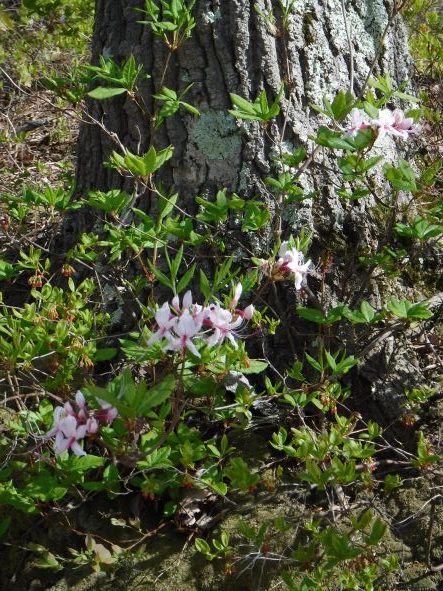
native azalea Rhododendron periclymenoides; photo by F.T. Campbell
2) Woody native species, on average, support more species of phytophagous insects than herbaceous species.
3) Although insects are more likely to accept non-native congeners or con-familial species as novel hosts, non-native congeners still reduced insect abundance and species richness by 68%.
4) Host plant specialists are less likely to develop on evolutionarily novel non-indigenous plants than are insects with a broader diet. There are far more specialist species than generalists, so generalists will not prevent serious declines in species richness and abundance when native plants are replaced by non-indigenous plants. In addition, non-native plants cause significant reductions in species richness and abundance even of generalists. In fact, generalists are often locally specialized on particular plant lineages and thus may function more like specialists than expected.
5) Any reduction in the abundance and diversity of insect herbivores will probably cause a concomitant reduction in the insect predators and parasitoids of those herbivores – although few studies have attempted to measure this impact beyond spiders, which are abundant generalists. The vast majority of parasitoids are highly specialized on particular host lineages.
6) Studies comparing native to non-native plants must avoid using native species that support very few phytophagous insects as their baseline, e.g., in the mid-Atlantic region tulip poplar trees (Liriodendron tulipifera) and Yellowwood (Cladrastus kentuckea).
7) Insects that feed on well-defended living tissues such as leaves, buds, and seeds are less likely to be able to include non-native plants in their diets than are insects that develop on undefended tissues like wood, fruits, and nectar. Although this hypothesis has never been formally tested, they note the ease with which introduced wood borers – emerald ash borer, Asian longhorned beetle, polyphagous and Kuroshio shot-hole borers, redbay ambrosia beetle, Sirex woodwasp (all described in profiles posted here — have become established in the US.
palamedes swallowtail Papilio palamedes; photo by Vincent P. Lucas; this butterfly depends on redbay, a tree decimated by laurel wilt disease vectored by the redbay ambrosia beetle
Lalk and Colleagues
As noted, Lalk and colleagues have a different frame; they focus on individual introduced plant species rather than starting from insects. They also limit their study to invasive plants. The authors say there is considerable knowledge about interactions between invasive herbaceous plants and arthropod communities, but less re: complex interactions between invasive woody plants and arthropod communities, including mutualists (e.g., pollinators), herbivores, twig- and stem-borers, leaf-litter and soil-dwelling arthropods, and other arthropod groups.
They ask why this knowledge gap persists when invasive shrubs and trees are so widespread and causing considerable ecological damage. They suggest the answer is that woody invaders rarely encroach on high-value agricultural systems and some are perceived as contributing ecosystem services, including supporting some pollinators and wildlife.
Lalk and colleagues seek to jump-start additional research by summarizing what is currently known about invasive woody plants’ interactions with insects. They found sufficient data about 11 species – although even these data are minimal. They note that all have been cultivated and sold in the U.S. for more than 100 years. All but one (mimosa) are listed as a noxious weed by at least one state; two states (Rhode Island and Georgia) don’t have a noxious weed list. None of the 11 is listed under the federal noxious weed statute.
Ailanthus altissima
Illustrations of how minimal the existing information is:
Tree-of-heaven (Ailanthus altissima) is noted to be supporting expanded populations of the Ailanthus webworm moth (Atteva aurea), which is native to Central America; and to be the principal reproductive host for SLF (Lycorma delicatua) https://www.dontmovefirewood.org/pest_pathogen/spotted-lanternfly-html/
Chinese tallow (Triadica sebifera) is thought to benefit both native generalist bee species and non-indigenous European honeybees (Apis mellifera).
Chinese privet (Ligustrum sinense) appears to suppress populations of butterflies, bees, and beetles.
Lalk and colleagues then review what is known about interactions between individual invasive plant species in various feeding guilds. They point out that existing data on these relationships are scarce and sometimes contradictory.
They believe this is because interactions vary depending on phylogenetic relationships, trophic guild, and behavior (e.g., specialized v. generalist pollinator). Arthropods can be “passengers” of a plant invasion. That is, they can be affected by that invasion, with follow-on effects to other arthropods in the community. Also, arthropods can be “drivers” of invasion, increasing the success of the invasive plants.
They then summarize the available information on various interactions. For example, they note that introduced plants can compete with native plants in attracting pollinators, causing cascading effects. Or they can increase pollination services to native plants by attracting additional pollinators.
They note that herbivore pressure on invasive plants can have important impacts on growth, spread, and placement within food webs. They note that these cases support the “enemy release hypothesis”, although they think there are probably additional driving mechanisms.
Lalk and colleagues note that most native twig- and stem-borers (Coleoptera: Buprestidae, Curculionidae, Cerambycidae; Hymenoptera: Siricidae) are not considered primary pests but that some of our most damaging insect species are wood borers (see above).
Some of these borers are decomposers; in that role, they are critical in nutrient cycling.
Arthropods in leaf litter and soil also serve important roles in the decomposition and cycling of nutrients, which affects soil biota, pH, soil nutrients, and soil moisture. They act as a trophic base in many ecosystems. Lalk and colleagues suggest these arthropod communities probably change with plant species due to differences in leaf phytochemistry. They cite one study that found litter community composition differed significantly between litter beneath tree-of-heaven, honeysuckle (Lonicera maackii), and buckthorn (Rhamnus cathartica) compared to litter underneath surrounding native trees.
Recommendations
Both the Tallamy and Lalk teams call for ending widespread planting of non-native plants. Lalk and colleagues discuss briefly the roles of
The nursery industry (including retailers); they produce what sells.
Scientists and educators have not sufficiently informed home and land owners about which species are invasive or about native alternatives.
Private citizens buy and plant what their neighbors have, what they consider aesthetically pleasing, or what is being promoted.
States have not prohibited sale of most invasive woody plants. Regulatory actions are not a straightforward matter; they require considerable time, supporting information, and compromise.
Tallamy team calls for restoration ecologists in the eastern U.S. to consider the number of Lepidopterans hosted by a plant species when deciding what to plant. For example, oaks (Quercus), willows (Salix), native cherries (Prunus)and birches (Betula) host orders of magnitude more lepidopteran species in the mid-Atlantic region than tulip poplar.(Those lepidopteran in turn support breeding birds and other insectivorous organisms.) [Tallamy & Shropshire]
Lalk and colleagues focused on identifying several key knowledge gaps:
How invasive woody plants affect biodiversity and ecosystem functioning
How they themselves function in different habitats.
Do non-native plants drive shifts in insect community composition, and if so, what is that shift, and how does it affect other trophic levels?
How do IAS woody plants affect pollinators?
The authors do not minimize the difficulty of separating such possible plant impacts from other factors, including climate change and urbanization.
Outhwaite et al. (full citation at end of this blog) note that past studies have shown that insect biodiversity changes are driven primarily by land-use change (which is another way of saying planting of non-native species – as Dr. Tallamy and colleagues describe it) and increasingly by climate change. They south to examine whether these drivers interact. They found that the combination of climate warming and intensive agriculture is associated with reductions of almost 50% in the abundance and 27% in the number of species within insect assemblages relative to levels in less-disturbed habitats with lower rates of historical climate warming. These patterns were particularly clear in the tropics (perhaps partially because of the longer history of intensive agriculture in temperate zones). They found that high availability of nearby natural habitat (that is, native plants) can mitigate these reductions — but only in low-intensity agricultural systems.
Outhwaite et al. reiterate the importance of insect species in ecosystem functioning, citing pollination, pest control, soil quality regulation & decomposition. To prevent loss of these important ecosystem services, they call for strong efforts to mitigate climate change and implementation of land-management strategies that increase the availability of natural habitats.
SOURCES
Burghardt, K. T., D. W. Tallamy, C. Philips, and K. J. Shropshire. 2010. Non-native plants reduce abundance, richness, and host specialization in lepidopteran communities. Ecosphere 1(5):art11. doi:10.1890/ES10-00032.
Lalk, S. J. Hartshorn, and D.R. Coyle. 2021. IAS Woody Plants and Their Effects on Arthropods in the US: Challenges and Opportunities. Annals of the Entomological Society of America, 114(2), 2021, 192–205 doi: 10.1093/aesa/saaa054
Richard, M. D.W. Tallamy and A.B. Mitchell. 2019. Introduced plants reduce species interactions. Biol Invasions
Tallamy, D.W., D.L. Narango and A.B. Mitchell. 2020. Ecological Entomology (2020), DOI: 10.1111/een.12973 Do Non-native plants contribute to insect declines?
Tallamy, D.W. and K.J. Shropshire. 2009. Ranking Lepidopteran Use of Native Versus Introduced Plants Conservation Biology, Volume 23, No. 4, 941–947 2009 Society for Conservation Biology DOI: 10.1111/j.1523-1739.2009.01202.x
Posted by Faith Campbell
We welcome comments that supplement or correct factual information, suggest new approaches, or promote thoughtful consideration. We post comments that disagree with us — but not those we judge to be not civil or inflammatory.
For a detailed discussion of the policies and practices that have allowed these pests to enter and spread – and that do not promote effective restoration strategies – review the Fading Forests report at http://treeimprovement.utk.edu/FadingForests.htm
tanoak killed by SOD; photo by Joseph O’Brien, via Bugwood
I am belatedly catching up with developments regarding sudden oak death (SOD; Phytophthora ramorum). The situation is worsening, with three of the four existing strains now established in U.S. forests. Nursery outbreaks remain disturbingly frequent.
This information comes primarily from the California Oak Mortality Task Force’s (COMTF) newsletters posted since October; dates of specific newsletters are shown in brackets.
Alarming presence of variants & hybridization
The long-feared risk of hybridization among strains has occurred. Canadian authorities carrying out inspections of a British Columbia nursery found a hybrid of European (EU1) and North American (NA2) clonal lineages. These hybrids are viable, can infect plants and produce spores for not only long-term survival but also propagation. So far the hybrid has been found in a single nursery; it has not spread to natural forests. The pathogen is considered eradicated in that nursery, so it is hoped it cannot reproduce further. [December 2021 newsletter, summarizing research by R. Hamelin et al.]
Noted British forest pathologist Clive Brasier warned in 2008 about the risk of hybrids evolving in nurseries which harbor multiple strains of related pathogens. (See full citation at end of the blog.)
The threat is clear: three of the four known variants are already established in forests of the Pacific Northwest – NA1, NA2, and EU1. (For an explanation of P. ramorum strains and mating types, go here.)
In Oregon, the EU1 strain was detected in a dying tanoak (Notholithocarpus densiflorus) tree in the forests of Curry County in 2015. Genetic analysis revealed that the forest EU1 isolates were nearly identical to EU1 isolates collected in 2012 from a nearby nursery during routine monitoring. This detection was considered to be evidence that multiple distinct P. ramorum introductions had occurred. The scientists expressed concern that the presence of this strain – which is of the A1 mating type while the widely established NA1 population of the pathogen in the forest is of the A2 mating type — makes the potential for sexual recombination more likely. Therefore, the state prioritized eradication of the EU1 forest infestation [Grünwald et al. 2016]. (For an explanation of P. ramorum strains and mating types, go here.)
The NA2 strain was detected in 2021, 33 km north of the closest known P. ramorum infestation. Because Oregonians genotype all detections on the leading front of the infection, they completed Koch’s postulates and found this surprising result [February 2022]. NA2 is thought to be more aggressive than the NA1 lineage [February 2022]. Surveys and sampling quickly determined that the outbreak is well established — 154 positive detections [February 2022] across more than 500 acres [October 2021]. Oregon Department of Forestry immediately began treatments; the goal is to prevent overlap with existing NA1 and EU1 populations. [April 2022; summarizing research by Peterson et al.] Given the number of infected trees and the new variant, Oregon pathologists believe this to be a separate introduction to Oregon forests that has been spreading in the area for at least four years [February 2022].
Scientists [April 2022; summarizing research by Peterson et al.] again note evidence of repeated introductions of novel lineages into the western US native plant communities; this region is highly vulnerable to Phytophthora establishment, justifying continued monitoring for P. ramorum not only in nurseries but also in forests.
SOD in Oregon; photo by Oregon Department of Forestry
The EU1 strain is also present in northern California, specifically in Del Norte County. It was detected there in 2020. Despite removal of infected and nearby host trees (tanoaks) and treatment with herbicide to prevent resprouting, the EU1 strain was again detected on tanoaks in 2021. The detected strain is genetically consistent with the EU1 outbreak in Oregon forests. Oddly, the usual strain found in North American forests, the NA1 strain, was not detected in Del Norte Co. in 2021 [February 2022].
One encouraging research finding [April 2022; summarizing research by Daniels, Navarro, and LeBoldus] is that established treatment measures have had significant impact on both the NA1 & EU1 lineages. They found on average 33% fewer positive samples at treated sites where NA1 is established; 43% reduction in P. ramorum prevalence at EU1 sites. Prevalence of P. ramorum in soil was not affected by treatment.
SOD Spread in Forests
In California, the incidence of new Phytophthora ramorum infections fell in 2021 to a historic low – estimated 97,000 dead trees across 16,000 acres, compared to ~885,000 dead trees across 92,000 acres in 2019 [April 2022]. It is agreed that the reason is the wave of mortality sparked by the very wet 2016-2017 winter has subsided and has been followed by several years of drought [February 2022].
data showing decline in new SOD detections in California in 2021 (no data collected in 2020)
In Oregon, however, SOD continues to spread. In 2010, the OR SOD Program had conceded that eradication was no longer feasible. Instead, authorities created a Generally Infested Area (GIA) where removal of infested tanoaks was now optional (not mandated) on private and state-owned lands. Since then, SOD has continued to spread and intensify within the designated zone. The GIA has been expanded eight times since its establishment in 2012; it now it covers 123 sq. mi. There has also been an immediate increase in tanoak mortality [December 2021].
In 2021, two new infestations were detected outside the GIA. One outbreak is on the Rogue River-Siskiyou National Forest along the Rogue River, 6 miles north of any previously known infestation. The second is just outside Port Orford [February 2022], 33 km north of the closest known infestation. This second infestation is composed of the NA2 variant [see above]. The Oregon Department of Agriculture (ODA) established emergency quarantines at these sites and began eradication efforts at both sites. The Oregon legislature appropriated $1.7 million to Oregon Department of Forestry to carry out an integrated pest management program to slow spread of the disease [February 2022].
Scientific research indicates that this situation might get worse. While it has long been recognized that California bay laurel (= Oregon myrtle) (Umbellularia californica) and tanoak are the principal hosts supporting sporulation and spread, it has now been determined that many other native species in the forest can support sporulation. Chlamydospore production was highest on bigleaf maple (Acer macrophyllum)and hairyCeanothus (Ceanothus oliganthus). All the other hosts produced significantly fewer spores than tanoak and myrtle [October 2021; summarizing research by Rosenthal, Fajardo, and Rizzo]
Furthermore, studies that aggregate observations of disease on all hosts, not paying attention to their varying levels of susceptibility, might lead scientists to misinterpret whether the botanic diversity slows spread of the pathogen [October 2021 summarizing research by Rosenthal, Simler-Williamson, and Rizzo].
Monitoring to detect any possible spread to the East
SOD risk map based on climate & presence of host species; USFS
The USDA Forest Service continues its Cooperative Sudden Oak Death Early Detection Stream Survey in the East. In 2021, 12 states participated – Alabama, Florida, Georgia, Illinois, Maryland, Mississippi, North Carolina, Pennsylvania, South Carolina, Texas, West Virginia, and Wisconsin. Samples were collected from 79 streams in the spring. Two streams were positive, both in Alabama. Both are associated with nurseries that were positive for P. ramorum more than a decade ago [October 2021].
Continued infestations in the nurseries
USDA Animal and Plant Health Inspection Service (APHIS) reported that in 2021, the agency supported compliance activities, diagnostics, and surveys in nurseries in 22 states. P. ramorum was detected at 17 establishments. Eight were new; nine had been positive previously. These included seven nurseries that ship intrastate – all had been positive previously. Six were already under compliance agreements. Also positive were three big box stores – none previously infected; and six nurseries that sell only within one state – five new. Infections at the big box outlets and half the intrastate nurseries were detected as a result of trace-forwards from other nurseries.
P. ramorum was detected in 300 samples in 2021 – 144 from plants in the genus Viburnum; 106 from Rhodendron (including azalea); and much lower numbers from other genera.
APHIS funds states for annual nursery surveys, compliance activities, and diagnostics through the: Plant Protection Act Section 7721 and the Cooperative Agricultural Pest Survey (CAPS) program. Table 4 lists states receiving survey funds. APHIS also supported compliance and diagnostic activities in California, Louisiana, Oklahoma, Oregon, Pennsylvania, Washington, and several states through Florida.
APHIS’ report – which provides few additional details about the nursery detections – can be found here.
California:
The California Department of Food and Agriculture (CDFA) reported that three of the eight nurseries regulated under either the federal or state sudden oak death program tested positive in 2021. This was down from five positive nurseries in 2020 [February 2022]. (In the past, numbers of nurseries testing positive have declined during droughts, risen during wet years.) At one interstate-shipping nursery 145 positive Viburnum tinus plants were detected by regulators in December 2021. Apparently the detection efforts were prompted by a trace-back from a nursery in an (unnamed) other state [April 2022].
Oregon:
Oregon continues to struggle with the presence of Phytopththora ramorum in the state’s nurseries. Early in 2021 the situation looked good. Three of eight interstate shippers and two intrastate shippers “passed” their sixth consecutive inspection with no P. ramorum detected so they were released from state and federal program inspection requirements. A fourth interstate-shipping nursery had ceased operating. By the end of the year, however, circumstances had deteriorated. One of the four interstate shippers still under regulatory scrutiny appeared to be badly infested. After routine autumn monitoring detected an infected plant, subsequent delimitation samplings detected 30 additional positive foliar samples and a large number (24) of samples were inconclusive. By spring 2022 six nurseries had to be inspected following trace-forwards from out-of-state nurseries. No P. ramorum was detected in five of these nurseries; the sixth had one positive foliar sample, so it is now under more stringent regulatory supervision [April 2022].
Washington:
Washington has only one interstate shipping nursery that is regulated under APHIS’ program; it tested negative in autumn 2021 [December 2021]. Meanwhile, USDA & Washington Department of Agriculture (WSDA) decided to deregulate the Kitsap County Botanical Garden where P. ramorum had been detected in 2015. Since then, more than 5,000 samples have been collected; 99.1% have tested negative. The last positive plant sample was collected in February 2016. Under a compliance agreement, the botanical garden will continue the best management practices deemed successful in eradicating the pathogen [December 2021]. However, water at the site continues to test positive [February 2022]. These water detections – in Washington and Alabama (above) – raise troubling questions.
Meanwhile, in late winter [April 2022], WSDA had to conduct two trace-forward investigations on plants that shipped from (unnamed) out-of-state nurseries. As of the April newsletter, 13 samples from four locations were all negative.
A stubborn problem has been the persistence of SOD infections in nurseries after the Confirmed Nursery Protocol has been carried out. Research indicates the reason might be that the pathogen is still there in the form of soilborne inoculum in buried, infested leaf debris [December 2021 newsletter; summarizing research by Peterson, Grünwald, and Parke].
Another native tree identified as host
photo by Miguel Vieira; via Wikimedia
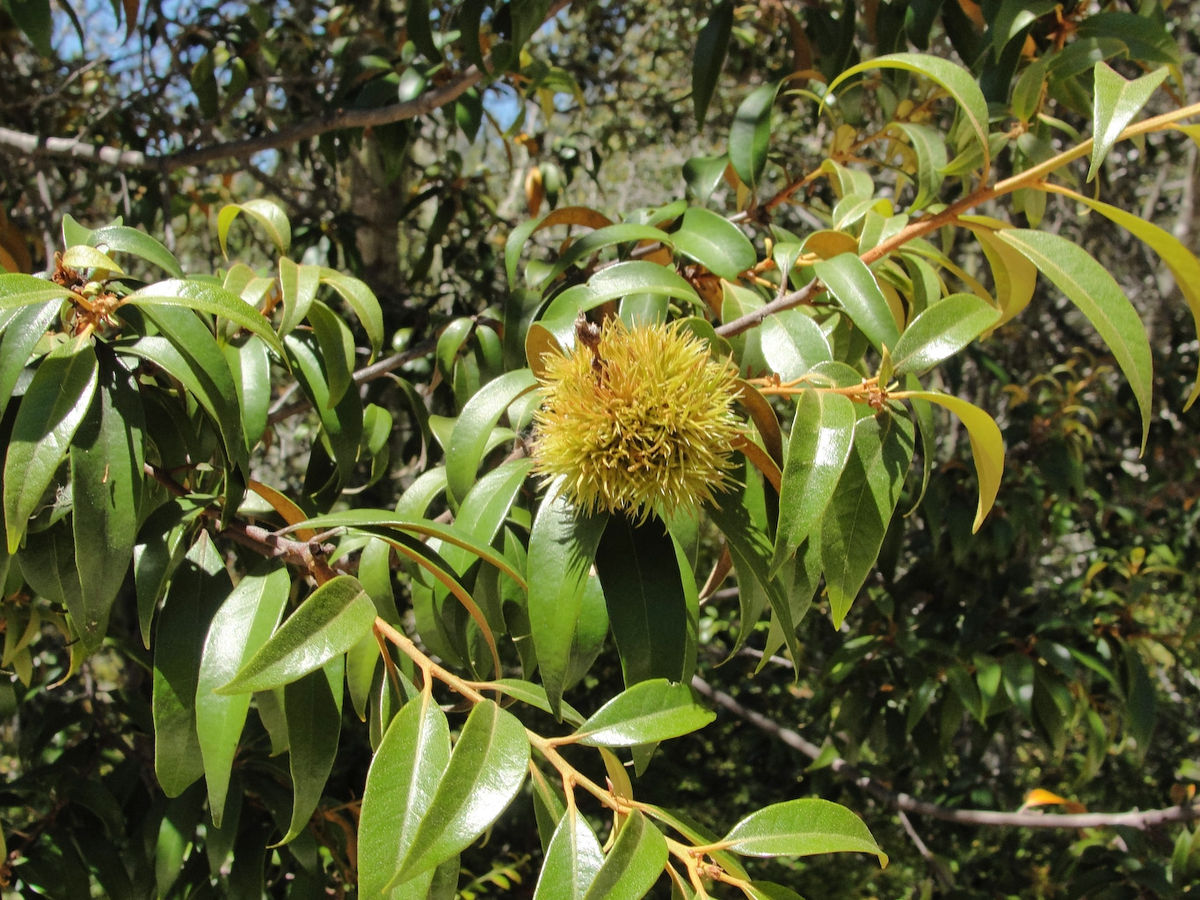
Dieback on golden chinquapin, Chrysolepis chrysophylla, a slow growing, evergreen tree native to the U.S. west coast has been confirmed as caused by Phytophthora ramorum. The detection was in a part of Marin County, California heavily infested by P. ramorum since early in the epidemic. Affected trees were large overstory trees. Unlike other hosts in the Fagaceae, there were no external bole cankers [April 2022 newsletter; summarizing research by Rooney-Latham, Blomquist, Soriano, and Pastalka].
SOURCES
Brasier, C.M. 2008. The biosecurity threat to the UK and global environment from international trade in plants. Plant Pathology (2008) 57, 792-808
Grunwald, N.J., M.M. Larsen, Z.N. Kamvar, P.W. Reeser, A. Kanaskie, J. Laine and R. Wiese. 2016. First Report of the EU1 Clonal Lineage of Phytophthora ramorum on Tanoak in an Oregon Forest. Disease Notes. May 2016, Vol. 100, No. 5, p. 1024
Posted by Faith Campbell
We welcome comments that supplement or correct factual information, suggest new approaches, or promote thoughtful consideration. We post comments that disagree with us — but not those we judge to be not civil or inflammatory.
For a detailed discussion of the policies and practices that have allowed these pests to enter and spread – and that do not promote effective restoration strategies – review the Fading Forests report at http://treeimprovement.utk.edu/FadingForests.htm
EAB-killed ash in Ontario; photo by Michael Hunger
Lately I have become aware of articles discussing how silviculturists and timber managers in the East are responding to the threat from introduced pests.
As Holt et al. (2022; full citation at end of blog) point out, private landowners control 56% of U.S. forestland – and 80% in the East. Their collective decisions about managing those forests are one of two factors that largely determine the composition and structure of the forested landscape and the ecosystem services those woodlands provide. The second determining factor is invasive pests. If an invasive pest prompts many landowners across the East to harvest their timber, the collective impact will be enormous. In this way, invasive species carry a double threat: direct mortality of one or more tree species or genera; and stimulation of removal of the host species from the forest by land managers trying to maximize or protect their current and future monetary investment.
Projections suggest that the number of non-native woodborers established in North America will increase three- or four-fold by 2050. If these prove true (see Leung et al. 2016), the impact on eastern North America forests and associated ecosystem services would be profound.
Holt et al. explore how private landowners have responded to an actual invasive species, the emerald ash borer (EAB). They analyze the influence of EAB’s presence on:
(1) annual probability that a landowner would decide to harvest timber on his/her own lands;
(2) intensity of any such harvest (percentage of trees cut); and
(3) diameter of harvested trees.
They examined harvesting of both the host (ash) and non-host species that co-occur.
Using data from U.S. Forest Service permanent inventory plots, they compared harvest levels in counties in which EAB was detected before 2007 to harvest levels in counties that were infected after 2012. To simplify, they omitted counties in which EAB was detected during the period 2007–2012. They excluded plots that did not contain any ash trees; and plots owned by federal or state agencies. They also excluded trees with diameters less than 12.7 cm (5 inches) dbh.
Ash harvests were apparently less widespread than non-ash harvests. Ash trees were harvested on 6% of the USFS Forest Inventory and Analysis (FIA) plots compared to 9% of plots for harvests of non-ash trees. However, a higher proportion of ash basal area was removed in these harvests — 63% of ash basal area versus 32% of non-ash basal area (remember, ash trees were present in all plots).
The presence of EAB resulted in
an increased amount of biomass harvested – by approximately 25% of basal area;
harvests contained greater quantities of ash, relative to non-ash species.
harvested trees in EAB-infested areas had smaller diameters, on average; this was true of both ash and non-ash species.
Two demographic variables were analyzed. Higher median household income resulted in a lower probability of non-ash harvest. Human population density had no significant effect.
Holt et al. say their findings indicate that a wave of ash removals will follow EAB spread with a potential to alter forest development trajectories and change structural legacies, with consequences for ecosystem services and biodiversity. They consider tree species that co-occur with ash, and that are preferred timber species, are the most likely to be removed in excessive numbers as a result of EAB-induced harvest.
Holt et al. note that ash removals were perhaps underestimated by the study because landowners might have cut their ash before EAB actually was detected in their county.
Managing the Northern Forest – Emphasis on reducing the beech component
Meantime, two other groups are suggesting how forest managers should respond to current challenges, including invasive pests. Both suggest steps to reverse – or at least slow – trends under which American beech (Fagus grandifolia) is becoming more dominant. (Given beech’s ecological importance, this stance bothers me! I don’t quarrel that many timber-oriented people don’t want more beech.) Neither of these studies considers the possible impact of beech leaf disease and beech leaf miner. I recently posted a blog link reporting Reed et al.’s (2022) analysis of interactions between BBD and BLD.
Rogers et al. (2022), the first group, note that successful silviculture is the art and science of managing forests intended to achieve human defined goals. Usually this means assuring the “desired” species composition and structure. However, to succeed, silviculture must also consider site conditions, including competing vegetation and changing climates.
They focus on the northern hardwood forest – also called the beech-birch-maple forest. It is broadly defined by the dominance of sugar maple (Acer saccharum), yellow birch (Betula alleghaniensis), and American beech. The northern hardwood forest occupies about 20 M ha across northern United States and southern Canada. From a traditional management perspective, maple and birch are the desired species; American beech is widely considered undesirable.
Unfortunately, from the timber point of view, Rogers et al. expect the abundance of sugar maple and yellow birch to decrease and American beech to increase. Important factors in this trend are soil types; deer numbers and preference for tree species other than beech; and high number of root sprouts stimulated by beech bark disease (BBD). Rogers et al. call for modification of traditional silvicultural approaches in the region. They call specifically for “adaptation planting” (also called “assisted migration”). They note that increased canopy openings – e.g., “irregular shelterwood system” — are important for establishing shade intolerant and mid-tolerant species, among them white ash (Fraxinus americana). They do mention the threat from emerald ash borer.
In an earlier blog I noted that the second group, Clark and D’Amato(2021), called for silvicultural management of New England forests (part of the same northern hardwood forest). Their goal was to maximize carbon sequestration. They advised management to promote retention of eastern white pine (Pinus strobus) and slow takeover by American beech and eastern hemlock (Tsuga canadensis). They say these species will fare poorly in warmer climates. Of course, all these species face non-native pests. See above for beech; hemlock is being decimated by hemlock woolly adelgid. Eastern white pine has apparently survived its own non-native pest, white pine blister rust.
I hope these pest-related hindrances to traditional timber-focused forestry will help convince the U.S. Department of Agriculture and Congressional agriculture and natural resource committees that non-native pests are a significant threat. Clearly past documentation of impacts to biological diversity and native ecosystems have not prompted them to adopt adequate protective measures or to respond effectively to established invaders. See earlier blogs, my recent article, and the Fading Forests reports (link at end of blog) for suggestions on what actions should be taken.
SOURCES
Clark, P.W. and A.W. D’Amato. 2021. Long-term development of transition hardwood and Pinus strobus – Quercus mixedwood forests with implications for future adaptation and mitigation potential. Forest Ecology and Management 501 (2021) 119654
Leung, B., M.R. Springborn, J.A. Turner, E.G. Brockerhoff. 2014. Pathway-level risk analysis: the net present value of an invasive species policy in the US. The Ecological Society of America. Frontiers of Ecology.org
Rogers, N.S., AW. D’Amato, C.C. Kern, S. B`edardd. 2022. Northern hardwood silviculture at a crossroads: Sustaining a valuable resource under future change
Posted by Faith Campbell
We welcome comments that supplement or correct factual information, suggest new approaches, or promote thoughtful consideration. We post comments that disagree with us — but not those we judge to be not civil or inflammatory.
For a detailed discussion of the policies and practices that have allowed these pests to enter and spread – and that do not promote effective restoration strategies – review the Fading Forests report at http://treeimprovement.utk.edu/FadingForests.htm
black berry eating hawthorn berries; photo by Paul D. Vitucci
Articles by Evan Fricke and colleagues remind us to look more broadly at bioinvasion to consider the impact on ecosystem function and evolution. They focus on animal interactions with plants in the shared environment, especially animals’ role as seed dispersers.
The authors also remind us that natural barriers explain why there are different species in different areas and thus how evolution and speciation follow different paths in different places. Think of Galapagos finches evolving in isolation from a few ancestors that somehow made it over the ocean from mainland South America.
These points are made in two recent articles.
In the first, Fricke and Svenning 2020 (full citation at end of this blog) note that about half of all plant species depend on animals to disperse their seeds. Animal seed dispersal is influenced by several drivers of global change, including local or generalized extinction (= defaunation); bioinvasion; and habitat fragmentation. The decline of large vertebrates has a particularly important role in these interactions.
Their study focused on fleshy-fruited plants that are dispersed by animals. (The study does not include nuts, e.g., acorns, which are presumably subject to some of the same pressures.) They expect evolution of the affected plants and animals to proceed differently as a result of the new partnerships, but they did not study any such interactions.
Their study covered animal seed-dispersal interactions with plants at 410 locations. The data encompassed 24,455 unique animal-plant pairs involving 1,631 animal and 3,208 plant species. Three quarters of the animals were birds; most of the rest were mammals, primarily bats and primates. Only 1% were in other animal groups – lizards, tortoises, or fish.
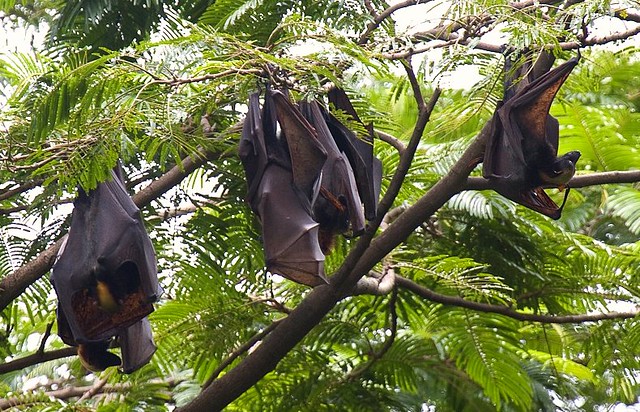
fruit bats on Luzon, Philippines; photo by Francesco Vernonesi; Flickr.com
They found that introduced plants and animals are twice as likely as native species to interact with introduced partners. The resulting interactions are likely to amplify biotic homogenization in future ecosystems. Already, introduced species have largely replaced missing native frugivore species in some places. In fact, mutualisms in which either or both the plant and animal is an introduced species are now about seven times higher than decades ago.
These mutual-benefit interactions of introduced species are even more prevalent in areas where human modification of the environment is greater. The proportion of introduced species and of novel interactions caused by introduced plant or animal species was higher for oceanic island systems than for continental bioregions. This finding adds a new dimension to the already recognized heightened susceptibility of remote islands to invasion and their loss of native species. Continental bioregions’ networks typically had few introduced animals and a greater prevalence of intro plants than animals.
Fricke and colleagues think plant-frugivore networks are likely to increasingly favor a relatively few introduced generalists over many native species, reducing the uniqueness of future biotas. The result might be to reduce resilience of terrestrial ecosystems by, first, allowing perturbations to propagate more quickly; and, second, by exposing disparate ecosystems to similar drivers. They called for giving higher priority to managing increasing ecological homogenization.
In the second article, Fricke, Ordonez, Rogers, and Svenning (2022) note that climate change requires many plant species to shift their populations hundreds of meters to tens of kilometers per year to track their climatic niche. Earth is also experiencing the formation of novel communities as species introductions and shifting ranges result in co-occurrence of species that do not share co-evolutionary history. They conclude that the novel mutualistic interaction networks will influence whether certain plant species persist and spread.
These authors examined four scenarios to assess how current long-distance dispersal has been affected by past defaunation and invasion and how it is threatened by species endangerment. These scenarios are as follows:
1st scenario (current scenario) = natural and introduced ranges of extant species today.
2nd scenario (natural scenario) = mammal and bird ranges as they would be if unaffected by extinctions, range contractions, or introductions.
3rd scenario (extinction scenario) = those bird and mammal species listed as vulnerable or endangered by the IUCN go extinct.
4th scenario (extirpation of introduced species scenario) = introduced species are extirpated.
Fricke and colleagues estimate that extinction of at least local populations of seed-dispersing mammals and birds has already reduced the capacity of plants to track climate change by 60% globally. The effect is strongest in temperate regions and regions with little topographic complexity. Two examples are eastern North America and Europe. These regions face a double threat: rapid climate change and loss of large mammals that provided long-distance dispersal.
The extinction scenario is most evident in Southeast Asia and Madagascar. The remaining animal seed dispersers are already threatened or endangered. Fricke and colleagues project that future loss of vulnerable and endangered species from their current ranges would result in a further reduction of 15% in the capacity of plants to track climate change.
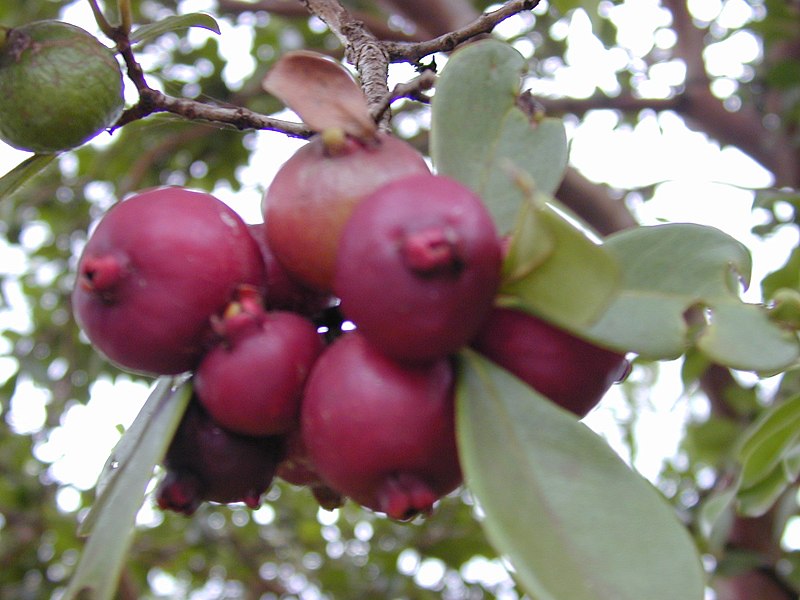
The contrary situation is found on islands which have few native mammals. Introduced species are now important long-distance seed dispersers. In some cases, the introduced animals are dispersing invasive plant seeds, e.g., on Hawai`i feral hogs are spreading the invasive plant strawberry guava (Psidium cattleianum).
strawberry guava on Maui; photo by Forest and Kim Starr
People’s actions have resulted in ecoregions disproportionately losing the species that provide long-distance seed dispersal function, i.e., large mammals. In other words, human activities have caused not only rapid climate change—requiring broad-scale range shifts by plants—but also defaunation of the birds and mammals needed by plants to do so. Habitat fragmentation and other land-use changes will likely amplify existing constraints on plant range shifts.
Fricke and colleagues say their findings emphasize the importance of not only promoting habitat connectivity to maximize the functional potential of current seed dispersers but also restoring biotic connectivity through the recovery of large-bodied animals to increase the resilience of vegetation communities under climate change.
SOURCES
Fricke, E. C., & Svenning, J. C. (2020). Accelerating homogenization of the global plant–frugivore meta-network. Nature, 585(7823), 74-78. https://www.nature.com/articles/s41586-020-2640-y
Fricke, E. C., Ordonez, A., Rogers, H. S., & Svenning, J. C. (2022). The effects of defaunation on plants’ capacity to track climate change. Science, 375(6577), 210-214. https://www.science.org/doi/full/10.1126/science.abk3510
Posted by Faith Campbell
We welcome comments that supplement or correct factual information, suggest new approaches, or promote thoughtful consideration. We post comments that disagree with us — but not those we judge to be not civil or inflammatory.
For a detailed discussion of the policies and practices that have allowed these pests to enter and spread – and that do not promote effective restoration strategies – review the Fading Forests report at http://treeimprovement.utk.edu/FadingForests.htm
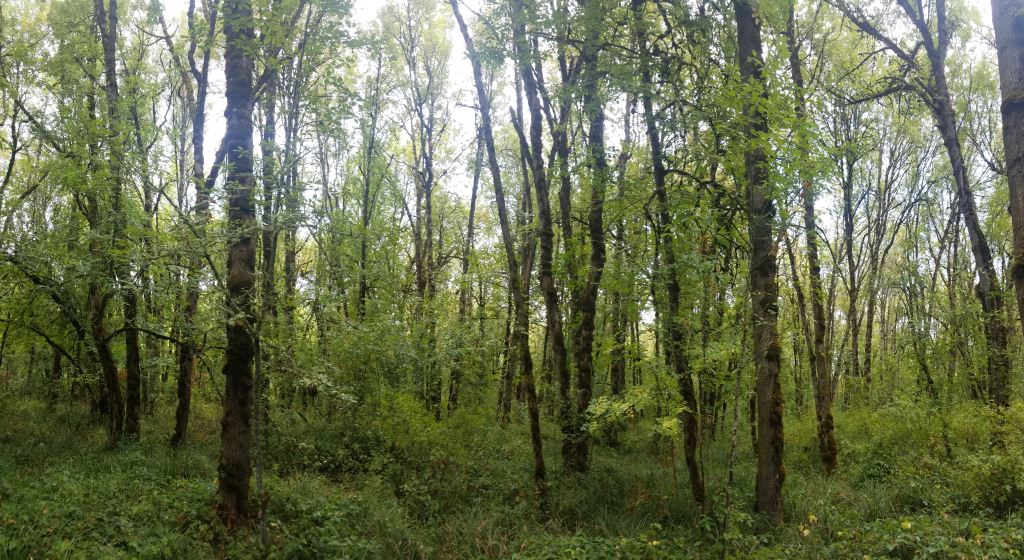
nearly pure stand of Oregon ash in Ankeny National Wildlife Refuge, Oregon; photo by Wyatt Williams, Oregon Department of Forestry
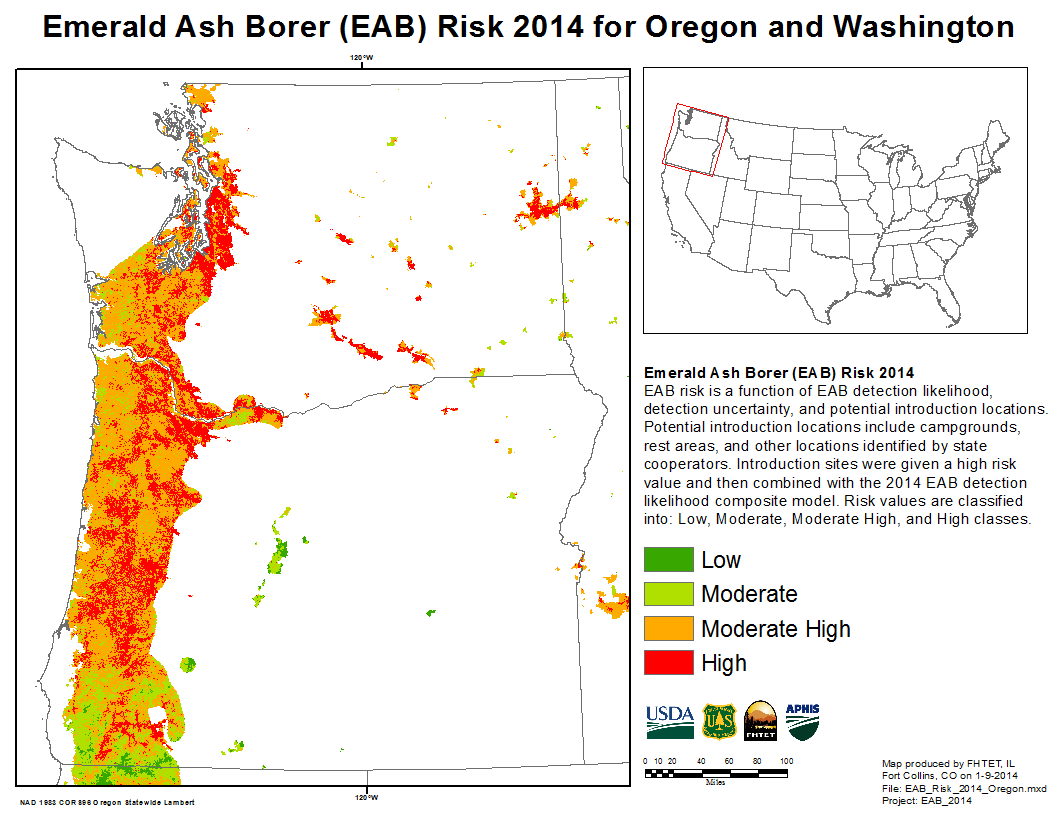
While Michiganders document the impacts of the emerald ash borer (EAB) there, conservationists on the West Coast are jump-starting efforts to save their regional species, Oregon ash (Fraxinus latifolia). Earlier field tests in the Midwest showed that EAB will attack Oregon ash (press release) – something West Coast state would like to counter as early and effectively as possible.
Oregon ash is a wide-ranging species, occurring from California to Washington and possibly into British Columbia. The species has not been studied extensively (it is not a timber species!), but it is clearly an imponearlrtant component of riparian forests. In wetter parts of the Willamette Valley, ash is the predominant tree species. See the photo of the riparian forest in the Ankeny National Wildlife Refuge; this forest is nearly 100% Oregon ash (ODA/ODF EAB Response Plan).
As is true in the Midwest, ash provides important food and habitat resources along creeks and rivers where seasonally high water-tables can exclude nearly all other tree species. Standing and fallen dead ash biomass can alter soil chemistry and affect rates of decomposition, nutrient, and water cycling, i.e., nutrient resource availability for the remaining trees. Gaps in tree canopy can increase soil erosion, stormwater runoff and elevated stream temperatures. In dense stands of Oregon ash, understory vegetation is often sparse, consisting primarily of sedges. The authors of the Response Plan anticipate invasion by non-native plants into canopy gaps caused by the loss of ash trees as a result of an EAB invasion. In Michigan, though, it is the sedges that dominate these gaps.
The Oregon Department of Forestry, the state Department of Agriculture, and other entities have actively participated in “don’t move firewood” campaigns for at least a decade. The Departments of Forestry and Agriculture also led a team that prepared the EAB Response Plan in 2018 (full citation at the end of this blog). It lays out in considerable detail the roles of both government agencies and non-governmental stakeholders. Oregon’s quarantine is broad, covering all insects not on an approved list (Williams, pers. comm.)
California has inspected incoming firewood for years. In April 2021 – after APHIS terminated the federal quarantine on EAB — California Department of Food and Agriculture established a state quarantine on the beetle and articles that could transport it into the state. In doing so, CDFA noted that commercially grown olive trees might also be at risk to EAB.
Washington State operates a statewide trapping program for invasive insects. There has also been significant attention to non-native insect threats to urban forests. These have included a study in 2016 led by the Washington Invasive Species Council (WISC). It involved a partnership of WISC with the Washington Department of Natural Resources Urban and Community Forestry Program as well as and statewide stakeholder meetings [Bush, pers. comm.].
Of these various state-wide initiatives, the institutions in Oregon appear to be most pro-active. The Tualatin Soil and Water Conservation District provided $10,000 to fund some of the genetics work and testing for EAB resistance. Other funding came from the USDA Forest Service Forest Health Protection unit of State and Private Forestry (not from USFS’ Research Program). As described by USFS geneticist Richard Sneizko in an article in the publication TreeLine (full citation at end of blog), participants hope to find at least some level of genetic resistance to EAB. Any such resistance might be deployed in several ways: 1) promoting reproduction by resistant trees to enhance their numbers before EAB gets to Oregon; 2) using seeds from resistant trees for restoration of natural areas; or 3) cross-breeding resistant trees to build genetically diverse stocks of resistant trees for future restoration.
Participants think it is vitally important to work from seeds collected over much of the range of Oregon ash – first, to search for probably very rare resistant trees; and second, to preserve the full diversity of the tree species’ genome so that restored ash will be adapted to the wide variety of conditions in which ash grow.
Participants in this effort include the forest genetics/tree improvement community – specifically, the USDA Forest Service Dorena Genetic Resource Center (located in Cottage Grove, Oregon) and Washington State University at Puyallup Research & Extension Center. Also engaged is the public gardens community, specifically the Huntington Botanical Gardens in San Marino, Los Angeles County. The garden is collecting seed of Oregon and other western ashes from California and Washington State.
The first step in assessing resistance is collecting seed from ash trees across the range of Oregon ash. This began in 2019. Carried out by, inter alia, some USFS and Interior’s Bureau of Land Management units, Oregon State University, citizen scientists [Sniezko] and the Oregon Department of Forestry [press release & Sniezko pers. comm.] Also, some seeds were collected in Washington State in 2020. Additional collections in Oregon are scheduled for 2022.
The collected seeds have been evaluated for vitality and stored by the USFS Dorena Center and at the USFS National Seed Lab (Macon, GA).
Oregon ash planting at Dorena; photo by Emily Boes
The USFS Dorena Center and Washington State University have begun germinating and growing some of the seedlings for various tests of possible resistance. There is concern that the 2021 drought might have killed some of the seedlings in Oregon; those in Washington are not affected. The initial seedlings are mostly from Oregon but there is space to add additional families from a wider geographical area. Experimenters plan to collect data annually on bud break, yearly growth, and any diseases or pests that develop on the trees. (Chastagner pers. comm.)
The next step is systematic testing whether some of the ash show genetic resistance to EAB. Richard Sneizko has sent seedlings of 17 ash families to USFS colleague Dr. Jennifer Koch. She operates a breeding facility in northern Ohio where they can be tested for resistance. Testing is expected to begin this year. [Tree Line]
The Dorena Center is also helping a researcher at Penn State University, Dr. Jill Hamilton, to set up a landscape genomics project. She will evaluate the genetic variability in the species by using leaf samples from about 20 trees from many populations across the Oregon ash’s range (California to British Columbia). This potentially includes a collection from the Dorena population of ash in late Spring 2022. [Sniezko]
These various ash plantings can also be “sentinel” plantings to assist in early detection of newly arriving EAB. [Tree Line]
SOURCES
Bush J. Executive Coordinator | Washington Invasive Species Council
ODF and ODA Emerald Ash Borer Readiness and Response Plan. 2018.
The newsletter is issued by Bonneville Environmental Foundation for a consortium of conservation agencies
Sniezko pers comm Feb 2022 22-2/24
A video explaining the campaign to save Oregon ash is at https://youtu.be/uZmfLrxEA7g or https://youtu.be/S8y-XK285S8
Posted by Faith Campbell
We welcome comments that supplement or correct factual information, suggest new approaches, or promote thoughtful consideration. We post comments that disagree with us — but not those we judge to be not civil or inflammatory.
For a detailed discussion of the policies and practices that have allowed these pests to enter and spread – and that do not promote effective restoration strategies – review the Fading Forests report at http://treeimprovement.utk.edu/FadingForests.htm
results of EAB infestation; photo by Nate Siegert, USFS
A series of studies by Patrick J. Engelken, M. Eric Benbow, Deborah G. McCullough, Nate Siegert, Randall Kolka, Melissa Youngquist and others examine the status of ash (Fraxinus spp.) in the aftermath of the emerald ash borer (EAB) invasion. Initial studies documented the crash of biomass supporting EAB numbers when the large ash trees died (Siegert, Engelken, McCullough. 2021; full citation at end of blog.) More recent studies have focused on bogs and forests in the riparian areas where ash were especially numerous and arguably ecologically most important. I posted a blog about black ash bogs earlier.
I will focus here on the studies in riparian areas of southern and northwest Michigan. Information about impacts in forests of southern Michigan are from Engelken, Benbow and McCullough (2020); information about impacts in northwest Michigan are from Engelken and McCullough (2020). Full citations for both are at the end of the blog.
All study areas had high ash densities before EAB’s arrival. One study (Engelken and McCullough 2020) found ash densities high in the immediate riparian areas (in one case, a strip reaching 100 meters from the streambank) but scattered in surrounding forests.
In all these study areas, populations of mature (reproductive age) ash crashed within 10-15 years after EAB invasion:
In northeast Michigan, EAB carrying capacity was reduced by 94% – 99%; total ash basal area was reduced by 87 – 97.7% (Siegert, Engelken, McCullough. 2021);
In southern Michigan, more than 85% of the basal area of green (F. pennsylvanica) and black ash (F. nigra) had been killed by 2020. An estimated 96% of the overstory ash phloem area had died, thus radically reducing EAB carrying capacity (Engelken, Benbow and McCullough 2020);
In northwest Michigan, more than 95% of the overstory ash have been killed. (Engelken and McCullough 2020).
The worst impact has been on black ash– which plays such an important ecological role in riparian areas and wetlands and has enormous importance in Native American cultures. In all these study areas, there is no stump sprouting by black ash (Siegert, Engelken, McCullough. 2021; Engelken, Benbow and McCullough 2020; Engelken and McCullough 2020). In three watersheds of northwest Michigan where black ash constituted up to a quarter of the overstory species before the EAB invasion, scientists found no black ash recruits, only eight saplings, and a single seedling.
Green ash (F. pennsylvanica) has survived in much higher numbers – so far. However, this species’ ability to grow into reproductive size is still uncertain. In northwest Michigan, green ash saplings are abundant in canopy gaps created by EAB-caused mortality of mature ash. These saplings had established before the EAB invasion so some call them the “orphaned cohort”. However, there are few seedlings of any woody plant species in these gaps because sedges form such dense mats.
Green ash reproduction faces many challenges before persistence of the species can be considered assured. First, populations of EAB – now reduced by the lack of mature ash to support them – might resurge when young ash grow to larger sizes. It is not yet clear the extent to which introduced biocontrol agents and native predators, e.g., woodpeckers, will protect these trees as they grow to reproductive size. Here, again, green ash has an advantage over black ash. While green ash produce seed at a relatively young age, black ash don’t produce seed until they reach 30–40 years. Even then, they produce seeds only sporadically, with intervals of five or more years.
A second challenge is the lack of seed sources – at least until and unless young trees are able to reach reproductive size.
A third challenge is competition for resources from other plants. The canopy gaps eliminate competition for light for the taller plants, i.e., the existing ash saplings. However, the sapling cohort is not supported by a seedling cohort. There are very few seedlings of all woody plant species (including invasive species!). Seed germination is suppressed by the dense mats of wetland-adapted sedges and possibly the higher water tables (which resulted from reduced evapotranspiration following mortality of the mature trees).
Competition for resources is also a factor in the forests outside the immediate riparian zone. There, ash seedlings sprout, but shade created by lateral ingrowth suppresses their growth. In southern Michigan, Engelken, Benbow and McCullough (2020) note that the forests are apparently transitioning from red oak dominated forests to red maple and black cherry dominated forests. This transition is apparently intensified by forest mesophication resulting from reduced fire frequency, decreasing light availability in forest understories and increasing soil moisture content.
Fourth, while stump sprouting of green ash was noted in southern Michigan, in the northwestern forests all the sprouts died. I have already noted the absence of stump sprouting by black ash at all sites.
Beaver & Green Ash in Northern Virginia
photos of beaver feeding on ash saplings in northern Virginia; photos by F.T. Campbell
In spring 2022 I noticed along one stream in northern Virginia that beavers had cut down green ash saplings; McCullough and Siegert report that this does not appear to be a problem in their study areas.
By December 2022, the beaver-cut trees tried to recover: see the sprouts from a stump [below]. (I think deer or rabbits ate the tips of the sprouts.)
The beavers also continued feeding on the ash — the tree photographed in the spring when it was half-chewed through has now been felled and its branches removed [see below].
Ecosystem Impacts, Especially on Streams
Across much of the upper Midwest, massive ash mortality is causing widespread changes in forest systems.
Riparian forests, i.e., areas adjacent to waterways where periodic inundation occurs, are functionally linked to the aquatic systems. Loss of such a significant proportion of the overstory changes the transfer of energy to adjacent waterways that takes the form of inputs of nutrients from leaf litter and coarse woody debris. Intact forests also stabilize stream banks and maintain channel depth by preventing erosion. Forests moderate temperature of the water. Finally, forests with “coarse woody debris” increase habitat structure. These impacts might be especially important along first order streams, (defined as perennial streams that have no permanently flowing tributaries). These streams are too small to buffer the impacts of major tree loss. The scientists say they are uncertain whether these changes continue to affect larger streams downstream.
Unshaded streams have higher water temperatures that can affect populations of fish, in particular salmonids, by delaying migration, reducing egg viability and increasing egg mortality. Higher temperatures can also alter primary productivity of aquatic algae, potentially increasing eutrophication (Engelken and McCullough 2020).
The scientists expect increasing abundance of coarse woody debris in the forests and streams of northwest Michigan as the 75% of dead ash that are still standing fall. Such debris provides nutrients and habitat for an array of plants and animals, thereby influencing the abundance, activity and species compositions of several ground dwelling insects and seedling establishment. In streams, coarse woody debris provides complex habitat and refuges. It also retains organic matter. Recreationists do find that debris impedes boating.
Loss of ash specifically
As described by Engelken, Benbow and McCullough (2020), and in my earlier blog, ash leaf litter – particularly black ash leaf litter – is highly nutritious. Ash leaf litter has efficient turnover rates and contributes important soil nutrients such as nitrogen, organic carbon and exchangeable cations. Invertebrate communities in headwater streams feed largely on coarse organic material such as leaf litter (Engelken and McCullough 2020). Consequently, loss of the annual influx of ash leaf litter will likely have adverse effects on nutrient availability in riparian forests and adjacent streams.
SOURCES
Engelken, P.J., M.E. Benbow, D.G. McCullough. 2020. Legacy effects of emerald ash borer on riparian forest vegetation and structure. Forest Ecology and Management 457 (2020) 117684
Engelken, P.J. and D.G. McCullough. 2020. Riparian Forest Conditions Along Three Northern Michigan Rivers Following Emerald Ash Borer Invasion. Canadian Journal of Forest Research.
Siegert, N.W., P.J. Engelken, D.G. McCullough. 2021 Changes in demography and carrying capacity of green ash and black ash ten years after emerald ash borer invasion of two ash-dominant forests. Forest Ecology and Management Vol 494, August 2021
Posted by Faith Campbell
We welcome comments that supplement or correct factual information, suggest new approaches, or promote thoughtful consideration. We post comments that disagree with us — but not those we judge to be not civil or inflammatory.
For a detailed discussion of the policies and practices that have allowed these pests to enter and spread – and that do not promote effective restoration strategies – review the Fading Forests report at http://treeimprovement.utk.edu/FadingForests.htm
Hakalau Forest, Hawai“i; nearly 90% of Hawaiian flora is unique to the Islands
A recent article by Yang et al. 2021 (full citation at the end of this blog) seeks to determine the extent to which introduced plants reduce the uniqueness of regional floras. They analyzed data from 658 regions covering about 65.7% of the Earth’s ice-free land surface and about 62.3% of the planet’s known plant species.
They found strong homogenization of plant species’ taxonomic and phylogenetic diversity results from introductions of plant species to ecosystems beyond their native range. Homogenization caused by regional extinctions of native floral species occurs much less frequently.
There are two aspects of a region’s floral uniqueness. One is the number of species that it shares with other regions. This is taxonomic uniqueness. The other is the distinctiveness of the evolutionary history of the region. When several species are endemic to a region’s flora, and lack close relatives in other regions, that equals phylogenetic uniqueness.
The effect of a species introduction differs depending on which of these aspects one focuses on. Thus, naturalization of a species closely related to native species (e.g., a congeneric species) will have less impact on the phylogenetic floristic uniqueness of the region than naturalization by a distantly related species. Taxonomic uniqueness, however, will be affected to the same degree, irrespective of the phylogenetic distance between the naturalized and native species.
Yang et al. found strong homogenization of plant diversity. They found that species introductions increased the taxonomic similarity in 90.7% of all regional pairs and phylogenetic similarity in 77.2% of all region pairs. Most homogenization results from introductions of plant species to ecosystems beyond their native range. Homogenization caused by regional extinctions of native floral species occurs much less frequently.
This loss of regional biotic uniqueness or distinctiveness changes biotic interactions and species assemblages. These, in turn, have ecological and evolutionary consequences at larger scales and higher levels.
The degree of homogenization between regions’ floras depends on three factors:
1) The distance between the donor and recipient regions. Since nearby regions share more species, an introduction from a more distant origin is more likely to be a novel species and so contribute to homogenization of “donor” and “receiving” floras.
2) Climatic similarity, especially temperature. A plant species introduced from a climatically similar but geographically distant place is more likely to establish than a species from a different climatic zone. As a result, the recipient area’s flora is changed to more closely resemble the flora of the donor region with which it shares climatic conditions – regardless of the distance between them.
3) The level of exchange of goods and people between two regions. The higher the rate of exchange between two regions, the greater the chance that a species will be introduced and become established. Yang et al. used the existence of current or past administrative relationships (e.g., colonial relationship) between two regions as a proxy for intensity of trade and transport between donor and recipient regions. They found that floras of regions with current or past administrative links have taxonomically become more similar to each other than the floras of regions with no such links.
flora of the Cape Floral Kingdom – South Africa; photo from Michael Wingfield
Establishment of introduced species can increase floristic similarity of the donor and recipient regions (= floristic homogenization) when the species is native to one of the two regions and naturalizes in the other, or when it is not native to both regions and naturalizes in both. On the other hand, a species introduction can decrease the floristic similarity of the two regions (i.e., enhance floristic differentiation) when the species is not native to both regions but naturalized in only one.
Homogenization hotspots differed slightly depending on whether one focused on taxonomic or phylogenetic aspects.
The regions with the greatest average increase in taxonomic similarity with other regions due to naturalized alien species were New Zealand, portions of Australia, and many oceanic islands. The Australasian situation probably reflects its long biogeographic isolation from other parts of the globe and its highly unique native flora. As a result, nearly all non-native plants introduced to Australasia strongly increase levels of its floristic similarity to the rest of the world. Oceanic islands have species-poor floras with large proportions of unique endemics. They have also received high numbers of naturalized alien plants.
Hotspots of phylogenetic homogenization on continents are the same as those for taxonomic homogenization, but this is not true for islands. Yang et al. think this is because islands’ native floras were established by natural colonization from nearby continental floras so – despite subsequent speciation – they retain their phylogenetic relationship to the donor areas’ floras.
Yang et al. concede that they lacked high-quality data on native and naturalized alien species lists for a third of Earth’s ice-free terrestrial surface, especially Africa, Eastern Europe, and tropical Asia. They believe, however, that data from these regions are unlikely to change the overall finding. (Scientists are beginning to compile lists of forest pests in Africa). link to blog
Yang et al. note that introduction and naturalization of alien species are likely to increase in the future, thusaccelerating floristic homogenization. The ecological, evolutionary and socioeconomic consequences are largely unknown.They call for stronger biosecurity regulations of trade and transport and other measures to protect native vegetation.
SOURCE
Yang, Q., P. Weigelt, T.S. Fristoe, Z. Zhang, H. Kreft, A. Stein, H. Seebens, W. Dawson, F. Essl, C. König, B. Lenzner, J. Pergl, R. Pouteau, P. Pyšek, M. Winter, A.L. Ebel, N. Fuentes, E.L.H. Giehl, J. Kartesz, P. Krestov, T. Kukk, M. Nishino, A. Kupriyanov, J.L. Villaseñor, J.J. Wieringa, A. Zeddam, E. Zykova and M. van Kleunen. 2021. The global loss of floristic uniqueness. NATURE COMMUNICATIONS (2021) 12:7290. https://doi.org/10.1038/s41467-021-27603-y
Posted by Faith Campbell
We welcome comments that supplement or correct factual information, suggest new approaches, or promote thoughtful consideration. We post comments that disagree with us — but not those we judge to be not civil or inflammatory.
For a detailed discussion of the policies and practices that have allowed these pests to enter and spread – and that do not promote effective restoration strategies – review the Fading Forests report at http://treeimprovement.utk.edu/FadingForests.htm
I report here on recent developments on breeding resistant trees. These include both promising results from decades-long efforts and also a promising start to addressing a new challenge.
These programs have benefited from major commitments by the USDA Forest Service. I hope they encourage similar commitments for other priority species – such as those named by the CAPTURE program.
Port-Orford cedar – ready to be planted in the forest!
Scientists who have been working for decades to breed seedlings of Port-Orford cedar (POC) trees resistant to the root rot caused by Phytophthora lateralis https://www.dontmovefirewood.org/pest_pathogen/port-orford-cedar-root-disease-html/now say that they have seedlings ready for planting in the forest. They made this case in a webinar in late February. It can be viewed here. The full webinar runs somewhat over two hours.
The scientist who led early studies of POC and the root disease, Don Zobel, Professor Emeritus, Oregon State University, described the ecological requirements that should guide planting programs. POC produces high-calcium litter. It grows from the sea coast to 1950 meters elevation, on sand dunes, fens, soils with hardpans; mafic & ultramafic rocks (serptentines) and fertile soils on some sedimentary rocks. POC is less shade tolerant than western hemlock but more fire tolerant. It can form a secondary canopy under Douglas-fir and supercede other conifers when fire occurs repeatedly. The tree needs surface water, e.g., seepages and stream sides; but the water must be flowing, not stagnant. Seedlings are especially vulnerable to drying during winter.
[I posted a separate blog about other trees native to this region, including serpentine soils, here.]
One purpose of the webinar was to encourage owners and managers of lands within POC’s historic range (see the map under Dr. Zobel’s presentation) to begin planting the species in appropriate sites. With this in mind, Dr. Zobel emphasized criteria for selecting sites:
Climates in coastal areas of the range are less likely to change under climate change
Quartenary marine terraces are the best geologic type; Lookingglass and Roseburg geologic types are also acceptable
Availability of water during summer, e.g., streamside and seepage areas. Try planting beneath alder. However, avoid interior valley stream corridors if the soils are not ultramafic. And avoid stagnant water.
a POC tree in a bog next to the endemic pitcher plant of southern Oregon, Darlingtoniacalifornica; photo by Richard Sniezko
Dr. Zobel also says one should plant pathogen-resistant genotypes and pay attention to local genetic varieties (which have largely been determined).
Dr. Richard Sniezko of the USFS Dorena Genetic Resource Center described the Center’s 30-year effort to find and exploit resistance to the pathogen. Funding has come from the USFS Forest Health Protection program, other parts of the USFS, and the Bureau of Land Management (BLM). The goal all along has been to produce seedlings for restoration to the forest – meaning not just resistant to the pathogen but also adapted to various local conditions. The program can now provide resistant seedlings in large quantities for planting by landowners and public land managers.
Dr. Sniezko emphasizes that success depends on engagement of four sets of people: research by university scientists; application of that research and development of propagule growing methods by the Dorena Center; support from USFS leaders to continue the program; involvement of land managers who choose to plant the resistant seedlings.
USFS and BLM staff described efforts to determine where POC grows on land under their management, the status of disease in those areas, and efforts to slow the spread of the disease, especially along roadsides and as result of timber or engineering projects. Some of this sanitation work has been funded by USFS Forest Health Protection program — not the National Forest System.
Richard Sniezko stated that the seedlings’ quantitative disease resistance means that some seedlings will die. He expects 40-50% survival of seedlings from many of the breeding zones. This is well above the level of resistance in un-improved populations.
Both BLM and the Rogue-River-Siskiyou National Forest have planted tens of thousands of resistant seedlings in recent years and plan to continue. Funding provided by COVID-19 legislation might allow increased effort. [See Dr. Sniezko’s presentation on the webinar for photos from some plantings.]
POC seedlings at Dorena; photo by Richard Sniezko
Norma Kline of the Oregon State University extension program has distributed more than 10,000 seedlings to small/non-industrial landowners. Many of the recipients shared seedlings with neighbors or are coordinating their planting over a large area. They were motivated primarily by conservation concerns. Her monitoring showed that the POC seedlings survived but did not thrive under dense tanoak canopy. They did well in competition with grass in areas near the coast where there was more moisture. They also did well under Douglasfir as long as there was dappled sunlight.
The non-governmental organization American Forests is likely to participate actively in the planting effort.
In an email to me, Dr. Sniezko asks that people who have planted POC outside its native range inform him where the tree(s) is/are thriving. This information would enhance scientists’ understanding of the species’ environmental tolerances.
Posted by Faith Campbell
We welcome comments that supplement or correct factual information, suggest new approaches, or promote thoughtful consideration. We post comments that disagree with us — but not those we judge to be not civil or inflammatory.
For a detailed discussion of the policies and practices that have allowed these pests to enter and spread – and that do not promote effective restoration strategies – review the Fading Forests report at http://treeimprovement.utk.edu/FadingForests.htm