In January 2021, the California Department of Food and Agriculture announced the pest rating for Phytophthora occultans, one of two species of Phytophthora it was reviewing. (Once at the website, click on “comment” – next to name Heather Sheck.)
Five people or organizations submitted comments. The most comprehensive comments were submitted by Elizabeth Bernhardt, Ph. D. and Tedmund Swiecki Ph.D. of Phytosphere Research. Another scientist was Tyler Bourret, who had been the first to detect P. occultans in California when working as a student in 2015-16. The third scientist was Jennifer Parke, a plant pathologist at Oregon State University who has worked with Phytophthora species in agriculture and wildland settings for 36 years. Additional comments were submitted by the Phytophthoras in Native Habitats Work Group and me.
All commenters raised some issues. First was the lack of information on the true distribution of P. occultans in California. CDFA restated that it that relies on official records and survey information, and that those records support a “low” rating.
Several issues relate to the definitions that CDFA applies in assigning ranks. They are so restrictive that – in my view – they result in underestimates of pathogens’ potential impacts.
One example is how CDFA recognizes first detections of a pathogen. As Bernhardt and Swiecki point out, CDFA’s consideration of only “official” samples prevents timely action to protect California’s agriculture and native vegetation. In the case of P. occultans, CDFA took no action for two years after the pathogen was first reported in the state. This detection had been confirmed by a CDFA laboratory.
A second example is host range. CDFA says it assigns a host range rating of “wide” (rating of “3”) only to pathogens that have host ranges of hundreds of species. This means that pathogens with dozens of known hosts across several plant families are given a ranking of “moderate” (2). Furthermore, the agency considers only “official” samples in defining hosts. This approach precludes consideration of the high probability that additional hosts would be found in future, including federally listed species in the genera Ceanothus and Arctostaphylos. Bernhardt and Swiecki named two additional hosts based on field work. CDFA responded to the second point by adding a reference to the likely expansion of the host range in the “Uncertainty” section of the document.
Similarly, CDFA gives a reproductive potential rating of “3” only to pathogens spread by a vector or that infect seeds.
CDFA staffers who manage specific pests lack authority to change these too stringent ranking criteria. The agency leadership need to adopt more realistic criteria.
CDFA responded by accepting many of the additional factors raised primarily by Bernhardt and Swiecki. This resulted in raising the overall score from 11 to 14, and changing the ranking from “C” to “B”.
Posted by Faith Campbell
We welcome comments that supplement or correct factual information, suggest new approaches, or promote thoughtful consideration. We post comments that disagree with us — but not those we judge to be not civil or inflammatory.
For a detailed discussion of the policies and practices that have allowed these pests to enter and spread – and that do not promote effective restoration strategies – review the Fading Forests report at http://treeimprovement.utk.edu/FadingForests.htm
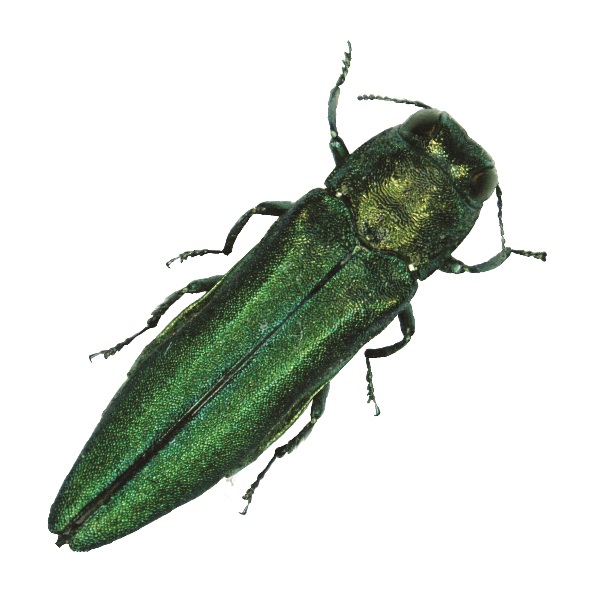
APHIS formally proposed to stop regulating movement of firewood, nursery stock, and other articles that can transport the emerald ash borer (EAB) in 2018; I blogged in opposition to this proposal at the time. Now APHIS has evaluated the 2018 comments on its proposal and has decided to proceed with its plans.
I recently blogged about the current and probable future status of ash. A study confirmed that robust regeneration of ash seedlings and saplings seen in various invaded areas will not result in recovery of mature ashes that can perform their ecological role.
APHIS received 146 comments on the proposal. Twenty-five supported the proposal as written; 121 raised concerns. Many of the latter were a few sentences without supporting information. These comments and the final rulemaking can be read here.
How has APHIS responded to the serious questions raised? Dismissively.
I certainly concede that EAB has been difficult to manage and has spread rapidly. However, I continue tobelieve that maintaining the quarantine serves important purposes and the analysis APHIS provides does not justify terminating of the regulatory program. I remain concerned.
Neither the proposal nor the final regulation tells us how much money and staff resources have been dedicated to detection or enforcement of the regulations in recent years. Therefore we don’t know how many resources are now available for supporting other activities that the agency thinks are more effective. APHIS also refuses to provide specific information on how it will allocate the freed-up resources among its (minimal) continuing efforts. For example, APHIS has supported resistance-breeding programs. Will it help them expand to additional species, e.g., black and Oregon ash?
How Does APHIS Propose to Curtail EAB Spread?
APHIS states in the final rule that it is ending the domestic quarantine regulation so that it can allocate resources to more effective strategies for managing and containing EAB. The agency wants to reallocate funds “to activities of greater long-term benefit to slowing the spread of EAB … These activities include further development and deployment of EAB biocontrol organisms; further research into integrated pest management of EAB that can be used at the local level to protect an ash population of significant importance to a community; and further research, in tandem with other Federal agencies, into the phenomenon of “lingering ash … ”
However, APHIS has not funded detection efforts since 2019. (Detection methods were only partially effective, but they gave us some information on where EAB had established.) APHIS is now ending regulation of the movement of vectors. APHIS concedes that biocontrol agents cannot be effective in preventing pest spread. So – what efforts – other than continued support for the “Don’t Move Firewood” campaign – will APHIS make to slow the spread of EAB?
Environmental and Economic Impacts: Not Adequately Assessed
Second, APHIS still has not analyzed the economic or environmental impact of the more rapid spread of EAB to the large areas of the country that are not yet infested – especially the West Coast – that are likely to result from deregulation. As even APHIS concedes, the EAB is currently known to occupy only 27% of the range of native Fraxinus species within conterminous US. There are additional large ash populations in Canada and Mexico – although neither country commented on the proposal — unfortunately!
Instead, APHIS largely restates its position from the proposal that it is too difficult to calculate such impacts. Furthermore, that it is APHIS’ “experience that widely prevalent plant pests tend, over time, to spread throughout the geographical range of their hosts …” In other words, APHIS denies the value of delaying invasions – yet that has always been a premise underlying any quarantine program.
The final regulation refers to an updated economic analysis, but no such document is posted on the official website. The rule does not mention costs to homeowners, property owners, municipal governments, etc. I believe it would not be so difficult to estimate costs to these entities by applying costs of tree removal in the Midwest to tree census data from major West Coast cities. Also, it might have been possible to provide some estimate of the ecological values in riparian forests by analogy to data from the Midwest developed by Deborah McCullough and others.
Biological Control: Effective – or Not
In the final regulation, APHIS concedes that the biocontrol agents currently being released have geographic and other limitations. However, APHIS does not address concerns raised by me and others about their efficacy. APHIS does say explicitly that it has not [yet?] begun efforts to find biocontrol agents that might be more effective in warmer parts of the ash range, especially the Pacific Northwest and riparian areas of the desert Southwest. However, APHIS has conceded that these areas are almost certain to be invaded – so should it not take precautionary action?
APHIS states several times that it cannot promise specific funding allocations among program components or strategies – such as resistance breeding – that might be pursued in the future. The agency stresses the value of flexibility.
U.S. Forest Service biologists have higher expectations; see their podcast here.
I wish to clarify that I do not oppose use of biocontrol; I strongly supported then APHIS Deputy Administrator Ric Dunkle’s decision to initiate biocontrol efforts for EAB early in the infestation. My objections are to overly optimistic descriptions of the program’s efficacy.
Firewood: Outreach Only, No National Regulation
As noted, APHIS has promised to continue support for public outreach activities, especially the “Don ‘t Move Firewood” campaign. The program’s message will continue to encourage the public to buy firewood where they burn it and to refrain from moving firewood from areas that are under Federal quarantine for other pests of firewood (e.g., Asian longhorned beetle). This campaign and the new National Plant Board guidelines link stress that firewood is a high-risk pathway for many pests of national or regional concern; they do not focus on any particular species. Leigh Greenwood, director of Don’t Move Firewood, thinks this is a good approach.
In 2010, the National Firewood Task Force recommended that APHIS regulate firewood at the national level. APHIS does explain why the agency did not do so. The agency says national regulations would be overly restrictive for some states and that requiring heat treatment would not be feasible in the winter for producers in Northern states. Finally, a Federal regulation would not address a significant non-commercial pathway – campers. [I have serious questions about APHIS’ assertion that it can regulate only commercial movement of vectors across state lines. Contact me directly for details on this.]
Perhaps APHIS is not required to analyze the probable overarching efficacy of the several efforts of 50 states. Given the states’ many perspectives and obvious difficulty in coordinating their actions on phytosanitary and other policies, I fear a scattered approach that will result in faster spread of EAB. I hope the National Plant Board guidelines on firewood regulation and outreach can overcome the history.
Most federally-managed recreation areas adopted an education campaign on firewood in autumn 2016; I blogged about it then.
Imported Wood Will be Minimally Regulated
APHIS clarifies that it will take enforcement actions against imports of ash wood only if inspectors detect larvae but can identify them just to family level and not below. APHIS will allow the importation if the larvae can be identified as EAB specifically. This policy reflects international standards, which do not allow a country to erect restrictions targetting a pest from abroad if that pest is also present inside the country and is not under an official control program. (See my discussion of the WTO Agreement on Sanitary and Phytosanitary Standards in Chapter 3 and Appendix 3 of Fading Forests II, available here.)
APHIS does not discuss how it will react to pests identified to the genus – several other Agrilus also pose pest risks. (See here and here.)
APHIS recommends that states leery of accepting yet more EAB-infested wood from abroad petition the agency under the Federally Recognized State Managed Phytosanitary Program (FRSMP) program, under which APHIS would take action to prevent movement of infested material to that particular state.
Lessons Learned
Finally, one commenter asked whether APHIS would analyze the program to learn what could have improved results. APHIS replies that the agency “tend[s] to reserve such evaluations for particular procedures or policies in order to limit their scope …” I hope APHIS is serious about “considering” doing a “lessons learned” evaluation. It is important to understand what could have been done better to protect America’s plant resources.
My take: the EAB experience proves, once again, that quarantine zones must extent to probable locations – beyond the known locations. The pest is almost always more widely distributed than documented. This has been true for EAB, sudden oak death, ALB, citrus canker … Failure to regulate “ahead” of the pest guarantees failure. I recognize that adopting this stance probably requires a change in the law (or at least understanding of it) and of current international standards adopted by the International Plant Protection Convention (IPPC). However, absent a more aggressive approach, programs are doomed to be constantly chasing the pest’s posterior.
Finally, let us mourn the loss of ash so far, the future losses … and opportunities missed.
Posted by Faith Campbell
We welcome comments that supplement or correct factual information, suggest new approaches, or promote thoughtful consideration. We post comments that disagree with us — but not those we judge to be not civil or inflammatory.
For a detailed discussion of the policies and practices that have allowed these pests to enter and spread – and that do not promote effective restoration strategies – review the Fading Forests report at http://treeimprovement.utk.edu/FadingForests.htm
We have a great opportunity to shape future efforts to counter non-native forest pests and diseases. Administration officials are most open to new ideas when they first take office. The same is true of new Congressional leadership.
So now is the time to suggest needed changes!
The USDA Secretary-designate is Tom Vilsack. Of course, he was USDA Secretary during the Obama Administration … so he is not entirely “new” to the issues. However, perspectives and priorities have changed, so now is a good time to urge him to consider new approaches. Furthermore, the Senate Agriculture Committee will hold confirmation hearings for him; we can ask the Senators to advocate for our views during this proceeding.
The House Agriculture Committee has a new Chair, David Scott – from the suburbs of Atlanta, Georgia. Again, this provides an opportunity to suggest new approaches and topics for hearings.
I assume you all are knowledgeable about the numbers and impacts of non-native forest insects and pathogens in the United States, and of the pathways by which they are introduced and spread. If you are not, peruse my blogs about wood packaging or plants as vectors (click on the appropriate “categories” listed at the bottom of the archive of blogs). Or read Fading Forests III (see the link at the end of this blog) and the article I coauthored early this year on improving forest pest management programs.
On the basis of my long experience, I suggest that you encourage USDA Secretary-designate Vilsack, Senators on the Agriculture Committee, and House Agriculture Committee Chair David Scott to consider the following recommendations:
Actions Congress could take
Congress could amend the Plant Protection Act [7 U.S.C. §7701, et seq. (2000)] to prioritize the protection of natural and agricultural resources over the facilitation of trade. This might be done by amending the “findings” section of the statute to give higher priority to pest prevention.
The Agriculture Committees of both the House and Senate could hold hearings on the importation of forest pests. They could determine if the USDA is doing an adequate job protecting the country from insect pests and diseases, and how our defenses could be strengthened. One component of the hearings could focus on whether current funding levels and mechanisms are adequate to support vigorous responses to new pest incursions.
Congress could commission a study of the feasibility, costs and benefits of establishing a “Center for Forest Pest Control and Prevention” to coordinate research and policy on this issue.
Congress could increase funding for the appropriate USDA APHIS and Forest Service programs and activities to enable vigorous containment and eradication responses targeting introduced forest pests and diseases.
Congress could increase funding for USDA research on detection of insects and pathogens in shipping; insect and disease monitoring/surveillance; biological control; alternatives to packaging made from wooden boards; management of established pests; and resistance breeding to enable restoration of impacted tree species.
Actions Secretary-designate Vilsack could initiate without legislative action (once he is confirmed)
Introductions of pests in the wooden crates, pallets, etc., goods come in
APHIS could take emergency action to prohibit use of wood packaging by importers of goods from countries with a record of poor compliance with ISPM#15. This action is allowed under authority of the Plant Protection Act [7 U.S.C. §7701, et seq. (2000)] and Article 5.7 of the World Trade Organization’s Agreement on the Application of Sanitary and Phytosanitary Measures.
APHIS could strengthen enforcement of current regulations by aggressively prosecuting repeat offenders. For instance, APHIS could begin imposing administrative financial penalties on importers each time their wood packaging is non-compliant with ISPM#15.
APHIS could work with Department of Homeland Security Bureau of Customs and Border Protection (CBP) to improve information available to U.S. importers about which foreign suppliers of SWPM and shippers have good vs. bad records of compliance with ISPM#15.
DHS CBP could release information on country of origin and treatment facility for ISPM#15-stamped SWPM that is found to be infested with pests.
USDA APHIS could begin a phased transition from solid wood packaging to alternative materials that cannot carry wood-boring pests. APHIS could initiate a pest risk assessment to justify making such an action permanent. Imports could be packaged in alternative materials, e.g., manufactured wood products (e.g. plywood), metal, or plastic.
Nursery Plant (“Plants for Planting”) Pathway
APHIS could apply authorities under NAPPRA and other existing authorities to curtail imports of plants that pose a high risk of introducing insects and pathogens that would threaten tree species that are important in natural and urban forests in the U.S. At a minimum, APHIS should restrict imports of live plants that are in the same genus as native woody plants of the U.S.
APHIS could work with the Agriculture Research Service and National Institute of Food and Agriculture to determine which taxa of woody vegetation native to the U.S. are vulnerable to pathogens present in natural systems of trade partners. Particularly important would be the many Phytophthora species found by Jung and colleagues in Vietnam, Taiwan, Chile, and other countries. Once the studies are sufficiently complete, APHIS could utilize authority under NAPPRA to prohibit importation of plants from those source countries until effective phytosanitary measures can be identified and adopted.
Other Actions
APHIS could develop procedures to ensure the periodic evaluation of pest approach rates associated with wood packaging and imports of “plants for planting” and highlight areas of program strengths and weaknesses. A good place to start would be to update the study by Haack et al. (2014), which estimated the approach rate in wood packaging a decade ago.
The USDA could expand early detection systems for forest pests, such as the APHIS CAPS program and the Forest Service EDRR program. These programs should be better coordinated with each other and should make better use of citizen observations collected through smartphone apps, professional tree workers such as arborists and utility crews, and university expertise in pest identification and public outreach. An effective program would survey for a broad range of pests as well as for suspicious tree damage, and would be focused on high-risk areas such as forests around seaports, airports, plant nurseries, and facilities such as warehouses that engage in international trade.
The USDA could initiate a “Sentinel Plantings“ network of US tree species planted in gardens abroad and monitored for potential pests and diseases.
Posted by Faith Campbell
We welcome comments that supplement or correct factual information, suggest new approaches, or promote thoughtful consideration. We post comments that disagree with us — but not those we judge to be not civil or inflammatory.
For a detailed discussion of the policies and practices that have allowed these pests to enter and spread – and that do not promote effective restoration strategies – review the Fading Forests report at http://treeimprovement.utk.edu/FadingForests.htm
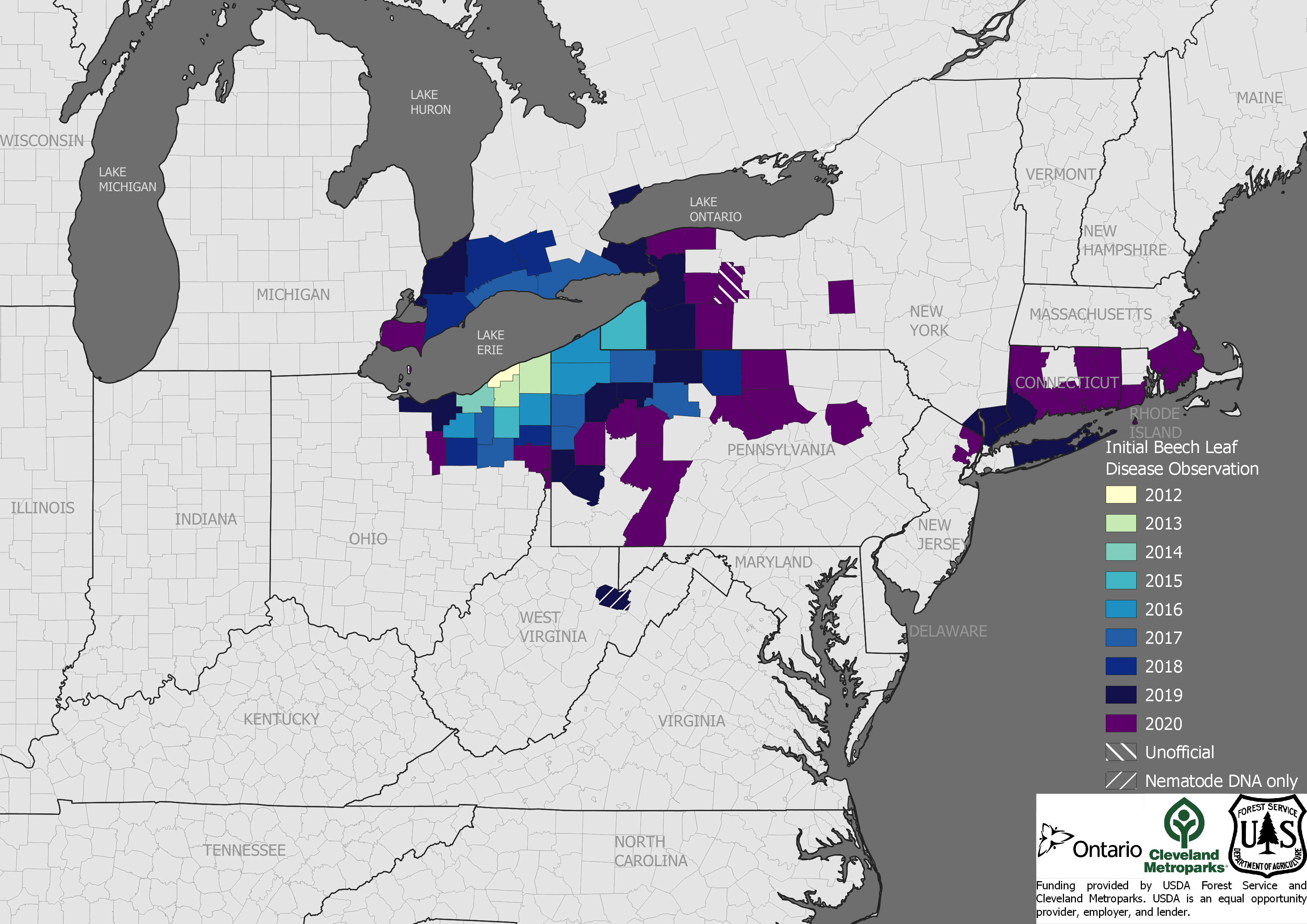
On the first day of winter, Daniel Volk, Forest Health Project Coordinator for Cleveland (OH) Metroparks reported that a coordinated survey has confirmed the presence of beech leaf disease link to DMF in four new states — Massachusetts, New Jersey, Rhode Island, and West Virginia. In all, the disease is now known to be established in 71 counties in the US and Canada. Funding was provided by the USFS Forest Health Management “emerging pest” program.
2021 survey efforts will focus on high risk counties adjacent to affected counties.
Cleveland Metroparks has several resources available on its website and will continue to post updated information there as it becomes available.
I posted a blog urging recipients to participate in these searches last June link I hope you will do so again in 2021.
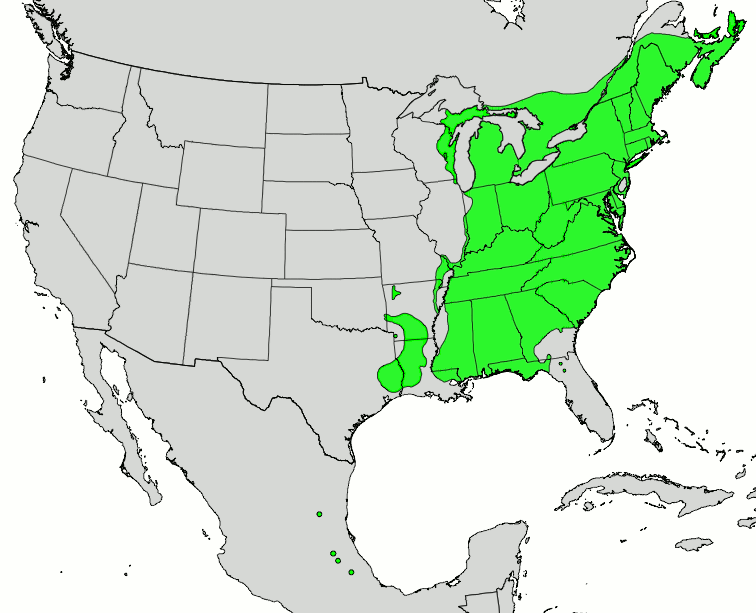
range of American beech
Posted by Faith Campbell
We welcome comments that supplement or correct factual information, suggest new approaches, or promote thoughtful consideration. We post comments that disagree with us — but not those we judge to be not civil or inflammatory.
For a detailed discussion of the policies and practices that have allowed these pests to enter and spread – and that do not promote effective restoration strategies – review the Fading Forests report at http://treeimprovement.utk.edu/FadingForests.htm
In August I blogged that import volumes had crashed … US imports from Asia declined each month from January through June (Mongelluzzo Dec 14; full citations at end of blog). However, the economic rebound over the summer brought a surge in imports that continues. Given our concern about introductions of tree-killing pests, it is not good news that imports from Asia are driving the growth in imports.
US imports from Asia during the first 11 months of 2020 were 2% higher than the figure from the first 11 months of 2019. In November alone, the U.S imported 1.6 million TEUs [twenty-foot equivalent units; a standard measurement that counts incoming volume as though contained in twenty-foot-long containers] worth of goods from Asia. Imports in December are projected to remain high (Mongelluzzo Dec 14; full citation at end of blog).
Imports from Asia were 1.626 million TEU in December – up 29.9% from December 2019 (although still lower than October and August). December imports were pushed by record e-commerce sales and shipments of personal protective equipment (PPE) and medical supplies. For all of 2020, imports from Asia totaled 16.6 million TEU, up 4.1% from 2019 (Mongelluzzo Jan. 19)
This surge in imports – which began in late June — is certain to continue at least for the next two months as retailers ship more merchandise before some factories in Asia close for the Lunar New Year (Mongelluzzo Jan 19).
Because of the history of tree-killing pests introduced from Asia, I have blogged most often about the situation at West Coast ports. However, in 2020 there has been a noticeable shift to East and Gulf Coast ports because of the congestion and delays at West Coast ports. Thus, in November 2020, West Coast ports handled 60.2% of imports from Asia; East Coast ports handled 33.7%; Gulf Coast ports handled 5.7%. The East Coast figure is 30% higher than over the same period in 2019. At New York-New Jersey specifically, the increase was 35.1% (Mongelluzo Dec 16). Imports to Gulf Coast ports continue to rise; Gulf Coast ports handled only 4.8% of total US imports from Asia during the first nine months in 2019 and less than 3% before the widening of the Panama Canal (in 2016) (Angell October 28). Link to blog #203 midNov (In future, goods shipped from Asia across the Arctic Ocean to the U.S. east coast could add to the pest risk confronting our already hard-hit Eastern Deciduous Forest.)
Pacific Coast Ports
According to Mongelluzzo (December 9), the Los Angeles-Long Beach port complex (LA-LB) set records for US imports from Asia in August and again in October. The port complex handled 2.5 million TEU of imports from Asia in the three-month period of August through October. Despite shippers’ concern about delays, LA-LB is expected to continue to handle the bulk of Asian goods entering the country in coming months.
The ports of Los Angeles-Long Beach handle 50% of US imports from Asia. From July 2020 through February 2021, these ports received an average of 791,838 TEU each month – a 23% increase over the 2019 average of 642,000 TEU per month (Mongeluzzo April 2021).
Ports in the Southeast
As reported by Ashe (December 10), several ports in the southeast US are seeing record import volumes caused by retailers’ restocking, e-commerce, and Christmas shopping. November import volumes hit all-time highs in Savannah and Port of Virginia, while they were up year over year in Charleston. The three port authorities say the surge is the result of demand for furniture, bedding, refrigerators, freezers, and air conditioners – reflecting Americans’ current focus on improving their homes. Imports also include artificial Christmas trees (which have been a vector of pests in the past – as has furniture).
offloading cargo at Savannah; photo by F.T. Campbell
The volume of imports into Savannah from all sources surged 34% over the November 2019 volume. Imports from Asia rose 36%. Imports of furniture rose 42% in August and September. “Hardware, home goods, machinery, and appliances from Asia were up double digits,” according to Georgia Port Authority CEO Griff Lynch. Import volumes from Asia rose 36% in Virginia and 32% in Charleston.
Vessels Carry More Containers
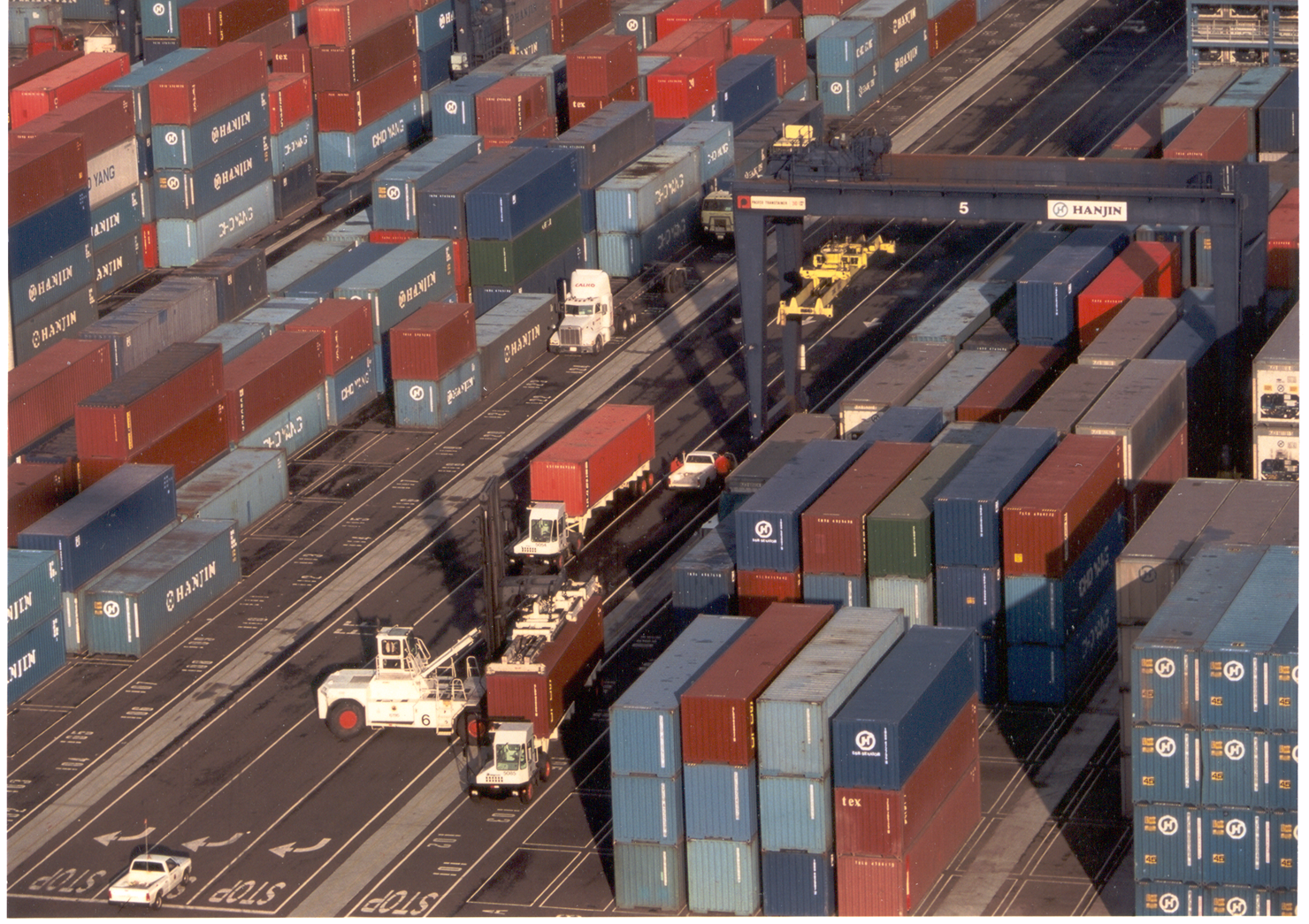
Another threat of increased pest introductions arises from the increasing size of container ships. Increasing proportions of vessels with the capacity to carry more than 10,000 containers are arriving. Since 2010, the proportion of such ships arriving at West Coast ports has risen from 1.1% to 75.5%. The proportion arriving at East Coast ports has grown since the opening of the widened Panama Canal in 2017. The proportion of high-capacity ships visiting East Coast ports has risen from 3% in 2017 to 15% during the first 10 months of 2020. Gulf Coast ports receive few such vessels because the serve a smaller share of the U.S. market. The largest ships serve the trade from Asia primarily (Mongelluzzo Dec. 21, 2020). Of course, arrival of ten to fifteen thousand containers at once surely strains Custom’s inspection staff.
container ship in Savannah; Photo by F.T. Campbell
Imports from Geographic Regions Other Than Asia
Imports (from all sources) through New York and New Jersey ports were 22% percent higher in October 2020 than in October 2019 (Angell November 10). As noted above, most of the higher volume of imports originated in Asia.
According to Journal of Commerce staff (November 30), containerized imports from the Caribbean and Central America grew a negligible 0.1% over the same period last year. Principal ports for this trade are in Florida and along the Gulf Coast, but include Wilmington, DE, and Philadelphia.
According to JOC staff (November 2), containerized cargo import volumes from all regions flowing through the busiest US Gulf Coast ports declined 2.3% in the first seven months of 2020 compared to the same period in 2019.
Non-containerized cargoes — i.e., dry bulk, liquid bulk, roll-on/roll-off (ro-ro), and oversized/heavy-lift freight — are not included in these data. Dry bulk cargo through Houston has been reported to suffer problems in infested dunnage (wood used to brace non-containerized cargo, such as steel beams). Link to blog 173 February 2020
We welcome comments that supplement or correct factual information, suggest new approaches, or promote thoughtful consideration. We post comments that disagree with us — but not those we judge to be not civil or inflammatory.
For a detailed discussion of the policies and practices that have allowed these pests to enter and spread – and that do not promote effective restoration strategies – review the Fading Forests report at http://treeimprovement.utk.edu/FadingForests.htm
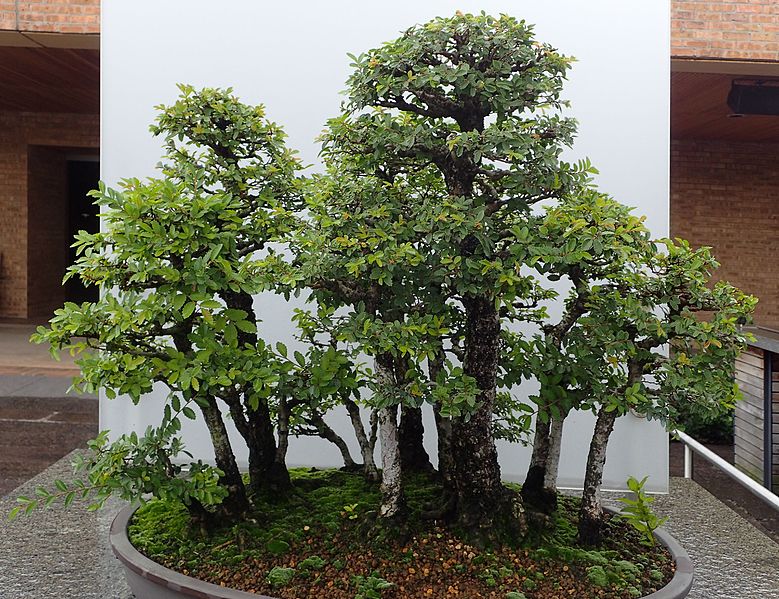
dwarfed Ulmus davidiana; photo by Krzsztof Zianek; Wikipedia Commons
USDA APHIS is seeking public input on a risk assessment that is intended to evaluate the risk of allowing importation of dwarf elm trees (bunjae) from South Korea. Importation of these trees is currently prohibited under APHIS’ authority to require a risk assessment before importation under the NAPPRA program. Upon receiving the Korean request, APHIS must decide whether to maintain the prohibition, or alter it. The risk assessment can be obtained here. Comments are due January 11, 2021.
I urge those with expert knowledge about phytophagous insects, nematodes, and fungal and other pathogens to prepare your own comments to APHIS.
[A year ago, Korea sought permission to export dwarfed maple trees to the U.S. CISP commented on APHIS’ risk assessment at that time; see my blog here. I believe APHIS has not yet decided whether to allow such imports. Many of the same issues apply here.]
After reviewing the risk assessment, I conclude that there are too many high-risk pests to support removing the taxon from the current restrictions. The history of introductions on dwarfed trees in the past supports this conclusion. The most conspicuous is the citrus longhorned beetle (Anoplophora chinensis) – the reason for the original NAPPRA listing – but there have been others, too.
The risk assessment has some strengths. I applaud the assessors for noting in each pest review that since the proposed imports are propagative material, all the pests will arrive on living hosts. The assessment then discusses – briefly! – the mechanisms by which the pest or pathogen could disperse to infest new trees – e.g., flight, rain splash, irrigation water. However, I think the assessment is sometimes too cautious in describing probable invasive risks.
I also find several important weaknesses in both the risk assessment process generally and specific findings.
Weaknesses of the Risk Assessment Process
The assessors do not discuss the potential efficacy of pest-management actions taken by the exporter or by USDA at ports of entry. They outlined production and harvesting practices that they assumed would apply to the exported plants. They warned that the risk assessment finding could not be applied to plants produced or handled other under conditions.
I am troubled by the assessors’ decision not to consider the plants’ ages and sizes. There is evidence that age and size are very important in determining the likelihood of pest presence. Perhaps the decision reflects the assumption that the exported plants would be less than four years old. Still, the assessors should have been transparent about the reasoning behind this decision.
The assessment underestimates “uncertainty”. One manifestation is the decision to provide little information about whether pests or pathogens known to attack several Eurasian species of Ulmus might also attack North American elm species. This gap arises, I believe, from the International Plant Protection Organization (IPPC) and APHIS requirement that risk analysts consider only pest-host relationships described in the literature or inferred from port interception data. I find this narrow approach to be a weakness, given how many unknown pest-host relationships have proved to be highly damaging. This issue arises specifically in the reviews of the nematode Meloinema kerongense and several powdery mildews (Erysiphe kenjiana, E. ulmi and Podosphaera spiralis) – all of which are identified as affecting at least some elm species.
Perhaps the missing information has fewer consequences here, since the NAPPRA process does not require that APHIS prove the pest-host relationship for every pest evaluated in order to justify retaining the prohibition on importation. The well-documented history of detecting the citrus longhorned beetle in artificially dwarfed trees and as a pest of the Ulmus genus provides more than sufficient justification to retain trade restrictions. Still, if APHIS is conducting a formal risk assessment, it should be thorough. Anything else sets an unfortunate precedent.
Finally, in cases when some of the hosts considered are commercial crops – e.g., fruit trees – the assessment often does not include forest trees as economically important resources at risk.
Questions re: some of specific pests in the analysis
3.2.1. Cerambycidae (Coleoptera)
The risk assessment notes the minimal information available regarding several cerambycid beetles present in Korea that are capable of feeding on elm trees. Collectively, these beetles have a wide host range — Acer, Alnus, Citrus, Ficus, Hibiscus, Juglans, Malus, Morus, Quercus, Populus, Prunus, Pyrus, Salix, Sorbus, and Ulmus. The beetles can thrive in the climate present across most of the Lower 48 states (USDA Plant Hardiness Zones 6-9). The risk assessment does mention the risk to urban and forest trees. It also mentions British detection of A. chinensis larvae in twigs of imported maple trees, but for some reason does not mention past U.S. detections and introductions of this beetle in maple bonsai/bunjae trees in Tukwila, Washington. Is this because the detections were 20 years ago? Does the passage of time make the detections any less relevant?
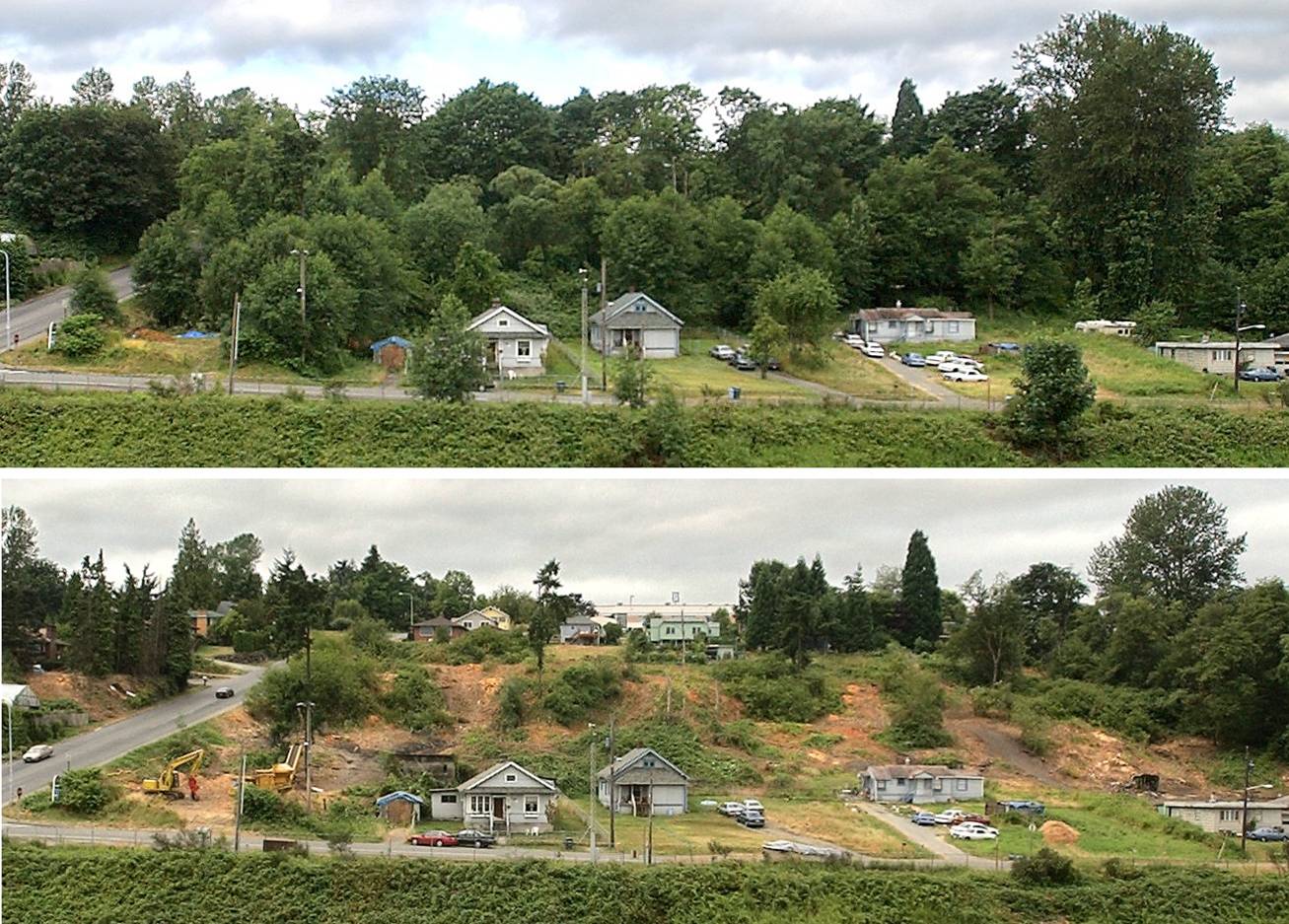
trees removed for CLB eradication in Tukwila, Washington
The analysis of this tortricid moth notes its broad host range, including Abies, Acer, Betula, Fraxinus, Populus, Quercus, Salix, Sorbus, Tilia, and Ulmus. Yet the analysis makes no mention of the potential impact of moth larval feeding on the buds and flowers of forest trees. Nor does it discuss the moth’s impact in Canada, where it is established. The Canadian experience seems quite pertinent and is an obvious omission.
3.2.3. Meloinema kerongens
This nematode is present on elms in Korea. The assessors could find no information on the damage it causes to its hosts there. Again, there is no discussion of possible vulnerability of American elms. Apparently the nematodes are considered likely to survive the importation process, when the trees will be bare root. The assessors say that since the dwarfed trees (once imported) are likely to be planted in pots, that might limit the nematodes’ dispersal into native soil habitats and ability to infect new trees. This finding is troubling because it is likely that nematodes or their eggs could be present in the pots’ soil, and if that soil leaks from the pot or is disposed of during repotting or with other actions, pests could become established in native soil.
3.2.5. Helicobasidium mompa
This fungus causes root rot on multiple genera in 44 plant families. The list of hosts includes Pinus spp., Populus spp., Prunus spp., and Quercus spp. It appears to thrive in a wide climatic range covering virtually the entire Lower 48 states (USDA Plant Hardiness Zones 2-11). The fungus is spread via rain or irrigation water. I note that experience with the Phytophthora genus of brown algae has demonstrated how difficult it can be to control pathogens that spread in rain or irrigation water – in both nurseries and the wild.
Other Potential Pests
I urge experts to review the long list of pests not analyzed—especially the nematodes that inhabit the root and rhizosphere. Analysts did not analyze them because they are ectoparasites; they decided that ectoparasites were unlikely to remain with the dwarfed trees when they are shipped bare-root.
I also wonder whether the mistletoe Viscum album – a parasitic plant – might be spread onto the dwarfed trees by birds perching on branches or shelter structures above the production facilities. Assessors thought that dormant mistletoe on the plants would not be easily detected during visual inspection at the ports.
Posted by Faith Campbell
We welcome comments that supplement or correct factual information, suggest new approaches, or promote thoughtful consideration. We post comments that disagree with us — but not those we judge to be not civil or inflammatory.
For a detailed discussion of the policies and practices that have allowed these pests to enter and spread – and that do not promote effective restoration strategies – review the Fading Forests report at http://treeimprovement.utk.edu/FadingForests.htm
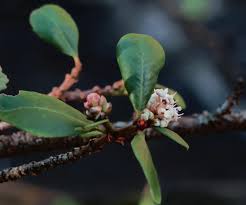
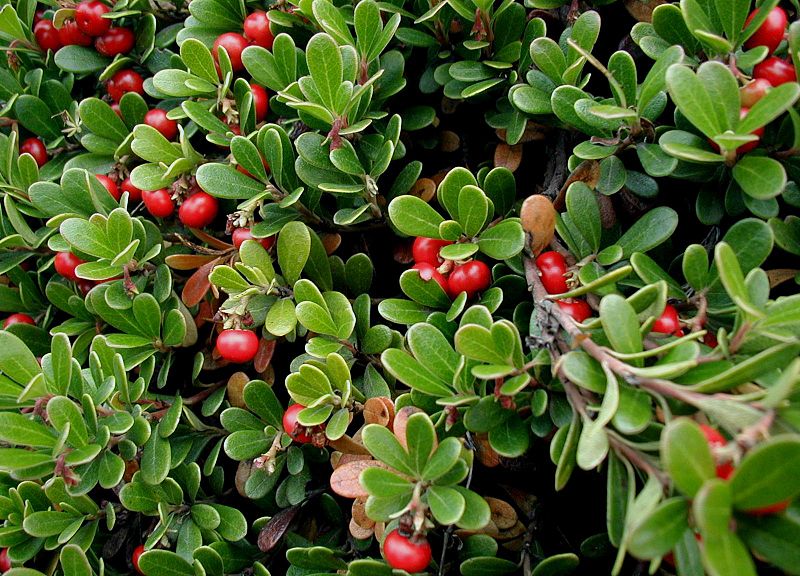
Arctostaphylos uva-ursi (bear berry); photo by Sten Porse, Commons.Wikipedia
The California Department of Food and Agriculture (CDFA) is seeking input on proposed pest ratings for two species of Phytophthora: Phytophthora occultans and Phytophthora quercetorum. Each has the potential for being a serious pest in California and being spread throughout the United States. Therefore it is important to weigh in on this process. The first deadlines for comments is December 18.
These risk rating proposals can be found at https://blogs.cdfa.ca.gov/Section3162/ The website also has instructions for sending comments. This process can be clumsy so, if it doesn’t work, send your comments directly to the webmaster.
In general, the State assigns each potential pest a rating of A, B, or C. Those rated “A” are most likely to cause harm and also most subject to State regulation. Under “B”, the County Agricultural Commissioners have discretion to take regulatory actions. Pests ranked at “C “are not subject to any State enforced regulatory actions. The “C” rating is supposed to be assigned to pests that are widely distributed in the state and are expected to have a “medium” to “low” impact on vegetation (cultivated or wild) in the state.
Phytophthora occultans
Proposed for risk rank “C “. Comments are due December 18th.
Phytophthora occultans is a recently described species found in nurseries in Europe and in some U.S. states (including Oregon). It was recently detected in the San Francisco area of California.
The State proposes to rate Phytophthora occultans as a level “C” pest. This is insufficient. A rank of “B” is more appropriate, for the following reasons.
1) The data presented in the CDFA proposal are too limited to judge the species’ distribution in California. The proposal refers to only “two detections, two years apart, in San Francisco County.” By ranking it “C”, CDFA seems to assume the pathogen is widespread, based on detections in Europe and other states, without U.S. evidence
The available record does not indicate that CDFA made any attempt to determine the extent of the P.occultans infestations — no survey of other plants at the contractor’s nursery or at other nurseries and no consultation with a larger group of stakeholders.
2) CDFA limits discussion of possible impacts to hosts listed in the literature –which belong to multiple plant families. It makes no mention that additional hosts are likely to be discovered (as has often happened with regard to the host ranges of other pathogens in the Phytophthora genus). If the host range expands, as I expect it will, the impact to restoration activities, rare plants, wildlands and nurseries is more likely to be significant, not medium to low.
Furthermore, several of the known host species are congeners of species that are federally listed as endangered or threatened, i.e., species in the genera Ceanothus and Arctostaphylos. I think it is highly unwise to disregard in risk assessments the probability that listed species will prove to be hosts.
In conclusion, please submit comments to California Department of Food and Agriculture urging it to assign a risk rating of “B” to Phytophthora occultans.
Instructions are contained in the proposal. If this process doesn’t work (sometimes it is clumsy), send your comments directly to the webmaster.
Over the past 5 years, P. quercetorum has been detected in association with oak trees, primarily coast live oak (Quercus agrifolia), in four counties in California, two in the Central Valley (Fresno, Sacramento), two on either side of the San Francisco Bay (Alameda, San Francisco). There have been no interceptions of the species by CDFA border inspectors. The species had earlier been associated with oak roots and rhizosphere soil of oak forests in the eastern and north central US. Its pathogenicity is said to be unknown – and difficult to separate from impacts of other, often co-occuring Phytophthoras. CDFA assigns a rank of “high” with regard to economic impact, although it says there are no reports quantifying economic losses in plant production facilities.
CDFA believes that the species is likely to be able to establish wherever its hosts can grow (a rank of “high”). Hosts include red maple (Acer rubrum), English ivy (Hedera helix), several eastern oaks, and a second California oak, interior live oak (Q. wislizeni). CDFA assigns this a rank of “moderate” host range.
The environmental impact is ranked as “high” since the pest could lower biodiversity, disrupt natural communities, or change ecosystem processes; and the pest significantly impacts cultural practices, home/urban gardening or ornamental plantings.
The overall ranking for the “Consequences of Introduction” is “high”.
However, the recommended ranking is “C”, which – again – means the pest is not subject to any State enforced regulatory actions. “C” rated pests are widely distributed in the state and are expected to have a “medium” to “low” impact on vegetation (cultivated or wild) in the state.
Why would CDFA recommend “no action” for yet another Phytophthora species that is known to attack two of the state’s most ecologically important oaks and possibly many more species? Even when the exact impacts are unclear … Especially when the principal means of spread is planting trees in restoration areas – a deliberate human action.
According to the USDA Forest Service, coast live oak (Quercus agrifolia) is a conspicuous tree in lower-elevation oak woodlands of California, which collectively occupy about 10 million. It is co-dominant in the southern oak woodlands. CLO trees generally occur on mesic sites such as north slopes, alluvial terraces, canyon bottoms, or upper streambanks. Coast live oak woodlands are some of the most important habitats to wildlife in California; they provide habitat for black bear, black-tailed deer, rodents and lagomorphs, and various upland game and nongame birds – including those that feed on acorns and cavity nesters. The birds including the federally endangered least Bell’s vireo and least tern.
Coast live oak is more fire resistant than other California oak species.
Coast live oak is favored for use in rehabilitation projects throughout its range. It is used in watershed improvement, restoration, and wildlife habitat rehabilitation projects.
CLO is already under pressure by predation by deer and cattle; sudden oak death (SOD; causal agent Phytophthora ramorum); goldspotted oak borer (GSOB – Agrilus auroguttatus); and sometimes the polyphagous shot hole borer (PSHB; Euwallaceawhitfordiodendrus) and its associated Fusarium fungus. [These three non-native organisms are described here.]
range of Q. wislizeni; USDA Forest Service map
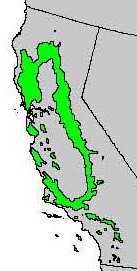
According to the USDA Forest Service, interior live oak (Quercus wislizeni) occurs over about 16% of California’s landscape, especially in the Inner Coast Ranges, the foothills of the southern Cascade Range, and the Sierra Nevada. Among California’s red oaks, interior live oak has the highest tolerance for xeric conditions. It usually dominates the “scrub” or “live oak” chaparral vegetation types in the Inner Coast Ranges and the Sierra Nevada.
CNPS Calscape lists several insects associated with the species.
Posted by Faith Campbell
We welcome comments that supplement or correct factual information, suggest new approaches, or promote thoughtful consideration. We post comments that disagree with us — but not those we judge to be not civil or inflammatory.
For a detailed discussion of the policies and practices that have allowed these pests to enter and spread – and that do not promote effective restoration strategies – review the Fading Forests report at http://treeimprovement.utk.edu/FadingForests.htm
As we know, the SOD pathogen Phytophthora ramorum infects more than 100 plant species [APHIS host list posted here]. Some are killed, some not. Some support production of spores (=sporulation), and thus promote spread of the disease – either in nurseries and plantings, or in the wild. Conditions under which P. ramorum infects specific plant species also varies.
In both the ornamental plant industry and natural environments, transmission is driven mostly by foliar hosts.
Matteo Garbelotto and colleagues have carried out studies aimed at improving our understanding of the differences in host-pathogen interactions, and their meaning vis a vis persistence and spread of the disease – especially in wildland situations. The experiments were carried out five or more years ago, funded by the Farm bill Section 7721 funding. See the full reference at the end of this blog.
The team ranked 25 ornamental plant species representing ten families for susceptibility to P. ramorum and infectivity (spore production). They also tested potential differences among three of the genetic lineages of the pathogen—NA1 (prevalent in U.S. forests), NA2 (found in some nurseries in Pacific coast states), and EU1 (found in nurseries and – since 2015 – in some wildland forests in Oregon). The team also studied the effect of temperature on infectibility. Their goal was to help focus regulations so they will be more effective.
The studies clearly show that the relationship between P. ramorum and various hosts is complex – both susceptibility and infectibility vary depending on the host species, pathogen genetic lineage, and environmental conditions, especially temperature. Results of testing of leaves for the presence of the pathogen were affected by such experimental choices as the concentration of zoospores, temperature, plant host, pathogen genotype, and by the interaction between host and pathogen genotype. Stem results were mostly affected by host and host-pathogen genotype interaction.
Hosts bearing the most severe infections do not always support the highest levels of sporulation, so they are not necessarily the most likely to spread the disease.
Regulators also cannot always generalize re: the pathogen’s impact on plant hosts based on the hosts’ taxonomic relationship. Results were fairly similar for congeneric species within the genera Rosa, Prunus, and Syringa, but quite different for species within the genera Ilex, Gaultheria, and Osmanthus.
It is clear that basing regulatory or best management practices on any one pathogen-host-environment relationship is likely to lead to failure, leaving our forests inadequately protected
The findings that pertain most directly to early detection of infections and those that otherwise promote spread of the pathogen are my focus here.
Hosts that Support Sporulation / Spread of Disease
At least five host species are much more infectious than Rhododendron catawbiense. Hosts that support the highest levels of sporulation were Syringa vulgaris, Hamamelis intermedia, and Syringa meyeri. Hosts that support medium-high levels of sporulation were Rosa gymnocarpa and Syringa pubescens subsp. patula.
Two of the Syringa species support high levels of sporulation, but rank low on overall susceptibility. Rosa gymnocarpa ranked fourth for levels of sporulation, but only fifteenth for overall susceptibility. At least six other species join this group of taxa that are highly infectious without displaying noticeable symptoms. Note than none of these top disease drivers is included in the so-called “filthy five” genera which are the focus of federal and state detection efforts. These genera are Rhododendron spp., Camellia spp., Viburnum spp., Pieris spp., and Kalmia spp.
One of the “filthy five” is Rhododendron catawbiense. It is often used as a standard against which to compare other species’ vulnerability. R. catawbiense supports a somewhat lower level of sporulation than do the species listed in the preceding paragraph. Again, disease severity is not a reliable cue to the likelihood of supporting sporulation and disease spread. Thus, the Hamamelis intermedia was the only species that scored high for both sporulation and susceptibility.
Temperatures Affect Infection Rates
A temperature of 20°C [68o F] was found to be ideal for maximum sporulation by all three genotypes. However, the NA1 genotype was a relatively good sporulator at 12oC [53oF]. The NA2 genotype sporulates prolifically at 25°C [77oF], but produces fewer sporangia than the other two genotypes at 12oC. These findings suggest which genotype might pose a greater risk in warmer or cooler regions than those supporting the current wildland infestations in California and Oregon. Thus, if NA2 spreads via the nursery trade to warmer regions, such as the area of the Southeast identified by various risk maps developed in the past [See maps on pages 14 – 16 in chapter 5 of Fading forests III, available here], it might pose a higher risk. This discovery intensifies concern arising from the fact that many of the P. ramorum-infected plants shipped to Indiana – and presumably other eastern states – in 2019 were of the NA2 lineage. States that received infected plants in 2019 included Alabama, Arkansas, Kentucky, Missouri, North Carolina, Tennessee, Virginia, and West Virginia.
Considering individual host species, Gaultheria shallon, R. catawbiense, Osmathus delayayi and Hamamelis intermedia supported good sporulation at the higher temperatures whereas Laurus nobilis, Syringa vulgaris, and Magnolia stellata supported better sporulation in cooler climates. Note that H. intermedia and S. vulgaris support prolific sporulation; the latter is a “symptomless superspreader”.
Garbelotto et al. note that Magnolia stellata is both highly susceptible and highly infectious at 12°C and thus able to spread the infection in colder areas. This advice to limit use of this species in cooler areas runs counter to horticultural experts’ guidance to plant this shrub in USDA Hardiness Zones 4–9 – which include virtually all the lower 48 except the most northern parts of Montana, North Dakota, and Minnesota. Clearly, star magnolia is a popular plant in colder regions. At the other end of the spectrum, Gaultheria shallon, Hamamelis intermedia, and Mahonia aquifolia were both highly susceptible and infectious at 25 °C, thus their use should be limited in warmer areas. All three include warm regions in their native ranges.
Early Detection
There are two ways to carry out early detection surveys.
(1) The first is detection of infection in plants themselves. Garbelotto et al. determined that 14 plant species are highly or moderately susceptible to infection even with relatively limited inoculum sources. Intense monitoring of these species would be likely to detect new infestations. Three of the highly susceptiblespecies, namely Syringa meyeri, Syringa pubescens subsp. patula and Hamamelis intermedia, are potentially more susceptible than R. catawbiense.
Hamamelis x intermedia ‘Angelly’ 01.JPG Wikimedia Commons
Based on the relative ease of pathogen re-isolation from the following host species after they had been inoculated at low levels, Syringa meyeri, Syringa pubescens subsp. patula, Hamamelis intermedia, Syringa vulgaris, Osmanthus delavayi, and Magnolia grandiflora indicated that a larger number of plants in the production facility had become infected.
(2) A second approach to early detection monitoring would be to focus on those host taxa able to support the most robust sporulation when infected by low levels of inoculum. This approach emphasizes curtailing spread.
As I noted above, Garbelotto et al. conclude that five species could spur significantly faster disease spread due to higher transmission rates coupled with higher susceptibility rates. These five species are Syringa vulgaris, S. meyeri, and S. pubescens subsp. patula; Hamamelis intermedia; and Rosa gymnocarpa. Note than none of these disease drivers is included in the so-called “filthy five” genera on which regulators focus now detection efforts.
Several species appeared less diseased, but supported more vigorous sporulation (e.g., Syringa vulgaris,S. pubescens subsp. patula and Rosa gymnocarpa). Others were more diseased but supported less sporulation (e.g., Prunus laurocerasus and Prunus lusitanica). Therefore, nursery managers and regulators should not rely on visual assessment of disease intensity to judge spread risk.
Other Information
Comparing the three genotypes, EU1 was most aggressive in terms of disease incidence at both low and high inoculum loads. At low levels of inoculum, NA1 lineage was comparable in terms of disease severity.
However, at higher inoculum loads NA1 was clearly the most infectious based on the number of sporangia produced on infected hosts. Garbelotto et al. conclude that the co-mingling of the EU1 and NA1 lineages in Oregon forests might result in a highly destructive forest disease, as both virulence and transmission potential would be maximized. There is the further risk that the presence of the two genetic lineages, which have different mating types, might enable sexual reproduction/ genetic exchange between the two lineages.
Sources
Matteo Garbelotto, M., D. Schmidt, T. Popenuck. 2020. Pathogenicity and infectivity of Phytophthora ramorum vary depending on host species, infected plant part, inoculum potential, pathogen genotype, and temperature. Plant Pathology 2020;00.1
We welcome comments that supplement or correct factual information, suggest new approaches, or promote thoughtful consideration. We post comments that disagree with us — but not those we judge to be not civil or inflammatory.
For a detailed discussion of the policies and practices that have allowed these pests to enter and spread – and that do not promote effective restoration strategies – review the Fading Forests report at http://treeimprovement.utk.edu/FadingForests.htm
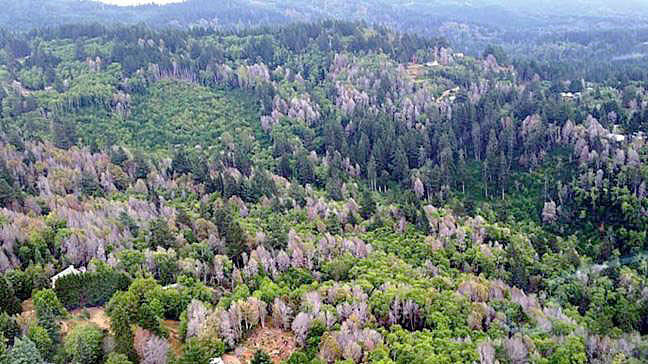
dead tanoak killed by P. ramorum in Oregon; photo courtesy of Oregon Department of Forestry
Stunning 2019 Nursery Outbreak – Continuing Story
I have blogged often about the sudden oak death pathogen Phytophthora ramorum. The most recent blogs have focused on last year’s episode in which infected plants were sent to retail nurseries in many states. Indeed, the 2019 outbreak led to the largest trace-forward investigation for the USDA APHIS’ Phytophthora ramorum program in a single year for more than a decade. A year later, much is still unclear. For example, based on reports last year, I told you that 18 states had received positive plants. APHIS now says it was 14.
In response to states’ requests, APHIS issued a “Hotwash Report” (described in the June 2020 newsletter of the California Oak Mortality Task Force (COMTF); see source list at the end of the blog for the url). The “Hotwash Report” says APHIS traced the infected plants back to two nurseries, but I have obtained information about efforts at only one – in Washington state – and even that information is not as explicit as I think should be. In the April COMTF newsletter, the Washington State Department of Agriculture reports only that compliance surveys at one wholesale shipping nursery would be more intense than usual. I believe the second nursery implicated in the event is in British Columbia, but the Canadian Food Inspection Agency has said it saw no evidence that a Canadian nursery had shipped infected plants to the U.S.
Indiana officials reported (Press et al.) that the infected plants received in that state were of the NA2 clonal lineage. This is the first report of the NA2 lineage outside British Columbia, Washington, and California and is thus especially significant. The outbreak caused Indiana authorities to ordered destruction of more than 6,100 rhododendron plants at retail outlets in Indiana. (April COMTF newsletter)
According to the June 2020 COMTF newsletter, APHIS revised its Phytophthora ramorum Domestic Regulatory Program Manual (available here). APHIS also reviewed the protocol governing responses to detection of P. ramorum in retail nurseries (available here). The agency also plans to carry out a full program review but no timeline has been announced.
It is not clear to me whether these actions satisfy the states or – most importantly – address the reasons why such a large breakout of nursery infestations escaped current regulatory safeguards.
APHIS Slow Walks a Revised Host List
Meanwhile, carrying out a promise made in May 2019 when APHIS revised the SOD regulations, APHIS has posted a revised list of officially recognized P. ramorum hosts (available here). Finally! The new list replaces one from 2013.
The new list recognizes only one new species (Gaultheria procumbens, eastern teaberry) as a proven host, based on completion of Koch’s postulates. (The scientific paper was published five years ago!) So far, APHIS would only recognize a host after Koch’s postulates were completed. But the agency has been unwilling to pay for the experimental work required.
That situation might be changing: APHIS says it is reviewing scientific publications and ongoing research. The agency also invites scientists to contact the national program manager regarding plant taxa that they believe should be added to the regulated plant taxa list.
Meanwhile, we know that scientists have completed Koch’s postulates on several new hosts: Brisbane box, Lophostemon confertus, taken from samples of street trees dying in central Sausalito, Marin Co., California (COMTF June newsletter); and seven species of Arctostaphylos (manzanita) (COMTF April newsletter). So far, there’s no word from APHIS as to if or when it might act on these.
Nursery Situation in Individual States
California
Inspections under various federal and state regulatory requirements have detected infected plants in five nurseries (COMTF June newsletter). Two are in counties with widespread infestations that ship only within the state. Infected plants were Camellia and Loropetalum (COMTF April newsletter). Three other nurseries, also that ship within the state, tested positive only in previous years. Trace investigations completed at four of these nurseries by June had detected no additional positive plants. (COMTF June newsletter)
Oregon
Western Oregon has a climate that favors P. ramorum. One result is intensification and spread of the forest infestation (see below); another is a perpetual problem with infected nurseries.
In fall 2019, Oregon Department of Agriculture detected positive plants and soil at an interstate shipper. The plants were destroyed. Trace-back detected no further positive detections. The areas with infested soil were taped off until authorities can carry out steaming to decontaminate (COMTF April newsletter).
Meanwhile, trace-back from a previously identified retail location led to a second commercial interstate shipper. Camellia, Pieris, and Rhododendron plants tested positive, along with three soil samples and one groundwater sample. This was the first detection for this wholesale location (COMTF April newsletter).
Then, a routine inspection detected P. ramorum at a third interstate shipper in early March 2020. As of April, seven Rhododendron plants tested positive. This was also the first detection at this particular nursery (COMTF April newsletter).
Meanwhile, the spring compliance surveys at 10 Oregon nurseries that ship interstate found no P. ramorum (COMTF October newsletter).
In August, Oregon Department of Agriculture conducted soil steaming at three nurseries that previously tested positive. The action was successful at two but not at the third due to irrigation issues. APHIS and ODA are working with the nursery to create an enhanced mitigation plan focusing on irrigation at the nursery (COMTF October newsletter).
However, trouble continues. In July, a North Carolina nursery reported positive Rhododendron plants that had been purchased from an Oregon nursery. Traceback detected infected Rhododendron plants at the site. Further tracebacks have been triggered at the locations where this material was purchased – apparently yet another nursery. The nursery is undergoing the final assessment to sign a federal compliance agreement and will be added to the list of nurseries sampled by ODA in fall (COMTF October newsletter).
Washington
Washington officials continue to detect P. ramorum in water bodies that have proved difficult to trace back to a plant source. Positive water samples were collected again from the pond at the botanic garden in Kitsap County – as has been true for most years since 2015. Despite the continuing presence of the pathogen in the pond, authorities have not been able to find infected plants in recent years, including in 2020.
Authorities also detected a water-positive at a nursery participating in the P. ramorum compliance program. They have scheduled additional vegetation and water sampling (COMTF April newsletter). It is not stated whether this is the nursery apparently responsible for the 2019 spread event.
A third positive water sample was collected on a creek in Snohomish County. The state Department of Agriculture plans to follow up with two nurseries in the drainage. One had previously tested positive (COMTF April newsletter).
In June, the state conducted a trace-forward investigation on plants from a positive out-of-state nursery. Most plants had been sold at the retail level and were untraceable. However, 37 Rhododendron planted in several residential locations were sampled; six plants at four sites were positive. The Confirmed Residential Protocol has been enacted at all four locations (COMTF August 2020). Authorities also treated the soil at two of the planting sites (COMTF October newsletter).
The Risk of New Phytophthora Introductions Is Dire
The COMTF June newsletter summarizes the findings of studies by European forest pathologists. As I reported in an earlier blog, European researcher have identified more than100 previously unknown Phytophthora species through intensive surveys conducted during 2013 – 2019 in natural ecosystems of Japan, Taiwan, Vietnam, Indonesia, Chile, Nicaragua, Panama, Curacao, Egypt and eight European countries. Overall, 13,242 isolates were obtained, which could be assigned to 65 known and 101 previously unknown species. Two of the most damaging – P. cinnamomi and P. ramorum – are most likely native to Southeast Asia. The scientists recommend extensive host-range testing of forest tree and horticultural crop species to assess the potential threat posed by the import of living plants from Southeast Asia. Several presentations and factsheets with further information may be found here. https://www.ponteproject.eu/
Early in the year, I attempted to persuade APHIS to begin studies of possible hosts’ vulnerability, but I was told that APHIS does not do research. I also approached the Agriculture Research Service and USDA Forest Service. Perhaps academic scientist could obtain funding to carry out such studies through grants funded by the Plant Pest and Disease Management and Disaster Prevention Programs (under Section 7721 of the Plant Protection Act) or National Institute of Food and Agriculture.
Wildland Infestations – Threat to native plants; interactions with fire
The COMTF April 2020 newsletter reports the growing threat to manzanitas from P. ramorum. The genus Arctostaphylos includes more than 100 species of evergreen shrubs and small trees. Nearly half are classified as rare, threatened, or endangered. The center of diversity is in the San Francisco area – which overlaps with the area intensely infested by P. ramorum. At least 18 manzanita species support the pathogen. Koch’s postulates have been completed on seven of the most recently detected hosts, and are under way for two others. I am grateful to the California Department of Food and Agriculture for carrying out these studies; without them, APHIS would not recognize the plants’ host status. (Despite requiring completion of Koch’s postulates, APHIS does not fund these studies.)
A study of the interaction between P. ramorum and fire in California (October COMTF newsletter and Simler-Williamson et al.) found that frequently-burned forests were less likely to be invaded by the pathogen, had lower incidence of host infection, and lower occurrence and density of epidemiologically-significant hosts. The authors think that the fire-caused loss of tall, mature California bay laurel trees might temporarily dampen pathogen transmission and “release” susceptible species from significant inoculum pressure.
The June COMTF newsletter reports that the forest infestation in Oregon continues to spread. During spring 2020, Oregon detected 15 new P. ramorum infestations at or beyond the Oregon Generally Infested Area (GIA). The October newsletter reports that 38 stream drainages both inside and outside the SOD quarantine area were baited, and one at the northern boundary of the quarantine area was positive for P. ramorum. The Oregon Department of Forestry installed additional stream baits in the drainage to pinpoint the infestation, and plans a stream survey for the area. Planned eradication efforts have been impeded by funding cuts caused by Covid-19-related falls in tax receipts.
Posted by Faith Campbell
We welcome comments that supplement or correct factual information, suggest new approaches, or promote thoughtful consideration. We post comments that disagree with us — but not those we judge to be not civil or inflammatory.
For a detailed discussion of the policies and practices that have allowed these pests to enter and spread – and that do not promote effective restoration strategies – review the Fading Forests report at http://treeimprovement.utk.edu/FadingForests.htm
Press, C.; Fieland, V.; Creswell, T.; Bonkowski, J.; Miles, L. and Grünwald, N.J. 2020 (First Look). First report of the NA2 clonal lineage of Phytophthora ramorum in Indiana. Plant Disease. https://doi.org/10.1094/PDIS-12-19-2543-PDN.
Simler-Williamson, A.B.; Metz, M.R.; Frangioso, K.M. and Rizzo, D.M. 2020. Wildfire alters the disturbance impacts of an emerging forest disease via changes to host occurrence and demographic structure. Journal of Ecology. Early View. https://doi.org/10.1111/1365-2745.13495
Port of Mobile, Alabama Photo by Port of Mobile Authority
In August and September I blogged about the rapid increase in volumes of imports from Asia, especially China, in 2020. At the time, the information available to me focused on the Pacific coast ports, especially Long Beach and Los Angeles.
In the earlier blogs, I mentioned three concerns:
1. Had the collapse in trade and travel during spring 2020 so reduced user fees that Department of Homeland Security Bureau of Customs and Border Protection (CBP) had to furlough Agriculture Quarantine Inspectors? AQI inspections provide important incentives for importers to follow U.S. and international rules to reduce the risk that pests will be present in imports, for example, in wood packaging.
2. The list of imports from China in the first half of 2020 includes $1 billion worth of nursery stock. This is down about 7% from 2019. However, from the perspective of preventing plant diseases and pests, these imports continue to be high risk and are still not adequately addressed by U.S. policy.
3. Other Asian regions are gaining in import share. Thus we can expect to see more pests arriving from countries other than China, like Vietnam.
Cutbacks in Numbers of Inspectors?
CBP staff have told me that they are shifting AQI inspectors from covering incoming passengers – which are still far fewer than before the Pandemic – to inspecting cargo. By doing so, CBP has avoided cutting back on the total number of inspections of imported goods and associated wood packaging.
This is fortunate since Congress has not passed a new Covid-19 financing bill that might have included an increase in the appropriation for DHS CBP. The Continuing Resolution currently in effect funds the government only until December 11. So we have another chance to ask for an increase in appropriated funds for CBP (and APHIS!) for the remainder of Fiscal Year 2021 (which ends on October 1, 2021).
Volumes of Imports from Asia – Especially China
As I reported in the earlier blog, while U.S. imports from China declined significantly in 2019 and early 2020 compared to earlier years, by the summer imports had rebounded — more than doubled (by value) between March and July.
Shifts in U.S. Ports
According to the Journal of Commerce, there is a gradual shift away from the twin ports of Los Angeles and Long Beach in the proportion of imported goods entering the country. LA-LB handled 37.7% of the loaded twenty-foot equivalent containers (TEUs) entering the United States in 2018. This fell to 33.5% in July 2020. The initial reason was a decrease in imports from East Asia (including China, Hong Kong, Japan, South Korea, and Taiwan) compared to Southeast Asia, Europe, then South America and, finally, South Asia (primarily India).
Other source regions – e.g., the Caribbean, Middle East, Pacific, Africa, and Atlantic – were all below 2% of total numbers of TEU in all three years, and changed minimally over this period.
Another reason for the shift in ports utilized by importers is congestion and delays at North American Pacific coast ports, especially Los Angeles-Long Beach. U.S. imports from Asia moving through LA-LB increased 22% in both September and August from the same months last year – 828,880 TEU in September after 832,210 TEU in August.
Congestion is also a problem at the Canadian ports of Vancouver and Prince Rupert – which have actually seen small decreases in numbers of incoming containers.
One result is a small but significant shift to Gulf Coast ports, which have become more accessible through the widening of the Panama Canal in 2016. Before the Canal was widened, these ports handled less than 3% of total US imports from Asia. In the first nine months of 2020, US Gulf ports handled 608,387 TEU from Asia – or 5.2% of total US imports from Asia. This was a 5% increase from the same period last year.
These ports, stretching from Houston to Tampa, benefit from easy and relatively cheap rail transport to inland U.S. and even Canadian cities. Another factor is the heavy presence of Walmart – which has major distribution centers in Mobile and Houston.
The Gulf coast ports are expected to expand their importance as gateways for Asian imports as ocean carriers add more capacity between the two regions and ports upgrade and expand. New Orleans and Houston plan major expansions. Port Tampa Bay notes its proximity to markets around the Southeast. Already, import volumes into Tampa during the first nine months of 2020 were nearly double the prior year’s level. Tampa hopes to double its capacity over the next five years.
U.S. imports from Asia in October were 22.6% higher than a year ago. Imports through the East and Gulf coast ports jumped 14.6% and 48.4% from September 2020. Houston and Baltimore saw the greatest increases since September. There were also shifts in Pacific ports. Still, the Los Angeles-Long Beach port complex handled 49% of total US imports from Asia in October 2020.
Pest Risks to the Gulf Coast from Southeast Asia
Rising volumes of imports into the Gulf Coast present new opportunities for non-native insects and pathogens. The warm, wet climate of the region might be far more suitable to some insects and pathogens from tropical and subtropical Asia than the dry climate of southern California (except for areas that are irrigated artificially, such as golf courses, parks, and plant nurseries!).
redbay grove killed by laurel wilt; Photo by Scott Cameron
Already, the redbay ambrosia beetle and its associated pathogenic fungus has decimated native redbay and swamp bay trees and now threatens sassafras (see write-up under the “invasive species” tab here.)
Another Southeast Asian ambrosia beetle – the polyphagous shot hole borer with its associated pathogenic fungus – might also find the Gulf Coast states more inviting than southern California. In California, it is causing the greatest damage to trees that are artificially irrigated. Numerous tree species native to or grown in the Gulf states are known hosts, e.g., box elder, sweetgum, and southern magnolia. (PSHB is described under the “invasive species” tab here.) Both ambrosia beetles apparently were introduced via wood packaging material.
Southeast Asia is also the place of origin of other pathogens which – in this case – would more probably be introduced on imported plants rather than wood. These include the numerous species of Phytophthora recently detected in Vietnam.
As this region receives more goods from Asia, and as those goods arrive more rapidly so more likely to arrive alive, it is imperative that all stakeholders increase their vigilance to detect new invaders. And that they join others pressing for improved policies aimed at preventing introductions.
Posted by Faith Campbell
We welcome comments that supplement or correct factual information, suggest new approaches, or promote thoughtful consideration. We post comments that disagree with us — but not those we judge to be not civil or inflammatory.
For a detailed discussion of the policies and practices that have allowed these pests to enter and spread – and that do not promote effective restoration strategies – review the Fading Forests report here.