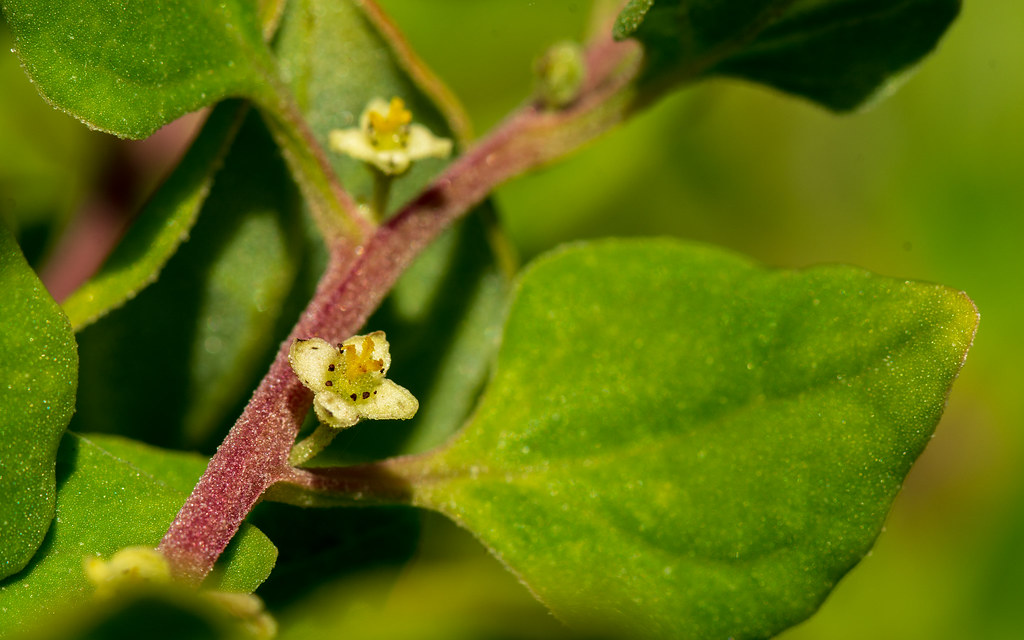
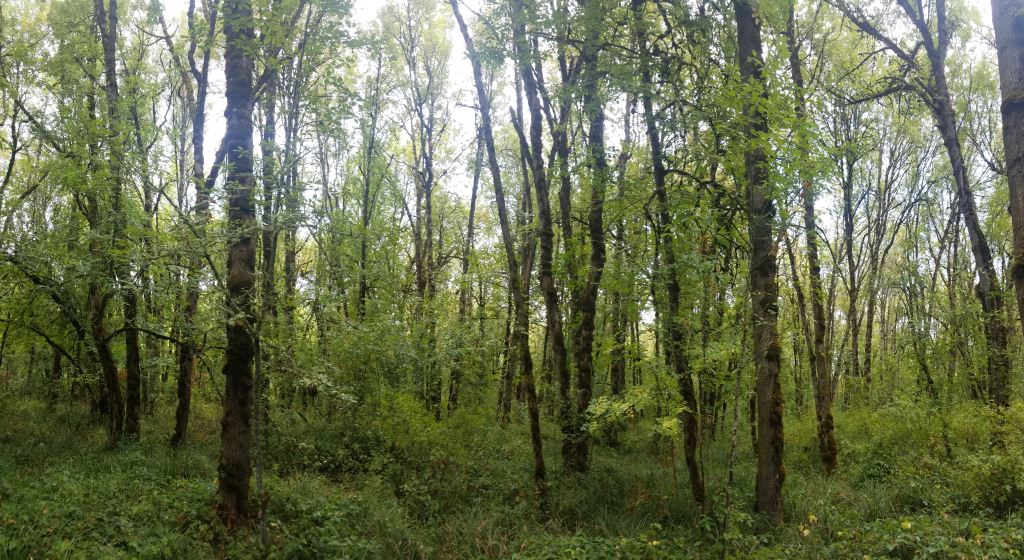
Sakhalin knotweed (Fallopia (Reynoutria) sachalinensis) – an invasive plant widespread in Europe; photo by Katrin Schneider [korina.info] via Wikimedia
There is growing evidence that invasive plants – as distinct from invasive species of animals, microbes, etc. – play a significant role in causing the loss of floristic uniqueness at the local or regional level. I provide full citations of all sources at the end of this blog.
Less Diversity. More Similarity
Several studies show that plant invasions have a bigger impact than extinction in the homogenization of Earth’s flora. A major driver is sheer numbers. Daruet al. point out that 10,138 plant species have become naturalized to a region outside their native ranges while only 1,065 species have gone extinct. Even under a scenario in which all species currently included in IUCN Red List as “threatened” become extinct, non-native plant species naturalizations are by far the stronger contributor to biotic reorganization.
Winter et al. report that in Europe since AD 1500, plant invasions have greatly exceeded extinctions, resulting in increased taxonomic diversity (i.e., species richness) on the Continent but increased taxonomic and phylogenetic similarity among European regions. In other words, floras of individual European countries became phylogenetically and taxonomically impoverished. This situation is likely to worsen in the future because introductions continue.
Winter et al. conclude, more broadly, that a focus on species richness can be misleading because it does not capture the important effects of taxonomic or phylogenetic distinctiveness.
Yanget al. (2021) considered the situation globally. They divided most of Earth’s ice-free land surface into 658 regions. They found that introduction of non-native plants has increased the taxonomic similarity between any two of these regions in 90.7% of the time. Introductions increased phylogenetic similarity in 77.2% of those pairs. Australasia illustrates the situation. The region has a large proportion of endemic species, reflecting its unique evolutionary history and exhibiting high floristic diversity. However, the region has also received large numbers of non-native plants from other regions. The result is that the Australasian flora has lost much of its original uniqueness.
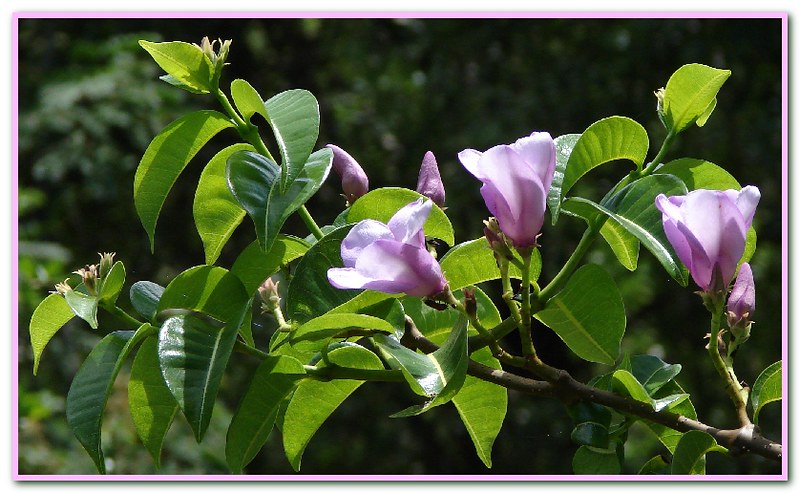
rubbervine (Cryptostegia madagascariensis) – one of the worst invasive plants in Australia; photo by Tatters via Flickr
Introduced plant species rarely cause outright extinction of members of the native flora of the receiving ecosystem – at least at the scale of a continent. Winter et al. found that in Europe, extinction usually occurs to plant species with small numbers that are limited to localized habitats. Often, however, the same species continue to thrive elsewhere on the continent. The “losing” country finds its flora becoming more similar to that of other European countries. It loses some uniqueness because it lost one or more components of its flora. However, for Europe as a whole, there is no loss. The homogenization of the “losing” country’s flora is exacerbated by the fact that more than half of plant species listed as invading a particular European country are from other European regions. Winter et al. say a similar pattern has been found in North America.
The picture is more complex for small isolated ecosystems. Carvallo and Castro (2017), writing about isolated volcanic islands in the southeastern Pacific Ocean, introduction of large numbers of non-native plant species has not caused extinction of native plant species. It has, however, resulted in the homogenization of the islands’ floras.
These authors worry that this reduction in phylogenetic diversity could have detrimental impacts for ecosystem function and ecosystem services. (Interestingly, at the level of order or family rather than species or genus, the combined effects of species introductions and extinctions did not change the islands’ taxonomic diversity. They don’t explicitly say whether that fact might mitigate effects on ecosystem function.)
What is the situation in Hawai`i? The Islands are the “capital” of both extinction and invasion. I know the Hawaiian flora has very high levels of endemism and of endangerment. In addition, naturalized non-native plant taxa constitute up to 54% of the archipelago’s flora (Potter et al. 2023). However, it is probably extremely difficult to distinguish the impacts of introduced plants separate from the impacts of the many non-native animals, e.g., feral hogs.
Extinction by Introduction
It has been reported that invasive species have caused the extinction of at least seven species of plants on the Cape of Good Hope and endangered another 14% (Houreld 2024). Unfortunately, the report doesn’t specify whether the non-native species are plants or animals. Either way, this is a tragedy. I remind you that the Cape Floral Kingdom is Earth’s smallest Plant Kingdom in geographic size (78,555 km2), and extremely important in uniqueness. According to the article in The Washington Post, two-thirds of the 20,400 plant species growing in South Africa are endemic – found nowhere else on Earth.
Nearly a decade ago, Downey and Richardson objected to measuring the impact of introduced plant species by considering only total extinction of native plant species. They complain that this approach fails to recognize that plants experience a long decline before reaching extinction. They divide this decline into six “thresholds”. Downey and Richardson say there is abundant evidence of invasive plants driving native plants along this extinction trajectory. For example, increases in non-native plant cover or density that result in decreased native plant species diversity or richness equates, under their hierarchy, to the native species crossing from the first to second threshold. They note there are also examples of species causing “extinction debts”. That is, the extinction occurs long after the invader is introduced and initiates a native species’ decline. They call for conservationists to intervene earlier in that trajectory.
The Global Assessment on Biodiversity and Ecosystem Services was recently published by the Intergovernmental Science-Policy Platform on Biodiversity and Ecosystem Services. This report notes that there are at least 1,061 invasive plants on Earth. In terrestrial systems, invasive plants are the taxonomic group most frequently reported as having negative impacts, especially in cultivated areas, plus temperate and boreal forests. As I have noted above, non-native plant taxa constitute a particularly high proportion of the flora on islands. The assessment found that the number of non-native plants exceeds the total number of native plants on more than one quarter of the Earth’s islands. However, this report does not distinguish the number of species endangered by plant invasions from the number of species endangered by invasive species of all taxonomic groups.
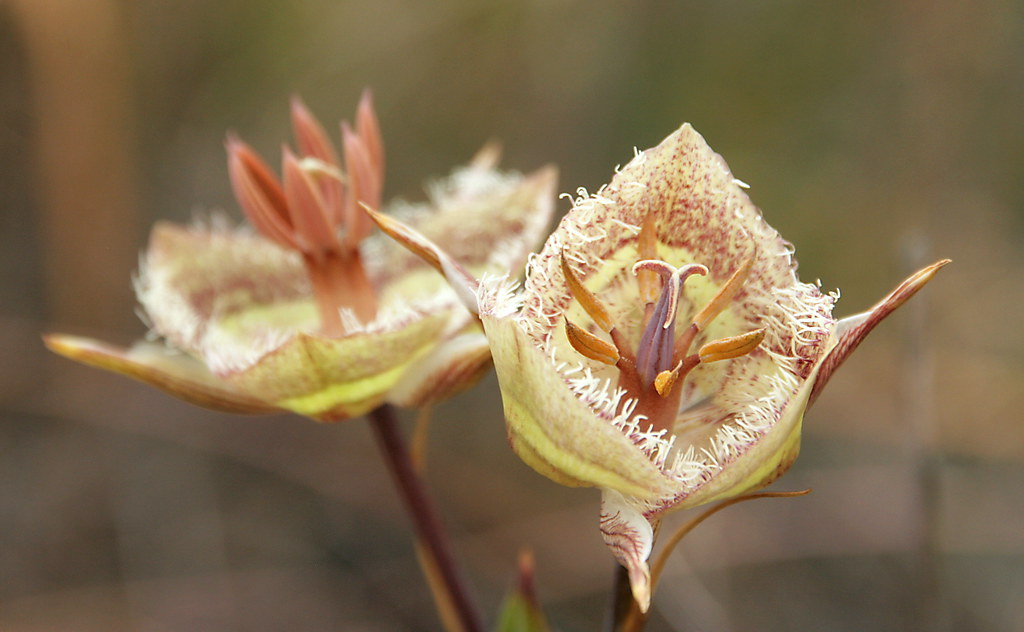
Tiburon mariposa lily (Calochortus tiburnensis) – a federally Threatened species in California; photo by T.J Gehring via Flickr
None of the experts denies the impact of extinction on biodiversity. Extinction represents the loss of phylogenetically and taxonomically unique organisms. This loss is exacerbated if some taxonomic groups are at disproportionately higher risk of extinction. Introduced non-native species compensate for these losses only to a point (Daru et al.). In Europe, Winter et al. found that extinctions usually befall specialized endemic or rare species, often from species-poor families. On the other hand, successful invaders are often ecological generalists with large ranges, often belonging to species-rich families. This results in the pronounced decrease of phylogenetic and taxonomic ß-diversity within and between regions to which the rare species are unique.
All these experts agree that species declines — short of extinction — have severe impacts on ecosystem functions, and even evolution.
Yang et al. emphasize that the rapid and accelerating loss of regional biotic uniqueness changes biotic interactions and species assemblages, with probable impairment of key ecosystem functions. Daru et al. stress that biotic homogenization— declining ß-diversity—reduces trait and phylogenetic differences between regions. Conceding that the consequences of this global biotic reorganization on ecosystems are poorly understood, Daru et al. cite increasing evidence that biotic heterogeneity provides insurance for the maintenance of ecosystem functioning in a time of rapid global change. They assert that declining ß-diversity is a more characteristic feature of the Anthropocene than species loss.
Winter et al. also state that the phylogenetic structure of a species assemblage represents the evolutionary history of its members and reflects the diversity of genetic and thus morphologic, physiologic, and behavioral characteristics. High phylogenetic diversity might enable rapid adaptation to changing environmental conditions.
According to Daru et al., the loss of 14 billion years of evolutionary history has affected some regions particularly. The most disturbed biotas include those of California and Florida; Mesoamerica; the Amazon; the Himalaya-Hengduan region; Southeast Asia; and Southwest Australia. These are regions that experienced spectacular taxonomic radiation over time, and now have both high levels of threat and also species invasion.
Carvallo and Castro, focused on the Pacific islands, call for integrating the two parallel channels of conservation that currently operate separately: those focused on reversing plant extinctions and those focused on reducing invasions. They call for a biogeographical approach that addresses all causes of phylogenetic homogenization.
Tetragonia tetragonoides – the most widespread invasive plant on these Pacific islands; photo by Jake Osborn via Flickr
I believe all these experts, in all their papers, have made the case for such integration world-wide.
Invasive plants’ impact on non-plant species
While I have focused here – and in most of my blogs more broadly — on impacts on wild, native plant communities, it is clear that alterations to floristic communities influence other taxonomic groups. A couple of years ago I summarized findings by Douglas Tallamy and colleagues on what happens to insects – and their predators – when a landscape is dominated by introduced plant species.
In short, domination by non-native plants – whether invasive or just widely planted – suppresses the numbers and diversity of native lepidopteran caterpillars. One study cited in the blog found that 75% of all lepidopteran species were found exclusively on native plant species. Non-native plants in the same genus as native plants often support a similar but depauperate subset of the native lepidopteran community. Tallamy and colleagues conclude that a reduction in the abundance and diversity of insect herbivores will probably cause a concomitant reduction in the insect predators and parasitoids of those herbivores – although few studies have measured this impact beyond spiders, which are generalists. Tallamy focuses on birds.
In the same blog I reviewed publications by Lalk and colleagues, which examined interactions between invasive woody plants and arthropod communities more broadly. They decried the insufficient data about most of these interactions.
A few weeks ago I saw a report of an unexpected impact of invasive plants: roots of beach naupaka [beach cabbage or sea lettuce] (Scaevola sericea) are penetrating sea turtle nests so aggressively that they kill the unhatched turtles. Apparently this is happening at several sites in the Caribbean, where the plant is not native (Houreld 2024). I could find no scientific reports of this phenomenon. One reference noted that a related species (S. taccada) can form large, dense stands that might prevent adult sea turtles’ access to nesting areas (Swensen et al. 2024).
Sources:
Daru, B.H., T.J. Davies, C.G. Willis, E.K. Meineke, A. Ronk, M. Zobel, M. Pärtel, A. Antonelli, and C.C. Davis. 2021. Widespread homogenization of plant communities in the Anthropocene. NATURE COMMUNICATIONS (2021) 12:6983. https://doi.org/10.1038/s41467-021-27186-8
www.nature.com/naturecommunications
Downey, P.O. and D.M. Richardson. 2016. Alien plant invasions and native plant extinctions: a six-threshold framework. AoB Plants, 2016; 8: plw047 DOI: 10.1093/aobpla/plw047; open access, available at http://aobpla.oxfordjournals.org/
Houreld, K. 2024. “Parched Cape Town copes with climate change by cutting down trade.”. The Washington Post. February 29, 2024.
Potter, K.M., C.Giardina, R.F. Hughes, S. Cordell, O. Kuegler, A. Koch, and E. Yuen. 2023. How invaded are Hawaiian forests? Non-native understory tree dominance signals potential canopy replacement. Landsc Ecol https://doi.org/10.1007/s10980-023-01662-6
Yang, Q., P. Weigelt, T.S. Fristoe, Z. Zhang, H. Kreft, A. Stein, H. Seebens, W. Dawson, F. Essl, C. König, B. Lenzner, J. Pergl, R. Pouteau, P. Pyšek, M. Winter, A.L. Ebel, N. Fuentes, E.L.H. Giehl, J. Kartesz, P. Krestov, T. Kukk, M. Nishino, A. Kupriyanov, J.L. Villaseñor, J.J. Wieringa, A. Zeddam, E. Zykova. and M. van Kleunen. 2021. The global loss of floristic uniqueness. NATURE COMMUNICATIONS (2021) 12:7290.
Winter, M., O. Schweiger, S. Klotz, W. Nentwig, P. Andriopoulos, M. Arianoutsou, C. Basnou, P. Delipetrou, V. Didz.iulis, M. Hejdah, P.E. Hulme, P.W. Lambdon, J. Pergl, P. Pys.ek, D.B. Roy, and I. Kuhn. 2009. Plant extinctions and intros lead to phylogenetic and taxonomic homogenization of the European flora PNAS Vol 106 # 51 December 2009
Posted by Faith Campbell
We welcome comments that supplement or correct factual information, suggest new approaches, or promote thoughtful consideration. We post comments that disagree with us — but not those we judge to be not civil or inflammatory.
For a detailed discussion of the policies and practices that have allowed these pests to enter and spread – and that do not promote effective restoration strategies – review the Fading Forests report at http://treeimprovement.utk.edu/FadingForests.htm
spotted lanternfly – target of many projects funded by USDA’s Plant Pest & Disease Management & Disaster Prevention Program; photo by Holly Raguza of Pennsylvania Department of Agriculture
I am belatedly reporting on the forest-pest projects funded by annual grants under the Plant Pest & Disease Management & Disaster Prevention Program ( of the Plant Protection Act). As usual, APHIS funded projects totaling $62.975 million in FY24. In total, 353 projects were funded. These projects represented 70% of the 504 project proposals submitted (the total funding sought was $106 M).
APHIS reserved $11 million for responding to P&P emergencies. I applaud this choice since the agency’s annual appropriation provides only a completely inadequate $1 million (or less) to cover emergencies.
APHIS notes that since initiation of the Plant Pest & Disease Management & Disaster Prevention Program in 2009, it has funded more than 5,500 projects with a total of nearly $870 million.
In FY24 the program funded 30 more projects than the 322 projects funded in FY23. blog 320 The FY24 allocation provides more than $1 million more for goal area 1S — Enhance Plant Pest/Disease Survey (from $14.4 million to $15.7 million). This was balanced by small decreases for the other goal areas: enhancing mitigation capabilities received $13.6 million; inspections at domestic sites important in invasive species’ spread received $6.3 million; pest identification and detection received $5.3 million; and outreach and education received $4.1 million. Projects safeguarding nursery production and those improving pest and disease analysis each received about $2 million.
By my calculation – subject to error! – about $7.5 million went to projects clearly dealing with forest pests [12% of total funding]. This is a welcome increase from FY23 – when funding of such projects reached about $6.5 million (a little over 10%). blog 320 Funding for tree pest projects might be higher. Some $1.9 million is allocated to surveys of grapevines and orchards — hosts of the spotted lanternfly (SLF). However, it is not clear whether these projects are focused on detecting and managing SLF; they might have a much broader goal. If we do include these projects, the total for tree-killing pests rises to $9.4 million — nearly 15% of the total.
Over both FY23 and FY24, the majority of funds went to similar topics: survey and management of sudden oak death in nurseries; surveys for bark beetles, Asian defoliators, and forest pests generally; and outreach programs targetting the spotted lanternfly. In FY24, just under $100,000 paid for efforts to develop tools for rapid detection of laurel wilt link to DMF in avocados – that is, in a crop rather than the natural environment.
No projects addressing tree or forest pests were funded in seven states or territories: Guam, Idaho, Nebraska, New Mexico, Rhode Island, South Dakota, and Utah. This was three fewer states than in FY23. In neither year do I know whether these states submitted proposals in this category that ended up not being funded.
In FY24, spotted lanternfly is by far the pest addressed by the most projects. As noted above, I can’t be precise about the number because of the lack of information about the 23 projects that fund pest surveys of grapes and/or tree crops that are SLF hosts. Eleven projects named SLF specifically. A final project (not included in above) is one funding registration of Verticillium nonalfalfae as a biocontrol for Ailanthus altissima – an invasive tree that is the preferred host of SLF.
The District of Columbia, Kansas, Missouri, and Oklahoma each had one tree pest project funded. In the cases of Kansas and Missouri, the single project was surveys for thousand cankers disease of walnut. Three other states — Iowa, Maryland, and Pennsylvania — also obtained funding to survey for TCD.
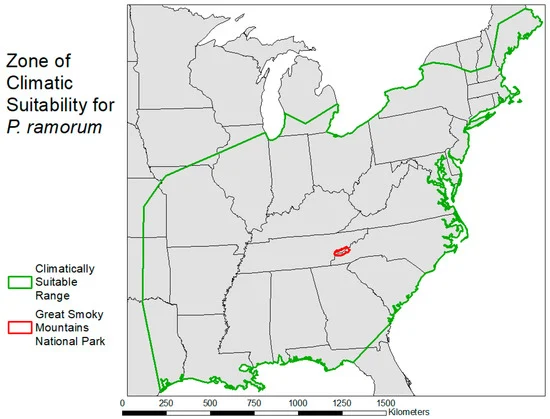
The single Oklahoma project concerned efforts to ensure that the sudden oak death pathogen(Phytopthora ramorum) is not present in nurseries. (An Oklahoma wholesaler was one of the hubs of this pathogen’s spread to 18 states in 2019). Eleven other states were also funded to survey their nurseries for P. ramorum: Alabama, Kentucky, Louisiana, Nevada, North Carolina, Ohio, Pennsylvania, South Carolina, Virginia, and West Virginia. P. ramorum is a “program pest” in 2024. That is, APHIS had designated it as a regulated pest for which the agency wished to fill knowledge gaps about its distribution. I note that last year APHIS published a risk assessment that downplayed the likelihood that P. ramorum would establish in the eastern states. Is APHIS seeking more information to test this conclusion?
In a separate case, Oregon received $76,000 to evaluating the threat to nurseries and forests arising from the presence in the state’s forests of two strains or lineages of P. ramorum that previously had not been extant in the environment of North America.
Another approximately 53 projects fund surveys for tree pests other than spotted lanternfly; these are often fairly general surveys, such as for woodborers or “Asian defoliators”. About ten projects fund management efforts – including evaluation of the efficacy of emerald ash borer biocontrol programs.
Last year I noted that two states – Mississippi and Nevada — had projects to survey the “palm commodity”. Hawai`i joined this group in FY24. The project descriptions don’t specify which pests are the targets. The South American palm weevil (Rhynchophorus palmarum) seems most probable; it is established in far southern California and neighboring Mexico. APHIS prepared a risk assessment on the species in 2012. link? In Hawa`ii, concern probably focuses on the coconut rhinoceros beetle (Oryctes rhinoceros). link? There are other threats to palms, e.g., the red palm weevil (Rhynochophorus ferrugineus), link? and a deadly Fusarium wilt. link?
native palms in the desert at Anza-Borrego, California; photo by F.T. Campbell
California has native palms (Washingtonia filifera); southern states from Texas to at least South Carolina have native palmettos. Of course, many species of palms are important ornamental plants in these states, and dates are raised commercially.
Another “program pest” that I have blogged about in the past is box tree moth. link to blog 287 In FY24 five projects addressed this pest, including surveys and efforts to develop better control tools.
beavertail cactus (Opuntia basilaris) in Anza-Borrego, California; photo by F.T. Campbell
I am pleased by continued funding of projects trying to utilize biocontrol agents to protect two groups of cactus severely threatened by non-native insects: lepidoptera that attack flat-padded prickly pear cacti (Opuntia spp.) link to DMF and the mealybug that attacks columnar cacti of Puerto Rico and the Virgin Islands. link to DMF
vulnerable cactus on St. John, US Virgin Islands; photo by F.T. Campbell
I applaud the decision to fund projects focused on determining the efficacy of biocontrol projects. As noted above, three projects are asking these questions in the case of the emerald ash borer. link to DMF Another project funds production, release, and efficacy evaluation of biocontrol agents targetting Brazilian peppertree in Florida & Texas.
I am also pleased that three projects assist Washington State in its efforts to eradicate the invasion by giant hornets from Asia. link to blogs & Hornet Herald – no detections in 2023 … A company in California also received funding to developing hornet detection tools.
Nineteen projects funded outreach efforts, including continued funding for the “Don’t Move Firewood” program. In addition to those focused on spotted lanternfly, such projects also included other firewood programs, Asian longhorned beetle awareness, and the nursery industry.
I note that while California received funding for 27 projects, none dealt with any of several deadly tree pests extant in the state – goldspotted oak borer, polyphagous and Kuroshio shot hole borers, Mediterranean oak borer, and the palm weevils. Nor did Hawai`i obtain funding to address rapid ohia death. Did no one submit proposals to address any of the many issues impeding management of these killers?
South American palm weevil; photo by Allan Hopkins via Flickr
Posted by Faith Campbell
We welcome comments that supplement or correct factual information, suggest new approaches, or promote thoughtful consideration. We post comments that disagree with us — but not those we judge to be not civil or inflammatory.
For a detailed discussion of the policies and practices that have allowed these pests to enter and spread – and that do not promote effective restoration strategies – review the Fading Forests report at http://treeimprovement.utk.edu/FadingForests.htm
invasion of wild/black mustard Brassica nigra; photo by carlbegge via Flickr
A California state legislator has proposed a bill to expand state efforts to counter invasive species. Should we support it – and others like it in other states?
The bill is Assembly Bill 2827 introduced by Assembly Member (and former Majority Leader) Eloise Reyes of the 50th Assembly District. She represents urban parts of southwestern San Bernardino County, including the cities of Rialto, Colton, and Fontana.
According to media reports, Reyes was prompted to act by the current outbreak of exotic fruit flies, which as of some months ago resulted in detections in 15 California counties.
The bill is much broader than agricultural pests, however. It would find and declare that it is a primary goal of the state to prevent the introduction, and suppress the spread, of invasive species within its borders. I applaud the language of the “findings” section:
(a) Invasive species have the potential to cause extensive damage to California’s natural and working landscapes, native species, agriculture, the public, and economy.
(b) Invasive species can threaten native flora and fauna, disrupt ecosystems, damage critical infrastructure, and result in further loss of biodiversity.
Paragraph (c) cites rising threats associated with increased movement of goods, international travel, and climate change — all said to create conditions that may enhance the survival, reproduction, and spread of these invasive species, posing additional threats to the state.
(d) It is in the best interest of the state to adopt a proactive and coordinated approach to prevent the introduction and spread of invasive species.
California sycamore attacked by invasive shot hole borer; photo by Beatriz Nobua-Behrmann
The bill calls for
The state agencies, in collaboration with relevant stakeholders, to develop and implement pertinent strategies to protect the state’s agriculture, environment, and natural resources.
The state to invest in research, outreach, and education programs to raise awareness and promote responsible practices among residents, industries, and visitors.
State agencies to coordinate efforts with federal, local, and tribal authorities.
However, the bill falls short when it comes to action. Having declared that countering bioinvasion is “a primary goal of the state”, and mandated the above efforts, the bill says only that the California Department of Food and Agriculture (which has responsibility for plant pests) is to allocate funds, if available, to implement and enforce this article. Under this provision, significant action is likely to depend on holding agencies accountable and providing increased funding.
removing coast live oak killed by goldspotted oak borer; photo by F.T. Campbell
Would this proposed legislation make a practical difference? I have often complained that CDFA has not taken action to protect the state’s wonderful flora. For example, CDFA does not regulate firewood to prevent movement of pests within the State. It has not regulated numerous invasive plants or several wood-boring insects. These include the goldspotted oak borer; the polyphagous and Kuroshio shothole borers; and the Mediterranean oak borer.
On the other hand, CDFA is quick to act against pests that might enter the state from elsewhere in the country, e.g., spongy moth (European or Asian), emerald ash borer and spotted lanternfly.
I hope Californians and the several non-governmental organizations focused on invasive species will lobby the legislature to adopt Assembly Bill 2827. I hope further that they will try to identify and secure a source of funds to support the mandated action by CDFA and other agencies responsible for managing the fauna, flora, and other taxa to which invasive species belong.
I applaud Ms. Reyes’ initiative. I hope legislators in other states will consider proposing similar bills.
Posted by Faith Campbell
We welcome comments that supplement or correct factual information, suggest new approaches, or promote thoughtful consideration. We post comments that disagree with us — but not those we judge to be not civil or inflammatory.
For a detailed discussion of the policies and practices that have allowed these pests to enter and spread – and that do not promote effective restoration strategies – review the Fading Forests report at http://treeimprovement.utk.edu/FadingForests.htm
American bullfrog (Lithobates catesbeianus); photo by Will Brown via Wikimedia; one of invasive animals deliberately introduced to Europe in the past
In February 2024 the European Parliament approved legislation outlawing “ecocide” and providing sanctions for environmental crimes. Member states now have two years to enshrine its provisions in national law.
The new rules update the list of environmental crimes adopted in 2008 and enhance the sanctions. The goal is to ensure more effective enforcement. Listed among the offenses are:
the import and use of mercury and fluorinated greenhouse gases,
the import of invasive species,
the illegal depletion of water resources, and
pollution caused by ships.
This action followed an in-depth analysis of the failures of the previous EU environmental directive, first adopted in 2008 (Directive 2008/99/EC). The review found that:
The Directive had little effect on the ground.
Over the 10 years since its adoption few environmental crime cases were successfully investigated and sentenced.
Sanction levels were too low to dissuade violations.
There had been little systematic cross-border cooperation.
EU Member states were not enforcing the Directive’s provisions. They had provided insufficient resources to the task. They had not developed the needed specialized knowledge and public awareness. They were not sharing information or coordinating either among individual governments’ several agencies or with neighboring countries.
The review found that poor data hampered attempts by both the EU body and national policy-makers to evaluate the Directive’s efficacy.
The new Directive attempts to address these weaknesses. To me, the most important change is that complying with a permit no longer frees a company or its leadership from criminal liability. These individuals now have a “duty of care”. According to Antonius Manders, Dutch MEP from the Group of the European People’s Party (Christian Democrats), if new information shows that actions conducted under the permit are “causing irreversible damage to health and nature – you will have to stop.” This action reverses the previous EU environmental crime directive – and most member state laws. Until now, environmental crime could be punished only if it is unlawful; as long as an enterprise was complying with a permit, its actions would not be considered unlawful. Michael Faure, a professor of comparative and international environmental law at Maastricht University, calls this change revolutionary.
Lorton Prison; via Flickr
Another step was to make corporate leadership personally liable to penalties, including imprisonment. If a company’s actions cause substantial environmental harm, the CEOs and board members can face prison sentences of up to eight years. If the environmental harm results in the death of any person, the penalty can be increased to ten years.
Financial penalties were also raised. Each Member state sets the fines within certain parameters. Fines may be based on either a proportion of annual worldwide turnover (3 to 5%) or set at a fixed fine (up to 40 million euros). Companies might also be obliged to reinstate the damaged environment or compensate for the damage caused.Companies might also lose their licenses or access to public funding, or even be forced to close.
Proponents of making ecocide the fifth international crime at the International Criminal Court argue that the updated directive effectively criminalizes “ecocide”— defined as “unlawful or wanton acts committed with knowledge that there is a substantial likelihood of severe and either widespread or long-term damage to the environment being caused by those acts.”
Individual member states also decide whether the directive will apply to offences committed outside EU borders by EU companies.
Some members of the European Parliament advocate for an even stronger stance: creation of a public prosecutor at the European Union level. They hope that the Council of Europe will incorporate this idea during its ongoing revision of the Convention on the Protection of the Environment through Criminal Law. To me, this seems unlikely since the current text of the Convention, adopted by the Council in 1998, has never been ratified so it has not come into force.
The Council of Europe covers a wider geographic area than the European Union – 46 member states compared to 27. Members of the Council of Europe which are not in the EU include the United Kingdom, Norway, Switzerland, Bosnia-Hercegovina, Serbia, Kosovo, Albania; several mini-states, e.g., Monaco and San Remo; and countries in arguably neighboring regions, e.g., Armenia, Azerbaijan, Georgia, and Turkey.
While I rejoice that invasive species are included in the new Directive, I confess that I am uncertain about the extent to which this inclusion will advance efforts to prevent spread. The species under consideration would apparently have to be identified by some European body as “invasive” and its importation restricted. As we know, many of the most damaging species are not recognized as invasive before their introduction to a naïve environment. On the other side, the requirement that companies recognize new information and halt damaging actions – even when complying with a permit! – provides for needed flexibility.
Posted by Faith Campbell
We welcome comments that supplement or correct factual information, suggest new approaches, or promote thoughtful consideration. We post comments that disagree with us — but not those we judge to be not civil or inflammatory.
For a detailed discussion of the policies and practices that have allowed these pests to enter and spread – and that do not promote effective restoration strategies – review the Fading Forests report at http://treeimprovement.utk.edu/FadingForests.htm
U.S. Department of Agriculture headquarters; lets lobby these people! photo by Wikimedia
Twenty-three scientists based around the world published a Letter to the Editor titled “Overwhelming evidence galvanizes a global consensus on the need for action against Invasive Alien Species” It appears in the most recent edition of Biological Invasions (2024) 26:621–626.
The authors’ purpose is to draw attention to the release of a new assessment by the Intergovernmental Science-Policy Platform on Biodiversity and Ecosystem Services’ (IPBES).
The report was issued in September 2023. It is described as the most comprehensive global synthesis of the current knowledge on the bioinvasion process and the impacts of invasive alien species (952 pages!). Its preparation took nearly a decade. Most important, it represents the first consensus among governments and scientists worldwide on the magnitude and extent of the threats that bioinvasions pose to nature, people, and the economy.
The proposed solutions are astoundingly broad and ambitious: transformation of how governments and societies perform. I don’t disagree! However, we need interim steps – “bites of the elephant.” In my view, the report falls short on providing these.
Our challenge: join others in bringing this analysis to decision-makers’ attention. Can we pull out information that will help persuade U.S. decision-makers – governmental and non-governmental – that the threat is both urgent and solvable? How do we more effectively advocate for the aggressive, science-based action that we all know is needed?
(I hope that the fact that the report was prepared under the auspices of the Convention on Biodiversity, to which the U.S. is not a party, does not intensify the challenge for us.)
Why we need to restructure the behavior of governments and societies
Bioinvasions are facilitated by policies, decision-making structures, institutions, and technologies that are almost always focused on achieving other goals. Species transport and introduction are driven by policies aimed at promoting economic growth – especially trade. Later stages of invasions, i.e., establishment and some spread, are accelerated by certain uses of land and sea plus climate change. For example, activities that fragment habitats or cause widespread habitat disturbance provide ready places for bioinvasions. Rarely are those who gain by such policies held accountable for the harms they produce via bioinvasions.
To address these unintended consequences, the IPBES report calls for “integrated governance.” Its authors want coordination of all policies and agencies that touch on the indirect drivers, e.g., conservation; trade; economic development; transport; and human, animal, and plant health. Policy instruments need to reinforce – rather than conflict with — strategic invasive species management across sectors and scales. This involves international agreements, national regulations, all governmental sectors, as well as industry, the scientific community, and ordinary people – including local communities and Indigenous Peoples.
The report also calls for establishment of open and inter-operable information systems. This improved access to information is critical for setting priorities; evaluating and improving regulations’ effectiveness; and reducing costs by avoiding duplication of efforts.
Critically important information that is often unspoken:
Indirect causes underlying the usual list of human activities that directly promote bioinvasions are the rapid rise of human population and even more rapid rise in consumption and global trade.
Biosecurity measures at international borders have not kept pace with the growing volume, diversity, and geographic origins of goods in trade.
Continuation of current patterns is expected to result in one-third more invasive species globally by 2050. However, this is an underestimate because today’s harms reflect the consequences of past actions – often from decades ago. Drivers of invasions are expected to grow in both volume and impact.
We can prevent and control invasive alien species – but that success depends on the availability of adequate, sustained resources, plus capacity building; scientific cooperation and transfer of technology; appropriate biosecurity legislation and enforcement; and engaging the full range of stakeholders. These require political will.
A major impact of bioinvasion is increased biotic homogenization (loss of biological communities’ uniqueness). This concerns us because we are losing the biotic heterogeneity that provides insurance for the maintenance of ecosystem functioning in the face of ongoing global change.
The IPBES study asserts that successfully addressing bioinvasions can also strengthen the effectiveness of policies designed to respond to other drivers, especially programs addressing conservation of biological diversity, ensuring food security, sustaining economic growth, and slowing climate change. All these challenges interact. The authors affirm that evidence-based policy planning can reflect the interconnectedness of the drivers so that efforts to solve one problem do not exacerbate the magnitude of others and might even have multiple benefits.
More Key Findings
Overall, 9% (3,500) of an estimated 37,000 alien species established in novel environments are invasive (those for which scientists have evidence of negative impacts). Proportions of invasives is high among many taxonomic groups: 22% of all 1,852 alien invertebrates; 14% of all 461 alien vertebrates; 11% of all 141 alien microbes; and 6% of all 1,061 alien plants. (The discussion of probable undercounts relates to aquatic systems and certain geographic regions. However, I believe these data are all undermined by gaps in studies.)
Invasive alien species – solely or in combination with other drivers – have contributed to 60% of recorded global extinctions. Invasive species are the only driver in 16% of global animal and plant extinctions. Some invasive species have broader impacts, affecting not just individual species but also communities or whole ecosystems. Sometimes these create complexoutcomes that push the system across a threshold beyond which ecosystem restoration is not possible. (No tree pests are listed among the examples.)
dead whitebark pine in Glacier National Park; photo by National Park Service
The benefits that some non-native – even invasive – species provide to some groups of people do not mitigate or undo their negative impacts broadly, including to the global commons. The report authors note that beneficiaries usually differ from those people or sectors that bear the costs. The authors cite many resulting inequities.
There are insufficient studies of, or data from, aquatic systems, and from Africa; Latin America and the Caribbean; and parts of Asia.
The number of alien species is rising globally at unprecedented and increasing rates. There are insufficient data specifically on invasive species, but they, too, are thought to be rising at similar rates.
Horticulure is a major pathway for introducing 46% of invasive alien plant species worldwide.
Regarding invasive species’ greater impact on islands,the IPBES report mentions brown tree snakes on Guam and black rats on the Galapagos Islands. It also notes that on more than a quarter of the world’s islands, the number of alien plants exceeds the total number of native ones. See my blogs on non-native plants on Hawai`i and Puerto Rico. In addition, I have posted several blogs regarding disease threats to rare bird species in Hawai`. The IPBES report does not mention these.
Where the Report Is Weak: Interim Steps
The report endorses adoption of regulated species (“black”) lists.
The report emphasizes risk analysis of species. Unfortunately IPBES’ analysis was completed before publication of the critique of risk analysis methods by Raffa et al. ( (2023) (see references). However, we must take the latter into consideration when deciding what to advocate as U.S. policy.
The report authors call for more countries to adopt national legislation or regulations specifically on preventing and controlling invasive species. (They note that 83% of countries lack such policies). They also list the many international agreements that touch on invasive species-relevant issues. However, Raffa et al. found that the number of such agreements to which a country is a party bears no relationship to the numbers of alien species detected at its border or established on its territory.
The challenge to risk assessment posed by multiple sources of uncertainty can be managed by recognizing, quantifying, and documenting the extent of that uncertainty.
Beech leaf disease – one of many non-native pests that were unknown before introduction to a naive ecosystem. Photo by Jennifer Koch, USDA Forest Service
I appreciate the report’s emphasis on the importance of public awareness and engagement, but I thought the discussion of effective campaigns lacked original ideas.
The report did not fulfill its own goal of fully exploring unappreciated impacts of policies in its discussion of habitat fragmentation. For example, the report notes that grazing by feral alien ungulates facilitates the spread of invasive alien plant species. However, it does not mention the similar impact by livestock grazing (Molvar, et al. 2024).
SOURCES
Molvar, E.M., R. Rosentreter, D. Mansfield, and G.M. Anderson. 2024. Cheat invasions: History, causes, consequences, and solutions. Hailey, Idaho: Western Watersheds Project, 128 pp.
Raffa, K.F., E.G. Brockerhoff, J-C. GRÉGOIRE, R.C. Hamelin, A.M. Liebhold, A. Santini, R.C. Venette, and M.J. Wingfield. 2023. Approaches to forecasting damage by invasive forest insects and pathogens: a cross-assessment. BioScience 85 Vol. 73 No. 2 (February 2023) https://academic.oup.com/bioscience
Posted by Faith Campbell
We welcome comments that supplement or correct factual information, suggest new approaches, or promote thoughtful consideration. We post comments that disagree with us — but not those we judge to be not civil or inflammatory.
For a detailed discussion of the policies and practices that have allowed these pests to enter and spread – and that do not promote effective restoration strategies – review the Fading Forests report at http://treeimprovement.utk.edu/FadingForests.htm
‘i‘iwi (Drepanis coccinea) – formerly very common from low to high elevations; photo by James Petruzzii_U
The endangered honeycreepers (birds) of Hawaiian forests are receiving the attention they deserve – and desperately need. There is good news! Promising and significant efforts are under way, matched to a recent strategic plan. However, it is too early to know their results.
Nearly two and a half years ago, I blogged about efforts by a multi-agency consortium (“Birds, Not Mosquitoes” ). It was working to suppress populations of non-native mosquitoes, which vector two lethal diseases: avian malaria (Plasmodium relictum) and avian pox virus (Avipoxvirus). A single bite from an infected mosquito is enough to weaken and kill birds of some species, e.g., the ‘i‘iwi.
The threats from these diseases – and their spread to higher elevations as mosquitoes respond to climate change – pile on top of – other forms of habitat loss and inroads by other invasive species. All of the 17 species of honeycreeper that have persisted until now are listed as endangered or threatened under the federal Endangered Species Act. Four are in danger of extinction within as little as 1 – 2 years. These are ‘Akeke`e (Loxops caeruleirostris), ‘Akikiki (Oreomsytis bairdi)), Kiwikiu (Maui parrotbill, (Pseudonestor xanthophrys), and `Akohekohe (Palmeria dolei).
Akikiki; photo by Carter Atkinson, USGS
All these bird species are endemic to the Hawaiian archipelago — found nowhere else on Earth. They are already remnants. Nearly 80 bird species have gone extinct since people first colonized the Hawaiian Islands 1,500 years ago. Eight of these extinctions were recognized in October 2021. Extinction of the final cohort would compromise the integrity of unique ecosystems as well as the Islands’ natural and cultural heritage.
I rejoice to report that the federal government has responded to the crisis. In late 2022 several Interior Department agencies adopted a multiagency Strategy for Preventing the Extinction of Hawaiian Forest Birds. The strategy specifies responsibilities for the key components of the program. These include: a) planning and implementing landscape-level mosquito control using Incompatible Insect Technique (IIT); b) translocating birds to higher elevation sites on other Hawaiian islands; c) establishing captive populations of at-risk birds; and d) developing next-generation tools that increase the scope or efficacy of these actions. All these activities are being developed and conducted through intensive consultation with Native Hawaiians.
On August 8, 2023, the Secretary of Interior announced the allocation of $15,511,066 for conservation and recovery efforts for Hawaiian forest birds. About $14 million of the total was from the Bipartisan Infrastructure Law (Public Law 117-58). The funds are being channelled primarily through the U.S. Fish and Wildlife Service (FWS) ($7.5 million) and the National Park Service (NPS) ($6 million). Other sources of funding are the “State of the Birds” Program (FWS – $963,786); the national-level competitive Natural Resource grants program (NPS – $450,000); and the Biological Threats Program of the U.S. Geological Survey (USGS – $100,000).
What Is Under Way
I do worry continuing these efforts will be harder once their funding is subject to annual appropriations. However, they are a good start!
Steps have been taken on each of the four key component of the Strategy for Preventing the Extinction of Hawaiian Forest Birds:
a) Planning and implementing landscape-level mosquito control using Incompatible Insect Technique (IIT – see below) to reduce the mosquito vector of avian malaria.
The Consortium has obtained all necessary state permits, regulatory approval of the approach by the U.S. Environmental Protection Agency, and done required consultations under the Endangered Species Act.
The Department of the Interior has funded a public-private partnership between the National parks and The Nature Conservancy (TNC) to develop, test, and carry out the first deployments of IIT. These occurred in May 2023 at high-elevation sites on the island of Maui. The next releases are planned for Kaua`i.
Consortium participants are carrying out the consultations and scientific preparations need to support the next deployment on the Big Island.
b) Translocating birds to higher elevation sites on the one island where they exist – Hawai`i.
Initial planning has begun to guide translocation of the endangered Kiwikiu (Maui parrotbill) and Akohekohe to higher-elevation, mosquito-free, habitats on the Big Island.
c) Establishing captive populations of the most at-risk species
To facilitate captive breeding of the four most endangered species, the two existing aviaries in Hawai`i need to be expanded. Space must be provided for at least 80 more birds. A contract has been signed for construction of this new aviary space.
d) Developing next-generation tools that increase the scope or efficacy of these actions.
Lab capacity has been expanded to monitor the effectiveness of IIT, as well as for developing next-generation mosquito control tools.
those who decide funding work here … & they work for us!!!!
The Incompatible Insect Technique (IIT) explained
The incompatible insect technique has been used successfully elsewhere to combat mosquitoes that transmit human diseases. Many insect taxa – including mosquitoes – harbor a naturally-occurring bacteria (Wolbachia). This bacterium has more than one strain or type. When a male mosquito with one type of Wolbachia mates with a female mosquito bearing a different, incompatible type, resulting eggs do not hatch. The IIT project releases male mosquitoes that have an incompatible strain of the bacterium than do local females. (Male mosquitoes do not bite animals seeking a blood meal, so releasing them does not increase the threat to either birds or people.) Implementation requires repeat treatment of sites at a cost of more than $1 million per site per year. It is hoped that this cost will fall with more experience.
Funding for the Strategy’s Four Components
As I noted above, much of the funding for these efforts has come from the Bipartisan Infrastructure Law (Public Law 117-58). Grants under this one-time statute are intended to cover project costs for perhaps five years. Other sources of funds are Congressional appropriations to Interior Department agencies under programs which presumably will continue to be funded in future years. These include the “State of the Birds” program; Endangered Species Act (ESA) implementation, especially its §6 Cooperative Endangered Species Conservation Fund; and State Wildlife Grants administered by the U.S. Fish and wildlife Service. However, funding under these programs is never guaranteed and competition is fierce. I hope participants – and the rest of us! – can be effective in lobbying for future funds required to save Hawaii’s birds from extinction.
a) Deploying IIT
Over Fiscal Years 2017 – 2021 (ending September 2021), Interior Department agencies supported the IIT program by:
Providing $948,000 to the State of Hawai`i from “State of the Birds”, State Wildlife Grants, and Endangered Species Act (ESA) §6;
The U.S. Fish and Wildlife Service provided $545,000 plus staff time’
National Park Service provided $1.2 million for IIT preparations at Haleakala National Park and surrounding state and Nature Conservancy lands
U.S. Geological Survey provided about $7.05 million in research on Hawaiian forest birds, invasive mosquitoes, and avian malaria.
The State of Hawai’i allocated $503,000 and employee staff time.
In addition,
the National Fish and Wildlife Fund provided a total of $627,000 in grants to TNC and American Bird Conservancy for Wolbachia IIT.
TNC committed to supporting some of the initial costs to deploy Wolbachia IIT for the first site in Hawai`i through a contractor (see below)
American Bird Conservancy provided funding for coordination and public outreach.
In FY2022 (which ended in September 2022),
NPS provided $6 million for on-the-ground work on Maui, also development and initial production of Wolbachia IIT.
Interior Department Office of Native Hawaiian Relations provided in-kind services to engage with Native communities’ members
b) Moving endangered birds to mosquito-free areas at high elevations on the Big Island
This is planned to begin by 2030. Interior committed unspecified funds to planning and consultation with Native Hawaiians.
c) Rearing captive birds
FWS supports operation of the two existing aviaries through two funding channels: $700,000 annually provided directly to the aviaries, plus another $500,000 per year through ESA §6through the State of Hawai`i. The San Diego Zoo – which operates the aviaries — provides $600,000 – $800,000 per year in the form of in-kind services, staffing, veterinarians, and administrative support. Interior’s Office of Native Hawaiian Relations provided in-kind services to support to engagement with Native Hawaiian community members
d) Regarding exploration of “next-generation” mosquito control tools
The FWS provided $60,000 to a scientific laboratory to study precision-guided Sterile Insect Technique (pgSIT) tools to protect bird species threatened by avian malaria.
Funding for the portions of these programs dependent upon annual appropriations is uncertain. Current signs are promising: House and Senate bills to fund for the current year (Fiscal Year 2024) – which began in October 2023! – both support at least some aspects of the program. According to American Bird Conservancy, the Senate appropriations bill has allocated $2.5 million to parts of the program. According to the Committee report, the House appropriations bill allots $4.7 million to the State of the Birds program to respond to urgent needs of critically endangered birds. The report goes on to direct the FWS to “incorporate adaptation actions into new and revised recovery plans and recovery implementation strategies, such as with the mosquito vector of avian pox & malaria in the revised Hawaiian Forest Birds recovery plan. …” Per the report, the Appropriations Committee “continues to encourage the [NPS] to respond to the urgent landscape-scale needs of critically endangered forest birds with habitats in national parks.” The report then specifies species threatened by non-native mosquitoes carrying avian malaria and other pathogens. Finally, the report allocates $500,000 to the U.S. Geological Survey for research on the Hawaiian forest birds.
Meanwhile, the American Bird Conservancy is preparing to advocate for $20 million for FY25 through “State of the Birds” Activities and associated NPS and USGS programs. The details of this amount have not yet been laid out.
CISP will support this request and urges you to do so also. We will suggests ways to help when we know more.
Posted by Faith Campbell
We welcome comments that supplement or correct factual information, suggest new approaches, or promote thoughtful consideration. We post comments that disagree with us — but not those we judge to be not civil or inflammatory.
For a detailed discussion of the policies and practices that have allowed these pests to enter and spread – and that do not promote effective restoration strategies – review the Fading Forests report at http://treeimprovement.utk.edu/FadingForests.htm
container ship at Port of Savannah; photo by F.T. Campbell
Import Volumes in 2023
U.S. imports in 2023 fell about 13% from 2022 levels, returning to approximate pre-pandemic 2019 levels (Mongelluzzo 2024). The 2023 total was 24.2 million TEUs, (a united equal to twenty-foot container) compared to nearly 28 million TEUs in the previous two years (JoC.com February 2024). Imports from Asia in 2023 totalled 16.2 million TEUs. This was above the 2019 level (15.9 million TEUs) but below the more than 18.5 million TEUs in 2022 and 2021 (Mongelluzzo 2024).
This decline in imports from Asia reflected trends in the first months of 2023. This trend reversed sharply in October; during that month, containerized imports were 12.4% higher than in October 2022, even 1.1% higher than in pre-COVID October 2019 (Mongelluzzo, 2023). The upward trend continued through November: U.S. imports from Asia that month were 10.8% higher than the same month in 2022 (Journal of Commerce).
New Shipping Routes = More Possible Pests
chir pine (Pinus roxburghii) – a 5-needle pine native to the Himalaya in India; photo by Treesftf via Flickr
Proposed new shipping routes will expand the range of pests that can be introduced to eastern ports. For example, in November 2023, the Indian company Ocean Network Express announced plans to begin direct shipments from India to the Ports of New York-New Jersey, Savannah, Jacksonville, Charleston, and Norfolk. Expected cargo includes electronics, apparel, textiles, and foods. (Angell, 2023a) Have USDA authorities evaluated what pest species might be introduced from India?
Traders also expect rising trade volumes from South America in response to shifts in supply chains. Industries include textiles, pharmaceuticals, renewable energy, information technology, and agriculture.
The U.S. is importing more chilled produce from the west coast of South America to meet demand when these fruits are out-of-season in the U.S. The number of refrigerated containers rose to 395,572 TEUs (equivalents of twenty-foot containers). (Knowles. 2023) The Port of Savannah is actively courting these imports; it can now handle more than 3,000 refrigerated containers at one time and is expanding its capacity (Griffis 2023). Chile has a Mediterranean climate similar to that of California; Dr. Mark Hoddle reports several pests of avocado are found in neighboring Peru.
blueberries in Chile; Jardin Botanico Nacional, Chile via Flickr
Problems in the canals likely to push trade from Asia back to California ports
In an editorial published on January 25, 2024, The Washington Post reports that drought has caused water levels in the Panama Canal to fall below what is needed to operate the locks. In normal years, about 5% of global maritime trade passes through the canal. This includes nearly half the containers shipped from northeast Asia to the eastern United States. The reduction in numbers of ships moving through the Canal has affected supply chains in agriculture and energy. The situation is further complicated by wars in the Middle East hampering shipments through the Suez Canal.
The Post describes the Panamanian government’s efforts to buttress the canal, which is a major source of income. Droughts elsewhere are also impeding transport, e.g., the Amazon, Rhine, and Mississippi rivers. In the Post’s view, “threats to global growth will make it harder to … respond to poverty and hunger. … Ultimately, prevention, by arresting the emission of planet-warming greenhouse gases, is the only way to stop the list of looming climate-related threats to the global economy from getting even longer.”
Here, my focus is on what this means for volumes of ships and containers visiting ports in the eastern United States – and the associated risks of pest introductions.
Ambitious Plan for Eastern Ports
As I have pointed out in previous blogs [on the website home page, scroll below the “Archives” to “Categories”, click on “wood packaging”, especially this one], ports in eastern and Gulf Coast states have been eagerly conducting dredging operations and making other preparations to attract large container ships bringing goods from Asia. As of just a few months ago, several ports had ambitious plans. The Port of Virginia will reach a depth of 55 feet this year (Angell, 2023b). The Port of Charleston already has a 52-foot depth. Nevertheless, the port authority hopes to further deepen the channel so that it can quintuple its capacity over a decade — from 500,000 TEUs to 2.5 million TEUs (Anonymous, 2024). The Port of New York-New Jersey has approved $19 million to study deepening the ship channels from 50 to 55 feet. The Port Authority hopes to persuade Congress to share the costs (Angell, 2023b). None of the reporting mentions any consideration of the possible pest risk despite past disasters – e.g., introduction of the redbay ambrosia beetle to Savannah or Asian longhorned beetle to Charleston.
redbay mortality in Claxton, GA; photo by Scott Cameron
The proportion of total U.S. imports going to West Coast ports in 2023 was 53.6% (Mongelluzzo, 2023). Journal of Commerce’ long-time analyst Bill Mongelluzzo expects the effective closure of both the Suez (attacks on shipping) and Panama canals will push more imports from Asia to the Ports of Los Angeles and Long Beach. These linked ports now handle 32% of all U.S. imports. Mongelluzzo expects the increased volume to create new congestion problems (Mongelluzzo 2024).
containers at Long Beach in early 2000s; photo courtesy of Port of Long Beach
SOURCES
Angell, M. 2023a. ONE readies Indian-U.S. East Cost service as part of 2024 network rollout. Journal of Commerce. November 27, 2023.
TACF back-crossed American-Chinese chestnut; photo by F.T. Campbell
I have advocated for considerably expanding efforts to breed trees resistant to non-native pests (including pathogens) for a decade. Again and again, I and others have pointed out the dire consequences for our forests if we Americans do not rise to the challenge.
In 2014, Scott Schlarbaum – coauthor of Fading Forests III – American Forests: What Choice Will We Make? warned that without restoration becoming an integral part of a strategy addressing non-native plant pests, American ecosystems are doomed to continuing transformation. Once established, a non-native pest is never eliminated, but its impact can be reduced through a combination of measures – as long as support is made available. Scott advised initiating a germplasm conservation strategy when invasion is imminent or once the pest is likely to become a resident pest. (See Chapter 6).
I have posted seven blogs since August 2021 describing the current status of various efforts and urging the U.S. Government and conservation organizations to step up. [To view these blogs, go to www.nivemnic.us, scroll below Archives to “Categories” and click on “resistance breeding.”
More, and Recent, Voices: Implications of Not Acting
More recently, several USDA Forest Service (USFS) experts, including Richard Sniezko, C. Dana Nelson, and Jennifer Koch, have published articles making the same point. These scientists note that many of the decimated species were formerly among the most common trees in our forests. Therefore, the cumulative effect of their disappearance on forest species composition and function is multiplied.
One blog, posted in 2022, is particularly pertinent. It summarizes a special issue of the journal Plants, People, Planet devoted to resistance breeding. The opening essay, by R.J.A. Buggs, concisely reviews six major reasons why so many believe that resistance breeding is a failed strategy.
Port-Orford cedar – one of the trees for which resistance breeding has been successful; photo courtesy of Richard Sniezko, USFS
Others say there have been successes – all through application of classic tree improvement measures, not “genetic engineering.” Pike, Koch and Nelson (2021) list as successes Port-Orford-cedar (Chamaecyparis lawsoniana), the western five-needle pine species, koa (Acacia koa), and resistance to fusiform rust (Cronartium quercuum f. sp. fusiforme) in the commercially-important loblolly (Pinus taeda) and slash (P. elliottii) pines. They also cite encouraging progress by The American Chestnut Foundation (TACF) through backcross breeding of America and Asian chestnuts and a USFS/private foundation effort to expand the genetic base of American elms (Ulmus americana). I regret to say this, but some of these efforts seem to me to be still in experimental stages or — at best — early in widespread – ‘though still experimental — plantings.
Participants in a 2021 Purdue University workshop have again called for greatly expanding breeding. See the special issue of New Forests, Vol. 54 Issue 4. Once again, experts reiterate the urgency of acting, then outline the opportunities and challenges.
In one of the articles (Jacobs et al.) several people – including me! – note that several keystone tree species or genera in North America and Europe have been driven to functional extinction by non-native pests. By this we mean they are no longer sufficiently abundant and/or of adequate size to reproduce sexually or perform their ecological function. Examples include – on both continents – ashes (Fraxinus) and elms; and on North America – American chestnut (Castanea dentata), butternut (Juglans cinerea), and whitebark pine (Pinus albicaulis).If these threats are left unchecked, these at-risk tree species might develop truncated ranges, lose genetic diversity, and face becoming threatened, endangered, or extinct.
In another article, Nelson says the question that should be asked about applying genetic engineering (GE) techniques to tree breeding is whether we should let a species be reduced to a marginal role — or disappear — when GE provides a solution to saving and restoring the species. His case study is a detailed history of TACF’s development of a transgenic American chestnut (called “Darling 58”). He points out that decades of breeding efforts were based on the hope of developing blight resistance within the native gene pool or to obtain resistance from related species through hybridization. However, those efforts have not yet provided trees suitable for restoring the “king of the Appalachian forest” to native landscapes. Nelson wrote his description before TACF discovered flaws in the GE trees they had been working with and decided to pursue different GE “lines” (see below).
Barriers
The overall strategy is clear. Schlarbaum, Sniezko, and Dana Nelson all describe essentially the same steps, built on the same kinds of expertise and facilities.
Of course, each species will require years of input by a range of experts. These challenges are not trivial. However, the experts named above agree that the principal barrier is the absence of sustained, long-term commitment of resources and facilities. With sufficient resources, many of the scientific challenge can be overcome for at least some of the species at risk.
So, what are the scientific challenges? First, scientists must assess whether the tree species contains sufficient genetic variation in resistance. This involves locating candidate resistant trees; developing and applying short-term assay(s) to screen hundreds or thousands of candidate trees; and determining the levels of resistance present. Second, scientists must develop resistant planting stock for use in restoration. This stage includes scaling up the screening protocol; selecting the resistant candidates or progeny to be used; breeding to increase resistance; establishing seed orchards or other methods to deliver large numbers of resistant stock for planting; and additional field trials to further validate and delineate resistance. Sniezko and Koch (2017) and Sniezko and Nelson (2022) discuss the challenges and describe successes.
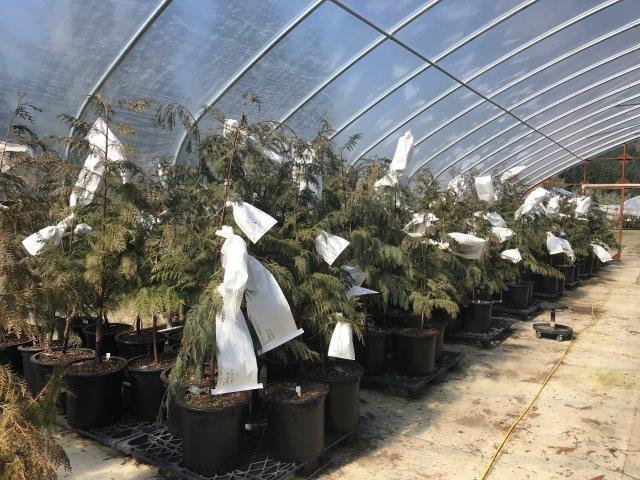
facilities at Dorena Genetic Resource Center; photos courtesy of Richard Sniezko, USFS
Complicating the restoration phase is the fact that the resistant tree must be able to thrive and compete in an ecosystem that has changed greatly from that in which it formerly resided. Causes of these changes include repercussions from the absence of the tree species – and possibly associated species; the possible presence of other biotic stresses (pests); and climate change. This is discussed by Nelson (2022). See also my blog.
Successfully completing these steps requires a long-term commitment, which includes significant funding and strong supportive infrastructure. Schlarbaum pointed out that the public and politicians don’t understand the complexity of the restoration challenge and the resources required. He documented the shrinking tree improvement infrastructure as of 2014. At that time, funding for all USFS regional breeding programs was just $6 million. State and land grant university breeding programs were fragmented and seriously underfunded. Only 28 states still had some type of tree improvement activity – and some of these programs were only seed orchards, not active breeding and testing programs. Members of university-industrial cooperatives focus on a small number of commercial species – which are not the species threatened by non-native pests. I believe these resources have shrunk even farther in the decade since 2014.
A separate source of funds for resistance breeding is the Forest Health Protection program, which is under the Deputy Chief for State, Private, and Tribal Forestry rather than the Deputy Chief for Research and Development. While nation-wide data on seed or scion collection or screening to identify and evaluate genetic resistance are poorly reported, Coleman et al. indicate that the USFS Dorena Genetic Resource Center screens unspecified “hundreds” of seed lots for resistance to pathogens annually. The Center also participates in seed, cone, and scion collections, especially of white pines vulnerable to white pine blister rust (WPBR). Supplemental Table S3 lists projects funded over the two decades analyzed by Coleman et al. (2011 – 2020). These included efforts to identify and evaluate possible genetic bases for resistance to, e.g., hemlock woolly adelgid, balsam woolly adelgid, laurel wilt, emerald ash borer, butternut canker, rapid ʻōhiʻa death; and gene conservation for eastern hemlock, ashes, chestnut, in addition to the five-needle pines. Currently, FHP allocates $1.2 million annually to support the group of activities called Genetic Conservation, Resistance and Restoration (R. Cooksey, pers. comm.).
American beech grafts to be tested for resistance to beech bark disease; at USFS center in Delaware, Ohio; photo courtesy of Jennifer Koch, USFS
USFS scientists involved in these projects describe challenges arising from efforts to cobble together funding from these many sources to support coherent programs. Overall funding levels still fall short of the need, and failure to obtain funding for one component of a program stymies the entire endeavor.
However, some developments are encouraging. The number of private foundations devoted to tree breeding has increased in the last decade. The American Chestnut Foundation (TACF) and American Chestnut Cooperators Foundation (ACCF) have been joined by the White Pine Ecosystem Foundation, the Great Lakes Basin Forest Health Collaborative, Forest Restoration Alliance, ‘Ohi‘a Disease Resistance Program … These organizations raise awareness, coordinate efforts by multiple parties, and provide opportunities for individuals to contribute funds and volunteer work.
In Hawai`i, disease resistance programs with both koa (Dudley et al.) and ʻōhiʻa ((Metrosideros polymorpha) (Luiz et al.) are active. Work with ash species to find and develop resistance to emerald ash borer is under way but limited due to lack of funds.
Finally, we can persuade Congress to incorporate the provisions of two bills, H.R. 3174 and S. 1238, into the next Farm Bill. The bills would, inter alia, create two grant program. One would fund research addressing specific questions impeding the recovery of native tree species that have suffered severe levels of mortality caused by non-native plant pests. The second would fund implementation of projects to restore these pest-decimated tree species to the forest.
Funded projects would be required to be part of a forest restoration strategy that incorporates a majority of the following components:
(1) Collection and conservation of native tree genetic material;
(2) Production of propagules of the target tree species in numbers sufficient for landscape-scale restoration;
(3) Preparation of planting sites in the target tree species’ former habitats;
Facilities needed to support successful breeding programs
Sniezko and Nelson identified these needs as follows:
(a) growing space (e.g., greenhouses);
(b) seed handling and cold storage capacity;
(c) inoculation infrastructure;
(d) field sites for testing;
(e) database capability for collecting, maintaining, and analyzing data;
(f) areas for seed orchard development;
(g) skilled personnel (tree breeders, data managers, technicians, administrative support personnel, and access to expertise in pathology and entomology).
There are very few facilities dedicated primarily to development of populations of trees with resistance to non-native pests; the most notable is the Dorena Genetic Resource Center. Even the existing programs require significant funding increases to accelerate current programs or expand to address additional species. Sniezko and Nelson stress further that a resistance breeding program has different objectives, magnitude and focus than most research projects. It is applied science, that is, an action-oriented effort that is solution-minded—countering the impact of a major disturbance caused by a pest (in our case, a non-native pest).
Schlarbaum provides a shorter but similar list of facilities needed:
production of propagules (seed or clones);
mass propagation in growing facilities, e.g., bare-root seedling nursery or greenhouses;
site preparation of former habitat and planting; and
post-planting maintenance.
Schlarbaum emphasized that each of these activities requires different skill sets, equipment, facilities, and infrastructure.
Genetic Engineering as a Specific Tool
There is considerable interest in the potential role of genetic engineering in pest resistance breeding. None of the successful programs world-wide has yet used genetic engineering (Sniezko and Koch 2017). While incorporating it into holistic breeding programs might result in greater efficiency for certain processes, it raises legal and social acceptability issues. Jacobs et al. discuss the type of education and outreach program needed to generate widespread public support this approach to tree species “rescues.” They call for USDA Forest Service to lead this education effort.
The focus of the 2021 workshop hosted by Purdue University was to explore the pros and cons of using biotechnology in restoring pest-threatened forest tree species. The special issue of New Forests contains several participants’ analyses.
The overall conclusions are that:
“Genetic engineering” – defined as “any technique that uses recombinant, synthesized, or amplified nucleic acids to modify a genome” – is only one type of biotechnology applicable to tree breeding. Other biotechnologies include tissue culture-based propagation, molecular-based genetic markers, gene cloning and sequencing, and genome mapping and sequencing.
These new technologies can increase the efficiency of more traditional breeding techniques, However, biotechnologies cannot substitute for holistic programs that incorporate all helpful methods. Careful consideration goes into selecting which techniques are appropriate for a particular host-pest system.
Each tree species has unique needs regarding seed or scion collection; seedling propagation in nurseries; site preparation and planting techniques; and management of regeneration after its re-introduction into forests. Scientists don’t yet understand these various needs of many threatened species.
In the eastern U.S., the tree-breeding infrastructure is based in the Southeast and focused on a few pine species grown commercially. The facilities do not match the greatest need. That is, many of the at-risk species are hardwoods native to the Northeast.
Current resources are inadequate to support the sustained, long-term commitment of resources and facilities necessary to be successful.
Dana Nelson addressed the role of genetic engineering (GE) in detail. He emphasized repeatedly that GE is not a short-cut to tree improvement. Incorporating a GE component does not avoid the other steps. It can, though, provide new possibilities to address problems. Nelson says the crucial, initial question is – can GE solve the specific forest conservation or management problem more effectively and efficiently than existing methods? There are some important subtleties to consider. First, success does not require achieving immunity (100% resistance); the level of resistance needs to be only sufficient to allow the tree species to survive, reproduce and co-evolve with the pest. Second, “efficiency” is an important consideration. We cannot afford delay because during those years or decades the wild tree loses genetic variability as more trees die. Also, changes in the environment continues to change, and the decimated tree species is not adapting.
If genetic engineering promises to contribute meaningfully, then the breeders must answer several follow-up questions before proceeding to develop a specific plan. Nelson also stresses that the planned activities must be integrated with an ongoing tree breeding program to ensure project success.
Nelson provides a lengthy description of the process of integrating genetic engineering into tree breeding programs.
GE in Chestnut Breeding – Setback
The most prominent breeding effort incorporating genetic engineering in the U.S. has been The American Chestnut Foundation’s (TACF) program to restore American chestnut (Castanea dentata). For decades, TACF has pursued development of trees resistant to the fungus which causes chestnut blight (Cryphonectria parasitica). Over the past decade, hopes have centered on a genetically engineered line into which was inserted a gene from wheat (oxalate oxidase; OxO). The OxO gene detoxifies the oxalic acid produced by the chestnut blight fungus and thus prevents the cankers from killing the tree.
Years of tests have shown the gene to be effective and to cause no environmental harm. In 2023, when trees in outside test plots grew larger, scientists observed disappointing results. Trees’ blight tolerance varied greatly. Worse, resistant trees grew more slowly and exhibited lower overall fitness. [For a full discussion of the issues, visit TACF’s website] Prompted by these disappointments, scientists carried out further molecular analyses. They found that the OxO gene was on a different chromosome than expected.
TACF researchers now suspect that the trees’ variable performance stems primarily from the placement of the OxO gene and the fact that the gene is always “switched on”. That constant expression appears to result in high metabolic costs for the trees. Since all the genetic lines developed to date have this defect, TACF is no longer pursuing research efforts with any of the GE trees developed to date. The Foundation believes it would be irresponsible to continue efforts – by itself and by partners – focused on a genetic line that looks unable to compete successfully when introduced to the forest.
Instead, TACF has begun investigating other transgenic lines that use a “wound inducible” promoter that switches on the OxO gene only in cells where the plant is wounded. Researchers at both the State University of New York College of Environmental Science and Forestry (SUNY-ESF) and the University of Georgia are working with a variety of inducible promoters. TACF is also testing whether inducible OxO expression can be “stacked”onto genes for blight resistance present in the backcross hybrids. Finally, TACF and Virginia Tech are also exploring whether resistance can be enhanced by insertion of genes from Chinese chestnut directly into American chestnut using methods similar to OxO insertion.
It will be years before we know if these approaches provide sufficient levels of resistance. TACF will undertake more extensive testing for efficacy through the tree’s full life cycle – in the lab, greenhouse, and field – before submitting a new GE organism to regulators for review. Meanwhile, it will continue rigorous testing for plant health and environmental risks and will strengthen the cooperative structure to facilitate sharing of intellectual property and provide full transparency.
The Darling GE line was the most important transgenic hybrid chestnut line TACF had invested in. So this is a major setback – and comes when regulatory approval seemed near.
Let’s keep this in perspective, however. As a colleague has said, based on his years of teaching science to middle school students, “There are no failures in science, just reductions in the unknown; Edison failed a thousand times before getting the light bulb right, etc….” The technology is ready when it is ready. In addition, he praised TACF for choosing to explain its decision frankly: “nothing builds credibility like early failures openly admitted.”
Meanwhile, TACF continues to make gains in blight resistance with its traditional American chestnut backcross hybrid breeding program. They have established a genetically diverse, reproducing population of thousands of trees representing hundreds of breeding lines. These trees are planted in TACF’s expansive network of germplasm conservation orchards and regional breeding and backcross orchards. They have substantially increased resistance to both the blight and Phytophthora cinnanomi in these populations. The future inclusion of transgenic and/or gene-edited trees will further increase those gains.
Another Approach
Meantime, the American Chestnut Cooperators Foundation (ACCF), which breeds from persistent pure American chestnut, now has some trees that are nearly 50 years old. The program has bred five generations of pure American chestnuts that show durable blight resistance. Many trees are 60 feet tall or higher; they produce nuts. Vice President Jenny Abla (pers. comm.) reports that they show excellent canker response (swollen and superficial). The picture shows one of their most notable stands, which is in the Jefferson National Forest. Dr. Sniezko is exploring whether this program shows sufficient promise to justify increased support from the USFS.
ACCF chestnut trees; photo courtesy of Jenna Abla
Improving Coordination – will funds follow?
In July 2023, representatives from essentially all the forest tree resistance breeding programs in the U.S. met at Dorena Genetic Resource Center in Oregon to discuss their current successes and how to fast-track all programs. This is the first such meeting since 1982 (Richard Sniezko, pers. comm.). I encourage us all to study the report when it emerges and encourage USFS leadership to support the more unified enterprise.
Status of Efforts to Conserve Other Tree Species
The special issue of New Forests (Vol. 54 Issue 4) included several articles exploring the specifics of breeding elms, ashes, and ʻōhiʻa. These describe difficult challenges … and scientists determined to make progress on overcoming them.
“survival” American elm at Longwood Gardens; photo by F.T. Campbell
Elms (Ulmus spp.) (see article by Martin et al.)
Let’s not forget that elms were keystone species in Europe and North America until attacked by two epidemics of “Dutch” elm disease during the 20th Century. While hybrid elms are available for urban plantings, many consider them not appropriate for planting in natural forests because these genotypes are not native.
Martin et al. describe a bewildering conglomeration of complexities and possibilities arising from biotic and abiotic factors. Initiation and especially intensity of the disease in a particular tree depend on
the species or strain of the tree, vectoring beetle, and pathogen;
timing of the attack; and
adequacy of water supplies at that time.
Possible targets for manipulation include the pathogen, its beetle vector, and the tree’s response — either in its bark or xylem. Martin et al. suggest that a combination of resistance to the pathogen within the xylem, resistance to beetles’ feeding wounds, and lowering tree clues that attract the beetles could considerably enhance longer-term overall resistance in the field.
However, verifying which approaches produce the best result will be complicated by the trees’ sensitivity to environmental factors such as season and water supply. Apparent resistance might actually be tied to, for example, low water supplies during the spring when the attack occurred.
Restoration strategies, including resistance to pests, must accommodate the diverse ecological conditions in the species’ large range, the rapid evolution of the Ophiostoma pathogens; and other pests and pathogens that attack elms. Nor do scientists know appropriate planting strategies.
Martin et al. believe Dutch elm disease is unlikely to be spread by movement of living elm plants, although other pests could be (and have been).
ash trees to be tested for resistance to emerald ash borer; photo courtesy of Jennifer Koch, USFS
Ashes (Fraxinus spp.)
While a USFS team led by Jennifer Koch link are conducting much of the on-the-ground efforts to breed ash trees resistant to the emerald ash borer (EAB; Agrilus plannipennis), Stanley et al. note that scientists cannot simply cross most North American ash species with the Asian ash, F. mandshurica, because the two groups are sexually incompatible. Scientists have instead focused on trying to enhance the resistance to EAB that is apparently present in a small proportion of ash trees, called “lingering ash.” Scientists funded by USDA Forest Service have already devoted over 14 years to finding such lingering ash to be tested for resistance.
Testing these trees is not simple (see Stanley et al.). But scientists are overcoming some of the obstacles. They have shown that the capability of a few green ash (Fraxinus pennsylvanica) (less than 1%) to defend themselves from EAB attack is genetic. Genes determine the relative abundance of specific metabolites manufactured by the tree; high levels kill more beetle larvae. These trees’ tolerance is not immunity but it might be sufficient to allow the tree to survive and grow. The level of metabolites synthesized by succeeding generations of the tree can probably also be enhanced by breeding.
To restore ash it is necessary to propagate large numbers of clones and to root the resulting embryos. This has been challenging. Merkle et al. describe five years of efforts to develop techniques that allow in vitro propagation to speed up selection and breeding. These techniques will facilitate establishment of numerous groups of propagules with the genetic differences needed to accommodate the large geographic range of several ash trees. For example, the green ash range covers more than half the continental U.S. plus multiple Canadian provinces.
ʻōhiʻa on lava field, Hawaii Volcanoes National Park
‘Ōhi‘a (Metrosideros polymorpha)
‘Ohi‘a is the most widespread tree species on the Hawaiian Islands. It provides vitally important habitat for conservation of countless taxa of endemic birds, insects, and plants. It is also of great cultural importance for Native Hawaiians.
Luiz et al. review the tree species’ importance, the many threats to native Hawaiian forests, and a coalition’s efforts to counter the most recent – and alarming – threat, rapid ʻōhiʻa death (ROD).
Rapid ʻōhiʻa death is caused by two introduced species of in the genus Ceratocystis. C. lukuohia colonizes the tree’s sapwood and kills the tree quickly. This disease is present on two islands, Hawai`i and Kaua‘i. It has the potential to devastate ‘ohi‘a forests across the state. The other pathogen, C. huliohia, invades the phloem, cambium, and outer xylem, resulting in a well-defined area of necrotic tissue and slower mortality. This disease is on Hawai`i and Kaua‘i, plus Maui and O‘ahu. The two pathogens have different origins. C. lukuohia belongs to a genetic line that is based in Latin America, C. huliohia to a genetic line based in Asia and Australia.
Conservationists formed a coalition and developed a strategy to guide the process of identifying and developing disease resistance in M. polymorpha and, if possible, other Metrosideros species on the Islands. Luiz et al. describe the coalition’s many activities. The challenges are familiar ones:
obtaining sufficient facilities to screen large numbers of seedlings;
developing techniques for inoculation, propagation, and speeding up growth of seedlings;
improving techniques for detecting individual infected and healthy trees across difficult terrain;
testing trees native to all parts of the tree’s range, which is not large in area, but covers a great variety of elevations and climates); and
needing to develop trees resistant to both C. lukuohia and C. huliohia.
Luiz et al. reiterate the necessity to manage all threats to healthy ʻōhiʻa stands, for example, by
curtailing human spead of infected wood, using both quarantines and supportive public education;
testing repellants to reduce beetle attack.
reducing injuries to trees by fencing forests and removing feral ungulates. link to website?
SOURCES
Buggs, R.J.A. 2020. Changing perceptions of tree resistance research. Plants, People, Planet. 2020;2:2–4. https://doi.org/10.1002/ppp3.10089
Coleman, T.W., A.D. Graves, B.W. Oblinger, R.W. Flowers, J.J. Jacobs, B.D. Moltzan, S.S. Stephens, R.J. Rabaglia. 2023. Evaluating a decade (2011–2020) of integrated forest pest management in the United States. Journal of Integrated Pest Management. (2023) 14(1): 23; 1–17
Dudley, N.; Jones, T.; Gerber, K.; Ross-Davis, A.L.; Sniezko, R.A.; Cannon, P.; Dobbs, J. 2020. Establishment of a Genetically Diverse, Disease-Resistant Acacia koa A. Gray Seed Orchard in Kokee, Kauai: Early Growth, Form, and Survival. Forests 2020, 11, 1276 https://doi.org/10.3390/f11121276
Jacobs, D.F., R. Kasten Dumroese, A.N. Brennan, F.T. Campbell, A.O. Conrad, J.A. Delborne, et al. 2023. Reintroduction of at-risk forest tree species using biotech depends on regulatory policy, informed
by science and with public support. New Forests (2023) 54:587–604
https://doi.org/10.1007/s11056-023-09980-y
Luiz, B.C., C.P. Giardina, L.M. Keith, D.F. Jacobs, R.A. Sniezko, M.A. Hughes, J.B. Friday, P. Cannon, R. Hauff, K. Francisco, M.M. Chau, N. Dudley, A. Yeh, G. Asner, R.E. Martin, R. Perroy, B.J. Tucker, A. Evangelista, V. Fernandez, C. Martins-Keli.iho.omalu, K. Santos, R. Ohara. 2023. A framework for establishing a rapid ‘Ohi‘a death resistance program. New Forests https://doi.org/10.1007/s11056-021-09896-5
Martín, J.A., J. Domínguez, A. Solla, C.M. Brasier, J.F. Webber, A. Santini, C. Martínez-Arias, L. Bernier, L. Gil1. 2023. Complexities underlying the breeding and deployment of Dutch elm disease resistant elms. New Forests https://doi.org/10.1007/s11056-021-09865-y
Merkle, S.A., J.L. Koch, A.R. Tull, J.E. Dassow, D.W. Carey, B.F. Barnes, M.W.M. Richins, P.M. Montello, K.R. Eidle, L.T. House, D.A. Herms and K.J.K. Gandhi. 2023. Application of somatic embryogenesis for development of emerald ash borer-resistant white ash and green ash varietals. New Forests https://doi.org/10.1007/s11056-022-09903-2
Nelson, C.D. 2023. Tree breeding, a necessary complement to genetic engineering. New Forests
https://doi.org/10.1007/s11056-022-09931-z
Pike, C.C., J. Koch, C.D. Nelson. 2021. Breeding for Resistance to Tree Pests: Successes, Challenges, and a Guide to the Future. Journal of Forestry, Volume 119, Issue 1, January 2021, Pages 96–105, https://doi.org/10.1093/jofore/fvaa049
Sniezko, R.A., J. Koch, J-J. Liu and J. Romero-Severson. 2023. Will Genomic Info Facilitate Forest Tree Breeding for Disease and Pest Resistance? Forests 2023, 14, 2382.
https://doi.org/10.3390/f14122382
Sniezko, R.A. and C.D. Nelson. 2022. Chapter 10, Resistance breeding against tree pathogens. In Asiegbu and Kovalchuk, editors. Forest Microbiology Volume 2: Forest Tree Health; 1st Edition. Elsevier
Stanley, R.K., Carey, D.W., Mason, M.E., Doran, A., Wolf, J., Otoo, K.O., Poland, T.M., Koch, J.L., Jones, A.D. and Romero-Severson, J. 2023. Emerald ash borer (Agrilus planipennis) infestation bioassays and metabolic profiles of green ash (Fraxinus pennsylvanica) provide evidence for an induced host defensive response to larval infestation. Front. For. Glob. Change 6:1166421. doi: 10.3389/ffgc.2023.1166421
Posted by Faith Campbell
We welcome comments that supplement or correct factual information, suggest new approaches, or promote thoughtful consideration. We post comments that disagree with us — but not those we judge to be not civil or inflammatory.
For a detailed discussion of the policies and practices that have allowed these pests to enter and spread – and that do not promote effective restoration strategies – review the Fading Forests report at http://treeimprovement.utk.edu/FadingForests.htm
Gettysburg battlefield; now under attack by emerald ash borer (see below)
Kathryn Miller and colleagues (full citation at end of blog) have published a study that examined the status and trends of forest regeneration in 39 National parks from Virginia to Maine. Four-fifths of the forest plots in the study are classified as mature or late successional – so at first glance the forests look healthy. However, the researchers made an alarming finding: in 27 of 39 parks, forest regeneration is failing – either imminently or probably. Acadia National Park is an exception; it is the only park in the study experiencing healthy regeneration. They warn that without intense, sustained – and expensive! – intervention, these forests are likely to be converted to other types of ecosystems. [I blogged recently about findings regarding regeneration in eastern forests: here and here and here and here.
The forests’ understories have too few seedlings and – especially – saplings to maintain themselves. Worse, in many cases the seedlings and saplings are not the same species as the mature trees that form the canopy. The saplings are shorter species that never reach the canopy. That is, species like pawpaw (Asimina triloba), American holly (Ilex opaca), American hornbeam (Carpinus caroliniana), and eastern redbud (Cercis canadensis) are regenerating, rather than the oaks (Quercus spp.), hickories (Carya spp.), maples (Acer spp.), and pines (Pinus spp.) that constitute the canopies of mature forests in these parks.
Miller and colleagues call these “regeneration mismatches.” Inabout half of the parks, these native canopy tree species make up less than half of current saplings and seedlings. This situation suggests the forests’ species composition will shift substantially, thereby undermining resilience in the face of other challenges, such as invasive plants and pests and climate change.
In many of these National parks, Miller and colleagues found abundant ash regeneration. For example, ash (Fraxinus spp.) constitute more than half of all seedlings in four parks (Johnstown Flood and Friendship Hill in Pennsylvania; Catoctin Mountain in Maryland; Manassas Battlefield in Virginia). Miller and colleagues consigned ash species to the “subcanopy class” because the emerald ash borer (EAB) has caused such high mortality of mature trees. They think regard it unlikely that current and future seedlings will ever reach full size. The devastating impact is most starkly illustrated in Gettysburg National Battlefield Park. Consistent deer management since 1996 has been rewarded: the Park ranks at the top for regeneration among the 39 parks. However, more than half of the seedlings and a quarter of the saplings are ashes. EAB has shifted the Park’s otherwise secure regeneration status into probable failure.
When regeneration fails: too many deer
Throughout the study region, the overwhelming reason regeneration fails is browsing by overabundant deer. The level of deer browse is considered “acceptable” in only four parks. Deer suppress the number of seedlings and saplings. They also skew species composition of native subcanopy species toward those less palatable. Miller and colleagues found that canopy tree density and cover and past human land use had minimal impacts on seedling and sapling numbers or species composition.
Overabundant deer also promote invasion and spread of non-native plants, which are the second most important factor impeding regeneration. Together, invasive plants and non-native earthworms are ecosystem engineers that negatively impact soil and cause cascades of biotic and abiotic impacts throughout forest ecosystems.
Many of the parks experiencing the most severe impacts of chronic deer browse also have the highest invasions by non-native plants. A natural process of regeneration occurs when the death or collapse of mature trees create gaps in the forest canopy. Where deer and invasive shrubs overlap, this process is often hijacked. Instead of nearby native tree species accelerating their growth toward the canopy, thickets of invasive shrubs crowd the space.
For this reason, Miller and colleagues recommend that park management prioritize treating invasive plants in canopy gaps of disturbed stands to avoid forest loss. They recommend deliberate creation of canopy gaps to promote resilience only for parks, or stands within parks, that have low deer and invasive plant abundance or the capacity to intensively manage invasive plants in gaps.
In most parks, non-native tree species are rare, less than 2% of total regeneration. In seven parks, though, non-native trees exceed ten percent of seedlings and/or saplings. In three parks, saplings of non-native trees are increasing. These are primarily tree-of-heaven (Ailanthus altissima) and Norway maple (Acer platanoides). In Saratoga National Historical Park, seedlings of common buckthorn (Rhamnus cathartica) are increasing.
Beech regeneration in Prince William Forest Park
Role of other pests
Miller and colleagues express fear that beech bark disease andbeech leaf disease might have effects similar to those of EAB, leading to a greater “regeneration debt” in parks where American beech (Fagus grandifolia) is the dominant regeneration component. They cite specifically Prince William Forest Park in northern Virginia, [25 mi2]Rock Creek Park in the District of Columbia, [2.7mi2] and Saratoga National Historical Park. [5.3 mi2] The authors also suggest that thickets of beech root sprouts formed in response to BBD can suppress regeneration of other native canopy species and so might need to be managed.
Miller and colleagues mention hemlock woolly adelgid (HWA), but provide very little information. They report that Saint-Gaudens National Historical Park in New Hampshire (the home and studio of sculptor Augustus Saint-Gaudens) is at particular risk because of growth of both beech and eastern hemlock (Tsuga canadensis). I know that Delaware Water Gap National Recreation Area [109m2] has experienced major losses of mature hemlocks. [Shenandoah National Park has also, but it was not included in the study.]
Hemlock Ravine, Delaware Water Gap National Recreation Area; photo by Nicholas T via Flickr
Miller and colleagues report that Acadia National Park is seeing recovery of red spruce (Picea rubens) from a major fire in 1947 and possibly also from acid rain. They do not mention the longer-term threat from the brown spruce longhorned beetle. Their focus is on forest dynamics largely unaffected by deer.
In the same way, the authors make no mention of the absence of dogwood trees, presumably because they had been eliminated by dogwood anthracnose decades ago. Nor do they mention vascular streak dieback of redbud; the causal agent still uncertain. [See Annie Self’s presentation to National Plant Board, August 2023.]
dead ash tree in Shenandoah National Park
One omission is large enough that it might affect the study’s findings. At mi2Shenandoah is the largest National Park in the region. It was not included in the study because the Park’s forest monitoring process is not compatible with those in other NPS units. All the other parks – including Acadia (562 mi) – are much smaller, protecting historic sites like Civil War battlefields.
RECOMMENDATIONS
Miller and colleagues recommend that deer management be initiated in parks classified as at imminent or probable regeneration failure, if such programs are not already under way. They warn that effective deer management requires sustained commitment. Studies of deer exclosures show that full forest recovery from chronic deer overabundance can take as long as 40–70 years.
The authors also recommend actions to open the subcanopy to facilitate growth of saplings belonging to desired species. They caution that deer predation must be controlled. Furthermore, either invasive plant cover must be low, or management must ensure that that the park has sufficient resources to sustain an invasive plant control program – especially if invasive plants are combined with abundant deer.
Parks experiencing compositional mismatches and that are dominated by oak–hickory forest types might also benefit from prescribed burning. Again, deer browse pressure must be minimized. In addition, regeneration of oaks and hickories must already be present.
In park forests dominated by species vulnerable to lethal pests, e.g., beech-, ash-, or hemlock-dominated forest stands, Miller and colleagues recommend considering planting alternative native canopy species and protecting those plantings from deer. Park managers should also consider thinning beech thickets formed after beech bark disease kills canopy trees.
Media coverage
The Washington, D.C., public radio station, WAMU, reported on this research on the air (broadcast December 20) and on its website. It is written by Jacob Fenston, with great photographs by Tyrone Turner. The story emphasized the link between deer and invasive plants – since regeneration in eastern deciduous forest happens by saplings taking advantage of gaps formed when mature trees die. The story quotes DC-area people on their efforts to contain vines. The Natural Resource Manager at Catoctin Mountain Park [8 mi2] describes that park’s longstanding deer control program. The story also mentions impacts of EAB and threat of BLD.
News – Funding for these parks to counter the threats!
Lead author Kathryn Miller has informed me that the Bipartisan Infrastructure Law and Inflation Reduction Act has provided the 39 parks involved in this study over $10 million to improve forest resilience largely through reduction of invasive plants and overabundant deer.
Of course, invasive species threats to National parks are not limited to the Northeast – nor are they new. I have raised this problem from the beginning. To see these blogs, on the “nivemnic” website, scroll down below the archives to the “categories”, then click on “national parks”.
SOURCE
Miller, K.M., S.J. Perles, J.P. Schmit, E.R. Matthews, M.R. Marshall. 2023. Overabundant deer and invasive plants drive widespread regeneration debt in eastern United States national parks. Ecological Applications. 2023;33:e2837. https://onlinelibrary.wiley.com/r/eap Open Access
Posted by Faith Campbell
We welcome comments that supplement or correct factual information, suggest new approaches, or promote thoughtful consideration. We post comments that disagree with us — but not those we judge to be not civil or inflammatory.
For a detailed discussion of the policies and practices that have allowed these pests to enter and spread – and that do not promote effective restoration strategies – review the Fading Forests report at http://treeimprovement.utk.edu/FadingForests.htm
Wood packaging – crates, pallets, spools for wire, etc. — has been recognized as a major pathway for introduction of tree-killing pests since the Asian longhorned beetle was detected in New York and Chicago in the late 1990s. As of 2021, 65 new species of non-native wood- or bark-boring Scolytinae had been detected in the United States (Rabaglia; full citation at end of the blog).
As I have often reported [To see my 40+ earlier blogs about wood packaging material, scroll down below archives to “Categories,” click on “wood packaging”.], the international phytosanitary community adopted the International Standard for Phytosanitary Measures (ISPM) #15. The goal of ISPM#15 is to “significantly reduce” [not eliminate] the risk of pests associated with solid wood used for constructing packaging (e.g., crates, pallets), from being introduced to other countries through international trade.
I recently reviewed the first 20+ years of implementation of ISPM#15 including two analyses by Robert Haack and colleagues in a blog in December 2022. I have also provided the broader context of the World Trade Organization (WTO) in my Fading Forests II report.
I last blogged about U.S. import volumes in June. My silence since reflected the significant decline in U.S. imports from Asia. This reduction had reduced the likelihood that a new tree-killing pest would be introduced from that region – or that an already-established pest would be introduced to a U.S. region that had escaped it so far.
However, U.S. imports from Asia have suddenly grown! In October 2023, containerized imports from Asia were 12.4% higher than a year ago – and 6% higher than in September. According to the Journal of Commerce (full citation at end of blog), U.S. retailers anticipate consumers will purchase lots of gifts for the upcoming Christmas season.
The U.S. imported 1.57 million TEU from Asia in October. This volume exceeded even the pre-COVID levels. How great is the associated risk of a pest introduction? To calculate that, I apply the following:
most U.S. imports arrive in 40-foot-long containers, so divide TEU by 2 = 785,000
a decade-old estimate that 75% of containers in maritime shipments contain wood packaging (Meissner et al.) = 588,750 containers with wood packaging (I suspect it is more).
the estimate by Haack et al. 2014 that 0.1% (1/10th of 1 percent) of consignments (which usually means a single container) harbor tree-killing pests;
the estimate by Haack et al. 2022 that 0.22% of consignments harbor tree-killing pests.
inspecting a pallet; CBP photo
The result of these calculations is an estimate of 648 containers (using the 2009 global estimate), or 1,727 containers (using the 2022 global estimate), or 5,730 containers (using the 2010-2020 estimate for China specifically) entering the country in one month harbored tree-killing pests. Since West Coast ports received 54% of those containers, the estimated number of containers transporting pests that enter California, Washington, or Oregon ranged from 349 to 3,042. The rest are scattered among the dozens of ports on the East and Gulf coasts.
With drought limiting container ship transits through the Panama Canal (Szakonyi 2023), the threat to East and Gulf coast ports might not rise commensurately.
Because of the low levels of imports in previous months, U.S. imports from Asia remain significantly below levels in previous years: 16.6% lower for the January – September period compared to 2022.
The 2022 analysis found that the rate of wood packaging from China that is infested has remained relatively steady since 2003: 1.26% during 2003–2004, and ranged from 0.58 to 1.11% during the next three time periods analyzed. Packaging from China made up 4.6% of all shipments inspected, but 22% of the 180 consignments with infested wood packaging. Thus the proportion of Chinese consignments with infested wood is five times greater than would be expected based on their proportion of imports. Note the great impact of this high infestation rate on the number of containers transporting tree-killing pests to the U.S. in the paragraph above: more than 8,000 containers compared to about 2,000.
I remind you that the U.S. and Canada have required treatment of wood packaging from China since December 1998. Why are the responsible agencies in the United States not taking action to correct this problem? [which has persisted for 2 decades]
The fact is – as I have argued numerous times — a pallet or crate bearing the ISPM#15 mark has not proved to be a reliable indicator as to whether the wood is pest-free. (This might be because the wood had not been treated, or if it was, the treatment failed). All the pests detected in the Haack et al. studies (after 2006) were in wood packaging bearing the ISPM#15 mark. As noted in my past blogs [click on the “wood packaging” category to bring up blogs about wood packaging and enforcement], Customs and Border Protection also report that nearly all the wood packaging in which that they detected insect pests bore the ISPM#15 mark.
According to Angell in November (full citation at end of blog), U.S. imports from India to the east coast fell by 15% in the first 10 months of 2023 compared to last year – to a total of 623,356 TEUs. This might change in the future: a shipper has promised to start weekly arrivals from India beginning in May 2024. the company plans calls at New York-New Jersey, Savannah, Jacksonville, Charleston, and Norfolk. The ships will call, en route, at ports in Saudi Arabia, Egypt, and Spain. What pests might be hitching a ride on these shipments?
SOURCES
Haack RA, Britton KO, Brockerhoff EG, Cavey JF, Garrett LJ, et al. 2014. Effectiveness of the International Phytosanitary Standard ISPM No. 15 on reducing wood borer infestation rates in wood packaging material entering the United States. PLoS ONE 9(5): e96611. doi:10.1371/journal.pone.0096611
Haack RA, Hardin JA, Caton BP and Petrice TR. 2022. Wood borer detection rates on wood packaging materials entering the United States during different phases of ISPM#15 implementation and regulatory changes. Frontiers in Forests and Global Change 5:1069117. doi: 10.3389/ffgc.2022.1069117
Meissner, H., A. Lemay, C. Bertone, K. Schwartzburg, L. Ferguson, L. Newton. 2009. Evaluation of pathways for exotic plant pest movement into and within the greater Caribbean Region.
Angell, M. 2023. ONE readies India-US East Coast service as part of 2024 network rollout. Journal of Commerce. November 27, 2023
Rabaglia, R. 2021. The increasing number of non-native bark and ambrosia beetles in North America. International Union of Forest Research Organizations. Prague, Czech Republic. September 2021
Szakonyi, M. 2023. Carriers Weigh Options as Panama Canal restrictions become fact of life. Journal of Commerce. November 21, 2023. (Access limited to subscribers, unfortunately)
Posted by Faith Campbell
We welcome comments that supplement or correct factual information, suggest new approaches, or promote thoughtful consideration. We post comments that disagree with us — but not those we judge to be not civil or inflammatory.
For a detailed discussion of the policies and practices that have allowed these pests to enter and spread – and that do not promote effective restoration strategies – review the Fading Forests report at http://treeimprovement.utk.edu/FadingForests.htm