What I learned at the NPB meeting

The National Plant Board’s members are the lead plant health officials of the states and territories. Many federal officials also attend – from APHIS and DHS Bureau of Customs and Border Protection. Representatives of other North American phytosanitary entities participate – i.e., Canada, Mexico, and the North American Plant Protection Organization (NAPPO). Some stakeholder groups participate, especially the nursery industry. I have attended these meetings for over a decade because they provide an overview of pest issues and programs plus an unparalleled opportunity to network. The Nature Conservancy’s Leigh Greenwood also attends. We are the only representatives of the species conservation community to attend – others are missing great opportunities.

Here, I’ve listed 10 items that are among the most important the group discussed.

1) The funding situation for APHIS is worse than I realized

APHIS Administrator Mike Watson and Deputy Administrator (for plants) Mark Davidson both spoke about the need to cut programs to stay within the limits set by congressional appropriations. Funding for APHIS, as a whole, was cut only 1% for the current year (Fiscal Year 2024), cost-of-living salary increases mean less money for programs. (I believe Dr. Watson said $41 million less for FY24). If FY25 funding is the same, Congressionally mandated additional payraises will mean an another $20 million decrease in program funding.

Dr. Davidson said that the plant programs (Plant Protection and Quarantine) had been cut by 5% in FY24. However, Congress did not finalize the funding levels until about half-way through the fiscal year – so staying within the limits required even more severe cuts to programs in the remainder of FY24. To stay within these limits, APHIS cut several programs, among them a $3.6 million cut from the “tree and wood pest” program. This meant loss of funds to manage the polyphagous and Kuroshio shot hole borers, smaller cuts for programs managing Asian longhorned beetle and emerald ash borer, and perhaps the Asian flighted spongy moth. They anticipate additional cuts in these programs in FY25. The one bright light is the Section 7721 Plant Pest & Disease Management & Disaster Prevention Program. It provides steady funding for a range of plant health programs. The House version of the still-pending Farm Bill calls for increasing funding for this program by $15 million each year.

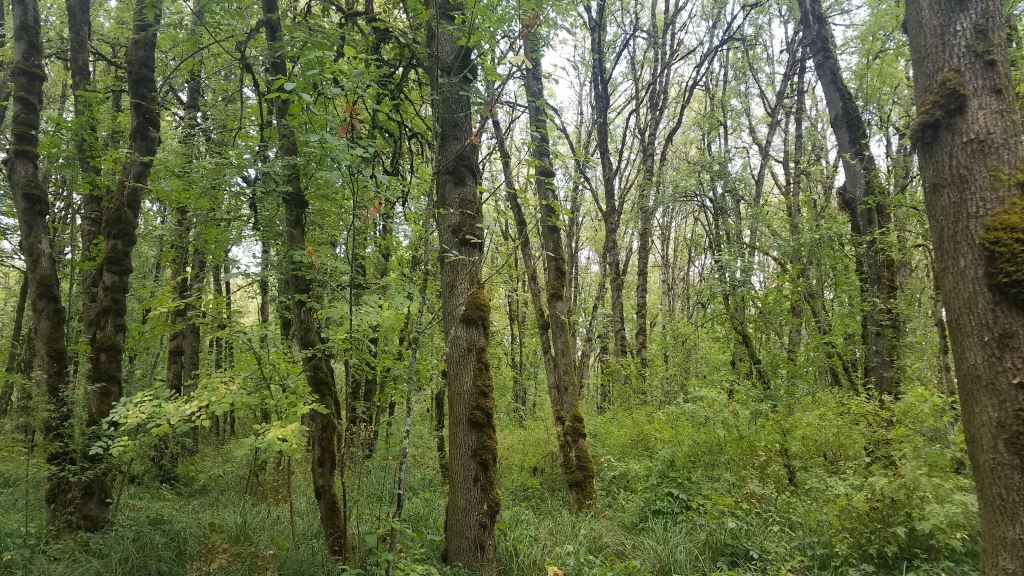
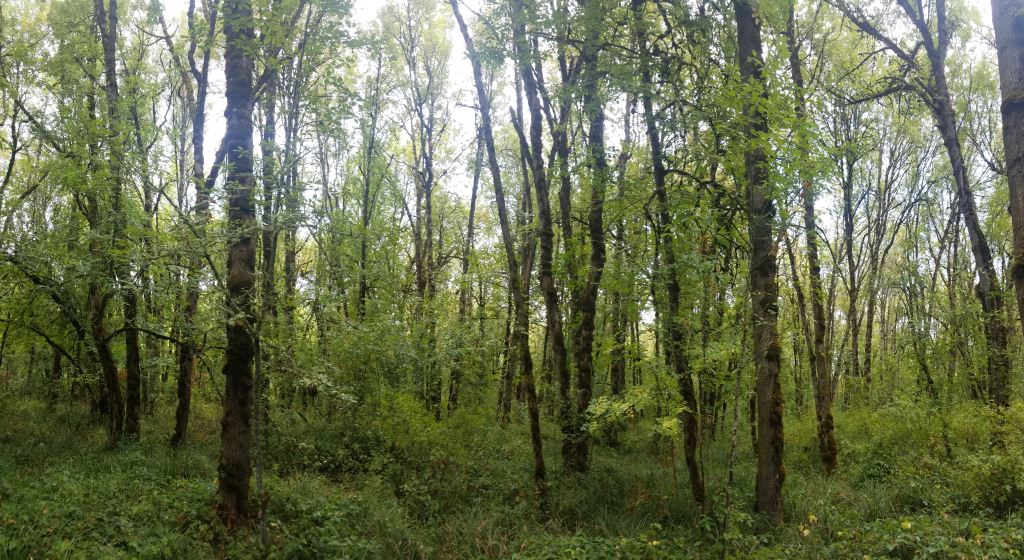
Nearly 100% ash trees in Oregon wetland — exposed to spreading EAB. Photo by Wyatt Williams, Oregon Department of Forestry

Remember this when I ask you to lobby for appropriations!  If we don’t advocate for funding the programs dealing with “our” pests, they will shrink.

Watkins and Davidson also worry that whoever is the next secretary of USDA might not support the agency when it seeks to withdraw funds to cover emergencies from the Commodity Credit Corporation – as Secretary Vilsack has.

APHIS and the DHS Customs and Border Protection (CBP) both praised a recent regulatory action that increases user fees for importers having goods cleared at ports. Kevin Harriger, CPB official in charge of agriculture programs, said the new funds would allow CBP to hire 700 new agricultural inspectors (currently there are 2,800 agricultural officials). That sounds great, but … when trade and passenger volumes crashed early in the COVID pandemic, things looked dicey for a while.  Plus – as I have argued repeatedly – real protection against pest introductions will come from stronger policies, not ramped-up inspections.

Pathologist Bruce Moltzan reported on the USFS Forest Health Protection program. He pointed out that the USFS has a very limited toolbox. In this fiscal year, the program has about $48 million, after salaries, to support its activities. Projects targetting insects receive 70% of the funding; those targetting pathogens 15%.

2) Invasive hornets

Washington State has not found any new nests of the Northern (formerly Asian) giant hornet (Vespa mandarinia). Miraculous!

However, Georgia detected another species, the yellow-legged hornet (Vespa velutina), near Savannah in August 2023. The Georgia Department of Agriculture, APHIS, and the University of Georgia are working to find nests – which are located at the top of tall pine trees in residential areas. Five nests were found in 2023; another four so far in 2024. Georgia hopes to place traps 100 miles out from each detection site. Like the northern hornet, V. velutina preys on honey bees. It was probably transported by ship or with its cargo.

A third species, V. tropica, has been introduced on Guam.

3) Better Federal-State Cooperation — Sometimes

APHIS and the state phytosanitary officials have set up structures –  e.g., Strategic Alliance/Strategic Initiative, or SASI – to work together more closely. CBP joins the coordinating meetings. One program described at the meeting is the effort to contain spread of the box tree moth (Cydalima perspectalis). This effort came out of discussions at last year’s Plant Board meeting, with follow-up gatherings of APHIS, the states, and the nursery industry. The moth is known to be present in New York, Massachusetts, Michigan, Ohio, and now Delaware – plus several Canadian provinces.

A second project concerns how much data to share about state detections of pests – which are recorded in the National Plant diagnostic Network database. These data have accrued over 20 years … and are sought by both other states and academic researchers. States are often reluctant to allow public review of detection data because they fear it will cause other states or private parties to avoid buying plants or other goods from the infested area. While the project team has not yet decided how to deal with these conflicts, they said they were more inclined to share “nonconsequential data” – meaning data on a pest everyone already knows is present, not a pest under regulation or a new detection. In other words, “consequential” seems to pertain to industry profits, not damage to agricultural or natural resources.

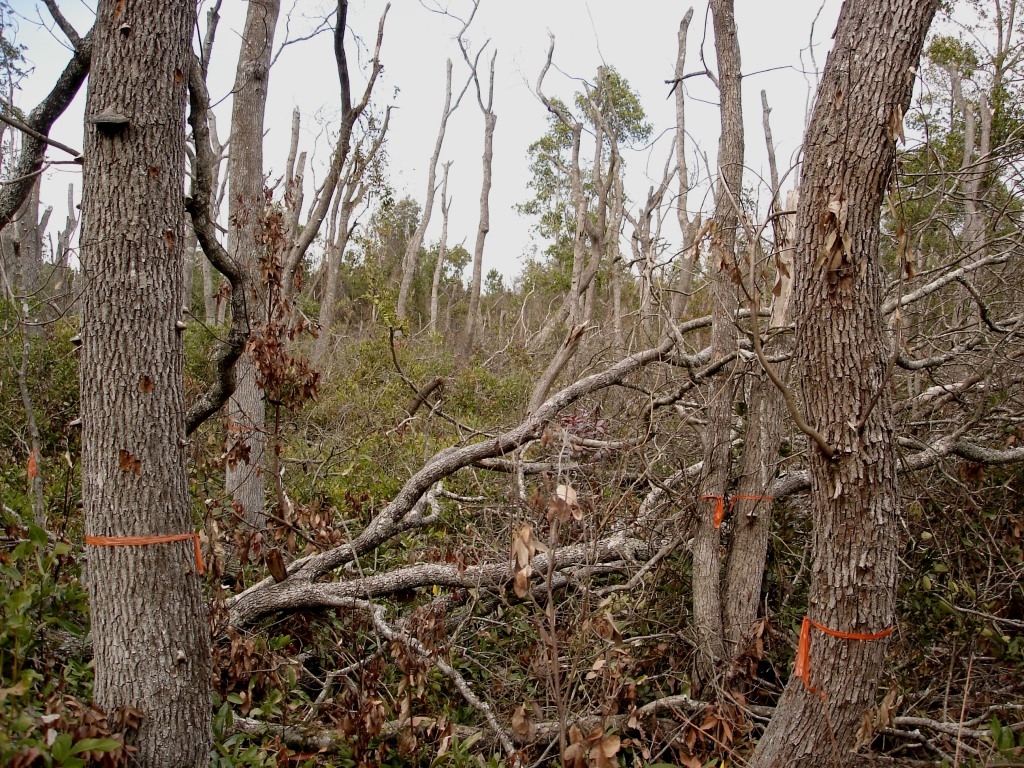
EAB-killed ash along Mattawoman Creek, Maryland. Photo by Leslie A. Brice

4) Update: 20 years of tackling the emerald ash borer

Craig Kellogg, APHIS’ chief plant health representative in Michigan, reviewed 20 years of dealing with the emerald ash borer (EAB). He is optimistic about the impact of the biocontrol agents that have now been released in 32 states and four provinces. The larval parasitoids are dispersing and EAB densities are coming down. He conceded that over-story and mature ash are still dying, but says ash in long-infested areas are regenerating well. Scientists agree (see Wilson et al. 2024; full citation at end of the blog). Woodpeckers are still the most effective biocontrol agent of EAB for over-story ash, especially in locations where introduced parasitoids are not established. So far, the growing numbers of biocontrol agents are still parasitizing too few EAB larvae to prevent decline of over-story ash trees.

5) Flighted Spongy Moths

APHIS reported on recent detections of flighted spongy moth from Asia on ships coming to U.S. ports. The program covers four closely related species of Lymantria. All have much broader host ranges than Lymantria dispar, plus the females are capable of sustained flight, so they spread more rapidly.

The principal strategy to prevent their introduction is to require ships that call at ports along the Pacific coast in Russia, China, Japan, and North and South Korea to ensure that the ships’ superstructures and cargo are clean. Before arriving at U.S. ports, the ship’s captain must inform CBP where it has called over the last 24 months. Then, CBP conducts an inspection. If CBP inspectors find a small number of egg masses, they remove the eggs and spray pesticide. If the inspectors detect a large number of egg masses, the ship is ordered to leave port, clean itself, and undergo re-inspection before it can return.

Four countries in the Americas – the U.S., Canada, Chile, and Argentina – and also New Zealand have very similar programs.

Detections follow natural changes in population levels in the exporting regions. APHIS’ program leader, Ingrid Asmundsson, reported on an unfortunate coincidence in 2014. A huge moth population outbreak occurred simultaneously with very low fuel prices in Russia. The latter attracted many ships to call there.  An even bigger population surge occurred in 2019. Asmundsson expects another high-moth period this year.

flighted spongy moths infesting a ship superstructure

APHIS is working on putting this program on a regulatory foundation; this would allow the agency to be more specific in its requirements and to impose penalties (other than expulsions from ports). I’ll let you know when the proposed rule is published for comment.

6) Regional Reports: Old Pests, New Pests

Representatives of the regional plant boards informed us of their “new pest” or other concerns.

Gary Fish, president of the Eastern Plant Board, mentioned

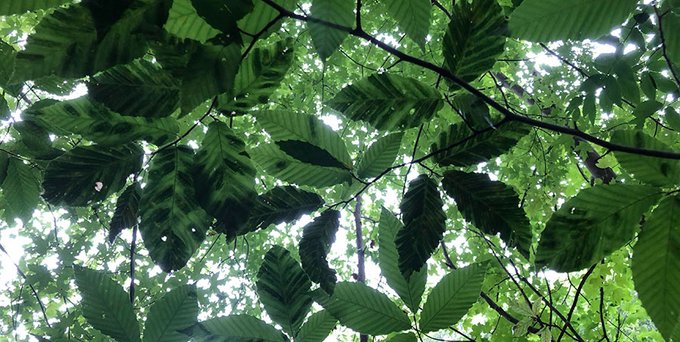
  • the need for additional research on management of beech leaf disease
  • concern about impact of box tree moth and vascular streak dieback on the nursery industry (the latter is a threat to dogwood and redbud)
  • spread of elm zig-zag sawfly in Vermont and Connecticut
  • awareness that laurel wilt is moving into Virginia and maybe farther north.
elm zig-zag sawfly; photo by Gyorgy Csoka via Bugwood

There was a more general discussion of beech leaf disease. What can be done, given that the disease is so widespread that no one is regulating movement of beech. Gary Fish advised outreach and efforts to reach agreement on management approaches. Chris Benemann, of Oregon, suggested informing other states so that they can decide whether to take regulatory action. A representative of CBP urged engaging stakeholders by asking for their help.

Chris Benemann, President of the Western Plant Board, expressed concern about APHIS’ reduced funding for spongy moth detection and control efforts. She also worries about the recently detected population of Phytophthora austrocedrii in an Oregon nursery. The western states are also focused on several longstanding pest problems – grasshoppers, Japanese beetle; and a new beetle from Australia that is attacking almonds, pistachios, and walnuts.

tree infested by hemlock woolly adelgid; photo by F.T. Campbell

Megan Abraham of Indiana reported that members of the Central Plant Board are concerned about

She noted that nursery stock is increasingly coming from more distant – and cheaper – producers, raising the risk of new pests being introduced.

Finally, Abraham expressed concern about decreased funding at the same time as the need is growing – and asked with whom states should collaborate in order to reverse this trend.

Kenny Naylor of Oklahoma, Vice President of the Southern Plant Board, concurred that funding levels are a major concern. He mentioned specifically the spongy moth Slow the Spread program and eradication of the Asian longhorned beetle outbreak in South Carolina. Another concern is the Georgia hornet outbreak.

7) Phasing Out Post-Entry Quarantine

APHIS and the NPB have agreed to phase out the post-entry quarantine (PEQ) program. A program review revealed several problems, some of which astound me. When examining plants in quarantine the scientists still relying on visual inspection! And they are looking for pests identified 45 years ago (1980)! While I think PEQ programs can be valuable in preventing introduction of disease agents, as implemented in recent decades it does not.  Twenty years ago, citrus longhorned beetles escaped from a “quarantine” area in a commercial nursery in Washington state. These Cerambycids are more than an inch long!

citrus longhorned beetle; photo by Art Wagner, USDA via Bugwood

Part of this phase-out is to transfer plant species harboring pests of concern to the Not Authorized for Importation Pending Pest Risk Assessment (NAPPRA). While the APHIS speaker said that NAPPRA allows the agency to act quickly when it detects evidence of pest risk, I have found lengthy delays. The third round of proposals was published in December 2019! The fourth round of species proposed for NAPPRA listing should be published soon; a fifth round is now in draft inside the agency.

8) Christmas Greens – Spreading Pests

Officials from Oregon, Maine, and Illinois described their concerns about pests being spread by shipments of various forest or plant products, especially Christmas greens. Mentioned were spongy moths, link hemlock woolly adelgid, link elongate hemlock scale, balsam woolly adelgid, link and box wood moth. Part of the challenge is that the vectoring items are often sold by unregulated outlets – multiple stores, Christmas tree lots – and through on-line or catalog outlets. There are also extreme demands on the regulatory enforcement staff during the brief holiday sales season. Several states are unsure whether they have authority over decorative products – although others pointed out that they are regulating the pest, regardless of the object for sale or type of store.

9) Pests in Firewood

Leigh Greenwood of The Nature Conservancy noted that the state agencies that issue firewood regulations – often the plant protection organization (state department of agriculture) — do a good job alerting the public about the risks and rules. However, the public looks first to state parks agencies for information about camping – and those agencies have less robust educational efforts. It is important to put the message where the public can find it when they don’t know it exists – before they include firewood from home in their camping gear.

10) Projects of the North American Plant Protection Organization

The North American Plant Protection Organization (NAPPO) is working on several projects of interest to those of us concerned about tree-killing pests. One project is evaluating risks associated with wood products, especially how well one international regulation, ISPM#15 is working for dunnage. Another projects is testing the efficacy of the heat treatment specified by ISPM#15 (50o C for 30 minutes). A third project — almost completed – is evaluating fumigants that can be alternatives to methyl bromide.

In conclusion, each annual meeting of the National Plant Board is packed with new information, updates on current pests, and comments on by the state agencies who suggest new approached to APHIS and hold the agency to account. It is well worth attending. Information about upcoming meetings of both the national and four regional plant boards is posted on the NPB website, https://www.nationalplantboard.org/

Signatories to the APHIS-NPB strategic alliance

SOURCE

Wilson, C.J., T.R. Petrice, T.M. Poland, and D.G. McCullough. 2024. Tree species richness and ash density have variable effects on emerald ash borer biological control by woodpeckers & parasitoid wasps in post-invasion white ash stands. Environmental Entomology.

Posted by Faith Campbell

We welcome comments that supplement or correct factual information, suggest new approaches, or promote thoughtful consideration. We post comments that disagree with us — but not those we judge to be not civil or inflammatory.

For a detailed discussion of the policies and practices that have allowed these pests to enter and spread – and that do not promote effective restoration strategies – review the Fading Forests report at  https://treeimprovement.tennessee.edu/

or

www.fadingforests.org

APHIS Annual Report Describes Helpful Programs … Since Cut Back Because of Funding Shortfalls

Flighted spongy moths infesting a ship’s superstructure

USDA’s Animal and Plant Health Inspection Service (APHIS) has issued its annual report for Fiscal Year 2023.  The report is part of an enhanced outreach effort that I believe is an effort to persuade the Congress to provide additional funds. However, as I describe below, at this summer’s annual meeting of the National Plant Board, link APHIS’ leadership stated that funding shortfalls are forcing them to curtail many programs. These include ones important to those of us concerned about threats to North American trees. I applaud this action and hope it succeeds!

The report contains some good news but I consider the overall approach depressing. Tree-killing pests continue to receive little attention. The report also emphasizes APHIS’ efforts to facilitate export of agricultural products – an understandable stance given American politics.

The opening summarizes the agency’s activities includes:

  • Examples of programs targetting pests abroad, before they can reach the U.S. All are fresh fruits and vegetables;
  • APHIS or  staff at U.S. borders:
    • Approved (cleared) 27,235 shipmentscontaining over 1.87 billion plant units (e.g., a single plant or cutting, or vial of tissue culture plantlets) and 670,811 kilograms of seeds. They intercepted 2,176 quarantine pests. (APHIS carry out these inspections at Plant Inspection Stations – separate from the port environment where DHS Customs and Border Protection (CBP) staff inspects other cargo.)
  • Identified approximately 92,000 pestsfound during CBP inspections of cargo, mail, and express carrier shipments and took quick action to prevent those of concern from entering the U.S.
  • Facilitated entry of regulated agricultural cargo by monitoring more than 62,000 treatments of various kinds, that is, fumigations, cold or heat treatments, and irradiation.
  • Examples of APHIS’ efforts to slow pests’ spread within the country cited plant pest surveys — with coordinated responses — for approximately 45 pests. Also APHIS described funding to help citrus growers combat citrus greening.
  • The report has separate subreports on the following programs: risk analysis, pest detection, “specialty crop” pests, and tree and wood pests. The last two contain information specific to our interests.

Tree and Wood Pests

This program protects forests, private working lands, and natural resources. It targets specific pests: the Asian longhorned beetle, emerald ash borer, spongy moth, and most recently the invasive shot hole borers. The report notes that numerous native, widespread hardwood tree species are vulnerable to these pests. APHIS asserts an economic justification for the program: conserving forests enhances rural communities’ economic vitality, supports forest-related industries, and maintains the ecosystem services provided by urban trees.

Unfortunately, at this summer’s annual meeting of the National Plant Board APHIS leadership said funding shortfalls forced them to pull back on all these programs.

Programs as Described in the Report

Asian Longhorned Beetle  

ALB eradication aims to protect the 30% of U.S. trees that are ALB hosts. These trees support multi-billion-dollar maple syrup, timber, tree nursery, trade, and tourism industries. After reviewing the history of ALB detections, starting in Brooklyn in August 1996, the report describes APHIS’ eradication strategy as comprising surveys, regulatory inspections and quarantine restrictions, removal of infested and high-risk trees, and chemical treatment applications. In FY 2023, the program surveyed more than 763,000 trees across the four regulated areas: New York, Massachusetts, Ohio, and South Carolina. Each program is summarized.

Good news at two locations. On Long Island: only 11 new infested trees were found after a survey of 43,480 trees. In Worcester County, Massachusetts, no new infested trees were found after surveying nearly 360,000 trees. However, in Tate Township, Ohio, surveys detected 163 new infested trees. And in

South Carolina, the program is at an earlier stage — surveying a portion of the quarantine area. The program surveyed nearly 140,000 trees and removed 1,700 in FY 2023.

At the National Plant Board Meeting, Deputy Administrator Mark Davidson explained that the FY2024 appropriation cut $3.6 million from the “tree and wood pests” account. This required the agency to reduce funding for the ALB eradication program.

Emerald Ash Borer

The report summarizes the spread of EAB since its first detection in 2002 in Michigan to 37 states and the District of Columbia (APHIS does not mention EAB’s presence in five Canadian provinces.)

Saying that EAB has spread beyond what a regulatory program can control, the report notes that APHIS ended the regulatory program in FY 2021. In FY 2023 the agency continued the transition to a program relying primarily on biocontrol. In FY2023, APHIS provided parasitoids to 155 release sites – three in Canada, the rest in 122 counties in 25 states. APHIS and cooperators continue to assess their impacts on EAB populations and tree health at release sites and nearby areas. Field evaluations indicate the EAB parasitoid wasps and other EAB natural enemies (woodpeckers) are protecting regenerating sapling ash from EAB.

At the National Plant Board Meeting, Deputy Administrator Mark Davidson explained that the FY2024 appropriation cut $3.6 million from the “tree and wood pests” account. This required the agency to reduce funding for the EAB containment program – probably the biocontrol component.

Spongy Moths

Spongy moths (the species formerly called European gypsy moths) are established in all or parts of 20 eastern and midwestern states, plus the District of Columbia. APHIS and state cooperators regulate activities in the quarantine area to prevent the moths’ human-assisted spread to non-quarantine (non-infested) areas – primarily West coast states. To address the moths’ natural spread, APHIS PPQ monitors the 1,200-mile-long border of the quarantine area and adds newly infested areas to the regulated area. The USDA Forest Service – APHIS – Slow-the-Spread Foundation program has greatly reduced the moth’s rate of spread and has eradicated isolated populations.

Another component of the program aims to prevent introduction of members of the flighted spongy moth complex link from Asia. The Asian species have broader host ranges and the females can fly, so they could spread faster. A multi-nation cooperative program is designed to prevent the moths’ hitchhike on vessels coming from Asia. link APHIS supports this program through negotiations and support of CBP’s offshore vessel inspection, certification, and cleaning requirements. Canada participates in the same program.  

In FY 2023, APHIS and state cooperators continued efforts to delimit possibly introductions in Washington State (no additional moths detected); and California and Oregon (initial detections in FY 2020).

At the National Plant Board Meeting, Deputy Administrator Mark Davidson explained that the FY2024 appropriation cut $3.6 million from the “tree and wood pests” account. This required the agency to reduce funding for the flighted spongy moth program.

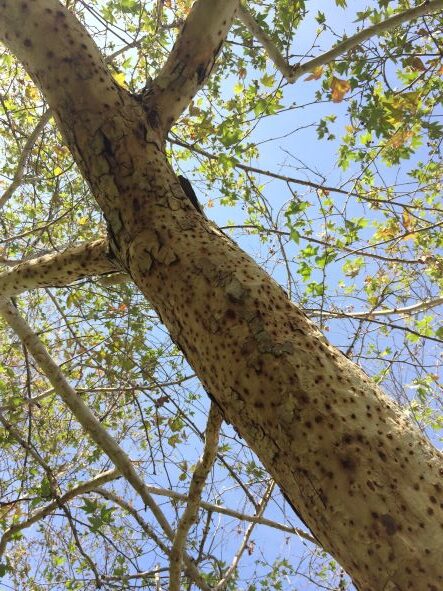
California sycamore infested by polyphagous shot hole borer; photo by Beatriz Nobua-Behrmann UC Cooperative Extension

Shot Hole Borers

The report notes that various non-native shot hole borers have been detected in several states. Their hosts include trees in forests and urban landscapes, tea plantations, and avocado orchards. The program’s focus was apparently on the polyphagous and Kuroshio shot hole borers devastating riparian habitats in southern California and urban areas in other parts of California. At California’s request, APHIS and the USDA Forest Service helped establish a working group, led by USFS, with the goal of strategically addressing both shot hole borers in California. In FY 2023, APHIS’ helped with foreign explorations for possible biocontrol agents, as well as host specificity testing.

APHIS leadership told the National Plant Board in July 2024 that it had dropped this entire program due to funding shortfalls.

Specialty Crop Pests

While much of this report concerns pests of agricultural crops (e.g., grapes, citrus, potatoes), it also summarized efforts re: Phytophthora ramorum (sudden oak death) and spotted lanternfly. APHIS says its efforts protected nursery stock production worth approximately $1.3 billion as of 2019, and tree fruit production worth approximately $1.7 billion in 2021.

map showing areas of the Eastern United States at risk to P. ramorum – developed by Gilligan of Cambridge University

Phytophthora ramorum

The report states that APHIS seeks to limit P. ramorum’s spread from affected nurseries. The agency does this via regulatory strategies. During FY 2023, 16 nurseries were governed by more stringent rules  under the federal program which are imposed on nurseries that have been determined in past years to harbor P. ramorum-infected plants.

In addition, Oregon officials continued surveys of an area outside its quarantine zone because of a detection the previous year. APHIS will adjust the federal quarantine depending on the state’s findings.

The APHIS report does not discuss several pertinent events that occurred in FY2023. [For more details, read the California Oak Mortality Task Force newsletters for 2023 – posted here.

First, APHIS does not mention or discuss the implications of detection of two new strains of P. ramorum — EU1 & NA2 — in west coast forests. The presence of EU1 in a new California county (Del Norte) was confirmed in Feb 2023.

Second, the report said that Oregon is trying to determine the extent of the P. ramorum infection detected outside the state’s quarantine zone. However, it does not mention that this outbreak involves the new NA2 lineage – and that NA2 was known to be present in nurseries in the region since 2005.

The report also does not clarify that three nurseries to added to the more stringent program were so treated because SOD-infected plants were found on their premises.

Nor does the report note that at least two new naturally-infected hosts of P. ramorum were identified:  Western sword fern (Polystichum munitum) and Arbutus x ‘Marina’.Koch’s postulates need to be completed on the latter so it has not yet been added to APHIS’ official host list.

Spotted Lanternfly

Spotted Lanternfly (SLF) was found in 16 states in FY 2023. APHIS’ program enjoyed funding provided through Specialty Crop Pests and from the Plant Protection Act’s Section 7721 link ($6 million from the latter).

The report notes that APHIS still does not have enough data to determine SLF’s impacts on agriculture. Thus far, vineyards have been the most adversely affected agricultural segment, mostly due to SLF acting as a stressor to vines. Also, the sticky, sugary “honeydew” produced by SLF attracts other insects and promotes sooty mold growth. These can ruin the fruit and further damage the plant.

SLF populations are strongly linked to major transportation pathways, such as railroads and interstate highways. APHIS targets treatments and, in some areas, removes SLF’s preferred host plant (tree of heaven [Ailanthus]), from transportation hubs. The aim is to reduce the risk of SLF’ spread to new areas and to eradicate isolated infestations. In FY 2023, APHIS and cooperators treated 4,637 properties covering 6,455 acres in affected areas. However, during the National Plant Board meeting both state and APHIS officials complained to me that managers of these transportation hubs raise many barriers to their access, sharply limiting the program’s chance of success.

Ailanthus altissima – drive of spotted lanternfly invasion

The program was expanded after National Environmental Policy Act-mandated environmental review. This allowed APHIS to conduct treatments in four additional states—Indiana, Massachusetts, Michigan, and Rhode Island. In addition, program cooperators identified three potential biological control organisms, one that targets the tree of heaven and two that target SLF. APHIS will continue to evaluate them and develop methods to rear them in the laboratory.

Finally, in fiscal year 2023, APHIS joined the National Association of State Departments of Agriculture and the National Plant Board to develop a national strategic plan outlining the future direction of the SLF program. With the strategic plan, PPQ aims to harmonize the approach across states to slow SLF’s spread, develop consistent outreach messaging for a nationwide audience, and more effectively use existing state and Federal resources. Continued spread of SLF despite the huge effort, rising costs of the program, and new scientific findings spurred reconsideration of the strategy.

To summarize, I hope that APHIS’ annual report will – in the future – help members of Congress and their staff understand the agency’s programs’ purpose and past successes. This increased understanding might make it easier to advocate for more funding. I am troubled, however, by the agency’s glossing over significant problems.  

Posted by Faith Campbell

We welcome comments that supplement or correct factual information, suggest new approaches, or promote thoughtful consideration. We post comments that disagree with us — but not those we judge to be not civil or inflammatory.

For a detailed discussion of the policies and practices that have allowed these pests to enter and spread – and that do not promote effective restoration strategies – review the Fading Forests report at  https://treeimprovement.tennessee.edu/

or

www.fadingforests.org

Read both: a short call to action (41 pp) based on a long report (952 pp!) Then Act!!!

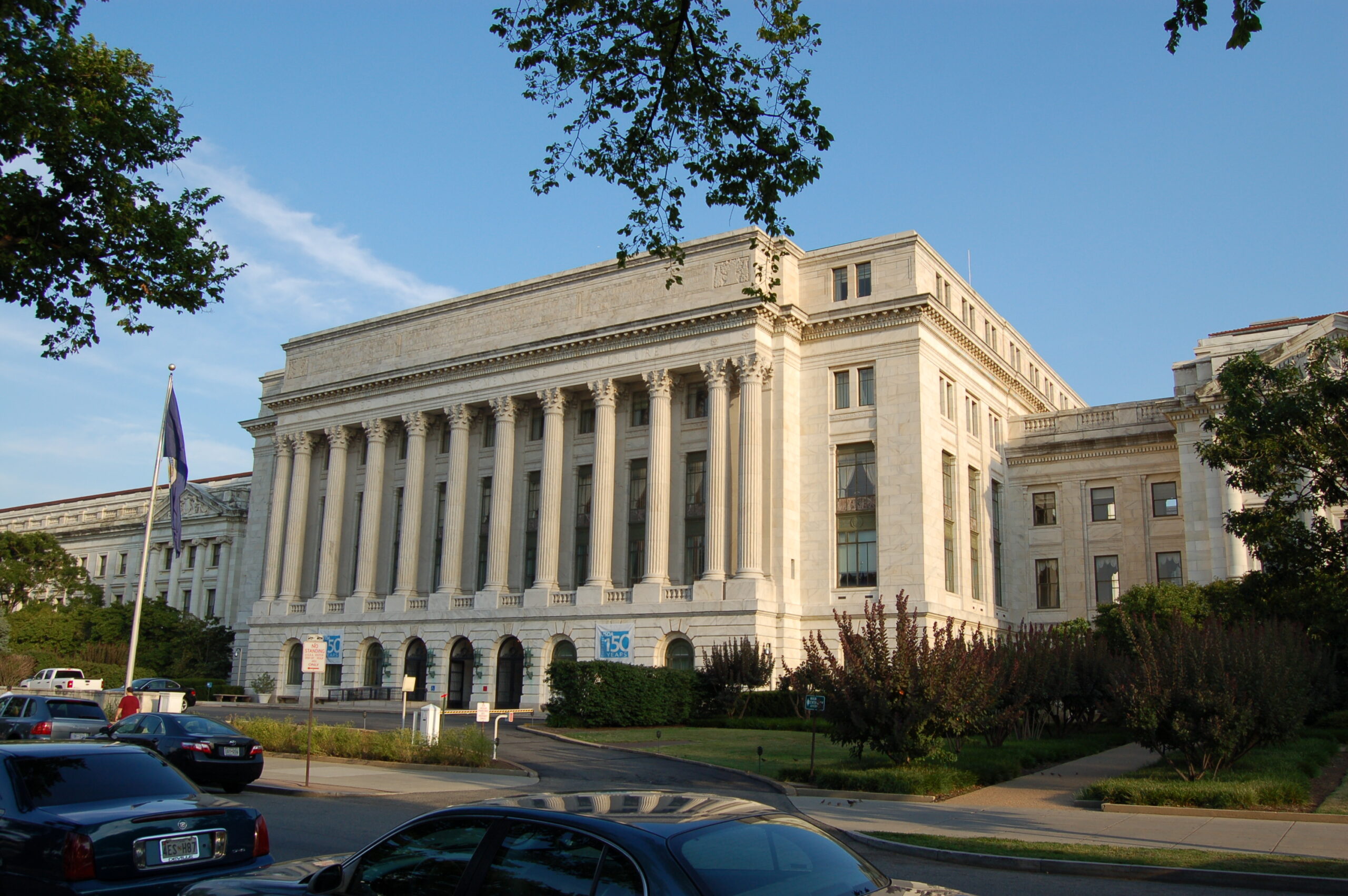
U.S. Department of Agriculture headquarters; lets lobby these people! photo by Wikimedia

Twenty-three  scientists based around the world published a Letter to the Editor titled “Overwhelming evidence galvanizes a global consensus on the need for action against Invasive Alien Species” It appears in the most recent edition of Biological Invasions (2024) 26:621–626.

The authors’ purpose is to draw attention to the release of a new assessment by the Intergovernmental Science-Policy Platform on Biodiversity and Ecosystem Services’ (IPBES).  

The report was issued in September 2023. It is described as the most comprehensive global synthesis of the current knowledge on the bioinvasion process and the impacts of invasive alien species (952 pages!). Its preparation took nearly a decade. Most important, it represents the first consensus among governments and scientists worldwide on the magnitude and extent of the threats that bioinvasions pose to nature, people, and the economy.

The proposed solutions are astoundingly broad and ambitious: transformation of how governments and societies perform. I don’t disagree! However, we need interim steps – “bites of the elephant.”  In my view, the report falls short on providing these.

Why we need to restructure the behavior of governments and societies

Bioinvasions are facilitated by policies, decision-making structures, institutions, and technologies that are almost always focused on achieving other goals. Species transport and introduction are driven by policies aimed at promoting economic growth – especially trade. Later stages of invasions, i.e., establishment and some spread, are accelerated by certain uses of land and sea plus climate change. For example, activities that fragment habitats or cause widespread habitat disturbance provide ready places for bioinvasions. Rarely are those who gain by such policies held accountable for the harms they produce via bioinvasions.
To address these unintended consequences, the IPBES report calls for “integrated governance.” Its authors want coordination of all policies and agencies that touch on the indirect drivers, e.g., conservation; trade; economic development; transport; and human, animal, and plant health. Policy instruments need to reinforce – rather than conflict with — strategic invasive species management across sectors and scales. This involves international agreements, national regulations, all governmental sectors, as well as industry, the scientific community, and ordinary people – including local communities and Indigenous Peoples.

The report also calls for establishment of open and inter-operable information systems. This improved access to information is critical for setting priorities; evaluating and improving regulations’ effectiveness; and reducing costs by avoiding duplication of efforts.

Critically important information that is often unspoken:

  • Indirect causes underlying the usual list of human activities that directly promote bioinvasions are the rapid rise of human population and even more rapid rise in consumption and global trade.
  • Biosecurity measures at international borders have not kept pace with the growing volume, diversity, and geographic origins of goods in trade.
  • Continuation of current patterns is expected to result in one-third more invasive species globally by 2050. However, this is an underestimate because today’s harms reflect the consequences of past actions – often from decades ago. Drivers of invasions are expected to grow in both volume and impact.
  • We can prevent and control invasive alien species – but that success depends on the availability of adequate, sustained resources, plus capacity building; scientific cooperation and transfer of technology; appropriate biosecurity legislation and enforcement; and engaging the full range of stakeholders. These require political will.
  • A major impact of bioinvasion is increased biotic homogenization (loss of biological communities’ uniqueness). This concerns us because we are losing the biotic heterogeneity that provides insurance for the maintenance of ecosystem functioning in the face of ongoing global change.
  • The IPBES study asserts that successfully addressing bioinvasions can also strengthen the effectiveness of policies designed to respond to other drivers, especially programs addressing conservation of biological diversity, ensuring food security, sustaining economic growth, and slowing climate change. All these challenges interact. The authors affirm that evidence-based policy planning can reflect the interconnectedness of the drivers so that efforts to solve one problem do not exacerbate the magnitude of others and might even have multiple benefits.

More Key Findings

  • Overall, 9% (3,500) of an estimated 37,000 alien species established in novel environments are invasive (those for which scientists have evidence of negative impacts). Proportions of invasives is high among many taxonomic groups: 22% of all 1,852 alien invertebrates; 14% of all 461 alien vertebrates; 11% of all 141 alien microbes; and 6% of all 1,061 alien plants. (The discussion of probable undercounts relates to aquatic systems and certain geographic regions. However, I believe these data are all undermined by gaps in studies.)
  • Invasive alien species – solely or in combination with other drivers – have contributed to 60% of recorded global extinctions. Invasive species are the only driver in 16% of global animal and plant extinctions. Some invasive species have broader impacts, affecting not just individual species but also communities or whole ecosystems. Sometimes these create complexoutcomes that push the system across a threshold beyond which ecosystem restoration is not possible. (No tree pests are listed among the examples.)

dead whitebark pine in Glacier National Park; photo by National Park Service

  • The benefits that some non-native – even invasive – species provide to some groups of people do not mitigate or undo their negative impacts broadly, including to the global commons. The report authors note that beneficiaries usually differ from those people or sectors that bear the costs. The authors cite many resulting inequities.
  • There are insufficient studies of, or data from, aquatic systems, and from Africa; Latin America and the Caribbean; and parts of Asia.
  • The number of alien species is rising globally at unprecedented and increasing rates. There are insufficient data specifically on invasive species, but they, too, are thought to be rising at similar rates.
  • Horticulure is a major pathway for introducing 46% of invasive alien plant species worldwide.
  • Regarding invasive species’ greater impact on islands,the IPBES report mentions brown tree snakes on Guam and black rats on the Galapagos Islands. It also notes that on more than a quarter of the world’s islands, the number of alien plants exceeds the total number of native ones. See my blogs on non-native plants on Hawai`i and Puerto Rico. In addition, I have posted several blogs regarding disease threats to rare bird species in Hawai`. The IPBES report does not mention these.  

Where the Report Is Weak: Interim Steps

  • The report endorses adoption of regulated species (“black”) lists.
  • The report emphasizes risk analysis of species. Unfortunately IPBES’ analysis was completed before publication of the critique of risk analysis methods by Raffa et al. ( (2023) (see references). However, we must take the latter into consideration when deciding what to advocate as U.S. policy.
  • The report authors call for more countries to adopt national legislation or regulations specifically on preventing and controlling invasive species. (They note that 83% of countries lack such policies). They also list the many international agreements that touch on invasive species-relevant issues. However, Raffa et al. found that the number of such agreements to which a country is a party bears no relationship to the numbers of alien species detected at its border or established on its territory.
  • The challenge to risk assessment posed by multiple sources of uncertainty can be managed by recognizing, quantifying, and documenting the extent of that uncertainty.

Beech leaf disease – one of many non-native pests that were unknown before introduction to a naive ecosystem. Photo by Jennifer Koch, USDA Forest Service

  • I appreciate the report’s emphasis on the importance of public awareness and engagement, but I thought the discussion of effective campaigns lacked original ideas.

The report did not fulfill its own goal of fully exploring unappreciated impacts of policies in its discussion of habitat fragmentation. For example, the report notes that grazing by feral alien ungulates facilitates the spread of invasive alien plant species. However, it does not mention the similar impact by livestock grazing (Molvar, et al. 2024).

SOURCES

Molvar, E.M., R. Rosentreter, D. Mansfield, and G.M. Anderson. 2024. Cheat invasions: History, causes, consequences, and solutions. Hailey, Idaho: Western Watersheds Project, 128 pp.

Raffa, K.F., E.G. Brockerhoff, J-C. GRÉGOIRE, R.C. Hamelin, A.M. Liebhold, A. Santini, R.C. Venette, and M.J. Wingfield. 2023. Approaches to forecasting damage by invasive forest insects and pathogens: a cross-assessment. BioScience 85 Vol. 73 No. 2 (February 2023) https://academic.oup.com/bioscience  

Posted by Faith Campbell

We welcome comments that supplement or correct factual information, suggest new approaches, or promote thoughtful consideration. We post comments that disagree with us — but not those we judge to be not civil or inflammatory.

For a detailed discussion of the policies and practices that have allowed these pests to enter and spread – and that do not promote effective restoration strategies – review the Fading Forests report at http://treeimprovement.utk.edu/FadingForests.htm

or

www.fadingforests.org

Container numbers, origins, routes & destinations change — as do pest risks

container ship at Port of Savannah; photo by F.T. Campbell

Import Volumes in 2023

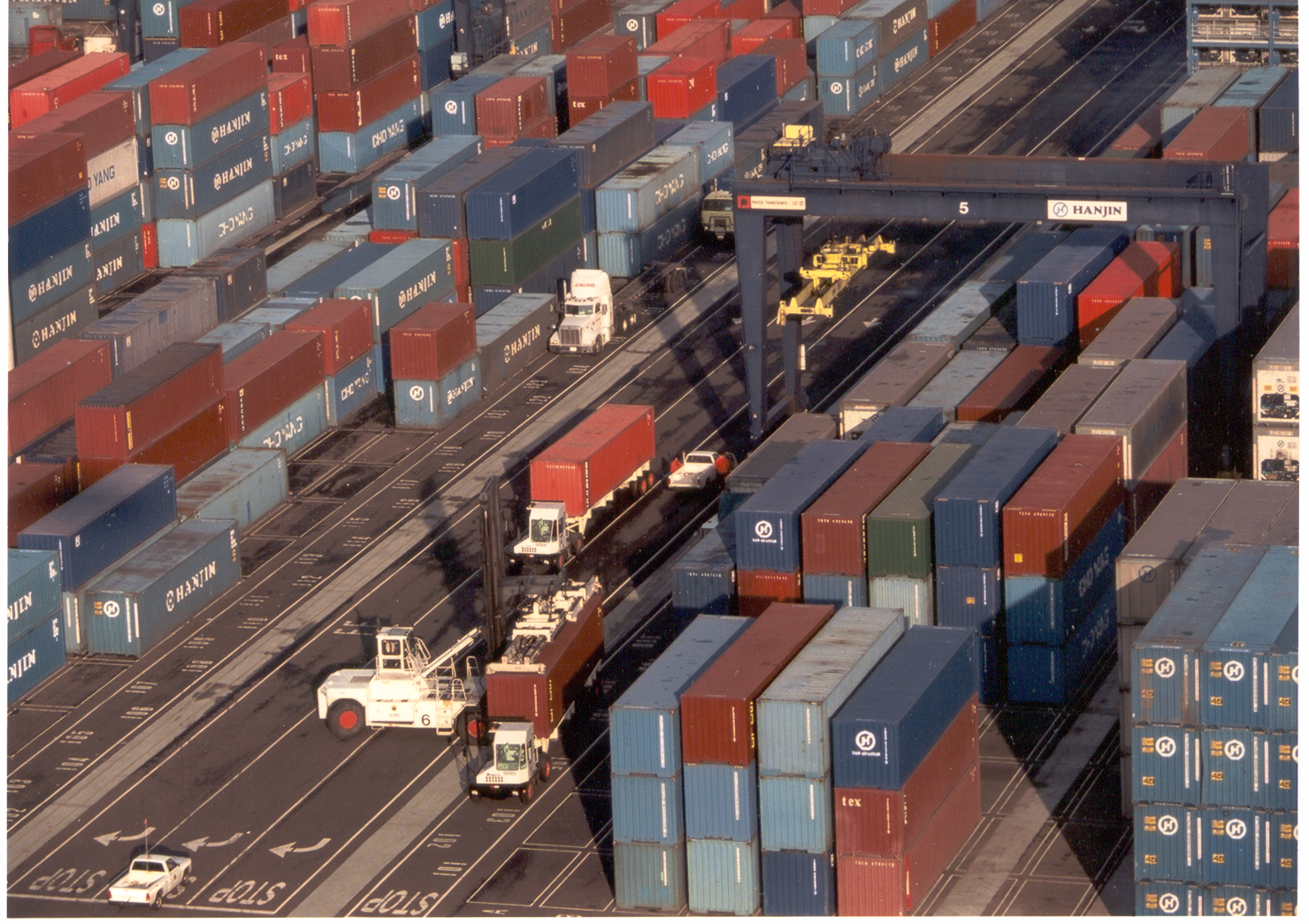
U.S. imports in 2023 fell about 13% from 2022 levels, returning to approximate pre-pandemic 2019 levels (Mongelluzzo 2024). The 2023 total was 24.2 million TEUs, (a united equal to twenty-foot container) compared to nearly 28 million TEUs  in the previous two years (JoC.com February 2024). Imports from Asia in 2023 totalled 16.2 million TEUs. This was above the 2019 level (15.9 million TEUs) but below the more than 18.5 million TEUs in 2022 and 2021 (Mongelluzzo 2024).

This decline in imports from Asia reflected trends in the first months of 2023. This trend reversed sharply in October; during that month, containerized imports were 12.4% higher than in October 2022, even 1.1% higher than in pre-COVID October 2019 (Mongelluzzo, 2023). The upward trend continued through November: U.S. imports from Asia that month were 10.8% higher than the same month in 2022 (Journal of Commerce).

New Shipping Routes = More Possible Pests

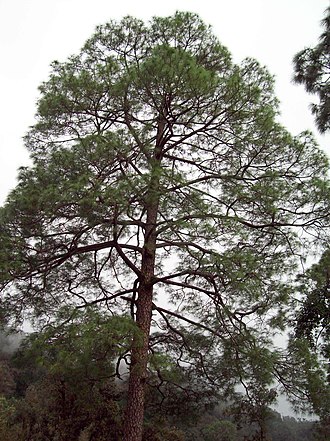
chir pine (Pinus roxburghii) – a 5-needle pine native to the Himalaya in India; photo by Treesftf via Flickr

Proposed new shipping routes will expand the range of pests that can be introduced to eastern ports. For example, in November 2023, the Indian company Ocean Network Express announced plans to begin direct shipments from India to the Ports of New York-New Jersey, Savannah, Jacksonville, Charleston, and Norfolk. Expected cargo includes electronics, apparel, textiles, and foods. (Angell, 2023a) Have USDA authorities evaluated what pest species might be introduced from India?

Traders also expect rising trade volumes from South America in response to shifts in supply chains. Industries include textiles, pharmaceuticals, renewable energy, information technology, and agriculture.

The U.S. is importing more chilled produce from the west coast of South America to meet demand when these fruits are out-of-season in the U.S. The number of refrigerated containers rose to 395,572 TEUs (equivalents of twenty-foot containers). (Knowles. 2023) The Port of Savannah is actively courting these imports; it can now handle more than 3,000 refrigerated containers at one time and is expanding its capacity (Griffis 2023). Chile has a Mediterranean climate similar to that of California; Dr. Mark Hoddle reports several pests of avocado are found in neighboring Peru.

blueberries in Chile; Jardin Botanico Nacional, Chile via Flickr

Problems in the canals likely to push trade from Asia back to California ports

In an editorial published on January 25, 2024, The Washington Post reports that drought has caused water levels in the Panama Canal to fall below what is needed to operate the locks. In normal years, about 5% of global maritime trade passes through the canal. This includes nearly half the containers shipped from northeast Asia to the eastern United States. The reduction in numbers of ships moving through the Canal has affected supply chains in agriculture and energy. The situation is further complicated by wars in the Middle East hampering shipments through the Suez Canal.

The Post describes the Panamanian government’s efforts to buttress the canal, which is a major source of income. Droughts elsewhere are also impeding transport, e.g., the Amazon, Rhine, and Mississippi rivers. In the Post’s view, “threats to global growth will make it harder to … respond to poverty and hunger. … Ultimately, prevention, by arresting the emission of planet-warming greenhouse gases, is the only way to stop the list of looming climate-related threats to the global economy from getting even longer.”

Here, my focus is on what this means for volumes of ships and containers visiting ports in the eastern United States – and the associated risks of pest introductions.

Ambitious Plan for Eastern Ports

As I have pointed out in previous blogs [on the website home page, scroll below the “Archives” to “Categories”, click on “wood packaging”, especially this one], ports in eastern and Gulf Coast states have been eagerly conducting dredging operations and making other preparations to attract large container ships bringing goods from Asia. As of just a few months ago, several ports had ambitious plans. The Port of Virginia will reach a depth of 55 feet this year (Angell, 2023b). The Port of Charleston already has a 52-foot depth. Nevertheless, the port authority hopes to further deepen the channel so that it can quintuple its capacity over a decade — from 500,000 TEUs to 2.5 million TEUs (Anonymous, 2024). The Port of New York-New Jersey has approved $19 million to study deepening the ship channels from 50 to 55 feet. The Port Authority hopes to persuade Congress to share the costs (Angell, 2023b). None of the reporting mentions any consideration of the possible pest risk despite past disasters – e.g., introduction of the redbay ambrosia beetle to Savannah or Asian longhorned beetle to Charleston.

redbay mortality in Claxton, GA; photo by Scott Cameron

The proportion of total U.S. imports going to West Coast ports in 2023 was 53.6% (Mongelluzzo, 2023). Journal of Commerce’ long-time analyst Bill Mongelluzzo expects the effective closure of both the Suez (attacks on shipping) and Panama canals will push more imports from Asia to the Ports of Los Angeles and Long Beach. These linked ports now handle 32% of all U.S. imports. Mongelluzzo expects the increased volume to create new congestion problems (Mongelluzzo 2024).

containers at Long Beach in early 2000s; photo courtesy of Port of Long Beach

SOURCES

Angell, M. 2023a. ONE readies Indian-U.S. East Cost service as part of 2024 network rollout. Journal of Commerce. November 27, 2023.

Angell, M.2023b.  NY-NJ port takes next steps to study dredging amid larger ship calls. Journal of Commerce December 20, 2023. https://www.joc.com/article/ny-nj-port-takes-next-steps-study-dredging-amid-larger-ship-calls_20231220.html?utm_source=Eloqua&utm_medium=email&utm_campaign=CL_JOC%20Daily%2012%2F21%2F23%20Non-Subscriber_PC00000_e-production_E-165003_DS_1221_0617

 AnonymoU.S.. SC Ports requests study to deepen channel leading to North Charleston Terminal. Journal of Commerce Daily Newswire. January 12, 2024

Griffis, T.E. 2023. New ZIM service takes advantage of Savannah’s expanding cold storage network. Journal of Commerce. September 22, 2023.

Hoddle. M.S. 2023. A new paradigm: proactive biological control of invasive insect pests. BioControl https://doi.org/10.1007/s10526-023-10206-5

Knowles, G. 2023. Sourcing shift caU.S.es surge in South American logistics investment. Journal of Commerce. September 25, 2023.

Mongelluzzo, B. 2023. U.S. imports from Asia hit 2023 high in October despite muted peak season. Journal of Commerce.

Mongelluzzo, B. 2024. U.S. imports from Asia fell near pre-COVID levels in 2023, but uncertain ’24 awaits. Journal of Commerce. January 19, 2024.

Imports from Asia rise; perhaps 2,000 or more containers carrying insect pests enter U.S. in one month

Wood packaging – crates, pallets, spools for wire, etc. — has been recognized as a major pathway for introduction of tree-killing pests since the Asian longhorned beetle was detected in New York and Chicago in the late 1990s. As of 2021, 65 new species of non-native wood- or bark-boring Scolytinae had been detected in the United States (Rabaglia; full citation at end of the blog).

As I have often reported [To see my 40+ earlier blogs about wood packaging material, scroll down below archives to “Categories,” click on “wood packaging”.], the international phytosanitary community adopted the International Standard for Phytosanitary Measures (ISPM) #15. The goal of ISPM#15 is to “significantly reduce” [not eliminate] the risk of pests associated with solid wood used for constructing packaging (e.g., crates, pallets), from being introduced to other countries through international trade.

I recently reviewed the first 20+ years of implementation of ISPM#15 including two analyses by Robert Haack and colleagues in a blog in December 2022. I have also provided the broader context of the World Trade Organization (WTO) in my Fading Forests II report.  

I last blogged about U.S. import volumes in June. My silence since reflected the significant decline in U.S. imports from Asia. This reduction had reduced the likelihood that a new tree-killing pest would be introduced from that region – or that an already-established pest would be introduced to a U.S. region that had escaped it so far.

However, U.S. imports from Asia have suddenly grown! In October 2023, containerized imports from Asia were 12.4% higher than a year ago – and 6% higher than in September. According to the Journal of Commerce (full citation at end of blog), U.S. retailers anticipate consumers will purchase lots of gifts for the upcoming Christmas season.

The U.S. imported 1.57 million TEU from Asia in October. This volume exceeded even the pre-COVID levels. How great is the associated risk of a pest introduction? To calculate that, I apply the following:

  • most U.S. imports arrive in 40-foot-long containers, so divide TEU by 2 = 785,000
  • a decade-old estimate that 75% of containers in maritime shipments contain wood packaging (Meissner et al.) = 588,750 containers with wood packaging (I suspect it is more).
  • the estimate by Haack et al. 2014 that 0.1% (1/10th of 1 percent) of consignments (which usually means a single container) harbor tree-killing pests;
  • the estimate by Haack et al. 2022 that 0.22% of consignments harbor tree-killing pests.
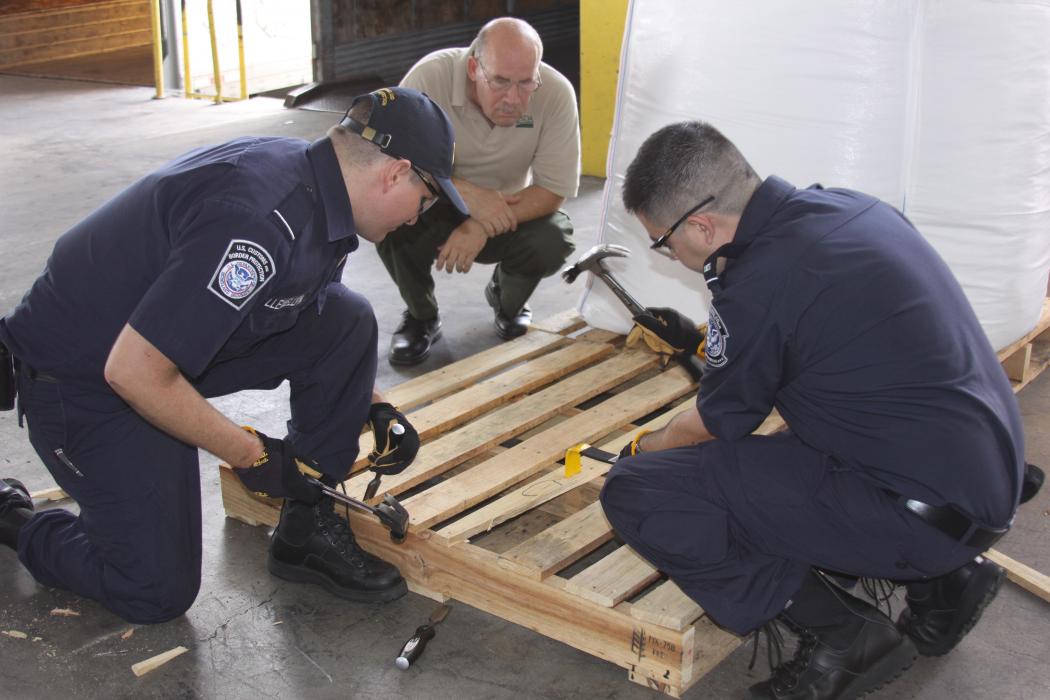
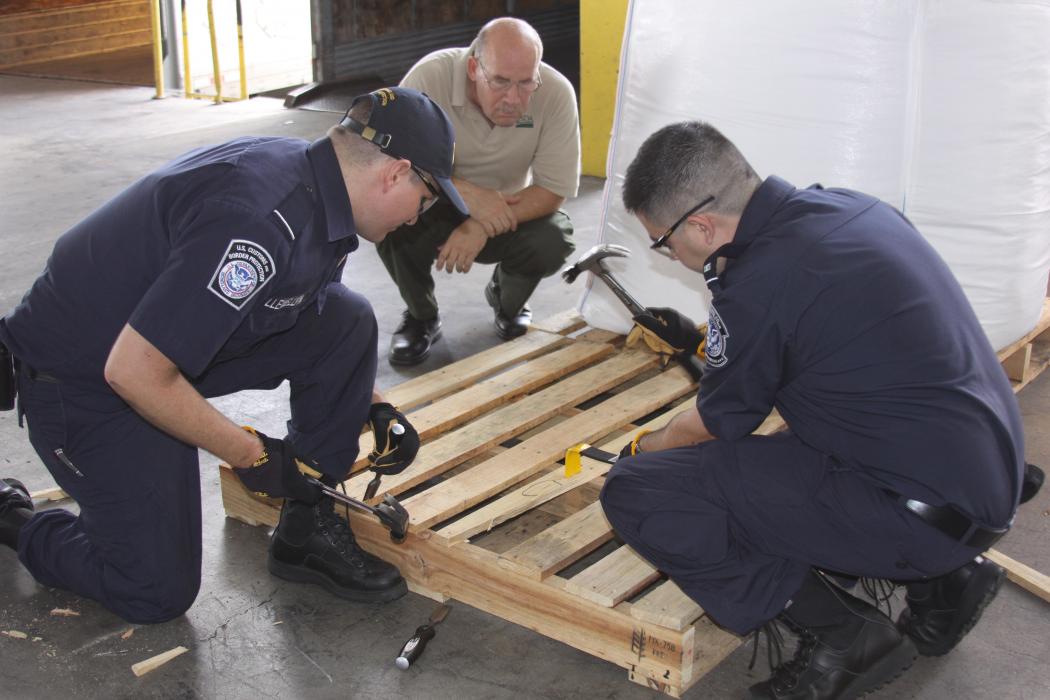
inspecting a pallet; CBP photo

The result of these calculations is an estimate of 648 containers (using the 2009 global estimate), or 1,727 containers (using the 2022 global estimate), or 5,730 containers (using the 2010-2020 estimate for China specifically) entering the country in one month harbored tree-killing pests. Since West Coast ports received 54% of those containers, the estimated number of containers transporting pests that enter California, Washington, or Oregon ranged from 349 to 3,042. The rest are scattered among the dozens of ports on the East and Gulf coasts.

With drought limiting container ship transits through the Panama Canal (Szakonyi 2023), the threat to East and Gulf coast ports might not rise commensurately.

Because of the low levels of imports in previous months, U.S. imports from Asia remain significantly below levels in previous years: 16.6% lower for the January – September period compared to 2022.

The 2022 analysis found that the rate of wood packaging from China that is infested has remained relatively steady since 2003: 1.26% during 2003–2004, and ranged from 0.58 to 1.11% during the next three time periods analyzed. Packaging from China made up 4.6% of all shipments inspected, but 22% of the 180 consignments with infested wood packaging. Thus the proportion of Chinese consignments with infested wood is five times greater than would be expected based on their proportion of imports.  Note the great impact of this high infestation rate on the number of containers transporting tree-killing pests to the U.S. in the paragraph above: more than 8,000 containers compared to about 2,000.  

I remind you that the U.S. and Canada have required treatment of wood packaging from China since December 1998. Why are the responsible agencies in the United States not taking action to correct this problem? [which has persisted for 2 decades]

The fact is – as I have argued numerous times — a pallet or crate bearing the ISPM#15 mark has not proved to be a reliable indicator as to whether the wood is pest-free. (This might be because the wood had not been treated, or if it was, the treatment failed). All the pests detected in the Haack et al. studies (after 2006) were in wood packaging bearing the ISPM#15 mark. As noted in my past blogs [click on the “wood packaging” category to bring up blogs about wood packaging and enforcement], Customs and Border Protection also report that nearly all the wood packaging in which that they detected insect pests bore the ISPM#15 mark.

According to Angell in November (full citation at end of blog), U.S. imports from India to the east coast fell by 15% in the first 10 months of 2023 compared to last year – to a total of 623,356 TEUs. This might change in the future: a shipper has promised to start weekly arrivals from India beginning in May 2024. the company plans calls at New York-New Jersey, Savannah, Jacksonville, Charleston, and Norfolk. The ships will call, en route, at ports in Saudi Arabia, Egypt, and Spain. What pests might be hitching a ride on these shipments?

SOURCES

Haack RA, Britton KO, Brockerhoff EG, Cavey JF, Garrett LJ, et al. 2014. Effectiveness of the International Phytosanitary Standard ISPM No. 15 on reducing wood borer infestation rates in wood packaging material entering the United States. PLoS ONE 9(5): e96611. doi:10.1371/journal.pone.0096611

Haack RA, Hardin JA, Caton BP and Petrice TR. 2022. Wood borer detection rates on wood packaging materials entering the United States during different phases of ISPM#15 implementation and regulatory changes. Frontiers in Forests and Global Change 5:1069117. doi: 10.3389/ffgc.2022.1069117

Meissner, H., A. Lemay, C. Bertone, K. Schwartzburg, L. Ferguson, L. Newton. 2009. Evaluation of pathways for exotic plant pest movement into and within the greater Caribbean Region.  

Mongelluzzo, B. 2023. U.S. imports from Asia hit 2023 high in October despite muted peak season. Journal of Commerce https://www.joc.com/article/us-imports-asia-hit-2023-high-october-despite-muted-peak-season_20231116.html (access limited to subscribers, unfortunately)

Angell, M. 2023. ONE readies India-US East Coast service as part of 2024 network rollout. Journal of Commerce. November 27, 2023

Rabaglia, R. 2021. The increasing number of non-native bark and ambrosia beetles in North America. International Union of Forest Research Organizations. Prague, Czech Republic. September 2021

Szakonyi, M. 2023. Carriers Weigh Options as Panama Canal restrictions become fact of life. Journal of Commerce. November 21, 2023. (Access limited to subscribers, unfortunately)

Posted by Faith Campbell

We welcome comments that supplement or correct factual information, suggest new approaches, or promote thoughtful consideration. We post comments that disagree with us — but not those we judge to be not civil or inflammatory.

For a detailed discussion of the policies and practices that have allowed these pests to enter and spread – and that do not promote effective restoration strategies – review the Fading Forests report at http://treeimprovement.utk.edu/FadingForests.htm

or

www.fadingforests.org

Countering Non-Compliant wood packaging – is new study the 1st step?

infested wood bearing ISPM#15 mark; photo by Oregon Department of Agriculture

SWPM has been recognized as a major pathway for introduction of tree-killing pests since the Asian longhorned beetle was detected in New York and Chicago in late 1990s. As of 2014, 58 new species of non-native wood- or bark-boring insects had been detected – many probably introduced via wood packaging [Leung et al. 2014]. Other examples include the emerald ash borer, redbay ambrosia beetle, and, possibly, the invasive shot hole borers.

In response to recognition of the pest risk associated with wood packaging, countries adopted ISPM#15. This process was reviewed in the two articles by Haack et al. and my recent blog. I provided the broader context of the World Trade Organization (WTO) in my Fading Forests II report.  

I have blogged often about the continuing poor compliance with wood packaging regulations, especially by China; and USDA APHIS’ insufficient efforts to fix the problems. The DHS Bureau of Customs and Border Protection (CBP) has tried much harder. See particularly my blog about Bob Haack’s re-evaluation of the pest approach risk in wood packaging. Given the high volumes of imports, pests infesting even a small proportion of incoming shipments can result in tens of thousands of pest-infested containers entering the U.S. or Canada each year. For an explanation of these calculations, see the “background” section of this blog.

Since 2010, CBP has discovered actionable pests in more than 700 shipments each year (pers. comm.). [APHIS reports half as many detections – 300 wood boring and bark beetles (Greenwood et al. citing APHIS report from 2021). Perhaps the difference arises from some of the actionable pests not being wood-borers, e.g., snails.] The persistence of pest presence has disappointed CBP staffers, because the agency has taken several actions intended to discourage violations. These include imposing fines and revoking the violators’ participation in the U.S. Trade Partnership Against Terrorism (C-TPAT) program. Greenwood et al. describe these consequences of non-compliance, as well as the expense of re-exporting the goods and associated wood packaging, as “significant”. Regardless of how significant they might be, so far these consequences have not reduced non-compliances substantially.

The fact is, countries cannot rely on the presence of the ISPM#15 mark or stamp to indicate that the wood packaging is pest-free. In both the United States and Europe, more than 90% of the SWPM found to be infested has born the ISPM#15 stamp (pers. comm.; Eyre et al. 2018). All the pest-infected shipments imported after 2006 discussed in the Haack et al. 2022 study were in wood packaging bearing the ISPM#15 mark. While many of the problems arise on shipments from Asia, findings occur sporadically with countries all across the globe- and notably, U.S. importers have also found serious problems with dunnage from Europe.

But that is the purpose of the standard!

Two outstanding questions that need answers

  1. Continuing poor compliance with regulations by China. This is despite the fact that the U.S. and Canada have required treatment of wood packaging from China since December 1998 – nearly 24 years. Haack et al. found that the proportion of Chinese consignments with infested wood is five times greater than expected based on their proportion of the dataset. The rate of wood packaging from China that is infested has remained relatively steady: the Chinese infestation rate was 1.26% during 2003–2004, and ranged from 0.58 to 1.11% during the next three periods.

Why are the responsible agencies in the United States not taking more aggressive action to correct this long-standing problem? This is a matter of political will.

  • Despite the ISPM#15 mark being unreliable for more than a decade, countries have not carried out research to determine the root causes. Even now (i.e., Haack et al. 2022; Greenwood et al.) no one can say what proportion of these ISPM-marked but pest-infested pieces of wood results from the treatment not being effective in killing all pests; what proportion results from inadequate application of treatments that are per se effective; and what proportion from fraud (deliberate claims to have applied a treatment that was not done)?

Admittedly, answering these questions will not be easy. First, there is no independent test for whether treatments have been applied; the treatments do not alter the wood’s properties in measurable ways. Scientists need experiments to test the real-world efficacy of treatments in the specific contexts of solid wood packaging.

Second, each country is responsible for its own compliance. Countries differ in their capacity and political will to address this issue. However, success of ISPM#15 depends on determining the cause of continuing pest presence in wood marked as treated, and taking appropriate action to solve the underlying problem.

Greenwood et al. attempt to make progress toward carrying out this necessary task by describing the many steps in the wood packaging supply chain, associated opportunities for pests to infest the wood at each step, and actions exporters and importers can take to try to minimize the risk.

Again, as I discussed in the earlier blog, Haack et al. (2022) found several disturbing situations:

  • While the pest approach rate has fallen since U.S. implementation of ISPM#15, the extent of the decline has progressively decreased as time passes. The reduction during 2005–2006 was 61%; during 2007–2009, 47%; during 2010-2020 only 36%.
  • The 2010 – 2020 pest approach rate was calculated at 0.22%. This is more than double the rate based on 2009 data (0.1%, as stated in Haack et al. 2014). While we cannot directly compare these two data points (the two studies used different methods, as discussed in the blog), the bottom line is that the approach rate remains too high. Our forests continue to be exposed to the risk of introduction of highly damaging wood-boring pests. Furthermore, since the number of countries sending us infested wood packaging has increased, those potential pests include insects from a greater variety of countries (biomes). 
  • The two most commonly intercepted families of wood borers are Cerambycidae and Scolytinae (Haack et al. 2022). These families include the Asian longhorned beetle, , redbay ambrosia beetle, and invasive shot hole borers. The 2009 amendment requiring debarking has not apparently resulted in substantial decreases in pest presence, although the proportion of pests that are true bark beetles has declined – from 100% of Scolytinae identified to genus or species detected before 2009 to only 23% in 2010–2020 period.
Michigan’s champion green ash killed by emerald ash borer

Haack et al. (2022) Recommendations

Haack et al. (2022) call for several improvements. Several pertain to how data are collected. Recording the number of infested pieces of wood instead of reporting only consignments would help clarify whether the numbers of insects reaching our borders has fallen, risen, or remained steady. Recording the presence of bark – and the size of any bark remnants – would help clarify whether pests are re-infesting treated wood.

They also note opportunities to improve ISPM#15 implementation and enforcement through training. However, compliance issues persist despite past educational efforts by APHIS and the IPPC.

The Wood Packaging Supply Chain Offers many Opportunities for Pests to Infest the Wood

Greenwood et al. describe each step in fabricating wood packaging material and the opportunities each step presents for unwanted organisms to enter that supply chain. They note that ensuring that these organisms are not then transported on wood packaging being used to carry goods requires that the pests be removed; rendered infertile, inactive, unable to complete development or reproduce; or killed.

The first step in fabricating wood packaging is to harvest trees. Those trees probably harbor various insects, fungi, nematodes, and other organisms that use trees as a resource — for food, shelter, or as a substrate for oviposition. Greenwood et al. mention that the multiplicity of organisms’ life histories pose different challenges for detection and management depending on size, type of tissue utilized, and other factors. The likelihood that a pest or pathogen will be present on or in tree tissues depends on several biotic and abiotic factors, including a species’ proclivity to experience periodic or episodic outbreaks; blow-down events (e.g., hurricanes, windstorms); and harvesting practices. Some of these factors can be controlled by people harvesting the wood.

One of the most frequent opportunities for pest infestation, escape, or cross-contamination is when the wood is stored in the environment. Such storage events happen after the tree is felled — at either the harvest site or processing facility; after the pallet or crate is built – either empty or after the goods have been packed; at the port of export before embarkation; at the importing port before inspection or onward transport; at distribution centers; at retailers; at “pallet graveyards” while awaiting repair or recycling. Retailers and customers have few resources for responsible handling of SWPM – and few incentives to be careful.

a “pallet graveyard”; photo by Adnan Prasad, then with Davey Tree

The risk is exacerbated if storage takes place near woodlands. photo from Savannah At ports and distribution centers, the presence of SWPM from many origins adds to the risk of cross-contamination. Enclosing the SWPM in containers does not completely eliminate the risk since organisms might enter through cracks or air vents. Greenwood et al. suggest management tactics to prevent or reduce pest interaction with the wood during these periods.

container storage near a treed area – Port of Savannah; photo by F.T. Campbell

One of the ISPM#15 requirements intended to minimize the pest risk is debarking the wood. This process removes most organisms that live in and just under the bark. However, debarked wood usually retains some patches of bark because trees are not perfectly round cylinders. Therefore ISPM#15 specifies that remaining bark must be less than 3 cm wide or, if the piece is longer than 3 cm, less than 50 cm2 in area.

Greenwood et al. state that after debarking and treatments per ISPM#15, the risk that a pest will be present on the SWPM has been significantly reduced. However, other challenges appear as the newly-minted packaging is put into use – primarily through the possibility of contamination during storage – as described above. There are also risks associated with inadequate or insufficient treatment or fraud.

Once loaded onto a ship, containers and any SWPM, including dunnage, are very difficult to inspect. That means that the loading process presents that last opportunity for inspection and mitigation of contaminating pests. Greenwood et al. note that it is the shipper’s responsibility to ensure containers are “clean, free of cargo residues, noxious materials, plants, plant products and visible pests” before being loaded on the ship. However, the International Maritime Organization (IMO) provides only recommendations, not mandates. Australia has adopted more stringent requirements.

Arrival at the importing country’s port presents the first opportunity for non-indigenous organisms to escape and the first domestic opportunity for the receiving country to inspect the shipment. While U.S. and Canadian customs agencies have authority to board ships before they dock to inspect them, Mexican agencies do not. The most extensive pre-docking requirements are aimed at preventing arrival of moths in the Lymantria genus from Asia.

dunnage in Houston; photo by S. Useman, CBP

Greenwood et al. note that dunnage presents unique risks. After it is removed from ships during the unloading process it is often stored at the port. As noted above, storage in the open allows pests to escape to nearby trees or to cross-contaminate other SWPM. Ports struggle to manage these piles. In 2016 the U.S. revised its regulations to allow for the more rapid destruction of illegally deposited dunnage via incineration at the port. Since 2008 Canada has considered all shipborne dunnage to be non-compliant – regardless of whether it bears the ISPM#15 stamp. In the largest Mexican ports, dunnage is fumigated and destroyed. However, the dunnage might be stored in the open for considerable periods before being destroyed.

Worse, it is often impossible to assign chain of custody information and responsibility for either disposition of non-compliant dunnage or penalties for non-compliance. Dunnage or blocking pieces might be added immediately before shipping by entities other than the owners or brokers for the commodities being shipped.  I have already noted that it is nearly impossible to inspect dunnage in a ship’s hold.

Unfortunately, studies have not clarified the level of infestation of dunnage in comparison to other wood packaging types made from multiple pieces of milled wood, such as pallets or spools.

Greenwood et al. describe the different fates of pallets, dunnage, crates, spools, and other types of SWPM. Wood pallets are frequently recycled or remanufactured in the U.S., although there are no data on the proportion of the recovery market that is composed of pallets initially manufactured overseas. In the U.S., most repairs are done with components from reclaimed pallets so they probably conform to ISPM#15 repair guidelines. However, contamination could happen while the pallets are in storage awaiting reuse. As SWPM ages, different types of pests might be attracted.

SWPM deemed not suitable for reuse is either destroyed in controlled settings (i.e., solid waste facilities, wood processing facilities, or landfills), used in recycling or downcycling markets, or reclaimed. It might be chipped and sold as mulch, soil amendment, or animal bedding; or it might enter the commercial fiber market and be manufactured into other wood products (e.g., paper, chipboard, fuel pellets). These dispositions present very low pest risk, due to the final dimensions of the wood products being too small to sustain pest development in most cases. However, some microorganisms and very minute arthropods might persist even on chipped or shredded material. There is little data on the final disposition of SWPM globally.

Greenwood et al. reiterate that the presence of hitchhiking or contaminating pests does not imply failure of ISPM#15 treatments, which do not target such organisms. Such pests can also be present on non-wood packaging material such as plastic and metal. Countries vary in their concern about these hitchhiking pests, which include dry wood borers and brown marmorated stinkbug (Halyomorpha halys). Since these pests are not addressed by ISPM#15, countries can implement their own management strategies to counter contaminating pests on all SWPM, containers, and conveyances. Indeed, Pennsylvania regulates the movement of SWPM and other high risk articles to prevent the spread of the non-specific hitchhiking pest, spotted lanternfly, Lycorma delicatula.

They also note that reuse, disposal, and recycling of packaging made from metal, plastic, or even paper requires very different processes and facilities than those used for wood.

Greenwood Recommendations

Greenwood et al. advocate additional research on several questions:

  • to test whether currently accepted ISPM#15 treatments are sufficiently effective within the newly proposed metrics found in Ormsby 2022.
  • to determine the risk profile and enforcement of dunnage, especially whether organisms in dunnage are more likely to survive treatment (dunnage pieces are often much larger than any component piece of a pallet or crate).
  • to develop new treatments – including to counter re-infestation later in the supply chain. Scientists will probably have to replace Probit9 as a standard because it is not practical to exposing tens of thousands of wood-infesting insects to the new treatment. This is also discussed in Ormsby 2022.
  • to develop ways to test whether treatments have been applied – needed to verify whether fraud has occurred.
  • social and economic motivations around compliance

Most of these studies will require international cooperation.

Other steps are also need. As U.S. importers of break-bulk cargo have found out, procuring apparently compliant SWPM does not protect them from legal, financial, and logistical consequences if that SWPM turns out to be non-compliant or otherwise infested with live actionable pests. Some importers have begun exploring options toward additional private inspection at the exporting port, beyond solely requiring the use of ISPM#15 compliant materials. Greenwood et al. suggest the possibility of third-party certification. They also supported calls for officials to release of information about which foreign facilities have a history of selling SWPM subsequently found to be non-compliant. This information would empower importers to procure pest-free SWPM – thus harnessing market incentives to improve compliance.

Managing all this + pest risks? Photo by Port Authority of Long Beach

Greenwood et al. say that reducing external contamination on conveyances – ships, airplanes, trucks, and trains – is challenging. It would require the cooperation of multiple entities who manage yards, equipment, and facilities. Improved management must make sense to people who have severe constraints on time, staffing, space, and safety protocols. Persuading them to act will probably depend on improved information (research) on the cost effectiveness of various strategies and real-world incidence of contamination in different storage scenarios (beyond Lymantria complex), plus development of new surveillance tools.

Greenwood et al. suggest that conducting a HACCP assessment of the supply chain could help identify how a systems approach might better mitigate pest risks of SWPM. They think systems approaches might be especially promising for reducing risks of contaminating organisms. NAPPO recently adopted a standard for designing and implementing systems approaches for wood commodities.  

Finally, I remind you of my recommendations for immediate policy actions to hold foreign suppliers responsible for non-compliant wood packaging:

  • U.S. and Canada should refuse to accept wood packaging from foreign suppliers that have a record of repeated violations – whatever the apparent cause of the non-compliance. They should institute severe penalties to deter foreign suppliers from taking devious steps to escape being associated with their violation record.
  • I also support the suggestion (above) that phytosanitary agencies inform importers on which foreign treatment facilities have a record of poor compliance or suspected fraud – so the importers can avoid purchasing SWPM from them.
  • U.S. and Canada should encourage importers to switch to materials that won’t transport wood-borers. Cardboard and manufactured wood packaging (e.g. oriented strand board and compressed wood block) are wood fiber products that have near zero risk of wood-borer infestation. Plastic is also one such material. I note that Earth is drowning under discarded plastic.

APHIS and CFIA have the authority to take these action under the “emergency action” provision (Sec. 5.7) of the World Trade Organization’s Agreement on the Application of Sanitary and Phytosanitary Standards (WTO SPS Agreement). (For a discussion of the SPS Agreement, go to Fading Forests II, here.)

Longer-term Actions

APHIS and CFIA should exercise their right to set a higher “level of protection” to minimize introductions of pest that threaten our forests (described inter alia here.) They should prepare a risk assessment to justify adopting more restrictive regulations that would prohibit use of packaging made from solid wood – at least from the countries with records of high levels of non-compliance.

The studies needed to determine the cause of the continuing issue of the wood treatment mark’s unreliability, and appropriate actions to fix the problem, should be conducted with other countries. Appropriate entities would be the International Plant Protection Convention (IPPC) and International Forest Quarantine Research Group (IFQRG). However, if attempting such collaboration causes delays, APHIS and CFIA should begin unilaterally. 

Meanwhile, what can we do?

  • Urge Congress to conduct oversight on APHIS’ failure to protect America’s natural resources from continuing introductions of nonnative insects and diseases. Note that the Mediterranean oak borer has apparently been introduced several times in recent years – despite ISPM#15.
  • Raise the issue with local, state, and federal candidates for office;
  • Urge Congress to include provisions of H.R. 3174 / S. 1238 in the 2023 Farm Bill;
  • Ask any associations of which you are a member to join in communicating these concerns to Congressional representatives and senators. These include:
    • if you work for a federal or state agency – raise to leadership; they can act directly or through National Plant Board, National Association of State Departments of Agriculture, National Association of State Foresters, National Governors Association, National Association of Counties …
    • scientific membership societies – e.g., Society of American Foresters, Entomological Society of America, Phytopathological Society;
    • individual conservation organizations, either with state chapters or at the national level;
    • woodland owners’ organizations, e.g., National Woodland Owners Association, National Alliance of Forest Owners, and their state chapters
    • urban tree advocates
    • International Forest Quarantine Research Group
  • Write letters to the editors of your local newspaper or TV news station. 

SOURCES

Eyre, D., R. Macarthur, R.A. Haack, Y. Lu, and H. Krehan. 2018.  Variation in Inspection Efficacy by Member States of Wood Packaging Material Entering the European Union. Journal of Economic Entomology, XX(X), 2018, 1–9 doi: 10.1093/jee/tox357

Greenwood, L.F., D.R. Coyle, M.E. Guerrero, G. Hernández, C.J. K. MacQuarrie, O. Trejo, M.K. Noseworthy. 2023.  Exploring pest mitigation research and management associated with the global wood packaging supply chain: What and where are the weak links? Biol Invasions https://doi.org/10.1007/s10530-023-03058-8

Haack, R.A., K.O. Britton, E.G. Brockerhoff, J.F. Cavey, L.J. Garrett, et al. 2014. Effectiveness of the International Phytosanitary Standard ISPM No. 15 on Reducing Wood Borer Infestation Rates in Wood Packaging Material Entering the United States. PLoS ONE 9(5): e96611. doi:10.1371/journal.pone.0096611

Haack R.A., J.A. Hardin, B.P. Caton and T.R. Petrice. 2022. Wood borer detection rates on wood packaging materials entering the United States during different phases of ISPM#15 implementation and regulatory changes. Frontiers in Forests and Global Change 5:1069117. doi: 10.3389/ffgc.2022.1069117

Leung, B., M.R. Springborn, J.A. Turner, and E.G. Brockerhoff. 2014. Pathway-level risk analysis: the net present value of an invasive species policy in the US. Front Ecol Environ. 2014. doi:10.1890/130311

Posted by Faith Campbell

We welcome comments that supplement or correct factual information, suggest new approaches, or promote thoughtful consideration. We post comments that disagree with us — but not those we judge to be not civil or inflammatory.

For a detailed discussion of the policies and practices that have allowed these pests to enter and spread – and that do not promote effective restoration strategies – review the Fading Forests report at http://treeimprovement.utk.edu/FadingForests.htm

or

www.fadingforests.org

Help Fight for $$ to Protect Forests

Help Fight for Money to Protect Forests

This blog asks YOU!!! to support funding for some of the key USDA programs. This blog focuses on USDA’s Animal and Plant Health Inspection Service (APHIS). APHIS is responsible for preventing introduction of pests that harm agriculture, including forests; and for immediate efforts to eradicate or contain those pests that do enter. While most port inspections are carried out by the Department of Homeland Security Bureau of Customs and Border Protection, APHIS sets the policy guidance. APHIS also inspects imports of living plants.

Please help by contacting your members of the House and Senate Appropriations Committees. I provide a list of members – by state – at the end of this blog. APHIS is funded by the House and Senate Appropriations Subcommittees on Agriculture and Related Agencies. These Subcommittees have scheduled hearings on the topic and I’ve drafted written testimony for them. I expect CISP will be joined by additional members of the Sustainable Urban Forest Coalition in signing the testimony. You can add the crucial voice of constituent’s support.

I will blog soon about funding for USDA’s Forest Service (USFS) – I don’t yet have necessary information to suggest specific funding levels.

Your letter or email need be no more than a couple paragraphs. To make the case for greater funding, feel free to pick-and-choose from the information that follows. Your greatest impact comes from speaking specifically about what you know and where you live.

These are the specific dollar amounts we’d like you to ask for. The rationale for each is below.

Appropriations for APHIS programs (in $ millions)

ProgramFY 2022 (millions)FY 2023FY 2024 Pres.’ request Our ask
Tree & Wood Pest$61$63$64$65 M
Specialty Crops$210$216$222$222 M
Pest Detection$28$29$30$30 M
Methods Development$21$23$23$25 M

The Costs of Introduced Pests

Introduced pests threaten many forest products and services benefitting all Americans, including wood products, wildlife habitat, carbon sequestration, clean water and air, storm water management, lower energy costs, improved health, aesthetic enjoyment, and related jobs. Already, the 15 most damaging non-native pests threaten at least 41% of forest biomass in the “lower 48” states. In total, these 15 species have caused an additional annual conversion of live biomass to dead wood at a rate similar in magnitude to that attributed to fire (5.53 TgC per year for pests versus 5.4 to 14.2 TgC per year for fire) [Fei et al.; full citation at end of blog; see also earlier].

tanoaks killed by SOD; Oregon Department of Forestry photo

These pests also impose significant costs that are borne principally by municipal governments and homeowners. As more pests have been accidentally introduced over time, these costs have risen. A study published last year [Hudgins et al.] projected that by 2050 1.4 million street trees in urban areas and communities will be killed by introduced insect pests. Municipalities on the forefront include Milwaukee and Madison Wisconsin; the Chicago area; Cleveland; and Baltimore, Towson, and Salisbury, Maryland. Removing and replacing these trees is projected to cost cities $30 million per year. Additional urban trees – in parks, on homeowners’ properties, and in urban woodlands – are also expected to die and require removal and replacement.

Pathways of Introduction

Tree-killing pests are linked to the international supply chain. Many pests—especially the highly damaging wood-borers like emerald ash borer, Asian longhorned beetle, polyphagous and Kuroshio shot hole borers, and redbay ambrosia beetle—arrive in inadequately treated crates, pallets, and other forms of packaging made of wood. Other pests—especially plant diseases like sudden oak death and sap sucking insects like hemlock woolly adelgid—come on imported plants. Some pests take shelter, or lay their eggs, in or on virtually any exposed hard surface, such as steel, decorative stone, or shipping containers.

infested wood from a crate; Oregon Department of Agriculture photo

Wood Packaging

Imports from Asia have historically transported the most damaging pests, e.g., Asian longhorned beetle, emerald ash borer, redbay ambrosia beetle, and the invasive shot hole borers. For decades goods from Asia have dominated imports. As of February 2022, U.S. imports from Asia were running at a rate of 20 million shipping containers per year. A recent analysis [Haack et al.; see also here] indicates that at least 33,000 of these shipping containers, perhaps twice that number, are carrying a tree-killing pest. These facts have led scientists to project [Leung et al.] that by 2050, the number of non-native wood-boring insects established in the US could triple. Hudgins et al. say the greatest damage would occur if an Asian wood-boring insect that attacks maples or oaks were introduced. Such a pest could kill 6.1 million trees and cost American cities $4.9 billion over 30 years. The risk would be highest if this pest were introduced to the South – and U.S. southern ports are receiving more direct shipments from Asia after the expansion of the Panama Canal in 2016. https://www.nivemnic.us/?m=202207

After introduction of the ALB, APHIS acted to curtail further introductions in wood packaging from China. First – in 1998 – APHIS required China to treat its wood packaging. Second, it worked with foreign governments to develop the International Standard for Phytosanitary Measures (ISPM) #15. The U.S. and Canada began phasing in ISPM#15 in 2005 with full implementation in 2006. Under ISPM#15, all countries shipping goods to North America must treat their wood packaging according to specified protocols with the goal of “significantly reducing” the risk that pests will be present.

However, as I have often blogged [see blogs under “wood packaging” category on this site] ISPM#15 has fallen short. Haack et al. found that as recently as 2020, 0.22% [1/5th of 1 percent] of the shipping containers entering the U.S. were infested by a tree-killing insect. This equates to tens of thousands of containers harboring tree-killing insects.

Worse, the data indicate that our trade partners’ compliance with the rules has deteriorated; the “approach rate” of pest-infested wood packaging fell in 2005-2006, but has since gone back up.

The most troubling offender is China. Although required since 1998 to treat its wood packaging, China consistently has one of the highest pest approach rates: it was 0.73% [or ¾ of 1%] during the 2010- 2020 period. This is three times the global average for the period. Since China supplied 40.7% of U.S. imports in 2022 [Szakonyi], or 5,655,000 containers. Thus China alone might be sending to the U.S. 30,000 containers infested with tree-killing insects. These pests threaten our urban, rural, and wildland forests and reduce forest productivity, carbon sequestration, the rural job base, water supplies and quality, and many other ecosystem services. 

ISPM#15 falls short at the global level. The fact that a pallet or crate bears the mark indicating that it complies with ISPM#15 has not proved to be reliable.

You might ask your Member of Congress or Senators to ask APHIS what steps it will take to correct the problem of Chinese non-compliance. (Remind him or her that that the Asian longhorned beetle, emerald ash borer, and many other insects of so-far lesser impact were introduced in wood packaging from China.

Asian longhorned beetle

Remind them also that the Department of Homeland Security’s Bureau of Customs and Border Protection has twice enhanced its enforcement of wood packaging rules. In 2017 it began penalizing importers of non-compliant wood packaging under Title 19 United States Code (USC) §1595a(b) or under 19 USC §1592. In 2021, it incorporated the wood packaging requirements into its voluntary C-TPAC program.)  

You might also urge them to ask APHIS what steps it is taking at the global level to improve the efficacy of ISPM#15 – or to replace it if necessary to ensure that pests are not being introduced.

spread of beech leaf disease

Imported Plants (“Plants for Planting”)

Some pest types—especially plant diseases like sudden oak death and sap-sucking insects like hemlock woolly adelgid—come on imported plants. The U.S. imported about 5 billion plants in 2021 [MacLachlan]. Recent introductions probably via this pathway include several pathogens — Phytophthoras, rapid ʻōhiʻa death in Hawai`i, beech leaf disease (established from Ohio to Maine), and boxwood blight. Insects have also been introduced on imported plants recently; one example is the elm zigzag sawfly (present in North Carolina, Virginia, and New York and Ontario). https://www.nivemnic.us/?p=4115

An analysis of data from 2009 [Liebhold et al.] found that approximately 12% of plant shipments were infested by a pest. This pest approach rate is more than 50 times higher than the 0.22% approach rate for wood packaging. APHIS has adopted several changes to its phytosanitary system for imported plants in the decade since 2009. A few studies have been published, but they have focussed on insects and excluded pathogens. We have noted that pathogens continue to be introduced via the plant trade. Therefore, please ask your Member or Senators to ask APHIS to facilitate an independent analysis of the efficacy of the agency’s current phytosanitary programs to prevent introductions of pests on important plants, with an emphasis on introductions of plant pathogens.

APHIS is responsible for preventing spread of the SOD pathogen, Phytophthora ramorum, through trade in nursery plants. In recent years California has had few detections in nurseries and little expansion in forests – but the situation suggests that this good news is probably more the result of the drought than of program efficacy. In cooler, wetter conditions in Oregon and Washington, detections in nurseries and alarming detections in the forest or plantings continue.

In 2022, the APHIS SOD Program supported detection and regulatory activities in 25 states. P. ramorum was detected at 18 establishment, 12 of which were first-time detections. The California nursery regulatory program – which is funded by APHIS – saw reduced funding in 2022. We think these cuts are unwise since this year’s very wet winter will probably lead to a new disease outbreaks. Programs in Oregon and Washington continue to detect infestations in additional retailers brought in by plants bought from other nurseries. Washington responded to four separate “trace forward” incidents, one involving more than 160 residential sites. Clearly, the federal-state program is not succeeding in eradicating P. ramorum from nurseries. Please suggest that your Congressperson and Senators ask APHIS what steps it is taking to improve the efficacy of the SOD program.

SOD-infected rhodoendron on plants in Indiana; photo by Indiana Department of Natural Resources

In the East, P. ramorum was found in three of 65 streams sampled in 10 states in 2022 (reaching across the Southeast from Mississippi through North Carolina, plus Texas, Maryland, Pennsylvania, and Illinois). One stream is troubling: a first-time detection in South Carolina, with no obvious nursery source. Since stream sampling began, P. ramorum has been detected from eight streams in four states, Alabama, Mississippi, North Carolina, and now South Carolina. The pathogen has been present in some of these streams for more than 10 years.

Oregon faces particularly high risks. Three of the four known strains of P. ramorum are established in Oregon forests. One of them, the EU1 lineage, is more aggressive than the NA1 clonal lineage already present in forests. In addition, the EU1 strain might facilitate sexual reproduction of the pathogen, thus exacerbating Oregon’s struggle to contain the disease.

As we know, introduced pests do not stay in the cities where they first arrived — they spread! Often that spread is facilitated by our movement of firewood, plants, or outdoor household goods such as patio furniture.

The beech trees so important to wildlife conservation in the Northeast are under attack by two pathogens and at risk to an insect. Most alarming is the spread – in a dozen years! — of beech leaf disease DMF from Ohio to Maine. A leaf-feeding weevil is spreading south in eastern Canada. Please suggest that your Member or Senators to ask APHIS what steps it is taking to prevent the weevil’s introduction to the U.S.

‘Ōhi‘a trees make up 80% of the biomass of forests in both wet and dry areas of the Hawaiian archipelago. It is under attack by two diseases caused by introduced pathogens first detected in 2010. ‘Ōhi‘a forests support more threatened and endangered species than any other forest system in the U.S. They also play a uniquely important role in providing other ecosystem services, including water supplies.

Asking for the Money Pest Problems Deserve


To respond effectively to these pests and to the others that will be introduced in coming years, the key APHIS programs identified above must have adequate funds. The funding levels I request – and hope you will support – are lower than I would wish, but everyone expects the Congress to refuse significant increases in funding (see table at beginning of this blog).

The Tree and Wood Pests account supports eradication and control efforts targeting principally the ALB and spongy (= gypsy) moth. Eradicating the ALB normally receives about two-thirds of the funds. The programs in Massachusetts, New York, Ohio, and South Carolina must continue until eradication succeeds.

Oregon detected the EAB in 2022. Although the state and Portland have been preparing for a decade for this eventuality, there will still be significant impacts. Four percent of Portland’s street trees are ash – more than 9,000 trees. Young ash constitute three percent of young trees in parks. Loss of Oregon’s ash will also have severe ecosystem impacts. In Willamette Valley wetlands, ash constitutes up to 100% of the forest trees. Washington and California are also concerned. Indeed, the Hudgins study identified Seattle and Takoma as likely to lose thousands of ash trees. The numerous ash in riparian forests, windbreaks, and towns of North Dakota are also at risk since the EAB is established in South Dakota, Minnesota, and Manitoba.

APHIS manages damaging pests introduced on imported plants or other items through its Specialty Crops program. The principal example is its efforts to prevent spread of the SOD pathogen through the interstate trade in nursery plants. We noted above that this program is not as successful as it should be. We support the Administration’s request for $222 million; however, you might suggest that your Member or Senator urge APHIS to allot adequate funding under this budget line to management of SOD, rapid ʻōhiʻa death pathogens in Hawai`i, and beech leaf disease and elm zig-zag sawfly in the East.

The Pest Detection program is key to the prompt detection of newly introduced pests that is critical to successful pest eradication or containment. The “Methods Development” program enables APHIS to improve development of essential detection and eradication tools.

The Administration’s request include a $1 million emergency fund. This is far below the level needed to respond when a new pest is discovered. Funding constraints have hampered APHIS’ response to past pest incursions.

Please note that many of the members of the Agriculture Appropriations Subcommittee are from states where non-native pests are probably not top of mind. It is important that everyone that knows about these threats communicate with your Member/Senators!!

Members of House or Senate Subcommittees that Fund APHIS

(Names of Senators are italicized)

STATEMEMBERAPHIS APPROPHOUSESENATE
AKLisa Murkowski  X
ALJerry Carl Katie BrittXX  X
CalifBarbara Lee David Valadao Josh Harder Diane FeinsteinX X   XX X X        X
FLDebbie Wasserman Scultz Scott FranklinX XX X 
GASanford BishopXX 
IDMike Simpson X 
ILLauren UnderwoodXX 
KSJerry MoranX X
KYMitch McConnellX X
LAJulia Letlow Ashley HinsonX XX X 
MDAndy Harris Chris Van HollenXX    X
MEChellie Pingree Susan CollinsX XX  X
MIJohn Moolenaar Gary PetersX Xx  X
MNBetty McCollumXX 
MSCindy Hyde-SmithX X
MTJon Tester Ryan ZinkeX    XX
NBDeb Fischer  X
NDJohn HoevenX X
NMMartin HeinrichX X
NVMark Amodei X 
OHMarcy KapturXX 
ORJeff MerkleyXXX
PAGuy ReschenthalerXX 
RIJack Reed  X
TXMichael Cloud Jake EllzeyXX X 
UTChris Stewart X 
VABen ClineXX 
WADan Newhouse Derek KilmerXX X 
WVShelly Moore Capito Joe Manchin  X X X
WIMark Pocan Tammy BaldwinX XX  X

SOURCES

Fei, S., R.S. Morin, C.M. Oswalt, and A.M. 2019. Biomass losses resulting from insect and disease invasions in United States forests. PNAS August 27, 2019. Vol. 116 No. 35  17371–17376

Haack R.A., J.A. Hardin, B.P. Caton and T.R. Petrice .2022. Wood borer detection rates on wood packaging materials entering the United States during different phases of ISPM#15 implementation and regulatory changes. Front. For. Glob. Change 5:1069117. doi: 10.3389/ffgc.2022.1069117

Hudgins, E.J., F.H. Koch, M.J. Ambrose, and B. Leung. 2022.  Hotspots of pest-induced US urban tree death, 2020–2050. Journal of Applied Ecology

Leung, B., M.R. Springborn, J.A. Turner, and E.G. Brockerhoff. 2014. Pathway-level risk analysis: the net present value of an invasive species policy in the US. Front Ecol Environ 2014; doi:10.1890/130311

Liebhold, A.M., E.G. Brockerhoff, L.J. Garrett, J.L. Parke, and K.O. Britton. 2012. Live Plant Imports: the Major Pathway for Forest Insect and Pathogen Invasions of the US. Frontiers in Ecology.

MacLachlan, M.J., A. M. Liebhold, T. Yamanaka, M. R. Springborn. 2022. Hidden patterns of insect establishment risk revealed from two centuries of alien species discoveries. Sci. Adv. 7, eabj1012 (2021).

Szakonyi, M. 2023. Sourcing shift from China pulls US import share to more than a decade low.

Imports from China down slightly, but high pest risk continues

I have blogged often about the pest risk of wood packaging associated with imports from Asia – especially China – and the shift in that risk arising from import volumes and ports at which they are arriving (increasing volumes entering country at ports along Atlantic and Gulf coasts). [See blogs posted on this site, under the “wood packaging” category (listed below the archives by date).] As noted, U.S. imports from Asia are at all-time highs: in the first three months of 2022, they reached 1.62 million TEU (shipping containers measured as twenty-foot equivalents). This was 31.1% higher than in the same period in pre-pandemic 2019 (Mogelluzzo, B. April 22, 2022).

The most recent information (Szakonyi, M. 2023) confirms that U.S. importers are shifting suppliers to countries other than China, primarily because of lengthy shutdowns in Chinese factories linked to the “0 COVID” policy and some U.S. restrictions and tariffs. Over 2022 (full year), China – including Hong Kong – supplied 40.7% of U.S. imports. This is still a huge proportion, but lower than in 2021, when it was 42.4%. The Journal of Commerce calculates that the number of containers coming from China fell by 435,000. At the current rate of infestation in wood packaging from China calculated by Haack et al. 2022, that might mean about 1,200 fewer containers from China with infested wood packaging entering the U.S.

[Explanation of calculations: I divided 435,000 by 2 to convert 20-ft TEU into 40-ft containers that CBP encounters at the ports; multiplied the result by 0.75 – based on the decade-old Meissner estimate of % of containers that have SWPM; then multiplied the result by .0073 because that is infestation rate for China during 2010-2020 period]

This might be progress. China continues to have a terrible record of non-compliant wood packaging 23 years after U.S. and Canada instituted phytosanitary requirements. According to Haack et al. (2022), packaging from China made up 4.6% of all shipments inspected under the terms of their analysis, but 22% of the 180 consignments with infested wood packaging. Thus the proportion of Chinese consignments with infested wood is five times greater than expected based on their proportion of the dataset. The rate of wood packaging from China that is infested has remained relatively steady = 1.26% during 2003–2004, 0.73% during 2010 – 2020. And the insects present belong to the group that causes the greatest damage: longhorned beetles (Cerambycids). Indeed, 78% of beetles in this family that were detected were from China.

There is some good news: some types of goods likely to be enclosed in crates have decreased notably. The proportion of furniture and other home items imported from China has declined from 71.6% of all U.S. imports in 2010 to 52.6% in 2022. As Haack et al. (2022) found, crates are the type of wood packaging where wood pests are most commonly found. While crates constituted only 7.5% of the wood packaging inspected, they made up 29.4% of the infested packaging – or four times greater than their proportion of the dataset.

The pest risk might not be changing significantly, however, because some of the new suppliers are also in Asia. Vietnam’s share of U.S. imports rose from 8.2% to 8.7%. The types of goods most often imported from Vietnam included electronics, shoes, and apparel. The U.S. has already been invaded by insect-pathogen complexes native to Vietnam, Taiwan, and other parts of southeast Asia – e.g., redbay ambrosia beetle and laurel wilt; invasive shot hole borers and Fusarium disease.

U.S. imports from South Korea, mostly electronics and autoparts, climbed from 3.8% to 4.1%. Imports from India also saw a tiny increase – from 3.8% to 3.9%. These shipments were primarily apparel and iron and steel components. These goods prompt concern because wood packaging associated with heavy materials are often infested by insects (Eyre et al. 2018). The Haack et al. (2022) analysis found two interceptions of wood packaging from Vietnam, one from Korea, and three from India.

Besides, the Journal of Commerce notes that shifts in suppliers cannot go far. These countries’ manufacturing capacity and transportation infrastructure are far below those of China (Szakonyi, M. 2023).

In February 2023, U.S. imports from Asia continued to decline from record levels in 2021 and 2022 to 1.09 million TEU. This level still exceeds by 25% the 869,091 TEU recorded in March 2020, at the beginning of the COVID-19 shutdown (Mongelluzzo, March 17, 2023).

[Reminder: higher shares of imports from Asia are going to ports along the Atlantic and Gulf coasts – spreading the risk. See earlier blogs. In early March the Port of Savannah posted an advertisement to the on-line Journal of Commerce, crowing that by July it will complete straightening the river at the Garden City Terminal (the container terminal). This fix will enable Savannah to raise its annual container processing capacity by 1.5 million TEU, to 7.5 million.]

The most hopeful finding is that imports from Mexico jumped 19.2% in the first 11 months of 2022 compared to the same period in 2021. Importers have their reasons: a desire to buy from producers closer to the U.S. market. These motivations have nothing to do with the risk of forest pest introductions. However, we can rejoice because Mexico has greatly improved the pest-infestation rates of its exports since 2009. The rate fell from 0.29% in 2003-2004 to 0.04% in 2010-2020 (Haack et al. (2022).  

larval Asian longhorned beetle; Thomas Denholm, NJ Department of Agriculture; Bugwood

I remain outraged that U.S. agencies have not taken effective steps to deal with the nearly 25-year-long problem of Chinese noncompliance with our phytosanitary requirements. As I noted in my previous blog, link to blog 303 Customs and Border Protection officials are disappointed that their enhanced enforcement in 2017 and 2021 has not yet resulted in improved compliance.

I suggested that the U.S. and Canadian government agencies should penalize trade partners with high records of not complying with ISPM#15. Among steps they should consider are

  • U.S. and Canada should refuse to accept wood packaging from foreign suppliers that have a record of repeated violations – whatever the apparent cause of the non-compliance. Institute severe penalties to deter foreign suppliers from taking devious steps to escape being associated with their violation record.
  • APHIS and CBP and their Canadian counterparts should provide guidance to importers on which foreign treatment facilities have a record of poor compliance or suspected fraud – so they can avoid purchasing SWPM from them. I greatly regret that the death of Gary Lovett might put an end to the voluntary industry program he had been developing, described here.
  • Encourage a rapid switch to materials that don’t transport wood-borers. Plastic is one such material. While no one wants to encourage production of more plastic, the Earth is drowning under discarded plastic. Some firms are recycling plastic waste into pallets.

Haack et al. 2022 fully describes the methodology used, the structure of USDA’s Agriculture Quarantine Inspection Monitoring (AQIM) program, detailed requirements of ISPM#15, the phases of U.S. implementation, etc.  Also see the supplemental data sheet in Haack et al. (2022) that compares the methods used in each analysis.

SOURCES

Eyre, D., Macarthur, R., Haack, R.A., Lu, Y. and Krehan, H., 2018. Variation in inspection efficacy by member states of wood packaging material entering the European Union. Journal of Economic Entomology, 111(2), pp.707-715.

Haack RA, Hardin JA, Caton BP and Petrice TR (2022) Wood borer detection rates on wood packaging materials entering the United States during different phases of ISPM#15 implementation and regulatory changes. Frontiers in Forests and Global Change 5:1069117. doi: 10.3389/ffgc.2022.1069117

Meissner, H., A. Lemay, C. Bertone, K. Schwartzburg, L. Ferguson, L. Newton. 2009. Evaluation of Pathways for Exotic Plant Pest Movement into and within the Greater Caribbean Region. A slightly different version of this report is posted at 45th Annual Meeting of the Caribbean Food Crops Society https://econpapers.repec.org/paper/agscfcs09/256354.htm

Mongelluzzo, B. Q1 US imports from Asia show no slowing in consumer demand. Apr 22, 2022. https://www.joc.com/maritime-news/container-lines/q1-us-imports-asia-show-no-slowing-consumer-demand_20220422.html

Mongelluzzo, B. US imports from Asia hit three-year low in February: data. https://www.joc.com/article/us-imports-asia-hit-three-year-low-february-data_20230317.html

Szakonyi, M. 2023. Sourcing shift from China pulls US import share to more than a decade low. https://www.joc.com/article/sourcing-shift-china-pulls-us-import-share-more-decade-low_20230201.html

Posted by Faith Campbell

We welcome comments that supplement or correct factual information, suggest new approaches, or promote thoughtful consideration. We post comments that disagree with us — but not those we judge to be not civil or inflammatory.

For a detailed discussion of the policies and practices that have allowed these pests to enter and spread – and that do not promote effective restoration strategies – review the Fading Forests report at http://treeimprovement.utk.edu/FadingForests.htm

or

www.fadingforests.org

Protecting ash & hemlock – latest information

nearly dead ash in Shenandoah National Park; photo by F.T. Campbell

I participated in the annual USDA Interagency Invasive Species Research Forum in Annapolis in January 2023; as usual, I learned interesting developments. I focus here on updates re: efforts to protect ash and hemlock

Hopeful Developments re: countering EAB to protect ash

There are hopeful results in both the biocontrol and resistance breeding programs. The overall goal is to maintain ash as a viable part of the North American landscape.

Biocontrol

Juli Gould (APHIS) reminded us that the agency began a classical biocontrol program targetting emerald ash borer (EAB) in 2003 – only a year after EAB had been detected and much earlier than is the usual practice. [Thank you, former APHIS PPQ Deputy Administrator Ric Dunkle!] By 2007 scientists had identified, tested, and approved three agents; a fourth was approved in 2015.

Nicole Quinn (University of Florida) stressed that the egg prarasitoid, Oobius — if it is effective — could prevent EAB from damaging trees. However, it is so small that it is very difficult to sample. One small study demonstrated that Oobius will parasitize EAB eggs laid in white fringe trees (Chionanthus virginicus) as well as in ash. This is important because it means this secondary host is not likely to be a reservoir of EAB.

The numbers

According to Ben Slager (APHIS), more than 8 million parasitoids have been released at 950 sites since the program began in 2007. These releases have been in 418 counties in 31 states, DC, and four Canadian provinces. Still, these represent just 28% of infested counties. Parasitoids have been recovered in 21 states and two provinces.

Rafael de Andrade (University of Maryland) specified that these releases included more than 5 million Tetrastichus in 787 sites; ~2.5 million Oobius in 828 sites in 30 states; ~500,000 Spathius agrili – lately only north of the 40th parallel. Releases of Spathius galinae began in 2015; so far ~ 470,000 in 395 sites.

 Impact

Several presenters addressed questions of whether the agents are establishing, dispersing, and – most important – improving ash survival. Also, can classical biocontrol be integrated with other management techniques, especially use of the pesticide emamectin benzoate.

Dispersal

Several studies have shown that the four biocontrol agents disperse well (with the caveat that Oobius is very difficult to detect so its status is much less certain).

Implementation considerations

De Andrade found that the longer the delay between the date when EAB was detected and release of Oobius, the less likely Oobius will be recovered. Tetrastichus surprised because the higher the numbers released, the fewer were recovered. He could determine no association between recovery of S. agrili and variations in release regime [numbers released; delay in releasing biocontrol agents; or frequency of releases]. He said it is too early to assess Sp. galinae since releases began only in 2015, but he did see expected relationship to propagule pressure – the more wasps released, the higher the number that were recovered. Sp. galinae did surprise in one way: it seemed to perform better at lower latitudes. De Andrade noted he was working data from less than half of release sites. He asked collaborators to submit data!!!!

Initial signs of ash persistence and recovery 

Claire Rutledge (Connecticut Agriculture Experiment Station) determined that

  • More large trees were surviving in plots where the biocontrol agents were released
  • EAB density was lower at long-invaded sites
  • Parasitism rates were similar across release age treatments and release/control plots

Gould focused on protecting saplings so they can grow into mature trees which could be sources of seeds to establish future generations. She noted that there are many “aftermath” forests across the northern United States – those dominated by ash saplings.

In Michigan, at a site of green ash, as of 2015 – 2021, EAB populations are still low, parasitism rate by Tetrastichus and S. galinae high. The percentage of saplings that remained healthy was greater than 80%. There were similar findings in white ash in New York: very low EAB larval density; and more than 70% of ash saplings had no fresh galleries. Gould reported that Tetrastrichus impcts could be detected within three years of release.

So, EAB are being killed by the biocontrol agents combined with woodpecker predation; but in their fourth instar, after considerable damage to the trees.

downy woodpecker in Central Park, NYC. photo by Steven Bellovin, Columbia University

Jian Duan reported on two long-term studies in green & white ash in Michigan and New England. His team used the most labor-intensive but best approach to determine EAB larval mortality and the cause – debarking trees – to determine whether the EAB larva were parasitized, were preyed on by woodpeckers, or were killed by undetermined cause, such as tree resistance, disease, or competition. In Michigan, he linked a crash of EAB population in 2010 was caused by Tetrastichus; EAB tried to recover, but crashed again, due to S. galinae. EAB larval densities had been reduced to 10 / m2. Predation by abundant woodpeckers and the native parasitoid Atanycolus was also important.

In New England, EAB has also declined from 20-30 larvae /m2 to ~ 10 m2.

In Michigan, healthy ash with dbh of larger than 5 inches were much more plentiful in sites where parasitoids had been released. Their survival/healthy rate also was much higher in release sites but the difference declined as years passed. In New England there were growing numbers of healthy trees in 2021-22; (almost none in 2017). Duan conceded that he could not prove a direct link but the data points to recovery.

Tim Morris (SUNY-Syracuse) found that white ash saplings continued to die in large numbers, but the mortality rate was significantly below the rate in 2017. Canopy conditions varied; some trees that were declining in 2013 were recovering in 2017. Forty percent of “healthy” ash in 2013 continued recovering in 2021. Few living trees were declining; trees were either healthy or dead. He thinks probably a combination of genetics and presence of parasitoids explains which trees recover. Morris also reported some signs of regeneration.

beaver feeding on ash saplings, Fairfax County, Va;
photo by F.T. Campbell

At this point, I noted that in parts of northern Virginia, beavers have killed ash saplings. Morris reported finding the same in some sites in New York. Perhaps others have, also; my comment was greeted by laughter.

Theresa Murphy (APHIS) looked at integration of biocontrol and insecticide treatment in urban and natural sites. A study of black and green ash in Syracuse, NY Naperville, IL, and Boulder, CO found continued high parasitism by Tetrasticus and S. galinae and woodpecker attacks in trees treated with emamectin benzoate. Researchers could not detect Oobius. By 2020, most of the untreated trees had died but treated trees remained healthy.

Murphy has begun studying integration of biocontrol and pesticides in green and black ash forests. The goal is to protect large trees to ensure reproduction; the biocontrol agents do not yet protect the large trees. This is especially important for black ash because it declines very quickly after EAB invades. Sites have been established in New York, through collaboration with New York parks, Department of Environmental Conservation, and the Mohawk tribe. She is still looking for sites in Wisconsin – where EAB is spreading more slowly than expected.

1 of the infested ash in Oregon; photo by Wyatt Williams, ODF

Max Ragozzino of the Oregon Department of Agriculture reported on imminent release of biocontrol agents targetting the recently detected outbreak there. I am encouraged by the rapid response by both the state and APHIS.

EAB resistance in ash

Jennifer Koch (USFS) said the goal is not to produce populations where every seedling is fully EAB-resistant, but to develop populations of ash trees with enough resistance to allow continued improvement through natural selection while retaining sufficient genetic diversity to adapt to future stressors (changing climate, pests, diseases). The program has developed methods to quantify resistance in individuals.. Initial field selections of “lingering ash” were shown to be able to kill as many as 45 % of EAB larvae. Already green ash seedling families have been produced by breeding lingering ash parents.  This first generation of progeny had higher levels of resistance, on average, than the parent trees.  Each generation of breeding can increase the proportion of resistance. Although the bioassays to test for EAB-resistance are destructive (e.g., cutting and peeling to count numbers of surviving larvae), the potted ash seedling stumps can resprout. Once the new sprouts are big enough they are planted in field trials to correlate bioassay results with field performers.  Poor performers are culled; those with higher levels of resistance remain and become sources of improved seed.

To ensure preservation of local adaptive traits, this process must be repeated with new genotypes to develop many seed orchards from across the species’ wide range. To support this work, concerned scientists are building multi-partner collaborative breeding networks. These organizations provide ways for citizens and a variety of partners to engage through monitoring and reporting lingering ash, making land available for test planting, and helping with the work of propagation.

See Great Lakes Basin Forest Health Collaborative » Holden Forests & Gardens (holdenfg.org), Monitoring and Managing Ash (MaMA) – A citizen-science-driven program for conservation and mitigation (monitoringash.org), and TreeSnap – Help Our Nation’s Trees! for more information.

Resistance levels in some of the first generation progeny were high enough for use in horticulture, where it is important that trees can remain healthy in challenging environments (street trees, city parks, landscaping, etc.). Koch hopes to develop about a dozen cultivars comprising the best-performing trees, appropriate for planting in parts of Ohio, Michigan, Indiana, and Pennsylvania.   Local NGO partners are planting some of these promising genotypes in Detroit to see how they withstand EAB attack.

a black ash swamp; photo via Flickr

The threat to black ash is especially severe, and this species presents unique difficulties. While scientists found several seedlings from unselected seedlots had killed high levels of larvae, those deaths did not always result in better tree survival. Koch thinks the tree’s defense response becomes detrimental to tree by blocking transport of water and nutrients. She is working with experts in genomics and others, such as Kew Royal Botanic Gardens, to try to identify candidate trees for breeding programs.  The genomics work has been supported by APHIS and the UK forest research agency, DEFRA. Michigan and Pennsylvania have supported the breeding work. USFS Forest Health Protection has supported work with black and Oregon ash (see below) (J. Koch, USFS, pers. comm.).

Koch has also begun working with Oregon ash, in collaboration with the USFS Dorena Genetic Resource Center (located in Cottage Grove, Oregon) and other partners.

dead hemlock in Massachusetts; photo by Ian Kinahan,
University of Rhode Island

Hemlock woolly adelgid

Scientists are still trying to find the right combination of biocontrol, chemical treatments, and silvicultural manipulation.

For several years, hope has focused on two has been on two predatory beetles, Laricobius nigrinus and L. osakiensis. Scott Salom (Virginia Tech) reports that release of these beetles over the past 20 years has had a significant impact on HWA density and tree photosynthetic rate and growth. However, Laricobius aredifficult to rear and they attack only the sistens generation of the adelgid. Ryan Crandall (University of Massachusetts) reports it has been difficult to establish these beetles in the Northeast. He links this difficulty is caused by temporary drops in HWA populations after cold snaps.

Scientists now agree that need to find predators that attack HWA during other parts of its lifecycle. Hope now focuses on silverflies — Leucotaraxis argenticollis and Le. piniperda.  While both species are established in eastern North America, the clades in the east feed almost exclusively on pine bark adelgid, and have not begun attacking HWA. Biocontrol practitioners therefore collect flies in the Pacific Northwest for release in the east. Salom is increasing his lab’s capacity to rear silverflies and exploring release strategies.

Preliminary evidence indicates that the western clades of Leucotaraxis are establishing, although data are not yet definitive (Havill, USFS).

Detecting the presence of biocontrol agents presents several challenges. Tonya Bittner (Cornell) described efforts to use eDNA analysis for this. Some puzzles have persisted; e.g., at some sites, she detected eDNA but caught no silverflies. This raised the question of long eDNA associated with the original release might persist. Another problem is that the assay cannot separate the introduced western L. nigrinus from the native congener, L. rubus (which also does not feed on HWA). She continues efforts to improve this technique.

Others explored interactions of the biocontrol agents with insecticides. Salom is studying the impact of soil-applied insecticides on Laricobius populations, which aestivate in the soil. Preliminary results showed significant reduction in the beetle’s population under soil drench application but not under soil injection. He has not yet analyzed all the data.

Michigan is trying to prevent spread of HWA from five counties along the eastern shore of Lake Michigan (where HWA was introduced on nursery stock) to widespread hemlock forests in northern part of the state. Phil Lewis (APHIS) is studying persistence of systemic insecticides in hemlock tissues, particularly twigs and needles. The pesticides involved are imidacloprid, dinotefuran, and Olefin. He has found that pesticide levels are highest 18 – 22 months after treatment, then decline. They are significantly higher after trunk injection compared to bark spray or soil treatments. Imidacloprid had higher residues in twigs; dinotefuran in needles. This difference affects the likelihood of adelgids actually ingesting the toxin.

healthy hemlock in experimental gap; Jefferson National Forest, VA; photo by Bud Mayfield, USFS

Bud Mayfield (USFS) reported on his study of silvicultural strategies to support healthier hemlocks. While hemlocks normally thrive in shade, it has been determined that sunlight assists small trees  reducing HWA sufficiently to counter the tree’s leaf-level stress. Small sapling hemlocks grown in sunlight fix more carbon and convert it to growth in shoots and trunk diameter.

Mayfield found promising immediate suppression of HWA in large gaps in Georgia and Tennessee. By the third year the saplings were still growing, although their faster growth had attracted more HWA. These findings were less clear farther north in central Virginia and western Maryland – Mayfield thinks because HWA pressure there is lower. However, managers must maintain the gaps by cutting rapidly-growing competing woody species. He plans to test this strategy farther north in Pennsylvania. He is still trying to determine the optimal size of the gap.


Posted by Faith Campbell

We welcome comments that supplement or correct factual information, suggest new approaches, or promote thoughtful consideration. We post comments that disagree with us — but not those we judge to be not civil or inflammatory.

For a detailed discussion of the policies and practices that have allowed these pests to enter and spread – and that do not promote effective restoration strategies – review the Fading Forests report at http://treeimprovement.utk.edu/FadingForests.htm

or

www.fadingforests.org

America & Russia – Sharing the Pests

Platanus orientalis in Turkey; photo by Zeynek Zebeci

A current issue of the journal Forests (2022 Vol. 13) is a special issue focused on forest pests. This topic was chosen because of increased pest incursions. Choi and Park (full citations at the end of the blog) link this to climate change and increased international trade, as well as difficulties of predicting which pests will cause damage where.

The journal issue contains 15 papers. Several patterns appear throughout. First is the important role of international trade in living plants – “plants for planting” – in introductions. This is hardly news! A second pattern is that at least two North American species were introduced to Europe during the 1940s, probably in wood packaging used to transport military supplies during World War II.

This compilation provides the opportunity to review which organisms of North American origin have become damaging invaders in Eurasia — and sometimes other continents. For example, the journal carries four articles discussing pine wilt disease (PWD). It is caused by the North American nematode Bursaphelenchus xylophilus, and is vectored by wood-boring insects in the genus Monochamus. Beetles introduced from North America and those native to the invaded area are both involved. This disease is considered a severe threat to forest health globally. No apparent association with WWII exists for PWD.

Two fungal pathogens from North America cause serious damage in urban and natural forests of Europe and central Asia. Neither is discussed in the special issue:

  • Ceratocystis platani has devastated urban trees in the Platanus genus, especially the “London plane” hybrid, and the native European tree, Platanus orientalis. This fungus was accidentally introduced to southern Europe during WWII – as were the two insects described by Musolin et al. It was first reported in northern Italy and Mediterranean France in the early 1970s, but disease symptoms had been observed years earlier. C. platani is established across the northern rim of the Mediterranean and to the east in Armenia and Iran. The worst damage has been in Greece, especially in natural forest stands in riparian areas. Spread of the pathogen there is facilitated by root grafts and by tree wounds caused by floating wooden debris during floods (Tsopelas et al. 2017.)
Platanus orientalis along Voidomatis River in Greece; photo by Onno Zweers, via Wikimedia
  • Heterobasidion irregulare infects conifers. It has spread and killed large numbers of Italian stone pine (Pinus pinea). The disease was inadvertently introduced to central Italy in the 1940s. H. irregulare has greater sporulation potential and decays wood more quickly than the native congener H. annosum. H. irregulare appears to be replacing the European species; scientists fear it will exacerbate tree infection and mortality rates (Garbelotto, Leone, and Martiniuc. date?)

A third North American pathogen, sooty bark disease (Cryptostroma corticale) has been introduced to Europe. This disease, found on sugar maple in eastern North America, was detected in Great Britain in 1945; it is now throughout Europe (Tanney 2022). EPPO reports that it is widespread in western Europe and in some Balkan countries. The website provides no information on its impact in Europe.

Pests in Russia

A paper authored by Musolin, et al. discusses 14 species of invasive or emerging tree pests found in Russian forest and urban ecosystems. Of these, two are native to North America. Another eight pose a threat to North America if they are introduced here.

As Musolin et al. point out, Russia covers a huge territory across Europe and Asia – stretching 10,500 km, or 6,500 miles. These encompass a great variety of ecological zones. Russia is also actively involved in international trade. It is not surprising, then, numerous non-native organisms have been introduced.

As of 2011, 192 species of phytophagous non-native insects from 48 families and eight orders were documented in the European part of Russia. This number does not include the vast areas in Asian Russia. Additional introductions have probably occurred in the most recent decade. Some of these introduced species have cause significant economic losses. Still, Russia appears to rarely mount a serious control effort.

Of course, the opposite is also true: pests native to some part of Russia can be transported to new regions of Russia or beyond its borders. We North Americans have focused on various species of tussock moths (Lymantria spp., etc.). There are many others. Musolin et al. describe eight in detail. All the information in this blog are from that article unless otherwise indicated.

Two North American Species’ Damage in Eurasia

Both these introductions were detected around the year 2000. Was there some event – other than simply expanding trade – that might explain these introductions?

Leptoglossus occidentalis; photo by nutmeg66 via Flickr
  • Western Coniferous Seed Bug, Leptoglossus occidentalis

This insect from western North America has invaded Eurasia, North Africa, and Central America. The first detection in Europe was in 1999 in Italy. It spread quickly and is present now from Morocco to Japan, as well as in South Africa and South America. The seed bug is spreading northward in European Russia, including into the forest-steppe zone. Its ability to spread to the East is uncertain.

L. occidentalis attacks a wide range of Pinaceae and Cupressaceae. In the Mediterranean region it has had serious impacts on the pine nut supply (Ana Farinha, IUFRO, Prague, September 2021). In southern parts of Russia it has caused “significant damage”. L. occidentalis also vectors a pathogenic fungus Sphaeropsis sapinea (=Diplodia pinea), which causes diplodia tip blight. The cumulative damage of insect and pathogen to pines can be significant.

The introduction pathway to Russia is unknown. It might have flown from established populations in Europe, or it might have been transported on plants for planting or Christmas decorations.

  • Oak Lace Bug, Corythucha arcuata  

This insect is widespread in the United States and southern Canada. It was first detected in Europe – again, Italy – in 2000. Twenty years later it has spread to almost 20 countries.

Russia was invaded relatively recently; the first outbreak was detected in 2015 in the subtropical zone along the Black Sea coast and Caucasus. Musolin et al. expect the lace bug to spread to natural forests of Central Asia and other countries of the Caucasus. Its spread will be assisted by air currents and movement of plants for planting. The insect is causing considerable aesthetic damage, but other impacts have not been estimated.

Hosts include many species of oak (Quercus spp.), European and American chestnuts (Castanea spp.) plus trees from other botanical families: willows and maples (Salicaceae), redbay (Fagaceae), and alder (Betulaceae).  

Pests in Russia that Could Damage North America if Introduced Here

Malus sierversii; photo by Lukacz Szczurowski via Wikimedia

Threat to Apples — Apple Buprestid, Agrilus mali

This Asian beetle has caused extensive mortality of wild apple (Malus sieversii) forests in Xinjiang, China. Wild apple trees are important components of deciduous forests in the Central Asian mountains. The species is also an ancestor of the domestic apple tree. Consequently, the borer is considered a potential threat to cultivated apple trees – presumably everywhere. A. mali might also attack other fruit trees in the Rose family, i.e., Prunus (plums, cherries, peaches, apricots, almonds) and Pyrus (pears).

Unlike most of the other species described here, A. mali is a quarantine pest in Russia and across Europe and the Mediterranean regions – the region where phytosanitary policies are coordinated by the European and Mediterranean Plant Protection Organization (EPPO). Russia bans imports of apple seedlings from infested areas.

China is reported to be experimenting with a possible biocontrol agent, Sclerodermus pupariae (a parasitoid of emerald ash borer).

Threat to Pines and Firs, Already Under Invasive Species Threats

  • Small Spruce Bark Beetle, Ips amitinus

This European beetle has been considered a secondary pest of dying conifers. Over the last 100 years, it has moved farther North. The first Russian record was 100 years ago, in the region where Russia, Belarus, and Ukraine meet. (Did military action during World War I play a role? This is not discussed by the authors.) By 2022, the beetle occupies 31 million ha. It is probably spread through transport of logs by rail.

In Western Siberia, the spruce beetle has attacked a new host, Siberian pine (Pinus sibirica).

The danger to North America arises from this beetle’s preference for five-needle pines (genus Pinus section Quinquefoliae). North America’s five-needle pines are already under severe pressure from the introduced pathogen white pine blister rust (Cornartium ribicola) and the native mountain pine beetle (Dendroctonus ponderosae). 

  • Four-Eyed Fir Bark Beetle, Polygraphus proximus

This East Asian beetle feeds on firs (Abies spp.). Less commonly, it feeds on other genera in the Pinaceae: spruce (Picea ), pines (Pinus), larch (Larix), hemlock (Tsuga).

This beetle has been spreading west; the first substantiated record in European Russia was 2006 in Moscow. The beetle was probably present in western Siberia in the 1960s, although it was not detected until 2008. Again, the probable pathway of spread is movement of lumber by railroad.

P. proximus vectors an obligate symbiotic fungus, which can rapidly weaken the host. Musolin et al. comment on the beetle’s impacts – which they rarely do in this article. (Does this signify more damaging impacts, or availability of past studies?) They note significant changes in the forests’ ecosystem structure and microclimate, vegetation cover, and local insect fauna.

The danger to North America arises from this beetle’s preference for firs from the sections Balsamea and Grandis. Many North American firs are in these sections, including Fraser fir (Abies fraseri), balsam fir (A. balsamea), subalpine fir (A. lasiocarpa), grand fir (A. grandis), white fir (A. concolor), and others. Several of these firs already are challenged by the introduced balsam woolly adelgid. Firs in central and western Europe are less vulnerable since they are in the section Abies, which the beetle prefers less.

Threats to Poplars

  • Spotted Poplar Borer, Agrilus fleischeri

This boring beetle is native to northern Asia. It has caused significant mortality in native and exotic Populus plantations in China. Although there have been no reports of this beetle moving beyond its native range, many other Agrilus species have. Canada has twice intercepted adult spotted poplar borers on wood packaging. Musolin et al. fear that the adoption of non-native hosts might trigger an outbreak that would facilitate spread.

  • Poplar Leafminer, Phyllonorycter populifoliella
balsam poplar; photo by Matt Lavin via Flickr

This micromoth is widely distributed across the Palearctic. It was recently detected on introduced poplars growing in India.  

The danger to North America arises from the beetle’s preference for black and balsam poplars. Several species in these taxonomic groups are common in North America, including Populus balsamifera, P. trichocarpa, P. deltoides, and Populus × Canadensis.

Threat to Oaks — Leaf Blotch Miner Moth, Acrocercops brongniardella

This micromoth is widely distributed in Europe and expanding to the north. The pest mines the leaves of several oak species (Quercus spp.), especially English oak, Q. robur; and sometimes European chestnut (Castanea sativa). Leaf blotch miner is considered one of the most important folivore insect pests of oaks in Russia. Damage has been greater in Omsk Oblast (Siberia), where both English oak and the micromoth are introduced species, than in St. Petersburg, which is on the northern limit of their natural range. Musolin et al. fear that the warming climate will lead to the pest causing greater damage in the northern portions of its range.

Threat to Basswood — Lime Leaf Miner, Phyllonorycter issikii

This Asian moth has been moving west since the mid-1980s. It now occupies most of European Russia with some outbreaks in Siberia. In Europe, it is a conspicuous pest of Tilia species.

In these invaded regions, the leaf miner has shifted to novel hosts, including American basswood (T. americana). Basswood is a common plant in the eastern deciduous forest of North America.

Threat to Horse Chestnuts & Urban Trees — Horse-Chestnut Leaf Miner, Cameraria ohridella

This tiny moth was unknown to science before the first recorded outbreak in the late 1980s. Over the next three decades it spread to most of Europe, where horse chestnut (Aesculus hippocastanum)has been widely planted for three centuries. It has caused significant damage.

The first Russian detection was in Kaliningrad, on the shores of the Baltic Sea, in 2003. The leaf miner now occupies 69% of administrative units of European Russia. It is considered one of the Top 100 most dangerous invasive species in Russia.

In North America, the moth might attack native horse chestnuts, Ae. octandra (=flava) and Ae. glabra. Urban plantings are at particular risk because the leaf miner might attack both European horse chestnuts and two non-native maples that have been planted widely, sycamore maple (Acer pseudoplatanus) and Norway maple (A. platanoides). Data cited by Musolin et al. are contradictory regarding larval development on the maples. Once introduced, the leaf miner is difficult to contain because it spreads through natural flight of adults, wind-blown leaves, hitchhiking on vehicles, and movement of infected plants. 

Shared Pests

Russia has been invaded by two species that have been introduced in many countries (beyond pine wilt nematode). These two entered the country on plants for planting being imported to landscape venues for the XXII Winter Olympic Games – held in Sochi in 2014.

First to arrive was the Box Tree Moth, Cydalima perspectalis. This East Asian species was first detected outside its native range in Germany in 2006. By 2011 it was widespread in European and Mediterranean countries. In 2021, the boxwood moth was found in North America (first Canada, then the United States).  [I discuss the boxwood moth briefly here.]

boxtree moth; photographer unknown

In Russia, box tree moth larvae were first recorded in 2012 on the planting stock of its principal host, Buxus sempervirens. The moth quickly spread around the Black Sea region and to the North Caucasus. It spread farther, too: it reached the Kaliningrad Oblast (southeast coast of the Baltic Sea) in 2020. The main pathway of C. perspectalis invasion was the introduction of infested box-wood planting material.

Further spread of C. perspectalis is likely from Russia into the natural forests across the Caucasus (Transcaucasia) and to countries located further south. This is most distressing because the region has extensive natural forests of Buxus sempervirens. In 2015–2017, C. perspectalis almost completely destroyed the natural boxwood populationsin these regions of Russia and further eastwards in Abkhazia. Boxwood stands in Georgia and northern Iran are already suffering intensive defoliation as the result of infection by two non-native pathogens, Calonectria pseudonaviculata [synonym Cylindrocladium buxicola] and Calonectria henricotiae. Damage to these forests could lead to reductions in soil stability and subsequent declines in water quality and flood protection, changes in forest structure and composition, and declines in Buxus-associated biodiversity (at least 63 species of lichens, fungi, chromista and invertebrates might be obligate). (In December 2022, Iryna Matsiakh presented a compelling overview of threats to these forests in a webinar sponsored by the Horticulture Research Initiative; apparently no recording is available.)

The second global invader to appear was the Brown Marmorated Stink Bug, Halyomorpha halys.

This insect from southeast and east Asia invaded the United States in 1996. The first detection in Europe was in Liechtenstein in 2004. In both cases, it spread quickly across these continents.

Russia’s first detection of stinkbug was in 2014 in parks in Sochi and elsewhere along the Black Sea coast. The spread in Russia appears to have been limited to the Black Sea – Caucasus area.

The brown marmorated stinkbug is highly polyphagous, feeding on more than 300 species of plants.  In southern Russia, 107 species have been documented as hosts. At times, stinkbug feeding has caused severe losses in yields of fruit and vegetable crops.

Patterns

Musolin et al. stress the importance of the pest shifting to new hosts–usually from the same or a closely related genus. They cite several examples of these shifts occurring in the pest’s native range, including Agrilus planipennis (from local Asian ash species to introduced North American ash species); Phyllonorycter populifoliella and Agrilus fleischeri (from local poplars to widely cultivated introduced North American poplars and hybrids); Agrilus mali (from cultivated to wild apples).

As I noted above, the introduction and spread pathways are the usual ones: plants for planting (three species) and shipments of logs. There is one indication of wood packaging – Spotted Poplar Borer, Agrilus fleischeri at the Canadian border.

SOURCES

Choi, W.I.; Park, Y.-S. Management of Forest Pests and Diseases. Forests 2022, 13, 1765. https://doi.org/10.3390/f13111765

Garbelotto, M., G. Lione, and A.V. Martiniuc. date?  The alien invasive forest pathogen Heterobasidion irregulare is replacing the native Heterobasidion annosum. Biological Invasions https://doi.org/10.1007/s10530-022-02775-w

Musolin, D.L.; Kirichenko, N.I.; Karpun, N.N.; Aksenenko, E.V.; Golub, V.B.; Kerchev, I.A.; Mandelshtam, M.Y.; Vasaitis, R.; Volkovitsh, M.G.; Zhuravleva, E.N.; et al. Invasive insect pests of forests and urban trees in Russia: Origin, pathways, damage, and management. Forests 2022, 13, 521.

Tanney, J. Forest Health Challenges Exacerbated by a Changing Climate: Swiss Needle Cast and Sooty Bark Disease in B.C. 65th ANNUAL FOREST PEST MANAGEMENT FORUM (Canada). December 7, 2022.

Tsopelas, P., A. Santini, M.J. Wingfield, and Z.W. de Beer. Canker Stain: A Lethal Disease Destroying Iconic Plane Trees. Plant Disease 2017. 101-645-658 American Phytopathological Society