USFS programs “0’d out” in Administration’s budget – please help!

please – this should be you!!!!

In early May I posted a blog about the Trump Administration’s proposed budget – saying that it would eliminate funding for nearly all  USFS research & Forest Health Protection.

I can now provide some additional information.

The Administration has released a supplemental document providing a few details about the severe cuts it is proposing for USFS programs vital to countering bioinvasion in the coming fiscal year (FY2026), which starts October 1st. You can download this document at https://www.whitehouse.gov/wp-content/uploads/2025/05/appendix_fy2026.pdf

Congress has the final say on appropriations – so please!!! inform your representative & senators about why these cuts are disastrous.

USFS [See pages 162-168 of the Appendix]

Research & Development

The Administration requests $0 for R&D. It says it will strategically use existing carryover balances to responsibly terminate research programs & close research stations. Thus, funding for R&D will decrease from the $301 million in FY24 to $44 million in FY26. The Forest Inventory & Analysis will be shifted to the National Forest System and funded at $21.5 million – less than program supporters are seeking.

The proposal does contain an “additional amount” of $26 million for dealing with the consequences of wildfires, hurricanes & other natural disasters that occurred in calendar years 2022, 2023, and 2024. I am confused about this funding.

 State, Private, and Tribal Forests

The Administration requests $0 for S,P&T.  Again, the proposal says the agency will use existing carryover balances to effectively & responsibly terminate these programs. The number of employees would be cut from 520 employees in FY24 to 37.

Again, the proposal contains an “additional amount” of $208 million for Forest Health Management to deal with the consequences of wildfires, hurricanes & other natural disasters that occurred in calendar years 2022, 2023, and 2024.  $14 million of this sum is earmarked for assistance to states in the Northeast that are anticipating an outbreak of eastern spruce budworm (which has been spreading from Canada).  In a highly unusual move, the proposal says this funding is not subject to a requirement that grant recipients provide matching funds from non-federal sources. [Is it a coincidence that Maine Senator Susan Collins chairs the Senate Appropriations Committee?]

National Forest System

Total funding for NFS would be $1.5 billion. This includes an “additional amount” of nearly $2.5 billion for expenses related to the consequences of wildfires, hurricanes & other natural disasters that occurred in calendar years 2022, 2023, and 2024. $75 million of this amount is earmarked for construction or maintenance of shaded fuel breaks in the Pacific Northwest.

As I noted above, the Forest Inventory and Analysis program would be placed under the NFS.

I am particularly concerned that the budget proposal provides explicitly for $20 million to improve or maintain landscape & watershed conditions by preventing invasive plant infestations and installing aquatic organism passages, etc. There is no mention of programs intended to address damage caused by non-native insects and pathogens.  It appears that the Administration proposes to drop all programs re: these organisms.

The overall objective of NFS programs is defined as managing the forests for productive use & resilience to catastrophic wildfire & provide broad range of ecosystem services. The budget allegedly prioritizes funding of programs designed to increase health & resilience of National Forests & Grasslands – including meeting multiple use requirements for resources on these lands.

The prose no longer says that timber production is the sole purpose of Nation forests – as the original budget stated.

APHIS appears to have survived – although the supplement provides minimal information (on pp. 85 – 87 of the Appendix).

The supplement contains a lengthy description of APHIS’ purpose — to protect America’s agricultural and natural resources from introduced pests.  It requests $1.1 billion for FY2026. The only plant pest listed as a priority is exotic fruit flies. Personnel would be cut from 6,142 in FY24 to 5,092. I could find no specifics regarding funding for programs of interest – tree & wood pests, specialty crops, pest detection, and methods development.

Implications for Non-native Insects and Pathogens

Remember that USFS’s research and development program is intended to improve forest managers’ understanding of ecosystems, including human interactions and influences, thereby enabling improvements to the health and use of our Nation’s forests and grasslands. Most importantly to me, this program provides foundational knowledge needed to develop effective programs to prevent, suppress, mitigate, and eradicate the approximately 500 non-native insects and pathogens that are killing America’s trees.

The Forest Health Program provides technical and financial assistance to the states and other forest-management partners to carry out projects (designed based on the above research) intended to prevent, suppress, mitigate, and eradicate those non-native insects and pathogens. The program’s work on non-federal lands is crucial because introduced pests usually start their incursions near cities that receive imports (often transported in crates, pallets, or imported plants).

[FIA might inform all about where such pests are found — but it doesn’t address how to contain their spread, suppress their impacts, or restore the affected tree species.]

Eliminating either or both programs will allow these pests to cause even more damage to forest resources – including timber.

Both supporting research and on-the-ground management must address pest threats across all U.S. forests, including the more than 69% that are located on lands managed by others than the USFS. Already, the 15 most damaging of these pests threaten destruction of 41% of forest biomass in the “lower 48” states. This is a rate similar in magnitude to that attributed to fire (Fei et al. 2019). [This estimate does not include loss of beech beech leaf disease.] It is ironic that the Administration considers the fire threat to be so severe that it has proposed restructuring the government’s fire management structure.

I remind you that the existing USFS R&D budget allocates less than 1% of the total appropriation to studying a few of the dozens of highly damaging non-native pests. I have argued that this program should be expanded, not eliminated. Adequate funding might allow the USFS to design successful pest-management programs for additional pests (as suggested by Coleman et al.).

As a new international report (FAO 2025) notes, genetic resources underpin forests’ resilience, adaptability, and productivity. Funding shortfalls already undercut efforts to breed trees able to thrive despite introduced pests and climate change (the latter threat is still real, although the Administration disregards it). I have frequently urged the Congress to increase funding for USFS programs – which are sponsored primarily by the National Forest System and State, Private, and Tribal, although some are under the R&D program.

I repeat: Please ask your Member of Congress and Senators to oppose these proposed cuts. Ask them to support continued funding for both USFS R&D and its State, Private, and Tribal Programs targetting non-native insects and pathogens. America’s forests provide resources to all Americans – well beyond only timber production and they deserve protection.

Contacting your Representative and Senators is particularly important if they serve on the Appropriations committees.

House Appropriations Committee members:

Republicans: AL: Robert Aderholt, Dale Strong; AR: Steve Womack; AZ: Juan Ciscomani; CA: Ken Calvert, David Valadao, Norma Torres; FL: Mario Diaz-Balart, John Rutherford, Scott Franklin; GA: Andrew Clyde; ID: Michael Simpson; IA: Ashley Hinson; KY: Harold Rogers; LA: Julia Letlow; MD: Andy Harris; MI: John Moolenaar; MO: Mark Alford; MS: Michael Guest;  MT: Ryan Zinke; NC: Chuck Edwards; NV: Mark Amodei; NY: Nick LaLota; OH: David Joyce; OK: Tom Cole, Stephanie Bice; PA: Guy Reschenthaler TX: John Carter, Chuck Fleishmann, Tony Gonzales, Michael Cloud, Jake Ellzey; UT: Celeste Maloy; VA: Ben Cline; WA: Dan Newhouse; WV: Riley Moore

Democrats: CA: Pete Aguilar, Josh Harder, Mike Levin; CT: Rosa DeLauro; FL: Debbie Wasserman Schultz, Lois Frankel; GA: Sanford Bishop; HI: Ed Case IL: Mike Quigley, Lauren Underwood; IN: Frank Mrvan; MD: Steny Hoyer, Glenn Ivey; ME: Chellie Pingree; MN: Betty McCollum; NJ: Bonnie Watson Coleman NY: Grace Meng, Adriano Espaillat, Joseph Morelle; NV: Susie Lee;  OH: Marcy Kaptur;  PA: Madeleine Dean; SC: James Clyburn;  TX: Henry Cuellar, Veronica Escobar; WA: Marie Gluesenkamp Perez; WI: Mark Pocan

Senate Appropriations Committee members:

Republicans: AK: Lisa Murkowski; AL: Katie Britt; AR: John Boozman (AR); KS: Jerry Moran; KY: Mitch McConnell; LA: John Kennedy; ME: Susan Collins; MS: Cindy Hyde-Smith; ND: John Hoeven; NE: Deb Fischer; OK: Markwayne Mullin; SC: Lindsey Graham; SD: Mike Rounds TN: Bill Hagerty; WV: Shelley Moore Capito;

Democrats: CT: Chris Murphy; DE: Chris Coons; GA: Jon Ossof; HI: Brian Schatz; IL: Richard Durbin; MD: Chris van Hollen; MI: Gary Peters; NH: Jeanne Shaheen; NM: Martin Heinrich; NY: Kirsten Gillibrand; OR: Jeff Merkley; RI: Jack Reed; WA: Patty Murray; WI: Tammy Baldwin

Addendum

Maintaining the USFS State, Private, and Tribal (SPT) programs is essential to

  • complying with laws adopted by the Congress (see second page).
  • meeting the USFS mission of sustaining the health, diversity, and productivity of the nation’s forests and grasslands to meet the needs of present and future generations.”
  • ensuring future economic and ecological benefits to Americans.

More than two-thirds of U.S. forests are privately owned or managed by state, local, or tribal governments. These forests provide many benefits, including 89% of America’s timber harvest.[i] SPT is the only federal program providing technical, financial, & educational assistance to these non-federal landowners.

Among the many threats to American forests, the Center for Invasive Species Prevention (CISP) focuses on the threat from insects and pathogens introduced from abroad. More than 41% of forest biomass in the “lower 48” states is at risk to non-native pests already established in the country.[ii] From 2011 to 2020, sap feeders, e.g., hemlock woolly adelgid, killed trees on 635,000 acres; foliage feeders, e.g., spongy moth, killed trees on 948,884 acres.[iii] Additional pests will be introduced and kill more trees.

Non-native pests are introduced primarily in crates, pallets or other packaging made of wood; and in imported plants. These imports – and the pests – usually land in cities or suburbs and establish there. Initially they cause widespread death of urban trees and impose high costs on local governments and property owners who must remove dying trees. The pests also spread. Hemlock woolly adelgid, emerald ash borer, polyphagous and Kuroshio shot hole borers, goldspotted oak borer, sudden oak death, and beech leaf disease have all spread to National forests from cities or suburbs.

The most effective way to protect America’s forests is to find and kill the pests where they first appear – usually in city trees. Waiting to act until a pest reaches National Forest boundaries means failure. Instead, we should expand the Forest Health Management (FHM) Cooperative Lands program to quickly detect, contain, and – if possible – eradicate the pests. With higher appropriations, the STP FHM program could tackle more of the 53 tree species under threat. At present, only four of these species benefit from 95% of FHM projects – eastern oaks, loblolly and ponderosa pines, and hemlocks.[iv]

USFS Research and Development (R&D) program

FHM adopts strategies based on knowledge of pests’ life histories and traits gained through research conducted or sponsored by the USFS R&D program. CISP urges you to support continued funding for the USFS Research and Development (R&D) program. However, we advocate a realignment: raise the proportion of research funding allocated to invasive species from the current paltry level of 1% to 5%. Funding for studying non-native pests has decreased 70% since FY2010 despite new pests attacking our forests. As a result, the Forest Service is hampered from developing effective programs to prevent, suppress, and eradicate most non-native pests.

Another crucial strategy for reducing loss of tree species to non-native pests is breeding trees able to thrive despite introduced pests. Currently these projects are supported – inadequately – by all three USFS divisions: R&D, SPT, and National Forest System (NFS).

The model program is the Dorena Genetic Resource Center. The Center has bred Western white pine and Port-Orford-cedar trees resistant to introduced pathogens; these trees are now being planted. Promising projects target the pathogens killing whitebark pine, American chestnut, American elm, and Hawaiian koa. Projects at earlier stages address ash, beech, and ʻōhiʻa.

Lesson: federal dollars, wisely invested, can mitigate the damage caused by invasive species. CISP asks you to support continuing these programs so that America can restore threatened trees to our forests.

Complying with the Law

The Cooperative Forestry Assistance Act of 1974

Section 2 (a) Findings …—

(1) most of the productive forest land of the United States is in private, State, and local governmental ownership, and the capacity of the United States to produce renewable forest resources is significantly dependent on such non-Federal forest lands;

(b) Purpose.—… authorize[s] the Secretary …, with respect to non-Federal forest lands … to assist in—

(3) the prevention and control of insects and diseases affecting trees and forests;

(c) Priorities.—In allocating funds … , the Secretary shall focus on the following national private forest conservation priorities, …:

(2) Protecting forests from threats, including … invasive species, insect or disease outbreak, … and restoring appropriate forest types in response to such threats.

(e) Policy. …  it is in the national interest for the Secretary to work through and in cooperation with State foresters, or equivalent State officials, nongovernmental organizations, and the private sector …

Healthy Forests Restoration Act of 2003

Sec. 401(a) FINDINGS.—(1) high levels of tree mortality resulting from insect infestation (including the interaction between insects and diseases) may result in — (A) increased fire risk; … (E) degraded watershed conditions; (F) increased potential for damage from other agents of disturbance, including exotic, invasive species; and (G) decreased timber values;

(3) the hemlock woolly adelgid is— (A) destroying streamside forests throughout the midAtlantic and Appalachian regions; (B) threatening water quality and sensitive aquatic species; and (C) posing a potential threat to valuable commercial timber land in northern New England;

(4)(A) the emerald ash borer …  has quickly become a major threat to hardwood forests …; and (B) … threatens to destroy more than 692,000,000 ash trees in forests in Michigan and Ohio alone, and between 5 and 10 percent of urban street trees in the Upper Midwest;

(11)(A) often, there are significant interactions between insects and diseases; (B) many diseases (such as white pine blister rust, beech bark disease, and many other diseases) can weaken trees and forest stands and predispose trees and forest stands to insect attack; and (C) certain diseases are spread using insects as vectors (including Dutch elm disease and pine pitch canker); …

(b) … The purposes of this title are— (1) to require the Secretary to develop an accelerated basic and applied assessment program to combat infestations by forest-damaging insects and associated diseases; (2) to enlist the assistance of colleges and universities …, State agencies, and private landowners to carry out the program; and (3) to carry out applied silvicultural assessments.

Sec. 402 Definitions

 (3) FOREST-DAMAGING INSECT. … means … (D) a gypsy moth; (E) a hemlock woolly adelgid; (F) an emerald ash borer; … and (I) such other insects … identified by the Secretary.


[i] Oswalt, S.N., .W.B. Smith, P.D. Miles, & S.A. Pugh. Forest Resources of the United States, 2017  Uport WO-97SDA Forest Service Gen. Tech. Report WO-97. March 2019

[ii] Fei, S., R.S. Morin, C.M. Oswalt, and A.M. 2019. Biomass losses resulting from insect and disease invasions in United States forests. PNAS August 27, 2019. Vol. 116 No. 35  17371–17376

[iii] Coleman, T.W, A.D. Graves, B.W. Oblinger, R.W. Flowers, J.J. Jacobs, B.D. Moltzan, S.S. Stephens, R.J. Rabaglia. 2023. Evaluating a decade (2011–2020) of integrated forest pest management in the United States. Journal of Integrated Pest Management, (2023) 14(1): 23; 1–17

[iv] Ibid.

Posted by Faith Campbell

We welcome comments that supplement or correct factual information, suggest new approaches, or promote thoughtful consideration. We post comments that disagree with us — but not those we judge to be not civil or inflammatory.

For a detailed discussion of the policies and practices that have allowed these pests to enter and spread – and that do not promote effective restoration strategies – review the Fading Forests report at  https://treeimprovement.tennessee.edu/

or

www.fadingforests.org

Act Now!!! Administration Proposes to “0 out” key USFS Programs

The Trump Administration’s budget for Fiscal Year 2026 [which begins at the end of September 2025] proposes to eliminate funding for nearly all  USFS research & Forest Health Protection.

Proposed Cuts to USFS Research: Timber the Sole Aim

 In a letter from Office of Management and Budget (OMB) to Senate Appropriations Committee Chair Susan Collins (R-Maine, Director Russell Vought says the Administration wants to manage National forests “for their intended purpose of producing timber” and that the research and development program “is out of step with the practical needs of forest management for timber production.” The Administration proposes to eliminate funding for USFS research projects other than the small portion covering Forest Inventory and Analysis.

I understand that the USFS Chief told various NGOs that his job is to run the National Forest System, increase timber production by 40%, and do nothing else.

This single aim conflicts with the 1897 legislation founding and authorizing the USFS. It also violates provisions of subsequent legislation such as the Multiple-Use Sustained-Yield Act of 1960 and the National Forest Management Act of 1976. It also departs from long-standing US Forest Service policy – which is the intention. 

The “intended purpose” of establishing “forest reserves” [which were later renamed National forests] has never been solely for timber production. The “Organic Act” of 1897 provided that any new forest reserves would have to meet the criteria of forest protection, watershed protection, and timber production.

Specifically, the ORGANIC ACT OF 1897 [PUBLIC–No.2.] says:

“[All public lands heretofore designated and reserved by the President of the US under the provisions of the Act [of] March 3rd 1891, the orders for which shall be and remains in full force and effect, unsuspended and unrevoked, and all public lands that may hereafter be set aside as public forest reserves under said act, [these were the “forest reserves,”predecessors of “National Forests]” shall be as far as practicable controlled and administered in accordance with the following provisions:

“No public forest reservation shall be established, except to improve and protect the forest within the reservation, or for the purpose of securing favorable conditions of water flows, and to furnish a continuous supply of timber for the use and necessities of [US] citizens; but it is not the purpose or intent of these provisions, or of the Act providing for such reservations, to authorize the inclusion therein of lands more valuable for the mineral therein, or for agricultural purposes, than for forest purposes.”

The Department of the Interior, which then managed these forest reserves, promptly issued implementing regulations. The regulations stated that the “object” of forest reservations was:

“2. Public forest reservations are established to protect and improve the forests for the purpose of securing a permanent supply of timber for the people and insuring conditions favorable to continuous water flow.”

Therefore, I think the Administration has exaggerated the emphasis on timber production by calling it “the” intended purpose of the original establishment of National forests. The Administration has also chosen to ignore subsequent legislation, such as the Multiple-Use Sustained-Yield Act of 1960 and the National Forest Management Act of 1976.

Sec. 13 of the NFMA limits the sale of timber from each national forest to a quantity equal to or less than a quantity which can be removed from such forest annually in perpetuity on a sustained-yield basis. This limit might be exceeded under certain circumstances, but such excess must still be consistent with the multiple-use management objectives of the land management plan. Further, Sec. 14 requires public input into any decision to raise timber allowances.

During his period as Chief (1905 – 1910), Gifford Pinchot invented and applied the concept of “conservation” of natural resources. As a result “wise use” became accepted as the national goal.

Culminating more than a century of legislation and informed policy, the mission of the USDA Forest Service is to “sustain the health, diversity, and productivity of the nation’s forests and grasslands to meet the needs of present and future generations.”

Proposed Cuts to State, Private, and Tribal Forests

The budget also cuts $303 million from the State, Private, and Tribal Forests program. (I understand this zeroes out the entire program). The OMB Director alleges that the program has been “plagued by oversight issues, including allegation of impropriety by both the Agency and State governments.” I understand that this would eliminate the cooperative projects managed by the Forest Health Protection program, too.

Implications for Non-native Insects and Pathogens

Remember that USFS’s research and development program is intended to improve forest managers’ understanding of ecosystems, including human interactions and influences, thereby enabling improvements to the health and use of our Nation’s forests and grasslands. Most importantly to me, this program provides foundational knowledge needed to develop effective programs to prevent, suppress, mitigate, and eradicate the approximately 500 non-native insects and pathogens that are killing America’s trees.

The Forest Health Program provides technical and financial assistance to the states and other forest-management partners to carry out projects (designed based on the above research) intended to prevent, suppress, mitigate, and eradicate those non-native insects and pathogens. The program’s work on non-federal lands is crucial because introduced pests usually start their incursions near cities that receive imports (often transported in crates, pallets, or imported plants).

Eliminating either or both programs will allow these pests to cause even more damage to forest resources – including timber.

Both supporting research and on-the-ground management must address pest threats across all U.S. forests, including the more than 69% that are located on lands managed by others than the USFS. Already, the 15 most damaging of these pests threaten destruction of 41% of forest biomass in the “lower 48” states. This is a rate similar in magnitude to that attributed to fire (Fei et al. 2019). It is ironic that the Administration considers the fire threat to be so severe that it has proposed restructuring the government’s fire management structure.

I remind you that the existing USFS R&D budget allocates less than 1% of the total appropriation to studying a few of the dozens of highly damaging non-native pests. I have argued that this program should be expanded, not eliminated. Adequate funding might allow the USFS to design successful pest-management programs for additional pests (as suggested by Coleman et al.).

As a new international report (FAO 2025) notes, genetic resources underpin forests’ resilience, adaptability, and productivity. Funding shortfalls already undercut efforts to breed trees able to thrive despite introduced pests and climate change (the latter threat is still real, although the Administration disregards it). I have frequently urged the Congress to increase funding for USFS programs – which are sponsored primarily by the National Forest System and State, Private, and Tribal, although some are under the R&D program.

Please ask your Member of Congress and Senators to oppose these proposed cuts. Ask them to support continued funding for both USFS R&D and its State, Private, and Tribal Programs targetting non-native insects and pathogens. America’s forests provide resources to all Americans – well beyond only timber production and they deserve protection.

Contacting your Representative and Senators is particularly important if they serve on the Appropriations committees.

House Appropriations Committee members:

Republicans: AL: Robert Aderholt, Dale Strong; AR: Steve Womack; AZ: Juan Ciscomani; CA: Ken Calvert, David Valadao, Norma Torres; FL: Mario Diaz-Balart, John Rutherford, Scott Franklin; GA: Andrew Clyde; ID: Michael Simpson; IA: Ashley Hinson; KY: Harold Rogers; LA: Julia Letlow; MD: Andy Harris; MI: John Moolenaar; MO: Mark Alford; MS: Michael Guest;  MT: Ryan Zinke; NC: Chuck Edwards; NV: Mark Amodei; NY: Nick LaLota; OH: David Joyce; OK: Tom Cole, Stephanie Bice; PA: Guy Reschenthaler TX: John Carter, Chuck Fleishmann, Tony Gonzales, Michael Cloud, Jake Ellzey; UT: Celeste Maloy; VA: Ben Cline; WA: Dan Newhouse; WV: Riley Moore

Democrats: CA: Pete Aguilar, Josh Harder, Mike Levin; CT: Rosa DeLauro; FL: Debbie Wasserman Schultz, Lois Frankel; GA: Sanford Bishop; HI: Ed Case IL: Mike Quigley, Lauren Underwood; IN: Frank Mrvan; MD: Steny Hoyer, Glenn Ivey; ME: Chellie Pingree; MN: Betty McCollum; NJ: Bonnie Watson Coleman NY: Grace Meng, Adriano Espaillat, Joseph Morelle; NV: Susie Lee;  OH: Marcy Kaptur;  PA: Madeleine Dean; SC: James Clyburn;  TX: Henry Cuellar, Veronica Escobar; WA: Marie Gluesenkamp Perez; WI: Mark Pocan

Senate Appropriations Committee members:

Republicans: AK: Lisa Murkowski; AL: Katie Britt; AR: John Boozman (AR); KS: Jerry Moran; KY: Mitch McConnell; LA: John Kennedy; ME: Susan Collins; MS: Cindy Hyde-Smith; ND: John Hoeven; NE: Deb Fischer; OK: Markwayne Mullin; SC: Lindsey Graham; SD: Mike Rounds TN: Bill Hagerty; WV: Shelley Moore Capito;

Democrats: CT: Chris Murphy; DE: Chris Coons; GA: Jon Ossof; HI: Brian Schatz; IL: Richard Durbin; MD: Chris van Hollen; MI: Gary Peters; NH: Jeanne Shaheen; NM: Martin Heinrich; NY: Kirsten Gillibrand; OR: Jeff Merkley; RI: Jack Reed; WA: Patty Murray; WI: Tammy Baldwin

SOURCES

Coleman, T.W, A.D. Graves, B.W. Oblinger, R.W. Flowers, J.J. Jacobs, B.D. Moltzan, S.S. Stephens, R.J. Rabaglia. 2023. Evaluating a decade (2011–2020) of integrated forest pest management in the United States. Journal of Integrated Pest Management, (2023) 14(1): 23; 1–17

FAO. 2025. The Second Report on the State of the World’s Forest Genetic Resources. FAO Commission on Genetic Resources for Food and Agriculture Assessments, 2025. Rome.

Fei, S., R.S. Morin, C.M. Oswalt, and A.M. 2019. Biomass losses resulting from insect and disease invasions in United States forests. PNAS August 27, 2019. Vol. 116 No. 35  17371–17376

Posted by Faith Campbell

We welcome comments that supplement or correct factual information, suggest new approaches, or promote thoughtful consideration. We post comments that disagree with us — but not those we judge to be not civil or inflammatory.

For a detailed discussion of the policies and practices that have allowed these pests to enter and spread – and that do not promote effective restoration strategies – review the Fading Forests report at  https://treeimprovement.tennessee.edu/

or

www.fadingforests.org

Shothole borer & associated fungus – demonstrating threat in South Africa & possibly beyond

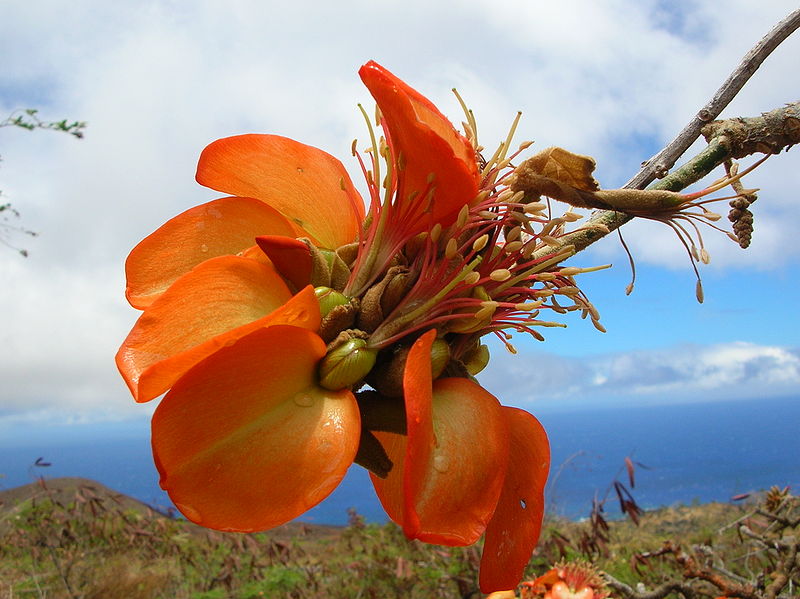
Erythrina caffra one of the native tree species in South Africa killed by PSHB. photo by Coana/Riti via Flickr

Introductions of bark and ambrosia beetles (Coleoptera: Curculionidae, Scolytinae) have significantly increased over the past century. Surveys conducted at borders and ports of entry around the world have shown the majority of beetles intercepted were scolytines. These insects are highly destructive on their own. Also, they can carry pathogenic fungal symbionts that can have devastating effects on the trees they attack.

One or more species in a complex in the Euwallacea genus have become established in countries around the world.  One of these, the polyphagous shot hole borer (Euwallacea fornicatus; PSHB) and its associated fungus (renamed from Fusarium euwallaceae to Neocosmospora euwallaceae) is threatening havoc in South Africa about a decade after its establishment (Townsend, Hill, Hurley, and Roets. 2025).

Over this brief period PSHB/Fusarium disease has spread from two introduction sites – Pietermaritzburg, in KwaZulu-Natal Province, and Cape Town, in Western Cape Province – to all but one of the country’s nine provinces. It has become established in four of five forest types studied – Afrotemperate, coastal, sand, and swamp forests. It has not established in mangrove forests. (The Western Cape Province is home to its own “floral kingdom”. The kingdom’s charactersitic fynbos flora is a heathland habitat, not a forest one.)

Townsend and colleagues established a network of 78 monitoring plots in the Western Cape and KwaZulu-Natal provinces. The sites reflected a variety of natural and human impacts.

tree infested by PSHB/Fusarium disease in KwaZulu-Natal Botanical Garden, Pietermaritzburg. Photo from website of Greenpop.org

By monitoring these plots over five years (2019 – 2024), Townsend and colleagues have demonstrated that the beetle/fungus complex and resulting “Fusarium disease” is spreading and intensifying. The number of infected trees rose from 100 to 176 over the five years – a mean increase of 0.6% per year. The number of PSHB entry holes increased by over 10% annually. The number of plots containing infected trees roughly doubled from 23 in 2019 (29% of the 78 plots) to 48 (60%) in 2023.

By the end of the study, 29% of the 148 species sampled had been infected. This represented 43 species and 7 unidentified trees infected. Trees of eight native species died, , although one — Diospyros glabra (Ebenaceae) – resprouted after the main bole died.

In addition to the eight species known to suffer mortality, another 18 species were found to be able to support PSHB reproduction. Townsend and colleagues worry that, as the infestation spreads and intensifies, some of these species might also succumb. They mention specifically Erythrina caffra (coral tree), which is prevalent in coastal forest ecosystems across South Africa.

Most of the hosts are in the same families as those identified earlier by Lynch et al. (2021), e.g., Ebenaceae, Fagaceae, Fabaceae, Malvaceae, Podocarpaceae, Rutaceae, Sapindaceae and Stilbaceae.

Disease progress, speed of death, and visibility of symptoms varied not only between species, but sometimes among individuals of the same species. Some trees died rapidly. Townsend and colleagues say it is impossible to predict which individuals will succumb to infection.

There is, though, a clear frequency-dependent relationship between trees and beetles. Sites with higher relative abundance of host trees also had a higher proportion of infected trees, on average. The number of PSHB holes per species and per plot both increased to a larger extent at these same sites.

Individual trees’ traits influenced the severity of infestations (measured by the number of PSHB entry holes). Larger trees, those with a less healthy canopy, and those farther from a water source suffered more attacks. (This last finding differs from others’; Townsend et al. speculate that in the absence of flood-stressed trees, drought-stressed trees might be more attractive to ambrosia beetles.)

native tree in Tsitsikama National Park; photo by F.T. Campbell

Characteristics of the monitoring plots also affected disease progression. Higher proportions of trees became infected when they grew in plots that were closer to source populations, or that contained a higher proportion of host species as distinct from non-host species. The proportion of trees infected decreased in plots with higher tree densities or tree species richness.

As of 2023, “Fusarium disease” is more widespread and intense in KwaZulu-Natal than in the Western Cape. In KwaZulu-Natal 0.11% of monitored trees are infected compared to 0.06% in the Western Cape. The number of infected trees rose twice as fast over the five years in KwaZulu-Natal – ~6%, than in Western Cape – 3%. While all KwaZulu-Natal plots contained infected trees, three of 11 monitoring sites in the Western Cape did not. Townsend and colleagues believe that the most likely explanation is that PSHB arrived in KwaZulu-Natal earlier (as far back as 2012 as opposed to 2017 in Western Cape). Another possible factor is that source populations of infected trees are indigenous trees within the forest in KwaZulu-Natal whereas, in the Western Cape, they are often non-native trees planted in urban areas far from the study plots. Also, forests in KwaZulu-Natal are fragmented while, in Western Cape, the study forests are nearly contiguous. Townsend et al. conclude that the disease will spread and intensify in Western Cape as additional source populations become established in the forest.

locations of PHSB/Fusarium disease in Cape Town, South Africa – West of the study sites; map from City of Cape Town

As of 2023, the proportion of trees infected appears to be small — 7.6% of the 2,313 trees monitored. Only 11 trees in the monitored plots have died. However, the longer PSHB is active in the environment the more trees it will infest, the higher its impact will be on hosts, and the higher the number of dispersing individuals produced. This will substantially increase the chances and rates of additional areas becoming infected, especially in areas close to infestations – e.g., cities. They fear that in the future impacts will increase as progressively more competent host individuals are infected. Therefore, they emphasize the importance of mitigating PSHB increase in natural ecosystems, even in already infected areas.

Townsend and colleagues urge phytosanitary officials and resource managers to prioritize surveillance and management on the families containing several host species (above) and within plant communities in which they predominate. Managers must also be alert to new reproductive hosts for the beetle that appear as the infestation spreads and intensifies.

The situation could be worse than described; the Townsend et al. study did not examine how the invasion might affect eco-regions outside these two provinces. Because the PSHB has such a broad host range, hosts can die quickly, and South Africa provides ideal climatic conditions, this bioinvader could cause severe ecological effects on most indigenous forest types as well as agriculture and urban trees throughout Africa.

SOURCES

Lynch, S.C., A. Escalen, and G.S. Gilbert. 2021. Host evolutionary relationships explain tree mortality caused by a generalist pest-pathogen complex. Evol Appl 14:1083 – 1094. https://doi.org/10.1111/eva.13182

Townsend, G., M. Hill, B.P. Hurley, and F. Roets 2025. Escalating threat: increasing impact of the polyphagous shot hole borer beetle, Euwallacea fornicatus, in nearly all major South African forest types. Biol Invasions (2025) 27:88 https://doi.org/10.1007/s10530-025-03551-2  

Posted by Faith Campbell

We welcome comments that supplement or correct factual information, suggest new approaches, or promote thoughtful consideration. We post comments that disagree with us — but not those we judge to be not civil or inflammatory.

For a detailed discussion of the policies and practices that have allowed these pests to enter and spread – and that do not promote effective restoration strategies – review the Fading Forests report at  https://treeimprovement.tennessee.edu/

or

www.fadingforests.org

“Ecological memory” determines a forest’s resilience — implications of bioinvasion to New Zealand’s unique flora

kauri dieback

Scientists in New Zealand are saying explicitly that a forest’s unique mixture of species matters when considering the future. This mixture is the result of the forest’s evolutionary history. Losing members of the biological community reduces the forest’s ability to respond to current and future stresses – its resilience.

New Zealand’s forests are part of the broader legacy of the ancient supercontinent of Gondwanaland – the island nation’s plants have close relatives in South America, the Pacific Ocean islands, and Australia. Still, these forests are unique: 80% of New Zealand’s plant species are endemic. The forests are also species-rich. The warm temperate evergreen rain forests of the North Island are home to at least 66 woody plant species that can reach that reach heights above six meters (Simpkins et al. 2024).

These forests have been severely changed by human activity. In just ~ 750 years people have cut down approximately 80% of the original forest cover! (Simpkins et al. 2024) Of the eight million hectares of surviving native forest, a little over five million hectares is managed for the conservation of biodiversity, heritage, and recreation.  Another 2 million hectares are plantations of non-native species.

sites in New Zealand where pine plantations are “wilding”

All these forests are challenged by introduced mammals – from European deer to Australian possums. Climate change is expected to cause further disturbance, both directly (through e.g., drought, extreme weather) and indirectly (e.g., by facilitating weed invasion and shifting fire regimes) (Simpkins et al. 2024).

Pathogen threats are also common threats to the native trees of the Pacific’s biologically unique island systems. For example, Ceratocystis lukuohia and C. huliohia (rapid ‘ōhi‘a death, or ROD). The latter is killing ‘ōhi‘a (Metrosideros polymorpha) on the Hawaiian Islands. More than 40% of native plant species in Western Australia are susceptible to Phytophthora cinnamomi. Here I focus on two pathogens, kauri dieback and myrtle rust, now ravaging New Zealand’s native flora. No landscape-level treatment is available for either pathogen.

When considering this suite of challenges, Simpkins et al. focus on these two pathogens’ probable impact on forest carbon sequestration. They worry in particular about erosion of the forests’ resilience due to loss of “ecological memory” – the life-history traits of the species (e.g., soil seed banks) and the structures left behind after individual disturbances.

one of the largest remaining kauri trees, “Tane Mahuta”, in Waipoua Kauri Forest; photo by F.T. Campbell

Kauri Dieback

The causal agent of Kauri dieback, Phytophthora agathidicida, is a soil-borne pathogen that spreads slowly in the absence of animal or human vectors. The disease affects a single species, Agathis australis (kauri, Araucariaceae). However, kauri is a long-lived, large tree that is a significant carbon sink. It probably modifies local soil conditions, nutrient and water cycles, and associated vegetation. Also, kauri has immense cultural significance.

Simpkins et al. note that kauri dieback threatens stand-level loss of A. australis – that is, local extinctions. In the absence of disturbance Kauri trees can grow to awe-inspiring size. In the 19th Century, before widespread logging, some were measured at 20 meters or more in circumference. Consequently, kauri dieback might cause a decline in aboveground live carbon storage of up to 55%. This loss would occur over a period of hundreds of years, not immediately.

Huge kauri are not likely to be replaced by other long-lived emergent conifers (based on an analysis of one species, Dacrydium cupressinum). Instead, kauri are probably going to be replaced by late-successional angiosperms. The authors discuss the ecological implications for levels of carbon storage and proportions of trees composed of Myrtaceae – exacerbating damage caused by myrtle rust (see below).

The expectation of Simpkins et al. that kauri will suffer at least local extinctions is based on an assumption that no kauri trees are resistant to the pathogen. Fortunately, this might not be true: different Agathis populations show various levels of tolerance to Agathis dieback. Identification and promotion of some levels of resistance could enable A. australis to retain a diminished presence in the landscape.

However, Lantham, et al. make clear that containing kauri dieback remains “challenging,” despite its discovery nearly 20 years ago (in 2006). Scientists and land managers have little information on the distribution of symptomatic trees, much less of the pathogen itself. This means they don’t know where infection foci are or how fast the disease is spreading.

As is often true, the pathogen is probably present in a stand for years, possibly a decade or more, before symptoms are noticed. This means that the current reliance on public reports of diseased trees, or targetting surveillance on easy-to-access sites (e.g., park entrances and along existing track networks), or at highly impacted areas readily identified through aerial methods, fails to detect early stages of infection. Indeed, it seems probable that P. agathidicida had been present in New Zealand’s ecosystems for decades before its formal identification.

The Waipoua forest is one of the largest areas of forest with old kauri stands in the country. A new analysis of aerial surveys done between 1950 and 2019, shows how the forest is changing. The number of dead trees increased more than four-fold and the number of unhealthy-looking trees increased 16-fold over these 70 years. Kauri dieback is now widespread in this forest, especially in areas near human activities like clearing for pasture or planting commercial pine plantations).

Lantham et al. have developed a model which they believe will help identify areas of higher risk so as to prioritize surveillance and inform responses. These could delimit the disease front and help implement quarantines or other measures aimed at limiting the spread of P. agathidicida to uninfected neighboring sites.

I hope New Zealand devotes sufficient resources to expand surveillance and management to levels commensurate with the threat to this ecologically and culturally important tree species.

Leptospermum scoparia; photo by Brian Gatwicke via Flickr

Myrtle Rust

Myrtle rust is a wind-borne disease that affecting numerous species in the Myrtaceae, including some of the dominant early successional species (e.g., Leptospermum spp.). Simpkins et al. expect that myrtle rust might hasten the decline of two such tree species (L. scoparium and Kunzea ericoides). However, these trees’ small size and rapid replacement by other species during succession minimizes the effect of their demise on carbon storage.

Because I am concerned about the irreplaceable loss to biodiversity, I note that Simpkins et al. also feared immediate threats to some trees in the host Myrtaceae family, specifically highly susceptible species such as Leptospermum bullata.

As I reported in a recent blog, a second group of scientists (McCarthy et al.) explored the threat from myrtle rust more broadly. Austropuccinia psidii has spread through Myrtaceae-dominated forests of the Pacific islands for about 20 years.

Trees in the vulnerable plant family, Myrtaceae, are second in importance (based on density and cover) in New Zealand’s forests. Successional shrub communities dominated by the two species named above, Kunzea ericoides and Leptospermum scoparium, are widespread in the northern and central regions of the North Island and in northeastern and interior parts of the South Island. These regions’ vulnerability is exacerbated by the area’s climate, which is highly suitable for A. psidii infection (Simpkins et al. 2024).

McCarthy et al. concluded that if Leptospermum scoparium and Kunzea ericoides prove to be vulnerable to myrtle rust, their loss would cause considerable change in stand-level functional composition across these large areas. They probably would be replaced by non-native shrubs, which are already common on the islands. Any resulting forest will differ from that formed via Leptospermeae succession.

These authors also worry that the risk to native ecosystems would increase if more virulent strains of the myrtle rust pathogen were introduced or evolved. They note that A. psidii is known to have many strains and that these strains attack different host species.

SOURCES

Latham, M.C., A. Lustig, N.M. Williams, A. McDonald, T. Patuawa, J. Chetham, S. Johnson, A. Carrington, W. Wood, and D.P. Anderson. 2025.  Design of risk-based surveillance to demonstrate absence of Phytophthora agathidicida in New Zealand kauri forests. Biol. Invasions (2025) 27, no. 26

McCarthy, J.K., S.J. Richardson, I. Jo, S.K. Wiser, T.A. Easdale, J.D. Shepherd, P.J. Bellingham. 2024. A Functional Assessment of Community Vulnerability to the Loss of Myrtaceae from Myrtle Rust. Diversity and Distributions, https://doi.org/10.1111/ddi.13928

Simpkins, C.E., P.J. Bellingham, K. Reihana, J.M.R. Brock, G.L.W. Perry. 2024. Evaluating the effects of two newly emerging plant pathogens on North Aotearoa-New Zealand forests using an individual-based model.  Ecological Modelling, www.elsevier.com/locate/ecolmodel

Posted by Faith Campbell

We welcome comments that supplement or correct factual information, suggest new approaches, or promote thoughtful consideration. We post comments that disagree with us — but not those we judge to be not civil or inflammatory.

For a detailed discussion of the policies and practices that have allowed these pests to enter and spread – and that do not promote effective restoration strategies – review the Fading Forests report at  https://treeimprovement.tennessee.edu/

or

www.fadingforests.org

Wood packaging: serious data gaps … but clear opportunities to act

discarded pallets next to developed area in Glacier National Park (!); photo by F.T. Campbell

Since July 2015 I have posted nearly 50 blogs about non-native insects introduced via movement of solid wood packaging material (SWPM). Why? Because SWPM is one of two most important pathways by numbers introduced & by impact of the species introduced. (The other pathway is P4P.) To read those earlier blogs, scroll below “archives” to “categories”, choose “wood packaging”.

Examples of insects introduced via the wood packaging pathway include Asian longhorned beetle, emerald ash borer, redbay ambrosia beetle, Mediterranean oak borer, and possibly, three species of invasive shot hole borers.

dead redbay trees in Everglades National Park; killed by laurel wilt vectored by redbay ambrosia beetle

As I have reported in the earlier blogs and in my “Fading Forests” reports (links at the end of this blog), in 2002, the parties to the International Plant Protection Convention (IPPC) adopted an international “standard” to guide countries’ programs intended to reduce the presence of damaging insects in the wood packaging: International Standard for Phytosanitary Measures (ISPM) #15). The U.S. and Canada adopted the standard through a phase-in process culminating in 2006. [For a discussion of the phase-in periods and process, read either of the studies by Haack et al. cited at the end of this blog.] In other words, the U.S. and Canada have implemented ISPM#15 for almost 20 years. China specifically has been subject to requirements that it treat its SWPM even longer – since December, 1998, i.e., more than 25 years.

Unfortunately, ISPM#15 is not intended to prevent pest introductions.  As stated in Greenwood et al 2023, “Prior to 2009, the goal of compliance with ISPM 15 was to render the risk of wood-borne pests “practically eliminated,” in 2009 the standard was amended to “significantly reduced”.  

Despite almost universal adoption of the standard by countries engaged in international trade, insects have continued to be present in wood packaging. A very high proportion of these infested shipments — 87% – 95% — of the SWPM found by U.S. officials bears the ISPM#15 stamp – that is, is apparently compliant. (See my blogs by clicking on the “Category” “wood packaging” listed below the “Archives”.) The same proportion was found in a narrower study in Europe (Eyre et al. 2018). All the post-2006 examples of infested wood analyzed by Haack et al. (2022) (see below) carry the stamp. I conclude that the ISPM#15 mark has failed in its purpose: to reliably indicate that SWPM accompanying imports has been treated so as to minimize the likelihood that an insect pest will be present.  

Dr. Robert Haack, retired USFS entomologist, has twice tried to estimate the “approach rate” of insects in SWPM entering the United States (both studies are cited at the end of this blog). A study published in 2014 that relied on data from 2009 found that U.S. implementation of ISPM#15 was associated with a reduction in the SWPM infestation rate reported of 36–52%. The authors estimated the infestation rate to be 0.1% (1/10th of 1%, or 1 consignment out of a thousand). (See Haack et al. 2014; citation at the end of this blog.)

In their second study, published in 2022, Haack and colleagues found a 61% decrease in rates of borer detection in wood packaging when comparing numbers of wood borer detections in 2003 – before the U.S. implemented ISPM#15 – to those in 2020. Specifically, detections dropped from 0.34% in 2003 to 0.21% in 2020. This decrease occurred despite the volume of U.S. imports rising 68% between 2003 and 2020. (My blogs document a further increase in import volumes over the years since 2020.) In addition, the number of countries from which the SWPM originated more than doubled from 2003–2004 to 2010–2020. This expansion exposes North America to a wider range of insect species that might be introduced, as well as a wider range of individual countries’ effectiveness in enforcing the standard’s requirements (Haack et al. 2022).

These decreases are encouraging. However, Haack et al. (2022) note some caveats:

  • The reduction in pest presence was greatest during the initial implementation of the program the first phase, 2005-2006 (61%); in subsequent periods pest approach rate inched back up. In the 2010-2020 period, the pest detection rate was only 36% below the pre-ISPM#15 level. Detection rates have been relatively constant since 2005. Does this stasis mean that exporters learned that they could ignore or circumvent the requirements without suffering significant penalties? Or is some of this rise related to increased trade volumes, increasing variety of country of origin for trade, or other global trade patterns unrecognized in the data? (However, see the next bullet point.)
  • Certain types of commercial goods and exporting countries have consistently fallen short. Specifically, the rate of wood packaging from China that is infested remained relatively steady over the 17 years since 2003. The proportion of consignments with infested wood packaging coming from China was more than five times the proportion of all inspected shipments for this period. In other words, China has had a consistent record of poor compliance with phytosanitary regulations since they were imposed in December 1998. Why is USDA not taking action to correct this problem? (As I note below, DHS CBP has ramped up enforcement efforts.) Some other countries, e.g., Italy and Mexico, have reduced the rate at which wood packaging accompanying their consignments is infested. In fact, Mexico’s improved performance largely explains the overall infestation rate estimate of 0.22% during the period 2010-2010. Mexico’s successes affect the overall statistics in a way that makes other countries’ failure to reduce the presence of pests in wood packaging they ship to the United States far less obvious.

Haack et al. (2022) discuss ten possible explanations for their finding that pest approach rates – as determined by their study — have not decreased more. See the article or my blog about the study.

Although USDA APHIS has not taken steps to strengthen its enforcement, U.S. Customs and Border Protection [an agency in the Department of Homeland Security] has done so twice — see here and here.  CBP staff have expressed disappointment that these actions reduced the numbers of shipments in violation of ISPM#15 by only 33% between Fiscal Year 2017 and FY2022. True, more than 60% of these violations consisted of a missing or fraudulent ISPM#15 stamp. However, 194 consignments still harbored live pests prohibited under the standard.

APHIS did agree in 2021 to enable the study by Robert Haack and colleagues, via an interoffice data sharing agreement between USDA APHIS and the Forest Service- this resulted in Haack et al. 2022.

APHIS and CBP also collaborated with an industry initiative to train inspectors that insure other aspects of foreign purchases. The ideas was that CBP or APHIS and their Canadian counterparts would inform importers about which foreign treatment facilities have a record of poor compliance or suspected fraud. The importers could then avoid purchasing SWPM from them. I have heard nothing about this initiative for three years, so I fear it has collapsed.

We lack data on which to base a rigorous analysis

While the two studies by Robert Haack and colleagues are the best available, and they relied on the best data available, the fact is that those available data do not provide a full picture of the risk of pest introduction associated with wood packaging. As pointed out by Leigh Greenwood of The Nature Conservancy in her presentation to 2025 USDA Invasive Species Research Forum, available data have been collected for different purposes than to answer this question. Leigh’s powerpoint is posted here.

Leigh has identified the following data gaps:

  1. In their studies, Haack and colleagues rely on data from the Agriculture Quarantine Inspection Monitoring (AQIM) system. This dataset is based on random sampling of very distinct segments of incoming trade. It is therefore a better measure of insect approach rates than reports of interceptions by either APHIS or CBP.

However, AQIM includes data from only those very distinct segments of trade: perishable goods, SWPM associated with maritime containerized imports, Italian tiles, and “other” goods, AQIM does not contain a segment of trade that includes wood packaging associated with maritime breakbulk or roll-on, roll-off (RORO) cargo. These exclusions have prevented scientists and enforcement officials from determining, inter alia, how great a risk of pest introduction is associated with various types of wood packaging, especially dunnage, as the randomized sample does not include entire pathways for the entrance of dunnage.

Greenwood states that she has not found another country that operates a similar analysis of randomly collected data at ports of entry.

2) USDA does not collect data on consignment size, piece-specific infestation density, nor consignment-wide infestation density. As Haack et al. (2022) point out, reporting detections by consignment doesn’t reveal the number of insects present. If implementation of ISPM#15 resulted in fewer live insects being present in an “infested” consignment, this would reduce the establishment risk because there is lower propagule pressure. However, we cannot know whether this is true.

3) Neither USDA nor CBP reports the inspection effort. Nor do they conduct a “leakage survey” to see how often target pests are missed. This means, inter alia, that we cannot estimate inspectors’ efficiency in detecting infested wood packaging. If their proficiency has improved as a result of improvements in training, inspection techniques, or technology, the apparent impact of ISPM#15 would be under-reported in recent years.

4) USDA does not require port inspectors to report the type of SWPM in which the pest was detected. Leigh participated in an effort that included industry representatives, DHS CBP and USDA APHIS to define the types of wood packaging in legal terminology so that they could be incorporated in the drop-down menu on inspectors’ reporting system. This was first successfully included in the legal glossary within USDA APHIS system of record, ACIR Glossary. Last fall the team was working to integrate the requirement for using these definitions into the inspection data collection system used by DHS CBP, which would then make this data available in Agricultural Risk Management, ARM (see Abstract here for adequate primer on ARM). However, it is unclear now whether the new administration will do so. One potential barrier is that asking the port of entry inspection staff to record these data will add to the time and training required for reporting inspection results.

In summary, Leigh reports that current data systems do not support

  • estimating probabilities of pest infestation of via volume or type of SWPM (e.g. pallet vs dunnage)
  • measuring the risk of arrival associated with a specific hazard (in this case, a hazard being a live pest or pathogen associated with SWPM)
  • extrapolating or supporting findings for some types of wood packaging to other types of wood packaging

Scientists from Canada, Mexico, and the United States have formed a working group under the auspices of the North American Plant Protection Organization (NAPPO). The group is trying to determine whether various types of wood packaging are more likely to harbor pests. This study is currently hampered by the many data gaps, including those Leigh outlined above. The best data available, cited by Haack et al. (2022), found that in maritime containerized shipping, crates were more likely to harbor pests than pallets- however, other forms of SWPM (dunnage, bracing, etc.) had such low sample size that no analysis of those is possible. One of the main objectives of the NAPPO study is to evaluate if dunnage poses the same or higher risk, so this is a major impediment.

Two issues need to be resolved.

One is scientific: why are insects continuing to be detected in wood packaging marked as having been treated? What is the relative importance of insects surviving the treatment versus treatment facilities applying the treatments incorrectly or inadequately?

The second issue is legal and political: what proportion of the detections is due to treatment facilities committing outright fraud – claiming to treat the wood, stamping it with an IPPC stamp, while not actually performing any treatments at all?

Knowing which measures will most effectively solve these quandaries / reduce pest presence in wood packaging depends on knowing what the relative importance of these factors are in causing the problem.  The lack of basic data on which to base any analysis certainly hampers efforts to improve protection.

Leigh calls for researchers to recognize these data needs and work to fill them.

•Understand, account for, and communicate data realities

•Work collectively to increase useable data quality

•Use additional research to validate, or to demonstrate disparities

Why Wait for the Science?

In the meantime, however, I assert that more vigorous enforcement efforts by responsible agencies should help reduce the occurrence of fraud. I have suggested the following actions:

  • U.S. and Canada refuse to accept wood packaging from foreign suppliers that have a record of repeated violations – whatever the apparent cause of the non-compliance. Institute severe penalties to deter foreign suppliers from taking devious steps to escape being associated with their violation record.
  • APHIS and CBP and their Canadian counterparts follow through on the industry-initiated program described above and here aimed at helping importers avoid using wood packaging from unreliable suppliers in the exporting country.
  • Encourage a rapid switch to materials that won’t transport wood-borers. Plastic is one such material. While no one wants to encourage production of more plastic, the Earth is drowning under discarded plastic. Some firms are recycling plastic waste into pallets.

Posted by Faith Campbell

We welcome comments that supplement or correct factual information, suggest new approaches, or promote thoughtful consideration. We post comments that disagree with us — but not those we judge to be not civil or inflammatory.

For a detailed discussion of the policies and practices that have allowed these pests to enter and spread – and that do not promote effective restoration strategies – review the Fading Forests report at  https://treeimprovement.tennessee.edu/

or

www.fadingforests.org

What will replace hemlocks? Intractions with other plants & introduced pathogens complicate the situation

eastern hemlocks in Cook Forest State Forest Pennsylvania; photo by F.T. Campbell

As Eastern hemlock (Tsuga canadensis) suffers high levels of mortality across nearly all its range due to hemlock woolly adelgid (HWA; Adelges tsugae),  scientists scramble to determine what the successor forests will look like. The transformation will be stark: from deeply shaded evergreen coniferous forest with a sparse understory to something very different. As this process takes place, most scientists expect cascading effects on not only terrestrial and aquatic wildlife but also onecosystem functions, including soils and nutrient and hydrologic cycles (Dharmadi et al. 2019 Plotkin et al. 2024).

New England

In southern New England, hemlock groves are being replaced by stands of deciduous hardwood forests dominated by black birch (Betula lenta). While birch are expected to continue to dominate, other species comprise at least one third of seedlings in the Harvard Forest experimental sites, primarily eastern white pine (Pinus strobus) and red maple (Acer rubrum). Plotkin et al. (2024) note that conversion of hemlock forests to pine forests would be a less dramatic ecosystem shift since both are evergreen conifers.

symptoms of beech leaf disease; photo by the Ohio State University

In both southern New England and farther north, in Vermont and New Hampshire, maples and American beech have increased in prominence. In the latter case, this is despite the prevalence of beech bark disease and managers’ efforts to suppress beech. I have noted that beech leaf disease now threatens to disrupt this process.

Landowners in the region often seek to get some financial return from their forests before a pest kills the trees. About a quarter of the almost 9,000 ha of hemlock stands in the southern Connecticut River Valley have been harvested as HWA spread into the area. To test the effect of pre-mortality logging of hemlock stands, Plotkin et al. tried to mimic HWA-caused mortality by girdling all the hemlocks in some plots in Harvard Forest. In other plots they harvested most hemlocks and some of the other tree species. The girdled plots had a dramatic increase in standing and downed deadwood and a longer period of elevated understory light levels than the logged plots. They note that standing snags and on-ground dead wood provide critical ecosystem functions. Many wildlife and microbial species depend on dead wood for nutrition and a variety of micro habitats. Plotkin et al. found that the slowly decomposing dead wood also stored a large amount of carbon: girdled plots stored 18% more above-ground carbon than logged sites, even after accounting for carbon stored in harvested wood products.

a beech snag with nesting cavities; photo by F.T. Campbell

The magnitude of these differences might be even larger than demonstrated in this experiment. In New England, hemlocks infested with HWA die over a decade, not the two years seen after girdling. The delayed mortality provides a longer window of opportunity for succeeding vegetation to adapt and preserve higher levels of biodiversity. Plotkin et al. (2024) suggest that logging pest-threatened hemlock forests might remove structural resources that would support forest response to ongoing climate stress and future disturbances.

Considering the disturbed plots’ invasibility by non-native plants, Plotkin et al. (2024) found that more non-native shrubs invaded the girdled plots than the logged plots. They suggest that birds that disperse the shrubs’ fleshy fruits were attracted by perch sites provided by the standing dead trees.

Southern Appalachians

In the Southern Appalachians, post-HWA forests will apparently be quite different. At the USDA Forest Service’ Coweeta Hydrologic Laboratory in the Nantahala Mountain Range of western North Carolina, eastern hemlock died much faster than in New England. Hemlocks comprised more than 40% of the basal area before arrival of HWA (detected in 2003). Within two years all hemlock trees were infested. Half were dead by 2010, 97% by 2014 (Dharmadi et al. 2919).

In some part of the southern Appalachian forests the shrub layer is dominated by Rhododendron maximum (rosebay rhododendron). This dense shrub layer is preventing recruitment of deciduous tree species that had been expected to replace the dead hemlocks. Tree seedlings died rather than grew into saplings. Scientists working in the Coweeta experimental forest attribute the seedlings’ demise to limited access to key resources, e.g., water, nutrients (especially inorganic nitrogen), and light (Dharmadi, Elliott and Miniat 2019).

In the Coweeta Basin, hemlock loss is the most recent of a series of severe disturbances that have apparently led to a cascade of responses in the overstory, midstory, and soil that have promoted expansion of rhododendron. (The earlier disturbances were widespread logging in the 19th Century and the loss of American chestnut to chestnut blight in the first part of the 20th Century. Therefore, the response of future forests to changes in temperature and rainfall might now depend on these novel tree-shrub interactions .

R. maximum hampers succession by forming a dense subcanopy layer that greatly limits light reaching the forest floor and reduces soil moisture and temperature. These changes impede seed germination and seedling survival. In addition, rhododendron leaves that fall to the ground create a thick organic soil layer that decomposes very slowly. This affects soil chemistry, specifically availability of the key nutrient nitrogen.

The rhododendron shrubs in the region are younger than the deciduous trees now making up the canopy above them (Dharmadi, Elliott and Miniat 2019). The dense rhododendron stands resulted from the widespread mortality of American chestnut (Castanea dentata) in the early 20th century and of hemlock in the first years of the 21st Century. What’s more, even the mature deciduous trees appear to be suppressed by dense rhododendron stands. Canopy trees above rhododendrons are on average 6m shorter than those growing on sites without rhododendron thickets (Dharmadi, Elliott and Miniat 2019). In fact, by 2014, 10% of standing trees other than hemlocks had died. The tree suffering the highest level of mortality was flowering dogwood (Cornus florida). The authors do not mention a probable factor, the introduced disease dogwood anthracnose. Other species experiencing high levels of mortality are not, to my knowledge, under attack by non-native pests, so their demise seems more clearly linked to resource competition with rhododendron. These were striped maple (Acer pennsylvanicum), pitch pine (Pinus rigida), witch hazel (Hamamelis virginiana), and that staple of New England aftermath forests, black birch (Betula lenta).

Dharmadi, Elliott and Miniat (2019) suggested that managers should step in to increase recruitment in both understory and overstory layers. They proposed active management: removing rhododendrons and the soil organic layer. USFS scientists are applying these ideas experimentally at the Coweeta research station. I am unclear as to whether there is one study or more. In any case, rhododendronplants have been removed with the goal of restoring vegetation structure and composition – presumably both understory plant diversity and recruitment of tree species capable of growing into the canopy. In at least some cases, the rhododendron removal is followed by prescribed fire. One study is looking also at whether this action increased water yield.

Apparently this lack of tree regeneration is extensive – although published data are not easily accessible. Staff of the North Carolina Hemlock Restoration Initiative report they encounter similar issues (O.W. Hall, Hemlock Restoration Initiative, pers. comm.)

Several experiments have demonstrated that even in the southern Appalachians, where there are abundant moisture and rainfall, the trees and shrubs compete for water and other nutrients. However, Dharmadi et al. (2022) found that removal of the rhododendron shrub layer is unlikely to significantly alter streamflow, atr least during the growing season. In winter, when deciduous trees lack leaves, reduction in interception of precipitation might result in increased streamflow (Dharmadi et al. 2022). I ask whether increasing stream flow in winter is a goal? I thought the concern was stream flow levels in summer.

Nor is removal of the rhododendron shrub layer likely to alter stream chemistry during the growing season.

Removal of living Rhododendron and leaf litter apparently can help restore forest structure through improving tree seedling survival and recruitment as well as increasing growth of established trees.

Removing Privet

However, other management actions might bring about desired changes more effectively or broadly. Specifically Dharmadi and colleagues mentioned removal of privet (Ligustrum) – a very widespread invasive shrub in forests of the Southeast. (Fifteen years ago it was estimated that just one privet species, Chinese privet, occupied more than a million hectares in 12 southeastern states [Hanula 2009].)

Chinese privet

I ask also whether prescribed fire to remove the rhododendron-dominated soil organic layer is useful. Dharmadi and colleagues found that such fires reduced leaf litter temporarily, but annual leaf-fall replaced the litter layer the next year, so this management effort is unlikely to affect plot evapotranspiration rates.

Supporting Pollinators

Another study (Ulyshenet al. 2022) examined whether removing rosebay rhododendron would benefit bees and other pollinators. They found that removal of Rhododendron alone (without fire) did not dramatically improve pollinator habitat in the southern Appalachians. In fact, about a quarter of the bee species studied visited R. maximum flowers and might decline if the shrub’s population is reduced. Ulyshen and colleagues suggest that some factors that correlate with fire severity probably promotes growth of insect-pollinated plants. They suggest specifically the greater presence of downed woody debris, which provides nesting sites and other resources used by insects. They recommended creation of open areas to support wildflowers as a more effective way to benefit bees in this region. Again, rhododendron removal pales in effectiveness compared to eradication of privet.

SOURCES

Dharmadi, S.N., K.J. Elliott, C.F. Miniat. 2019. Lack of forest tree seedling recruitment and enhanced tree and shrub growth characterizes post-Tsuga canadensis mortality forests in the southern Appalachians. Forest Ecology and Management 440 (2019) 122–130.

Dharmadi, S.N., K.J. Elliott, C.F. Miniat. 2022.  Larger hardwood trees benefit from removing Rhododendron maximum following Tsuga canadensis mortality. Forest Ecology and Management

Hanula, J.L., S. Horn, and J.W. Taylor. 2009. Chinese Privet (Ligustrum sinense) Removal and its Effect on Native Plant Communities of Riparian Forests. Invasive Plant Science and Management 2009 2:292–300.

Plotkin, A.B., A.M. Ellison, D.A. Orwig, M.G. MacLean. 2024. Logging response alters trajectories of reorganization after loss of a foundation tree species. Ecological Applications. 2024;e2957.

Ulyshen, M., K. Elliott, J. Scott, S. Horn, P. Clinton, N. Liu, C.F. Miniat, P. Caldwell, C. Oishi,  J.  Knoepp, P. Bolstad. 2022. Effects of Rhododendron removal and prescribed fire on bees and plants in the southern Appalachians. Ecology and Evolution. 2022;12:e8677.

Posted by Faith Campbell

We welcome comments that supplement or correct factual information, suggest new approaches, or promote thoughtful consideration. We post comments that disagree with us — but not those we judge to be not civil or inflammatory.

For a detailed discussion of the policies and practices that have allowed these pests to enter and spread – and that do not promote effective restoration strategies – review the Fading Forests report at  https://treeimprovement.tennessee.edu/

or

www.fadingforests.org

A systemic treatment for beech leaf disease!

Reminder: beech leaf disease (BLD) came to attention in 2012 near Cleveland. It has since spread rapidly to the East and more slowly to the North, South, and West. It has been detected in 15 states and the Province of Ontario. The disease is caused by the foliar nematode Litylenchus crenatae mccannii (Lcm). Damage to the leaves can significantly reduce the tree’s ability to photosynthesize, resulting in a progressive depletion of carbohydrate reserves following successive years of infection. Scientists continue efforts to determine how it is spread and the extent of tree mortality.

Last summer I blogged about an Integrated Pest Management (IPM) strategy developed by Bartlett Tree Research Laboratories – the research arm of Bartlett Tree Experts – to treat individual beech trees afflicted with beech leaf disease (BLD). This treatment relied on a foliar spray. The challenge is that the entire canopy must be sprayed; this is difficult for large trees. Also, some trees cannot be sprayed because of their proximity to water bodies or other issues. For these large trees, Bartlett sought to develop a systemic treatment that can be applied as a drench or root flare injection.

photo by Matt Borden, Bartlett, via Flickr

I rejoice to tell you that Bartlett has now confirmed effectiveness of a systemic root flare injection treatment. Again, the project is led by Dr. Andrew Loyd and Dr. Matthew Borden. The full citation for their publication is at the end of this blog.ph

This second treatment utilizes Thiabendazole (TBZ), which has a long history of use in arboriculture to manage Dutch elm disease and sycamore anthracnose. In addition to being a fungicide TBZ is also a potent nematicide.  

Bartlett tested the efficacy of TBZ by monitoring 62 symptomatic American beech (Fagus grandifolia) trees across three sites comprising natural mixed hardwood forests with beech as a dominant species. Half of the trees were injected with TBZ, and the rest were monitored as non-treated controls. In the late winter after applying the injection, the researchers sampled twigs from all the trees and counted the number of nematodes in late-season dormant buds, where most of the damage occurs. They also quantified canopy density and BLD symptom expression before treatment and around 11 months after the tree injections the following year, to gauge year-over-year change. At one site, in Ohio, the trees were assessed again in the second season, or 22 months, after the initial injection. They also assessed damage to the root flare caused by the injection process.

Bartlett’s researchers found that at both 11 and 22 months after treatment, injected trees had significantly better visual ratings of canopy condition and lower numbers of Lcm in dormant buds. The untreated controls continued to have high disease severity and large numbers of nematodes in their buds.

Detailed Results

At the time of the initial inventory and treatment, about 65% of the canopies of beech trees at the two Ohio sites displayed foliar BLD symptoms. The proportion was lower at the New Jersey site, where BLD has been present only a season or two before treating – 42%.

During the first growing season post-treatment, the percent of the symptomatic beech canopies at the two Ohio sites fell by 70 – 85%. At the site where trees were evaluated again the second season (22 months) post-treatment, the percent of the canopy exhibiting leaf symptoms continued to decline. The scientists hypothesize that this continuing decrease could be due to TBZ residues being translocated to new leaves and buds, or to a reduction in local inoculum sources within the individual trees and surrounding forest due to treating a significant portion of the community.

At the New Jersey site, where injection was performed later in the season, the percent of the canopy exhibiting leaf symptoms increased by 66%. However, by another measure – percent of canopy with fine twig dieback – these trees improved by 71% while on untreated trees twig dieback increased by 95% and were already experiencing severe canopy loss.

New Jersey site contrasting treated & untreated trees; photo by Matt Borden, Bartlett

On average, there were significantly fewer Lcm in dormant bud tissues in treated trees compared to the untreated control trees. At the two sites in Ohio, the reductions were by 86% and 99%. At the New Jersey site, the decline was not as great, but still encouraging: 70%.

These results suggest that one treatment can substantially reduce symptoms. Scientists now need to determine at what point BLD symptoms return to damaging levels at both “low” & “high” concentrations of thiabendazole in order to determine retreatment intervals and expectations.

While the disease severity (measured by the percent canopy displaying BLD leaf symptoms) of all trees increased at Hillsborough, the canopies of trees injected with the “low rate” of TBZ was significantly better than those of the untreated trees. This was because of a significant reduction in fine twig dieback in the former as opposed to a significant increase in fine twig dieback in untreated controls. Fine twig dieback symptom expression is presumed to be associated with bud abortion caused by Lcm.

The New Jersey treatments occurred at the end of August. The scientists think that this period might follow rather than precede dispersal of many nematodes from the leaves to the buds, as evidenced by the reduced but still substantial numbers of nematodes found in the buds.

While there was some damage visible at injection sites, the Bartlett team considers the frequency of these symptoms to be low. Cracking of the bark was seen on 19% of injected trees; evidence of fluxing was present on 12%. Injection sites were closing rapidly at the site reviewed after 22 months post-treatment. Additionally, based on observations made during this study, they believe that cracking can be further reduced.

Loyd et al. conclude that TBZ injection is an effective treatment option for large beech (> 25-cm dbh) where full coverage sprays with fluopyram are difficult, or for trees growing near water, or where pesticide drift may be of concern.

a forest in Northern Virginia dominated by beech; photo by F.T. Campbell

While this treatment can be used in natural landscapes, treatments of whole forests will probably not be feasible due to the cost. Scientists continue investigating whether some combination of silvicultural practices such as reduction in stand density and with pesticide application of select mature beech might prove effective. In fact, scientists are establishing new plots this year to test a silviculture management approach in forests of Pennsylvania and Rhode Island where BLD is prevalent.

SOURCE

Loyd, A.L., M.A. Borden, C.A. Littlejohn, C.M. Rigsby, B. Brantley, M. Ware, C. McCurry, & K. Fite. 2025. Thiabendazole as a Therapeutic Root Flare Injection for Beech Leaf Disease Management Arboriculture & Urban Forestry 2025 https://doi.org/10.48044/jauf.2025.007

Posted by Faith Campbell

We welcome comments that supplement or correct factual information, suggest new approaches, or promote thoughtful consideration. We post comments that disagree with us — but not those we judge to be not civil or inflammatory.

For a detailed discussion of the policies and practices that have allowed these pests to enter and spread – and that do not promote effective restoration strategies – review the Fading Forests report at  https://treeimprovement.tennessee.edu/

or

www.fadingforests.org

More pests in Europe & Mideast – hazard to North American trees

giant sequoia; photo by Matthew Dillon via Flickr

The pest alert system “PestLens” has again alerted us to plant pests in Europe or Asia that feed on species closely related to tree species native to North American forests.  Two of the insects named in the alert apparently pose a hazard to icons of the forests of America’s Pacific coast forests, giant sequoia and redwood.

I hope APHIS is using this information to alert port and on-the-ground staff and perhaps initiating more in-depth risk assessments.

The posting on February 27, 2025 reported that cotton jassid, Jacobiasca lybica (Hemiptera: Cicadellidae), affects not just cotton and citrus but also Cupressus sempervirens (Mediterranean cypress) [Cupressaceae]. More than a dozen North American trees species are in this family, including

  • Sequoiadendron giganteum or giant sequoia. Giant sequoia is listed as an endangered species by the IUCN with fewer than 80,000 remaining in its native California.
  • Chamaecyparis thyoides and C. lawsoniana (Port-Orford cedar). Port-Orford cedar has been decimated in its native range by an introduced pathogen, Phytopthora lateralis. A major breeding effort has developed trees that are resistant to the pathogen; they are now available for people to plant.
  • Thuja occidentalis, also known as northern white-cedar, eastern white-cedar, or arborvitae,
  • Taxodium ascendens, also known as pond cypress
  • several Juniperus
  • Hesperocyparis macrocarpa also known as Cupressus macrocarpa, or the Monterey cypress. NatureServe ranks the cypress as GI – critically imperiled.

Cotton jassid been reported from several countries in Europe, Africa, and the Middle East.

China has reported the existence of a previously unknown bark beetle species, Phloeosinus metasequoiae (Coleoptera: Curculionidae). It was found infesting Metasequoia glyptostroboides (dawn redwood) trees in China. Affected trees exhibited reddened leaves and holes and tunnels in branches.

China has also discovered a several new hosts utilized by the fungus Pestalotiopsis lushanensis (Sordariomycetes: Amphisphaeriales). Formerly known to infect tea (Camellia sinensis) and several other plant species, P. lushanensis has now been found shoot causing blight and leaf drop on a conifer, deodar cedar (Cedrus deodara) and leaf spots on an angiosperm with congeners in North America — the rare Chinese species, Magnolia decidua. There are eight species of Magnolia native to North America.

Magnolia grandiflora; photo by DavetheMage via Wikimedia

APHIS’ ability to respond to alerts remains uncertain.

The agency’s probationary employees have been fired – just as at other agencies. APHIS staff were prohibited from participating in last week’s annual USDA Invasive Species Research Forum – the 33rd such meeting. The bird flu emergency is demanding all the attention and funds.

So – how can the rest of us fill in?

At the USDA Research Forum I again presented a poster urging greater attention to tree-killing pathogens. Scientists have made considerable progress in identifying factors that indicate whether a non-native insect might pose a significant threat (see blogs on conifer and deciduous species; more to come!). However, USDA had not funded a similar effort to improve understanding of pathogens. The most promising strategy so far are sentinel plantings. However, these systems have weaknesses; I will blog in the near future about another analysis.

I propose that APHIS start by working with independent scientists to determine the actual, current level of pathogens associated with various types of incoming goods. Contact me directly if you wish to read the text of my poster.

Posted by Faith Campbell

We welcome comments that supplement or correct factual information, suggest new approaches, or promote thoughtful consideration. We post comments that disagree with us — but not those we judge to be not civil or inflammatory.

For a detailed discussion of the policies and practices that have allowed these pests to enter and spread – and that do not promote effective restoration strategies – review the Fading Forests report at  https://treeimprovement.tennessee.edu/

or

www.fadingforests.org

Pest Alerts – is USDA (able to) pay attention?

redbay (Persea borbonia killed by laurel wilt

The pest alert system “PestLens” provides information about new reports of plant pests around the world. Notices are published weekly. These provide North American stakeholders advance notice of pests to be on the lookout for. While I have followed these postings for several years, I have been alarmed by recent notices report documenting the presence of insects or pathogens that feed on species in the same genera as tree species native to North American forests. The alerts cover pests of all types of crops, not just trees.

I note that several of these not-yet-introduced pests attack the genus Persea, which contains several native tree and shrub species that are already severely affected by laurel wilt disease.

The report for 19 December, 2024, provided information about two pathogens.

flowering dogwood Cornus florida; photo by F.T. Campbell
  1. The bacterium Pectobacterium aroidearum (Gammaproteobacteria: Enterobacteriales) was detected in China. The bacterium infests several crops and Persea americana (avocado). Although the detection in China is new, the bacterium is apparently already widespread, since it has been earlier been reported from parts of Africa, the Middle East, Asia, Brazil, and Jamaica.
  2. The dagger nematodes Xiphinema simile and X. zagrosense (Longidoridae) were reported in Syria.  Xsimile is associated with economically important plants, including Cornus spp. (dogwood; North American species already decimated by the introduced pathogen dogwood anthracnose), Malus spp.(apple), Prunus spp. (stone fruit), Quercus spp. (oaks – already under attack by many non-native organisms), and Vitis vinifera (grape). X. zagrosense is also associated with Poaceae. X. simile has earlier been reported from parts of Europe, Kenya, Iran, and Russia. X. zagrosense has also been reported from Iran.

The report for 9 January, 2025, conveyed information about 1 pathogen and 1 insect.

  1. It noted the presence in Thailand of the fungus Pseudoplagiostoma perseae (Sordariomycetes: Diaporthales) on Persea americana.
  2. The South American palm borer, Paysandisia archon (Lepidoptera: Castniidae), is infesting several palms at multiple locations in Switzerland. It attacks several economically important palm species and the native genus Washingtonia spp. (fan palm).
native California fan palm, Washingtonia filifera; photo by F.T. Campbell

The report for 13 February, 2025, gave information about 1 pathogen and 1 insect.

  1. An anthracnose fungus Colletotrichum aenigma (Sordariomycetes: Glomerellales) infecting Carya illinoinensis (pecan) and Ilex cornuta (Chinese holly) in China. Colletotrichum aenigma infects other economically important plants. These include the following genera with native species in North America: Vaccinium (blueberry), Malus (apple), Persea americana (avocado), and Vitis vinifera (grape). Colletotrichum aenigma is also widespread; it has been reported from parts of Europe, the Middle East, Asia, New Zealand, and South America.
  2. South African citrus thrips, Scirtothrips aurantii (Thysanoptera: Thripidae) in a greenhouse in the Netherlands. The thrips infests several woody plants, including Ilex crenata (Japanese holly), Rosa spp., Malus (apple), Persea americana (avocado), Prunus spp. (stone fruit), and Vitis vinifera (grape). S. aurantii  it is under eradication in Portugal and Spain. It has also been reported from parts of Africa, Yemen, and Australia.
Scirtothrips aurantii; photo by Pablo Alvarado Aldea, Spain

A few weeks ago I wanted to conclude this blog by stating my hope that APHIS is using this information to alert port and on-the-ground staff and perhaps initiating more in-depth risk assessments. Now – as we learn about mindless firings of USDA staff, I fear I must limit my hopes to a future for APHIS’ programs and skilled staff in more general terms.

Do we face shut-down of pest prevention/response efforts across the board?

Posted by Faith Campbell

We welcome comments that supplement or correct factual information, suggest new approaches, or promote thoughtful consideration. We post comments that disagree with us — but not those we judge to be not civil or inflammatory.

For a detailed discussion of the policies and practices that have allowed these pests to enter and spread – and that do not promote effective restoration strategies – review the Fading Forests report here or here.

New Shothole Borer in California — Alert! & Opportunity to Advise Whether the State or County Should Lead the Response

several Euwallaceae species; E. interjectus is 2nd from the top. Photo from Gomez et al. 2018; ZooKeys 768 19-68

In December 2024, California officials announced detection of a third species of invasive shothole borer beetle in the state. This invasion was found in Santa Cruz County in October 2024. The beetle has been identified as Euwallacea interjectus; the associated fungus is Fusarium floridanum. Like other non-native shothole borers in the same genus already known to be in California, Euwallacea interjectus is native to Southeast Asia.

So far, the infestation extends across at least 75 acres (CDFA proposal). It is affecting primarily box elders (Acer negundo). Other tree species have also been attacked: California sycamore (Platanus racemose), coast live oak (Quercus agrifolia), arroyo willow (Salix lasiolepis), red willow (Salix laevigata), and black cottonwood (Populus balsamifera ssp. trichocarpa). [See the CDFA risk assessment referred to below]. While it is too early to know precisely, E. interjectus is expected to pose a risk of tree dieback in urban, wildland and agricultural landscapes similar to that already caused by its relatives — the Polyphagous shot hole borer (Euwallacea fornicatus s.s. [PSHB]) and Kuroshio shot hole borer (Euwallacea kuroshio [(KSHB)].

The Santa Cruz County Department of Agriculture and University of California Cooperative Extension Service are coordinating with the California Department of Food and Agriculture (CDFA) to monitor and respond to the infestation. Research is being conducted by the University of California to evaluate the full range of potential tree species that may be affected by the beetle.

CDFA is seeking input on whether to designate Euwallacea interjectus as a category “B” pest. Under this category, response to the pest would be carried out by the counties at their own discretion, not by the state. You can advise CDFA’s on this decision until 17 February. Go here.

In its proposal, CDFA notes that several tree hosts of the beetle grow throughout California. The analysis gave a risk ranking of “High (3)” in four categories: climate/host interaction, host range, dispersal and reproduction, and ecosystem-level impacts. The economic risk rank is “Medium (2)” because it might attack only stressed trees – although CDFA concedes that drought stress is common in California. The overall determination is that the consequences of Euwallacea interjectus’ introduction to California is “High (14)”. Still, CDFA proposes to leave response to this introduction up to affected counties.

Santa Cruz County is outside the areas identified by a model developed by Lynch et al. (full citation below) as being at high risk of establishment of the Euwallacea-Fusarium complex, based on analysis of sites where Euwallacea fornicatus and E. kuroshio are already established. Nearby areas are ranked at high risk; these include drier areas in the San Francisco Bay region.

There are at least three four beetles in the Euwallacea fornicatus species complex. Several look almost identical to one another; the only reliable way to tell them apart is by looking at their DNA. However, E. interjectus is substantially larger than E. fornicatus and E. kuroshio, the two already-established shothole borers causing damage in southern California.

Various members of the Euwallacea fornicatus species complex have invaded countries around the world and other parts of the United States. While many of these introductions occurred decades ago – e.g., Hawai`i, Florida, possibly Israel, there appears to have been a spurt of introductions around or after 2000. The PSHB was first detected in California in 2003; the KSHB in 2013. As of 2022, disease caused by these two complexes had spread throughout Orange, San Diego, Los Angeles, Riverside, San Bernardino and Ventura counties. Outbreaks have been detected as far north as Santa Barbara /Santa Clarita. The KSHB had “jumped” to more distant locations in San Luis Obispo and Santa Clara counties. So far, the two later detections apparently do not represent established populations. In November 2023, the PSHB beetle–pathogen complex was confirmed killing hundreds of trees in riparian forests in San Jose, in the San Francisco Bay region. Two host trees – California sycamore and valley oaks – are important in the urban forest canopy of the region

NOTE: the invasive shot hole borers and their associated fungi attacking trees in California are completely unrelated to the laurel wilt complex killing trees in the Lauraceae family in eastern States.  This complex involves an ambrosia beetle Xyleborus glabratus and associated fungus Harringtonia (formerly Raffaelea) lauricola.

SOURCES

California Department of Food and Agriculture, California Pest Rating Proposal Euwallaceae interjectus (Blanford): Boxelder ambrosia beetle https://blogs.cdfa.ca.gov/Section3162/wp-content/uploads/2025/01/Euwallacea-interjectus.pdf  

Comments due by February 17, 2025.

Lynch, S.C., E. Reyes-Gonzalez, E.L. Bossard, K.S. Alarcon, N.L.R. Love, A.D. Hollander, B.E. Nobua-Behrmann & G.S. Gilbert. 2024. A phylogenetic epidemiology approach to predicting the establishment of multi-host plant pests  Communications Biology

Posted by Faith Campbell

We welcome comments that supplement or correct factual information, suggest new approaches, or promote thoughtful consideration. We post comments that disagree with us — but not those we judge to be not civil or inflammatory.

For a detailed discussion of the policies and practices that have allowed these pests to enter and spread – and that do not promote effective restoration strategies – review the Fading Forests report at  https://treeimprovement.tennessee.edu/

or

www.fadingforests.org