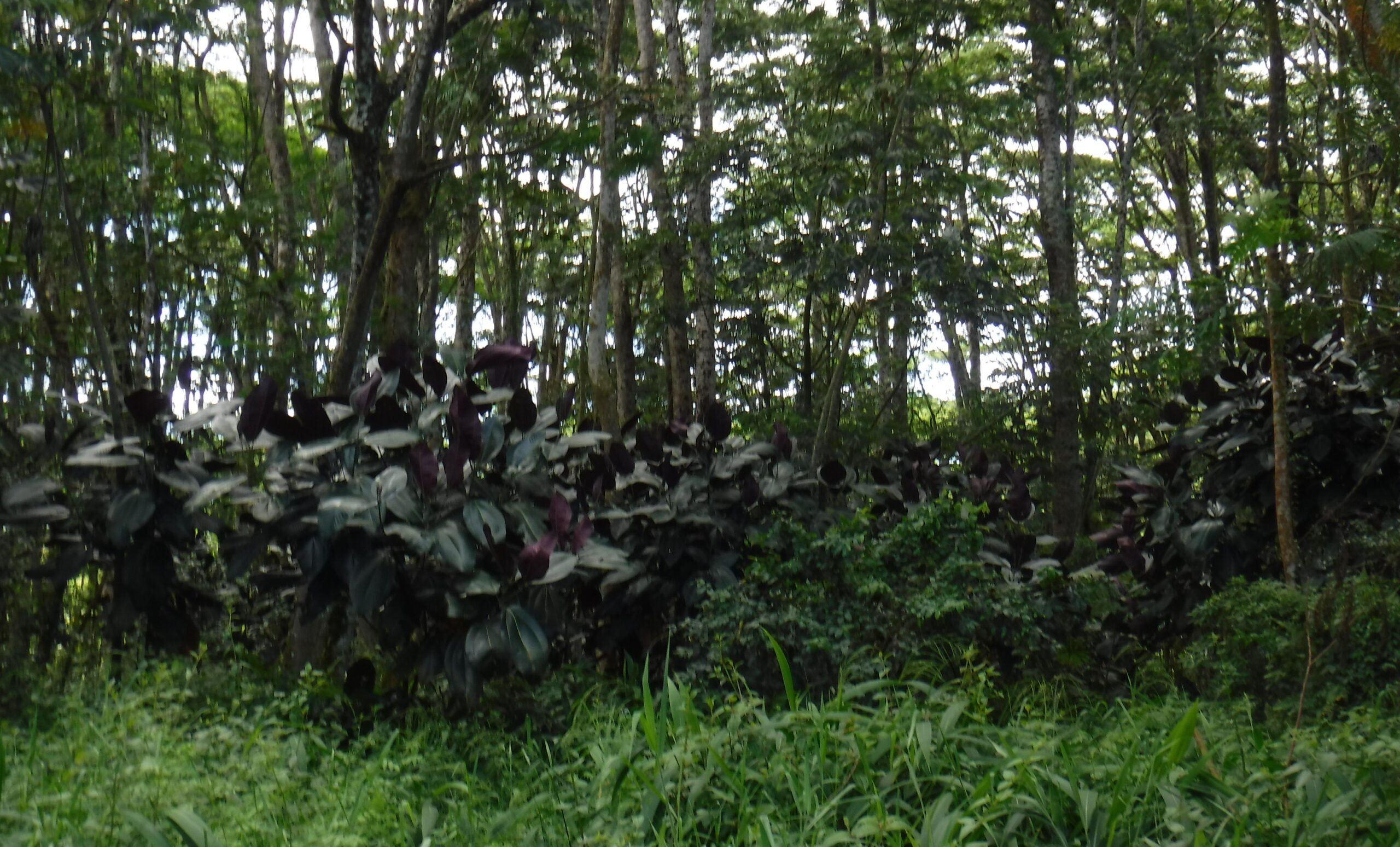
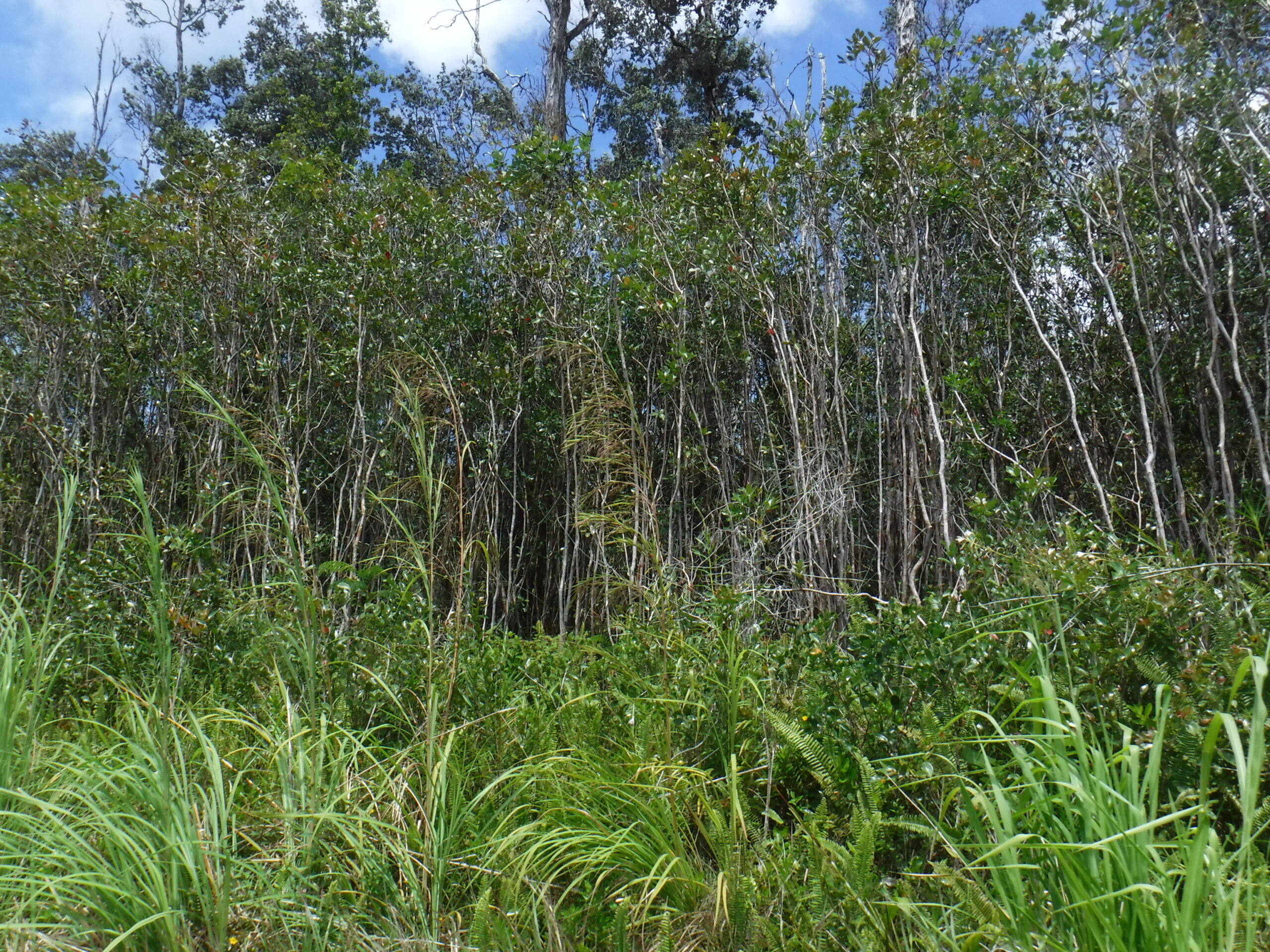
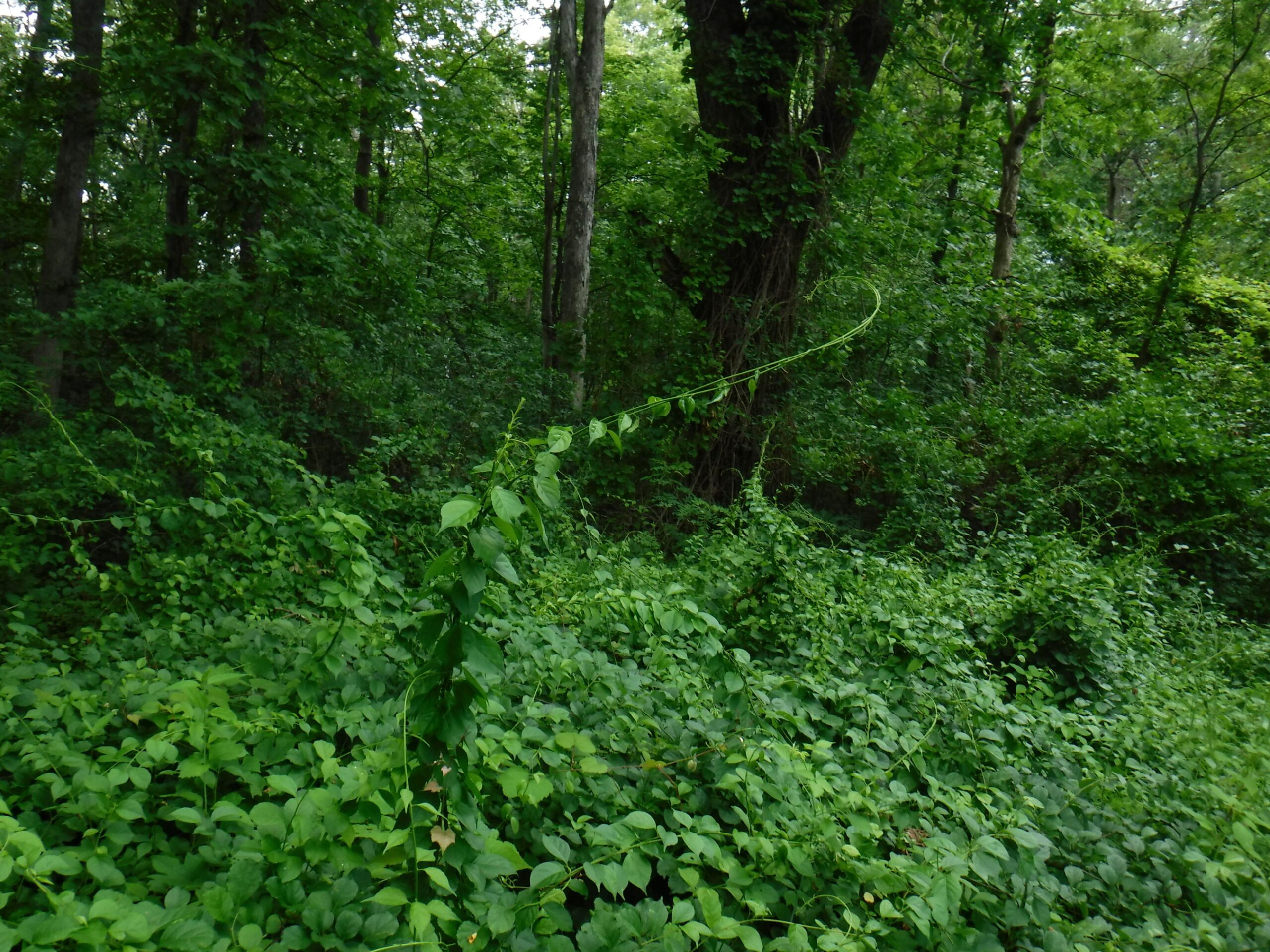
stand of Miconia under albizia overstory on Big Island, Hawai`i; photo by F.T. Campbell
As I will describe in another blog, participants in the annual meeting of the National Plant Board link in Honolulu learned the basics about the uniqueness of agriculture and native species on remote Pacific islands. I want to complement this information by reminding you about other Hawaiian and Guamaian species at risk – although did not learn anything new.
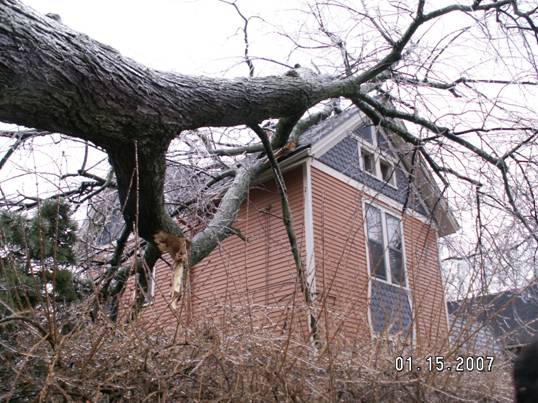
As Martin and Andreozzi pointed out, the Pacific islands import nearly all their food and other consumables. Considerable interest in some quarters in Hawai`i to increase agricultural production. However, large swaths of land in the low-elevation area surrounding Pahoa on the Big Island is completely dominated by the albizia (Falcataria Molucca) [see photo above]. J.B. Friday says it is cost-prohibitive to remove these trees in order to restore agriculture in the area. Local people are concerned because in storms the trees fall onto houses and roads, causing considerable damage.
I saw numerous clumps of the notorious invasive plant Miconia calvescens. Dr. Friday told me that conservationists now focus on keeping this plant out of key areas, not trying to eradicate it completely.
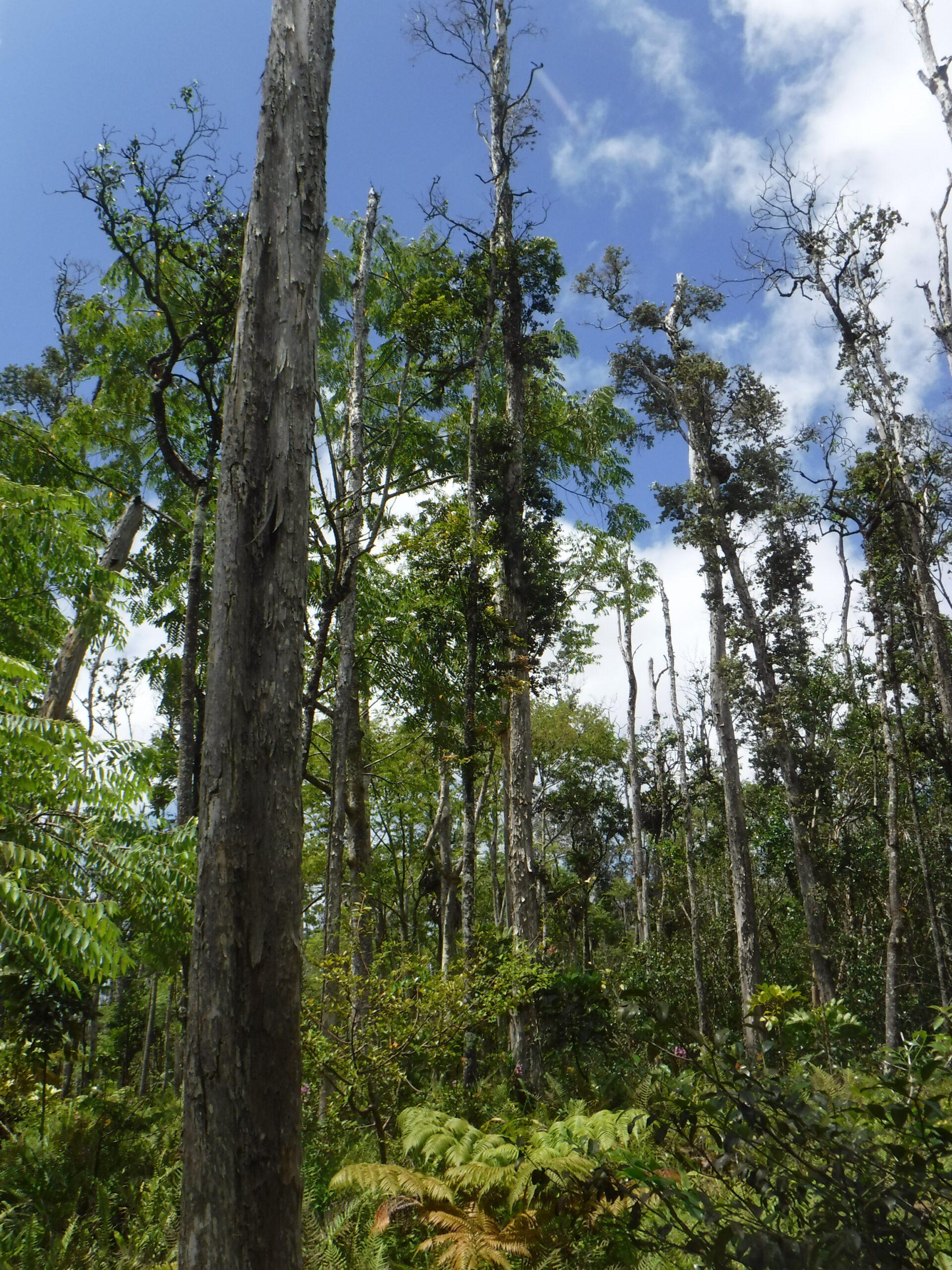
area being restored by volunteers; photo by F.T. Campbell
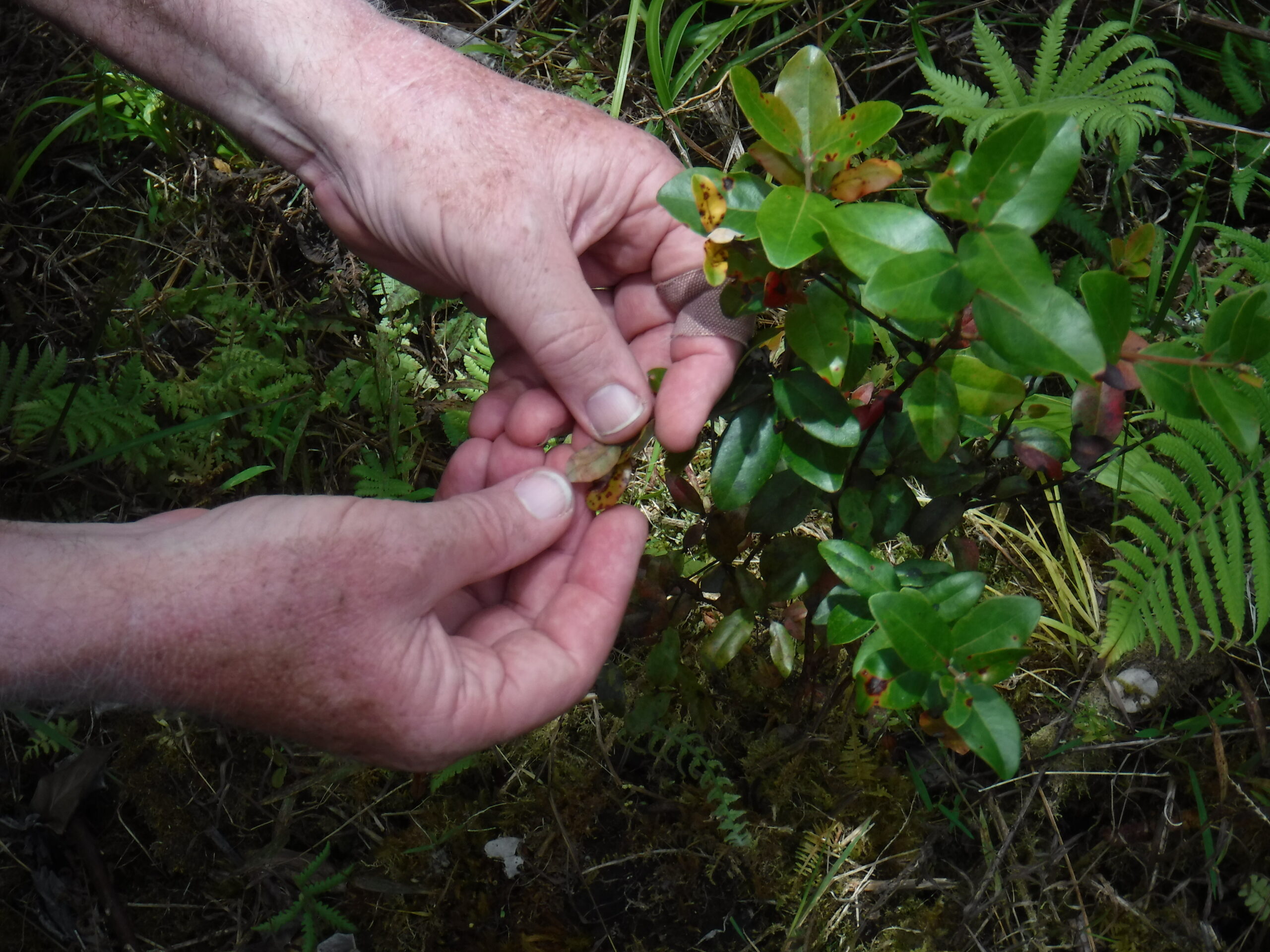
Local people trying to restore disease-damaged forests by planting other native plants and hand-clearing invasive plants. Some of the ohia seedlings infected by Austropuccinia psidii.
ohia seedling with symptoms of ohia rust (Austropuccinia psdii); detected by J.B. Friday; photo by F.T. Campbell
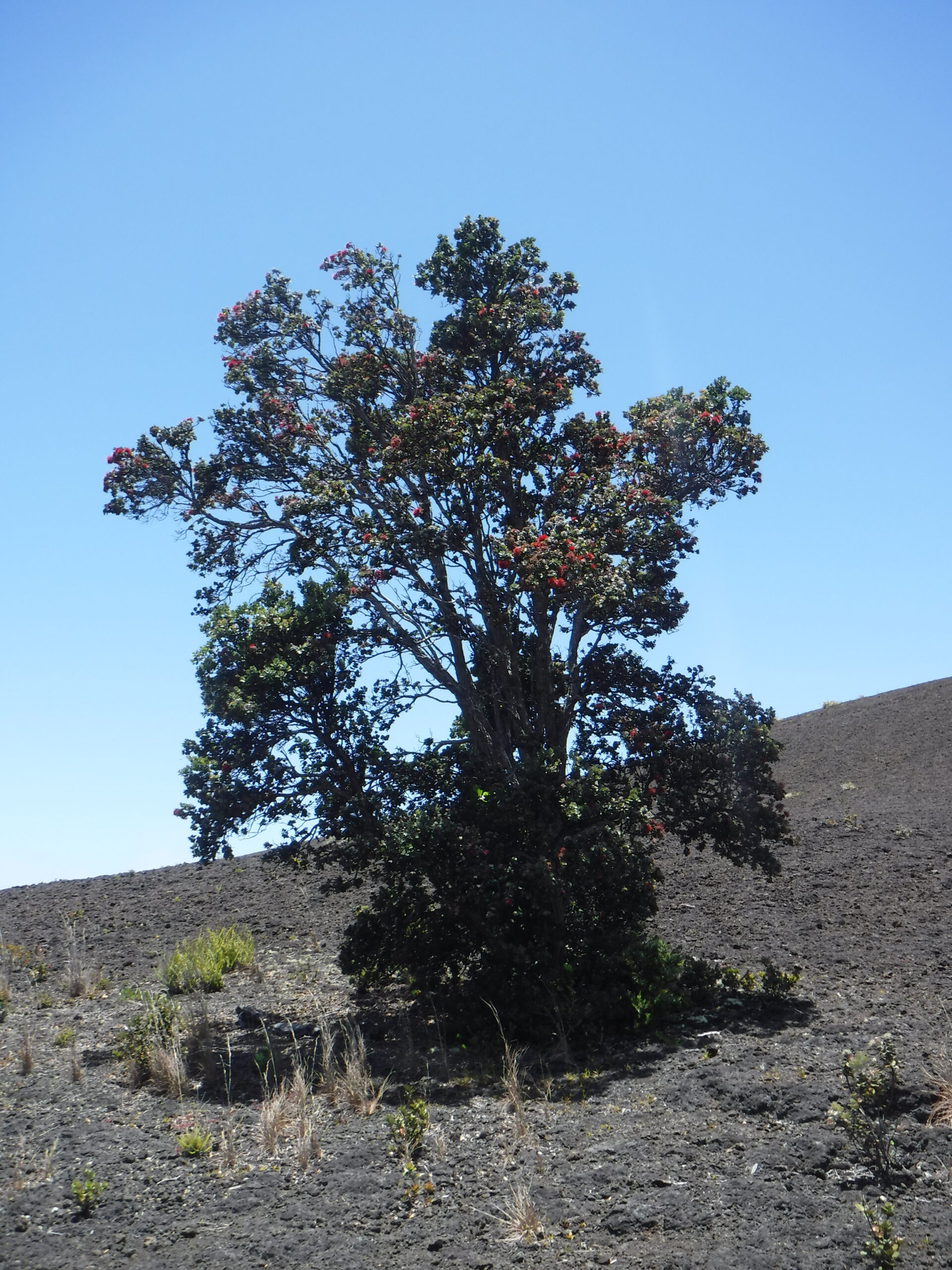
Dr. Friday showed me many areas where ʻōhiʻa trees have been killed by rapid ʻōhiʻa death. Since this mortality occurred a decade or more ago, other plants have grown up. Pic In many if not most cases, this jungle includes dense growths of guava Latin the most widespread invasive tree on the islands (Potter). ‘Ōhi‘a trees continue to thrive in Hawai`i Volcanoes National Park – also on the Big Island – because the NPS makes considerable efforts to protect them from wounding by feral pigs. Demonstrates importance of fencing and mammal eradication in efforts to protect this tree species.
healthy ʻōhiʻa tree on cinder cone created by eruption of Kilauea Iki in 1959; photo by F.T. Campbell
I also saw healthy koa (Acacia koa) in the park, especially at sites along the road to the trail climbing Mauna Loa.
Regarding the wiliwili tree, I was told that it remains extremely scarce on Oahu.
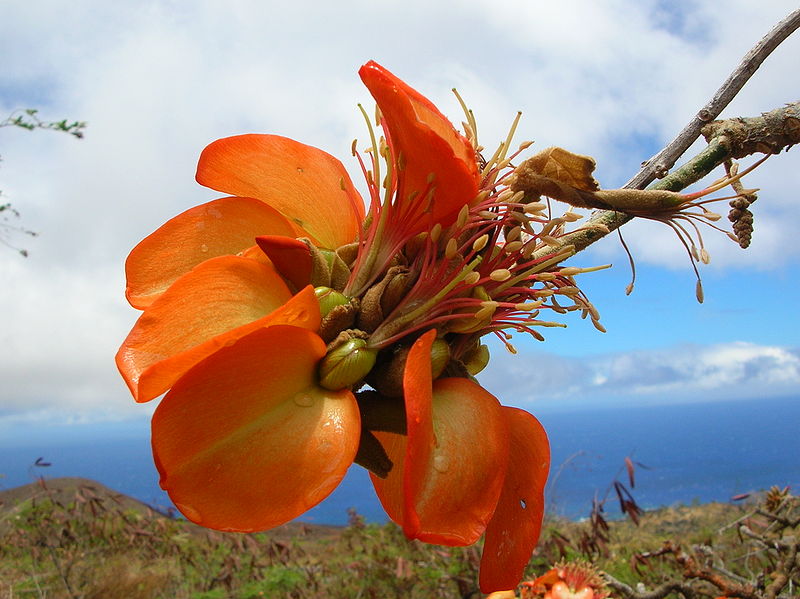
wiliwili tree in flower; photo by Forrest Starr
I heard nothing about the status of naio – another shrub native to the Big Island – but on the dry western side of the island.
I rejoice that scientists are making progress in protecting and restoring Hawaii’s endemic bird species. Specifically, they are at the early stages of controlling mosquitoes that transmit fatal diseases. All 17 species of endemic honeycreepers that have persisted through the 250 years since Europeans first landed on the Islands are now listed as endangered or threatened under the federal Endangered Spp Act. The “Birds, not Mosquitoes” project has developed lab-reared male mosquitoes that, when they mate with wild female, the resulting eggs are sterile. (Male mosquitoes don’t bite, so increasing their number does not affect either animals or people.) Over time, the invasive mosquito population will be reduced, giving vulnerable native bird populations the chance to recover. Scientists began releasing these modified mosquitoes in remote forests on Maui and Kaua‘i in November 2023. In spring 2025, they began testing releases using drones. Use of drones instead of helicopters reduces the danger associated with flying close to complicated mountain rides in regions with variable weather. This project should be able to continue; the Senate Appropriations Committee report for FY26 allocates $5,250,000 for this project.
American Bird Conservancy is sponsoring a webinar about this program. It will be Wednesday, August 27, 2025 4:00 PM – 5:00 PM ET. Sign up for the webinar here
thicket of guava on the Big Island, Hawai`i; photo by F.T. Campbell
Finally, scientists are releasing a biocontrol agent targetting strawberry guava, Psidium cattleyanum, the most widespread invasive tree on the Islands (Potter et al. 2023). Distribution involves an interesting process. A stand of guava is cut down to stimulate rapid growth. The leaf-galling insect Tectococcus ovatus reproduces prolifically on the new foliage. Twigs bearing the eggs of these insects are collected and tied into small bundles. The bundles are then dropped from helicopters into the canopies of dense guava stands, where they establish and feed – damaging the unwanted host.
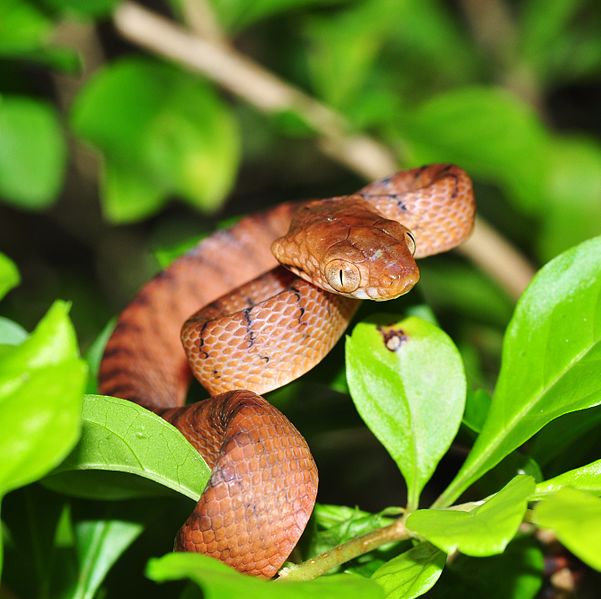
brown tree snake; photo via Wikimedia
Guam
Guam’s endemic birds have famously been extinguished by the non-native brown tree snake. Dr. Aaron Collins, State Director, Guam and Western Pacific, USDA APHIS Wildlife Services, informed participants at the National Plant Board meeting about the extensive efforts to suppress snake populations in military housing on the island, reduce damage to the electric grid, and prevent snakes from hitchhiking to other environments, especially Hawai`i and the U.S. mainland.
The program began more than 30 years ago, in 1993. The program now employs 80 FTEs and has a budget of $4 million per year. It was initiated because live and dead snakes had been found in shipments and planes that landed in Hawai`i and the U.S. mainland. Avoiding the snake’s establishment on Hawai`i is estimated to save $500 million per year. The program is a coordinated effort by USDA, U.S. Fish and Wildlife Service, and the Department of Defense. Probably this estimate helped advocates reverse a decision by the “Department of Government Efficiency” to defund the program.
The program enjoys some advantages over vertebrate eradication programs on the mainland. For example, since Guam has no native snakes, it can use poison, e.g., in mouse-baited traps that can be dropped from planes. A recent innovation is auto-resetting traps baited with mammals; they can electrocute numerous snakes per night.
SOURCE
Potter, K.M., C. Giardina, R.F. Hughes, S. Cordell, O. Kuegler, A. Koch, E. Yuen. 2023. How invaded are Hawaiian forests? Non‑native understory tree dominance signals potential canopy replacement. Lands. Ecol. https://doi.org/10.1007/s10980-023-01662-6
Posted by Faith Campbell
We welcome comments that supplement or correct factual information, suggest new approaches, or promote thoughtful consideration. We post comments that disagree with us — but not those we judge to be not civil or inflammatory.
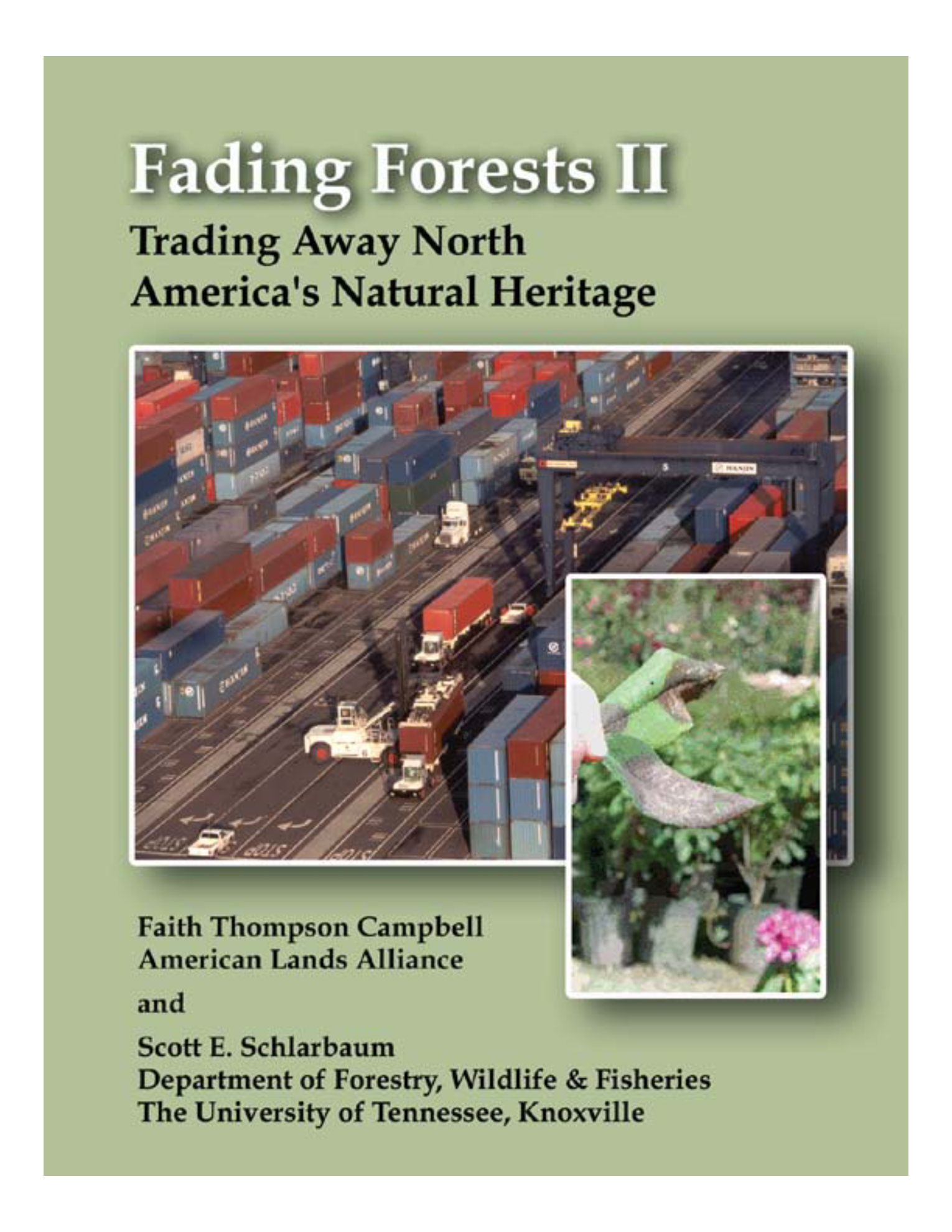
For a detailed discussion of the policies and practices that have allowed these pests to enter and spread – and that do not promote effective restoration strategies – review the Fading Forests report at http://treeimprovement.utk.edu/FadingForests.htm
effects of emerald ash borer — one of the non-native pests threatening forests across the North American continent; photo by Leslie A. Brice, taken in Maryland
Forest Service: What the Administration Proposed
According to the Washington Post, the Administration’s plans for shrinking the federal government would cut employees of the U.S. Department of Agriculture (USDA) by 35% by 2026 – a loss of ~32,000 employees. Of these, the USDA Forest Service (USFS) was targetted for significant losses. The Administration proposed to end the Research and Development program, firing 1,641 employees. The State, Private, and Tribal program would lose 94% of its staff of 580 people. The National Forest System was to be cut by 30%, or 1,603 people. These and cuts to additional USFS programs would have totaled 39% of the agency’s approximately 30,000 staff.
The Administration issued a plan to reorganize USDA. This plan called for phasing out the USFS’ nine Regional Offices. Apparently only two offices would remain: a reduced state office in Juneau and an eastern service center in Athens, Georgia. Seven of the current stand-alone Research Stations would be consolidated into a single location in Fort Collins. The proposal retains two separate entities: the Fire Sciences and Forest Products Laboratories.
How Congress’ Appropriations Committees Responded
As I reported earlier, the Congress has not accepted these proposed cuts to the USFS. Under normal circumstances provisions in Congressionally-enacted appropriations legislation should prevail over the Administration’s plan, but now, who knows?
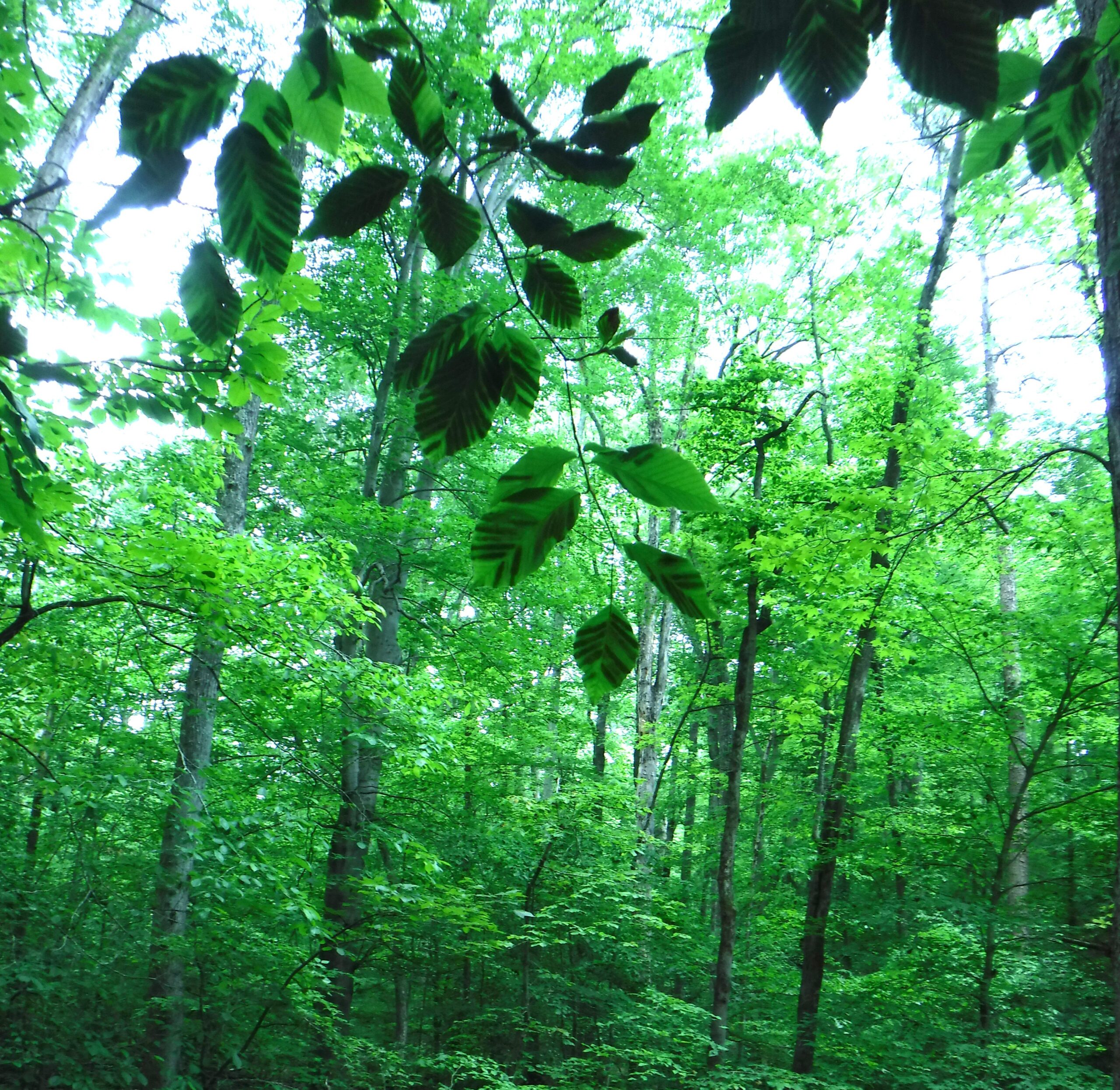
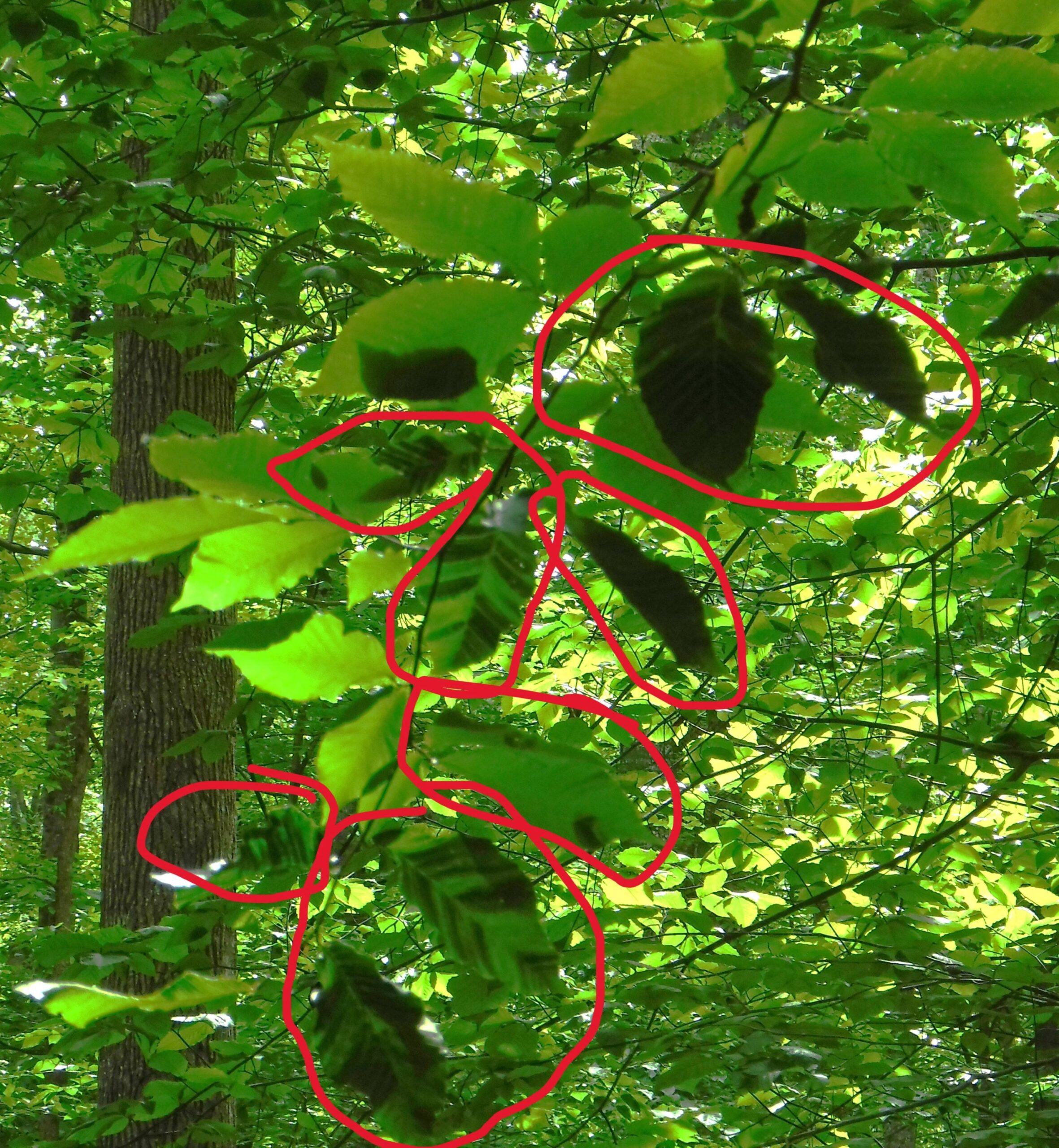
beech leaf disease — one of many non-native diseases threatening our forests that need further research; photo by F.T. Campbell
USFS Research and Development Program
The House Appropriations bill provides $301,706,000 for the research account, including $34 million for Forest Inventory and Analysis (FIA). The Senate bill provides more for the overall research program — $308.5 million; but a little less — $32 million – for FIA. I remind you that FIA data inform us about changes in the forest, including damage caused by introduced insects and pathogens. But these data do not identify or disseminate information about how such threats might best be countered.
The Senate bill specifically retains the USFS’ five regional offices and experimental forests. The report accompanying the bill specifies funding for several issues, especially needle blights on loblolly pine and western conifers and poor regeneration of white oak (Quercus alba). The only other topic of research mentioned in the bill is fire research. I fear that might led to decreased attention to non-fire aspects of introduced tree-killing insects and pathogens – which collectively threaten a similarly sized area of America’s forests.
USFS State, Private, and Tribal Forestry program
The House bill provides $281 million for the forest health program. The bill specifies that this funding “includes forest health management, invasive plants, and conducting international programs and trade activities.” This would seem to restore funding for the Forest Health Management program – both the “cooperative lands” and “federal lands” subprograms. However, I found no language specifying funding levels for each subprogram.
The Senate bill provides $38 million more — $319.5 million — for the forest health program. The report specifies that the Cooperative lands forest health management program should be funded at $42 million. However, the Appropriations Committee allocated significant proportions of this total to specific projects. Nearly a quarter of the appropriation targets the spruce budworm outbreak in the eastern U.S. Also, $2 million is earmarked for management of the sudden oak death pathogen in the forests of Oregon and California. Another $3 million funds a pilot program for management of the highly invasive plant cogongrass. Other priorities are programs targetting Western bark beetles and invasive woody plant species – although no funding levels are specified.
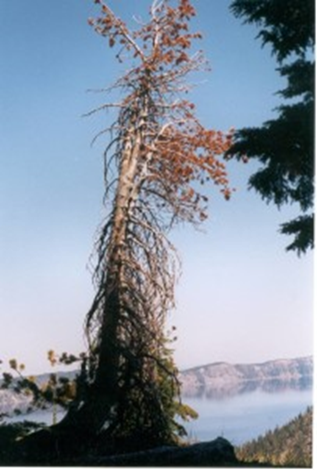
dead whitebark pine at Crater Lake National Park; photo by F.T. Campbell
The Senate bill also provides $19.6 million to support Congressionally-directed components of Forest Resource Information and Analysis; I don’t understand whether this is within or separate from the FIA program.
Under the National Forest System, the Senate bill instructs the USFS to spend at least $2 million per year on recovery of species of plants and animals listed under the Endangered Species Act, presumably including whitebark pines.
Animal and Plant Health Inspection Service
The USDA Animal and Plant Health Inspection Service (APHIS) is relatively well-off under the Administration’s plans. This agency is expected to lose 15% of employees – 1,180 people. According to Acting Deputy Administrator for Plant Protection and Quarantine Matthew Rhoads, 400 APHIS employees have accepted the Administration’s deferred resignation offer. Leaving are many program leaders – including the previous Deputy Administrator, Mark Davidson. While APHIS is allowed to hire to refill some positions, the future remains uncertain. I note a positive here: the new Farm Security Plan emphasizes efforts to combat bioterrorism, including APHIS’ safeguarding role. While I welcome that priority, I fear that the focus might be quite narrow, leaving out threats to natural resources such as native forest trees.
The impact of the proposed USDA reorganization on APHIS is unclear. The plan envisions continued reductions of the workforce and moving more than half of the remaining USDA employees away from Washington, D.C. to five regional offices.
APHIS also has done well under the House and Senate appropriations process. The House Appropriations Committee issued a press release touting its work as “Champions of U.S. farmers, agriculture, and rural communities”. The first example of this supportive effort reads: “Continuing critical investments in agricultural research, rural broadband, and animal and plant health programs.” Funding for APHIS is described as supporting the Trump Administration and its mandate from the American people. The Office of Management and Budget is said to have prioritized protecting American agriculture from foreign pests and diseases.
The Senate’s report instead cites traditional justifications for funding APHIS. It said that the appropriated funds will help protect the nation’s animal and plant resources from diseases and pests. (As usual, the examples cited are all animal diseases: chronic wasting disease, new world screwworm, and avian influenza.)
The reports accompanying both bills say agricultural quarantine – preventing pest introduction – is an important responsibility of the federal government. I am cheered by this statement since the Trump Administration puts such emphasis on shedding responsibilities.
Unlike the USFS, funding levels for most APHIS programs are unchanged from this year. (Of course, inflation has reduced the amount of work that can be carried out using the same amount of money.) The following table shows funding for programs of interest during the current year (FY2025) and levels proposed by the House and Senate bills for Fiscal Year 2026 (which begins on October 1).
Figures in millions of dollars (rounded up)
FY2025 enacted FY26 House FY26 Senate
APHIS total $1,148 $1,146 $1,168
Plant health subtotal $387.5 $388.6
Agric. quarantine $35.5 $35.5 $35.5
Field crop and rangeland $12 $11 $11.5
Pest detection $29 $28.5 $29
Methods development $21.5 $21.5 $21.5
Specialty crops $206.5 $216.3 $208.5
Tree and wood pests $59 $59 $58.6
Emergency preparedness and response* $44.5 $44.5 $44.3
* this fund is apparently for both animal and plant emergencies
The Senate and House bills contain identical language authorizing the Secretary “in emergencies which threaten any segment of [US] agricultural production …, [to] transfer from other appropriations or funds available to the agencies or corporations of [USDA] such sums as may be deemed necessary, to be available only in such emergencies for the arrest and eradication of contagious or infectious diseases … in accordance with sections … 431 and 442 of the Plant Protection Act … and any unexpended balances of funds transferred for such emergency purposes in the preceding fiscal year shall be merged with such transferred amounts”. The House report reminds the Administration that this language means that the emergency fund is intended to enhance, not replace, use of funds transferred from the Commodity Credit Corporation when confronting pest or disease outbreak emergencies. I have long sought increased funding for APHIS to respond quickly when a new invasive organisms is detected. Such flexibility is necessary because the regular process for adopting an appropriation stretches over about three years.
Also, both bills support continuation of APHIS’ feral swine management program. However, they prioritize funding projects in areas with the highest pig populations. I think this is backwards from the perspective of efficiency – although it might build political support for the program.
The House report mentions management of Arundo canes, said to be depleting groundwater levels in western states; eastern spruce budworm in the Northeast; spread of the southern pine beetle and spotted lanternfly; and invasions by the non-native shrub glossy buckthorn (Frangula alnus).
The Senate report notes that two strains of the sudden oak death pathogen Phytophthora ramorum and here – the EU1 and NA1 strains – pose major threats to Douglas-fir-tanoak forests in Oregon and California and the associated quarantines restrict exports of logs. Therefore, the report says funding for addressing this threat should be no lower than the FY24 level. (Oregon senator Jeff Merkley is the top Democrat on the Agriculture Appropriations subcommittee.)
I am thrilled to see that the House report requires APHIS to report within a year on recommendations to enhance existing protocols to better protect Hawai`i from bioinvasion. The report is to evaluate the feasibility of APHIS working with the state to improve biosecurity, prevent invasive species establishment, and mitigate damage from those already there. The report is to evaluate the risk of invasive species arriving via movement of people, baggage, cargo, and other items.
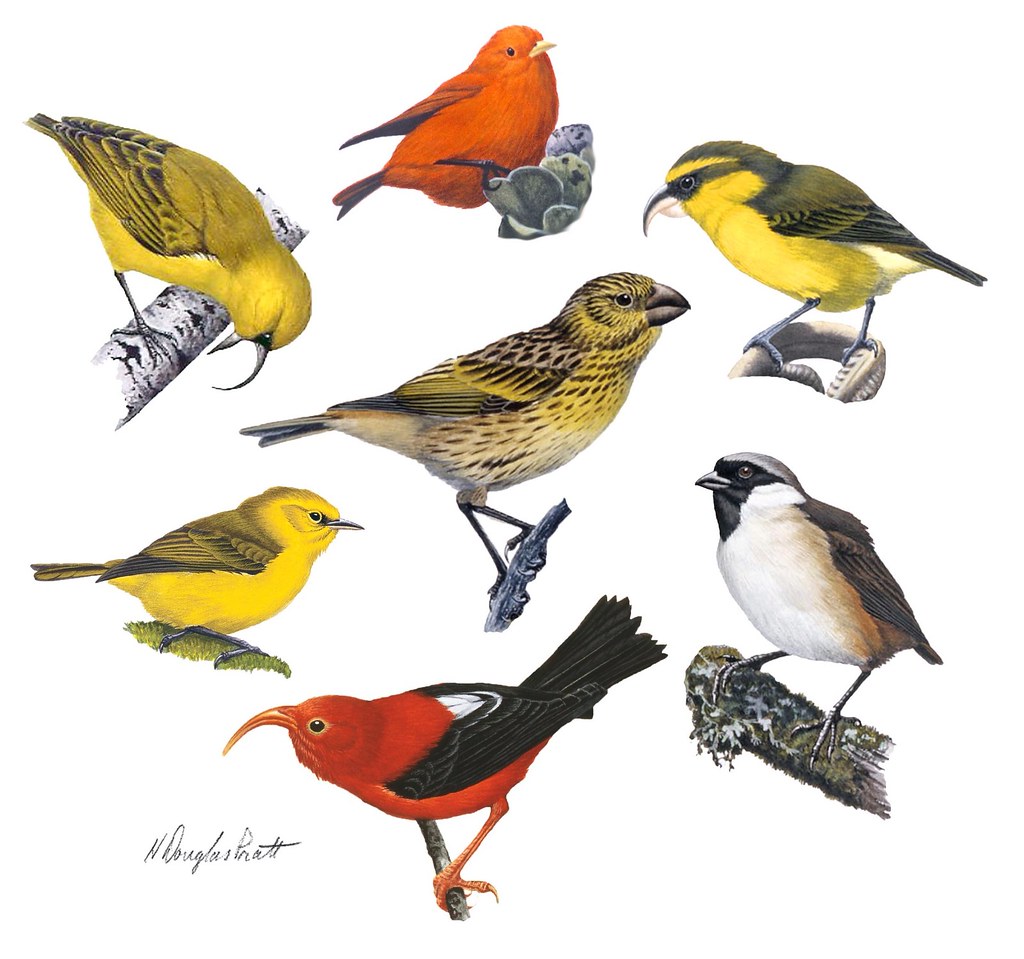
endemic honeycreepers of Hawai`i
Finally, the “Big Beautiful Bill” adopted by the Congress in June, increased funding for APHIS’ Plant Pest and Disease Management and Disaster Prevention (Plant Protection Act Section 7721) from $75 million to $90 million – but only for Fiscal Year 2026. This grant program continues to be crucial to funding vital programs. This year the program has funded more than 300 projects. I wonder – might forest pathologists prepare a proposal for next year that would fund a study to improve America’s phytosanitary program regarding pathogens? Two possible study topics might be 1) evaluating the efficacy of APHIS’ current regulations in preventing introduction of fungal pathogens, oomycetes, bacteria, viruses, and nematodes on imported plants and/or 2) identifying currently unknown microbes resident in regions that are important sources of origin for traded plants, vulnerability of hosts in the U.S., and new technologies for detecting pathogens
Posted by Faith Campbell
We welcome comments that supplement or correct factual information, suggest new approaches, or promote thoughtful consideration. We post comments that disagree with us — but not those we judge to be not civil or inflammatory.
For a detailed discussion of the policies and practices that have allowed these pests to enter and spread – and that do not promote effective restoration strategies – review the Fading Forests report at http://treeimprovement.utk.edu/FadingForests.htm
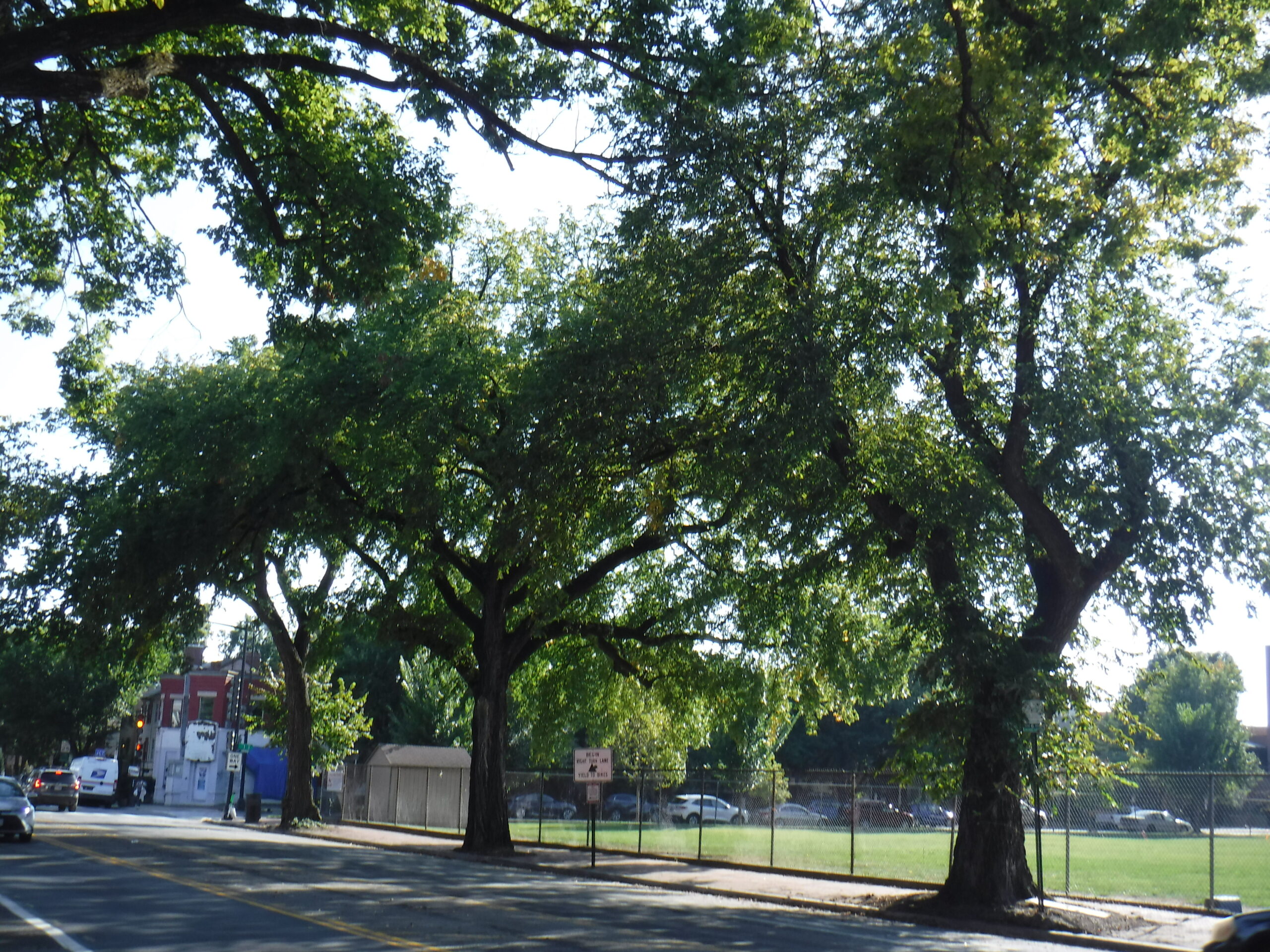
America elms on a street in Southeast District of Columbia; photo by F.T. Campbell
I applaud recent developments regarding one of the most devastating and widespread non-native tree-killing diseases, “Dutch” elm disease (DED). Brief descriptions of ecological importance of elms, the disease’s impact in North American and Europe, and difficulties in managing the rapidly evolving causal pathogens here. (See also a review of the ecological value of American elm here.)
Restoring America elm would be wonderful, so I rejoice at steps forward.
One task is to improve detection of the disease in forests. Currently detection is tardy because it relies on observation of visual symptoms followed by molecular confirmation. This process demands considerable time and labor; it is also error-prone. Earlier molecular detection methods also are labor intensive, costly, & have operational limitations.
A group of scientists led by Jian Jin and Songlin Fei are testing whether new spectral imaging & artificial intelligence can improve early detection. (See the publication by Wei et al.; full citation at the end of this blog.) Their goal is to detect subtle changes associated w/ disease developments before visual symptoms appear. The new technology — high-precision leaf spectral imagers — is already in use for agr crops. The devices needed are inexpensive and hand-held/portable. Can collect hyper- or multi-spectral images of a whole leaf in the field. This systems is also non-destructive & rapid.
To test applicability of this technology, the scientists inoculated the fungus responsible for DED into trees with known – and varying — disease susceptibilities. Then they collected spectral images of leaves from those trees to test accuracy of analyses conducted via both traditional machine learning & state-of-art deep learning models. These collections were made at three different times: 96 hours after inoculation / before visual symptoms; 4 weeks after inoculation / during visual symptom development; 15 weeks / foliar symptoms noticeable. They recorded the declining status of the using the traditional visual symptoms – wilting, yellowing, browning of leaves.
While detection accuracy varied by time of specimen collection and genetic heritage of the particular tree, machine-learning-based spectral & spatial analysis of high-resolution hyper & multi-spectral leaf images did detect DED symptoms. This advance would help detect pockets of disease in the forest and might be useful in screening elm genotypes for susceptibility to the pathogen. This latter ability would support resistance breeding programs.
However, further study is needed to determine whether light conditions, seasonal variations, or interactions with other pathogens might influence leaves’ spectral signature. Furthermore, scientists should test application of the process to additional elm genotypes. As Enrico Bonello and others have pointed out, however, the ideal would be to detect infection before even the start of symptoms – in other words, to detect even more subtle changes.
A second task is to breed American elms that can survive – even thrive – despite the continuing presence of the disease-causing pathogens. I rejoice here, too. So far, scientists have found varying levels of resistance in large “lingering” elms. This resistance appears to be heritable. Scientists are preparing reports of this progress for publication.
The USFS Northern Research Station is leading efforts of multiple partners to find and screen resistance of large elms across several regions. In New England, the principal partner is The Nature Conservancy; in the upper Midwest partners include the Army Corps of Engineers and Wisconsin Department of Natural Resources, In the lower Midwest the USFS is working with Metroparks Toledo, University of Illinois, Urbana Champaign, Appalachia Ohio Alliance and others. The Great Lakes Basin Forest Health Collaborative is helping to coordinate these efforts.
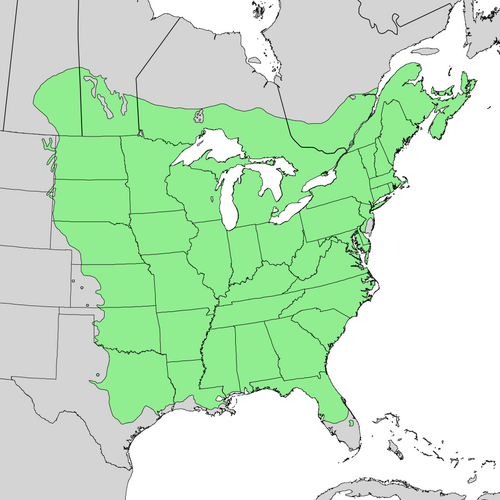
American elm has a huge range – covering much of the United States east of the Great Plains. Map Restoring the species to that range requires efforts throughout that range – so as to capture the genetic variability within the species and perpetuate its adaptations to the wide range of ecological conditions.
While restoring this magnificent and ecologically important tree species is worthwhile per se, a second motivation has emerged: using elms to restore riparian and wetland ecosystems now being harmed by loss of ash trees to the emerald ash borer.
Knight et al. (full citation at the end of this blog) note that these efforts’ success will depend not only on developing elms that can survive DED. It is also necessary to determine restoration strategies and silvicultural treatments that will promote the young trees’ ability to flourish despite challenges by storms, floods, competition with other plants, and wildlife feeding.
This team of USFS researchers describe ongoing tests of reintroduction strategies & silvicultural requirements in the Service’ Region 9. They note that reintroduction focuses on a single species. The goal of ecosystem restoration requires considering a broader range of factors. Both are important components for the success.
Testing Elm Reintroduction Factors
Research projects they describe include testing results of planting both bare-root seedlings and containerized stock. The latter approach is more labor-intensive but appears to provide better survival. When competing vegetation was removed & then controlled to prevent regrowth, large containerized trees had excellent survival & rapid growth. They also documented the value of caging trees to prevent deer browsing.
Other research projects explore elm seedlings’ ability to tolerate cold, floods, and shade. Scientists in New England and Wisconsin are observing how well progeny from various crosses between DED-tolerant American elms & local survivor trees are enduring the regions’ winters. One test is deploying progeny from paternal lines that are from different plant cold hardiness zones. It will be important to identify and plant trees that are adapted to local environmental conditions on top of being resistant to the DED pathogen.
Another group of tests investigates flood tolerance. Even minor dips or rises on floodplains lead to very different flooding intensities. Some of these experiments also consider shade tolerance. This is because managers hope can establish understory trees poised to grow rapidly by planting elm seedlings before harvest or mortality of canopy trees (e.g., ash). In one experiment in floodplain forests in Ohio, so far many elm seedlings have survived extensive spring & fall flooding. The seedlings are thriving across a range of microsite light environments. Even competition from invasive herbaceous plants does not appear to have impeded the elms’ survival.
DED has two methods of infecting nearby elms: that pathogen is either vectored by beetles that burrow below the tree’s bark, or through direct fungal contact via grafting of roots. Scientist do not yet know whether trees that tolerate DED infections caused by beetle attacks can withstand infection via root grafts. An experiment using paired elms was initiated in 2011. At the time of their writing, the trees had not yet grown sufficiently large to form root grafts – necessary before scientist could begin the experimental inoculations.
Finally, these many plantings have revealed some “unknown unknowns” — factors not previously identified. Knight et al. describe two studies:
1) Under the National Elm Trials, scientists are studying growth, stress and pest resistance, and horticultural performance of DED-tolerant American elm cultivars & other elm species and hybrids in 16 states. (See details here.)
2) A system of sentinel restoration sites has been established. Multiple DED-tolerant American elm selections have been planted in eight locations in four states to be an “early warning” system to identify additional pathogens of concern. Knight cites detection of a wood wasp at one site in Ohio and competition of thick grass and feeding by rodent on their roots in Minnesota.
Testing Restoration Strategies
As Knight et al. remind us, Eastern forests experience many forms of disturbance, including non-native pests and plants, increases in deer populations, land clearing, grazing, & climate change. Foresters want to know whether DED-resistant American elms might be used in restoration plantings in response to these natural and anthropogenic disturbance? They value elm for its ability to thrive in a wide variety of conditions. Furthermore, the species supports a diverse array of insect herbivores, which then support higher trophic levels, e.g., birds (Tallamy 2009). Another factor, not mentioned by Knight et al., is that even vulnerable elms can grow to some size before they are killed by DED. Knight et al. say multiple studies are testing use of American elm as one of several native species to be plant in ash ecosystems devastated by EAB. In northern Minnesota, the experiment is occurring in wet forest ecosystems formerly dominated by black ash. In Ohio researchers are observing elms planted in riparian systems where green ash forests used to be found. They report that early data indicate good initial survival of American elm in both studies.
The Nature Conservancy’s Connecticut River Program planted over 1900 disease-tolerant American elm cultivars at 76 sites in four New England states over the decade 2010 – 2021. Several DED-tolerant selections and their progeny were planted. Survival has varied considerably, they think depending on site factors, e.g., ice flows, height and density of competing vegetation, climate, damage from voles, deer browsing, others.
More recently, the partners have moved away from crossing survivor elms with cultivars because that results in too many related progeny, insufficient genetic diversity. In addition, the trees would not be adapted to the planting site because one parent was not local).
The Nature Conservancy’s participation has been funded by a grant of ~$2.4 million from a private foundation. TNC is helping to identify “lingering” or “survivor” American elm and restore them to floodplains and urban forests across New England. TNC has also funded groundbreaking research at the USFS to accelerate the breeding program and develop best practices for American elm reintroduction.
The Vermont chapter has been particularly active. Since 2014 it has been managing experimental elm trees plantings at 10 TNC natural areas and 26 partner-owned sites across the state. This effort has yielded ~7,000 trees that represent 142 novel crosses between 23 survivor elms identified by TNC in New England & several varieties identified by USFS from other parts of the country. Scientists plan to inoculate these trees in spring 2026. The trees’ vulnerability to the pathogen will then be evaluated over two years.
Knight et al. expect that in a decade or less these and other research projects will contribute needed understanding of various American elm propagules’ cold tolerance, flood tolerance, shade tolerance, response to competing vegetation, & root grafting. This information will allow managers to maximize survival of planted elm trees. It will also demonstrate how to usefully employ elms in ecosystem restoration. They caution that guidelines will probably vary to fit specific situations & site characteristics e.g., forest type, competing species, local hydrology, etc.
Knight et al. also identify topics that require additional research. The first factor mentioned are social & ecological contexts of restoration strategies. Social context will guide the formulation of a more strategic approach — setting goals, addressing such questions as the public perception & value of American elm in urban & forest areas, forest manager goals for incorporation of American elm, & municipal requirements for urban trees. It is essential to determine the long-term durability of resistance. Also need to explore how best to promote spread of DED-tolerant genes given the high numbers of local, non-resistant elms across the landscape. scale strategies.
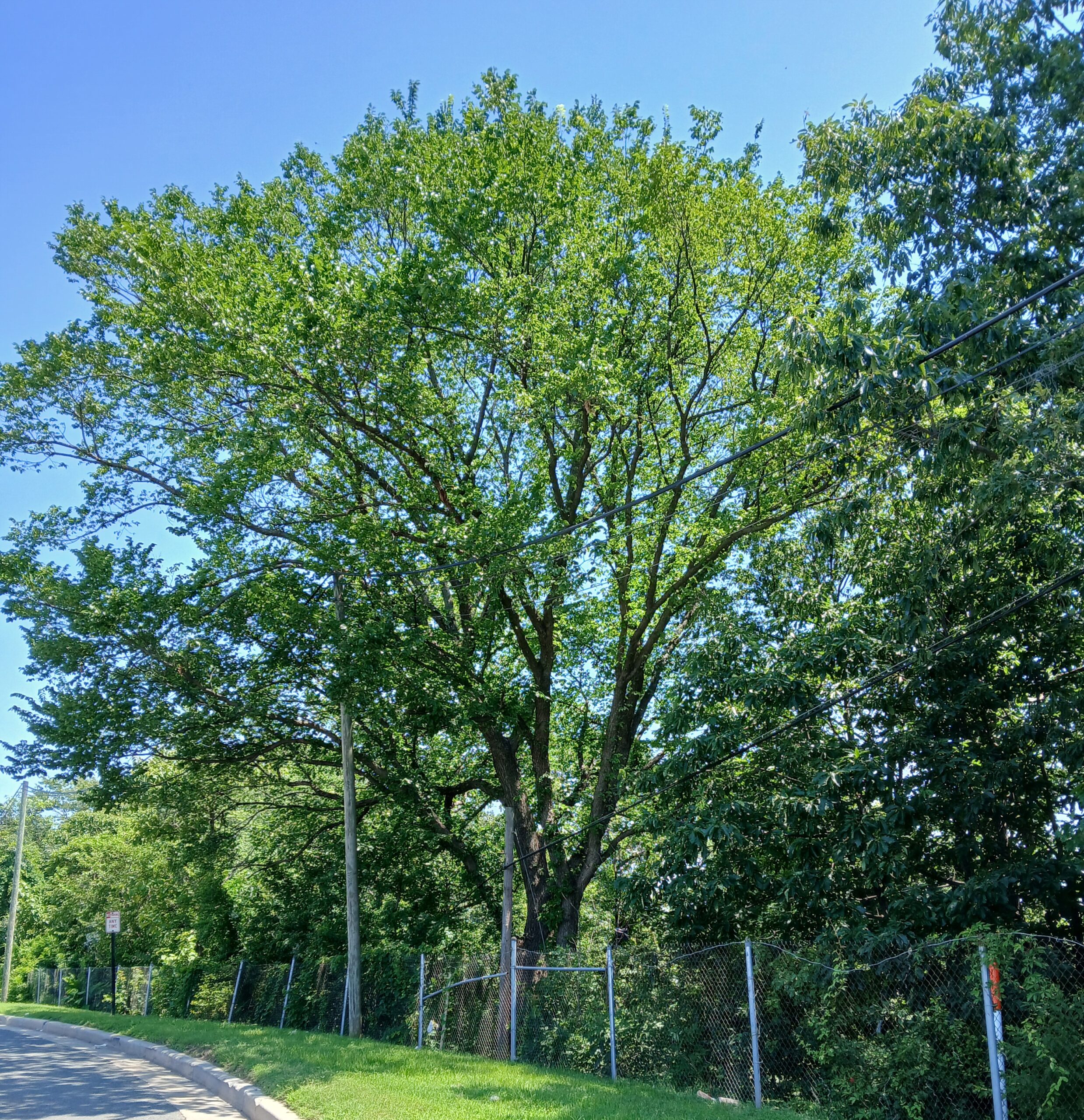
Knight et al. note that need experimental plantings in additional parts of the species’ enormous range to identify potential problems, test performance on different soil types and in different climates. Need experiments to identify interactions among elm genetics and abiotic & biotic environ variables to guide silvicultural, site preparation, and planting strategies. I have observed apparently thriving American elms along roadways in the Washington, D.C. metropolitan area.
thriving American elm at the Fairfax County landfill in Lorton; photo by F.T. Campbell
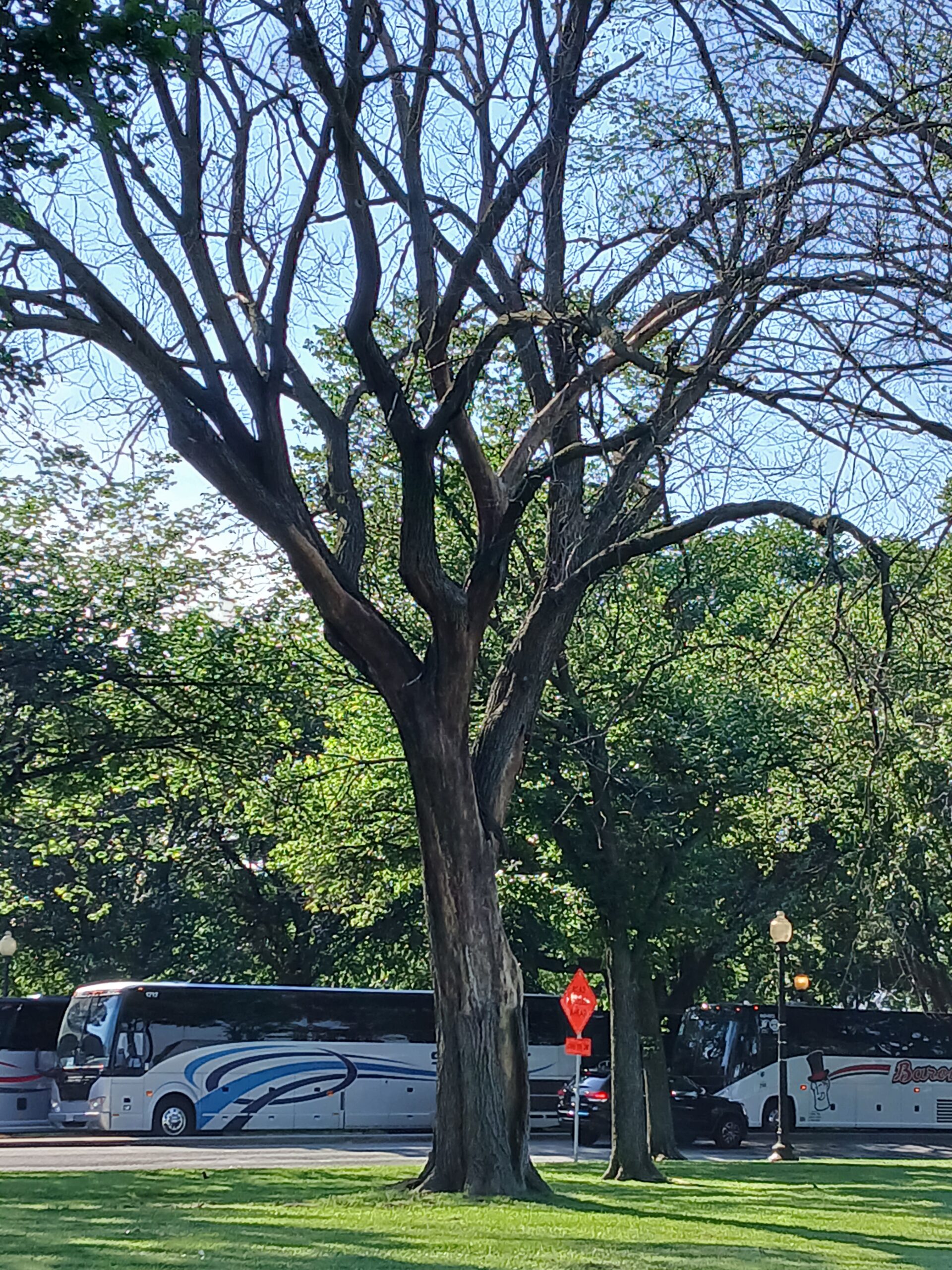
I believe no one is protecting them. Certainly other elms in the area have died. So far I have not found people trying to find “lingering” or “survival” elms here. I seek people who want to work with these trees!
dead American elm on National Mall in Washington, D.C., close to the Lincoln Memorial; photo by F.T. Campbell; other nearby elms are also dead
The USDA Forest Service is not the only entity engaged in breeding American elms. The University of Minnesota is supporting an American elm breeding program through its Minnesota Invasive Terrestrial Plants and Pest Center (MITPPC) (see Bernardt citation at end of blog). Scientists are identifying DED-resistant elms in the wild, cloning and testing them, and replanting the strongest candidates across urban and natural landscapes. Their goal is to reintroduce the more resilient clones across Minnesota’s urban and natural landscapes, restoring lost canopy and biodiversity while preparing forests for a future stressed by climate change.
Bernardt describes the usual four essential steps: identification of trees that appear to be resistant; propagation of clones from those trees; growing sufficient numbers of these; and testing them for resistance. The Minnesota program – like many similar programs for breeding the many tree species being killed by non-native pests – ask the public to help in searching for “survivor” trees—American elms that appear to be withstanding Dutch elm disease even as others around them succumb.
The article summarizes the next steps and challenges. It notes, for example, that using clones rather than seedlings is essential because resistance is not reliably passed on during sexual reproduction. (However, Cornelia Pinchot Wilson has told me that colleagues should soon publish articles demonstrating that resistance is heritable.) Furthermore, the clones must be grown for several years—often five or more—until the trees are large enough to be tested for resistance. The article does not indicate whether the earlier step of propagating elm clones is challenging or easy. It has been difficult for other species, e.g., chestnuts, whitebark pine, ash, and koa.
To confirm whether a specific tree is resistant, the team typically tests each tree twice, since environmental factors like location and weather can influence outcomes. Trees that pass these tests move on to the next stage: reintroduction plantings in natural areas and parks. These field-growing trees serve two important roles. First, they contribute to restoring elm populations in natural and urban landscapes. Second, these trees can be observed over the long term to confirm whether they exhibit persistent resistance and are adapted to local environmental conditions.
The project’s success, the researchers say, hinges on collaboration. State agencies, local governments, and community members all play critical roles. Among those helping have been the Minnesota Department of Natural Resources, the Izaak Walton League, and Three Rivers Park District.
The article reminds us that resistance breeding is a long-term process. As noted above, clones must be grown for years before they can be tested.
Also, resistant trees aren’t immune to the pathogen. Instead, they survive despite the disease in sufficient numbers to restore the species to some of its former range and ecological role.
Finally, the trees must also survive the every-day challenges of life as a tree: storms, animal feeding, and other pests and diseases – native and non-native. The article mentions elm yellows disease but not elm zig-zag sawfly which has been moving West (it was detected in Ohio in 2023 and Wisconsin in 2024). Nor does it mention the fungus Plenodomus tracheiphilus, which is killing American elms in Alberta. Breeding program staff can help – for example, the Minnesota program now uses larger protective tubes to better shield the young trees from wildlife.
The Minnesota program plans to establish seed orchards. They hope that by planting trees confirmed to be resistant near to each other, they will cross-pollinate and produce seeds that are more likely to carry resistance, possibly even combining different resistance genes. Trees in these orchards would capture a broad range of resistance traits, helping future generations of elms stand strong against Dutch elm disease.
Program leaders Ryan Murphy and Ben Held also hope new technologies for studying genes will enable discovery of the genetic basis for resistance to DED. Identifying resistance genes or markers would make producing resistant trees a lot easier. It would also enable breeders to build up genetic diversity more deliberately.
SOURCES
Bernhardt, C. 2025. “Reviving a Giant” July 2025. University of Minnesota. Minnesota Invasive Terrestrial Plants and Pest Center. Website?
Knight, K.S., L.M. Haugen, C.C. Pinchot, P.G. Schaberg, & J.M. Slavicek. Undated. American elm (Ulmus americana) in restoration plantings: a review.
Wei, X.; Zhang, J.; Conrad, A.O.; Flower, C.E.; Pinchot, C.C.; Hayes-Plazolles, N.; Chen, Z.; Song, Z.; Fei, S.; Jin, J. Machine Learning-based Spectral and Spatial Analysis of Hyper-and multi-spectral Leaf Images for Dutch Elm Disease Detection and Resistance Screening. Artif. Intell. Agric. 2023, 10, 26–34. https://doi.org/10.1016/j.aiia.2023.09.003.
Posted by Faith Campbell
We welcome comments that supplement or correct factual information, suggest new approaches, or promote thoughtful consideration. We post comments that disagree with us — but not those we judge to be not civil or inflammatory.
For a detailed discussion of the policies and practices that have allowed these pests to enter and spread – and that do not promote effective restoration strategies – review the Fading Forests report at http://treeimprovement.utk.edu/FadingForests.htm
The Senate Appropriations Committee has adopted its bill appropriating funding for the USDA Forest Service for Fiscal Year 2026, which begins on 1 October. Once the bill passes the full Senate, negotiators for the Senate and House committees must agree on a compromise.
The Senate bill provides a total of $8.6 billion for the Forest Service. This includes $308,497,000for the Research and Development program. This is an increase of $8.5 million above funding for the current year. The Senate bill specifically supports retaining the five regional offices and experimental forests. Remember, the Trump Administration had proposed to eliminate the Research program – other than Forest Inventory and Analysis. The Committee’s report link specifies that the USFS should prioritize projects requested by or benefitting the agency’s mission, not requests by external entities. The benefit to the agency and public should be stated before a project is initiated. The report specifies funding for several issues, including
$3 million to continue collaborative research to determine distribution & movement of the pathogens that cause needle blight on loblolly pine.
Funding to maintain Experimental Forests in the Northeast. These are described as important for assessing the long-term response of eastern white pine & northern hardwoods to various forest management prescriptions, controlled burning & natural factors, such as insects, disease, weather events and climate change. While the wording is somewhat confusing, I believe this is funded at $6 million.
$1 million to support Outbreak Timber Salvage Research related to drought & needle tip blight & Ips beetle outbreaks in the West.
$3 million to support Needle Blight Mitigation collaborative research.
Several program areas related to fire, including understanding the risk in the wildland-urban interface.
Finally, the bill would fund Forest Inventory and Analysis at $32 million.
a white oak in Maryland; photo by Bob Gutowski via Flickr
There is particular attention to white oaks (Quercus alba). The report notes that this species occupies 103 million acres in E U.S. The species is critical for wildlife, biodiversity, & forest products. The Committee instructs the USFS to report on its efforts, including monitoring & research, to regenerate white oak on National forests as well as state, tribal, and private lands. The Committee recognizes importance of seed stock & tree nurseries in these efforts.
The bill also restores funding for the State, Private, and Tribal Forestry program. It provides $319.5 million for this, an increase of $16 million above the current level. Again, the Trump Administration had proposed to eliminate funding for the SPT program. The Senate report specifies that the Cooperative lands forest health management program should be funded at $42 million. However, the Committee also allocated significant proportions of this total to specific projects:
$10 million (nearly a quarter of the total) to support mitigation efforts targeting the spruce budworm outbreak in the eastern US.
$3 million for a Cogongrass Management Pilot Program
$2 million for management of the sudden oak death pathogen in the forests of Oregon and California
Prioritizing – but without specifying funding levels – of the Western Bark Beetle Initiative and helping urban areas restore and improve their forests and combat exotic invasive woody plant species.
There is also $19.6 million to support Congressionally-directed components of Forest Resource Information and Analysis – which is apparently separate from the FIA program.
The Senate bill also continues support for the USFS International Programs.
Under the National Forest System, the Committee instructs the USFS to spend at least $2 million per year on recovery of species of plants and animals listed under the Endangered Species Act. This category includes whitebark pines but not other tree species decimated by non-native pests.
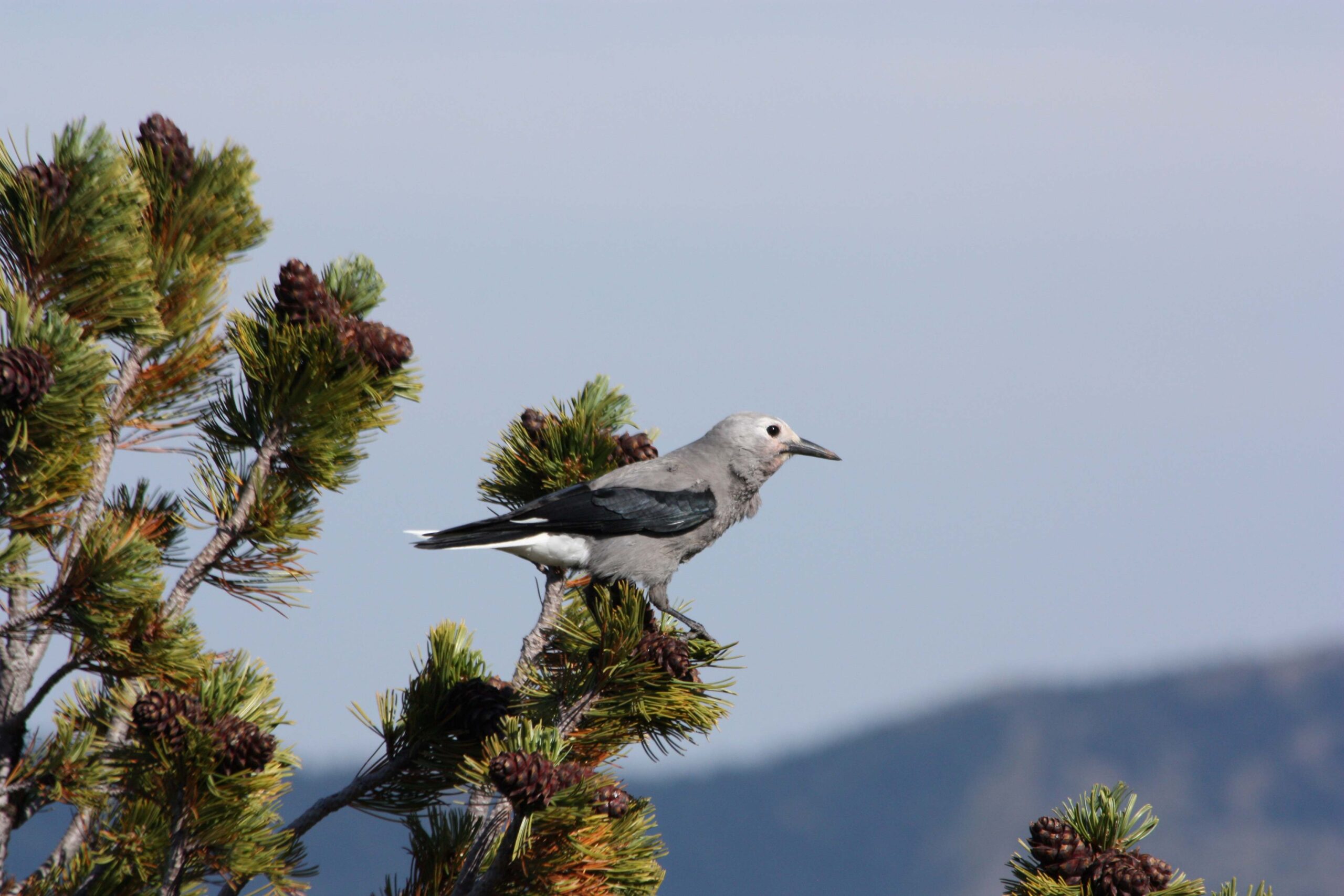
whitebark pine with Clarke’s nutcracker; photo by Walter Siegmund
While I am disappointed that the Senate report makes few reference to non-native pests other than the loblolly needle blight, I rejoice that the Committee explicitly endorses the importance of USFS programs to sustain forest health across all landscapes – not just in National forests – and the Research program’s status as the premier such entity around the world.
Reminder: the House Appropriations bill provides $301,706,000 for the research account – almost $7 million less than the Senate. The House’ allocation for the Forest Inventory and Analysis (FIA) program is $34 million. Thus, there is a $9 million difference in funding levels – a significant challenge to reconcile. How will funding for the already-underfunded invasive species programs fare?
The House bill provides $280,960,000 for the State, Private, and Tribal forestry program. This is $38 million less than the Senate bill. The available report did not specify funding levels for the Forest Health Management program – either the “cooperative lands” or “federal lands” subprograms. As I note above, the Senate bill increases funding for the cooperative lands account, but then earmarks all the increase.
Posted by Faith Campbell
We welcome comments that supplement or correct factual information, suggest new approaches, or promote thoughtful consideration. We post comments that disagree with us — but not those we judge to be not civil or inflammatory.
For a detailed discussion of the policies and practices that have allowed these pests to enter and spread – and that do not promote effective restoration strategies – review the Fading Forests report at http://treeimprovement.utk.edu/FadingForests.htm
Eastern deciduous forest – Great Smoky Mountains National Park; photo by F.T. Campbell
Organizers of the American Forest Congress claim the meeting has influenced the direction of forest conservation and management in America since 1882. As examples they cite creation of the U.S. Forest Service, the establishment of the eastern National Forests, new community-based and collaborative approaches to forestry, and efforts to advance the leadership of women within the forest community.
During its meeting in Washington, D.C. in July 2025, the Ninth Forest Congress adopted a resolution re: threat from forest pests and pathogens:
Resolved: to recognize and address the urgent risk posed by exotic and native pests and pathogens and invasive species to long-term health, productivity and sustainability of America’s forests.
Provide adequate and sustained resources for a cooperative stewardship program to monitor and address these risks across landscapes and ownerships.
Convene regional partnerships with participation of state, federal and tribal authorities, private landowners, NGOs, universities and other interested stakeholders to identify key forest health risks, develop regional approaches and attract needed resources to implement and sustain them.
Brian Milakovsky, senior forester at the New England Forestry Foundation helped gather an ad hoc group of forest health experts and foresters from across the eastern seaboard to draft the resolution
The Committee now plans to organize a follow-up event sometime in 2025 to discuss what is needed to build a more diverse and robust funding pipeline for pest and pathogen work. Their concern was elevated by the Trump Administration’s proposal to stop funding for the USFS’ State, Private and Tribal Forestry program.
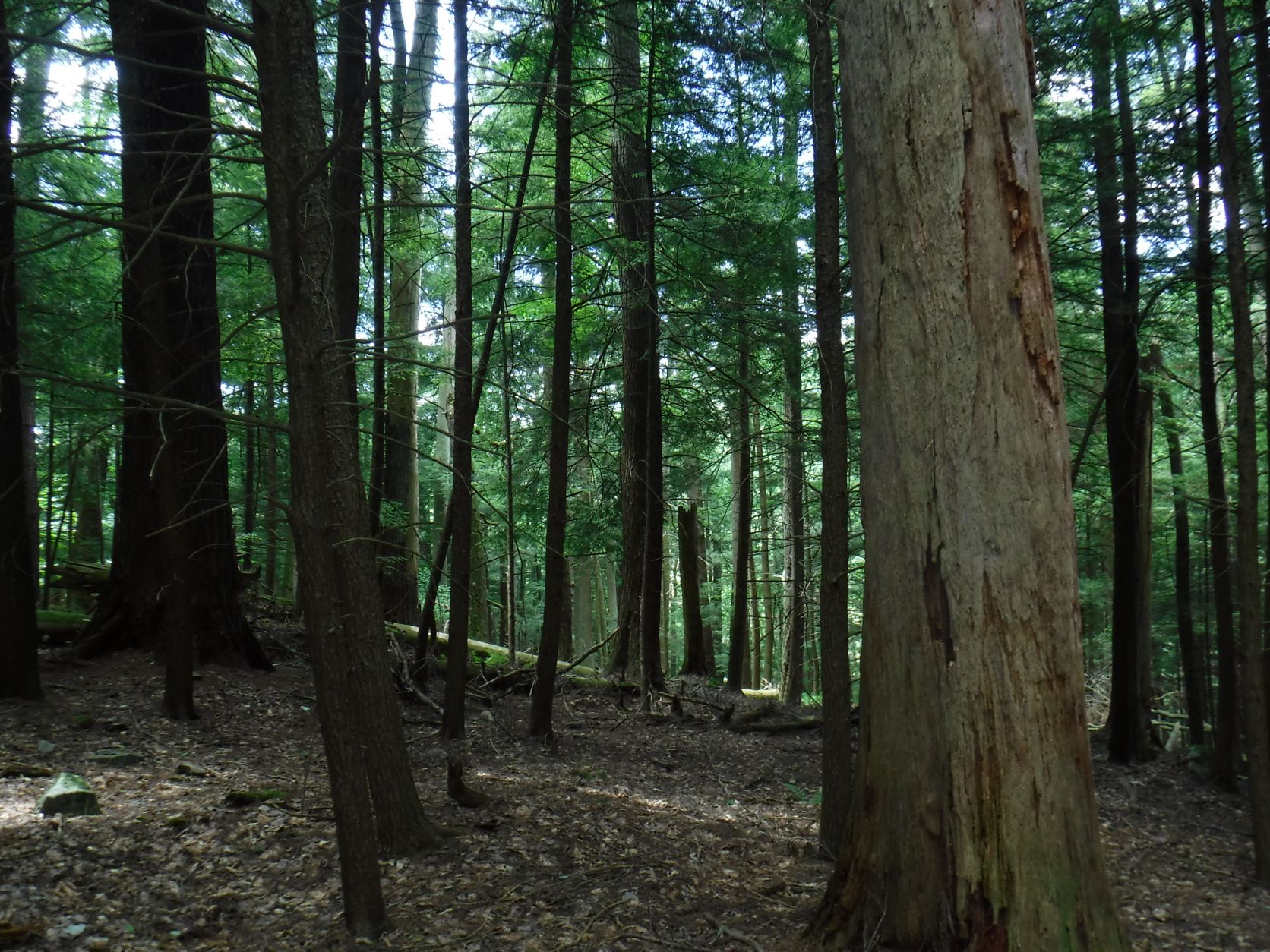
healthy hemlock forest, Cook Forest State Park, Pennsylvania; photo by F.T. Campbell
The New England Forestry Foundation has a direct stake in these programs. The Foundation manages 41,000 acres of land in five New England states and works with diverse landowners in the region to improve forest management. The Foundation hopes to expand both on-the-ground work and advocacy in response to the threats from non-native insects and pathogens. While they are focusing on developing an IPM program on their own lands, they recognize that they must address the pest and pathogen levels of the surrounding landscape – that is, they wish to support the federal and state forest health experts who are trying to address these issues at the largest scale.
In Maine the Foundations is trying to manage destruction by the hemlock woolly adelgid (HWA), beech bark disease, beech leaf disease, winter moth, red pine scale, and browntail moth. The emerald ash borer is arriving – and threatens to decimate green ash forests covering entire hillsides – with repercussions for water supplies, flooding, etc.
This resolution presents a great opportunity to revive discussions about the non-native forest pest issue with federal and state government officials, fellow conservationists, and the foundations that fund conservation work. Let’s work individually and together to put real muscle into these programs.
One of the possible ways is to persuade Congress to adopt the bill under development by Sen. Peter Welch of Vermont. The bill as introduced in the previous session is available here. Please ask your senators to sponsor it in this session – perhaps as a component of the (overdue) 2024 Farm Bill.
USDA photo via Rawpixel
Posted by Faith Campbell
We welcome comments that supplement or correct factual information, suggest new approaches, or promote thoughtful consideration. We post comments that disagree with us — but not those we judge to be not civil or inflammatory.
For a detailed discussion of the policies and practices that have allowed these pests to enter and spread – and that do not promote effective restoration strategies – review the Fading Forests report at http://treeimprovement.utk.edu/FadingForests.htm
The House Appropriations Committee, Subcommittee on Interior, adopted its version of appropriations for the USDA Forest Service (USFS) for Fiscal Year 2026, which begins October 1st. The bill restores the basic funding levels for the Research and Development and State, Private, and Tribal Forestry accounts. (The Trump Administration had called for cutting nearly all funding for these accounts.)
The Subcommittee provides $301,706,000 for the research account. I am having difficulty determining the funding level for the current year (FY25) since the Administration and Congress have taken several contradictory actions. I am disappointed that $34 million of the research total is allocated to the Forest Inventory and Analysis (FIA) program. FIA data inform us about changes in the forest, including damage caused by introduced insects and pathogens. But FIA data do not identify or disseminate information about how such threats might best be countered. I had asked Congress to begin increasing the proportion of research funds allocated to studying the invasive forest pests.
Furthermore, the only other topic of research mentioned in the bill is fire research. I fear that might led to decreased attention to non-fire aspects of introduced tree-killing insects and pathogens – the opposite of what I think is appropriate.
one of numerous risk maps for Phytophthora ramorum; many aspects of this pathogen still require research – perhaps especially the likelihood that the three strains present in forests in Oregon & California will reproduce sexually
The Subcommittee provides $280,960,000 for the State, Private, and Tribal forestry program. This is apparently a $23 million cut for the overall SPT program. The bill specifies that this funding “includes forest health management, invasive plants, and conducting international programs and trade activities.” This would seem to restore funding for the Forest Health Management program – both the “cooperative lands” and “federal lands” subprograms. I doubt that the funding will reach the level I suggested: $32 million for the cooperative lands subprogram and $16 million for the federal lands subprogram.
Still, it is a great relief that the Congress has – so far – chosen to maintain these programs, which are so critical to countering invasions by non-native organisms. I hope the full House and the Senate will agree. Please contact your senators and remind them how important these programs are.
(Some other important programs have been sacrificed in the appropriations bill – A 23% cut in the budget for the Environmental Protection Agency; reversing some regulations intended to protect various endangered species …)
Posted by Faith Campbell
We welcome comments that supplement or correct factual information, suggest new approaches, or promote thoughtful consideration. We post comments that disagree with us — but not those we judge to be not civil or inflammatory.
For a detailed discussion of the policies and practices that have allowed these pests to enter and spread – and that do not promote effective restoration strategies – review the Fading Forests report at http://treeimprovement.utk.edu/FadingForests.htm
The Washington Post has summarized data on the number of container ships travelling from China to U.S. west coast ports for the first half of 2025. It compares those numbers to the same period in 2024.
For the first four months, the trips exceeded 2024 levels, often by considerable amounts, as importers sought to get their goods before President Trump imposed high tariffs. Thus, the number of container ships arriving at Los Angeles, Long Beach, Oakland, Seattle, and Tacoma during each month:
January: 17% increase
February: 32% increase
March: 14% increase
April: 5% increase
In May, landings from China decreased by 33%! Those ships arriving also carried fewer containers.
When measured by the value of imported goods, imports from China fell 20% nationwide when we compare April 2024 to April 2025. This decrease was seen at four of the five west coast ports; the exception was Tacoma.
When President Trump “paused” the 145% increase in tariffs on Chinese goods, the prices shippers charge for transporting containers doubled – from less than $3,000 per container to $6,000. This change probably portends a rebound in import volumes.
I always worry about containers from China (see Haack et al. 2022; full citation at the end of this blog; and this blog). For more than 30 years they have too often been the means by which wood-boring insects are introduced to North American forests. I fret even more when import volumes are rising – especially when importers are in a rush. I suspect that neither exporters nor importers pay much attention to whether the crates and pallets have been treated properly.
ash tree killed by EAB — the risk of woodborers introduced in wood packaging; photo courtesy of John Hieftje, former mayor of Ann Arbor, Michigan
I have asked the Bureau of Customs and Border Protection for comment, but have not yet received a reply.
Please note that these data do not include information about imports from other Asian countries … or shipments destined for U.S. ports in the Gulf or Atlantic (via the expanded Panama Canal) or to Canadian ports.
SOURCE
Haack RA, Hardin JA, Caton BP and Petrice TR (2022) Wood borer detection rates on wood packaging materials entering the United States during different phases of ISPM#15 implementation and regulatory changes. Frontiers in Forests and Global Change 5:1069117. doi: 10.3389/ffgc.2022.1069117
Posted by Faith Campbell
We welcome comments that supplement or correct factual information, suggest new approaches, or promote thoughtful consideration. We post comments that disagree with us — but not those we judge to be not civil or inflammatory.
For a detailed discussion of the policies and practices that have allowed these pests to enter and spread – and that do not promote effective restoration strategies – review the Fading Forests report at http://treeimprovement.utk.edu/FadingForests.htm
In June I visited Shenandoah National Park (SHNP) (above) for the first time in years. The Park’s forests are mostly mature secondary forests, having recovered over the 90 years since establishment from earlier logging and clearing for small-scale farms and pasture.
While I loved the forest and the vistas, I was aware of which species are missing …
Five years ago I blogged about a study by Anderson-Teixeira et al. (full citation at the end of this blog) that reported on the changes in the forests of SHNP and the neighboring Smithsonian Conservation Biology Institute (SCBI). This is important because, as Fei et al. (2019) (full citation at the end of this blog) documented, nine of the 15 most damaging introduced forest pests grow in eastern forests. In fact, the greatest increase in biomass loss has occurred in Eastern forests. Seven are found specifically in SHNP (Potter et al. 2019; full citation at the end of the blog).
Anderson-Teixeira et al. report that non-native forest pests caused a loss of about a quarter of ecosystem above-ground biomass between 1991 and 2013 across 66 sites. These invasions occurred after the worst impacts of chestnut blight, which entered the country ~120 years ago – before “modern” phytosanitary programs were instituted. Still, total above-ground biomass has largely recovered through germination and growth by trees in other genera. Greatest increases have been by tulip poplar (Liriodendron); oaks (Quercus); ash (Fraxinus) – but see below; birch (Betula); and maples (Acer). And while several taxa were lost from monitoring plots in SHNP and SCBI, a-diversity also remained steady.
So what does that look like on the ground?
American chestnut used to dominate many Eastern forests, composing more than one-third of the pollen assemblage in some stands (Fei et al.) According to Anderson-Teixeira et al., chestnut trees larger than 10 cm DBH disappeared by 1910, killed by chestnut blight. In past decades I frequently saw chestnut root sprouts when hiking. The National Park Service now urges visitors to hike to low elevation sections of the South River Trail to see such sprouts.
In the 1980’s, groves of eastern hemlocks occupied about 9,800 acres in SHNP, primarily in shaded valleys and along streams. Invasion by the hemlock woolly adelgid killed 95% of these hemlocks. Anderson-Teixeira et al. document the species’ disappearance from their study plots by 2007. Park staff treated more than 20,000 hemlocks using injections of imidacloprid. In 2015, the Park began partnering with Virginia Polytechnic Institute and State University in releasing predatory biocontrol beetles (Laricobius spp.) While the beetles have shown promising establishment and spread, it is now recognized that additional biocontrol agents will be needed to suppress the adelgid. The Park plans to allow releases of predatory silver flies (Leucotaraxis spp.) in remaining hemlock sites and will begin to phase out the imidacloprid treatments.
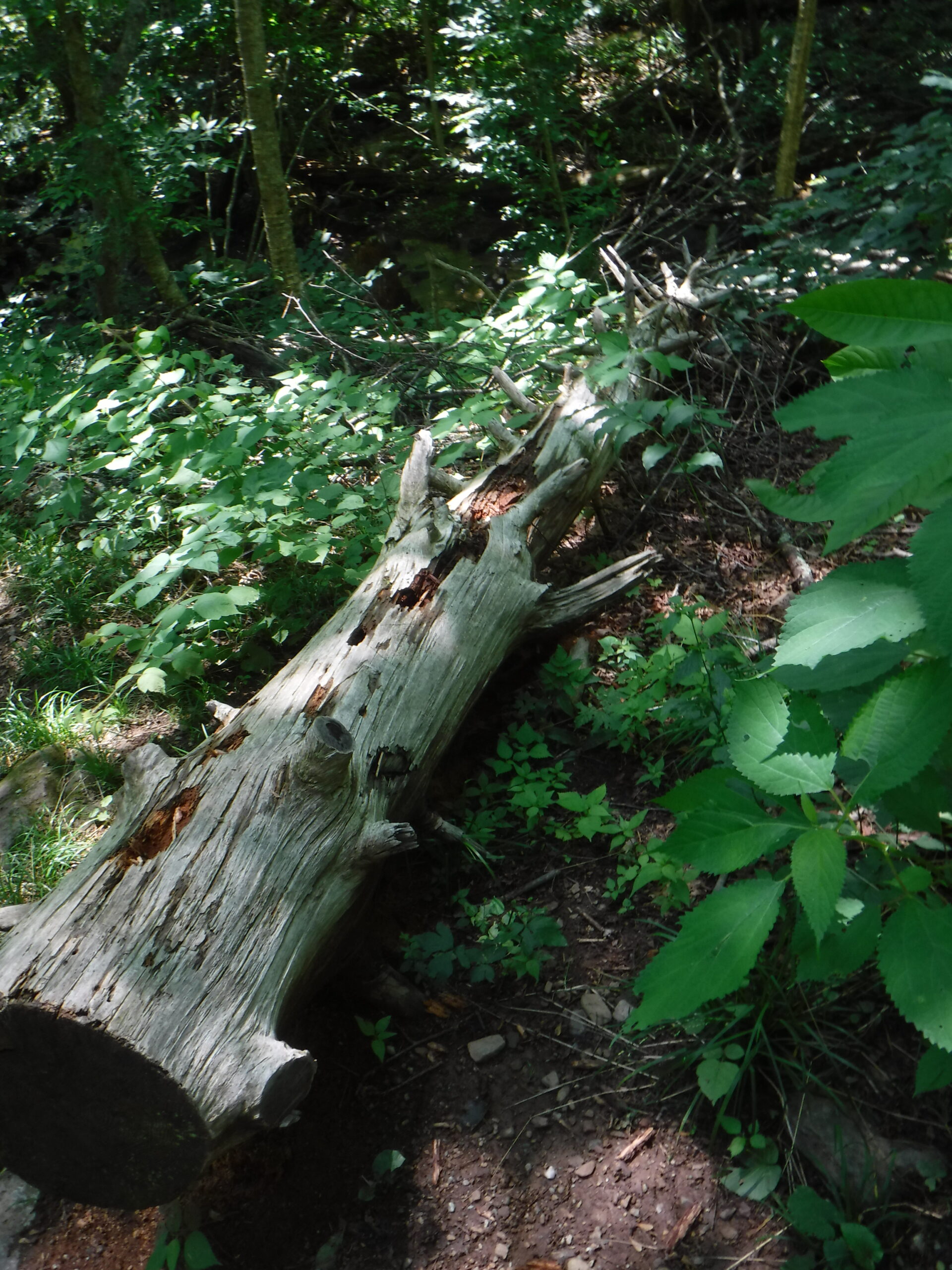
I remember the hemlocks! But this year, at least in the creek valleys where I hiked, I saw almost no remnants – not even fallen logs.
fallen hemlock; all photos by F.T. Campbell in Shenandoah NP in June 2025
And I remember the flowering dogwoods. They are almost gone now from the Appalachian chain, killed by dogwood anthracnose. Their status in SHNP is unclear. Anderson-Teixeira et al. report flowering dogwoods only from the Smithsonian property. There, they declined by almost 90% from the study plots from 2008 to 2019. The Park’s list of tree and shrub species reports that flowering dogwood is still “abundant”; my visit was too late in the season to observe how visible flowering dogwoods still are. Certainly the species survives the disease better in open settings, e.g., meadows and roadsides. I don’t know how the three other native Cornus species were affected.
Dead ash are still visible. Ash trees made up about 5% of the Park’s forest cover. Anderson-Teixeira et al. report that ash aboveground biomass was increasing in SHNP and stable on the SBCI property before arrival of the emerald ash borer (EAB). EAB-caused mortality was first detected in 2016. In just three years — by 2019 – 28% of green, white, and black ash had died; this meant a loss of 30% of ashes’ aboveground biomass. Ninety-five percent of remaining live trees were described as “unhealthy’’. In an effort to retain ash trees for visitor enjoyment, reduce threats to visitors from hazard trees, and to preserve a portion of the park’s ash tree communities until host-specific biological controls become available, SHNP staff – supported by specially trained volunteers and interns, Virginia Department of Forestry and Fairfax County – began treating high-value ash with emamectin benzoate. They began at Loft Mountain Campground, a location (elevation 3,300 feet) where ash trees make up most of the forest. Three hundred forty three trees were treated there — exceeding expectations for what could be accomplished in a single year. The park hopes to treat an additional 200-400 trees. They will target ash trees around campgrounds, picnic areas, overlooks and other areas frequently used by visitors. These efforts were supported by the Shenandoah National Park Trust and here.
I saw many dead oaks – probably the result primarily of repeated attacks by the spongy moth link beginning in 1982. Oak-dominated study plots in SHNP lost on average 25% of individuals and 15% of above-ground biomass. After 1995, when spraying of Bacillus thuringiensis var. curstaki improved control efforts (at the expense of native moths), oak aboveground biomass increased gradually, driven by individual tree growth rather than recruitment. Oak abundance continues to decline due to oak decline and absence of management actions to promote regeneration (Anderson-Teixeira et al.). These authors do not mention oak wilt although a decade-old map shows the disease to be present just to the west of the Blue Ridge (visible here).
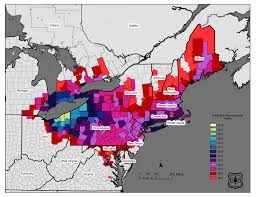
Fortunately Shenandoah National Park has relatively few American beech, so it will be less affected by beech leaf disease (BLD). The Blue Ridge is also far from large waterbodies — which promote the disease. However, I did see some beech sprouting in creek valleys – probably in gaps opened when the hemlocks died. These valleys with higher humidity are the type of ecosystem most conducive to the disease! Anderson-Teixeira et al. note that they did not analyze the impact of beech bark disease – which was the disease of concern before arrival of BLD and continues to be present.
They also did not evaluate the impacts of balsam woolly adelgid, described as having decimated high-elevation populations of firs (Abies balsamea); white pine blister rust on eastern white pine; or EAB on fringetree (Chionanthus virginicus) in SCBI. Nor did they document the impact of thousand cankers disease (TCD) on walnuts or butternuts. This concerns me because they report that the disease “appears to be affecting Juglans spp. in our plots.” Furthermore, butternut (J. cinera) had been ‘‘common’’ in 1939, but had disappeared from SHNP by 1987. On the Smithsonian property, the four individuals found originally had declined by half – to two living individuals. Butternut has suffered high levels of mortality throughout its range from butternut canker.
The understory tree redbud (Cercis canadensis) also declined precipitously – by almost76% from 1995 to 2018 in SCBI plots. While Anderson-Teixeira et al. do not speculate why, a few years ago a wider decline was reported.
Of course, Shenandoah also has been invaded by non-native plants! So I saw some plants that should not be there. At least the mid- and high-elevations that I visited appear to be much less abundant in the Park than in coastal and piedmont regions of Virgina. Ailanthus is listed as “common” in the Park. I didn’t see Japanese stiltgrass but it is clearly present at lower elevations. I was particularly disturbed to see oriental bittersweet along trails located in all three sections of the Park.
Anderson-Teixeira, K.J., V. Herrmann, W.B. Cass, A.B. Williams, S.J. Paull, E.B. Gonzalez-Akre, R. Helcoski, A.J. Tepley, N.A. Bourg, C.T. Cosma, A.E. Ferson, C. Kittle, V. Meakem, I.R. McGregor, M. N. Prestipino, M.K. Scott, A.R. Terrell, A. Alonso, F. Dallmeier, & W.J. McShea. 2021. Long-Term Impacts of Invasive Insects & Pathogens on Composition, Biomass, & Diversity of Forests in Virginia’s Blue Ridge Mountains. Ecosystems
Fei, S., R.S. Morin, C.M. Oswalt, & A.M. Liebhold. 2019. Biomass losses resulting from insect & disease invasions in United States forests. Proceedings of the National academy of Sciences.
Potter, K.M., M.E. Escanferla, R.M. Jetton, G. Man, & B.S. Crane. 2019. Prioritizing the conservation needs of United States tree spp: Evaluating vulnerability to forest insect & disease threats. Global Ecology & Conservation.
Posted by Faith Campbell
We welcome comments that supplement or correct factual information, suggest new approaches, or promote thoughtful consideration. We post comments that disagree with us — but not those we judge to be not civil or inflammatory.
For a detailed discussion of the policies and practices that have allowed these pests to enter and spread – and that do not promote effective restoration strategies – review the Fading Forests report at http://treeimprovement.utk.edu/FadingForests.htm
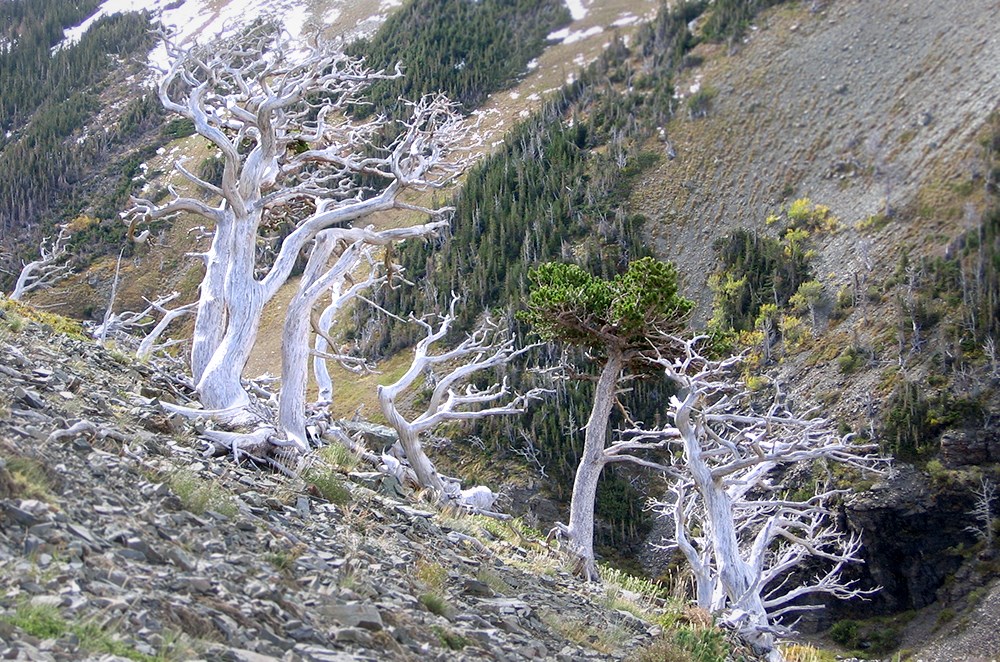
whitebark pine in Glacier National Park killed by white pine blister rust
The Kunming-Montreal Global Biodiversity Framework (KMGBF) is a major global policy driver around the world for more effective action to preserve biodiversity from current and future threats. (However, the United States has not joined the underlying treaty, the Convention on Biological Diversity (CBD). So its importance is probably less in the United States than in countries that take part.) This relatively new Framework was adopted at the 15th Conference of the Parties (COP) of the CBD in December 2022 after four years of negotiations. However, cynics note that the 196 countries that are parties to the CBD have rarely met previous ambitious goals set at earlier COP.
Hulme et al. have just published a paper [full reference at the end of this blog] addressing how invasive species and this Framework’s target may interact. They note that conserving biodiversity costs money. Many of the countries hosting diverse and relatively intact ecosystems lack sufficient resources, capability, or robust governance structures for this conservation.
The Kunming-Montreal Global Biodiversity Framework sets out ambitious global targets to reduce biodiversity loss by 2030 so as to maintain the integrity of ecosystems and their constituent species. Of the 23 targets, one – Target 6 – addresses bioinvasion. Countries endorsing the CBD have committed to eliminating, minimizing, reducing and/or mitigating invasive species’ impacts on biodiversity and ecosystem services. This is to be accomplished by identifying and managing introduction pathways; preventing introduction and establishment of priority invasive species; reducing rates of introduction and establishment of known or potential invasive species by at least 50% by 2030; and eradicating or controlling invasive species, especially in priority sites.
I rejoice that the CBD parties have recognized invasive species as a major driver of biodiversity loss in terrestrial and marine ecosystems. I wish conservation organizations’ and funders’ activities clearly reflect this finding.
This is the challenge raised by Hulme et al.: countries must integrate efforts to counter bioinvasions into overall conservation programs. Success in curbing bioinvasion depends upon achieving almost all other KMGBF targets. And this is a two-way street: the more holistic approach offers greater likelihood of successful biodiversity conservation.
The same authors point out that some of the 22 other targets address rapidly evolving introductory pathways e.g.,
Target 15 – increasing international and domestic tourism;
Target 12 – encroachment of urban areas near protected areas;
Target 10 – development of intensive agriculture or aquaculture systems near protected areas;
Target 7 – species rafting on plastic marine pollutants; and
Target 8 – growing risk from species shifting ranges in response to climate change.
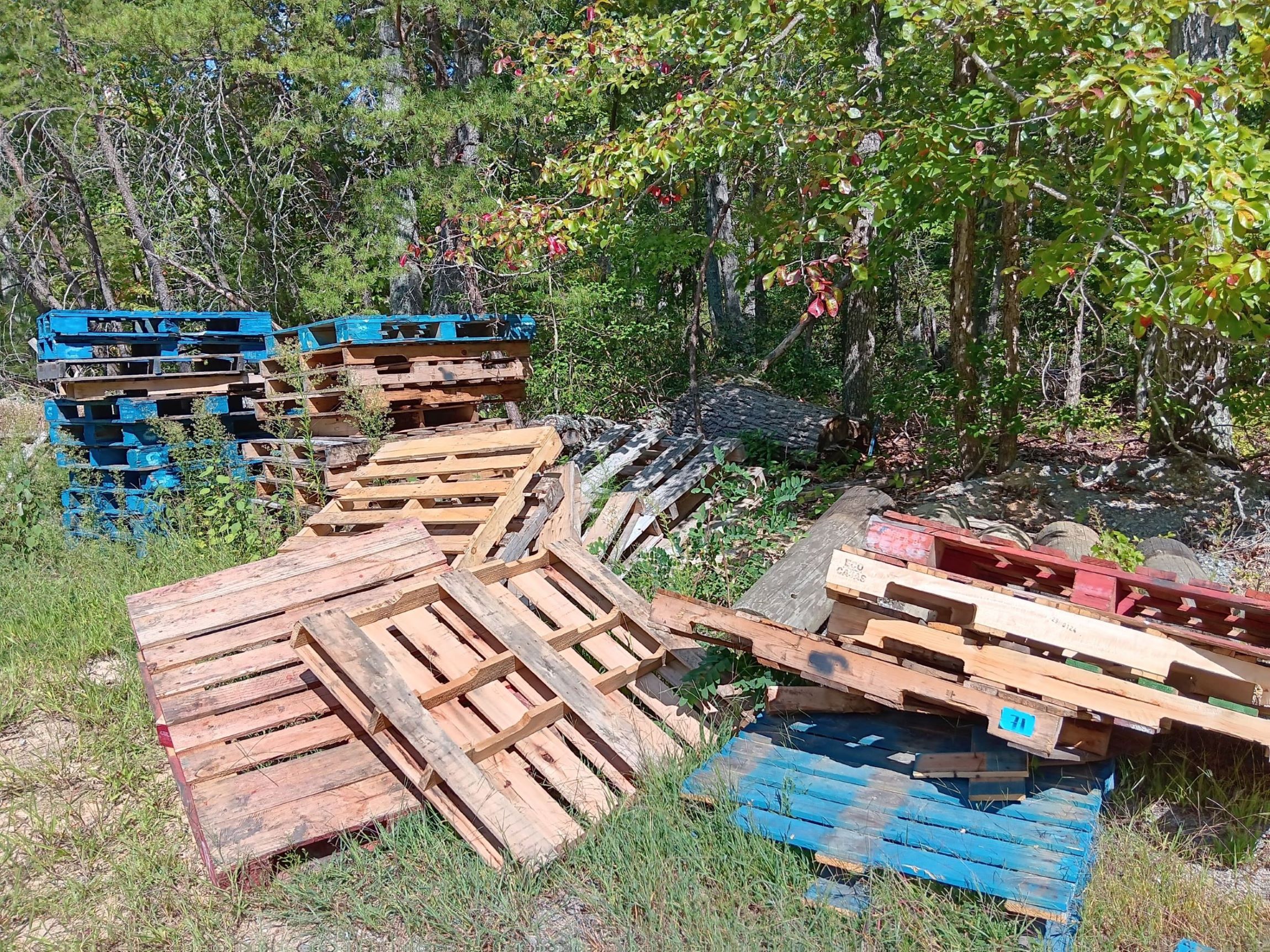
pallet graveyard behind camp store & snack bar art Lake MacDonald, Glacier National Park; photo by F.T. Campbell
Other targets relate to management of established invasive species, e.g.,
Target 1 – planning and priority-setting for allocation of limited resources among the various threats to biodiversity;
Identifying factors that pose risks to highly-valued species, e.g., threatened species (Target 4) and species that provide important ecosystem services (Target 11);
A final group of targets are intended to guide all conservation efforts. These goals include integrating biodiversity concerns in decision-making at every level (Target 14); reducing harmful economic incentives and promoting positive incentives (Target 18); and several targets addressing issues of equity, benefit sharing, and access to information. Hulme et al. assert that the threat posed by bioinvasions must be incorporated into policies, regulations, planning and development processes and environmental impact assessments across all levels of government.
Hulme et al. decry an imbalance as to which KMGBF targets have been the focus of attention from governments, conservation organizations, and media. These stakeholders have concentrated on
Target 3, which calls for extending legal protection to 30% of lands and waters by 2030;
Target 4, which promotes maintaining genetic diversity within and among populations of all species;
Target 7, which encourages reducing harmful pollution;
Target 15, which urges businesses to decrease biodiversity risks arising from their operations; and
Target 21, which advocates ensuring equitable and effective biodiversity decision-making.
Even when stakeholders have looked at Target 6, they have focused primarily on how to quantify the numbers of species being introduced to novel ecosystems. Hulme et al. argue that conservationists should instead concentrate on the challenge of achieving the target. They note that bioinvasion is worsening despite implementation of many long-term management programs. As they note, numbers of introduced species globally have increased, these species are occupying larger geographic areas, and the species’ measured impacts have risen to astounding levels (see my previous blog about new cost estimates). This same point was made two years ago by Fenn-Moltuet al. (2023) [full citation at the end of this blog]; they found that the number of invasive species-related legislation and treaties to which a country adheres did not relate to either the number of insect species detected at that country’s border or the number of insect species that had established in that country’s ecosystems.
As conservationists, Hulme et al. remind us that not all damages are monetary: invasive species threaten more than half of all UNESCO World Heritage Sites.
Hulme et al. say achieving Target 6 presents several scientific challenges – most of which have been discussed by numerous other authors. Introduction pathways are changing rapidly. There is great uncertainty regarding current and especially future propagule pressures associated with various pathways. Information about particular species’ impacts and where they are most likely to be introduced is insufficient. Management costs are routinely underestimated. Perhaps most challenging is the need to judge programs’ effectiveness based not simply on outputs (e.g., number of acres cleared of weeds) but on outcomes in relation to reducing the subsequent impact on biodiversity and ecosystem services.
I note that several environmental organizations endorsed a “platform” that discussed this last point a decade ago. [I have rescued the NECIS document from a non-secure website; if you wish to obtain a copy, contact me directly through the “comment” option or my email.] Unfortunately, the coalition that prepared this document no longer exists. Even when conservation organizations have invasive species efforts, they are no longer attempting to coordinate their work.
APHIS inspecting imported plants
I greatly regret that Hulme et al. continue a long-standing misrepresentation of international border biosecurity controls as consisting primarily of inspections — of imported commodities, travellers, and associated transport conveyances. I have argued for decades that inspections are not effective in preventing introductions. See Fading Forests II Chapter 3 (published in 2003); Fading Forests III Chapter 5 (published in 2014); “briefs” describing pathways of introduction prepared for the Continental Dialogue on Non-Native Forest Insects and Diseases – in 2014 and in 2018.
The weaknesses of visual inspection are especially glaring when trying to prevent introductions via wood packaging material and living plants — also here.
Hulme et al. propose a politically astute approach to finding the resources to strengthen countries’ efforts to curtail invasive species’ spread within their borders. Recognizing that no country has unlimited resources to allocate to managing invasive species, they suggest concentrating slow-the-spread efforts on preventing damage to legally protected areas. Furthermore, authorities should avoid designating as new “protected areas” places that are already heavily invaded – or at risk of soon becoming so. As they note, programs aimed at protecting these areas often engage conservation stakeholders, decision-makers, even potential non-governmental donors. In other words, there is a foundation on which to build.
To buttress their argument, Hulme et al. cite evidence that bioinvasions threaten these areas’ integrity. For example, Cadotte et al. (2024) found that bioinvasion is one of most frequently identified threats identified in a survey of 230 World Heritage sites; and that they pose a greater degree of concern than other threats to biodiversity. They reiterate that managing invasive species is one of the most effective interventions aimed at protecting biodiversity.
The task remains complex. Hulme et al. note that accurate information about pressure caused by invasive species is not easily quantified using remote sensing. It requires expensive on-the-ground data collection. Even current methods for ranking invasive species have crucial gaps regarding species’ potential impact and the feasibility of their control. Choosing management strategies also requires assessing potential unintended effects on biodiversity and other GBF Targets, e.g., pollution from pesticides (Target 7).
Still, the context remains: successful management of bioinvasions to support the integrity of protected areas depends on the integrative approach described above.
Hulme et al. note a contradiction within the Kunming-Montreal Global Biodiversity Framework: Target 10 calls for the agriculture, aquaculture, and forestry industries to adopt sustainable practices, but doesn’t raise the issue of these sectors’ role in the introduction and spread of invasive species. They say guidelines have been developed for sustainable forestry production. These guidelines recommend that commercial plantation forests not plant non-native tree species within 10 km of a protected area. Hulme et al. also suggest applying a “polluter pays” fine or bond to forestry businesses that use invasive species without sufficient safeguards to prevent escape. These funds could be accessed to support invasive species management in protected areas, particularly surveillance. (Target 19 mandates obtaining more funds for this purpose). They add that these aquaculture, agriculture, horticulture and forestry sectors should take action to prevent the local feralization of alien crops and livestock.
Target 8 calls for minimizing the impacts of climate change on biodiversity. Hulme et al. note numerous scientific challenges here, including understanding how specific ecosystems’ and native species’ are vulnerable to altered climates, along with how specific invasive species’ are responding to an altered climate regime.
These same authors provide specific recommendations to the global conservation community to put in place a more holistic perspective. Some recommendations deal with data integration. Others call for major undertakings: i.e., developing a protected area management toolkit at a global scale. This action will require significant investment in capacity-building of protected area managers plus international cooperation and technology transfer (Target 20). Hulme et al. suggest funding this effort should be a priority for any resources leveraged from international finance (Target 19).
Hulme et al. also propose changes in the conservation approaches advocated by the CBD and IUCN. Specifically, they call for more explicit consideration of current and future impacts of bioinvasions and their management — on protected areas. The needed activities fall into six areas:
(1) reduce risks associated with various pathways;
(2) plan for range-shifting invasive species;
(3) mitigate invasive species’ impacts on biodiversity and (4) on ecosystem services;
(5) ensure new protected areas (including urban green spaces and infrastructure corridors) are largely free of established (“legacy”) invasive species; and
(6) provide managers sufficient resources to take effective action.
SOURCES
Fenn-Moltu, G., S. Ollier, O.K. Bates, A.M. Liebhold, H.F. Nahrung, D.S. Pureswaran, T. Yamanaka, C. Bertelsmeier. 2023. Global flows of insect transport & establishment: The role of biogeography, trade & regulations. Diversity & Distributions DOI: 10.1111/ddi.13772
Hulme, P.E., Lieurance, D., Richardson, D.M., Robinson, T.B. 2025 Multiple targets of Global Biodiversity Framework must be addressed to manage invasive species in protected areas. NeoBiota 99: 149–170. https://doi.org/10.3897/neobiota.99.152680
Posted by Faith Campbell
We welcome comments that supplement or correct factual information, suggest new approaches, or promote thoughtful consideration. We post comments that disagree with us — but not those we judge to be not civil or inflammatory.
For a detailed discussion of the policies and practices that have allowed these pests to enter and spread – and that do not promote effective restoration strategies – review the Fading Forests report at http://treeimprovement.utk.edu/FadingForests.htm
beech leaf disease symptoms in Fairfax County, Virginia. Photo by F.T. Campbell
I and others have recently emphasized risks linked to plant-pathogenic fungi and fungal-like organisms such as oomycetes – e.g. Phytophtoras and more broadly. I welcome a new focus on another group of plant-killing organisms: nematodes. We have good reason to want attention to improving strategies to prevent their introduction and spread, and to manage their impact: beech leaf disease (BLD) and my blog.
Kantor et al. 2025 have published a review of nematodes – what is now known, what needs to be learned. They propose the “emergence triangle” as a tool for understanding how abiotic stresses affect nematode adaptation and how nematologists use innovative techs to enhance surveillance.
The authors point out that plant parasitic nematodes already cause billions of dollars in losses to agricultural crops annually. They expect climate change to trigger significant shifts in nematode populations, behaviors, and host ranges. These changes – combined with a rising risk of new introductions – could cause even more severe damage to agricultural and forest ecosystems
Kantor et al. call for continuing surveillance to detect nematode-related disease. They describe current methods and recent advances, particularly using machine learning. However, greater progress is needed to maximize for detection and quantification of nematode populations. Detection must also be linked to improved diagnostics.
Biology
Nematodes are the most abundant multicellular organisms; about 27,000 species have been described. (Kantor et al. do not hazard a guess as to how many species might remain undescribed.) Nematodes occupy every trophic level of food webs. The article describes – briefly – the role free-living nematodes play in contributing to healthy soils helping to control plant–pathogenic bacteria, fungi and nematodes
About 15% of described nematodes are plant pathogens. Kantor et al. provide brief profiles of five species newly recognized as problems in the United States. They use these profiles to illustrate interactions among climate change, nematode adaptation, and advances in detection and diagnostic tools – what they call examples of the “emergence triangle”. Four of the nematodes discussed damage agricultural crops, ranging from grains to tomatoes to cotton. The fifth example is the beech leaf disease nematode, Litylenchus crenatae mccannii (LCM); although Kantor et al. don’t use the subspecies; is this important?). They callits threat to forest ecosystems “distinct”. But does the apparent uniqueness reflect our ignorance rather than biology?
Kantor et al. note that LCM has spread more rapidly than any other nematode species reported to date, probably due to dispersal by wind and rain. They call for regulatory agencies to monitor the BLD nematode because of potential impact on landscapes
Kantor et al. raise concern that many of newly introduced nematodes – or those invigorated by changed environmental conditions – will go undetected until the damage they cause is sufficiently visible. By that time, the disease is much more difficult if not impossible to manage.
Introductions are hard to detect because, first, nematodes are microscopic. Second, scientific attention has focused on nematodes causing the greatest economic damage now. These species are widespread, so they are not regulated under international phytosanitary programs. Furthermore their presence complicates scientists’ ability to surveil and assess newly detected species. Nematodes often do not cause obvious, distinguishable symptoms at low levels of infection. Finally, there are too few experts and a lack of appropriate equipment to enable timely detection of nematodes in supply chains and ports of entry. All these challenges mean that methods for regulating nematodes in trade pathways fall afoul of requirements of the World Trade Organization Agreement on Sanitary and Phytosanitary Measures (SPS Agreement) and implementing protocols issued by the International Plant Protection Convention (IPPC). [To read additional criticisms of failures of the SPS/IPPC system, read Fading Forests II and my blogs.]
Improving management of nematode invasions will require overcoming significant scientific challenges. Each element of Kantor et al.’s “emergence triangle” – climate stress, adaptations, surveillance and diagnostics – mutually influences the others. The elements act collectively to influence a nematode’s emergence and spread. As an illustration of the complications they note that climate change will probably shift nematode populations, dynamics, and host ranges. To understand and forestall the new diseases, it is imperative to understand the mechanisms nematodes use to adapt and succeed in changing environments. For example, warmer soil temperatures – in response to climate change – can sometimes favor nematode development and thus raise their impact. However, those warmer temperatures sometimes disfavor nematode life cycle. Temperature changes might also affect crop plants’ natural resistance mechanisms and levels.
Assuming some aspects of adaptation depend on genetic mechanisms. Nematodes have very complex genomes. Unravelling these factors can now be facilitated by whole-genome sequencing. Kantor et al. discuss possible mechanisms and study methods.
They discuss strengths and weaknesses of current and emerging surveillance technologies, including visual inspection of roots for symptoms [described as direct but invasive]; and various remote sensing methods. The latter are described as still being “works in progress” or in early stages. Kantor et al. specify certain technologies that need to be improved before they can rely on.
They also report on innovations in diagnostics. Various molecular technologies are reported as providing useful specificity, sensitivity, and speed. However, the DNA-based diagnostics require primers designed for specific nematode sequences – which might not be available for emerging species. Metabarcoding can compare DNA from all nematodes to learn which species are present at that time. But, again, completeness depends on reference databases. Further, extracting nematodes from soil samples demands care.
In sum, recent advances in artificial intelligence and remote sensing have significantly improved early detection and management by enabling precise, non-invasive data collection and assessment of plant health.
USDA: the officials who can adopt more pro-active & effective policies
Focusing on biosecurity for the United States, Kantor et al. call for nematologists to discuss changes needed with the regulatory agencies, i.e. the Animal and Plant Health Inspection Service (APHIS). These discussions should seek agreement that nematodes play a significant role in plant diseases that could devastate major agricultural economies. Furthermore, the declining number of nematologists raises the likelihood that threats will be missed.
I support the call for discussions with APHIS. I would add talking with representatives from the U.S., Canada, and Mexico to the North American Plant Protection Organization (NAPPO).
I suggest another topic as well: the imperative that national and international phyrtosanitary policies and programs reflect the true level of threat from introduced plant pathogens (of all Phyla) and the limits of current science. See calls by Wu and by Raffa et al. for policies that reflect the true threat level & the limits of current science.
SOURCES
Kantor, C., Teixeira, M., Kantor, M., and Gleason, C. 2025. Tiny Invaders, Big Trouble: Emerging Nematode Threats in the United States. Phytopathology 2025 115:587-595 https://doi.org/10.1094/PHYTO-09.-24-0290-IA
Raffa, K.F., E.G. Brockerhoff, J-C. Gregoirem R.C. Hamelin, A.M. Liebhold, A. Santini, R.C. Venette, and M.J. Wingfield. 2023. Approaches to Forecasting Damage by Invasive Forest Insects and Pathogens: A Cross-Assessment. Bioscience Vol. 73, No. 2. February 2023.
Wu, H. 2023/24. Modelling Tree Mortality Caused by Ash Dieback in a Changing World: A Complexity-based Approach MSc/MPhil Dissertation Submitted August 12, 2024. School of Geography and the Environment, Oxford University.
Posted by Faith Campbell
We welcome comments that supplement or correct factual information, suggest new approaches, or promote thoughtful consideration. We post comments that disagree with us — but not those we judge to be not civil or inflammatory.
For a detailed discussion of the policies and practices that have allowed these pests to enter and spread – and that do not promote effective restoration strategies – review the Fading Forests report at http://treeimprovement.utk.edu/FadingForests.htm