Worldwide – and U.S. – Proliferation of Phytophthora via the Nursery Trade – an Update

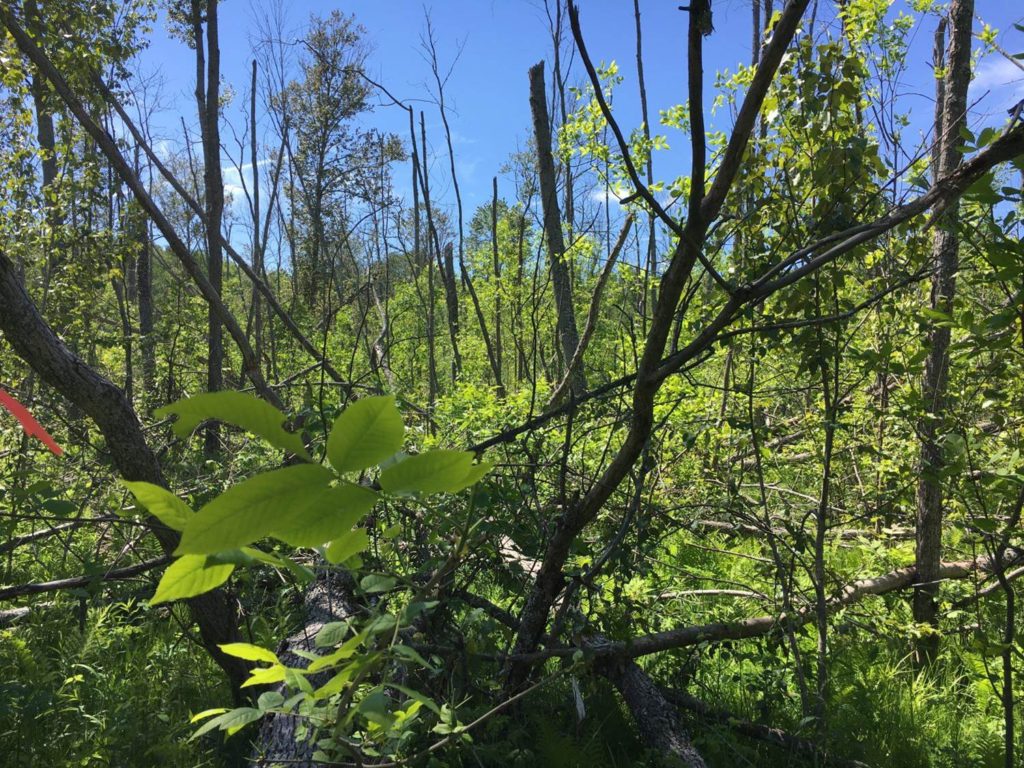
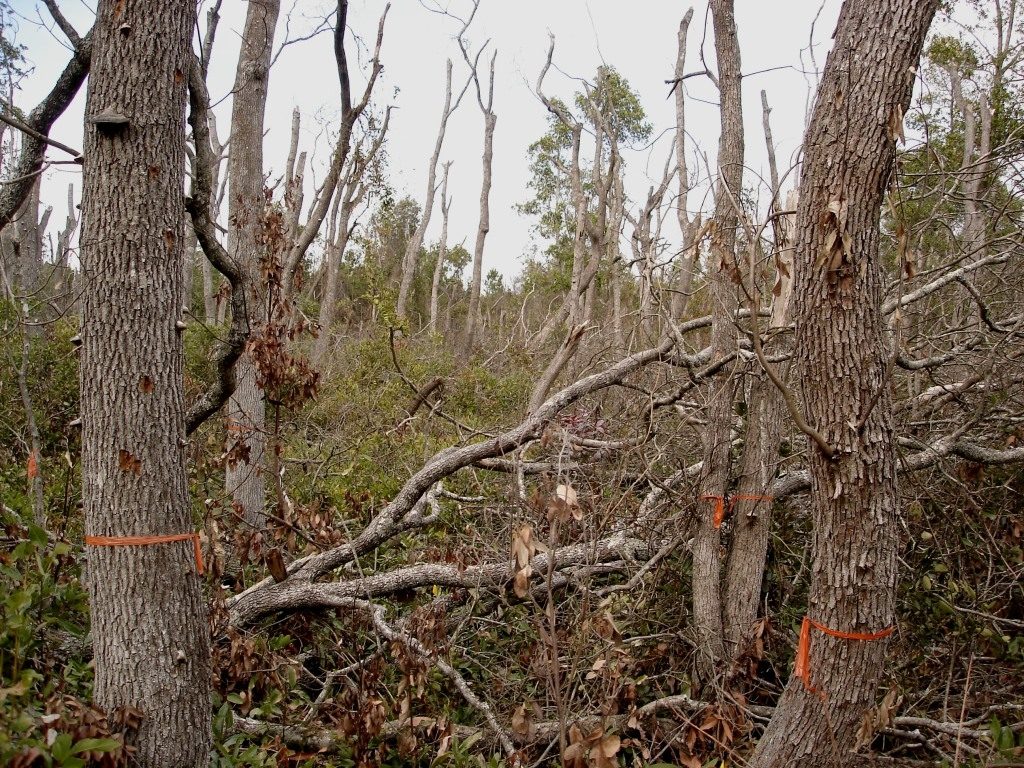
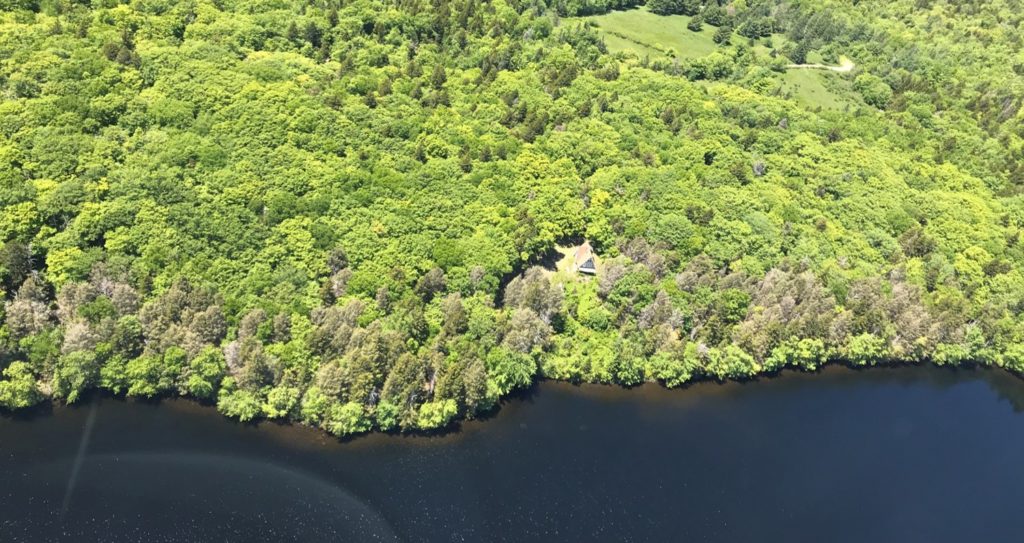
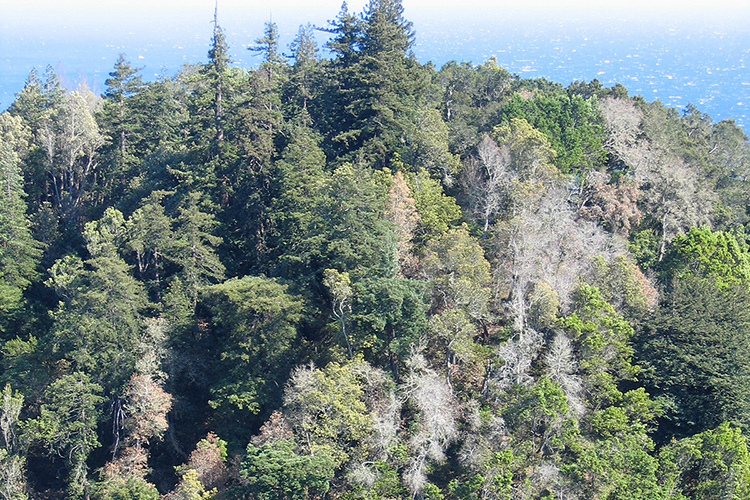
Phytophthora cinnanomi killing Ione manzanita in California; photo from Swiecki and Garbelotto, Distribution of Phytophthora cinnamomi within the range of Ione manzanita (Arctostaphylos myrtifolia).   Agreement between the California Department of Fish and Game and University of California

Phytophthora species are plant pathogens in the oomycote group (water molds, closely related to brown algae). More than 160 species have been described; new species are continually being isolated. Many Phytophthora species are deadly to naïve hosts; examples in the United States include sudden oak death, Port-Orford cedar root disease, disease on chestnuts and oaks.

Forests in Europe – especially the United Kingdom – and Australia are also suffering high levels of mortality associated with one or more Phytophthora species.

In recent years, several studies have documented the role of nurseries in spreading non-native Phytophthora species. Two strains of P. ramorum are widespread in European nurseries and in tree plantations and wild heathlands of southwest England, Wales, parts of Scotland, and Ireland. (See here and here.)

In April 2016 I blogged about the situation in Europe described by Jung et al. 2015 (see references at the end of the blog). Jung et al. concluded that diseases caused by Phytophthora pose a substantial threat to both planted landscapes and forest ecosystems across Europe. They found 56 Phytophthora taxa in 66% of 2,525 forest and landscape planting sites that were probably introduced to those sites via nursery plantings.

Barber et al. 2013 reported nine species of Phytophthora associated with a wide variety of host species in urban streetscapes, parks, gardens, and remnant native vegetation in urban settings in Western Australia. Phytophthora spp were recovered from 30% of sampled sites.

A new summary confirms that the threat is similar in North America. In British Columbia, Dale et al. (2017) found more than two times as many Phytophthora species were detected in soil and water samples in urban areas (23) than in natural areas (11). Urban samples also showed a much higher diversity of Phytophthora per site than natural environments. These Phytophthora species had been introduced initially into urban areas and had subsequently spread into native vegetation, particularly in areas near developed sites (wildland-urban interface areas).

Swiecki et al 2018 cite several sources and their own studies to show that the large and increasingly diverse contingent of introduced Phytophthora species pose an increasingly important threat to both urban forests and surrounding native forests and plant communities in California. It is clear that shrubs and herbaceous plants as well as trees are also at risk. These scientists have repeatedly found multiple non-native Phytophthora species at individual sites in northern and southern California sites where nursery stock had been planted. Sampling in 2014 identified about 60 different Phytophthora taxa in restoration planting sites and native plant nurseries. The sampled restoration plantings were mostly located in urban riparian corridors and peri-urban parks, open spaces, or protected watersheds.

I first discussed this issue in a blog in July 2016.

Swiecki et al (2018) have also found that Phytophthora species persist in drier ecosystems. When conditions are too dry for sporangium production, Phytophthora hyphae produce resistant survival structures that can tolerate drying and persist in dead root fragments or soil. In the presence of appropriate stimuli, e.g., moisture and root exudates, resistant structures germinate to produce sporangia or hyphae, leading to new infections. Even relatively short wet periods associated with rain or irrigation can be sufficient to stimulate zoospore release. Swiecki et al (2018) list examples of numerous Phytophthora infestations that developed in dry sites, such as dry foothills of the Sierra Nevada in Amador County, and the Oakland Hills of Alameda & Contra Costa County. Swiecki et al. (2018) also  note that P. cinnamomi has persisted in Australian forests in the absence of known primary hosts.

Phytophthora infections can also persist for decades in soil. In California, Swiecki et al. (2018) mention several examples:

  • Residual cinnamomi inoculum killed young sprouts of susceptible manzanitas (Arctostaphylos myrtifolia and A. viscida) planted on sites that were infected many years earlier.
  • A street planting of cork oaks (Quercus suber) apparently died due to Phytophthora root rot that had occurred 21 years earlier.
  • Both cinnamomi and P. cactorum were recovered from roots and soil beneath affected trees at least 60 years after the site had been a municipal woody plant nursery and adjacent residence.
  • A 7-acre area of native vegetation showing decline & mortality of multiple plant species was infested with multiple Phytophthora spp, including cactorum, P. cambivora, P. crassamura, P. ‘kelmania’ & P. syringae. The site was apparently infected 22 years earlier during a planting of a habitat restoration project using Ceanothus nursery stock. Subsequent spread was primarily downhill from the planting sites, facilitated by water flow, with additional spread along and near trails.


The Risk from the Nursery Trade

While Phytophthora-infested soil and plant debris can be transported on tools, vehicles, and shoes, or moved in large quantities when infested soil is excavated, graded, or imported, the principal threat is the nursery trade.

  • Jung et al. (2015) state that widespread contamination of nursery stock was the primary means by which these pathogens were introduced and spread in Europe. They found 49 Phytophthora taxa in 670 European nurseries. Phytophthora species were recovered from more than 90% of the sampled nurseries.
  • Swiecki et al. (2018) say that most of the common Phytophthora species detected in California are distributed globally, moved about with live plants or other infested materials. None is native to California.
  • Swiecki et al. (2018) cite studies reporting that thirteen species of Phytophthora were found in a survey for leaf spots in California nurseries in 2005 and 2006. Sampling of plants in or originating from Calif native plant nurseries alone has yielded about 60 Phytophthora At least eight species of Phytophthora were found in shipments of symptomatic and asymptomatic plants sent from west coast nurseries to Maryland. Parke et al. (2014) identified 28 Phytophthora taxa in four Oregon nurseries.
  • Not all infections are on the West Coast. Swiecki et al. (2081) reports that a survey in Minnesota nurseries of plants with symptoms – primarily on aboveground plant parts – found eleven species of Phytophthora.

Are scientists in other parts of the country looking for Phytophthora? I see no reason to think the situation in California is unique.

The damage caused by Phytophthora infections can be significant. In California and Oregon, sudden oak death,  and Port-Orford cedar root disease, have killed well over a million trees and disrupted the ecosystems of which they are a part. There are multiple locations in Northern California where introduced Phytophthora species, especially P. cinnamomi and P. cambivora, have caused localized to extensive decline and mortality in native forests and shrublands.

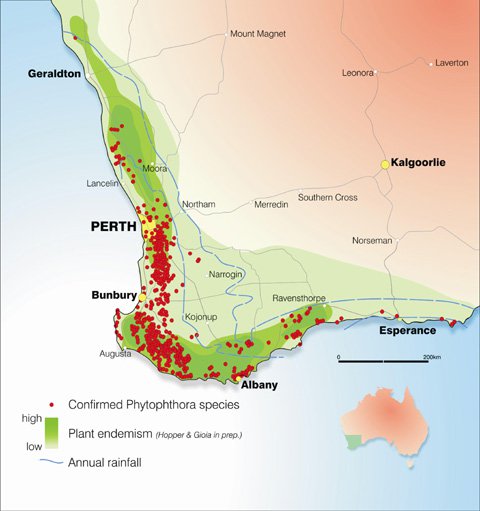
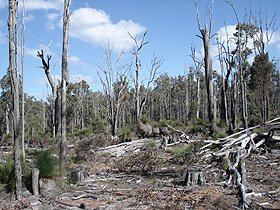
Phytophthora dieback has infected more than one million hectares in Western Australia. More than 40% of the native plant species of the region are vulnerable to the causal agent, P. cinnamomi.

Phytophthora dieback in Western Australia


Dieback in native forest in Western Australia; photo copyright Western Australian Department of Parks and Wildlife

In the United Kingdom, several Phytophthora species are causing widespread mortality of native shrubs and trees and commercial plantings.

In nearly all the studies, scientists have detected previously unknown pathogen-host relationships.

The threat from spreading pathogens with wide host ranges is not limited to the genus Phytophthora. The fungus Fusarium euwallacea associated with the Kuroshio and polyphagous shot hole borers  is known to kill at least 18 species of native plants in California and additional species in South Africa.    The laurel wilt fungus kills many trees and shrubs in the Lauraceae family. ‘Ohi‘a or myrtle rust kills several shrubs native to Hawai`i and threatens a wide range of plants in the Myrtaceae family in Australia and New Zealand. Some insects also have wide host ranges, including the Kuroshio and polyphagous shot hole borers; and Asian longhorned and citrus longhorned beetles.

When are national and international phytosanitary agencies going to adopt policies and programs that are effective in preventing the continued spread of these highly damaging tree-killing pests? At the national level, APHIS needs to aggressively use two authorities to curtail importation of plant taxa from countries of origin which present a risk of transporting additional species of pathogens:

  • NAPPRA, which allows APHIS to prohibit risky imports until it has conducted a pest risk analysis.
  • Programs under the revised “Q-37” regulations allowing APHIS to work with exporting countries’ phytosanitary officials to implement integrated pest management strategies to ensure that plants are pathogen-free before they are exported.

I have blogged about both programs before – NAPPRA here;  the Q-37 regulation strengthening here.

At the international level, the members of the International Plant Protection Convention (IPPC) must recognize the failure of the international phytosanitary system and explore ways to strengthen it. See my numerous blogs on this topic (beyond those linked to here!) by visiting www.cisp.us or www.nivemnic.us and searching under the category “forest pathogens”.


Posted by Faith Campbell


We welcome comments that supplement or correct factual information, suggest new approaches, or promote thoughtful consideration. We post comments that disagree with us — but not those we judge to be not civil or inflammatory.


SOURCES


Jung, T. et al. 2015 “Widespread Phytophthora infestations in European nurseries put forest, semi-natural and horticultural ecosystems at high risk of Phytophthora disease” Forest Pathology. November 2015; available from Resource Gate

Swiecki, T.J., E.A. Bernhardt, and S.J. Frankel. 2018. Phytophthora root disease and the need for clean nursery stock in urban forests: Part 1 Phytophthora invasions in the urban forest & beyond. Western Arborist Fall 2018

Apparently can’t access current (2018) issues of “Western Arborist” on web unless subscribe


Scientists Document Alarming Declines in Insects

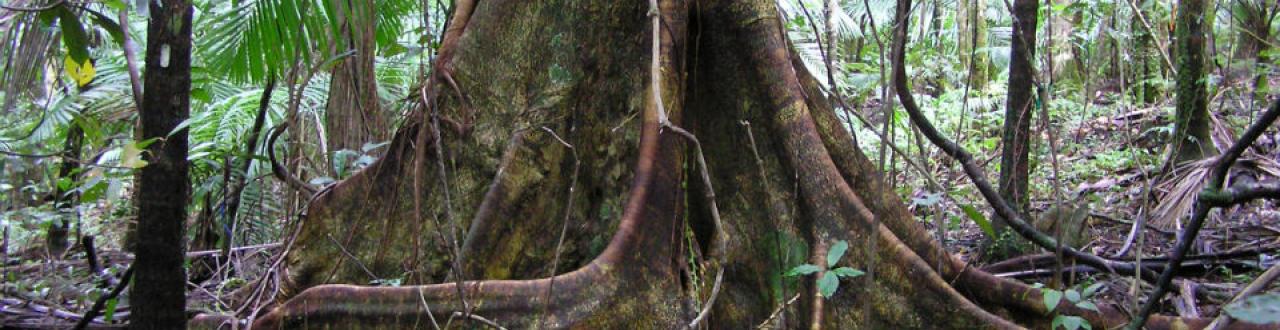
Luquillo Forest in Puerto Rico

While I usually blog about insects (and plant pathogens) that have invaded new ecosystems and are killing native plant species, I am aware that insects are numerous and vitally important components of the ecosystems in which they evolved. I join others in noting with concern evidence that insect populations in wide-apart areas have declined at very high rates. Insects appear to be affected by the Sixth Extinction Event (concept described here and here) as much as or possibly more than various vertebrate and plant taxonomic groups.

The Zoological Society of London and World Wildlife Fund published this week the 2016 version of the Living Planet report. Based on an analysis of 3,700 vertebrate species (birds, fish, mammals, amphibians and reptiles), the authors concluded that global wildlife populations have fallen by 58% since 1970 (Morelle; see references at the end of the blog).

Dirzo et al. in 2014 provided a very interesting discussion of the impacts of species’ declines in numbers and local extinctions – short of complete extinction. They asserted that “declines in numbers of individuals in local populations and changes in the composition of species in a community will generally cause greater impacts on ecosystem function than global extinctions. Dirzo et al. noted the importance of invertebrates, especially insects, in ecosystem functioning. They stated that the smaller fauna – including insects – “arguably are more functionally important” than charismatic megafauna and called for improved monitoring and study of such taxa, particularly invertebrates,

In their study, Dirzo et al. estimated that, since 1970, Lepidoptera – an order containing many important pollinators – had declined 35% in abundance globally over 40 years. Declines of other insect orders were considerably more. One study they cited found an overall 45% decline for all invertebrate populations over 35 years. More recent studies find decline rates that considerably exceed the estimated decline of 58% in global abundance of wild vertebrates over a 42-year period (Morelle; Hallmann et al.)

A year ago, Hallmann et al. reported a 76% decline in the biomass of flying insects over a 27-year period in Germany. There were seasonal variations; in midsummer, when insect biomass is highest, the decline was 82%. The study was carried out in nature protection areas – that is, places set aside and protected to conserve biological diversity. Hallmann et al. predict cascading effects on food webs and jeopardy to ecosystem services, including pollination, herbivory and breakdown of detritus, nutrient cycling and providing a food source for higher trophic levels such as birds, mammals and amphibians.

Hallmann et al. said that changes in weather, land use, and habitat characteristics could not explain this overall decline. Declines occurred in both nutrient-poor habitat types (e.g., heathlands, sandy grasslands, and dunes) and nutrient-rich habitats (grasslands, margins and wasteland), as well as in pioneer and shrub communities.

Another of the few studies looking at insects broadly, a study of flying insect biomass in the United Kingdom, found a biomass decline at only one of the four sites. Hallmann et al. note that the British researchers used considerably different sampling methods that targetted primarily high-flying insects (and caught mostly members of one fly family) whereas their own Malaise traps caught  insects flying close to the ground and a much wider diversity of taxa.

Taxon-specific studies have also found severe declines in insect populations.

Hallmann et al. concluded that the scale of decline in insect biomass – throughout the growing season, and irrespective of habitat type or landscape configuration – suggest that large-scale factors must be involved. As noted, their data did not support either landscape changes or climate change as explanatory factors – although they admit that they did not exhaustively analyze the full range of climatic variables that could potentially impact insect biomass. Hallmann et al. did think that agricultural intensification (e.g. pesticide usage, year-round tillage, increased use of fertilizers and frequency of agronomic measures) was a plausible cause of insect biomass decline given the reserves’ limited size in typically fragmented western-European landscapes. The noted that the protected areas might serve as insect sources which might be counterbalanced by the surrounding agricultural fields, which might act as sinks or ecological traps.

While Hallman et al. did not specify the types of pesticides being used by the German farmers operating near their study areas, in recent years there has been growing concern about widespread use of neonicotenoids, which appear to pose a threat to bees and possibly other insects. Three sources of information are the European Food Safety Agency; Xerxes Society; and petition pertaining to regulation of seeds treated by neonicotenoids submitted by the Center for Food Safety.

This month, Bradford Lister and Andrés García published a study that compared numbers of the insects and insectivores (birds, frogs, lizards) in Puerto Rico’s tropical rainforest in 2012 to results of Lister’s studies there in 1976 and 1977. Overall arthropod biomass in Puerto Rico’s Luquillo rainforest fell 10 to 60 times since 1970s (Lister and Garcia). Numbers of insects in the vegetation collected by sweep nets decreased to a fourth or an eighth of what they had been. The catch rate of ground-dwelling arthropods caught in sticky traps fell 60-fold (Guarino).

Lister and Garcia attribute the crash in arthropod numbers to climate change, especially rising maximum temperatures. They note that over the same 40-year period, the average high temperature in the rainforest increased by 4 degrees Fahrenheit (2oC). Lister and Garcia cite several studies indicating that tropical invertebrates are adapted to a narrow band of temperatures.

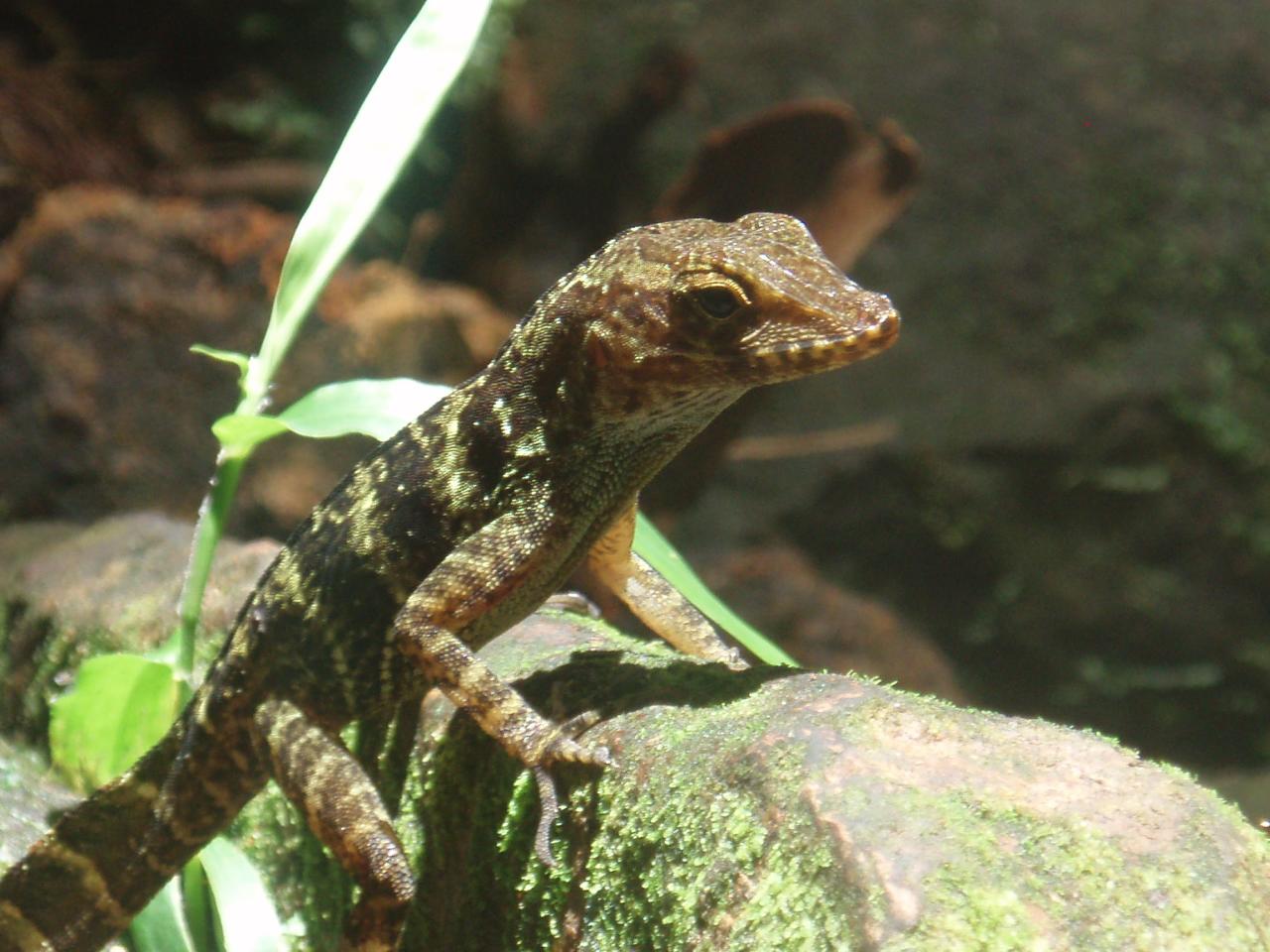
Lister and Garcia also measured declines among insect-feeding vertebrates. The biomass of anole lizards dropped by more than 30%. Some anole species disappeared from the interior forest (Guarino). Declines in number of coqui frogs (Eleutherodactylus spp) began in the 1970s. Currently, three of 16 species are extinct, and the remaining 13 species are classified in some category of endangered or threatened. Disease caused by the fungus Batrachochytrium dendrobatidis is not a factor at the elevations where study done.

Anolis gundlachi; photo by Joe King

Citing data from other researchers, Lister and Garcia report that numbers of insectivorous birds captured in mist nets fell 53% between 1990 and 2005.

Lister and Garcia sought to explain why there were simultaneous, long-term declines in arthropods, lizards, frogs, and birds over the past four decades in the relatively undisturbed rainforests of northeastern Puerto Rico. They concluded that climate warming has been a major factor driving reductions in arthropod abundance, and that these declines have in turn precipitated decreases in forest insectivores in a classic bottom-up cascade.

As supporting evidence, Lister and Garcia cite

(1) Declines across varied species and communities that occurred in parallel with rising temperatures.

(2) Simultaneous declines of all arthropod taxa in their own and others’ studies – pointing to an overriding environmental factor that has had ubiquitous, adverse effects on forest arthropods regardless of taxonomic affiliation, stratum occupied, or type of niche exploited.

(3) Declines in arthropod abundance that occurred despite major decreases in their predators – and, presumably, reduced predatory pressure..

Lister and Garcia note that there have been almost no significant human perturbations in the Luquillo forest since the 1930s, and that pesticide use in Puerto Rico fell nearly 80% over the past 40 years with the decrease in agricultural activity on the island. Some of the insect trend data came from studies carried out in the Luquillo Long Term Ecological Study site.

Lister and Garcia say that major weather perturbations have also had an impact. Over the 36-year time span, there have been five major hurricanes and eight severe droughts. They note that the island’s vegetation regenerated rapidly after hurricanes Hugo and Maria; insect populations regenerated rapidly after Hurricane Georges.  La Niña episodes led to an immediate increase in the abundance of canopy invertebrates, whereas El Niño episodes caused declines.

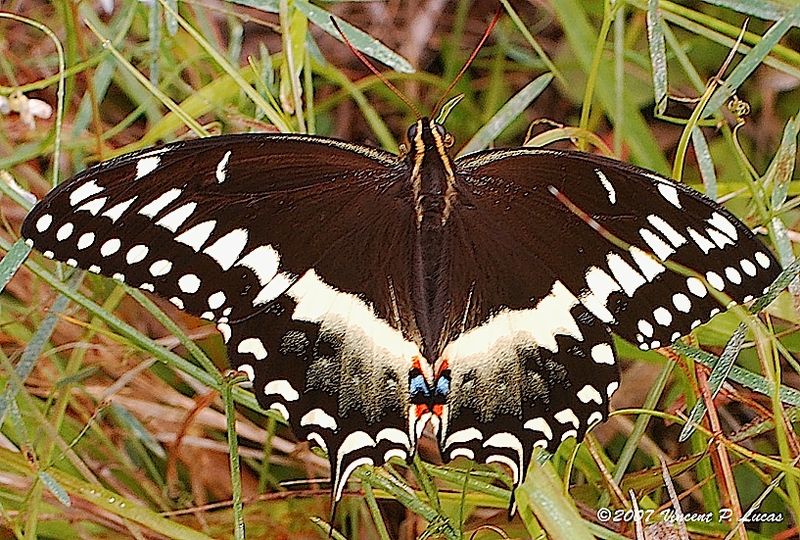
Of course, some insects are under threat from loss of their primary food plants to invasive species.  I note particularly the Palamedes swallowtail butterfly (Papilio palamedes), which depends on redbay and swamp bay, and an estimated 21 species of North American butterflies and moths believed to specialists or largely dependent on ash.

Palamedes swallowtail; photo by Vincent P. Lucas


In some cases, e.g., hemlock woolly adelgid and Asian longhorned beetle, neonicotenoids, specifically imidacloprid, is an essential tool to controlling a tree-killing invasive insect.


We welcome comments that supplement or correct factual information, suggest new approaches, or promote thoughtful consideration. We post comments that disagree with us — but not those we judge to be not civil or inflammatory.

SOURCES

Dirzo, R., H.S. Young, M. Galetti, G. Ceballos, N.J. B. Isaac, B. Collen. 2014. Defaunation in the Anthropocene. Science 345, 401

Guarino, B. 2018. ‘Hyperalarming’ study shows massive insect loss. 2018. The Washington Post October 15 2018

Hallmann CA, Sorg M, Jongejans E, Siepel H, Hofland N, Schwan H, et al. 2017. More than 75 percent decline over 27 years in total flying insect biomass in protected areas. PLoS ONE 12 (10): e0185809. https://doi.org/10.1371/journal. pone.0185809

Lister, B.C. and A. Garcia. 2018. Climate-driven declines in arthropod abundance restructure a rainforest food web. Proceedings of the National Academy of Sciences. http://www.pnas.org/content/early/2018/10/09/1722477115

Morelle, R. Science Correspondent, BBC News. 2018. World wildlife ‘falls by 58% in 40 years’ https://www.bbc.com/news/science-environment-37775622


South Africa’s unique flora put at risk by polyphagous shot hole borer

The polyphagous shothole borer (PSHB) and its fungal symbiont Fusarium euwallaceae are killing trees in South Africa as well as in California.

File:Erythrina humeana, blomme, Manie vd Schijff BT, b.jpg

Erythrina humeana in the Manie van der Schijff Botanical Garden, Pretoria

The pest complex’s presence was detected in August 2017 through an international sentinel tree program – the first detection of a tree pest under the program. Under the ‘sentinel plantings’ program, staff at botanical gardens and arboreta monitor their holdings – often exotic species growing outside of their natural range – and alert program partners when they detect damage caused by insects or pathogen not previously known to pose a risk. The International Plant Sentinel Network (IPSN) was launched in 2013. Botanical gardens and arboreta in South Africa joined the international effort in 2016 (Paap et al. 2918 – see list of sources at the end of this blog).

PSHB-caused tree mortality was initially detected in the KwaZulu-Natal National Botanical Gardens in Pietermaritzburg in August 2017. Affected trees were London Plane (Platanus x acerifolia) (Paap et al. 2018).

A beetle collected in 2012 in Durban, 50 km away from Pietermaritzburg, has now been determined to belong to the Euwallacea fornicatus species complex – indicating that the invasive insect and fungal species have been established in South Africa for several years (Paap et al. 2018). [Interestingly, 2012 is also the year that Dr. Akif Eskalen detected PSHB in a backyard avocado in southern California – setting off the detection, research, and slow-the-spread efforts now under way there.]


2018-10-01 PSHB - South Africa

locations of PSHB detections in South Africa; map from http://polyphagous-shot-hole-borer.co.za/

South African authorities were immediately concerned because the beetle-fungus complex attacks such a broad range of trees (species in 58 plant families).  Hosts include several species native to southern Africa – including cabbage tree (Cussonia spicata), common calpurnia (Calpurnia aurea), monkey plum (Diospyros lycioides),  two species of coraltree (Erythrina humeana and E. lysistemon), huilboerboon (Schotia brachypetala), honey flower (Melianthus major), two alders (Cunonia capensis and Nuxia floribunda), and red orchid bush (Bauhinia galpinii). Also at risk are several commercial crop trees such as avocado (Persea americana), macadamia nut (Macadamia integrifolia), pecan (Carya illinoinensis), peach (Prunus persica), orange (Citrus sinensis) and grapevine (Vitis vinifera) and several ornamentals, including maple, holly, wisteria, oak and Camellia (Paap et al. 2018).

South Africa is home to a highly unique flora. Indeed, the “Cape Floral Kingdom” is the smallest of the six floral regions on Earth. For more about South Africa’s botanical importance, go here or here.

Rapid spread of the beetle-fungus complex appears likely because one of the most important reproductive hosts, castor bean (Ricinus communis) is a widespread woody weed in the KwaZulu-Natal region (Paap et al. 2018).

By July 2018, it was clear that PSHB was established in several parts of the country (see map). In George — a city along the southern coast, due east of Capetown, the beetle and fungus are affecting a wide range of indigenous and exotic trees in the botanical garden and the region‚ including box elder‚ Chinese and Japanese maple‚ oak‚ plane trees‚ Kapok trees‚ paper bark acacia‚ wild plum‚ dwarf corral and common corral (Chambers 2018).

In Johannesburg, a concerned citizen tracking the pest complex’ spread thinks that the beetle-fungus combination has already infested well over 100,000 of Johannesburg’s trees and is on track to damage or kill millions more (there are an estimated 6 – 10 million trees in Johannesburg, nearly all exotic) (Weltz 2018).

We welcome comments that supplement or correct factual information, suggest new approaches, or promote thoughtful consideration. We post comments that disagree with us — but not those we judge to be not civil or inflammatory.

SOURCES

Chambers, D.  “A 2mm beetle is laying waste to George’s trees” Sunday Times. 30 May 2018 https://www.timeslive.co.za/news/sci-tech/2018-05-30-a-2mm-beetle-is-laying-waste-to-georges-trees/

Johannesburg Urban Forest Alliance. The Shot Hole Borer Beetle is destroying our Urban Forest http://www.jufa.org.za/pshb.html

Paap, T., Z.W. de Beer, D. Migliorini, W.J. Nel,  M.J. Wingfield. 2018. Australasian Plant Pathology https://doi.org/10.1007/s13313-018-0545-0 https://link.springer.com/article/10.1007/s13313-018-0545-0

Weltz, A. Beetle Mania The Nasty Insect that is Killing the Trees of Johannesburg. Yale Environment 360; Published at the Yale School of Forestry and Environmental Studies. https://e360.yale.edu/features/beetle-mania-the-nasty-insect-that-is-killing-the-trees-of-johannesburg

Is EAB deregulation necessary? Is it helpful? What is at risk?

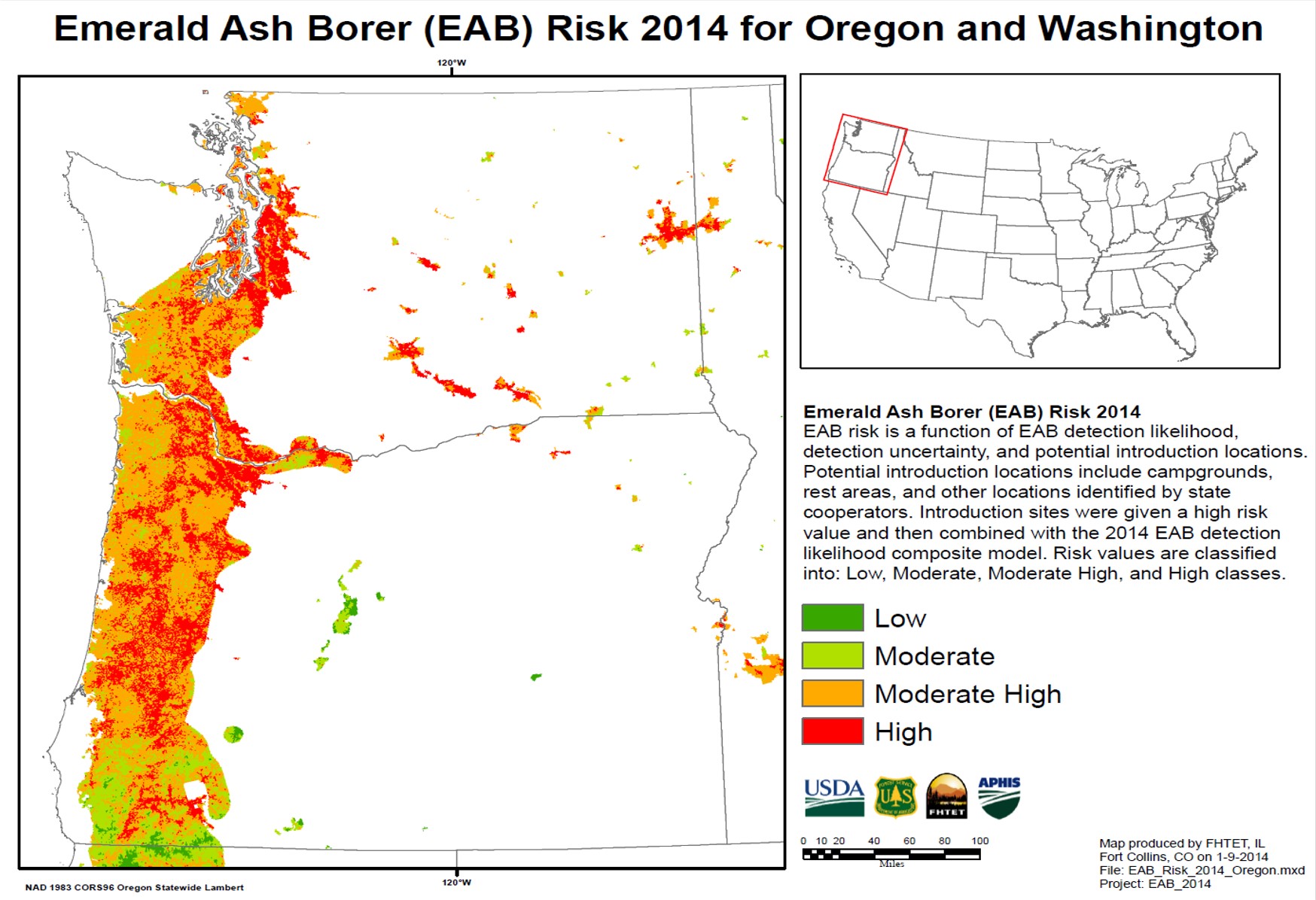
EAB risk to Oregon & Washington

USDA APHIS has formally proposed to end its regulatory program aimed at slowing the spread of the emerald ash borer (EAB) within the United States.  APHIS proposes to rely on biological control to reduce impacts and – possibly – slow EAB’s spread.  The proposal and accompanying “regulatory flexibility analysis” are posted here.

Public comments on this proposed change are due 19 November, 2018.

I will blog more fully about this issue in coming weeks. At present, I am on the fence regarding this change.

On the one hand, I recognize that APHIS has spent considerable effort and resources over 16 years trying to prevent spread of EAB – with less success than most would consider satisfactory. (EAB is known to be in 31 states and the District of Columbia now). While APHIS received tens of millions of dollars in emergency funding in the beginning, in recent years funding has shrunk. Over the past couple of years, APHIS has spent $6 – $7 million on EAB out of a total of about $54 million for addressing “tree and wood pests.” (See my blogs on appropriations by visiting www.cisp.us, scrolling down to “topics,” then scrolling down to “funding”). Funding has not risen to reflect the rising number of introduced pests. Presumably partly in response, APHIS has avoided initiating programs targetting additional tree-killing pests. For example, see my blogs on the shot hole borers in southern California and the velvet longhorned beetle by visiting www.cisp.us, scrolling down to “categories,” then scrolling down to “forest pest insects”. I see a strong need for new programs on new pests and money now allocated to EAB might help fund such programs.


On the other hand, APHIS says EAB currently occupies a quarter of the range of ash trees in the U.S. Abandoning slow-the-spread efforts put at risk trees occupying three quarters of the range of the genus in the country. (See APHIS’ map of infested areas here.) Additional ashes in Canada and Mexico are also at risk. Mexico is home to 13 species of ash – and the most likely pathway by which they will be put at risk to EAB is by spread from the U.S. However, APHIS makes no mention of these species’ presence nor USDA’s role in determining their fate.

I am concerned by the absence of information on several key aspects of the proposal.

  • APHIS makes no attempt to analyze the costs to states, municipalities, homeowners, etc. if EAB spreads to parts of the country where it is not yet established – primarily the West coast. As a result, the “economic analysis” covers only the reduced costs to entities within the quarantined areas which would be freed from requirements of compliance agreements to which they are subject under the current regulations. APHIS estimates that the more than 800 sawmills, logging/lumber producers, firewood producers, and pallet manufacturers now operating under compliance agreements would save between $9.8 M and $27.8 million annually. This appears to be a significant benefit – but it loses any meaning absent any estimate of the costs that will be absorbed by governments and private entities now outside the EAB-infested area.
ash tree killed by EAB; Ann Arbor, MI; courtesy of former mayor of Ann Arbor, MI John Hieftje
  • APHIS does not discuss how it would reallocate the $6 – 7 million it spends on EAB.  Would it all go to EAB biocontrol? Would some be allocated to other tree-killing pests that APHIS currently ignores?


  • APHIS provides no analysis of the efficacy of biocontrol in controlling EAB. It does not even summarize studies that have addressed past and current releases of EAB-specific biocontrol agents. (I will report on my reading of biocontrol studies in a future blog.)


  • APHIS says efforts are under way to develop programs to reduce the risk of pest spread via firewood movement. APHIS does not explain what those efforts are or why they are likely to be more effective than efforts undertaken in response to recommendations from the Firewood Task Force issued in 2010.


  • APHIS makes no attempt to analyze environmental impacts.

champion green ash in Michigan killed by EAB

  • APHIS says nothing about possibly supporting efforts to breed ash trees resistant to EAB.


I welcome your input on these issues.

I will inform you of my evolving thinking, information obtained in efforts to fill in these gaps, etc. in future blogs.


Posted by Faith Campbell


We welcome comments that supplement or correct factual information, suggest new approaches, or promote thoughtful consideration. We post comments that disagree with us — but not those we judge to be not civil or inflammatory.


Challenges to Phytosanitary Programs are International, Not Just in the U.S. How Should We Join Efforts to Defend Them?


dead ash killed by emerald ash borer; photo by Dan Herms, The Ohio State University; courtesy of Bugwood.com

I have blogged often about the funding crisis hampering APHIS’ efforts to protect our forests from damaging insects and pathogens (visit www.cisp.us, scroll down to “categories”, then scroll down to “funding”). Apparent results of this funding crisis include APHIS’ failure to adopt official programs to address several tree-killing pests (e.g., polyphagous and Kuroshio shot hole borers, goldspotted oak borer, spotted lanternfly …) and its proposal this month to end the regulatory program intended to slow the spread of the emerald ash borer (available here.)  (All these tree-killing pests are described here.)

The lack of adequate resources plagues phytosanitary programs in many countries as well as at the international and regional level. As we know, the threat of introduction and spread of plant pests is growing as a result of increasing trade volume and transportation speed; increasing variety of goods being traded; and the use of containers. All countries and international bodies should be expanding efforts to address this threat, not cutting back.

Assuming you agree with me that preventing and responding to damaging plant pests is important – a task which falls within the jurisdiction of phytosanitary institutions – what more can we do to raise decision-makers’ and opinion leaders’ understanding and support? Should we join phytosanitary officials’ efforts – e.g., the International Year of Plant Health – or act separately?

How do we encourage greater engagement by such entities as professional and scientific associations, the wood products industry, state departments of agriculture, state phytosanitary officials, state forestry officials, forest landowners, environmental organizations and their funders, urban tree advocacy and support organizations. (The Entomological Society of America has engaged on invasive species although it remains unclear to me whether ESA will advocate for stronger policies and higher funding levels.)

There is one group making serious, multi-year efforts to respond. Here, I describe efforts by the International Plant Protection Convention’s (IPPC) governing body, the Commission on Phytosanitary Measures. The Commission has recognized the crisis and is attempting to reverse the situation through a coordinated strategy. I invite you to consider how we all might take part in, and support, its efforts.

Efforts of the IPPC Commission on Phytosanitary Measures

The Commission’s goal is to ensure that strong and effective phytosanitary programs “become a national and global priority that justifies and receives appropriate and sustainable support.”  It seeks to achieve this by convincing decision-makers that protecting plant health from pest threats is an essential component of efforts to meet other, more broadly accepted goals, specifically the United Nations’ 2030 Sustainable Development Agenda and the Food and Agriculture Organization’s (FAO) related goals (described here).

The IPPC Commission also sees that, to succeed, it must more effectively support member countries in improving their programs to curtail pests’ spread and impacts. IPPC plans to streamline operations and integrate more closely with other FAO work in order to save money.

The following are among Commission efforts, although all are hampered by the lack of funding:

  • Working with member countries, the Commission has persuaded the United Nations to declare 2020 the International Year of Plant Health. (I blogged about this campaign in December 2016.
  • Describing links between plant health and other policy goals. The Commission is mid-way through a multi-year program. One outcome has been presentations to member states’ phytosanitary officials attending the Commission’s annual meetings, each focusing on one specific aspect. In 2018, presentations focus on links between plant health and environmental protection (presentations from April 2018 are available here). (Did you know 2018 was the year of plant health and the environment?  I didn’t!) In 2016, the topic was plant health’s link to food security; in 2017, plant health and trade facilitation; in 2019, capacity development for ensuring plant health.)
  • Adopting a Communications Strategy. It has four broad objectives (available here).
  • increase global awareness of the importance of the IPPC and of the vital importance to the world of protecting plants from pests;
  • highlight the IPPC’s role as the sole international plant health standard setting organization aimed at improving safety of trade of plants and plant products and improving market access;
  • improve implementation of IPPC’s international standards (ISPMs); and
  • support the activities of the IPPC Resource Mobilization program.
  • Ramping up efforts to support implementation of its international standards. Since this 2014 decision, the Commission has conducted some pilot projects, restructured the Secretariat, and formed the Implementation and Capacity Development Committee. (I have blogged frequently about issues undermining one of those standards, the one on wood packaging material – ISPM#15. Visit www.cisp.us, scroll down to “categories”, then scroll down to “wood packaging”.)

Framework 2020-2030: the IPPC Strategic Plan

The IPPC is now finalizing its strategic plan (Framework 2020-2030), which is available here. APHIS circulated this plan in July for comment; I admit did not take the opportunity to comment because I could think of nothing to add. But now I want to link the international and domestic U.S. funding crises.

The plan describes how plant pests threaten

  • food production at a time rising human population and demand;
  • sustainable environments and ecosystem services at a time when recognition is growing of their importance for managing climate change and meeting food production goals;
  • free trade and associated economic development;

The plan notes that interactions between climate change and pests’ geographic ranges and impacts complicate efforts to address both threats. Also, it outlines the need for, and barriers hindering, collaborative research on plant pest. It suggests creation of an international network of diagnostic laboratories to support reliable and timely pest identifications.

The plan states several times that the IPPC is “the global international treaty for protecting plant resources (including forests, aquatic plants, non-cultivated plants and biodiversity) from plant pests …” (emphasis added). The Commission is attempting to improve its efforts to protect the environment through expanding its collaboration with the Convention on Biological Diversity, Global Environmental Facility and the Green Climate Fund. Much of the attention to environmental concerns is focused on interactions with climate change, followed by concerns about pesticide use. Indeed, the strategic plan states that “Political weight and subsequent funding for phytosanitary needs on national, regional and international level will only be available when phytosanitary issues are recognized as an important component of the climate change debate.”

The Plan describes other ways that the Commission and regional plant protection organizations might help countries overcome the major problems arising from their lack of capacity and resources. Another area of hoped-for activity is promoting collaborative research. All these proposals depend on finding funding.

However, the Strategic Plan does not reveal the extent to which its 2013 Communications Strategy has been implemented. Nor does it reveal the extent to which the effort to improve ISPM implementation has resulted in concrete progress.


Posted by Faith Campbell

We welcome comments that supplement or correct factual information, suggest new approaches, or promote thoughtful consideration. We post comments that disagree with us — but not those we judge to be not civil or inflammatory.


Update on Several Pests in Southern California

The native hardwood trees of southern California are under threat from several non-native insects and insect/pathogen complexes. I provided some recent information on one of these, the Kuroshio shot hole borer, in April; and a description of Californians’ efforts to counter the threat in August of last year. I think it is time to provide a more comprehensive update on the species.

Invasive Shot Hole Borers

I have blogged several times about the damage being caused to riparian trees in southern California by the polyphagous and Kuroshio shot hole borers – collectively referred to as the “invasive shot hole borers” or ISHB.

One of the most interesting sources of information about the shot hole borers are the series of visual surveys carried out by Orange County Parks under the leadership of Cathy Nowak (who has now retired). The most recent surveys were conducted in spring 2018 while deciduous trees were still dormant, so those estimates are based on the number of beetle gallery holes detected. An estimated 52,000 trees in the County’s parks are infested by either PSHB or KSHB. Eight regional parks and one historic house were surveyed. Only one large park remains uninfested. Comparing the results in 2018 to those of earlier surveys showed that percentages of host trees (in which the beetle can reproduce) that are infested rose over 2 years or less in seven of the parks – from a 9% increase in one park to a five-fold increase at another park with very low numbers of trees and low overall infestation rate earlier. The second highest increase is 89%.

The most heavily hit hosts are species long recognized as hosts See writeup on the borers here.  Those with infestation rates exceeding 70% in one or more parks were

Acacia sp

Alnus rhobifolia (white alder)

Baccharis salicifolia (mule fat)

Erythrina caffra (coral tree)

Koelreuteria bipinnata (Chinese Flame tree*)

Koelreuteria paniculata (golden raintree)

Liquidambar styrachiflua (sweetgum)            

Parkinsonia aculeate (palo verde)

Platanus occidentalis (American Sycamore)

Platanus racemose  (California sycamore)

Platanus x hispanica (London plane)

Populus fremontii (Fremont cottonwood)

Populus trichocarpa  (black cottonwood)

Quercus robur (English oak)

Salix spp. (willow)

* Chinese flame trees support ISHB only within cankered wood – other parts of the tree excrete thick gumming sap that protects.


Current information supports the vulnerability of California sycamore, and guidance that those seeking to learn whether the beetles have established should focus their surveys on sycamores.

As I have noted numerous times, several reproductive hosts are widespread in other parts of the country and could presumably support infestations there. These include box elder (not included in the Orange County surveys), sweetgum, and two magnolias – southern magnolia (M. grandiflora) and sweet bay (M. virginiana). Thirty-eight percent of the Magnolia grandiflora in one park were infested, although none was in three other parks. Koelreuteria spp. are a widely planted exotic across the country  – although their role in spreading the disease appears to be limited by fact that they support ISHB development only in cankered wood. Birches have not been determined to be reproductive hosts, although one birch tree in one park had insect exit holes. Casuarina cunnninghamiana is also not known to be a reproductive host; trees in this genus are widespread invaders in Florida.

The good news is that none of a total of 12 southern live oaks (Quercus virginiana) growing in three parks had been attacked.

goldspotted oak borer

Goldspotted oak borer

The goldspotted oak borer attacks California black oak, coast live oak, and canyon live oak. It is now widespread and continuing to spread in San Diego County. Officials report that is now established in more than 10 parks in the County.

There is a heavy GSOB infestation in Idyllwild, on the eastern edge of Riverside County. This outbreak is clearly linked to importation of infested firewood. Due to the heavy 2017 fire season, planned removal of “amplifying” trees (heavily infested trees that support large numbers of reproducing beetles) did not occur – and the outbreak is growing. Trees in the San Bernardino National Forest are at risk; 13 were removed in 2017.

In Los Angeles County, so far only one site has been infested – Green Valley (which includes both private land and nearby portions of the Angeles National Forest). An estimated 50,000 oaks are in the area. Officials are removing the “amplifier” trees; they expect they might have to remove close to 3,000 trees at a cost of $6 million. Officials are also treating some trees.

A newly detected heavy infestation has been detected at campgrounds in the Trabuco Ranger District in the Cleveland National Forest. Forest Service officials are debating management options, with an eye to protecting as many coast live oaks as possible. They have had success in the past by treating some trees with chemicals.

Meanwhile, scientists will be trying to evaluate the effect of fire since the 2017 fires burned several infested areas, e.g., Weir Canyon in Orange County.

The principal management strategy is to identify and remove heavily infested “amplifier” trees. The wood and bark must be disposed of properly and quickly – if the wood is left on the ground over night, people take it – thereby spreading the insects. High-value trees that are not heavily infested can be protected by application of the topical contact insecticide Carbaryl on the lower trunk. Officials are also experimenting with oak restoration using either planting of acorns or promoting root sprouting of trees that have had to be cut down.


Thousand Cankers Disease

Thousand cankers disease of walnuts is very widespread throughout California, but it is not causing widespread rapid tree deaths. Juglans californica has multiple stems. If one is killed, the others usually survive. The impact on J. hindsii is greater because it has a single stem and is grown as a street tree. California officials last conducted a survey of walnuts in the state in 2015, at the height of the drought. They appear to be confident that the age of this survey has not affected their assessment of the risk.

Posted by Faith Campbell

We welcome comments that supplement or correct factual information, suggest new approaches, or promote thoughtful consideration. We post comments that disagree with us — but not those we judge to be not civil or inflammatory.


In Absence of Federal Action, States take Initiative

As the federal government continues to dawdle in responding to invasive species challenges, some states are ramping up their efforts in significant ways.


California: New Legislation Creates a Program – but Only for One Year

The California state legislature has created a new invasive species program that focuses on those bioinvaders that threaten native ecosystems and the urban environment. It thus addresses some of the criticisms that I have previously levelled at the California Department of Food and Agriculture (CDFA) [see my  earlier blogs here and here]

The new program has been established for one year; it will have to be renewed by the legislature next year.

The program results from adoption of legislation that combines what were initially two bills:

  • Assemblyman Timothy Grayson introduced AB 2470. This bill provided a legal foundation for the California Invasive Species Council and its Invasive Species Advisory Committee. It also provided funding for early detection and control projects targetting high-priority species, including weed management areas; and for supportive research and diagnostics work by the University of California.
  • Assemblywomen Lorena Gonzalez-Fletcher introduced AB 2054 focused specifically on the invasive shot hole borers [see descriptions of the polyphagous and Kuroshio shot hole borer here https://www.dontmovefirewood.org/ ]. The “Protect California Trees with Shot Hole Borer Beetle Prevention” (1) established a framework for a coordinated statewide effort; (2) instructed the Invasive Species Council of California and the California Invasive Species Advisory Committee to coordinate with state and local agencies and stakeholder groups to develop a plan to suppress the disease spread by this beetle.

The final legislation provided the full $5 million for addressing the shot hole borer but cut funding for the other components of the combined programs to just $2 million (so, a total of $7 million).

State officials have begun developing a shot hole borer management plan; they are expected to get input from a subcommittee by the Invasive Species Advisory Committee. The Advisory Committee held a meeting in mid-July to begin carrying out its coordinating functions.

Congratulations and thanks go to John Kabashima, who retired from his position as extension horticultural advisor with the University of California’s Division of Agriculture and Natural Resources. John has devoted two years to building the alliances needed to make this happen.


Minnesota: New Funding for Research

In 2014, the Minnesota legislature created the Minnesota Invasive Terrestrial Plants and Pests Center at the University of Minnesota. The Center applies science-based solutions to protect the state’s terrestrial ecosystems and agricultural resources. It utilizes an allocation from the Environment and Natural Resources Trust Fund to support a competitive research grant program. The current funding level is $3.5 million. Recently funded projects include evaluating the role of fungi in protecting ash trees from emerald ash borer and disease, genetic control of invasive insects, and use of goats in invasive plant control

The Center’s draft list of priority insects, plant pathogens, and invasive plants includes numerous forest pests. Among the 40 insect species listed, 19 are forest pests. Those in the top ten include mountain pine beetle, emerald ash borer, European and Asian gypsy moths, two elm beetles, and Asian longhorned beetle. Nineteen of 39 plant pathogens are tree-killers. Among the top ten are Dutch elm disease, oak wilt, Japanese oak wilt, Annosum root rot, sudden oak death, thousand cankers disease, and white pine blister rust.

In both cases, the lists include species that are already present and those not yet in the state (or even on the continent).


Western Governors’ Association: Initiative on Biosecurity

Incoming chairman, Hawaiian Gov. David Ige, has announced a Biosecurity and Invasive Species Initiative. The Initiative will focus on the impacts that invasive species have on ecosystems, forests, rangelands, watersheds, and infrastructure in the West, and examine the role that biosecurity plays in addressing these risks. Governor Ige hosted a webinar on 12 July [not yet posted on the WGA website] on which he was joined by such experts as Chuck Bargeron,  Center for Invasive Species & Ecosystem Health, University of Georgia; Pam Fuller, Program Leader, Nonindigenous Aquatic Species Database, USGS; Stinger Guala, Director of Biodiversity Information Serving Our Nation (BISON), USGS; Jamie Reaser, Executive Director, National Invasive Species Council; and Lori Scott, Interim President & CEO, and Chief Information Officer, NatureServe. The Association is sponsoring regional workshops on various components of the invasive species response on the following dates

  • Lake Tahoe, NV Sept 17-18 – prevention, control, management of established species
  • Cheyenne, WY Oct 11 -12 – restoration
  • Helena, MT Nov 14 – early detection and rapid response
  • Hawai`i Dec 9 & 10 – biosecurity and agriculture


Posted by Faith Campbell

We welcome comments that supplement or correct factual information, suggest new approaches, or promote thoughtful consideration. We post comments that disagree with us — but not those we judge to be not civil or inflammatory.


Appropriations Update – Give A Big Round of Applause to the House Appropriations Committee


In mid-May, the House Committee on Appropriations adopted two bills crucial to funding efforts to counter tree-killing non-native insects and diseases. Please let them know you are grateful.


APHIS funding

The Agriculture appropriations bill funds APHIS (and other USDA agencies) for Fiscal Year 2019 (which begins on October 1). The new bill provides a total of $998,353,000 to APHIS, an increase of $16.4 million above the FY18 level and $259 million above the Administration’s request. ( I blogged about the Administration’s alarming request here.) You can find the bill here; the more informative report is posted here.  Use search words to find specific APHIS programs.

The pest-related funding is apportioned among several areas:

Tree and Wood Pest Program. Unlike in previous years, the House bill does not cut funds for this program – which funds efforts to eradicate or contain the Asian longhorned beetle, emerald ash borer, and European gypsy moth. Instead, it maintains funding at the FY18 level of $54 million. Under the circumstances, this is good news. Thank you for your efforts to educate members of the House subcommittee on agricultural appropriations about this crucial program! (In past years, we relied on the Senate to restore funding for the Tree and Wood Pest Program.)

Specialty Crop Pests Program. The House increased funding by $10.8 million here, and specified that $15 million target the spotted lanternfly. This recently detected Asian leafhopper is spreading in southeastern Pennsylvania and was recently confirmed in Virginia’s Shenandoah Valley.  It is a pest of native hardwood trees as well as of orchard and other crops.

Also, the Committee used its report to stress several concerns:

Access to emergency funding. In the report, the House Appropriations Committee reiterates its longstanding instruction that the USDA Secretary continue to use his authority to transfer funds from the Commodity Credit Corporation. They support using these funds  –  above and beyond appropriated funds –  for the arrest and eradication of animal and plant pests and diseases that threaten American agriculture.


Brown Apple Moth vs. Emerald Ash Borer. Interestingly, the House Appropriations Committee encourages APHIS to engage state and international regulatory bodies as it moves to deregulate the light brown apple moth. The Committee expresses concern that if APHIS simply withdraws federal regulation without the necessary work with other officials, it will shift, not reduce, the regulatory burden. Then growers would carry the burden of preventing spread of the pest. I wish the Committee had made the same statement vis a vis the emerald ash borer!  APHIS also plans to stop regulating this insect which continues to threaten still-uninvaded portions of the United States and Mexico.


Micornesia and Hawai’i. The Committee also instructs the Secretary of Agriculture to report to both the House and Senate Committees on Appropriations its progress implementing the Regional Biosecurity Plan for Micronesia and Hawai`i. This plan combines efforts by the U.S. Department of Defense, Department of the Navy, and the island governments to prevent transport of invasive species as a consequence of relocating military personnel from a base in Okinawa, Japan. More information is available here.


Forest Service funding

The Interior appropriations bill funds the US Forest Service (as well as Interior Department and Environmental Protection Agency).


Forest Health Management Program. The bill provides an increase of $19.5 million above FY18 levels for the forest health management program ($30 million above the Administration’s request). The Committee instructs the Forest Service to “work in concert with Federal agencies, States, and other entities to prioritize the allocation of these funds to address the greatest threats.” The emerald ash borer, “bark beetle” (which ones?) and cogon grass are expressly mentioned. The report is posted here.  (It is unclear what actions the Forest Service is expected to take on the EAB, since regulations intended to curtail people from moving infested wood will soon be dropped by APHIS. The Forest Service could support breeding of ash trees resistant to the beetle.)


Forest Service Research. The Interior appropriations bill also maintained funding for Forest Service research at the FY18 level of $297 million – rather than cutting it to $259 million as advocated by the Administration. The Committee has called for the USFS to act within one year to “strengthen” its research program. The Committee expressly avoids endorsing several priorities advocated by Members of Congress while waiting for the Forest Service to implement this instruction.


If your representative is a member of the House Appropriations Committee (members listed here), please thank them for supporting APHIS’ and USFS’ programs. These funding increases shift several years of decline and are a true win for protecting our forests from non-native insects and pathogens!


Posted by Faith Campbell


We welcome comments that supplement or correct factual information, suggest new approaches, or promote thoughtful consideration. We post comments that disagree with us — but not those we judge to be not civil or inflammatory.


Update on Beech Leaf Disease – a Threat Lacking Adequate Funding and Official Action

last year’s leaves showing symptomatic striping (F.T. Campbell)


Back in December I blogged about beech leaf disease, a disease affecting American beech in northeastern Ohio and neighboring parts of Pennsylvania and New York, as well as across Lake Erie in Ontario.

[For more information and photos of symptoms, visit

http://forestry.ohiodnr.gov/portals/forestry/pdfs/BLDAlert.pdf    or

https://www.cleveland.com/metro/index.ssf/2017/12/beech_leaf_disease_discovered.html]

Scientists do not know what is causing the disease. So far it’s only clear that it appears to have been  introduced to a single site and is spreading. At the beginning of May I participated in a workshop providing the most recent information on beech leaf disease.

workshop participants (budbreak was later than usual, so we could not observe deformed leaves) (F.T. Campbell)


Over the past three or four years, scientists have tried hard to understand the disease, its causes, and its likely prognosis. For example, scientists from the U.S. Department of Agriculture and the State of Ohio have looked for insects, fungal pathogens, bacteria, viruses, nematodes, phytoplasmas – all  without finding a causative agent. Attention is currently focused on a previously undescribed nematode in the Litylenchus genus. The only other species in this genus is a foliar feeder found in New Zealand. Studies continue, with most scientists tackling the problem without special funding.

Beech is a very important component of the forests of northeastern Ohio. Beech ranks third in number of stems per acre; second for “shrubs”. Consequently, scientists working for Lake Metroparks and Cleveland Metroparks continue to monitor spread of the disease and its impacts. Symptoms – deformed leaves  – were first detected in 2012. In 2017, the results of a long-term vegetation monitoring project revealed that of 307 plots with beech present, 154 had symptomatic trees.  Of the symptomatic plots, 49% of beech stems were affected. While initially only small trees had been killed, more recently some larger ones have died and others bear only very few leaves. Leaves with light, medium, or heavy symptoms of infection – as well as asymptomatic leaves – can occur on the same branch of an individual tree.

The disease seems to spread faster between stems along the interlocking roots of beech clone clusters.

Weather does not appear to be a factor, as the disease has spread every year despite great variations in heat and cold as well as levels of moisture.

Preliminary versions of a mathematical model of the disease’ spread indicates that approximately 90% of monitoring plots deployed across the full 24,000 acres of Cleveland Metropark system will be infected within 10 years.

Cleveland Metroparks has initiated intensive monitoring of a subset of 13 plots in order to clarify the disease’s impact. Monitoring revealed a 4% mortality rate from 2015 to 2017. More than half of these plots now have dead beech that had previously been symptomatic.  Most are small trees less than 4.9 cm dbh.  Efforts to obtain funding from the USFS Forest Health program have so far failed.

The disease – whatever its cause! – appears to be moved by trade in nursery plants. An Ontario retailer received – and rejected – a shipment of diseased beech from an Ohio nursery. Lake County, Ohio, has many nurseries that grow and ship European beech (which can also be infected by beech leaf disease). These nurseries are reported to be cooperating with Ohio authorities. No official entity has imposed regulatory restrictions – not any of the states or provinces with the disease present or threatened by it; nor USDA APHIS or the Canadian Food Inspection Agency (CFIA).

Another threat to beech also not under regulation

CFIA has also not imposed a federal quarantine on another non-native pest killing beech, the European leaf-mining weevil, Orchestes fagi. First discovered in Halifax in 2012 – probably 5 years after its introduction – it has since spread throughout Nova Scotia. The weevil kills beech over 3 – 5 years.

New information added in June: according to Meurisse et al. (2018), the weevil overwinters under the bark of beech and trees that are not hosts, so it can be transported by movement of firewood and other forms of unprocessed logs and branches. [Meurisse, N. D. Rassaati, B.P. Hurley, E.G. Brockerhoff, R.A. Haack. 2018. Common Pathways by which NIS forest insects move internationally and domestically. Journal of Pest Science. https://doi.org/10.1007/s10340-018-0990-0]

The Importance of American Beech – and Protecting It

Beech is an extremely important tree in northern parts of the United States and Canada east of the Great Plains.  It is co-dominant (with sugar maple) in the Northern Hardwood Forest [see two maps].  A summary of the species’ ecological importance can be found in Lovett et al. 2006. Forest Ecosystem Responses to Exotic Pests and Pathogens in Eastern North America. BioScience Vol. 56 No. 5.

native range of American beech; USFS map

Consequently, I am most distressed by the lack of attention to these new threats to the species. It is true that regulating an unknown disease agent (as would be the case with beech leaf disease) stretches traditional policy practice and possibly legal authorities. Furthermore, it has not yet been demonstrated that the disease can kill mature beech. However, neither of these caveats applies to the weevil, which is an identified species that has been documented to kill mature trees.


U.S. phytosanitary officials (the National Plant Board) will meet in Cleveland (!!) in August. Will the several state officials and their APHIS colleagues discuss how to address this new threat? Will any funds be made available to expand efforts to understand the disease, its spread, and possible measures to curtail it?


healthy beech, northern Virgina (F.T. Campbell)


Posted by Faith Campbell

We welcome comments that supplement or correct factual information, suggest new approaches, or promote thoughtful consideration. We post comments that disagree with us — but not those we judge to be not civil or inflammatory.


National Park Service Experts Urge Improvements to Invasive Species Efforts


cats – reported to be the most widespread invasive animal in National parks

In two recent evaluations and resulting reports, National Park Service experts admit the agency has fallen short on managing the invasive species threat and suggest ways to improve. One report – that on invasive animals (see below) identifies the principal problem to be lack of support for invasive species programs from NPS leadership.

They’re not alone: I have previously criticized the NPS here and here


Invasive Animals

The bolder of the two reports addresses invasive animals – “Invasive Animals in U.S. National Parks – By a Science Panel” https://irma.nps.gov/DataStore/DownloadFile/594922 commissioned by the NPS Chief of Biological Resources Division. The report was released in December 2017.

The report is blunt – which I welcome.


Key Message

The NPS’ mission of preserving America’s natural and cultural resources unimpaired for future generations is “under a deep and immediate threat as a consequence of invasive animal species, yet the National Park Service does not have a comprehensive understanding of the costs and impacts of invasive animals or a coordinated strategy for their management.”  The result: “The consequence is a general record of failure to control invasive species across the system.”

The report says there are opportunities for the NPS to take a lead in addressing the threat – including to help counter invasive species denialism. It suggests ways to provide the needed capacity and to change the agency culture that hampers efforts to realize this ambition.


Current Picture

More than half of all National Park units reporting to the report’s authors (245 out of 326 parks) reported the presence of invasive animals – ranging from freshwater mussels to feral cats. In the process of compiling the report, the authors received reports of 1,409 invasive animal populations – comprising 331 species — probably an underestimate. Only a small percentage can be considered under some form of management. The most widely reported species:

Domestic cat                69 parks

Common starling         66 parks

Common pigeon          47 parks

House sparrow             40 parks

Red imported fire ant   40 parks

Feral hog                      39 parks

Rainbow trout              36 parks (often introduced deliberately)


The report mentions several tree-killing insects or pathogens among the damaging animal invaders in National parks: emerald ash borer, hemlock woolly adelgid, and rapid ohia death (a pathogen). (Background on all three is here.)


This new report acknowledges management efforts. They reviewed 80 NPS projects in the pipeline from 2000 through 2023. Most projects target a limited number of species: feral hogs, cats, and horses/burros; fire ants; hemlock woolly adelgid; and emerald ash borer.

EAB-killed ash tree in Shenandoah NP  (F.T. Campbell)

Eradication has reportedly been attempted for 21 invasive animal populations; 17 of those populations remained under some control efforts (e.g., monitoring to detect any re-invasion) in 2016. Nine of the eradicated populations were in the Pacific West region – especially Channel Islands National Park. Another eight were in the Southeast. Three other regions — Intermountain, Northeast, and National Capital regions — each reported one invasive animal population eradicated and under control. Another 150 invasive animal populations were reportedly “controlled”.


What’s the Problem?

The report’s authors note numerous (and well-known) difficulties in managing invasive animals. These include difficulty detecting invaders at early stages of invasion; paucity of effective management tools; and social constraints such as perceived benefits associated with some (e.g., trout and other sport fishes) and ethical and humane objections to killing vertebrates.

However, the report identifies the principal problem to be lack of support for invasive species programs from NPS leadership. Constraints that hamper park managers’ efforts within the agency include Service-wide coordination, lack of capacity, park culture, “social license” (i.e., public approval), and cross-boundary coordination.

The authors suggest that to correct these deficiencies, the Service should formally acknowledge that invasive animals represent a crisis on par with each of the three major crises that drove Service-wide change in the past:

1) over-abundance of ungulates due to predator control (leading to the “Leopold Report” in the 1960s);

2) Yellowstone fire crisis (which led to new wildfire awareness in the country); and

3) recognition of the importance of climate change (which resulted in the report “Leopold Revisited: Resource Stewardship in the National Parks”).

To achieve true success in such a major undertaking, all levels of NPS management must be engaged. Further NPS’ current culture and capacity must be changed. The report suggests providing incentives for (1) efforts to address long-term threats (not just “urgent” ones) and (2) putting time and effort into coordinating with potential partners, including other park units, agencies at all levels of government, non-governmental organizations, private landowners, and economic entities.

An additional step to realizing a comprehensive invasive animal program would be to integrate invasive animal threats and management into long-range planning goals for natural and cultural landscapes and day-to-day operations of parks and relevant technical programs (e.g., Biological Resources Division, Water Resources Division, and Inventory and Monitoring Division).

The report notes the need for increased funding. Such funding would need a flexible timeline (unlike existing Service-wide funding for more general purposes), allowing parks to be responsive to time-sensitive management issues. It would also have to be available consistently over the long term – since eradication can take a long time. Several approaches are proposed, including incorporating some invasive species control programs (e.g., weeds, wood borers) into infrastructure maintenance budgets; adopting invasive species as fundraising challenges for “Friends of Park” and the National Park Foundation; and adopting invasive species as a priority threat.

The authors would like NPS to become a leader on the invasive species issue – specifically by testing emerging best management practices and by better educating visitors on the ecological values of parks and the serious threat that invasive species pose to the their biodiversity. The authors suggest that the NPS also take the lead in countering invasive species denialism.

While officially-approved deliberate introductions of non-native species are probably unlikely to continue, the report expects that the numbers of invasive animals and species in national parks will increase due to continuing spread of invaders from neighboring areas. Therefore, NPS’ current piecemeal approach needs to be replaced with a much stronger, strategic approach in which parks engage in collaboration with conservation partners on adjacent lands or waters and across the greater landscape.


Invasive Plants

The NPS launched a coordinated effort targetting invasive plants years ago — in 2000. The most obvious component of which was the Exotic Plant Management Teams (EPMTs). The broader program was officially named the Invasive Plant Program (IPP) only in 2014. The IPP provides leadership to individual parks, regions, and the park system on invasive plant management, restoration, and landscape level protection. The IPP released its strategic plan in December 2016. (Ok! More than a year ago. I am tardy.)

Despite the large size of the program – 15 EMPTs across the country – and the clear and recognized threat that invasive plants pose to NPS values, I got the impression that the program struggles to gain  support from the Service. In that way, the situation is similar to the challenges to efforts on animal invasives described above.

   removing Miconia to protect Haleakala National Park

The Strategic Plan identifies goals and actions to optimize the program’s effectiveness, while increasing program and park capacity and leveraging human and fiscal resources with state, federal, and private entities.

The plan articulates a mission, a vision, five broad goals, and actions for the next 10 years. It’s intended to guide annual planning and major projects, as well as to identify and help prioritize funding needs and initiatives.

The overall vision is for the Invasive Plant Program to guide park service efforts to enhance landscape level stewardship of resources by applying “technically sound, holistic, collaborative, adaptive, and innovative approaches.” The hope is that other NPS units will increasingly rely on the IPP’s expertise in implementing their programs and building partnerships.

The strategic plan lays out five broad goals, each supplemented by a list of detailed activities. Priority actions have been identified for the first 5 years (2017-2021) with the expectation that actions will be re-prioritized during annual reviews. These five goals are:

  1. Develop program standards

Clarify and standardize administrative and operational roles and tasks. Improve data management and train colleagues in those standards. Incorporate science-informed procedures to support park management of invasive plants.

Interestingly, the Plan calls for IPP staff to quantify the invasive plant threat and effort needed to manage it and then to communicate the gap between effort needed and resources available to decision makers.

2. Promote the Invasive Plant Program by highlighting the services it provides and the significance of the invasive plant issue both internally and with stakeholders. Assure that IPP efforts parallel those in the Department of Interior Action Plan for invasive species.

  1. Build capacity of individual parks and the Service to prevent the arrival of invasive plants and manage infestations that are already present

Enhance resource and information sharing and field-based training. Find ways to encourage parks to continue managing the invaders after the EMPT completes the initial eradication. Also find ways to increase the EPMT Program’s efficiency. Possibly develop an NPS pesticide applicators’ certification course (the Bureau of Land Management and Department of Defense already have one).

Increase partnerships to deal with actions that are outside parks’ control. Specifically, participate in regional and state invasive plant councils, and collaborate with a full range of external partners to identify successful techniques, conduct control and restoration campaigns, improve and implement efficient plant management across park boundaries, and recruit and manage youth and volunteers.

  1. Promote holistic and integrated invasive plant management

Work with other NPS programs and parks (across all divisions) to establish resource stewardship and landscape preservation / restoration goals. Integrate integrated pest management strategies in management actions. Continue close collaboration with Climate Change Response Program (if it still exists!). Identify research needs and get the research done.

  1. Collaborate on invasive plant management

Foster and encourage internal and external collaboration and coordination to leverage available resources, expertise, and knowledge.

Identify parks, NPS programs, partner agencies, organizations, and related initiatives with similar objectives to increase efficiency and effectiveness. Coordinate with NPS monitoring programs (although the invasive animal study authors thought the monitoring program is not structured to serve invasive species needs). Partner with BLM and US Fish and Wildlife Service and non-federal partners to cooperatively manage invasive plants on the landscape. Coordinate compliance with National Environmental Policy Act (NEPA) and National Historic Preservation Act.


Each IPP unit is expected to develop an annual work plan that aligns with an annual financial plan. Priorities will be reviewed annually. Each IPP unit will also submit an annual accomplishment report. IPP might develop a tracking system to be applied to each assigned action.

Plus the IPP strategic plan will be reviewed annually and actions will be re-prioritized as needed. The annual status reports will be made available to stakeholders and partners on the Web.


Posted by Faith Campbell

We welcome comments that supplement or correct factual information, suggest new approaches, or promote thoughtful consideration. We post comments that disagree with us — but not those we judge to be not civil or inflammatory.