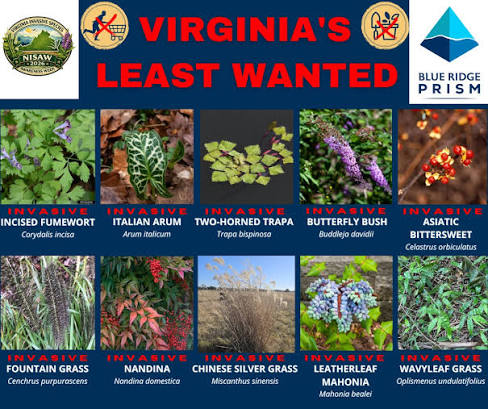
The Virginia Invasive Plants Coalition was formed at December 2023. Seventy-six organizations participated in the formative meeting. The Coalition now boasts 113 members. CISP joined the coalition this autumn.
The Coalition’s purpose of is to identify and carry forward statewide efforts to make dramatic progress against invasive plants support the use of native plants. Members work collectively on ten initiatives:
- awareness & education;
- resource development;
- support & implement a Virginia Invasive Species Management Plan;
- create or provide expertise, incentives, and access to funds to help private land stewards mitigate invasive species
- limit access to invasive plant;
- research to identify & address knowledge gaps;
- remove invasive plants & restore with native plants;
- ensure equitable access;
- build collaborative networks;
- ensure that Virginia adopts policies that support reduction of invasive plants & reverse the damage they cause
I rejoice that the Coalition explicitly includes advocacy for state-level policy. I wonder whether – over time – VIPC members might consider advocating for more effective federal policies.
I also wonder whether organizations concerned about invasive species have formed similar broad and action-oriented coalitions in other states.
I will focus here on two VIPC efforts.
- Policy
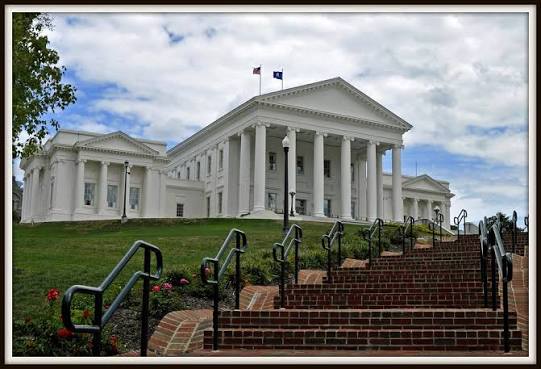
Virginia currently has two lists of invasive plants. The Department of Agriculture and Consumer Services (VDACS) lists “noxious weeds”. It currently contains 26 species in three tiers. It is illegal to sell species on this list. The Department of Conservation and Recreation (DCR) maintains the Virginia invasive plant list. The list contains 103 species. It includes a list of species identified to spur “early detection”. All noxious weeds are also included on the “invasive” list, but not all “invasive” plants are listed as noxious weeds.
VIPC is a member of the Virginia Conservation Network. This coalition has developed a conservation agenda for 2027; the agenda has four categories: water; land & wildlife conservation; climate & energy; land use & transportation. “Preventing harm from invasive plants” is included under the “Native habitats & species” chapter.
In 2026 the state legislature adopted four laws that:
a) added invasive plant management to the powers of service districts; [A “service district” is a defined geographic area within a local government established to provide additional, more complete, or more timely governmental services than those generally provided to the rest of the locality];
b) removed the “commercial viability” loophole from the state’s noxious weeds law;
c) required Virginia’s Department of Transportation to create a plan for managing invasive plants along public roadways; &
d) allowed volunteers to use herbicides on state-owned public lands when under supervision of a licensed commercial pesticide applicator.
Legislation also now requires retail outlets to place warning signs near each invasive plant species offered for sale (effective January 2027); partially funds the Virginia Invasive Species Management Plan; prohibits state agencies from planting, selling, or propagating invasive plants; requires tradespersons to provide written notification to property owners for all plants proposed for installation that are included on the list of invasive plants; & allows localities to permit the supervised use of herbicides by volunteers on public lands.
The Virginia Conservation Network considers these actions to be too limited. The VIPC asks its member organizations to advocate for
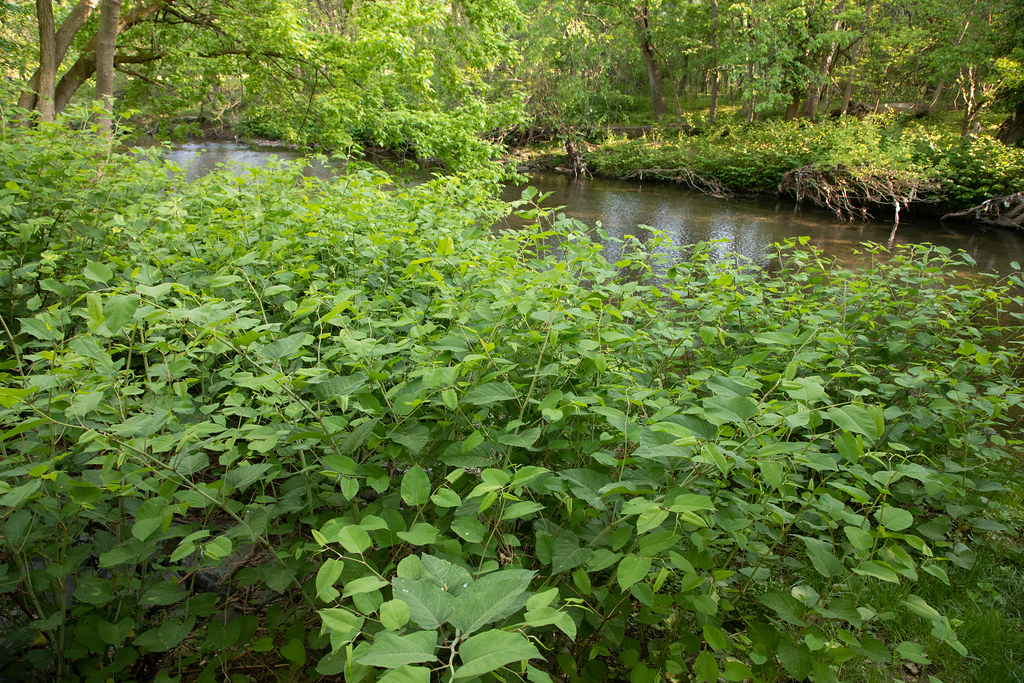
- Require property sellers to disclose the presence of Japanese knotweed (Reynoutria / Fallopia japonica or Polygonum cuspidatum) on a property they are selling because it can disrupt underground infrastructure.
- Tightening label language regarding whether a plant is “sterile”.
- Require those clearing property for development to plant cover crops to forestall weed invasions if there is a delay in further work.
Perhaps in future the Network might broaden members’ concern about the loss of forest canopies to include insects and pathogens that kill trees?
2) Surveying nurseries to find those selling invasive plant species.
VIPC members carried out surveys in 2025 and again in 2026. The 2026 surveyors visited 122 nurseries in 60 locations across the Commonwealth. This was 42% more retailers than the 2025 survey. One-third of the nursery locations were in the Northern Virginia suburbs of Washington, D.C.
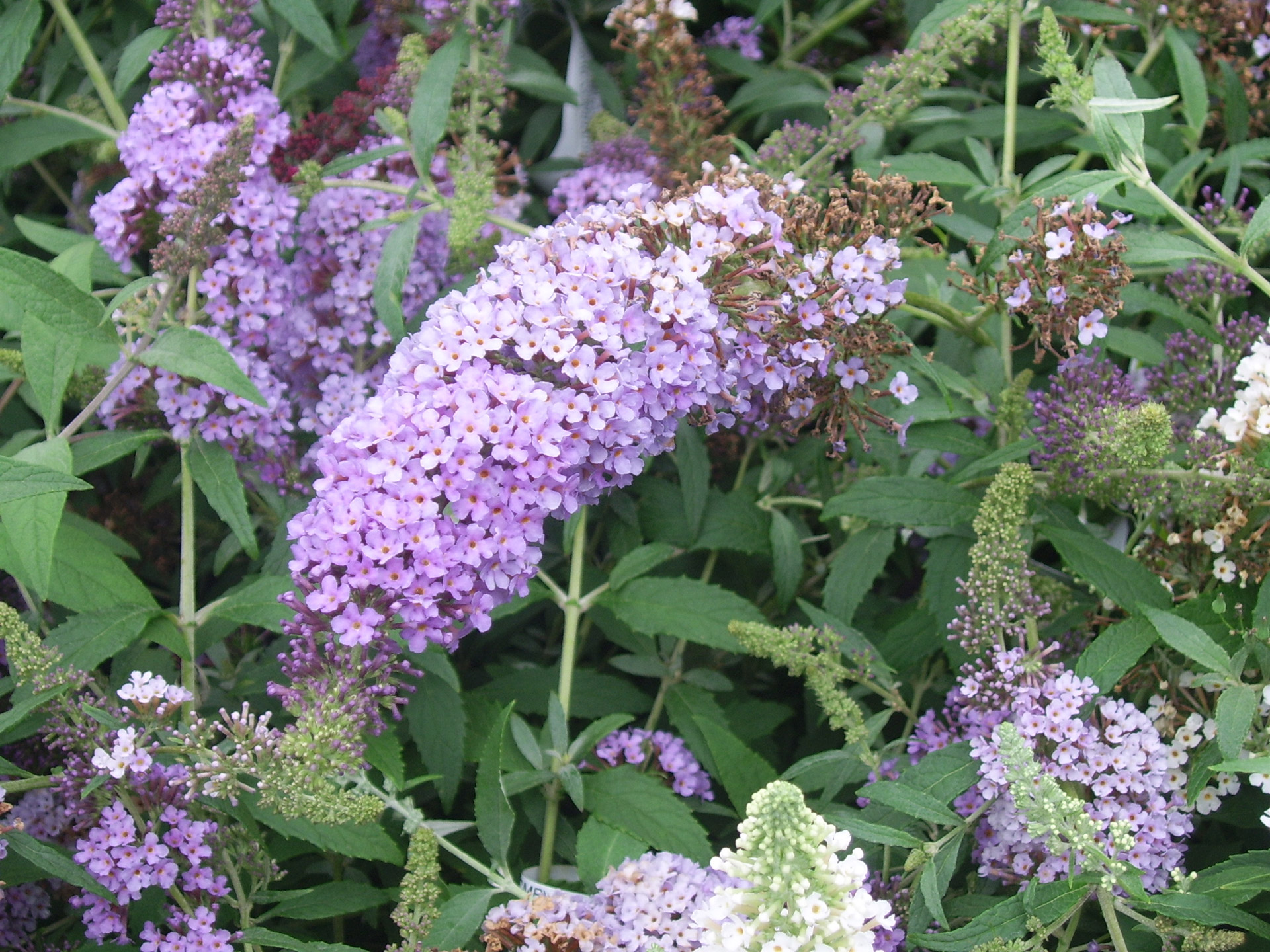
The 2026 surveyors found a 23% decrease in invasive plant species being offered per retailer. Twelve percent of the garden centers had no invasive species for sale. This was more than triple the number found during 2025. However, one garden center was selling 24 of the 39 invasive plant species. The most commonly detected invasive species are:
- butterfly bush — found during 95 visits; [see Douglas Tallamy on why butterfly larvae cannot use this plant.]
- species found during 58 to 79 visits were nandina, English ivy, periwinkle, moneywort, and Japanese barberry;
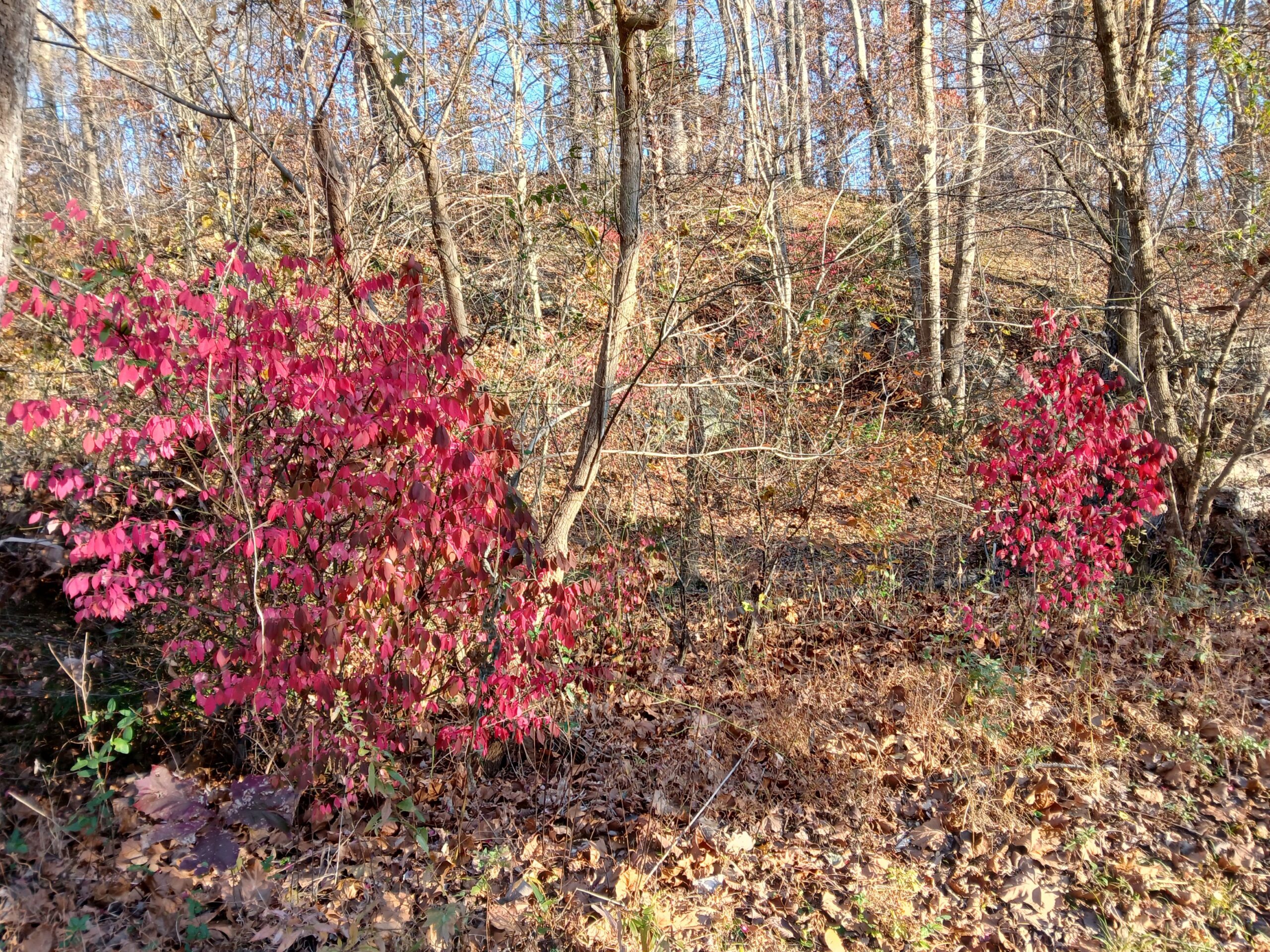
- Japanese spirea and burning bush were found during 45 or 44 visits;
- Two ornamental grasses, Chinese silvergrass and fountain grass, were found during 30 or 29 visits;
- species found during 19 to 16 visits were greater periwinkle, leatherleaf mahonia, Chinese privet, and winter creeper;
- species found during eleven to eight visits were Chinese wisteria, mimosa, water hyacinth, yellow flag, sweet autumn clematis, and border privet;
- species found during five or four visits were creeping Charlie, Callery pear, golden bamboo, and Norway maple.
Invasive species found at a smaller percentage of Virginia garden centers in 2026 than in 2025 were butterfly bush, nandina, English ivy, periwinkle, greater periwinkle, Chinese privet, winter creeper, sweet autumn clematis, border privet, Callery pear, and linden arrowwood.
Invasive species found at a higher percentage of retailers in 2026 than in 2025 were moneywort, Japanese spirea, Chinese silvergrass, mimosa, water hyacinth, yellow flag, and Japanese honeysuckle (Lonicera japonica). The last species is on the Virginia Noxious Weeds List, so sale is illegal.
Invasive species found at the same percentage of Virginia garden centers in 2026 as in 2025 were Japanese barberry, burning bush, fountain grass, leatherleaf mahonia, Chinese wisteria, creeping Charlie, golden bamboo, Norway maple, five-leaf akebia, parrotfeather beefsteak plant, Italian arum, white mulberry, Chinese tallow-tree, and trifoliate orange.
Invasive species not found offered for sale by surveyed garden centers in 2026 were Amur honeysuckle*, Autumn olive*, Brazilian waterweed, cinnamon vine, cogon grass*, crown-vetch, incised fumewort*, marsh dewflower, Morrow’s honeysuckle, Oriental bittersweet*, porcelain-berry*, purple loosestrife, ravenna grass, royal paulownia, shrubby bushclover*, Siberian elm, tartarian honeysuckle, thorny olive, tree-of-heaven*, wineberry, and winter honeysuckle. (*indicates plants listed on the Virginia Noxious Weeds List.)
Posted by Faith Campbell
We welcome comments that supplement or correct factual information, suggest new approaches, or promote thoughtful consideration. We post comments that disagree with us — but not those we judge to be not civil or inflammatory.
For a detailed discussion of the policies and practices that have allowed these pests to enter and spread – and that do not promote effective restoration strategies – review the Fading Forests report at http://treeimprovement.utk.edu/FadingForests.htm
Or