Several groups of scientists are addressing systemic problems that impede efforts to counter bioinvasions. One of those problems is the lack of a consistent approach in federal systems.
Drake et al. (2026) (full citation at the end of this blog) evaluate the impacts of this situation in the United States where – they argue – the national government has been slow to adopt overarching policies and provide adequate and dependable funds to implement them. The result is a patchwork of varying – even clashing – regulations and differing levels of effort that undermine program efficacy. Conflicting approaches add to such well-known challenges as limited budgets and evolving goals. They recommend applying such existing frameworks as the National Invasive Species Council’s (NISC) Early Detection / Rapid Response framework or One Biosecurity to facilitate integration and cooperation among the large variety of sectors affected. (NISC’s purpose is to coordinate federal agencies’ programs. The Council has no official role vis a vis state programs. Still, there is no legal impediment to states adopting any NISC approach which they consider appropriate.) At the same time Drake et al. (2026) warn against imposing too great uniformity or lacking flexibility.
I regret that Drake et al. (2026) do not mention the National Plant Board. The NPB focuses on managing plant pests (insects, pathogens, etc.) and invasive plants. The NPB recently celebrated its centennial anniversary. States have created fora under the NPB in which they exchange experiences with the goal of coordinating their efforts.
With respect to animal invaders (other than plant pests) or disease or parasite threats to animals, I believe there is no equivalent to the NPB. The Association of State Wildlife Agencies (AFWA) has an invasive species committee which discusses issues of general concern (see agenda from one of its meetings here). This effort is much more recent than the NPB. It is similar in that it is consultative, with no authority to enforce a common approach.
Findings
Drake et al. (2026) explore the extent to which American states apply similar vs. different approaches to managing invasive species as a group and plants, invertebrates, and vertebrates separately. Lack of data forced them to exclude fungi and other microorganisms. They focused on 21 contiguous states in the eastern part of the country. They also compared the states’ lists of regulated species to national lists of invasive species compiled by the United States’ Register of Invasive and Introduced Species (US-RIIS) (Simpson et al., 2022; Simpson and Eyler, 2018) and U.S. Geological Survey Non-indigenous Aquatic Species database (NAS; U.S. Geological Survey, 2023).
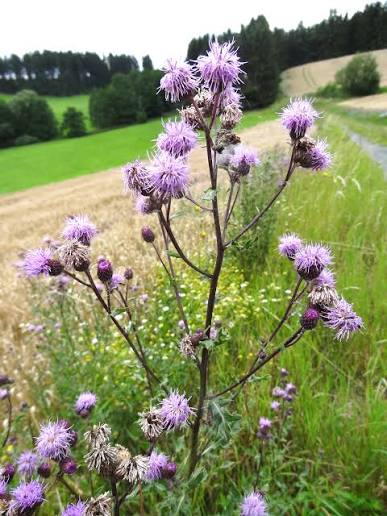
A literature search revealed 1,117 state statutes, regulations, and similar policy documents that pertain to invasive species. One third of these documents (n = 448) named at least one taxon at the genus or species level. Of these, 35.3% named one or more plant species; 19.9% named one or more invertebrate; and 44.8% named vertebrates. Overall, 60.5% of these species were listed by only one state. Viewed by taxonomic group, this broke down to 40.6% of plant species, 60.6% of invertebrates, and 56.4% of vertebrates. Only four species are regulated in all 21 states = western (European) honeybee (Apis mellifera); and three agricultural weeds, creeping thistle (Cirsium arvense), quackgrass (Elymus repens), and dodder (Cuscuta species).
Drake et al. (2026) found neighboring states did not share similar species lists or approaches. Consistency was even less at the regional scale, particularly when managing invasive invertebrates or vertebrates. The absence of a unified approach means that proactive states are susceptible to invasion from neighboring states which take a less vigorous stance. Since managing invasive species becomes more difficult and costly as the invasion progresses, undermining proactive policies undercuts efficiency.
Even when the national government does act, it lacks a unified approach. No federal legislation mandates a central authority to direct and implement IAS detection and response. The National Invasive Species Council (NISC), established by Executive Order 13112 in 1999, is supposed to provide high-level leadership to help overcome barriers to communication and promote collaboration among the several federal agencies bearing responsibility for various aspects of the issue. Authors, e.g., Reaser, Simpson, et al. (2020); Simberloff et al. (2020), say NISC’s effectiveness has been undermined by inconsistent funding and vacillating political support from policy-level leaders.
Drake et al. (2026) also assessed which of the 21 states took action proactively. Two plant species were listed by name by all 21 states: quackgrass (Elymus repens) and creeping thistle (Cirsium arvense). They called three states (14.3%) “pro-active” because they regulated quackgrass before it was detected in the state. Four states (19%) did the same regarding creeping thistle. The one invertebrate species listed by all 21 states, the western (European) honeybee, was established in these states before they began addressing invasive species, so it is not a test of states’ forethought.
Of course, the policy goals differ between the two plant species and the honeybee: the former are considered damaging so policies focus on their control and management, whereas the honeybee is valued for pollination and honey production so policies aim at protecting it. There is no federal legislation regulating Apis mellifera individuals already in the country. State regulations governing interstate movement are the usual jumble of approaches. Drake et al. (2026) says this lack of consistency can increase the risk that introduced pathogens, pests, and undesirable subspecies (i.e., “Africanized” bees) will spread. They note that this chaos reigns despite bees’ importance to the agricultural sector.
Florida had policies governing the most species (345), Vermont the least (67). More surprising to me, New York regulated the most plant species (161); Mississippi the most invertebrates (105), and Virginia the most vertebrates (189).
Collectively the states regulate three times more species than appear on either national registry: 1,862 species in the state database versus 630 in US-RIIS or NAS databases. The states regulated a proportionally larger number of plant species and much smaller proportion of vertebrates. The number of species named in both state and federal databases were 360 plant species (57.1%), 170 invertebrates (28.4%), and 91 vertebrates (14.4%). The difference between federal and state lists is further magnified by the fact that significant numbers of species listed on the federal databases are managed by only one state: 143 plant species (48.3%), 86 invertebrates (29.1%), and 28 vertebrates (9.5%). In other words, only 217 plant species, 84 invertebrate species, and 63 of vertebrate species designated as invasive by federal databases were being managed by more than one state.
The survey identified a wide range of state agencies that have at least some responsibility for managing invasive species. These agencies’ principal concerns are agricultural, plant, or livestock industries; wildlife, fisheries, and recreation; forestry, mining, and natural resources; marine resources; public and environmental health; transportation, utilities, and commerce; and administration, education, specific locations, and all other types. Agriculture agencies are overwhelmingly responsible for invasive plants, insects, and arthropods; and almost equal to Fish and Wildlife departments in the case of managing molluscs. F&W departments are most often responsible for mammals, fish, crustaceans, amphibians and reptiles. Public and environmental health agencies are a distant second as regards responsibility for plants and arthropods, and third re: insects. Administration/education/specific location agencies are third most frequently given responsibility for plants; they hardly appear for other categories. Transport and commerce ranked fourth (nearly the same as public health agencies) for managing insects.
More than half of state policy measures (55.4%) related to terrestrial species, habitats, and pathways; 17.1% related to aquatic species, habitat, and introduction pathways; and 27.5% related to both.
Considering all species named in each state’s policy codes, about half of the listed taxa in each focal state’s policies are also listed by at least one neighboring state. At the regional level, overlapping or consistent policies declined to about 19% of the species. It doesn’t surprise me that New England states rank high in cooperation. Nor that the least number of species also regulated by neighboring states applies to Florida; the “sunshine state” is semitropical and has many types of ecosystems probably not present in Alabama or Georgia.
Once again, consistency is higher for plant species than the animal taxa. Among-neighbor overlap for plant taxa is ~69-70%, for invertebrates is ~50%, and for vertebrates only about a third. At the regional level, overlap is ~28% for plant species, ~18% for invertebrates, and 14% or less for vertebrates.
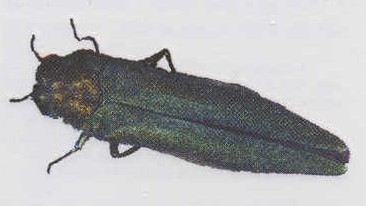
Drake et al. (2026) present case studies on several species to illustrate the breadth and depth of policy inconsistency, coordination, and implementation. The species studied are three of the four species regulated by all 21 states in the database; and three others selected to be emblematic of plant, invertebrate, and vertebrate taxonomic groups. The representative species for invertebrates is the emerald ash borer (EAB; Agrilus planipennis); the illustrative species for vertebrates is feral pigs (Sus scrofa).
Drake et al. (2026) report that the EAB had been detected in all but two of the 21 states in their study – Florida and Mississippi (EAB has now been detected in the state). There was a federal quarantine until early 2021. Still, only 10 states (47.6%) have a policy regulating EAB per se. Nine states had acted proactively; this was the highest proportion among all the species analyzed, probably because the beetle spread so quickly and had such obvious and severe impacts observed.) My analysis of data on the Don’t Move Firewood website determined that few of these states regulate firewood. Seven states require treatment of firewood originating out-of-state. New York also prohibits movement of firewood within the state over distances exceeding 50 miles. Two states regulate firewood originating in location quarantined for a specific pest, e.g., EAB. Three states restrict movement of outside firewood onto state properties. The rest of the states urge people to “burn it where they buy it” but impose no requirements. In some cases, National parks for forests have more stringent regulations. I am quite disappointed how few states have taken protective actions. Drake et al. (2026) explained the absence of regulations in the other 11 states as possibly due to the slow pace of legislative action compared to the speed of spread. I think this factor deserves greater attention.
Drake et al. (2026) noted that there are cooperative programs that cross jurisdictional boundaries; these increase programs’ effectiveness. The example they cite is the Ash Protection Collaboration Across Wabanakik — a cooperative effort among federal, state, and tribal governments and non-governmental organizations in northern New England and bordering Canadian and tribal lands.
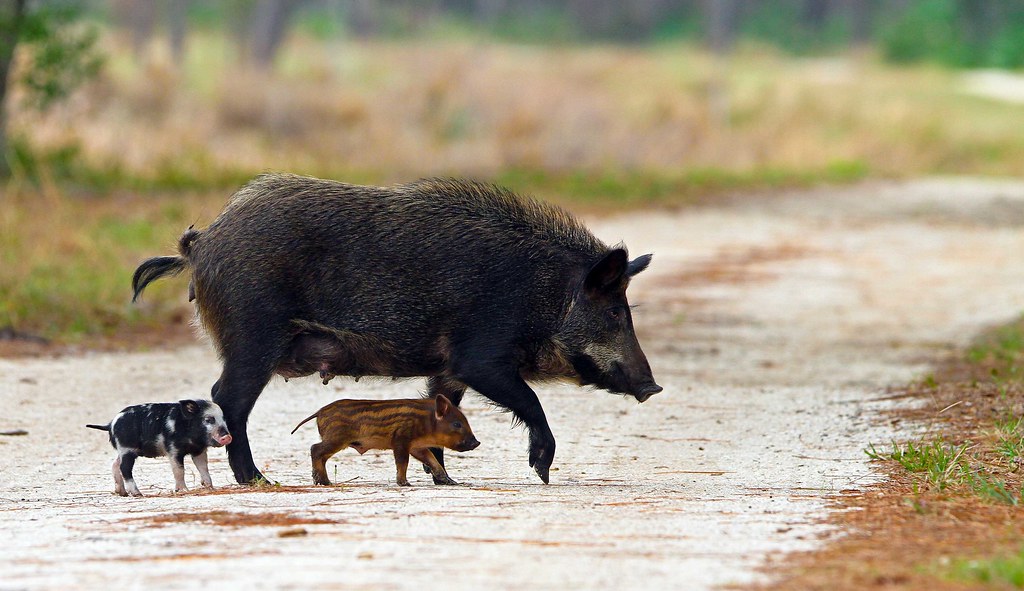
The discussion of feral pigs reported that these animals are becoming increasingly troublesome. The highest density of pig populations is in southern states but suitable habitat is found across North America. Twelve states have adopted relevant policies; five were proactive in doing so. Feral hogs are present in at least three of the nine states that lack any policy; they are also present in neighboring states of most. Drake et al. (2026) say that the patchwork of policies and regulatory agencies across (and even within states) has hindered management. One of the issues with feral hog management is the presence of conflicting views and stakeholders. Some states encourage hunting, others outlaw it in hopes of reducing any motivation to transport hogs to new areas to initiate sport hunting. They conclude that prohibiting private landowners from profiting from feral pig hunting opportunities, while apparently useful for control, might not be reasonable.
Drake et al. (2026) notes that there is no national policy but the federal government does provide financial assistance. Congressional legislation created the Feral Swine Eradication and Control Pilot Program (FSCP), co-managed by USDA Natural Resources Conservation Service and APHIS. They say that while federal and state investment is likely necessary to conduct the large-scale control needed, the public wants the opposite: they say those responsible for pig releases and individual landowners should pay for control efforts. Drake et al. (2026) discuss the situation in North Carolina to illustrate the conflicting approaches within one state.
Drake et al. (2026) find the greatest consistency across states in the regulation of invasive plants. This might reflect the historical attention to agricultural weeds. However, there are still inconsistencies that might cause confusion and facilitate unintended spread of invasive plants by the horticultural trade. (See my earlier blog here.) They point out that the lack of attention to invertebrates and vertebrates falls short considering the risks and costs these invaders impose at the national and global levels. In the eastern United State, five of the six costliest invasive species are invertebrates; the sixth is feral hogs.
Drake et al. (2026) worry that the widespread differences in approach leads to inaccurate estimates of invasive species’ economic cost as well as reduces states’ ability to effectively plan and coordinate efforts. They concede that given the range of agencies and industries that contribute to invasive species management, their review of state policies might not accurately reflect the full effort. Also the engagement of multiple players enhances flexibility. However, the disconnect between policy and on-the-ground actions can be a barrier to effective communication and compliance. It might also result in duplication and missed opportunities for collaborative management on common goals in neighboring states.
Drake et al. (2026) concede that social acceptance affects implementation. The most cost-effective, efficient, and impactful control methods might be socially unacceptable. Often social acceptance comes after an invasive species has spread and established – so after counter action is most successful and cost-effective.
Drake et al. (2026) note that climate change is likely to reduce barriers to invasive species’ spread and establishment and facilitate transition of benign non-indigenous species into damaging invaders. They say there is an urgent need for more attention from policymakers to the threat posed to both the economy and ecological systems. Their example is the contrast between the concentration of forest insect pests in the northeast while Florida and Mississippi list the highest number of species. Drake et al. (2026) suggest these listings reflect the region’s forestry sector’s concern about non-native pests – but I have not seen such interest (See profile of Sirex woodwasp here.)
To reduce vacillations in federal policy when administrations change, Drake et al. (2026) urge Congress to adopt strong, overarching legislation. If that isn’t possible, they say the second best option is to strengthen incentives and procedures for interstate cooperation. Such an approach could be extended to Canadian provinces
Drake et al. (2026) say it is clear from their own and others’ work that current policy tools fall short and leave proactive states at risk of threats from their neighbors. A possible model is competitive and non-competitive State Wildlife Grants program managed by the U.S. Fish and Wildlife Service. These funds should complement, not be reallocated from, current conservation efforts.
They praise some efforts by NISC, specifically the Early Detection Rapid Response framework, as a way to spur improved communication among policymakers, practitioners, and researchers. However, given the many remaining legislative and regulatory gaps, and differing interpretations, they suggest increasing opportunities of practitioners to use existing research and outreach structures e.g., Land Grant institution extension model. New frameworks such as translational invasion ecology can improve identification of research priorities and transfer of generated knowledge. These frameworks explicitly take into account the ecological, sociological, economic, and political contexts. Incorporating diverse stakeholders and quantitative tools e.g., through simulations, climate change projections, connectivity assessments, and species distribution maps that take into account the socio-economic components might be able to more holistically evaluate and act upon the potential threats.
Drake et al. (2026) call for increased attention to researching species likely to become problematic in the future. They note that only four of 18 NIS species in New England identified by another’s study as likely to benefit from climate change are included under policies of at least one state in the region.
SOURCE
Drake, J., E.M.X. Reed, D. Haak, B. Brown, M.C. Mims, M.G. Sorice, H. Rogers, S. Salom, T. Schenk, and J.N. Barney. 2026. State Lines and Species Divides: Inconsistencies and Opportunities in Invasive Species Policies across the eastern United States. Ecological Applications 36(5): e70287. https://doi.org/10.1002/eap.70287
Posted by Faith Campbell
We welcome comments that supplement or correct factual information, suggest new approaches, or promote thoughtful consideration. We post comments that disagree with us — but not those we judge to be not civil or inflammatory.
For a detailed discussion of the policies and practices that have allowed these pests to enter and spread – and that do not promote effective restoration strategies – review the Fading Forests report at http://treeimprovement.utk.edu/FadingForests.htm
Or