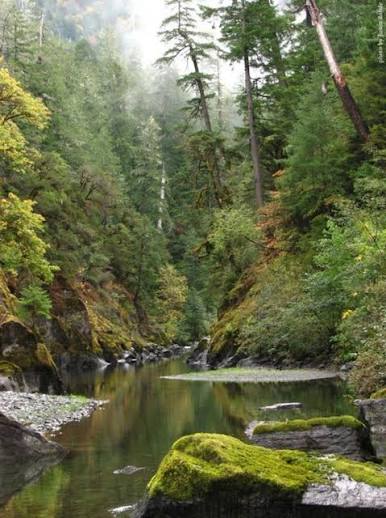
CISP submitted official public comments to the USDA Forest Service opposing the proposed recission of the Roadless Area Conservation Rule, aka ,the roadless rule. Our opposition is based on the heightened risk of invasive species introductions associated with easier human access. Vice President Phyllis Windle wrote the comments.
The proposed recission is published here.
The roadless rule was adopted in 2001—available here. This regulation prohibits road construction, road reconstruction, and timber harvesting on approximately 44.7 million acres of National Forest System lands, including in Alaska. It is not in effect in Colorado or Idaho because those states have state-specific regulations.
According to the proposal, rescinding the 2001 Roadless Rule is intended to return decision-making for these activities to local officials, in conjunction with forest-level land management planning.
Rescission of the roadless rule would be one of the largest conservation policy changes in recent years.
As required by the National Environmental Policy Act (NEPA), the USFS prepared a draft environmental impact statement (DEIS) analysing the likely effects of allowing local forest managers to open currently road-free areas to construction of temporary or permanent roads. Our review focussed on the 300-plus pages in Volume 1. Phyllis found that division of the analysis into multiple major and minor sections muddied the conclusions and failed to provide an accessible, integrated view.
(The DEIS included two additional volumes totaling 600-plus pages – almost all letters from tribes, congress, states, and localities). Supporting biological and economic documents added nearly 900 more pages. Mostly these were detailed analyses by the US Fish and Wildlife Service and the National Marine Fisheries Service.)
Worse, the backlog in updating individual National forests’ management plans undercuts the ability of local managers to understand current conditions and adopt truly appropriate strategies. (As of March 2023, 99 management plans are older than the legal maximum of 15 years.) The DEIS also does not demonstrate how individual national forests can address problems that cross their own or state boundaries – threats that include those from invasive species.
Phyllis notes that evaluating the benefits and environmental downsides of constructing roads in specific National forest areas will require more complex plans than those developed in the past – and which are so badly tardy. The DEIS does not address how the current planning process can meet the demands of the new responsibilities associated with ending the roadless rule.
Most important, the DEIS barely addresses the risk of spread of non-native insects and plant disease pathogens. CISP asserts that these organisms pose the greatest threats to forest health from invasive species. Yet the DEIS says only that “the presence and severity of pest infestations are influenced by local conditions…” like climate and the biological attributes of pests. (DEIS, Vol.1, p. 78.) A far broader set of conditions influence infestations. Among them are proximity to nurseries selling contaminated stock or homeowners planting such stock; camping enthusiasts moving insect-infested firewood (sometimes in violation of state quarantines); and people transporting invasive species during fire operations, with construction equipment, or on boats. As has been well recognized for decades, economic factors, international regulations, and the popularity of certain pets all affect the “presence and severity of pest infestations.”
As we point out, non-native insects and pathogens are extremely damaging. Yet the DEIS discussion of insects appears to be based almost entirely on responding to damage caused by the native mountain pine beetle (Dendroctonus poderosae). There is no discussion of existing impacts or threats from, for example, the emerald ash borer – in eastern forests or in Pacific coast states; or the balsam woolly adelgid on subalpine fir (Abies lasiocarpa) in the Rockies. New outbreaks of these insects can result from careless visitors taking insect-infested firewood to formerly inaccessible locations.
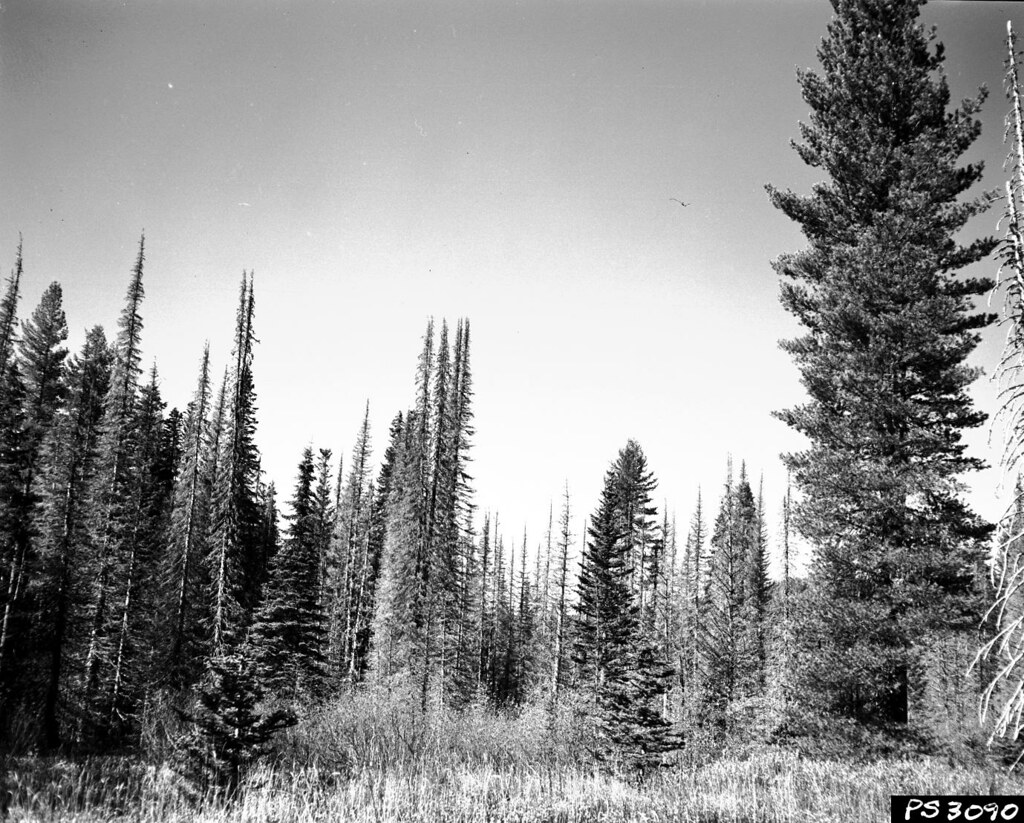
Failure to mention major and potential plant pathogens is an even more glaring gap since they are often harder to identify, more difficult to detect, deadly … and their spread is sometimes quite intimately linked to roads. The link is best documented for Phytophthora species. The DEIS does not address the many examples already present in National forests. Port-Orford-Cedar root disease (Phytophthora lateralis) has killed up to 90% of its hosts at high-risk sites. It is well-documented as being spread by construction and use of roads (Betlejewski et al. 2011). Sudden oak death has killed an estimated 50 million trees in northern California and southwestern Oregon. Phytophthora cinnamomi is widespread in eastern oak-dominated forests, where it is probably reducing productivity. This root pathogen poses serious challenges to efforts to restore American chestnut trees across most of its current range (Gustafson et al. 2022). Its spores spread from tree to tree in water and through soil. In California, Phytophthora species introduced to wildlands on herbaceous species planted during restoration projects have spread downhill (Swiecki and Bernhardt 2018).
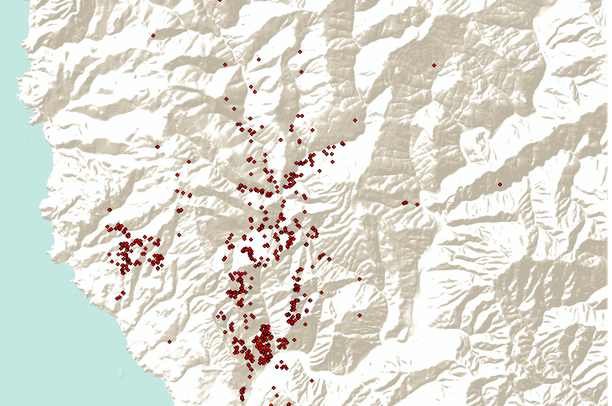
In all these cases, roads, vehicles, fill dirt or gravel, even shoes can have spread the pathogen. Swiecki and Bernhardt’s (2018) Best Management Practices could help prevent introduction and spread via trail work, construction, and imports of soil. It is not clear whether they have been adapted and implemented widely by land management agencies.
Phyllis suggests that the DEIS should have included a case study reviewing presence and impacts of Phytophthora species in American forests, with the focus on how the pathogens are being introduced and spread. The analysis should closely examine how the three alternatives in the DEIS would help or hinder control of these pathogens – for a specific invasive species, in specific places. She notes that actually preventing a pathogen’s introduction and spread differs from planning what to do. The proposal’s emphasis on planning seems risky.
The DEIS allots more attention to the nexus between invasive plant species’ introduction and spread and road access. It is widely acknowledged that invasive plants can penetrate deep into forests and alter or eliminate biodiversity, scenic, and other forest values. One weakness in the DEIS is that it is not clear which invasive plant species are being mapped in USFS projects. Instead, the text says that “… invasive plants are ranked and identified as being invasive or noxious in the state in which they occur.” The DEIS does not acknowledge that state noxious weed lists are usually focused on agricultural weeds, not those that can invade intact forests. As we noted in an earlier blog, the list of plant species tracked by the Forest Inventory and Analysis (FIA) program does not include numerous such species, e.g., wavy-leaf basketgrass (Oplismenus undulatifolius), fig buttercup (Ficaria verna; formerly Ranunculus ficaria), shrub and creeping Euonymus, callery pear (Pyrus calleryana). Among shrubs, only one privet (Ligustrum vulgare) is included. Plus, since plant species’ status differs from state, shifting authority to Forest level decision-makers could sow confusion and conflict over jurisdictional differences.
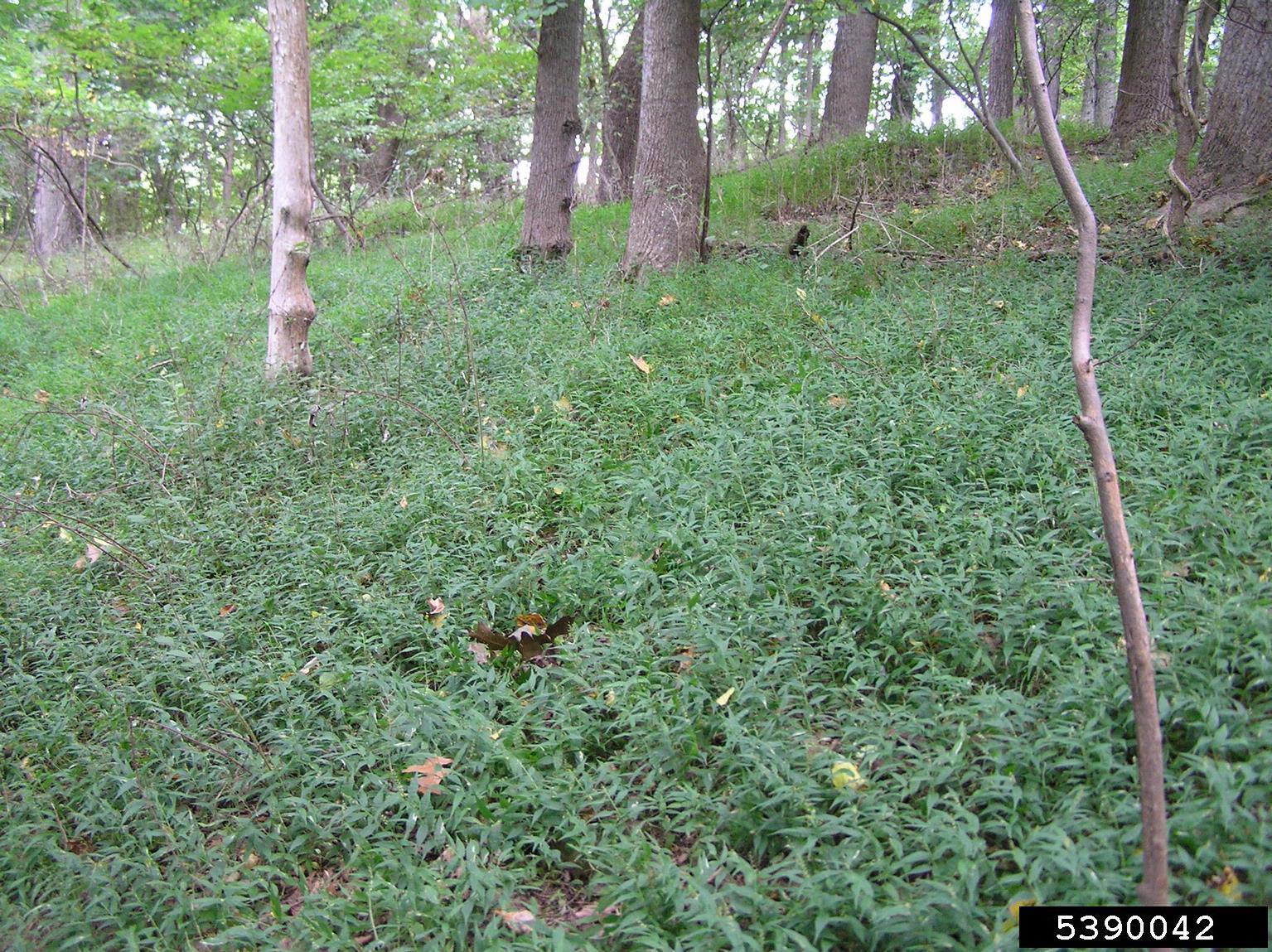
The FIA data analysis I reported on in this blog noted both that plant invasions are much more intense in the wildland-urban interface (WUI) and that National forests across the Lower 48 are less invaded by non-native plants than forests under other ownerships. I concluded that the principal reason for increased integrity of forests under federal management is current management: protection from road-building and harvesting over many decades. Allowing construction of roads into currently roadless areas threatens to expand the degrading influence of semi-developed areas.
The risk is high: sites best suited to growing industrial timber are also prone to invasion by non-native plant species. The FIA surveys found that 76% of highly productive plots were invaded compared to 40% of low-productivity plots. It is unclear whether highly productive sites are inherently more invadable, or, instead, that such plots were converted to agriculture earlier, so exposed to human disturbance longer.
Forest Pests Not a Priority?
In CISP’s comments, Phyllis noted that on December 30th, 2025, Secretary of Agriculture Brooke L. Rollins announced four new priorities for research and development. The third was “Protecting the Integrity of American Agriculture from Invasive Species.” Our review of materials accompanying the proposed rule change found little evidence that forest pests are receiving such priority attention.
SOURCES
Betlejewski, F., D.J. Goheen, P.A. Angwin, R.A. Sniezko. 2011 Port-Orford-Cedar Root Disease. Published by USDA Forest Service, Pacific Northwest Region (R6), Portland, Oregon. FS/R6/RO/FIDL#131-11/009
Gustafson, E.J., B.R. Miranda, T.J. Dreaden, C.C. Pinchot, D.F. Jacobs. 2022. Beyond blight: Phytophthora root rot under climate change limits populations of reintroduced American chestnut
Ecosphere. 2022;13:e3917.
Swiecki, T.J. and E. Bernhardt. 2018. Best Management Practices for Preventing Phytophthora Introduction and Spread: Trail Work, Construction, Soil Import. Contract: Development of Phytophthora BMPs for Golden Gate National Parks Conservancy
Posted by Faith Campbell
We welcome comments that supplement or correct factual information, suggest new approaches, or promote thoughtful consideration. We post comments that disagree with us — but not those we judge to be not civil or inflammatory.
For a detailed discussion of the policies and practices that have allowed these pests to enter and spread – and that do not promote effective restoration strategies – review the Fading Forests report at http://treeimprovement.utk.edu/FadingForests.htm
Or