Alarming Picture of Phytophthora Threats to Forests World-wide

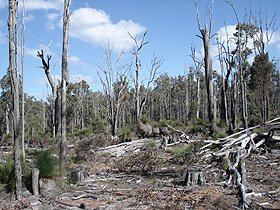
Phytophthora dieback in West Australia


Prompted by the rising number of Phytophthora-caused diseases in forests on several continents, in 1999 the International Union of Forest Research Organizations (IUFRO) formed the IUFRO Working Party 7.02.09 ‘Phytophthora Diseases of Forest Trees’. Last spring This group published a global overview of Phytophthora diseases of trees (Jung et al. 2018; see full citation at the end of this blog).

The study covers 13 different outbreaks of Phytophthora-caused disease in forests and natural ecosystems of Europe, Australia and the Americas.

The picture is alarming!

Jung et al. state definitively that the international movement of infested nursery stock and planting of reforestation stock from infested nurseries have been the main pathway of introduction and establishment of Phytophthora species in these forests.  

The Picture: A Growing List of Diseases, Species, and Places Affected,

Jung et al. note that, during the past six decades, the number of previously unknown Phytophthora declines and diebacks of natural and semi-natural forests and woodlands has increased exponentially. The vast majority of these disease complexes have been driven by introduced invasive Phytophthora species. In 1996, 50 Phytophthora species were known. In the 20 years since then, more than 100 new Phytophthora species have been described or informally designated. One study (Tsao 1990) estimated that more than 66 % of all fine root diseases and more than 90 % of all collar rots of woody plants are caused by Phytophthora spp. Many of these had previously been attributed to abiotic factors or secondary pathogens. One example – surprising to me, at least – is that decline of mature beech trees in Central Europe is linked to Phytophthora rather than beech bark disease!

Several of the disease complexes described in Jung et al. 2018 are causing heartrending destruction of unique floras, e.g., jarrah, tuart, and other communities of western Australia and kauri forests of New Zealand. The authors expect increasing damage to the Mediterranean maquis in the future. They list these among other examples:

  1. Ink disease of chestnuts worldwide
  2. Oak declines and diebacks in Europe and North America
  3. Decline and mortality of alders (Alnus species) in Europe
  4. Decline and mortality of Port-Orford cedar (Chamaecyparis lawsoniana) in Europe and North America
  5. Kauri dieback in New Zealand link to earlier blog
  6. Decline and mortality of Austrocedrus chilensis and Juniperus communis in Argentina and Europe
  7. Diebacks of natural ecosystems in Australia
  8. Decline and dieback of the Mediterranean maquis vegetation
  9. Decline and dieback of European beech in Europe and the US
  10. Dieback and mortality of southern beech (Nothofagus species) in the United Kingdom and Chile
  11. ‘Sudden Oak Death’ and ‘Sudden Larch Death’ in the US and United Kingdom
  12. Leaf and twig blight of holly (Ilex aquifolium) in Europe and North America
  13. Needle cast and defoliation of Pinus radiata in Chile

Several of the Phytophthoras are causing severe damage on several continents:

  • P. cinnamomi in Europe, North America, and Australia
  • P. austrocedri in South America, Europe, and western Asia
  • P. ramorum in Europe and North America
  • P. lateralis in North America and Europe.

Often, the genetic makeup of the Phytophtoras species varies in these different locations. These differences indicate separate introductions and the existence of sexual reproduction and continuing evolution in response to conditions.

Why Phytophthoras are Spreading via the Plant Trade and Nursery Practices

First, Phytophthora species are able to survive unsuitable environmental conditions over several years as dormant resting structures in the soil or in infected plant tissues. When environmental conditions become suitable, the resting spores germinate – often prolifically. Since visible symptoms might not appear for considerable time after infection because the mechanism is progressive destruction of the fine root system, detection of the disease is delayed, further undermining control.

Second, most of the Phytophthora species causing  disease complexes were unnoticed as co-evolved species in their native environment. Often they were unknown to science before their introduction to other continents – where they become invasive on naïve plant species. Consequently, these species are not captured by the international plant health system, which is based on lists of recognized “pest” species.

Third, the common nursery practice of applying fungicides or fungistatic chemicals masks the presence of pathogens – another way plants pass unnoticed through phytosanitary controls. These chemicals do not, however, kill the pathogen. 

Fourth, the importation into receiving nurseries of plants from around the world provides ample opportunity for the introduced Phytophthoras to hybridize. The interspecific hybrids may differ in host range and virulence from the parent species, thus making predictions about the potential effects of an ongoing invasion even more difficult.

Fifth, the nurseries or plantings in gardens or restoration projects also provide suitable environments for prolific germination and spread.

All of these risks were first enumerated by the eminent British pathologist Clive Brasier a decade ago! (See Brasier et al. 2008 citation at the end of the blog.)

As Jung et al. 2018 point out, the scientific community has repeatedly urged regulators to require the use of preventative system approaches for producing Phytophthora-free nursery stock (see references in the article). Scientists have provided research-based guidance to reduce the risk of infestation. Such measures are being implemented by only some nurseries in the US. For example, USDA APHIS has specific requirements for nurseries that ship hosts of P. ramorum in interstate commerce after the nurseries or the plants have tested positive.  More broadly, APHIS, the states, and the nursery industry are in the second round of pilot testing of an integrated measures approach to managing all pests under the Systems Approach to Nursery Certification (SANC) program

At the international level, the International Plant Protection Convention has adopted ISPM#36, which also envisions greater reliance on systems approaches.  However, the preponderance of international efforts to protect plant health continue to rely on visual inspections that look for species on a list of those known to be harmful. Yet we know that most damaging Phytophthoras were unknown before their introduction to naïve ecosystems.

Furthermore, use of fungicides and fungistatic chemicals is still allowed before shipment.

As pointed out by several experts beginning with Dr. Brasier but including  Liebhold et al. 2012, Santini et al. 2013, Jung et al. 2016, Eschen et al. 2017, this approach has failed to halt spread of highly damaging pathogens. (I note that the list of such pathogens is not limited to Phytophthoras; see the description of ohia rust in Hawai`i, Australia, and New Zealand).

Jung et al. 2018 also call for increasing the genetic resistance of susceptible tree species. The authors regard this as the most promising sustainable management approach for stabilizing declining natural ecosystems and for reintroducing susceptible tree species at sites with high disease impact. See my blogs about efforts to enhance U.S. tree-breeding posted earlier this year.


SOURCES

Brasier CM. 2008. The biosecurity threat to the UK and global environment from international trade in plants. Plant Pathology 57: 792–808.

Jung T, Orlikowski  L, Henricot B, et al. 2016. Widespread Phytophthora infestations in European nurseries put forest, semi-natural and horticultural ecosystems at high risk of Phytophthora diseases. Forest Pathology 46: 134–163.

Jung, T., A. Pérez-Sierra, A. Durán, M. Horta Jung, Y. Balci, B. Scanu. 2018. Canker and decline diseases caused by soil- and airborne Phytophthora species in forests and woodlands. Persoonia 40, 2018: 182–220   Open Access!

Liebhold AM, Brockerhoff  EG, Garrett  LJ, et al. 2012. Live plant imports: the major pathway for forest insect and pathogen invasions of the US. Frontiers in Ecology and Environment 10: 135–143.

Santini A, Ghelardini L, De Pace C, et al. 2013. Biogeographic patterns and determinants of invasion by alien forest pathogens in Europe. New Phytologist 197: 238–250.

Tsao PH. 1990. Why many Phytophthora root rots and crown rots of tree and horticultural crops remain undetected. Bulletin OEPP/EPPO Bulletin 20: 11–17

Posted by Faith Campbell

We welcome comments that supplement or correct factual information, suggest new approaches, or promote thoughtful consideration. We post comments that disagree with us — but not those we judge to be not civil or inflammatory.
The Latest on Phytophthoras

014_14

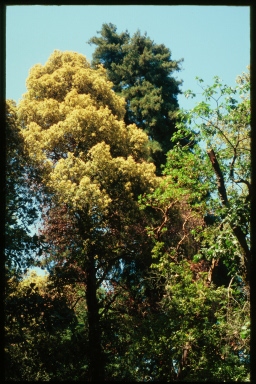
Phytopthora ramorum on tanoak in California; F.T. Campbell

Nine eastern states are participating in the 2016 USDA National Phytophthora ramorum Early Detection Survey of Forests. Those states are AL, FL, GA, MS, NC, PA, SC, TN, and TX. As of late August, streams in four locations were P. ramorum-positive. Three are in AL, one in MS. All had tested positive in previous years. Also, all have been associated with previously positive nurseries.  (Reported in the California Oak Mortality Task Force newsletter for September.) It is reassuring that no new positive locations have been detected. However, on what substrate is the pathogen persisting? Scientists agree that the pathogen does not survive in water (although it is reliably detected by testing in water) but must survive on some plant material – perhaps roots.

 P. ramorum also persists in nurseries. Seven California nurseries are participating in the APHIS federal P. ramorum program under which they are allowed to ship host plants interstate. Positive plants have been detected in two of them. One of these nurseries is undergoing the Confirmed Nursery Protocol clean-up. The other has completed the cleanup and has been allowed to resume shipping plants interstate. In both cases, the infected plants were not from the five “high-risk” genera which are the focus of monitoring for the regulatory system — Camellia, Kalmia, Pieris, Rhododendron, and Viburnum. (Reported in the California Oak Mortality Task Force newsletter for September.) I expressed concern about this too-narrow focus in a blog posted in July 2015 – http://nivemnic.us/2015/07/.


I have written about the widespread presence of various Phytophthoras in nurseries in blogs in April (for Europe http://nivemnic.us/2016/04/ ) and July (for California http://nivemnic.us/2016/07/ ). New publications add to this picture.


Junker and colleagues (see references below) report the detection of 15 Phytophthora species in two commercial woody ornamental nurseries (presumably in Europe, since the authors are Europeans). Twelve of the species are previously described but the DNA of three isolates did not match any of the known species.  Detections were highest in puddles on nursery pathways; followed by plant residues;, wind-carried leaves; and water and sediment from  runoff. The plant samples showed very low infection rates – a disturbing finding given the reliance until recently on inspection of plants to detect the pathogen. (Reported in the California Oak Mortality Task Force newsletter for September.)


New Phytophthora confirmed in U.S.

The United States has the first official confirmed detection of the pathogen Phytophthora quercina. It was found associated with oak trees planted on restoration sites in central coastal California. Although the California detection is the first officially confirmed detection of the pathogen in the U.S., a P. quercina ‘like’ organism has been reported to be associated with oak decline in forests in the Midwest. P. quercina is a pathogen associated with oak decline across Europe. It was rated as the species of highest concern in a USDA Plant Epidemiology and Risk Analysis Laboratory (PERAL) report. Another pathogen, P. tentaculata, was rated fifth on the same list. It was recently found in association with multiple native plant species in California’s native plant nurseries (see my July blog, linked above). See also California Oak Mortality Task Force newsletter at http://www.suddenoakdeath.org/news-and-events/current-newsletter/


Rapid Response Might Have Contained SOD – When will authorities learn this lesson?


Earlier this year, experts on modeling  the epidemiology of plant disease concluded that the sudden oak death epidemic in California could have been slowed considerably if aggressive management actions – backed by “a very high level of investment” – had started in 2002. By then, there was sufficient knowledge about the disease to guide actions. Management actions should have focused on the leading edge of the epidemic (admittedly, that edge has proven difficult to detect). The study is by American and British scientists (Cunniffe, Cobb, Meentemeyer, Rizzo, and Gilligan). See reference and news report below.


The authors’ estimate documents the high costs of inaction.  This is an important lesson – which has been repeated many times. If only officials from California and APHIS would take this to heart regarding several other forest pests. These include the polyphagous and Kuroshio shot hole borers and even the goldspotted oak borer (all described here).


 References


https://www.sciencedaily.com/releases/2016/05/160502161111.htm?utm_source=feedburner&utm_medium=email&utm_campaign=Feed%3A+sciencedaily%2Fplants_animals%2Finvasive_species+%28Invasive+Species+News+–+ScienceDaily%29


Cunniffe, N.J., R.C. Cobb, R.K. Meentemeyer, D.M. Rizzo, and C.A. Gilligan. Modeling when, where, and how to manage a forest epidemic, motivated by SOD in CalifPNAS, May 2016 DOI: 10.1073/pnas.1602153113


Junker, C., Goff, P., Wagner, S., and Werres, S. 2016. Occurrence of Phytophthora in commercial nursery production. Plant Health Progress. 17:64-75.


Posted by Faith Campbell

Europe moves to curtail forest pest introductions – but strongest measures are hampered by trade rules

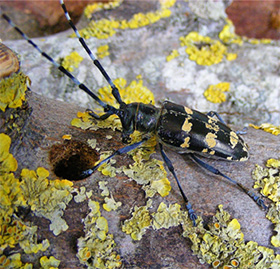
alb-in-euro-on-tree-doris-holling-wslALB in Europe; photo by Doris Holling WSL

Maartje J. Klapwijk and several colleagues have recently taken a hard look at non-native forest pests in Europe.  They conclude that current European legislation is inadequate to prevent forest/tree pest introduction, establishment and spread in the European Union. (A link to the article is provided at the end of this post.)


Some of the proactive steps that they recommend, however, will be difficult to enact. International trade rules (World Trade Organization, Agreement on the Application of Sanitary and Phytosanitary Measures – SPS Agreement) require that countries prove that the target commodity in trade presents a significant pest risk – proof that is difficult to obtain before damage has actually occurred.


(I have written extensively about this “Catch 22” – see Fading Forests II here)


Furthermore, European Union rules prevent countries from taking proactive measures to restrict potentially pest-infested plants or wood products being traded from one EU member country to another.  However, member countries’ vary in their levels of concern about tree-killing pests. As a result, phytosanitary measures are quite weak in some countries. Once a pest-infested shipment enters a country with a weak phytosanitary system it can be moved freely to any other member country.


Thus, international and EU rules together create a significant risk that a pest will enter, establish, and then be spread by commerce to the rest of the Union.


The authors note that growing trade in living plants and wood products has brought a rise in non-native tree pests becoming established in Europe. The number of alien invertebrate species has increased two-fold since 1950; the number of fungal species has increased four-fold since 1900. Few studies have attempted to quantify the economic impacts of non-native tree-killing pests in Europe. But the authors say that the introduced pests will cause economic damage either directly by reducing the revenue of the country or imposing control costs; or indirectly through trade restrictions or reduced values of real estate.


Among the recent introductions are the pinewood nematode from North America; Asian and Citrus longhorned beetles and ash dieback fungus from Asia; and sudden oak death and other Phytophthora species. (I described the extent of Phytophtphora infestations in European nurseries in a blog posted on April 25.) As a partial response, EU countries have created a network of nurseries intended to serve as an early warning system against further introductions of alien tree pests.  (Descriptions of these pests and where they are found are available on the website of the European and Mediterranean Plant Pest Organization (EPPO) here)

alb-in-europeALB introduction sites in Europe


The European Union regulates invasive species through the Environment Directorate-General (DG Environment).  However, tree-killing pests and other plant health concerns are the responsibility of a different governmental body, the Directorate-General Health and Food Safety (DG SANCO).


Maartje J. Klapwijk and colleagues note the risk associated with:

  • crates, pallets, and other forms of wood packaging;
  • wood chips (Europe imports more than 4 million tons of wood pellets as fuel in order to meet its carbon emission reduction goals)  ; and
  • especially – living plants.


They note that the international community has adopted two international related sanitary agreements : ISPM#15 (wood packaging) and ISPM#36 (living plants).  The European Union requires certificates stating that imported plants are free from harmful organisms and that phytosanitary measures stipulated by the importing country have been applied. However, limited resources mean that only a small proportion of living plants, plant material, soil and wood products arriving in Europe can be inspected. “The main purpose of the inspections is to verify whether shipments comply with regulations, rather than to stop potentially harmful organisms …” (my emphasis).  Reflecting the differences in levels of concern among EU member states noted above, there are large differences in inspection intensity among the EU member states.


The pertinent European legislation is Directive 2000/29/EC. It relies on a ‘‘black-list’’ of plants and plant products that are banned from import and specifies procedures to apply when any of these banned products is found in the EU. According to Klapwijk and colleagues, these quarantine lists provide insufficient protection because harmful organisms that enter the EU often are unknown prior to establishment.


Aware of the current system’s inadequacies, the EC has proposed a new regulation which would simplify and harmonize plant passports, allow for stricter measures against pests, and address emerging risks from certain living plant imports from some non-EU countries. Instead of listing harmful plant pests, the proposed regulation “sets out the conceptual nature of quarantine pests” and empowers the Commission to adopt measures to control certain pests.


Klapwijk and colleagues praise these actions as a significant step forward. However, they note that the new rules still don’t provide for precautionary assessments of high-risk commodities. Nor do they restrict import of the highest-risk commodities, such as imports of large plants or plants in soil. (my emphasis)


The authors note that other countries take a more pro-active, precautionary stance. Australia and New Zealand require that all imported plant products be assessed and proved safe before import. The U.S. restricts the size of imported plants and does not allow imported plants to be in soil. (The U.S. has proposed a new approach that relies increasingly on integrated measures or systems approaches rather than port-of-entry inspection.  However, this proposal has been pending for more than three years. (APHIS explains its proposal here)


The question is, do trade rules allow Europe to apply the same restrictions as other countries? As Klapwijk and colleagues note, the EU cannot adopt more rigorous phytosanitary measures without providing scientific evidence for this necessity. Preparing a risk assessment to make this case will involve considerable work. As part of this process, Europe should announce that it wishes to raise its “level of protection” and that more stringent phytosanitary measures are needed to achieve that new goal.


Meanwhile, the EU can enhance its active detection efforts and “rapid response” capabilities. The new EC directive will require countries in which a new pest is detected to eradicate or contain the pest. However, the response continues to depend on investments and actions by individual Member States – which have often been insufficient.


Klapwijk and colleagues endorse the suggestion by Hulme et al. (2009) that the European Commission establish a single agency to respond to introductions of any kind of invasive species (not just tree pests) – modeled on the European Centre for Disease Prevention and Control.


Finally, Klapwijk and colleagues note the importance of engaging the public.  Citizens’ participation can enhance early detection and strengthen public support for management strategies.


CONCLUSIONS


We Americans are very lucky that the U.S. Department of Agriculture had fairly stringent rules governing plant imports before the World Trade Organization and SPS Agreement were negotiated in the 1990s.  We don’t have the burden of proving that imports of large plants (small trees!) in soil is too risky. (This not to say that U.S. regulations should not be tightened further for the most high-risk imports. See Fading Forests III here).  Europeans should be able to build their case for more restrictive trade rules on existing risk assessments and practices utilized by the U.S., Australia, New Zealand, and others; on the numerous studies published in recent years that describe recent introductions to Europe and the pathways by which they entered; and by the number of those introductions alone.  (To see what has been introduced, visit the website of the European and Mediterranean Plant Pest Organization (EPPO) here)


One important step in improving U.S. rules would be to finalize the proposal – put forward in 2013 – to depend more on integrated measures or systems approaches rather than inspection at the port of entry.  Join with me in urging the Secretary of Agriculture to finalize this proposal before he leaves office in January.   Contact me via the “contact us” button on the webpage to learn how you can help.


The United Kingdom has voted to leave the European Union. This means that the U.K. has the opportunity – and burden – of developing its own phytosanitary regulations. The U.K. has some of the leading forest pathologists and entomologists. The risk is obvious to all – especially Phytophthora ramorum in larch plantations and ash dieback disease in many areas of the country. I hope that the British will seize this opportunity to adopt really effective phytosanitary regulations that can serve as a model for the rest of Europe – and possibly even the U.S.


Sources


Maartje J. Klapwijk, Anna J. M. Hopkins, Louise Eriksson, Maria Pettersson, Martin Schroeder,A°ke Lindelo¨w, Jonas Ro¨nnberg, E. Carina H. Keskitalo, Marc Kenis. 2016. Reducing the risk of invasive forest pests and pathogens: Combining legislation, targeted management and public awareness. Ambio 2016, 45(Suppl. 2):S223–S234  DOI 10.1007/s13280-015-0748-3


Hulme, P.E. 2009. Trade, transport and trouble: Managing invasive species pathways in an era of globalization.  Journal of Applied Ecology 46:10-18


Posted by Faith Campbell