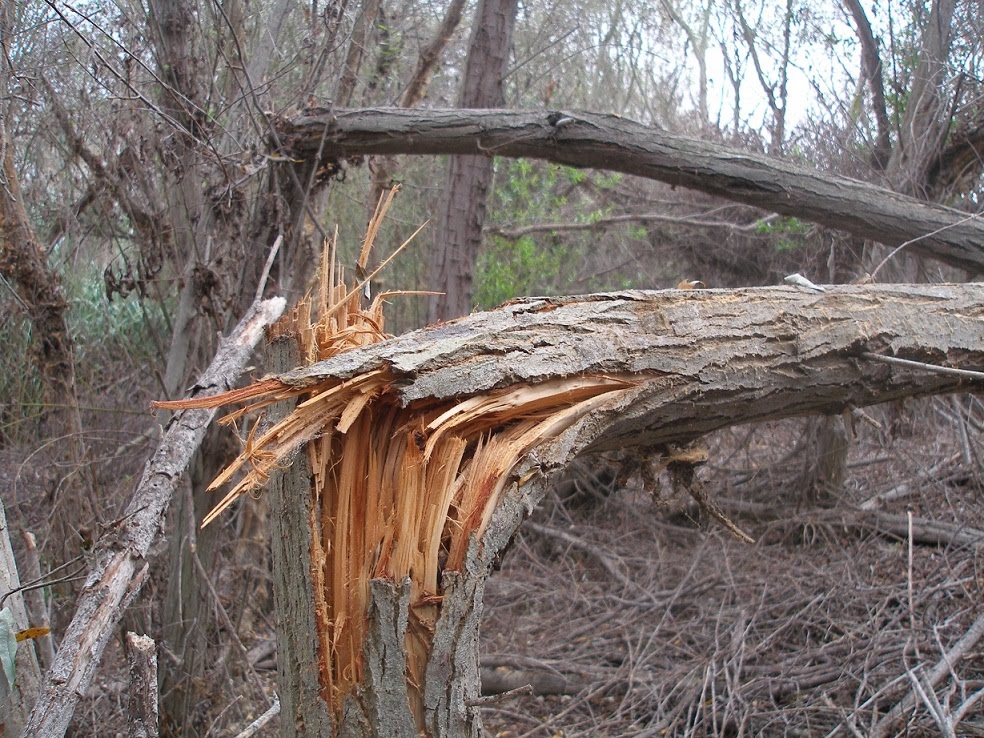
willow tree killed by Kuroshio shot hole borer in Tijuana River estuary (John Boland photo)
I have blogged several times about damage caused to riparian trees in southern California by polyphagous (PSHB) and Kuroshio Shot Hole Borers (KSHB) (collectively known as invasive shot hole borers, or ISHB). The most recent blog – in July – reported the rising intensity of ISHB infestation in Orange County parks. The polyphagous shot hole borer and its associated Fusarium fungus have been found throughout Los Angeles, Orange, Riverside, San Bernardino, and Ventura Counties. The genetically distinct but morphologically indistinguishable Kuroshio shot hole borer occurs in San Diego, Orange, Santa Barbara, and San Luis Obispo Counties. New outbreaks continue to be detected – for example, one near San Juan de Capistrano.
The threat to wildland, rural, and urban hardwood forests in southern California is obvious (see the write-up here, but this is not the full extent of the peril. Preliminary research indicates that the ISHB can survive as far north as Tehama County (at the northern end of the Central Valley, south of Redding), and possibly in other parts of the country (see Greer et al., referenced below). The two beetles reproduce in more than five dozen tree and shrub species – both native and ornamental trees – that grow not just in California but across the country.
It is agreed that the ISHB do best in well-watered trees – e.g., trees in parks or other urban areas, and in riparian zones. Some fear that when the southern California drought ends, large areas of hardwood forests will become newly vulnerable. The role of water also raises the potential threat to the many species of reproductive host trees growing in the Gulf Coast and other warm and humid regions of the country.
What can people and agencies do now to counter these damaging pests? Several experts who have been working with ISHB in southern California have developed a management strategy for guiding and prioritizing actions and implementing control mechanisms targetting the beetles and their fungal symbionts that together cause the plant disease Fusarium dieback (FD). See Greer et al. Southern Calif Shot Hole Borers/Fusarium Dieback Management Strategy – full reference and link provided at the end of the blog.
This strategy attempted to advise managers on addressing outbreaks in both natural and urban landscapes at a period of rapid spread of the pests. It includes sections on establishing a leadership and coordination entity, inventory and monitoring, short-term management options, public outreach, and research to identify long-term management strategies. I don’t believe the plan’s proponents have secured funding to implement it.
Meanwhile, the California Department of Food and Agriculture and other state agencies have been officially charged by the state legislature with developing a management strategy and coordinating efforts (see another of my blogs from July). I have been told that the state agencies are working with the southern California experts in developing the state’s strategy.
The USDA Animal and Plant Health Inspection Service (APHIS) has been instructed by the Congress (in the report accompanying appropriation of funds for the Department of Agriculture) to enhance its engagement with ISHB – beyond funding provided in the past under Section 10007 of the Farm Bill. APHIS has created a Federal Task Force which is focused on three shot hole borers – in addition to the Kuroshio and polyphagous shot hole borers, also the tea shot hole borer. Several USDA agencies in addition to APHIS — Forest Service, Agriculture Research Service – as well as the U.S. Fish and Wildlife Service are developing an outline of federal agencies’ roles and responsibilities in light of state actions. The work is at an early stage.
I look forward to learning more about how each of these players plans to proceed.
Certainly, managing ISHB infestation and spread is extremely difficult. Current options in production agriculture (avocados are damaged by the pest/disease complex) and urban forests focus on the use of pesticides and removal of infested material. Then the wood and bark must be safeguarded against insects’ escape until the wood can be chipped and the insect larvae killed, for example, by using heat from solar radiation (solarization). Management options in the natural setting are limited to removal, chipping, and solarization of infested material. In any habitat, there are many logistical challenges when managing large amounts of wood.
The pest-derived difficulties have been magnified by the absence until recently of the official agencies with responsibility for managing “plant pests” (as I have complained in many blogs over the years). I hope the state and federal agencies now becoming involved will coordinate their efforts – among themselves and with the many academics, locally based agency staffs, and volunteers who have been working so hard over the past several years to counter these invaders. [To learn about these efforts, visit here.]
You have an opportunity to learn more about the shot hole borers by participating in the upcoming annual meeting of the Continental Dialogue on Non-Native Forest Insects and Diseases in November. Our meeting this year is in Irvine, California – in the infestation zone. The meeting will follow the general schedule below:
Nov 5th: Travel day with informal evening social for those arriving early
Nov 6th: Dialogue Meeting all day (8am – 5pm)
Nov 7th: Joint CFD / Arbor Day Meeting and Field Trips (including one focused on ISHB) (8am- 5pm), Networking Reception (6-8pm).
Some of you might also participate in the periodic workshops about the several tree-killing pests invading southern California. UC Cooperative Extension San Diego will host an Invasive Tree Pests Workshop on Friday, October 19, 2018 in Mission Beach San Diego from 9:00am-2:45pm. This workshop will focus on Goldspotted Oak Borer, Invasive Shot Hole Borers, South American Palm Weevil, and pesticide law & regulation. CEU’s have been requested from the California Department of Pesticide Regulation and Western Chapter International Society of Arboriculture. Registration is $30/person and lunch will be provided. Go to GSOB.org.
Reference
Greer, K., K. Rice, S.C. Lynch. Southern Calif Shot Hole Borers/Fusarium Dieback Management Strategy for Natural and Urban Landscapes. July 2018
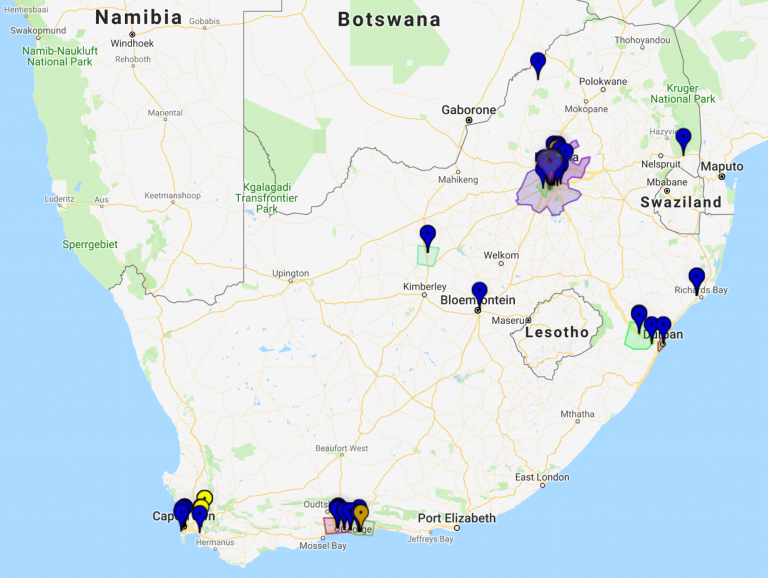
P.S. The polyphagous shot hole borer has been detected at numerous sites in South Africa. One of several web-based sources of information is here
Posted by Faith Campbell
We welcome comments that supplement or correct factual information, suggest new approaches, or promote thoughtful consideration. We post comments that disagree with us — but not those we judge to be not civil or inflammatory.
As I blogged on 2 August, the USDA Animal and Plant Health Inspection Service (APHIS) is proposing to update its regulations intended to prevent spread of the sudden oak death (SOD) pathogen (Phytophthora ramorum) via movement of nursery stock. The proposal is to incorporate into formal regulations several changes made through temporary “Federal Orders” issued in 2014 and 2015. This might sound boring – but it was actually an important opportunity to press APHIS to correct weaknesses in its current regulatory system. Whether APHIS’ ultimate program is weak or strong will affect how well we protect our forests against every kind of pest, not just SOD.
Unfortunately, few organizations seized this opportunity. Comments were submitted by only five organizations and three individuals. The organizations were the Center for Invasive Species Prevention, California Oak Mortality Task Force, several nursery industry associations in a joint comment, and the state departments of agriculture from Florida and Pennsylvania. It is most unfortunate that the other states appear to have given up on influencing APHIS’ decisions and did not comment. (Given the long history of APHIS failure to support states trying to adopt protective regulations – as described in Chapter 3 of my report Fading Forests III, available here – perhaps this is understandable.)
The Pennsylvania Department of Agriculture (DoA) was quite critical of the proposal in its comments. It complained that APHIS is not consistent in the way it regulates various quarantine pests and the vectors on which they might be transported. Allowing shipping nurseries to submit fewer samples for testing and providing less regulatory oversight does not help protect receiving states such as Pennsylvania.
The Pennsylvania DoA noted that the Plant Protection Act has a preemption clause which prevents states from adopting regulations more stringent than those instituted by APHIS. While the law allows for exceptions if the state can demonstrate a special need, none of the five applications for an exemption pertaining to P. ramorum has been approved. (The Environmental Law Institute addressed this issue in 2011; see source at end of the blog.)
Copies of all comments can be viewed here. Their main critiques of APHIS’ proposal include:
1) APHIS should mandate sampling at all nurseries selling SOD host or associated host plant species.
While any nursery that contains or sells host or associated host plant species can become infected, APHIS does not have any system for detecting P. ramorum in such nurseries which have been infection-free for three years. This point was made by CISP and the California Oak Mortality Task force (COMTF).
1(a) Risk associated with Nurseries in the Quarantine Zone
The Florida Department of Agriculture (FDACS) objected to allowing interstate shipment of any plants – both host and non-host species – from nurseries in the quarantine zones of California and Oregon. FDACS notes that where P. ramorum is in the natural environment, it is essentially impossible to be certain that available inoculum is not in the water column or soil and thus potentially to being shipped with containerized plants.
2) Level of risk.
APHIS says that the current regulations have reduced the risk of spread of P. ramorum via the nursery trade to a low risk. APHIS cites the fact that over a nine-year period (2004 – 2013), P. ramorum was detected at a “very small percentage—usually no more than 3 percent annually” of nurseries inspected under the current program. To the contrary, I (on behalf of CISP) argue that an annual level of risk of three percent is not a low level of risk, the nursery industry’s comments accept this level of risk as “low”.
3) Inspection, Sampling, and Certification Protocols
The Pennsylvania Department of Agriculture objects that while APHIS admits the pathogen might be transmitted in media, soil, water, potted material and containers, the proposed rule does nothing to assist states in protecting themselves from pathogen transport via these vectors. Pennsylvania DoA asked APHIS to provide greater oversight so as to ensure consistency in inspection and certification procedures.
I, on behalf of CISP, said all decisions should be based on sampling and testing of water, soil, growing media, pots, and plants (leaves, stems, roots). They should not rely only on visual inspection of plants.
The Florida Department of Agriculture did not address the certification procedure directly, but objected to allowing shipment of lots of plant material determined to be free of P. ramorum from a nursery in which infected plants have been detected. FDACS pointed out that infected plants could slip through because they were asymptomatic at the time of inspection or because leaves dropped from nearby infected plants contaminated the soil.
4) Updates to the List of Hosts Should Be Comprehensive
As I noted in my previous blog, APHIS’ proposed update does not include more than a dozen species growing in the wild or in gardens in the Pacific Northwest that scientists have identified as hosts of P. ramorum; and would designate Japanese larch (Larix kaempferi) as only an “associated” host.
The California Oak Mortality Task Force raised similar issues and warned that unexplained gaps in the host list cause unnecessary confusion and undermine the scientific foundation of regulations.
Source
Porter, R.D. and N.C. Robertson. 2011. Tracking Implementation of the Special Need Request Process Under the Plant Protection Act. Environmental Law Reporter. 41.
Posted by Faith Campbell
We welcome comments that supplement or correct factual information, suggest new approaches, or promote thoughtful consideration. We post comments that disagree with us — but not those we judge to be not civil or inflammatory.
In May I blogged about adoption by the House of Representatives of its version of the Farm Bill, which will govern a wide range of policies for the next five years. I reported that the bill included weakened versions of a provision CISP has been seeking to establish programs to support long-term strategies to counter non-native, tree-killing insects and pathogens, e.g., biocontrol and breeding of trees resistant to pests.
I also reported that the House Farm bill contains provisions to which there is significant opposition from the larger environmental community. Several would gut some of our country’s fundamental environmental laws which have protected our health and natural resources since the early to mid-1970s. These provisions would:
Allow the U.S. Forest Service and the Interior Department’s Bureau of Land Management to decide for themselves whether an activity might “jeopardize” an endangered species (eliminating the need to consult with the U.S. Fish and Wildlife Service or National Marine Fisheries Service) (Section 8303 of the House Bill);
Allow the U.S. Forest Service and Bureau of Land Management to avoid preparing an environmental assessment under the National Environmental Policy Act (NEPA) for a long list of actions which currently must be assessed. That is, they could claim a “categorical exclusion” when taking a wide variety of “critical” actions aimed at addressing several goals. These include countering insect and disease infestations, reducing hazardous fuel loads, protecting municipal water sources, improving or enhancing critical habitat, increasing water yield, expediting salvage of dead trees following a catastrophic event, or achieving goals to maintain early successional forest. These “categorical exclusions” would apply to projects on up to 6,000 acres. (Sections 8311 – 8320); and
Require the EPA Administrator to register a pesticide if the Administrator determines that the pesticide, when used in accordance with widespread and commonly recognized practices, is not likely to jeopardize the survival of a species listed under the Endangered Species Act or to alter critical habitat. That is, the Administrator would not be required to consult with the U.S. Fish and Wildlife Service or National Marine Fisheries Service when making such determinations unlike under current law. (Section 9111).
The Senate passed its version of the Farm Bill in late June. Unfortunately, the Senate bill does not include the long-term restoration program CISP seeks. However, it doesn’t include the above attacks on environmental laws, either.
With the current Farm Bill set to expire on September 30th, there is considerable pressure to adopt a final version soon. House and Senate staffers have been meeting to find common ground. Representatives and Senators who are on the joint Conference Committee – charged with working out the final bill – will hold their first meeting next week, on September 5th.
In preparation for the meetings of the Conference Committee, 38 Senators have written to their two colleagues who will lead the Senate conferees. Their letter voices strong opposition to changing long-standing environmental law:
“These harmful riders, spread throughout the Forestry, Horticulture, and Miscellaneous titles of the House bill, subjected the legislation to unnecessary opposition on the House floor and now complicates [sic] the bipartisan cooperation needed to pass a final conference report.
Again, we write to express our strong opposition to gutting bedrock U.S. environmental and public health protections with provisions that threaten our air, water, lands, and wildlife.”
If your Senators signed the letter, please email, call, or write to thank them immediately. If your Senators didn’t – please urge them to express their support for its content.
Posted by Faith Campbell
We welcome comments that supplement or correct factual information, suggest new approaches, or promote thoughtful consideration. We post comments that disagree with us — but not those we judge to be not civil or inflammatory.
The USDA Animal and Plant Health Inspection Service (APHIS) is proposing to update its regulations intended to prevent spread of the sudden oak death (SOD) pathogen (Phytophthora ramorum) via movement of nursery stock. The proposal would incorporate into formal regulations several changes made through temporary “Federal Orders” issued in 2014 and 2015. The deadline for comments is August 24. Copies of the proposal and the on-line instructions to comment are located here.
[Federal Orders are issued by APHIS without going through the usual regulatory process. Federal Orders take effect immediately. Federal Orders are issued by the APHIS Deputy Administrator under the authority of the Plant Protection Act Section 412(a), 7 U.S.C. 7712(a). The Act authorizes the Secretary of Agriculture to prohibit or restrict the movement in interstate commerce of any plant, plant part, or article if the Secretary determines the prohibition or restriction is necessary to prevent the dissemination of a plant pest within the United States. Federal Orders also apparently modify existing regulations promulgated under the PPA and found in the Code of Federal Regulations.]
[I stated my objections to the relaxed approach under the Federal orders back in 2015; see my blog here .]
While I applaud APHIS’ decision to focus on nurseries, I have serious concerns about several aspects of the existing program that APHIS now proposes to formalize in the new regulation. I will ask that the following changes be made before the rules are made final. Please consider doing the same.
The Problems
1) APHIS should use this regulatory action to mandate sampling at all nurseries selling SOD host or “associated host” plant taxa
APHIS does not have any system for detecting P. ramorum in nurseries not previously suspected to harbor the pathogen. Instead, APHIS and its state cooperators inspect only those nurseries at which infected plants have been detected in recent years. This is a major weakness in the existing regulation and in the proposal. APHIS cannot limit the spread of SOD without periodically surveying nurseries outside the quarantine zone that contain or sell host or associated host taxa but where P. ramorum has not already been found.
History shows that unexpected nurseries can become infected. In 2012, half of the infected nurseries identified by regulators were infected for the first time. (These nursery infections were detected as a result of “trace-forwards” of infected plants shipped by wholesale nurseries.) Detection of all infected nurseries is vital to identifying the nurseries that were the original source of infection through trace-back. Also, finding infections early provides the best chance to protect the environment in which the infected nursery operates and in which its plants are used.
1(a) It is particularly important to survey nurseries within climate zones that support the pathogen.
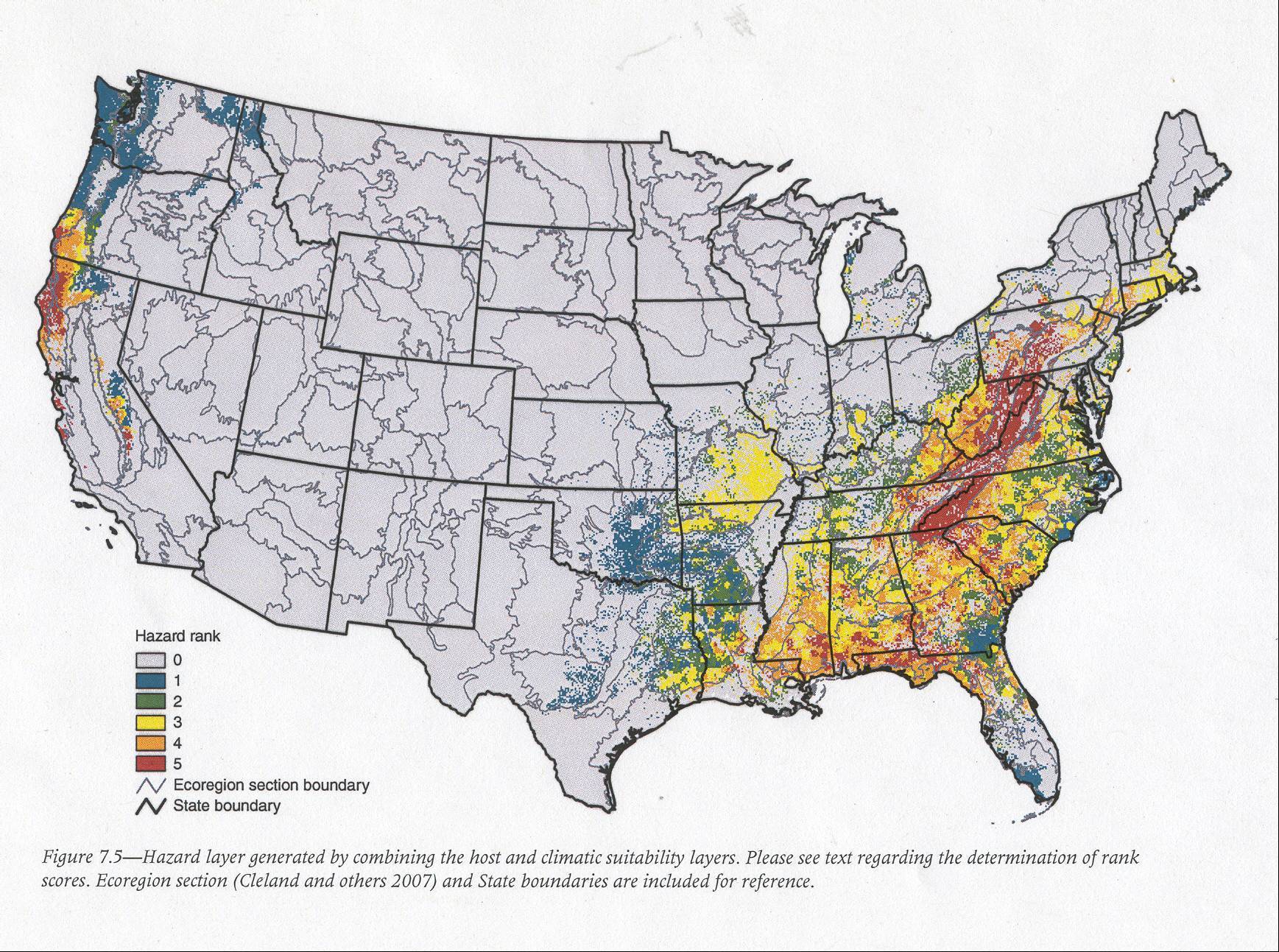
It is well established that environmental conditions along parts of the Pacific coast of California, Oregon, and probably Washington are especially conducive to persistence and spread of P. ramorum. Certain regions of eastern states also appear to have climatic conditions conducive to survival of the pathogen – as documented in the several risk maps prepared over the past two decades. Such areas would be smaller than the old “regulated areas” (see below), and more closely tied to climate zones – but larger than the actual quarantine zone.
[Under the pre-2014federal regulations, certain geographic regions were designated as “regulated areas”. These areas were defined as those in which P. ramorum has been found on nursery stock in commercial nurseries, but not found in the natural environment. These “regulated areas” included those parts of California and Oregon that are not inside quarantined areas, as well as the entire State of Washington. Under the 2014 and 2015 Federal Orders, APHIS has already dropped this geographic designation, and now focuses regulations only on nurseries at which infected plants have been detected in recent years.]
2) APHIS needs to set a more protective level of risk.
APHIS tries to persuade us that the current regulations have reduced the risk of spread of P. ramorum via the nursery trade to a low risk. As proof, APHIS says that over a nine-year period (2004 – 2013), APHIS and the state plant protection authorities detected P. ramorum at a “very small percentage—usually no more than 3 percent annually” of nurseries inspected under the current program. However, an annual level of risk of three percent is not a low level of risk. According to Daniel Botkin, the risk of death arising from certain activities recognized as high risk are all well below three percent. For example, the risk of dying from smoking cigarettes or driving racing cars is less than 0.5% (1/2 of a percent). For this reason, I am not convinced that the risk of SOD spread via the nursery trade has been suppressed to the extent necessary to protect our native flora or the financial health of nurseries.
3) All inspection protocols should be based on sampling and testing of water, soil, growing media, pots, plants as well as plants (leaves, stems, roots). They should not rely only on visual inspection of plants.
The APHIS proposal continues to rely too much on visual inspection of plants for symptoms – despite decades of experience demonstrating the inadequacies of that approach. It is essential that surveys, inspections, compliance reviews, etc., rely on sampling and testing of water, soil, growing media, pots, etc.
4) Updates to the list of hosts should be Comprehensive
In the proposed regulation, APHIS states its intention to update the lists of hosts and “associated hosts”. However, the proposal does not include more than a dozen species growing in the wild or in gardens in the Pacific Northwest that scientists have identified as hosts of P. ramorum. These include several species of manzanita, Pacific dogwood, huckleberries, a Trillium, and the common garden groundcover Vinca.
A particularly puzzling gap is APHIS’ intention to name Japanese larch (Larix kaempferi) as only an “associated” host. It appears that APHIS has not accepted the peer-reviewed work of British scientists and the well-documented severe damage caused to this species in the United Kingdom.
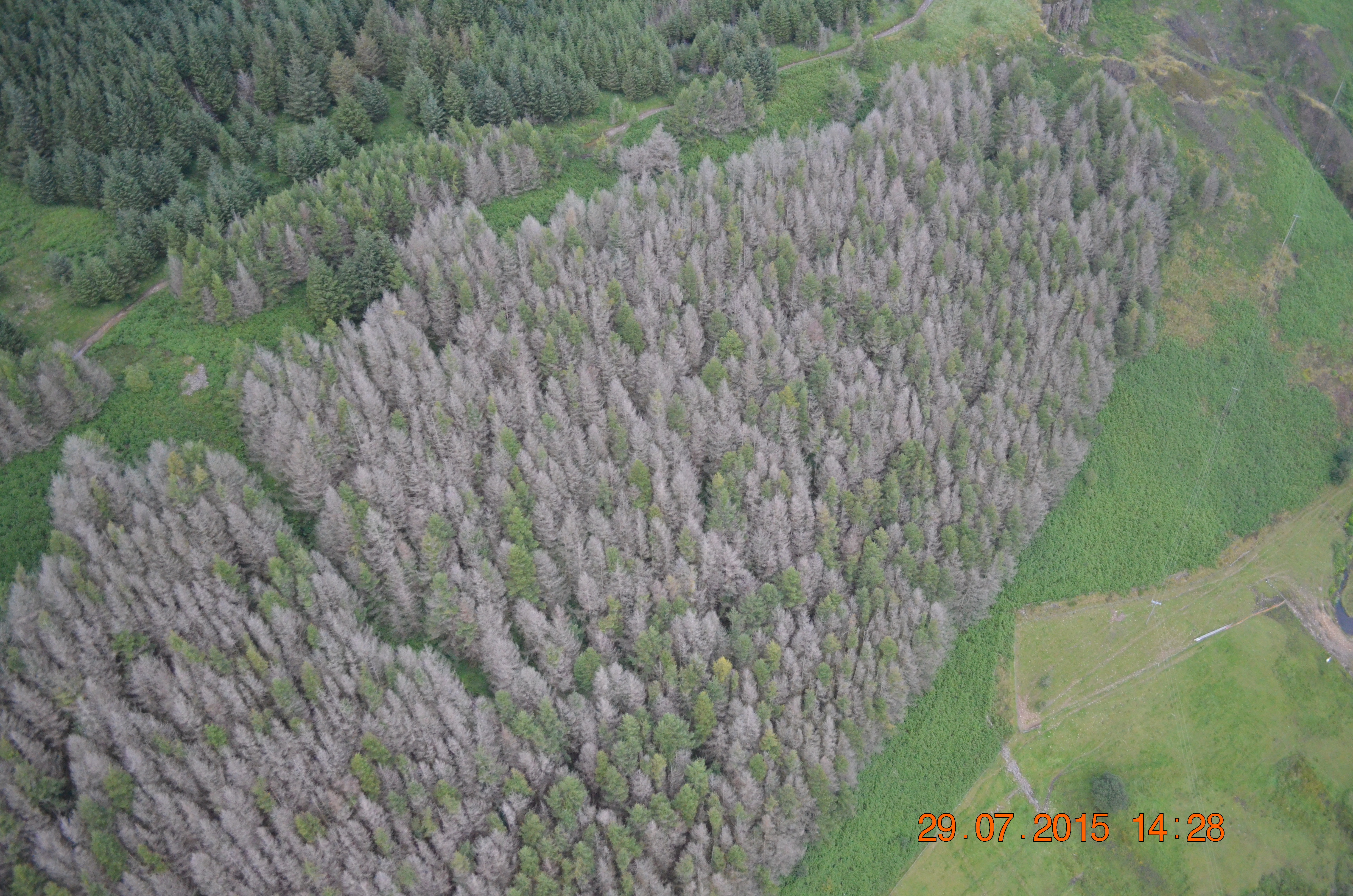
Larch killed by P. ramorum in Wales; Wales Natural Resources
Less important, probably, but still annoying is APHIS’ failure to complete Koch’s postulates to clarify the host status of 89 species now listed as “associated hosts”. Since APHIS regulates “associated hosts” in the nursery trade in the same way as it regulates recognized hosts, the failure to act does not affect the regulatory regime. However, it does cause unnecessary confusion and undermines the scientific foundation of regulations.
Please Comment
I strongly suggest that readers submit comments on the proposed rule. At a minimum, ask that the new regulation incorporate the most current science regarding detection and management of Phytophthora ramorum. Simply codifying the years-oldFederal Orders without recognizing more recent information and developments would not serve anyone. I suggest objecting particularly to continued reliance on visual inspection of plants rather than the sampling and testing protocols developed through 20 years of experience in managing this difficult pathogen.
Posted by Faith Campbell
We welcome comments that supplement or correct factual information, suggest new approaches, or promote thoughtful consideration. We post comments that disagree with us — but not those we judge to be not civil or inflammatory.
The native hardwood trees of southern California are under threat from several non-native insects and insect/pathogen complexes. I provided some recent information on one of these, the Kuroshio shot hole borer, in April; and a description of Californians’ efforts to counter the threat in August of last year. I think it is time to provide a more comprehensive update on the species.
I have blogged several times about the damage being caused to riparian trees in southern California by the polyphagous and Kuroshio shot hole borers – collectively referred to as the “invasive shot hole borers” or ISHB.
One of the most interesting sources of information about the shot hole borers are the series of visual surveys carried out by Orange County Parks under the leadership of Cathy Nowak (who has now retired). The most recent surveys were conducted in spring 2018 while deciduous trees were still dormant, so those estimates are based on the number of beetle gallery holes detected. An estimated 52,000 trees in the County’s parks are infested by either PSHB or KSHB. Eight regional parks and one historic house were surveyed. Only one large park remains uninfested. Comparing the results in 2018 to those of earlier surveys showed that percentages of host trees (in which the beetle can reproduce) that are infested rose over 2 years or less in seven of the parks – from a 9% increase in one park to a five-fold increase at another park with very low numbers of trees and low overall infestation rate earlier. The second highest increase is 89%.
The most heavily hit hosts are species long recognized as hosts See writeup on the borers here. Those with infestation rates exceeding 70% in one or more parks were
Acacia sp
Alnus rhobifolia (white alder)
Baccharis salicifolia (mule fat)
Erythrina caffra (coral tree)
Koelreuteria bipinnata (Chinese Flame tree*)
Koelreuteria paniculata (golden raintree)
Liquidambar styrachiflua (sweetgum)
Parkinsonia aculeate (palo verde)
Platanus occidentalis (American Sycamore)
Platanus racemose (California sycamore)
Platanus x hispanica (London plane)
Populus fremontii (Fremont cottonwood)
Populus trichocarpa (black cottonwood)
Quercus robur (English oak)
Salix spp. (willow)
* Chinese flame trees support ISHB only within cankered wood – other parts of the tree excrete thick gumming sap that protects.
Current information supports the vulnerability of California sycamore, and guidance that those seeking to learn whether the beetles have established should focus their surveys on sycamores.
As I have noted numerous times, several reproductive hosts are widespread in other parts of the country and could presumably support infestations there. These include box elder (not included in the Orange County surveys), sweetgum, and two magnolias – southern magnolia (M. grandiflora) and sweet bay (M. virginiana). Thirty-eight percent of the Magnolia grandiflora in one park were infested, although none was in three other parks. Koelreuteria spp. are a widely planted exotic across the country – although their role in spreading the disease appears to be limited by fact that they support ISHB development only in cankered wood. Birches have not been determined to be reproductive hosts, although one birch tree in one park had insect exit holes. Casuarina cunnninghamiana is also not known to be a reproductive host; trees in this genus are widespread invaders in Florida.
The good news is that none of a total of 12 southern live oaks (Quercus virginiana) growing in three parks had been attacked.
The goldspotted oak borer attacks California black oak, coast live oak, and canyon live oak. It is now widespread and continuing to spread in San Diego County. Officials report that is now established in more than 10 parks in the County.
There is a heavy GSOB infestation in Idyllwild, on the eastern edge of Riverside County. This outbreak is clearly linked to importation of infested firewood. Due to the heavy 2017 fire season, planned removal of “amplifying” trees (heavily infested trees that support large numbers of reproducing beetles) did not occur – and the outbreak is growing. Trees in the San Bernardino National Forest are at risk; 13 were removed in 2017.
In Los Angeles County, so far only one site has been infested – Green Valley (which includes both private land and nearby portions of the Angeles National Forest). An estimated 50,000 oaks are in the area. Officials are removing the “amplifier” trees; they expect they might have to remove close to 3,000 trees at a cost of $6 million. Officials are also treating some trees.
A newly detected heavy infestation has been detected at campgrounds in the Trabuco Ranger District in the Cleveland National Forest. Forest Service officials are debating management options, with an eye to protecting as many coast live oaks as possible. They have had success in the past by treating some trees with chemicals.
Meanwhile, scientists will be trying to evaluate the effect of fire since the 2017 fires burned several infested areas, e.g., Weir Canyon in Orange County.
The principal management strategy is to identify and remove heavily infested “amplifier” trees. The wood and bark must be disposed of properly and quickly – if the wood is left on the ground over night, people take it – thereby spreading the insects. High-value trees that are not heavily infested can be protected by application of the topical contact insecticide Carbaryl on the lower trunk. Officials are also experimenting with oak restoration using either planting of acorns or promoting root sprouting of trees that have had to be cut down.
Thousand Cankers Disease
Thousand cankers disease of walnuts is very widespread throughout California, but it is not causing widespread rapid tree deaths. Juglans californica has multiple stems. If one is killed, the others usually survive. The impact on J. hindsii is greater because it has a single stem and is grown as a street tree. California officials last conducted a survey of walnuts in the state in 2015, at the height of the drought. They appear to be confident that the age of this survey has not affected their assessment of the risk.
Posted by Faith Campbell
We welcome comments that supplement or correct factual information, suggest new approaches, or promote thoughtful consideration. We post comments that disagree with us — but not those we judge to be not civil or inflammatory.
As the federal government continues to dawdle in responding to invasive species challenges, some states are ramping up their efforts in significant ways.
California: New Legislation Creates a Program – but Only for One Year
The California state legislature has created a new invasive species program that focuses on those bioinvaders that threaten native ecosystems and the urban environment. It thus addresses some of the criticisms that I have previously levelled at the California Department of Food and Agriculture (CDFA) [see my earlier blogs here and here]
The new program has been established for one year; it will have to be renewed by the legislature next year.
The program results from adoption of legislation that combines what were initially two bills:
Assemblyman Timothy Grayson introduced AB 2470. This bill provided a legal foundation for the California Invasive Species Council and its Invasive Species Advisory Committee. It also provided funding for early detection and control projects targetting high-priority species, including weed management areas; and for supportive research and diagnostics work by the University of California.
Assemblywomen Lorena Gonzalez-Fletcher introduced AB 2054 focused specifically on the invasive shot hole borers [see descriptions of the polyphagous and Kuroshio shot hole borer here https://www.dontmovefirewood.org/ ]. The “Protect California Trees with Shot Hole Borer Beetle Prevention” (1) established a framework for a coordinated statewide effort; (2) instructed the Invasive Species Council of California and the California Invasive Species Advisory Committee to coordinate with state and local agencies and stakeholder groups to develop a plan to suppress the disease spread by this beetle.
The final legislation provided the full $5 million for addressing the shot hole borer but cut funding for the other components of the combined programs to just $2 million (so, a total of $7 million).
State officials have begun developing a shot hole borer management plan; they are expected to get input from a subcommittee by the Invasive Species Advisory Committee. The Advisory Committee held a meeting in mid-July to begin carrying out its coordinating functions.
Congratulations and thanks go to John Kabashima, who retired from his position as extension horticultural advisor with the University of California’s Division of Agriculture and Natural Resources. John has devoted two years to building the alliances needed to make this happen.
Minnesota: New Funding for Research
In 2014, the Minnesota legislature created the Minnesota Invasive Terrestrial Plants and Pests Center at the University of Minnesota. The Center applies science-based solutions to protect the state’s terrestrial ecosystems and agricultural resources. It utilizes an allocation from the Environment and Natural Resources Trust Fund to support a competitive research grant program. The current funding level is $3.5 million. Recently funded projects include evaluating the role of fungi in protecting ash trees from emerald ash borer and disease, genetic control of invasive insects, and use of goats in invasive plant control
The Center’s draft list of priority insects, plant pathogens, and invasive plants includes numerous forest pests. Among the 40 insect species listed, 19 are forest pests. Those in the top ten include mountain pine beetle, emerald ash borer, European and Asian gypsy moths, two elm beetles, and Asian longhorned beetle. Nineteen of 39 plant pathogens are tree-killers. Among the top ten are Dutch elm disease, oak wilt, Japanese oak wilt, Annosum root rot, sudden oak death, thousand cankers disease, and white pine blister rust.
In both cases, the lists include species that are already present and those not yet in the state (or even on the continent).
Western Governors’ Association: Initiative on Biosecurity
Incoming chairman, Hawaiian Gov. David Ige, has announced a Biosecurity and Invasive Species Initiative. The Initiative will focus on the impacts that invasive species have on ecosystems, forests, rangelands, watersheds, and infrastructure in the West, and examine the role that biosecurity plays in addressing these risks. Governor Ige hosted a webinar on 12 July [not yet posted on the WGA website] on which he was joined by such experts as Chuck Bargeron, Center for Invasive Species & Ecosystem Health, University of Georgia; Pam Fuller, Program Leader, Nonindigenous Aquatic Species Database, USGS; Stinger Guala, Director of Biodiversity Information Serving Our Nation (BISON), USGS; Jamie Reaser, Executive Director, National Invasive Species Council; and Lori Scott, Interim President & CEO, and Chief Information Officer, NatureServe. The Association is sponsoring regional workshops on various components of the invasive species response on the following dates
Lake Tahoe, NV Sept 17-18 – prevention, control, management of established species
Cheyenne, WY Oct 11 -12 – restoration
Helena, MT Nov 14 – early detection and rapid response
Hawai`i Dec 9 & 10 – biosecurity and agriculture
Posted by Faith Campbell
We welcome comments that supplement or correct factual information, suggest new approaches, or promote thoughtful consideration. We post comments that disagree with us — but not those we judge to be not civil or inflammatory.
There is widespread agreement that the most important pathways for long-distance transport of non-native forest insects are wood packaging (crates, pallets, dunnage, etc.) and imports of live plants (which APHIS calls “plants for planting”). Sources (at end of blog): Aukema et al. 2010; Liebhold et al. 2012; Meurisse et al. 2018 and many others. See also my earlier blogs by scrolling down to the “categories” section and clicking on “wood packaging”.
According to Meurisse et al., by the middle of this decade, world maritime freight trade had reached about 10 billion metric tonnes, and air transport of cargo had reached 50 million tonnes – much of it packaged in wood.
As the world’s biggest importer, the United States receives about 27 million shipping containers each year (CBP to FT Campbell). A study carried out in 2005 – 2007 (Meissner et al. 2009) indicated that 75% of maritime shipments entering the U.S. contained wood packaging; 33% of air shipments contained wood packaging. These are significant increases over earlier estimates that put the number of containers entering the country at 25 million. An even older analysis estimated that 52% of incoming containers had wood packaging.
APHIS has recognized the pest risk associated with wood packaging for 20 years – since the Asian longhorned beetle was detected in a second city – Chicago – in 1998. APHIS and its Canadian counterpart (Canadian Food Inspection Agency) acted rapidly to adopt, first, domestic regulations governing wood packaging from China (in December 1998), then a regional standard for wood packaging, and finally to help bring about adoption of International Standard for Phytosanitary Measures (ISPM) No. 15 in 2002. A detailed description of these actions can be found in my report Fading Forests II available here.
However, as I have demonstrated often, ISPM#15 has reduced the threat – but insufficiently. Dr. Robert Haack and his coauthors (2014) found that of each thousand shipments containing wood packaging that enters the country, one harbors a quarantine pest. Applying this estimate to the current volume of incoming containers and the higher proportion containing wood packaging results in an estimate that up to 20,000 shipping containers containing infested wood packaging enter the country each year – or approximately 55 per day.
The actual approach rate might be less. There are two variables that I lack sufficient data to quantify.
First, a significant proportion of the incoming containers come from Mexico or Canada – our second and third largest trading partners. The risk of damaging pests arriving from our neighbors is less than the risk accompanying shipments from overseas – although it is not “0”. Several woodborers native to Mexico have been introduced to U.S. ecosystems and are killing trees in these new environments, e.g., goldspotted oak borer, walnut twig beetle, and soapberry borer (all described in write-ups here). It is true that these beetles were probably introduced to vulnerable parts of the U.S. in firewood rather than wood packaging. There are also reasons to be concerned about pest introductions from Canada. Threats arise from both non-native pests established in the country e.g., brown spruce longhorned beetle and European beech leaf weevil, and pests in shipments from off-shore origins that are re-packaged in Canada (Yemshanov et al. 2012 and my earlier blog from April 2017).
The second variable on which I lack data is the proportion of the 27 million containers that are transported by air, and are thus half as likely to contain wood packaging.
To account for these unknowns, I have nearly halved the number of shipping containers likely to transport pests from off-shore – so 14 million instead of 27 million. Again applying Haack’s estimate, the result is 10,500 shipping containers containing infested wood packaging entering the country every year – or approximately 29 every day.
Update with more precise data (August 24) :
Re: the two variables, I have found partial answers from a U.S. Department of Transportation website which provides data on imports of loaded chipping containers (in TEUs) for 68 ports. (For the website, go here – click on “trade statistics”, then “US Waterborne trade” (1st bullet)]
As of 2017, 22,360,941 loaded shipping containers entered the U.S. via maritime transport. Applying the estimate of 75% of these containers holding wood packaging, we find that slightly less than 17 million containers entered the country with wood packaging. Applying Robert Haack’s estimate that one in a thousand is infested with a quarantine insect, we anticipate that 17,000 of these containers were transporting a pest that threatens our country. That is 46 containers every day.
Ports which received the largest numbers of containers, according to the DoT database:
Long Beach/Los Angeles — 8.4 million containers
New York — 3.4 million containers
Savannah — 1.8
Norfolk — 1.2
Houston — 1 million containers
We need answers!
The point is, we don’t know how many pests are reaching the United States daily. Or if the current approach rate is significantly higher or lower than in the past. Despite my urging, APHIS has not undertaken a study to update Haack’s estimate – which is based on 2009 data. In the intervening nine years, several changes were made to ISPM#15 to make it more effective. The most important was restricting the size of bark remnants that may remain on the wood.
Also, we might hope that experience with implementing the standard has led to better compliance. Unfortunately, available data do not encourage belief that compliance has improved.
Customs and Border Protection (CBP) reports annually to the Continental Dialogue on Non-Native Forest Insects and Diseases on the number of import shipments with wood packaging that have been detected as not complying with ISPM#15. Over a period of eight years – Fiscal years 2010 through 2017 – CBP detected nearly 24,000 non-compliant shipments. While most (17,413) of the non-compliances were crates or pallets that lacked the required mark showing treatment in accordance with ISPM#15, in 6,388 cases the wood packaging actually harbored a pest in a regulated taxonomic group. This works out to about 800 infested shipments detected each year.
By comparing Dr. Haack’s estimate with the CBP data, I estimate that Customs is detecting and halting the importation of four to eight percent of the shipments that actually contain pest-infested wood. Since CBP inspects only about two percent of incoming shipments, this detection rate demonstrates the value of CBP’s program to target likely violators – and deserves praise. But it is obviously too low a “catch” rate to provide an adequate level of protection for our forests.
Indeed, using the older, lower estimates of both numbers of shipping containers and the proportion that contain wood packaging, Leung et al. 2014 concluded that continuing to implement ISPM#15 at the efficacy level described by Haack et al. would result in a tripling of the number of non-native wood-boring insects introduced into the U.S. by 2050.
CBP inspector views Cerambycid larvae found in wood packaging that bears ISPM#15 stamp
Closer examination of the data raises more troubling questions. On average, 97% of the 6,388 shipments containing infested wood pieces detected by CBP were found in wood that bore the ISPM#15 stamp indicating that it had been treated. The proportion of infested shipments bearing the stamp has not changed over the past eight years. This is alarming and we need to understand the reason. Does this finding indicate widespread fraud? I understand that most inspectors believe this is the cause. Other possible explanations are accidental misapplication of the treatments or the treatments simply not working as expected. APHIS researchers have found that larvae from wood subjected to methyl bromide fumigation were more likely to survive to adulthood than those intercepted in wood that had been heat treated (Nadel et al. 2016). Does this indicate that methyl bromide fumigation is less effective? What effort is APHIS making to determine which of these explanations is correct?
Certain countries have a long-standing record of non-compliance with ISPM#15. APHIS’ database of pest interceptions on wood packaging over the period Fiscal Year 2011 to FY 2016 contains 2,547 records of insect detections from dozens of countries. The countries of origin with the highest numbers of shipments detected to have pests present were Mexico, China, Italy, and Costa Rica. These numbers reflect in part the huge volumes of goods imported from both Mexico and China. But China and Italy stand out for their poor performance. (The U.S. does not regulate – or inspect! – wood packaging from Canada; see blog here.)
Meissner et al. say that as of a decade ago, Chinese shipments were only half as likely to be enclosed in wood packaging as are shipments from other exporters. Yet shipments from China still rank second in the number of non-compliant shipments; they make up 11% of all interceptions. In part, the data reflect inspection priorities: due to the great damage caused by Asian insects to North American trees and the past record of poor compliance, CBP targets shipments from China for more intense scrutiny. Still, the high number of detections reflects continuing non-compliance by Chinese exporters. And remember – the U.S. and Canada began requiring treatment of wood packaging from China at the end of 1998 – nearly 20 years ago! [Feb 17 blog]
We don’t import a lot of goods from Italy – but Italian shipments of decorative stone and tile have always been plagued by high levels of pests in accompanying wood packaging. Indeed, more pests have been found in wood supporting tiles and stone than any other type of commodity in 24 of the 25 years preceding 2014 (Haack et al. 2014).
What is APHIS doing to pressure these countries to improve their compliance? As I blogged in October, link the Bureau of Customs and Border Protection began imposing a financial penalty on first-time violators in November 2017. Since interception data do not provide an adequate measure of the pest approach rate (see Haack et al 2014 for an explanation), APHIS should commission an analysis of Agriculture Quarantine Inspection Monitoring data to determine the pest approach rate before and after the CBP action in order to determine whether the more aggressive enforcement has led to reductions in non-compliant shipments at the border.
What Can Be Done to Slow or Eliminate this Pathway?
I reiterate my call for holding foreign suppliers responsible for complying with ISPM#15. One approach is to penalize violators. Now that the Bureau of Customs and Border Protection has toughened its enforcement, the U.S. Department of Agriculture should drop its decade-old policy of allowing importers to accumulate five (detected) violations in a calendar year before applying the civil penalties authorized by the Plant Protection Act.
Another step APHIS should take would be to prohibit use of packaging made from solid wood (boards, 4 x 4s, etc.) by foreign suppliers which have a record of repeated violations over the 12 years that ISPM#15 has been in effect – or the 19 + years for exporters from Hong Kong & mainland China. Officials should allow continued imports from those same suppliers as long as they are contained in other types of packaging materials, including plastic, metals, fiberboards …
SOURCES
Aukema, J.E., D.G. McCullough, B. Von Holle, A.M. Liebhold, K. Britton, & S.J. Frankel. 2010. Historical Accumulation of Nonindigenous Forest Pests in the Continental United States. Bioscience. December 2010 / Vol. 60 No. 11
Haack, R. A., K. O. Britton, E. G. Brockerhoff, J. F. Cavey, L. J. Garrett, M. Kimberley, F. Lowenstein, A. Nuding, L. J. Olson, J. Turner, and K. N. Vasilaky. 2014. Effectiveness of the international phytosanitary standard ISPM no. 15 on reducing wood borer infestation rates in wood packaging material entering the United States. Plos One 9:e96611.
Hulme, P.E. 2009. Trade, transport and trouble: Managing invasive species pathways in an era of globalization. Journal of Applied Ecology 46:10-18
Jung, T. et al. 2015 “Widespread Phytophthora infestations in European nurseries put forest, semi-natural and horticultural ecosystems at high risk of Phytophthora disease” Forest Pathology. November 2015; available from Resource Gate
Klapwijk, M.J., A.J. M. Hopkins, L. Eriksson, M. Pettersson, M. Schroeder, A. Lindelo¨w, J. Ro¨nnberg, E.C.H. Keskitalo, M. Kenis. 2016. Reducing the risk of invasive forest pests and pathogens: Combining legislation, targeted management and public awareness. Ambio 2016, 45(Suppl. 2):S223–S234 DOI 10.1007/s13280-015-0748-3
Koch, F.H., D. Yemshanov, M. Colunga-Garcia, R.D. Magarey, W.D. Smith. 2011. Potential establishment of alien-invasive forest insect species in the United States: where and how many? Biol Invasions (2011) 13:969–985
Leung, B., M.R. Springborn, J.A. Turner, E.G. Brockerhoff. 2014. Pathway-level risk analysis: the net present value of an invasive species policy in the US. The Ecological Society of America. Frontiers of Ecology.org
Levinson, M. The Box: How the Shipping Container Made the World Smaller and the World Economy Bigger Princeton University Press 2008
Liebhold, A.M., E.G. Brockerhoff, L.J. Garrett, J.L. Parke, and K.O. Britton. 2012. Live Plant Imports: the Major Pathway for Forest Insect and Pathogen Invasions of the US. www.frontiersinecology.org
Meissner, H., A. Lemay, C. Bertone, K. Schwartzburg, L. Ferguson, L. Newton. 2009. Evaluation of Pathways for Exotic Plant Pest Movement into and within the Greater Caribbean Region. Caribbean Invasive Species Working Group (CISWG) and USDA APHIS Plant Epidemiology and Risk Analysis Laboratory
Meurisse, N. D. Rassaati, B.P. Hurley, E.G. Brockerhoff, R.A. Haack. 2018. Common Pathways by which NIS forest insects move internationally and domestically. Journal of Pest Science. https://doi.org/10.1007/s10340-018-0990-0
Nadel, H., S. Myers, J. Molongoski, Y. Wu, S. Linafelter, A. Ray, S. Krishnankutty, A. 2016. Identificantion of Port Interceptions in Wood Packaging Material Cumulative Progress Report, April 2012 – August 2016
Yemshanov, D., F.H. Koch, M. Ducey, K. Koehler. 2012. Trade-associated pathways of alien forest insect entries in Canada. Biol Invasions (2012) 14:797–812
Posted by Faith Campbell
We welcome comments that supplement or correct factual information, suggest new approaches, or promote thoughtful consideration. We post comments that disagree with us — but not those we judge to be not civil or inflammatory.
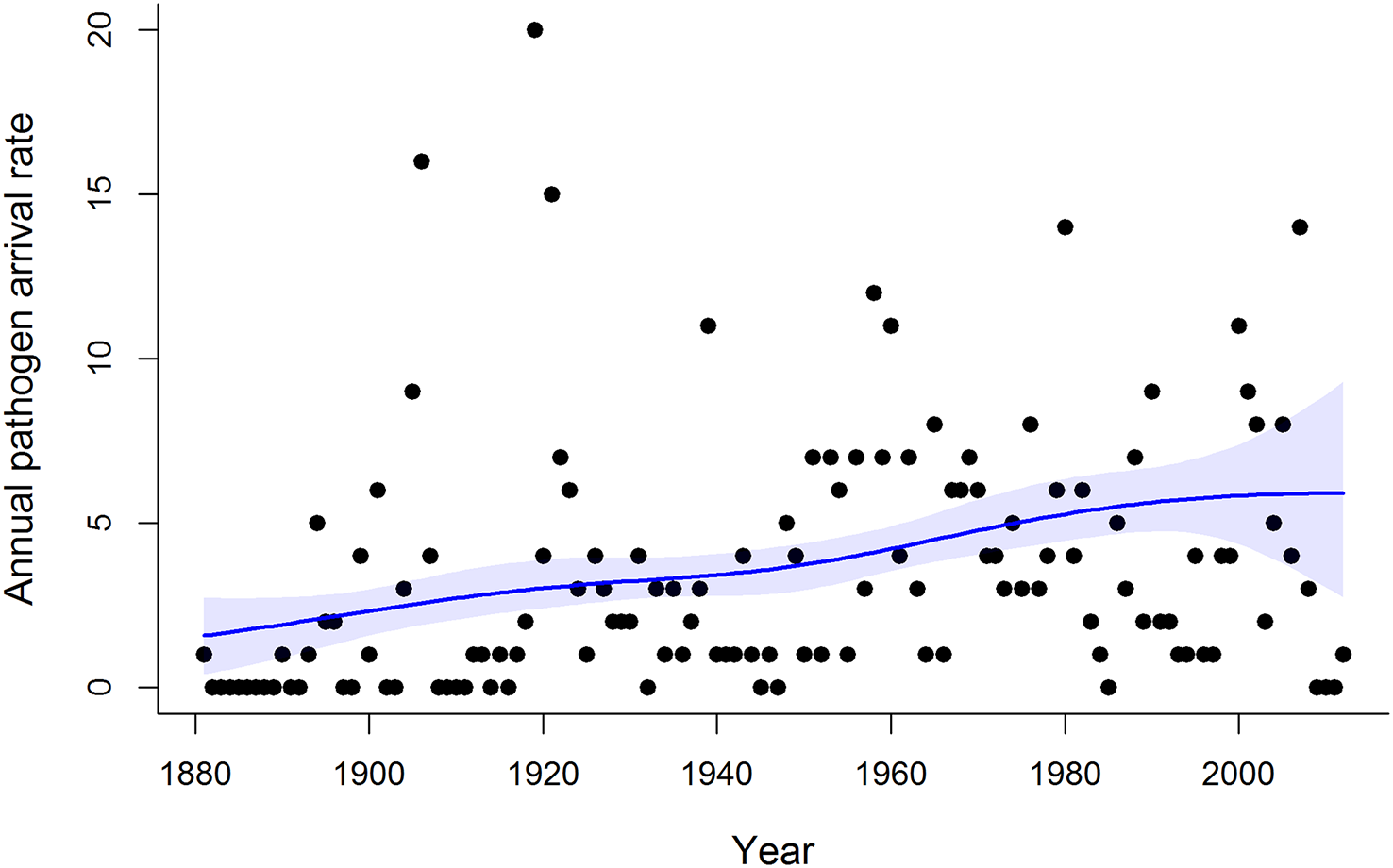
The number of new pathogens discovered each year on 131 focal host plant species in New Zealand (closed circles) and the mean annual rate of pathogen arrival estimated from the model (solid blue line), with shading showing the 95% credible interval.
Benjamin A. Sikes and several coauthors (article available here; open access!) find that targetted biosecurity programs can reduce the establishment of nonnative pathogens even while global trade and travel continue to increase.
The study relies on data from New Zealand because that country has more than 150 years of data on phytosanitary policies and pathogen introductions. Do other countries have data that would support a comparative study in order to test the authors’ conclusions more generally?
The study is unusual in analyzing introductions of a variety of forms of pathogens (fungi, oomycetes, and plasmodiophorids) rather than invertebrates. Pathogens pose significant plant health risks but are notoriously difficult to detect. The study used data on plant-pathogen associations recorded in New Zealand between 1847 and 2012. It focused on hosts in four primary production sectors: crops (46 species, including wheat, tomatoes, and onions); fruit trees (30 species, including grapes, apples, and kiwifruit); commercial forestry (42 species, including pines and eucalypts); and pastures (13 species of forage grasses and legumes). In total, 466 pathogen species for which the first New Zealand record was on one of these 131 host plants were included in the study. The pathogens were assumed to have arrived on imports seeds or fresh fruits of plants in the same family as the 131 hosts in the various production sectors.
After calculating each pathogen’s probable date of introduction, the authors compared those dates to contemporaneous levels of imports and incoming international travellers. Sikes et al. applied statistical techniques to adjust their data to the fact that detection of pathogens is particularly sensitive to variation in survey effort.
Findings:
The annual arrival rate of new fungal pathogens increased exponentially from 1880 to ~1980 in parallel with increasing import trade volumes. Subsequently rates stabilized despite continued rapid growth in not only imports but also in arrivals of international passengers.
However, there were significant differences among the four primary production sectors.
Arrival rates for pathogens associated with crops declined beginning in the 1970s but slightly earlier for those associated with pasture species. These declines occurred despite increasing import volumes.
Arrival rates of pathogens that attack forestry tree species continued to increase after 1960.
Arrival rates for pathogens that attack fruit tree species remained steady while import volumes rose steadily
Sikes et al. attribute these contrasting trends between production sectors to differences in New Zealand’s biosecurity efforts. They record when phytosanitary restrictions targetting the four sectors were adopted and link those changes to reductions in numbers of pathogens detected a decade or so later. They conclude that targetted biosecurity can slow pathogen arrival and establishment despite increasing trade and international movement of people.
Regarding the contrasting situation of the forestry and fruit tree sectors, Sikes et al. note that while phytosanitary inspections of timber imports was initiated in 1949, it focussed primarily on invertebrate pests. In addition, surveys for pathogens on fruit tree and forestry species were less robust than in the cases of crop and pasture species, and the peak survey effort occurred several decades later – in 1980 for fruit trees, 2000 for forestry species.
Furthermore, pathogens of forestry and fruit tree species can be introduced on types of imports other than seeds and fresh fruits, including soil and live plant material (e.g., rootstock) and untreated wood products.
Sikes et al. say there is no evidence of slowed pathogen arrival rates resulting from imposition of post-entry quarantine to live plant material beginning in the 1990s. I find this very troubling. Post-entry quarantine is a high-cost strategy. Still, several plant pathologists have advocated adoption of this strategy because they believed it would be sufficiently more effective in preventing introductions of – especially! – pathogens as to be worthwhile. Do others have data with which to add to our understanding of this disturbing phenomenon?
The authors suggest that introductions of tree-attacking pathogens on rising imports of wood packaging might have swamped decreases in introductions via other vectors. They consider that implementation of International Standard for Phytosanitary Measures (ISPM) No. 15 in 2002 means it is too early to see its impact in detection data. As I have blogged several times, implementation of ISPM#15 by the United States, at least, has reduced presence of detected pests – primarily insects – by 52%. Little is known about the presence of pathogens on wood packaging – according to some experts, inspectors rarely even look for pathogens. So I think the authors’ suggestion might not fully explain the continuing introduction of pathogens that attack tree species used in plantation forestry in New Zealand.
Prof. Michael Wingfield of South Africa has written numerous articles on the spread of pathogens that attack Eucalyptus on seeds imported to establish plantations in various countries; one such article is available here. This seems a more likely explanation to me.
The study’s analysis demonstrated that the overall rate of non-native fungal pathogen establishment in New Zealand was more strongly linked to changes in import trade volume than to changes in numbers of international passengers arriving on the islands. Although Sikes et al. don’t explicitly raise the question, they note that New Zealand has put considerable effort into screening incoming people – which appears from these data to have a smaller payoff than imposing phytosanitary controls on imports.
Recent declines in surveys mean the authors must estimate current pathogen arrival rates. The data gaps exacerbate the inevitable uncertainty associated with the time lag between when an introduction occurs and when it is detected. They estimate that an average of 5.9 new species of fungal pathogens per year have established on the focal host plant species since 2000. They estimate further that 55 species of pathogens are present in New Zealand but have not yet been detected there.
I am quite troubled by the reported decline in New Zealand’s postborder pathogen survey efforts since about 2000. This appears very unwise given that the risk of new introductions of pathogens that attack fruit and forestry trees continues – or even rises! Indeed, scientists associated with the forestry industry note the risk to Douglas-fir and Monterrey (Radiata) pine plantations from the pitch canker fungus Fusarium circinatum – which could be introduced on imported seeds, nursery stock, and even wood chips. Radiata pine makes up 92% of softwoods planted – and exotic softwoods constitute 97% of the plantation forestry industry.
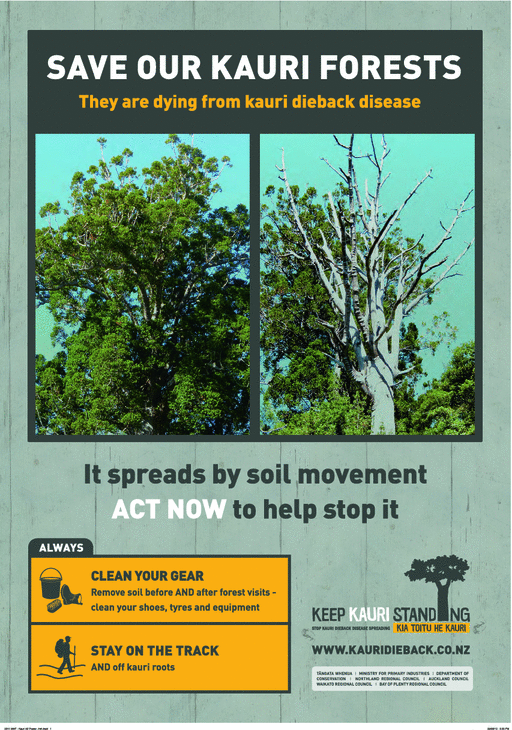
Furthermore, non-native pathogens threaten New Zealand’s unique forest ecosystems. Since this study focused on non-native plant hosts, it does not address the risk to native forest species. However, the threat is real: Kauri trees – the dominant canopy species in some native forest types – is suffering from a dieback caused by an introduced Phythopthora. Also, two other pathogens threaten the many trees and shrubs in the Myrtaceae family found in New Zealand – Puccinia rust (which is established in Australia but not New Zealand) or the Ceratocystis fungi causing rapid ohia death – both threaten native forests in Hawai`i, as discussed in a recent blog.
Posted by Faith Campbell
We welcome comments that supplement or correct factual information, suggest new approaches, or promote thoughtful consideration. We post comments that disagree with us — but not those we judge to be not civil or inflammatory.
In mid-May, the House Committee on Appropriations adopted two bills crucial to funding efforts to counter tree-killing non-native insects and diseases. Please let them know you are grateful.
APHIS funding
The Agriculture appropriations bill funds APHIS (and other USDA agencies) for Fiscal Year 2019 (which begins on October 1). The new bill provides a total of $998,353,000 to APHIS, an increase of $16.4 million above the FY18 level and $259 million above the Administration’s request. ( I blogged about the Administration’s alarming request here.) You can find the bill here; the more informative report is posted here. Use search words to find specific APHIS programs.
The pest-related funding is apportioned among several areas:
Tree and Wood Pest Program. Unlike in previous years, the House bill does not cut funds for this program – which funds efforts to eradicate or contain the Asian longhorned beetle, emerald ash borer, and European gypsy moth. Instead, it maintains funding at the FY18 level of $54 million. Under the circumstances, this is good news. Thank you for your efforts to educate members of the House subcommittee on agricultural appropriations about this crucial program! (In past years, we relied on the Senate to restore funding for the Tree and Wood Pest Program.)
Specialty Crop Pests Program. The House increased funding by $10.8 million here, and specified that $15 million target the spotted lanternfly. This recently detected Asian leafhopper is spreading in southeastern Pennsylvania and was recently confirmed in Virginia’s Shenandoah Valley. It is a pest of native hardwood trees as well as of orchard and other crops.
Also, the Committee used its report to stress several concerns:
Access to emergency funding. In the report, the House Appropriations Committee reiterates its longstanding instruction that the USDA Secretary continue to use his authority to transfer funds from the Commodity Credit Corporation. They support using these funds – above and beyond appropriated funds – for the arrest and eradication of animal and plant pests and diseases that threaten American agriculture.
Brown Apple Moth vs. Emerald Ash Borer. Interestingly, the House Appropriations Committee encourages APHIS to engage state and international regulatory bodies as it moves to deregulate the light brown apple moth. The Committee expresses concern that if APHIS simply withdraws federal regulation without the necessary work with other officials, it will shift, not reduce, the regulatory burden. Then growers would carry the burden of preventing spread of the pest. I wish the Committee had made the same statement vis a vis the emerald ash borer! APHIS also plans to stop regulating this insect which continues to threaten still-uninvaded portions of the United States and Mexico.
Micornesia and Hawai’i. The Committee also instructs the Secretary of Agriculture to report to both the House and Senate Committees on Appropriations its progress implementing the Regional Biosecurity Plan for Micronesia and Hawai`i. This plan combines efforts by the U.S. Department of Defense, Department of the Navy, and the island governments to prevent transport of invasive species as a consequence of relocating military personnel from a base in Okinawa, Japan. More information is available here.
Forest Service funding
The Interior appropriations bill funds the US Forest Service (as well as Interior Department and Environmental Protection Agency).
Forest Health Management Program. The bill provides an increase of $19.5 million above FY18 levels for the forest health management program ($30 million above the Administration’s request). The Committee instructs the Forest Service to “work in concert with Federal agencies, States, and other entities to prioritize the allocation of these funds to address the greatest threats.” The emerald ash borer, “bark beetle” (which ones?) and cogon grass are expressly mentioned. The report is posted here. (It is unclear what actions the Forest Service is expected to take on the EAB, since regulations intended to curtail people from moving infested wood will soon be dropped by APHIS. The Forest Service could support breeding of ash trees resistant to the beetle.)
Forest Service Research. The Interior appropriations bill also maintained funding for Forest Service research at the FY18 level of $297 million – rather than cutting it to $259 million as advocated by the Administration. The Committee has called for the USFS to act within one year to “strengthen” its research program. The Committee expressly avoids endorsing several priorities advocated by Members of Congress while waiting for the Forest Service to implement this instruction.
If your representative is a member of the House Appropriations Committee (members listed here), please thank them for supporting APHIS’ and USFS’ programs. These funding increases shift several years of decline and are a true win for protecting our forests from non-native insects and pathogens!
Posted by Faith Campbell
We welcome comments that supplement or correct factual information, suggest new approaches, or promote thoughtful consideration. We post comments that disagree with us — but not those we judge to be not civil or inflammatory.
As you might remember, the Center for Invasive Species Prevention and the Vermont Woodland Owners Association last year proposed several amendments to the Farm Bill that we hoped would strengthen the U.S. Department of Agriculture’s programs on non-native insects, plant pathogens, and invasive plants. These proposed amendments are here and here.
Two of our amendments sought to strengthen funding for long-term strategies to counterpests and restore pest-depleted tree species to the forest. We intended these proposals to be implemented together. They were put forward as two proposals only because they fell into different sections, called “titles”, of the Farm Bill.
Our first proposal would create a grant program managed by the National Institute of Food and Agriculture (NIFA) to fund research focused on biocontrol and genetic manipulation of the pests; enhancement of host-resistance mechanisms for tree species; and development of other strategies for restoration. U.S. government agencies, state cooperative institutions, academic institutions with a college of agriculture or wildlife and fisheries, and non-profit organizations would all be eligible for funding.
Our second proposal would provide long-term funding to a similar array of organizations to support research into and deployment of strategies for restoring pest-resistant genotypes of native tree species to the forest. We suggested funds be drawn from the McIntyre-Stennis program. Successful grant applicants would be required to integrate several components into a cohesive forest restoration strategy:
Collection and conservation of native tree genetic material;
Production of sufficient numbers of propagules of pest-resistant native trees to support landscape scale restoration;
Site preparation in native trees’ former habitat;
Planting of native tree seedlings; and
Post-planting maintenance of the trees.
Furthermore, priorities for competitive grants issued by this second fund would be based on the level of risk to forests in the state where the activity would take place, as determined by the following criteria:
Level of risk posed to forests of that state by non-native pests, as measured by such factors as the number of such pests present there;
Proportion of the state’s forest composed of species vulnerable to non-native pests present in the United States; and
Pests’ rate of spread via natural or human-assisted means.
Several coalitions presented these two proposals – in various forms – to the House and Senate Agriculture committees earlier this year.
ACTION IN THE HOUSE OF REPRESENTATIVES
The Stefanik Amendment
In the House, Representative Elise Stefanik (R-NY21) inserted a modified version of CISP’s proposed amendments into the Farm Bill (H.R. 2) . Ms. Stefanik’s speech on the House floor introducing her amendment, and support of that amendment by Rep. Glenn Thompson of Pennsylvania and Agriculture Committee Chairman K. Michael Conaway (R-TX) can be heard here; scroll to time 25.16
The Stefanik amendment includes some of the key provisions advocated by CISP but it also differs in significant ways. That is, it relies on an existing grant-making program, the Competitive Forestry, Natural Resources, and Environmental Grants program. This program funds proposals pursuing numerous purposes, including pest management and genetic tree improvement. Rep. Stefanik’s amendment adds a new purpose, restoring forest tree species native to American forests that have suffered severe levels of mortality caused by non-native pests. It is unclear whether this approach will significantly increase resources available for breeding trees resistant to non-native pests.
Another difference is that institutions receiving funds would have to demonstrate that their activity is part of a broader strategy that includes at least one of the following components:
1) Collection and conservation of genetic material;
2) Production of sufficient numbers of propagules to support the tree’s restoration to the landscape;
3) Site preparation of former native tree habitat;
4) Planting; and
5) Post planting maintenance
The original CISP proposal required any funded program to incorporate all of these components.
The Stefanik amendment would award grants based on the same three criteria proposed by CISP.
While we are disappointed that research underlying tree restoration has merely been added to an already-long list of purposes under the Competitive Forestry, Natural Resources, and Environmental Grants program, this approach might be the best we can hope for. There had been considerable opposition to our proposal because it would have changed the formula under which McIntire-Stennis funds are apportioned to the states. Adopted in 1962, the existing formula is based on each state’s
1) area of non-Federal commercial forest land;
2) volume of timber cut annually;
3) total expenditures for forestry research from non-Federal sources;
4) base amount distributed equally among the States.
The Faso Amendment
The House also accepted an amendment sponsored by Rep. John Faso (R-NY19) that would require APHIS and the US Forest Service to collaborate on surveillance to detect newly introduced tree-killing pests. The agencies would also report to Congress by 2021 on which pests are being detected on imports of wood packaging and living plants (APHIS’ so-called “plants for planting”) and the geographic origins of those pests. Rep. Faso’s speech introducing the amendment and supportive statements by Reps. Thompson and Conaway can be heard here; scroll to time 32 (immediately after the Stefanik amendment).
The Welch Bill
Meanwhile, as I blogged earlier, Rep. Peter Welch (D-VT) has introduced a separate bill (H.R. 5519) that contains modified versions of several CISP proposals.
Rep. Welch’s bill would do two things: strengthen APHIS’ access to “emergency” funds to respond to invasive pests, and create a competitive grant program to support research on biological control of plant pests or noxious weeds, enhancing host pest-resistance mechanisms, and other strategies for restoring tree species. These studies must be part of comprehensive forest restoration research. Eligible institutions would include federal and state agencies, academic institutions, and nonprofit organizations. Funding would come from a USDA corporation, the Commodity Credit Corporation so they would not be subject to annual appropriations.
The House has taken no action on Rep. Welch’s bill.
THE CURRENT STATUS OF THE FARM BILL – AND CISP’s BOTTOM LINE
On 17 May, the House of Representatives failed to pass the Farm Bill. No Democrats voted for the bill. About 30 Republicans also voted against the bill – not because they objected to its contents, but because they wanted to force a vote on an immigration bill. House leaders now promise a new vote on the Farm Bill on June 22nd.
Is this good news? As I said, it is complicated! The House bill contains several provisions to which there is significant opposition. The most controversial is a requirement that recipients of food stamps prove that they are working. Other provisions – which have not received much attention in the media, would:
Allow the U.S. Forest Service and the Interior Department’s Bureau of Land Management to decide for themselves whether an activity might “jeopardize” an endangered species (eliminating the need to consult with the U.S. Fish and Wildlife Service or National Marine Fisheries Service) (Section 8303);
Allow the U.S. Forest Service and Bureau of Land Management to avoid preparing an environmental assessment under the National Environmental Policy Act (NEPA) for a long list of actions which currently must be assessed. That is, they could claim a “categorical exclusion” when taking a wide variety of “critical” actions aimed at addressing several goals. These include countering insect and disease infestations, reducing hazardous fuel loads, protecting municipal water sources, improving or enhancing critical habitat, increasing water yield, expediting salvage of dead trees following a catastrophic event, or achieving goals to maintain early successional forest. These “categorical exclusions” would apply to projects on up to 6,000 acres. (Sections 8311 – 8320); and
Require the EPA Administrator to register a pesticide if the Administrator determines that the pesticide, when used in accordance with widespread and commonly recognized practices, is not likely to jeopardize the survival of a species listed under the Endangered Species Act or to alter critical habitat. Unlike under current law, the Administrator would not be required to consult with the U.S. Fish and Wildlife Service or National Marine Fisheries Service when making such determinations (Section 9111).
The Endangered Species Act, adopted almost unanimously in 1973, requires such “consultations” because experience had shown that agencies proposing projects tended to underestimate the damage that they might cause to imperiled species. NEPA is one of the foundational statutes of U.S. environment protection; it was adopted in 1970. Finally, the EPA Administrator is supposed to decide whether to allow pesticide use based on science, per a much weaker but still important environmental protection statute, the Federal Insecticide, Fungicide, and Rodenticide Act (originally adopted in 1910; significantly amended in 1972).
Is getting an imperfect and partial program that might stimulate breeding of tree species resistant to invasive pests worth accepting this level of damage to fundamental environmental programs?
I don’t think so.
We don’t yet know what the Senate will do. We hope the Senate bill will support strong conservation programs – including strengthening APHIS and research into and application of long-term strategies such as resistance breeding – while not undermining the foundations of our Nation’s conservation and environmental programs.
Meanwhile, the House should rewrite the Farm Bill to remove the objectionable provisions.
Posted by Faith Campbell
We welcome comments that supplement or correct factual information, suggest new approaches, or promote thoughtful consideration. We post comments that disagree with us — but not those we judge to be not civil or inflammatory.
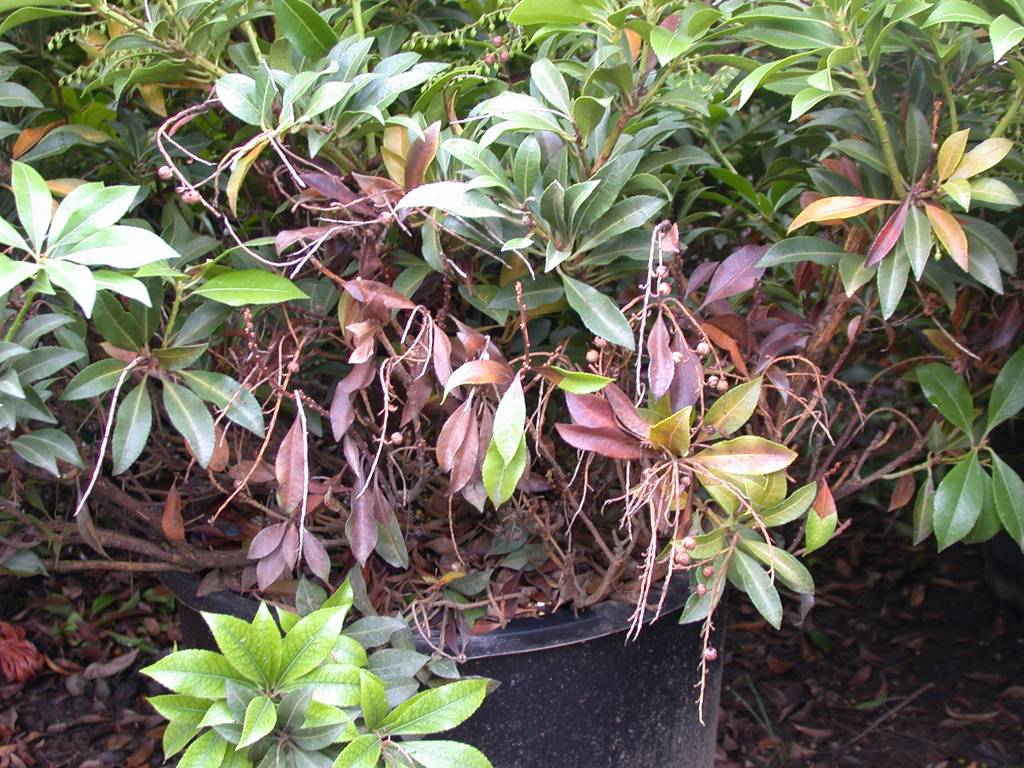
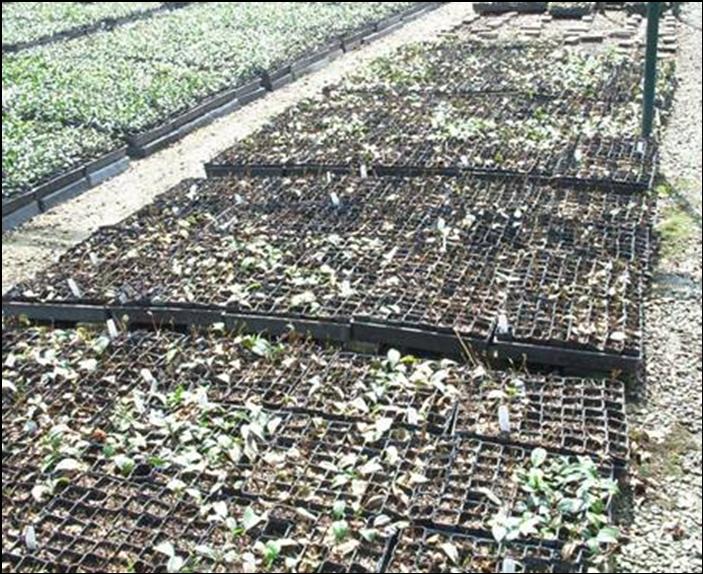 P. ramorum-infected seedlings in a nursery; photo by USDA APHIS


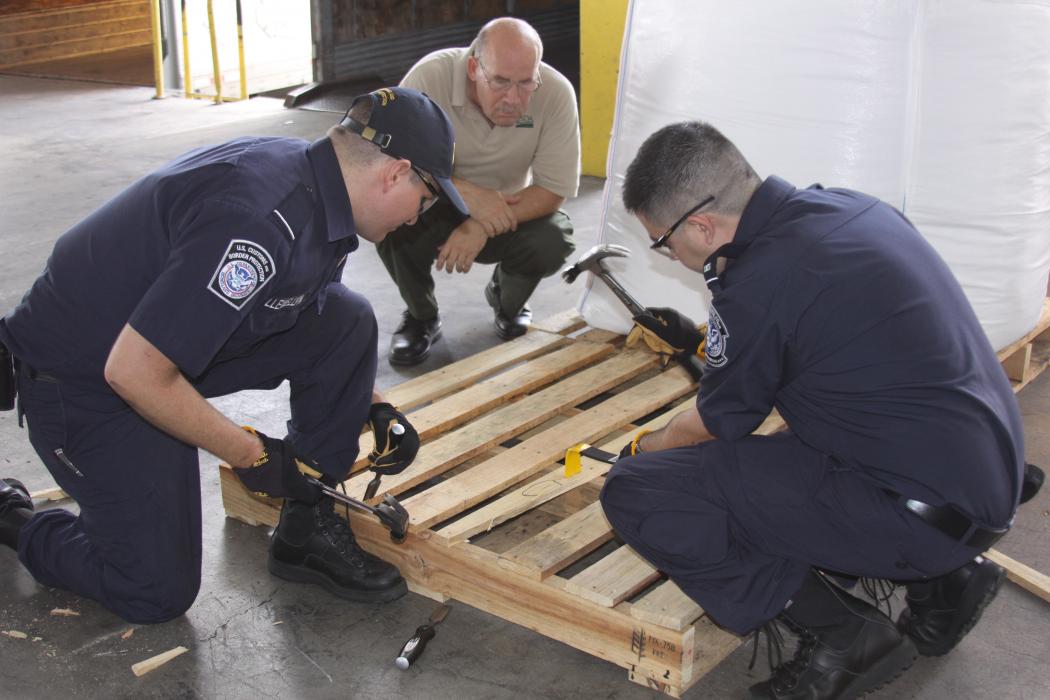 CBP inspecting wood packaging; CBP photo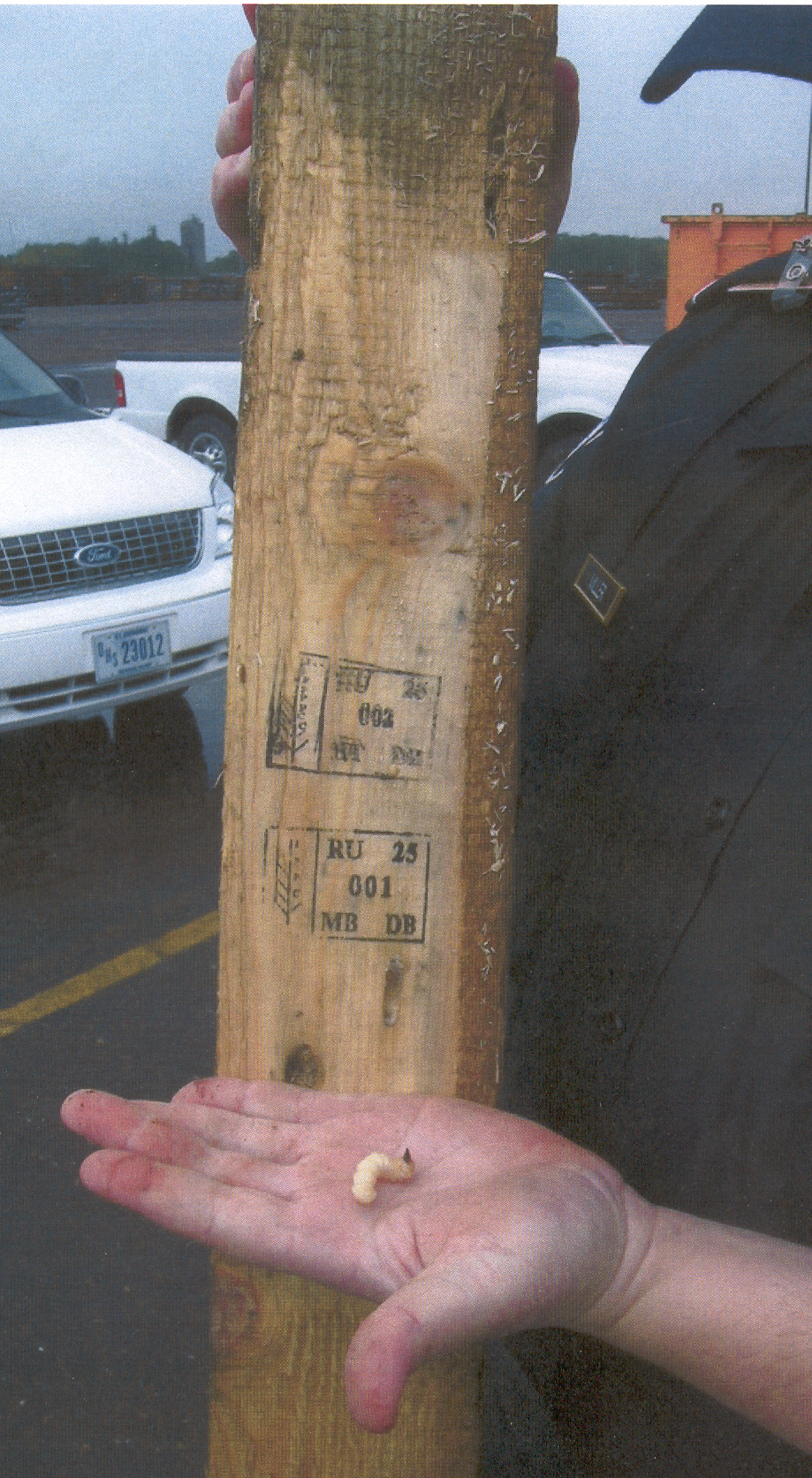
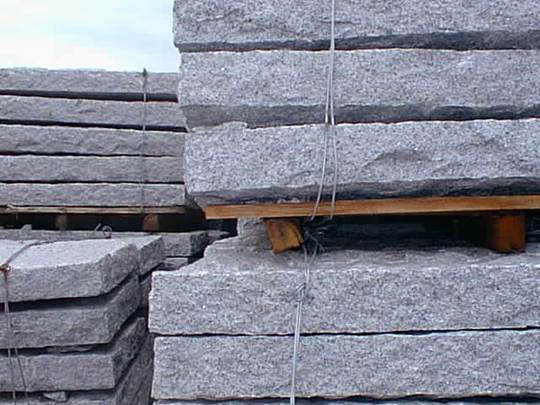 shipment of decorative stone with wood packaging