Hope for eastern hemlocks – IF funding can be obtained

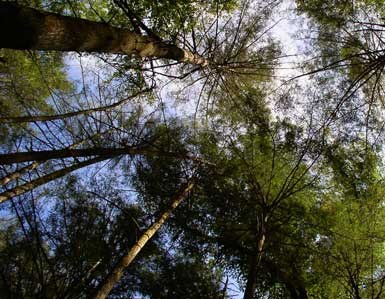
eastern hemlocks in Great Smoky Mountains National Park

As we all know, eastern (Tsuga canadensis) and Carolina (T. caroliniana) hemlocks have suffered huge losses due primarily to the introduced hemlock woolly adelgid (Adelges tsugae – HWA). In New England, there has been more than a 60% decrease in total hemlock basal area since 1997 and a virtual absence of hemlock regeneration in HWA-infested areas. HWA continues to spread – most recently into western Michigan and Nova Scotia (all information, unless otherwise indicated, is from Kinahan et al. 2020; full citation at end of this blog). [However, Morin and Liebhold (2015) found that hemlock basal volume continued to increase for the first 20 years or so after invasion by the adelgid, due to ingrowth of immature hemlocks. See “results” in Morin et al., full citation at the end of the blog.]

This loss deprives us of a gorgeous tree … and unique habitats. Hemlock-dominated forests were characterized by deep shade, acidic and slowly decomposing soil, and a cool microclimate. They provided unique and critical habitat for many terrestrial and aquatic species.

A team of scientists based at the University of Rhode Island has carried out an experiment comparing cuttings from eastern hemlocks apparently resistant to HWA to susceptible ones. Matching sets of resistant and susceptible trees were planted at eight sites in seven states – Ithaca and Bronx, NY; Boston; southern CT; Lycoming County, PA; Thurmont, MD; southern WV; and Waynesville, NC. All plantings were within or adjacent to forests containing HWA-infested hemlocks.

After four years, 96% of the HWA-resistant hemlocks had survived, compared to 48% of the control plants. The HWA-resistant plants were 32% taller, put out 18% more lateral growth, had 20% longer drip lines, and were in 58% better condition. HWA was found on trees at only three out of the eight plots. HWA density on resistant eastern hemlocks was 35% lower than on HWA-susceptible hemlocks, although this difference was not statistically significant.

Trees in all eight plots were infested with elongate hemlock scale (Fiorinia externa – EHS), a second insect damaging hemlocks in eastern North America. However, the HWA-resistant hemlocks had EHS densities 60% lower than those of the controls.

Kinahan et al. note that identification and use of host tree populations’ potential for pest resistance has played a role in other programs managing non-native pests and pathogens, including Dutch elm disease and chestnut blight.  

The same scientists note that significant effort has been put into biocontrol or insecticides for management of hemlock woolly adelgid, but without achieving the desired improvement of forest health. Attempts to cross eastern hemlocks with HWA-resistant hemlocks unfortunately produced no viable offspring. However, Kinahan et al. were inspired to explore possible genetic resistance within natural populations of eastern hemlocks by the 1) evidence of resistance in Asian and western hemlocks; 2) the different foliar terpene profiles in those species; and 3) the presence of apparently healthy mature hemlock trees growing in proximity to heavily infested trees.

They asked forest managers and other concerned groups to help locate stands with trees that were mature and apparently completely healthy, were located within HWA-devastated hemlock stands, and had not been chemically treated. They chose a small stand of eastern hemlocks growing within the Walpack Fish and Wildlife Management Area in northern New Jersey. This stand was called the “Bulletproof Stand”. They evaluated HWA resistance in five of these trees, then chose two for propagation and planting in the test.

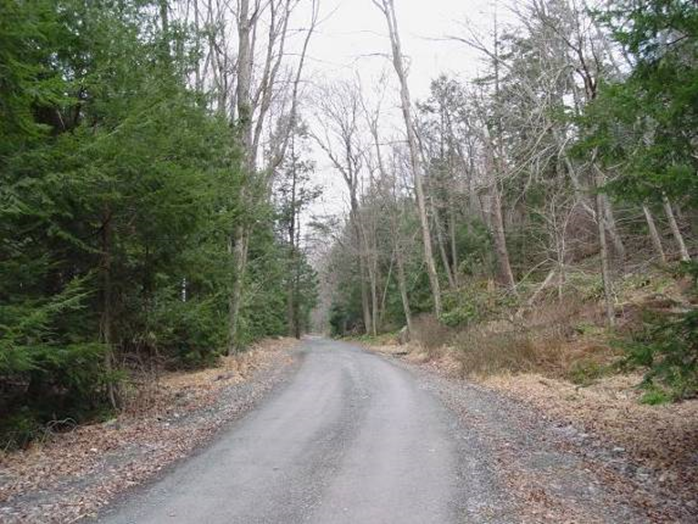
New Jersey’s “bullet-proof stand” on the left
photo by Richard Casagrande

The trees were planted in September 2015. Due to funding gaps, they were not revisited for four years. Thus, Kinahan et al. re-evaluated the resistant and vulnerable trees in Autumn 2019 – with the results I reported above.

Does this study prove that clonal propagation of apparently resistant hemlocks is an effective strategy to restore the species?

It is not that simple.

The difference in survival and condition was striking, but the authors note several caveats:

1) they had not recorded pre-experiment data on plant height or other variables, so they cannot be certain that variation in initial plant height or dripline did not contribute to current treatment-level differences in these variables.

2) they cannot distinguish between the impacts of HWA and EHS on plant growth.

3) since they could not monitor the planting sites for four years, they cannot definitively link increased mortality of HWA-susceptible trees to higher pest densities. However, the lower pest densities and higher survival of HWA-resistant hemlocks are consistent with herbivore-driven tree mortality.

They also cannot assess the impact of other environmental stressors (drought, cold, etc.) on their results.

4) The small number of trees planted at each site prevented detailed site-level analyses.

The scientists conclude that their work is most appropriately viewed as a ‘proof of concept’ experiment highlighting the need for future research exploring how HWA-resistant eastern hemlocks might best be integrated into existing HWA management.

Unfortunately, the Rhode Island researchers report they cannot persuade the US Forest Service to support continuing this effort. Will these promising hints not result in action?

Kinahan et al. stress the importance of the reduced pest densities (both HWA and EHS) on the putatively resistant hemlocks. They think this might be a result of the higher terpene concentrations in the twigs and needles. Finally, they note that lower densities of sap-feeding herbivores may also indirectly provide protection against other consumers, including gypsy moth (Lymantria dispar) and hemlock looper (Lambdina fiscellaria).

SOURCE

Kinahan, I.G., G. Grandstaff, A. Russell, C.M. Rigsby, R.A. Casagrande, and E. L. Preisser. 2020. A four-year, seven-state reforestation trial with eastern hemlocks (Tsuga canadensis) resistant to hemlock woolly adelgid (Adelges tsugae). Forests 11: 312

Morin, R.S. and A.M. Liebhold. 2015. Invasions by two non-native insects alter regional forest species composition and successional trajectories. Forest Ecology and Management 341 (2015).

Posted by Faith Campbell

P.S. I have been working with colleagues to promote a more coordinated and well-funded program to combat non-native forest pests – including much greater reliance on identifying and breeding resistance to the pest. Visit here to see this effort.

We welcome comments that supplement or correct factual information, suggest new approaches, or promote thoughtful consideration. We post comments that disagree with us — but not those we judge to be not civil or inflammatory.

Happy 14th Anniversary for Wood Packaging? Probably Not: Noncompliance, Fraud, and Missing Data

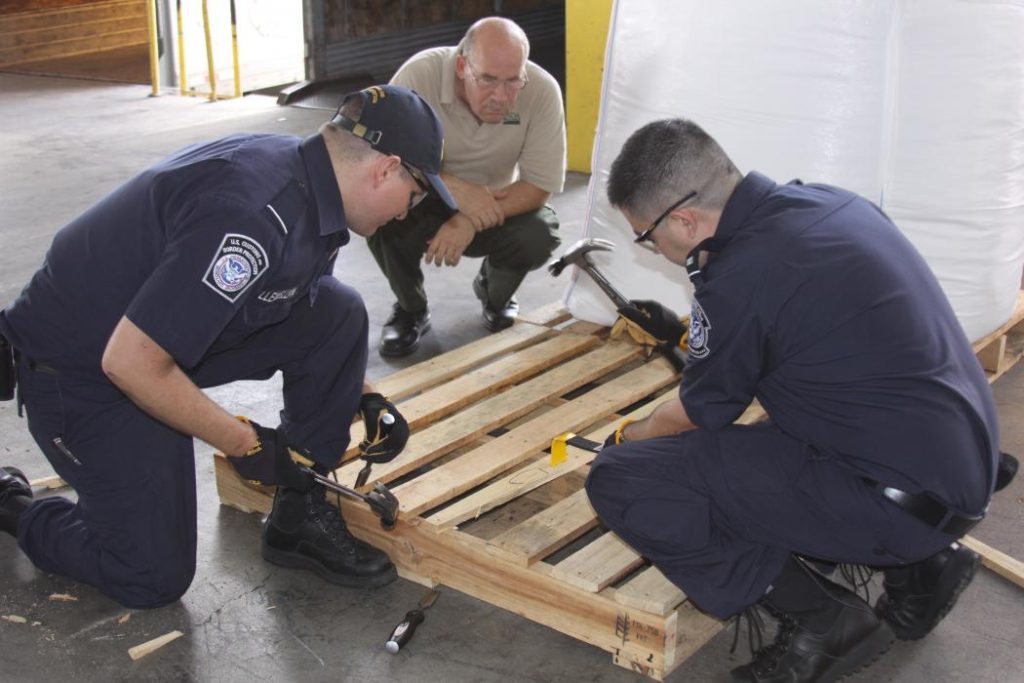
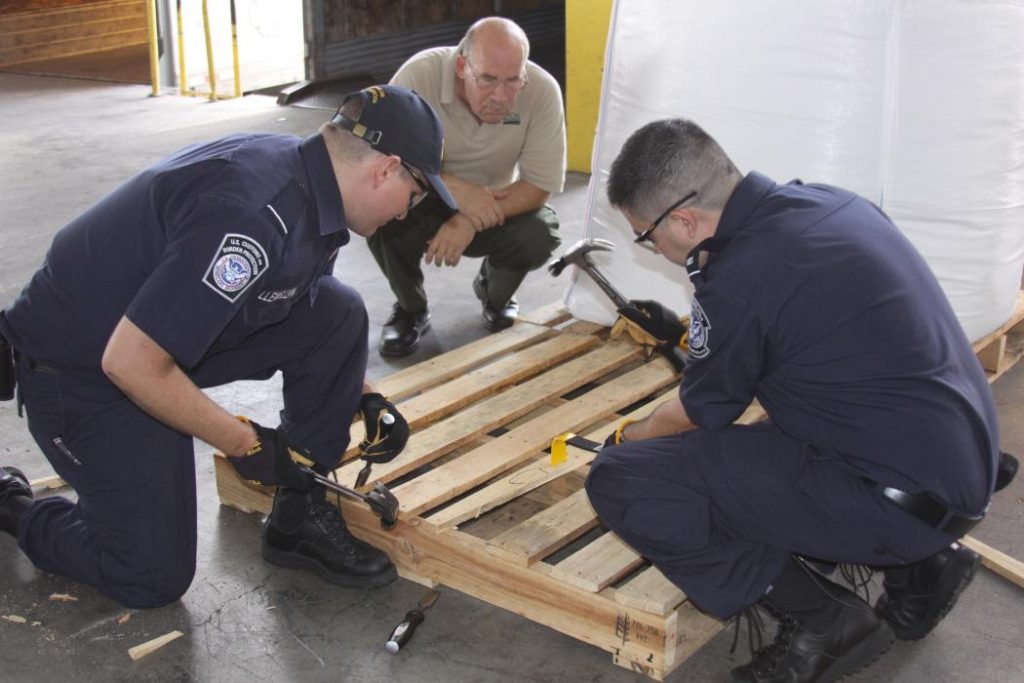
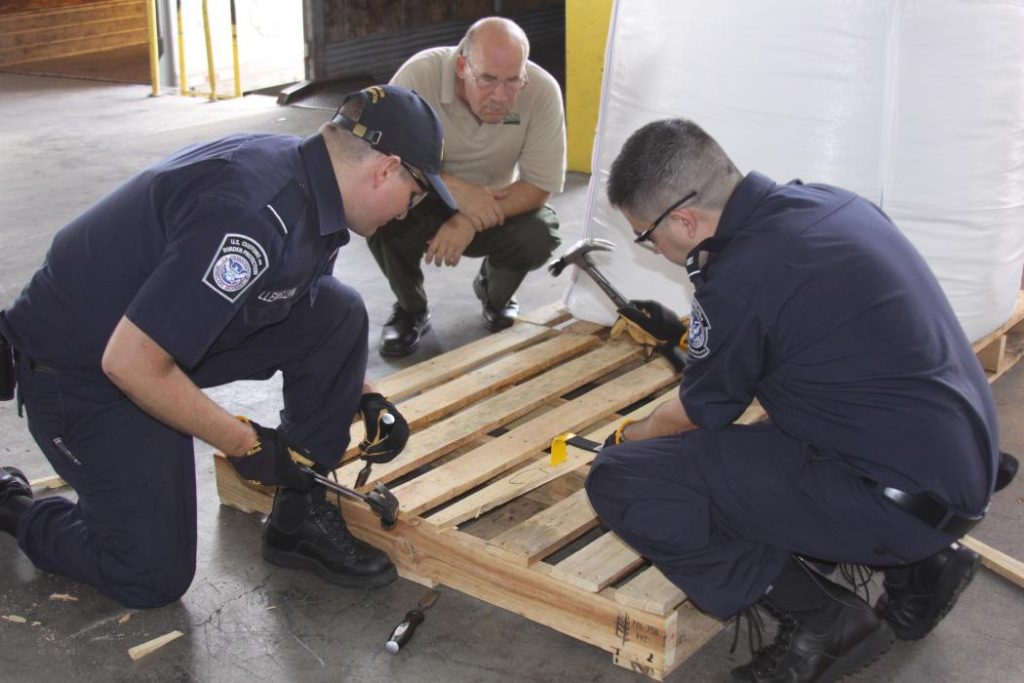
CBP inspectors examining pallet
CBP photo

This month is the 14th anniversary of United States’ implementation of International Standard for Phytosanitary Measure (ISPM) #15 with the goal of reducing the risk of pest introduction via wood packaging. 

Implementation of the international standard has apparently reduced the “approach rate” of pests in wood packaging, but not sufficiently (See my previous blog).

In this International Year of Plant Health (USDA/APHIS full citation at end of this blog), it is essential to understand how well the wood packaging program is working. Evaluating its current efficacy is especially important for protecting our forests. One key scientific society recognizes this: organizers of  the Entomological Society of America’s Grand Challenges Summit in Orlando next November have chosen wood packaging as the theme.  

Unfortunately, information essential to evaluate the efficacy of ISPM#15 – both worldwide and as implemented by USDA APHIS – is not yet available.

Our most up-to-date information on U.S. enforcement is from Kevin Harriger, Executive Director for the Agriculture Programs and Trade Liaison office, U.S. Customs and Border Protection (CBP). In his report to the annual meeting of the Continental Dialogue of Non-Native Forest Insects and Diseases in November 2019, he stated that over the past three years, CBP detected a regulated pest, on average, in 30% of wood packaging intercepted because it was not compliant with ISPM#15. Unfortunately, Mr. Harriger did not provide the actual number of shipments inspected or seized.

The absence of specific numbers means I cannot compare the 2019 findings to previous years. My calculation of Mr. Harriger’s data provided to the Dialogue in previous years showed that over the nine-year period Fiscal Years 2010 through 2018, CBP detected 9,500 consignments harboring a regulated pest. Ninety-seven percent of the shipments found to be infested with a pest bore the ISPM#15 mark. The wood packaging was from nearly all trading countries. CBP staff say the reason for this high proportion of pests in wood packaging is fraud.

A European study of imports of stone from China over the period 2013-2016 focused on a recognized high-risk commodity. Nevertheless, the Europeans reached the same finding: 97.5% of consignments that harbored pests bore the ISPM#15 mark. They concluded that the ISPM-15 mark was of little value in predicting whether harmful organisms were present (Eyre et al. 2018).

There is considerable dispute about which categories of packaging are most likely to be infested. The categories are pallets, crates, spools for cable, and dunnage (wood used to brace cargo and prevent it from shifting). Unfortunately, Mr. Harriger shed no light on that issue. He did report that 78% of non-compliant shipments over the last three years was in packaging associated with “miscellaneous cargo”, e.g., machinery, including electronics; metals; tile and decorative stone (such as marble or granite counter tops). This association has been true for decades (see Haack et al. 2014). Another 20% of the non-compliances were associated with fruit and vegetable cargoes. This probably reflects the combination of large volumes of produce imports from Mexico and that country’s poor record of complying with wood packaging requirements.

It has been reported that in recent years, CBP inspectors have repeatedly found pests in dunnage bearing the ISPM#15 mark and associated with “break bulk” cargo (goods that must be loaded individually; not transported in containers or in holds as with oil or grain). Ships that carry this sort of. Problems appear to be acute in Houston. While most of the criticism of non-compliant wood packaging refers to countries in Asia and the Americas, at least one of the Houston importers obtains its dunnage in Europe.

There is even a question about the volume in incoming goods. CBD says that approximately 13 million loaded containers enter the country every year by rail, truck, air, or sea.  However, my calculation from U.S. Department of Transportation data (see reference) was that more than 22 million shipping containers entered the U.S. via maritime trade in 2017.

In 2017, CBP announced a new policy under which it will assess a penalty on each shipment in which the wood packaging does not comply with ISPM#15. Previously, no penalty was assessed until a specific importer had amassed five violations over a twelve-month period.

FY2019 was thus the second year under the new policy. I had hoped that Mr. Harriger would provide information on the number of penalties assessed and any indications that importers are strengthening their efforts to ensure that wood packaging complies. However, he did not.

He did report that CBP has expanded outreach to the trade. The goal is reducing all types of non-compliance – lack of documentation, pest presence, etc. in both wood packaging and shipping containers. Outreach includes awareness campaigns targetting trade, industry, affiliated associations, CBP employees, and international partners.

Still, authorities cannot know whether the actual “approach rate” of pests in wood packaging has changed in response to CBP’s strengthened enforcement because they lack a scientifically valid study. The most recent study – that reported in Haack et al. 2014 – relied on data up to 2009 – more than a decade ago. It indicated an approach rate of approximately 0.1% (Haack et al. 2014).

Unfortunately, USDA APHIS has not yet accepted researchers’ offer to update this study.

We do know that pests continue to be present in wood packaging 14 years after the U.S. put ISPM#15 into force.

I call for:

1) Determining the relative importance of possible causes of the persistent pest presence problem – fraud, accidental misapplication of treatments, or other failures of treatment;

2) Enhanced enforcement by APHIS as well as CBP;

3) Stepped up efforts to help US importers by APHIS and  the Foreign Agricultural Service– by, e.g., providing information on which foreign suppliers of wood packaging and dunnage have good vs. poor records; conveying importers’ complaints about specific shipments to the exporting countries’ National Plant Protection Organizations (NPPOs), such as Departments of Agriculture;

4) Raising pressure on foreign NPPOs and the International Plant Protection Convention more generally to ascertain the specific reasons ISPM#15 is failing and to fix the problems identified.

Alernative Materials – Plastic!

I have also advocated for shifting at least some wood packaging e.g., pallets and some crates – to alternative materials. For example, USDA APHIS could require exporters with bad records to use crates and pallets made from materials other than solid wood, e.g., plastic, metal, or oriented strand board. Or companies could make that shift themselves to avoid phytosanitary enforcement issues and penalties.

People recoil from the idea of using plastic and there are increasing concerns about the breakdown of plastics into tiny fragments, especially in water. But it’s also true that the world is drowning in plastic waste. Surely some of this could be recovered and made into crates and pallets with environmentally sound technology.

The Washington Post reported in November that an Israeli company is converting all kinds of trash – including food waste – into plastic, and molding that plastic into various items, including packing crates.

UBQ Materials takes in tons of rotting food, plastic bags, dirty paper, castoff bottles and containers, even broken toys. It then sorts, grinds, chops, shreds, cleans and heats it mess into first a slurry, then tiny pseudo-plastic pellets that can be made into everyday items like trays and packing crates.

Another Israeli company, Plasgad, uses plastic to make pallets, crates and other products.

Some who were skeptical now are more interested, including the president of the International Solid Waste Association  and the chief executive of the Plastic Expert Group. 

So – can we address three environmental problems at the same time – mountains of waste, methane gas releases contributing to climate change, and one (important) pathway for the movement of tree-killing pests?

SOURCES

Eyre, D., R. Macarthur, R.A. Haack, Y. Lu, and H. Krehan. 2018. Variation in Inspection Efficacy by Member States of SWPM Entering EU. Journal of Economic Entomology, 111(2), 2018, 707–715)

Haack RA, Britton KO, Brockerhoff EG, Cavey JF, Garrett LJ, et al. (2014) Effectiveness of the International Phytosanitary Standard ISPM No. 15 on Reducing Wood Borer Infestation Rates in Wood Packaging Material Entering the United States. PLoS ONE 9(5): e96611. doi:10.1371/journal.pone.0096611

Harriger, K., Department of Homeland Security Bureau of Customs and Border Protection, presentation to the Continental Dialogue on Non-Native Forest Insects and Diseases, November 2017.

U.S. Department of Transportation, Maritime Administration, U.S. Waterborne Foreign Container Trade by U.S. Customs Ports (2000 – 2017) Imports in Twenty-Foot Equivalent Units (TEUs) – Loaded Containers Only.

U.S. Department of Agriculture, Press Release No. 0133.20, January 27, 2020

Posted by Faith Campbell

We welcome comments that supplement or correct factual information, suggest new approaches, or promote thoughtful consideration. We post comments that disagree with us — but not those we judge to be not civil or inflammatory.

New Ambrosia Beetle in California – Threat to Oaks?

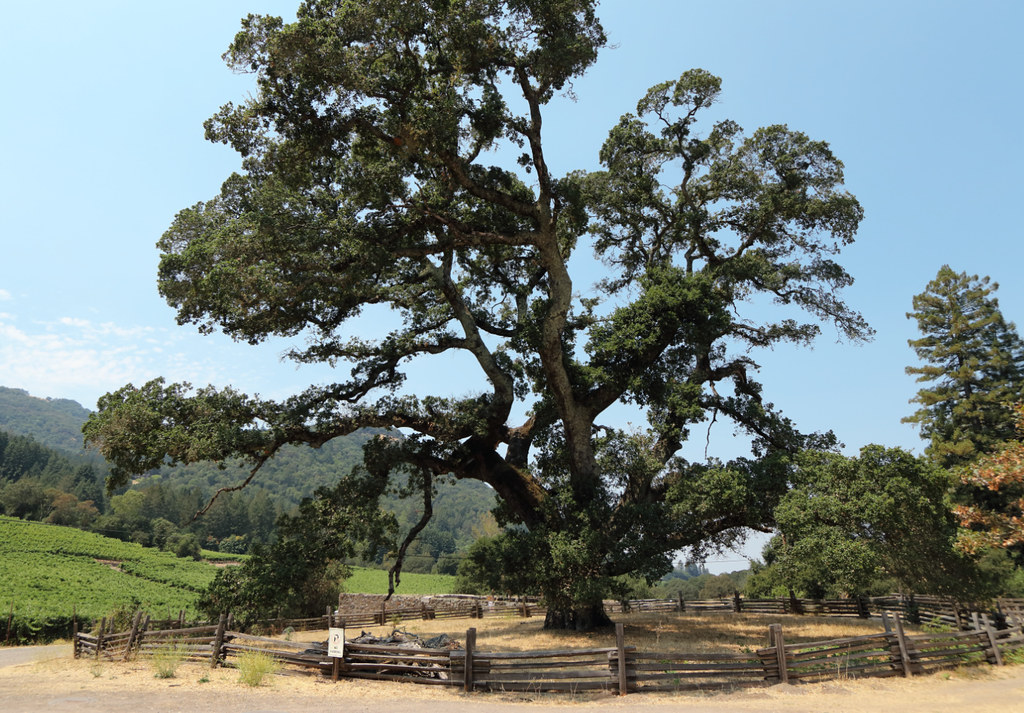
valley oak at Jack London State Park (24 miles from Calistoga)

In November, scientists discovered a new ambrosia beetle in symptomatic valley oaks  (Quercus lobata) trees in Calistoga, Napa County. Some blue oaks (Q. douglasii) have also been attacked (Rabaglia et al. 2020). Trees associated with this outbreak showed wilting, defoliation, and broken branches. The infested wood was discolored, presumably by the fungus. The insect, Xyleborus monographus, is native to Europe.

Officials now know that this beetle is found throughout a 15-mile-long area in Napa and neighboring Lake and Sonoma counties. It has probably been there for several years (Rabaglia et al. 2020). One specimen of the beetle was trapped in Portland, Oregon in 2018, but no infestation was detected. The beetle has never been intercepted in California. Nor has it been found in traps designed to detect bark beetles which have been deployed in 11 counties – including several in the San Francisco Bay area but not including Napa or Sonoma.

Like all Xyleborus, adult females tunnel into tree’s trunks, carrying fungal spores in their mycangia (structures in the jaws in which microbes are harbored). Beetle larvae eat the fungi. Beetle reproduction is facilitated by sibling mating within the gallery and by the ability of unmated females to produce male offspring.

Sometimes the beetle’s associated fungi are pathogenic to living trees. One of the fungal species detected in the Calistoga infestation is Raffaelea montetyi, which is reported to be pathogenic to cork oak. The presence of this fungus had been reported in 2018, although the beetle species carrying it was not identified then. This is apparently the first report of this fungus in North America.

Known hosts of beetle X. monographus include European or Eurasian chestnut (Castanea sativa), beech (Fagus orientalis), and European and American oaks (including Q. lobata and Q. rubra).  The possible effects of the beetle and associated fungi on other oak species is unknown. Oaks are acknowledged to be important components of forests and woodlands in California. Ambrosia beetles often attack stressed trees. Since California forests are increasingly frequently stressed by drought, fire, and other pests, they might be especially vulnerable.

The California Department of Food and Agriculture is currently seeking comments on what pest rank to assign the insect.  The comment period closes on March 6th and I encourage you to consider providing your views.

In their draft document ranking risk, state officials note that a proven host — Q. lobata — is widespread in California and the insect is probably capable of establishing over much of the state. The possible economic impact was described as possibly affecting production of oaks in California nurseries and triggering quarantines.  (Does this mean CDFA expects impacts only on saplings? Is this realistic? CDFA made no mention of costs to urban areas for hazard tree management.)

The risk assessment notes that research by McPherson, et al. (2008) found that ambrosia beetles are attracted to oak trees already infected with sudden oak death (SOD) (Phytophthora ramorum). Therefore, X. monographus could have a synergistic impact with SOD on California oaks – which has already killed an estimated 1.9 to 3.3 million coast live and Shreve oaks.

SOURCE

Rabaglia, R.J. S.L. Smigh, P. Rurgman-Jones, M.F. Digirolomo, C. Ewing, and A. Eskalen. 2020. Establishment of a non-native xyleborine ambrosia beetle, Xyleborus monographus (Fabricius) (Coleoptera: Curculionidae: Scolytinae), new to North America in California. Zootaxa 478 (2): 269-276

Posted by Faith Campbell

We welcome comments that supplement or correct factual information, suggest new approaches, or promote thoughtful consideration. We post comments that disagree with us — but not those we judge to be not civil or inflammatory.

Hawaiian Dry Forests – Glimmer of Hope for one tree, Alarm for a shrub

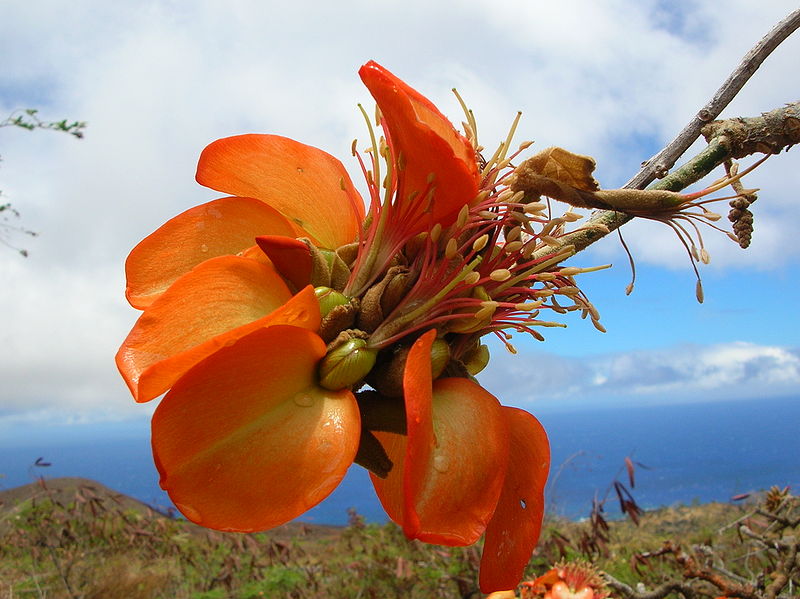
wiliwili flower
photo by Forrest and Kim Starr, courtesy of creative commons

Hawaii’s dryland forest is a highly endangered ecosystem. More than 90% of dry forests are already lost due to habitat destruction and the spread of invasive plant and animal species. However, a new publication documents some recovery of wiliwili trees from one major pest. At the same time, a new pest is spreading and killing naio, a critical dryland shrub.  Both pests originated in countries that have rarely if ever been a source of U.S. pests. This is worrying because phytosanitary agencies have their hands full with imports from the usual sources. The role of California as a source of invasive species in Hawai`i has long deserved federal attention – but as far as I know has not received it.

Hope for Wiliwili Trees

The Hawaiian endemic wiliwili tree, Erythrina sandwicensis, occurs in lowland dry forests on all the major islands from sea level to 600 m. Wililwili is a dominant overstory tree in these habitats. (Unless otherwise noted, the principal source is Kaufman et al. in press – full citation at end of blog.)

The tree has been severely affected by the introduced Erythrina gall wasp, Quadrastichus erythrinae (EGW). The gall wasp was detected on Oahu in 2005 and quickly spread to the other Hawaiian islands.  

Arrival of the EGW on Oahu was part of the insect’s rapid global range expansion.  Originally from East Africa, it was first detected in the Mascarene Islands and Singapore in 2003. At the time, it was unknown to science. Within a few years it had spread across Asia, many Pacific islands (including Hawai`i), and to the Americas, including Florida in 2006, Brazil in 2014 (Culik 2014), and Mexico in 2017 (Palacios-Torres 2017). Although apparently restricted to the Erythrina genus as host, it has lots of opportunities. This genus has 116 species distributed across tropical and subtropical regions: 72 species in the Americas, 31 in Africa, and 12 in Asia.

The severe damage to wiliwili (and to non-native Erythrina trees planted in urban areas and as windbreaks) prompted Hawaiian officials to immediately initiate efforts to find a classical biological control agent. The process moved rapidly. A candidate – a parasitic wasp species new to science, Eurytoma erythrinae – was found in East Africa in 2006. Host specificity testing was carried out. Scientists quickly learned to rear the parasitic wasp in laboratories. Release of the biocontrol agent was approved in November 2008 – only three and a half years after the EGW was detected on Oahu.

The biocontrol agent’s impact was quickly apparent. Establishment was confirmed within 1–4 months at all release locations throughout Hawai`i. Reduced pest impacts to trees were detected within two years. By 2018, only 33% of the foliage was damaged on the majority of wiliwili trees. Damage to non-native Erythrina had also declined.

Results of Biocontrol Agent’s Release

The biocontrol agent’s efficacy in reducing EGW’s impacts on trees has been evaluated for 10 years after the agent’s release. Monitoring was conducted at sites on four of the six main islands. (The monitoring program and its findings are described in Kaufman et al. in press).

I wonder how many other biocontrol agents have been monitored so closely for such a long time? Shouldn’t they all be?

Given the uniqueness and importance of such long-term assessment, it is worth looking at the data in detail.

1) Foliar Damage and Tree Health

In 2008, before release of the biocontrol agent, more than 70% of young shoots in wiliwili trees that were inspected were severely infested. The damage rating of “severe” fell from about 80% of trees in 2008 to about 40% in 2011. About 20% of trees surveyed – at sites on all islands – had no gall damage.

By three years after release of the biocontrol agent (2011), mortality rates attributed to stress from the EGW infestation for trees in natural areas fell to 21%. Mortality rates for trees in botanical gardens was somewhat higher – 34%. Kaufman et al. proposed several possible reasons: a) lingering presence of systemic insecticides that might have harmed the biocontrol agents early in the releases; b) year-round sustenance for the EGW as a result of the i) presence of alternative hosts and ii) supplemental irrigation which maintained fresh foliage on the trees.

Less intensive monitoring occurred during 2013 – 2018. It showed continuing substantial suppression of EGW damage on Erythrina foliage, although levels varied among locations. Sites with the lowest precipitation and higher temperatures throughout the year had the slowest recovery of wiliwili. Still, trees are now producing vegetative flushes and healthier canopies during non-dormant periods.

2) Flower and Seed Damage

Successful reduction of infestations in flowers and seedpods was less immediate. Still, by 2011, seed-set had increased from less than 3% of trees setting and maturing seed, to almost 30% with mature seed. The proportion of trees bearing inflorescences also increased, with more than 60% of trees blooming three years after introduction of the biocontrol agent. There was also a slow but steady increase in seed production.

However, in 2019, it remains unclear how infestation of seedpods will affect germination and therefore future plant recruitment.

More worrying, little recruitment was observed over the 10 years. Hawaiian authorities have completed tests on, and are preparing a petition for release of, a second biocontrol agent, Aprostocitus nites. It is hoped that it will further suppress EGW in flowers and seedpods.  

Still, poor recruitment is likely due to the combined impacts of multiple invasive species in native environments. A significant factor is a second insect pest – a bruchid, Specularius impressithorax – which can cause loss of more than 75% of the seed crop. I hope authorities are seeking methods to reduce this insect’s impacts.

The Hawaiian species group of the IUCN has given the wiliwili tree the Reed Book designation of “vulnerable”.

Worries for Naio

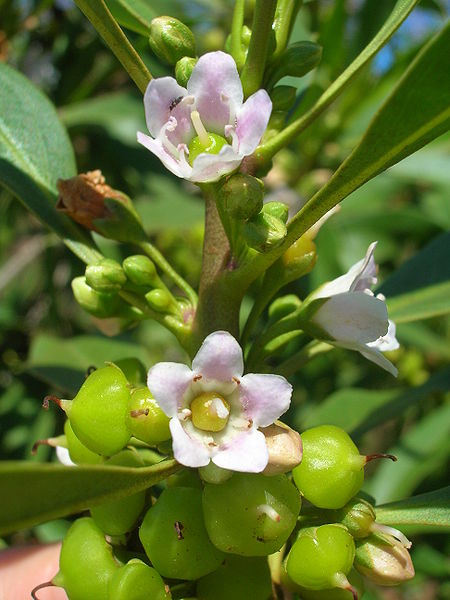
naio in bloom
photo by Forrest and Kim Starr, courtesy of creative commons

Naio (Myoporum sandwicense)is an integral component of native Hawaiian ecosystems, especially in dry forests, lowlands, and upland shrublands. However, it is also found in mesic and wet forest habitats. Naio is found on all of the main Hawaiian Islands at elevations ranging from sea level to 3000 m. The loss of this species would be not only a significant loss of native biological diversity but also a structural loss to native forest habitats.

The invasive non-native Myoporum thrips, Klambothrips myopori, was detected on the Big Island (Hawai‘i Island) in 2009 – four years after it was first detected on ornamental Myoporum species in California. At the time of the California detection, the species was unknown to science. It is now known that this species is native to Tasmania.

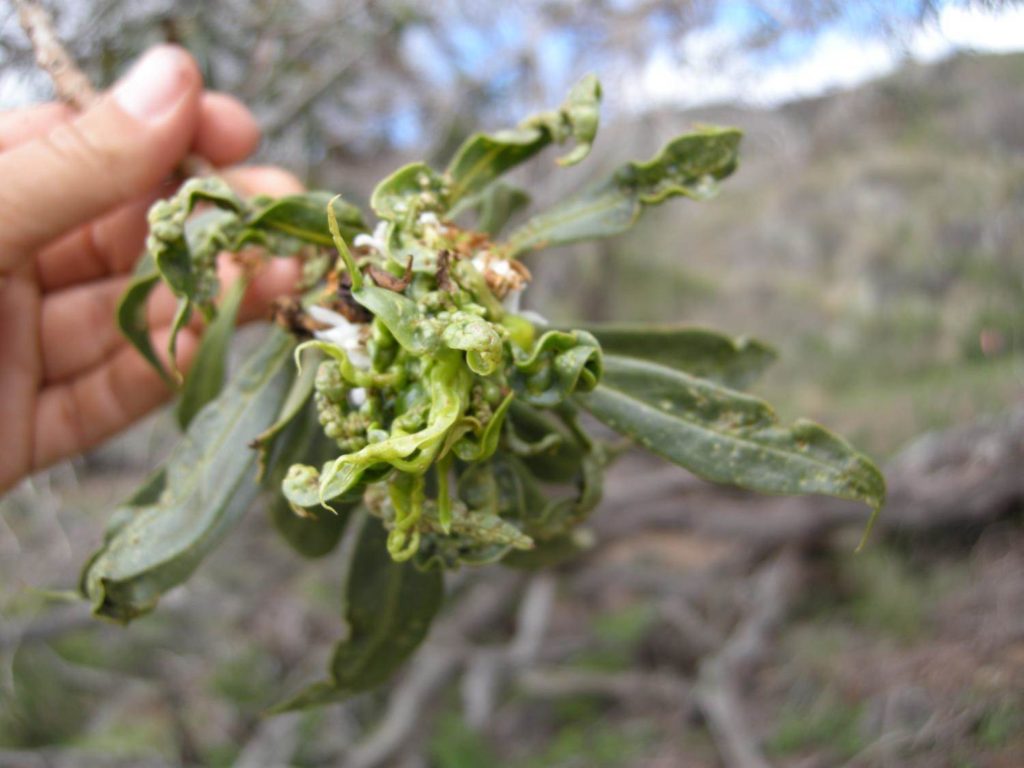
The thrips feeds on and causes galls on plants’ terminal growth and can eventually lead to death of the plant.

For close to a decade, the Myoporum thrips was restricted to the Big Island.  It has now been found on Oahu (Wright pers. comm.) Alarmed by the high mortality of plants in California, in September 2010, the Hawaii Department of Lands and Natural Resources Division of Forestry and Wildlife and the University of Hawai‘i initiated efforts to determine spatial distribution, infestation rates, and overall tree health of naio populations on the Big Island. Monitoring took place at nine protected natural habitats for four years. This monitoring program was supported by the USFS Forest Health Protection program. (See also the chapter on naio by Kaufman et al. 2019 in Potter et al. 2019 – full citation at the end of this blog.)

naio damaged by thrips
photo by Leyla Kaufman, University of Hawaii

The monitoring confirmed that the myoporum thrips has spread and colonized natural habitats on the leeward side of Hawai`i Island. Infestation rates increased considerably at all sites over the duration of the four-year sampling period. Trees experiencing high infestation levels also showed branch dieback.

Medium-elevation sites (between 500–999 m) had the highest infestations and dieback: over 70% of the shoots  had the worst damage.. At two sites, over 70% of the monitored trees have died.

Even though flowers and fruits were still seen at all sites, little to no plant recruitment was observed at these sites. Thus another plant species important in this endangered plant community is in decline.

Few management strategies are available for this pest. They include preventing spread to other islands and early detection followed by rapid application of pesticides.

 Implications and Conclusions

The Erythrina gall wasp and myoporum thrips are only two of the thousands of invasive species established in Hawai`i. Island ecosystems, especially Hawai`i,  are well recognized as especially vulnerable to invasive species. It has been estimated that on average 20 new arthropod species become established in Hawai`i every year.

East Africa and Tasmania are new sources for invasive species. Phytosanitary agencies need to adjust their targetting of high-risk imports to recognize this reality. Regarding the Hawaiian introduction of the thrips, there was probably made an intermediary stop in California – which is not unusual. (See also ohia rust.)

I applaud Hawaiian officials’ quick action to counter these pests. I wish their counterparts in other states did the same.

There are multiple threats to Hawaii’s dry forests, including habitat modification and fragmentation; wild fires; seed predation by rodents; predation on seeds, seedling, and saplings by introduced ungulates (e.g. feral goats, pigs and deer); competition with invasive weeds; and damage by invasive insect pests and diseases.

With so much of Hawaii’s dry forests already lost, the release of biocontrol agents targetting specific pests is only one element of a much-needed effort. Long-term protection of wiliwili and naio depends on greater efforts to reduce all threats and to stimulate natural regeneration of this ecosystem. These programs could include predator-proof fencing to keep out ungulates; baiting rodents and snails; and active collection. Breeding, and planting of threatened plant species in an effort to protect both the individual species and the habitat.

SOURCES

Culik, M.P., D. dos Santos Martins, J. Aires Ventura & V. Antonio Costa. The invasive gall wasp Quadrastichus erythrinae (Hymenoptera: Eulophidae) in South America: is classical biological control needed?

Kaufman, L.V.,  J. Yalemar, M.G. Wright. In press. Classical biological control of the erythrina gall wasp, Quadrastichus erythrinae, in Hawaii.: Conserving an endangered habitat. Biological Control. Vol. 142, March 2020

Palacios-Torres, R.E., J. Malpica-Pita, A.G. Bustamante-Ortiz, J. Valdez-Carrasco, A. Santos-Chávez, R. Vega-Muñoz and H. Vibrans-Lindemann. 2017. The Invasive Gall Wasp Quadrastichus erythrinae Kim in Mexico. Southwestern Entomologist.

Potter, K.M. B.L. Conkling. 2019. Forest Health Monitoring: National Status, Trends, and Analysis 2018. Forest Service Research & Development Southern Research Station General Technical Report SRS-239

Kaufman, L.V, E. Parsons, D. Zarders, C. King, and R. Hauff. 2019. CHAPTER 9. Monitoring Myoporum thrips, Klambothrips myopori (Thysanoptera: Phlaeothripidae), in Hawaii

Wright, Mark. 2005. Assistant Professor and Extension Specialist, University of Hawaii. Personal communication.


ISPM#15 – The Stamp is Not Effective as a Clue to Whether Wood Packaging is Pest-Free

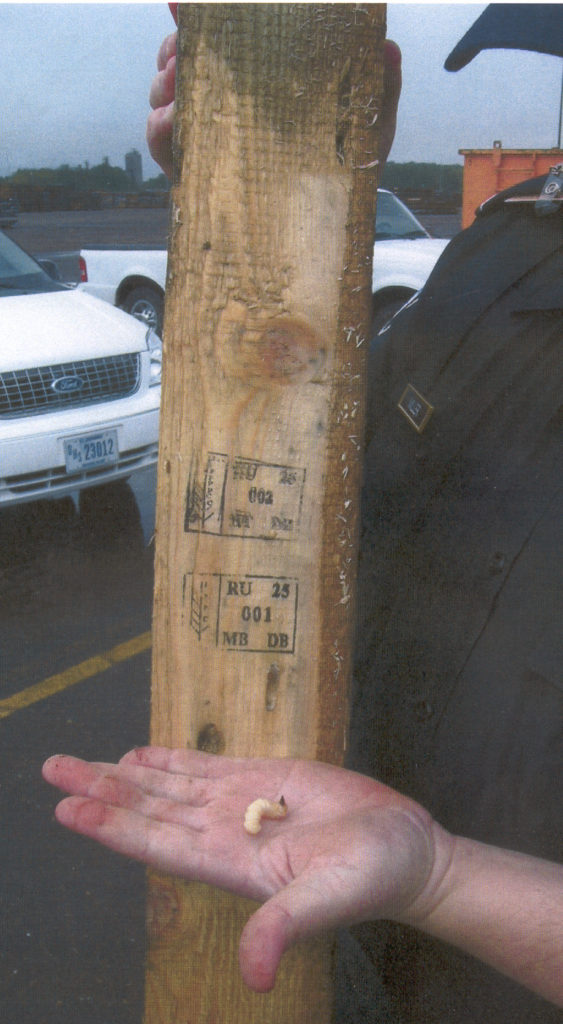
For more than a decade, most countries in the world have required that crates, pallets, spools, and dunnage made from wood be treated in accordance with the requirements of the International Standard for Phytosanitary Protection (ISPM)#15 that this treatment be certified by applying an approved stamp to the wood. The goal of the program is to “reduce significantly the risk of introduction and spread of most quarantine pests that may be associated with that material.”

However, experience and studies in both the United States and Europe demonstrate that the ISPM#15 stamp is not a reliable indicator of whether the wood packaging is pest-free.

1) In the United States, over a period of nine years – Fiscal Years 2010 through 2018 – U.S. Customs and Border Protection (CBP) detected 9,500 consignments harboring a pest in a regulated taxonomic group. Of the shipments found with infested wood packaging, 97% bore the ISPM#15 mark (See Harriger reference at the end of the blog). The wood packaging was from nearly all trading countries. 2) In the past two years, CBP inspectors have repeatedly found pests in dunnage bearing the ISPM#15 mark – as reported by U.S. importers of “break bulk” cargo into Houston. While most of the criticism of non-compliant wood packaging refers to countries in Asia and the Americas, at least one of the Houston importers obtains its dunnage in Europe.

3) In Europe, a two-year intensive survey of wood packaging associated with shipments of stone from China to the 28 European Union countries over the period 2013-2016 again found that 97.5% of consignments found to harbor pests bore the ISPM#15 mark (Eyre et al. 2018). The scientists concluded that the ISPM-15 mark was of little value in predicting whether harmful organisms were present. (Eyre et al. 2018, p. 712)

As I have noted in previous blogs and policy briefs, the only in-depth study of the “approach rate” of pests in wood packaging, based on data which is now a decade old, found that 0.1% of incoming wood packaging transported a regulated pest (Haack et al. 2014). Given current trade volumes, as many as 17,650 containers per year (or 48 per day) transporting tree-killing insects might be entering the U.S. (My calculation of this estimate is explained in the blog on “risks of introduction” here.)

The Haack study excluded imports from Mexico, Canada, and China. The first and third countries have records of poor compliance with ISPM#15 requirements, so the “approach rate” for all incoming shipments might well have been higher.

The study of European imports focused on shipments of stone from China – which were deliberately chosen to represent types of imports presenting a high risk of transporting pests. Across Europe, over the four-year period, quarantine pests were detected in 0.9% of the consignments – somewhat higher than the U.S. number, as could be expected. However, there were large variations among participating countries’ findings. Austria and France found 6.95% of consignments inspected were infested, while half of European Union countries found none!

These differences demonstrate the importance of thorough inspections.

The data also indicate that the problem is not decreasing. Austria detected pests in nearly one-fifth (19.6%) of inspected shipments in 2016 – the final year of the study! However, during that same year, only 1.5% of wood packaging lacked the ISPM#15 mark.

So How Should the International Phytosanitary Community React to This Failure?

Data cited in numerous studies indicate that ISPM#15 has probably succeeded in reducing the presence of pests in wood packaging. This progress is good – but insufficient. Our forests need further reductions.

In the meantime, however, the international standard has demonstrably failed to provide a secure method to evaluate the pest risk associated with wood packaging accompanying any particular shipment. The presence of the stamp on pieces of wood packaging does not reliably show that the wood is pest-free. Officials need to determine why. Is it fraud? That would mean deliberately placing the stamp on wood that had not been treated, which U.S. CBP staffers think is occurring (Harriger). The European Union audit team that visited China also thought they detected instances of fraud. They concluded that “the current system of official controls in China does not adequately ensure that SWPM which forms part of consignments of goods exported to the EU is marked and treated according to ISPM No. 15” (Eyre et al. 2018, p. 713). On the other hand, the US importers in Houston say they are pressing their European suppliers to provide pest-free dunnage.

What more could we ask them to do to ensure that they are not receiving fraudulently marked materials?

Perhaps the problem has a different cause. Are the treatments themselves are less effective than expected? One APHIS study found that twice as many larvae reared from wood treated by methyl bromide fumigation survived to adulthood than larvae reared from heat-treated wood; the reason is unclear (Nadel et al. 2016). Unfortunately, it is apparently impractical to determine whether wood was heat treated by looking for changes in the chemical profile of the wood (Eyre et al. 2018).

Nor can we expect inspection of 100% of all risky consignments or detection of 100% of quarantine pests in those consignments that are inspected. Therefore, the European study authors concluded that inspection is best considered as a means of gathering evidence of risk and a deterrent rather than a means of completely preventing pest movement (Eyre et al. 2018).

The European study authors called for review of ISPM#15 as a control system and to investigate compliance at the source (Eyre et al. 2018 p. 714).

What is APHIS doing?

As I have noted previously – here and here – while U.S. CBP adopted a policy in 2017 under which it can penalize importers for each consignment not in compliance with ISPM#15, APHIS has not followed Custom’s lead on this. Instead, APHIS will apply a penalty only when an importer has accrued five violations over the period of a year. (The two agencies are acting under separate legal authorities.) This is yet another example of APHIS taking a less protective stance – as I described in earlier blogs.

Since Customs is now applying the letter of the law, the most useful step would probably be for APHIS (and the USDA Foreign Agriculture Service) to ramp up efforts to assist U.S. importers which are trying to comply. The importers are begging USDA to provide better information to them about foreign suppliers of wood packaging and dunnage. Which have good vs. poor records? USDA could also help importers trying to complain about specific shipments to the exporting countries’ National Plant Protection Organizations (NPPOs; departments of agriculture).  In addition, APHIS could augment its pressure on foreign NPPOs and the International Plant Protection Convention more generally to ascertain the reasons ISPM#15 is failing and to fix the problems.

APHIS has not been idle. The North American Plant Protection Organization (including Canada and Mexico) has sponsored two workshops intended to educate NPPOs and exporters in Asia and the Americas about the standard’s requirements. APHIS is planning to address wood packaging in an international symposium organized under the auspices of the International Year of Plant Health in July 2020 – I will provide details when they become available.

APHIS is collaborating with the Entomological Society of America to host a workshop on wood packaging at the ESA annual meeting in November 2020 – I will provide details when they become available. The Continental Dialogue on Non-Native Forest Insects and Diseases plans to link its annual 2020 meeting to this workshop.

More immediately, the Continental Dialogue on Non-Native Forest Insects and Diseases will have presentations on the wood packaging issue at its annual meeting in just 11 days! in Cleveland

In preparation for the 2020 meetings, APHIS should fund more studies and audits of wood packaging to document the current efficacy of the standard (that is, the pest approach rate); remember, Haack’s study relied on data which are now a decade old. Not only has time passed … Both the standard and U.S. enforcement policies have changed since 2009.

Significance of the Wood Packaging Problems

The apparent failure of the ISPM#15 standard to provide a reliable means to certify treatment raises obvious issues regarding the risk of pest introductions. However, the implications are much broader.

The premise of the international phytosanitary system – the Agreement on the Application of Sanitary and Phytosanitary Standards (SPS Agreement) and International Plant Protection Convention (IPPC) – is that importing countries should rely on exporting countries to take the actions necessary to meet the importing countries’ plant health goals. The ISPM#15 experience casts doubt on this premise. The exporters are not reliably ensuring the cleanliness of their wood packaging. Worse, wood packaging is easier to treat than fruits, vegetables, and living plants (plants for planting). The latter commodities are much more easily damaged or killed by treatments than are boards or even logs – which are, after all, already dead! (A longer discussion of the SPS Agreement and IPPC is found in Chapter III of Fading Forests II, available here.

I hope that the international phytosanitary community will take advantage of the heightened attention and effort associated with the International Year of Plant Health in 2020 to re-examine all aspects of the current global phytosanitary system.

Posted by Faith Campbell

We welcome comments that supplement or correct factual information, suggest new approaches, or promote thoughtful consideration. We post comments that disagree with us — but not those we judge to be not civil or inflammatory.

SOURCES

Eyre, D., R. Macarthur, R.A. Haack, Y. Lu, and H. Krehan. 2018. Variation in Inspection Efficacy by Member States of SWPM Entering EU. Journal of Economic Entomology, 111(2), 2018, 707–715)

Kevin Harriger, US CBP. Presentations to the annual meetings of the Continental Dialogue on Non-Native Forest Insects and Diseases over appropriate years. See, e.g., https://continentalforestdialogue.org/continental-dialogue-meeting-november-2018/

Nadel, N., S. Myers, J. Molongoski, Y. Wu, S. Linafelter, A. Ray S. Krishnankutty, and A. Taylor. 2016. Identificantion of Port Interceptions in Wood Packaging Material: Cumulative Progress Report, April 2012 – August 2016

https://www.joc.com/breakbulk/ispm-15-enforcement-leaves-shippers-no-good-nswers_20190717.htmlhttps://www.joc.com/breakbulk/enhanced-enforcement-ispm-15-costing-us-importers-millions_20190725.html

Recent Developments on Stopping Emerald Ash Borer

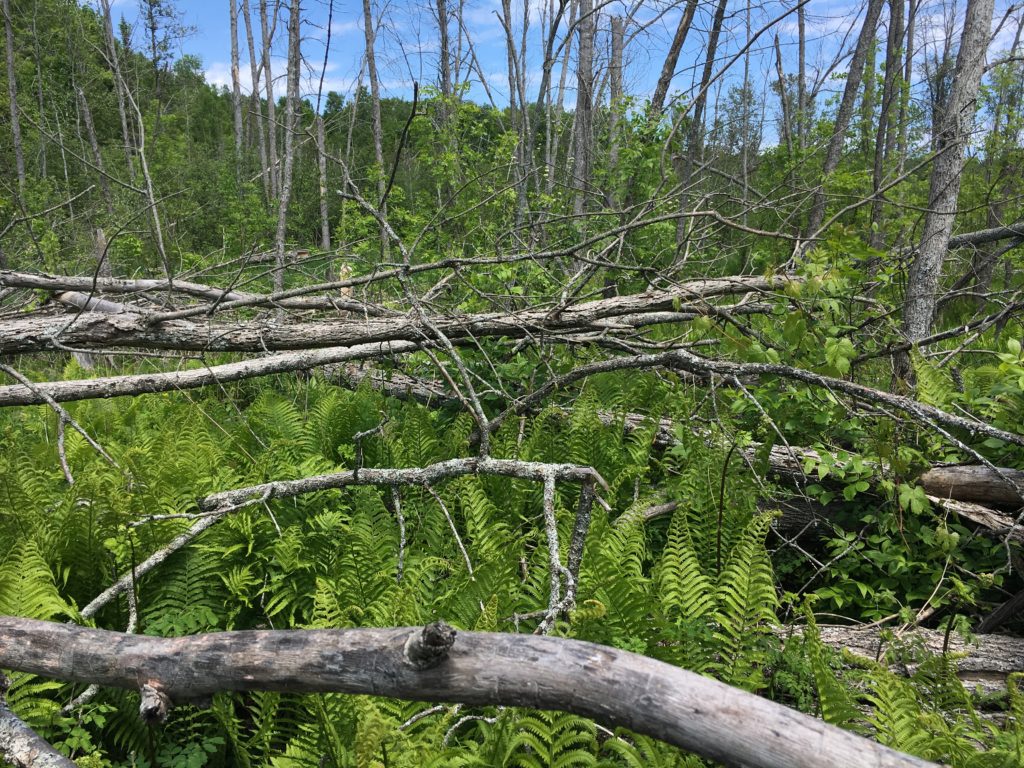
post-EAB ash forest in southern Michigan; photo by Nate Siebert, USFS

1) The Risks of Reliance on Biological Control

An article published lately indicates yet another complication that might undercut reliance on biocontrol to counter mortality of eastern ash populations caused by the emerald ash borer (EAB) (See my blogs from November — here and here)  regarding APHIS’ proposal to eliminate EAB quarantines in favor of relying chiefly on biocontrol – with little data to back up the change.)

Olson and Rieske (full citation at the end of this blog) found that one of the principal biocontrol agents now in use, and on which APHIS proposes to rely, Tetrastichus planipennisi, does not parasitize EAB larvae living in white fringetree, Chionanthus virginicus. While this tree is a suboptimal host for EAB – lower numbers of the beetle survive – the white fringetree would support survival of some EAB – thereby undermining efficacy of the biocontrol program.

Since white fringetree grows a cross much of the eastern range of ash trees — from New York to Texas, as shown by the map posted here, the presence of this reservoir that can be exploited by EAB will challenge the efficacy of biocontrol.

Olson and Rieske believe the reason that T. planipennisi does not attack EAB living in white fringetree is that the fringetree’s wood is so dense that the wasp cannot detect the presence of EAB in the tree (T. planipennisi apparently relies on tactile and vibratory clues to find its prey).

2) A Possible New Biopesticide to Suppress EAB?

A presentation at the 81st Northeastern Forest Pest Council by Mark Ardis of C.D.G. Environment described tests in the United States and Canada of methods for killing EAB by contaminating the beetles with the fungus Beauveria bassiana. The company is testing traps in which male beetles enter, become covered by fungal spores, then they fly out. The males not only become ill themselves, they also contaminate females during mating. Average overall beetle mortality from several test sites is 25%.

Given the terrible impact of the EAB invasions, I find it exciting to contemplate development of additional tools to be used in suppressing the beetles. However, I worry about possible impacts on non-target insects which might also be exposed to the fungal spores. A decade ago, David Wagner identified 21 species of insects that were specialists on Fraxinus, and said he expected additional species would also be associated with ash trees (full citation at end of blog). Mr. Ardis assured me that they had detected no insects other than EAB in the traps. I wish to see additional research on this issue.

The  US Environmental Protection Agency would have to approve use of this biopesticide. I suggest that we all keep an eye on this process.

3) Citizen Scientists Searching for EAB- resistant “Lingering Ash”

Jonathan Rosenthal and Radka Wildova of the Ecosystem Research Institute have established a citizen science program to find ash trees that have survived the EAB invasion. These trees will become the foundation of efforts to breed more trees resistant to the EAB, which could be used to restore our forests.

The program is called “MaMa” – Monitoring and Managing Ash. So far, about 30 plots have been set up in New York, New Jersey, and Vermont where citizens are monitoring ash trees that have apparently survived the EAB invasion. The program seeks additional partners from other areas.

Searches for lingering ash must be strategically timed to ensure that the trees identified are truly resistant to EAB – not just late to become infested. But you can’t wait too long after the infestation wave has gone through an area, because the tree might die due to wind throw or human activity. Or, if a tree has just partial resistance (an important attribute for breeding!), it might eventually succumb. It is also imperative to avoid confusing stump sprouts with truly lingering ash. The conclusion: monitor the infestation and search for lingering trees two years after 95% of ash have been killed, or four years after 50% have been killed.

The MaMa program provides guidance, maps, electronic reporting systems … so you can help!

If you wish to participate – or to learn more – contact the program at monitoringAsh.org or 845-419-5229.

SOURCES

Olson, D.G. and L.K. Rieske. 2019. Host range expansion may provide enemy free space for the highly invasive emerald ash borer. Biol Invasions (2019) 21:625–635

Wagner, D.L. Emerald Ash Borer Threatens Ash-feeding Lepidoptera. 2007. News of the Lepidopterists’ Society. Volume 49, No. 1 (Spring 2007)

Posted by Faith Campbell

We welcome comments that supplement or correct factual information, suggest new approaches, or promote thoughtful consideration. We post comments that disagree with us — but not those we judge to be not civil or inflammatory.

Spotted Lanternfly – Government Shut-Down Hampered Vital Effort at Crucial Time

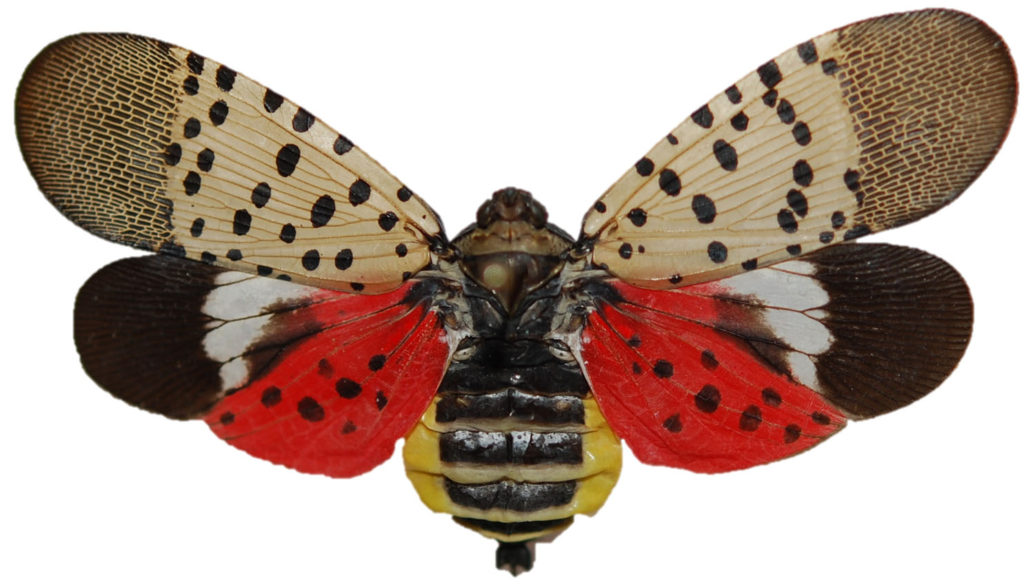
spotted lanternfly; photo by Holly Raguza, Penn. Dept. of Agriculture

I last blogged about the spotted lanternfly (Lycorma delicatula) two years ago. At that time, this insect from Asia (where else?) was established in some portions of six counties in southeastern Pennsylvania. While its principal host is tree of heaven (Ailanthus altissima), it was thought to feed on a wide range of plants, especially during the early stages of its development. Apparent hosts included  many of the U.S.’s major canopy and undertory forest trees, e.g., maples, birches, hickories, dogwoods, beech, ash, walnuts, tulip tree, tupelo, sycamore, poplar, oaks, willows, sassafras, basswood, and elms. The principal focus of concern, however, is the economic damage the lanternflies cause to grapes, apples and stone fruits (e.g., peaches, plums, cherries), hops, and other crops.

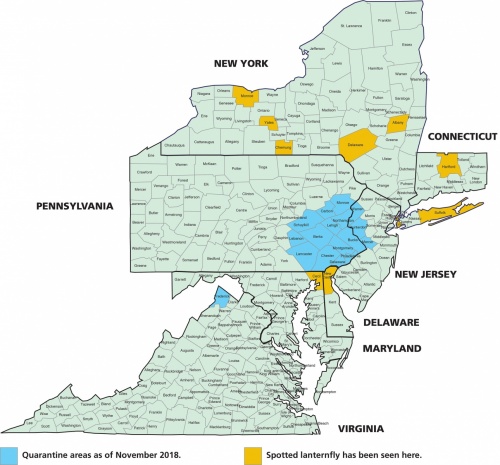
In the two years since my first blog, the spotted lanternfly has spread – both through apparent natural flight (assisted by wind) and through human transport of the egg masses and possibly adults. By autumn 2018, detections of one or a few adults – alive or dead – had been found in six additional states: Connecticut, Delaware, Maryland, New Jersey, New York, and Virginia.

spotted lanternfly quarantines (blue) & detection locations (yellow)
prepared by Cornell University

How many of these detections signal an outbreak?  It is too early to know.

Impacts of the Government Shutdown

Unfortunately the federal government shutdown forced the cancellation of the annual USDA invasive species research meeting that occurs each January. The spotted lanternfly was to be the focus of six presentations. The most important of these was probably APHIS’ explanation of “where we are and where we are going.” The cancellation eliminated one of the most important opportunities for researchers to exchange information and ideas that could spur important insights. Equally important, the cancellation hampered communication of insights to practitioners trying to improve the pest’s management.

One pressing question was not on the meeting’s agenda, however. Would a much more aggressive and widespread response in 2014, when the lanternfly was first detected, have  eradicated this initial outbreak?  I have long thought that this question should be asked for every new pest program, so that we learn whether a too-cautious approach has doomed us to failure. However, authorities never address the issue – at least not in a public forum.

The shutdown also had an even more alarming impact. It interruptedaid by USDA APHIS and the Forest Service to states that should be actively trying to answer this question. Winter is the appropriate season to search for egg masses.  It is also the season to plan for eradication projects. 

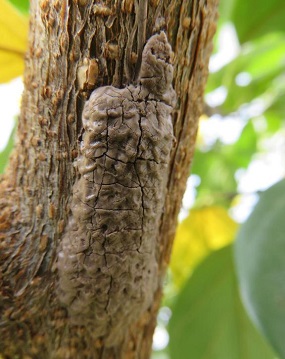
spotted lanternfly egg mass; New York Department of Environmental Conservation

For the first several years, funding of studies of the lanternfly’s lifecycles and host preferences, research on possible biological or chemical treatments, and outreach and education came in the form of competitive grants under the auspices of the Farm Bill Section 10007.  This funding totaled $5.5 million to Pennsylvania.

This commitment pales compared to Asian longhorned beetle or emerald ash borer h— which were also poorly known when they were first detected in the United States.

At the same time, the Pennsylvania infestation spread. It is now known to be established in portions of 13 counties and outbreaks were detected in neighboring Delaware and Virginia. h

This spread – and resulting political pressure – persuaded APHIS to multiply its engagement. A year ago, USDA made available $17.5 million in emergency funds from the Commodity Credit Corporation (that is, the funds are not subject to annual Congressional appropriation). APHIS said it would use the additional funds to expand its efforts to manage the outer perimeter of the infestation while the Pennsylvania Department of Agriculture would focus on the core infested area. APHIS said it would use existing (appropriated) resources to conduct surveys, and control measures if necessary, in Delaware, Maryland, New Jersey, New York and Virginia.

Summary of Latest Status in the Seven States

(see also the write-up here)

Pennsylvania: infestation established (quarantine declared) in portions of thirteen counties (Berks, Bucks, Carbon, Chester, Delaware, Lancaster, Lebanon, Lehigh, Monroe, Montgomery, Northampton, Philadelphia, Schuylkill). The quarantine regulates movement of any living stage of the insect brush, debris, bark, or yard waste; remodeling or construction waste; any tree parts including stumps and firewood; nursery stock; grape vines for decorative or propagative purposes; crated materials; and a range of outdoor household articles including lawn tractors, grills, grill and furniture covers, mobile homes, trucks, and tile or stone. See the regulation here: https://www.agriculture.pa.gov/Plants_Land_Water/PlantIndustry/Entomology/spotted_lanternfly/quarantine/Pages/default.aspx

Delaware: The state had been searching for the insect since the Pennsylvania outbreak was announced. After detection of a single adult female in New Castle County in November 2017, survey efforts and outreach to the public were intensified. Another dead adult spotted lanternfly was found in Dover, Delaware, in October 2018.  

Virginia: infestation established (quarantine declared) in one county. Multiple live adults and egg cases of spotted lanternfly were confirmed in the town of Winchester, Virginia (Frederick County), in January 2018.   As noted in my earlier blog, this region is important for apple and other orchard crops and near Virginia’s increasingly important wine region.

New Jersey: The New Jersey Department of Agriculture began surveying for lanternflies along the New Jersey-Pennsylvania border (the Delaware River) once the infestation was known. It found no lanternflies before 2018. In the summer, however, live nymphs were detected in two counties, Warren and Mercer. In response, the state quarantined both those counties and one located between them, Hunterdon. The state planned to continue surveillance in the immediate areas where the species has been found as well as along the Delaware River border in New Jersey.  

New York: In 2017, a dead adult lanternfly was found in Delaware County. 

State authorities expressed concern about possible transport of lanternflies from the Pennsylvania infested area.

In Autumn 2018, New York authorities confirmed several detections, including a single adult in Albany and a second single adult in Yates County. In response, the departments of Environmental Conservation and Agriculture and Marketing began extensive surveys throughout the area. Initially they found no additional lanternflies.

However, a live adult was later detected in Suffolk County (on Long Island).

Connecticut:  a single dead adult was found lying on a driveway at a private residence in Farmington, CT, in October 2018. The homeowner was a state government employee educated about the insect. Relatives had recently visited from Pennsylvania (Victoria Smith, Connecticut Agricultural Experiment Station, pers. comm.). Searches found no other spotted lanternflies on the property. The state plans additional surveys in the area to confirm that no other spotted lanternflies are present.  

Maryland: A single adult spotted lanternfly (male) was caught in a survey trap in the northeast corner of Cecil County near the border of Pennsylvania and Delaware (an area of known infestation) in October 2018. Because of the lateness of the season and sex of the insect, the Maryland Department of Agriculture does not believe that the lanternfly has established there.

All the affected states are encouraging citizens to report any suspicious finds.

Posted by Faith Campbell

We welcome comments that supplement or correct factual information, suggest new approaches, or promote thoughtful consideration. We post comments that disagree with us — but not those we judge to be not civil or inflammatory.

New Study of Why People Move Firewood – and Its Relation to EAB Deregulation

We know that people moving firewood long distances is cause for great concern because of the likelihood that tree-killing pests will be transported to new and previously uninfested locations. This concern has been heightened by the USDA APHIS proposal to deregulate the emerald ash borer (EAB). As the principal federal “quarantine pest” transported by firewood, the EAB provides the legal foundation for most federal and state firewood regulations. (Of course, the EAB regulations also govern other articles that could transport wood-boring pests). (See earlier blogs here and here.)

Most forest pest professionals agree that the greatest risks are associated with individuals who transport firewood for recreational camping or summer homes. These people have proven to be the most difficult to regulate and the most likely to not see – or to ignore – messages intended to discourage them from moving firewood. The Nature Conservancy manages the “Don’t Move Firewood” program. It has done polling on messages and impact and concludes that the percentage of U.S. voters who have heard a “don’t move firewood” message remains steady and that those who have heard that message are less likely to transport firewood, especially over distances greater than 50 miles. More details are here

A recently published study by several academics and one forest service scientist reinforces The Conservancy’s earlier conclusion about the importance of outreach efforts as an essential component of programs intended to manage wood-boring pests. On the other hand, the new study points to additional nuances in crafting messages that will be effective in changing people’s behavior.


Findings


Daigle et al. 2018 (see full citation at the end of the blog) surveyed 272 people who were camping in public (state) or private campgrounds in three New England states in 2013 – four years after each of those states adopted regulations prohibiting out-of-state firewood and began their outreach efforts. Some campers apparently feel a strong connection to the place they are visiting, as shown by the fact that 84% of the 79 campers at private campgrounds had spent two or more nights camping in the same state in the previous year. That emotional connection might provide a motivation that could be activated to persuade those campers to stop transporting firewood (see below).

The authors found that slightly more than 25% of the 272 respondents reported that they often or always brought firewood from home for camping. More discouraging is that they found that people might not comply even when informed about the risks. Instead, compliance depended largely on the individual’s motivation and commitment level rather than knowledge. Worse yet, campers categorized as “highly involved” in the forest pest issue were just as likely to transport firewood from home as were others. Apparently, these non-compliant campers did not fully “connect the dots” between their concerns about forest health and their own actions. See below for Daigle et al.’s suggestions for ways to help people make those connections.

To understand the role of motivation, Daigle et al. tried to assess the strength of each camper’s beliefs about the relationship between tree-killing pests and the transport of firewood by recreational campers.

Overall, 25% of respondents were very highly involved with tree pest issues; another 22% were highly involved. Respondents’ perception of the relationship between damaging tree pests and transport of firewood differed significantly based on their levels of involvement. Respondents with a low level of involvement were less likely to agree with three statements (listed below) that firewood-associated pests pose a serious threat. Campers with very high levels of involvement strongly disagreed with three other statements that either downplayed the threat or portrayed the respondent’s compliance as “useless” as long as others continue to transport firewood.

Perception questions against which respondents’ agreement or disagreement was measured:

  • “There is not much one individual can do about invasive pests brought in by firewood”
  • “I don’t think invasive pests brought in by firewood are very important.”
  • “The threat of invasive pests brought in by firewood is serious.”
  • “As long as other people continue to bring firewood from home, my efforts to prevent invasive pests are useless.”
  • “The invasive forest pest risk from firewood is exaggerated.”
  • “In the long run, things will balance out with invasive pests.”


Rationale

Respondents’ most frequent explanations for why they take firewood from home when they go camping were cost, quality, and convenience. The most frequently cited reason for not transporting firewood was that the respondent knew that it was not allowed.

Level of pest awareness:

While nearly all respondents (92%) had heard something about non-native pests killing trees, but 57% could not recall the name of a specific pest in the absence of a prompt. When asked about the emerald ash borer and Asian longhorned beetle, more respondents had heard about the ALB (77% v. 52%). Most said the principal source of information was a state agency.


Suggested Actions

Daigle et al. conclude that authorities need to increase citizens’ exposure to outreach materials in order to activate concern and bring about desired actions to curtail risk of pests in firewood.

One clear need is to counter many campers’ belief that their wood is safe so it is okay to transport it regardless of the regulations. Often they based that belief on the fact that their home is not in a designated quarantine zone. Daigle et al. suggested that educational material should try to counter this belief by emphasizing the time lag between a pest’s establishment and its detection.

To help “connect the dots” between campers’ concerns about forest health and the implications of their actions (transporting firewood), survey respondents suggested using more visuals showing the destruction caused by the invasive forest pests, especially in areas they care about – close to home or favorite recreation areas. Daigle et al. thought such pictures would “help the campers with high involvement to trigger activation of attitudes with the association of forest pests and firewood transport.”

Other suggestions for strengthening outreach were to ensure that the message

  • Is novel – that it does not simply reiterate a camper’s initial belief system.
  • Produces agreement by the recipient without generating counterarguments.
  • Is relevant to the audience’s concerns.

They also suggested that campgrounds (public and private) help motivate campers to leave firewood at home by coordinating with local firewood vendors to provide competitively priced firewood at the campground or by including the cost of providing some firewood in the camping fee.

Daigle et al. made two other suggestions that call for stronger actions.

First, they suggested that outreach programs incorporate incentives or rewards to engage people who don’t have a high level of involvement in forest health issues.

Second, they suggested that authorities reinforce the educational message by using “more direct” actions, such as

  • confiscating illegally transported firewood at check stations,
  • issuing warnings about such actions, or
  • administering fines for moving non-compliant firewood.

The authors suggest that state agencies should consider taking these actions – but I see no reason why federal agencies should not also.

EAB; David Cappaert

Conclusions re APHIS’ Proposal to Deregulate EAB

Daigle et al. conclude that outreach efforts aimed at curtailing movement of firewood need to be continued. They are a critical component of overall management programs targetting non-native tree-killing pests – programs developed through decades of research and trials. The motive is clear: more effectively delaying these pests’ spread provides large benefits to municipalities and homeowners.

These are the same points made by many who opposed APHIS’ proposal to deregulate the emerald ash borer.

In its comments to APHIS, The Nature Conservancy noted that the domestic EAB quarantine had been effective in limiting spread of the pest through two of the most important pathways – firewood and nursery stock. The resulting slower spread had protected three-quarters of the ash range in the United States and bought time to develop mitigation measures.

Further, eliminating the federal quarantine would not only unleash this pathway for long-range movement of EAB but undermine the many federal, state, regional, tribal, private, and non-profit  partners’ efforts to curtail movement of all invasive forest pests in firewood.

Many other commenters, including several state agencies, the National Association of State Foresters and Southern Group of State Foresters called for APHIS to continue leading national efforts to curtail spread of EAB and other pests through careless movement of infested firewood. The Montana Department of Natural Resources and Conservation and NASF specifically urged that APHIS reinstate the National Firewood Task Force (which APHIS led in 2009-2010).

The Don’t Move Firewood program has a more informal blog on this topic, available here.


Source

Daigle, J.J., C.L. Straub, J.E. Leahy, S.M.De Urioste-Stone, D.J. Ranco, N.W. Siegert. How Campers’ Beliefs about Forest Pests Affect Firewood Transport Behavior An Application of Involvement Theory. Forest Science XX(XX):1-10  https://academic.oup.com/forestscience/advance-article/doi/10.1093/forsci/fxy056/5232804


APHIS’ Strategic Plan – Focus on Deregulation & Trade Facilitation

APHIS’ headquarters building

USDA APHIS released its Strategic Plan for fiscal years 2019-2023 just after Thanksgiving. The report is 21 pages long. There is no evidence that any stakeholders were asked for input or review.

The Plan has a disappointing – but not surprising – emphasis on deregulation and “customer service”. A second – and more surprising weakness is the lack of attention to plant pests – even those of agriculture, much less natural resources. The emphasis is clearly on animal pests and diseases – including zoonotics.

APHIS’ mission is “To safeguard the health, welfare and value of American agricultural and natural resources.” To accomplish this mission, APHIS has set three goals:

  • Deliver efficient, effective, and responsive programs.
  • Safeguard American agriculture.
  • Facilitate safe U.S. agricultural exports.

Most references to protecting natural resources relate to finding more environmentally sensitive approaches for the program under which APHIS reduces human-wildlife conflicts (e.g., birds being struck by airplanes).

In the Plan, APHIS Administer Kevin Shea writes in his opening message that achieving APHIS’ difficult mission of protecting the health and value of America’s agriculture and natural resources cannot be accomplished by APHIS alone. Instead, the agency must work collaboratively with other government agencies and industry, and consult regularly with partners and stakeholders regarding programs’ effectiveness. Administer Shea also highlights the importance of “delivering our programs and services efficiently, effectively, with integrity, …” The agency promises to modernize information technology, data management, methods of communication with collaborators, exporters and importers, etc., in order to give good return on expenditure of taxpayer resources. APHIS also pledges to make decisions based on science. There are seven references to basing decisions on scientific data.

Fair enough. Such emphases were to be expected from Trump Administration and prefigured by USDA Secretary Sonny Perdue during his nomination hearing, e.g., facilitating exports, supporting better information technology.

However, the Plan refers to “customer service” or “customer experience” 34 times. An additional seven references are made to reducing regulatory burdens. The Plan also speaks of the need to “protect the health, welfare, and value of American agriculture and natural resources. … at a reasonable cost. … Easing regulatory burdens makes it easier to create jobs and promote economic growth.” (Emphasis added.)

Perhaps the recent proposal to deregulate the emerald ash borer is driven in part by the emphasis on minimizing costs to regulated industries and seeking alternative approaches? (Although the deregulation has been under discussion for several years, predating the Trump Administration.)

from APHIS PPQ website

The imbalance in attention to animal versus plant pests and disease is striking. Each of the 14 goals is supported by a number of specific tactics. There are a total of 100 “tactics” under the two goals most directly relevant to preventing or managing pest introductions. These goals are: “Protecting America’s agriculture” and “Promoting U.S. agricultural exports.” Of the 100 tactics, only ten are clearly related to plant pests; 19 are pretty clearly activities that apply to both plant and animal pests and diseases; and five are unclear as to whether they include plant pests as well as animal diseases. Thus, only a third of the tactics apply!

[In making this calculation, I did not include 43 tactics listed under the first goal (“Deliver efficient, effective, and responsive programs”) or three objectives under the goal of “Protecting American agriculture” that apply explicitly to wildlife management, regulating genetically engineered organisms, or ensuring humane treatment of animals.]

Specific examples of such lack of balance include the six examples illustrating the declaration (on p. 4) that “Pest and disease events are more frequent, more complex, and less predictable.” Five of the examples are animal diseases, the sixth is the insect-vectored human disease caused by the Zika virus.

In discussing its efforts to balance its safeguarding efforts against increasing requests for market access by international trading partners, APHIS mentions some activities pertinent to plant as well as animal pest management, e.g., examining disease and pest risks and inserting mitigation strategies into international agreements and interstate movement protocols. However, the only specific action it mentions is helping countries to build capacity to implement the Global Health Security Agenda.

The only reference to forest pests is under one of the 24 tactics associated with Goal 2. Safeguard American agriculture, Objective 2.1: Prevent damaging plant and animal pests and diseases from entering and spreading in the United States to promote plant and animal health. This tactic calls for strengthening the North American perimeter against pest threats from outside the region to prevent introduction of agricultural, forest, and other invasive pests.

Why are Plant Pests slighted?

Perhaps plant-related efforts were left out because they are less “sexy”? Or because they are more distantly linked to human health? The Plan does state that “The tactics in this plan represent only a portion of APHIS activities and by no means embody all the important work APHIS does to fulfill its mission.”

Who knows what was left out?

How will adoption of this strategy affect future efforts to address tree-killing insects and pathogens – both those already present in the country and those yet to be introduced?

Might PPQ Fill in the Gaps?

In 2014 APHIS Plant Protection and Quarantine issued its own strategic plan. This supplementary plan made frequent mentions of safeguarding natural resources. Indeed, the third of the plan’s seven goals stated:                              

Goal 3: Protect forests, urban landscapes, rangelands and other natural resources, as well as private working lands from harmful pests and diseases

Several “tactics” under each goal also directly applied to protecting natural resources. I list them below:

1) Prevent the entry and spread of ag pests and diseases.

  • Coordinate with Canada to implement an effective multi-national system that reduces the threat of tree pests arriving from Asia and other parts of the world (e.g. AGM).

3: Protect forests, urban landscapes, rangelands and other natural resources, as well as private working lands from harmful pests and diseases

  • Maintain EAB regulatory framework to focus on the leading edge of infestations while minimizing impacts on regulated businesses in quarantined areas.
  • Evaluate the effectiveness of biocontrol releases in states and combining both regulatory & outreach activities to address the risks of moving logs, firewood, and nursery stock.
  • Examine detection technologies and partnering with states to determine and apply the most effective strategies to survey & eradicate the Asian longhorned beetle
  • Partnering with federal and state agencies to enact measures such as a public outreach campaign to mitigate the movement of forest pests through firewood.
  1. Ensure the safe trade of ag products, creating export opportunities for U.S. producers
  • play a leadership role in revising ISPM#15
  1. Protect the health of U.S. agricultural resources, including addressing zoonotic disease issues and incidences, by implementing surveillance, preparedness and response, and control programs
  • Strengthen partnerships with Tribal Nations to develop a robust surveillance and early detection system for detecting and reporting invasive species.
  • Work with all stakeholders to coordinate all-hazards agriculture and natural resources response support.
  • Develop science-based programs in collaboration with industry and academia to jointly identify practices that will mitigate pest damage. E.G., SANC program http://sanc.nationalplantboard.org/ [a Systems Approach to Nursery Certification] implemented jointly with the National Plant Board and nursery industry

Dare we hope that PPQ adopts an updated strategic plan that fills in some of the gaps in the overall APHIS plan?


Posted by Faith Campbell


We welcome comments that supplement or correct factual information, suggest new approaches, or promote thoughtful consideration. We post comments that disagree with us — but not those we judge to be not civil or inflammatory.


Comments on EAB deregulation show costs would be too high

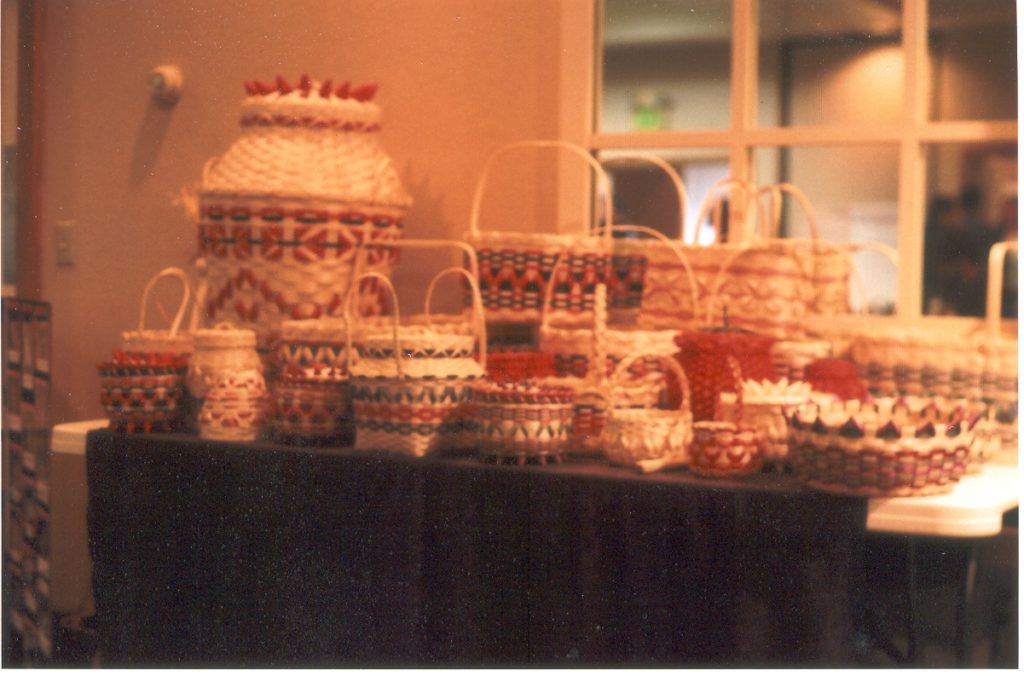
Kelly Church (Grand Traverse Band Ottawa Chippewa) with baskets she wove from black ash


As you know, in September APHIS published a proposal to alter management of the emerald ash borer (EAB). Under the proposal, APHIS would no longer regulate movement of firewood, nursery stock, or other items that can transport EAB to new areas. Instead, APHIS proposed to rely on biological control to reduce impacts and – possibly – slow EAB’s spread. I have posted two blogs about the weaknesses of the underlying analysis and the decision by the Center for Invasive Species Prevention to oppose the proposal. The proposal, accompanying “regulatory flexibility analysis,” and 150 comments by the public are posted here.

The Don’t Move Firewood program has provided links to the individual organizations’ comments here.


Here I summarize major points made by those commenting on the proposal.

Most state agriculture departments accepted the proposal. Few commented at all, leaving that to the National Plant Board. The NPB letter consisted of only four paragraphs. In contrast, several state forestry agencies commented.

Several organizations, including the National Plant Board and AmericanHort, agreed with APHIS that the quarantine has not worked primarily because detection tools are so poor. As a result, EAB is able to firmly establish for several years and spread in a new area before authorities detect it and take action.

It is clear from the comments that deregulating EAB might save APHIS money and effort, but the action will exacerbate the already substantial burden on many other U.S. entities – ranging from federal agencies such as USDA Forest Service and National Park Service to homeowners; woodlot owners to (potentially) exporters of all sorts of products; to Native Americans. The economic components of this potential burden surely deserve more serious evaluation as required under several Executive orders.

Comments Categorized

1) The quarantine has slowed the spread of EAB and it remains valuable in granting communities time to prepare

Several of the commenters wished to counter the proposal’s inference that quarantines had failed; rather, they insisted that quarantine has slowed spread of the EAB and that this strategy is still valuable because it gives un-infested areas more time to prepare. Those voicing this view included the National Association of State Foresters; Maine Department of Agriculture, Conservation and Forestry; Montana Department of Natural Resources and Conservation; Fond du Lac Band of Lake Superior Chippewa in Wisconsin; several bands of Native Americans in Maine (Houlton Band, Penobscot, an individual member of the Penobscot); The Nature Conservancy; a man who is both park superintendent for the City of Kalispell, Montana and Chair of the Montana Urban and Community Forestry Association; three local conservancies in Oregon (West Multnomah Soil and Water Conservation District;  Four-County Cooperative Weed Management Area from Clackamas, Clark, Multnomah and Washington counties in the greater Portland Metro area; Tualatin Soil and Water Conservation District); Jefferson County Colorado Invasive Species Management team; Maine Mountain Collaborative; Blue Hill Heritage Trust of Maine; a small woodland owner in Maine; and a Professor in the School of Forest Resources at the University of Maine.

Oregon’s Department of Environmental Quality Water Quality Division opposed the APHIS proposal. The Division noted that EAB spread in the east was facilitated greatly by the continuity of ash habitats whereas ash habitats are much more patchy in the West. Given this situation, human transport is the most likely means by which EAB will reach the West – either from infested portions of the U.S. or via trans-Pacific trade.

A few entities that supported APHIS’ proposal – e.g., the Southern Group of State Foresters and – in a separate letter – Texas Forest Service – also said the quarantine had been helpful.

As The Nature Conservancy said in its comments, the quarantine effectively limits two of the most important pathways, firewood and nursery stock. The result has been to protect much of the country from the pest and buying time to develop mitigation measures.


2) APHIS’ dismissal of quarantine is a worrying message (see also discussion of firewood below)

Several of the commenters expressed concern that APHIS too curtly dismissed the value of quarantine – both as it functioned to slow spread of EAB and as a tool used against a wide range of pests. Commenters raising issues about the proposal’s apparent undermining of quarantine as a strategy included the Kansas Forest Service; Maine Department of Agriculture, Conservation and Forestry; Vermont Agency of Agriculture, Food and Markets and the Department of Forests, Parks, and Recreation; and Wisconsin Department of Natural Resources Division of Forestry. The Vermont and Wisconsin agencies asked APHIS to clarify to affected parties what it expects to achieve by the proposed deregulation. The Fond du Lac Band of Chippewa warned that the public might interpret the dropping of regulations as signaling that EAB is no longer important.

Five organizations unified under the banner of the Coalition Against Forest Pests noted that APHIS had set a precedent of dropping regulations when quarantines appear to fail.

A subset of these comments focused on a lack of clarity by APHIS as to its future strategy.

Several commenters said that APHIS had not outlined a coherent strategy for the future. The Kansas Forest Service even called the proposal an agency “exit strategy” rather than a coherent plan. Others raising this issue included the Maine Department of Agriculture, Conservation and Forestry; South Dakota Department of Agriculture and Department of Game, Fish and Parks; and the Coalition Against Forest Pests. Maine noted that the proposal would shift the burden of regulation to the states. Maine and South Dakota said that APHIS, as the responsible federal regulatory agency, should provide a clear and consistent process for regulation of potentially infested products across state lines.

The Tennessee Forest Health Coordinator called for an analysis of EAB program successes that might point to ways in which APHIS could support alternative strategies. A professor of forestry in Maine said APHIS should evaluate and assess techniques specifically to optimize the effectiveness of education and outreach.

Among entities which supported APHIS’ proposed new approach, the Southern Group of State Foresters, Texas Forest Service, and two Vermont agencies – Agency of Agriculture, Food and Markets and the Department of Forests, Parks, and Recreation – urged APHIS to champion a national, multi-agency approach to managing EAB, including creation of a national, voluntary treatment standard and label for firewood; redirecting all savings to research & management – including state surveys. These groups also advocated funding increases for APHIS, the USDA Forest Service, and state EAB programs; and support for states to carry out their enlarged responsibilities for survey, outreach, education, and assistance to affected parties.

The Vermont agencies wrote that EAB “is a nationally significant pest, … which warrants a significant federal role.” Because EAB impacts on communities, forest health, and the forest economy continue to expand, a decision to discontinue regulatory activities should be accompanied by increased federal support for research and management.

The National Association of State Foresters also called for APHIS to champion a national, multi-agency approach, with a somewhat longer list of components. These should include support state research and management efforts, the biocontrol program, identifying genetic strains of ash trees that are resistant to EAB, maintain national treatment criteria for wood products (including firewood), and reconvene the National Firewood Task Force. NASF also urged the USDA Forest Service to develop a cooperative management program to sustain and replace ash trees killed by EAB.

Dr. David Orwig of Harvard Forest also called for funding not just biocontrol but also research areas like silviculture, chemical control, ash utilization, and management guidelines.

This pattern of asking for continued or expanded federal engagement – beyond biocontrol – is quite apparent.  Some entitites that said they supported APHIS’ proposal nevertheless called for the agency to continue detection and response components of the program – expressly contrary to the proposal itself.

Thus, AmericanHort, the two Vermont agencies, Wisconsin Department of Natural Resources Division of Forestry, and two Maine departments called for APHIS to continue or increase its engagement in EAB detection and other management activities – including biocontrol, outreach to explain the change in strategy, and engaging the National Park Service and Forest Service in promulgating a consistent firewood policy.

Others who asked for similar commitments were straightforward in opposing the proposal. Thus the North Dakota Department of Agriculture and North Dakota Forest Service – in separate letters – asked that APHIS continue to provide resources to help states monitor EAB presence and respond to any new detections. The Oregon Department of Forestry asked that federal agencies continue to fund research and development of early detection and rapid response strategies for EAB; conservation of ash genetic resources and promotion of natural resistance; research on uses of dead ash; as well as classical biocontrol once EAB is established in a new area.

Several commenters said that they had considered APHIS to be a critically important partner in countering the EAB and were disappointed that the agency is backing away. Native Americans in particular considered the proposal to be a betrayal of the Federal government’s treaty responsibilities vis a vis recognized tribes. The Fond du Lac Band of Wisconsin wrote that upholding a federal EAB regulation is vital to the protections of important cultural and natural resources both on the Reservation and within territories ceded to the Band by several 19th Century treaties. The tribe cited EO 13175 issued by President Clinton. The Houlton Band of Maine said APHIS has a mission to defend federally recognized tribes against invasive species.  The federal government should not make a decision so contrary to its fiduciary trust responsibility to federally recognized tribes.


3) Need for continued APHIS leadership on firewood regulation

The importance of APHIS continuing to lead national efforts to curtail spread of EAB (and other pests) through careless movement of infested firewood was stressed by many commenters. Voicing this need were many of the entities which opposed the proposal, including Maine Department of Agriculture, Conservation and Forestry; Montana Department of Natural Resources and Conservation; Southern Group of State Foresters; Texas Forest Service; the two Vermont agencies; The Nature Conservancy; and the National Association of State Foresters. As noted above, the NASF, Southern Group, Texas, and Vermont all said APHIS should support creation of a national, voluntary treatment standard & label for firewood. TNC said eliminating the EAB quarantine – the best known and understood firewood regulation – will exacerbate difficulties of outreach. Public outreach and education work best when they are backed up by core consistent rules. Montana Department of Natural Resources and Conservation and NASF called for reinstating the National Firewood Task Force (which APHIS led in 2009-2010).

Several entities that supported the proposal also called for continued APHIS engagement on firewood. One, the Wisconsin DNR Division of Forestry, urged APHIS to work with the National Park Service and Forest Service to create a consistent firewood policy. A second, the NPB, noted that it is developing guidance to states interested in initiating regulations, best management practices, or outreach programs. The NBP added that it welcomes any assistance from APHIS.

As The Nature Conservancy and Tennessee Forest Health Coordinator pointed out, the firewood effort – federal regulations, state regulations, education and outreach under the “Don’t Move Firewood” campaign – all helped curb movement of several tree-killing pests, not just EAB.


4) Others Pointed Out the Importance of Consistent Regulations to Keep Markets Open

A smaller number of entities addressed the similar importance of consistent rules governing interstate and US-Canadian trade in other types of vectors that can transport EAB and which are to be deregulated under the proposal. These included the NASF.  Several private groups from Maine and the Maine Department of Agriculture, Conservation and Forestry noted the importance of reaching agreement with Canada, which is a major market for their wood products. The two South Dakota departments also expressed concerns.

The National Wooden Pallet and Container Association raised the prospect of truly tremendous disruption of trade. At present, the United States and Canada exempt wood packaging originating in either country from requirements that it be treated in accordance with international standards (ISPM No. 15). Canada has many reasons to fear that crates and pallets carrying exports from the U.S. might be infested by EAB once APHIS stops enforcing quarantine regulations. If Canada responds by ending the exemption and requiring wood packaging from the U.S. to comply with ISPM#15, that action would affect a wide range of U.S. exports – from fruits to auto parts. In 2017, the U.S. exported $282 billion worth of goods to Canada (Office of the U.S. Trade Representative)


5) The Economic Analysis Underlying the Proposal was Inadequate

Several commenters criticized the adequacy of the economic analysis. The most specific criticisms were put forward by the California Forest Pest Council; CISP; the five organizations commenting under the banner of the Coalition Against Forest Pests; and the National Wooden Pallet and Container Association. The latter two cited specific Executive orders and the Paperwork Reduction Act in calling for a review of the proposal by the Office of Management and Budget & USDA Office of General Counsel to reassess whether it meets the conditions for the reduced economic analysis. As noted above, the NWPCA mentioned specifically a fear that Canada might discontinue the mutual exemption under which wood packaging may move between the two countries without being treated in accordance with ISPM#15. The possibility of such an action would certainly push the proposal over the $100 million threshold for completing much more rigorous economic analyses.

Other economic concerns not adequately addressed in the view of the commenters relate to costs arising earlier due to the faster spread of EAB to un-infested western states. Costs imposed earlier than would otherwise be the case are considered relevant in regulatory decisions. Furthermore, businesses in these and possibly other states will face new regulations adopted by states to fill the void left by federal deregulation. Finally, the lack of consistency arising from separate state regulations will impede interstate or US-Canada commerce.

Non-regulatory costs – death of trees and associated removal costs – costs to the forest industry, plus municipalities and home owners in areas not currently affected by infestation – were also not discussed in the proposal.

Several commenters said that APHIS had underestimated the ecological and cultural values threatened by spread of EAB. These included the Fond du Lac Band, Penobscot band, TNC, the Oregon soil conservation district and weed management area; Maine Mountain Collaborative and Woodland Owners, as well as several individuals.

The Nature Conservancy noted that three-quarters of the native ash range of the conterminous United States and 14 of vulnerable species in the U.S. and Mexico are still free of EAB as a result of the quarantine.

A Minnesota community’s Parks Commission noted that loss of trees to EAB can lead to other problems and costs. Consequently, the goal of “saving money” will not be achieved. In short, EAB-caused tree mortality “affects communities, including residents, homeowners, and taxpayers. Funding should be directed both to slowing the spread of the pest and to treatment of affected trees.”

A small woodland owner in Maine asked why APHIS did not evaluate economic impacts to landowners & municipalities.

Oregon’s Department of Environmental Quality Water Quality Division added that pesticides used to control EAB might cause negative impacts in riparian and aquatic environments.


6) Several Commenters questioned whether freed-up funds would support biocontrol – or whether they should

As noted in my earlier blogs, there are questions about whether biocontrol will be efficacious in protecting forests across the continent. CAFP echoed these questions. Blue Hill Heritage Trust of Maine called biocontrol experimental.

The Fond du Lac Band pointed out that most tribes don’t accept biocontrol on their reservations – so spending all available funds on this approach doesn’t help Native Americans.

The Maine government and the Penobscot Band of Maine expressed doubt that increased funding would actually materialize.


7) Comments that do not fit neatly into these categories.

The California Department of Agriculture said that it intends to promulgate a state exterior quarantine to protect its agriculture (olive trees are hosts of EAB) and environment.

The South Dakota Department of Agriculture and Department of Game, Fish and Parks concluded that interstate regulatory options should be a higher priority than other methods of control.

The Houlton Band of Maine said that maintaining the domestic quarantine is the only federal action that can adequately address the universally agreed fact that human activities cause the rapid spread of EAB.

The Western Governors Association described the region’s vulnerability to EAB spread and, citing recent Association policy resolutions, said a decision of this magnitude should be made only after substantive consultation with Western Governors.

The National Association of State Foresters pointed out that a decline in federal funding for EAB detection surveys will significantly reduce state forestry agencies’ capacity to monitor and respond to EAB spread.

The Jefferson County, Colorado Invasive Species Management team recommended retaining the quarantine using either the 100th Meridian or Continental Divide as the containment boundary. It cited as a justifications the “culture of vigilance” created by strong quarantines. This vigilance saves financial resources and protects natural and agricultural resources.

Finally, the Fond du Lac Band of Lake Superior Chippewa said that abandoning methods that are in place for the prevention of EAB’s spread, such as federal and state quarantines, and favoring only options that focus on rehabilitating a site after it has undergone a severe infestation, presents a large and unnecessary ecological risk. Invasive species programs have always focused on “prevention” being the key.


Posted by Faith Campbell

We welcome comments that supplement or correct factual information, suggest new approaches, or promote thoughtful consideration. We post comments that disagree with us — but not those we judge to be not civil or inflammatory.