Emerald ash borer – crucial research needs funding!

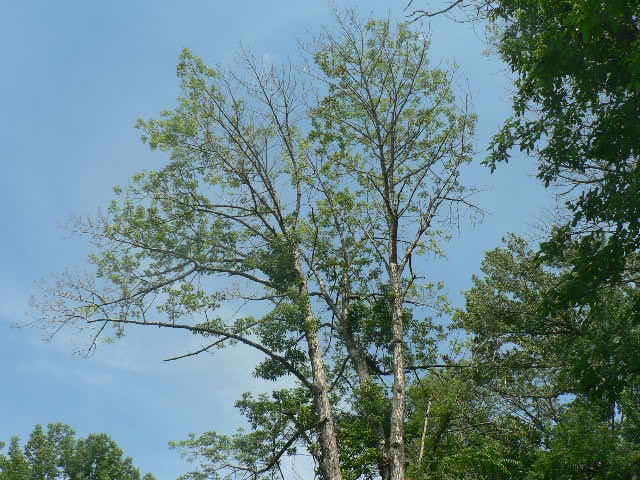
ash tree dying after attack by emerald ash borer

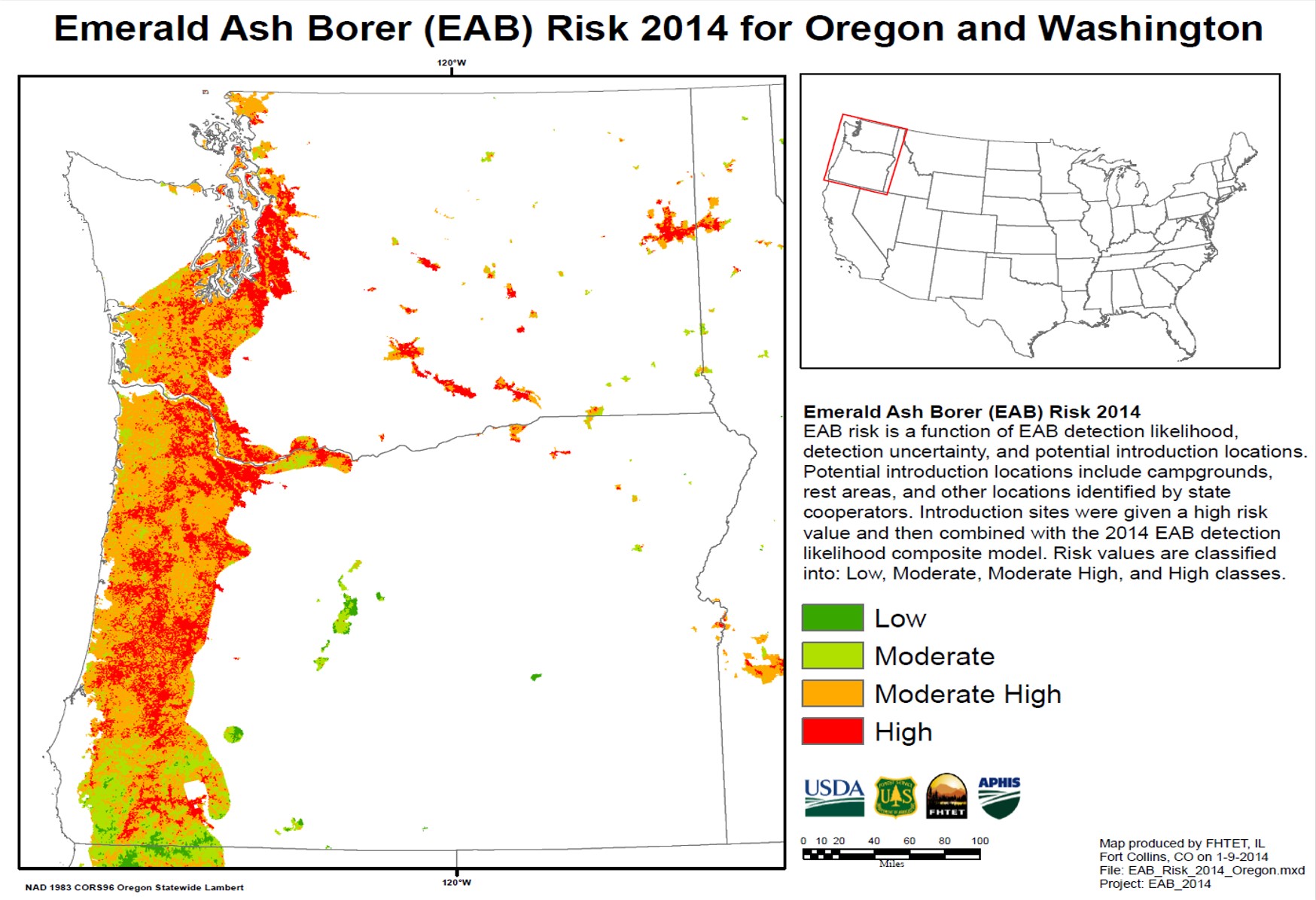
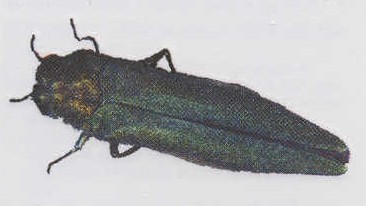
We all know that the emerald ash borer (EAB) has caused enormous damage in the approximately 25 years since it was first introduced to Michigan and Ontario. (For more information, see writeup here. In brief, EAB has killed “untold millions” of ash trees across more than 170,000 square miles in 25 states and two provinces (map).
Apparently all North American ash are vulnerable – more than 20 species in Canada, the U.S., and Mexico. The genus Fraxinus is one of the most widespread on the continent. These trees’ deaths are causing changes in forest species composition, structure, and function. Hundreds of arthropod species that depend on the genus will be affected.

Nevertheless, forests with important ash components are still outside the infested area and deserve greater protection.

20160222_Campbell

Also, ash trees are among the most common ornamental trees planted in U.S. cities and towns. The death of these trees show us that EAB also has imposed billions of dollars in costs on people who had no direct role in the insect’s introduction and spread. Several studies have proposed estimates:
o Communities in Ohio would likely incur costs up to $4 billion if all ash trees on public land were removed and replaced (Sydnor et al. 2007).
o Communities in four Midwestern states would have to pay an estimated $26 billion to remove and replace as trees growing in parks, private lands, and along streets (Sydnor et al. 2011).
o The cost of treating or removing only half of the affected urban and suburban trees across the anticipated range of EAB during the 10-year period from 2009 to 2019 would be $20 billion (Kovacs et al. 2011).

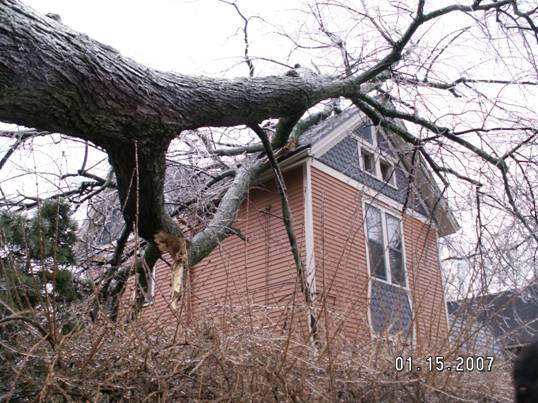
ash tree killed by EAB; Ann Arbor, MI; courtesy of Major Hefje

Over the 14 years since EAB was detected, scientists have learned much about the insect, its hosts, and its management. Early detection of new outbreaks remains difficult. However, traps and lures are more effective than even a few years ago. Other new tools also have been deployed, including strategies for protecting high value trees, and slowing the rate of ash mortality in urban and natural forests.

Four biocontrol agents have been released at sites across the invaded area, although it is too early to know how effective they will be in suppressing EAB populations and protecting ash trees.

The systemic insecticide emamectin benzoate controls EAB for up to three years. This means that municipalities and property owners can now save mature ash trees. Studies show that treating such trees costs less than removing dead trees and planting replacements (Herms and McCullough 2014).

Scientists in Ohio, Michigan, Kentucky, and Massachusetts are testing whether treating just some trees in forest settings can help protect nearby ashes.

One of the most important potential responses to this insect is to breed resistant ash trees. The USDA Forest Service and USDA APHIS have funded such efforts since 2005 – only three years after the insect was detected. Scientists have demonstrated that some ash species that have coevolved with the insect in Asia – especially Manchurian ash – are resistant to EAB attack. More recently, they have been studying how to cross-breed the resistant and non-resistant species and how to evaluate the hybrid progeny for genetic resistance.

Dr. Pierluigi (Enrico) Bonello and others at Ohio State and Wright State University  are studying how Manchurian ash trees resist EAB attack. Their focus is on the chemicals present in the trees’ tissues – how they differ in Manchurian ash compared to North American species. These studies have found that Manchurian ash trees contain chemicals that decrease growth and survival of EAB larvae, and decrease the attractiveness of the tree to ovipositing females.
The Ohio team next needs to continue their progress towards identification of the specific chemicals involved, insert the genes that produce them into other ash tree genomes, and produce a large enough number of progeny to test whether the new trees’ genes provide the expected protection.

The team is also studying the other side of this equation – how EAB larvae neutralize defense mechanisms of vulnerable ash species and how these trees may be manipulated to interfere with these adaptations of EAB.. This is a long-term project that needs consistent and sustained support over many years to bring about real capacity for restoring disappearing ash populations.

Unfortunately, funding for this vitally important work is not assured. USDA APHIS (link to 101 on CISP) has funded the team’s work to date, but may no longer be in a position to do so. . After all, it is 14 years since EAB was detected and a decade since APHIS stopped trying to eradicate it. The goal now is to manage EAB in the forest and in urban settings, over the long term. This task logically should fall to the USDA Forest Service.

Both APHIS and the Forest Service are challenged by the need to respond to the introduction of ever more non-native tree-killing insects and diseases; by the need for programs to address pests already present; and by simultaneous reductions in agencies’ budgets. APHIS’ budget for managing all “tree and wood pests” has fallen from $76 million to $55 million since 2011 – a 28% reduction. The USFS’ research budget has fallen less, proportionately: from $307 million to $292 million (a 4% cut).
However, the USFS Research budget has never been generous in funding research on non-native invasive species. Annual totals for invasive species research have been between $5 and $5.6 million since 2012. EAB specifically has been funded at between $1.2 and $1.8 million.
(For a longer discussion of funding shortfalls and other impediments to programs intended to help our forests recover from EAB and other non-native pests, read Chapter 6 of Fading Forests III, available here)

The emerald ash borer is the most destructive and costly forest insect ever introduced to the United States. Surely the government agency responsible for protecting our forests should provide additional resources to counter this threat.

Sources:
Herms, D. A. and D. G. McCullough. 2014. Emerald Ash Borer invasion of North America: History, biology, ecology, impacts, and management. Annual Review of Entomology, Vol 59, 2014 59:13-30.

Kovacs KF, Mercader RJ,Haight RG, SiegertNW,McCulloughDG,Liebhold AM. 2011. The influence
of satellite populations of emerald ash borer on projected economic costs in U.S. communities, 2010–
2020. J. Environ. Manag. 92:2170–81

Sydnor TD, Bumgardner M, Subburayalu S. 2011. Community ash densities and economic impact
potential of emerald ash borer (Agrilus planipennis) in four Midwestern states. Arboric. Urban For. 37:84–89

Sydnor TD, Bumgardner M, Todd A. 2007. The potential economic impacts of emerald ash borer
(Agrilus planipennis) on Ohio, U.S., communities. Arbor. Urban For. 33:48–54
Posted by Faith Campbell

Support Higher Funding Levels for Key APHIS & USFS Programs

The President’s proposed Fiscal Year (FY)17 budget once again proposes to reduce funding for APHIS and USDA Forest Service. These are the programs that protect our trees and forests; these are the programs that try to prevent introductions of tree-killing insects and disease pathogens, and to counter the damage they cause once introduced.


Capitol
Congress is expected to act beginning this spring; we need Congress to enact adequate funding for these programs in FY17 – which begins in October.

I provide below the FY15 & FY16 funding levels and the President’s proposed FY17 level. I also suggest more appropriate funding levels for these programs.
Please contact your Representative and Senators by mid-March and ask him or her to support higher funding for these crucial programs. Your voice is particularly important if your Representative or Senator sits on either the Agriculture or Interior Appropriations subcommittees (listed below).
Fiscal Year Funding for Key Programs (funds are given in millions of dollars)

APHIS (I apologize – columns don’t line up!)
FY15       FY16       FY17 (Pres’ request)             $needed

Plant Health (total)       305         314           288
Specialty crops               156        164           146            164
Tree & wood pests           54          54              46               54

The “Tree & wood pests” account funds all APHIS efforts to contain or eradicate the Asian longhorned beetle and emerald ash borer; much smaller programs targeting walnut twig beetle/thousand cankers disease, laurel wilt, and polyphagous shot hole borer [all described here as well as the agency’s involvement in firewood and other slow-the-spread campaign. Even at the $54 million funding level, APHIS is already ignoring many established pests … and its ability to respond to new introductions is severely restricted. With the continuing presence of damaging wood-borers in incoming crates and pallets (See earlier blogs discussing the wood packaging pathway posted in August, September, and October; and Chapter IV of Fading Forests III, now is not the time to cut funding for this program.

The “specialty crops” account includes a small amount of funding (in past years, approximately $5 million) to support APHIS’ program aimed at preventing spread of sudden oak death through movement of nursery stock. (For discussions of this risk see my earlier blogs from July and August and Chapter IV of Fading Forests III.

The budget justification notes that “cooperators who directly benefit from … activities [under the Tree and Wood Pests and Specialty Crop Pests programs] will need to increase contributions to achieve the same level of program operations. Even with the proposed decreases, APHIS will continue to pay between 47 percent and 80 percent of the costs of the programs. …” The Office of Management and Budget has long tried to reduce the federal share of pest containment costs.  I counter: is it not appropriate that the agency with the legal responsibility for preventing and containing pest introductions bear the cost of responding when pests are introduced nevertheless?

Fiscal Year Funding for Key Programs (funds are given in millions of dollars)

USFS  (I apologize – columns don’t line up!)
FY15        FY16        FY17 Pres’ request        needed
Forest Health Protection (total)

104.57         99.6             92.06           100?
Federal lands    58.922        58.922       51.382
Coop lands         45.655        40.678       40.678         48
FHP funds the Forest Service’ assistance to federal partners (e.g., National Park Service) and non-federal entities (e.g., states, cities, private land managers) for management of forest pests – both native and alien species. The FY17 budget justification does not provide a breakdown of spending by species. The FY16 President’s request allocated only $12 million (13% of total funds) to specific projects targeting non-native insects or pathogens. More than $7 million of these funds went to just one species – European gypsy moth. Please advocate for a higher proportion to go to non-native pests.

Research (total)                              296       291        291.982            300?
Forest Inventory                              70          75                   77               83

The USFS Research and Development program provides most of the funds for research to understand non-native pests’ pathways of introduction and spread and biological impacts. These funds also support most of the efforts to breed resistance into tree species and some of the work on other control methods, such as chemicals and biocontrol. The FY17 budget justification does not provide a breakdown of spending by species; the FY16 President’s request allocated only $5 M (less than 2% of total funds) to projects targeting non-native insects or pathogens. Please advocate for a higher proportion to go to non-native pests.

Members of key House & Senate Appropriations Subcommittees
Agriculture Appropriations Subcommittees (fund APHIS):
House: Aderholt (AL), Yoder (KS), Rooney (FL), Valadao (CA), Harris (MD), Young (IA); Farr (CA), DeLauro (CT), Bishop (GA), Pingree (ME)
Senate: Moran (KS), Blunt (MO), Cochran (MS), McConnell (KY), Collins (ME), Hoeven (ND), Daines (MT), Merkley (OR), Feinstein (CA), Tester (MT), Udall (NM), Leahy (VT), Baldwin (WI)

Interior Appropriations Subcommittees (fund USFS):
House: Calvert (CA), Simpson (ID), Cole (OK), Joyce (OH), Stewart (UT), Amodei (NV), Jenkins (WV); McCollum (MN), Pingree (MD), Kilmer (WA), Israel (NY)
Senate: Murkowski (AK), Alexander (TN), Cochran (MS), Blunt (MO), Hoeven (ND), McConnell (KY), Daines (MT), Cassidy (LA); Udall (NM), Feinstein (CA), Leahy (VT), Reed, Tester (MT), Merkley (OR)

Posted by Faith Campbell

How should regulators address strains of pathogens?

Species of tree-killing pathogens can have several “strains” that may vary in virulence or hosts affected.

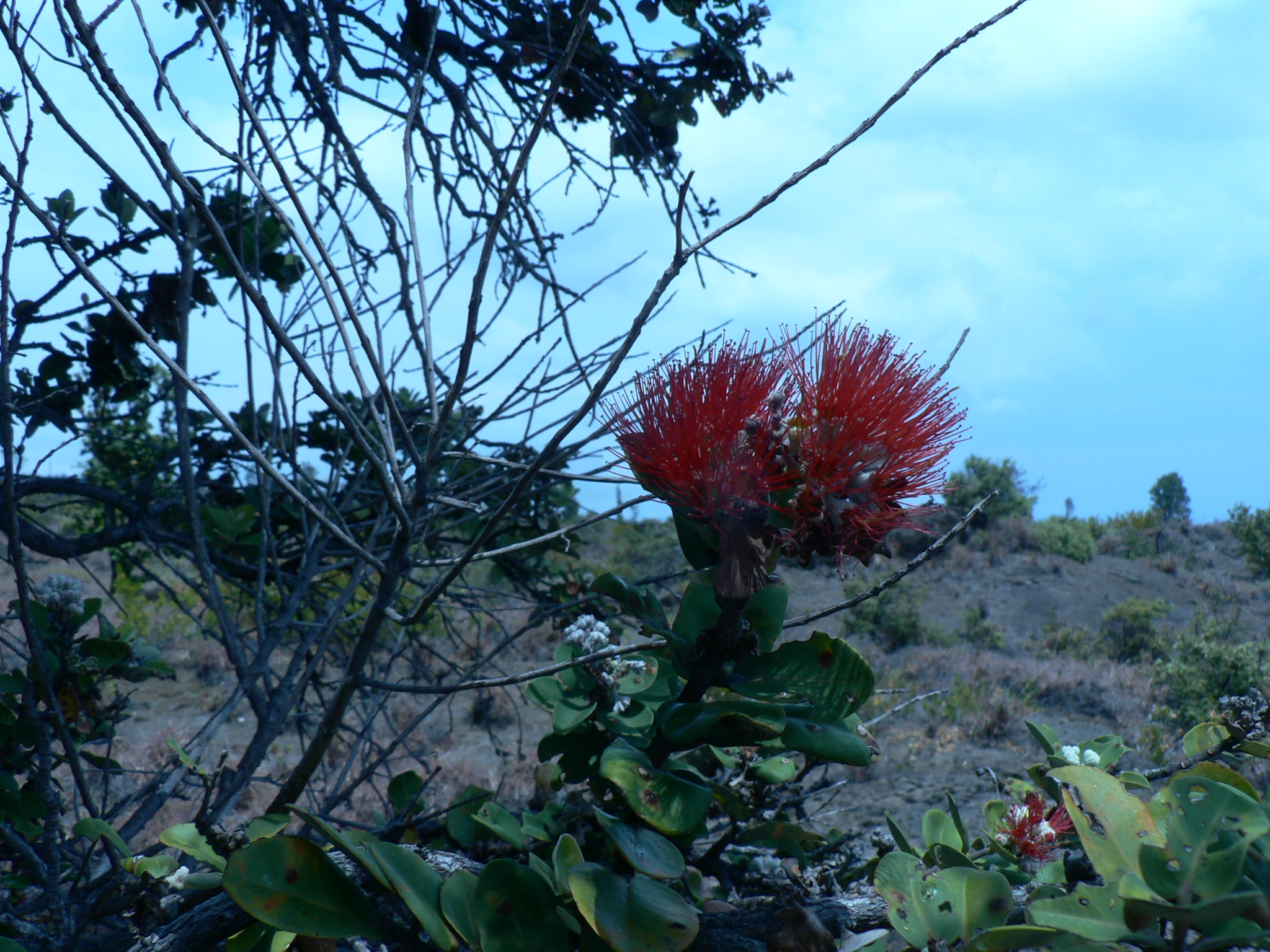
`ohi`a`ohi`a tree on Hawai`i

This is a phenomenon well known to pathologists, but regulators have not adapted their programs to address it. Once a pathogenic species is determined to be established in the country, APHIS considers the entire species to be “non- actionable” and will not attempt to prevent introduction of any new strains. As the examples below illustrate, allowing introduction and spread of new strains poses risks to North America’s trees.

World-renowned British forest pathologist Clive Brasier has spoken out often on the risk posed by various strains of a pathogen. He has also written about the potential for pathogen species to hybridize and for that hybrid to threaten new hosts.

How widespread a problem is this? Some of the pathogens causing the greatest damage have several strains that vary in their virulence and host range.

  •  The sudden oak death pathogen, Phytophthora ramorum is known to have four strains: NA1, NA2, EU1 and EU2. The EU1 lineage has primarily been found in European nurseries and forests. It has also been recovered from several nurseries and waterways on the U.S. west coast. Last year, the EU1 lineage was detected in a forest in Oregon (see my blog posted 15August 2015). This is troubling for two reasons:
    * the EU1 lineage is more aggressive than the NA1 lineage already present in the forests of California and Oregon. Some of the individual tree which now appear to be resistant to the NA1 lineage might succumb to the EU1 lineage.
    * The EU1 and NA1 lineages belong to opposite mating types, so they can potentially reproduce, thereby increasing the genetic variability of the pathogen. (Sexual reproduction in P. ramorum can only occur when opposite mating types meet; in the absence of opposite mating types, all reproduction is clonal.)

• The guava rust or myrtle rust pathogen, Puccinia psidii, also has several strains which vary in their virulence. Already, a new strain introduced to Jamaica in the 1930s caused extensive damage to the allspice industry – although a different strain had been on the island for decades (Carnegie 2016).

Hawaiian conservationists worry that a more virulent strain of P. psidii might be introduced and threaten additional species of Myrtaceae on the Islands – especially the `ohi`a tree which is the major canopy tree in 80% of the Islands’ remaining native forest. These forests are key to maintaining the Islands’ watersheds and biodiversity, especially because `ohi`a nectar is the principal food source for many of the remaining native and rare bird species. (See writeup here)

Multiple strains of `ohi`a rust have been identified in the pathogen’s native range of Brazil. Using funds from the USDA Forest Service, scientists in Brazil (Costa da Silva et al. 2014) tested five of the strains; three proved to be highly virulent on most `ohi`a seedlings tested. `Ohi`a from several locations were tested; none showed significant resistance to these three strains of the P. psidii pathogen.

The tests were carried out under conditions highly conducive to infection, so the results cannot be used to predict epidemiological behavior and ecological ramifications in natural conditions. Nevertheless, the results do support the need for greater efforts to prevent introduction of new strains to the Islands.

Additional tests are under way to determine whether the Brazilian strains are more virulent than that strain currently found in Hawai`i and to learn more about possible variation in vulnerability among `ohi`a trees from a greater variety of sites.
• The pathogen that causes Port-Orford cedar root disease (Phytophthora lateralis) has now been found to have four lineages. Scientists compared isolates from the pathogen’s putative native range on Taiwan to isolates from the North American west coast (where it has been established since early in the 20th Century) and Europe (where it began killing trees in the 1990s). They found one slow- growing strain from Taiwan, one fast-growing strain from North America and Europe, and one of intermediate growth from a small area of the United Kingdom (Brasier et al. 2012).

Sometimes, pathogens behaving in unexpected ways are initially thought to be a strain or lineage, but are later classified as a novel species. Thus the Ceratocystis causing `ohi`a wilt was initially thought to be a strain of C. fimbricata, a widespread fungus that has been on the Hawaiian Islands for decades. Scientists now think it is a new species (Keith 2016).

Pathogens are difficult to manage. The vast majority of species remain undescribed. They are difficult to detect until they cause noticeable damage. For a longer discussion of the challenges posed by pathogens and other unknown organisms, read Chapter 3 of Fading Forests II, available here.

However, the great threat to our forests necessitates that APHIS and other phytosanitary agencies (in states and around the world) develop improved methods for addressing the challenge that pathogens pose. Our forests simply cannot afford introductions of more tree-killing fungi, oomycetes, and other pathogens.

At a minimum, APHIS should respond to evidence that a particular pathogen is composed of multiple strains with varying virulence by agreeing to designate such novel strains as “actionable” and applying all its authorities and powers to prevent introduction and spread of the novel strains.

As I noted in my blog of earlier this month, APHIS also needs to develop more effective strategies for addressing introduction and spread of pathogens generally. USDA should assist such efforts to improve controls over pathogens by bringing about prompt finalization of two APHIS initiatives:
1) Prohibiting temporarily plants suspected of transporting known damaging pathogens. This action is allowed under the NAPPRA (not authorized for importation pending pest risk assessment) program.
2) Requiring foreign suppliers of living plant imports to implement “hazard analysis and critical control point” programs to ensure that the plants are pest-free during production and transport. This approach is allowed under ISPM#36 and would be authorized under pending changes to APHIS’ “Q-37” regulation. (See Federal Register Vol. 78, No. 80 April 25, 2013.)

(See longer discussions of these programs in Fading Forests III, available here.)
Sources

Clive M. Brasier, C.M, S. Franceschini, A.M. Vettraino, E.M. Hansen, S. Green, C. Robin, J.F. Webber, and A.Vannini. 2012. Four phenotypically and phylogenetically distinct lineages in Phytophthora lateralisFungal Biology. Volume 116, Issue 12, December 2012, Pages 1232–1249

Carnegie, A.J., A. Kathuria, G.S. Pegg, P. Entwistle, M. Nagel, F.R. Giblin. 2016. Impact of the invasive rust Puccinia psidii (myrtle rust) on native Myrtaceae in natural ecosystems in Australia. Biol Invasions (2016) 18:127–144 DOI 10.1007/s10530-015-0996-y

Costa da Silva, A., Magno Teixeira de Andrade, P. Couto Alfenas, A., Neves Graca, R., Cannon, P., Hauff, R., Cristiano Ferreira, D., and Mori, S. 2014. Virulence and Impact of Brazilian Strains of Puccinia psidii on Hawaiian `Ohi`a (Metrosideros polymorpha). Pacific Science (2014), vol. 68, no. 1:7-56
Keith, L. 2016. Ceratocystis fimbriata, Rapid O’hi’a Death: Unraveling the mystery. 27th USDA Interagency Research Forum on Invasive Species January 12-15, 2016 Annapolis, Maryland


Posted by Faith Campbell

How should APHIS manage pathogens with Multiple Hosts?

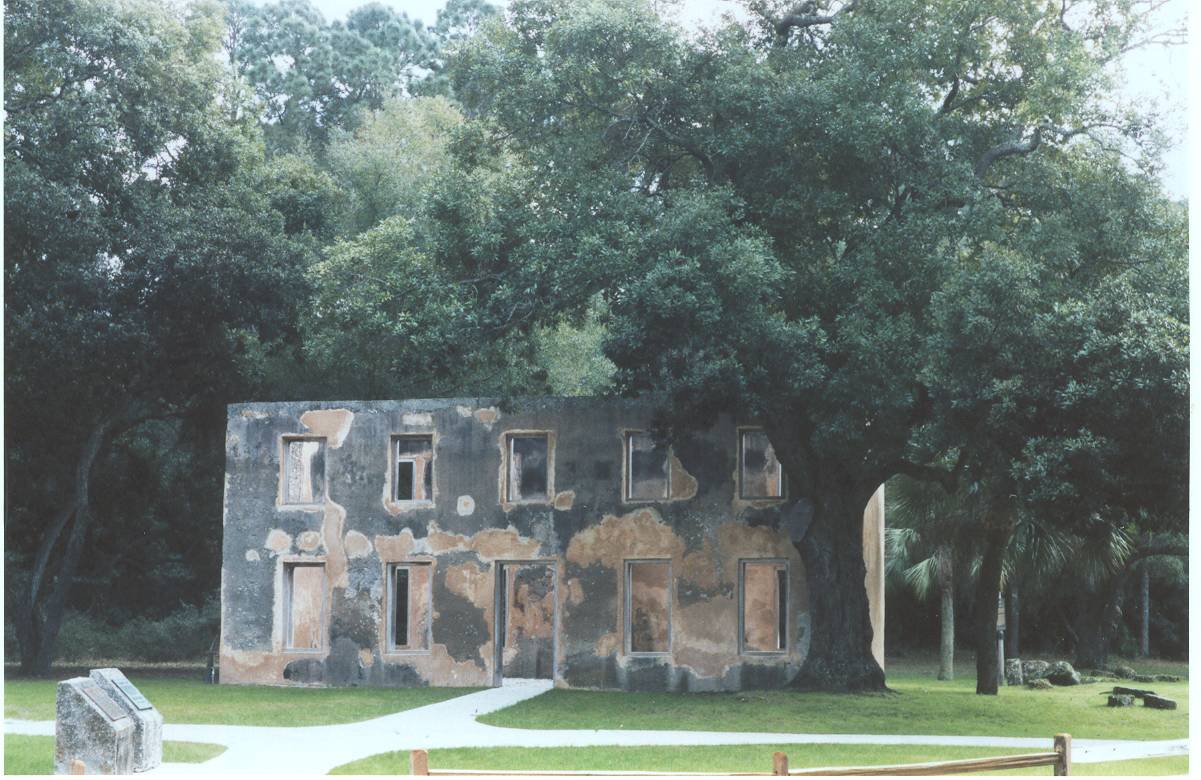
large redbay tree on Jekyll Island, Georgia; afterwards killed by laurel wilt

Horton House w redbay


North America and other continents have been invaded by a growing number of tree-killing organisms – primarily pathogens – that attack a wide range of hosts100 species or more. Examples include sudden oak death / Phytopthora ramorum**, laurel wilt**, and the Fusarium fungus transported by the polyphagous and Kushiro borers**. These pathogens are more difficult to manage because of the range of potential hosts. Furthermore, a single introduced species can threaten numerous host species across large areas.
This is not a new phenomenon. Root rot caused by Phytophthora cinnamomi reached North America in the late 18th or early 19th Century, where it eliminated chestnut and chinkapin from low-elevation sites. P. cinnamomi is found in countries around the world. In Australia, it is killing a wide range of trees and shrubs across several plant families that constitute important components of Australia’s flora, including Myrtaceae, Proteaceae, Epacridaceae and Papilionaceae. There have been significant ecological impacts to plant communities and dependent wildlife in southeast and southwest Australia (Carnegie et al. 2016).

Nevertheless, the apparent proliferation of tree-killing organisms with multiple vulnerable hosts is troubling. So is the rapidity with which these organisms have been spread to distant places.

The disease called variously guava, eucalyptus, or myrtle rust – caused by Puccinia psidii** – attacks plants in “only” one family – the Myrtaceae. Its host list now includes more than 450 species in 73 genera. More than 200 of these are native species in Australia – where more than 10% of the plant species are members of this family. At least some of these plants are highly vulnerable to the rust; more than half of the individuals of the small tree Rhodomyrtus psidioides surveyed in a recent study were dead less than four years after the pathogen was introduced (Carnegie et al. 2016). New Zealand also has large numbers of Myrtaceae.

Guava rust is believed to be native to South and Central America. It was introduced to the Caribbean and southern Florida by the first decades of the 20th Century. Recently, the pathogen began to move. A new strain arrived in Florida in the 1990s. The rust was detected in Hawai`i in 2005. There, it is killing the native endangered shrub Eugenia koolauensis and an invasive shrub Syzygium jambos. In the past decade, guava rust has also invaded Japan, China, Australia, South Africa and New Caledonia (Carnegie et al. 2016).

Laurel wilt** also attacks “only” one plant family, the Lauraceae. While the United States is home to a relatively small number of plants in this family, Central America is a center of endemism for the family. In the United States, concern has focused on the disease’s threat to the avocado industry. However, the pathogen’s principal wild host, redbay, is likely to be virtually eliminated from U.S. forests except as seedlings too small to be attacked. (One ray of hope: Professor Jason Smith at the University of Florida is making progress on breeding redbays resistant to the disease.) Given the large number of presumably vulnerable trees and shrubs in Mexico and Central America, the spread of laurel wilt into Texas is worrisome.

Other pathogens attack shrubs and trees across several families. I noted Phyotphthora cinnamomi above. Other Phytophthoras share this ability.

Phytophthora ramorum** has a host list exceeding 130 herbaceous, shrub, and tree species in families ranging from maples to rhododendrons, oaks to hemlocks. P. ramorum is established in coastal parts of California and southern Oregon; and in western United Kingdom and Ireland. Another Phytophthora, P. kernoviae,** has a similarly broad host range. It is also established in the United Kingdom.

Fusarium dieback is caused by the fungus Fusarium euwallacea, which is transported by two beetles in the Euwallacea genus, called the polyphagous** and Kushiro shot hole borers. The beetle is known to attack more than 300 species of trees, shrubs, and vines in more than 58 plant families; hosts include species of oaks, maples, sycamores, hollies, and willows.

These multi-host pathogens are extremely difficult to contain – or even to detect early in the invasion. Australia tried to contain Puccinia rust, but conceded failure after only a few months. USDA APHIS does not have containment programs for any of three pathogens described here – despite the danger they pose to trees and other native vegetation.

Industry groups sometimes fund efforts to protect their crops. Avocado growers have spurred research on both laurel wilt and the Fusarium fungus — threats to their crop. However, academic researchers working on the impacts of laurel wilt on native ecosystems must scramble for funds. This is exactly the kind of research that requires – and deserves – increased public funding.

What should be done? Phytosanitary agencies need to improve greatly programs aimed at preventing introduction of pathogens to naïve hosts in new geographies. For the U.S., APHIS has already advocated two important improvements:
1) Prohibiting temporarily plants suspected of transporting known damaging pathogens. This action is allowed under the NAPPRA (not authorized for importation pending pest risk assessment) program.
2) Requiring foreign suppliers of living plant imports to implement “hazard analysis and critical control point” programs to ensure that the plants are pest-free during production and transport. This approach is allowed under ISPM#36 and would be authorized under pending changes to APHIS’ “Q-37” regulation. [See Federal Register Vol. 78, No. 80 April 25, 2013]

(See longer discussions of these programs in Fading Forests III, available here.)

Unfortunately, implementation of both of these programs has stalled. A list of plants proposed in May 2013 for NAPPRA restrictions has still not been finalized. Revisions to the Q-37 regulation proposed in April 2013 have also not been finalized.

USDA leadership should promptly implement these long-delayed improvements.
** indicates those pathogens and insect/pathogen complexes that are described briefly here 

Source

Carnegie, A.J., A. Kathuria, G.S. Pegg, P. Entwistle, M. Nagel, F.R. Giblin. 2016. Impact of the invasive rust Puccinia psidii (myrtle rust) on native Myrtaceae in natural ecosystems in Australia. Biol Invasions (2016) 18:127–144 DOI 10.1007/s10530-015-0996-y

Posted by Faith Campbell

Help promote new film about tree-killing pests!

A new film demonstrating the impact of non-native tree-killing insects and diseases will be shown on or around Arbor Day (April 20). You can help ensure that lots of people see the film!!! Contact the program manager at your local PBS channel to ask that the channel broadcast the film.

ash tree killed by EAB; Ann Arbor, MI; courtesy of Major Hefje

“Trees in Trouble: Saving America’s Urban Forests” focuses on emerald ash borer in Cincinnati. The film explores our connections to the trees and forests in our communities – and the threats to those trees. The film’s website links viewers to resources for taking action.

To see clips from the film and other resources go to this site.

The film was produced by Torrice Media. Featured experts and speakers include Prof. Dan Herms of Ohio State, Jenny Gulcik, a community forestry consultant, and Cincinnati Council member Wendell Young.
As we all know, killer pests threaten trees across the country, not just in southern Ohio! Such pests are usually introduced first in cities – not necessarily ports! – because that is where crates and pallets, imported ornamental plants, and other articles to which pests attach arrive. Furthermore, trees along streets and in yards and parks are often more vulnerable than forest trees to such introduced pests because they are often subject to other stresses such as soil compaction, air pollution, elevated temperatures, and salt exposure. Finally, city trees are often planted as multiple individuals of the same species; when a pest that attacks that species arrives, entire neighborhoods can lose their tree canopy – and the real values that canopy provides.
Because of the high value of urban trees, these pests’ greatest economic damage is in urban and suburban areas. The study by Julianne Aukema and others documented that municipalities spend more than $2 billion annually to remove trees killed by non-native pests. Homeowners spend $1 billion a year removing trees killed by non-native pests, and another $1.5 billion is lost in property values due to tree mortality.

Thus, it is vitally important that American city dwellers learn about the values that trees provide to them, the threat to those values from introduced pests, and what they can do to minimize this threat. “Trees in Trouble” is a tool to advance citizens’ understanding of these issues through a combination of broadcasts, compelling video presentations and active civic engagement efforts linked to the film.

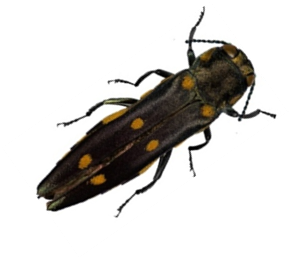
goldspotted oak borer

Some people – less familiar with the issue than we are – do not immediately understand the relevance of Cincinnati’s story to other cities. We know that while the trees and killers differ across the country, the cost to the communities is the same: destruction of trees that provide shade and other important ecosystem services and create our sense of home. Plus, the ways these pests are introduced are the same – and so are the steps we can take to reduce this threat.

[The goldspotted oak borer illustrates the universality of this threat – trees in southern California are being killed, too!]
You can help overcome this roadblock!
If you would like to help promote the film to your local PBS station or to local viewers, contact Andrea Torrice at 513-751-7050 or here

If you would like to obtain a copy of the film to screen to your group, contact Andrea Torrice at the same phone number or website. (Andrea is Italian; her name is pronounced “to re chay”, with the accent on “re”.)
Source:
Aukema, J. E., B. Leung, K. Kovacs, C. Chivers, K. O. Britton, J. Englin, S. J. Frankel, R. G. Haight, T. P. Holmes, A. M. Liebhold, D. G. McCullough, and B. Von Holle. 2011. Economic Impacts of Non-Native Forest Insects in the Continental United States. Plos One 6.

Posted by Faith Campbell

Fed up by lack of action on invasive species? Let’s pressure the right targets!

CapitolOn December 1, the House Oversight Committee, Subcommittee on Interior, held a hearing on invasive species. This hearing was apparently held at the request of the ranking Democrat, Brenda Lawrence of Michigan. Ms Lawrence is most concerned about aquatic invaders in the Great Lakes. Chairwoman Cynthia Lummis is from Wyoming, so her focus is on invasive plants on western rangelands.
Chair Lummis opened the hearing, but left promptly. Other subcommittee members who were present for varying lengths of time were Paul Gosar (R-AZ), Ken Buck (R-CO), Gary Palmer (R-AL), Brenda Lawrence (D-MI), and Stacey Plasket (D-USVI) ; from full committee: Will Hurd (R-TX).

The witnesses were the newly appointed executive director of the National Invasive Species Council (NISC), Jamie Reaser; the president of the Reduce Risk from Invasive Species Coalition (RRISC), Scott Cameron; Dr. George Beck of Colorado State University, representing the Healthy Habitats Coalition (HHC); and Dr. Alan Steinman, expert on aquatic invaders from Grand Valley State University in Michigan.
This hearing followed those in past years that had been stimulated by the HHC. Both HHC and Congressional members expressed great frustration that the federal government is not putting sufficient effort into stopping or reversing the spread of invasive plants on western rangelands.
The December hearing – like its predecessors – focused the criticism on NISC. I think this focus is misguided. NISC has no independent authority or power; it was created to coordinate agencies’ actions, not to substitute for them. Its staff lack sufficient rank to tell agencies what to do.
In § 4 of Executive Order 13112, NISC’s duties are listed as providing national leadership through (a) overseeing implementation of this order, seeing that Federal agencies’ activities are coordinated, complementary, cost-efficient, and effective, …; (b) encouraging planning and action at local, tribal, State, regional, and ecosystem-based levels …; (c) developing recommendations for international cooperation …; (d) developing, in consultation with the Council on Environmental Quality, guidance to Federal agencies pursuant to the National Environmental Policy Act (NEPA)…; (e) facilitating development of a coordinated network among Federal agencies to document, evaluate, and monitor IAS impacts …; (f) facilitating establishment of an … information-sharing system …; and (g) preparing a national Invasive Species Management Plan every two years.
NISC has fallen far short of these requirements. It has not succeeded in developing guidance on NEPA – at least in part because CEQ has not cooperated. Most glaringly, NISC has issued only two Management Plans over 15 years — the most recent in 2009. All Members at the hearing complained to Reaser about this failure. Members see the Plan as key to setting priorities and ensuring that funds are well-spent.

All Members seemed to think that NISC actually should carry out on-the-ground activities and direct agencies’ priorities. Some want NISC to overcome federal agencies’ alleged foot-dragging in helping local groups eager to attack local problems, or to pressure Native American tribes to cooperate.

While I share the critics’ frustration about federal agencies’ inaction, I believe the productive approach is to apply pressure on – and where deserved, support for – those who have the authority and power to act, but who often choose not to. VilsackThese are:
• heads of agencies and departments, especially the secretaries of Agriculture and Interior and their Under and Assistant secretaries;
• the President;
• budget staffs of these and other relevant agencies;
• the Office of Management and Budget;
• Members of the Congressional appropriations committees.

If these people think that dealing with invasive species is politically important, they will do so. If they don’t hear from their constituents about invasive species, they will focus on other issues.

At the hearing, Scott Cameron, of RRISC, said that what is missing is commitment at the Assistant/Under Secretary Level. Such a commitment would both drive coordination among agencies at headquarters and provide “cover” for regional staff trying to work together. He feels that a new Management Plan is useful but not sufficient. Scott made several recommendations intended to raise the political visibility of invasive species issues:
1) NISC submit annual work plan to Congress – he thought this would get political level attention in the departments;
2) NISC serve as forum to coordinate with regional governors’ associations;
3) NISC create national network of regional early detection/rapid response efforts;
4) NISC serve as forum for regional officials of land-managing agencies to coordinate and work together – this might succeed in getting attention of agency leadership and OMB;
5) NISC ensure coordination of priorities and approaches by member agencies at headquarters level; and
6) NISC evaluate best practices by other governments, propose their adoption by the United States.

Dr. Beck, of HHC, reiterated his constituency’s complaint that there has been little progress on invasive species problems despite three decades of effort. He blamed the lack of leadership by NISC – without saying how staff can “lead” the political appointees who head agencies! He called – again – for abolition of NISC and transfer of its $1 million budget to “on the ground” programs. Beck also decried inconsistencies in agencies’ budgets, lack of collaboration with states and local groups in setting priorities, and NEPA having become an excuse to avoid taking action.

HHC has promoted introduction of bills in both the House and Senate – H.R 1485 & S. 2240 – which would require:
• strategic planning;
• cooperation with states;
• categorical exclusion from NEPA review for efforts to protect high-priority sites;
• 5% annual reduction in weed species’ extent; and
• allocation of agencies’ invasive species funds according to the following formula: 75% for on-the-ground activity; 15% for combined research and outreach; 10% or less for administrative costs.

Of these recommendations, I think the proposed dropping of environment reviews of invasive species management programs – especially in “high priority” sites of high ecosystem values – would be a disaster. Management programs have environmental impacts, too; and some approaches cause more harm than good. For example, use of herbicides to eliminate knapweeds has sometimes resulted in takeover of the site by non-native annual grasses that are even more difficult to control.

EAB profile reverse

Also, I think the proposed funding allocation is very unwise. Research and outreach often contribute enormously to control or containment of invasive species. I have been unable to get straight answers from the USDA Forest Service about how such an allocation would affect their programs – which are divided among three separate entities – Research, State and Private Forestry, and National Forest System.

HHC is very active in promoting its position – and those of us who think differently are not yet being heard in Congress.

I think there is room to work with members of the House Oversight Committee to focus more attention on the agencies’ political leadership – where it belongs and where pressure might have an effect. Rep. Lawrence seems interested in continuing efforts. Rep. Hurd of Texas asked about steps to prevent plant pest introductions (none of the witnesses knew about APHIS programs). Furthermore, a second Michigander, Rep. Dan Benisheck, and a Californian, Rep. Mike Thompson, co-chair the Invasive Species Caucus. Although none of them has yet expressed concern about tree-killing pests, given where they are from they might be persuaded to engage.

At present, the only Congressional champion for effective invasive species programs – especially as regards tree-killing pests – is Senator Leahy of Vermont. He has helped prevent further cuts in budgets for APHIS and USFS. We need more friends in Congress.

I urge you – and your friends! – to contact your Representatives and Senators to explain how invasive species are damaging important ecological and economic resources in your state. Ask them to work with their colleagues to support and improve federal programs aimed at preventing new introductions, containing species already introduced, and developing effective methods to reduce pests’ impacts and restore native forests.

Posted by Faith Campbell

Trans-Pacific Trade Partnership – implications for pests in forests

containers at Long Beach

The aim of the TPP is to further expand trade between the U.S. & Canada and other nations bordering the Pacific. (This does not include China, which is not a party to the pact). At same time, completion of a program to widen the Panama Canal means more huge container ships will travel directly to the East coast from Pacific countries. Clearly, rising trade with distant countries – especially those with similar plant genera – raises the risk of pest introductions. Stress federal and state agencies that are already struggling to counter this threat.

The question is whether the TPP agreement itself will exacerbate this threat. Is there language in the agreement that will further hamper adoption and deployment of effective phytosanitary programs?

Fortunately, I think largely not.

The TPP’s section on sanitary and phytosanitary programs – Chapter 7 largely reiterates or clarifies procedures already included in the WTO SPS Agreement and International Plant Protection Convention. TPP provides additional clarity on some points, e.g., transparency & communication.
(Unfortunately, I believe that the SPS Agreement and IPPC already hamper efforts to protect our trees from alien pests – especially those that are not yet known – the infamous “unknown unknowns”. For my analysis see Fading Forests II, available here. A more optimistic analysis of the SPS Agreement as an obstacle to preventing pest introductions is provided by Burgiel et al. 2006, available here.

I am quite pleased to see that the TPP explicitly allows importing countries to consider their level of confidence in the exporting country’s phytosanitary capability when deciding what measures to impose – a very important improvement! This occurs twice:
• Article 7.8: Equivalence

5. In determining the equivalence of a sanitary or phytosanitary measure, an importing Party shall take into account available knowledge, information and relevant experience, as well as the regulatory competence of the exporting Party. [emphasis added]

• Article 7.10: Audits

6. A decision or action taken by the auditing Party as a result of the audit shall be supported by objective evidence and data that can be verified, taking into account the auditing Party’s knowledge of, relevant experience with, and confidence in, the audited Party. This objective evidence and data shall be provided to the audited Party on request. [emphasis added]

I am also pleased that the TPP acknowledges the need to act proactively in the face of a threat. Under Article 7.1, Definitions, the definition of “emergency measure” reads:

“ … a sanitary or phytosanitary measure that is applied by an importing Party to another Party to address an urgent problem of human, animal or plant life or health protection that arises or threatens to arise in the Party applying the measure;” [emphasis added]

The TPP also puts protecting human, animal, or plant life or health first – before facilitating trade – when specifying the agreement’s objectives. See Article 7.2: Objectives, paragraph (a), which reads:
(a) protect human, animal or plant life or health in the territories of the Parties while facilitating and expanding trade by utilising a variety of means to address and seek to resolve sanitary and phytosanitary issues;

The TPP reiterates parties’ rights under the World Trade Organization’s SPS Agreement and IPPC to adopt more stringent regulations as long as they justify such action by both adopting a higher level of protection and conducting a risk assessment appropriate to the circumstances. See especially Article 7.9, paragraph 2:
2. Each Party shall ensure that its sanitary and phytosanitary measures either conform to the relevant international standards, guidelines or recommendations or, if its sanitary and phytosanitary measures do not conform to international standards, guidelines or recommendations, that they are based on documented and objective scientific evidence that is rationally related to the measures, while recognising the Parties’ obligations regarding assessment of risk under Article 5 of the SPS Agreement.

I do worry some about Article 7.11, Import Checks, paragraph 8, which states:

8. An importing Party that prohibits or restricts the importation of a good of another Party on the basis of an adverse result of an import check shall provide an opportunity for a review of the decision and consider any relevant info submitted to assist in the review. The review request and info should be submitted to the importing Party within a reasonable period of time.

How does this requirement apply to the U.S. policy of rejecting shipments in wood packaging that does not comply with ISPM#15? (For discussions of the role of wood packaging as a pathway for introduction of highly damaging pests, review my blogs posted on July 15, August 31, September 11, and October 30.) The U.S. does not currently consult with exporting country before denying entry to individual shipments. Nor do we want the U.S. to be required to do so!

Finally, Article 7.17: Cooperative Technical Consultations, paragraph 5 requires countries to involve “relevant trade and regulatory agencies” but says nothing about including other stakeholders, such as cities or homeowners whose trees are at risk to introduced pests.

Posted by Faith Campbell

What is being introduced, and how? APHIS — make data public!

It is important that officials responsible for phytosanitary protection, Congressional oversight committees, and stakeholders have access to key trade and pest data as well as independent analyses of them in order to evaluate programs’ effectiveness.

Capitol

But we don’t have such access … and existing analyses cannot be used to detect trends.

My focus is on tree-killing insects and diseases, but these constitute a small fraction of the total number of all plant pests that have become established in North America since Jamestown was settled. According to Aukema et al. (2010), approximately 450 non-native insects have colonized forest and urban trees. This is about 17% (less than one-fifth) of the total of 3,540 non-native insects established in North America according to Yamanaka et al. (2015). The larger number includes ones apparently causing negligible harm, along with a significant proportion of insects and diseases affecting row crops.
What could we learn from comparisons of data on introduced tree-related vs. overall plant pests? Could we uncover new pathways? Identify more effective approaches to phytosanitary protection?
Unfortunately, neither published studies nor USDA/APHIS’ data allow comparisons and tracking of trends in pest establishment.

For example, a study by Work et al. (2005) estimated that during the late 1990s, approximately 10 new phytophagous insects were established each year. The authors considered all phytophagous insect pests, not just tree-killing pests; but they did not include pathogens or insects that feed on dead wood (e.g., termites).

The Work team’s number is about four times larger than the estimated rate of establishment provided by Aukema et al. (2010), which estimated that approximately 2.5 new tree-killing insects and pathogens became established each year from 1860 to 2006. The Aukema study did not attempt to track establishments of all pests that use arboreal hosts. On the other hand, it did include pathogens. So the two studies’ findings are not truly comparable.

In its 2009 Implementation Plan for Section 10201 of the Food, Conservation and Energy Act of 2008, APHIS reported that between 2001 and summer 2008, 212 plant pests had been reported as new to the United States – an average of 30 new pest establishments detected each year. This estimate does include pathogens … but not insects that do not feed on living plants. So it is not comparable to the Yamanaka study. Still, the APHIS figure is 12 times higher than the Aukema et al. estimate for tree-killing pests.

I am unaware of a publicly available estimate for more up-to-date establishment rates.

An internal USDA APHIS database was made available to me. It lists about 90 new species of plant pests (of all types, ranging from insects to nematodes to fungal pathogens) with populations that were detected in the U.S. during the four-year period 2009 – 2013. The rate of detection of “new” species established during this four-year period was approximately 22 per year. This establishment rate is higher than the estimate of approximately 10 new phytophagous insects per year during the late 1990s put forward by Work et al. — not surprising since taxa other than insects are included. However, this estimate is lower than the 30 new pest introductions each year estimated by USDA APHIS for 2001-2008.

So what is the current rate? How has the establishment rate been affected by changing volumes of imports over this 20-year period (imports rose until 2008, then fell because of the Great Recession)? How has the reported number of new establishments been affected by changes in monitoring program criteria and funding levels?
Do the databases include sufficient information about dates of probable establishment, likely pathways of introduction, etc., to allow a more complete analysis of at least the new insect species?
I have not seen the database compiled by Yamanaka’s team so I don’t know.

The USDA database from 2009-2013 does not specify the probable pathways by which these pests entered the United States. I have concluded that the viruses, fungi, aphids and scales, whiteflies, and mites were probably introduced via imports of plants, cuttings, or cut foliage or flowers. These pests number 37 – or 41% of the total.

The database on tree-killing insects and pathogens compiled by the Aukema team includes both date of probable introduction and likely pathway; and articles by this team discuss trends in introduction rates. Thus, Liebhold et al. 2012 reports that approximately 69% of the pests in the database were introduced via the trade in live plants. This figure is one-third higher than the proportion I calculated from the USDA database (which, I remind you, includes all plant pests, not only those that attack trees).

Many of the pests associated with imports of plants in the Liebhold study were introduced decades ago, before the U.S. adopted phytosanitary regulations. Does the difference in the proportion of pests associated with plant imports in the 2009-2013 period compared to the earlier period covered by Liebhold et al. reflect a reduced risk from this pathway as the result of tighter regulations and shifts in the market? I doubt anyone can say – beyond the acknowledged increase in wood-borers associated with wood packaging.

Without better, and more readily available, data, we won’t ever be able to answer key questions. It is urgent that APHIS make available its data on trade volumes, pest interceptions, newly established pests, etc., for analysis by academics, other agencies, and stakeholders. And certainly it would be helpful if both APHIS and other researchers used more consistent approaches so to make possible longitudinal studies that can disclose trends.

Sources:

Aukema, J.E., D.G. McCullough, B. Von Holle, A.M. Liebhold, K. Britton, & S.J. Frankel. 2010. Historical Accumulation of Nonindigenous Forest Pests in the Continental United States. Bioscience. December 2010 / Vol. 60 No. 11

Liebhold, A.M., E.G. Brockerhoff, L.J. Garrett, J.L. Parke, and K.O. Britton. 2012. Live Plant Imports: the Major Pathway for Forest Insect and Pathogen Invasions of the US. www.frontiersinecology.org

Work, T.T.; McCullough, D.G.; Cavey, J.F.; Komsa, R. 2005. Arrival rate of nonindigenous species into the United States through foreign trade. Biological Invasions7: 323-3

Yamanaka, T., N. Morimoto, G.M. Nishida, K. Kiritani, S. Moriya, A.M. Liebhold. 2015. Comparison of insect invasions in NoAm, JP and their Islands Biol Invasions DOI 10.1007/s10530-015-0935-y
Posted by Faith Campbell

Wood packaging again ???!!!!!! Yes – problems need to be fixed!!

CBP inspector views Cerambycid larvae found in wood packaging that bears ISPM#15 stamp

Do we want triple the current number of wood-boring non-native insects to be established in just 35 years? We all know the damage that some of these insects can do (see summary or longer descriptions; for specific insects).
Over the past 30 years, at least 58 non-native species of wood- or bark-boring insects have been detected in the United States (not quite 2 new insects per year). Most were presumably introduced via imported wood, especially wood packaging (Haack et al.).

Yes, the U.S. has implemented the International Standard for Phytosanitary Management (ISPM)#15.  Nevertheless, USFS researcher Bob Haack estimates that 13,000 shipping containers per year – or 35 per day – transport tree-killing pests to the U.S. This is the basis for an estimate that by 2050 – just 35 years from now – the number of wood-boring pests introduced to the country will triple above current levels.
We don’t need to rely only on extrapolations to know that APHIS’ implementation of ISPM#15 is not protecting our trees. As noted in my blog of 11 September, inspectors at the ports continue to find insects in wood packaging – even wood packaging marked as having been treated according to the requirements of the standard. Nearly half of the wood packaging entering the country that does not comply with the treatment requirements comes from Mexico. U.S. and Mexican forests are separated by deserts – allowing insects to evolve there to which our trees are vulnerable (see my blog from 11 September and descriptions of goldspotted oak borer, soapberry borer, and walnut twig beetle and its accompanying fungus here).
An on-going study seeks to identify insect larvae found in wood packaging; it is a cooperative effort of USDA APHIS’ laboratory at Otis, Massachusetts, and Customs and Border Protection staff at eight ports. Since 2012, these ports have sent 848 cerambycid and buprestid beetle larvae to Otis for identification. The APHIS scientists have succeeded in identifying 292 larvae, or only 34%. They constituted 39 species and 29 genera.

At least 44 of these insects were from China; they included 6 Asian longhorned beetles. Remember, the U.S. first adopted regulations requiring China to treat its wood packaging at the end of 1998 – nearly 17 years ago!!! Another 20 insects were from Russia – which has been required to treat its wood packaging since early 2006 – nearly 10 years ago.
As noted in the documents linked to above, and in earlier blogs (15 July, 22 and 31 August, 11 September), wood-boring pests collectively have been the most costly of the types of tree-killing pests introduced. One study estimated that they cost local governments and homeowners $2.4 billion each year to manage dying and dead trees. The homeowners lose another $830 million in residential property values.

What the Government Has Done

While USDA APHIS has cracked down on U.S. producers of wood packaging who cheat and is promoting workshops to educate our trade partners on wood packaging treatment requirements, the government should do more to protect our forests.

What More Can be Done

• At present, U.S. policy allows an importer to be caught 5 times in 1 year with wood packaging that does not comply with the regulatory requirements. Requirements adopted a decade or more ago should be enforced more strictly! The Bureau of Customs and Border Protection and USDA APHIS should instead penalize all importers whose wood packaging does not comply with regulatory requirements.

• The Bureau of Customs and Border Protection should incorporate the wood packaging requirements into its “Customs-Trade Partnership Against Terrorism” (C-TPAT) program .

• USDA APHIS should re-examine the economic pros and cons of requiring importers to switch to packaging made from materials other than wooden boards. The new review should incorporate the high economic and ecological costs imposed by insects introduced via the wood packaging pathway.

• USDA leadership should move forward and the President’s Office of Management and Budget should approve final regulations – proposed by APHIS 5 years ago! – that would apply the same treatment requirements to wood packaging used in trade between the US and Canada. (Canada has been ready to adopt this measure for several years.)

Sources (my apologies – I apparently cannot attach to specific points in the blog):

Aukema, J.E., B. Leung, K. Kovacs, C. Chivers, K. O. Britton, J. Englin, S.J. Frankel, R. G. Haight, T. P. Holmes, A. Liebhold, D.G. McCullough, B. Von Holle.. 2011. Economic Impacts of Non-Native Forest Insects in the Continental United States PLoS One September 2011 (Volume 6 Issue 9)

Haack RA, Britton KO, Brockerhoff EG, Cavey JF, Garrett LJ, et al. (2014) Effectiveness of the International Phytosanitary Standard ISPM No. 15 on Reducing Wood Borer Infestation Rates in Wood Packaging Material Entering the United States. PLoS ONE 9(5): e96611. doi:10.1371/journal.pone.009661

Leung, B., M.R. Springborn, J.A. Turner, E.G. Brockerhoff. 2014. Pathway-level risk analysis: the net present value of an invasive species policy in the US. The Ecological Society of America. Frontiers of Ecology.org

Posted by Faith Campbell

New IUCN report notes invasive species threat to World Heritage Sites – Including U.S. National Parks

The World Conservation Union (IUCN) has just released a report, IUCN World Heritage Outlook 2014 (for press release, click here; for the full report, click here)
that names invasive species as the second most significant threat World Heritage sites with outstanding natural values. (Poaching is the greatest threat).

World Heritage sites have “outstanding universal values” – either natural or cultural. Natural sites are areas either of exceptional beauty or representative of major stages of Earth’s history, significant ongoing ecological processes, or significant habitats for biodiversity and threatened species.

The 2014 assessment examined 229 natural World Heritage sites and found that 104 are affected by invasive species. Unsurprisingly, island sites are especially heavily impacted. Two-thirds of the affected island sites (24 out of 36) are in the tropics.

The most widespread or common invaders are plants; they are named in 55 of the 104 affected sites. Invasive vertebrate animals affect at least 12 sites. These frequently include fish (mostly trout), cats, and rodents (especially rats).

The report calls for effective management strategies to protect the World Heritage sites. Such strategies include well-defined plans as well as strict bio-security measures, including limiting materials entering the site or the eradication of problem-causing species. Ideally, these actions involve local communities. Among the 104 natural World Heritage areas affected by invasive species, 87 have management projects addressing at least some invasive species or related issues.

According to the report, future invasive species management will be even more challenging, especially because of climate change. Climate change, itself, could become the biggest threat to natural sites in future.

30 dead swt bay 

dead sweetbay in Big Cypress National Preserve, Florida

The United States has 21 World Heritage sites. Nine were chosen for their outstanding natural values. These include the following National parks: Everglades, Grand Canyon, Great Smoky Mountains, Hawaii Volcanoes, Redwood, Yellowstone, and Yosemite National parks; and – jointly with Canada – Kluane / Wrangell-St. Elias / Glacier Bay / Tatshenshini-Alsek and Waterton-Glacier National parks.

Several of these natural wonders are well known to be threatened by invasive species – including some tree-killing insects and pathogens.

Everglades National Park. In Everglades, pythons have decimated populations of small to medium native mammals. Lionfish are killing vast numbers of fish in the shallow bay. Numerous invasive plants, especially Australian pine, Melaleuca, Brazilian pepper, and old world climbing ferns transform the natural sawgrass prairie and mangroves. Some, e.g., Melaleuca, are under control thanks to persistent effort over decades.

Laurel wilt has almost eliminated swamp bay trees from the hammocks. Bromeliad weevil has killed many bromeliads in 12 genera (of the 16 present in Florida).

t-utriculata-mrsp

Tillandsia utriculata bromeliad in Florida

Great Smoky Mountains National Park. The outstanding biological diversity of the forested Great Smoky Mountains National Park has been severely undermined by chestnut blight, hemlock woolly adelgid, balsam woolly adelgid; and is now under attack by more recent invaders, including beech bark disease, emerald ash borer, and thousand cankers disease of walnut. Descriptions of all these pests are available here. At ground level, feral hogs damage plants, soil-dwelling invertebrates and small vertebrates, even birds. Rainbow trout compete with native trout in the streams. More than 380 non-native plants compete with the native species. The Park’s website features another invader, the Asian jumping worm (Amynthas agrestis), which has been introduced through bait.

The Great Smoky Mountains are the center of biological diversity for salamanders which are likely soon to face danger from the “Bsal” pathogen – unless the Fish and Wildlife Service acts to restrict imports of salamanders by the pet trade. See how CISP tries to counter this threat.

Hawaii Volcanoes National Park. As I wrote in my blog of October 7, Hawaii Volcanoes National Park is fighting feral hogs, goats, and a plethora of invasive plants (the Park’s flora contains nearly twice as many exotic flowering plants as native species). The Park’s birds are threatened by two non-native diseases, avian pox and avian malaria. As noted in the earlier blog, Hawaii Volcanoes has also been invaded by koa wilt and `ohi`a rust; and is about to be invaded by `ohi`a wilt.

Web-based information from several parks in the western part of the continent focuses on the threat from invasive plants: Grand Canyon, Olympic, Yellowstone, and Yosemite. Redwoods National Park notes the damage caused by sudden oak death to its principal hardwood species, tanoak. Yellowstone National Park has a website describing its whitebark pine forests and mentioning that up to 30% of the taller whitebark pines have been attacked by white pine blister rust; I could find little information about the disease’s impact on the Park’s limber pines, which are also susceptible.

Yosemite National Park has a website with a table listing 16 non-native insects and pathogens that could threaten trees in the park. White pine blister rust is already present in the Park’s sugar pines. I am pleased to see that the website features goldspotted oak borer and the risk of pest introduction via firewood. I just wish Yosemite actually prohibited visitors from bringing firewood into the Park! And carefully restricted commercial suppliers! I addressed Yosemite’s failure to protect itself in my blog of 10 August.

The National Parks Conservation Association is the principal NGO that advocates for protection of the National parks. It issued a report in 2008 that found invasive species were a limited concern in 90% of the parks evaluated, a widespread or chronic concern in 38%. In Hawaii Volcanoes specifically, the natural resources were ranked in “poor” condition due primarily to non-native plants and animals.

Many individual parks have “Friends” groups ….

I ask these groups to help the National parks counter invasive species. To be effective, they need to go beyond the many volunteer “weed pulls” and outreach programs educating park visitors who might transport invasive species (for example, boaters and fishermen who can spread New Zealand mudsnails, rock snot, and invasive mussels; and campers who carry firewood that can transport pests). I ask them to also lobby for policies that would prevent invasions and for increase funding for the parks’ resource management programs (the programs that tackle invasive species). I suggest specifically that supporters of National parks advocate for improvements in programs run by the USDA’s Animal and Plant Health Inspection Service or the U.S. Fish and Wildlife Service.  These agencies, more than any other, determine whether prevention succeeds or fails.


Posted by Faith Campbell