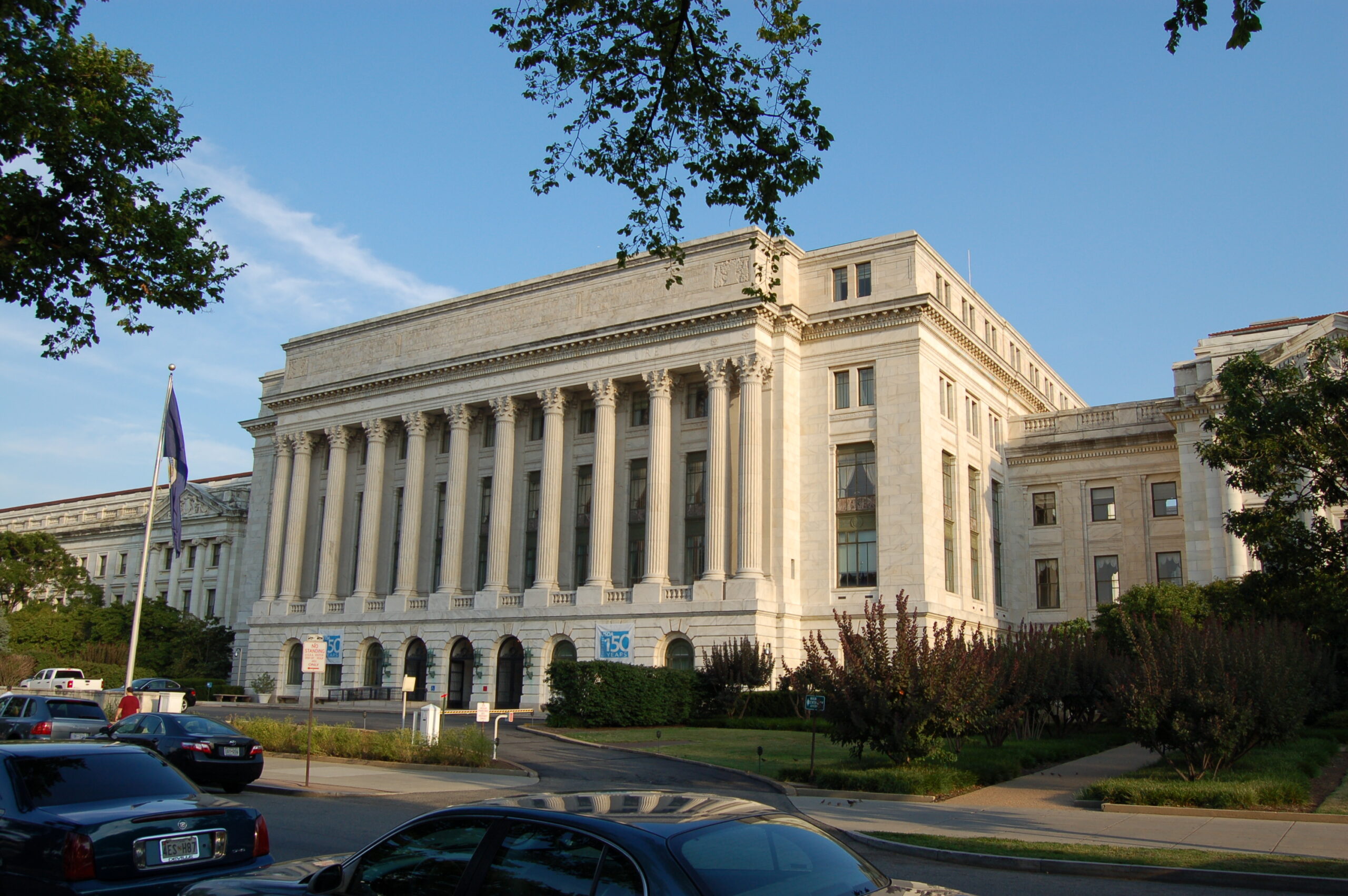
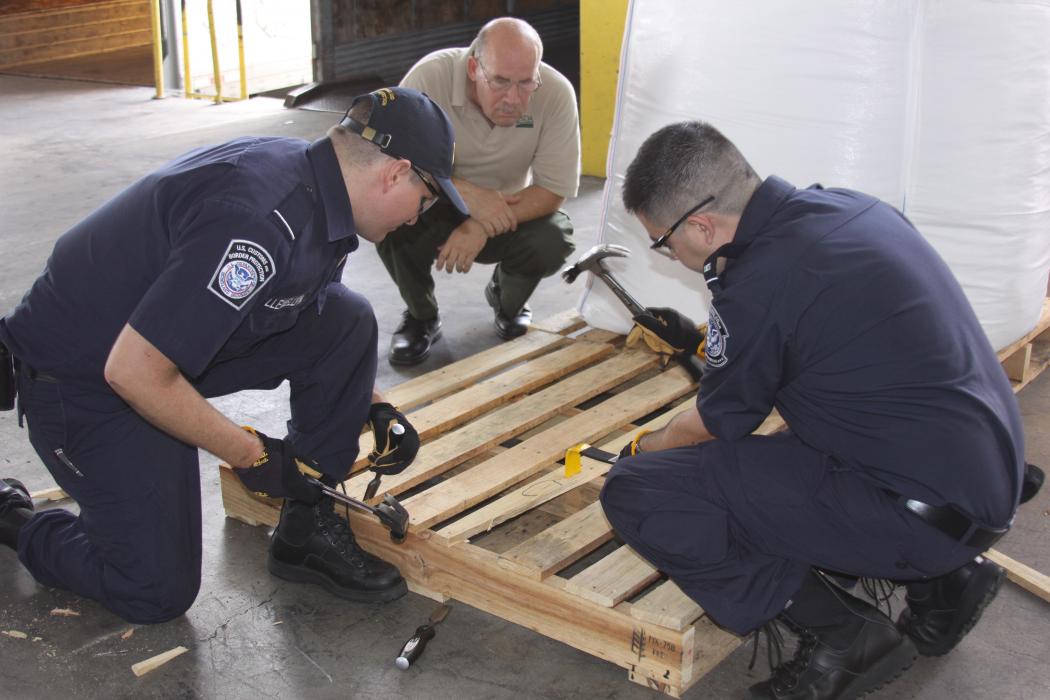
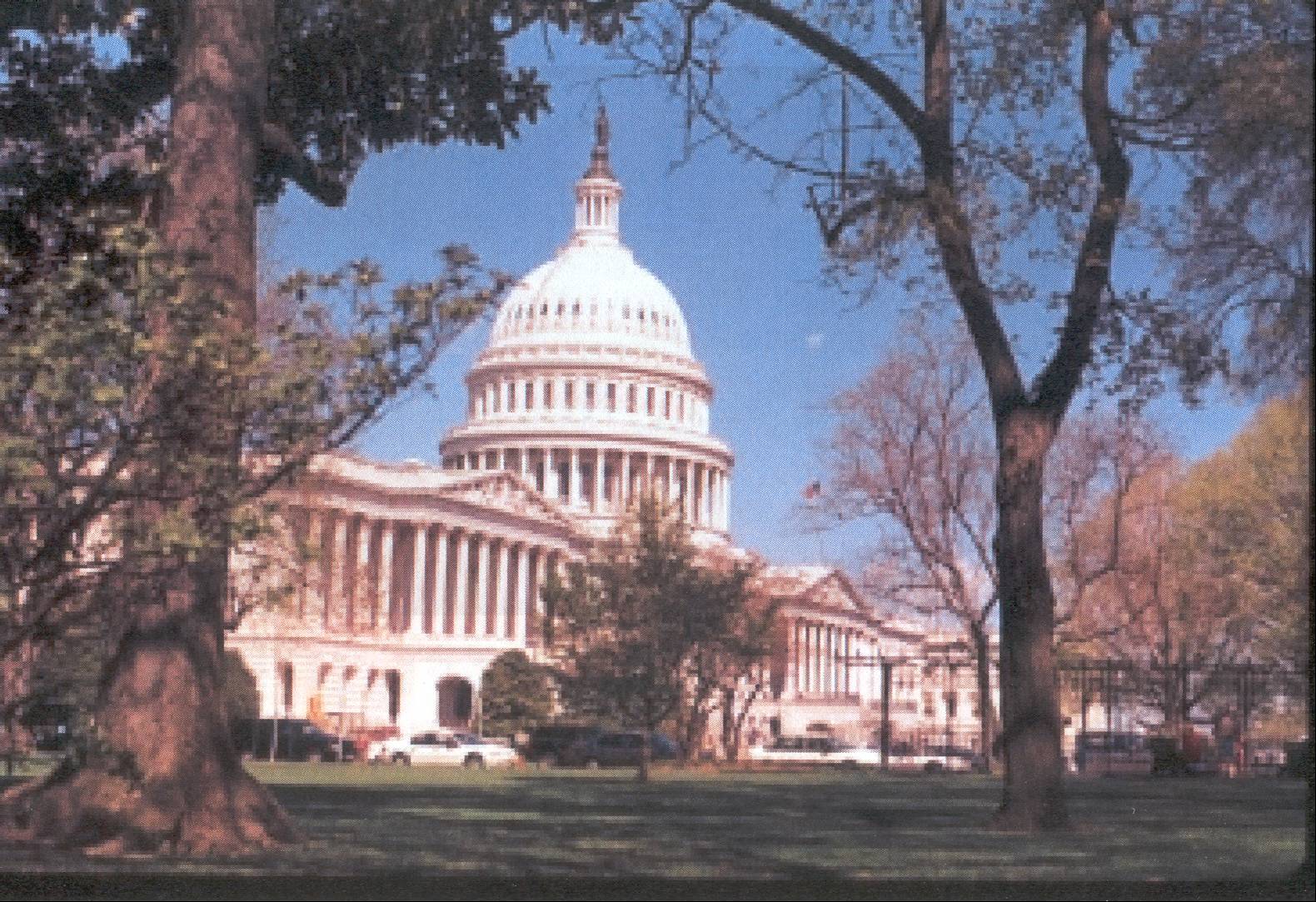
U.S. Department of Agriculture headquarters; lets lobby these people! photo by Wikimedia
Twenty-three scientists based around the world published a Letter to the Editor titled “Overwhelming evidence galvanizes a global consensus on the need for action against Invasive Alien Species” It appears in the most recent edition of Biological Invasions (2024) 26:621–626.
The authors’ purpose is to draw attention to the release of a new assessment by the Intergovernmental Science-Policy Platform on Biodiversity and Ecosystem Services’ (IPBES).
The report was issued in September 2023. It is described as the most comprehensive global synthesis of the current knowledge on the bioinvasion process and the impacts of invasive alien species (952 pages!). Its preparation took nearly a decade. Most important, it represents the first consensus among governments and scientists worldwide on the magnitude and extent of the threats that bioinvasions pose to nature, people, and the economy.
The proposed solutions are astoundingly broad and ambitious: transformation of how governments and societies perform. I don’t disagree! However, we need interim steps – “bites of the elephant.” In my view, the report falls short on providing these.
Our challenge: join others in bringing this analysis to decision-makers’ attention. Can we pull out information that will help persuade U.S. decision-makers – governmental and non-governmental – that the threat is both urgent and solvable? How do we more effectively advocate for the aggressive, science-based action that we all know is needed?
(I hope that the fact that the report was prepared under the auspices of the Convention on Biodiversity, to which the U.S. is not a party, does not intensify the challenge for us.)
Why we need to restructure the behavior of governments and societies
Bioinvasions are facilitated by policies, decision-making structures, institutions, and technologies that are almost always focused on achieving other goals. Species transport and introduction are driven by policies aimed at promoting economic growth – especially trade. Later stages of invasions, i.e., establishment and some spread, are accelerated by certain uses of land and sea plus climate change. For example, activities that fragment habitats or cause widespread habitat disturbance provide ready places for bioinvasions. Rarely are those who gain by such policies held accountable for the harms they produce via bioinvasions.
To address these unintended consequences, the IPBES report calls for “integrated governance.” Its authors want coordination of all policies and agencies that touch on the indirect drivers, e.g., conservation; trade; economic development; transport; and human, animal, and plant health. Policy instruments need to reinforce – rather than conflict with — strategic invasive species management across sectors and scales. This involves international agreements, national regulations, all governmental sectors, as well as industry, the scientific community, and ordinary people – including local communities and Indigenous Peoples.
The report also calls for establishment of open and inter-operable information systems. This improved access to information is critical for setting priorities; evaluating and improving regulations’ effectiveness; and reducing costs by avoiding duplication of efforts.
Critically important information that is often unspoken:
Indirect causes underlying the usual list of human activities that directly promote bioinvasions are the rapid rise of human population and even more rapid rise in consumption and global trade.
Biosecurity measures at international borders have not kept pace with the growing volume, diversity, and geographic origins of goods in trade.
Continuation of current patterns is expected to result in one-third more invasive species globally by 2050. However, this is an underestimate because today’s harms reflect the consequences of past actions – often from decades ago. Drivers of invasions are expected to grow in both volume and impact.
We can prevent and control invasive alien species – but that success depends on the availability of adequate, sustained resources, plus capacity building; scientific cooperation and transfer of technology; appropriate biosecurity legislation and enforcement; and engaging the full range of stakeholders. These require political will.
A major impact of bioinvasion is increased biotic homogenization (loss of biological communities’ uniqueness). This concerns us because we are losing the biotic heterogeneity that provides insurance for the maintenance of ecosystem functioning in the face of ongoing global change.
The IPBES study asserts that successfully addressing bioinvasions can also strengthen the effectiveness of policies designed to respond to other drivers, especially programs addressing conservation of biological diversity, ensuring food security, sustaining economic growth, and slowing climate change. All these challenges interact. The authors affirm that evidence-based policy planning can reflect the interconnectedness of the drivers so that efforts to solve one problem do not exacerbate the magnitude of others and might even have multiple benefits.
More Key Findings
Overall, 9% (3,500) of an estimated 37,000 alien species established in novel environments are invasive (those for which scientists have evidence of negative impacts). Proportions of invasives is high among many taxonomic groups: 22% of all 1,852 alien invertebrates; 14% of all 461 alien vertebrates; 11% of all 141 alien microbes; and 6% of all 1,061 alien plants. (The discussion of probable undercounts relates to aquatic systems and certain geographic regions. However, I believe these data are all undermined by gaps in studies.)
Invasive alien species – solely or in combination with other drivers – have contributed to 60% of recorded global extinctions. Invasive species are the only driver in 16% of global animal and plant extinctions. Some invasive species have broader impacts, affecting not just individual species but also communities or whole ecosystems. Sometimes these create complexoutcomes that push the system across a threshold beyond which ecosystem restoration is not possible. (No tree pests are listed among the examples.)
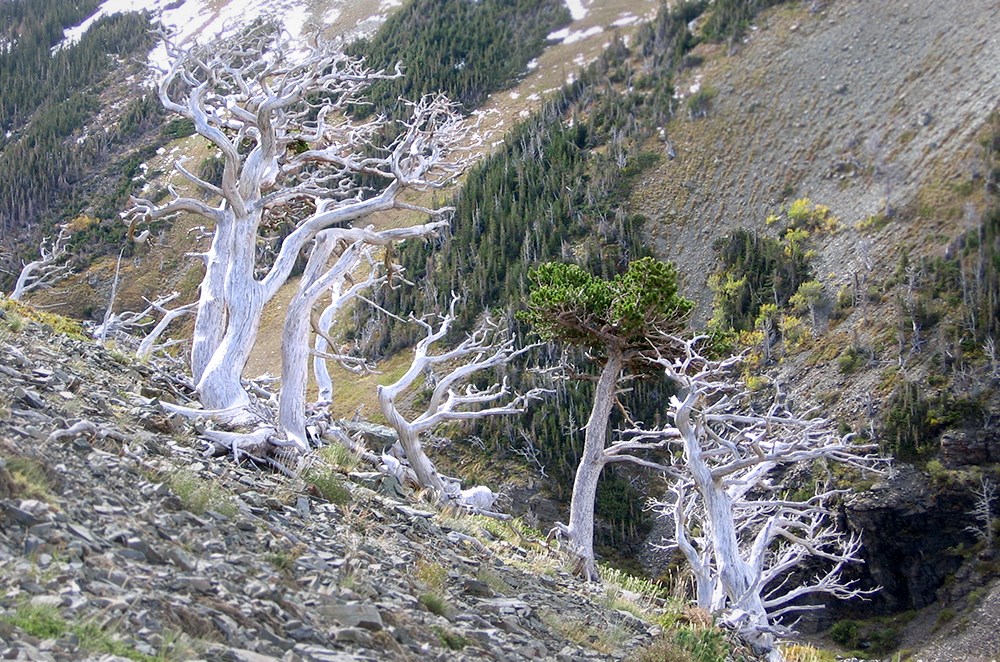
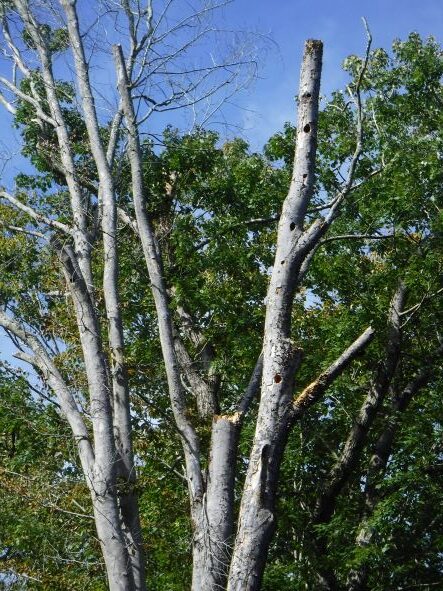
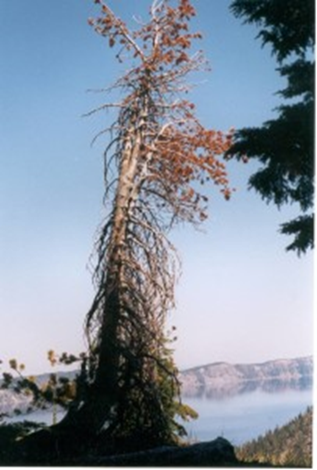
dead whitebark pine in Glacier National Park; photo by National Park Service
The benefits that some non-native – even invasive – species provide to some groups of people do not mitigate or undo their negative impacts broadly, including to the global commons. The report authors note that beneficiaries usually differ from those people or sectors that bear the costs. The authors cite many resulting inequities.
There are insufficient studies of, or data from, aquatic systems, and from Africa; Latin America and the Caribbean; and parts of Asia.
The number of alien species is rising globally at unprecedented and increasing rates. There are insufficient data specifically on invasive species, but they, too, are thought to be rising at similar rates.
Horticulure is a major pathway for introducing 46% of invasive alien plant species worldwide.
Regarding invasive species’ greater impact on islands,the IPBES report mentions brown tree snakes on Guam and black rats on the Galapagos Islands. It also notes that on more than a quarter of the world’s islands, the number of alien plants exceeds the total number of native ones. See my blogs on non-native plants on Hawai`i and Puerto Rico. In addition, I have posted several blogs regarding disease threats to rare bird species in Hawai`. The IPBES report does not mention these.
Where the Report Is Weak: Interim Steps
The report endorses adoption of regulated species (“black”) lists.
The report emphasizes risk analysis of species. Unfortunately IPBES’ analysis was completed before publication of the critique of risk analysis methods by Raffa et al. ( (2023) (see references). However, we must take the latter into consideration when deciding what to advocate as U.S. policy.
The report authors call for more countries to adopt national legislation or regulations specifically on preventing and controlling invasive species. (They note that 83% of countries lack such policies). They also list the many international agreements that touch on invasive species-relevant issues. However, Raffa et al. found that the number of such agreements to which a country is a party bears no relationship to the numbers of alien species detected at its border or established on its territory.
The challenge to risk assessment posed by multiple sources of uncertainty can be managed by recognizing, quantifying, and documenting the extent of that uncertainty.
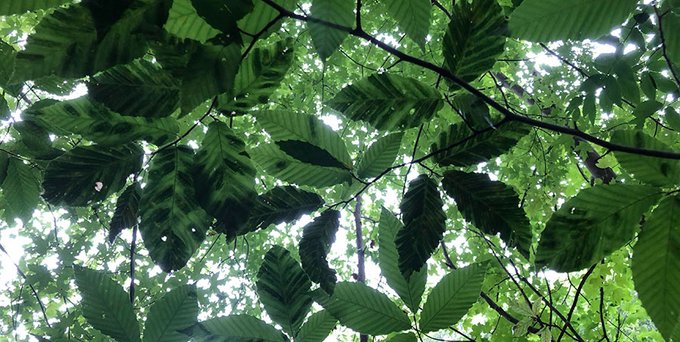
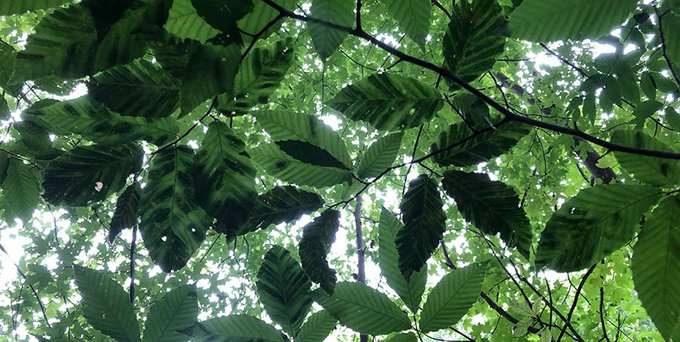
Beech leaf disease – one of many non-native pests that were unknown before introduction to a naive ecosystem. Photo by Jennifer Koch, USDA Forest Service
I appreciate the report’s emphasis on the importance of public awareness and engagement, but I thought the discussion of effective campaigns lacked original ideas.
The report did not fulfill its own goal of fully exploring unappreciated impacts of policies in its discussion of habitat fragmentation. For example, the report notes that grazing by feral alien ungulates facilitates the spread of invasive alien plant species. However, it does not mention the similar impact by livestock grazing (Molvar, et al. 2024).
SOURCES
Molvar, E.M., R. Rosentreter, D. Mansfield, and G.M. Anderson. 2024. Cheat invasions: History, causes, consequences, and solutions. Hailey, Idaho: Western Watersheds Project, 128 pp.
Raffa, K.F., E.G. Brockerhoff, J-C. GRÉGOIRE, R.C. Hamelin, A.M. Liebhold, A. Santini, R.C. Venette, and M.J. Wingfield. 2023. Approaches to forecasting damage by invasive forest insects and pathogens: a cross-assessment. BioScience 85 Vol. 73 No. 2 (February 2023) https://academic.oup.com/bioscience
Posted by Faith Campbell
We welcome comments that supplement or correct factual information, suggest new approaches, or promote thoughtful consideration. We post comments that disagree with us — but not those we judge to be not civil or inflammatory.
For a detailed discussion of the policies and practices that have allowed these pests to enter and spread – and that do not promote effective restoration strategies – review the Fading Forests report at http://treeimprovement.utk.edu/FadingForests.htm
leaf symptoms of beech leaf disease; photo by Jennifer Koch, USFS
Recently I posted a blog on a paper by Paulo Vieira et al., reporting how the nematode Litylenchus crenatae subsp. mccannii (Lcm) [causal agent of beech leaf disease (BLD)] distorts the leaves of affected American beech trees (Fagus grandifolia). Now Leila Rose Fletcher and her colleagues have confirmed these structural changes and discussed how they might affect the anatomy and physiology of the leaves and harm the tree. For the full details, see this 2024 publication, cited at the end of this blog. Both articles contain stunning photographs of diseased leaf structures.
As Dr. Fletcher pointed out on a recent call involving most scientists and conservationists working on BLD, plant growth depends on the plant’s success in gaining more carbon (through photosynthesis) than it expends during growth, cell maintenance (respiration), and sugar storage. When plants open the stomata on their leaves to take in CO2 from the atmosphere, they lose water from the interior of their leaves.
Her team discovered that BLD-related leaf distortions reduced the tree’s carbon balance in two ways.
Two impacts of the nematode
First, alterations of the leaf structure reduce the tree’s photosynthetic rate (assimilation of carbon). The photosynthetic rate in affected leaves was 61% lower than in healthy leaves. The impact is heightened by the thinning of the beech tree’s canopy due to abortion of many leaf buds.
While veins in diseased leaves are also altered by BLD, the data in Fletcher et al. indicate that the main limitation on photosynthesis in symptomatic leaves is not from a decreased water supply, but from several limitations on stomatal exchange of CO2 with the atmosphere. First, stomata on symptomatic portions of diseased leaves are less dense, which means there are fewer openings through which CO2 can enter the leaf.
Second, the diseased leaves are thicker, meaning that once inside the leaf, CO2 molecules must travel farther from the stomatal pores to reach the photosynthetic cells. Fletcher et al. did not assess the possibility (raised in a separate study by Carta, et al.) that the stomata that are present are deformed, and that this might impact their function.
In addition, the deformed leaves demand more resources to grow and function. Production of the multiplicity of cells in affected portions of the leaf (these portions are 249% thicker than normal leaves) uses resources the tree would otherwise put into growth. In fact, the more severely symptomatic an individual leaf is, the more carbon the plant allocates to that leaf.Furthermore, the additional cell layers also appear to increase “operating costs” of these leaves, as seen in the higher respiration rate per unit leaf area. Finally, if the tree sheds deformed leaves and forms new ones, this further diverts resources.
Questions seeking answers
How is nematodes’ influence localized to domains bounded by second-order veins (large veins that branch off the central vein) – symptomatic and asymptomatic tissue in adjacent domains in the same leaf? Fletcher et al. propose that the presence of the nematode influences the physical or hormonal regulation of leaf development – but after the development of primary and secondary order veins (since they are not distorted). They place a high priority on investigating the tree’s hormonal signaling that might be disrupted by the nematode.
Given the carbon imbalance that the data in Fletcher et al. suggest might arise over time, will symptomatic trees face carbon shortages, and if so, will this eventually lead to mortality? Studies analyzing the non-structural carbohydrate (stored sugar) concentrations in symptomatic beech are urgently needed to explore this possibility.
What is the impact of beech trees’ suboptimal vigor – short of mortality – on composition of plant communities and animals reliant on beech leaves and beechnuts? One possible causal factor raised by Fletcher et al. is reduced development of symbiotic relationships with ectomycorrhizal fungi, which can also reduce production of beech nuts. Dr. Fletcher concedes that there have been no studies yet of these possible effects. I add that many animals also depend on tree cavities – which are also common in beech trees.
SOURCES
Carta, L.K., S. Li, J. Mowery. 2023. Chapter 8 – Beech leaf disease (BLD), Litylenchus crenatae and its potential microbial virulence factors. In F.O. Asiegbu & A. Kovalchuck (Eds.), Forest microbiology Vol. 3 (PP. 183-192) Academic Press. https://doi.org/10.1016/B978-0-443-18694-3.00018-3
Fletcher, L.R. A.M. Borsuk, A.C. Fanton, K.M. Johnson, J. Richburg, J. Zailaa, C.R. Brodersen. 2024. Anatomical & physiological consequences of beech leaf disease in Fagus grandifolia L. Forest Pathoklogy. 2024;54:e12842 https://doi.org/10.1111.efp.12842
Vieira P., M.R. Kantor, A. Jansen, Z.A. Handoo, J.D. Eisenback. (2023) Cellular insights of beech leaf disease reveal abnormal ectopic cell division of symptomatic interveinal leaf areas. PLoS ONE October 5, 2023. 18(10) https://doi.org/10.1371/pone.0292588
In the context of reading about forest succession (see previous blogs) I came upon a new publication by Akresh et al. (full citation at the end of this blog.) The article explores the impact of various silvicultural treatments on bird conservation in eastern North America. They note that forest managers are challenged to balance the opposing habitat needs of organisms that, on one hand, depend on structurally diverse old-growth forests and, on the other hand, those that inhabit more open areas or shrubs.
The authors conducted a meta-analysis of studies that examined birds’ responses to three silvicultural regimes: low-retention stands, shelterwoods, and high-retention stands. These terms were not defined in the article. According to Michigan State University extension, in shelterwood systems, all mature trees are harvested in a two- or three-stage process over several years. The other classes presumably reflect the proportion of trees remaining after the harvest.
Akresh et al. focussed on “community conservation scores,” not on protecting individual bird species. They followed the level of conservation concern for the two communities developed by the Partners-in-Flight program
Shrubland Birds
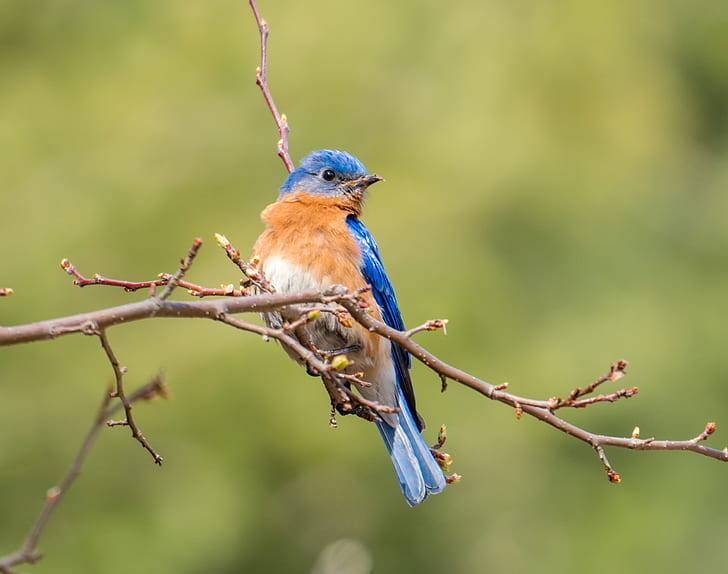
Akresh et al. note that a high proportion of open-canopy, shrubland bird species are declining range-wide; their habitat is already quite limited in eastern North America and continues to decline. Consequently, the Birds-in-Flight program gives them a high priority for conservation measures.
eastern bluebird – prefers open areas; photographer not named; Pickpic
The researchers found that clearcuts (presumably = low retention) and shelterwoods typically had the highest conservation scores because they provide habitat for the declining avian group, shrubland birds. More heavily harvested forests also support non-avian taxa such as pollinators and other arthropods, mammals, snakes, and vascular plants.
Forest Birds
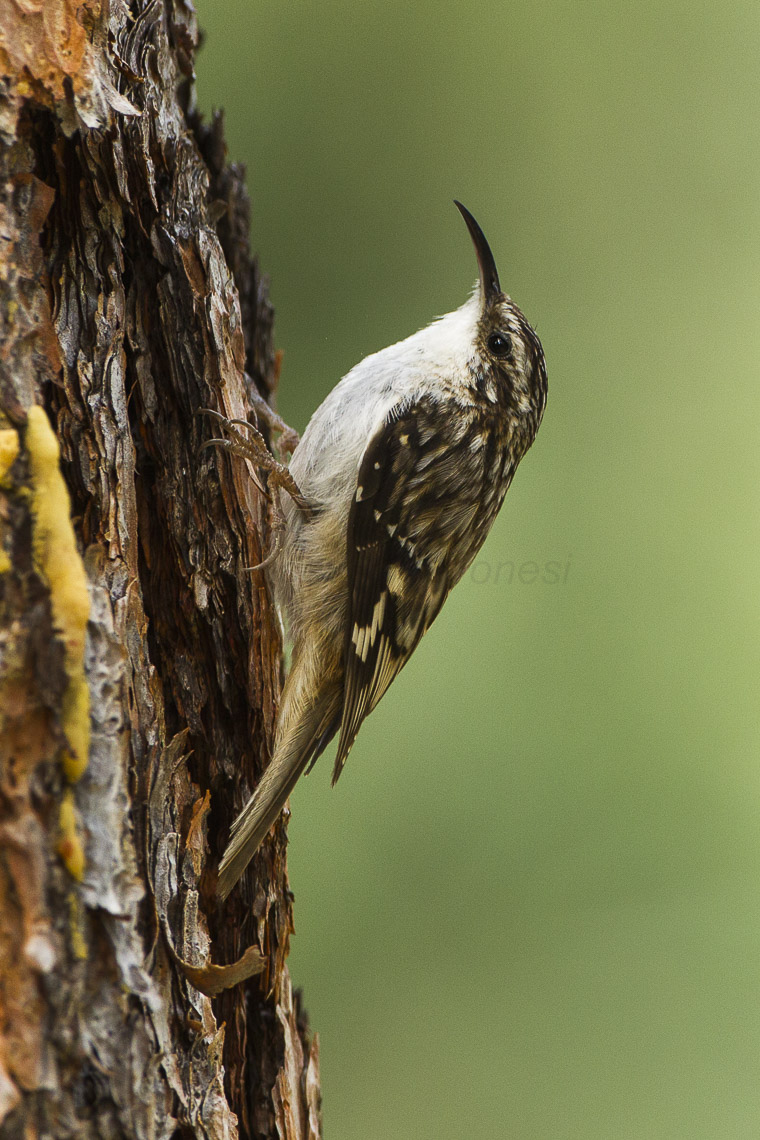
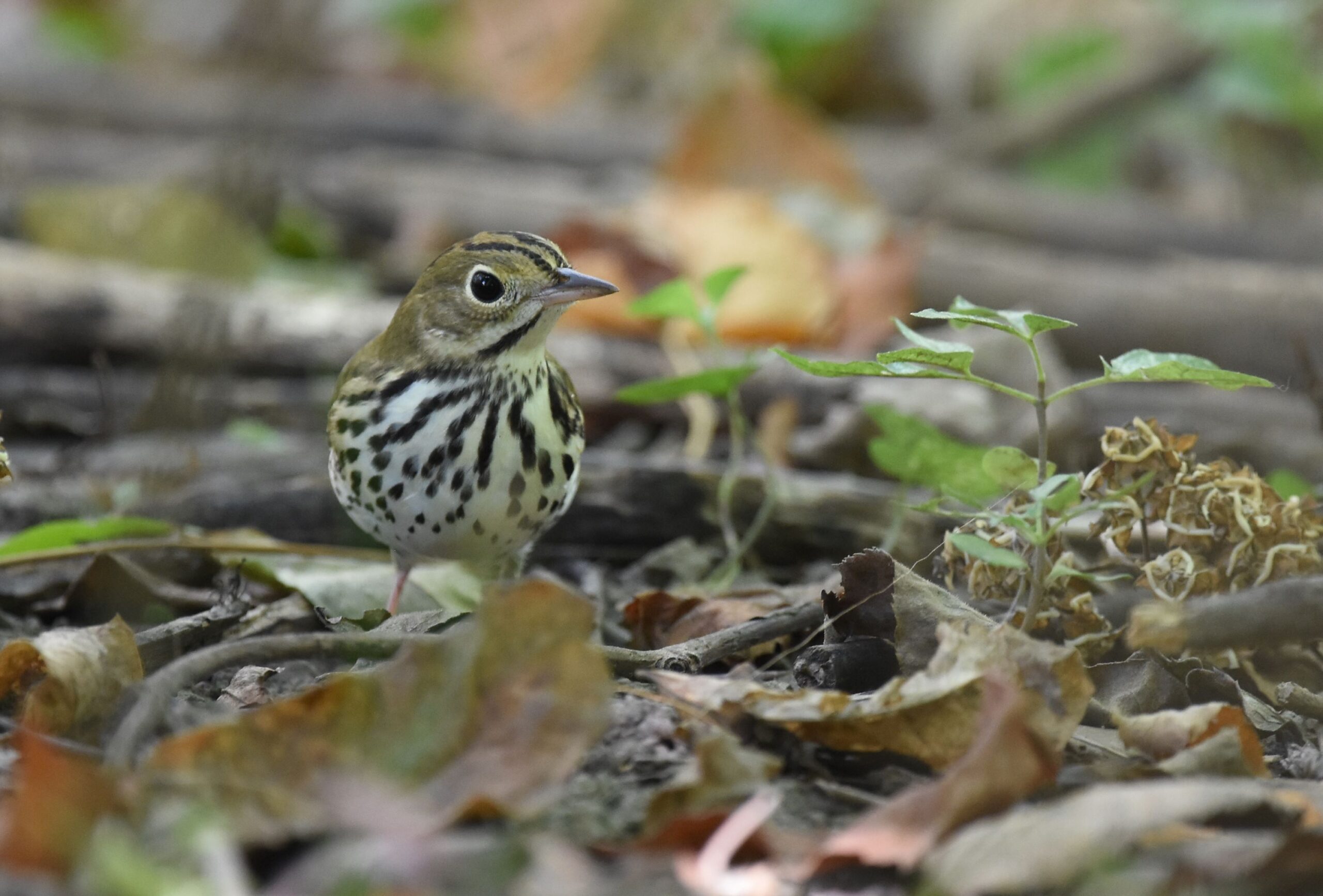
Stands on which 40%–70% of tree were retained also have a high conservation score because they provide habitat for both shrubland and “mature forest” species. Only a few species, e.g., ovenbird and brown creeper, had lower densities in moderately harvested stands than in unharvested forests. The majority of “mature forest” species had relatively higher or equal densities in the sites on which 40%–70% of trees are retained than in unharvested stands. They suggest that several mature-forest bird species prefer the increased understory vegetation density found in these stands.
ovenbird; Wildreturn; Wikimedia Commons
Unharvested and lightly thinned stands, in which 70%–100% of trees remain, had the lowest conservation scores. The first explanation is that these forests don’t support shrubland bird species.
A second reason, Akresh et al. suggest, is that the second-growth forests now widespread in eastern North America are quite young (even if they have not been logged for at least 50 years). They are even-aged and lack the structural diversity of true old-growth forests. The authorsappear to place the greatest importance on the lack of dense understory vegetation, although otherkey elements of mature forests are also missing, e.g., large-diameter trees and snags, continuous canopy, and deep leaf litter. They concede that some bird species depend on forest characteristics that they did not examine. They did not provide examples of these other ecological attributes.
Akresh et al. note that their study concerns only bird species’ use of forests during the breeding season. Some species use other habitat types at other seasons. Furthermore, data were insufficient to analyze some species altogether. A more comprehensive analysis might have raised the conservation score of older forests. I would add that restoration of true old-growth forests depends on allowing some late-seral stands to continue aging.
Finally, fauna other than birds also depend on forest ecosystems and need to be considered when choosing management approaches. The authors mention salamanders and other amphibians, fungi, invertebrates, and lichens – some of which might be of conservation concern themselves.
Gaps in the forest: complicating factors
Akresh et al. mention deer browsing as an influence on understory conditions once, but do not explore this. I am surprised that they don’t expand this statement by a paragraph or two, given the role deer play in suppressing understory vegetation.
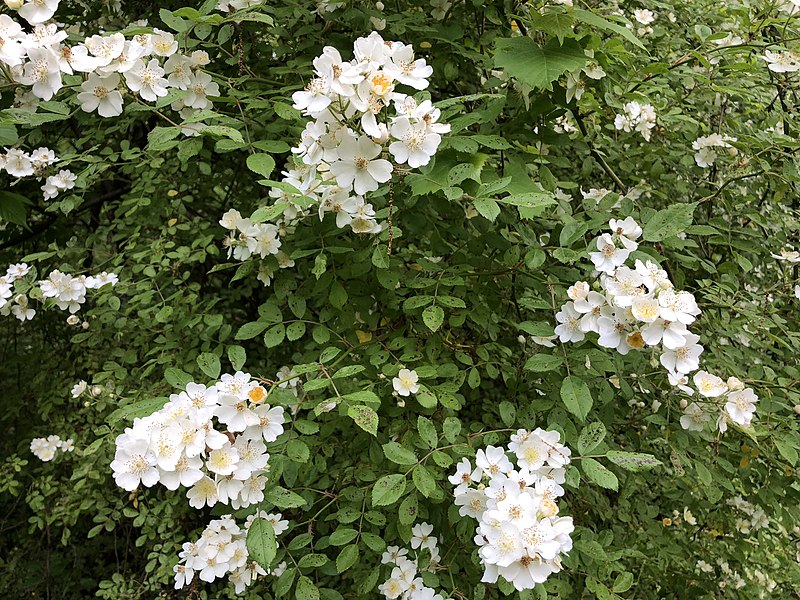
Nor do they mention possible impacts of invasions by non-native plants. As my earlier blogs have reported, plant invasions are common in many forested areas in eastern North America. These studies recommend great care in activities that open the forest canopy. Drs. Akresh and King have told me that they believe that forest managers in this region are well aware of invasive plant issues and already incorporate this concern into their management decisions. They referred me to two studies that indicate a very mixed picture of invasive plant impacts on birds (Labbe and King, 2020; Nelson et al, 2017. see full citations below).
multiflora rose – most common invasive plant on forest plots; photo by Famartin
Not Discussed: Insects as food sources
The studies analyzed by Akresh et al. explore levels of nesting success and bird species’ foraging on fruits of non-native shrubs. Others have focused on the reduced numbers of insects feeding on non-native plants; these insects are the principle food for many perching birds’ nestlings. Douglas Tallamy has documented lower numbers of a wide variety of birds which depend on the insect food supply.
SOURCES
Akresh, M.E., D.I. King, S.L. McInvale, J.L. Larkin, A.W. D’Amato. 2023. Effects of forest management on the conservation of bird communities in eastern North America: A meta-analysis. Ecosphere. 2023; 14:e4315. https://onlinelibrary.wiley.com/r/ecs2
Labbe, M.A. and D.I. King. 2020. Songbird Use of Native and Invasive Fruit in the Northeastern USA. Wildlife Society Bulletin. Volume 44, Issue 3. September 2020
Nelson, S.B, J.J. Coon, C.J. Duchardt, J.DL Fischer, A.J. Kranz, C.M. Parker, S.C. Schneider, T.M. Swartz, J.R. Miller. 2017. Patterns and mechanism of invasive plant impacts on North American birds: a systemic review. Biological Invasions. Volume 19, pp. 1547-1563.
Posted by Faith Campbell
We welcome comments that supplement or correct factual information, suggest new approaches, or promote thoughtful consideration. We post comments that disagree with us — but not those we judge to be not civil or inflammatory.
For a detailed discussion of the policies and practices that have allowed these pests to enter and spread – and that do not promote effective restoration strategies – review the Fading Forests report at http://treeimprovement.utk.edu/FadingForests.htm
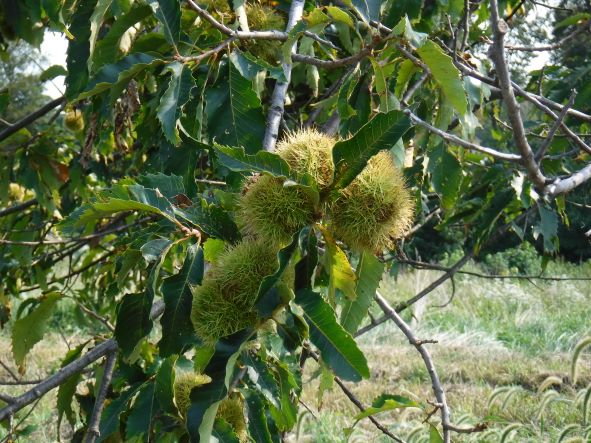
TACF back-crossed American-Chinese chestnut; photo by F.T. Campbell
I have advocated for considerably expanding efforts to breed trees resistant to non-native pests (including pathogens) for a decade. Again and again, I and others have pointed out the dire consequences for our forests if we Americans do not rise to the challenge.
In 2014, Scott Schlarbaum – coauthor of Fading Forests III – American Forests: What Choice Will We Make? warned that without restoration becoming an integral part of a strategy addressing non-native plant pests, American ecosystems are doomed to continuing transformation. Once established, a non-native pest is never eliminated, but its impact can be reduced through a combination of measures – as long as support is made available. Scott advised initiating a germplasm conservation strategy when invasion is imminent or once the pest is likely to become a resident pest. (See Chapter 6).
I have posted seven blogs since August 2021 describing the current status of various efforts and urging the U.S. Government and conservation organizations to step up. [To view these blogs, go to www.nivemnic.us, scroll below Archives to “Categories” and click on “resistance breeding.”
More, and Recent, Voices: Implications of Not Acting
More recently, several USDA Forest Service (USFS) experts, including Richard Sniezko, C. Dana Nelson, and Jennifer Koch, have published articles making the same point. These scientists note that many of the decimated species were formerly among the most common trees in our forests. Therefore, the cumulative effect of their disappearance on forest species composition and function is multiplied.
One blog, posted in 2022, is particularly pertinent. It summarizes a special issue of the journal Plants, People, Planet devoted to resistance breeding. The opening essay, by R.J.A. Buggs, concisely reviews six major reasons why so many believe that resistance breeding is a failed strategy.
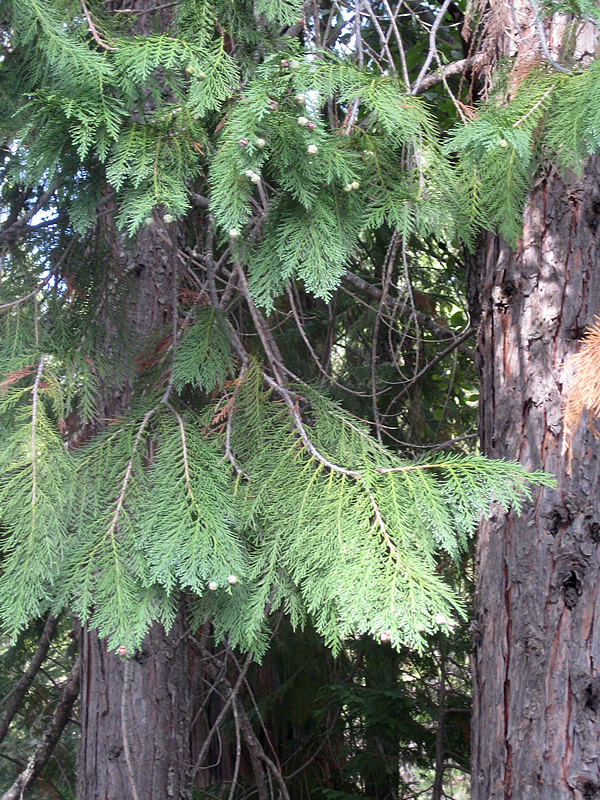
Port-Orford cedar – one of the trees for which resistance breeding has been successful; photo courtesy of Richard Sniezko, USFS
Others say there have been successes – all through application of classic tree improvement measures, not “genetic engineering.” Pike, Koch and Nelson (2021) list as successes Port-Orford-cedar (Chamaecyparis lawsoniana), the western five-needle pine species, koa (Acacia koa), and resistance to fusiform rust (Cronartium quercuum f. sp. fusiforme) in the commercially-important loblolly (Pinus taeda) and slash (P. elliottii) pines. They also cite encouraging progress by The American Chestnut Foundation (TACF) through backcross breeding of America and Asian chestnuts and a USFS/private foundation effort to expand the genetic base of American elms (Ulmus americana). I regret to say this, but some of these efforts seem to me to be still in experimental stages or — at best — early in widespread – ‘though still experimental — plantings.
Participants in a 2021 Purdue University workshop have again called for greatly expanding breeding. See the special issue of New Forests, Vol. 54 Issue 4. Once again, experts reiterate the urgency of acting, then outline the opportunities and challenges.
In one of the articles (Jacobs et al.) several people – including me! – note that several keystone tree species or genera in North America and Europe have been driven to functional extinction by non-native pests. By this we mean they are no longer sufficiently abundant and/or of adequate size to reproduce sexually or perform their ecological function. Examples include – on both continents – ashes (Fraxinus) and elms; and on North America – American chestnut (Castanea dentata), butternut (Juglans cinerea), and whitebark pine (Pinus albicaulis).If these threats are left unchecked, these at-risk tree species might develop truncated ranges, lose genetic diversity, and face becoming threatened, endangered, or extinct.
In another article, Nelson says the question that should be asked about applying genetic engineering (GE) techniques to tree breeding is whether we should let a species be reduced to a marginal role — or disappear — when GE provides a solution to saving and restoring the species. His case study is a detailed history of TACF’s development of a transgenic American chestnut (called “Darling 58”). He points out that decades of breeding efforts were based on the hope of developing blight resistance within the native gene pool or to obtain resistance from related species through hybridization. However, those efforts have not yet provided trees suitable for restoring the “king of the Appalachian forest” to native landscapes. Nelson wrote his description before TACF discovered flaws in the GE trees they had been working with and decided to pursue different GE “lines” (see below).
Barriers
The overall strategy is clear. Schlarbaum, Sniezko, and Dana Nelson all describe essentially the same steps, built on the same kinds of expertise and facilities.
Of course, each species will require years of input by a range of experts. These challenges are not trivial. However, the experts named above agree that the principal barrier is the absence of sustained, long-term commitment of resources and facilities. With sufficient resources, many of the scientific challenge can be overcome for at least some of the species at risk.
So, what are the scientific challenges? First, scientists must assess whether the tree species contains sufficient genetic variation in resistance. This involves locating candidate resistant trees; developing and applying short-term assay(s) to screen hundreds or thousands of candidate trees; and determining the levels of resistance present. Second, scientists must develop resistant planting stock for use in restoration. This stage includes scaling up the screening protocol; selecting the resistant candidates or progeny to be used; breeding to increase resistance; establishing seed orchards or other methods to deliver large numbers of resistant stock for planting; and additional field trials to further validate and delineate resistance. Sniezko and Koch (2017) and Sniezko and Nelson (2022) discuss the challenges and describe successes.
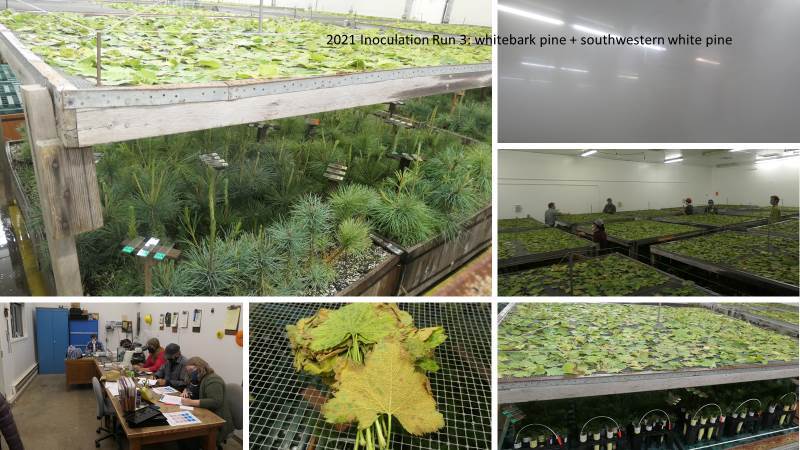
facilities at Dorena Genetic Resource Center; photos courtesy of Richard Sniezko, USFS
Complicating the restoration phase is the fact that the resistant tree must be able to thrive and compete in an ecosystem that has changed greatly from that in which it formerly resided. Causes of these changes include repercussions from the absence of the tree species – and possibly associated species; the possible presence of other biotic stresses (pests); and climate change. This is discussed by Nelson (2022). See also my blog.
Successfully completing these steps requires a long-term commitment, which includes significant funding and strong supportive infrastructure. Schlarbaum pointed out that the public and politicians don’t understand the complexity of the restoration challenge and the resources required. He documented the shrinking tree improvement infrastructure as of 2014. At that time, funding for all USFS regional breeding programs was just $6 million. State and land grant university breeding programs were fragmented and seriously underfunded. Only 28 states still had some type of tree improvement activity – and some of these programs were only seed orchards, not active breeding and testing programs. Members of university-industrial cooperatives focus on a small number of commercial species – which are not the species threatened by non-native pests. I believe these resources have shrunk even farther in the decade since 2014.
A separate source of funds for resistance breeding is the Forest Health Protection program, which is under the Deputy Chief for State, Private, and Tribal Forestry rather than the Deputy Chief for Research and Development. While nation-wide data on seed or scion collection or screening to identify and evaluate genetic resistance are poorly reported, Coleman et al. indicate that the USFS Dorena Genetic Resource Center screens unspecified “hundreds” of seed lots for resistance to pathogens annually. The Center also participates in seed, cone, and scion collections, especially of white pines vulnerable to white pine blister rust (WPBR). Supplemental Table S3 lists projects funded over the two decades analyzed by Coleman et al. (2011 – 2020). These included efforts to identify and evaluate possible genetic bases for resistance to, e.g., hemlock woolly adelgid, balsam woolly adelgid, laurel wilt, emerald ash borer, butternut canker, rapid ʻōhiʻa death; and gene conservation for eastern hemlock, ashes, chestnut, in addition to the five-needle pines. Currently, FHP allocates $1.2 million annually to support the group of activities called Genetic Conservation, Resistance and Restoration (R. Cooksey, pers. comm.).
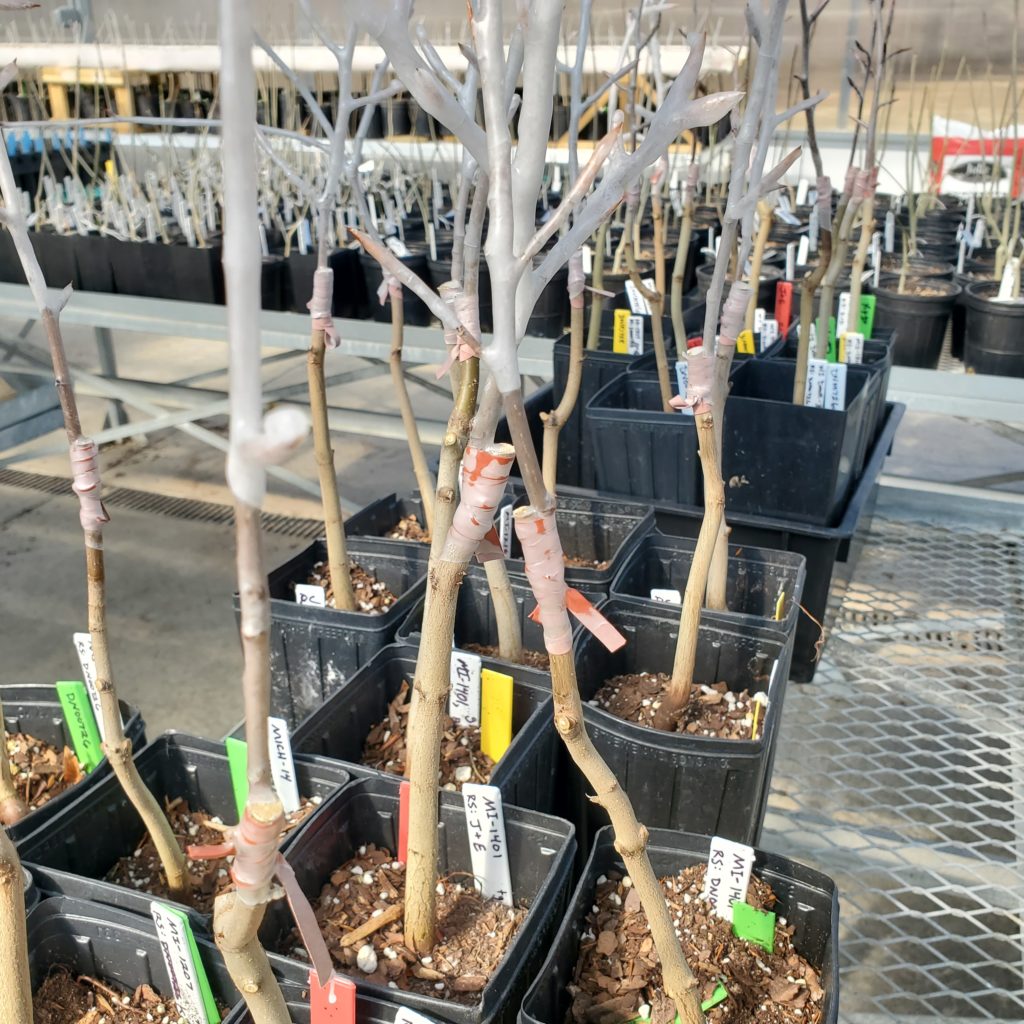
American beech grafts to be tested for resistance to beech bark disease; at USFS center in Delaware, Ohio; photo courtesy of Jennifer Koch, USFS
USFS scientists involved in these projects describe challenges arising from efforts to cobble together funding from these many sources to support coherent programs. Overall funding levels still fall short of the need, and failure to obtain funding for one component of a program stymies the entire endeavor.
However, some developments are encouraging. The number of private foundations devoted to tree breeding has increased in the last decade. The American Chestnut Foundation (TACF) and American Chestnut Cooperators Foundation (ACCF) have been joined by the White Pine Ecosystem Foundation, the Great Lakes Basin Forest Health Collaborative, Forest Restoration Alliance, ‘Ohi‘a Disease Resistance Program … These organizations raise awareness, coordinate efforts by multiple parties, and provide opportunities for individuals to contribute funds and volunteer work.
In Hawai`i, disease resistance programs with both koa (Dudley et al.) and ʻōhiʻa ((Metrosideros polymorpha) (Luiz et al.) are active. Work with ash species to find and develop resistance to emerald ash borer is under way but limited due to lack of funds.
Finally, we can persuade Congress to incorporate the provisions of two bills, H.R. 3174 and S. 1238, into the next Farm Bill. The bills would, inter alia, create two grant program. One would fund research addressing specific questions impeding the recovery of native tree species that have suffered severe levels of mortality caused by non-native plant pests. The second would fund implementation of projects to restore these pest-decimated tree species to the forest.
Funded projects would be required to be part of a forest restoration strategy that incorporates a majority of the following components:
(1) Collection and conservation of native tree genetic material;
(2) Production of propagules of the target tree species in numbers sufficient for landscape-scale restoration;
(3) Preparation of planting sites in the target tree species’ former habitats;
Facilities needed to support successful breeding programs
Sniezko and Nelson identified these needs as follows:
(a) growing space (e.g., greenhouses);
(b) seed handling and cold storage capacity;
(c) inoculation infrastructure;
(d) field sites for testing;
(e) database capability for collecting, maintaining, and analyzing data;
(f) areas for seed orchard development;
(g) skilled personnel (tree breeders, data managers, technicians, administrative support personnel, and access to expertise in pathology and entomology).
There are very few facilities dedicated primarily to development of populations of trees with resistance to non-native pests; the most notable is the Dorena Genetic Resource Center. Even the existing programs require significant funding increases to accelerate current programs or expand to address additional species. Sniezko and Nelson stress further that a resistance breeding program has different objectives, magnitude and focus than most research projects. It is applied science, that is, an action-oriented effort that is solution-minded—countering the impact of a major disturbance caused by a pest (in our case, a non-native pest).
Schlarbaum provides a shorter but similar list of facilities needed:
production of propagules (seed or clones);
mass propagation in growing facilities, e.g., bare-root seedling nursery or greenhouses;
site preparation of former habitat and planting; and
post-planting maintenance.
Schlarbaum emphasized that each of these activities requires different skill sets, equipment, facilities, and infrastructure.
Genetic Engineering as a Specific Tool
There is considerable interest in the potential role of genetic engineering in pest resistance breeding. None of the successful programs world-wide has yet used genetic engineering (Sniezko and Koch 2017). While incorporating it into holistic breeding programs might result in greater efficiency for certain processes, it raises legal and social acceptability issues. Jacobs et al. discuss the type of education and outreach program needed to generate widespread public support this approach to tree species “rescues.” They call for USDA Forest Service to lead this education effort.
The focus of the 2021 workshop hosted by Purdue University was to explore the pros and cons of using biotechnology in restoring pest-threatened forest tree species. The special issue of New Forests contains several participants’ analyses.
The overall conclusions are that:
“Genetic engineering” – defined as “any technique that uses recombinant, synthesized, or amplified nucleic acids to modify a genome” – is only one type of biotechnology applicable to tree breeding. Other biotechnologies include tissue culture-based propagation, molecular-based genetic markers, gene cloning and sequencing, and genome mapping and sequencing.
These new technologies can increase the efficiency of more traditional breeding techniques, However, biotechnologies cannot substitute for holistic programs that incorporate all helpful methods. Careful consideration goes into selecting which techniques are appropriate for a particular host-pest system.
Each tree species has unique needs regarding seed or scion collection; seedling propagation in nurseries; site preparation and planting techniques; and management of regeneration after its re-introduction into forests. Scientists don’t yet understand these various needs of many threatened species.
In the eastern U.S., the tree-breeding infrastructure is based in the Southeast and focused on a few pine species grown commercially. The facilities do not match the greatest need. That is, many of the at-risk species are hardwoods native to the Northeast.
Current resources are inadequate to support the sustained, long-term commitment of resources and facilities necessary to be successful.
Dana Nelson addressed the role of genetic engineering (GE) in detail. He emphasized repeatedly that GE is not a short-cut to tree improvement. Incorporating a GE component does not avoid the other steps. It can, though, provide new possibilities to address problems. Nelson says the crucial, initial question is – can GE solve the specific forest conservation or management problem more effectively and efficiently than existing methods? There are some important subtleties to consider. First, success does not require achieving immunity (100% resistance); the level of resistance needs to be only sufficient to allow the tree species to survive, reproduce and co-evolve with the pest. Second, “efficiency” is an important consideration. We cannot afford delay because during those years or decades the wild tree loses genetic variability as more trees die. Also, changes in the environment continues to change, and the decimated tree species is not adapting.
If genetic engineering promises to contribute meaningfully, then the breeders must answer several follow-up questions before proceeding to develop a specific plan. Nelson also stresses that the planned activities must be integrated with an ongoing tree breeding program to ensure project success.
Nelson provides a lengthy description of the process of integrating genetic engineering into tree breeding programs.
GE in Chestnut Breeding – Setback
The most prominent breeding effort incorporating genetic engineering in the U.S. has been The American Chestnut Foundation’s (TACF) program to restore American chestnut (Castanea dentata). For decades, TACF has pursued development of trees resistant to the fungus which causes chestnut blight (Cryphonectria parasitica). Over the past decade, hopes have centered on a genetically engineered line into which was inserted a gene from wheat (oxalate oxidase; OxO). The OxO gene detoxifies the oxalic acid produced by the chestnut blight fungus and thus prevents the cankers from killing the tree.
Years of tests have shown the gene to be effective and to cause no environmental harm. In 2023, when trees in outside test plots grew larger, scientists observed disappointing results. Trees’ blight tolerance varied greatly. Worse, resistant trees grew more slowly and exhibited lower overall fitness. [For a full discussion of the issues, visit TACF’s website] Prompted by these disappointments, scientists carried out further molecular analyses. They found that the OxO gene was on a different chromosome than expected.
TACF researchers now suspect that the trees’ variable performance stems primarily from the placement of the OxO gene and the fact that the gene is always “switched on”. That constant expression appears to result in high metabolic costs for the trees. Since all the genetic lines developed to date have this defect, TACF is no longer pursuing research efforts with any of the GE trees developed to date. The Foundation believes it would be irresponsible to continue efforts – by itself and by partners – focused on a genetic line that looks unable to compete successfully when introduced to the forest.
Instead, TACF has begun investigating other transgenic lines that use a “wound inducible” promoter that switches on the OxO gene only in cells where the plant is wounded. Researchers at both the State University of New York College of Environmental Science and Forestry (SUNY-ESF) and the University of Georgia are working with a variety of inducible promoters. TACF is also testing whether inducible OxO expression can be “stacked”onto genes for blight resistance present in the backcross hybrids. Finally, TACF and Virginia Tech are also exploring whether resistance can be enhanced by insertion of genes from Chinese chestnut directly into American chestnut using methods similar to OxO insertion.
It will be years before we know if these approaches provide sufficient levels of resistance. TACF will undertake more extensive testing for efficacy through the tree’s full life cycle – in the lab, greenhouse, and field – before submitting a new GE organism to regulators for review. Meanwhile, it will continue rigorous testing for plant health and environmental risks and will strengthen the cooperative structure to facilitate sharing of intellectual property and provide full transparency.
The Darling GE line was the most important transgenic hybrid chestnut line TACF had invested in. So this is a major setback – and comes when regulatory approval seemed near.
Let’s keep this in perspective, however. As a colleague has said, based on his years of teaching science to middle school students, “There are no failures in science, just reductions in the unknown; Edison failed a thousand times before getting the light bulb right, etc….” The technology is ready when it is ready. In addition, he praised TACF for choosing to explain its decision frankly: “nothing builds credibility like early failures openly admitted.”
Meanwhile, TACF continues to make gains in blight resistance with its traditional American chestnut backcross hybrid breeding program. They have established a genetically diverse, reproducing population of thousands of trees representing hundreds of breeding lines. These trees are planted in TACF’s expansive network of germplasm conservation orchards and regional breeding and backcross orchards. They have substantially increased resistance to both the blight and Phytophthora cinnanomi in these populations. The future inclusion of transgenic and/or gene-edited trees will further increase those gains.
Another Approach
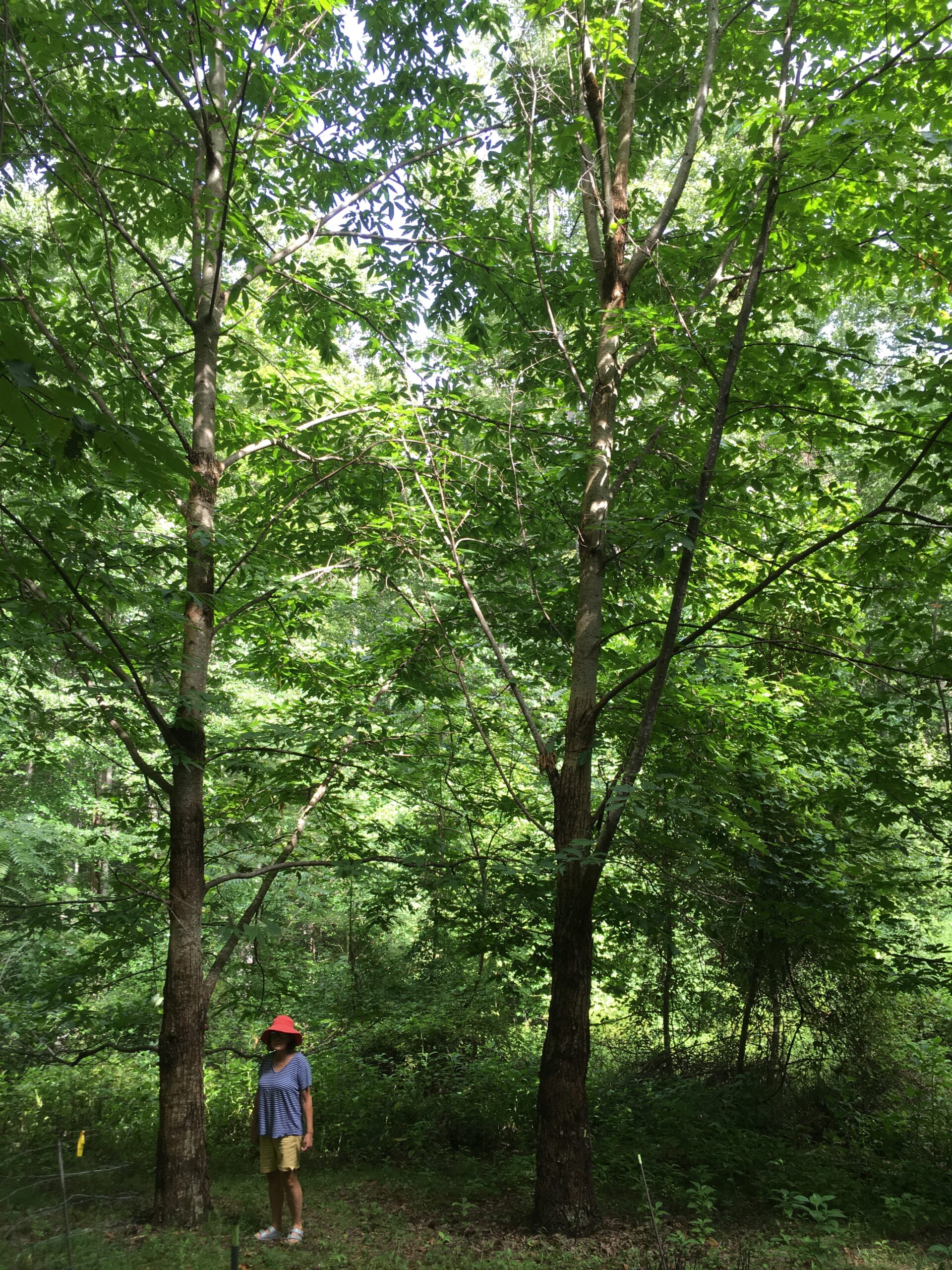
Meantime, the American Chestnut Cooperators Foundation (ACCF), which breeds from persistent pure American chestnut, now has some trees that are nearly 50 years old. The program has bred five generations of pure American chestnuts that show durable blight resistance. Many trees are 60 feet tall or higher; they produce nuts. Vice President Jenny Abla (pers. comm.) reports that they show excellent canker response (swollen and superficial). The picture shows one of their most notable stands, which is in the Jefferson National Forest. Dr. Sniezko is exploring whether this program shows sufficient promise to justify increased support from the USFS.
ACCF chestnut trees; photo courtesy of Jenna Abla
Improving Coordination – will funds follow?
In July 2023, representatives from essentially all the forest tree resistance breeding programs in the U.S. met at Dorena Genetic Resource Center in Oregon to discuss their current successes and how to fast-track all programs. This is the first such meeting since 1982 (Richard Sniezko, pers. comm.). I encourage us all to study the report when it emerges and encourage USFS leadership to support the more unified enterprise.
Status of Efforts to Conserve Other Tree Species
The special issue of New Forests (Vol. 54 Issue 4) included several articles exploring the specifics of breeding elms, ashes, and ʻōhiʻa. These describe difficult challenges … and scientists determined to make progress on overcoming them.
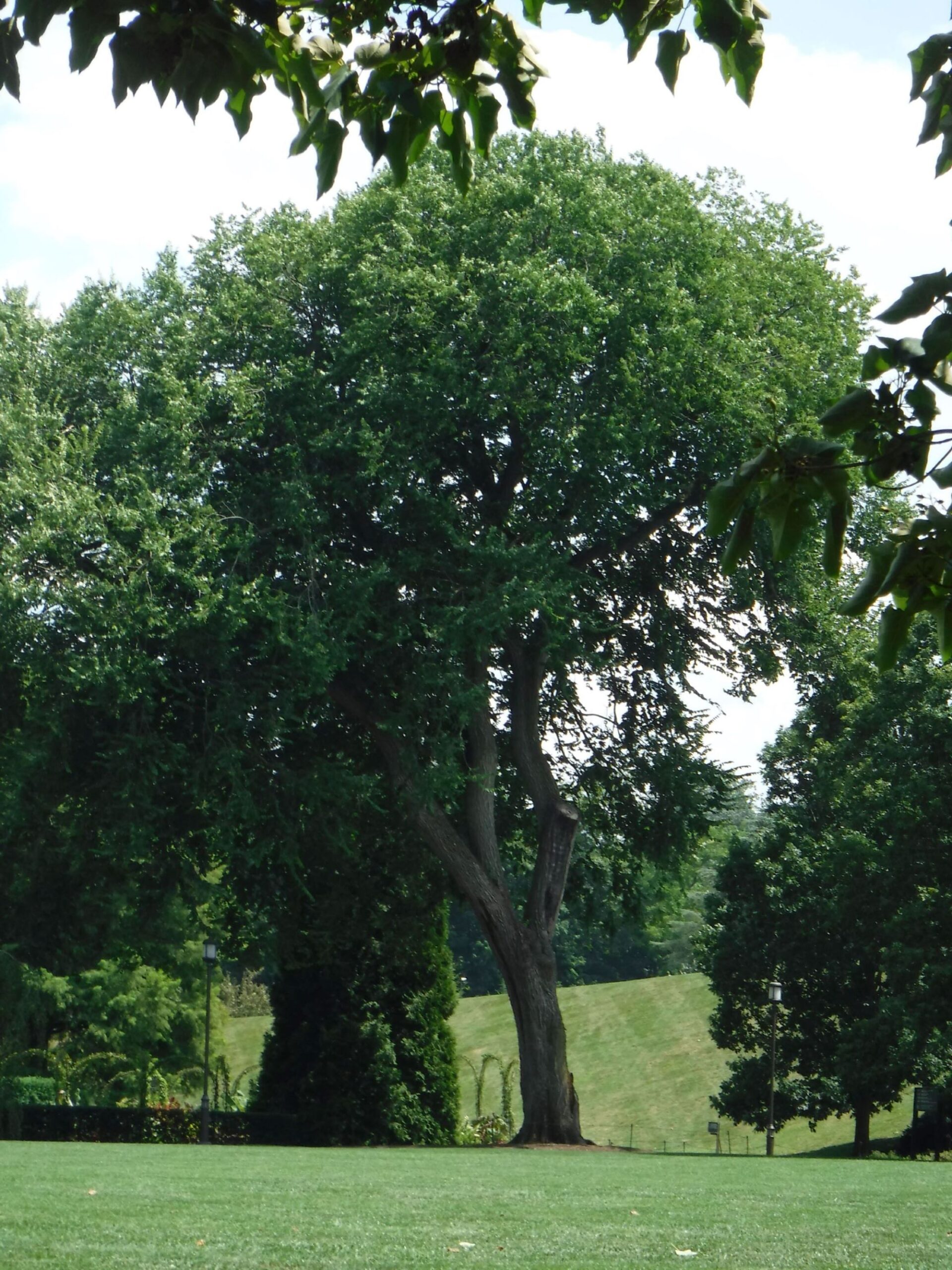
“survival” American elm at Longwood Gardens; photo by F.T. Campbell
Elms (Ulmus spp.) (see article by Martin et al.)
Let’s not forget that elms were keystone species in Europe and North America until attacked by two epidemics of “Dutch” elm disease during the 20th Century. While hybrid elms are available for urban plantings, many consider them not appropriate for planting in natural forests because these genotypes are not native.
Martin et al. describe a bewildering conglomeration of complexities and possibilities arising from biotic and abiotic factors. Initiation and especially intensity of the disease in a particular tree depend on
the species or strain of the tree, vectoring beetle, and pathogen;
timing of the attack; and
adequacy of water supplies at that time.
Possible targets for manipulation include the pathogen, its beetle vector, and the tree’s response — either in its bark or xylem. Martin et al. suggest that a combination of resistance to the pathogen within the xylem, resistance to beetles’ feeding wounds, and lowering tree clues that attract the beetles could considerably enhance longer-term overall resistance in the field.
However, verifying which approaches produce the best result will be complicated by the trees’ sensitivity to environmental factors such as season and water supply. Apparent resistance might actually be tied to, for example, low water supplies during the spring when the attack occurred.
Restoration strategies, including resistance to pests, must accommodate the diverse ecological conditions in the species’ large range, the rapid evolution of the Ophiostoma pathogens; and other pests and pathogens that attack elms. Nor do scientists know appropriate planting strategies.
Martin et al. believe Dutch elm disease is unlikely to be spread by movement of living elm plants, although other pests could be (and have been).
ash trees to be tested for resistance to emerald ash borer; photo courtesy of Jennifer Koch, USFS
Ashes (Fraxinus spp.)
While a USFS team led by Jennifer Koch link are conducting much of the on-the-ground efforts to breed ash trees resistant to the emerald ash borer (EAB; Agrilus plannipennis), Stanley et al. note that scientists cannot simply cross most North American ash species with the Asian ash, F. mandshurica, because the two groups are sexually incompatible. Scientists have instead focused on trying to enhance the resistance to EAB that is apparently present in a small proportion of ash trees, called “lingering ash.” Scientists funded by USDA Forest Service have already devoted over 14 years to finding such lingering ash to be tested for resistance.
Testing these trees is not simple (see Stanley et al.). But scientists are overcoming some of the obstacles. They have shown that the capability of a few green ash (Fraxinus pennsylvanica) (less than 1%) to defend themselves from EAB attack is genetic. Genes determine the relative abundance of specific metabolites manufactured by the tree; high levels kill more beetle larvae. These trees’ tolerance is not immunity but it might be sufficient to allow the tree to survive and grow. The level of metabolites synthesized by succeeding generations of the tree can probably also be enhanced by breeding.
To restore ash it is necessary to propagate large numbers of clones and to root the resulting embryos. This has been challenging. Merkle et al. describe five years of efforts to develop techniques that allow in vitro propagation to speed up selection and breeding. These techniques will facilitate establishment of numerous groups of propagules with the genetic differences needed to accommodate the large geographic range of several ash trees. For example, the green ash range covers more than half the continental U.S. plus multiple Canadian provinces.
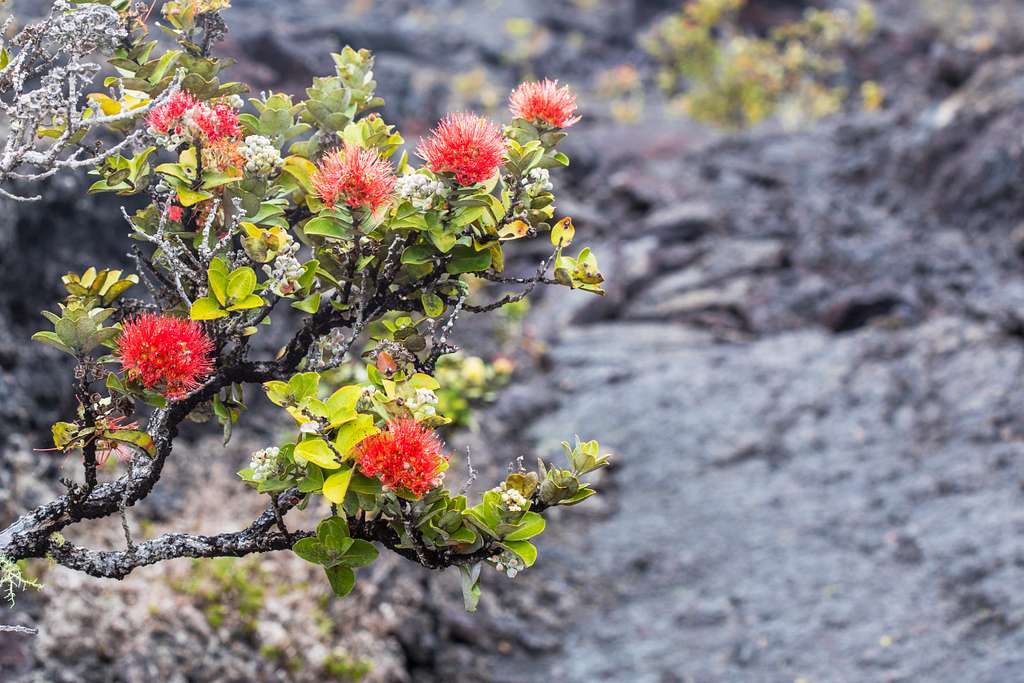
ʻōhiʻa on lava field, Hawaii Volcanoes National Park
‘Ōhi‘a (Metrosideros polymorpha)
‘Ohi‘a is the most widespread tree species on the Hawaiian Islands. It provides vitally important habitat for conservation of countless taxa of endemic birds, insects, and plants. It is also of great cultural importance for Native Hawaiians.
Luiz et al. review the tree species’ importance, the many threats to native Hawaiian forests, and a coalition’s efforts to counter the most recent – and alarming – threat, rapid ʻōhiʻa death (ROD).
Rapid ʻōhiʻa death is caused by two introduced species of in the genus Ceratocystis. C. lukuohia colonizes the tree’s sapwood and kills the tree quickly. This disease is present on two islands, Hawai`i and Kaua‘i. It has the potential to devastate ‘ohi‘a forests across the state. The other pathogen, C. huliohia, invades the phloem, cambium, and outer xylem, resulting in a well-defined area of necrotic tissue and slower mortality. This disease is on Hawai`i and Kaua‘i, plus Maui and O‘ahu. The two pathogens have different origins. C. lukuohia belongs to a genetic line that is based in Latin America, C. huliohia to a genetic line based in Asia and Australia.
Conservationists formed a coalition and developed a strategy to guide the process of identifying and developing disease resistance in M. polymorpha and, if possible, other Metrosideros species on the Islands. Luiz et al. describe the coalition’s many activities. The challenges are familiar ones:
obtaining sufficient facilities to screen large numbers of seedlings;
developing techniques for inoculation, propagation, and speeding up growth of seedlings;
improving techniques for detecting individual infected and healthy trees across difficult terrain;
testing trees native to all parts of the tree’s range, which is not large in area, but covers a great variety of elevations and climates); and
needing to develop trees resistant to both C. lukuohia and C. huliohia.
Luiz et al. reiterate the necessity to manage all threats to healthy ʻōhiʻa stands, for example, by
curtailing human spead of infected wood, using both quarantines and supportive public education;
testing repellants to reduce beetle attack.
reducing injuries to trees by fencing forests and removing feral ungulates. link to website?
SOURCES
Buggs, R.J.A. 2020. Changing perceptions of tree resistance research. Plants, People, Planet. 2020;2:2–4. https://doi.org/10.1002/ppp3.10089
Coleman, T.W., A.D. Graves, B.W. Oblinger, R.W. Flowers, J.J. Jacobs, B.D. Moltzan, S.S. Stephens, R.J. Rabaglia. 2023. Evaluating a decade (2011–2020) of integrated forest pest management in the United States. Journal of Integrated Pest Management. (2023) 14(1): 23; 1–17
Dudley, N.; Jones, T.; Gerber, K.; Ross-Davis, A.L.; Sniezko, R.A.; Cannon, P.; Dobbs, J. 2020. Establishment of a Genetically Diverse, Disease-Resistant Acacia koa A. Gray Seed Orchard in Kokee, Kauai: Early Growth, Form, and Survival. Forests 2020, 11, 1276 https://doi.org/10.3390/f11121276
Jacobs, D.F., R. Kasten Dumroese, A.N. Brennan, F.T. Campbell, A.O. Conrad, J.A. Delborne, et al. 2023. Reintroduction of at-risk forest tree species using biotech depends on regulatory policy, informed
by science and with public support. New Forests (2023) 54:587–604
https://doi.org/10.1007/s11056-023-09980-y
Luiz, B.C., C.P. Giardina, L.M. Keith, D.F. Jacobs, R.A. Sniezko, M.A. Hughes, J.B. Friday, P. Cannon, R. Hauff, K. Francisco, M.M. Chau, N. Dudley, A. Yeh, G. Asner, R.E. Martin, R. Perroy, B.J. Tucker, A. Evangelista, V. Fernandez, C. Martins-Keli.iho.omalu, K. Santos, R. Ohara. 2023. A framework for establishing a rapid ‘Ohi‘a death resistance program. New Forests https://doi.org/10.1007/s11056-021-09896-5
Martín, J.A., J. Domínguez, A. Solla, C.M. Brasier, J.F. Webber, A. Santini, C. Martínez-Arias, L. Bernier, L. Gil1. 2023. Complexities underlying the breeding and deployment of Dutch elm disease resistant elms. New Forests https://doi.org/10.1007/s11056-021-09865-y
Merkle, S.A., J.L. Koch, A.R. Tull, J.E. Dassow, D.W. Carey, B.F. Barnes, M.W.M. Richins, P.M. Montello, K.R. Eidle, L.T. House, D.A. Herms and K.J.K. Gandhi. 2023. Application of somatic embryogenesis for development of emerald ash borer-resistant white ash and green ash varietals. New Forests https://doi.org/10.1007/s11056-022-09903-2
Nelson, C.D. 2023. Tree breeding, a necessary complement to genetic engineering. New Forests
https://doi.org/10.1007/s11056-022-09931-z
Pike, C.C., J. Koch, C.D. Nelson. 2021. Breeding for Resistance to Tree Pests: Successes, Challenges, and a Guide to the Future. Journal of Forestry, Volume 119, Issue 1, January 2021, Pages 96–105, https://doi.org/10.1093/jofore/fvaa049
Sniezko, R.A., J. Koch, J-J. Liu and J. Romero-Severson. 2023. Will Genomic Info Facilitate Forest Tree Breeding for Disease and Pest Resistance? Forests 2023, 14, 2382.
https://doi.org/10.3390/f14122382
Sniezko, R.A. and C.D. Nelson. 2022. Chapter 10, Resistance breeding against tree pathogens. In Asiegbu and Kovalchuk, editors. Forest Microbiology Volume 2: Forest Tree Health; 1st Edition. Elsevier
Stanley, R.K., Carey, D.W., Mason, M.E., Doran, A., Wolf, J., Otoo, K.O., Poland, T.M., Koch, J.L., Jones, A.D. and Romero-Severson, J. 2023. Emerald ash borer (Agrilus planipennis) infestation bioassays and metabolic profiles of green ash (Fraxinus pennsylvanica) provide evidence for an induced host defensive response to larval infestation. Front. For. Glob. Change 6:1166421. doi: 10.3389/ffgc.2023.1166421
Posted by Faith Campbell
We welcome comments that supplement or correct factual information, suggest new approaches, or promote thoughtful consideration. We post comments that disagree with us — but not those we judge to be not civil or inflammatory.
For a detailed discussion of the policies and practices that have allowed these pests to enter and spread – and that do not promote effective restoration strategies – review the Fading Forests report at http://treeimprovement.utk.edu/FadingForests.htm
Gettysburg battlefield; now under attack by emerald ash borer (see below)
Kathryn Miller and colleagues (full citation at end of blog) have published a study that examined the status and trends of forest regeneration in 39 National parks from Virginia to Maine. Four-fifths of the forest plots in the study are classified as mature or late successional – so at first glance the forests look healthy. However, the researchers made an alarming finding: in 27 of 39 parks, forest regeneration is failing – either imminently or probably. Acadia National Park is an exception; it is the only park in the study experiencing healthy regeneration. They warn that without intense, sustained – and expensive! – intervention, these forests are likely to be converted to other types of ecosystems. [I blogged recently about findings regarding regeneration in eastern forests: here and here and here and here.
The forests’ understories have too few seedlings and – especially – saplings to maintain themselves. Worse, in many cases the seedlings and saplings are not the same species as the mature trees that form the canopy. The saplings are shorter species that never reach the canopy. That is, species like pawpaw (Asimina triloba), American holly (Ilex opaca), American hornbeam (Carpinus caroliniana), and eastern redbud (Cercis canadensis) are regenerating, rather than the oaks (Quercus spp.), hickories (Carya spp.), maples (Acer spp.), and pines (Pinus spp.) that constitute the canopies of mature forests in these parks.
Miller and colleagues call these “regeneration mismatches.” Inabout half of the parks, these native canopy tree species make up less than half of current saplings and seedlings. This situation suggests the forests’ species composition will shift substantially, thereby undermining resilience in the face of other challenges, such as invasive plants and pests and climate change.
In many of these National parks, Miller and colleagues found abundant ash regeneration. For example, ash (Fraxinus spp.) constitute more than half of all seedlings in four parks (Johnstown Flood and Friendship Hill in Pennsylvania; Catoctin Mountain in Maryland; Manassas Battlefield in Virginia). Miller and colleagues consigned ash species to the “subcanopy class” because the emerald ash borer (EAB) has caused such high mortality of mature trees. They think regard it unlikely that current and future seedlings will ever reach full size. The devastating impact is most starkly illustrated in Gettysburg National Battlefield Park. Consistent deer management since 1996 has been rewarded: the Park ranks at the top for regeneration among the 39 parks. However, more than half of the seedlings and a quarter of the saplings are ashes. EAB has shifted the Park’s otherwise secure regeneration status into probable failure.
When regeneration fails: too many deer
Throughout the study region, the overwhelming reason regeneration fails is browsing by overabundant deer. The level of deer browse is considered “acceptable” in only four parks. Deer suppress the number of seedlings and saplings. They also skew species composition of native subcanopy species toward those less palatable. Miller and colleagues found that canopy tree density and cover and past human land use had minimal impacts on seedling and sapling numbers or species composition.
Overabundant deer also promote invasion and spread of non-native plants, which are the second most important factor impeding regeneration. Together, invasive plants and non-native earthworms are ecosystem engineers that negatively impact soil and cause cascades of biotic and abiotic impacts throughout forest ecosystems.
Many of the parks experiencing the most severe impacts of chronic deer browse also have the highest invasions by non-native plants. A natural process of regeneration occurs when the death or collapse of mature trees create gaps in the forest canopy. Where deer and invasive shrubs overlap, this process is often hijacked. Instead of nearby native tree species accelerating their growth toward the canopy, thickets of invasive shrubs crowd the space.
For this reason, Miller and colleagues recommend that park management prioritize treating invasive plants in canopy gaps of disturbed stands to avoid forest loss. They recommend deliberate creation of canopy gaps to promote resilience only for parks, or stands within parks, that have low deer and invasive plant abundance or the capacity to intensively manage invasive plants in gaps.
In most parks, non-native tree species are rare, less than 2% of total regeneration. In seven parks, though, non-native trees exceed ten percent of seedlings and/or saplings. In three parks, saplings of non-native trees are increasing. These are primarily tree-of-heaven (Ailanthus altissima) and Norway maple (Acer platanoides). In Saratoga National Historical Park, seedlings of common buckthorn (Rhamnus cathartica) are increasing.
Beech regeneration in Prince William Forest Park
Role of other pests
Miller and colleagues express fear that beech bark disease andbeech leaf disease might have effects similar to those of EAB, leading to a greater “regeneration debt” in parks where American beech (Fagus grandifolia) is the dominant regeneration component. They cite specifically Prince William Forest Park in northern Virginia, [25 mi2]Rock Creek Park in the District of Columbia, [2.7mi2] and Saratoga National Historical Park. [5.3 mi2] The authors also suggest that thickets of beech root sprouts formed in response to BBD can suppress regeneration of other native canopy species and so might need to be managed.
Miller and colleagues mention hemlock woolly adelgid (HWA), but provide very little information. They report that Saint-Gaudens National Historical Park in New Hampshire (the home and studio of sculptor Augustus Saint-Gaudens) is at particular risk because of growth of both beech and eastern hemlock (Tsuga canadensis). I know that Delaware Water Gap National Recreation Area [109m2] has experienced major losses of mature hemlocks. [Shenandoah National Park has also, but it was not included in the study.]
Hemlock Ravine, Delaware Water Gap National Recreation Area; photo by Nicholas T via Flickr
Miller and colleagues report that Acadia National Park is seeing recovery of red spruce (Picea rubens) from a major fire in 1947 and possibly also from acid rain. They do not mention the longer-term threat from the brown spruce longhorned beetle. Their focus is on forest dynamics largely unaffected by deer.
In the same way, the authors make no mention of the absence of dogwood trees, presumably because they had been eliminated by dogwood anthracnose decades ago. Nor do they mention vascular streak dieback of redbud; the causal agent still uncertain. [See Annie Self’s presentation to National Plant Board, August 2023.]
dead ash tree in Shenandoah National Park
One omission is large enough that it might affect the study’s findings. At mi2Shenandoah is the largest National Park in the region. It was not included in the study because the Park’s forest monitoring process is not compatible with those in other NPS units. All the other parks – including Acadia (562 mi) – are much smaller, protecting historic sites like Civil War battlefields.
RECOMMENDATIONS
Miller and colleagues recommend that deer management be initiated in parks classified as at imminent or probable regeneration failure, if such programs are not already under way. They warn that effective deer management requires sustained commitment. Studies of deer exclosures show that full forest recovery from chronic deer overabundance can take as long as 40–70 years.
The authors also recommend actions to open the subcanopy to facilitate growth of saplings belonging to desired species. They caution that deer predation must be controlled. Furthermore, either invasive plant cover must be low, or management must ensure that that the park has sufficient resources to sustain an invasive plant control program – especially if invasive plants are combined with abundant deer.
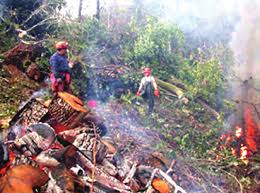
Parks experiencing compositional mismatches and that are dominated by oak–hickory forest types might also benefit from prescribed burning. Again, deer browse pressure must be minimized. In addition, regeneration of oaks and hickories must already be present.
In park forests dominated by species vulnerable to lethal pests, e.g., beech-, ash-, or hemlock-dominated forest stands, Miller and colleagues recommend considering planting alternative native canopy species and protecting those plantings from deer. Park managers should also consider thinning beech thickets formed after beech bark disease kills canopy trees.
Media coverage
The Washington, D.C., public radio station, WAMU, reported on this research on the air (broadcast December 20) and on its website. It is written by Jacob Fenston, with great photographs by Tyrone Turner. The story emphasized the link between deer and invasive plants – since regeneration in eastern deciduous forest happens by saplings taking advantage of gaps formed when mature trees die. The story quotes DC-area people on their efforts to contain vines. The Natural Resource Manager at Catoctin Mountain Park [8 mi2] describes that park’s longstanding deer control program. The story also mentions impacts of EAB and threat of BLD.
News – Funding for these parks to counter the threats!
Lead author Kathryn Miller has informed me that the Bipartisan Infrastructure Law and Inflation Reduction Act has provided the 39 parks involved in this study over $10 million to improve forest resilience largely through reduction of invasive plants and overabundant deer.
Of course, invasive species threats to National parks are not limited to the Northeast – nor are they new. I have raised this problem from the beginning. To see these blogs, on the “nivemnic” website, scroll down below the archives to the “categories”, then click on “national parks”.
SOURCE
Miller, K.M., S.J. Perles, J.P. Schmit, E.R. Matthews, M.R. Marshall. 2023. Overabundant deer and invasive plants drive widespread regeneration debt in eastern United States national parks. Ecological Applications. 2023;33:e2837. https://onlinelibrary.wiley.com/r/eap Open Access
Posted by Faith Campbell
We welcome comments that supplement or correct factual information, suggest new approaches, or promote thoughtful consideration. We post comments that disagree with us — but not those we judge to be not civil or inflammatory.
For a detailed discussion of the policies and practices that have allowed these pests to enter and spread – and that do not promote effective restoration strategies – review the Fading Forests report at http://treeimprovement.utk.edu/FadingForests.htm
ash trees killed along Mattawoman Creek in Maryland; photo by Leslie A. Brice
Two important players published documents pressing for “nature-based” solutions to climate change in response to the December 2023 24th Convention of the Parties to the UN Framework Convention on Climate Change.
First, chairs of seven IUCN expert Commissions released a joint statement calling for addressing both climate change and biodiversity loss simultaneously. The elected Commission Chairs represent over 15,000 scientists, scholars, policy makers, economists, lawyers, and other experts who work on issues related to this mission (including me, as well as current and former CISP board members!).
Second, the U.S. Department of the Interior issued detailed guidelines on how to do this.
In this blog, I review the IUCN pronouncement. I will discuss the DOI’s guidelines in a separate blog.
I welcome this statement because I have seen examples of climate “solutions” that worsen the biodiversity crisis. For example, Lugo et al. (2022; full citation at end of this blog) claim to assess the abundance, geographic distribution, contribution to forest structure (including carbon), & temporal trends of non-native tree species. However, they focus almost exclusively on levels of carbon storage. They do not discuss other impacts of non-native tree invasions.
More informative is the 2019 study by Fei et al. ; full citation at end of the blog) that estimated that 41% of total live (woody) biomass in forests of the “lower 48” states was at risk from the most damaging of introduced pests. I pointed out link to blog 159 that elms and beech began dying decades before the underlying (Forest Inventory and Analysis; FIA) data began to be collected. Consequently, the reported mortality rates underestimate the actual loss in biomass associated with these pests. In that blog, I noted that USFS scientists are shifting to new models that will result in a slight bump in overall biomass for the U.S. largely because of increased recognition of the biomass in crowns and limbs. That methodology has now been published.
the “survivor elm” at Longwood Botanical Garden; photo by F.T. Campbell
I also summarized findings by Badgley et al. (2022) that the California cap-and-trade program does not adequately incorporate sequestration losses tied to mortality of tanoak (Notholithocarpus densiflorus) caused by sudden oak death. I noted that California — and North America as a whole – are home to other tree-killing pathogens and insects.
As the IUCN statement clearly demonstrates, climate change and biodiversity loss are inseparable, interdependent, and mutually reinforcing. However, countries’ and businesses’ approaches now fall short of what scientific evidence indicates is needed. We must have bold, transformative, and holistic efforts by scientists – and everyone else.
The IUCN’s full statement has 10 points, which the organization’s blog compresses to four:
1. Integrate Climate and Biodiversity Efforts
The climate and biodiversity challenges require coherent, consistent, and integrated actions that simultaneously limit global warming to a maximum of 1.5oC, conserve and sustainably use biodiversity, and restore degraded ecosystems. Only by considering climate and biodiversity as parts of the same complex, systemic challenge can decision-makers develop effective solutions that maximize benefits while minimizing risks.
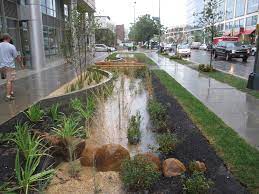
“green” infrastructure in urban spaces; Washington, D.C.
2. Enhance Ecosystem Integrity
We humans must maintain, enhance, and restore ecosystem integrity in order to halt biodiversity decline and species extinctions and to maintain the ecosystem services that underpin human well-being. Appropriate actions to conserve and restore terrestrial and marine ecosystems also support climate change mitigation, adaptation, and limits on temperature increases. This is true, however, only as long as chosen actions complement—and are not in lieu of—ambitious reductions of greenhouse gas emissions from fossil fuels, industrial processes, and land-use change.
The full IUCN statement also notes that the effects of “nature-based solutions” must be verified through a robust accounting system. IUCN has released separately a Global Standard for Nature-based Solutions which provides eight specific criteria.
3. Equitably transforming the way we live
Addressing the biodiversity and climate crises will require systemic changes in the way we live. These demand rapid and far-reaching actions across all sectors of a type, scale, and speed never before attempted. IUCN notes, several times, that these transformations must be realized in ways that are equitable and consider impacts on the most vulnerable populations, e.g., indigenous peoples, women, and youth.
IUCN calls for a rapid phase out of fossil fuels, paired with an accelerated and equitable deployment of sustainable clean or renewable energy generation and distribution. In the full statement, IUCN urges countries to avoid relying on unproven — and untested — geoengineering technologies.
4. Prop the Window Open
The window of opportunity to address climate change and biodiversity loss is closing rapidly. Protecting 30% of the Earth’s terrestrial and marine areas by 2030 — a goal adopted by the parties to the Global Biodiversity Convention in late 2022 — will require significant expansion of protected areas in only seven years. I note that while the U.S. is not a party to the biodiversity convention, the Biden Administration has accepted this goal. The IUCN states that achieving this goal depends on greater collaboration across the international agreements on biodiversity, climate change, desertification, and the United Nations’ Sustainable Development Goals. The full statement notes that the United Nations Environment Program (UNEP) calls for tripling expects that funding for nature-based solutions.
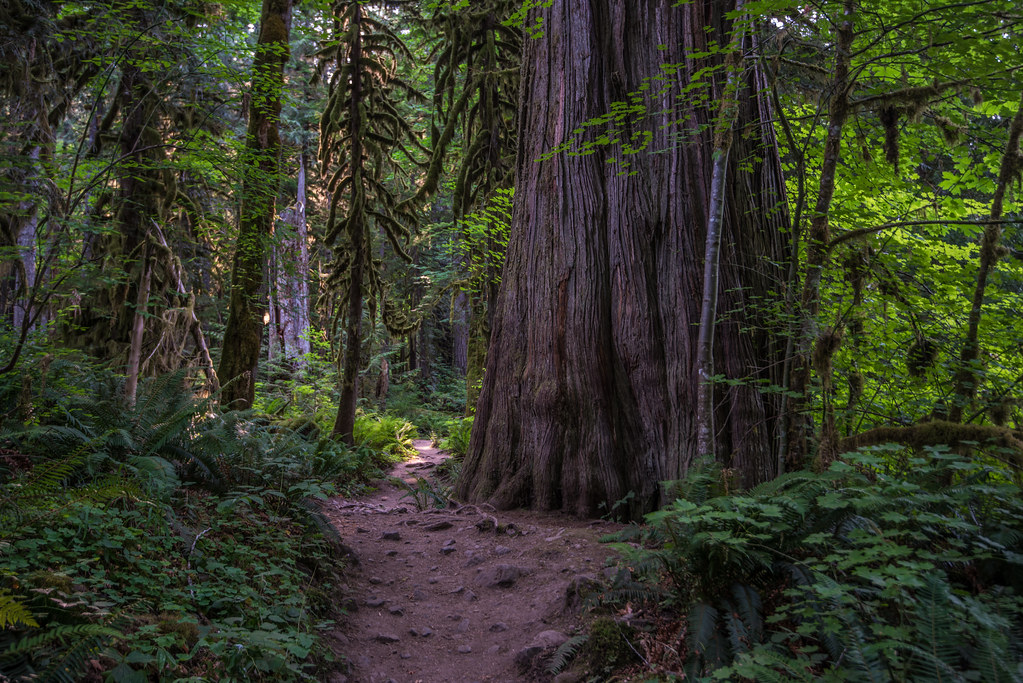
old-growth forest in the Pacific Northwest; photo by Richard Orr, via Wikimedia
The IUCN commission chairs warn that delegates at COP28 – and presumably others focused on the climate crisis — must be alert to possible conflicts between biodiversity conservation and climate change mitigation. They cite particularly actions aimed at transitioning energy supplies to “green” sources. This risk arises during choices of sites for solar facilities, wind farms, hydropower dams, and the locations and methods for deep-sea mining for minerals. The IUCN Standard provides guidance for navigating these conflicts.
SOURCES
Fei, S., R.S. Morin, C.M. Oswalt, and A.M. Liebhold. 2019. Biomass losses resulting from insect and disease invasions in US forests. Proceedings of the National Academy of Sciences Vol. 116 No. 35. August 2019
Lugo, A.E., J.E. Smith, K.M. Potter, H. Marcano Vega, and C.M. Kurtz. 2022. The Contribution of NIS Tree Species to the Structure and Composition of Forests in the Conterminous United States in Comparison with Tropical Islands in the Pacific & Caribbean. USDA USFS General Technical Report IITF-54.
Posted by Faith Campbell
We welcome comments that supplement or correct factual information, suggest new approaches, or promote thoughtful consideration. We post comments that disagree with us — but not those we judge to be not civil or inflammatory.
For a detailed discussion of the policies and practices that have allowed these pests to enter and spread – and that do not promote effective restoration strategies – review the Fading Forests report at http://treeimprovement.utk.edu/FadingForests.htm
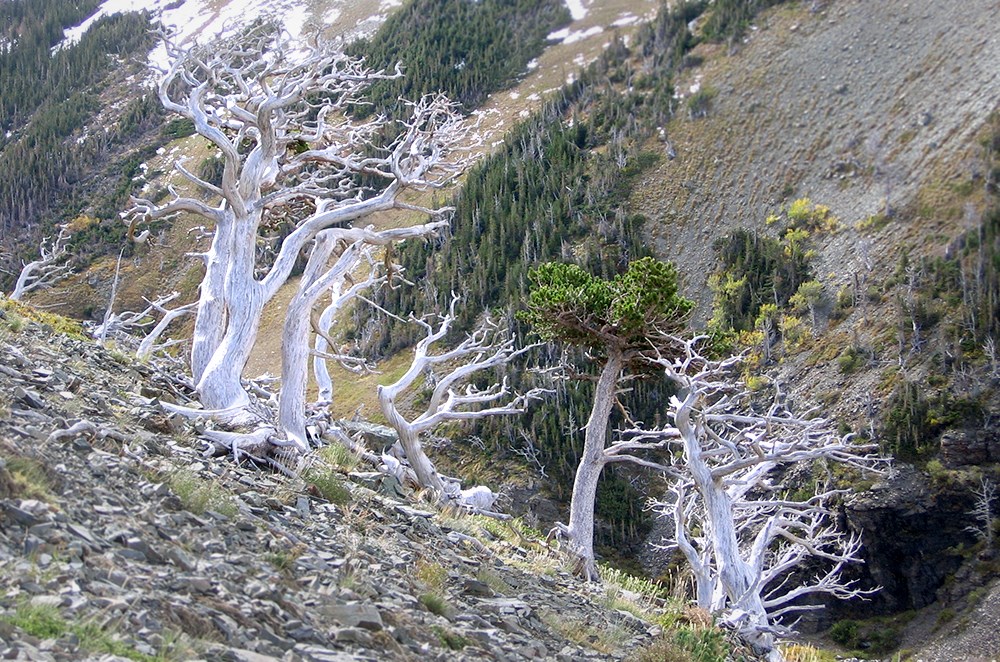
whitebark pine in Glacier National Park killed by white pine blister rust; National Park Service photo
As I noted in the accompanying blog, the U.S. Department of Interior has also weighed in on how to mitigate climate change as part of the Nation’s response to COP24 of the UN Framework Convention on Climate Change.
Interior’s Nature-Based Solutions “Roadmap” (citation at the end of the blog) is 480 pages long! It includes lots of pictures and extensive lists of examples of various types of projects. The document reviews “nature-based” restoration techniques, the benefits they provide in various realms (ecosystem, economy, social values); and the challenges or barriers likely to be encountered. These analyses cover six types of ecosystems – coastal (further divided into five subgroups), forests, grasslands (two types), inland wetland habitats, riverine habitats (three subgroups), and built environments. The obvious emphasis on aquatic and semi-aquatic habitats reflects the Department’s responsibilities. The threat from invasive species is recognized in each case. Plus there are separate chapters discussing management/removal of invasive pests and pathogens, plants, and vertebrates in all types of ecosystems.
The document’s purpose is to provide Interior’s staff – and others who are interested – with reliable information on determining the conditions and goals under which “nature-based” strategies perform best, the benefits they are likely to provide, instructive examples, and additional resources. Much of the information is intended to help staff persuade skeptics that a “nature-based” approach can solve a climate-related problem, such as sea level rise, as well as, or better than, “grey” infrastructure. This includes discussion of: construction and maintenance costs, efficacy in solving a specific problem, and managing conflicts over land use. Also, it considers benefits to other realms, for example, protecting biodiversity and providing opportunities for recreation and mental and physical well-being.
I will focus on aspects dealing with forests. These occur in several chapters. Each chapter has a brief description of the climate and other services provided by that ecosystem type, followed by sections on ways forward (“Technical Approach”), factors affecting site suitability, tools and training resources, likely benefits and outcomes (economic and ecological), barriers and solutions, and examples of projects.
The forest chapter (Chapter 10) discusses forest conservation and restoration with an emphasis on improving forest health, including fuels management, reforestation, and addressing threats from native and non-native pests. One proposed solution is thinning. This measure is said to enhance tree health and promote invasive plants. The “Roadmap” does not recognize that experts consider thinning is helpful in managing native pests such as mountain pine beetle but not non-native pests.
I was startled to find another suggestion – to plant native tree species that are resistant to non-native pests to restore stands. The “Roadmap” refers readers to the National Park Service Resilient Forests Initiative for Region 1 [which reaches from Virginia to Maine]. The Initiative encourages collaboration among parks with similar issues; provides park-specific resource briefs for 39 parks in the Region; and offers management strategies for a host of problems. These include invasive species control, prescribed fire, deer management, silvicultural treatments, tree planting, and fencing. My confusion is that – as far as I know – there are no sources of trees resistant to the non-native pests plaguing forests of the Northeast, e.g., beech, butternut, chestnut, hemlocks, ash, and oaks.
test planting of pathogen-resistant whitebark pine seedlings in Glacier National Park; photo by Richard Sniezko
In the “Tools” section Chapter 10 lists forest restoration guides published by the U.S. Forest Service (USFS) and the International Union of Forest Research Organizations. The “Examples” section includes a few thinning projects.
Chapter 16 advises on enhancing urban forests, which provide many benefits. The chapter stresses the importance of ensuring that projects’ budgets can support protecting trees from such risks as flooding, fire, pests, disease, “invasive species” (presumably other than insects or pathogens), and climate change. The authors note that urban trees are often more susceptible to pests because of their proximity to human activities that facilitate pests’ spread. However, there is no mention that such pests spread to nearby natural forests. They warn against planting a single tree species. An issue noted but not discussed in detail is the use of non-native species in urban forests, some of which have already become invasive.
Three chapters discuss invasive species per se — insects and pathogens (Chap. 26), plants (Chap 27), and vertebrates (Chap. 28) Each chapter summaries invasion stages and stresses the importance of preventing new introductions, detecting them early, and responding rapidly. Most of the text deals with managing established populations – with the emphasis on applying integrated pest management (IPM). Each raises caveats about biological control agents possibly attacking non-target organisms. Again, the authors emphasize the necessity of ensuring availability of adequate resources to carry out the program.
Chapter 26 addresses Invasive and Nuisance Insects and Pathogens. Examples listed include Asian longhorned beetle, emerald ash borer, hemlock woolly adelgid, spongy moth, Dutch elm disease, sudden oak death, laurel wilt, white pine blister rust, chestnut blight and butternut canker. (All these invaders are profiled under the “invasive species” tab here). The examples also include several native pests, e.g., mountain pine beetle, southern pine beetle, and several pathogens, including Swiss needlecast. I am confused by a statement that priorities for management should be based on pests’ traits; my understanding of the science is that other factors are more important in determining a pest’s impact. See, for example, Lovett et al. 2006.This chapter reiterates the impractical advice to plant trees resistant to the damaging pest. I also wonder at the following statement:
“The process of detection and prevention will need to continue over time to prevent reintroductions or reinvasions of nuisance or invasive pests and pathogens. In some cases, long-term management will be required to contain and prevent spread.” [p. 425] I believe long-term management will required in all cases!
The tools listed in the chapter include various DOI websites re: training and funding; the USDA website listing states’ plant diagnostic laboratories; a USDA IPM “road map”; The Nature Conservancy’s guidebook for assessing and managing invasive species in protected areas; the DOI Strategic Plan; and the University of Georgia’s Center for Invasive Species and Ecosystem Health.
Chapter 27 discusses invasive and nuisance plants. It starts by noting that an estimated 5,000 non-native plant species are stablished in the US. While not all are invasive, there is still potential for these plants to spread and cause harm. The authors state that controlling such plants reduces fire risk and lowers demand for water in arid areas.
The authors say early management is crucial to eradicate or control invasive plant species. Because plant invasions cross property lines, agencies must form partnerships with other agencies and private landowners. Because invasive and nuisance plant species are so widespread, managers must set priorities. The “Roadmap” suggests focusing on sites at the highest risk, e.g., heavily trafficked areas. Continued effort will be necessary to prevent reinvasions or reintroductions. However, long-term management and containment can be incredibly costly and labor-intensive.
lesser celandine invade bottomlands of Delaware Water Gap National Recreation Area
The “Roadmap” complains that many invasive and nuisance plant species are still offered for sale; in fact, that this is the primary pathway by which invasive plants enter the US, (While which we have known this for decades, it is encouraging to see a U.S. government report say: “Advocating for federal regulation and cohesive local policies for preventing invasive [plant] sales is essential to avoid disjointed state rulings.” – even if it does not specify which agencies should take the lead.
In the “Tools” section the chapter lists two USFS guides on managing invasive plants; two California Invasive Plant Council guides; the Interior Department’s 2021 Invasive Species Strategic Plan; EDDMapS (a University of Georgia site on which members of the public can report invasive species); and the TNC guidebook for Assessing and Managing Invasive Species in Protected Areas.
Chapter 28 addresses invasive & nuisance vertebrates (called “wildlife”). It notes that invasive animals are present in more than half of all US National parks. It briefly mentions the Lacey Act as providing legal power to curb the introduction and spread of these animals. It does not discuss strengths and weaknesses of this statute, both of which are substantial. This chapter repeats the odd wording from the pest and pathogen chapter – that in some cases long-term management will be required to contain and prevent spread of invasive species. I find it doubtful that short-term actions will be effective in virtually all cases.
Tools listed include Interior guides on IPM, funding sources, and protecting aquatic systems along with the Department of Interior’s 2021 Invasive Species Strategic Plan. Other tools include the USDA guide on IPM, EDDMapS, and the TNC guidebook.
Forests were also mentioned in the discussion of assisted migration of coastal wetlands to avoid drowning by rising seas (Chapter 1). The text notes that forests upland from coastal wetlands might be killed – either as a result of waterlogging as sea levels rise or as deliberate action to make room for the new marsh. Mortality in either case will reduce carbon sequestration. The authors also note the probability that invasive plants – shrubs in the woods, Phragmites on the edge of the wetland — will be present and have to be controlled.
SOURCES
Lovett, G.M, C.D. Canham, M.A. Arthur, K.C. Weathers, R.D. Fitzhugh. 2006. Foret Ecosystem Responses to Exotic Pests and pathogens in Eastern North America. BioScience Vol 56 No. 5 May 2006.
Warnell, K., S. Mason, A. Siegle, M. Merritt, & L. Olander. 2023. Department of the Interior Nature-Based Solutions Roadmap. NI R 23-06. Durham, NC: Nicholas Institute for Energy, Environment & Sustainability, Duke University. https://nicholasinstitute.duke.edu/publications/department-interior-nature-based-solutions-roadmap.
Posted by Faith Campbell
We welcome comments that supplement or correct factual information, suggest new approaches, or promote thoughtful consideration. We post comments that disagree with us — but not those we judge to be not civil or inflammatory.
For a detailed discussion of the policies and practices that have allowed these pests to enter and spread – and that do not promote effective restoration strategies – review the Fading Forests report at http://treeimprovement.utk.edu/FadingForests.htm
locations of P. ramorum in forests of Oregon in 2023
In a recent blog I offered several critiques of APHIS’ new Phytophthora ramorum risk assessment regarding possible establishment of the causal agent of sudden oak death, in the eastern U.S. states. One of my objections was the brevity of its discussion of the likelihood of sexual combination of the recently introduced EU1 strain with the strain established in North America, NA1 and – more recently – NA2.
This blog provides updates on the status of the Phytophthora ramorum invasion in California and Oregon. My information comes primarily from the newsletter posted by the California Oak Mortality Task Force (COMTF), supplemented by presentations at the recent on-line meeting.
Research by several scientists, including Tyler Bourret, now with USDA Agricultural Research Service, [summarized in the November 2023 COMTF annual meeting] reported that 216 species are now recognized in the genus Phytophthora.
Establishment of Additional Strains of the Pathogen
Scientists now recognize 12 strains of P. ramorum(Sondreli et al., summarized in COMTF newsletter for August 2023). Three of these strains are established in western North American forests. All three – NA1, NA2, & EU1 – are established in southern Curry County, Oregon. Two of the three – EU1 & NA1– are established in neighboring Del Norte County, California. The genetic lineage of the EU1 population in Del Norte points to a link to the Oregon outbreak. [Robinson/Valachovic presentation to COMTF annual meeting November 2023] Given the poor record of efforts to prevent additional introductions of P. ramorum to the United States (the APHIS risk assessment notes that the pathogen has been introduced eight to14 times – or more! — in California), continued introductions of strains not yet established in the U.S. appear likely. Once a strain is established in a North American nursery, it is very likely to spread to nurseries – and possibly forests – in other parts of the country. Remember, the risk assessment reported that P. ramorum has probably been moved over a thousand times on nursery stock from West Coast nurseries across the U.S.
P. ramorum-infected Rhododendron; photo by Jennifer Parke, Oregon State University
Why this matters
Phytophthora ramorum can reproduce sexually only when gametes of the two different mating types (A1 & A2) combine. Most of the North American populations are A2 mating type and most European populations are A1. Establishment of the European EU1 in Oregon and California increases the likelihood that sexual reproduction will occur, which in turn increases the probability that the pathogen will evolve. Sexual combination between NA2 (mating type A2) & EU1 (mating type A1) has occurred at least once – in a nursery in British Columbia. Authorities believe this hybrid has been eradicated. However, the possibility of such matings remains.
The most widespread strain in North America is NA1. It was first detected in the forests north of San Francisco in the middle 1990s; and in Oregon in 2001. Infestations of NA1 are now found from central Curry County, Oregon to Monterey County, California.
The EU1 lineage was first detected in Oregon in 2015. How did it get there since it was previously known only in Europe? The outbreak in Del Norte County, California – detected in 2020 – apparently is associated with the Oregon infection. [Robinson/Valachovic presentation to COMTF annual meeting November 2023] Both states attempted eradication, but the strain is well established. By 2023, the Oregon infestation was detected spreading at sites where intensive surveys in previous years detected no symptomatic trees. In California, new centers of infection have been detected along additional tributary creeks in the area. Scientists expect these infections to spread downhill. Control efforts and even surveys have been hampered by a large fire in the area, which diverted needed personnel and funding. [COMTF newsletter for October 2023 & Robinson/Valachovic]
The NA2 lineage has been found in some nurseries in the Pacific Northwest since 2005. The first detection in forests occurred near Port Orford, Oregon in 2021. Port Orford is 30 miles north of Gold Beach – the hitherto northern extent of the SOD infestation. Oregon authorities believed this signaled a new introduction to the state. By 2023, three sites in the state are now infested with this strain. [Ritokova presentation to COMTF annual meeting November 2023] Oregon now focuses its control efforts on NA2 outbreaks near Port Orford.
In California’s Del Norte County, there are now infestations of two strains of opposite mating types ~ 6 miles apart.The forests between them are conducive to infection, so interactions are likely. Robinson & Valahovic [COMTF annual meeting November 2023] ask how land managers should deal with any interactions. I ask – given the likelihood of hybrids forming – shouldn’t the APHIS risk assessment have tried harder to analyze this risk to the East?
Meanwhile, the NA1 strain continues to spread
In Oregon, the NA1 strain has spread 18 miles to the north and eight miles to the east since 2001 [Ritakova COMTF newsletter October 2023]. In California, spread after the wet winter of 2022-2023 has so far been less than expected. The SOD Blitz [Garbelotto at COMTF annual meeting November 2023] found that the statewide rate of positive trees rose from 7.1% in 2022 to 8.8% in 2023. In the Big Sur region some canyons now test negative that once were positive. Scientists think the negative tests reflect the multi-year drought. Scientists expect the spread will be more visible next year – especially if there is a second wet winter.
As noted above, the exception is in Del Norte County – an area described by CAL FIRE forester Chris Lee as a very wet “pathology” site. SOD (NA1 strain) was first detected in the area north of Crescent City in 2019 [Robinson and Valachovic]. This outbreak could not be re-confirmed for three years, despite intensive surveys. But, in 2022, scientists detected a new concentration of dying tanoak. The infected area is near both rare plants associated with serpentine soils and Jedediah Smith State Park, a unit of Redwood National Park. [Robinson] Meanwhile, the infestation of EU1 strain was first detected in 2020; it has expanded in 2022 and 2023.
In addition to spread facilitated by weather, we also see a continuing role in pathogen transfer via movement of shrubs intended for planting. In fall 2022 Oregon authorities were alerted by a homeowner to an outbreak in Lincoln City, Oregon. This was alarming for four reasons:
it was 201 miles north of the generally infested area in southern in Curry County.
it was well established and had apparently been present for many years.
P. ramorum was not detected in any associated waterways, raising questions about the efficacy of this standard detection method for use in community detections.
one of the infected plants was a new host: western sword fern (Polystichum munitum).
Fortunately, the infection has not (yet) been detected in nearby natural forests. Perhaps this is because there are no tanoaks this far north.
Detection Difficulties
Forest pathologists report several examples of outbreaks involving dozens of trees or plants suddenly being detected in areas which had been surveyed intensively in preceding years with no detections. See Robinson/Valachovic presentation [COMTF annual meeting November 2023, re: both EU1 & NA1 strains in Del Norte County]. I noted above that streams near the Lincoln City, Oregon neighborhood outbreak did not test positive. Nor did water associated with a positive nursery in Oregon[description of Oregon Department of Agriculture nursery regulatory program in COMTF newsletter for August 2023]. Stream baiting is an important component of detection surveys, so I worry about the possible implications of these negative results.
Identification of Additional Hosts [all from COMTF newsletter for August 2023.]
“Mountain Moon” dogwood Cornus capitata [host previously identified in the United Kingdom]
western swordfern (Polystichum munitum) (discussed above)
Oregon P. ramorum eradication attempt; photo by Oregon Department of Forestry
Management
Oregon has tried to manage SOD in the forest since its first detection, but the pathogen’s spread and the recent appearance of two additional strains have overwhelmed the program. One hope was to find a less expensive eradication or containment method. For 20 years, attempts to suppress the disease has focused on eradicating local populations of tanoaks (Notholithocarpus densiflorus) because they are the principal host supporting sporulation in Oregon. When an outbreak has been detected and delimited, they first kill the tanoaks with herbicides to prevent resprouting from the roots. The trees are then felled, piled, and burned. This treatment costs $3,000 – $5,000 / acre. Scientists tested whether they could greatly reduce the cost of the suppression programs by leaving tree boles standing after they have been killed by herbicide. Unfortunately, leaving dead, herbicide-killed trees standing increased sporulation, so this approach would probably exacerbate pathogen spread. [See Jared LeBoldus presentation to COMTF annual meeting November 2023]
Worrying Developments in Europe
In Ireland, sudden larch death – caused by the EU1 strain on Japanese larch (Larix kaempferi) – has spread to several counties. This strain is also causing disease on European beech (Fagus sylvatica) & Noble fir(Abies procera) in locations where these tree grow in association with nearby heavily infected Japanese larch. The EU2 lineage was found in late 2021, infecting L. kaempferi at one site.
Several other Phytophthora species are causing disease on trees, including P. lateralis on Lawson’s cypress, Port-Orford cedar (Chamaecyparis lawsoniana); P. pseudosyringae on Japanese larch; and P. austrocedri on trees in the Juniperus and Cupressus genera.
[information about Ireland from R. O’Hanlon, summarized in COMTF newsletter for August 2023]
Regulation
The European Union has relaxed phytosanitary regulation of Phytophthora ramorum. Previously the species – all strains – was considered a quarantine pest. Now its regulatory status depends on the origin of the infected material. “Non-EU isolates” of Phytopththora ramorum are still quarantine pests (presumably the two North American strains [NA1 & NA2] and the eight other strains identified in Asian forests). These pests are treated as the most serious pests in the Union; when they are detected, extensive control actions must be taken. “EU isolates” (presumably EU1 & EU2) are now treated as regulated non-quarantine pests. The focus is to limit the spread of these on plants for planting only.
The European Union and USDA APHIS regulatory emphases differ to some extent (APHIS does not regulate P. ramorum in natural settings, only interstate movement via, inter alia, the nursery trade). However, I am worried that both seem intent on minimizing their regulatory programs.
Arbutus canariensis; photo by Moreno José Antonio via Plantnet
Another region at risk
Macaronesia is a group of several North Atlantic islands,e.g., Madeira and the Azores, Canary, and Cape Verde islands.The islands have climates similar to areas affected by P. ramorum. The Macaronesian laurel forest is a remnant subtropical evergreen forest which shares some plant taxa with those that host the pathogen elsewhere. Moralejo et al. found that, overall, plant species showed considerable tolerance of the pathogen. However, P. ramorum was “rather aggressive” on Viburnum tinus, Arbutus canariensis and Ilex canariensis. Furthermore, mean sporangia production on five Macaronesian laurel forest species was similar to levels on Umbellularia californica, a key host driving the SOD epidemics in California.Moralejo et al. concluded that there is a moderate to high risk of establishment if Phytophthora ramorum were introduced in the Macaronesian laurel forest. [Study summarized in October 2023 COMTF newsletter.]
Important Research
The COMTF August newsletter reports exciting work developing improved detection tools for Phytophthora species, especially P. ramorum. Sondreli, Tabima, & LeBoldus have developed a method to quickly distinguish among the four most common clonal lineages (NA1, NA2, EU1 and EU2). These assays are sensitive to weak concentrations and effective in testing a variety of sample types including plant tissue and cultures. Oregon State University is already using in its diagnostic laboratory.
YuFang, Xia, Dai, Liu, Shamoun, and Wu have developed a simple, rapid, sensitive detection system for the molecular identification of P. ramorum that does not require technical expertise or expensive ancillary equipment. It can be used in laboratory or using samples collected from the field.
Quiroga et al. found that thinning – with or without burning of the slash – significantly reduced stand density and increased average tree size without significantly decreasing total basal area. This effect persisted for five years after treatments – especially when supported by follow-up basal sprout removal. Preventative treatments also significantly increased dominance of tree species not susceptible to Phytophthora ramorum.
In a study summarized in the October 2023 COMTF newsletter, Bourret et al. reported results of nearly 20 years of leaf baiting in watersheds covering an 800-mile section of the Pacific Coast in northern and central California. They found 22 Phytophthora & Nothophytophthora species.Several – including P. ramorum — were abundant and widespread. Some isolates in northern California differ from those found elsewhere. Mitochondrial sequences revealed multiple hybridization events between P. lacustris and P. riparia.
Bourret et al. also found that P. pluvialis is probably native to Western North America. The strain invasive on conifers in New Zealand probably originated in California rather than Oregon or Washington.
Jared LeBoldus and colleagues are studying the ecological impact of tanoak mortality in Oregon forests. [Summarized in November 2023 COMTF newsletter.] They expect impacts at various trophic levels and functions. Preliminary findings regarding the plant community show increases in understory and herbacious species diversity; a shift away from tanoak to Douglas-fir; and increased coarse woody debris. These findings are similar to results from studies in central California by Dave Rizzo and colleagues at UC Davis. LeBoldus is now studying the microbiome of plant leaves; soil mycorrhizal diversity; invertebrates and pollinators (loss of the large annual flower crop of tanoaks presumably affects pollinators). They hope in the future to study small mammal communities (which they expect to be affected by the loss of acorns).
Jared LeBoldus and colleagues also reported early results of genomic studies exploring disease resistance in tanoaks. Various scientists started such studies in the past, but so far all efforts have petered out due to absence of sustained funding, support from agency management, and links to facilities with the necessary tree improvement/breeding resources. (See Richard Sneizko’s description of requirements for resistance breeding, here.) I hope this project proves more sustainable.
Posted by Faith Campbell
We welcome comments that supplement or correct factual information, suggest new approaches, or promote thoughtful consideration. We post comments that disagree with us — but not those we judge to be not civil or inflammatory.
For a detailed discussion of the policies and practices that have allowed these pests to enter and spread – and that do not promote effective restoration strategies – review the Fading Forests report at http://treeimprovement.utk.edu/FadingForests.htm
affects of mountan pine beetle on lodgepole pine in Rocky Mountain National Park, Colorado photo from Wikimedia; one of pests addressed by USFS FHP
Several USFS scientists have published an assessment of the agency’s program to enhance forest health across the country: the Forest Health (FHP) program. [see Coleman et al., full citation at end of this blog.] The program assists cooperators (including other federal agencies) to prevent, suppress, and eradicate insect and pathogen outbreaks affecting trees, regardless of land ownership.
Each year, I advocate for adequate funding for the FHP program — which comes from annual Congressional appropriations. Funding has remained static at about $100 million per year. I interpret the article as providing support for my call for increased appropriations. First, it reports that the number of projects and extent of area treated have declined from 2011 to 2020. This is because static funding levels are stretched increasingly thin as costs to implement the same activities rise. Second, the program does not address many damaging forest pests already in the country. The result is growth of established threats to forest health. Finally, new insects and pathogens continue to be introduced. Protecting forest health necessitates tackling these new pests – and that requires money and staff.
Coleman et al. analyzed data from the decade 2011- 2020 to determine the most frequently used project types, integrated pest management (IPM) strategies and tactics, dominant forest pests and associated hosts managed, and most comprehensive forest IPM programs in practice. While there is a wide range of possible projects, most of those funded consist of some form of treatment (more below). The databases relied on do not include funding through the National Forest System aimed at improving forest health through such management activities as stand thinning treatments and prescribed fire. Nor are all pest management activities recorded in the centralized databases. I regret especially the fact that “genetic control” (= resistance breeding) are left out.
Port-Orford cedar seedlings in trial for resistance to Phytophthora lateralis at Dorena center; photo courtesy of Richard Sniezko, USFS
Summary of Findings
The data are sorted in various categories, depending on whether one wishes to focus on the type of organism being managed or the management approach. All presentations make evident a dramatic imbalance in the projects funded. Again and again, spongy moth (Lymantria dispar dispar), southern pine beetle (SPB, Dendroctonus frontalis), and several bark beetles attacking conifers in the West (in particular mountain pine beetle, [MPB] Dendroctonus ponderosae) dominate, as measured by both funding and area treated.
oak trees in Shenandoah National Park killed by spongy moth; photo by F.T. Campbell
The bulk of the funding went to the above species, plus hemlock woolly adelgid (HWA; Adelges tsugae); emerald ash borer (EAB, Agrilus planipennis), oak wilt (caused by Bretziella fagacearum), and white pine blister rust (WPBR, Cronartium ribicola).
95% of the projects focused on only four taxa: oaks, Quercus spp. [spongy moth suppression and eradication]; loblolly and ponderosa pines [bark beetle prevention and suppression]; and eastern hemlock [HWA suppression].
Projects seeking to suppress an existing pest outbreak covered 87% of the total treatment area. However, 98% of the treated area was linked to only 20 taxa; again, spongy moth dominated.
Projects seeking to prevent introduction or spread of a pest constituted only 30% of all projects and covered only 11% of the total treatment area.
Eradication and restoration projects each equaled less than 5% of total projects and treatment areas.
Native forest pests were targetted by 79% of projects; non-native pests by 21%. However, non-native pests accounted for 84% of the total treatment area (again, the spongy moth).
While 67% of projects took place on USFS lands (focused on MPB and SPB), 89% of the total treatment area was on lands managed by others (state or other federal agencies, or private landowners). Again, the size of the non-USFS area treated was driven primarily by the spongy moth Slow the Spread program.
Insect pests received nearly all of the funding: 70% of funding targetted phloem-feeding insects, especially SPB and MPB; 10% targetted foliage feeders, especially spongy moth; 6% targetted sap feeders. 4% tackled rusts (e.g., WPBR); just 2% addressed wood borers (e.g., Asian longhorned beetle, emerald ash borer).
The ranking by size of area treated differs. In this case, 82% of areas treated face damage by foliage feeders (e.g., spongy moth); 15% of the treated areas are threatened by phloem feeders (e.g., MPB); only 1.4% of the area is damaged by sap feeders (e.g., HWA); 0.6% is threatened by rust; and 0.2% by wood borers.
Re: control strategies, 32% of projects relied on silvicultural strategies; 22% used semiochemical strategies; 21% exploited other chemical controls; and 18% used physical/mechanical control methods.
Coleman et al. regretted that few programs incorporated microbial/biopesticide control strategies; these were applied on only 10% of total treated area. Again, the vast majority of such projects were aerial applications of spongy moth controls, Bacillus thuringiensis var. kurstaki (Btk) and nucleopolyhedrosis viruses (NPV) (Gypchek). Coleman et al. called for more research to support this approach efforts to overcome other obstacles (see below).
Coleman et al. also called for better record-keeping to enable analysis of genetic control/ resistance breeding projects, treatment efficacy, and survey and technical assistance activities.
History
The article provides a brief summary of the history of the Forest Service’ pest management efforts. Before the 1960s, the USFS relied on labor-intensive physical control tactics, classical biocontrol, and widespread chemical applications. Examples include application of pesticides to suppress or eradicate spongy moth; decades of Ribes removal to curtail spread of white pine blister rust; salvage logging and chemical controls to counter phloem feeders / bark beetles in the South and West. These strategies were increasingly replaced by pest-specific management tactics during the 1970s.
Over the decade studied (2011-2020), tree defoliation attributed to various pests (including pathogens) affected an estimated 0.7% of the 333 million ha of U.S. forest land annually. Mortality attributed to pests impacted an estimated 0.8% of that forest annually. See Table 1. Two-thirds of the area affected by tree mortality is attributed to phloem feeders; a distant second agent is wood borers. These data are incomplete because many insects, diseases, and parasitic higher plants are not tracked by aerial surveys.
As I noted above, these data do not include projects that screen tree species to identify and evaluate genetic resistance to a pest; or efforts to collect cones, seed, and scion. I consider these gene conservation and resistance programs to be some of the most important pest-response efforts. I have blogged about the USFS’ Dorena Genetic Resource Center’ efforts to breed five-needle pines, Port-Orford cedar, and ash. link
41% of silvicultural control treatments targetted phloem feeders; 48% addressed cankers and rusts together. Restoration planting was done in response to invasions by ALB, EAB, and WPBR, as well as native bark beetles and mistletoes.
effort to eradicate SOD in southern Oregon; partially funded by USFS FHP. Photo courtesy of Oregon Department of Forestry
Physical/mechanical control projects were most widely applied in the Rocky Mountains in response particularly to diseases: vascular wilts, rusts, and cankers, including WPBR. This type of project was also used to deal with non-native diseases in other parts of the country, e.g., oak wilt, sudden oak death (SOD), Port-Orford cedar root rot, and rapid ʻōhiʻa death. Sanitation treatments (i.e., removal of infected/infested trees) was used for native mistletoes and root rots, and some non-native insects, e.g., EAB and coconut rhinoceros beetle (Oryctes rhinoceros). Pruning is a control strategy for WPBR. Trenching is applied solely to suppress oak wilt.
Chemical controls were limited to small areas. These projects targetted seed/cone/flower fruit feeders, foliage and shoot diseases, sap feeders [e.g., balsam woolly adelgid (BWA), HWA], wood borers (e.g., EAB) and phloem feeders (e.g., Dutch elm disease; DMF oak wilt vectors). Cover sprays have been used against goldspotted oak borer (GSOB); and many native insects. Fungicides are rarely used; some is applied against the oak wilt pathogen in areas inaccessible by heavy equipment.
treating hemlock trees in Conestee Falls, NC; photo courtesy of North Carolina Hemlock Restoration Initiative
Classical biocontrol projects funded by the program targetted almost exclusively HWA. Some 4.3 million predators have been released since the early 1990s; 820,057 in just the past 10 years.
Gene conservation and breeding projects were directed primary at commercially important hosts, e.g., loblolly Pinus taeda and slash pine P. elliottii; and several non-native pests, including chestnut blight, EAB, HWA, and WPBR.
Survey and technical assistance (i.e., indirectly funded activities) conducted by federal, state, and tribal personnel contributed to education/outreach, evaluating effectiveness, identification, monitoring, and record keeping strategies.
As should be evident from the data presented here, suppression treatments dominated by number of projects and treatment area. The poster child project is the national spongy moth Slow the Spread program. The authors say this program is the most advanced forest IPM program in the world. It has successfully slowed spongy moth’s rate of spread by more than 80% for more than 20 years.
A second widely-used subset of suppression programs consists of physical / mechanical control. This is often the principal suppression strategy in high-visitation sites (e.g., administration sites, campgrounds, picnic areas, and recreation areas). Sanitation harvests are one of the few viable management techniques for suppressing or slowing the spread of recently introduced non-native pests. Nevertheless, the largest number of suppression projects and use of sanitation treatments focused on a native pest, mountain pine beetle, at the height of its outbreak in early 2010s.
Silvicultural control, specifically tree thinning, represents the predominant forest pest prevention tactic, especially on lands managed by the USFS. Two programs dominate: the Southern Pine Beetle Prevention Program and the Western Bark Beetle Initiative. Again, Coleman et al. assess these treatments as very successful. Forest thinning treatments also address other management concerns, i.e., reduce threat of catastrophic wildfires and reduce adverse effects of climate change.
Chemical control tactics are applied to suppress most forest insect feeding guilds in high-value sites and seed orchards. Soil or tree injections of systemic pesticides are used to protect ash and hemlock trees. Topical sprays have been applied to protect whitebark pine (Pinus albicaulis) from mountain pine beetle. Whitebark pine was listed as threatened under the Endangered Species Act in December 2022.
dead whitebark pine at Crater Lake NP; photo by F.T. Campbell
Soil or tree injections target two non-native insects, EAB and HWA.
Genetic control via resistance breeding represents the primary strategy to combat several non-native diseases. (More options are typically available for insects than diseases.) Coleman et al. focus on the extensive effort to protect many of the five-needle pines from WPBR. As I have described in earlier blogs, the Dorena Genetic Resource Center in Oregon has engaged on numerous other species, too.
Coleman et al. describe pest-management associated monitoring efforts as consisting largely of coordinated annual aerial detection surveys, detection trapping, stream-baiting ofPhytophthora ramorum, and ground surveys to address site-specific issues.
Coleman et al. call for improvement of record-keeping / databases to encompass all pests, management actions, and ownerships. They also advocate for additional decision-making tools, development of microbial/biopesticides, genetic research and breeding, and biocontrol strategies for several pest groups.
They consider the southern pine beetle and spongy moth programs to be models of comprehensive IPM programs that could be adapted to additional forest health threats. They note, however, that development and implementation of these programs require significant time, financial commitments, and collaborations from various supporting agencies. Not all programs enjoy such resources.
SOURCE
Coleman, T.W, A.D. Graves, B.W. Oblinger, R.W. Flowers, J.J. Jacobs, B.D. Moltzan, S.S. Stephens, R.J. Rabaglia. 2023. Evaluating a decade (2011–2020) of integrated forest pest management in the United States
Journal of Integrated Pest Management, (2023) 14(1): 23; 1–17
Posted by Faith Campbell
We welcome comments that supplement or correct factual information, suggest new approaches, or promote thoughtful consideration. We post comments that disagree with us — but not those we judge to be not civil or inflammatory.
For a detailed discussion of the policies and practices that have allowed these pests to enter and spread – and that do not promote effective restoration strategies – review the Fading Forests report at http://treeimprovement.utk.edu/FadingForests.htm
Rome: home of the International Plant Protection Convention
I often assert that the international phytosanitary system has proven to be a failure in preventing introductions.
Some of the recent publications support my conclusion – although most don’t say so explicitly. For example, the Fenn-Moltu et al. (2023) study of insect transport and establishment around the world found that the number of invasive species-related treaties, regulations and legislation a country has adopted had no significant effect on either the number of insect species detected at that country’s border or the number of insect species that established in that country’s ecosystems..
Weber et al. also found considerable evidence that international and U.S. phytosanitary systems are not curtailing introduction of insects and entomophagic pathogens. In my earlier blog I review their study of unintentional “self-introductions” of natural enemies of arthropod pests and invasive plants. They conclude that these “self-introductions” might exceed the number of species introduced intentionally. These introductions have been facilitated by the usual factors: the general surge in international trade; lack of surveillance for species that are not associated with live plants or animals; inability to detect or intercept microorganisms; huge invasive host populations that allow rapid establishment of their accidentally introduced natural enemies; and lack of aggressive screening for pests already established. Examples cited include species introduced to the United States’ mainland and Hawai`i specifically.
The U.S. Capitol – one of the entities that can reflect our priorities in setting phytosanitary policy
As I point out often, altering human activities that facilitate invasion is a political process. So is amending international agreements that are not effective. We need to determine the cause of the failures of the existing institutions and act to rectify them. See my critiques of both the American and international phytosanitary system Fading Forests II and Fading Forests III (see links at the end of this blog) and my earlier blogs, especially this and this.
SOURCES
Fenn-Moltu, G., S. Ollier, O.K. Bates, A.M. Liebhold, H.F. Nahrung, D.S. Pureswaran, T. Yamanaka, C. Bertelsmeier. 2023. Global flows of insect transport and establishment: The role of biogeography, trade and regulations. Diversity and Distributions DOI: 10.1111/ddi.13772
Weber, D.C., A.E. Hajek, K.A. Hoelmer, U. Schaffner, P.G. Mason, R. Stouthamer, E.J. Talamas, M. Buffington, M.S. Hoddle and T. Haye. 2020. Unintentional Biological Control. Chapter for USDA Agriculture ResearchService. Invasive Insect biocontrol and Behavior Laboratory. https://www.ars.usda.gov/research/publications/?seqNo115=362852
Posted by Faith Campbell
We welcome comments that supplement or correct factual information, suggest new approaches, or promote thoughtful consideration. We post comments that disagree with us — but not those we judge to be not civil or inflammatory.
For a detailed discussion of the policies and practices that have allowed these pests to enter and spread – and that do not promote effective restoration strategies – review the Fading Forests report at http://treeimprovement.utk.edu/FadingForests.htm