Pananax ship; photo by 2005emsaguinden via Wikimedia
Imports from Asia, specifically China, had surged in the first half of 2025 as importers tried to get ahead of new tariffs. Blog They then fell sharply, although there was also a shift in Asian suppliers from China to Vietnam and India. At the end of 2025, experts expected the slump to persist into 2026. However, now we learn that U.S. imports from Asia jumped 13% from April to May, to 1.68 million TEUs (Michael Angell, Journal of Commerce, June 16, 2026). According to Politico, the shift to importing goods from Vietnam, and to a lesser extent to Thailand and Indonesia, has continued.
American cities continue to compete for to build larger ports so they can receive more cargo. Of course, more cargo means more incoming containers. As my blogs document (click “wood packaging” in the “Categories” section below the “Archives”), containers and especially the crates and pallets inside them too often transport wood-boring insects and other invasive species.
My source of information on these developments is from the Journal of Commerce website. Unfortunately, access is blocked by a paywall.
Recent reports concern port cities dredging and widening their ports in hope of attracting increased import volumes.
Norfolk; photo by PghPhxNfK via Wikimedia
Norfolk, Virginia
This month the Virginia Port Authority (VPA), Governor Abigail Spanberger and other federal, state, and local officials inaugurated the Port of Norfolk’s expanded capacity. At 55 feet, Norfolk is now the deepest and widest port along the East Coast. The project, begun in 2019, will allow Norfolk to handle vessels carrying up to 18,000 TEUs [twenty-foot equivalent containers]. Authorities are encouraging ocean carriers to call there.
The port was visited by 1,497 container ships over the past 12 months; nearly a quarter had a capacity greater than 11,000 TEUs.
Virginia’s container volumes grew on average 3% annually between 2017 and 2024. In 2025, total container volume fell 8% from 2024 because shippers hoped to avoid tariff deadlines by unloading cargo at a first or second port of call. Virginia was the six-busiest US port for imports this year through May, handling 635,205 TEUs. That was up 2.6% from the same five-month period a year ago. To attract shippers to Norfolk as a first or even second port of call for more container services, Virginia Port Authority CEO Sarah McCoy said, Virginia needs to emphasize rail links. This involves expanding the region’s distribution center network.
The project to dredge and widen the port began in 2019. The total project has a budget of $1.4 billion. The project included adding two ultra-large container vessel (ULCV) berths at each of its two container terminals. The final component is to renovate the North Berth, including developing a fifth ULCV berth, plus four new ship-to-shore cranes and semi-automated stacking cranes in its container yard. Completion is scheduled for mid-2027. At that time, the port’s total handling will reach 5.8 million TEUs. The International Longshoremen’s Association (ILA) is contesting installation of semi-automated stacking cranes in a series of lawsuits.
Other East Coast ports are also adding terminal capacity. This includes the Port of Baltimore, where a shipping company is developing a container terminal that includes handling two ULCVs simultaneously. Apparently they are not deterred by the months-long closure of the Port of Baltimore caused by a ship colliding with a bridge downstream from the port.
[Information from Michael Angell, Senior Editor, East Coast Ports. “Norfolk aims to be preferred USEC gateway with deeper port” June 18, 2026]
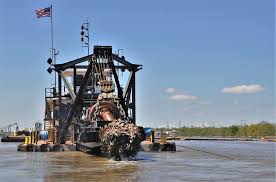
U.S. Army Corps of Engineers dredge in the Savannah River
The Port of Savannah remains dominant. In 2025 Savannah and the roll on-roll of facility in Brunswick together handled nearly 5.7 million TEUs, an increase of 2.6% or 146,000 TEUs compared to 2024. Even so, Georgia Ports is financing a $4.5 billion port and inland infrastructure plan which will add five new container berths in Savannah, the most new berths of any U.S. port and one new RoRo berth in Brunswick. Port officials brag about their rapid turnover of cargo from ship to rail. Forty-two double-stack trains per week take this cargo to Atlanta, Memphis, Nashville, Charlotte and Orlando. The Port Authority also operates two inland terminals – in in Chatsworth and Gainesville, Ga.
Corpus Christi
As I have reported in previous blogs, Gulf Coast ports are also upgrading to receive more shipments. DP World, a Dubai-based terminal operator, is negotiating to develop a container terminal at the Port of Corpus Christi. This would open this port to container logistics.
Corpus Christi is already the third-busiest port in the US by gross tonnage, behind Houston and South Louisiana. The bulk of cargo is petroleum and bulk commodities. (In past years, dunnage associated with bulk commodities proved to cause pest-infestation problems in nearby Houston.)
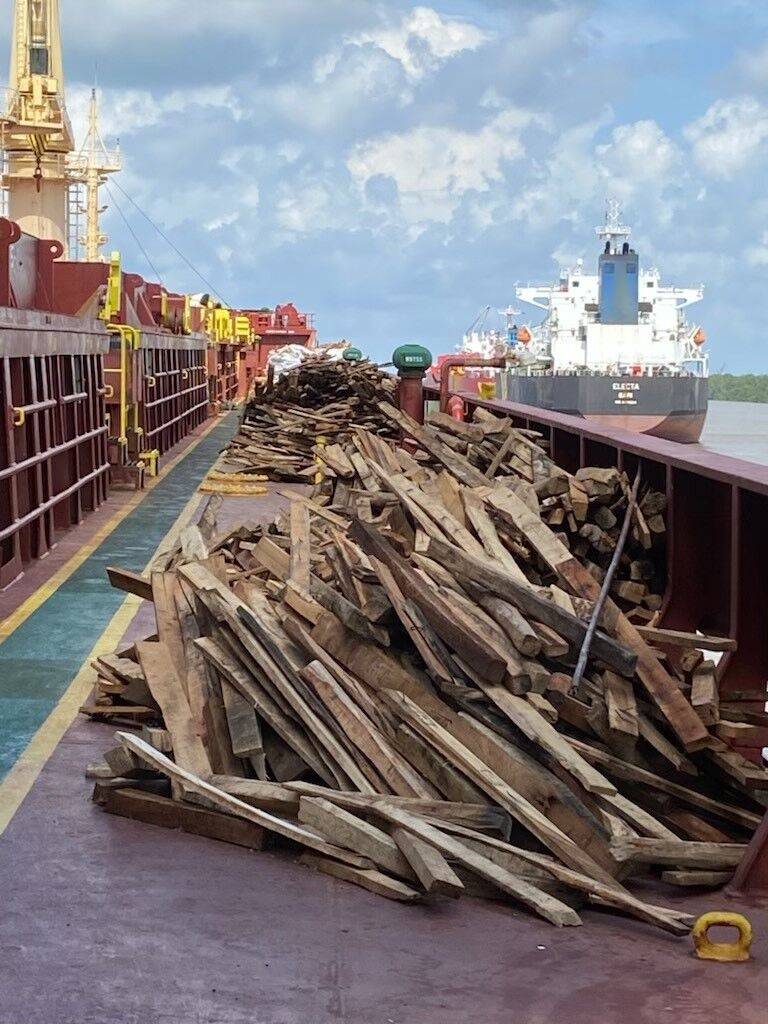
dunnage piled on the dock at Houston; photo by S. Useman
Last year Corpus Christi completed an eight-year, $625 million project to widen and deepen its main shipping channel (from 47 feet to 54 feet). The expansion allows visits by super-post-Panamax container vessels.
[Information from Michael Angell, Senior Editor, East Coast Ports. “DP World begins talks with Corpus Christi for container terminal project” June 16, 2026]
Warehouse Capacity
Leaders of logistics managers note that importers and domestic manufacturers are diversifying their supply chains – both warehouse facilities and shipping routes – because of ongoing supply chain disruptions even years after COVID 19. While many industrial warehouses across the U.S. still have vacancies (averaging above 7%), some markets are filling up. They mention Chicago, Indianapolis, Memphis, Dallas, and Kansas City. These cities’ warehouse vacancies average ~5%. Indianapolis leads; asking rents for industrial space there have climbed more than 50% over the past five years. Phoenix also anticipates increased demand for space, although its current vacancy rate is 10.6% – the highest vacancy rate of the 25 largest markets.
The move away from Los Angeles-Long Beach began years ago. To move freight inland, shippers need options, particularly access to intermodal rail.
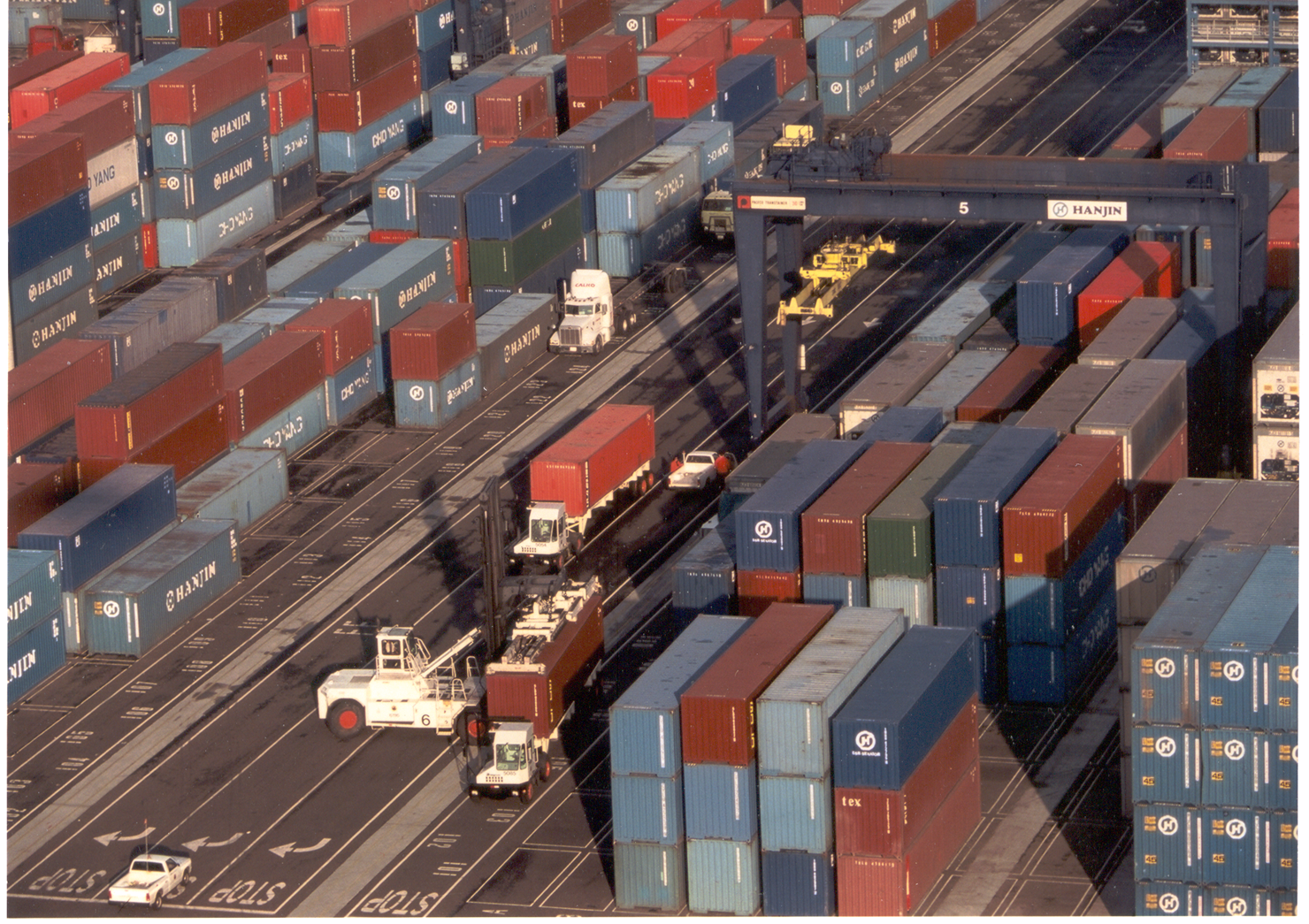
shipping containers at Long Beach in the early 2000s; photo courtesy of Bob Kanter of the Port of Long Beach
The experts attribute this growth to the need for more flexibile supply chains and demand for materials used in constructing data centers. Demand for the second category is reportedly strongest in the Southeast, followed by interior central markets.
[Information from William B. Cassidy, Senior Editor, Trucking. “US warehousing expanding faster at key inland hubs” June 18, 2026]
Posted by Faith Campbell
We welcome comments that supplement or correct factual information, suggest new approaches, or promote thoughtful consideration. We post comments that disagree with us — but not those we judge to be not civil or inflammatory.
For a detailed discussion of the policies and practices that have allowed these pests to enter and spread – and that do not promote effective restoration strategies – review the Fading Forests report at http://treeimprovement.utk.edu/FadingForests.htm
ash trees (Fraxinus spp.) killed by EAB along Mattawoman Creek, Prince Georges County, Maryland; photo by Leslie A. Brice
I report here on action so far on funding vital agencies in Fiscal Year 2047 (which begins on October 1, 2026). I describe the various programs roles in addressing the invasive species threat briefly in my earlier blog.
USDA Forest Service
The House Appropriations Committee approved the FY27 Interior Appropriations bill (which includes the USFS) in early June. I greatly appreciate Congress’ continued support for two USFS programs that are vitally important in protecting resilience of the Nation’s forests in the face of invasions by non-native pests and plants: Research and Development and Forest Health Management (in the State, Private, and Tribal lands division). The Trump Administration had – for the second year in a row – called for ending these programs’ specific appropriations.
Research and Development
In my testimony I had asked the Subcommittee to maintain funding for R&D at the Fiscal Year 2026 Continuing Resolution level of $308 million. Instead the Subcommittee ignored the Administration’s request and provided $295 million – a fairly small reduction under the circumstances. Funding for the Forest Inventory and Analysis (FIA) program continues to see small increases — to $34 million.
While there is no specific line item for invasive species in the R&D budget, the report does encourage the USFS to address high priority invasive species, pests, and diseases, including the emerald ash borer, an unspecified “bark beetle”, spotted lanternfly, and Spruce Budworm. The list also includes three invasive plant species: buckthorn, Amur honeysuckle, and Callery pear. This language is not tied to a specific program, so it is unclear what will actually result.
In the R&D section of the report, the Committee “recognizes the significant damage invasive species can cause throughout forests, including urban forests, and encourages the USFS to continue reforestation efforts, including through the management of woody invasive species & tree planting in urban areas.” Again, the wording seems somewhat misplaced since the R&D program does not carry out tree planting.
State, Private, and Tribal forests
I had asked the Interior Appropriations Subcommittee to maintain funding for State, Private, and Tribal forests program at the FY26 Continuing Resolution level of $310.6 million. Again, appropriators ignored the Administration’s request and provided $283,500,000 – a fairly small reduction. The Forest Health Management program was funded at $58 – of which $16 million is specified for efforts on federal lands, $42 million for helping state and tribal agencies and private landowners to manage pests on their lands.
The Subcommittee report emphasized the importance of working with Colorado to curtail spread of mountain pine beetle d associated wildfire risk. Music to my ears is the Committee’s statement encouraging the USFS to work with state & local agencies to counter the high rate of tree mortality due to the goldspotted oak borer infestation in Southern California. It advised prioritizing insect research, prevention, suppression, & mitigation projects that support community wildfire protection & State forest action plans. Since none of the members of the House Interior Appropriations Subcommittee is from California, I am pleasantly puzzled.
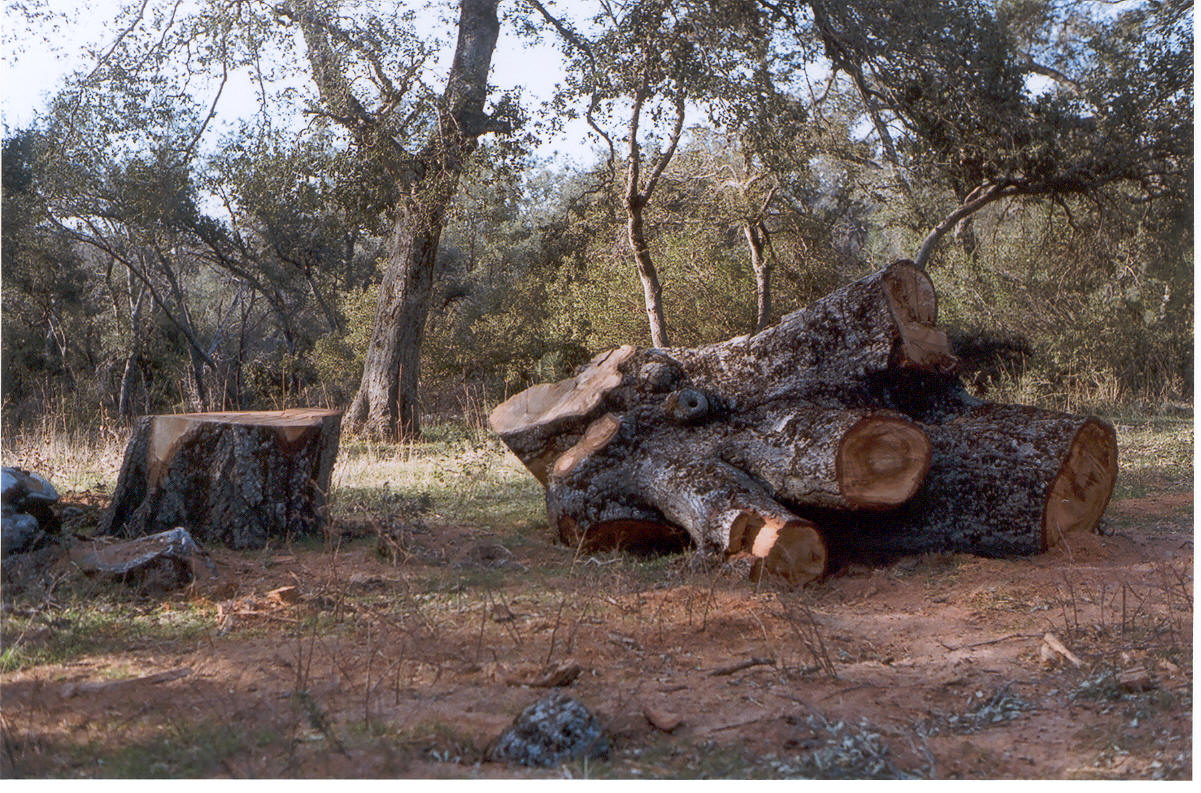
coast live oak (Quercus agrifolia) killed by goldspotted oak borer; Heisey County Park, San Diego County, California. Photo by F.T. Campbell
The Interior Appropriations Subcommittee expressed continued concern about poor regeneration of eastern white oak (Quercus alba). (Of course, several other tree species are also regenerating poorly but a strong lobby is tied to oaks due to their economic importance.
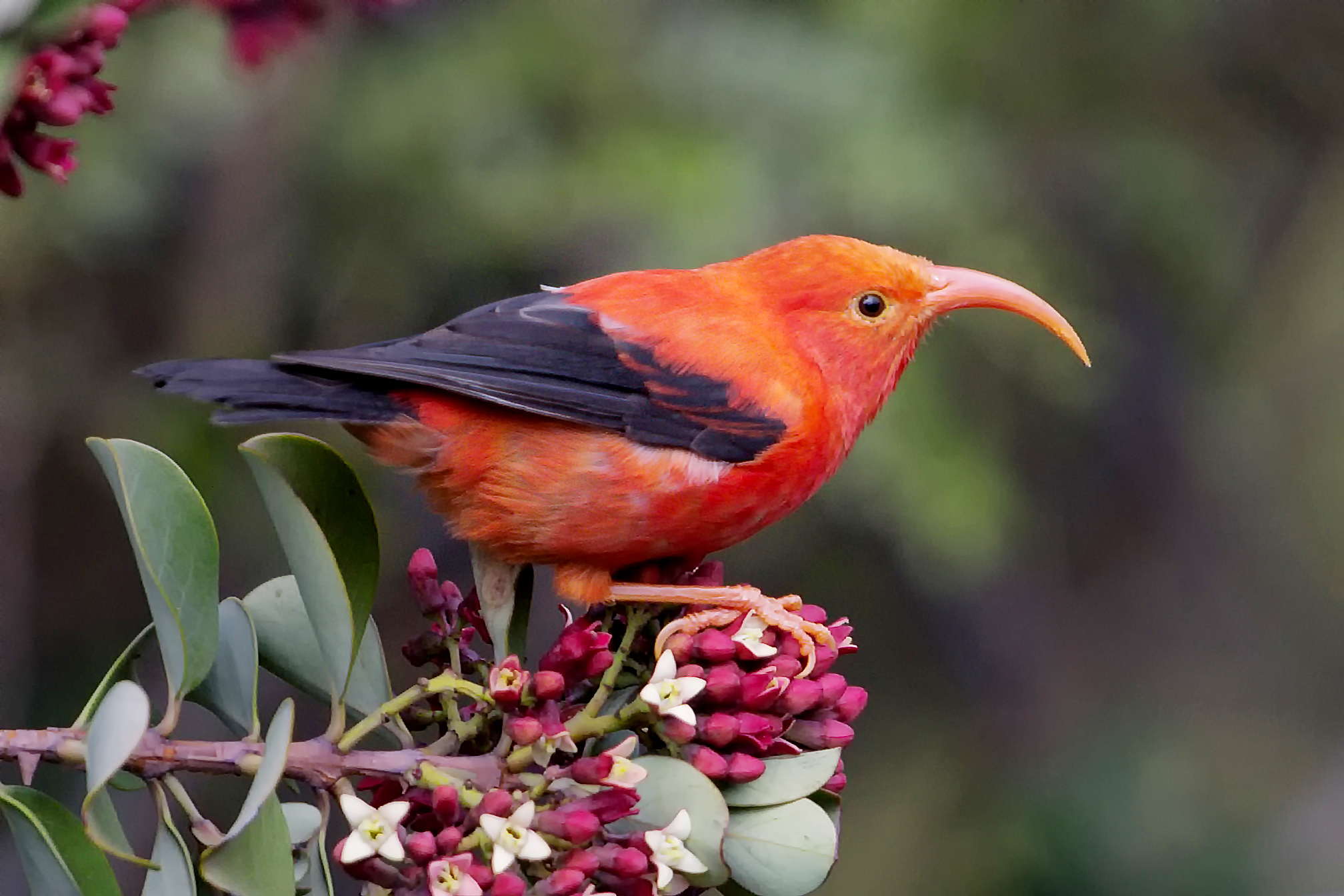
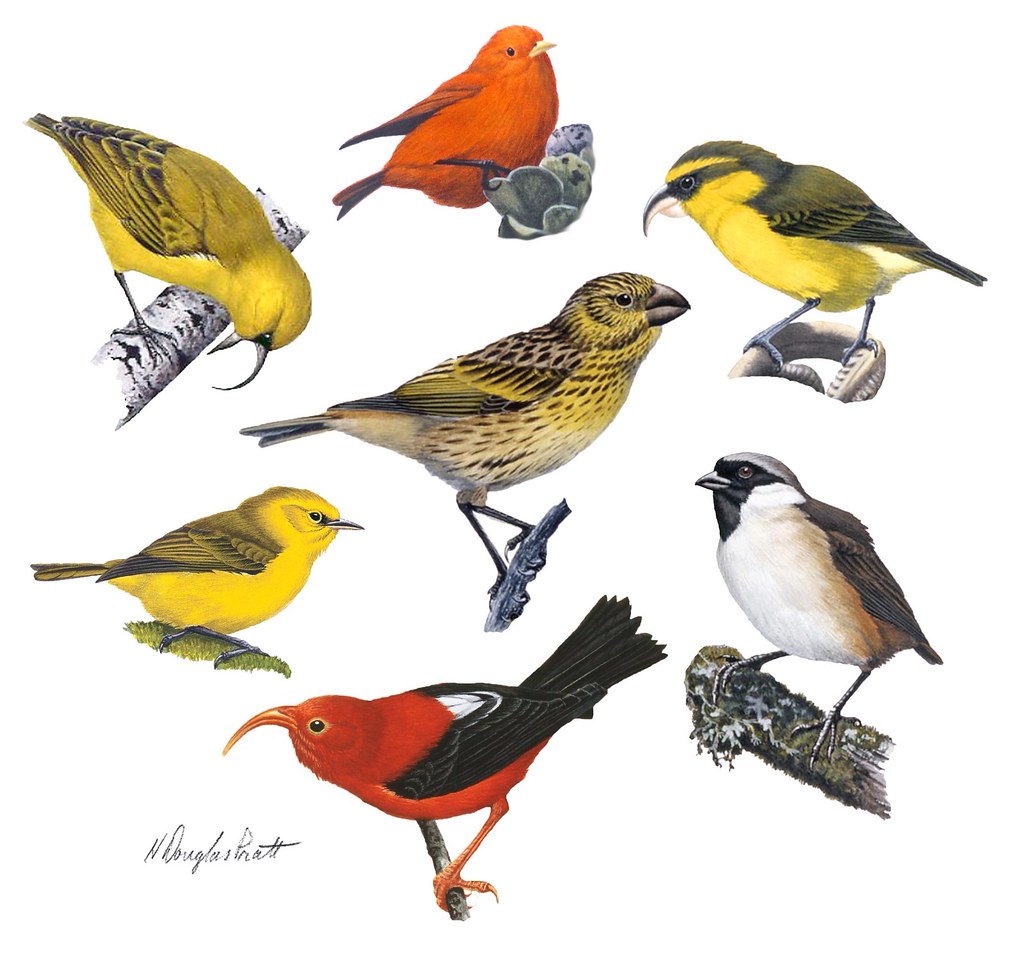
i’iwi – a formerly common Hawaiian honeycreeper badly suppressed by avian malaria; photo by by James Petruzzi
Hawaii’s endangered birds
I am very pleased that the House Interior Appropriations Committee has provided $1,250,000 is for continuing research to protect Hawaiian forest birds from the dire extinction threat arising from non-native mosquitoes carrying avian malaria & other pathogens.
USDA Animal and Plant Health Inspection Service
APHIS is responsible for preventing the introduction and spread of pests and invasive plants that harm agriculture, including forests. APHIS policy guides port inspections carried out by the DHS CBP. APHIS inspects imported live plants. Unlike the USFS, APHIS has the support of the Trump Administration, so funding levels have remained steady. Of course, continuing introductions of new pests and spread of established ones – and inflation – have increased the cost of countering invasions, so the agency continues to fall behind despite its relatively privileged position.
The House of Representatives adopted the FY27 Agriculture Appropriations Bill in early June. I apologize for the obscurity of the FY26 funding levels. Figures are in millions of dollars.
FY2025 enacted FY27
APHIS total $1,148 $1,157
Plant health subtotal $387.5 $387.6
Agric. quarantine $35.5 $35.5
Field crop and rangeland $12 $10
Pest detection $29 $29
Methods development $21.5 $21
Specialty crops $206.5 $209
Tree and wood pests $59 $58.6
In its report, the Subcommittee on Agriculture Appropriations did not express concern about the issues that I had raised in my testimony. Instead, it mentioned several agricultural pests, e.g., citrus greening, fruit flies, a non-native beetle threatening nut orchards, and spotted lanternfly (Lycorma delicatula). The Subcommittee also urged APHIS to work with the USDA Forest Service to counter the spread of two native wood-borers, mountain pine beetle (Dendroctonus ponderosae) in Colorado and southern pine beetle (Dendroctonus frontalis). Since both are native, APHIS’ role is unclear. The Subcommittee mentioned two invasive plants: glossy buckthorn (Frangula alnus) – saying it threatens biodiversity, especially in the Allegheny National Forest in Pennsylvania; and Carizzo cane (Arundo donax), saying it contributes to tick invasions in addition to hampering detection of human immigrants along the Rio Grande.
sounder graphic by Jack Mayer, Savannah River National Laboratory
The bill increases funding for the national feral swine management program by $500,000. (I cannot determine total the appropriation). The Agriculture Appropriations Subcommittee had urged APHIS Wildlife Services to prioritize states with the largest invasive populations – although this choice contradicts standard advice for managing invasive species, including feral swine.
In one action linked to our concerns about wood-borer introductions via wood packaging, the Subcommittee encouraged APHIS to recognize sulfuryl fluoride as a treatment for logs, wood products, & wood packaging. This fumigant has been accepted under the international (ISPM#15) since 2013.
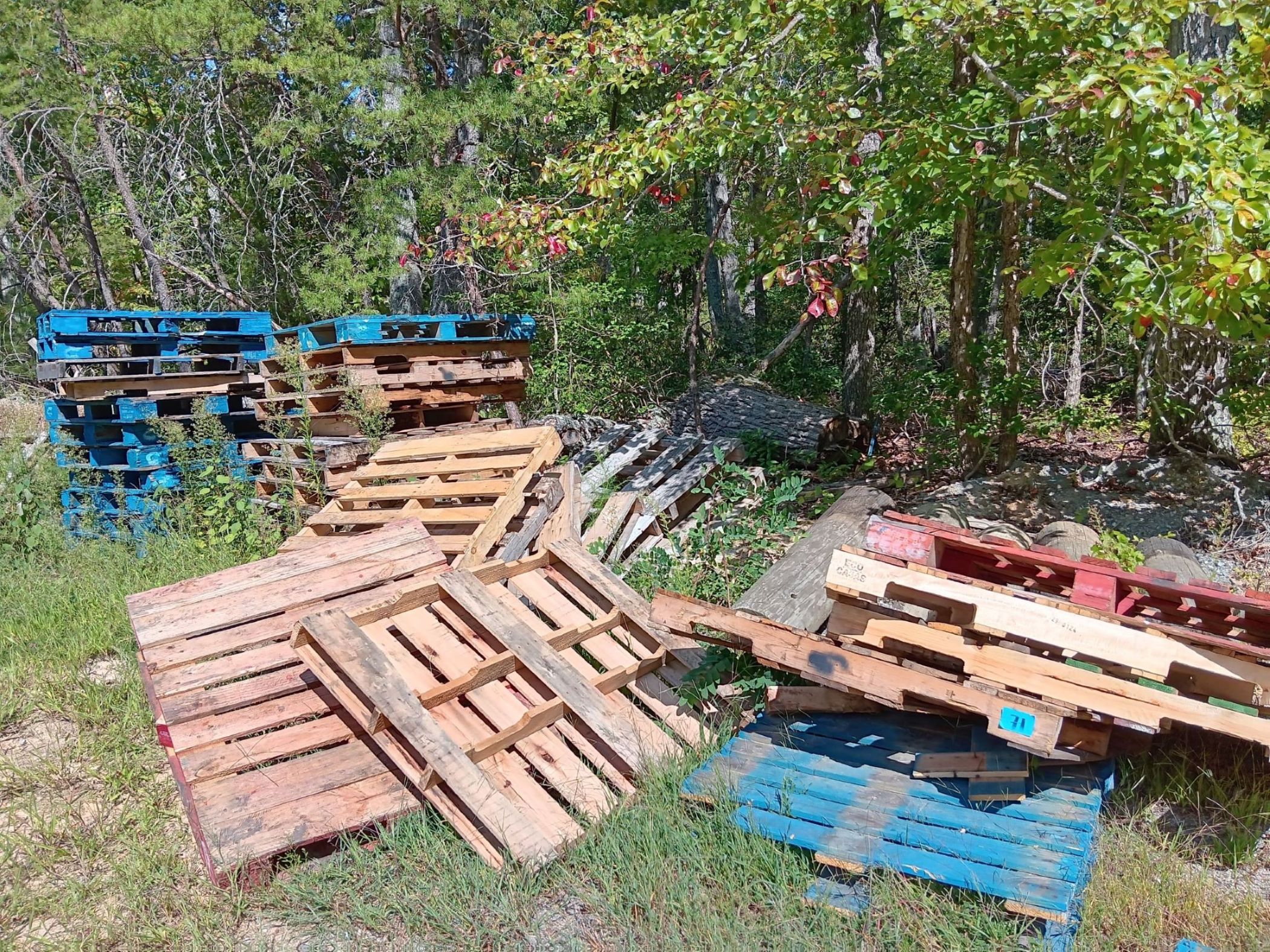
wooden pallets discarded next to wooded border in Glacier National Park, Montana; photo by F.T. Campbell
Posted by Faith Campbell
We welcome comments that supplement or correct factual information, suggest new approaches, or promote thoughtful consideration. We post comments that disagree with us — but not those we judge to be not civil or inflammatory.
For a detailed discussion of the policies and practices that have allowed these pests to enter and spread – and that do not promote effective restoration strategies – review the Fading Forests report at http://treeimprovement.utk.edu/FadingForests.htm
eastern (Canadian) hemlocks in Nova Scotia killed by hemlock woolly adelgid; photo by Celia Boone, NSDLF
Two recent studies show that climate change is driving changes to pest ranges. These pose a serious threat to forests of eastern Canada.
A study by Aubin et al. (2026; full citation at end of blog) assessed the risk that climate change would exacerbate the impacts of 14 non-native forest insect pests The 14 insect species were selected from an original group of 76 species using the following criteria:
1) They have the potential to cause mature tree mortality to at least one of the 37 tree species most abundant in Canada; and
2) They have been detected in Canada recently or have established populations actively spreading through the Canadian landscape.
Major Findings
Twenty-four tree species are affected currently by at least one of the 14 non-native insect pests (excluding Asian longhorned beetle; see below). (I list the tree and insect species below.) Four of them are already considered globally endangered or threatened due to invasive pests: black and white ash (Fraxinus nigra and F. americana), whitebark pine (Pinus albicaulis) and eastern hemlock (Tsuga canadensis). Another ash species (blue ash; Fraxinus quadrangulata) and another pine (limber pine; Pinus flexilis) are considered rare or threatened species in Canada.
brown spruce longhorned beetle; photo by Udo Schmidt via WikiMedia
Of the 24 species at risk, black spruce (Picea mariana) is most exposed because it grows in areas where eastern spruce gall adelgid and brown spruce longhorned beetle (Tetropium fuscum) are established. Expansion of these two pests could potentially reach 75% of black spruce biomass in Canada. However, Aubin et al. (2026) expect tree mortality to be limited because these insects target trees that are already stressed or weakened. Of course, the changing climate might increase the trees’ susceptibility. Thirty percent of the black spruce’s range is projected to be outside its current climatic niche by 2040.
The 24 tree species currently affected by at least one of the 14 non-native insects (excluding ALB) collectively constitute 3.2 billion tons of tree biomass. The impact is projected to increase more than four-fold — to 13.6 B tons of biomass — within two decades. Reinvasion by the Asian longhorned beetle would put at risk six additional tree species in the genera Acer, Betula, and Populus. Their jeopardy would add another 3.1 billion tons of live tree biomass to the “at risk” category.
Aubin et al. (2026) note that affected trees might remain alive but moribund, that is, lose their functional role within the ecosystem. for several years before finally dying. Therefore their analysis might underestimate pests’ impact on the forest. Their example is American beech – as weakened by beech bark disease. A reminder: beech bark disease causes widespread death of mature beech – opening the canopy and eliminating such wildlife-supporting aspects as nesting cavities and abundant crops of nuts. Vigorous root sprouting results in dense stands of young beech, crowding out other species.
Hotspots of greatest vulnerability
The analysis identified two hotspots of greatest vulnerability: north-central British Columbia near the border with Alberta, and along the St. Lawrence Seaway near the border with the United States. The pest pressures differ.
The threat to the British Columbia hotspot comes from expansion of mortality in dense pine forests caused by the native mountain pine beetle (Dendroctonus ponderosae). Aubin et al. (2026) describe a two-pronged impact from the changing climate: trees lose vigor because they become maladapted to the new growing conditions (temperature and drought); while the beetle increases the frequency of outbreak due to reduced overwintering mortality.
Along the St. Lawrence Seaway (southern Ontario and Quebec) the threat comes from a suite of non-native insects, including emerald ash borer, hemlock woolly adelgid, and beech scale. While emerald ash borer and beech scale were introduced directly to Canada by international trade, hemlock woolly adelgid spread across the border from the U.S. Further northward expansion of all three is projected under both low and high emission climate change scenarios.
beech bark disease in New Hampshire; photo by Eli Sagor via Flickr
Most alarming is that some regions in eastern Canada are vulnerable to invasion by all 14 insect species. Two additional pests loom: Aubin et al. (2026) fear northward expansion might reintroduce the Asian longhorned beetle or introduce the southern pine beetle (Dendroctonus frontalis). The latter has been expanding northward in the U.S.
Pests often move across the Canada-U.S. border. In addition to the five pests mentioned above, spongy moth, and two pathogens, the beech leaf disease nematode, and the oak wilt fungus, have spread from the U.S. into neighboring parts of Canada. The woodwasp Sirex noctilliowas probably introduced simultaneously to both countries. Winter moth and beech bark disease spread from Canada to the U.S. I worry that the brown spruce longhorned beetle might do the same.
Asian longhorned beetle: can this disaster be averted?
As noted above, the Canadians are alarmed by the prospect that the Asian longhorned beetle might be reintroduced – either by spread from extant populations in the United States or directly on imports from China. Aubin et al. (2026) note that the two earlier – successful! — eradication programs were expensive, costing an estimated CND$35.5 million. This expenditure is dwarfed by the costs estimated to arise from an unmanaged invasion: CDN$431 million annually in timber products and CDN$358 million annually in edible maple products. There would also be enormous ecological impacts, including threats to an additional 3,08 metric tonnes of tree biomass comprising ~24.96 tons of CO2 equivalent.
Canada’s central boreal forest is at lower risk both in terms of exposed tree biomass and number of invasive insect species present. The reasons are not understood. Aubin et al. (2026) suggest that the boreal ecosystem is more resistant to invasion due to a combination of environmental barriers and native natural enemies. For example, the introduced woodwasp Sirex noctilio did not cause widespread pine mortality in the region, probably due to antagonistic interactions with other subcortical species.
Although it does not fit this definition, Aubin et al. (2026) also evaluated the Asian longhorned beetle (ALB Anoplophora glabripennis), because of its huge impact if it is reintroduced to Canada (see above).
One of the focal groups, beech scale, Cryptococcus fagisuga, differs from the others because it is a vector of a tree-killing fungal pathogen (Neonectria coccinea); the scale itself does not cause notable harm.
Aubin et al. (2026) acknowledge that additional species represent a possible threat to Canadian forests. Therefore their study does not represent the total risk posed by all potential invasive insects in Canada, but provides a snapshot of selected, current vulnerabilities.
The 37 most abundant tree species in Canada together represent 88% of total mature forest tree biomass in Canada. They include 17 conifers and 7 deciduous trees:
Abies amabilis, Ab. balsamea, Ab. lasiocarpa; Acer rubrum, Ac. saccharinum, Ac. saccharum; Alnus rubra; Betula alleghaniensis, B. papyrifera; Callitropsis nootkatensis; Fagus grandifolia; Fraxinus american, F. nigra; Larix laricina, L. occidentalis; Picea engelmanii, P. glauca, P. mariana, P. rubens, P. sitchensis; Pinus albicaulis, P. banksiana, P. contorta, P. ponderosa, P. resinosa, P. strobus; Populus balsamifera, P. grandidentata, P. tremuloides; Pseudotsuga menziesii; Quercus rubra; Thuja occidentalis, T. plicata; Tilia Americana; Tsuga canadensis, T. heterophylla, T. mertensiana
The 14 insects collectively have 63 host tree species in Canada. The pine genus is susceptible to the largest number of pests. Genera found to be not vulnerable to any of the 14 insects are Acer, Callitropsis, Populus, Pseudotsuga, Tilia, and Thuja. The proportion of total exposed tree biomass in Canada varied by species, from 8% of Jack pine (Pinus banksiana) to 95% for red spruce (Picea rubens).
red spruce in West Virginia; photo by Famartin via WikiMedia
Although most of the 14 insect species are projected to benefit from larger areas of suitable climate in Canada over the next 20 years, there are interesting exceptions: European oak borer (Agrilus sulcicollis), brown spruce longhorned beetle, and winter moth (Operophtera brumata). Distributions of the host tree species are projected to change insignificantly over the 20 years covered by the study.
With northward expansion of suitable climates for 12 of the 14 species, large areas of the boreal forest will be exposed to potential invasion. The entire Canadian distribution of 13 of the 37 dominant tree species might be at risk: three Abies, two Betula, both Fraxinus, Picea mariana, Pinus contorta, Picea glauca, Pinus banksiana. Aubin et al. (2026) mention specifically Engelmann spruce (Picea engelmanii) and American beech (Fagus grandifolia).
Other Factors
The analysis did not consider possible alterations of the insects’ life history traits other than potential expansion of their distributions. Warmer temperatures can cause changes in voltinism, diapause periods, development rates, reproduction, and population growth; cumulatively, these changes might alter their invasion dynamics. The mountain pine beetle is an example. Populations have experienced outbreaks more frequently, so increasing the species’ invasion threat and severity. On the other hand, shifts in temperature and precipitation could decouple the phenology of trees and their associated pests, reducing insect survival. Finally, complex changes in tree tissue and their secondary defensive metabolites (see below) also could alter interactions between non-native insects and their new hosts – possibly exacerbating or mitigating the herbivores’ impacts.
Aubin et al. (2026) remind us that loss of a dominant species might lead to reorganization of forest composition and structure. They expect the impacts to be particularly critical in stands with low tree diversity, such as the pure jack pine stands in the eastern boreal forest. Loss of a foundation species might also profoundly disrupt ecosystem functions, carbon budgets, wildlife habitats and stand productivity. They cite cascading effect on aquatic invertebrate communities and invasions by non-native plant species following widespread death of ash trees caused by the emerald ash borer. Finally, death of some species reduces functional redundancy within tree communities, and a shrinking pool of viable native replacement species. The widespread planting of ash trees in urban areas after the demise of most elms is such a case.
American elms in Jeanne d’arc Park, Quebec; photo by Cephus via Wikimedia
The possibility that the tree hosts might increase production of defensive metabolites was corroborated by Mike Aucott in a different context. Dr. Aucott is retired from the New Jersey Department of Environmental Protection. He authored a guest blog in December 2022, in which he discussed changes in plant chemistry brought on by the 50% increase in atmospheric CO2 levels over the last century. By happenstance, Dr. Aucott engaged in an exchange of letters in Science (2/26/26), in which he reiterated the likelihood that plants, “fertilized” by access to this nutrient, might be better able to fend off insect attacks. (See the “Sources” section for references to additional information on this phenomenon.)
Compounding Threat: The Spruce Budworm in Eastern Canada
The spruce trees of eastern Canada face another pest threat: the native spruce budworm (SBW, Choristoneura fumiferana). It is already a major defoliator in North American boreal forests.
Boulanger et al. (2025; full reference at end of this blog) documented pronounced changes in the moth’s range, especially in the East. Over the past 60 years, suitable climate conditions for the budworm have expanded northward. On the other hand, winter mortality has increased in southern parts of its range due to warmer temps. Overall, the total area highly suitable for population growth remained virtually the same. Still, the budworm’s earlier activation might exacerbate its impact on the previously less vulnerable black spruce, Picea mariana. If so, this might fuel further increased population growth rates northward.
black spruce; photo by Laval University via WikiMedia
Like Aubin et al. (2026), Boulanger et al. (2025) found that Canadian forests in the east and Atlantic regions are likely to experience greater impacts on tree growth than are forests in western and central regions. The host most vulnerable to SBW, balsam fir (Abies balsamea), is a dominant or codominant species in the East and Atlantic regions. The fir is sparsely distributed in those areas of central and western Canada where the climate is becoming highly suitable for the insect. The frequent wildfires promote growth of young pioneer tree species, e.g., jack pine and trembling aspen, that do not support SBW.
At the most general level Boulanger et al. (2025) suggest that climate change might have already surpassed impacts of land use change on spruce budworm dynamics. Climate change puts additive and synergistic pressures on insects, which are already more sensitive than trees to climatic factors and able to adapt more quickly. As a result, climate change is becoming the most significant driver of recent declines in insect abundance and shifts in community structure, development, dispersal patterns, and phenology. (Again, see Aucott, above, for an alternative explanation.)
Boulanger et al. (2025) mention but do not discuss possible impacts of climate change and a shift in SBW distribution and tree hosts on a third trophic level, i.e., natural enemies. They note that many factors – not just climate suitability — influence trophic interactions. Another complication is that most SBW parasitoids require alternate hosts.
Boulanger et al. (2025) join others in urging forest managers to quickly adapt their management strategies to the novel climate-induced threats. They call for a proactive and integrated approach in forest management. Ecological research will be crucial to mitigate the compounded effects of climate change and to preserve the integrity & sustainability of forest ecosystems.
SOURCES
Aubin, I., A. Roe, B. Marquis, L. Boisvert-Marsh, J. Pedlar,S. Erni, B. Hamel, G. Lawrence, D. McKenney, T. Scarr. 2026. Vulnerability of Canadian forests to invasive insects under climate change. Accepted by the Canadian Journal of Forest Research.
Boulanger, Y., A. Desaint, V. Martel, M. Marchand, S. Massoda Tonye, R. Saint-Amant, et al. (2025) Recent climate change strongly impacted the population dynamic of a North American insect pest species. PLOS Clim 4(2): e0000488. https://doi.org/10.1371/journal. pclm.0000488
See also an article describing declining nutrient value of food crops in response to increased atmospheric C02 levels: https://www.washingtonpost.com/climate-environment/interactive/2026/carbon-pollution-diluting-key-nutrients-food/
Posted by Faith Campbell
We welcome comments that supplement or correct factual information, suggest new approaches, or promote thoughtful consideration. We post comments that disagree with us — but not those we judge to be not civil or inflammatory.
For a detailed discussion of the policies and practices that have allowed these pests to enter and spread – and that do not promote effective restoration strategies – review the Fading Forests report at http://treeimprovement.utk.edu/FadingForests.htm
The Wildlife Society’s Invasive Species and the Forestry and Wildlife Working Groups are cosponsoring a workshop for the Lingering Hemlock Project. The workshop will be on Tuesday 28 April at 2:00 PM EDT.
The Lingering Hemlock Project is a subset of The Nature Conservancy’s “Tree Species in Peril” program. The project aims to locate and selectively breed eastern hemlocks with genetic resistance to the hemlock woolly adelgid (HWA).
Olivia Hall from the North Carolina Hemlock Restoration Initiative will share more about how natural areas can participate in the Lingering Hemlock Project. In the southeastern US, project partners can locate and record data on hemlocks that remain healthy despite HWA infestations. In the northeastern US, project partners can establish hemlock plots and monitor their health and decline annually.
Go here to learn more about the project & webinar, and find the link to join.
I have blogged about HWA often – although there is no simple method for finding the earlier blogs. In 2025 I posted 3 blogs – in March and one in August. If you need a reminder about HWA, visit TNC’s “don’t move firewood” website here.
Posted by Faith Campbell
We welcome comments that supplement or correct factual information, suggest new approaches, or promote thoughtful consideration. We post comments that disagree with us — but not those we judge to be not civil or inflammatory.
For a detailed discussion of the policies and practices that have allowed these pests to enter and spread – and that do not promote effective restoration strategies – review the Fading Forests report at http://treeimprovement.utk.edu/FadingForests.htm
The Trump Administration proposes (again!) to end all funding for USFS Research and State, Private, and Tribal Forestry programs. The budget document claims that these cuts are necessary “to ensure fiscal responsibility w/ taxpayer dollars & appropriate alignment of resources w/ USFS’s responsibility to appropriately steward National Forest System lands.” Ending the SP&T programs is justified as “better balance[ing] the appropriate roles of federal & State governments. … and [restoring] federalism …] The document claims that the federal component of Forest Health Management [currently receiving $16 million] duplicates programs managed by the National Forest System; yet the actions listed under this second budget category all relate to water management, not insects or pathogens. The document says states should manage pests on non-federal lands [currently receives $42 million]. I think this approach ignores the need for coordinated management for each of hundreds of pest species, from detection to eradication or development of host resistance. Eliminating the Research program will deprive all forest managers of a scientific foundation for management efforts.
The Trump Administration’s proposed budget would hold funding for key APHIS programs steady. This is great news compared to the extreme cuts proposed for the Forest Service. The budget document says that it is essential to continue APHIS programs success; any stoppages or reductions would potentially cause catastrophic consequences for environmental health. Contrary to this statement, holding funding steady actually results in cuts due to continuing introductions of new pests and inflation.
Item
2024 Actual
2025 Actual
2026 Estimated
2027 Estimated
Field Crop & Rangeland Ecosystems Pests (incl cogongrass)……….
12,000
12,000
11,000
9,026
Pest Detection ………………………………………………..
29,000
29,000
29,000
29,000
Plant Protection Methods Development ………………….
21,500
21,500
21,500
21,500
Specialty Crop Pests …………………………………………
215,000
215,000
214,000
217,339
Tree & Wood Pests …………………………………………..
59,000
59,000
58,650
58,650
Subtotal, Plant Health …………………………………….
387,500
387,500
385,150
386,515
USDA Forest Service
Two USFS programs w/ vital roles in protecting resilience of the Nation’s forests in the face of invasions by non-native pests and plants: R&D program and FHM within SPT division
The many economic & ecological benefits from our forests are under growing threats from a variety of disturbances, ranging from fires & hurricanes to non-native pests. ~ 60% of forests owned by non-feds; USFS must address threats to forests outside NFS to achieve its mission of sustaining “health, diversity, & productivity of the nation’s forests & grasslands to meet the needs of present & future generations.”
Research & Development
The Continuing Resolution for FY26 funded Research at $308 million for the year. Ask Congress to maintain this level. + increase research on invasive species from the current level of 1% to 5%.
The area of our forests & woodlands that is threatened by alien pests is similar to that attributed to fire or western bark beetles. More than 41% of forest biomass in the “lower 48” states is at risk to established non-native pests.[1] If able, add reference to pests on Hawai`i or Caribbean islands. Since additional introductions almost guaranteed, even greater proportion of US’ forest resources at risk in future. If possible, name example, e.g., Phytophthora austrocedri.Forest managers cannot counter these threats without understanding how these P&P kill trees & what actions are effective counter measures. This knowledge is obtained by research.
At least 53 tree species in forests across America are already under attack by non-native pests and pathogens. Yet as of FY23, Research stations spent just 1% of appropriation studying a few of the dozens of NIS pests. Funding for alien pests has decreased 70% since FY2010 even as new pests enter our forests. This inadequate research effort means USFS cannot develop effective programs to prevent, suppress, & eradicate the majority of alien pests. One crucial strategy suffers particularly = efforts to breed trees able to thrive despite NIS pests. R&D currently supports only a few such projects.
Forest Health Management: Supporting the Full Continuum of Pest Management
The Continuing Resolution for FY26 funded State, Private, and Tribal forests program at $310.6 million. I have not found specifics for the FHM program. This was an increase over the $281 million level in FY25.
Non-native pests and pathogens arrive as contaminants or hitchhikers on imported goods, especially on wood packaging and plants. These imports usually arrive in cities or suburbs, so the pests establish there first. They immediately cause enormous damage to urban forests, forcing local governments and property owners to absorb high tree removal costs. They then spread to rural forests, including National forests. Examples include hemlock woolly adelgid, emerald ash borer, invasive shot hole borers, goldspotted oak borer, sudden oak death, and beech leaf disease.
The most effective approach is to kill the pests where they first appear – usually in those urban or semi-rural forests. This response is led by FHM Cooperative Lands subprogram. We urge maintain funding for this subprogram at the FY26 level (possibly $42 million) so that the agency’s experts can continue to assist the states and other partners in countering these pests. As these pests spread to rural areas – including to National forests, National parks, and other public lands, responsibility for their management involves FHM Federal Lands subprogram. So much maintain funding for this subprogram at FY26 levels.
A recent analysis[2] determined that the natural resource values of 92 National parks are threatened by forest pests. Western parks are threatened primarily by outbreaks of the native mountain pine beetle (Dendroctonus ponderosae). Those in the East face threats from more than a dozen species of non-native pests, including hemlock woolly adelgid, emerald ash borer, spongy moth, laurel wilt, and – most recently – beech leaf disease.
Again, combatting these pests requires understanding their life histories & traits – understanding gained through the research program mentioned above.
Funding reductions over the past decade have already shrunk the number of FHM projects & areas treated each year. While 53 tree species are threatened, only four [eastern oaks, loblolly & ponderosa pines, & hemlocks] are targeted by 95% of projects. To counter the threats to 50 additional tree taxa, FHM needs additional resources.[3]
Investing in urban forestry is key to addressing both parties’ priorities & advancing flexible & cost-effective solutions to a wide range of issues impacting American communities, businesses, & families. The USFS SPT division’s Urban & Community Forestry Program efficiently distributes funds to shovel-ready projects for improving communities by maintaining a healthy tree canopy. Federal “seed” money provides resources necessary to initiate & stabilize these local programs.
A surprisingly high proportion of the (inadequate) funding for breeding trees to mitigate the damage caused by non-native pests is from FHM or the NFS, rather than R&D. These programs should receive substantial increases. The model program is the Dorena Genetic Resource Center. It provides decades-long commitment, skilled staff, necessary facilities; these result in breeding successes, i.e., western white pines and Port-Orford cedar.
Invasive Plants
Invasions of forests by non-native plant species erode forest productivity & provision of the full range of ecosystem services, hinder forest uses, degrade biodiversity & habitat, and impose substantial financial costs. A recent analysis[4] documents that this threat is growing: the number of FIA inventory plots containing invasive plant species rose in 58.9% of surveyed counties. Furthermore, in 73.2% of the counties the plots experienced an increase in species richness of invading plants. Increases occurred in all regions, but were greater in the East: from 46% to 52.3%. In the Rocky Mountains, the proportion of invaded plots rose from 6% to 11%. In Hawai`i, this proportion grew from 70% to 83.2%. Again, USFS Research and FHM programs, working together, are key to making progress in countering these bioinvasions.
[1] Fei, S., R.S. Morin, C.M. Oswalt, and A.M. 2019. Biomass losses resulting from insect and disease invasions in United States forests. PNAS August 27, 2019. Vol. 116 No. 35 17371–17376
[2] Michalak, J.L., C.E. Littlefield, J.E. Gross, T.G. Mozelewski, J.J. Lawler. 2026. Relative Vulnerability of US National Parks to Cumulative & Transformational Climate Impacts. Conservation Letters, 2026 Vol 19, Issue 1; 19:e70020
[3] Coleman, T.W, A.D. Graves, B.W. Oblinger, R.W. Flowers, J.J. Jacobs, B.D. Moltzan, S.S. Stephens, R.J. Rabaglia. 2023. Evaluating a decade (2011–2020) of integrated forest pest management in the United States. Journal of Integrated Pest Management, (2023) 14(1): 23; 1–17
[4] Potter, K.M., B.V. Iannone III, K.H. Riitters, Q. Guo, K. Pandit, C.M. Oswalt. 2026. US Forests are Increasingly Invaded by Problematic NIS Plants. Forest Ecology & Management 599 (2026) 123281
USDA Animal and Plant Health Inspection Service
APHIS is responsible for preventing intro and spread of pests and invasive plants that harm agric, including forests. APHIS policy guides port inspections carried out by the DHS CBP. APHIS inspects imported live plants.
Introductions of pests and pathogens have continued to occur. APHIS funding has remained steady – which means it is not growing to match the rising threat. At minimum, maintain current levels.
FY2025 enacted FY26 House FY26 Senate
APHIS total $1,148 $1,146 $1,168
Plant health subtotal $387.5 $388.6
Agric. quarantine $35.5 $35.5 $35.5
Field crop and rangeland $12 $11 $11.5
Pest detection $29 $28.5 $29
Methods development $21.5 $21.5 $21.5
Specialty crops $206.5 $216.3 $208.5
Tree and wood pests $59 $59 $58.6
Emergency preparedness and response* $44.5 $44.5 $44.3
* this fund is apparently for both animal and plant emergencies
Rationale
Already introduced pests threaten the many forest products and services benefitting all Americans. Just 15 of the worst pests threaten 41% of forest biomass in the “lower 48” states – comparable to fire.[1] A significant proportion of the resulting costs are imposed on municipal governments and homeowners. Fifteen years ago, it was estimated[2] that the municipal governments were spending more than $1B / year, primarily on removing and replacing trees on public property killed by these non-native pests. Homeowners faced costs of $1B plus loss of another $1.5B in property value. A more recent study estimated that cities will have to spend $30M per year to remove and replace ~ 1.4M street trees by 2050. Additional trees in parks and on homeowners’ properties also die.[3]
A new pattern has appeared in recent years: more newly-introduced pests are being detected in the Pacific Coast states rather than in the East and Midwest. Two southern California counties are projected to pay $150M – $1B[4] to remove and replace trees killed by invasive shot hole borers. The emerald ash borer threatens 9,000 ash on the streets of Portland, Oregon and millions more in parks and the forested wetlands of Willamette Valley, including in Ankeny National Wildlife Refuge. The Mediterranean oak borer has already killed thousands of oak trees in the San Francisco Bay area; it also threatens urban forests and valued oak savannahs in Oregon.
Additional introductions of highly damaging wood-borers are likely because we continue to receive inadequately treated crates, pallets, and other forms of packaging made of wood. For 20 years, all countries shipping goods to North America must treat their wooden packaging per prescribed protocols. To address this risk, we urge a modest $1M increase in APHIS’ “Tree and Wood Pest” account. We also suggest that the Subcommittee inquire of APHIS what steps it will take to improve compliance with the treatment requirement. You should focus your inquiry on China; wood packaging from this country is three times more likely to harbor a tree-killing pest than the global average.[5]
Other pests—especially plant diseases and sap sucking insects—enter on imported plants. Pathogens introduced recently via this pathway include rapid ohia death in Hawai`i (threatening the species that constitutes 80% of the Islands’ forest biomass) and beech leaf disease (thin a dozen years has spread across much of the East).
All assessments of APHIS’ plant import programs’ effectiveness use data from 2009; at that time, plant imports were more than 100 times more likely to transport pests than was wood packaging.[6] APHIS has amended its regulations several times since 2009. We urge the Subcommittee to call for APHIS to facilitate independent analysis of the efficacy of its current phytosanitary programs in order to understand whether the updated regulations have reduced the risk of additional introductions.
Again, pests introduced via this pathway proliferate and spread – often facilitated by movement of firewood, plants, and outdoor household goods. APHIS’ programs have suffered severe failures to prevent such spread, for example in the cases of the emerald ash borer and sudden oak death. We suggest that the Subcommittee inquire of APHIS what steps it will take to improve containment efforts regarding damaging plant pests, including through collaboration with its state partners.
We ask for small increases to the Pest Detection and Methods Development programs. The first enables prompt detection of newly introduced pests … which is critical to successful pest eradication or containment. The second empowers APHIS to improve essential detection and eradication tools.
The current emergency fund of is far below the level needed to respond when a new pest is discovered. We thank both the House and the Senate for clearly recognizing that these appropriations are inadequate by including in their bills language reiterating the Agriculture Secretary’s power to access funds from other Departmental programs (usually the Commodity Credit Corporation) to respond to emergencies.
[1] Fei, S., R.S. Morin, C.M. Oswalt, and A.M. 2019. Biomass losses resulting from insect and disease invasions in United States forests. PNAS August 27, 2019. Vol. 116 No. 35 17371–17376
[2] Aukema, J.E., B. Leung, K. Kovacs, C. Chivers, K. O. Britton, J. Englin, S.J. Frankel, R. G. Haight, T. P. Holmes, A. Liebhold, D.G. McCullough, B. Von Holle.. 2011. Economic Impacts of Non-Native Forest Insects in the Continental United States PLoS One September 2011 (Volume 6 Issue 9)
[3] Hudgins, E.J., F.H. Koch, M.J. Ambrose, and B. Leung. 2022. Hotspots of pest-induced US urban tree death, 2020–2050. Journal of Applied Ecology
[4] Jetter, K. A. Hollander, B.E. Nobua-Behrmann, N. Love, S. Lynch, E. Teach, N. Van Dorne, J. Kabashima, and J. Thorne. 2022. Bioeconomic modeling of invasive species management in urban forests: final report.
[5] Haack RA, Hardin JA, Caton BP and Petrice TR (2022) Wood borer detection rates on wood packaging materials entering the United States during different phases of ISPM#15 implementation and regulatory changes. Front. For. Glob. Change 5:1069117. doi: 10.3389/ffgc.2022.1069117
[6] Liebhold, A.M., E.G. Brockerhoff, L.J. Garrett, J.L. Parke, and K.O. Britton. 2012. Live Plant Imports: the Major Pathway for Forest Insect and Pathogen Invasions of the US. www.frontiersinecology.org
Congressional Committees with Jurisdiction … & how to submit testimony
FUNDING APHIS
House Committee on Appropriations, Subcommittee on Agriculture, Rural Development, Food and Drug Administration, and Related Agencies
Chairman: Andy Harris (R-MD)
Members: Robert Aderholt, David Valadao, John Moolenaar, Dan Newhouse, Julia Letlow, Ben Cline, Ashley Hinson, Scott Franklin
Democrats à Sanford Bishop, Jr., Chellie Pingree, Lauren Underwood, Marie Gluesenkamp Perez, Marcy Kaptur, Debbie Wasserman Schultz
deadline: May 1; email to ag.approp@mail.house.gov
instructions: 5 pages, double-spaced in Times New Roman, 12 Point Font; single-sided; PDF attachment to your email. At top of 1st page, clearly indicate your name, title, & institutional affiliation (if any); In 1st paragraph, clearly state agency, program, & amount of funding in the request
Senate Committee on Appropriations, Subcommittee on Agriculture, Rural Development, Food and Drug Administration, and Related Agencies
Chairman: John Hoeven (R-ND)
Members: Republicans à Mitch McConnell, Susan Collins, Jerry Morn, Cindy Hyde-Smith, Deb Fischer, Mike Rounds
Democrats à Jeanne Shaheen, Jeff Merkley, Tammy Baldwin, Martin Heinrich, Gary Peter, Kirsten Gillibrand, Jon Ossof
deadline: not clear; might be 22 May; email to agri@appro.senate.gov
instructions: 4 pages.. At top of 1st page, clearly indicate your name, title, & institutional affiliation; state agency, program, & amount of funding in the request
FUNDING USFS
House Committee on Appropriations, Subcommittee on Interior, Environment and Related Agencies
Chairman: Mike Simpson (R-WY)
Members: Republicans à Mark Amodei, Guy Reschenthaler, Michael Cloud, Ryan Zinke, Jake Ellzey, Celeste Maloy
Democrats à Chellie Pingree (D-ME), Betty McCollum, Josh Harder, James E. Clyburn
deadline: 22 April; email to IN.Approp@mail.house.gov
instructions: 4 pages, single-spaced in 12 Point Font; single-sided; prefer PDF but other formats OK. At top of 1st page, clearly indicate your name, title, & institutional affiliation (if any); In 1st paragraph, clearly state agency, program, & amount of funding in the request
Senate Committee on Appropriations, Subcommittee on Interior, Environment and Related Agencies
Chairman: Lisa Murkowski (R- AK)
Members: Republicans à Mitch McConnell, Shelly Moore Capito, John Hoeven, Deb Fischer, Mike Rounds
Democrats à Jeff Merkley, Chris van Hollen, Martin Heinrich, Tammy Baldwin, Kirsetn Gillibrand, Jon Ossof
deadline: unclear; possibly mid-June; email to int@appro.senate.gov
instructions: 4 pages, single-spaced in Microsoft Word or Word Perfect; do NOT send PDF. At top of 1st page, clearly indicate your name, title, & institutional affiliation (if any); In 1st paragraph, clearly state agency, program, & amount of funding in the request
The US Department of Agriculture (USDA) and the North American Invasive Species Management Association (NAISMA) held the 34th annual forum on invasive species research at the end of February 2026. The agenda is available here. In this blog I summarize the presentations about invasive alien plants (IAS); a separate blog discusses findings on invasive plants. Formal proceedings will be available in some months.
The most important information from the meeting:
If NAISMA had not taken on the task of hosting the conference it would not have happened.
Government leaders allowed only 1 staffer per USDA Forest Service region to participate. Not allowed to come were people who had organized the whole meeting or individual sessions, and presenters discussing several topics, including preventing IAS plant spread, and progress on controlling cogongrass (major impediment to pine plantations, affecting harvests).
What do these decisions say about the genuineness of the USDA Secretary’s recent memorandum listing invasive species as one of four priority areas for the department’s research efforts?
The USFS International Program is one of the few sources of support for studying potential pests before they invade the US.
Early detection surveillance is undermined by reliance on deploying too few traps and in a too narrow, or the wrong, timeframe.
The Resistance Screening Center in Asheville, NC is no longer staffed, undermining breeding efforts in a region that reaches from Virginia to Texas.
A reminder to us all: Rebekah Wallace of the Center for Invasive Species and Ecosystem Health at the University of Georgia urged us all to provide citations for images used in informal materials – posters, presentations, outreach efforts, blogs, videos. Providing the citation increases our credibility and ensures that we avoid perpetuating mis-information!
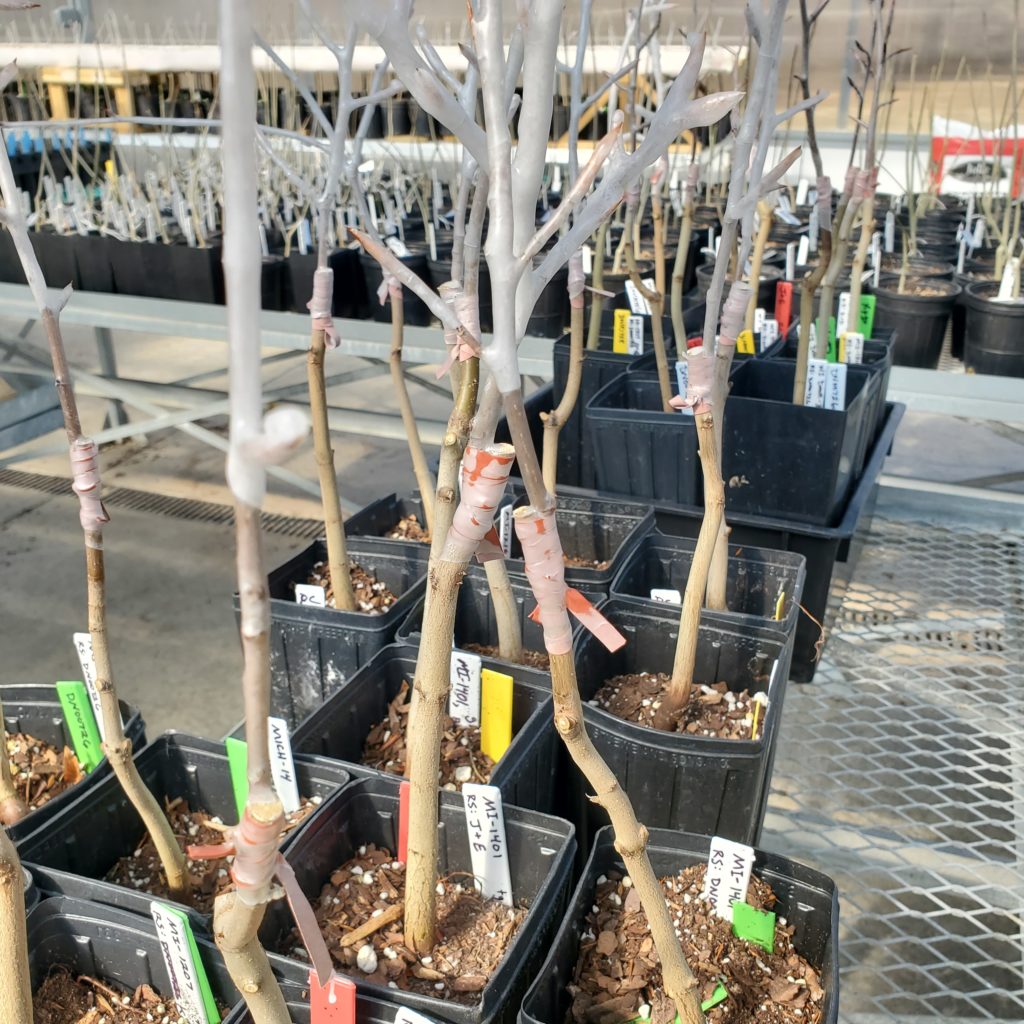
an ash resistance breeding plot at the Holden Arboretum, Ohio
Summary of key research reports on tree-killing arthropods and pathogens
Jennifer Koch, researcher with the USFS, described the Trees in Peril program. TiP aims to increase the pace, scale and efficiency of resistance breeding programs for American beech; eastern hemlock; and green, white, and black ash. This includes integrating genomics with other approaches and strengthening partnerships. Partners are key to finding “lingering” trees, addressing some scientific questions, and possibly screening cuttings for resistance.
Koch first explained the value of resistance breeding for producing resistant stock for restoration and reducing habitat for pests. The goal is to develop resistance, which Koch defined as the ability of a tree to survive despite the pest. Full immunity is not required. TiP participants hope that by integrating breeding with other approaches, such as biocontrol, they can create a new ecological equilibrium in which the tree species will continue to play its ecological role. As Koch asserts, the public supports breeding more than some other approaches. Also, there is a record of success; she cites the USFS Dorena Genetic Resource Center, which has developed resistant seedlings for four five-needle pines and Port-Orford cedar.
The first step is to determine whether desired traits are inherited. Genomics and other tools can test cuttings while they are still young and small – a very important advance in efficiency. Still, once cuttings with the desired traits are identified, it often takes several rounds of breeding to raise resistance levels sufficiently high. Similar testing of immature clones later in the process also can accelerate creation of seed orchards.
Breeding programs also need to incorporate genetic diversity from across the species’ ranges. TiP partners are collecting genetic material from beech, hemlock, and ash trees across their extremely large ranges – much of eastern North America.
Finally, TiP is training additional people to contribute to these breeding efforts.
Progress on each taxon:
beech grafts in a breeding experiment at the Holden Arboretum
Beech – Breeders are dealing with two diseases. A decade ago they identified genetic markers associated with beech bark disease (BBD). Their efforts had led to orchards producing seedlings of which 50% are resistant. Then beech leaf disease (BLD) showed up! Early results of a pilot study suggest BLD symptom severity is under genetic control. Even better, some trees appear to be resistant to both diseases. Koch recommends that scientists first identify BBD-resistant trees, then test those trees for BLD resistance.
Ash – the emerald ash borer (EAB) is established in 40% of the range of ash species. (Note: I am not sure whether this statement includes Canada; I am fairly certain it does not include Mexico.) Nine of the 16 US species are vulnerable, five endangered – green, white, black, blue and pumpkin.
The process by which scientists determe that resistance traits are heritable and identifying promising genotypes is described in Mason et al. (2026). The effort to develop techniques to propagate rooted cuttings is described in Merkle et al. (2022).
Partners are helping to search for “lingering” ash. So far, 265 trees have been identified, and scion collected from 106 trees. Partners are also helping to plant cuttings for resistance testing.
The program has had to overcome several difficulties, including:
Black ash is dioecious, which complicates selection. Breeders are working on several approaches, but all are at early stages.
Many of the originally collected trees turned out to be unintended crosses of white and green ashes rather than pure species. This resulted in very low seed production.
Anticipating the introduction of ash dieback disease (caused by the fungus Hymenoscyphus fraxineus), TiP is collaborating with Europeans on searching for possible resistance to this threat as well.
Hemlock – the Hemlock woolly adelgid (HWA) causes mortality of 50 – 100% of overstory trees. TiP scientists are still trying to establish a test for heritability of HWA resistance. There are additional difficulties in propagating rooted cuttings. The University of Georgia, Holden Arboretum, and others are helping to resolve these issues.
Those who want to support this program by contributing funds, knowledge, facilities, or volunteer efforts should contact Dr. Rachel Kappler, Forest Health Collaborative Coordinator, Holden Forests & Garden.
One entity already actively helping the TiP program is the Ecological Research Institute through energizing citizen scientists. Radka Wildova described these efforts. The Monitoring and Managing Ash [MAMA] initiative has published detailed guidance on identifying “lingering” ash. For example, timing is crucial: searching too early points to trees that are not actually resistant. Searching too late means opportunities are missed (since “lingering” ash will die eventually because resistance is only partial) or a risk of confusing in-growth or regeneration for “lingering” trees.
The Institute could not create a similar action map for hemlocks because the adelgid has been present far longer. Recommends searching in sites where at least 80% of surrounding trees are dead or dying due to HWA or elongate hemlock scale. The program is also testing heritability of resistance among hemlocks on its own property, which was invaded 20-30 years ago.
[An unrelated initiative, the Hemlock Restoration Intiative, is pursuing protection and breeding efforts in the southern Appalachian mountains.]
Avalon Miller, Pennsylvania State University, discussed new techniques to detect American elm trees tolerant of this disease.
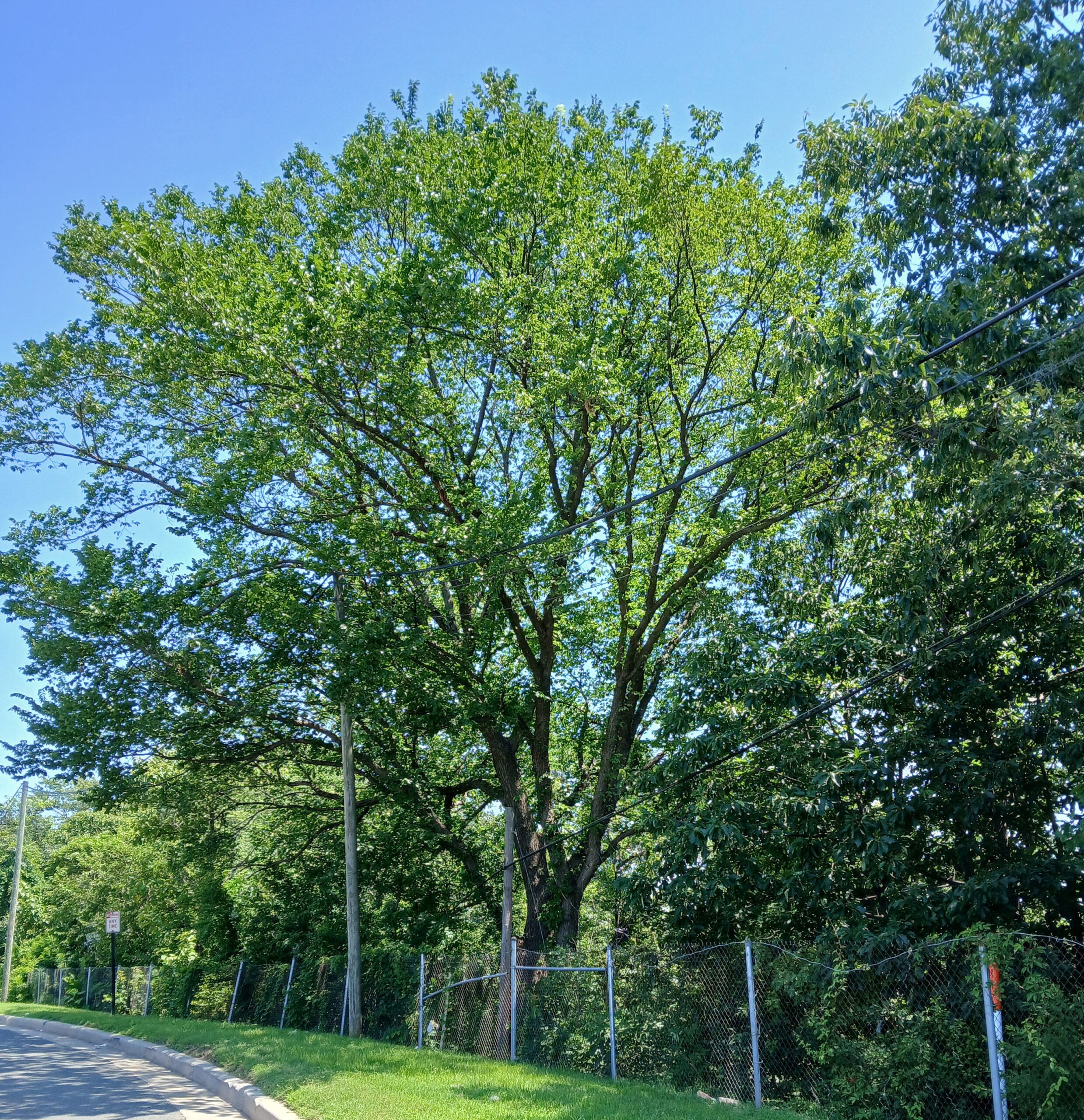
a healthy American elm in Fairfax County, Virginia; photo by F.T. Campbell
It is important to detect elm trees’ response to infection early in the infection process because the apparent mechanism of tolerance is some trees’ ability to limit growth and proliferation of the causal fungus Ophiostoma novo-ulmi in xylem vessels. Scientists sought to use spectral analysis to detect distal leaf stress as a signal of susceptible genotypes. The USFS has developed a small stem assay that is achieving 80% accuracy in identifying disease phenotype within two months of inoculation – before symptoms appear.
Future studies will focus on determining which metabolites vary in tolerant vs. susceptible trees, and whether that information suggests useful interventions. For example, it is thought that some trees respond too aggressively to the pathogen, thereby cutting off the flow of water and nutrients and killing themselves.
Meanwhile, continuing efforts to breed resistant elm are hampered by limited greenhouse space, the tree’s complex genetics, and vast geographic range, and great variation in trees’ responses.
Current USFS- and The Nature Conservancy-supported programs focus on the Northeast. I urge scientists in the Mid-Atlantic to engage; I have seen numerous healthy American elms in the Virginia and Maryland suburbs that could be included in a breeding program.
Courtney Johnson, North Carolina State University, described efforts to determine key aspects of the ALB invasion in South Carolina. First, the bad news: a second invaded site in the Charleston region was detected in 2025.
Because Charleston is much farther south than any other ALB infestation, questions have arisen about
its phenology (timing of development). Research has confirmed that the ALB in South Carolina has ~1 year development cycle, not multiple generations as some had feared. Beetle larvae stay in the phloem through the third instar. Adult flight season is from May – Sept; the peak is in July. Unlike earlier findings, adult beetles did not exhaust their natal tree before moving to a new tree to oviposit. (This is also true in the Massachusetts outbreak.)
Some of the beetles in South Carolina are larger. Outreach materials need to be amended to reflect this fact, e.g., much larger exit holes.
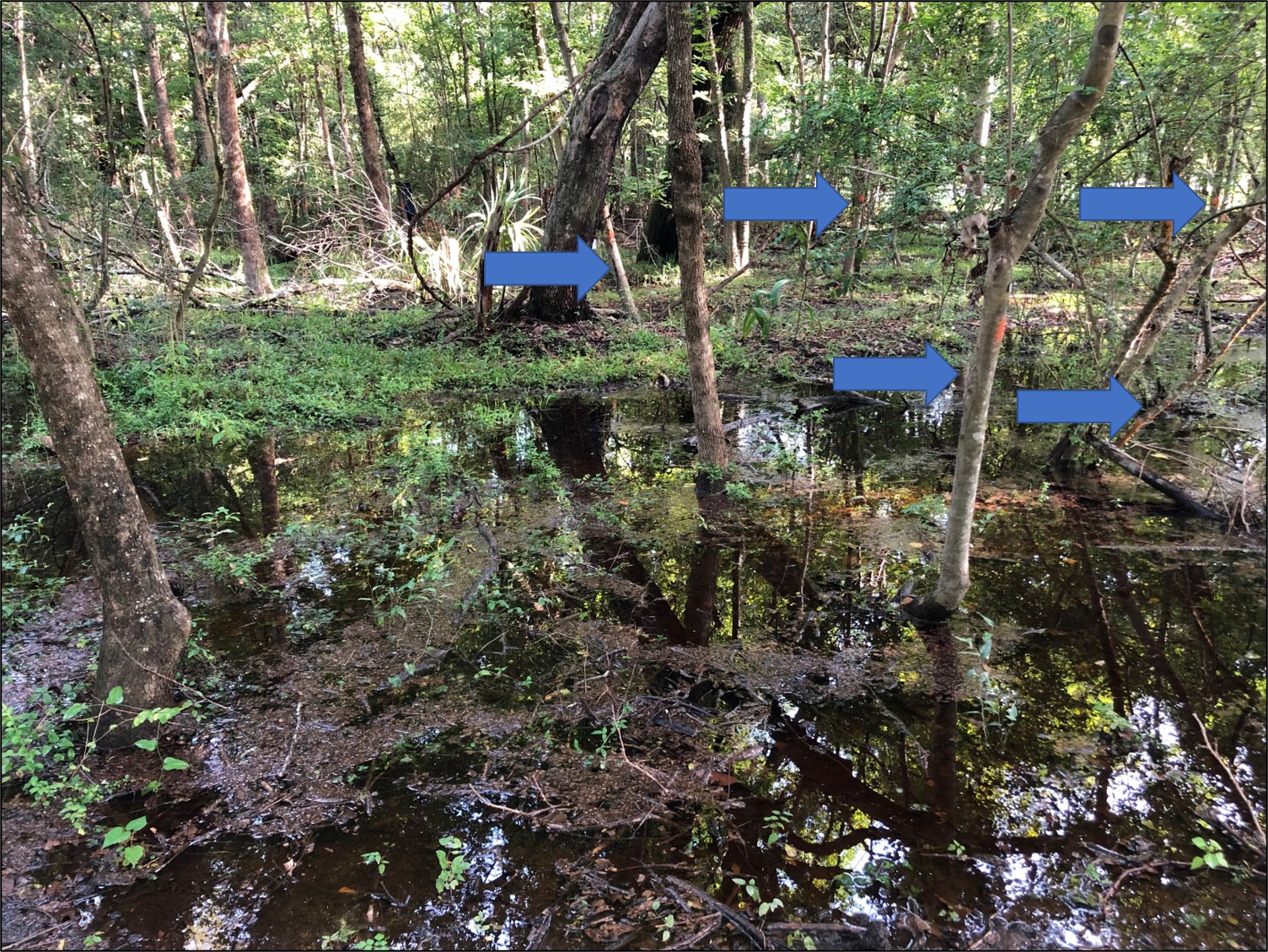
typical site of ALB infestation in Charleston South Carolina; arrows indicate infested red maple trees. Photo by David Coyle
Tree dissection and dendrology studies of the principal host, red maples, show that multi-stemmed trees and smaller branches are preferred. They also preferred vertical stems or bolts, although they did oviposit on horizontal bolts raised off the ground to mimic a tree branch. There was little oviposition on bolts on the ground. In practice this means managers can leave felled trees on the ground without prolonging the infestation. This is very helpful since swamps preclude using heavy equipment. picture
Chad Rigsby, Bartlett Tree Research Laboratory, described the results of testing the efficacy of several nematocides. A foliar spray, Bayer’s Broadform, has received emergency approval from many states. It suppresses nematode (Litylenchus crenatae mccannii ([LCM]) numbers when applied at very low rates. Trees can be treated as long as (green) leaves are present. Rigsby recommended not spraying until a tree displays symptoms.
Since foliar sprays cannot be applied in forests, near water, or on huge trees, scientists also sought a systemic injectable fungicide. Thiabendazole [TBZ] (commercial formula Arborjet 20-S) is available. Rigsby said applicators can avoid splitting of the bark by following protocols developed by the International Society of Arboriculture. Managers should inject a tree several times in the first year to get the disease under control; then they can apply less frequently.
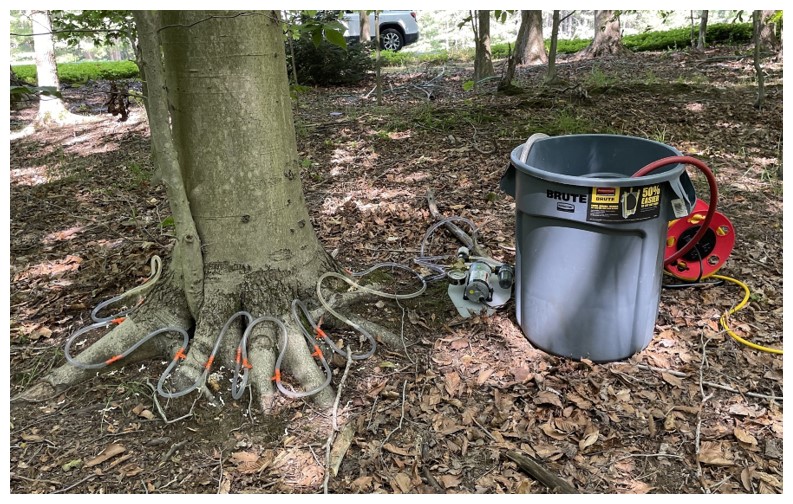
injection of thiobenzadole into beech; photo by Matthew Borden of The Bartlett Tree Research Laboratories
Don Grosman of Arborjet believes mortality is the result of a disease complex, not just LCM. Any of three treatments containing phosphite greatly reduces nematode numbers and canopy symptoms. Low volumes of diluted product can be injected in a few minutes. However, Thiabendazole hypophosphite requires a high volume macro trunk injection. This is expensive and takes time
Testing shows potassium phosphite PHOSPHO-jet produced dramatic improvement in 1 year. There are early indications that one treatment might be effective for two years. Arborjet will test this finding again this year. The company is also testing another chemical – the name of which cannot yet be revealed.
Andrew Miles, Ohio State, described beech response to polyphosphate (PP30). This chemical is a biostimulant, not a treatment. It is used as a disease control agent in several crops, including woody species. Field observations indicate it does reduce disease severity. Scientists are trying to understand the mode of action. Experiments are under way in Cleveland MetroParks, where BLD was first detected. Miles called for experiments within buds as well as leaves, since LCM damages tissue while in the bud.
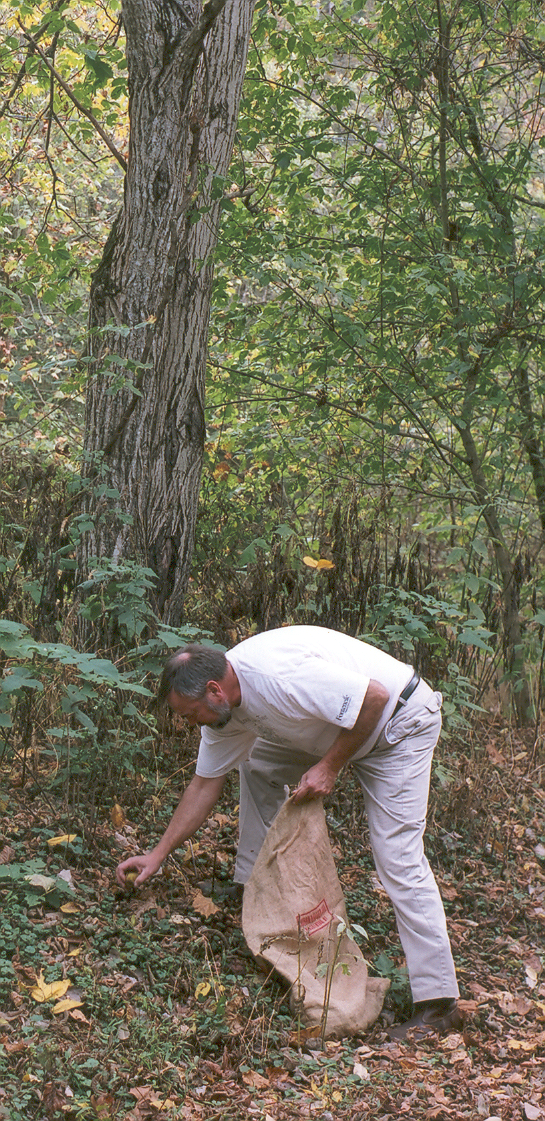
Scott Schlarbaum, University of Tennessee, collects butternuts; photo by F.T. Campbell
Anna Conrad, USFS, described ongoing efforts targetting this disease, which is present throughout the tree’s large range. A major challenge is distinguishing pure butternut from hybrids with Japanese walnut. Scientists have screened ~300 families from 22 states for possible resistance. At three sites in Indiana, the vast majority of highly resistant families are hybrids. Still, resistance was detected in up to 2.5% of pure butternuts; this level is sufficient to be enhanced through breeding. The program would benefit from genotyping across butternut’s range to identify lingering trees and confirm resistance.
Nicholas Dietschler, Cornell University, studies the relationship between western hemlocks and HWA in their shared native ranges in the Pacific Northwest. At all sites, lower numbers of HWA (of both PWN and Japanese lineages) survived on Western hemlock – in the absence of predators. Why? Dietschler believes western hemlock has better chemical defenses. For example, hemlocks exude pitch in response to adelgid herbivory. In eastern hemlocks, this induced resin might suppress the tree’s defenses. In addition, HWA also prompts greater suppression of phenolics in eastern hemlock. Dietschler concludes that bottom-up, tree-based defenses are a factor in the invasion and should be studied — while continuing efforts to find an effective combination of biocontrol agents.
Anne C.J. Peter, of Virginia Polytechnic Institute and State University, is comparing HWA chemical interaction with the most recent biocontrol agent, the silver fly Leucotaraxis argenticollis. (Scientists hope L. argenticollis will feed on summer populations of HWA; other biocontrol agents don’t suppress HWA at this stage.) The L. argenticollis population in the PNW feeds on HWA; however, its eastern North American relative L. rubidus feeds on pine adelgids, not the introduced HWA. It has been challenging to establish the PNW population in the East. One possibility is that the invasive HWA, which is from Japan, contain toxins that deter predators & parasitoids. Therefore, Peters is studying how both the western and eastern populations of Leucotaraxis deal with anthraquinones – compounds found in many plants and some insects, but not adelgids native to the eastern US.
Jian Duan, of the Agriculture Research Service Beneficial Insect Lab, summarized results of 15 years of biological control efforts. Over this period, four biocontrol agents have been introduced. I applaud APHIS’ rapid inclusion of this pest management approach; an egg parasitoid and two larval parasitoids were introduced before 2010, less than 8 years after the invasion was detected. Unfortunately, these agents proved less effective in northern parts of the EAB’s distribution. A fourth larval parasitoid was released in 2015. One or more of these biocontrol agents have been released in 479 counties in 34 U.S. states and three Canadian provinces.
To what degree have the wasps reduced EAB populations? Are those reductions resulting in regeneration?
Duan reported that at sites in Michigan, all four agents have spread rapidly. EAB populations crashed and recovered several times but overall numbers are lower. Ash saplings increased greatly after 2015; seedlings also increased. He concluded that the program has been successful but not spectacularly so.
Hannah Broadley, APHIS, described developments beginning with initial searches for possible agents in China in 2015 — just one year after the lanternfly was detected in Pennsylvania. The search has focused on agents that feed on SLF eggs and nymphs. Attention has narrowed to Dryinus sinicus. This wasp both preys on and parasitizes SLF nymphs – depending on the nymphal stage. Labs are developing a third colony and conducting host specificity testing. Scientist have begun drafting a petition for release; the review process will probably take more than one year. At the same time, scientists continue exploring other possible biocontrol agents – e.g., in Vietnam. The blizzard prevented this speaker from appearing.
Xingeng Wang, of the ARS Beneficial Insect Lab, described how Dryinus sinicus attacks SLF – with a graphic video! D. sinicus attacks on third instar are often unsuccessful. When it encounters a second instar nymph, however, D. sinicus switches from predation to parasitism: it lay an egg which then develops inside the SLF nymph. This parasitism kill seven times more nymphs than predation on older nymphs.
Individual D. sinicus wasps can live up to 60 days, lay an average of 175 eggs and parasitize ~137 nymphs! Since D. sinicus is most effective against just one instar, releases will need to be carefully timed.
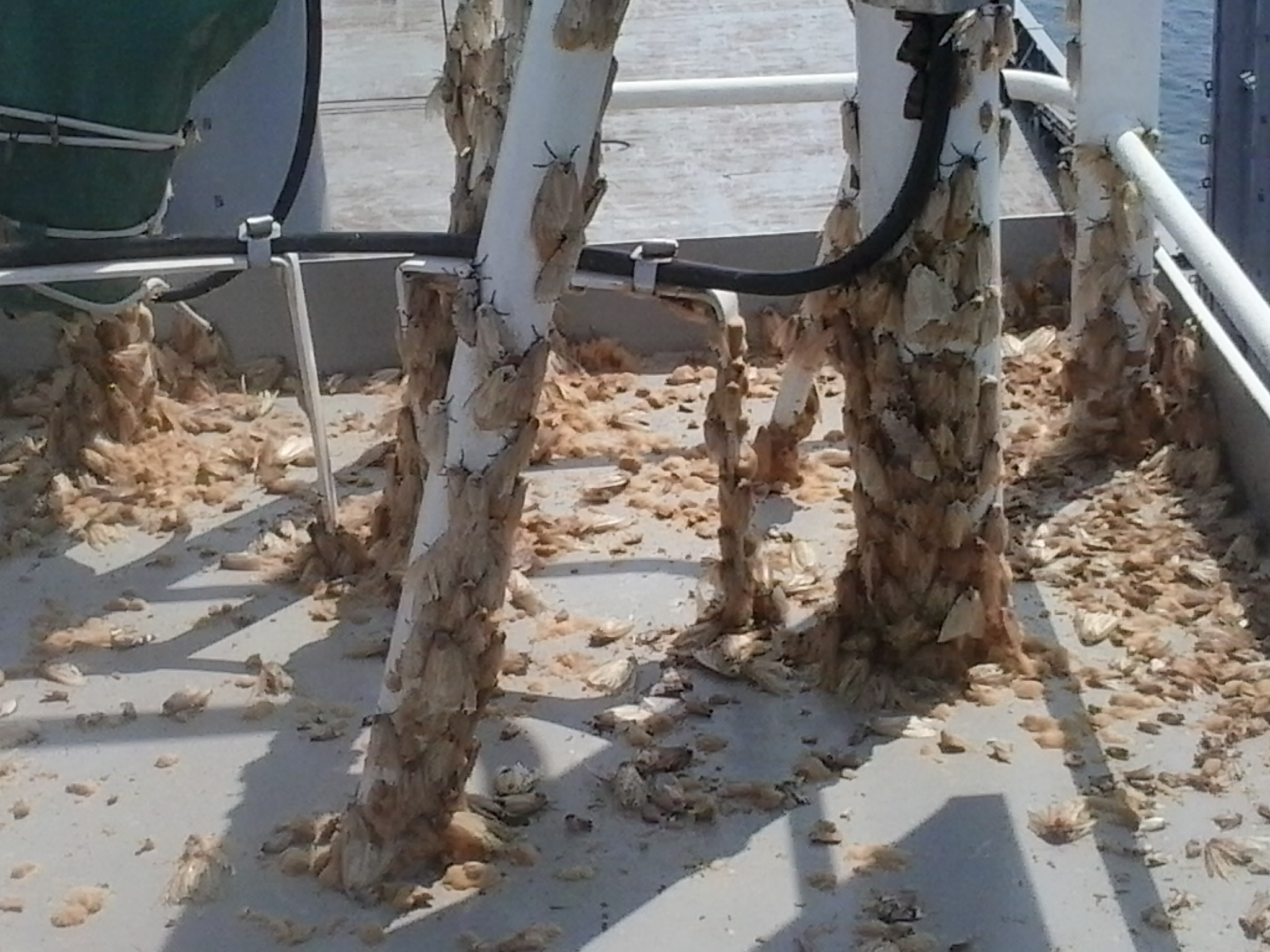
Alex Wu, APHIS, discussed efforts to prevent establishment of four flighted spongy moth (Lymantria) species. APHIS seeks to improve the efficiency of trap analysis because states are submitting triple the number of trap contents of past years. The goal is to improve real-time qPCR efforts to distinguish the European species established in the East from the Asian flighted species, and to distinguish the several subspecies of latter taxon. Current qPCR results point to the wrong species ~ 5% of time. There are complexities: moths from Central Asia might be hybrids. Also Lymantria dispar japonica might be found in far southeastern corner of Korea – which is separated from Japan by a narrow strait.
Early Detection of Wood-Associated Beetles
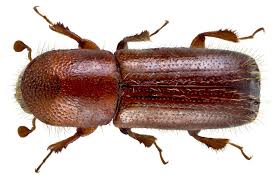
Jiri Hulcr, University of Florida, discussed strengths and weaknesses of artificial intelligence (AI) in species identification of bark beetles. As he noted, differentiating a specific bark beetle species from among the more than 6,000 look-alike taxa is time-consuming. A properly trained AI program can help. Furthermore, no one can keep up with publications – in 2015 there were 432 discussing just bark beetles! AI can help researchers discover papers that they otherwise would miss and empower non-English speakers to search the literature.
Hulcr has created a website that now has 63,000 images of ambrosia and bark beetles to assist identification. This work has been funded by the USFS International Program – one of the few sources of support for studying potential pests before they invade. The website will be open source once it has been copyrighted to prevent “scraping” by bots. Hulcr invited participants to send more images to continue training the algorithm on more species.
In the discussion, Alain Roques noted that scientists in Europe and probably China are developing similar AI-assisted identification tools. He urged international coordination. Hulcr replied that scientists do coordinate – as long as funding is available. Jennifer Koch noted that historic collections have many taxonomic inaccuracies. She urged people to rely on genetics when trying to identify a species.
Hulcr says AI is much faster than people in completing some tasks. But managing bioinvasions continues to require trained people (taxonomists) to collect, detect and classify new species; and execute quality control. AI cannot do science, which Hulcr defined as generating new knowledge through observation, turning that information into data, and testing hypotheses, making assumptions based on that.
Hulcr says AI also cannot predict what the next damaging ambrosia beetle to enter the U.S. will be. He offered his predictions:
Euwallaceae destructans – from Indonesia – attacks live trees
Aggressive Platypdinae from Asia and South America (especially threatening to plantations where trees are stressed)
Cryphaus lipingensis (attacks pine seedlings)
Scolytus amygdali from the Meditteranean region – introduces pathogens during maturation feeding on living hosts; feeds on almonds and prunes – Rosaceae
Dryocoetes himalayensis – Asia and Europe; kills walnuts
Port of Marseille; via Wikimedia
Alain Roques, of Zoologie Forestiere in France, reported results of a beetle trapping study in France.
Since the European Union allows entry of species not listed as quarantine pests, it is vitally important to improve detection and analysis of the large percentage of detections that are “unknown” or “emerging”. Nearly 8,000 beetles have been trapped over five years; they belong to nearly 400 species, 35 non-native.
One approach is to develop more generic traps and lures. The EU is now using a blend combining 10 pheremones to trap Cerambycidae. Scientists are incorporating additional pheromones to the blend and to extend attractiveness longer than the current 10 days. There is still no generic lure for Buperstids.
Some species arrive regularly – is each detection a reintroduction? Or are these species established?
Roques asks whether we are trapping at the right sites. Half of Cerambycids are trapped only inside ports (of various types). Scolytids were trapped outside ports, at other “high-risk” locations– e.g., sawmills and recycling centers. In other words, they disperse more broadly. Roques wants to add the road network and to extend the survey to the entire European Union.
Davide Nardi, of the University of Padua, Italy, discussed results of his trapping program, which seeks to guide placement of traps. See Nardi et al. (2026) [full citation at end of this blog]. Important conclusions are:
Surveillance programs are probably under-sampling species. Halving the sampling effort (from 16 to 8 traps) resulted in failure to detect ~20% of the species at the site. Cutting the sampling effort to four traps resulted in missing ~ 40% of present species. This decline in catches is particularly severe in urban landscapes – the very places where insects are most likely to be introduced. Even when they deployed 16 traps per site almost 30% of total species richness was not detected, on average.
Urban landscapes might offer a higher diversity of potential tree hosts. They also have more barriers to insects’ spread, e.g., buildings. This means urban areas require a greater sampling effort.
Traps should be set near available forest patches or urban parks.
I was intrigued by Nardi’s suggestion that scientists use the data on native beetles included in the trap catches to alert countries receiving exports from these ports to which species might be transported to their shores.
Manoj Pandey, of Ohio State University, explored how environmental context shapes abundance and diversity of Scolytines caught in surveillance traps. His goal is to improve the efficacy of the USFS’ two- decade-old Early Detection Rapid Response trapping program, which targets bark and ambrosia beetles at high-risk sites. These include transit sites, destination sites, and wood waste treatment sites. Pandey analyzed program catches from 2010 through 2019.
He found that among native species bark beetles dominated catches; ambrosia beetles dominated non-native captures. Climate [minimum/maximum temperature and precipitation] was the most important factor determining which species were caught. Overall, both Scolytines and ambrosia beetles are governed more by ecological requirements than by human population levels. Among Scolytines, native species (which are adapted to stressed trees) are affected by precipitation; non-native species are favored by warmer temperatures. Ambrosia beetles – both native and non-native – are more affected by precipitation levels than bark beetles, probably because of the formers’ symbiotic relationship with fungi. Ambrosia beetles are also more likely to be generalists and to be attracted by deciduous forests.
The other influential criterion was landscape – whether forests are evergreen, deciduous, or diverse. Deciduous forests attract both types of beetles, but the influence is stronger for non-natives. Conifer (evergreen) forests attracted native species. Higher human population density was associated with higher trap catches. Propagule pressure – measured via human population density and per capita income – was less important, perhaps because the traps are always placed near population centers.
Xyleborus monographus; photo by U. Schmidt
I am concerned because this trapping program did not detect the Mediterranean oak borer (Xyleborus monographus) before it was detected in California and Oregon. The project also did not find the greater shot hole borer Euwallaceae interjectus on the West Coast before it was detected in Santa Cruz, California. This ambrosia beetle has been established in the Southeast for years (M. Pandey, pers. comm. 12 March 2026).
Other Pests and Pathogens
Thomas G. Paul, at Ohio State, explored whether understanding the temperature regime during transit can provide early warning of which wood-associated pests might arrive. He obtained ocean surface temperature data along shipping routes from China to the U.S. West Coast and across the Atlantic. He then related those temperatures to degree-days needed for development by Xylosandrus germanus (from Asia) and Ips typographus (from Europe). At present there is still lots of uncertainty, including how to factor in the insect’s stage at the time of departure, the relationship between ocean air temperature and temperature inside a container, and possible effects of a container left to sit for several days in the port of import.
Eliana Torres Bedoya, also of Ohio State, provided an update on spore trapping for improved detection of pathogens across large landscapes. In 2024 the project developed standardized protocols for surveillance. To learn what is going on in the region, one should sample many sites across the area of interest. To find a particular pathogen, officials also need to know which season to sample. Torres Bedoya notes that few states sample in the autumn, which probably results in biased results.
In 2025, the program was expanded to 10 states. Species searched for are chosen by participating states. They include the causal agents of oak wilt, thousand cankers disease, laurel wilt, annosum root disease, and the beech leaf disease nematode (Litylenchus crenatae mccannii). Participants – including state phytosanitary officials — are now asking how to respond to a detection. For example, DNA from Bretziella fagacearum, the cause of oak wilt, was detected in several states where no disease has yet been identified (New Hampshire, Massachusetts, West Virginia, and Ohio). DNA of Geosmithia morbida, the causal agent of thousand cankers disease of walnut, was detected in New Hampshire, Massachusetts, and Maryland. What should managers do in response to these findings?
Torres Bedoya explained that her team is now working to make the spore-trapping process more user-friendly. I noted that my poster previous blog discussed using these techniques at the interface of forests and agricultural land uses.
During other discussions, I learned that Jason Smith of the University of Mount Union is trapping for DNA from LCM in order to track the spread of BLD.
Brown spot needle blight
Several speakers addressed this disease, which is of increasing concern to pine timber interests in the American South and around the world. New Zealand is exploring resistance breeding of Pinus radiata in advance of introduction
The disease has long been known in long-needle pine – at the “grass” stage (early seedlings). In recent years needle blight has begun damaging loblolly and other pine species – in both plantations and natural forests. Jason Smith, from the University of Mount Union, was asked for help by the industry in 2016. He found that one factor is increasing reliance on herbicides instead of fire to control ground-level vegetation. The large doses of inoculum remains in the litter, rather than being killed by periodic fire – as in the past. Smith thinks it is also possible that the pines suffer subtle damage from herbicides. Other possible factors are the widespread planting of genetically identical monocultures and climate change.
Colton Meinecke at the University of Georgia reported that Lecanostica acidola has been confirmed as the disease agent at these sites by Koch’s postulates. Scientist at the University of Georgia, University of Mississippi, and other entities are collaborating on development of a predictive model. Work includes sampling needles from both the litter and canopy, tracking tree condition, destructive sampling of dead trees, and spore trapping.
In the discussion, Smith warned that dying pines are not being detected by aerial forest health surveys because they are conducted too late in the season. This is because the surveys focus on one specific pest, the southern pine beetle. He called for a more comprehensive survey program.
Meinecke reported that the disease is more severe in western parts of the Gulf Coast regions. It is also causing problems in Christmas tree plantations, especially Scots pine.
He has found evidence of some genetic resistance. He is trying to develop a rapid test of a tree’s vulnerability using spectral wave length. Meinecke is also experimenting with stand management approaches. He praised the close cooperation with experts from around globe and New Zealand’s pro-active preparation for combatting the disease before it arrives.
Kier Klepzig, of the Jones Center at Ichauway in Georgia, described establishment of a Pine Pandemic Preparedness Plan, stimulated by awareness that a non-native pest might be introduced that attacks loblolly pine (Pinus taeda) – the foundation of the southeastern “woodbasket”. [Of course, Sirex noctiliois already established in the eastern United States. Although it is a severe pest of loblolly growing in plantations in the Southern Hemisphere, industry and federal and state agencies have dismissed concerns in North America.] The Pine Pandemic Preparedness Plan has four components: communication, detection and diagnosis, delimitation and assessment, response.
As concern about brown spot needle blight grew, the Southern Group of State Foresters ask the “P4” team to engage. Klepzig and Kamal Gandhi pulled together a working group which has the goal of developing guidance for managing the disease within two to five years. The task force is developing a website for data-sharing. The task force is also studying genetics of the host and pathogen, fungicides, the role of fire, resistance screening, and spore trapping. Industrial concerns about coordinating with competitors cause challenges.
Ashley Schulz, of Mississippi State University, has reviewed experience with biocontrol for clues on species’ traits important for facilitating invasion. She analyzed information on 394 insects introduced to North America for biocontrol of invasive plant species (see other blog) and 87 agents targeting 325 insect pests. For each species, data was recorded on whether it established, level of impact, the insect’s feeding guild, climate matching, host specialization, and evolutionary history. For the 87 entomophagous insects, she also recorded host feeding guild and host specialization.
Schulz found that entomophagous insects introduced as biocontrol agents were more likely to establish if they are a specialist. Higher impact was also associated with specialization. Parasitoids had higher impacts than predators. What does this indicate re: invasive species? Schulz said that insects which can hide or defend themselves, i.e., specialists, are likely to be more successful invaders.
Schulz recommends more analysis of what can be learned from experience with biocontrol agents. However, such studies are challenged by poor records, lack of empirical evidence and quantitative data, the lower number of biocontrol agents introduced recently, and funding shortages that preclude post-release monitoring.
Schulz also mentioned that she worries that a proposal to drop the word “harm” from definition of invasiveness could result in biocontrol agents being lumped with invasive species. This would further hamper implementation of biocontrol. She considered this loss to have particularly bad affects at a time when there are growing restrictions on pesticide use.
SOURCES
Mason, M.E., Carey, D.W., Romero-Severson, J. et al. Select genotypes of white and green ash show heritable, elevated resistance to emerald ash borer. New Forests57, 12 (2026). https://doi.org/10.1007/s11056-025-10158-x
Merkle, S.A., J.L. Koch, A.R. Tull, J.E. Dassow, D.W. Carey, B.F. Barnes, M.W.M. Richins, P.M. Montello, K.R. Eidle, L.T. House, D.A. Herms, K.J.K. Gandhi. 2022. Application of somatic embryogenesis for development of emerald ash borer-resistant white ash and green ash varietals. New Forests https://doi.org/10.1007/s11056-022-09903-3
Nardi, D., D. Rassati, A. Battisti, M. Branco, C. Courtin, M. Faccoli, N. Feddern, et al. 2026. “Integrating Landscape Ecology into Generic Surveillance Plans for Bark- and Wood-Boring Beetles.” Ecological Applications 36(2): e70194. https://doi.org/10.1002/eap.70194
Posted by Faith Campbell
We welcome comments that supplement or correct factual information, suggest new approaches, or promote thoughtful consideration. We post comments that disagree with us — but not those we judge to be not civil or inflammatory.
For a detailed discussion of the policies and practices that have allowed these pests to enter and spread – and that do not promote effective restoration strategies – review the Fading Forests report at http://treeimprovement.utk.edu/FadingForests.htm
As bioinvasions and their impacts continue to expand globally, managers and decision-makers charged with developing effective management and mitigation strategies urgently need tools that can assess and rank all impacts. These start with impacts on species’ populations … but go much farther, to the assemblage, ecosystem, and abiotic levels. Impacts at the “species and assemblage” level include species extinction (locally or more broadly), changes in species range, assemblage structure, successional patterns, and the soundscape. Impacts at the “ecosystem function” and “abiotic” levels include changes to primary production, food webs, water quality, and nutrient cycles. The analysis also addresses changes that do not affect native biota directly, although they present no examples.
For a decade, scientists studying bioinvasions have used the Environmental Impact Classification for Alien Taxa (EICAT) framework to standardize categorization of species-level impacts. One group that has not used this methodology is experts on tree pests. Why? Does the approach fail to describe the impacts of non-native arthropods and pathogens on tree species and forest ecosystems more broadly? Or is it simply because of academic silos?
Even more important: are the science and practical management of invasive species and forest pests losing valuable insights, resources, policy choices, … because of this schism? Would both groups gain from closer interactions?
In any case, the framework used by many scientists working on “invasive species” is undergoing a revision to better capture cascading and systemic effects from bioinvasion. A group of scientists has created the Extended EICAT (EEICAT) framework. (See the publication reference at the end of this blog to learn the process of development and details of the new system.) The proponents claim that the new system recognizes the functional interdependence of species in ecosystems, which means that alterations in species assemblages inevitably amplify throughout the system. E.g., alterations in physico-chemical characteristics or habitat structure. Impacts can even cross-ecosystem impacts between ecosystems that are often managed separately. An example is a change in the quality, magnitude, and novelty of resource flows between terrestrial and aquatic systems. To address these multifaceted effects, EEICAT integrates 19 impact types into the analysis. The intention is to improve communication about the complex ecological impacts caused by bioinvasions and facilitate prioritization of responses to competing bioinvasions.
While the various outcomes from bioinvasion can be positive or negative for nature and people, the EEICAT does not use value-laden distinctions. These determinations are left to stakeholders, managers, and community members, based on their own perspectives. Instead, it compiles and standardizes information about the measurable changes to species numbers (some decrease, others increase); to ecosystem processes (e.g., nutrient dynamics or hydrological regimes).
EEICAT incorporates the “reversibility concept”, which addresses the potential for a native sp (including individuals, pops, and assemblages), ecosystem function, or abiotic environmental to recover after removal of the bioinvader. The system developers distinguish “naturally reversible changes” and “naturally irreversible changes”. In the former case, the affected spp, ecosystem processes or abiotic conditions are thought likely to return to their original state within 10 years or three generations (whichever is longer) through natural processes or human-assisted actions that do not exceed what is already being done. This does not include reintroductions or restoration efforts that require new efforts. Instances of “naturally irreversible changes” are those in which the affected species, ecosystem functions, or abiotic conditions cannot return to their original state within that timeframe without significant additional human intervention, or even after intense human intervention. The system has reached a different, stable equilibrium. These “permanent” changes are the result of one or more species’ global extinction, or persistent environmental alterations, e.g., soil modification, altered hydrology, or irreversible changes in nutrient cycling.
The proponents assert that EEICAT allows multiple impacts reported in a single study to be classified independently at each impact level. Furthermore, the EEICAT analysis does not require extensive research on the assessed species or understanding of the mechanisms through which the invasive species affects native species or the environment. EEICAT framework is applicable to any amount of info available in each study. It also explicitly assesses the adequacy / reliability of evidence [data, methods, approach] used in studies of bioinvasions that are included in the analysis.
EEICAT framework enables researchers to evaluate how “ecosystem engineer” species influence key ecological functions by explicitly accounting for changes to ecosystem processes, e.g., nutrient dynamics or hydrological regimes. For example introduced bivalves increase water clarity in certain systems, triggering cascading effects on biodiversity and ecosystem functions.
The EEICAT framework also allows separation of the mechanisms of impact vs. attribution of impact. For example, when a non-native plant species alters nutrient availability, thereby changing the microbial community, EEICAT assigns separate impact categories to the two impacts.
Regarding cross-ecosystem effects, the proponents cite rats on islands. Their predation suppresses seabird pops; reduced guano alters the nutrient dynamics of adjacent coral reef ecosystems. Thus assign impact categories not only to the changes in nutrients, but also to ecological functioning. This provides a more comprehensive view of interconnected effects.
Proponents of the proposed new framework assert that the fundamental distinction between EEICAT and the earlier EICAT is that the earlier assessment is “species-based”, whereas the new one is “impact-based”. It is broader because it focuses on specific combinations of invading species plus the affected systems. It is better able, they assert, to account for contrasting impacts in different invasions.
EEICAT can be applied to any invasion event (i.e., a specific combination of invasive species, recipient system, and context). It broadens the range of evidence that can be integrated into the assessment. Decision-makers benefit from access to more information. The information can also be provided in more easily understood form through two visualization tools:
An “invasive species profile” aggregates all recorded impacts caused by a single invading species. This facilitates clear communication of the bioinvasion’s impact severity to managers and stakeholders, plus how those impacts vary by context.
An “invaded ecosystem profile” compiles impacts from different species to a site or location. This is particularly useful for synthetic analyses (e.g., meta-analyses), evidence syntheses, and manager assessments.
Resulting profiles can help stakeholders prioritize species or ecosystems for responses.
https://www.dontmovefirewood.org/pest_pathogen/phytophthora-root-rot-html/to are ants. No disease agent is discussed or even named. This gap is surprising given the devastating and geographically extensive impacts of e.g., avian malaria, chitrid fungi (Batrachochytrium dendrobatidis and Batrachochytrium salamandrivorans) on amphibians, and Phytophthora cinnamomi on the flora of western Australia.
One example in Table 3 pertains to native Hawaiian forests. The underlying study analyzed changes in ecosystem functions caused by the invasive nitrogen-fixing tree Falcataria moluccana. The EEICAT proponents say their analysis of this study would supports more informed decisions in conservation planning and ecosystem management. Indeed, the principal author of the underlying study has recently published a suggested method to manage the Falcataria moluccana invasions by replacing these trees with either native species or valued crops under an agroforestry program. Neither of the articles mentions that exactly this same area (the Puna District on the “Big Island) has suffered widespread death of the native tree ʻōhiʻa lehua (Metrosideros polymorpha) as a result of the invasive disease rapid ʻōhiʻa death (ROD). The more recent article does address the fact that native plant species are extremely rare in this region.
Would integrating studies of tree-killing arthropods and pathogens into the EEICAT system provide benefits? First, let’s consider analytical methodology. Many analyses of forest pests’ impacts already discuss at least some of the wider ecological (and economic) outcomes. (To explor this, visit www.dontmovefirewood.org and read some of the species profiles under the “invasive species” tab.) Would comparing these findings to an EEICAT analysis confirm the proposed methodology? Or would it instead suggest needed adaptations? In either case, the results should improve scientists’ work.
Second, would the science and practice of managing invasive species be strengthened by bridging the differences in methods and terminology between those focused on plants and vertebrates and those focused on tree-killing invertebrates and microbes? Would greater unity result in more attention to bioinvaders from policy-makers and/or conservation practitioners and advocates? Especially since (nearly) all the major forest pest invasions would qualify as “naturally irreversible changes” or even “permanent”: the affected species, ecosystem processes or abiotic conditions are thought unlikely to return to their original state within 10 years or 3 generations (whichever is longer) in the absence of intense human-assisted actions. If joining forces might bring about greater societal efforts, is the EEICAT methodology a promising tool to achieve this goal?
Finally, would applying the EEICAT system improve the analyses of tree-pest impacts? Would this approach result in incorporation of types of effects that would otherwise be missed – either often or in specific cases? Are there relationships among forest species, or between species and ecological functions, that might be discovered? Might preparation of “invaded ecosystem profiles” that include bioinvaders from earthworms to canopy foliage feeders provide an informative perspectives that is now lacking?
SOURCE
Carneiro, L., Pincheira-Donoso, D., Leroy, B., Bertolino, S., Camacho-Cervantes, M., Cuthbert, R.N., et al. (2026) Expanding invasive species impact assessments to the ecosystem level with EEICAT. PLoS Biol 24(3): e3003665. https://doi.org/10.1371/journal.pbio.3003665
Posted by Faith Campbell
We welcome comments that supplement or correct factual information, suggest new approaches, or promote thoughtful consideration. We post comments that disagree with us — but not those we judge to be not civil or inflammatory.
For a detailed discussion of the policies and practices that have allowed these pests to enter and spread – and that do not promote effective restoration strategies – review the Fading Forests report at http://treeimprovement.utk.edu/FadingForests.htm
sorting coffee beans; photo by Niels Van Iperen via Wikimedia
Many have recognized that preventing introduction of invasive species is the most efficient approach to minimizing their ecological and economic impacts. Prevention requires many capacities, including control over a country’s borders, strong border biosecurity agencies and policies, and foreknowledge of probable pathways of introduction and high-impact species that might arrive.
Horizon scanning is one tool for gathering information about non-native species likely to enter, how they might arrive, and their probable impact. Horizon scanning involves a systematic search for potential invaders, assessment of their potential to harm BD, economic activities and human health, and opportunities for impact mitigation. It thus supports choice of prevention policies, targetting of efforts, and implementation of early identification and eradication procedures (Kenis et al. 2022; Martinou et al. 2026)
I have reviewed two case studies of the application of horizon scans.
Plant Pests in Ghana
One horizon scanning exercise aimed to identify and rank potential invasive non-native plant pest species that could be harmful to agriculture, forestry, and the environment in Ghana. The ultimate objective was to enable prioritization of actions aimed at preventing their introduction. As the participants in this exercise note (Kenis et al. 2022), the resource-poor farmers of Sub-Saharan Africa are particularly vulnerable to invasive pests that attack their crops, both those grown for subsistence e.g., maize and sorghum, and those grown for the international market, e.g., cacao and tomatoes. The continent’s vulnerability is increased by porous borders, weak cross border biosecurity, and inadequate capacity to limit or stop invasions. This exposes Africa both to repeated invasions and to continued spread across the continent once they have arrived.
Marc Kenis and 21 others assessed 110 arthropod and 64 pathogenic species using a simplified pest risk assessment. This set had been winnowed from an initial list of 1486 arthropods, nematodes and pathogens. Unfortunately, assessors were unable to agree on confidence levels for the assessments.
Sixteen of the assessed species – 14 arthropods and two pathogens – were thought at the time to not be on the African continent. Another 19 arthropod and 46 pathogenic species had been reported established in the neighboring countries of Burkina Faso, Côte d’Ivoire, and Togo. Seventy-seven species [62 of them pathogens] were recognized as established elsewhere in Africa.
Ninety-five percent of the arthropods were considered likely to arrive as contaminants on commodities, i.e. on their host plants; 23% were also likely to arrive as stowaways; some good fliers already present in neighboring countries could also enter unaided.
The 64 pathogen species included 14 bacteria, 16 fungi, 14 nematode, seven water moulds (Kingdom: Chromista), and 13 viruses. Sixty-two of these species have been detected on the African continent; 46 are reported in neighboring countries. Thirty-one (48.4%) of the pathogenic organisms were considered likely to arrive both as contaminants on commodities and/or as stowaways; Twenty-six (40.6%) probably arrive only as contaminants; five could arrive exclusively as stowaways. Kenis et al. (2022) specify which of the fungi, nematodes, viruses, bacteria, and water moulds fall into which category.
The most important input in the threat scoring process was likelihood of entry. The unsurprising result was that species known to be in neighboring countries or spreading rapidly in Africa received the highest overall scores. The likelihood of establishment was less important because the assessors had already excluded species they thought would encounter an unsuitable climate or absence of host plants. The impact score played an important role in the overall score; it was based primarily through their potential economic impact. There is little information about or attention to the potential threat of non-native plant pest species to non-commercial plants. Kenis et al. (2022) cite well-known examples to remind us that invasive plant pest species have had “huge impacts” on native tree species and biodiversity in North America and Europe. On the African continent, most non-native pests attack mostly concern exotic trees. They note one exception, Euwallacea fornicatus, DMF a wood-boring beetle from Asia killing many native trees in South Africa.
Bemisia tabaci; one of the arthropod pests in a country bordering Ghana; photo courtesy of INCTELUNI
Kenis et al. (2022) state that some of the several alien arthropods and pathogens identified in neighboring countries might already be present in Ghana although not yet recorded or identified to the species level. They say it is essential to clarify these species’ status by enhanced surveillance and applying morphological and molecular methods. Some of these possibly introduced species received high scores in the assessment. They threaten cocoa, a key crop in Ghana, and vegetable crops.
I am disappointed that Kenis et al. (2022)’s main actions suggested for both arthropod and pathogenic species that scored highly are to ramp up surveys and to conduct full pest risk analyses. It is true, as thy point out, that such assessments are required by international regulations before a country may implement phytosanitary measures. [See discussion of the requirements of the International Plant Protection Convention here.]
To some extent, the horizon scan echoed the obvious: most of species ranked high are already on the African continent, including 19 arthropod and 46 pathogenic species known to be established in neighboring countries. Plus, the recommended actions are minimal. Since Kenis et al. (2022) is essentially the scan itself, it provides no information on whether Ghana has implemented the recommendations. Still, given what I assume is lagging preparation across most of Africa, the horizon scan might be useful in encouraging countries to set priorities and take some action.
Cyprus
The second case study of applying horizon scanning is more encouraging. Scientists on Cyprus tried to assess the efficacy of their own horizon scanning exercise. I applaud their decision to do so. The horizon scan itself might have been undertaken on their own initiative? Or it might have been taken on in response to European Union regulations, which oblige Member States to enact measures to prevent or manage introduction and spread of invasive species designated as of Union Concern. The Union also encourages development of national invasive species lists and provides a legal basis for emergency measures in response to a detection.
Scientists carried out two horizon scan workshops in 2017 and 2019. The two workshops evaluated 225 and 352 species, respectively, to predict which are most likely to arrive and the level of provable impact to Cyprus’ biodiversity, human health, and economy. In 2023, four to six years after the workshops, scientists evaluated the listed species to reveal the accuracy of the predictions and actions taken so far (Martinou et al. 2026).
During the period 2017 – 2023 there were 183 Martinou et al. (2026) found publications naming 183 non-native species not previously officially detected in Cyprus. (As I will discuss later, a significant number of these species had been present on the island in 2017 but knowledge of their presence did not reach the assessors.) Of the 183 newly reported species, 31 had been included on some list of invasive species (e.g., EPPO or European Union list of species “of Concern”) or predicted by the horizon scanning exercises to rank amongst the top 100 riskiest species.
Cyprus’ horizon scans highlighted the risk posed by 10 of these 26 species. Martinou et al. (2026) focused on seven of them as having been ranked as high risk to the nation’s BD, human-health or economy. They added an eighth species, a venomous marine fish.
A further 10 species that were detected in the country had received lower impact scores, so they had not been included on the high priority lists of the horizon scans.
One of the species allotted a lower impact score, Spodoptera frugiperda, is under eradication, although it is widely distributed on the island. This action might be in response to the species’ inclusion on the EPPO A2 list.
As I noted above, scientists learned that 17 of the species had been present in Cyprus before the scanning exercises were undertaken but since their presence was then unknown to the participants, they were assessed as if still had not been introduced. This points to the country’s non-native species checklists not being fully up to date at the time.
Nine plant species common in the plant trade were most certainly present on Cyprus before the horizon scans (2017), but there were no published reports of their escape from cultivation. Nevertheless, they might have already been present in the wild. It is also possible that at least some escaped since the scans. Always tricky; always depends on who looking where.
Actions upon detection of specific taxa Detection of the common myna (Acridotheres tristis) – a species widely recognized as invasive – occurred in January 2022, close to a port. Eradication measures were implemented by the wildlife agency. Martinou et al. (2026) believe the introduction was facilitated by shipping. They think there is an extremely high risk of repeated introductions of mynas.
Aedes aegypti; photo by James Gathany via Flickr
Two mosquitoes were detected in 2022. A pilot project to eradicate The yellow fever mosquito, Aedes aegypti, was begun in 2023. There is no information about its success. The Asian tiger mosquito, Aedes albopictus, has been documented by citizen scientists as spreading rapidly in the suburbs of Limassol and Nicosia. To date the proposed interventions have been unsuccessful, possibly due to focusing on public land while the mosquitoes can also breed on private properties. Detection of the little fire ant Wasmannia auropunctata (in 2022) was not surprising since it had already invaded other regions of the Mediterranean. Martinou et al. (2026) believe the introduction was probably facilitated by the plant trade. The scientists note that ant management and eradication efforts are both challenging and costly, but do not report whether any has been initiated. Detection of several marine invasive species was reported, some by citizens, e.g., divers or fishermen. Among the 17 species determined to have been present on the island since before 2017 were some fairly conspicuous vertebrates: brown rat (Rattus norvegicus), raccoon Procyon lotor, two tortoise species, house crow (Corvus splendens) ruddy duck (Oxyura jamaicensis). Also two more ant species, Solenopsis geminata and Trichomyrmex destructor. There were also several non-native plant species, including the notorious seaweed Caulerpa taxifolia.
Value of the Horizon Scan I am surprised that Martinou et al. (2026) do not explore why so many detections were published in 2022 since they assert that horizon scanning helped raise awareness amongst the authorities, scientists and the public. They do note that this awareness led, in some cases, to a rapid response by the competent authorities. Martinou et al. (2026) assert further that the exercise facilitated communication between invasive species experts, policy makers and society, encouraged active engagement and raised awareness regarding the importance of early warning, rapid response, and management of IAS. They therefore propose that the horizon scanning process for the island of Cyprus be repeated regularly – every five to 10 years – since new introductions continue. These efforts should include development pathway management plans and contingency planning that would be shared with local authorities and stakeholders.
Martinou et al. (2026) note two detections that have not, apparently, resulted in establishment. A dead specimen of brown marmorated stink bug (Halyomorpha halys) was reported in luggage in May 2022, the result of ‘Bug Alert Cyprus’ awareness campaign. The Colorado potato beetle (Leptinotarsa decemlineata) was detected in 2010 by Department of Agriculture inspectors in a consignment of potatoes. The agency ordered immediate destruction. Imports of potatoes are subject to special phytosanitary requirements for protected zones. It is not clear that this measure was implemented by Cyprus or is a European Union decree.
brown marmorated stinkbug; courtesy of Oregon Department of Agriculture
Martinou et al. (2026) are worried that no introductions have been reported at border crossings across the ‘Green Line’ [the United Nations-controlled buffer zone between Greek and Turkish portions of the island]. They call for enhanced cross-community collaboration and improved information and data sharing for border control staff and customs officers about invasive species. They suggest that border order inspections and pathway monitoring could be supported by local experts offering identification services for a variety of taxa. They suggest that the horticultural industry is a major pathway for the introduction of plants and insects such as ants.
Martinou et al. (2026) also advocate efforts to improve communication among the various institutions and authorities that discover bioinvasions and are responsible for taking action. While researchers + experts from government departments involved in the horizon scans are informed, the findings of the horizon scanning needs to be provided to e.g., customs officers, fishers, ship crews, pet shop owners, and school teachers. Much of this information might be exchanged through informal networks and through a growing body of web-based databases and other resources.
Early detection and rapid response depends increasingly on efforts by citizen scientists to report observations of IAS of concern. Martinou et al. (2026) note that six of the invasive species identified in the horizon scanning exercise were reported by citizen scientists. They express the hope that artificial intelligence and deep learning models could help identify species from photographs collected by citizen scientists on platforms such as iNaturalist. Such platforms also facilitate rapid dissemination of information to decision-makers who can take appropriate action. Martinou et al. (2026) also hope eDNA can help detect cryptic bionvaders, including freshwater or marine taxa.
As I blogged earlier, Mark Hoddle had endorsed several components of prevention programs: * Early research to identify natural enemy species that might “self-introduce” along with the invading host. * Collaborating with non-U.S. scientists to identify and mitigate invasion bridgeheads. * Sentinel plantings. These plantings can also support research on natural enemies of key pests. [A year ago, Eliana Torres Bedoya of Ohio State alerted participants in the annual USDA research forum on invasive species that fungi, including potential pathogens, were isolated from asymptomatic plants; Detection of the full range of fungal pathogens requires that samples must be collected throughout the growing season; microbes present differ. Need to expand surveillance beyond symptomatic plants – at both sentinel gardens and plant health border inspection stations. *Integrating online platforms, networks, professional meetings, and incursion monitoring programs into “horizon scans” for potential invasive species. He mentions specifically PestLens, (https://pestlens.info/); online community science platforms, e.g., iNaturalist; international symposia; and official pest surveillance, e.g., U.S. Forest Service’s bark beetles survey and surveys done by the California Department of Food and Agriculture and border protection stations.
That blog also cites Weber et al.’s support for sentinel plant nurseries because accidental plant and herbivore invasions often occur at the same points of entry.
At the 2026 meeting of the annual USDA Research Forum on Invasive Species, Ashley Schulz (Mississippi State) reported findings of study analyzing establishment of insects imported deliberately as biocontrol agents as clues to bioinvasion. She found that generalist phytophagous insects might be more likely to find a suitable host and survive after introduction. The “goldilocks” standard applies: the host must be sufficiently closely related to the insect’s native host to be recognizable but sufficiently distant so that it lacks defenses. Considering impact, phytophagous insects that feed on structures not easily restored – e.g., main stem or root, cause more damage than those that feed on easily replaced leaves. Entomopagous insect, on the other hand, must be able to find hosts that can hide or defend themselves. This means that highly specialized insects might be more likely to establish.
Kenis et al. 2022. Horizon scanning for prioritizing invasive alien species with potential to threaten agriculture and biodiversity in Ghana. Neobiota 71: 129-148 (2022) doi: 10.3897
Martinou, A.F., J. Demetirou, I. Angelidou, N. Kassinis, A. Melifronidou, J.M. Peyton, H.E. Roy, A.N.G. Kirschel. 2026. Multiple introductiions of invasive alien species on a Mediterranean Island predicted by horizon scanning. Biological Invasions (2026) 28:41 https://doi.org/10.1007/s10530-025-03729-8
Posted by Faith Campbell We welcome comments that supplement or correct factual information, suggest new approaches, or promote thoughtful consideration. We post comments that disagree with us — but not those we judge to be not civil or inflammatory. For a detailed discussion of the policies and practices that have allowed these pests to enter and spread – and that do not promote effective restoration strategies – review the Fading Forests report at http://treeimprovement.utk.edu/FadingForests.htm Or https://fadingforests.org/
black bears in a whitebark pine (Pinus albicaulis) in Yellowstone National Park; tree species is vulnerable to white pine blister rust. Public image
America’s national parks protect some of Earth’s most unique and valued species, ecosystems, geologic features, and cultural sites. These values are under threat from multiple interacting climatic changes. Over the last 100 years, national park units have experienced a disproportionate degree of warming and precipitation change relative to the United States in general. These changes are projected to continue.
The types of change are not limited to temperature and precipitation. These alterations bring multiple cascading impacts such as extreme weather events, forest insect outbreaks, more frequent and severe wildfires, and other novel disturbance regimes. Furthermore, the new events occur both individually and simultaneously. Michalak et al. (2026) fear that these disturbances and stressors might trigger irreversible ecological transformations in our national parks. The authors hope to prompt park managers to evaluate park-specific threats and plan how to respond.
Michalak et al. (2026) analyzed threats from the multiple interacting forces to determine which parks are greatest at risk. They limited their analysis to 259 parks in the continental states (including Alaska) and to parks recognized by the agency as possessing natural resource values. Some historic or cultural sites are included; I am somewhat confused about the criteria applied. I regret that they lacked sufficient data to include parks on the Hawaiian and Caribbean islands.
Hawaiian birds threatened by avian malaria; picture via Flickr
Their analysis defined potentially transformative impacts as heightened risk of fire, drought, sea-level rise, and forest insects and pathogens (not limited to non-native species). An example of such impacts is a prediction that a significant proportion of the park’s area would be inundated during storm surge.
Michalak et al. (2026) identified 174 parks (67% of the units analyzed) as most exposed to one or more of these potentially transformative impacts. The number of parks facing cumulative vulnerability across multiple dimensions was highest in the Midwest and East. Their peril is due to high physical exposure to the transformational change, exacerbation of existing stressors, and high surrounding land-use intensity. Parks in the West were partially protected by less intense human land-use and the varied topography, which might provide climate refugia. However, those western parks tended to be the most exposed to multiple transformative impacts (as defined above).
At the national level (excluding the islands), 28% of the parks have a high fire hazard now; this rises to 38% of parks by an unspecified future time. They provided no estimate of the proportion of parks facing a risk in the future from the other factors. Current levels of risk are 25% at risk to summer drought; 36% (92 parks) at risk to forest pests; and 11% to sea-level rise. Again, across all parks analyzed, 174 – or 67% of the total – face one or more of these threats.
The authors conclude that the 60-old goal of conserving National parks as a “vignette of primitive America” – as stated by Leopold et al. (1963) – is no longer possible. Instead, park managers should now seek to steward resources “for continuous change that is not yet fully understood” as advocated by Colwell et al. (2014).
Michalak etal. (2026) found that the National parks are not prepared. Only 10% have had park-specific assessments; 37% had no assessment at any level. For individual National parks, likelihood of climate impacts and potential transformational changes remains uncertain. Determining where more in-depth, park- specific assessments are warranted is essential for allocating resources.
Michalak etal. (2026) define climate change vulnerability as the combined effects of exposure, sensitivity, and adaptive capacity.Exposure is the intensity of changes a location might experience. This includes changes in the climate itself (e.g., temperature or precipitation) plus changes in climate-exacerbated disturbances (e.g., fire, drought, and sea-level rise). Sensitivity is the extent to which a location or resource is affected – or existing stressors are amplified – by the changing climate, which can be either adversely or beneficially. For example, imperiled species might be further threatened if new conditions are more conducive to bioinvasion. Adaptive capacity is the ability of a system to adapt to the climate change impacts. For example, does human development impede species’ dispersal to new regions that support more suitable climate regimes. I appreciate that the authors note the importance of ensuring continuation of evolutionary processes.
A Subset of Threats: Invasive Species and Forest Pests
According to Michalak et al. (2026), National parks with the highest cumulative vulnerability scores were in the Midwest, Washington, DC, and along the Gulf Coast. The threats were high levels of human development, poor air quality, high proportions of non-native species, and low environmental diversity.
mountain pine beetle in Rocky Mountain National Park; photo by Bchemicoff via Wikimedia
National parks that scored high for forest pest risks are concentrated in the mountainous West and Northeast. While Michalak etal. (2026) do not say so, I assume this refers to widespread mortality of pines due to outbreaks of the native mountain pine beetle (Dendroctonus ponderosae). Thirteen parks in the West scored high for a “trifecta” of fire, drought, and forest pests. The consequences for these parks’ natural resources might be rapid, dramatic, and irreversible transformation of ecosystems. Michalak etal. (2026) mention specifically Rocky Mountain and Yellowstone National parks. Other parks facing a threat from forest insects or pathogens include all the crown jewels of the West: Grand Teton National Park, Crater Lake National Park, Glacier National Park, Great Basin National Park, Kings Canyon-Sequoia National Park, Yosemite National Park, and Mount Rushmore National Memorial.
limber pine (Pinus flexilis) at Haiyaha Lake, Rocky Mountain National Park. Species is vulnerable to white pine blister rust. Photo by F.T. Campbell
Another example is Mojave National Preserve, which has experienced increased fire risk linked to the presence of invasive annual grasses.
I know that in the Northeast, more than a dozen species of introduced insects and pathogens threaten forest resources in the parks, including hemlock woolly adelgid, emerald ash borer, spongy moth, and – most recently – beech leaf disease. Parks mentioned in supplementary material provided by Michalak etal. (2026) include Delaware Water Gap National Recreation Area, New River Gorge National River, Harpers’ Ferry National Historical Park, and the homes of Eleanor and Franklyn Roosevelt. See blog 356a and underlying article by Miller et al. (2023).
mature Fraser fir killed by balsam woolly adelgid in Great Smoky Mountains; photo by F.T. Campbell
Many other National parks in the East and Midwest also are reported to be impacted by introduced forest pests, among them Great Smoky Mountains National Park, Blue Ridge Parkway, Shenandoah National Park, Appalachian National Scenic Trail, Prince William Forest Park, Cumberland Gap National Historical Park, Gauley River National Recreation Area, Mammoth Cave National Park, Ozark National Scenic Riverways, Pictured Rocks National Lakeshore, Sleeping Bear Dunes, St Croix National Scenic Riverway, and Big Thicket National Preserve.
There are some odd omissions. The supplementary data list the Chesapeake and Ohio Canal National Historical Park as facing a threat from tree pests, but does not so list Rock Creek Park. The two parks are a few miles apart and share the same invasive forest pests! The supplementary data do not mention Gettysburg National Military Park, although Miller et al. (2023) say that more than half of the seedlings and a quarter of the saplings in the park are ashes. These trees are likely to be killed by the emerald ash borer. Perhaps the explanation is that canopy trees threatened by pests in these parks do not occupy more than 80% of the parks’ cover.
I appreciate the effort to compile a nationwide analysis of threats to our national treasures. By focusing on one of those threats, I do not intend to downplay the others. Specific to climate changes, the Trump Administration has told the National Park Service to remove educational signs describing the impact of climate change on, for example, the glaciers at Glacier National Park. An earlier Executive Order https://climate.law.columbia.edu/content/trump-issues-executive-order-climate-change-0 reversed President Obama’s 2015 memorandum that required Interior and other departments to “avoid and then minimize harmful effects to land, water, wildlife, and other ecological resources (natural resources) caused by land- or water-disturbing activities, and to ensure that any remaining harmful effects are effectively addressed, consistent with existing mission and legal authorities.” In February 2026, the Environmental Protection Agency revoked the “endangerment finding” for greenhouse gases, which is the foundation for all regulations governing emissions of those substances. Clearly we cannot hope for federal efforts to address these threats to the National parks during this Administration’s tenure.
I hope, nevertheless, that this study gets wide attention and stimulates renewed campaigns to counter all threats to our natural heritage.
shrunken glacier in Glacier National Park; photo by F.T. Campbell
SOURCES
Colwell, R. S. Avery, J. Berger, G.E. Davis, H. Hamilton, T. Lovejoy, S. Malcom, A. McMullen, M. Novacek, R.J. Roberts, R. Tapia, and G. Machlis. Revisiting Leopold: Resource Stewardship in the National Parks. Parks 2014 Volume 20.2
Leopold, A. et al. 1963. Wildlife Management in the National Parks. available here: chrome-extension://efaidnbmnnnibpcajpcglclefindmkaj/https://static-gcs.edit.site/users-files/30eb6df2212095e14d89a611f0f8f0f1/leopold-report-wildlife_management_in_the_national_park-1963.pdf?dl=1
Michalak, J.L., C.E. Littlefield, J.E. Gross, T.G. Mozelewski, J.J. Lawler. 2026. Relative Vulnerability of US National Parks to Cumulative and Transformational Climate Impacts. Conservation Letters, 2026 Vol 19, Issue 1; 19:e70020
Miller, K.M., S.J. Perles, J.P. Schmit, E.R. Matthews, M.R. Marshall. 2023. Overabundant deer and invasive plants drive widespread regeneration debt in eastern United States national parks. Ecological Applications. 2023; 33:e2837. https://onlinelibrary.wiley.com/r/eap
Posted by Faith Campbell
We welcome comments that supplement or correct factual information, suggest new approaches, or promote thoughtful consideration. We post comments that disagree with us — but not those we judge to be not civil or inflammatory.
For a detailed discussion of the policies and practices that have allowed these pests to enter and spread – and that do not promote effective restoration strategies – review the Fading Forests report at http://treeimprovement.utk.edu/FadingForests.htm
pines in a plantation in Argentina killed by Sirex noctilio; photo by J. Villacide
A decade ago, Payn et al. (2015) compiled studies from around the globe to evaluate threats to widespread tree plantations. At that time, they said climate change posed the greatest threat to plantation forestry globally, in the forms of storm and flood damage and simultaneous warming and drying trends with extreme temperatures.
Still, the authors warned that forest health would be an increasingly important constraint to plantation productivity. They were optimistic, however, that modern breeding and other technologies could offset losses.
What is the current situation? The countries that depend on these plantations for fiber production are not demanding that leaders of the international phytosanitary structure build a more effective system to protect their investments. Instead, individual scientists struggle to better understand threats. Mostly, they propose expanded research.
Economic Importance of these Species
Eucalypts
“Eucalypts” comprises three genera in the family Myrtaceae: Angophora, Corymbia and Eucalyptus. These include more than 700 tree species native primarily to Australia. A few species are native to Indonesia, New Guinea and the Philippines (Paine et al. 2011; Crous et al. 2019). Some of these species have been extensively planted outside their native ranges for more than 100 years. These plantations have expanded rapidly in recent decades, especially in Southeast Asia and the Southern Hemisphere (Crous et al. 2019). Eucalypts are now the most widely planted hardwood timber in the world (Paine et al. 2011).
Eucalypt plantation in Brazil; photo by Jonathan Wilken via Wikimedia
Eucalypts’ popularity has been driven chiefly by their rapid growth; short rotation times including through coppicing; and adaptability to a very wide variety of sites and climatic conditions (Paine et al. 2011; Crous et al. 2019). Also, these trees are an important source of the short-fiber pulp required for production of high-quality paper used in modern office copiers and printers (Paine et al. 2011). Plantations are increasing even in Australia, where harvesting of native forests is increasingly being restricted (Paine et al. 2011).
Pines
Pines – a genus restricted naturally to the Northern Hemisphere – is second in global popularity. South America hosts 4.6 million hectares of pine plantations (Lantschner and Villacide 2025). South America is more dependent on forestry plantations for wood production than any other region. In 2012, 88% of its industrial roundwood was produced by non-native plantations. This far exceeded the global proportion of approximately 19%.
These intensively managed plantations have enabled Brazil and Chile to become “planted forest powerhouses.” Uruguay and, more slowly, Argentina are following the same path (Payn et al. 2015).
Documentation of the Damage
Euclaypts
The highly diverse eucalypts host an even greater diversity of fungi. As of 30 years ago, scientists were aware of more than 500 species of just one type, the leaf-infecting fungi. Additional fungi are associated with seeds, capsules, twigs, branches, and stems. Little is known about the vast majority of these fungi. Even species considered causal agents of important diseases have not yet been confirmed using Koch’s Postulates. Areas of origin for most is also unknown (Crous et al. 2019).
Crous et al. (2019) compiled information on 110 genera of fungi found on eucalypt foliage. Some genera include well-recognized primary pathogens. They name Austropuccinia and Calonectria, Coniella, Elsinoe, Pseudocercospora, Quambalaria and Teratosphaeria. Other genera are thought to include species that are opportunists that develop on stressed or dying tissues. Many other leaf fungi are putative pathogens, but unstudied. Additional fungi cause vascular wilts (e.g. Ceratocystidaceae), stem canker diseases (Cryphonectriaceae, Botryosphaeriaceae) and root diseases (e.g. Armillaria, Ganoderma) of eucalypts.
Crous et al. (2019) state that the rust Austropuccinia psidii is one of the most damaging of the foliage fungal pathogens. They consider it to be a greater threat to eucalypt plantations outside the trees’ native ranges. (The Myrtaceous species in Australia most damaged by A. psidii are in other genera.)
Two families of leaf fungi – Mycosphaerellaceae and Teratosphaeriaceae – include species that cause serious diseases. Pérez, et al. report a study in plantation in Uruguay that detected six new species. They also discovered new hosts for some known species. (Such initial detections of new fungal species in out-of-native-range plantations is a usual occurrence.)
Over the 100-year history of planting eucalyptus outside Australasia, dozens of leaf pathogens have been transported to novel regions. Crous et al. 2019 report the wide geographic breadth of many of these introductions. For example, Mycosphaerellaheimii is crippling plantation forestry in five global regions – South America (Brazil and Venezuela); Asia (Indonesia and Thailand); Africa (Madagascar), Europe (Portugal); and in its presumably native Australia. A second species, M. marksii, has a similarly wide introduced range: Portugal, China and Indonesia, South Africa, Ethiopia, and Uruguay. Pérez et al. calls Mycosphaerella leaf diseases one of the most important impediments to Eucalyptus plantation forestry in Uruguay.
Although Crous et al. do not provide dates of detection, it appears that many of these leaf pathogens were introduced outside Australasia before the mid-990s, when the World Trade Organization (WTO) and International Plant Protection Convention (IPPC) came into force. Together, these agreements govern what actions phytosanitary officials may take to curtail international movement of plant pests. (To see my critique of the WTO/IPPC system, visit here.) The possible exception might be Kirramyces gauchensis, a well-known pathogen of Eucalyptus grandis in South America (Argentina and Uruguay), Hawai`i, and Africa (Uganda and Ethiopia) (Pérez, et al. 2009). Crous et al. (2019) expect another genus, Quambalaria species, to become a threat to eucalypt plantation forestry globally in the future.
Phoracantha semipunctata; photo by Umo Schmidt via Flickr
Arthropod pests have also been spread to many Eucalyptus-growing regions in North and South America, Europe and Africa since the 1980s. Some species have colonized virtually all eucalypt-growing regions, e.g.,Phoracantha semipunctata. Some have – so far – appeared on only one continent.
In an effort to determine how many of these introductions have occurred after adoption of the WTO/ IPPC system, I Googled the species named by Paine et al. (2011). I used the year 2000 as the cutoff date, to allow for detection lag. Among the insect species that fit this criterion are a lerp psyllid, a leaf beetle, and two gall wasps detected in North America; a true bug, two galling insects, and a leaf beetle in South Africa; and three psyllids in Europe.
Asia stands out as having very few introduced Australian insects plaguing eucalyptus plantations. Only one insect of Australian origin is causing significant damage in this region, Leptocybe invasa. It was detected after 2000, so it might have been introduced under the WTO/IPPC regime. Many widespread species, e.g., Phoracantha semipunctata, are notably absent. Instead, large numbers of endemic insects use these trees. This contrasts with the situation in the Southern Hemisphere, where few of the numerous native insects have shifted onto eucalypts.
New Zealand has detected only two new species of Australian origin since 1999 — two psyllids. This is despite the two nations’ proximity, the large volume of trade that passes between them, and the likelihood that at least some small sap-suckers might be introduced via aerial dispersal. New Zealand is famous for its strict phytosanitary (and sanitary) policies and programs.
Eucalyptus plantation in Kwa-Zulu, South Africa
Plantations’ vulnerability has been increased by expanding reliance on clonal, artificially-induced hybridization. Developers’ goals – and initial results – are enhanced adaptation to specific environments, desired fiber characteristics, and hybrid vigor. However, these vast areas planted in genetically identical trees are sitting ducks. An insect or pathogen that overcomes the host’s defenses can spread rapidly across the entire planting.
These hybrids also can act as “bridges,” facilitating spread of fungi to formerly resistant host species. Crous et al. (2019) fear that this process will undermine resistance in Eucalyptus pellita to the pathogen Teratosphaeria destructans. Plantations in Southeast Asia and South Africa now comprise hybrids between this resistant species and the highly susceptible Eucalyptus brassiana.
Pines
As with the eucalypts, the intensively managed pine plantations are comprised of fast-growing exotic species, all at the same developmental stage, and with minimal genetic diversity, planted to maximize wood production. These practices again lead to biological homogenization and reduced resilience to pests (Villacide and Fuetealba, 2025)
In the Southern Hemisphere, Sirex noctilio has become the most significant economic pest of Pinus species. These attacks can cause up to 80% mortality. Several other Sirex species have also been introduced, all apparently in the 1980s or earlier (Wilcken et al., 2025) – before adoption of the current international phytosanitary regime. However, in 2023, a new species, Sirexobesus, was discovered causing tree mortality in pine plantations in southeastern Brazil. This species is indigenous to the United States and Mexico.
Stazione et al. (2026) discuss two other non-native pine pests that established recently in South America.
Analysis of mitochondrial DNA of Orthotomicus erosus points to a western Eurasian lineage. The low genetic diversity of the introduced population in Argentina and Uruguay suggests a single or limited introduction event followed by regional spread.
The source region of Cyrtogenius luteus is more difficult to determine but is probably somewhere in China. The higher haplotype diversity might reflect multiple introductions. Again, shared haplotypes between Argentina and Uruguay countries indicates a contiguous regional spread, possibly driven by extensive pine plantations & intra-regional trade (Stazione et al. 2026)
Policy Aspects
Some scientists express concern about the failure of international phytosanitary measures. But are their countries speaking up in regulatory bodies, especially the International Plant Protection Convention?
Studies by Crous et al. (2019) and Pérez et al. (2009) clearly show that pathogens from Australia continue to be transported to regions where eucalypt plantations are grown. This happens despite most of the movement of genetic material being in the form of seeds – which should be less likely to transport pathogens than trade in plants. Pérez et al. (2009) explicitly raise concerns about the effectiveness of current quarantine procedures. Crous et al. (2019) state that quarantinescontinue to fail in many parts of the world.
Burgess and Wingfield (2017) list pathogens that have spread widely since the beginning of the 21st Century: Austropuccinia psidii, Calonectria (= Cylindrocladium) eudonaviculata (=Cylindrocladium buxicola), Ceratocystis lukuohia and C. huliohia introduced to Hawai`i. I add that insect-vectored diseases such as Euwallacea species carryingFusarium fungi have also experienced a burst of introductions around the globe since 2000.
Crous et al. (2019) attribute this failure partially to the enormous difficulty of applying effective quarantine to the huge volumes of planting material traded globally. Another factor is undoubtedly the poor understanding of microbial species, their pathogenicity, hosts, pathways of spread, even taxonomies. Some genera cannot be grown in culture.
Furthermore, pathogens’ impacts vary, possibly due to environmental conditions of the location or differing virulence on different hosts. Finally, with so many fungi and so little knowledge, it is difficult to separate true disease agents from multiple secondary infections.
Crous et al. (2019) express the hope that increased recognition of the importance of pathogens, along with improved detection and identification tools, will clarify patterns of spread. But is that enough? Are there no policy changes needed?
Crous et al. (2019) also warn us about additional pathways for spreading pathogens. Some potential pathogens of eucalypts have been moved on plants of other, related genera. Furthermore, Botryosphaeriaceae have been detected in the skins of mangoes (Mangifera indica) and avocados (Persea americana). Both of these fruits move globally in large volumes.
mangoes; photo by Obsidian Soul via Wikimedia
Regarding insects, Paine et al. (2011) focus on a concern that species native to the plantation countries and generalist herbivores from other parts of world will invade Australia and threaten eualypts in their native ranges. See other blog They also call for research to understand international pathways, develop detection methods, improve understanding of patterns of host suitability, susceptibility, and selection.
Villacide and Fuetealba (2025) note that while the introductory pathway for that new species, Sirex obesus, has not been determined, they suspect it might have been wood packaging materials. Villacide and another colleague (Lantschner and Villacide 2025) suggest an initial step would be for Argentina and other countries in the region to negotiate with Brazil to adopt more protective protocols governing trade in wood products, including wood packaging.
I have repeatedly advocated strengthening regulation of wood packaging. Such measures could improve protection of Earth’s forests from pests that use a well-documented high-risk introductory pathway. To see my arguments and underlying data, scoll down below the “archives” to “Categories” and click on “wood packaging”.
SOURCES
Burgess, T.I. and M.J. Wingfield. 2017. Pathogens on the Move: A 100-Year Global Experiment with Planted Eucalypts. Bioscience. Volume 67, Issue 1, January 2017. https://doi.org/10.1093/biosci/biw146
Crous, P.W., M.J. Wingfield, R. Cheewangkoon, A.J. Carnegie, T.I. Burgess, B.A. Summerell, J. Edwards, P.W.J. Taylor, and J.Z. Groenewald. 2019. Folia pathogens o eucalypts. Studies in Mycology 94:125-298 (2019).
Lantschner, V. and J. Villacide. 2025. Invasion Potential of the Recently Established Woodwasp Sirex obesus. Neotropical Entomology. (2025) 54:117 https://doi.org/10.1007/s13744-025-01347-6
Paine, T.D., M.J. Steinbauer, and S.A. Lawson. 2011. Native and Exotic Pests of Eucalyptus: A Worldwide Perspective. Annu. Rev. Entomol. 2011. 56:181-201
Payn, T., J-M. Carnus, P. Freer-Smith, M. Kimberley, W. Kollert, S. Liu, C. Orazio, L. Rodriguez, L. Neves Silva, M.J. Wingfield. 2015. Changes in planted forests and future global implications. Forest Ecology and Management 352 (2015)
Pérez,, C.A., M.J. Wingfield, N.A. Altier, and R.A. Blanchette. 2009. Mycosphaerellaceae and Teratosphaeriaceae associated with Eucalyptus leaf diseases and stem cankers in Uruguay For. Path. 39 (2009) 349–360 doi: 10.1111/j.1439-0329.2009.00598.x www3.interscience.wiley.com
Stazione, L., Soliani, C., Cognato, A. et al. Reconstructing the invasion history of the bark beetles Orthotomicus erosus & Cyrtogenius luteus (Coleoptera, Curculionidae, Scolytinae) in South America. Biol Invasions28, 49 (2026). https://doi.org/10.1007/s10530-026-03779-6
Villacide, J. and A. Fuetealba. 2025. Pests in plantations: Challenging traditional productive paradigms in the Southern Cone of America. Forest Ecology and Management 597 (2025) 123127
Wilcken, C.F., T.A. da Mota, C.H. de Oliveir, V.R. de Carvalho, L.A. Benso, J.A. Gabia, S.R.S. Wilcken, E.L. Furtado, N.M. Schiff, M.B. de Camargo, M.F. Ribeiro. 2025. Sirex obesus (Hymenoptera: Siricidae) as invasive pest in pine plantations in Brazil. Scientific Reports. 2025. 15:22522 https://doi.org/10.1038/541598-025-06418-7
Posted by Faith Campbell
We welcome comments that supplement or correct factual information, suggest new approaches, or promote thoughtful consideration. We post comments that disagree with us — but not those we judge to be not civil or inflammatory.
For a detailed discussion of the policies and practices that have allowed these pests to enter and spread – and that do not promote effective restoration strategies – review the Fading Forests report at http://treeimprovement.utk.edu/FadingForests.htm