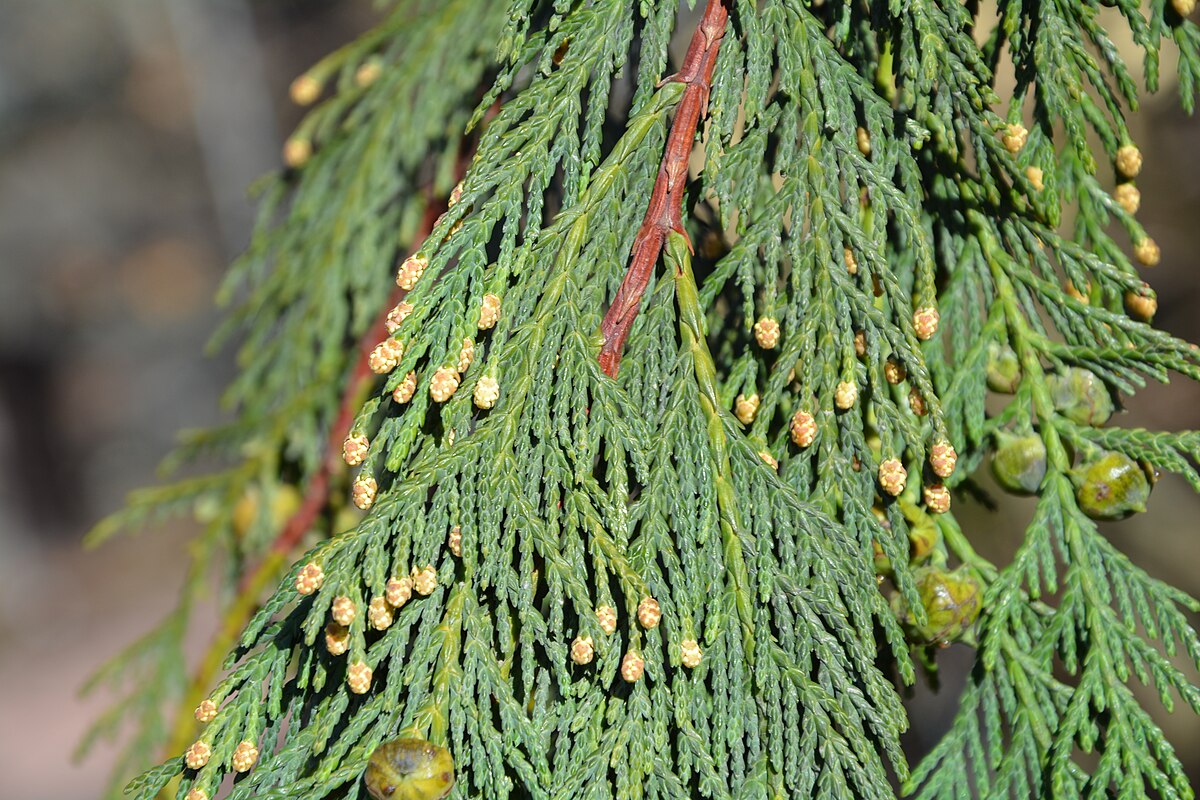
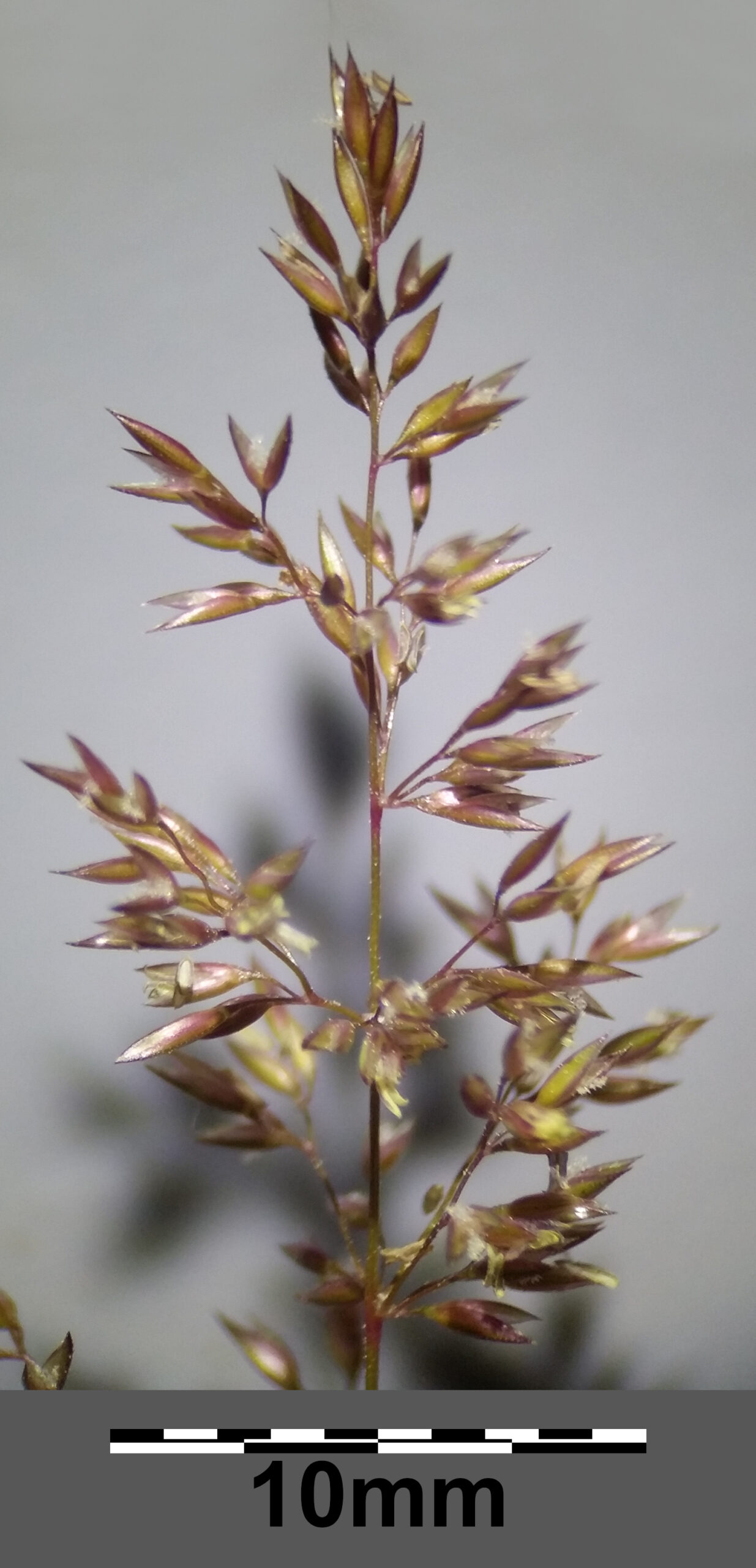
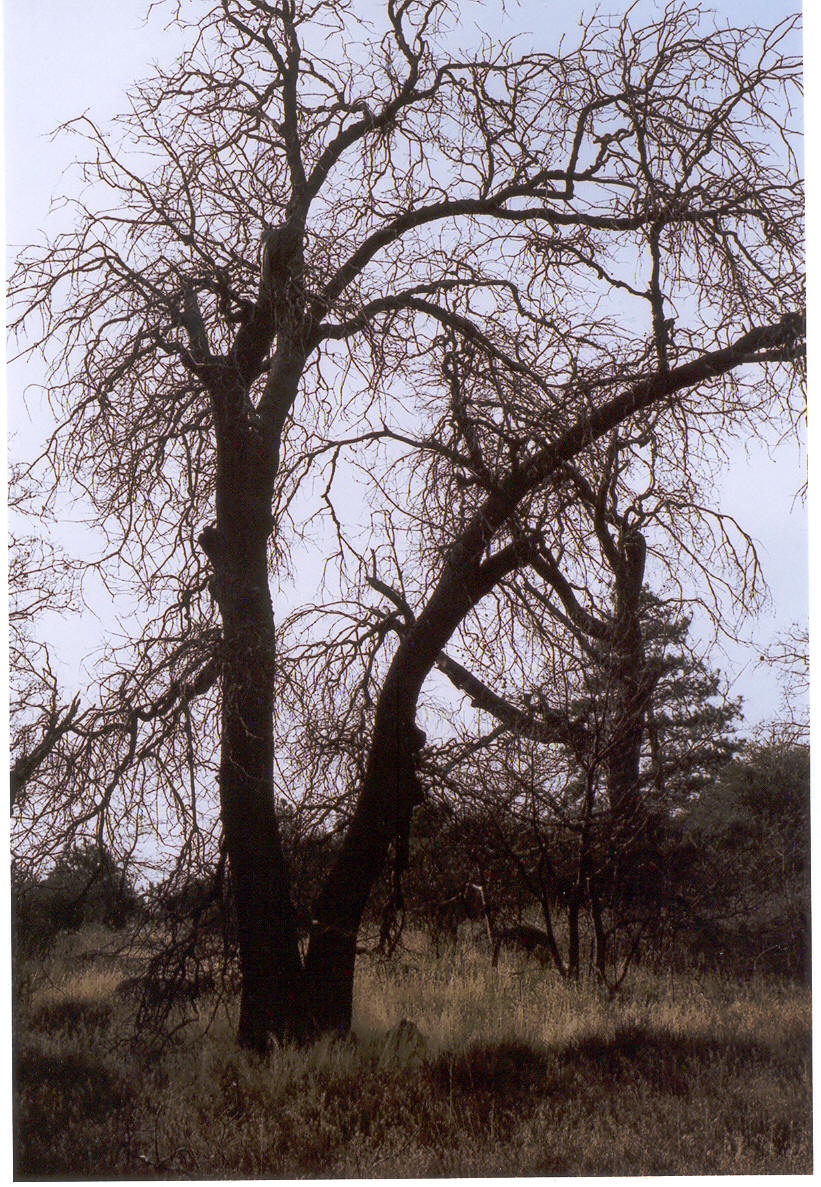
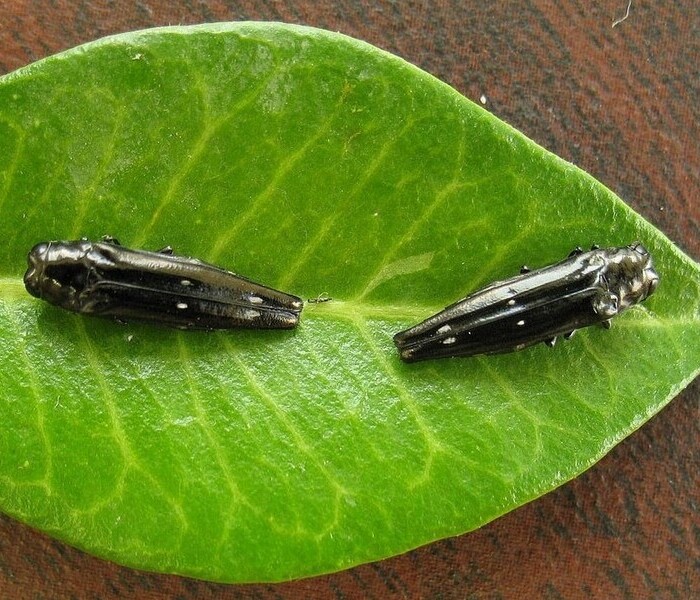
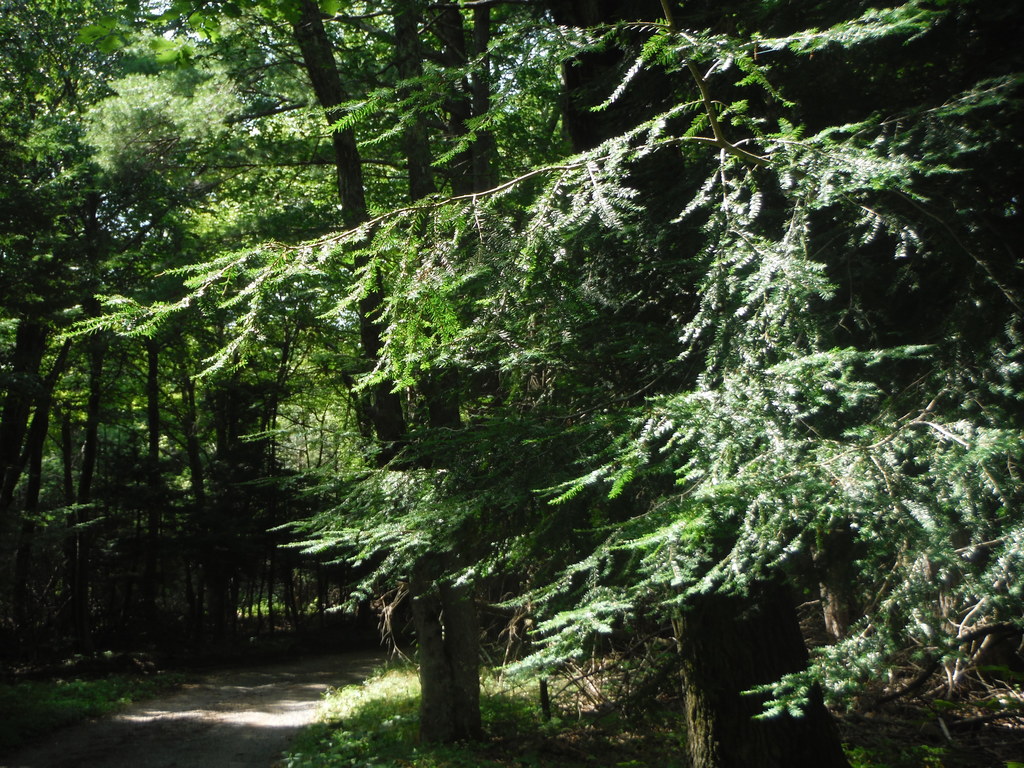
Alaska yellow cedar (Chamaecyparis nootkatensis); one of the species vulnerable to Phytophthora austrocedri; APHIS has determined it is too late to try to slow its spread. Photo by Nucatum amygdalarum via Wikimedia
On 30 December 2025, US Department of Agriculture Secretary Brooke L. Rollins issued a Secretary’s Memorandum setting five new priorities for research and development. One is to protect agriculture from invasive species. Another is to resolve longstanding trade barriers due to sanitary and phytosanitary concerns.
The Secretary’s intention is to strengthen US agriculture to benefit both farmers and consumers. He justifies the action by claiming that President Lincoln’s original purpose in establishing USDA was to acquire and diffuse useful information on subjects connected with agriculture. According to this interpretation, Lincoln recognized that working to improve agriculture and secure the nation’s food supply would benefit everyone. The emphasis on research and development was reiterated by the almost simultaneous adoption of the Morrill Act of 1862, which created the system of land-grant universities and development of the Cooperative Extension System via the Smith-Lever Act of 1914.
The memorandum specifies five priority areas of research to be pursued by all USDA agencies and offices – to the maximum extent permitted by law and in accordance with any applicable regulations and procedural requirements.
Increasing Profitability of Farmers & Ranchers — especially reducing volatility in profitability. Goals include reducing inputs or increasing mechanization and automation.
Expanding Markets for US agricultural products. Two approaches are mentioned: generating science and data to resolve longstanding sanitary and phytosanitary trade barriers; and expanding use of agricultural commodities in novel biobased products and bioenergy.
Protecting the Integrity of American agriculture from Invasive Species. The memorandum lists four examples of current invasive pest and pathogen threats: new world screwworm in Mexico; continued westward expansion of spotted lanternfly; persistence of highly pathogenic avian influenza in poultry flocks; and citrus greening. It notes that invasive species threaten both agriculture and natural resources. The research is to focus on new and effective methods for preventing, detecting, controlling,and eradicating these threats.
Promoting Soil Health to Regenerate Long-Term Productivity of Land. The research is to promote soil health practices, increase water-use efficiency, & reduce the need for inputs.
Improving Human Health through Precision Nutrition and Food Quality. Research on “precision nutrition” is said to improve understanding of how healthy dietary patterns impact individuals. Research will also focus on increasing foods’ nutritional content and quality.
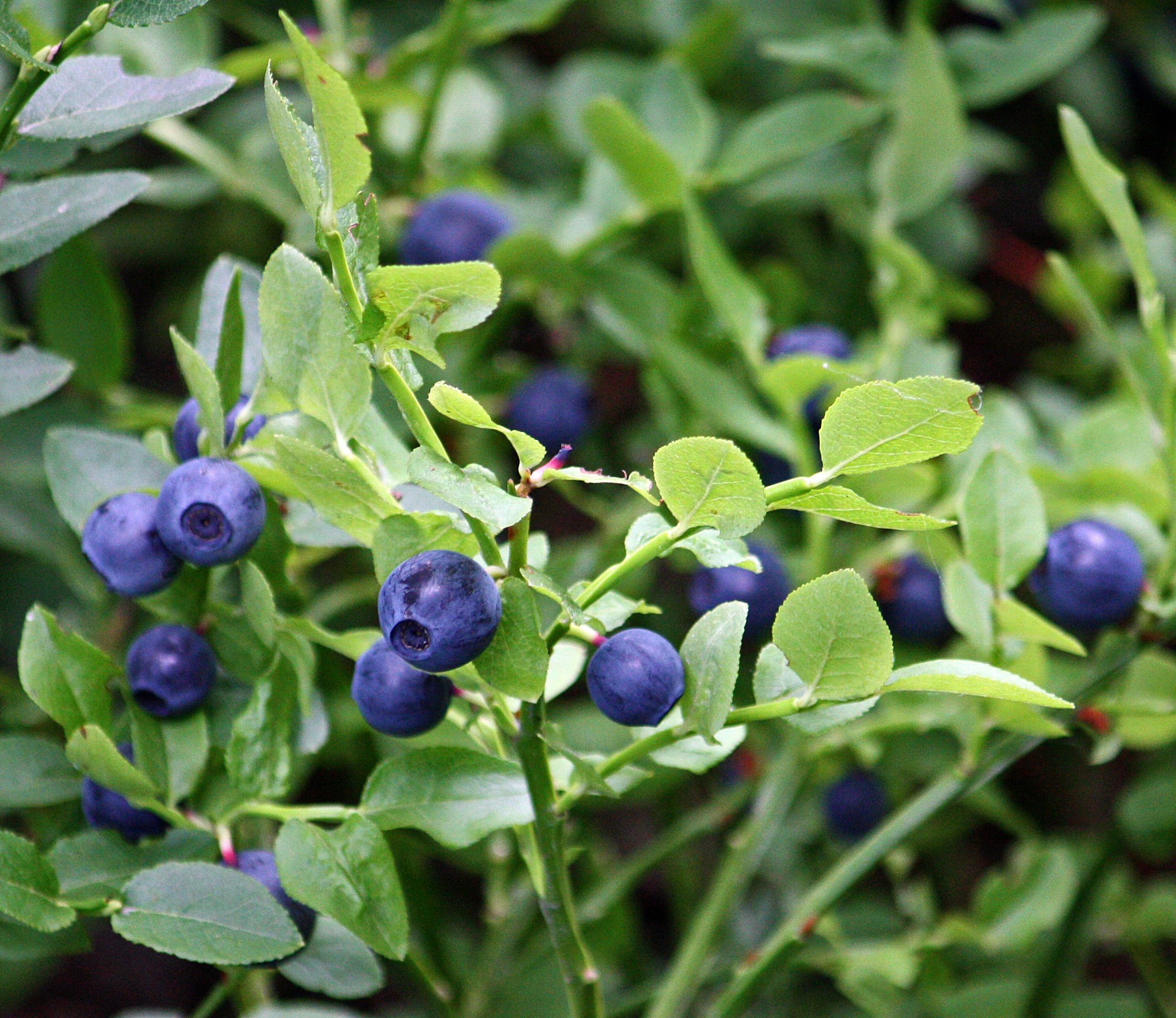
Vaccinium myrtillus (photo by Anneli Salo via WikiMedia); one of several species in genera shared with North America that are infected by Phytophthora spp in the Italian alps
The memorandum also instructs USDA’s Office of the Chief Scientist (that is, the Under Secretary for Research, Education, & Economics) to coordinate these priorities within USDA and among key partners in other federal agencies.
Does This Policy Mean Substantially Stronger USDA Efforts to Counter Bioinvasions?
Can we expect new energy in USDA’s programs aimed at managing non-native forest pests and invasive plants that damage forests, wetlands, grasslands, and other natural systems? The first paragraph of the memorandum states that it is USDA policy to reaffirm a focus on the Department’s original objectives of maximizing and promoting American agriculture; ensuring a safe, nutritious, and secure food supply; enhancing rural prosperity; and protecting our National Forests & Grasslands. That is promising.
The explicit recognition that invasive species pose severe threats to both agriculture and natural resources is also promising. I welcome the inclusion of two plant pests among the examples. Livestock diseases usually receive far more attention in USDA pronouncements.
I note three caveats:
The prominence of enhancing markets for US agricultural exports (# 2). In the past, this longstanding emphasis has led to undercutting phytosanitary agencies’ ability to counter suspected — but incompletely understood — pest risks. I discussed the impracticality of determining a newly detected species’ probable impacts in Chapter 3 of my report, Fading Forests II.
The memorandum makes no reference to implementing stronger sanitary or phytosanitary policies. In my view, the Animal and Plant Health Inspection Service has sufficient knowledge to support adoption of a more assertive regulatory stance with regard to both new introductions and spread within the country? Does the memorandum signal support for such a stance by high-ranking USDA officials?
These officials have often reminded APHIS that it is not a research agency. However, its staff do “methods development” and it funds considerable research through the Plant Pest and Disease Management and Disaster Prevention Programs – Section 7721 of the Plant Protection Act and a matching program for animal diseases.
The US Forest Service does have a research division – although the Trump Administration proposed its virtual elimination in early 2025. The Congressional appropriators have provided funding for USFS R&D – but those bills have not yet been enacted into law. I have complained for years that USFS R&D allocates too few resources (about 1% of the total budget) to research on introduced pests and disease pathogens. Might this new directive help fix this problem?
I hope the emphasis on protecting National Forests & Grasslands does not result in narrowing the types of invasive pests addressed.
Posted by Faith Campbell
We welcome comments that supplement or correct factual information, suggest new approaches, or promote thoughtful consideration. We post comments that disagree with us — but not those we judge to be not civil or inflammatory.
For a detailed discussion of the policies and practices that have allowed these pests to enter and spread – and that do not promote effective restoration strategies – review the Fading Forests report at http://treeimprovement.utk.edu/FadingForests.htm
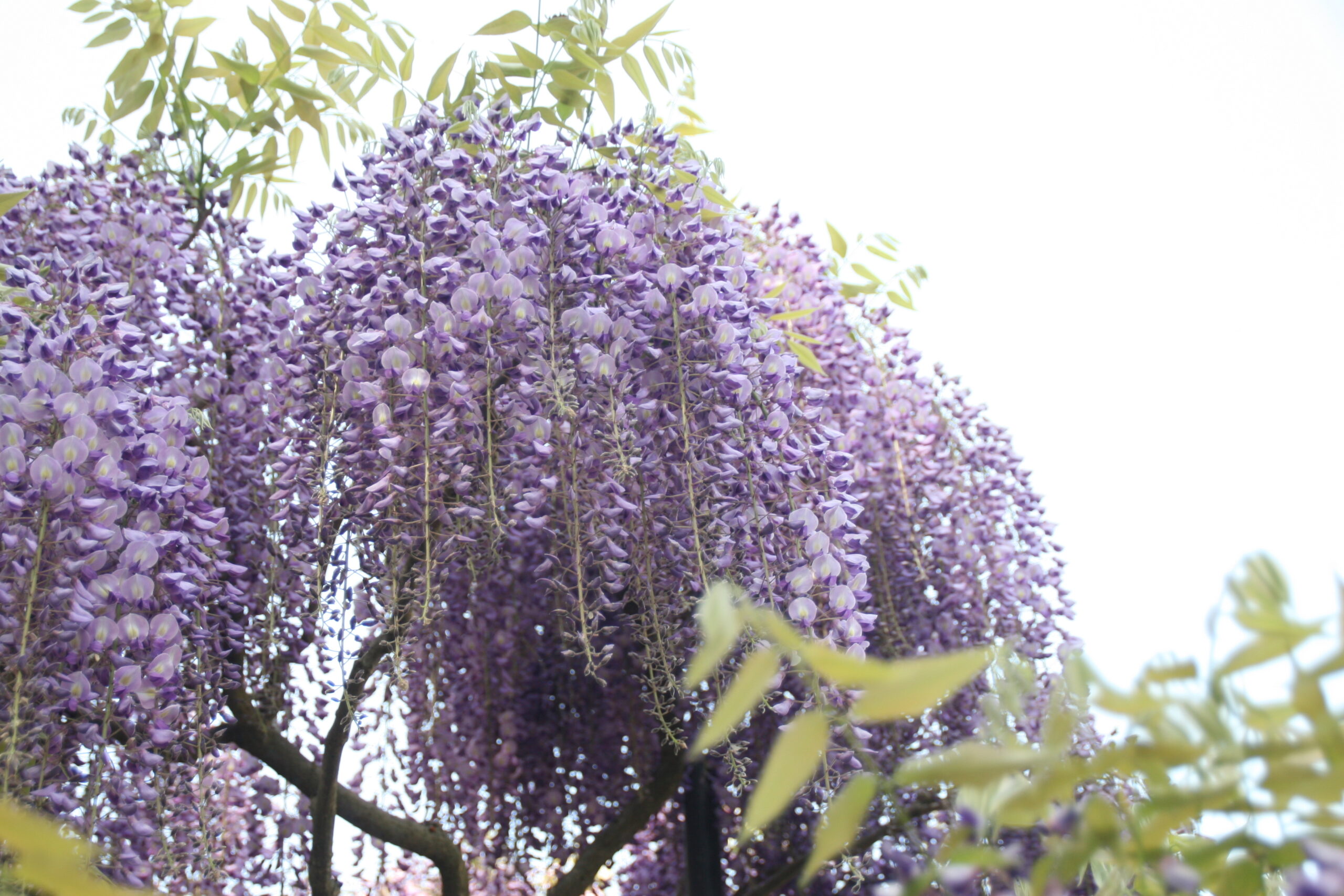
Wisteria floribunda; photo by Jack Stane via Wikimedia
For decades, it has been clear that deliberate introduction of plant species for cultivation plays a central role in the early stages of bioinvasion by plants (and associated insects, plant pathogens, earthworms … even vertebrates. Viz. coqui frogs in Hawai`i.)
Repeatedly over the two plus decades since Sarah Reichard demonstrated this role of ornamental horticulture (see Reichard and White 2001 and Mack 2000), new studies have provided corroborative details. Publications during the past two years show the risks we are still accepting in the United States. Will we act to protect our environment?
Fertakos and Bradley (2024) found that species were likely to establish if they were introduced to as few as eight locations. However, introduction history was not a strong predictor of an established species’ ultimate invasive success. They suggest that other characteristics, like plant traits and local-scale processes (e.g., interspecific interactions), may better predict whether a plant becomes invasive.
Kinlock et al. (2025) also found that plant species that were cultivated longer or were sold by more catalogs were more likely to have “naturalized”. This conclusion was based on analysis of the behavior of nearly 4,000 species sold in nursery and seed catalogs in the continental United States over 200 years. Nearly 41% of these species naturalized somewhere in the “lower 48” states. Unfortunately, they do not discuss what proportion of these species are truly damaging invaders.
Neither Fertakos and Bradley (2024) nor Kinlock et al. (2025) mention the concept of a lag between a species’ establishment and recognized symptoms of invasiveness. Has this concept been repudiated?
Evans et al. (2024) were focused on analyzing which regions of the eastern United States are likely to suffer the worst plant invasions under climate change. In this context, they worry that people will assist non-native plant species’ movement to newly suitable habitats. Evans et al. urge prioritizing for state regulation species in the ornamental trade that are projected to remain or become abundant under the new climate conditions. They say we Americans are poorly prepared to take this action, however, because plant sales are so poorly regulated and only 10% of land managers in eastern North America monitor for new invasive taxa. They say this is because the managing agencies lack of funding and personnel. After 2025’s losses of programs, appropriations, grants, and staff, this deficit is probably worse – not just for federal agencies but also the many state, local, and volunteer programs that have been supported by federal funding.
Beaury et al. (2024) investigated whether plant species recognized as invasive are sold in the same locations as where they are invasive. They found that half of the 89 species named as invasive were sold by a nursery within 21km of an observed record of invasion. The authors say that data gaps mean that these findings underestimate the number of species sold near locations of documented invasions. They warn that at least 25 species are sold by one or more nurseries located in an area that is currently unsuitable for those species, but that will become more suitable for invasion as temperatures warm. Like Evans et al. (2024), they urge proactive regulation to limit these species’ spread.
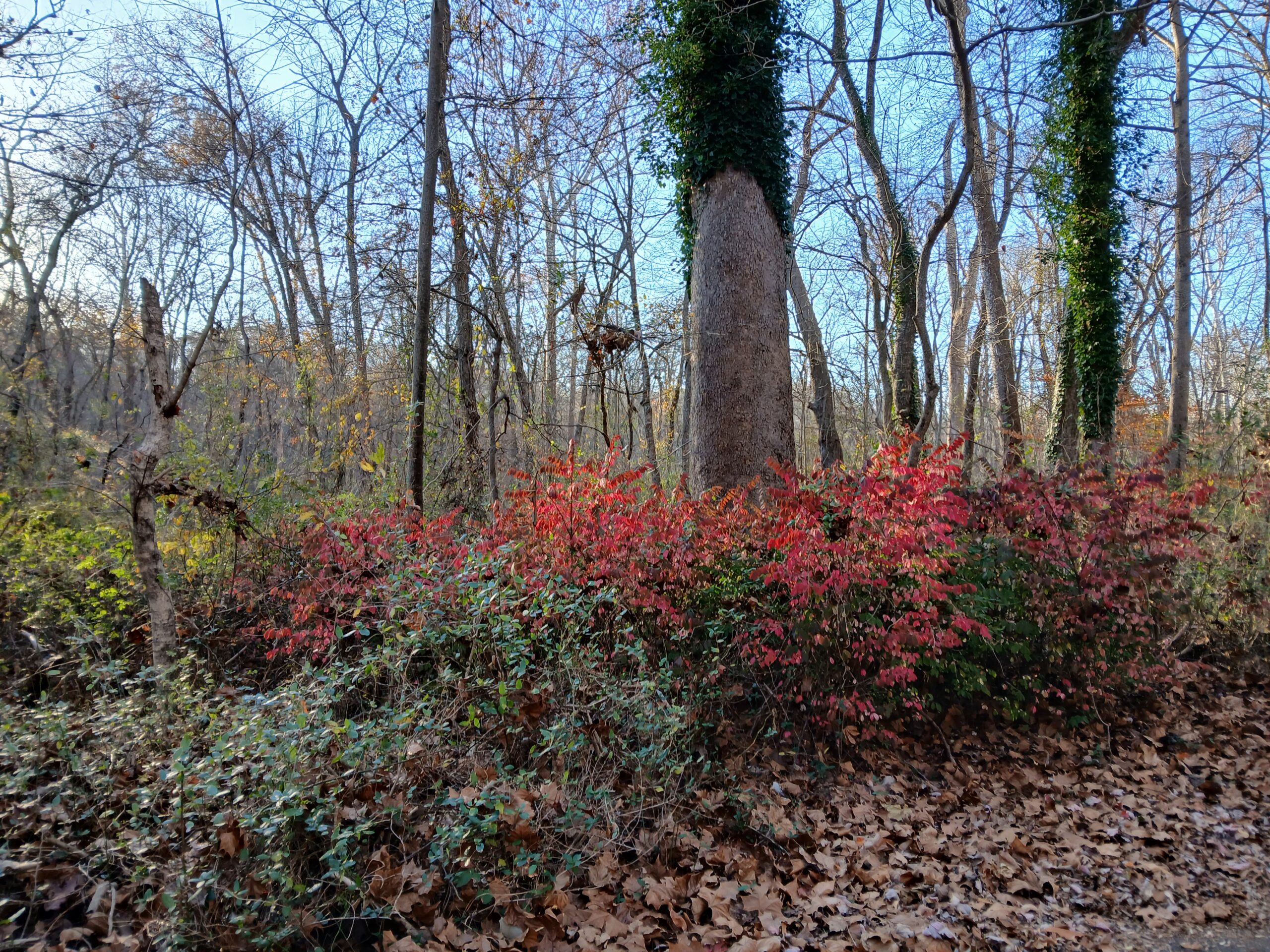
burning bush Euonymus, Japanese honeysuckle, & English ivy invading a bottomland hardwood site in Fairfax County, Virgina; photo by F.T. Campbell
U.S. Regulatory response is completely inadequate
Beaury et al. (2023) call for regulating the nursery trade in a manner consistent with the scope of the horticultural trade – sales by both e-commerce and brick and mortar stores go to customers far outside a specific state’s jurisdiction. Despite the interstate nature of the trade, sales of horticultural plants are regulated primarily by state governments. Even when a state does restrict the sale of a specified list of invasive plants, the regulations are outdated, tend to include only a few weeds that plague agriculture rather than those that invade natural systems, or are irregularly enforced. The result is a checkerboard of places where a species may legally be offered for sale next to places where that sale is prohibited. Finally, the regulations are reactive; they rarely include plants in anticipation of their spread to new areas. Beaury et al. (2023) call this as a missed opportunity to reduce the likelihood of ornamental escapes.
Evans et al. (2024) also note that online plant sales are relatively unregulated, and state regulations are inconsistent.
Under the Constitution, the appropriate entity for regulating interstate commerce is the federal government. The U.S. Department of Agriculture’s Animal and Plant Health Inspection Service is responsible for populating and managing the federal noxious weed list. Unfortunately, APHIS lists only those taxa that qualify as quarantine pests under the definition of that term in the International Plant Protection Convention (IPPC) Glossary of Phytosanitary Terms. This means that the taxon is either not yet present in the United States or, if present, is not widely distributed and is being officially controlled. Under these criteria, the federal noxious weed list is required to exclude nearly all the invasive plant species sold by the nursery trade.
To counter this enormous regulatory failure, many associations – native plant societies, regional or state invasive plant councils, etc. – publish their own lists of invasive plants. They often encourage their members and the public to either avoid planting these species voluntarily or to plant predominantly native plants. Also, these stakeholders urge nurseries to halt sales of invasive species voluntarily. Dr. Douglas Tallamy points out that even non-invasive, non-native plants disrupt food webs.
These voluntary efforts have yielded some success. But they have not resulted in adequate protection for our ecosystems.
Will Americans choose to invigorate the regulatory system? At a minimum, can we urge neighboring states to adopt a regional approach? More difficult, but also more effective, would be to persuade Congress to strengthen APHIS’ invasive plant regulations to outlaw interstate sales of at least those species documented to be invasive.
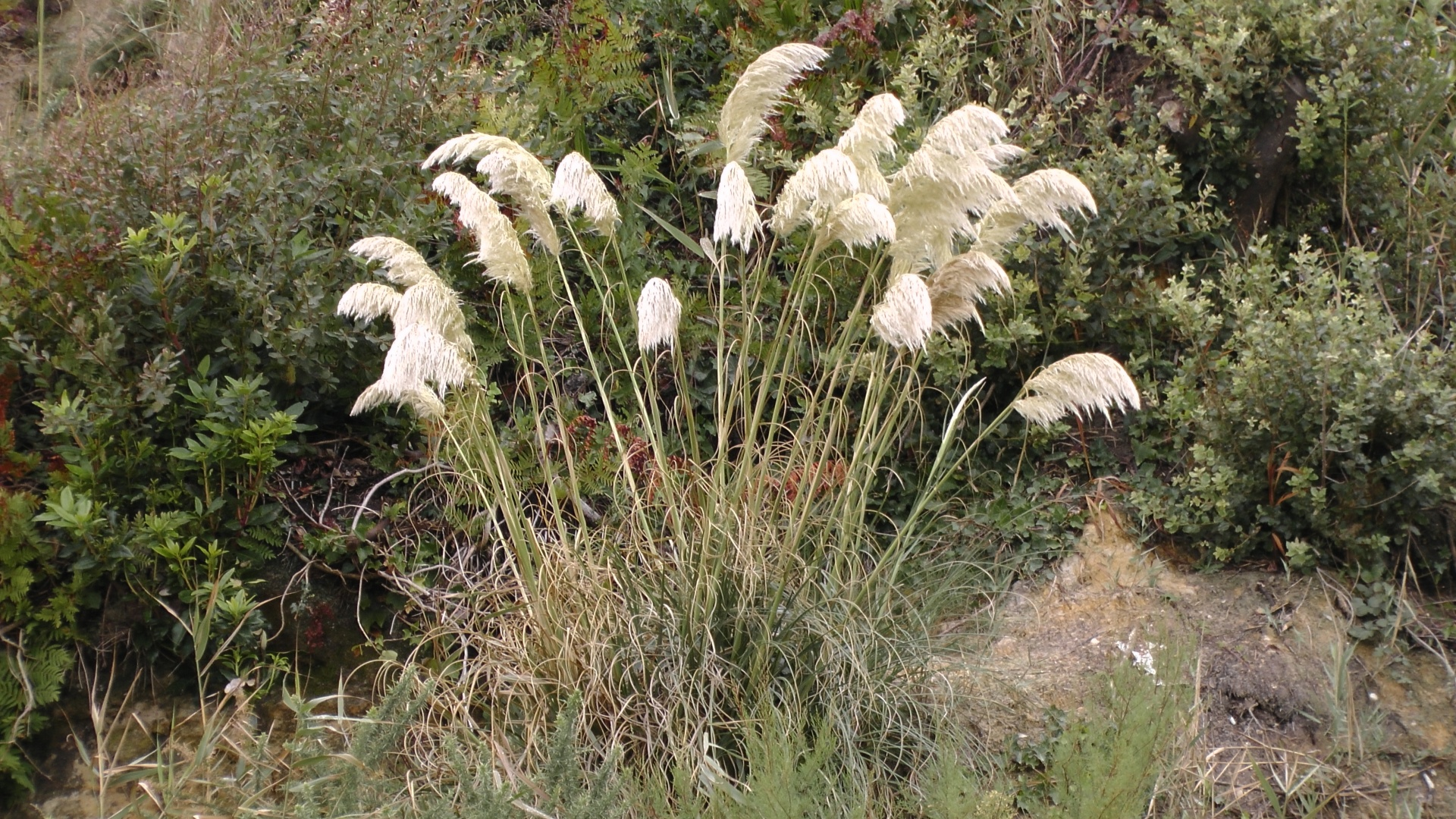
Cortadera selloana; picture by Alex Borland via PublicDomainPictures.net
Do you have other suggestions?
SOURCES
Beaury, E.M., J.M. Allen, A.E. Evans, M.E. Fertakos, W.G. Pfadenhauer, B.A. Bradley. 2023. Horticulture could facilitate invasive plant range infilling and range expansion with climate change. BioScience 2023 0 1-8 https://doi.org/10.1093/biosci/biad069
Evans, A.E., C.S. Jarnevich, E.M. Beaury, P.S. Engelstad, N.B. Teich, J.M. LaRoe, B.A. Bradley. 2024. Shifting hotspots: Climate change projected to drive contractions and expansions of invasive plant abundance habitats. Diversity and Distributions 2024;30:4154
Fertakos, M.E. and B.A. Bradley. 2024. Propagule pressure from historic U.S. plant sales explains establishment but not invasion. Public? doi: 10.1111/ele.14494.
Fridley, J.D., P.J. Bellingham, D. Closset-Kopp, C.C. Daehler, M.S. Dechoum, P.H. Martin, H.T. Murphy, J. Rojas- Sandoval, D. Tng. 2025. A general hypothesis of forest invasions by woody plants based on whole-plant carbon economics.
Kinlock, N.L., D.W. Adams, W. Dawson, F. Essl, J. Kartesz, H. Kreft, M. Nishino, Jan Pergl, P. Pyšek, P. Weigelt and M. van Kleunen. 2025. Naturalization of ornamental plants in the United States depends on cultivation and historical land cover context. Ecography 2025: e07748 doi: 10.1002/ecog.07748
Posted by Faith Campbell
We welcome comments that supplement or correct factual information, suggest new approaches, or promote thoughtful consideration. We post comments that disagree with us — but not those we judge to be not civil or inflammatory.
For a detailed discussion of the policies and practices that have allowed these pests to enter and spread – and that do not promote effective restoration strategies – review the Fading Forests report at http://treeimprovement.utk.edu/FadingForests.htm
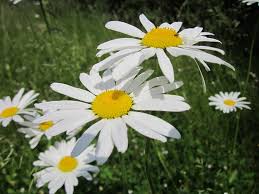
Leucanthemum vulgare (ox-eye daisy); ranked by EICAT as “major impact”; photo via picryl
Because urban centers are “hotspots” of species introductions and reservoirs supporting their spread into areas less altered by human activity, a global group of scientists (Richardson et al. 2025) sought to determine whether the same plant species naturalize in urban areas around the world and – if so – where most of those plant species originate.
They chose to pursue this question because urban areas share many interacting environmental and biotic features that they thought might partially overcome the distinct biomes of the continents. These shared features include the prominence of impervious surfaces; increased habitat heterogeneity; eutrophication; fragmentation of any remaining semi-natural habitats; complex human-influenced disturbance regimes; diverse opportunities for dispersal; novel biotic assemblages and interactions; and human facilitation of non-native species’ colonization and local species’ extinction. In addition to the similarities of the receiving ecosystems, these commonalities are facilitated by shared introduction pathways – although Richardson et al. to not pursue this aspect.
The scientists consulted global invasive plant databases to compile a list of 7,792 plant species recorded as naturalized in one or more of 553 urban centers on all six continents (all except Antarctica). Just over 300 species (4%) were reported on all six continents. They call them the “omnipresent” taxa. Further refinement resulted in a list of 96 species that are particularly widespread, defined as being present in more than half of the urban centers of Oceania, North and South America, and Europe. These 96 species are present in a lower proportion of cities in Asia and Africa. Richardson et al. proposed that these species be folded into a new ecological category, the “urban florome”.
I wonder whether this set of species tells us more about biases in the data than the actual “urban florome”. First, 87% of the 96 “most widespread” species (n= 84) are annual or perennial herbs. Only seven tree, six vine, and six shrub or subshrub species were included among the 96 species. In other words, global lists of invasive species are heavily slanted toward species that thrive in disturbance. Is this surprising? As another study (Kinlock et al. 2025) notes, disturbance is ubiquitous!
Second, only a third of the “urban florome” species have been formally evaluated using the Environmental Impact Classification for Alien Taxa (EICAT) system. Of these 32 species, only six were categorized as having a “major” or “massive” impact. Richardson et al. (2025) conclude that many of the species on the most widespread list are human commensals that have few or negligible known impacts.
Still, this finding might underestimate their impacts. First, as noted, two-thirds have not been evaluated. Second, impacts important in urban systems might not be those that increase a species’ rank based on impacts to natural systems (Richardson et al.). Those with substantial nuisance value in the urban setting still require management. Of course, some of the species have severe impacts in both natural and urban ecosystems. For example, Ailanthus altissimacauses major infrastructural damage and pollen allergies, while Robinia pseudoacaciaalters soil fertility. Both reduce species richness.
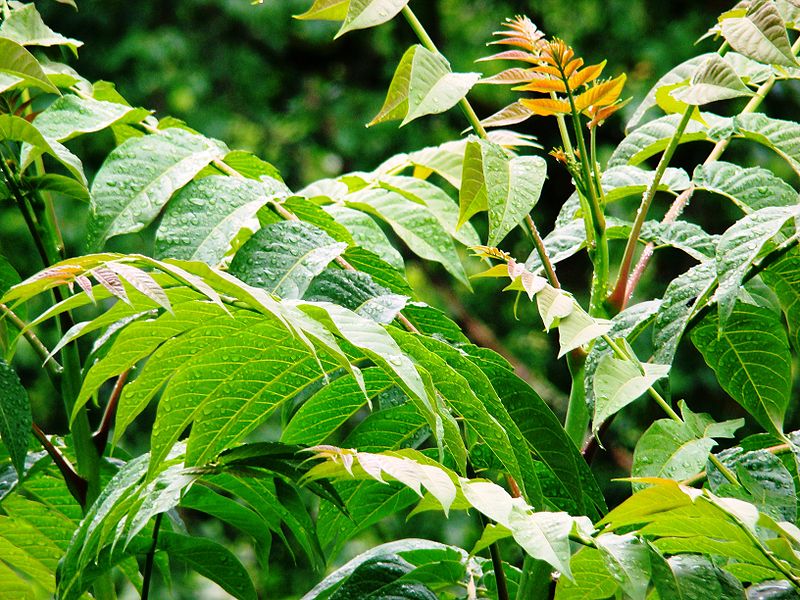
Ailanthus
I note that these examples are both trees – which constitute only 7 of the 96 species. Fridley et al. report that trees and shrubs have severe impacts in closed forest systems. I suggest that since many of the urban areas in temperate, subtropical, and tropical regions are probably located in formerly forested areas, remnant (semi-)natural stands and even recreational parks have probably been invaded by these high-impact species. Surely that is more important – at least as regards the level/intensity of the non-native plant species’ impact on biodiversity – than the annual weeds growing along highway verges.
Richardson et al. fear that many cities also have substantial invasion debt. The note specifically that due to the heat island effect, species that can now survive only in cities are likely to spread into surrounding rural and natural areas as temps increase. Thus, these species amplify the urban source effect of plant invasions.
Generalities
Richardson et al. call attention to certain parts of the world acting as ‘factories’ for the evolution of plant species that are well equipped to become invasive when intro to new regions. They name Australian woody flora — although only one species, Melia azedarach, is included among the 96 most widespread species. They also name African grasses and Europe (no taxa specified).
Richardson et al. say that while non-native species in urban areas have usually been described as “passengers” taking advantage of anthropomorphic environmental change, bioinvasions are increasingly recognized as drivers of secondary changes that alter the capacity of these ecosystems to deliver key ecosystem services, or even create disservices. These modifications occur in urban as well as more natural environments.
Regional Differences
Richardson et al. developed lists of the most widespread naturalized urban species for each continent (‘continental lists’). Eighty-seven percent of the 96 “most widespread” species are present in cities of North America, 80% in cities of Oceania, and 34% in European cities. Only 17% of the “widespread” species are present in cities of South America, 13% in cities of Africa or Asia.
While there is considerable overlap regarding species found on several continents, Europe’s urban florome differed significantly from those of the other continents.
The principal source region for these naturalizing species was temperate Asia (145 records); followed by Europe (128 records) and Africa (121 records). Lower numbers came from tropical Asia (95 records); South America (54) records; North America (53 records); and Oceania (8 records). Europe has received 50% of its widespread urban invasive species equally from temperate Asia and North America. Africa has received 75% of its widespread urban species from the two Americas equally.
According to these data, Oceania has been a significant contributor only to South America. I am surprised given the publicized problems caused by Australian Acacia and Hakea in South Africa. I guess these trees are more invasive in the vicinity of urban areas rather than in the cities themselves.
Richardson et al. note a highly skewed relationship between North and South America: while 15.4% of species naturalized in South American cities come from North America, only 2.7% of naturalized species in North American cities are from South America.
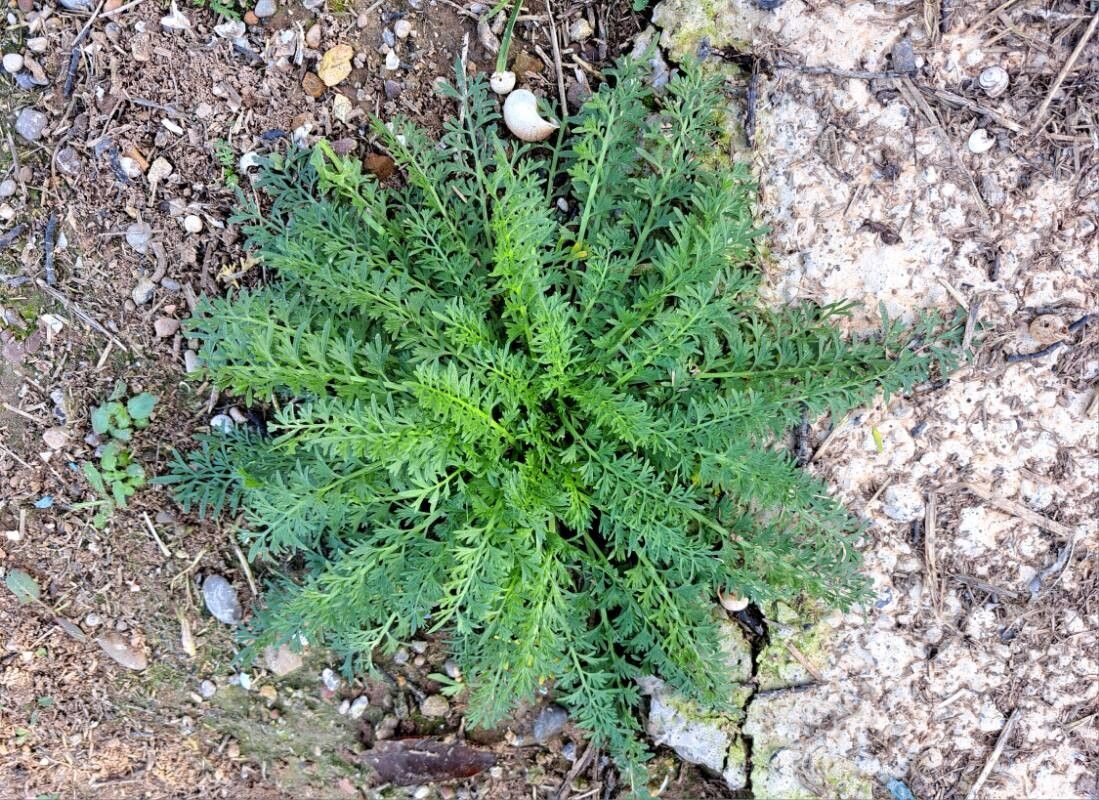
Lepidium didymum – brassica from South America introduced widely, including throughout California; photo by Miguel A.C. via Pl@ntnet
Richardson et al. found a distinct division between the “Old” and “New” Worlds (defined by whether the soil was historically cultivated by plough vs. hoe). The latter has more naturalized species (9,905 taxa vs 7,923 taxa), although the “Old World” covers a larger area. Citing di Castri (1989), they suggest that the much longer history of intense human-mediated disturbances in Europe might have allowed its flora to adapt to coexist w/ humans. I wonder, however, whether it is just too difficult to distinguish introductions that occurred millennia ago.
Richardson et al. also found an “echo” from European colonization — strengthened by activities of acclimatization societies. The result is that the continents with longer histories of European colonization, i.e., South and North America and Oceania, have more widespread naturalized plant species than do Africa and Asia.
SOURCES
Fridley, J.D., P.J. Bellingham, D. Closset-Kopp, C.C. Daehler, M.S. Dechoum, P.H. Martin, H.T. Murphy, J. Rojas- Sandoval, D. Tng. 2025. A general hypothesis of forest invasions by woody plants based on whole-plant carbon economics.
Kinlock, N.L., D.W. Adams, W. Dawson, F. Essl, J. Kartesz, H. Kreft, M. Nishino, Jan Pergl, P. Pyšek, P. Weigelt and M. van Kleunen. Naturalization of ornamental plants in the United States depends on cultivation and historical land cover context. Ecography 2025: e07748 doi: 10.1002/ecog.077
Richardson, D.M., L.B. Trotta, M.F.J. Aronson, B. Baiser, M.W. Cadotte, M. Carboni, L. Celesti-Grapow, S. Knapp, I. Kühn, A.C. Lacerda de Matos, Z. Lososová, D. Li, F.A. Montaño-Centellas, L.J. Potgieter, R.D. Zenni, P. Pyšek. 2025. Here, There and Everywhere: Widespread Alien Plants in the World’s Urban Ecosystems. Global Ecology and Biogeography, 2025; 34:e70159 https://doi.org/10.1111/geb.70159
Posted by Faith Campbell
We welcome comments that supplement or correct factual information, suggest new approaches, or promote thoughtful consideration. We post comments that disagree with us — but not those we judge to be not civil or inflammatory.
For a detailed discussion of the policies and practices that have allowed these pests to enter and spread – and that do not promote effective restoration strategies – review the Fading Forests report at http://treeimprovement.utk.edu/FadingForests.htm
Kevin Saville reports for the Journal of Commerce that containerized imports in 2025 are expected to be only 25.2 million TEUs, a decrease of 1.4% from 2024.
Declines are particularly large in the final months of 2025 since importers frontloaded their purchases to try to get ahead of the Trump Administration’s new tariffs. Imports for the first half of the year were up 3.6% compared with 2024 at 12.53 million TEUs. Thus, Saville’s sources expect November import levels to be 11.6% lower than in November 2024; December’s to be almost 13% lower.
Analysts expect the steeper decline to continue into the new year. Ben Hackett, of Hackett Associates, expects import volumes in the first four months of 2026 to be 10.3%, 8.5%, 16.8% , and 11% lower than the corresponding months a year earlier. The data source covers the ports of Los Angeles/Long Beach, Oakland, & Seattle & Tacoma on the West Coast; New York/New Jersey, the Port of Virginia, Charleston, Savannah, Port Everglades, Miami & Jacksonville on the East Coast; & Houston on the Gulf Coast. These are not all the maritime ports, but they are the major ones.
Another JOC reporter, Michael Angell, quoted several sources as saying they expect import volumes for all of 2026 to be flat or down 2% from 2025. Illustrating the reversal from past trends, The Port Authority of New York and New Jersey expects total container volumes in 2026 to be 8.5 million TEUs, a decline of about 2% from 2024. Since 2016, NY-NJ port container volumes have grown at an annual average of 4.2%.
As I have blogged before — see here and here — these swings in import volumes threaten to undermine programs intended to prevent introductions of wood-boring insects hitching rides in wood packaging material. While the higher volumes arriving from Asia in the first half of 2025 pose the most obvious risk, falling volumes reduce fee-based funding that support port inspectors. Another factor is the shift to suppliers other than China – primarily countries in Southeast Asia. Two beneficiaries of this shift are Vietnam and – at least initially – India. They have much better records of compliance with ISPM#15-mandated treatments for wood packaging link than does China.
A third JOC source reports that while US and European imports are down, trade volumes in Asia, Africa, the Middle East and Latin America are rising. I expect this growing trade to facilitate new pest introductions, although we will have to wait several years to see any data.
Posted by Faith Campbell
We welcome comments that supplement or correct factual information, suggest new approaches, or promote thoughtful consideration. We post comments that disagree with us — but not those we judge to be not civil or inflammatory.
For a detailed discussion of the policies and practices that have allowed these pests to enter and spread – and that do not promote effective restoration strategies – review the Fading Forests report at http://treeimprovement.utk.edu/FadingForests.htm
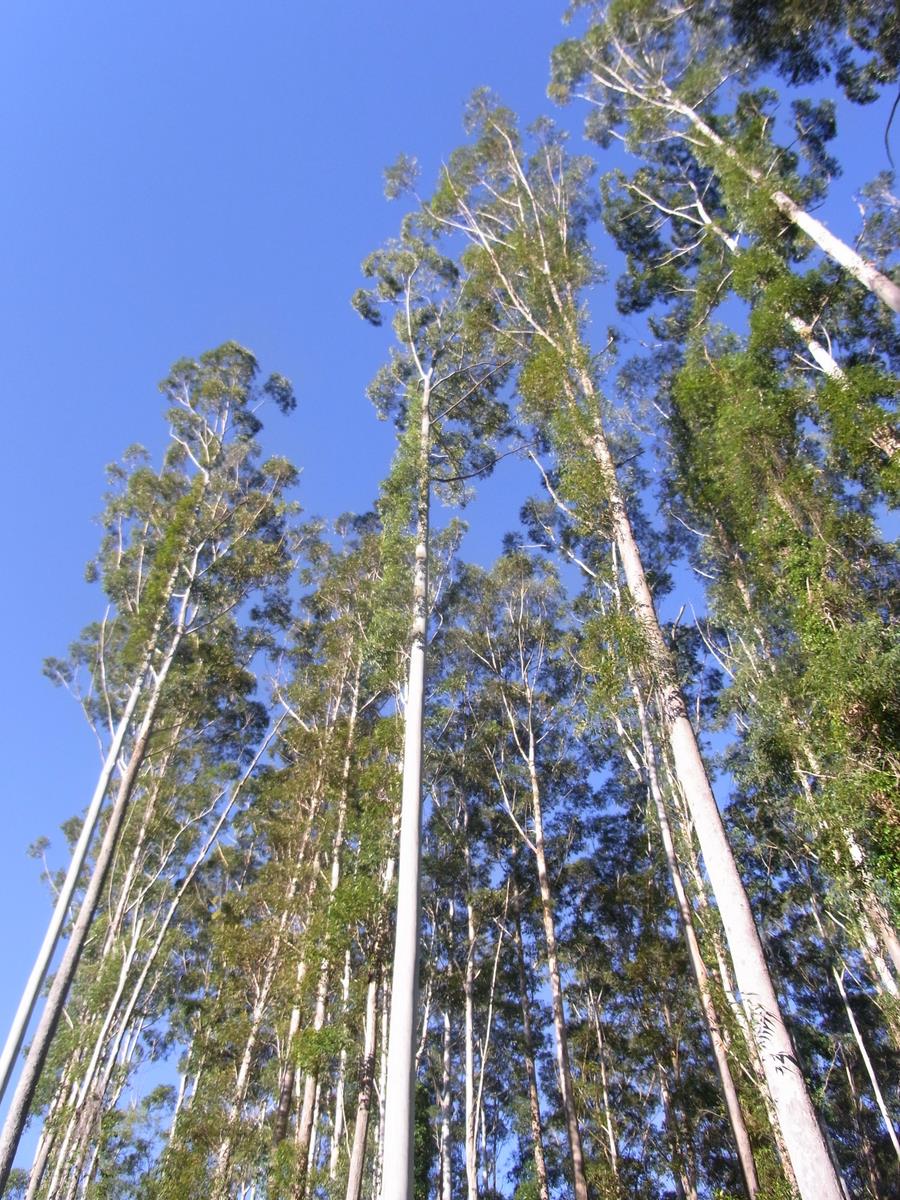
Eucalyptus grandis (in Australia); photo by Poyt448 Peter Woodard via Wikimedia
Deus et al. 2025 (full citation at the end of this blog) have published a review of current knowledge on the invasiveness of trees in the Eucalyptus genus. They report that eucalypt plantations cover more than 30 million ha globally; they could not determine the actual extent more precisely. The area is expanding at an estimated 4% per year. Eucalypts are so popular as timber trees because of their fast growth, ease of management, wood quality and environmental tolerance.
Until recently, trees in the Eucalyptus genus were thought to pose a low invasion risk. This was because these trees have limited seed dispersal, high juvenile mortality, and were expected to lack compatible ectomycorrhizal fungi in novel environments. However, several risk assessments and reports of ongoing invasions in some locations have raised questions. So Deus et al. undertook a literature survey to try to resolve the issue.
One of the risk assessments concerns the United States; see Gordon et al. (2012). This study – completed a dozen years before Deus et al. undertook their literature survey – cited several other sources documenting harmful invasiveness of nearly a dozen species, including Eucalyptus globulus, E. camaldulensis, E. grandis, and E. tereticornis.
Deus et al. found that the limitations listed above actually can be overcome, so they do not prevent invasions:
seeds can disperse farther than 100 meters from parent plants;
high recruitment densities can compensate for the high juvenile mortality; and
ectomychorrhizal fungi can be found in the root systems of introduced eucalypt plants.
In fact, several Eucalyptus species meet criteria defining invasiveness in the Australian Weed Risk Assessment system. Still, Deus et al. found that existing studies cover too few plantations and species to allow an in-depth comprehensive understanding of eucalypts’ invasion ecology.
One reason that eucalypt trees’ invasiveness remains unresolved is that the countries which have established most large Eucalyptus plantations (Brazil, India and China) have not conducted many studies. Instead, most studies have been done in Iberia and South Africa, which together host less than six percent by area of the world’s estate of eucalypt plantations.
Deus et al. say that several possible reasons have been proposed to explain why Eucalyptus is considered to pose an invasion risk by scientists in Iberia and South Africa, but not in Brazil.
The few studies in Brazil were conducted in intensively managed plantations with very short rotations, which are probably less prone to invasion than plantations managed at low intensity levels.
The Brazilian plantations were established 40 to 50 years ago, whereas those in Iberia were introduced ~ 200 years ago.
Iberia experiences recurrent forest fires.
In Brazil, leaf eating ants attack the trees; this might reduce trees’ vigor.
In Brazil, native forests dominate the environs.
Deus et al. say that these hypotheses have never been tested.
Since studies have been conducted in only a few countries, they have evaluated only a few of the species used in plantations. At least 372eucalypt species have been introduced outside their native range; nine species are planted widely. Yet most of the studies reviewed by Deus et al. covered just two species, Eucalyptus globulus (46% of the studies), and E. camaldulensis (33% of the studies). Still, these two widely cultivated species received the highest invasiveness ranking of all species reviewed (65 and 72, respectively). According to Deus et al., these scores are higher than the average score for 32 species of Acacia – a genus considered to be one of the most invasive tree genera in the world.
Other, potentially invasive species, have not received adequate attention. Deus et al. note that E. tereticornis, which is widely planted in China, India and other regions of Southern Asia, has an invasiveness score of 66, placing it second highest in the evaluation. However, only 12 of 140 articles analyzed by Deus et al. addressed this species.
These eucalypts’ high scores result from their potential to hybridize, to naturalize outside their natural habitat, and from high flammability. Other contributing factors are high seed production and ability to resprout after cutting or fire.
The analysis determined that the major drivers for Eucalyptus invasions are soil disturbance, availability of moisture (essential for seedling establishment), and fire. Recruitment density increases with harvesting and tree age; it decreases when the understory is managed. This partially explains why the abandonment of plantations might promote invasions by eucalypts.
Deus et al. fear that there might be a large “invasion debt” in the regions where few studies have been conducted. Assessments for California and Iberian Peninsula indicate that the best areas for cultivation – under either current conditions or expected new environments linked to climate change – are also those most prone to invasion. A further complication is that in some regions it might be difficult to distinguish plants escaping from small plantations from the plantations themselves. They suggest ways to overcome this difficulty: 1) surveys of recruitment along roadside, where trees would not have been planted; 2) genetic analysis of seedlings and possible parents
Another weakness is that that none of the studies considers changes in fire regime, which probably increases the areas prone to invasion.
Deus et al. think it is unlikely that eucalypt invasions will turn out to be as damaging as those of acacias or pines, but that further invasions involving more species and more regions are very likely.
Deus et al. call for considering eucalypt species’ potential invasiveness when developing strategies for the sustainable management of these plantations, including how to manage those that are no longer economically viable.
Status in the United States
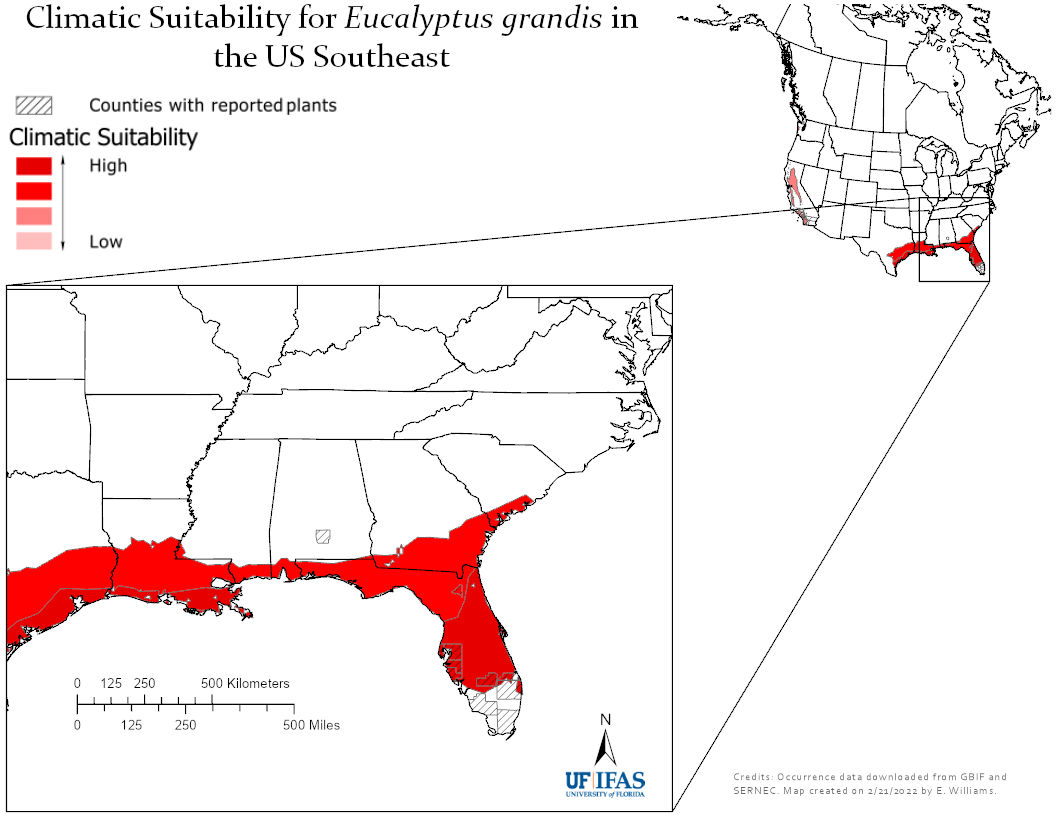
The risk in the United States was evaluated by Gordon et al. in 2012. At the time, there were proposals to plant 5,000 to 10,000 ha/year in the Southeast over the next decade.
Gordon et al. adapted the Australian weed risk assessment system to evaluate 38 Eucalyptus taxa then being tested and cultivated in U.S. for pulp, biofuel, and other purposes. Their analysis concluded that 15 of these taxa posed a low risk; 14 taxa posed a high risk; and 9 taxa could not be ranked without further information. The four taxa cultivated most extensively – E. globulus, E. camaldulensis, E. grandis, and E. tereticornis – all had high risk outcomes, as did several other taxa. Gordon et al. thought that these differences reflected both new data and differences in how the assessors reacted to insufficient data.
Gordon et al. warned that novel genotypes with unknown invasiveness were being propagated in the search for increased cold tolerance. This meant that the taxa they had assessed might not indicate of the actual long-term invasion risks associated from this genus. A major source of uncertainty is the long lag time in appearance of evidence of a tree species’ invasiveness. Only one study (as of 2012) had quantified lag time for introduced tree species; it found an average of 170 years from the time introduction to identification of the taxon as invasive. Propagule pressure also influences the lag time and the probability of invasion.
Since the bulk of expanded cultivation was expected to be in the southeast, Gordon et al. recommended that a regional assessment be conducted to more precisely specify the effects of possible differences in phenology, age at reproductive maturity, seed viability, and cold tolerance.
Gordon et al. suggested several actions to reduce the invasion risk. First, selection and breeding strategies could aim to minimize relevant traits – especially eliminating seed production. Second, plantations could be so managed by avoiding cultivation near waterways, harvesting stems before seeds can mature, and restricting the extent of cultivation of any one taxon. More broadly, a fund could be established to cover control costs; growers would contribute the money.
What has happened in the dozen years since the analysis was published? My Google search led to publications from 2013 and earlier. I hope this indicates that no one has funded major expansions. Dr. Gordon reports that most Eucalyptus pulp is imported. ArborGen continues to breed Eucalyptus in Brazil – as I noted earlier, scientists there are not pursuing studies of possible invasiveness of eucalypts.
Still, the regional risk assessment has not been conducted. Worse, Dr. Gordon reports that the Florida Department of Agriculture and Consumer Services has exempted several species [E. amplifolia, E. benthamii, E. dorrigoensis, E. dunnii, E. grandis, E. gunni, E. nitens, E. smithii, and E. urograndis (E. grandisE. urophylla)] from a requirement that growers obtain Non-Native Species Planting Permits. So if the market does take off, there will be no regulation by the state.
At the end of December 2025, Dr. Gordon received information from Florida Division of Plant Industry that no one has applied for a permit to grow Eucalyptus in the state other than under USDA research auspices. So my worst fears have not (yet) come to pass.
I note that in 2022, Potter, Riitters, & Guo ranked Eucalyptus grandis & E. globulus as potentially highly invasive. Their criterion was that at least 75% of stems detected by USFS Forest Inventory and Analysis (FIA) surveys were saplings or seedlings.
SOURCES
Deus, E., D.M. Richardson, F.X. Catry, F.C. Rego, J. Gaspar, M. Nereu, M. Larcombe, B. Potts, J.S. Silva. 2025. Invasion ecology of eucalypts: a review. Biol. Invasions (2025) 27:239 https://doi.org/10/1007/s10530-025-03695-1
Gordon, D.R.,S.L. Flory,.L. Cooper, and S.K. Morris. 2012. Assessing the Invasion Risk of Eucalyptus in the United States Using the Australian Weed Risk Assessment. International Journal of Forestry Research Volume 2012, Article ID 203768, 7 pages doi:10.1155/2012/203768
Potter K.M., Riitters, K.H. & Guo, Q. 2022. NIS tree regeneration indicates regional & national risks from current invasions. Frontiers in Forests & Global Change
doi: 10.3389/ffgc.2022.966407
Posted by Faith Campbell
We welcome comments that supplement or correct factual information, suggest new approaches, or promote thoughtful consideration. We post comments that disagree with us — but not those we judge to be not civil or inflammatory.
For a detailed discussion of the policies and practices that have allowed these pests to enter and spread – and that do not promote effective restoration strategies – review the Fading Forests report at http://treeimprovement.utk.edu/FadingForests.htm
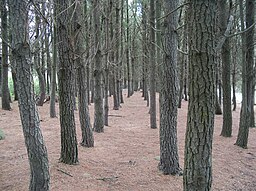
pine plantation near Buenos Aires; photo by Biologicadero via Wikimedia
I have learned about the introduction of a North American woodwasp, Sirex obesus, in Brazil. Forestry interests in South America are worried that this woodwasp will cause significant damage to the pine plantations occupying 4.6 million hectares on the continent.
In July 2023, experts at the Estação Experimental de Ciências Florestais at ESALQ/USP in Itatinga, São Paulo, Brazil, investigated dead and symptomatic trees of several Pinus species and subspecies. They expected the causal agent to be Sirex noctilio – a woodwasp native to Europe and North Africa that has caused considerable damage to South American pine plantations since the 1980s (Wilcken et al.).
However, the pine species attacked were not typical hosts for S. noctilio (in Brazil, loblolly pine Pinus taeda). Instead, the infected trees were Caribbean pines, i.e., Pinus caribaea hondurensis, P. caribaea bahamensis, P. caribaea caribaea, P. maximinoi, P. tecunumani. The responsible woodwasp was identified as Sirex obesus. This species is native to the southwestern United States and northern and central Mexico (Wilcken et al.). This species is closely related to S. californicus (Wilcken et al.).
A second outbreak was found in November ~ 130 km away (still in São Paulo state). Scientists have not determined whether the two São Paulo outbreaks are related. Dr. Villacide reports (pers. comm.) that the two populations genetics have been compared, but he does not have the results.
A third population has been detected in a second, neighboring, state, Minas Gerais (Wilcken to Lantschner and Villacide).
Dr. Villacide (pers. comm.) reports that Brazilian scientists are trying to delimit the extent of the outbreaks. Public and private scientists in other countries with pine plantations have begun developing responses.
This is the first record of S. obesus outside of North America (Wilckens et al.).
Little is known yet about this woodwasp’s probable impact. It is clear that it can oviposit in a wide range of pines. In its native range, S. obesus has been reported on three host species: Pinus ponderosa, P. teocote (twisted-leaf pine), and P. leiophylla (no common name; native to Chihuahua – mostly in Mexico, and border areas of New Mexico and Arizona]. In Brazil, as noted, it has been recorded on other species as well as the hybrids P. caribaea x P. elliottii and P. caribaea x P. tecunumanii (Wilcken et al.).
So for purposes of their risk assessment, Lantschner and Villacide assumed that S. obesus can affect any of the species commonly planted in the region: P. taeda, P. elliottii, P. ponderosa, P. contorta, P. caribaea, P. oocarpa, P. patula, P. radiata, and P. tecunumanii (Lantschner and Villacide).
The risk assessment predicts suitable climatic conditions for invasion by S. obesus in 48% of the areas where South American pine plantation occur, particularly in montane and high-altitude regions along the Andean corridor and central-eastern Brazil. Incorporating other factors – host distribution, proximity to invaded areas, and volume of wood imports from Brazil – identified the most vulnerable areas as in southern Brazil, northeast Argentina, the Argentine Patagonia, and central Chile (Lantschner and Villacide).
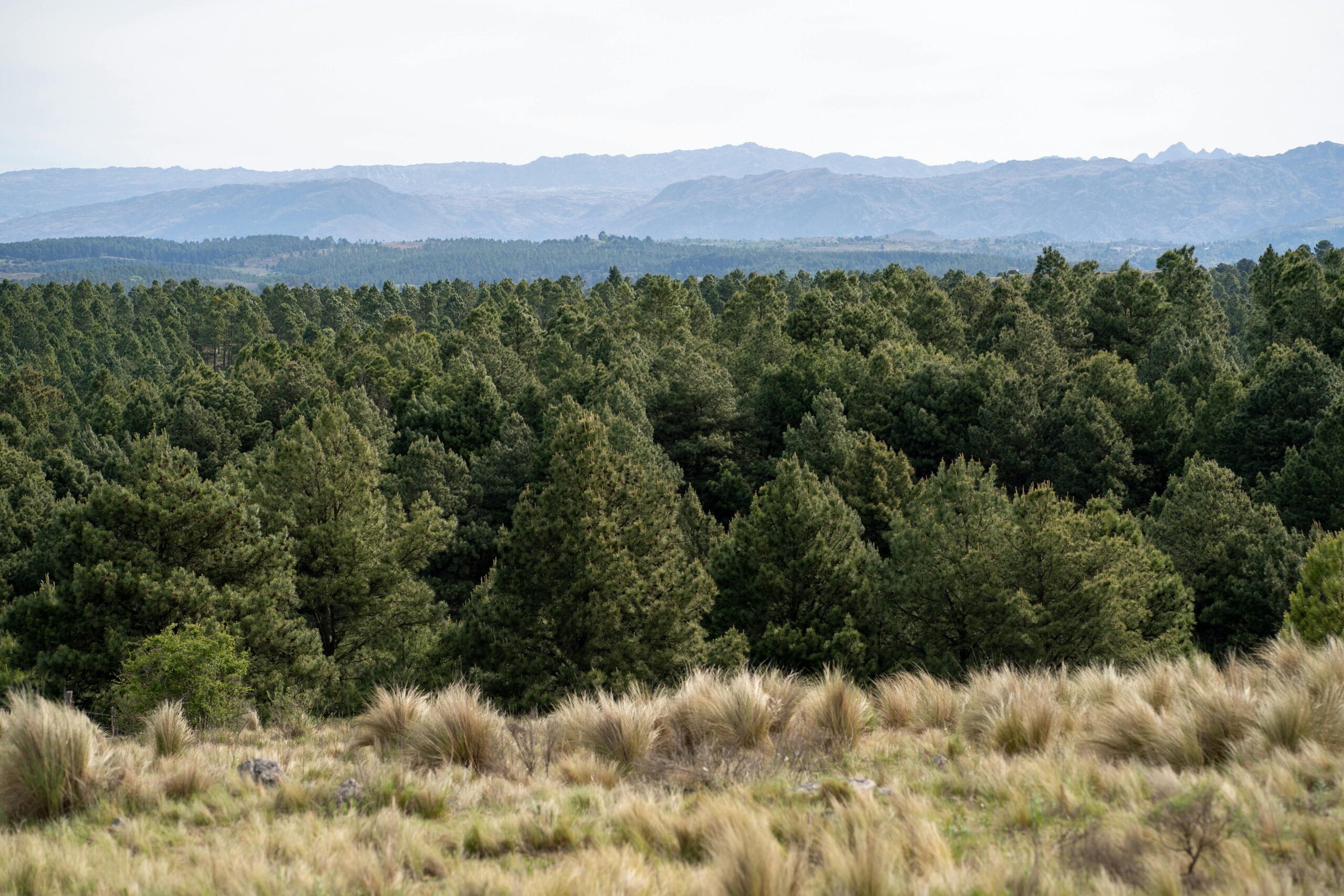
pine plantation in Argentina; photo by Tomas Asurmendi via pexels
Preliminary sampling (Wilcken et al.) indicates the impacts could be severe. Mortality varies by species: in the worst cases average mortality approached 43% on P. caribaea hondurensis but only 11% on loblolly pine (P. taeda). They expect mortality rates to increase. Another 30% of P.c. hondurensis trees are dripping resin, a sign of woodwasp oviposition. If these eggs hatch, those larvae will probably kill the affected trees. Such a result would increase total mortality of P.c. hondurensis from 43% to ~ 73%. For P. taeda, the current mortality rate of 11% could rise to 49% as an additional 38% of trees succumb. Following this logic, these areas could experience complete tree mortality within a few years. Given the extent of pine plantations, and possible mortality rates, even a partial spread of S. obesus could lead to significant econ losses.
As second factor is the number of generations per year; the higher the number, the faster woodwasp populations can increase. Wilckens et al. report that adult emergence in Pinus logs maintained in cages indicates that S. obesus could have two or three generations per year.
S. obesus seems to prefer a different climate than S. noctilio. As noted, S. obesus seems to prefer montane and high-altitude climates. S. noctilio is concentrated in lowland temperate and humid regions (Lantschner and Villacide). The newly introduced species might substantially broaden the geographic area where pine plantations might be at risk – although further research is needed to clarify this point.
S. obesus also appears to be spreading at a rapid rate — ~46 km / year. At this rate, Lantschner and Villacide say it could spread throughout all major pine plantation areas in Brazil in less than years.
Sirex woodwasps kill trees by injecting a symbiotic wood decay fungus and a phytotoxic mucus into the tree when ovipositing. The toxin weakens the tree, allowing the fungus to spread, typically killing the tree in as little as three–four months. In North America S. obesus is associated with Amylostereum chailletti. While this species has not yet been confirmed in Brazil, (Wilckens et al.). Brazilian scientists are exploring whether S. obesus might adopt the fungus already present, Amylostereum areolatum, which is associated with S. noctilio.
Two insect species known to feed on woodwasps have emerged from logs infested with S. obesus: Ibalia leucospoides (Hymenoptera: Ibaliidae) and a species of Schlettererius (Hymenoptera: Stephanidae). While these two predators have not proved to be effective controls of woodwasps by themselves, they might become part of a control program. The parasitic nematode, Deladenus siricidicola (Nematoda: Neotylenchidae) used successfully in several South Hemisphere countries to control S. noctilio has not been found in Brazil (Wilckens et al.).
Scientists don’t know the pathway by which S. obesus entered Brazil. Wilckens believes it was via wood packaging; technicians from the Ministry of Agriculture have found some pallets associated with imports that lacked the ISPM#15 mark (Wilckens et al.).
Both Lantschner and Villacide and Wilcken et al. stress the vulnerability of South American pine plantations to introduction of damaging pests. The plantations are reportedly intensively managed, even-aged, regularly spaced monocultures. These conditions can facilitate invasive species establishment and spread by providing abundant host resources and reduced natural enemy pressure. Lantschner and Villacide cite Michael Wingfield that in plantation forestry, introduction of a single pest species can damage large areas of valuable timber.
mortality caused by Sirex noctilio in a pine plantation in Argentina; photo courtesy of Jose Villacide
The family Siricidae contains more than 120 species distributed across the forests of the Northern Hemisphere. In their native ranges they are typically minor or secondary pests (Wilckens et al.). Woodwasps have demonstrated that they can be transported in international commerce – S. noctilio alone has invaded pine stands (native or exotic) in nine countries in Oceania, Africa, and South and North America. Three other species in the family — Urocerus gigas, Urocerus flavicornis and Tremex fuscicornis – have been detected in South America (Wilckens et al.). If each represents a unique threat, countries with widespread pine plantations should enhance their phytosanitary programs. Exporting parties, e.g., the United States and European Union, should assist in efforts to prevent spread of these wood borers. One major step would be to strengthen regulations governing wood packaging material. [To see my criticisms of shortfalls of the ISPM#15 system, scroll down the list of blogs to “Categories” and click on “wood packaging”.]
Lantschner and Villacide cautionthat their assessment is based on a limited record of S. obesus occurrences in its native range. This range might be restricted by factors other than climate, including geographic barriers or biotic interactions (natural enemy pressure or interspecific competition). If so, the species’ potential invasive range might be larger than the climate-based models predict.
Recommendations for management strategies
I applaud Lantschner and Villacide for proposing immediate steps to improve management of the threat posed by introduction of S. obesus. These recommendations should prioritize enhanced phytosanitary inspections of wood products moving between high-risk regions and other South American countries. They suggest that Brazil adopt bilateral agreements with its major trading partners which would specify protocols for woodwaspdetection and quarantines. [Since many of these countries already have established populations of S. noctilio they probably do not have strong phytosanitary measures targeting wood borers at present.] Lantschner and Villacide advise creation of targeted surveillance programs in southern Brazil, northeastern Argentina, Argentine Patagonia, and central Chile. They should focus on sites near major transportation hubs and border crossings. Less intense surveillance should be instituted in regions they classified as medium risk. Again, the focus should be on major points of entry for imported goods and on plantations located near the Brazilian border. They note that preventing spread of S. obesus into new areas will require not only national efforts but also regionally coordinated monitoring, research, and forest health policies.
Lantschner and Villacide also identify priority areas for future research. These include clarifying S. obesus’shost range, the environmental conditions that enable the woodwasp to establish and persist beyond its native range, dispersal rates, and whether S. obesus exhibits pulse-like pop dynamics[long periods of low density interrupted by sudden outbreaks] seen in S. noctilio.
Dr. Villacide (pers. comm.) reports that Brazilian scientists are trying to delimit the extent of the outbreaks. Public and private scientists in other countries with pine plantations have begun developing responses. Dr. Villacide has posted a video from a recent online seminar sponsored by the Southern Cone Forest Health Group. Go to https://youtu.be/uVU6CpFNhlQ?si=lqXtwJTtz5rKXfL3 or https://sanidadforestalconosur.org/
A wider prespective
Dr. Villacide’s attention to Sirex obesus is part of his broader work on pest issues in South America’s commercial plantations. In another publication (Villacide and Fuetealba 2025; full citation at the end of this blog), he explores how to make these plantations sustainable in the face of rising threats from pests – both introduced and native to the region. Dr. Villacide and Alvaro Fuetealba report that every year 1.2 million hectares of plantations in the Southern Cone are affected by pests. Their vulnerability of will be worsened by the extreme weather events expected under climate change.
These plantations present vast areas of homogeneous stands: ~97% of the Southern Cone planted area consists of exotic tree species – mainly Pinus and Eucalyptus. Typical plantations are high density and managed intensively – including thinning, pruning, and fertilizing – to prompt rapid growth. As Villacide and Fuetealba point out, while these practices maximize wood production efficiency, they also lead to biological homogenization and reduced resilience to pests.
They report that pine plantations are under attack by wood and bark borers that have followed pines to the region, including Sirex noctilio, Orthotomicus erosus, and Cyrtogenius luteus; and now the newly detected Sirex obesus (above). At least two fungal pathogens — Fusarium circinatum and Dothistroma septosporum – have also been introduced. The principal threat to pine plantations from native pests comes from leaf-cutting ants (Atta and Acromyrmex).Eucalyptus plantations are plagued by several insects that have arrived from Australia, including Phoracantha semipunctata, Thaumastocoris peregrinus, and Leptocybe invasa. Pests native to the region that attack Eucalyptus are the Chilean carpenter worm (Chilecomadia valdiviana) and the leaf-cutting ants.
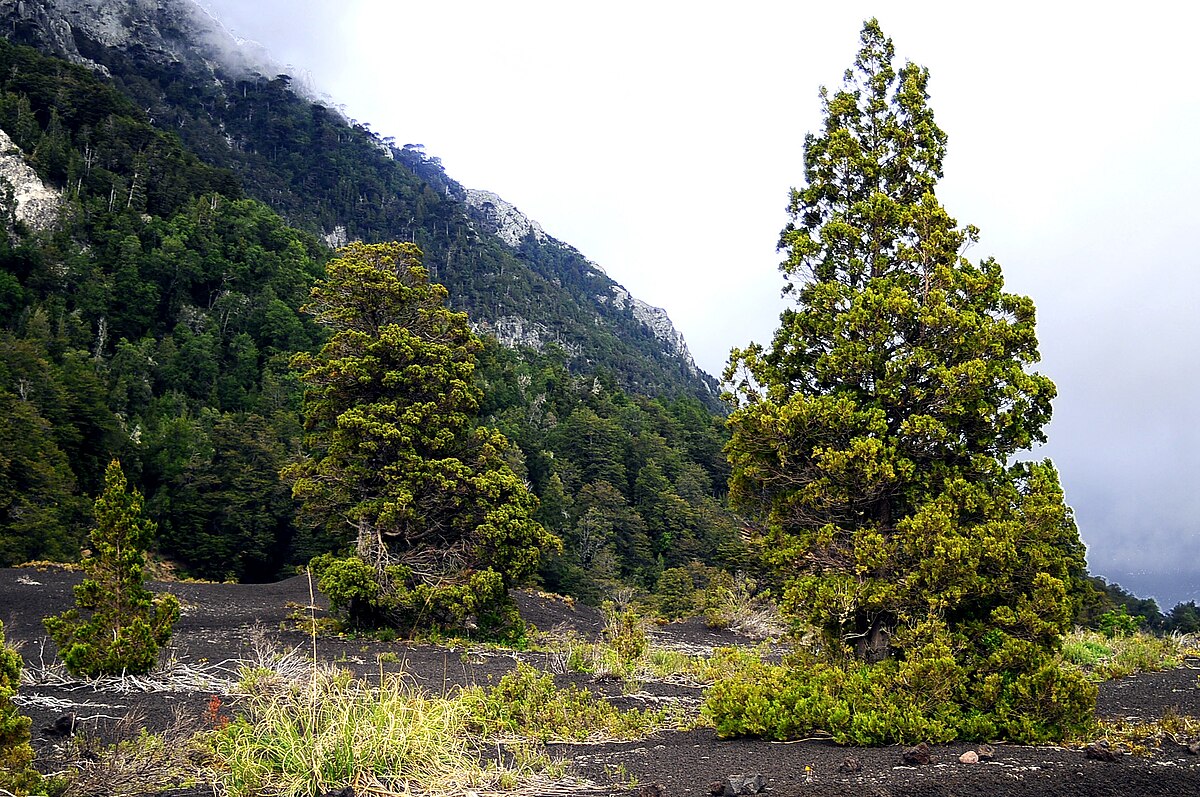
Cordilleran cypress; photo by LBM 1948 via Wikimedia
Threat to native conifer
More worrying to me is that introduced pests have entered native forests. Villacide and Fuetealba report that the aphid Cinara cupressi is attacking the native conifer Austrocedrus chilensis. Cordilleran cypress, also called Chilean or Patagonian cedar, is an endemic, monospecific tree in the Cupressaceae family. In southern Argentina and Chile the species forms pure and mixed stands with southern hemisphere beech (Nothofagus spp.) across ~ 160,000 ha. The profile Cinara cupressi on the Global Invasive Species Database is unclear about how many species are in the species complex and their places of origin.
Cordilleran cypress is also under attack by the oomycete Phytophthora austrocedri, an oomycete of unknown origin. This pathogen is of unknown origin. It is now thought to have been present in Argentina since at least the 1960s. P. austrocedri has also been ntroduced to Europe, western Asia, and North America.
Villacide and Fuetealba advocate several actions to might diversify tree species in the plantations to reduce their vulnerability to pests. They note that this recommendation builds on foundational ecological theory, including the resource concentration and natural enemy hypotheses. Diversity-promoting actions should reach beyond any plantation to the landscape level. Managers should consider connectivity of susceptible stands, the number of nutritionally optimal host trees in the landscape, and the availability and quality of hosts in adjacent stands.
Villacide and Fuetealba say mixed plantations can provide additional ecological and economic benefits, such as enhanced stand-level productivity; production of a wider range of commercial and subsistence products; and greater resistance and resilience to natural disturbances, e.g., extreme weather events.
They warn that designing and implementing mixed plantations must reflect ecological interactions and pest dynamics as well as management. There is need for regionally coordinated experimental plantations where scientist could test how variables such as tree species composition, density and spatial arrangement, and silvicultural practices influence pest dynamics, forest productivity, and ecosystem resilience under local conditions. They suggest incorporating sentinel plantings both early-warning systems and decision-support tools at plot and regional scales. Researchers should evaluate pest-specific responses, productivity trade-offs, long-term forest health outcomes under different scenarios.
Since the plantations extend across a multinational region with few natural barriers and uniform silvicultural practices, as well as high levels of trade, so do the pest problems. Therefore, the response must also be regional – e.g., regional experimental plantations and living laboratories. A collaborative approach linking researchers, forest managers, and policymakers is essential to translate experimental findings into practice and develop adaptive, ecol grounded silvicultural strategies. Long-term ecological trials must be embedded in operational contexts and aligned across countries.
SOURCES
Lantschner, V. and J. Villacide. 2025. Invasion Potential of the Recently Established Woodwasp Sirex obesus. Neotropical Entomology. (2025) 54:117 https://doi.org/10.1007/s13744-025-01347-6
Villacide, J. and A. Fuetealba. 2025. Pests in plantations: Challenging traditional productive paradigms in the Southern Cone of America. Forest Ecology and Management 597 (2025) 123127
Wilcken, C.F., T.A. da Mota, C.H. de Oliveir, V.R. de Carvalho, L.A. Benso, J.A. Gabia, S.R.S. Wilcken, E.L. Furtado, N.M. Schiff, M.B. de Camargo, M.F. Ribeiro. 2025. Sirex obesus (Hymenoptera: Siricidae) as invasive pest in pine plantations in Brazil. Scientific Reports. 2025. 15:22522 https://doi.org/10.1038/541598-025-06418-7
Posted by Faith Campbell
We welcome comments that supplement or correct factual information, suggest new approaches, or promote thoughtful consideration. We post comments that disagree with us — but not those we judge to be not civil or inflammatory.
For a detailed discussion of the policies and practices that have allowed these pests to enter and spread – and that do not promote effective restoration strategies – review the Fading Forests report at http://treeimprovement.utk.edu/FadingForests.htm
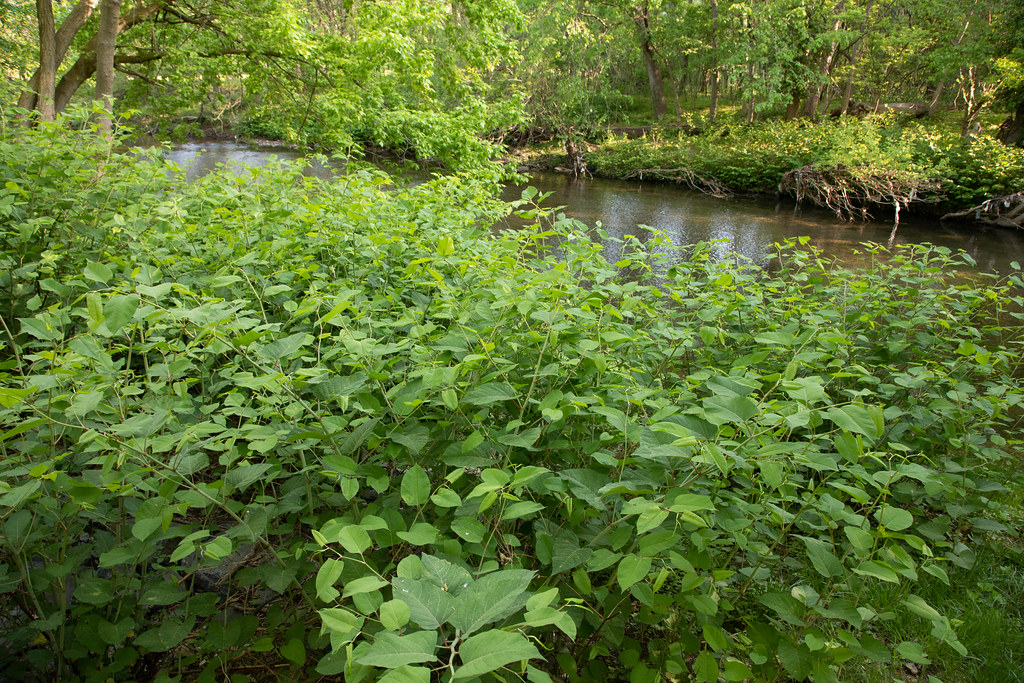
Japanese knotweed (Reynoutria japonica) – one of the worst invaders around globe. Photo by Will Parson, Chesapeake Bay Program via Flickr
On 23 October, Science published a five-page, data-packed analysis of bioinvasion impacts on terrestrial ecosystems!!!
Thakur, Gu, van Kleunen, and Zhou (full citation at end of this blog) analyzed 775 studies with the goal of improving understanding of factors contributing to invasions’ impacts – as distinct from “invasibility” (ability to establish). This knowledge is essential to assessing the risk posed by introduced species and setting priorities for management. They analyzed five ecological contexts—diversity of native species and introduced species in the recipient systems, latitude, invader residence time, and invader traits.
They concluded that ecological factors commonly used to explain invasion success do not consistently translate into strong predictors of invasion impacts. Impacts vary in response to the context of the invasion.
[In January 2026, the authors announced changes in details of the article due to some errors in the database and their understanding of it. (Science 8 Jan 2026 Vol. 391 Issue 6781) They conclude that the corrected analysis did not alter the trends described or the overall conclusions.]
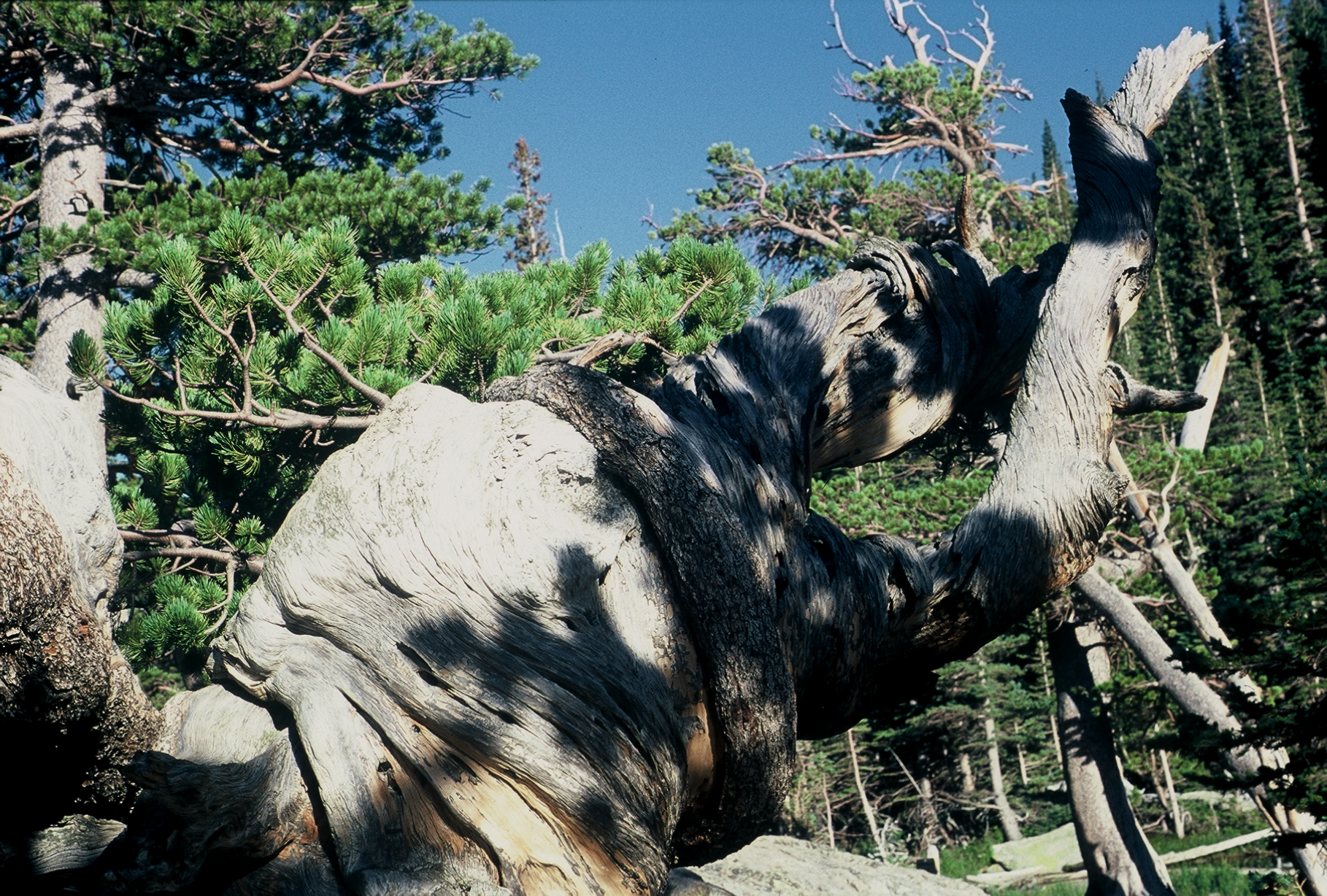
limber pine (Pinus flexilis) – one of the species killed by Cronartium ribicoli; photo by F.T. Campbell
Among the studies available for analysis, reports on plants dominated: 605 focused on plant invasions, 114 on animal invasions, and only 56 on microbial invasions. Among the animals were one study of Adelges tsugae(hemlock woolly adelgid), two studies of Agrilus planipennis(emerald ash borer) and one study each of Lymantria dispar (spongy moth), and Ips pini (North American pine engraver). Studies also addressed earthworms, ants, rats, and feral hogs. Microorganisms included Cronartium ribicoli (white pine blister rust) and several Phytophthora species, including P. agathidicida(kauri dieback), P. alni (affects alders),and P. ramorum (sudden oak death).
Thakur et al. note the skewed taxonomic coverage and say that the low number and narrow taxonomic/ecological variety in the animals and microorganisms probably limit their ability to reach robust conclusions about the impacts of such invasions.
The most consistent negative impact they found is reductions in native plant diversity. While this is not surprising given the studies analyzed, I think it is still important since it counters the widespread sense that plant invasions are somehow less deserving of a robust response.
The authors also detected some broader ecosystem impacts of plant invasions. Plant invasions increased soil organic carbon; soil nitrogen (ammonium and nitrate), and available phosphorus; soil moisture, litter biomass; and emissions of carbon dioxide (CO2), nitrous oxide (N2O), and methane (CH4). The changes in biogeochemical properties might reinforce impacts on native plant communities. The reported increase in greenhouse gas emissions might reflect a bias in the studies so Thakur et al. call for more research to solidify this finding.
High native plant species richness had only a weak overall effect on ecosystem-level impacts. While plant invasions often resulted in higher overall plant species richness, when considering only native community responses, the gain in species numbers did not necessarily indicate conservation benefits. Native plants’ biomass increased after invasion. This might reflect short-term increases in productivity in response to altered resource conditions or structural facilitation, rather than a long-term reversal of competitive exclusion. Finally, the longer the invasive [plant] species had been present, the greater the negative effects on native diversity. However, soil abiotic property impacts weakened over time. In fact, the initial increase in soil organic carbon and total nitrogen disappeared after 6 to 10 years. This development might reflect fertilization of ecosystems by long-established nitrogen-fixing invaders such as non-native legumes.
Traits of non-native plant species related to growth and resource acquisition were overall weak predictors of ecosystem impacts. Thakur et al. consider that this finding reflects the relatively narrow range of specific leaf area exhibited by the plant species studied most commonly.
Consequently, Thakur et al. urge managers to focus on containment and impact mitigation, and to prioritize persistent losses of native plant diversity. When considering abiotic responses that might lessen over time, managers should apply “adaptive monitoring” (which is not defined).
Thakur et al. had greater difficulty determining the impacts of animal and microorganism invasions because of the smaller number of studies. They could not determine the effect of native species richness. The observed decline in soil organic carbon they thought was attributable to the large proportion of studies (9 out of 114) that focused on introduced earthworms. Earthworms reduce organic matter by consuming litter. Mammals were also found to reduce soil organic carbon. Introduced insects had no significant ecosystem effects on soil organic carbon. Non-native animals also increased soil emissions of carbon dioxide and nitrous oxide. The microorganisms included in reviewed studies decreased soil ammonium and increased nitrate, consistent with elevated nitrification. While data on body size of invasive animals were sparse, the authors could determine that larger-bodied species tended to increase soil nitrate while reducing effects on total soil N.
Applying the Results
Thakur et al. report that residence time outperformed other factors as a predictor of invasion impacts. The authors regret the scarcity of long-term studies, especially in the Global South, that could increase our understanding of whether these impacts persist or shift under sustained invasion pressure.
How can scientists apply this information in risk assessments evaluating not-yet introduced species or in deciding what is the appropriate intensity of immediate response to newly detected incursions. Should they give greater weight to others’ studies that focus on long-established invasions by the species in question? Otherwise, this finding seems to largely duplicate the long-established “invasion curve”.
I hope scientists will note that observational studies generally showed stronger impacts than experimental ones, particularly in the case of plant invasions. Perhaps this is true because observational studies better incorporate environmental heterogeneity and longer time spans.
Agrostis stolonifera – one of the plants invading on Prince Edward Island, an Antarctic region island under South African jurisdiction. Photo by Stefan Iefnaer via Wikimedia
Thakur et al. note that one factor they analyzed, “latitude”, incorporates several ecological and anthropogenic components relevant to invasion impacts. One element is the greater native bioidiversity in warmer, lower-latitude, regions. According to the “biotic resistance” hypothesis, greater diversity might make these systems more resistant to bioinvasion. However, the situation is complicated by the fact that temperate regions have also often experienced longstanding and intensive land-use modifications — which are believed to facilitate invasive species establishment and spread. I regret that the authors make no attempt to separate the effects of factors that are anthropogenic from those arising from immutable conditions, e.g., latitude, topography, weather patterns, etc.
Thakur et al. call for more studies that cover a wider geographic range. In addition, the studies should include more experimental designs and explore the relationship between invaders’ traits and impacts — especially regarding animals and microbes.
SOURCE
Thakur, M.P., Z. Gu, M. van Kleunen, X. Zhou. 2025. Invasion impacts in terrestrial ecosystems: Global patterns and predictors. Science 23 October 2025
Posted by Faith Campbell
We welcome comments that supplement or correct factual information, suggest new approaches, or promote thoughtful consideration. We post comments that disagree with us — but not those we judge to be not civil or inflammatory.
For a detailed discussion of the policies and practices that have allowed these pests to enter and spread – and that do not promote effective restoration strategies – review the Fading Forests report at http://treeimprovement.utk.edu/FadingForests.htm
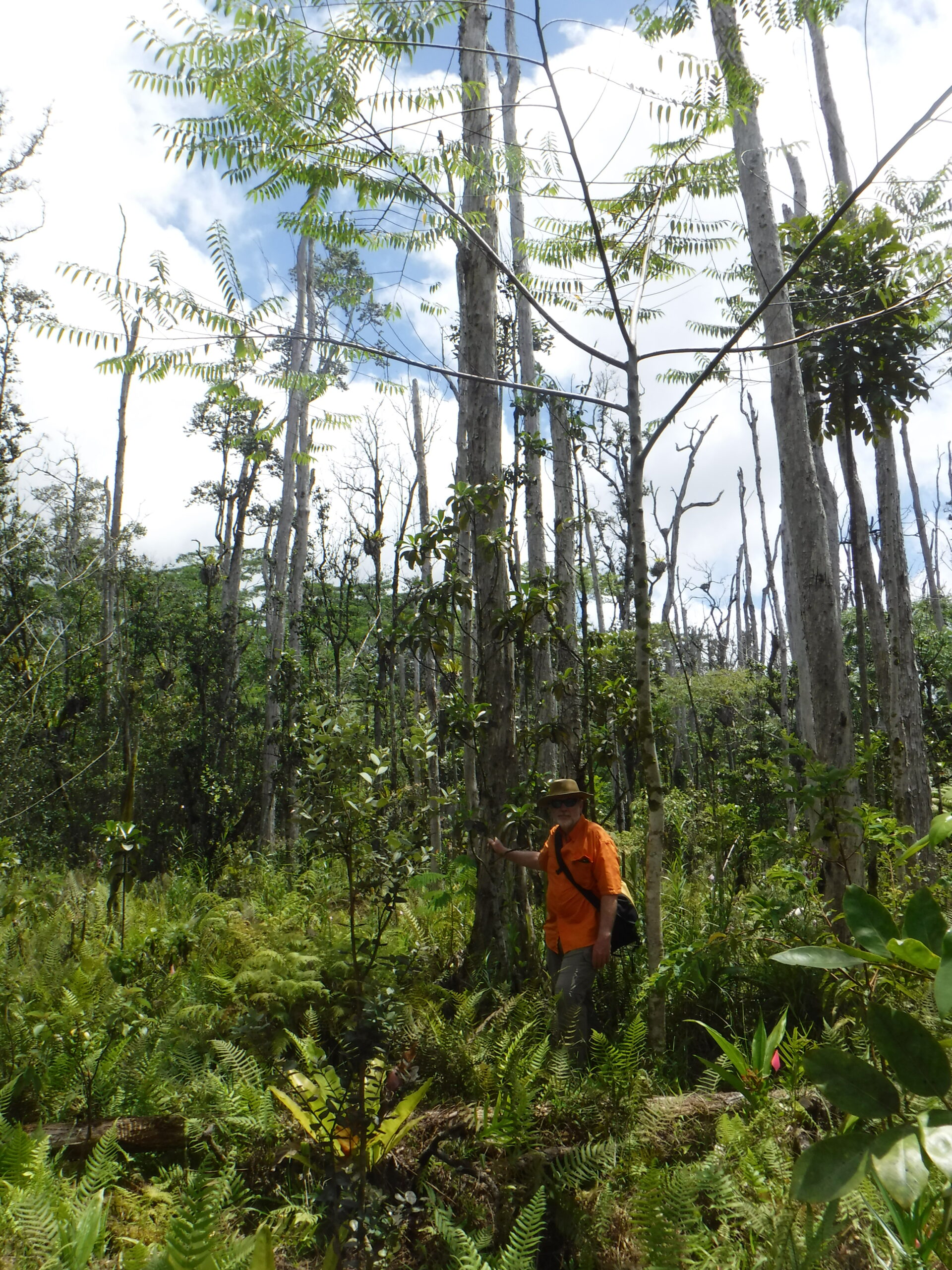
ohia trees killed by ROD near Pahoa, Hawai`i; with JB Friday; photo by F.T Campbell … APHIS has not applied NAPPRA to this pathogen
As I have documented numerous times in these blogs, [see here, here, here, here, here, here, here and here] forests throughout the world are being reshaped by rising numbers of introduced, non-native pathogens. Once established, these diseases are nearly impossible to contain, much less eradicate.
While the worst effect of such bioinvasions is widespread mortality of host species, even “lesser” results produce significant changes in the impacted ecosystems.
I believe that the international phytosanitary “system” adopted by the World Trade Organization (WTO) and amended by the International Plant Protection Convention (IPPC) in the mid-1990s impedes efforts to prevent introductions of pathogens. These rules require unattainable levels of certainty about an organism’s impacts before it can be restricted. Scientists such as Haoran Wu and Kenneth Raffa have called for phytosanitary approaches that will be more effective because they are realistic, reflect the true level of threat, and the limits of current science. I agree and have repeated their calls.
How Well Is This “System” Keeping Pathogens At Bay?
If the world’s phytosanitary system worked well, we should be seeing fewer high-risk forest pathogens being introduced to new countries. Instead, examples abound of pests invading new ecosystems in the post-WTO/IPPC era: Austropuccinia psdii — detected in Hawai`i in 2005, Japan in 2009, Australia in 2010, China in 2011, New Caledonia and South Africa in 2013, Indonesia and Singapore in 2016, and New Zealand in 2017.
Phytophthora ramorum – 8 to 14 additional introductions to California after its initial detection.
Fusarium disease vectored by beetles in the Euwallaceae genus:
Euwallacea fornicatus s.s.— detected in southern California in 2003, Hawai`i in 2007, Israel in 2009, in South Africa in 2012, in Australia in 2021, and in Argentina and Uruguay in 2023 and 2024 . The haplotype detected in South America and several European greenhouses differs from that established elsewhere.
E. kuroshio detected in southern California in 2013; has spread to nearby Mexico
E. interjectus detected in central California in 2024.
Boxwood blight fungus Calonectria pseudonaviculata — first detected in the Caucuses in 2010 and the US in 2011. Now established in at least 24 countries in three geographic areas: Europe and western Asia; New Zealand; and North America. Boxwood blight has caused rapid and intensive defoliation of native stands of Buxus sempervirens. Although disease was detected in United Kingdom in the mid-1990s, the causal agent was not determined until 2002.
Beech leaf disease caused by the nematode Litylenchus crenatae subsp. mccannii — detected near Cleveland, Ohio, in 2012. Has since spread east to the Atlantic Ocean, south to Virginia, north into Ottawa.
Phytophthora austrocedrii — detected in nurseries in Ohio and Oregon in 2024. Previously known from Argentina and in England and Scotland. At the latter location it is causing mortality of native Juniperus and introduced Cupressaceae. See here and here.
Most of these pathogens were unknown at the time they were discovered – because they were causing disease in the invaded ecosystems.
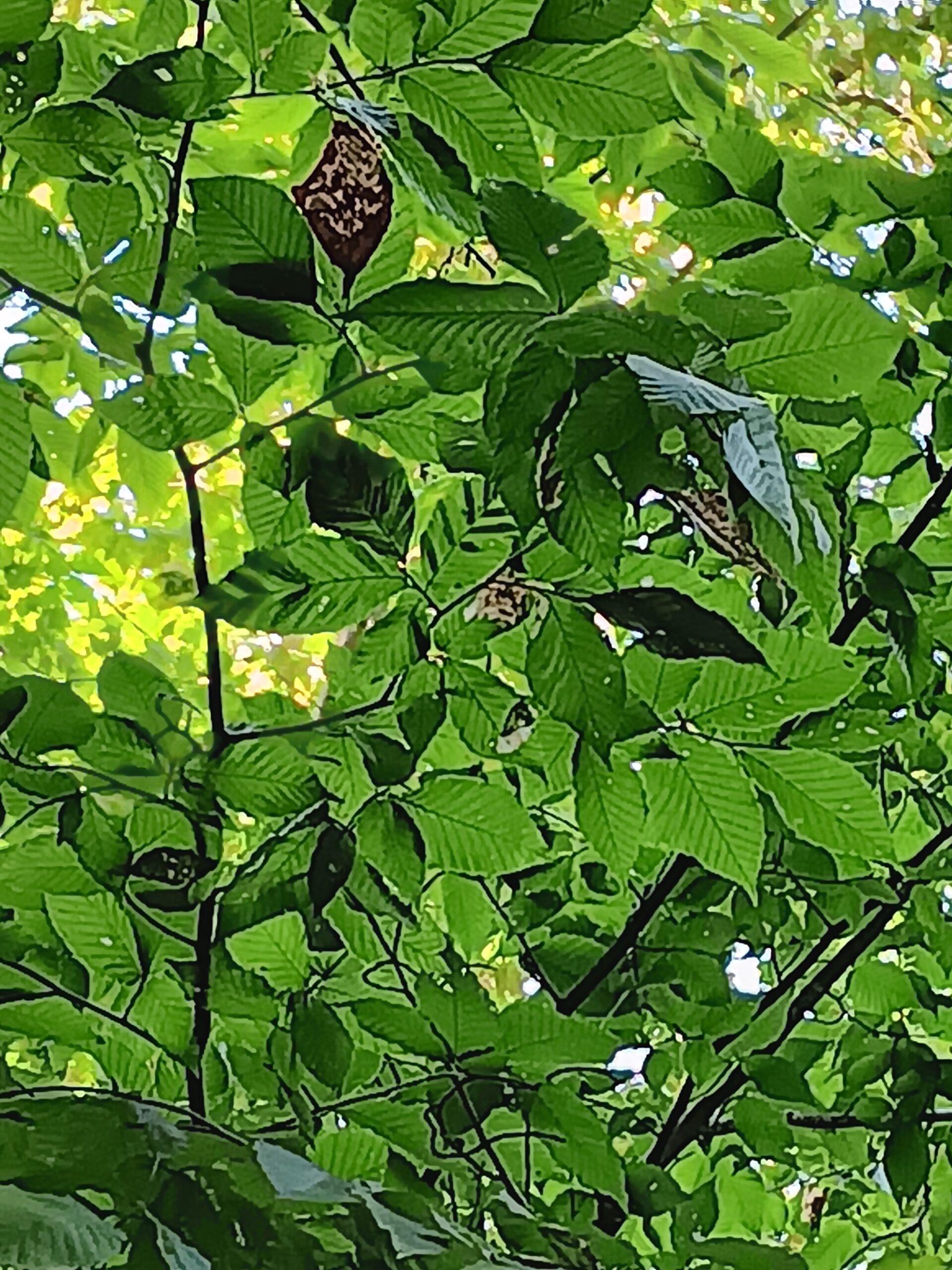
beech leaf disease symptoms in northern Virginia; photo by F.T. Campbell
In the Face of International Failures, How Can USDA’s APHIS Succeed?
When countries choose to prioritize preventing bioinvasions, they can impose more restrictive controls than those implemented by the WTO/IPPC system.
I urge USDA to more proactively use its authority to protect America’s plant resources. In particular, I urge USDA leaders to use the NAPPRA authority more effectively and quickly. This allows the agency to temporarily prohibit importation of plants that host potentially damaging pathogens. ). https://www.aphis.usda.gov/plant-imports/nappra
We Americans can’t protect our forests from pathogens without APHIS responding more promptly to recent detections of pathogens in North America and on Pacific islands. Recent events are not encouraging.
The agency did undertake an analysis of Phytophthora austrocedrii after it was detected in nurseries in two states. Unfortunately, in my view, APHIS and the states decided the pathogen was too widespread so they dropped any idea of regulating it. This was despite the apparent threat to junipers across the country. See here and here. P. austrocedri also attacks cypress trees, including Port-Orford cedar, Chamaecyparis lawsoniana. USFS scientists recently announced success in breeding POC trees resistant to a different pathogen.
There are no indications that APHIS will respond to detection of a new pathogen causing wilt disease in elms (Plenodomus tracheiphilus) recently discovered in Alberta, Canada. The pathogen is spread primarily through movement of infected plant material, including on asymptomatic material. Current U.S. regulations do not prohibit importation of plants or cut greenery in the Ulmus genus from Canada. Beyond the risk associated with elm material, I think it is probable that this pathogen also survives on plants in additional taxa, since it was formerly known for causing disease on citrus trees.
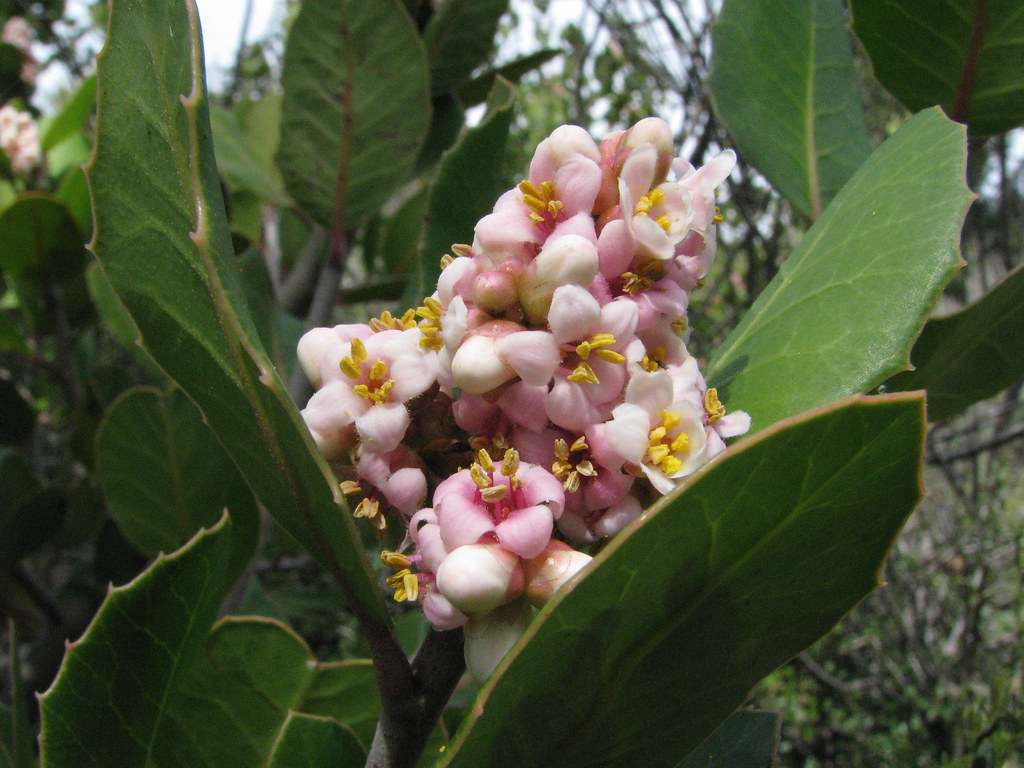
Although APHIS has classified Leptosillia pistaciae as a federal quarantine pest, I have learned of no response to detection of the pathogen on the native California shrub, lemonade berry (Rhus integrifolia), in 2019.
Rhus integrifolia – host of Leptosillia pistaciae
Has APHIS Changed its Practices in Response to Recent Detections?
We’ve known about gaps and weaknesses in APHIS’ approach for a long time. Here are specifics.
Has APHIS upgraded its attention to nematodes – as should have been prompted by detection of the beech leaf disease nematode (above) and as recommended by Kantor et al.?
Has APHIS changed any of its practices or policies in response to detection of plant and human pathogens associated with wooden handicrafts from countries other than China? Or wood pieces used for unanticipated purposes, e.g., to decorate aquaria? All 31 fungal taxa detected by one of these studies were viable despite having been subjected to various phytosanitary requirements.
USDA has no authority to regulate organisms that pose a risk to non-plant hosts, like us humans! Has APHIS contacted officials at the relevant agency?
Does APHIS respond to detections abroad when pests attack congeners of North American trees? I have blogged about several — see here, here, here and here — detected in Europe or Asia that attack cypress, magnolia, dogwood, Persea, and oaks. PestLens — an alert system created by APHIS — reported these.
How has APHIS incorporated the findings at various “sentinel garden” projects? And the wider implications of findings by Eliana Torres Bedoya and Enrico Bonello regarding findings on asymptomatic plants?
How is APHIS applying the impact assessment tools developed (for insects) by Ashley Schulz and Angela Mech? Has APHIS incorporated Kenneth Raffa’s advice about the strengths and weaknesses of various prediction tools?
I wonder whether APHIS has responded in any way to the rash of woodborer introductions on the west coast, including three species in the invasive shot hole borer complex and the Mediterranean oak borer. Has the agency explored the threat that the spotted poplar borer (Agrilus fleischeri) – another wood-boring beetle native to northern Asia – might pose to North American Populus species? Canada has twice intercepted the species on solid wood packaging material .
USDA APHIS is explicitly not a research agency. However, it claims that its decisions are science-based. In my view, this means APHIS has a responsibility to respond to scientific findings (such as those above) and to bring about research aimed at answering pertinent questions,e.g., those related to risks of pest introduction and establishment, effective detection and management technologies, etc.
APHIS has occasionally done this:
It established the NORS-DUC research facility to study what aspects of nursery management facilitate establishment of Phytophthora ramorum.
It enabled and participated in several studies of wood-borer introduction via wood packaging, including those by Robert Haack and colleagues (see blogs on this website under the category “wood packaging”).
It enabled and participated in a study of introduction pathways that included plants-for-planting – relying on 2009 data. (Liebhold et al. 2012)
Did APHIS support the study by Li et al. to evaluate the vulnerability of two oak and two pine species to 111 fungi associated with Old World bark and ambrosia beetles?
APHIS could do much more to determine whether North American trees are vulnerable to pathogens and arthropods detected on the congeners in trade partner countries. Opportunities include:
studying which North American species might be vulnerable to the growing number of the 38 new Phytophthora species detected overseas. This would be a monumental task: 216 species have been recognized in the genus. I have focused specifically on the 38 species detected by Jung, Brasier, and others in Vietnam and now the 18 Phytophthora species detected in the Alps. (I have already noted that APHIS and the states dropped any idea of regulating one of those species, P. austrocedrii).
Regarding P. ramorum specifically, scientists now recognize 12 genetic strains; 8 are in Southeast Asia, a ninth (EU2) in Europe. How likely is it that some of these will be introduced to the U.S.? Three strains are known to be established in western North American forests – NA1, NA2, and EU1.
In addition, new hosts continue to be identified. APHIS has pledged to update the host list annually. In the past I have criticized APHIS for not accepting hosts identified in the United Kingdom.
While APHIS is not well-funded, it has largely escaped budget slashing by “DOGE,” other Trump Administration cuts, and congressional decreases. Scientific expertise at the USDA Forest Service has been shrinking for decades (see Chapter 6). Now, loss of expertise has reached crisis levels. The result will be less capacity to assist APHIS in evaluating pest risks and research needs.
Earlier, I noted the importance of APHIS using its full NAPPRA authority. Unfortunately, the record is not encouraging here, either.
Since the agency gained this authority in 2011, it has adopted lists of species temporarily prohibited for importation only three times – in 2013, 2017, and 2021. I complained that the last action was tardy and provided insufficient protection to Hawai’i’s unique flora arising from multiple strains of the ‘ōhi‘a rust pathogen Austropuccinia psidii and here. Even worse, four years after promising to close the loophole that allowed continued imports of cut flowers and foliage – the most likely pathway by which the rust was introduced to Hawai`i, APHIS has not proposed the necessary rule.
Pathogens are more difficult to detect and manage than invasive insects. The “disease triangle” is complex! Numerous pathways are involved! But they also get less attention – and this reflects unwise decisions by agency leaders. I suggest that they should respond to this complexity by adding resources. Voglmayr et al. (full reference at the end of this blog) also called for more attention to pathogens. Kantor et al. noted that nematodes are also neglected.
Of course, I have repeatedly urged APHIS leadership to enhance enforcement of regulations governing imports of wood packaging. One suggestion is that it prohibit importation of Chinese wood packaging because of its 25-year record of not complying with – first – U.S. and Canadian regulations and – later – the international regulation known as ISPM#15.
Information Gaps Impede APHIS’ Domestic Program
I have criticized APHIS’ failure to find answers to several questions important to managing the sudden oak death pathogen, Phytophthora ramorum. Like the many questions listed earlier, these also need priority attention.
APHIS has regulated interstate movement of nursery stock to contain P. ramorum for over 20 years. I appreciate its creation of NORS-DUC. But it is also responsible for protecting natural systems in regions not yet invaded, e.g, in the East. APHIS should have studied these issues years ago, given the frequency with which pests spread nationwide via the nursery trade.
Other pathogen systems also have genetic variation that might be important in determining pest-host relationships. As of 2022, scientists had identified 43 haplotypes (genetic variants) of E. fornicatus s.s. worldwide, with the greatest diversity in several Asian countries (P. Rugman-Jones, pers. comm). Other species of plant pathogens also have several haplotypes.
Forests At Risk Outside of North America
North American forests are not alone in being besieged by non-native pathogens. Their numbers have been rising also in Europe and Oceania. The record is less clear in Africa, South America, and Asia.
Reports of tree pathogens in Europe began rising suddenly after the 1980s – admittedly 15 years before the WTO took effect. By 2012, more than half of infectious plant diseases in Europe were caused by introduction of previously unknown pathogens https://www.nivemnic.us/?p=5164
Antonelli et al. (full citation at the end of this blog) report that three previously undetected species of Phytophthora have been detected in European nurseries since 2016. Voglmayr et al. reported that the number of alien fungi in Austria increased 4.6-fold over 20 years. Eighty percent were plant pathogens. The introductory pathway was unclear for the vast majority. They note that differences in research efforts probably explain some discrepancies.
The ash decline pathogen, Hymenoscyphus fraxineus, has apparently been present in eastern Europe since the 1980s, so its spread has probably not been facilitated by the downsides of the WTO/IPPC system.
Other sources report recent introductions of insects to Europe. Musolin et al. reported that 192 species of phytophagous non-native insects had been documented in European Russia as of 2011. They included the emerald ash borer detected in Moscow in 2003. Some of these insects were probably introduced to Europe (outside Russia) before the WTO/IPPC system came into effect. Examples are two insects from North America that were detected in 1999 and 2000, respectively – the western coniferous seed bug, Leptoglossus occidentalis, which vectors a pathogenic fungus Sphaeropsis sapinea (=Diplodia pinea); and the oak lace bug, Corythucha arcuata.
Australia was slow to respond to detection of myrtle rust, Austropuccina psidii. Few federal resources were made available to study its impacts – although the Australian flora includes at least 1,500 species in the vulnerable plant family. Carnegie and Pegg said this experience demonstrated the need to integrate the work of agencies responsible for conservation of natural ecosystems with those determining and implementing phytosanitary policy. New Zealand initially responded more assertively, but also found little funding to support resistance breeding or even to track the rust’s spread.
The record is less clear regarding Africa, South America, and Asia.
Africa
Sitzia et al. expressed concern that bark and ambrosia beetles threaten to cause significant damage to tropical forests. Several factors contribute to these threats: the long history of plant movement between tropical regions; conversion of tropical forests that disturbs canopies, understory plant communities, and soils; and, generally, regions with fewer resources to prevent or respond to invasions.
In Africa, Graziosi et al. reported on the cumulative economic impact of invasive species and the continent’s limited capacity to prevent or respond to introductions. They don’t discuss whether pests attacking plantations of non-native trees followed those trees from their point of origin. They found that some introduced insects pose significant threats to native tree species. They mentioned the Cypress aphid, Cinara cupressi, which was attacking both native African cedar, Juniperus procera, and exotic cypress plantations. All the examples appear to have been introduced before the WTO/IPPC system took effect. All the examples appear to have been introduced before the WTO/IPPC system took effect.
Cinara cupressi; photo by Blackman & Eastop via Wikimedia
Graziosi et al. point out that South Africa plays a central role because it imports significant volumes of goods that can transport pests. At most immediate risk is South Africa’s highly diverse and endemic flora. For example Phytophthora cinnamomi is attacking native Proteaceae, which are important components of the unique Cape Floral Kingdom. Other pathogens are attacking native conifers in the Podocarpus genus, Ekebergia capensis (Meliaceae), and Syzygium trees. However, pests first introduced to South Africa often spread. Graziosi et al. name several insects and pathogens of Eucalyptus and the wood-boring pest of pine Sirex noctilio.
Pests in Asia
Available information about China is not definitive. The FAO reports that half of the most damaging forest pests are non-indigenous. They were estimated to occur over an area of 1.3 million ha and to kill over 10 million trees per year. However, the three tree-killing pests which receive the most attention are the pinewood nematode (Bursaphelenchus xylophilus), red turpentine beetle (Dendroctonus valens), and fall webworm (Hyphantria cunea). These were all introduced before the World Trade Organization was founded.
The FAO notes several non-native insects that attack native trees in India, but all were introduced decades before the World Trade Organization began. There is no discussion of tree pathogens.
Thu et al. report a growing number of pest outbreaks damaging plantations of non-indigenous trees in Vietnam. In most cases the pests are indigenous to the country. They report that almost nothing is known about pests that attack species in the highly diverse native forests.
The September 2025 meeting of the International Forest Quarantine Research Group (IFQRG) had a session devoted to the topic “Risk of international trade in plants for planting”. The specific presentations are titled
“Using molecular tools to elucidate the pathways of cryptic pests on plants for planting”
“Risk-based approach to the movement of germplasm into Australia: the luxury afforded to an affluent continent” (note my earlier blog criticizing Australian efforts re forest pests)
“Challenges in the validation of methods for detection of quarantine pathogen – P. ramorum”
“Challenges in surveillance and detection of quarantine fungal tree pathogens in European Union”
“Pathogens in trade and the risk of establishment – update”
I hope that some of these discussions begin to tackle the crucial questions I raised in this blog and earlier. Also, I hope IFQRG continues to explore these important questions.
As Wu and Raffa et al. have said, Earth’s forests cannot afford delay in finding solutions to the challenges posed by introductions of novel pathogens to naïve systems.
SOURCES
Antonelli, C.; Biscontri, M.; Tabet, D.; Vettraino, A.M. 2023. The Never-Ending Presence of
Phytoph Spp in Italian Nurseries. Pathogens 2023, 12, 15. https://doi.org/10.3390/pathogens12010015
Voglmayr, H., A. Schertler, F. Essl, I. Krisai-Greilhuber. 2023. Alien and cryptogenic fungi and oomycetes in Austria: an annotated checklist (2nd edition). Biol Invasions (2023) 25:27–38 https://doi.org/10.1007/s10530-022-02896-2
Posted by Faith Campbell
We welcome comments that supplement or correct factual information, suggest new approaches, or promote thoughtful consideration. We post comments that disagree with us — but not those we judge to be not civil or inflammatory.
For a detailed discussion of the policies and practices that have allowed these pests to enter and spread – and that do not promote effective restoration strategies – review the Fading Forests report at http://treeimprovement.utk.edu/FadingForests.htm
I, and many others, have given much attention to the emerald ash borer (EAB), a species in the Agrilus genus. This attention is deserved. In 30 years EAB has spread from then-localized infestations in Michigan and Ontario to natural and urban ash ecosystems across North America. The EAB is spreading in Europe, too.
coast live oak killed by GSOB at Heisey State Park, San Diego County, California; photo by F.T. Campbell
We have paid far less attention to a second Agrilus, the goldspotted oak borer (GSOB), Agrilus auroguttatus. In roughly 30 years, the GSOB infestation has become the primary agent of oak mortality across much of southern California, an area of roughly 37 million square miles. This is bigger than the combined land areas of West Virginia, Maryland, and Delaware.
While the number of trees killed has generally expanded slowly, there have been periods of explosive growth. For example, annual mortality was estimated to have reached 40,000 trees in 2017. The officially documented cumulative total is over 142,000. At least one scientist, Joelene Tamm, considers this number to be a significant underestimate; she estimates the true number of trees killed as probably close to 200,000. As she explains (see here), the USFS’ Aerial Detection Surveys is not very effective at capturing mortality within fragmented urban landscapes, narrow riparian corridors, or when the target species have sprawling canopies (as oaks do).
Ravaged oak forests grow on five mountain ranges. People losing valuable resources and paying to manage the invasion include
U.S. taxpayers — three National forests have lost oaks; a fourth Forest is on the brink;
Residents of California – trees killed in at least four State parks, 10 County parks, and two major private reserves;
Native Americans on at least five reservations
City dwellers and property owners: up to 300,000 coast live oak trees live in built-up sections of just one heavily infested city, Los Angeles.
areas vulnerable to GSOB
This damage is almost guaranteed to spread in the future. Three oak species host GSOB: coast live oak (Quercus agrifolia), California black oak (Q. kelloggii), and canyon live oak (Q. chrysolepis). The ranges of black and canyon live oak stretch north along the Coastal Mountain Range and the foothills of the Sierra Nevada Mountain Range into southwest Oregon. The range of coast live oak reaches Mendocino County. A risk assessment concluded that GSOB could invade all these regions. Among urban areas, Santa Barbara faces the highest risk because of the large number of oaks in its urban forest. While this county has not yet been invaded by GSOB, the beetle is now in adjacent Ventura County – although at the other end of the county.
GSOB is transported to new locations primarily by the movement of firewood. This means of human-assisted spread almost certainly explains its initial introduction to from southeastern Arizona to California – in eastern San Diego County – in the 1990s. (See here for the explanation why it is unlikely that the beetle would have spread to California through natural dispersal.) It is blamed for the establishment of numerous disjunct populations that propelled its spread. These outbreaks led to recognition of invasions in additional counties in new counties in 2012, 2014, 2015, 2018, and 2024.
Death of these trees causes numerous ecological impacts. Oaks provide food, habitat, and climate control for hundreds of species. Oak mortality also increases the probability and severity of wildfire. The few natural enemies, including woodpeckers and some parasitoids, are not keeping GSOB populations in check. Urban trees provide important ecological services, including shade which reduces energy use and expense associated with air conditioning; they also reduce storm water runoff. Larger trees – those preferred by GSOB – provide more of these services. Dead oaks not only deny people of these services; they also demand prompt removal to prevent them falling on people or structures; this is done at considerable expense.
GSOB invasions are now known to be present in six counties: San Diego, Orange, Los Angeles, Riverside, San Bernardino, and Ventura. Since the state has opted out of leading management of the beetle (see below), coordination of these many players presents significant challenges on top of the usual difficulties that hinder most U.S. efforts to reduce threats from non-native forest insects and pathogens:
Detection of outbreaks occurs years after the pest’s actual introduction. Locations of disjunct outbreaks are difficult to predict. They fuel more rapid dispersal.
The host species are not important commercial timber sources, so key forest stakeholders do not act – despite the tree species’ great ecological importance.
USDA APHIS does not engage because GSOB has become a non-native tree-killing organism in a single state (although it was introduced from a separate state – Arizona).
Problems more specific to GSOB are:
Some authorities dismiss this invasion because the beetle is native in one U.S. state.
California State agencies and the National Park Service have not taken effective action to control movement of the principal vector – in this case, firewood.
Fortunately, a broadening alliance of locals is trying to fill the gaps. These efforts are truly encouraging. Concerned individuals and organizations in Southern California have put together a broad coalition that works to ensure an outbreak-wide response. Participants include staffers in the USDA’s Forest Service and Natural Resources Conservation Service; the U.S. Bureau of Indian Affairs; CalFire; California Department of Conservation; State parks; agencies of four counties; community Fire Safe councils; regional conservation agencies; several Resource Conservation districts; various Tribes and Tribal Nations; and University of California extension. In some counties, there are also geographically-focused coordinating bodies.
Money is scarce, but somehow they manage to carry out detection and monitoring, vigorous outreach and education projects, and — at some sites — treatment of vulnerable trees and removal of “amplifier” trees. Teams working under the umbrella of this coalition have developed GSOB-killing treatments for logs (firewood); search for tools to increase survey efficacy; investigate the area-wide impact of the beetle, and its interaction with drought. Scientists have also explored possible biocontrol agents in the species’ native habitat in Arizona. However, the two parasitic wasps found there are already present in California, where their parasitism rates are much lower.
Some of the participants have been willing to “go political” in search of resources and official actions.
Might this coalition be a model for addressing other pests?
As if GSOB were not a sufficient threat to California’s oaks, several other non-native pests are already established in the state. These include at least seven pests and pathogens:
three shot hole borers — polyphagous, Kuroshio, and Euwallaceae interjectus; they attack at least Coast live oak (Quercus agrifolia), Engelmann oak (Quercus engelmannii), Valley oak (Quercus lobata), Canyon live oak (Quercus chrysolepis)
Mediterranean oak borer; attacks valley oak (Quercus lobata); blue oak (Q. douglasii); and Oregon oak (Q. garryana).
acute oak decline (bacterium Rahnellav victoriana);
At least GSOB, SOD, and two of the shot hole borers have received official “zone of infestation” (ZOI) designation by the California Board of Forestry. This designation enables
the Board to specify required pest mitigation measures for any timber harvest;
the Board & the CalFire authority to enter private properties to abate pest problems if necessary.
calls attention to the presence of the pest within the Zone and provides the Department with a talking point to motivate landowners & land managers to address problems caused by the pest in question.
The southern California coalition includes these other bioinvaders in its efforts.
Lobbying by members of the coalition – especially John Kabashima – resulted in the state legislature providing funds to address the invasive shot hole borers (see here and here.)
Although oak decline was observed in eastern San Diego County as early as 2002, and a GSOB was caught in a survey trap in 2004, the beetle’s role in killing these oaks was identified only in 2008. This detection was followed by the discovery of disjunct infestations were detected in towns surrounded by National forests first in Riverside County (2012), then in Orange County (2014) and Los Angeles County (2015). Outbreaks in San Bernardino County were detected in 2018 – although the beetle had probably been present since 2013. The LA County populations continued to spread, despite management efforts. The obvious danger prompted neighboring Ventura County to initiate surveillance trapping in 2023. Sure enough, this sixth county found its first outbreaks in 2024. Most of the initial outbreaks have been on private land bordering or surrounded by National forests.
black oak in Cleveland National Forest killed by GSOB; photo by F.T. Campbell
Responses: State, County, and Federal
The California Department of Food and Agriculture (CDFA) classifies GSOB as a level “B” pest. Pests in this category are known to cause economic or environmental harm; however, their distribution is considered to be “limited”. Efforts to eradicate, contain, suppress, or control the species are at the discretion of individual county agricultural commissioners.
There is some outside support – usually because of the link to increased fire danger. Grants from the National Forest Foundation have enabled local Fire Safe councils, CalFire, and the Inland Empire Resource Conservation District (IERCD) to conduct surveys and in some cases removal of amplifier trees in Riverside and San Bernardino counties. However, the funds no longer support the earlier practice of spraying at-risk trees.
County-by-County
In Orange County, a coalition of academics from the University of California and scientists with CalFire and USFS are testing various pesticide applications and efficacy of removing heavily infested trees. The county has adopted an Early Detection Rapid Response Plan.
Since the first detection of GSOB in Los Angeles County in 2015, authorities have removed nearly 10,000 “amplifier” trees. Because the Santa Monica Mountains are home to 151,000 oaks, LA County Agricultural Commissioner of Weights and Measures, the Santa Monica Mountain Resource Conservation District (RCD), Los Angeles National Forest and UC Cooperative Extension established a joint “Bad Beetle Watch” program with Ventura County. The program is training agency personnel, tree professionals, and recreationists to detect GSOB. A state agency – Mountains Recreation and Conservation Authority – is managing two outbreaks in the Santa Monica Mountains. The Los Angeles County Fire / Forestry Division is surveying the oak-dense San Fernando Valley and Santa Susana Mountains after GSOB was found nearby. The Los Angeles County Regional Planning agency will target oak-dense communities with advocacy for oak woodland health and warnings not to move firewood.
Most encouraging, the Los Angeles County Board of Supervisors is considering declaring a local or state emergency related to the risk of the spread of GSOB in the County and to the Santa Monica Mountains.
Ventura County began trapping at green waste facilities and campgrounds in 2023. Now that GSOB has been detected, several agencies — CalFire, Ventura County Fire, Ventura County Resource Conservation District, California Coastal Conservancy, Rivers and Mountains Conservancy, Santa Monica Mountains Conservancy, Mountains Recreation and Conservation Authority, Ojai Valley Land Conservancy, Ventura Fire Safe Council, Ojai Valley Fire Safe Council as well as the state lands commission and Los Padres National Forest – are gearing up educational programs focused on the risk of GSOB spread to additional areas. The non-governmental organization Tree People helped to spark this effort. Efforts are under way to fund and formalize a regional coalition, with collaboration from California Department of Conservation, CAL FIRE, and UC Agriculture and Natural Resources.
Despite the damage to state parks and the clear nexus with firewood, the California State Park agency encourages – but does not require – campers and picnickers to purchase certified clean firewood on site from camp hosts.
Affected Tribal Lands
Among affected Native American reservations, the La Jolla Band of Luiseño Indians has already removed almost one thousand large coast live oak trees in the Tribe’s campground; another thousand trees must be removed in coming years. Since 2019, the Tribe has been applying contact insecticides annually on 200 to 300 trees. In addition, the Tribe is planting seedlings and conducting research in partnership with UC Riverside, San Diego State University, and UC Irvine. Obtaining funds to develop management capacity is a constant challenge.
A second tribe, the Pala Band of Mission Indians, began a systematic survey of its lands in 2022. At that time, they found a light infestation in coast live oaks and some dispersal. Hundreds of dead trees are visible from highways bordering the Mesa Grande, Santa Ysabel, and Los Coyotes reservations. Even reservations that have no oaks on their land are affected because tribal members harvest acorns as a culturally important food.
Private Reserves
Two private reserves in Orange County responded aggressively to arrival of GSOB. The Irvine Ranch Conservancy started active management immediately after detection of GSOB in 2014. Their efforts – annual surveys, treating lightly infested trees, and removing heavily infested or “amplifier” trees – have paid off: by 2023, only 21 of 187 coast live oaks surveyed had new exit holes – and in most cases only one or two. Weir Canyon is considered a successful control program.
Managers of the California Audubon Starr Ranch Sanctuary began monitoring for GSOB by 2016. No GSOB were detected until 2023. Difficult terrain impedes survey and response. Orange County Fire Authority hired contractors to remove amplifier trees and treat others. Monitoring continues.
Responses by Federal Agencies
The Angeles, Cleveland, and San Bernardino National forests all have extensive and evolving management plans for GSOB. Actions include annual surveys, tree removal and/or treatment, regulating concessionaires’ sources of firewood, and restricting wood harvest permits. Each forest has also partnered with appropriate counties, NGOs, FireSafe councils, and Resource Conservation districts to expand outreach, monitoring, and management. Many of the efforts are centered around communities within and adjacent to National Forest boundaries and recreation sites, since they are the main source of GSOB ingress. Success is not guaranteed. Six years of applying contact insecticides to high-visit recreation sites did not prevent establishment of at least two new infestations on private inholdings in Trabuco Canyon (Cleveland National Forest).
The fourth National Forest in southern California, Los Padres NF – which lies partially in Ventura and Los Angeles counties – has not yet found any GSOB but it is preparing. The Forest conducted a forest health training with heavy emphasis on GSOB in spring 2024 and is in the process of creating its own monitoring and management plan to include preemptive evaluation of environmental concerns under the National Environmental Protection Act (NEPA) and planning.
GSOB management is an important facet of the National Forest Wildfire Crisis Strategy implemented by all four National Forests in southern California. Challenges include steep and inaccessible terrain; wilderness designations; designation of sensitive habitat for wildlife, ecological, or heritage sites; and the sheer amount of land managed. Despite this, the forests have expanded their efforts each year. At the National Plant Board meeting in July, Sky Stevens reported that GSOB is one of the priority pests being addressed by the Forest Health Protection program. However, this program has been severely downsized by the Trump Administration, so its ability to assist is unclear. Budgets for individual National forests are also in limbo.
The Issue of Firewood
Several National parks located in California contain important oak forests and woodlands that are also at risk, especially given the importance of firewood in spreading the pest. Yosemite and Kings Canyon-Sequoia National parks and other campgrounds in the Sierra Nevada receive large numbers of campers from the Los Angeles area.
A 2014 National Park Service resource guide for firewood management summarized federal plant pest regulations at the time. These have since changed because emerald ash borer is no longer federally regulated. The guidance advised Park staff to define their park’s forest resources, keep abreast of present and potential forest pest species, and act to manage risks from potentially infested firewood. Park concessioners are required to purchase and sell only locally grown and harvested firewood in accordance with state quarantines. However, California does not have relevant quarantines for either firewood as a commodity or for oak pests specifically. The websites of Yosemite and Kings Canyon-Sequoia National parks ask people not to bring firewood obtained from a source more than 50 miles from the parks.
California does participate in the Firewood Scout program, Firewoodscout.org which advises campers on local sources from which to purchase their wood. Statewide, a consortium of several agencies, academia, and non-government agencies operates a “Buy It Where You Burn It” campaign that promotes this message with the public and firewood vendors.
Funding is a perpetual problem. No agency, not even CalFire, is funded to remove amplifier trees. The agency does use its crews to remove GSOB infested trees when they can. Most funding for treating infested trees comes from competitive grants awarded by CalFire or National Forest Foundation.
In 2012 the California Board of Forestry and Fire Protection (which is appointed by the Governor) officially designated a Zone of Infestation (ZOI) for GSOB. The Zone has been expanded as the infestation spread. The Zone of Infestation formally recognizes GSOB as a threat to California’s woodland resources and seeks to raise awareness among the governor, legislature, and public. The action was also intended to foster collaborative efforts to manage the beetle.
Joelene Tamm, Vice Chair of the California Forest Pest Council Southern California Committee (CFPC), is leading an initiative to address wildfire risks from invasive pests, including GSOB, South American Palm Weevil, and the invasive shothole borers. She presented a pest update with potential solutions to the California Board of Forestry (BOF) and followed up with a presentation to the BOF Resource Protection Committee, which is now identifying responsive actions. The Governor’s Wildfire Task Force is considering incorporating the topic into future meetings. The initiative’s core message is that the state must address the root cause of pest proliferation, as treating the symptom of wildfire alone is an unsustainable strategy (Tamm, pers. comm. August 2025).
For more details and sources, visit the GSOB brief here.
[I could find no recent updates about a third Agrilus, the soapberry borer (Agrilus prionurus), which is established in Texas from Mexico and was earlier said to kill the western soapberry (Sapindus saponaria var drummondii). It is established in at least 42 counties, reaching from the Dallas-Ft. Worth area to the Rio Grande valley.
soapberry borer; photo by Texas A&M Forest Service
Posted by Faith Campbell
We welcome comments that supplement or correct factual information, suggest new approaches, or promote thoughtful consideration. We post comments that disagree with us — but not those we judge to be not civil or inflammatory.
For a detailed discussion of the policies and practices that have allowed these pests to enter and spread – and that do not promote effective restoration strategies – review the Fading Forests report at http://treeimprovement.utk.edu/FadingForests.htm
healthy eastern hemlock in Shenandoah National Park; photo by F.T. Campbell
PestLens reports newly detected insects and pathogens that seem to pose a threat to North American forests.
Insects on hemlock – Tsuga spp
a) Adelgeslepsimon (Hemiptera: Adelgidae) – found infesting Tsuga dumosa (Himalayan hemlock) trees in Bhutan.
b) bark beetle Pityokteines spinidens (Coleoptera: Curculionidae) – infesting Tsuga canadensis trees in an arboretum in the Czech Republic. Affected trees showed branch dieback, entry holes, and internal galleries.
2. Several fungi infesting loblolly pine – Pinus taeda
needle chlorosis and drying, canopy dieback, and root necrosis on loblolly pines in Brazil is caused by the fungi Ilyonectria leucospermi, I. protearum, I. robusta, and I. vredehoekensis (Sordariomycetes: Hypocreales).
PestLens is supposed to alert APHIS to threats; I hope the agency is paying attention!
The USFS Southern Research Station reports that it is investigating brown spot needle blight, caused by the fungal pathogen called Lecanosticta acicola. The report says the pathogen has been present in the U.S. for more than 100 years, but does not indicate an origin. Other sources show it as widespread in both North America and Europe. The USFS notes two recent significant outbreaks, one affecting more than a million acres of loblolly pine in the Southeast, the second on eastern white pine in the Northeast. The pathogen also infects other species. .
You can subscribe to PestLens and receive weekly alerts – go to the website.